I CHRISTIANITY AT OSTIA IN THE THIRD CENTURY
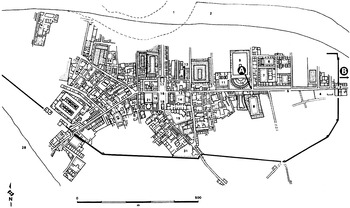
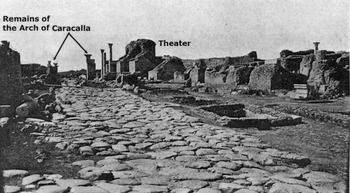
If we can trust later hagiographic sources, it was in the third century a.d. that Christians at Ostia began to assume a more visible social identity throughout the town.Footnote 1 Of course, one should admit these texts, redacted a century or more after the events they purport to describe, may not necessarily provide an accurate historical record with which to reconstruct an image of the third-century city.Footnote 2 The circumstances surrounding an alleged third-century martyrdom at Ostia offer a case in point. According to Christian retelling, it was the persecutions of the emperor Claudius II (a.d. 268–70) which inspired the Ostian Christian community to choose public martyrdom over humiliating submission, embracing public spectacle as a way to testify to the power of their faith.Footnote 3 One such figure from this time, whether historical or mythical is unclear, was the Ostian bishop, Cyriacus, who, along with several of his companions, was executed at an arch near the town's theatre (Fig. 1).Footnote 4 In 1971, Patrizio Pensabene and Fausto Zevi identified the remains of this triumphal arch and reconstructed sixteen fragments of its inscription (Fig. 2).Footnote 5 Once spanning the width of the Decumanus Maximus, the arch and its inscription, which date to the reign of Caracalla, provoked a renewed interest in both the martyr story of Cyriacus and its possible basis in historical reality.
General plan of Ostia showing (A) the findspot of Cyriacus’ epitaph; and (B) the location of the church of S. Aurea, where Monica's epitaph was discovered. (Author's modifications after R. Talbert, Atlas of Classical History (1985), 113)

Arch of Caracalla near the theatre, c. 1912. (Original photography by T. Ashby, ‘Recent discoveries at Ostia’, JRS 2 (1912), 166)

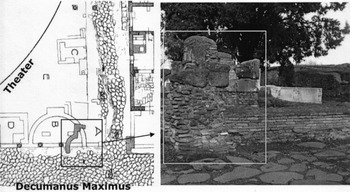
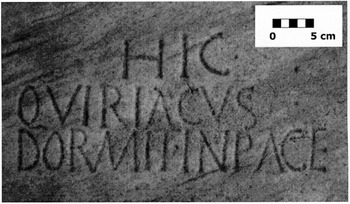
Decades earlier, during the excavations at the turn of the twentieth century, Dante Vaglieri had identified the remains of a fountain house (2.7.7) and small ‘chapel’, or semicircular building in this same area (2.7.1), approximately 2 m above the street level (Fig. 3).Footnote 6 Among the several sarcophagi located here was a plaque whose epigraph reads, ‘Here Quiriacus (= Cyriacus) rests in peace’ (Fig. 4).Footnote 7 Today, the confluence of textual and material evidence from these disparate archaeological investigations lends credence to the idea that the ‘Quiriacus’ plaque discovered at this site near the theatre does, indeed, commemorate the eponymous Ostian bishop, purported to have lived and died in the third century a.d.
Plan and site of the Christian memorial near the theatre, sixth to ninth century a.d. (Author's photograph, present state with modified plan from D. Vaglieri, Ostia: Cenni storici e guida (1914))

The construction date of this chapel with its sarcophagus and commemorative plaque, however, is another matter entirely. In fact, at the time of its discovery, Vaglieri suggested the structure had been erected sometime between the sixth and eighth centuries. Most recently, Lidia Paroli, based on re-examination of the archaeological evidence and, in particular, on a renewed study of the masonry of the extant walls, has now offered a slightly later range, extending perhaps into the early ninth century.Footnote 8 Given this broad range of dates for the architectural commemoration erected at the site, it is entirely understandable that scholars have often denied any verifiable historical connection between the ‘Quiriacus sarcophagus’ and the third-century burial of the bishop of the same name.Footnote 9 As the archaeological data confirm, the urban memorial adjoining the theatre, dedicated to a person named Cyriacus, was erected on the Decumanus Maximus at least three centuries after the martyrdom of the third-century bishop, who may, indeed, have been executed nearby. Consequently, it is important to view the Cyriacus inscription not through the lens of Ostia's third-century Christian community, for which there remains little, if any, material evidence,Footnote 10 but rather through the lens of the Christian community that erected the commemorative display. Such a discussion, then, is more proper to the sixth century or seventh century, at the earliest; and so it is there, for the time being, that I will locate this small but important sign of visible Christianity at Ostia.
II AUGUSTINE AND MONICA IN LATE FOURTH-CENTURY OSTIA
Nothing uncovered to date offers any explanation as to why a memorial to Cyriacus appeared at a much later time in the centre of ancient Ostia. In order to search for a historical context behind its display, therefore, it may be beneficial to treat one other example, well-known but unfortunately only partially studied, in order to illustrate how many centuries could pass, sometimes, before a person achieved a monumental presence in the town. In this case, that person is Monica, mother of Augustine, bishop of Hippo in North Africa.
The narrative Augustine constructed about his sojourn at Ostia in the late fourth century with his mother, the two of them awaiting departure for North Africa, is an important philosophical moment in the writer's autobiography.Footnote 11 Now, thanks to the work of Peter Brown, James O’Donnell, and others, we are equally aware of the ways in which the future Bishop of Hippo employed a complex web of political, theological, and rhetorical strategies to ensure that his opinions and ideas prevailed over the voices of his contemporaries.Footnote 12 These studies have been instrumental in bringing to the public's attention evidence of an Ostian tombstone dedicated to Augustine's mother, Monica, who died at the harbour in a.d. 387.Footnote 13 The text, published in the Anthologia Latina, edited by A. Riese, reads:Footnote 14
Here the most virtuous mother of a young man set her remains, a second light to your merits, Augustine. As a priest, protecting the heavenly laws of peace, you taught [or, you teach] the people entrusted to you with your character. A glory greater than the praise of your accomplishments crowns you both — virtutum mater, more fortunate because of her offspring.
These verses were preserved for centuries in an anthology of epitaphs inserted into a number of medieval manuscripts.Footnote 15 According to a lemma in exactly one of these manuscripts, Monica's memorial had been erected by a former consul cryptically named ‘Bassus’.Footnote 16 The ‘Bassus clue’ has sent scholars scrambling to contextualize the inscription. Starting with the assumption that the inscription was set up shortly after Monica's death, historians quickly assembled a list of three relevant candidates of the same name. Thus began an effort to incorporate the inscription into Augustine's biography, adducing the likeliest benefactor and fixing a date upon the verse memorial. This endeavour, I suggest, may have been flawed from the start.
Scholars started their search with three men from the wealthy Anicii family who all lived at the end of the fourth and beginning of the fifth century, a period coinciding with Monica's death and Augustine's service as a priest and bishop.Footnote 17 All shared the same name, Anicius Auchenius Bassus. The eldest Bassus (Bassus 1) was prefect of the city in a.d. 382.Footnote 18 His son (Bassus 2) was consul in the West in a.d. 408.Footnote 19 The third, who was son and grandson of the preceding men, respectively, served as western consul in a.d. 431 (Bassus 3).Footnote 20 With the field of possible patrons narrowed down, attention turned to mining the epitaph for any details it could furnish.
Monica died in a.d. 387. Unfortunately, the epitaph offers little, if any, internal evidence that might resolve the identity of its patron. Russell Meiggs preferred ‘Bassus 1’ based on the presence of an inscription bearing this same man's name, found near the Ostian church of S. Aurea (see Fig. 1).Footnote 21 This text records a late fourth-century commemoration made by Anicius Auchenius Bassus and Tyrennia Honorata, a husband and wife who were ‘devoted to God and the holy men and women (saints)’.Footnote 22 From the time of Meiggs’ initial conjecture, however, scholars have treated this proposal with some scepticism. The reference in Monica's epitaph to Augustine's priesthood (l. 3), for example, makes a late fourth-century date unlikely (‘Bassus 1’) since Augustine did not embark upon his career as priest until a.d. 391.Footnote 23 Nor does such an early hypothesis for Monica's memorial take into account the rather lengthy process by which Augustine rose from historical obscurity to prominent Catholic bishop.
Offering an alternative to Meiggs’ interpretation, A. van den Hoek has now reprised an earlier thesis that links the theme of peace (‘pacis caelestia iura’, l. 3) with the aftermath of Augustine's struggle with Donatist Christians of North Africa in the first decade of the fifth century.Footnote 24 Such a connection would link the epitaph, most probably, with ‘Bassus 2’. This proposal, however, is not immune to challenge. Decades earlier, Wolfgang Wischmeyer thought this same phrase was an early Christian epigraphic convention and speculated, instead, that ‘Bassus 3’ had been responsible for the memorial. Wischmeyer thought the memorial at Ostia was an act of pious restoration which ‘Bassus 3’ had undertaken in direct response to the invasion of Rome in a.d. 410.Footnote 25 For the date of Monica's epitaph at Ostia, then, a choice among these three possibilities represents the current status quaestionis. To date, it is the supposed identification with ‘Bassus 2’ which modern commentators have frequently judged to be the most historically probable solution to the dilemma.Footnote 26
III THE ARCHAEOLOGY OF MONICA'S EPITAPH
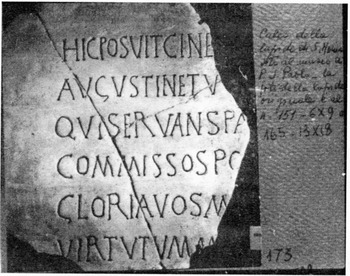
Throughout all of this discussion, however, scholars have treated the discovery of a fragment bearing lines from the same epitaph, found near the church of S. Aurea at Ostia in 1945, with a mixture of eager endorsement and professional nonchalance. Currently affixed to the wall of a side chapel in that same church (Fig. 5), the marble slab, which, like the Cyriacus plaque, once functioned as a sarcophagus cover, reveals the following text:Footnote 27
For those trying to resolve the issue of attribution, this slab, not even complete, merely confirmed what the scholarly community had long known from the medieval manuscript tradition: namely, that someone had honoured Monica, mother of Augustine, with an epitaph at Ostia. The function of the physical monument, as a result, was interpreted as being more illustrative than illuminating in its own right. A methodological preference for manuscript over material object may, in fact, explain why it rarely appears in print.Footnote 28 A visual analysis of the inscription is thus long overdue; and I present the following analysis based on personal inspection, supplementing my discussion with an original drawing as well as an archival photograph of a plaster cast made at the time of the inscription's discovery.
Cyriacus’ epitaph. (Author's photograph, with permission of the Soprintendenza per i beni archeologici di Ostia)

Monica's epitaph. Modern reproduction. (Archivio Fotografico, Ostia Neg. R 2264)

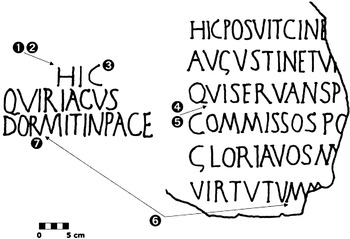
At this point, a comparison of Monica's epitaph with the plaque of Cyriacus, introduced earlier (Fig. 4), shows stunning similarities between the two hands that executed these memorials. The resemblances begin in the first lines of each. Both inscribed letter sets display small serifs (Fig. 6, No. 1). Secondly, in both inscriptions the crossbar of the ‘H’ (hic) is almost the same length as that letter's cap height, that is, the height of a capital letter (Fig. 6, No. 2). Third, the spur of the ‘C’ in each case ascends characteristically above the cap height (Fig. 6, No. 3). Fourth, in lines 2 and 3 of the Cyriacus and Monica inscriptions, respectively, the tail of the ‘Q’ descends to the right in comparable fashion below the baseline (Fig. 6, No. 4). Fifth, in each inscription the neighbouring ‘V’ is based on the shape of a square whose proportions are nearly as wide as the preceding ‘Q’ with its elongated tail (Fig. 6, No. 5). Sixth, none of the stems of the letter ‘M’ are perpendicular to the baseline (Fig. 6, No. 6); and, lastly, the narrow counter shapes, or interior spaces, of the ‘R’ (Fig. 6, No. 7), combined with a lengthy tail that extends far beyond the bowl, give this letter a disproportionately wider shape at the bottom than the top. All of these shared stylistic features, including the nearly identical scale with which the letters were etched, support the conclusion that the two inscriptions were cut at approximately the same time, if not by the same stonemason.Footnote 29 As a result, at least part of the key to the dating of the Monica inscription resides not in the biography of Augustine, but rather with the archaeological and architectural evidence for the commemoration of Cyriacus and the construction of his small roadside chapel near the theatre.
Comparison of the Cyriacus and Monica epitaphs. (Author's drawings based on autopsy of original marble slabs)

According to Christian tradition, Cyriacus died in the third century, yet textual narratives of his martyrdom appeared only in the fifth or perhaps sixth century.Footnote 30 The architectural evidence for a monument dedicated explicitly to him near the theatre, however, can only date to the sixth century, at the earliest. It is true, as others have noted, that the Cyriacus sarcophagus itself, distinguished on its front by two fields of strigilated grooves and a central field which depicts Orpheus, dates to the late third or early fourth century.Footnote 31 However, there is no indication that the sarcophagus was brought to the site near the theatre prior to the construction of the edifice.Footnote 32 Nor should we assume that the Cyriacus cover had been carved at the same time as the body of the sarcophagus itself. Based on personal inspection and confirmed independently by the report of others, it is clear that the extant marble slab did not originally belong with the receptacle but, rather, was cut and used as a cover only at a later date.Footnote 33 Indeed, given the fact that the inscription, sarcophagus, and roadside structure together functioned as an urban assemblage, commemorating not just Cyriacus’ death but also the place of his martyrdom, it is highly probable that the inscription itself was motivated by the construction of the late antique edifice on the site. This comprehensive reading of the epigraphic, architectural, and archaeological evidence suggests that the Cyriacus text, although short on content, acquired significant meaning by engaging visually with those nearby features of Ostian topography relevant to Cyriacus’ alleged martyrdom. As a result, I propose that the Cyriacus inscription itself was commissioned sometime between the sixth and the ninth centuries a.d., contemporary with the construction of the roadside building.
The fact that Monica's epitaph bears striking similarities to this Cyriacus inscription is a detail which now deserves renewed scrutiny. Based on the fact that the evidence for Cyriacus’ urban funerary monument postdates his death by at least three hundred years, it becomes apparent that the nearly-identical memorial for Monica need not be contemporaneous with either her death or the life and times of her son. Consequently, we should now consider the possibility that the agents responsible for both of these public displays prized the Ostian fame of Cyriacus and Monica precisely because they were both long dead. Such a hypothesis would then suggest that the creation of these funerary markers was motivated by social and cultural forces of a much later time than scholars have heretofore allowed.Footnote 34 In fact, a date located roughly between the sixth and ninth centuries a.d. accords well with the following social and cultural considerations.
Firstly, assigning the epitaph a late fifth-century terminus post quem has the benefit of clarifying several areas of debate within the text of the inscription itself. Since Augustine himself was long dead by this point, the themes within the text might have been drawn from posthumous narratives of Augustine's life, such as Possidius’ Vita Augustini, written in the 430s; and not from contemporary events in the life of the bishop. In this regard, the phrase which describes Augustine's life as one of service to ‘the heavenly laws of peace’ (‘servans pacis caelestia iura’, l. 3) emphasizes a theme which Possidius himself stressed throughout his biography.Footnote 35 Citing Augustine's commitment to the ‘peace and unity of the Church’ (‘pax et unitas ecclesiae’, V.Aug. 11–13), Possidius’ text portrays a figure rigorously opposed throughout his episcopate to the competing Christianities practised not only by Donatists but by Pelagians and Circumcellions, as well.Footnote 36
Other images within the Ostian epitaph, moreover, such as the reference to virtutum mater, which I have translated as ‘Mother of the Virtues’ (l. 6) might have been inspired by even later and more local sources, such as the Roman sermons of Bishops Pelagius II, and, in particular, Gregory I. Until now, for example, scholars have unanimously interpreted the word ‘mother’ as a reference to Monica and presumed that the ‘virtues’ are those of her offspring (subole), Augustine.Footnote 37 But does the epitaph really suggest that the mother, Monica, is ‘more fortunate’ (felicior, l. 6) because of the deeds of her male offspring? If so, van den Hoek is certainly right to characterize the tone of the memorial as ‘rather … chauvinistic’.Footnote 38 Yet the previous line states that glory crowns both Augustine and Monica. The use of the plural pronoun here suggests that mother and son are on an equal footing (‘gloria vos … coronat’, l. 5). Could the last line of the epitaph have a different interpretation? I believe that it does and that it is much more generous to Monica's memory than scholars have yet allowed. The phrase ‘Mother of the Virtues’ (virtutum mater) may be a veiled personification of Love (charitas), a theological virtue which has been made more fortunate, or ‘abundant’, because of Love's own offspring, both ‘the chaste parent’ (genetrix castissima), Monica, and her son.Footnote 39
This description or circumlocution for Love appears for the first time as a concept in a letter of Pelagius II, Bishop of Rome (a.d. 579–90).Footnote 40 It is Pelagius’ successor, however, Gregory I (a.d. 590–604), who popularized this characterization of Love in his letters and scriptural commentaries.Footnote 41 The development of this theme in the last quarter of the sixth century and in the first decades of the seventh century, therefore, strongly suggests that Monica's and Cyriacus’ epitaphs not only postdate the fifth century, as I proposed above, but that they postdate the early sixth century, as well. From this chronological departure, we arrive neatly at the turn of the seventh century — the very period which generated the first historical account of Monica's Ostian epitaph, written by the anonymous author of the Syllogae Turonensi.Footnote 42 This seventh-century collection, in effect, provides a general terminus ante quem for the erection of the memorial in Monica's honour.
Thus, if the patron of these plaques was a member of the gens Anicii, as scholars have longed inferred but never authenticated from the later, ninth-century manuscript lemma, one wonders whether it may have been Gregory I himself, or perhaps a close relation, who used the memory of Ostia's famous saints to enhance his own image and stature as Bishop of Rome at the end of the sixth century or beginning of the seventh.Footnote 43 Of course, there is at least one other possibility to explain the ‘Bassus’ attribution. Perhaps ‘Bassus’ was merely the best guess of a medieval pilgrim who, like Meiggs and others, simply recognized that same fourth-century name, ‘Bassus’, on an inscription which happened to have been found nearby.Footnote 44
IV LATE SIXTH-CENTURY OR EARLY SEVENTH-CENTURY OSTIA: BETWEEN ROME, LOMBARDS, AND THE EASTERN ROMAN EMPIRE
Thus I propose that both the Monica inscription and the memorial near the theatre were part of a broader campaign, disassociated from the historical death of each person, to erect more visible signs of Ostia's Christian past in the last quarter of the sixth century or the first decades of the seventh century a.d. In order to recover some context for the historical agents who motivated these displays, however, it will be helpful now to conclude by imagining the epitaphs’ audience. Who were the pilgrims who stood before these texts and monuments, and what were they seeking in these memorials?
The first half of the sixth century witnessed some dramatic changes in Rome, Ostia, Portus, and the Latin-speaking West, more generally, as a series of wars was fought on Italian soil between the armies of the resilient Eastern Roman Empire and the Gothic rulers of Italy.Footnote 45 From a.d. 534 to 552, when Emperor Justinian's general, Belisarius, reconquered this portion of the Western Roman Empire, Rome, Ostia, Campagna, and Sicily all suffered from a prolonged series of battles.Footnote 46 The state of the roads connecting the capital to its twin harbour towns, for example, is unclear during this time. Procopius mentions that part of the Via Ostiensis had fallen out of use, although there is little material evidence available yet to verify or contradict his claims.Footnote 47 Certainly, the lack of any new monumental building in Ostia's Forum and the commencement of intramural burials in the early sixth century suggest a far different picture of ‘urban life’ than anything the town had witnessed in its storied past.Footnote 48 Combined with broader downward trends that had already begun in the fifth century, such as a decline in local pottery production, in living standards, and population figures, the sixth century, as a whole, was a period in which the Latin West became a shadow of its former self.Footnote 49
Within decades, a new threat had also arrived. Led by their king, Alboin, Lombards descended into the cities and territory of northern, central and southern Italy.Footnote 50 A narrow, unoccupied ‘land bridge’ was soon the only safe passage connecting the old Western capital, Rome, and the seat of the Eastern Roman exarchate at Ravenna.Footnote 51 Perhaps not without good reason, then, has Peter Brown, discussing the life of another Gregory, Gregory of Tours (c. a.d. 538–94), characterized the dismal conditions in the sixth-century Latin West as ‘a world of tombs’.Footnote 52 It is within this historical context of a fragmented and contested peninsula — a territory caught between Goths, Lombards, East Roman authorities, and a growing papal presence, centred in Rome — that the epitaphs for Monica and Cyriacus may have been erected at Ostia. As a result, we should not underestimate the spiritual effect that small urban markers such as these might have had on late sixth-century or seventh-century pilgrims. For the pious Christian, as Brown suggests in his analysis of Gregory of Tours, the fruits of the present world, whatever its hardships, could still be found by coming into contact with the personal ‘merits’ (merita) of the saints and their burial places.Footnote 53 It was precisely this quality of Augustine, his personal ‘merits’, which the Ostian epitaph for Monica makes a point to emphasize, even if it was understood that the body of the bishop himself was four hundred miles away in the deserts of North Africa.
These physical plaques at Ostia, then, may indeed have served to ignite ‘the pilgrim's passion to possess the city through the immediate experience of its landscape’.Footnote 54 As Elizabeth Castelli has shown, such kinds of commemoration could indeed foster a sense of social or collective memory within a community.Footnote 55 Pope Damasus had achieved this effect by erecting verse epigraphs at saints’ sites throughout Rome during the late fourth century.Footnote 56 The evidence adduced here suggests that, two and a half centuries later, another campaign for pious tourism — deliberately organized, to judge from the similarity of the letter forms, but perhaps less well financed, to judge by their quality — was now overtaking the old harbour town, as well.Footnote 57 Mapped onto specific sites within the urban landscape, these small memorials spoke to the city's desire to appropriate its own storied past and to give these places, such as the Arch of Caracalla near the theatre, a new, yet historicized Christian identity. This endeavour bound the past to the present and, if the language of Monica's epitaph is indeed borrowed from Gregory the Great, as I have proposed, bound Ostia once again to Rome during an age of territorial uncertainty throughout the peninsula. Aimed at pilgrims to Rome and other visitors to Italy's sacred sites, the inscriptions capitalized upon an increasing need to advertise and to sell the historical relevance of a once-thriving but now diminished town, providing pause for both spiritual nourishment and pious recollection. It is in late sixth-century or early seventh-century Ostia, then, that ‘a world of tombs’ became an ideal setting in which to stake the signs of Christian triumph.