


1. Introduction
Australia is the food basket of Asia. Fresh produces, meat, and processed food items made by Australian farmers, meat factories, and food processing companies are the most popular food items for the thriving Asian market. Australian-made higher grade beef pack is sold as high as $120/kg in Korean and Chinese markets [1]. Therefore, the packaging can play a major role in delivering safer and consumable food varieties along with the help of low-cost radio-frequency identification (RFID) technology and wireless sensor nodes. Millions of dollars can be saved and Australian prestige as the finest food-producing country can be maintained using low-cost technological alternatives which produce a greater result and economic impact. The low-cost monitoring of physical parameters such as temperature, relative humidity, and pH level of perishable food items using RFID sensors can make Australia a leading country in food safety and security.
Food safety plays a major role in perishable items as these products carry higher vulnerabilities to become unsafe to consume when it gets expose to undesirable temperatures, change in humidity, impact, and pH levels during processing and transportation. The meat production especially the red meat is considered to be one of the largest contributors to Australia's economy, with a value of about 13.6 billion Australian dollars in 2011–2012 [2]. According to further statistics, the overall Australian meat industry is approximately composed of 25 million cattle and 120 million sheep resulting in 23 and 42% of world total beef and sheep meat exports, respectively [Reference Zhongxiang Fang and Zhang3]. In the context of this massive industry exports, it also reminds the role of meat packaging that can make a severe impact on the industry's survival.
Furthermore, maintaining food safety is a critical part of consumer health and wellbeing as spoiled and contaminated food can lead to food poison and illnesses. It is a very critical concern when it comes to Australian statistics of food-related diseases as it is estimated 4.1 million cases of food poisoning each year [4]. In Australia, thousands of cases were reported in food poisoning especially with children and older adults. The Australian government has extended the food-related awareness to keep people safe while educating citizens on safe food preparations and practices as shown in Fig. 1.
Key considerations of food safety and security.

In a different perspective, food safety has increasingly become important in food processing industries as food safety is a direct measure of organizational success in the industry. Giant retail chains such as Wal-Mart [5] and Coles-Myer [Reference Haroop6] are increasingly using technologies such as RFID and have reduced the impacts over the food safety reputations over the period of time. The food industries are also concerned about reliability and limitations of widely accepted optical barcodes as they achieve limited service success in food safety-related concerns mainly on restriction in optical barcodes providing additional status information needed by retailers. In order to address such situation, food sectors continue to demand advanced technological support to meet consumers' and governments' [7] demands in food supply chains.
On the other hand, food safety plays a critical role in food consumption and food waste. The industries inability to maintain traceability of products, lack of indication from product or packaging whether it is suitable for consumption (product “freshness” factor) led to discarding large quantity of food as waste. In the United States, 40% of food that is produced/processed goes uneaten resulting in a waste of equivalent of $165 billion each year [Reference Gunders8]. In the deep considerations on all above findings and facts, it can be reasonably concluded that food preservation has considered being a very important aspect of the sustainable growth of economies, hence food waste along with food safety is another argument that food industries and consumers are trying to address collaboratively [Reference Eom, Hyun, Lin and Kim9].
2. Role of the food storage in food packaging
There is an open interest from the public, government as well as retail markets to maintain food safety in every aspect of the food supply chain. This growing interest has largely pushed food retail corporates to establish correct conditions and processors in food processing as well as in food packaging [10]. Food Standards Australia and New Zealand are in the front seat driving standardization of food and packaging across both countries while establishing food security in numerous food sectors. In Australia, the food standard and interpretation was declared as Chapter 3 Australia New Zealand Food Standards Code [11].
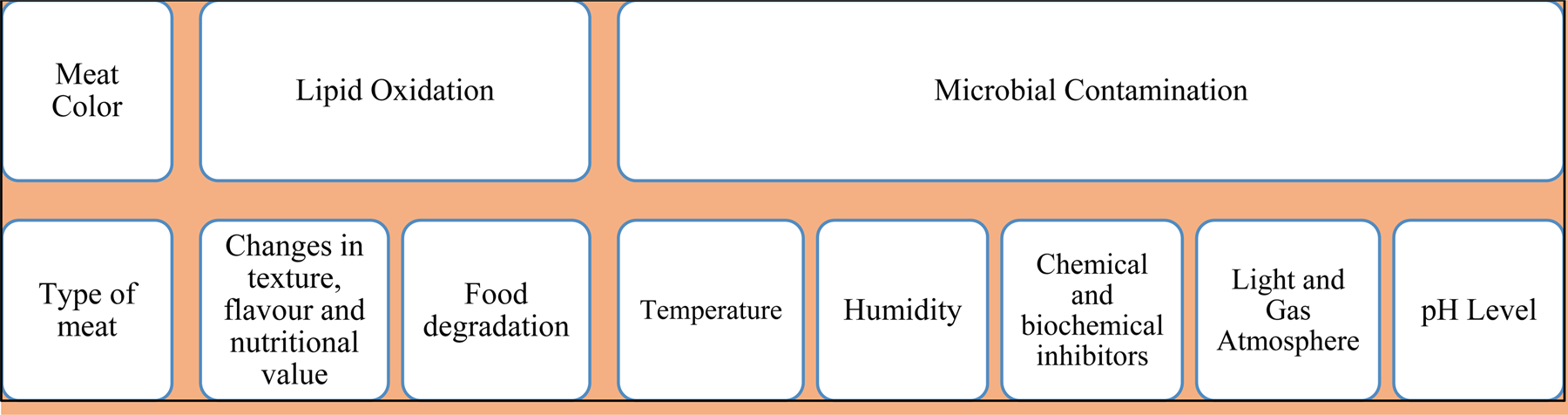
Food storage is an important aspect of food safety. The definition of smart packaging starts from storage as the materials used, package handling as well as processors involved in making the packaging are directly linked to food storage. The food standards also explain how the usage of correct conditions for food storage can minimize the vulnerabilities such as contaminations [11]. Moreover, food research highlighted key factors that can harm the quality of the food in especially perishable food items as elaborated in Fig. 2.
Possible causes that degrade the quality of the perishable food.

In a different perspective, once the packaging is made, there should be a mechanism to ensure that the quality of the food is maintained to the expected level for consumption. The microenvironment inside the food package can largely influence the longevity of the packaged food items. Figure 3 shows the possible environmental conditions that have most influenced and largely reported that adversely affect food safety.
Key environmental factors that adversely affect food quality.

The detailed outline of above key parameters of higher humidity, overexposure to the temperature that is not desirable for the health of the food as well as detecting the growth of bacteria is further detailed out in Table 1. It can be reasonably concluded that the factors explained in Fig. 3 and Table 1 are important when determining food freshness within the food package. Therefore, it is important to investigate the state-of-the-art methodologies available to enable sensing of these environmental conditions.
Effects of higher humidity, exposure to undesirable temperatures, and acidity for food quality

3. Permittivity and its importance in food-freshness measurements
Most perishable foods consist of natural biological matters. Metaxes and Meredith have proven that natural biological matters mainly absorb the electrical part of the electromagnetic (EM) wave [Reference Ryynänen12] unless the food itself has some magnetic properties which can influence the magnetic component of the EM wave. Therefore, it is safer to conclude that electric permittivity (ε) mainly determines the relationship of the EM wave with natural biological matters.
In general, the permittivity of a material has two components such as absolute and relative. The absolute permittivity of a vacuum can be defined as follows:
 $$c_0^2 \mu _0\varepsilon _0 = {\rm 1}$$
where c is the speed of light; μ is the magnetic constant; and ε 0 is the absolute permittivity of a vacuum (8.854 × 10⁻¹² F/m).
Compared to vacuum, liquid has a higher permittivity and solid has the highest permittivity values. However, on the other hand polarization is an important factor to be considered when determining the permittivity of a material. When two of electrical charges are separated by a considerable distance, it creates a dipole effect and the dipole effect determines how easily a medium can get polarized by an external EM source. For example, water is considered as a dipole; hence can largely influence the permittivity of the biological matters. According to the literature, the permittivity tends to get higher values when a particular food item has more water and salt content. In contrast, food items with more oil content tend to provide lower permittivity values [Reference Nyfors13]. The ultimate relationship between EM waves and permittivity can be deduced as follows [Reference Dobkin14] according to the Friis equation:
 $$d = \displaystyle{\lambda \over {4\pi}} \sqrt {P\lpar t \rpar G\lpar t \rpar G\lpar r \rpar \tau /P(th)}$$
where d is the read range; λ is the wavelength of the frequency; P tGt is the maximum transmission power from reader antenna; G r is the gain of the tag antenna; τ is the power transmission coefficient between chip and antenna; and P th is the chip's activation power.
In the analysis of permittivity, it is also important to understand how to measure permittivity in an actual perishable food product which is elaborated in the next section [Reference Engelder and Buffler15].
4. Food-freshness measurement techniques
The investigation of food-freshness measurement techniques can be broadly split into two categories. One category considers the severity of technique (invasive and non-invasive sensing) as elaborated in Fig. 4 and the another category illustrates the mode of sensing such as use of sensors on the surface of the food or use of an wireless mechanism to analyze the food quality with minimal interference [16].
Categorization of invasive and non-invasive food-sensing techniques and related parameters.

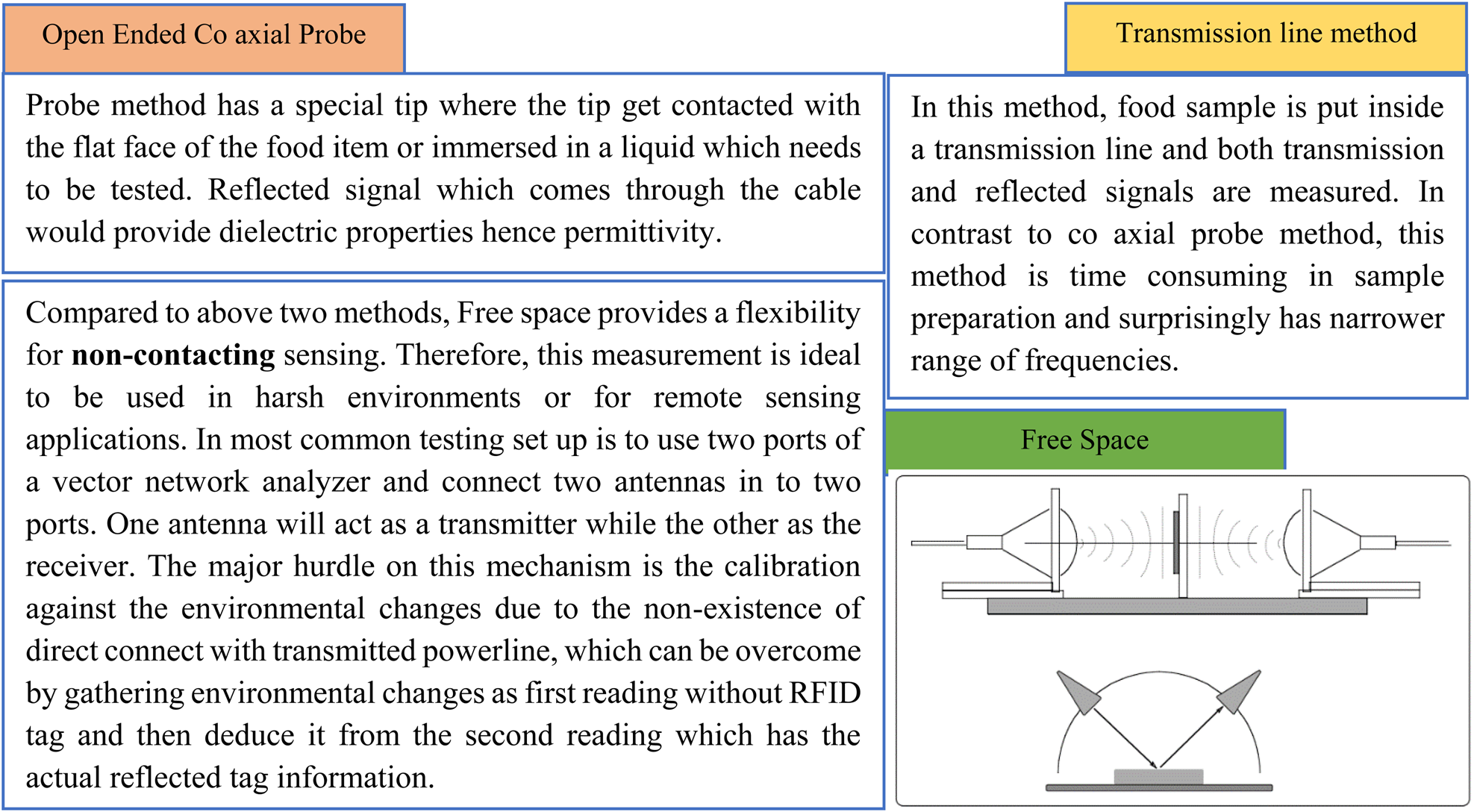
As shown above, food gets decomposed in the presence of the degradation and due to microbial growth in the microenvironment. The only possibility of finding the presence of these inhibitors is to use an invasive technique such as an open-ended, co-axial method or transmission line which needs proper contact with the food item as elaborated in Fig. 5. Surprisingly, the degradation occurring inside the food also changes the environmental factors of the surroundings such as an increase in acidity and humidity levels. These factors can possibly be measured using the non-invasive methods such as wireless sensing (e.g. free space method [Reference Skocik and Neumann17, Reference Nguyen, Le, Lam, Fribourg-Blanc, Dang and Tedjini18]). The other major benefit of using a wireless technique is that, it eliminates the need of attachment of sensors to the food items, however; provide a more relative measurement of the status of food quality. This method can even be used for commercial application where thousands of packages can be traced and sensed in warehouses or retail environment.
Main techniques to measure permittivity.
It can be concluded from the above facts that there is a clear advantage of having a non-invasive, free space method for food sensing over invasive techniques. In a different perspective, measuring multiple parameters such as humidity, temperature, and pH in the microclimate is essential to obtain an accurate estimate of the food quality. Multi-parameter sensing is considered more challenging in wireless methods as many of the freshness indicators overlap with each other during wireless measurements. For example, humidity and pH may result the same artifacts as both parameters are sensitive to H+ concentrations.
Due to this challenge in food safety, it is essential to investigate the state-of-the-art of food-freshness sensors and the use of wireless techniques in food-freshness measurements.
5. State-of-the-art smart packaging systems and their limitations
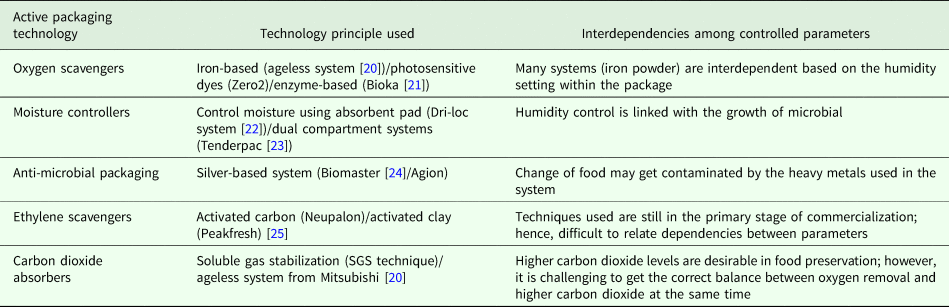
In general, wireless smart packaging systems for food freshness can be categorized into three sections as elaborated in Fig. 6. Active packaging systems seem to be the ideal method to preserve the food freshness as well as to increase the shelf life. Active packaging can also adjust the micro-climate suitable for the food preservation altering humidity levels, temperature control, balancing gas composition, pH level, and microbial growth as listed in Table 2.
Smart packaging categorization for food freshness.

Active packaging systems for food freshness [Reference Biji, Mohan, Ravishankar and Srinivasa Gopal19]

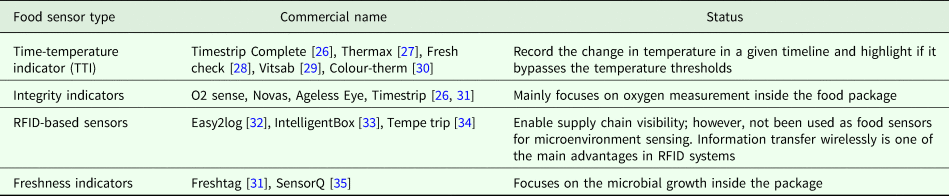
Irrespective of the active systems that are commercially successful, it remains costly for manufacturers to adopt active systems in an item level configuration. Many of the controlled parameters that are used to control by the active packaging techniques have now been implemented in the packaging preparation process itself. Therefore, it necessary to come up with a low-cost item level sensor that can measure vulnerabilities at the package level once the packaging is in place. Some of these food sensors and food-freshness indicators that are used for food-freshness measurements are elaborated in Table 3.
Food sensors and freshness indicators for food freshness

Temperature has been the most critical factor in food science and is considered as the main food-freshness indicator. The main reason for temperature measurement is that the package can expose to undesirable temperatures during logistics and transportation and mainly an external freshness factor. There exist many more systems to measure other important freshness parameters as elaborated below.
The electrical tongue is one of the widely used techniques to obtain a closer approximation of microbial growth in perishable food items. According to Fig. 7, e-tongue can be in the form of a stationary sensor which measures electron transfer either using voltammetry or using electrochemical impedance microscopy. There are some attempts also which show the possibility of using optical analysis in order to obtain the same outcome. Even though the e-tongue system considers as cost-friendly in sensing the taste of the food, the results are limited for qualitative instead of quantitative analysis. Changes in relative humidity and temperature can also influence the sensitivity of e-tongue, hence the accuracy of the readings [Reference Wadehra and Patil36, Reference Tahara and Toko37].
Electrical tongue (pH assessment of milk) sensor.

As elaborated in Fig. 8, the colorimetric barcode structure was developed as a temperature sensor where a custom-built mobile application was used to detect the changes in the temperature [Reference Chen, Fu, Zilberman, Ruan, Ameri, Miller and Sonkusale38]. Based on the arrangement of volatile organic compounds (VOCs), the barcode can display different colors with respect to changes in the temperature. The mobile app helps to retrieve information by decoding the color profile emitted by the barcode. Even though the solution is low-cost, use of VOCs is found to be harmful for humans [39]. Moreover, each package is subjected to “scanning in the close vicinity” in order to identify a temperature exposure which may be challenging in an actual commercial setup. There are two more popular products that surfaced to the mainstream commercial market recently, targeting food freshness mainly the meat freshness as shown in Figs 9 and 10.
Colorimetric barcode temperature sensor.

Food sniffer [40].

Electronic nose for meat freshness [41].

Both food sniffer and electronic nose were originated in Europe as food-freshness devices that sense the gas atmosphere around the meat samples and provide a relative indication of meat freshness. The main disadvantage of these high-tech systems is the cost of the device. Due to the device cost, meat testers randomly pick some samples from the batch of meat and test to verify whether the meat was exposed to any vulnerable conditions during processing and transportations. It is far beyond the reach of mass deployment for individual products, which further emphasize the need for low-cost, robust wireless solutions for food-freshness measurements. Apart from the above systems which can be categorized as active and battery powered, there are also some RF-based passive (battery free) sensors been used as food-freshness sensors as shown in Figs 11–14.
PDMS-based passive RF sensors for humidity sensing in food-freshness applications [Reference Potyrailo, Nagraj, Tang, Mondello, Surman and Morris42, Reference Belsey, Parry, Rumens, Ziai, Yeates, Batchelor and Holder43].

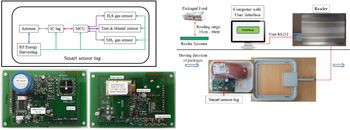
Battery powered CNT-based gas sensor [Reference Occhiuzzi, Rida, Marrocco and Tentzeris44, Reference Occhiuzzi, Rida, Marrocco and Tentzeris45].

Meat freshness sensor (gas + humidity in low-frequency band) [Reference Nguyen and Chung46].

LC sensor is embedded inside the packaged food [Reference Huang, Dong and Wang47, Reference Tan, Ng, Shao, Pereles and Ong48].
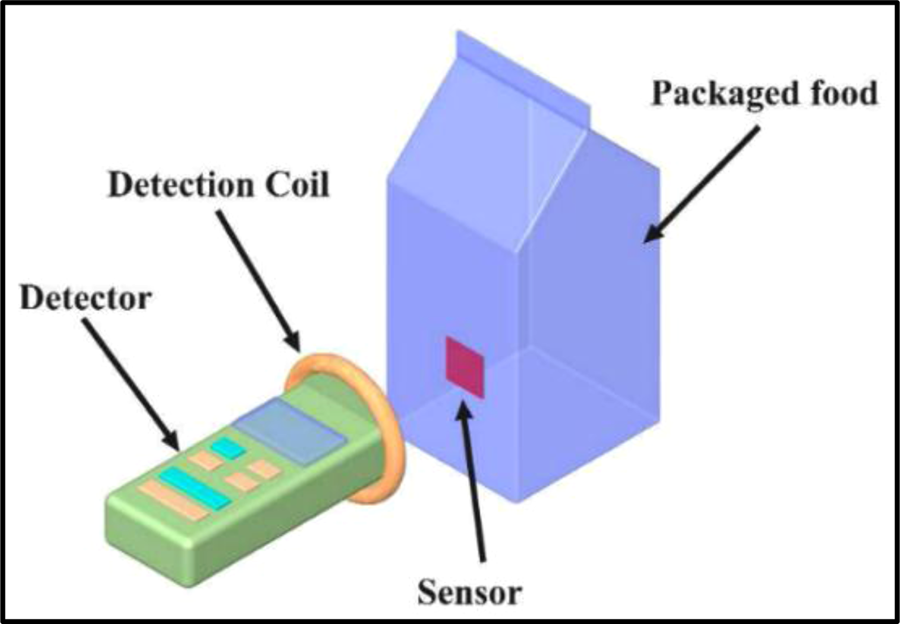
Figure 11 shows the use of humidity sensitive material (in this case it's polydimethylsiloxane (PDMS)) to develop an RFID sensor tag. In both cases, PDMS-based paper is used as the substrate to develop a printed tag that changes frequency response with respect to changes in the relative humidity. In both cited studies, a paper-based printed UHF RFID tag acts as a transmission medium for the sensor material and the resultant wave can be used to measure different humidity or vapor levels of the environment. The main advantages of these systems are their flexibility to adapt to any shape and size due to a paper substrate and they provide a low-cost alternative in comparison with tags developed on the printed circuit boards (PCBs). Different stack arrangements can also be used to obtain the same outcomes. For instance, the tag can be fabricated with more robust materials and smart materials (material that changes its properties with respect to changes in the environment) can be deployed as a super state covering the tag in order to obtain the sensor output.
In Fig. 12, another RF-based sensor used for gas sensing is discussed. In this sensor carbon nanotubes (CNTs) are used as the smart material for gas-sensing application and CNT layer is used to couple two copper RFID tags and the change in the electric field is characterized in the presence of different volumes of ammonia gas. Although ammonia measurement is equally important in the food-sensing as it provides a relative measurement of microbial growth as a byproduct [Reference Bechtel and Wu49], CNT has its own limitation due to the susceptibility of nanoparticles entering into the food stream and then to the human body. Another limitation could be the state-of-the-art large-scale production of CNTs is still unknown and having a defect-free CNT layer is quite challenging as highlighted by the authors. Another interesting sensor tag found in the literature is elaborated in Fig. 13 where the sensor can sense multiple parameters at the same time. The main advantage of this system is its accuracy in the environmental conditions; however, a larger PCB hinders its usage in every product. Cost of the product can also be significant.
This is a wireless sensor that was built on top of a paper substrate, which can sense the quality of dry foods such as cereals and baked snacks. This sensor focuses on change in humidity as the increasing humidity may destroy the quality of dry foods. A planar LC resonant circuit was used for the sensing purposes; however, this sensor is only capable of providing a one-dimensional freshness aspect of the food quality (e.g. relative humidity). The flexible nature of this sensor and low-cost are considered to be the key advantages of this implementation. There are RFID-based innovative solutions developed in recent years specifically targeting food freshness [Reference Eom, Hyun, Lin and Kim9, Reference Honari, Saghlatoon, Mirzavand and Mousavi50–Reference Chetanraj, Shushrutha, Phani and Naveen53]. In some of these studies, gas sensing has considered as the main sensing parameter and humidity and temperature as auxiliary sensors. Similarly, an RFID-based ethanol sensor was developed [54] as a wireless sensor for food spoilage measurements and in some other work, change in the conductivity of the measuring RF ring was considered as the spoilage factor. Some systems use Near Field Communication (NFC) technology which has to sense empowered capability food-freshness sensing [Reference Yuan, Ghannam, Karadimas and Heidari51]. There are also non-RFID solutions for food freshness such as sensing empowered ICs [55–Reference Flynn, Donno, Barrett, Robinson and Riordan57] and some of the systems are printable as an analog circuit on the packaging material for the food-freshness measurements. Disposable circuit array that can be used to detect allergens in food items was also recorded [Reference Bettazzi, Lucarelli, Palchetti, Berti, Marrazza and Mascini58] while system powered electrochemical sensors were used in this work [Reference Paniel, Radoi and Marty59] to detect aflatoxin in milk products. Some of the sensors use sensitive materials such as nanoparticles that are vulnerable to food applications [Reference Kumar, Mohanty, Guruswamy, Smith and Misra60]. Most of the above-mentioned studies are chemical or biosensors and need to have a complex power and processing requirement in order to detect the freshness factors. Moreover, all of these mentioned solutions are not entirely food friendly or biodegradable.
It can be observed from Table 3 and all other sensors listed above that all passive food sensors are focused on single parameter sensing. The active wireless food-freshness sensor systems that are in place are either expensive or has complex working principles which hinder their use in the item level configuration. In a different analysis, it can also be revealed from Figs 3 and 4, measuring a single parameter may not be sufficient to get a closer approximation of the overall food freshness. Therefore, it can be concluded that understanding of microenvironment inside a food package in relation to multiple parameters is necessary and this has found to be an interesting area from the authors of this paper to explore further. In addition to that, deploying multiple sensors in their current form to measure multiple parameters may not be economically attractive. Combining outcomes of existing food sensors are already a challenge in terms of their operational limitations such as sensing mechanisms, data capturing mechanisms, and alignment with packaging techniques. Considering all above observations found from the literature and also emphasizing the most convenient, cost friendly sensing techniques available for food-sensing and freshness measurements, non-contact (wireless)-based RFID sensors were selected for further analysis in order to achieve a low-cost, robust, multi-parameter sensing solution.
Even though the RFID is established as mainstream wireless technology, RFID sensors are still in their primary exploration stage. Many research studies have been carried out to develop RFID, imaging and chemical analysis-based sensors especially for food-freshness measurements, and some of these attempts were elaborated below with respect to sensing of vital parameters such as humidity, temperature, pH, and gas.
6. Importance of passive RFID technologies in microenvironment measurements for food freshness
There is a growing interest to tag each product or item in order to ease tracking across the supply chains as well as provide a higher quality product without compromising product quality and origins. RFID has been used for sensing environmental parameters, especially the battery powered active RFID tags. However, due to the potential of technology there is a huge demand for low-cost RFID solutions for everyday applications [Reference Bhadra61]. There are various low-cost RFID sensors in the literature and some of these sensors are elaborated in the below subsections. The key focus of this review is on RFID sensors related to RH%, temperature, and pH which are interest to the author considering the food freshness and food safety applications.
6.1. State-of-the-art wireless RFID-based humidity sensors
A relative humidity sensor is considered to be one of the most developed environmental sensors in the history of passive wireless sensor technologies. There are many research groups across the world working on RFID-based humidity sensing due to its importance in agriculture and more particularly in perishable food sensing, food safety, and security, measuring the health of constructions in real estate and civil engineering, the pharmaceutical industry, automotive industries and many more [Reference Yamazoe and Shimizu62]. Many of these industries rely on affordability, deployability, and easy measurements of humidity sensors and this is where the RFID-based humidity sensors show their presence. Some of the examples mentioned below elaborate the state-of-the-art humidity sensors in the passive RFID domain.
In Fig. 15, TiO2 has been used as smart material to develop a printed humidity sensor on top of an LC resonator. However, the RF performance can only accommodate the larger levels of humidity change although the operational principle is simple and easy to implement. The other advantage provided by this sensor is its ability to show considerable RF performance even at a distance (up to 10 cm), and another analysis shows the different sizes of tags and their variation in performance along with the distance.
A resonant printed-circuit sensor for remote query monitoring [Reference Keat Ghee and Craig63].

As shown in Fig. 16, humidity sensing can also be developed using polymer materials such as polyamide, polyvinylpyrrolidone (PVP)-Co + PVP-I2 complex [Reference De Queiroz, Soares, Trzesniak and Abraham64], and polyvinyl alcohol [Reference Penza and Cassano65]. Many of these polymer materials are easy to scale up and are already in commercial use. However, there are certain constraints such as the use of titanium material which makes the sensor more expensive and also complex in development.
Use of polyamide as a smart material for humidity sensing [Reference Penza and Cassano65].

The main advantage of the chipless RFID-based sensors is their ability to function in any environment irrespective of electronic friendliness. Chipless RFID tags do not require a microchip to operate; hence, can operate in any environment even for sensing. The main hurdle of this experiment as shown in Fig. 17 is the implemented mechanism does not support wireless sensing. However, chipless RFID can still be used as a foundation technology to enable remote sensing at the lowest possible cost for any tagging devices available on the market today.
Chipless RFID-based humidity sensor without smart materials [Reference Nair, Perret, Tedjini and Barron66].

Passive RFID humidity sensors meet all key expectations as elaborated above such as low-cost, easy to deploy, and provide accurate measurements in a remote setting. However, there are some common challengers identified as part of these studies with respect to food-freshness applications. Some of the smart materials used in sensors are harmful and not suitable to use inside the food package. Some of the sensors are only been proven in a laboratory environment without considering the deployability in mass scale manufacturing. In general, a wireless mechanism is quite well developed in many of these analyzed sensor systems where the complexity mainly originates from the humidity friendly material characterization. Therefore, finding a suitable material that suits for “next to food” applications while providing RF-friendly behavior in the presence of humidity change is a research challenge that needs to be addressed.
6.2. State-of-the-art wireless RFID-based temperature sensors
Temperature sensing is a very dominant research topic in the passive RFID-based sensing. The main reason for giving such importance to temperature sensing is its multiple uses across various industries and research disciplines. Many industries are interested to investigate how sensors can be made to measure the change in higher temperatures. The knowledge in high temperatures will help prevent a disastrous situation due to material failures, electronic malfunctions, or system level failures. On the other hand, high temperatures are needed to achieve specific objectives such as the melting point of certain metals in industrialized applications [Reference Wang, Jia, Chen and Wang67]. According to the scope of this research, the investigation is currently focused on low-temperature sensing which is not heavily explored in temperature sensing research. Low-temperature sensing is critical in cold-chain applications where the rise in temperature may hinder the quality of the food especially the perishables (Fig. 18).
Temperature danger zone [68].

Temperature has a significant impact on food freshness and food safety application when food is exposed to undesirable temperatures. According to the literature, temperature from 5 to 60 °C is considered as the danger zone for food applications where such temperature range provides a healthy environment for microbial growth on and inside the food items [68], especially the perishables. On the other hand, some foods are sensitive to heat which may result in softening the outer tissues and end-up in the rotten state [11]. Therefore, low-temperature sensing can be very beneficial for food preservation. Some examples of temperature sensing are shown in Figs 19–22 with respect to using passive RFID-based techniques.
Passive UHF RFID enabled temperature sensor tag on a cork substrate [Reference Bettazzi, Lucarelli, Palchetti, Berti, Marrazza and Mascini58].

RFID tag antenna-based temperature sensor [Reference Paniel, Radoi and Marty59].

The backscattered principle of a passive chipless RFID system for sensor application [Reference Vena, Sydänheimo, Ukkonen and Tentzeris69].

Passive wireless temperature sensor based on time-coded UWB chipless RFID Tags [Reference Girbau, Ramos, Lazaro, Rima and Villarino70].

In this implementation as shown in Fig. 19, a passive UHF RFID tag was implemented on a core substrate using a commercially available RFID chip and a meandered dipole antenna. A metal-friendly adhesive was used to stick the fabricated/milled copper to the core substrate and the microchip of the UHF RFID tag is modified to accommodate a thermistor element. The performance of the tag implementation was measured using a power sweep as the changes in temperature alternates the power values that will be received by the receiver. Many of the temperature sensors in the UHF domain use this principle when developing temperature sensors; however, planting copper tracks with a metal adhesive is not viable for food applications. There is a need to find a way to implant the sensor into the microenvironment more precisely in order to obtain more accurate readings. Another interesting literature work can be found from the Massachusetts Institute of Technology (MIT) Auto-ID lab, where a UHF RFID tag was developed using a phase change of water [Reference Bhattacharyya, Floerkemeier and Sarma71]. In the solid state (ice), the UHF RFID tag provides a particular reading which changes when the ice is in the melting stage. This experiment elaborates how a simple phase change can also be used as a temperature sensor with careful consideration of melting points. Furthermore, this can also be used for cold-chain applications; however, optimization is needed to fit well with the temperature range from 4 to 25 °C (room temperature) which is the critical temperature range in cold-chain applications.
A few more literature studies can also be found from the same research group where a change in the tag impedance of the microchip of a UHF RFID tag used as a temperature sensor [Reference Bhattacharyya, Floerkemeier, Sarma and Deavours72] and also the use of a shape memory polymer as a temperature actuator for temperature sensing application [Reference Bhattacharyya, Leo, Floerkemeier, Sarma and Anand73].
In addition to that, there are few more temperature sensing applications that can also be found using chipless RFID backscattered principle. The key benefit of chipless RFID-based sensors is its ability to implement on any surface without a microchip. This property enables the use of chipless RFID in multiple applications where the tag is flexible, and bendable without compromising the tag response. Figure 21 shows implementation of a fully inkjet-printed passive chipless RFID temperature sensor. As shown in Fig. 21, single-walled carbon nanotubes (SWCNTs) were used as a smart material to implement a temperature sensitive tag that changes the amplitude of its frequency response according to the changes in the temperature. The main issue in this sensor is the health rating of SWCNTs, where it is not recommended to use in food-sensing application. On the other hand, SWCNTs are still evolving as a functional material; hence, processing and handling of such material may be time consuming and expensive.
Another approach was proposed in the ultra-wideband (UWB) domain where the time coded tag is used as a temperature sensor [Reference Girbau, Ramos, Lazaro, Rima and Villarino70]. Here, the change in the length of the delay line with respect to the increase in temperature is analyzed as a function of temperature. The other advantage of this proposed methodology is that changes in structural mode and antenna mode can be clearly classified. For example, delay line does not impact the structural mode; hence, the movement of structural mode as a time-coded signal along the time axis can be used to interpret the changes in the delay line and the temperature change as shown in Fig. 22.
Some similar studies can also be found in a few more literature publications [Reference Wang, Jia, Chen and Wang67, Reference Nemai Chandra, Emran Md, Jhantu Kumar and Karmakar74–Reference Bhattacharyya, Floerkemeier and Sarma78]; however, temperature sensing using RFID technology is still evolving. Especially with respect to finding a perfect temperature sensor which provides multiple thresholds is considered to be novel in the art and not been recorded in the literature.
6.3. State-of-the-art wireless RFID-based pH sensors
pH sensing is a topic that is heavily investigated in the biological applications, especially in the pharmaceutical industry. Due to the complexity and nature of ion exchange between molecules, pH sensors developed using RFID technology is considered to be novel in the art [Reference Bhadra61]. There are a few RFID-based pH sensors that were recorded in the literature and are shown in Figs 23–25.
Passive UHF RFID pH sensor [Reference Hillier, Makarovaite, Holder, Gourlay and Batchelor79].

Passive multivariable RFID pH sensor [Reference Potyrailo and Wortley80].

Electrode potential-based coupled coil sensor for pH monitoring [Reference Bhadra61].

In this work, PDMS material was used as a pH-sensitive material where PDMS was deposited on top a UHF RFID tag and responses were obtained. Multiple pH buffer solutions then deployed into PDMS and changes occur in the sensor node were observed in the 800–860 MHz frequency range. The main limitation of this work is its limited working range from pH 7.7 to 8.8 which does not satisfy the critical boundaries in food freshness. The sensitivity at pH 4 to 7 is highly recommended in food freshness as the increase microbial growth intensifies the acidity level of the microenvironment. On the other hand, another polymer substrate polyaniline (PANI) was used for pH sensing [Reference Potyrailo and Wortley80]. In this experiment, PANI is doped in a camphor sulfonic acid and then used for pH measurement. Like many passive RFID sensors, this system also depends on the change in the impedance as the main measurement to correlate with the change in acidity. The key advantage of this work is the ability to develop a relationship between pH values and the conductivity of the substrate. However, this work lacks the ability to use across the overall pH band and limited to pH 2–6.
On the other hand, a coupled coiled remote pH sensor was recorded [Reference Bhadra61] as shown in Fig. 24. The sensor operates as a passive LC coil resonator and change in impedance is measured to forecast the pH value in the solution. This sensor has multiple elements including sensors coil, interrogator coil, and a sensing circuit. The change of pH in the solution changes the capacitance in the electrode due to the potential change and such a change influences the resonance frequency of the sensing circuit. This sensor also senses a wide variety of pH values from 2 to 10 more precisely; however, the device complexity, multiple components, and possibly the overall device cost leave this research work more room for improvements.
It is quite evident from the published work available in the literature, pH sensing has its own complexities in obtaining impedance measurements (Fig. 26) when deriving pH measurements. This is even getting complicated when the communication of the measurement technique becomes remote and wireless.
Relationship (linear fit) between pH value and the potential difference.

Furthermore, wireless pH measurement can heavily be influenced by the humidity content of the microclimate of the environment. Therefore, careful consideration is needed to distinguish the effects of humidity and pH and one of the recommended ways to consider is to define the smart material which has distinct properties that only activates for a given parameter. Therefore, the support from material engineering is needed to make complex structures that have both sensitivity and material composites which is receptive to one sensing modality and rejects the other. The next section of this review explores the passive RFID-based sensing systems that are available for multi-parameter sensing. As elaborated throughout the paper, it is apparent that individual parameter sensing is possible even though there exist certain limitations when it comes to a specific application such as food freshness.
6.4. State-of-the-art wireless RFID-based multi-parameter sensors
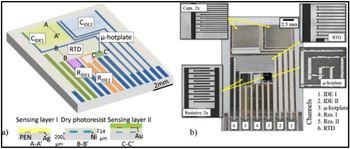
Not many systems are available in the state-of-the-art that can accurately provide sensitivity to multiple elements using passive RFID technologies. The mainstream RFID technologies such as HF and VHF frequencies have not been explored for such sensitivity simply due to the size of the sensing circuit/resonator which is obvious due to their higher λ values. UHF RFID which is also quite popular has inherent limitations of implementing multi-parameter sensing due to the limitation of the microchip. There are multiple parameter sensors recorded in the literature [Reference Quintero, Molina-Lopez, Smits, Danesh, van den Brand, Persaud, Oprea, Barsan, Weimar, de Rooij and Briand81] which was developed using multiple resonators connected to a couple of microchips where each resonator can act as a separate sensor. These resonators are developed using printed electronics to reduce the overall cost of the sensor system and reference resonators were also provided to magnify the change in sensitivity of the intended resonators.
As explained in Fig. 27, the sensing platform is quite complex in operation and need processing power to distinguish different responses coming out of the microchip. Even though the use of a microchip has increased the sensitivity and reading range of the sensor, it also increased the unit cost of the sensor system and its complexity.
Smart RFID label with a printed multi-sensor platform for environmental monitoring [Reference Quintero, Molina-Lopez, Smits, Danesh, van den Brand, Persaud, Oprea, Barsan, Weimar, de Rooij and Briand81].

7. Conclusion
Understanding the limitations of all the above sensors and sensor platforms have helped to define the necessity of developing a low-cost reliable RFID sensor that can operate either in a single or dual band which can sense multiple physical environmental parameters of the immediate microclimate. When it comes to food safety, the key aspects such as humidity, temperature, and pH sensing are considered as the important parameters in measuring food freshness while material characterization to develop unique attributes which provide specific sensitivity and robust system architectures can be an interesting research scope to explore in future. The challenge ahead is to investigate the possibilities of using a low-cost multi parameter RFID sensor system for food-freshness applications.
 Tharindu Athauda completed his Bachelor of Information Technology from University of Colombo School of Computing, Sri Lanka in 2009 and BSc Engineering (Hons) in Textile Process Engineering from University of Moratuwa in 2010. He has comprehensive research and innovation experience in diversified interest areas in Wearable Technology and Smart Materials Platforms over 7 years in Sri Lanka and Europe. Currently, he is pursuing his PhD studies in Electrical Engineering at Monash University. His areas of research interest include wearable antennas for portable devices, super wide band antenna, low-cost chipped and chipless RFID sensors and chipless RFID printed electronics.
 Nemai Chandra Karmakar (S'91–M'91–SM'99) received a PhD degree in Information Technology and Electrical Engineering from the University of Queensland, St. Lucia, QLD, Australia, in 1999. He has 20 years of teaching, design, and research experience in smart antennas, microwave active and passive circuits, and chipless RFIDs in both industry and academia in Australia, Canada, Singapore, and Bangladesh. He is currently an Associate Professor in the Department of Electrical and Computer Systems Engineering, Monash University, Melbourne, VIC, Australia. He has authored and co-authored over 230 referred journal and conference papers, 24 referred book chapters and one co-authored and three edited books in the field of RFID. He has two patent applications for chipless RFIDs.