Introduction
Because of global migration and aging populations, older patients are increasingly defined by cultural heterogeneity and people whose native language differs to the dominant language of their host country (Butow et al., Reference Butow2011a; Hanssen & Pedersen, Reference Hanssen and Pedersen2013). In Australia, the population of older culturally and linguistically diverse (CALD) immigrants is expected to increase by 66%, compared with a 23% increase for those born in Australia (Johnstone et al., Reference Johnstone2016a, Reference Johnstone2016b). This trend will lead to an increased need of palliative care for CALD populations and have significant implications for the planning and delivery of palliative care services (Lau & O'Connor, Reference Lau and O'Connor2012; Johnstone et al., Reference Johnstone2016a).
Communication is a key issue in providing palliative care to patients from CALD backgrounds, especially for those with limited English proficiency (Chiu et al., Reference Chiu2009). Approximately one-third of older immigrants in Australia are reported as having low levels of English proficiency (Johnstone et al., Reference Johnstone2016b). Cancer patients with limited English proficiency accessing palliative care are vulnerable to inadequate assessment and management of pain and spiritual and emotional suffering (Silva et al., Reference Silva2016). Limited English proficiency is also identified by palliative care providers as a barrier to communication (Martin & Barkley, Reference Martin and Barkley2016; Shaw et al., Reference Shaw, Zou and Butow2015). Thus, improved communication between palliative care providers and patients from CALD backgrounds is essential to the provision of quality care (Chiu et al., Reference Chiu2000; Mitchison et al., Reference Mitchison2012; Silva et al., Reference Silva2016).
The importance of understanding the influence of cultural and linguistic considerations on palliative care is reflected in growing recognition of the need for further research (Hanssen & Pedersen, Reference Hanssen and Pedersen2013; Johnstone & Kanitsaki, Reference Johnstone and Kanitsaki2009; Johnstone et al., Reference Johnstone2016a, Reference Johnstone2016b; Ngo-Metzger et al., Reference Ngo-Metzger2003). Improved understanding is essential to removing barriers to accessing palliative care for patients from CALD backgrounds (Butow et al., Reference Butow2011b; Lau & O'Connor, Reference Lau and O'Connor2012). There has been significant development of specialist palliative care services within New South Wales, Australia; however, there is little information available at the patient level that describes how palliative care services affect the type and quality of care provided. There are even fewer data on the preferences for place of care for patients from CALD backgrounds when entering the last days of life. The aim of this study was to understand the clinical and psychosocial journey of patients from CALD backgrounds who had transitioned from acute care facilities to either community or inpatient palliative care services. There are eight domains of palliative care: physical, disease management, practical, psychological, social, spiritual, end-of-life care, loss, and bereavement (Department of Health Western Australia, 2008). This study explored the physical, psychological, spiritual, and social domains in the patients’ journey to identify what was occurring and opportunities for improvement.
Methods
Using an audit methodology, we undertook a retrospective audit of the medical records of 100 consecutive deceased patients from CALD backgrounds over a 12-month period in 2014–2015. The study cohort group had transitioned to either community or inpatient palliative care services with a life-limiting illness. Patients from CALD backgrounds were defined as people born in a country other than Australia in which the official language is not English. Ethical approval for this study was granted by the Prince of Wales Hospital Human Research & Ethics Committee Ref. No. 15/329 (NR15/POWH/603).
This study was conducted at a subacute hospital with a specialist palliative care unit and a community palliative care service in a metropolitan region of New South Wales, Australia. The hospital is the main referral point for patients with a life-limiting illness in the region. The top five healthcare interpreter languages accessed at the hospital were Greek, Arabic, Chinese, Italian, and Macedonian.
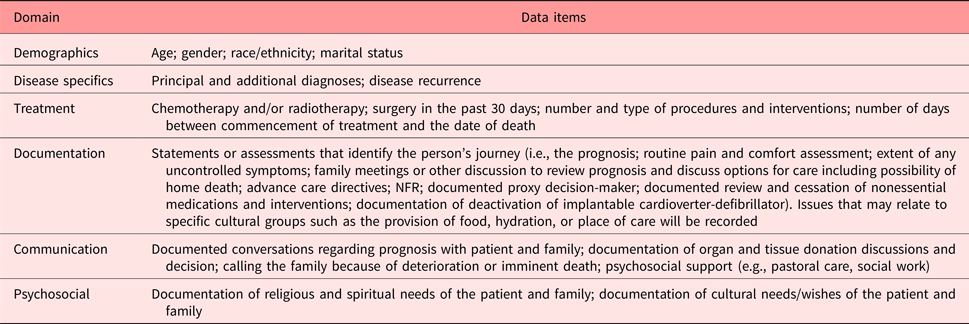
The data were collected by a researcher (NJ) at the Medical Records Department for the identification of relevant records. Eligible cases were identified from manually reviewing records on the top five healthcare interpreter languages accessed at the hospital and professional interpreter use for patients born in a country other than Australia where the official language is not English. All medical record audit data were recorded on a data mining tool to record the patients’ end-of-life journeys (Table 1).
Data mining tool domains

A short narrative of the patient journey at the end of each audit was also included. Qualitative data were collected from fragments of staff case notes that NJ identified as relevant to different aspects of patient care. The majority of case note records were made by nursing and pastoral care staff (84% for communications with patients; 91% for communications with family). The forms were deidentified. No patients were involved. No medical records were removed and all chart audits were undertaken in the department. A second coder (EL) audited 10% of the data to assess the quality of data extraction.
Analysis
An SPSS database was set up and all data resulting from the chart audits were entered. Descriptive statistical analyses were performed. Qualitative data relevant to different aspects of patient care from case notes were summarized. Data of the last seven days of patients’ lives were analyzed. The analyses focused on seven days before the death of the patient (day 7) and the day before the death occurred (day 1).
Results
Characteristics of patient sample
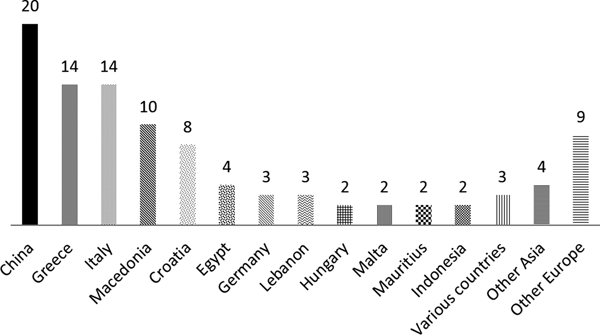
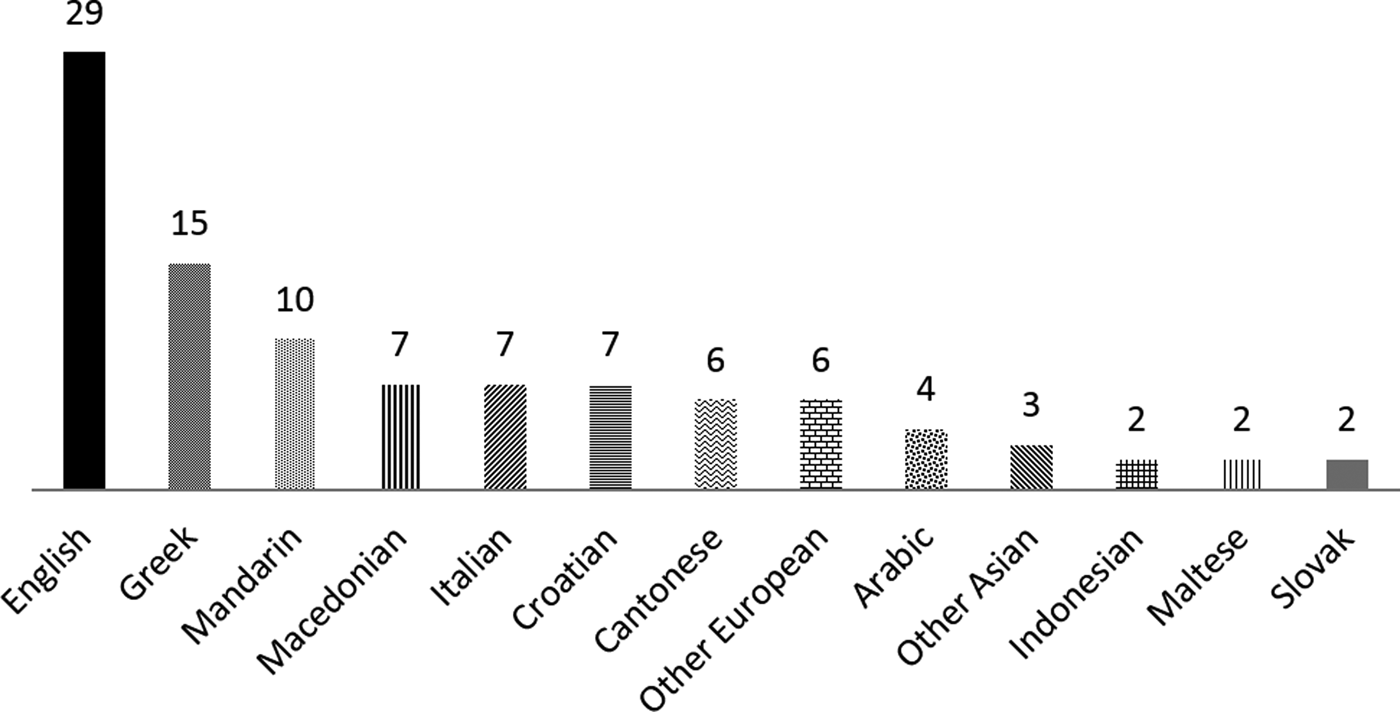
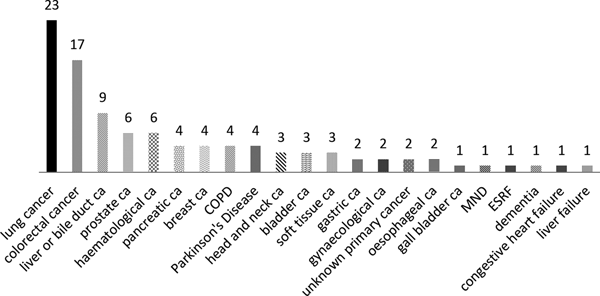
The mean age of patients was 75 years. More than one-half (54%) of patients were male. The majority (58%) had a partner. The patients were most frequently born in China (20%) (Graph 1). Although all of the patients were born in non–English-speaking countries, 29% had English recorded as their preferred language (Graph 2). The majority (67%) of patients had affiliation with a Christian religion (42% Catholic, 16% Greek Orthodox, and 9% Macedonian Orthodox) and 17% of patients indicated “no religion.” The vast majority (87%) of patients’ principal diagnosis was cancer, with lung cancer (23%) being the most common (Graph 3). More women than men were recorded as primary carers for their family member (29% daughters, 25% wives, 16% sons, and 15% husbands).
Country born (% of patients).

Preferred language (% of patients).

Principal diagnosis (% of patients).

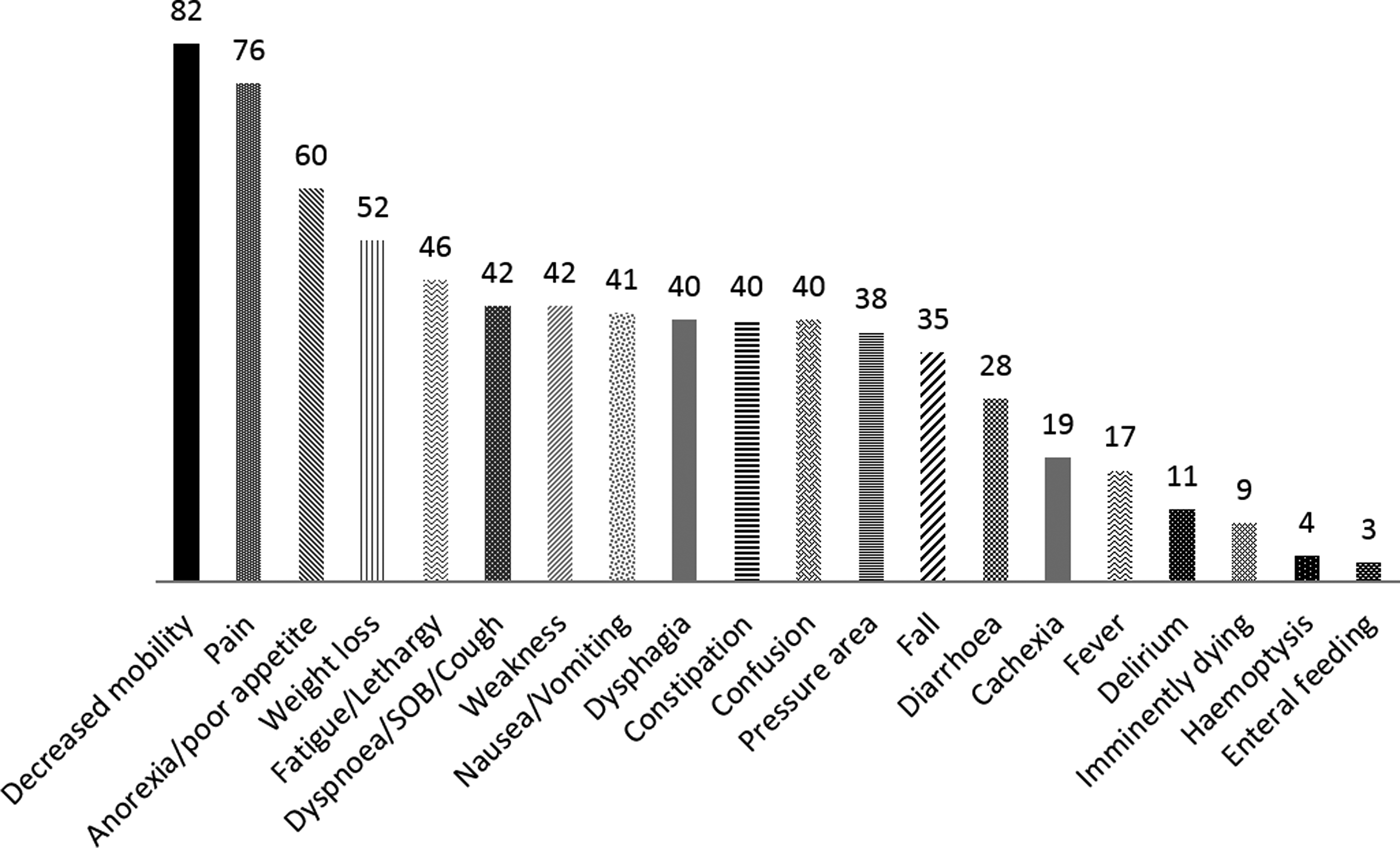
The median length of stay at the hospital on last admission was seven days. More than one-half of the patients (53%) were recorded as admitted from a tertiary hospital in the region. Symptom management was recorded as the reason for admission for 56% of the patients, 33% were admitted specifically for end-of-life care, and 17% for respite. The most common symptoms burdening the admitted patients were decreased mobility (82%), pain (76%), poor appetite (60%), and weight loss (52%) (Graph 4).
Symptom burden on admission (% of patients).

On admission, 55% of patients were identified as requiring an interpreter, mostly by patients who were born in China, Greece, Macedonia, and Italy. Professional interpreter services were used for only 9% of patients, however. Thirty-seven percent of patients used their family members as ad hoc interpreters. For 11% of patients, bilingual hospital staff members were used as ad hoc interpreters.
Physical domain
Typically, the first notations about patients’ CALD status were taken by nursing staff on admission. Limitations to communication with patients were noted in more than one-third (39%) of medical charts. Some patients (27%) were described as “nonverbal” or “unable to verbalize,” of which only 5% were due to their medical conditions. For the remaining patients, the difficulties were attributed to the patients’/families’ lack of English proficiency. A number of problems arose with patient communication because of language barriers. Some nurses reported struggling to properly admit patients and raised concerns about quality of care being compromised, especially when levels of pain couldn't be properly assessed and addressed or safety education couldn't be delivered.
Patient is alert and of CALD background so unable to determine if orientated. (Nurse)
Some pastoral care workers reported not being able to assess patients or inform them about their rights and responsibilities. When that happened, the workers often chose to visit the patient at another time. Family members were either used as ad hoc interpreters or the practitioners conducted the assessment directly with them, bypassing the patient.
Visited patient (…). Patient does not speak English. Hope to see family when they visit to do assessment. (Pastoral care)
The majority (61%) of patients received documented physiotherapy support, whereas 20% received nutritional support and 10% interacted with an occupational therapist. Speech pathology support was received by 13% of patients.
Various issues around provision of food and hydration were significant. Some patients (10 entries) seemed to only tolerate homemade food. Food and dietary requirements were documented as discussed with 39% of families. Medical records reported that some family members were upset at the patient losing his or her appetite or ability to eat, which could be attributed to values associating ingestion of food with rehabilitation and well-being.
Six entries stated that families were attempting to force-feed patients. Nursing and pastoral care notes demonstrated consistency in trying to educate the families about the risks of force-feeding and the physiology of the end-of-life phase (e.g., losing appetite). The case notes also demonstrated that, despite these repeated attempts, some families continued to feed patients.
Explained to family that we should not force patient to eat if she does not want to. Husband was feeding patient rice, but patient was pooling food in her mouth. Patient's family were advised not to feed patient anymore food this evening. Family come, try hard to feed, patient not eating much. (Nurse)
Several families raised concerns about the medical staff ceasing the delivery of food or fluids to patients, who were either in terminal phase, unable to swallow, or nauseous upon ingestion or fluid uptake. Consistent nursing staff, dietitian, and speech pathologist notations suggest that staff attempted to reassure families by explaining the rationale for these actions and the process of dying.
Nausea and vomiting when attempting to eat and drink. Patient says she's hungry but she's not allowed to eat. Family inquired re: ceasing fluids and explained same. (Dietitian)
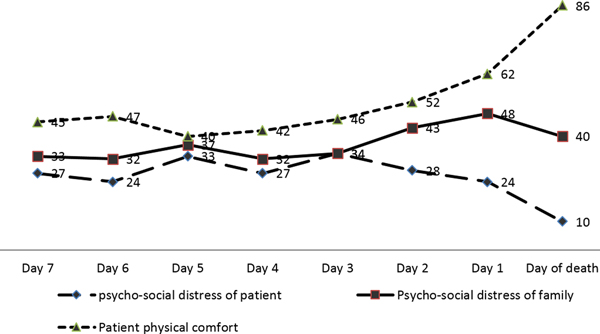
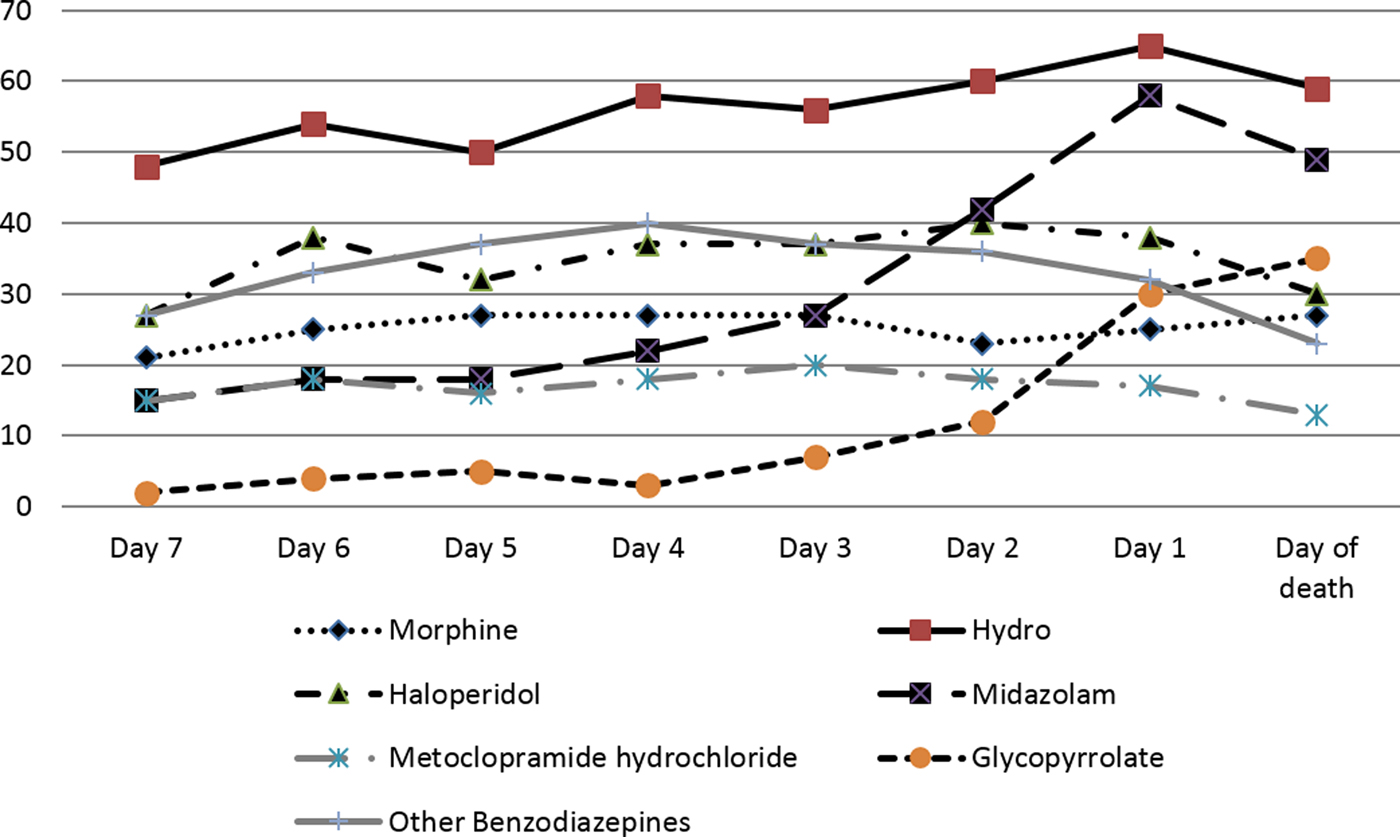
Fewer than one-half (45%) of the patients were documented as experiencing overall physical comfort seven days before their death (Graph 5). The comfort rates appeared to increase as they became closer to death, with 86% documented as overall physically comfortable on the day of death. Almost one-half of the patients (48%) had hydromorphone and 21% of patients were administered morphine seven days before death (Graph 6). On the day of death, more patients (59%) were administered hydromorphone and 27% morphine. Other comfort medications accessed were haloperidol, midazolam, metoclopramide hydrochloride, glycopyrrolate, and other benzodiazepines (e.g., lorazepam, diazepam).
Patient and family comfort in last seven days (% of cases).

Medication administered in the last 7 days of patient's life (% of patients).

Eleven families also raised concerns about certain medications administered to patients, specifically opiates and sedatives. Some family members were concerned that the medications were making the patients drowsy and less interactive. Others were worried that the medications were shortening the patients’ life or otherwise contributing to their decline. The notes demonstrate the consistency of nursing staff educating the families about the actions of the medications and patients’ need for rest at the end of life. In one particular case, the family forbade the doctors to increase the dose of the pain medications out of concerns that they were detrimental to the patient's health, whereas in other cases the families’ concerns were diminished after talking to nursing staff or medical review.
Patient's family unhappy with care. Son was very intrusive, following me and questioning what I was doing. Daughter questioned why pain relief increased and asked that it be reduced!! Family are very difficult to deal with and unfortunately I think they are probably compromising care as they do not fully understand the actions of the medications we are administering. (Nurse)
Almost all (98%) of patient records included not-for-resuscitation (NFR) documentation; however, patient participation in the NFR discussion was recorded in only 32% of records and family participation in 45% records. Only 38% of NFR documents were completed in their entirety.
Discussions with patients and their families around the place of care, should the patient remain stable or improve, featured consistently in the medical, social work, and pastoral care notations. In 10 cases, the notations reported the patient vocalizing their desire to return home. On most occasions, this desire was in conflict with the patient's state of health (e.g., uncontrolled symptoms) or the wishes of the family, who stated that they were not able to care for patient at home. Some family members reportedly expressed their upset and disappointment with the expectations placed by other family members that they would care for the patient at home, potentially related to cultural norms.
Spent some time with daughter who spoke of her stress and exhaustion. (Daughter) is disappointed that there is an expectation that she will take care of mum and take her home, where she feels she cannot manage her care alone. (Pastoral care)
In a few cases (n = 3), the patients and family members clearly communicated their concerns about being discharged from the hospital without further supports. Some family members considered the offer of using services assisting in home care proposed by social workers.
Discussions about transfer to residential care were documented with 20% of families. For most of the patients, it wasn't preferable. Some families (n = 5) outright rejected the idea of residential care and communicated their keenness to care for the patient at home. The notes suggest that these family members often saw caring as their unquestionable responsibility, as well as something that they wanted to undertake.
Nevertheless, some patients and families (n = 5) seemed more readily accepting of the possibility of moving to residential care. Those patients, who had been living alone and self-caring before their admission, reportedly demonstrated a pragmatic approach to their further care.
Psychological and spiritual domain
The facility has a policy that all newly admitted patients are visited by the pastoral care worker. Some form of communication with the patient was documented in 90% of the records. Eighty-seven percent of patients were seen by a pastoral care worker, whereas 31% were seen by a social worker. Forty-one percent of the patients had their spiritual or religious needs recorded, but only 5% had their cultural wishes or needs documented.
Communication with the patient's family was documented in 97% of the medical records. Family meetings were recorded as held for 41% of patients and their families. Proxy decision-maker or enduring guardians were documented in 53% of communications with the families. Although 45% of family members had documentations of their or the patients’ spiritual and religious wishes, only 21% had their family cultural wishes or needs documented.
Nine medical charts stated that the patients were not aware of their prognosis on their last admission at the hospital. It is difficult to deduce whether or when such lack of awareness resulted from their own wish not to know, the family's concern, or both. Five entries reported that the patient's family members did not wish for them to know that they were dying. A couple of entries signalled that the family members were honoring their respective cultural traditions, in which advising the patient of a terminal illness or short prognosis was not practiced. These practices were considered protecting the patient from bad news and not causing further harm.
Family aware of diagnosis and prognosis, however they have not told the patient as they state in their culture they protect loved ones and do not advise of serious illness. (Pastoral care)
However, 14 patients were documented as aware of their end-of-life status, with some reported to show little or no anxiety in regard to dying. Other notes suggested that family members reported the patients openly communicating about their imminent death with their loved ones. Five entries clearly reported that the patients openly stated their wish to die. Several entries specifically focused on the suffering experiences by the patients toward the end of their lives and their consecutive wish to end it.
Twenty-seven percent of patients were documented as experiencing psychosocial distress seven days before death and 10% had psychosocial distress on the day of their death (Graph 5). More family members appeared to have psychosocial distress in the last seven days of the patient's life than the patients (Graph 5). Thirty-three percent of families were documented as experiencing psychosocial distress seven days before the patient's death; this rose to 48% a day before death and 40% on the day of the patient's death.
Pastoral care notes showed consistency in patients and their families requesting spiritual and pastoral care. Most frequently (30%), notations about local priests visiting the families or requests for pastoral care workers to organize priest visits were made. Several patients and families who identified as Buddhist inquired whether pastoral care was able to organize visits from monastics. The records suggest that this quest proved challenging, with temples not being available.
Explored spiritual beliefs – patient is Buddhist – he would like a monk to visit for blessings. He does not have contact with a particular person and is happy for hospital to organize. Buddhist nun from SGH visited patient this am, but language difficulty. I found a Cambodian monk from (suburb). (Pastoral care)
Eighty-six percent of the families were documented as being prepared for the patient's death by the hospital team. The vast majority (91%) of families were seen by a pastoral care worker and 49% of families by a social worker. Bereavement needs were considered (e.g., by issuing a bereavement counseling by issuing a bereavement counseling information package) for 48% of families. Discussion about the preferred place of death was recorded in 45% of patients’ documents. Discussions with the nursing staff about the care of the patient's body postdeath were discussed in 20% of cases.
Social domain
Notations about visitors appeared consistently in the audited medical charts. Significant numbers of visitors coming to see patients in the last days of life were reported. The visitors were often close family members, sometimes travelling from interstate or another country, distant relatives, friends, and people from patients’ church communities.
However, eight entries noted concerns, either from the immediate family or nursing staff, about the number of visitors. These were related to large numbers of visitors having a detrimental impact on the patient (e.g., tiring or upsetting them). In some instances, immediate family members appeared torn between honoring their cultural customs and their families’/friends’ desires to say goodbye to the patient and the concern for the patient's energy level and comfort.
(Family) thought he was more comfortable with visits from immediate family, but long visits from people he hasn't seen a long time are tiring/stressing him out, but they are a cultural custom. (Social worker)
The notes demonstrate that in these cases nursing staff, pastoral care, and social workers were consulted about the management of the visitors. Strategies, such as putting a notice at the door, or limiting visitors to two at a time, were suggested; however, there was a dearth of documentation about their implementation.
Discussion
This study provides valuable insights into four domains of palliative care in the end-of-life journeys of patients from CALD backgrounds in Australia. The practice of palliative care involves physical, psychological, spiritual, and social domains. Understanding the influence of cultural and linguistic factors on patient journeys at the end of life is an essential part of providing quality care. Cultural assumptions about patients, however, may lead to inappropriate outcomes (Mitchison et al., Reference Mitchison2012).
Communication is key to balancing the needs of the individual and the needs of the family in palliative care. This study found language was an important barrier and that there was inadequate access to professional interpreters. It is important to raise palliative care provider knowledge and awareness of the role of professional interpreters through education (Silva et al., Reference Silva2016), such as through workshops.
Addressing concerns regarding disclosure of diagnosis and prognosis, while ensuring providers fulfill their duty of care related to truth telling, requires the exchange of information in a culturally appropriate manner and establishing trusting relationships. The ethical dilemma faced by palliative care providers in respecting family preference for nondisclosure influenced by cultural values, as well as the Western ethical principle of patient autonomy, has been reported elsewhere (Chiu et al., Reference Chiu2009). This study found that the role of family members as intermediaries between patients and providers is in conflict with the Western medical emphasis on patient autonomy. To avoid negative outcomes from cultural generalizations, decisions related to disclosure should focus on the needs of the individual patient, reflecting a standard palliative care approach modified by cultural considerations (Tse et al., Reference Tse, Chong and Fok2003).
This study also found a lack of documentation of cultural wishes. Only 5% of files documented patients’, and 21% of files documented families’, cultural wishes. Only 20% of files had documented care of the body after death. Cultural assessment of the patient and family members on admission may help to inform a more patient-centered approach to care.
The administration of pain medication and adequate nutrition were documented as key concerns of family members. Working with family members to increase their knowledge and comfort with administration of pain relief through ensuring they understand the rationale is a key consideration. Concerns were also documented around family distress regarding patients’ lack of appetite and food consumption. To minimize the risk of inappropriate feeding, communication to family members of this risk should be done in a culturally appropriate manner.
Older people from CALD backgrounds will have a significant impact on palliative care provision. Cultural and linguistic considerations need to inform the planning and delivery of palliative care services to meet the needs of patients from CALD backgrounds and ensure the provision of quality care. Such care includes addressing physical, psychological, spiritual, and social palliative care domains. When language is a barrier, a professional interpreter is required to assess physical symptoms and address cultural and spiritual needs including place of care and place of death. Other aspects may involve family education resources on pain control and symptoms of imminent death produced in different languages.
This study found that the role of the family in palliative care was strongly driven by community expectations, which was particularly evident around concerns related to the volume of visitors and place of care. Palliative care services should develop and evaluate strategies to support families with managing large numbers of visitors and manage community expectations more generally. Community outreach programs to deliver educational interventions may help to increase awareness of palliative care among CALD communities (Martin & Barkley, Reference Martin and Barkley2016). We call for the increased participation of CALD communities in the tailoring of education and information to developing cultural and linguistic considerations in palliative care.
Limitations
A limitation of this study is the quality and quantity of documentation, which in many cases was minimal. Qualitative research with palliative care providers exploring some of palliative care domains would assist in providing a deeper understanding of care provision to patients from CALD backgrounds, their families, and wider communities.
Acknowledgments
We thank the Multicultural Health Service who provided important feedback on the data mining tool to include aspects of care that are of significance to CALD patients and their families.
Author disclosures
This study was supported by a Multicultural Health Service Grant from South East Sydney Local Health District.