Introduction
Early-life development is increasingly recognized as a critical time for setting trajectories for life course health and well-being.Reference Gluckman and Hanson1 As a consequence of developmental plasticity, early-life environment can permanently modify the postnatal phenotype and therefore alter vulnerability to disease risk later in life.Reference Gluckman, Hanson and Low2 Initial evidence in this field focussed on the impact of maternal undernutrition, marked by low birth weight. This demonstrated a continuous association between birth weight within the normal range and increased risk of obesity, cardiovascular disease and metabolic disorders in later life, independent of potentially confounding variables such as socio-economic environment during the life course.Reference Barker3 However, it is now established that the foetal environment impacts on the development of every child.Reference Gluckman, Hanson and Beedle4 Evidence (human and experimental) shows that maternal high-fat diets also have negative consequences for offspring adiposity and metabolic function independent of postnatal diet.Reference Catalano and Ehrenberg5, Reference Li, Sloboda and Vickers6 Both maternal undernutrition and maternal high-fat diets are issues of significance at a population level. Globally, 15.5% of all births are of the low birth weight category.7 Although the majority of these are in developing nations, since 1995 there has been an increase in the prevalence of low birth weight infants in most OECD countries.8 In developed nations, 58% of mothers are overweight or obese.Reference Finucane, Stevens and Cowan9 The increasing burden of non-communicable diseases (NCDs) is creating a significant economic and social load on society.10, Reference Beaglehole, Bonita and Horton11 Nutritional and behavioural interventions in early life may be able to alter trajectories of later disease risk and life course well-being more cost-efficiently than traditional lifestyle modifications or treatment in middle age.Reference Heckman12, Reference Godfrey, Gluckman and Hanson13
Despite well-established knowledge to support the importance of healthy behaviours before and during pregnancy, in early infancy and in childhood for future well-being, communication of this knowledge has not been sufficient to complete the process of knowledge translation to effect behaviour change within populations. Nutritional guidelines in pregnancy, based on evidence to promote healthy foetal development, are now well established and widely disseminated, but this has not led to widespread behaviour change; recommended dietary changes for pregnancy often are not followed by mothers throughout their pregnancies.Reference Crozier, Robinson, Godfrey, Cooper and Inskip14–Reference Morton, Atatoa Carr and Grant16 Evidence also shows that educational attainment is a significant factor in the quality of diets before and during pregnancy,Reference Watson and McDonald17, Reference Robinson, Crozier and Borland18 suggesting that interventions targeting communities where lower levels of educational attainment are common may be beneficial. A relatively high number of all pregnancies are unplanned, with these more likely to be in younger mothers.Reference Morton, Atatoa Carr and Grant16 Teenage pregnancy rates are high in both developed19 and developing nations (11% of all live births globally),20 and are more likely to be associated with low birth weight.21 Interventions during adolescence that facilitate positive lifestyle and nutritional behaviours in advance of pregnancy, alongside understanding of the long term and intergenerational value of such behaviours, offer benefits to both teenage and future adult pregnancies. Such interventions need to focus on development of health and science literacy, equipping young people to use evidence in decision making that will facilitate improved health, social and economic outcomes.
Health literacy is defined as a measure representing ‘the cognitive and social skills which determine the motivation and ability of individuals to gain access to, understand and use information in ways which promote and maintain good health’.22 At a basic level this can facilitate change in personal lifestyle or the use of health services. However, at a higher level, health literacy raises awareness of the social, economic and environmental determinants of health, potentially facilitating individual or collective actions that may lead to the modification of these determinants.Reference Nutbeam23 Scientific literacy is defined as ‘the capacity to use scientific knowledge to identify questions and to draw evidence-based conclusions in order to understand and help make decisions about the natural world and the changes made to it through human activity’.24 When applied to a health context, scientific literacy supports the individual to use scientific evidence and knowledge to make decisions relating to the health and well-being of themselves and their community. These literacies support the potential translation of science knowledge leading to behaviour change, however, effective pedagogies must be employed to achieve this.
Standard public health campaigns that use unidirectional transmission communication tools such as advertising have been shown to create change awareness and sometimes immediate behaviour changeReference Ashfield-Wayy25 but often do not result in sustained behaviour change.Reference Bauman, McLean and Hurdle26 Transactional communication models offer an alternative to communication of science to society.27 These models recognize that to lead to knowledge translation, communication must be an interactive process, and support learning via co-construction of understanding. Viewed from a social constructivist perspective, this should occur within an environment that acknowledges that individuals learn within the context of their personal, social and cultural experience and setting, recognizing that science itself is a human activity that occurs within a cultural and institutional framework.Reference Lemke28 Transactional communication models support development of understanding that will encourage lifelong learning. This supports the well-established notion of the importance of development of understanding of the nature of science for functional scientific literacy in 21st century societies,Reference Miller and Osborne29–Reference Abd-El-Khalick, Bell and Lederman32 enabling individuals to use scientific knowledge and skills in decision making and understand that science knowledge is dynamic.
We hypothesize that multidisciplinary science/science education partnerships can develop and deliver educational intervention tools to facilitate effective translation of Developmental Origins of Health and Disease (DOHaD) concepts, leading to appropriate behaviour change and supporting improved health, social and economic outcomes relating to NCD risk.
Methods
We used a mixed (qualitative and quantitative) method design to ascertain whether or not the intervention tool allowed the subjects to develop understanding of the association between nutritional environment and health at different stages of the life course. Data collection was via a combination of questionnaire, observation and interview at four time points, which were as follows: pre-intervention; intervention; 6–12 weeks post intervention; 6 months post intervention.
The intervention tool (The Healthy Start to Life Adolescent Education Programme)
An intervention tool, to be applied as modules of work within school science programmes, was developed via collaboration between science educators and scientists. This tool was designed to support science and health literacy developmentReference Grace and Bay33 and allow students to engage with and explore the culture of science. Learning activities were designed to facilitate exploration of the nature of science, the process of science and concepts relating to nutrition and development. The modules were set in the context of NCD risk, a socio-scientific issue of relevance to the communities in which the trial was occurring, and introduced concepts of DOHaD. Learning activities explored socio-scientific decision making relevant to this context. The intervention tool consisted of:
(1) a choice of two 4–6-week modules of workReference Bay and Mora34–Reference Bay and Mora36 to be selected by the teacher, for use in Years 7–10/Grades 6–9 (11–15 year olds), linked to the New Zealand curriculum,37 utilizing a range of engagement strategies (Fig. 1);
Fig. 1Engagement with a context over a period of time and through a range of interactions with science via teaching modules linked to the context of non-communicable disease (NCD) risk. DOHaD, Developmental Origins of Health and Disease; CVD, cardiovascular disease.

(2) teacher professional development workshops relating to science and science education relevant to implementation of the modules and including access to online support materials;Reference Bay and Sloboda38–Reference Bay, Sloboda, Hampton and Vickers41
(3) a single day (5 h) hands-on education programme for students conducted within the setting of a specialized classroom at the Liggins Institute, held part way through the module of work.Reference Bay and Mora42, Reference Bay and Mora43
Recruitment
Ethics approval was obtained from The University of Auckland Human Participants Ethics Committee. Participants were enrolled from 24 classes across nine Auckland schools. Purposive samplingReference Teddie and Yu44 was used in the selection of schools invited to participate (n = 13) to create a cohort that was representative of schools across the Auckland urban region. Consent to participate was obtained from principals, teachers and parents, and assent from adolescents. All students in participating classes were exposed to the selected module independent of participation in the study. Resources required for implementation of the modules were provided to schools.
Data collection
Questionnaires for adolescents and parents utilizing Likert attitude scales and closed items, and for parents including open items, were applied before and after intervention. The questionnaires ascertained perceptions regarding aspects of science and health. Questions providing indicators of diet and lifestyle provided pilot data on the potential of the intervention to support appropriate behaviour change in the adolescents. Validation of the adolescent questionnaire as an appropriate tool for 11–15 year olds was carried out in a group of 30, Year 10/Grade 9 students, 10 of whom participated in a focus group discussion regarding their interpretation of and responses to the questionnaire. All questionnaires were reviewed by a group of experienced science teachers to confirm the appropriateness of the literacy level and to agree on final wording.
A subset of 40 adolescents were interviewed 6 months post intervention using open ended questions (pre-tested for validity) designed to explore questionnaire evidence and evaluate the students’ experience of the programme. Interviews were conducted in the school environment by members of the research team. Observations of teaching, student work and teacher planning diaries in a subset of classes were used to confirm delivery of the intervention modules.
Data analysis
Publically available data on the socio-economic status of the area in which each school is located, the school roll and composition was used to provide information on the range of communities represented by the study participants.45 Matched data for individual students completing both pre- and post-intervention questionnaires were examined to analyse the effect of the intervention on perceptions, attitudes and self-reported behaviours in each individual, and ascertain patterns common in the group. This enabled analysis of change at an individual and cohort level. Simple descriptive statistics (non-parametric) were used to characterize and compare pre- and post-intervention responses. Observation of a subset of participating classes and interview data from a subset of students was used to seek confirmation of evidence provided by the questionnaire responses. The association between the responses of students and their parents was examined in a subset of the sample where the student and at least one parent had completed both pre- and post-intervention questionnaires.
Results
Study cohort characteristics
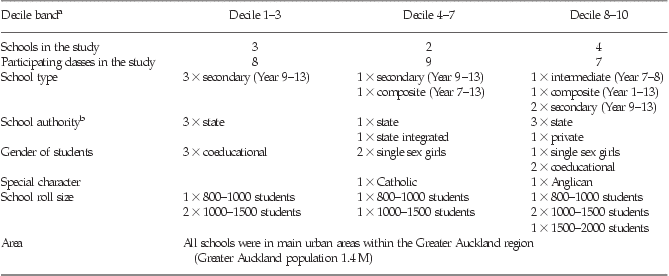
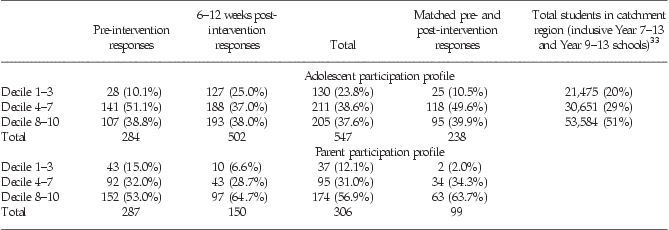
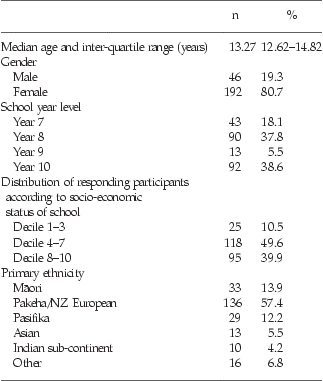
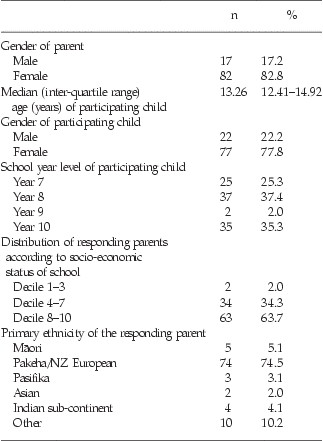
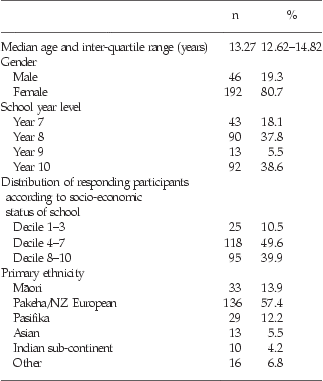
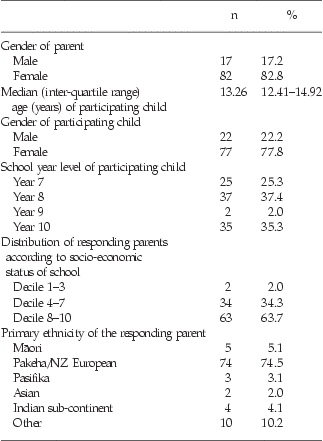
The characteristics of the participating schools and responding students and parents are shown in Tables 1–4. Parents from schools in the decile 4–7 and 8–10 bands46 (Table 1) were more likely to agree to students participating in questionnaires, and to participate themselves. Only matched data were used to examine the effects of the intervention. The questionnaire response rate for students was 1.8 times higher post intervention. The increase was particularly marked in the decile 1–3 band where the post-intervention response rate was 4.5 times higher after intervention. This difference resulted in a matched study cohort biased towards decile 4–7 schools in comparison to the composition of the city in which the study was carried out (Table 2). Thus, the matched sample analysed may represent a diligent group of students whose parents are interested in issues of health and education, able to access the time to complete the permission forms, and for whom literacy and language did not present a barrier to participation. The difference between pre- and post-intervention participation rates suggests that participation in the intervention piqued the interest of the students in issues relating to health and well-being, however further investigation of this is required. Time available for teachers to follow up on consent forms and encourage student returns also has the potential to influence participation rates.
Characteristics of the participating schools grouped according to decile band – values are numbers

aThe decile rating for a school in New Zealand indicates the socio-economic status of families of students in a school's catchment area. It is calculated from census data relating to household income, occupation, household crowding, educational qualifications, income support. Decile 1 schools are the 10% of schools with the highest proportion of students from low socio-economic communities. Decile 10 schools are the 10% of schools with the lowest proportion of these students.46
bState schools are fully funded by government. State integrated schools self-fund building and grounds resources by pupil fees and receive government funding for staffing and learning resources; Private schools are funded by pupil fees.
Parental consent, adolescent assent and adolescent questionnaire participation profile – values are numbers of individual responses (percentage)
Characteristics of the adolescent cohort (n = 238) that completed pre- and 6–12-week post-intervention questionnaires – values are numbers (percentage) unless stated otherwise
Characteristics of the parent cohort (n = 99) that completed both the pre- and 6–12-week post-intervention questionnaires – values are numbers (percentage) unless stated otherwise
The composition of the responding cohort was predominantly female, influenced by the presence of three single sex girls’ schools in the study. This is being addressed by investigation of a cohort from a single sex boy's school to be conducted during 2012.
Not unexpectedly, fewer parents than students participated in the questionnaires and the highest level of parental participation occurred in high socio-economic communities. However, a high level of support in a decile 1 school for a voluntary family meeting following completion of the module suggested that parents in this community valued the opportunity offered by the intervention experience. Parents of 90 students from three Year 9 classes were invited by letter and phone call to the event. Forty-five parents attended the early evening event and participated in discussions with students, teachers and scientists. This suggests that the lower level of parental participation in the questionnaires from decile 1–3 schools may be linked to availability of resource to contribute. This will be addressed in future related studies by providing face-to-face meetings with parents in lower socio-economic areas to explain the project before intervention and to offer opportunity for comment and reflection on the response of adolescents after the intervention. Five face-to-face interviews were held with parents from this decile band post intervention to address the low questionnaire response rate from this group.
The relationship between health, diet and lifestyle
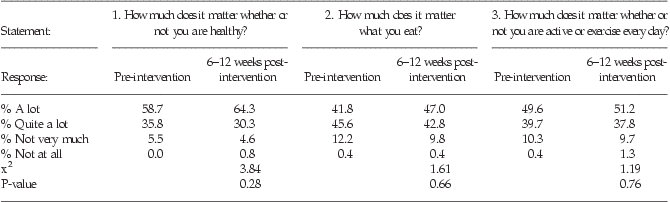
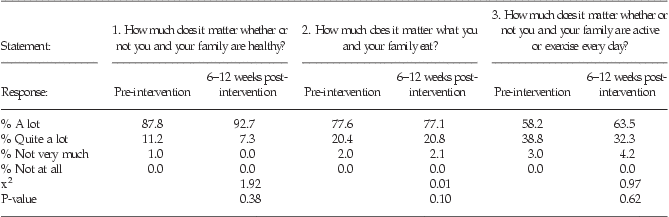
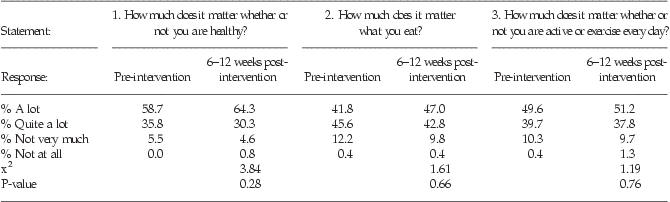
Pre- and post-intervention perceptions of the association between nutrition and health at different stages of the life course were assessed. This determined whether there was a gap in the knowledge of adolescents with respect to the determinants of health and well-being explored within the intervention, and measured the impact of the intervention on these perceptions. Adolescents and their parents expressed views supporting the importance of health, diet and daily exercise before and after participating in the intervention programme. No significant change in opinion was observed (Tables 5 and 6). Typical interview responses confirmed that participating adolescents associate good diet and regular exercise with health and well-being, for example,
It can change your life whether you are healthy or not. I try to eat healthy food and exercise. The main thing is that we need to think about the consequences of not being healthy.
Being healthy can make us live longer and makes us happier. A healthy person eats good food, they do regular exercise.
Perceptions of the importance of health and lifestyle: matched pre- and post-intervention responses in 11–14 year olds (n = 238)
Perceptions of the importance of health and lifestyle: matched pre- and post-intervention responses of parents of 11–14 year olds participating in the intervention (n = 99)
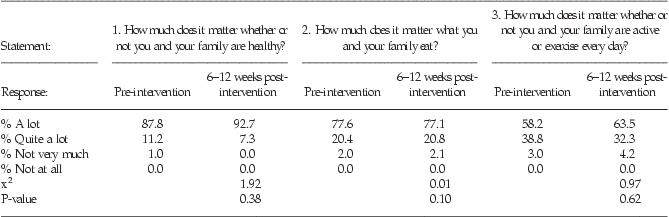
We consider that the appropriate Likert selection for question 1 ‘How much does it matter whether you are healthy or not?’ is the strongest positive response ‘a lot’. Responses of adolescents and their parents, from the subset where both parent and child responded, were significantly different (P = 0.001). Although 63% of adolescents gave the preferred response, 88% of parents gave this response indicating that adolescents are not as aware as their parents of the importance of health.
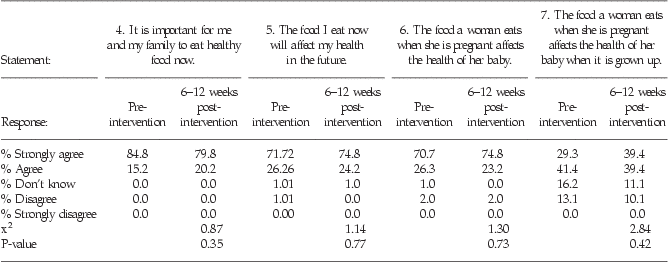
Nutritional environment at different stages of the life course and health
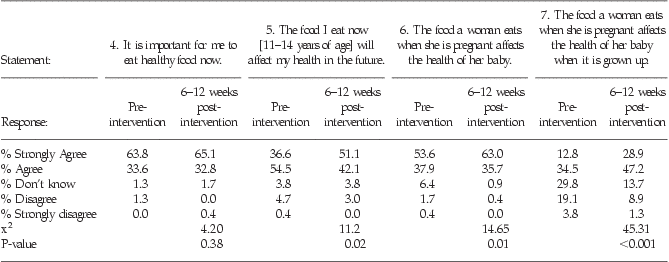
Statements 4–7 (Table 7) explored perceptions of the relationship between nutritional environment at varying points in the life course with health and well-being. Statement 4 confirmed that pre-intervention adolescents already held the view that eating healthy food is important for them at the present point in time. Exploration in interview indicated that adolescents associated healthy food with appropriate items such as fruit, vegetables and wholegrain. Likewise, they identified foods high in sugars, fats and oils as being unhealthy, for example,
Healthy foods are things like vegetables and multigrain bread. Junk foods are things like fizzy drinks and lollies [sweets/candy] and stuff.
Healthy foods are things like apples, vegetables, wheat and wholegrain foods and seeds and pumpkin and corn. Unhealthy foods are things that are oily and fatty [brand names of fast food chains] are fast food they have a lot of oil and a lot of fat – it is unhealthy.
Perceptions of the association between diet and health at different stages of the life-course: matched pre- and post-intervention responses in 11–14 year olds (n = 235)
The relatively low level of ‘strongly agree’ response pre-intervention to statement 5 (The food I eat now will affect my health in the future) indicates that while adolescents were aware of the importance of healthy food (statement 4) they were not adequately aware of the association between diet during adolescence and future health. These data show that the intervention supported increased understanding for 11–14 year olds of the long-term consequences of diet during adolescence on health. Analysis of the movement of individual responses shows that of those who either did not know or disagreed with statement 5 pre-intervention (n = 20), 80% moved to a position of agree or strongly agree post intervention (Fig. 2a). Post-intervention interview evidence confirmed adolescents recognized an association between behaviours that they establish in their teens and lifelong health, for example,
To keep healthy you have to eat well and exercise. It is important because it influences your future health.
If I do exercise and I keep fit I will be healthy when I am older, because if I don't exercise now I will be unhealthy when I am older.
(a) Tracking of individual change in matched pre- and post-intervention responses, 11–14 year olds. ‘The food I eat now will affect my health in the future’ (n = 235), Pearson's χ 2P = 0.024. (b) Tracking of individual change in matched pre- and post-intervention responses, 11–14 year olds. ‘The food a woman eats when she is pregnant affects the health of her baby’ (n = 235), Pearson's χ 2P = 0.005. (c) Tracking of individual change in matched pre- and post-intervention responses, 11–14 year olds. ‘The food a woman eats when she is pregnant affects the health of her baby when it is grown up’ (n = 235), Pearson's χ 2P < 0.001. (d) Tracking of individual change in matched pre- and post-intervention responses; parents of 11–14 year olds. ‘The food a woman eats when she is pregnant affects the health of her baby when it is grown up’ (n = 99). Movement of SD, D, DK group – Pearson's χ 2P < 0.001. SA, strongly agree; A, agree; DK, don't know; D, disagree; SD, strongly disagree.
Statement 6 explored the relationship between early-life nutritional environment and health as a baby. Although a high level of agreement with statement 6 was expected, there was a significant positive movement of response in adolescents post intervention (P = 0.017, Table 7). Of the 20 adolescents who expressed a negative or uncertain view pre-intervention, only two reported these views post intervention. In all, 53% of individuals who held the opinion of agree pre-intervention, moved to strongly agree post intervention, indicating that the intervention assisted to strengthen their understanding of the importance of nutrition during pregnancy on health outcomes in early life (Fig. 2b).
The most significant shift in opinion is seen in the response of the adolescents to statement 7, exploring the relationships between early-life environment and later life health (P < 0.001, Table 7). Of those who either did not know or disagreed before intervention, 67% moved to either agree or strongly agree. Overall, only 13% of all participants moved opinion in a negative direction post-intervention (Fig. 2c).
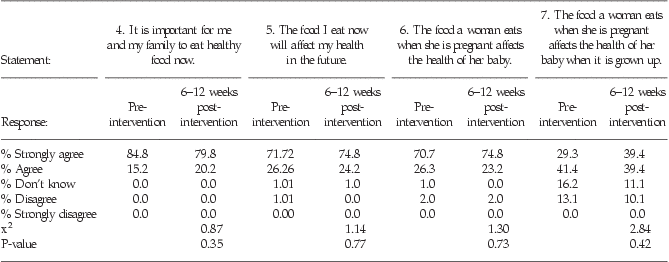
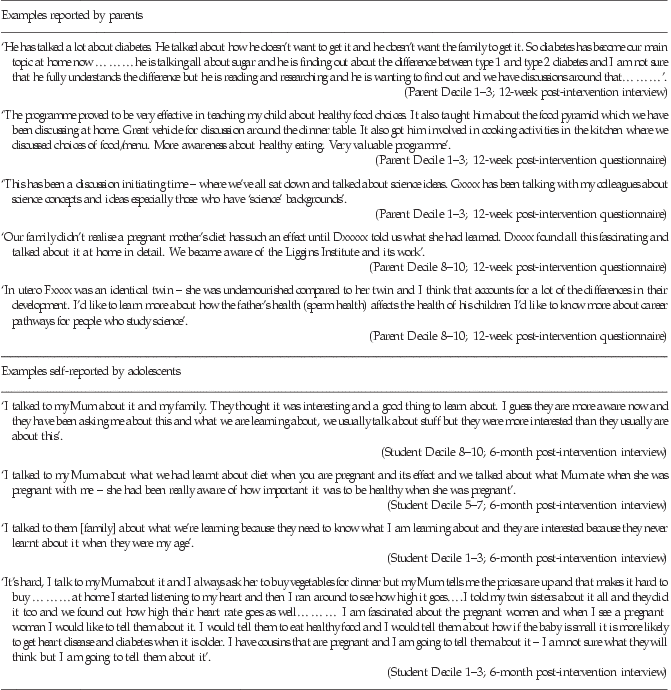
The response of parents to statement 7 was heterogeneous (Table 8). Although change in opinion in this group was not significant overall, it was significant in those whose initial response was strongly disagree, disagree or don't know. In all, 48% of these individuals moved to strongly agree or agree (P < 0.001, Fig. 2d). This suggests that parental opinions are being influenced through communication of science by their child during the intervention. Of those students interviewed, 88% indicated that they communicated about what they were learning in this module with their families. Seventy-two percent of parents reported in the questionnaire that the family had learnt from what the children had been doing at school. Remarks from 73% of parents who chose to complete the free comment section of the questionnaire related to the adolescent as a communicator of science (see Table 9 for typical examples). These data suggest that interventions targeting adolescents have the potential to influence knowledge and attitude within families.
Perceptions of the association between diet and health at different stages of the life-course: matched pre- and post-intervention responses of parents of 11–14 year olds participating in the intervention (n = 99)
Examples of evidence supporting the role of the adolescent as a communicator of science knowledge or instigator of discussions about science and health within their families
Indicators of behaviour change
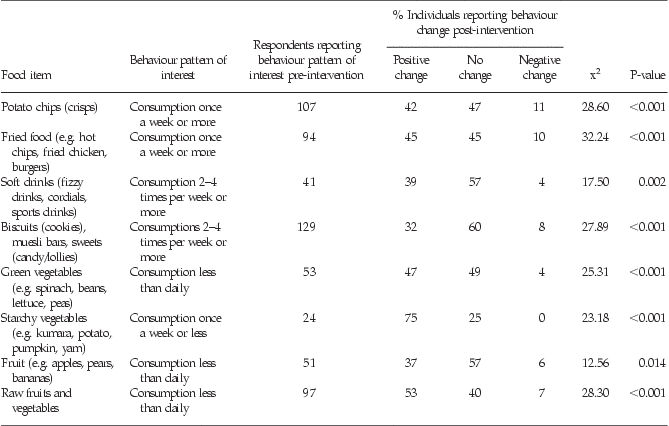
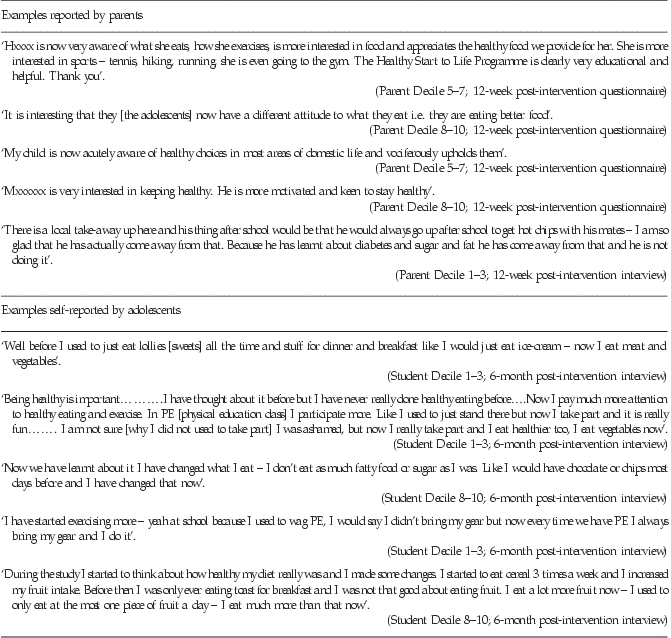
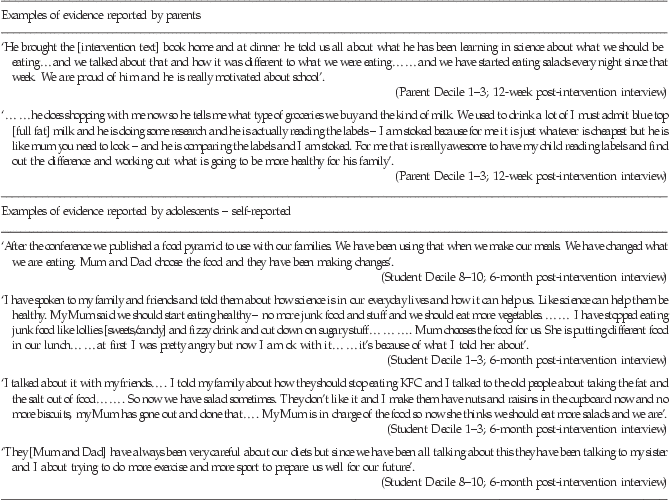
The questionnaire included a self-reported behaviour snapshot for adolescents utilizing key indicators to explore dietary behaviours. Evidence suggests that the programme has supported early behaviour change for some participants. The frequency of consumption of key foods in participants reporting pre-intervention behaviours that could contribute to NCD risk in adulthood was examined. Mixed responses were observed. Overall significant positive behaviour change was seen for all indicators (Table 10). These data are supported by examples of behaviour change reported by adolescents in the 6-month post-intervention interviews, and parents in the open comment questionnaire responses (Table 11). Adolescents were not asked specifically about behaviour change in interviews; however, 28% volunteered this information when responding to questions about what they had learnt. Interview evidence also identified that through communication to families and personal behaviour change, some students were facilitating behaviour change within families (Table 12). This information was not specifically sought; therefore, we cannot report on the level of this effect. Case studies will be used to investigate this further.
Change in self-reported diet behaviours indicated by matched pre- and post-intervention responses, 11–14 year olds (n = 173)
Examples of evidence supporting adolescent behaviour change resulting from the intervention
Note: All names have been changed.
Examples of evidence supporting the role of the adolescent as a change agent within their families
Negative change in reported behaviour was also observed. These changes were relatively small within the group where at-risk behaviours were analysed (Table 10). However, there were some significant negative changes reported within the group where pre-intervention behaviours were not of concern. For instance, 30% of those reporting pre-intervention that they consumed raw fruit and vegetables daily changed this to less than daily post intervention (P < 0.001). Similarly, 21% reporting daily consumption of green vegetables reported a negative behaviour change (P < 0.001). We intend to investigate further to determine whether the awareness about diet and health created by the intervention has altered the accuracy of self-reporting. The potential of this was indicated within the pre-study pilot group. Discussion about questionnaire responses, foods and health with the pilot group resulted in the students reviewing their self-reported behaviour entries. Changes made by the pilot students to provide what they felt were more accurate reports of their usual behaviour were negative. This may indicate that similarly the process of engagement in the intervention could have impacted on the accuracy of self-reporting, making post-intervention reporting more accurate than pre-intervention reporting.
Discussion, limitations and further research
We have established that within a variable cohort in a New Zealand urban setting, the implementation of the intervention programme by 24 teachers in nine schools has enabled communication of science leading to development of understanding of concepts relevant to the DOHaD. This evidence of development and early retention of understanding leading to behaviour change should be interpreted within the cultural and social setting of the study. Obesity, cardiovascular disease and type 2 diabetes are common in many communities including those in New Zealand, making the intervention context or setting relatively easy for adolescents to relate to.
There is potential for a high level of variation in the teaching that occurred in the 24 classrooms involved. Variation in the delivery of such a programme will be a reality if taken to scale. All teachers in the trial participated in relevant professional development. Observations in a selection of classes in schools and in the Institute setting, alongside student interview evidence, support the notion that classes were engaging with the intervention modules. This is verified by development of understanding of DOHaD related concepts in the cohort. We believe that the reported data reflects the realistic potential of the intervention to have effect in the variable settings of individual classrooms, if supported by professional development. Exploration of possible delivery methods for professional development is required.
The recognition of the basic association between diet, exercise and health on entry to the study (Table 5, Q1–3) suggests that the social and educational environment of the communities in which the cohort is situated has established understanding of some factors influencing health from which further development of knowledge and understanding of NCD risk has been built. Health and Physical Education, and Science sit within the eight compulsory learning areas in the New Zealand curriculum for students in Years 1–10.37 Achievement objectives within these curriculum areas indicate that students should have been exposed to learning experiences, which support development of understanding of the importance of life processes, health and well-being. Well-being is defined within the New Zealand curriculum as Hauora, reflecting a Māori philosophy of well-being that incorporates spiritual, mental and emotional, physical and social well-being, with each of the four dimensions influencing and supporting the others.37 This approach to health and well-being within New Zealand schools may influence the receptiveness of students to the intervention programme. This integrated approach to well-being was explored in the day programme at the Institute, within the intervention, observed in teaching within the cohort schools, and in student interview responses, for example,
Since I started at high school we have been learning about the effect of social and emotional wellbeing on health.
International comparison with a suitably culturally adjusted tool would be required to assess the effect of a school curriculum on the impact the programme had and its potential in a global setting.
Public health messages via advertising and media such as 5+a Day,47Heart Foundation Tick,48 and The Push Play Campaign 49 are commonly seen within the New Zealand social environment and may have contributed to the receptiveness of students to the programme. Some of these are specifically linked into school curricula with well-established sub-programmes aimed at adolescents.50 As noted earlier, campaigns such as these have been shown to create change awareness and sometimes immediate behaviour change in the adult population.Reference Ashfield-Wayy25, Reference Bauman, McLean and Hurdle26 These evaluations looked at the effect of the campaigns on adults, not children or adolescents, and thus cannot be compared with this study; however, they identify that awareness of the link between diet, exercise and health will be present within the communities in which the study was situated.
The process of translation of science knowledge into understanding that can be used by the community for whom the knowledge is relevant requires a series of steps including engagement, communication, knowledge uptake and behaviour change, potentially leading to communication with others. Although early evidence suggests that for some participants the intervention enabled them to move through to personal behaviour change and the communication of their new knowledge to members of their families, other participants have not reached that stage as yet.
Mxxxxxx's attitude to healthy eating has been more informed but she is still choosing unhealthy sweet food even more than ever, which I associate with her being 13 years old needing the quick fix of sugar to boost her energy levels.
(Parent post-intervention questionnaire, open comment response).
The pilot behaviour change evidence that we present is based on self-reporting, supported by co-reporting from a subset of parents. Brevity within the food frequency section of the questionnaire was a priority in this setting, enabling exploration of a range of questions at the pilot stage without compromising the time available in a school setting. Self-reporting via questionnaire is commonly used for assessment of health risk behaviours in adolescents and has shown reliability.Reference Rockett, Breitenbach and Frazier51–Reference Collins, Watson and Burrows53 Reporting of dietary intake is relatively non-sensitive and therefore unlikely to be compromised in a questionnaire setting; however, we acknowledge that the desire to please in an interview setting may lead to reporting linked to socially desirable behaviours.Reference Brener, Billy and Grady54 Children over the age of 9 years are capable of accurately reporting dietary intakeReference Collins, Watson and Burrows53 and therefore we would not expect normal cognitive variation to affect the ability of the study cohort to self-report dietary behaviours. Comparison of the self-reported data collected in the study with the National Survey of Children and Young People's Physical Activity and Dietary Behaviours in New ZealandReference Maddison, Turley, Legge and Mitchelhill55 suggests that under-reporting of healthy eating habits may have occurred. For instance, the National Survey of 10–14-year-olds reports consumption of at least one serving daily of fresh frozen or canned fruit, 94%; green vegetables, 92%; starchy vegetables, 79%. In contrast, our study reports pre-intervention daily consumption of fruit, 71%; green vegetables, 67%; starchy vegetables, 61%. This pattern was not repeated in the items exploring negative dietary behaviours, and reporting of these was comparable to the National Survey.
This initial study was intended to provide pilot data to ascertain whether the intervention had the potential to extend from knowledge uptake to behaviour change. We suggest that in this case, the use of a small number of key dietary indicators, easily understood by the participants, has provided an economically viable way of providing pilot behaviour change data without impinging on learning time within the school setting. We suggest that use of more substantial food frequency questionnaires and case studies should be employed to assess in detail the impact of the intervention on adolescent and family health behaviours.
We are yet to explore the impact of age, family socio-economic status, gender or social deprivation on the impact of the intervention. Before this can take place we need to address the gender bias and decile balance within the cohort. This work is being undertaken in 2012.
In summary, the intervention applied in a wide range of Year 7–10 classrooms in an urban New Zealand setting has strengthened adolescent understanding of the association between diet during adolescence and health and well-being in later life; strengthened understanding of the importance of nutrition during pregnancy and health in early life; and facilitated development of understanding of the association between nutrition in early life and NCD risk in adulthood. Pilot evidence suggests that it has effected positive behaviour change relating to diet in participating adolescents and has enabled intergenerational communication that in some cases has affected health knowledge in parents and supported change in family behaviours.
Acknowledgements
This work was supported by the National Research Centre for Growth and Development. The authors would like to acknowledge the teachers from participating schools for their work in implementing the programme and their support in the research processes. Assistance with data collection and analysis was provided by Richard Bulmer and Shawn Cooper.