‘Educated hope as a form of oppositional utopianism makes visible the need for progressives and other critical intellectuals to attend to the ways in which institutional and symbolic power are tangled up with everyday experience. Any politics of hope must tap into individual experiences while at the same time linking individual responsibility with a progressive sense of social agency.’ (Giroux, Reference Giroux and Cote2007, p. 33)
‘What if we were to accept that the goal of theory is not to extend knowledge by confirming what we already know, that the world is a place of domination and oppression? What if we asked theory instead to help us see openings, to provide a space of freedom and possibility?’ (Gibson-Graham, Reference Gibson-Graham2008, p. 619)
1 Introduction
There is a strong tradition of legal education engaging with its social, economic and political context. Recognising in various ways ‘how legal education participates in the reproduction of what sucks about the system’ (Kennedy, Reference Kennedy2007, p. 1), Australian law school curricula have included Marxist, feminist and critical race theory since the 1970s, especially in the newer law schools established since that period (James, Reference James2000). The Faculty of Law and Justice where we teach at UNSW, for example, maintains a commitment to the foundational declaration by our first dean in 1971 that ‘[a] Law School should have and communicate to its students a keen concern for those on whom the law bears harshly’.
Much of this work has centred on critique. Progressive legal academics have worked to engage students in thinking about the politics of law; its role in class, gender and racial inequalities; and, more recently, in the climate and biodiversity crises. While there remains much in need of critique, the urgency of current crises has prompted us to search for additional strategies, to go beyond focusing on barriers and focus on imagining something better. With Davina Cooper, in 2020 we formed a research network on Utopian Legalities, Prefigurative Politics, and Radical Governance,Footnote 1 connecting scholars working post-critically in law and other fields (Morgan et al., Reference Morgan, Thorpe and Cooper2021). Focusing on hopeful alternatives creates a way to talk across disciplines, to avoid what can feel like an overwhelming sense of oppression, and instead to foster a sense of agency.
In teaching, similarly, we are more and more cognisant of the need to balance critique with hope. As Giroux, whom we quote at the outset, argues, the ways in which critique and hope can interact are crucial to the creation of collective agency, a thriving public sphere and meaningful democratic citizenship – with the role of hope being especially crucial to the formation of ‘political agents equipped with the capacity, skills and knowledge they need not only to perform as autonomous social agents but to believe that such struggles are worth taking up’ (Giroux, Reference Giroux and Cote2007, p. 28, emphasis in original). In this, education is central: ‘what educators need to do is argue for forms of pedagogy that close the gap between the university and everyday life’ (Giroux, Reference Giroux and Cote2007, p. 37) – a perspective that resonates deeply with the practices and perspectives on teaching that we will explore in this paper.
In looking for ways to inspire and energise our students, we have found centring discussions on the place of law to be productive. In this paper, we discuss three courses in which we have taken a contextual approach to consider the role of law in shaping daily life in the city where we live and teach: Sydney. Instead of starting with the type of law – property, say, or corporations or administrative law – and then using examples to illustrate how that type of law works in context, our courses start with a particular place and then explain the range of laws that shape that place. The starting point is what the law does (and does not do), not what the law is. As socio-legal scholars, we emphasise the way these laws are applied in practice: their peopled and place-based specificity. All three courses are electives, taught to master's students or undergraduate students in the final or penultimate year of their degree: Cities, Planning, Law & Justice, taught by Amelia; Law, Urban Sustainability & the New Economy, taught by Bronwen; and Food Law, taught by both of us alongside several other academics at UNSW. In teaching these three courses over the past six years, we have found that a focus on place can be effective in fostering a sense of agency among our students.
The following discussion draws primarily on our own reflections, including ongoing discussions between us about these courses over the past six years, but also on a range of other sources of feedback. As with all courses at UNSW, these courses are formally reviewed by students through an online evaluation at the end of every term. Often, students also provide informal feedback verbally and in e-mails during and after each course. Amelia also collects informal feedback mid-way through each term of Cities, Planning, Law & Justice, using the anonymous ‘stop and go’ method (students write things they would like more of on a green post-it note and things they would like less of on a red (pink) one). In 2021, Amelia conducted an online, anonymous survey of students (after a surprisingly lengthy ethics approval process) about the use of walking tours in the course. Cities, Planning, Law & Justice and Law, Urban Sustainability & the New Economy have also been through faculty- and university-level peer review, in which academics sit in on a class, review the course materials and provide feedback.
We begin with an overview of the three courses on which this paper is based. In section 3, we discuss two theories that are important in our reframing of law in contradistinction to more traditional, doctrinally focused teaching: Bruno Latour's notion of terrestrial politics (Latour, Reference Latour2018) and Doreen Massey's work on relationality and responsibility in space (Massey, Reference Massey2004; Reference Massey2005). In section 4, we discuss how this works for us in practice, focusing on a series of innovations in assessment that we have found productive for our contextual teaching. In section 5, we then reflect on wider implications beyond our courses, including limitations and opportunities associated with elective teaching (as opposed to core teaching) and the place of teaching texts. We conclude by returning to Giroux and the significance of context for educated hope.
2 Place-based electives
The oldest of the courses we discuss is Cities, Planning, Law & Justice, which was first offered in 2014. Law, Urban Sustainability & the New Economy was first taught in 2015. Food Law is the newest of the three, introduced in 2020. Cities, Planning, Law & Justice and Food Law are electives offered to undergraduate and Juris Doctor students, and students in other progammes can also enrol with permission (students from Architecture and Urban Design have taken Cities, Planning, Law & Justice, for example). Both are usually taken in the final or penultimate year of study. Law, Urban Sustainability & the New Economy is an elective offered to master's students or advanced undergraduates with permission, and is also open to master's students in other programmes (it is most popular with public policy students).
2.1 Cities, Planning, Law & Justice (‘Cities’)
This course examines the role of law in shaping the urban environment. Students examine the legal regime for planning in NSW as well as other areas of law relevant to the built environment such as heritage, environmental and property law. Drawing insights from national and international experience, students critically examine the contribution of these legal regimes to justice in Sydney.
Cities begins by asking: What does justice mean in an urban context? We spend the first part of the course thinking primarily about what law does in Sydney, before we start looking in any detail at what the law is. The course is explicitly normative, highlighting for students the political nature of law and the importance of thinking critically about what laws, rules and policies do and do not do in specific places. In emphasising the politics of law, the course also emphasises the different ways in which that politics can be understood. Students are encouraged to develop their own framework for thinking about how the law shapes the city, and to engage with theories of justice to help them reflect on what the law should and should not be doing. We begin with John Rawls's theory of justice as fairness (Rawls, Reference Rawls1972), connecting this to the work of contemporary scholars and activists concerned about inequality between the ‘haves’ living close to Sydney harbour and the ‘have-nots’ relegated to the hotter, less accessible Western suburbs (Sandercock, Reference Sandercock1975; Stretton, Reference Stretton1970). We then consider more recent scholars who have proposed amendments and alternatives to this, particularly Iris Marion Young and Nancy Fraser (Young, Reference Young1990; Fraser, Reference Fraser1996), using examples like the Bus Riders Union litigation over racialised transportation planning in Los Angeles (Reft, Reference Reft2015) and more recent work on queer spaces in Sydney (this class is usually taught around the time of Mardi Gras, making it especially engaging). We then consider theories of justice that are more explicitly tailored to thinking about urban environments: the right to the city, environmental justice and mobility justice (Lefebvre, Reference Lefebvre1996; Schlosberg, Reference Schlosberg2009; Sheller, Reference Sheller2018). Students are encouraged to draw on these theories in discussing the details of law in the later part of the course, and to choose for themselves which theory or theories is most persuasive. Many students remain persuaded by Rawls throughout; many others draw on different theories depending on the particular issues in discussion.
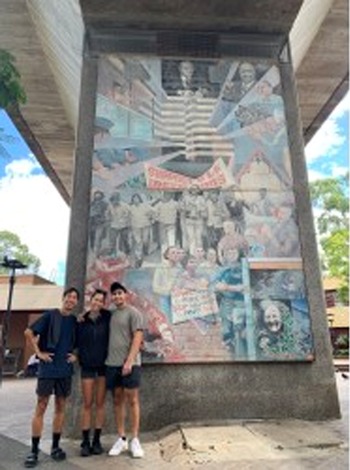
After three weeks on theories, we then move to examine the operation of law in Sydney over the rest of the course. This is done through a series of case-studies, covering issues like public participation, relationships between state and local government, housing and reckoning with Sydney's colonial history. Other topics vary from year to year to address current developments, including things like debates over the removal of statues, major developments and significant cases. As a transition between the theoretical and applied classes, students complete a walking tour based on the Green Bans – a social movement that is well known in Sydney for its role in protecting some of our most loved places, and in providing a catalyst for the reform of laws regulating planning and development across the state (Thorpe, Reference Thorpe2013). The Green Bans make an ideal introduction to the law partly because the legislation passed in their wake remains in force, but also because they provide a very clear example of the potential for activism to produce change – for agency and hope.
2.2 Law, Urban Sustainability & the New Economy (‘Law & the New Economy’)
This course was originally designed with the title Law, Society & Sharing Economies to explore the legal dimensions of the sharing economy, with a particular interest in how the sharing economy not only disrupts conventional economic patterns, but also has the potential to foster sustainability and community. In this original form, the course required students to engage with a very diverse range of doctrinal material, ranging across labour, tax, contract, business structures, planning and administrative law: in order to make this tractable, the course always included a contextual reference to illustrative case-studies that were typically in an urban context. Over time, however, it became clear that the course would gain in pedagogical clarity if it became more openly focused on a specific place (city, region or neighbourhood), along with an overarching soft law benchmark that captured the tension between sustainability and (economic) consumption.
This benchmark is provided by the 11th Sustainable Development Goal related to sustainable cities. This contextual focus allows a teacher to encourage students to explore specific legal tools and frameworks in relation to a particular place, and then connect them to discussions of broader policy frameworks that could help meet the targets specified by Sustainable Development Goal 11, in part via strategies such as translocal mutual policy diffusion. For this reason, the course is now entitled Law, Urban Sustainability & the New Economy. In this form, it explores the role of law and regulation in supporting sustainable cities and communities. The course begins with an overview of key issues for law, regulation and economic development raised by the goal of ‘making cities and human settlements inclusive, safe, resilient and sustainable’, as framed by Sustainable Development Goal No.11. The course then explores two alternative frameworks for analysing economic practices: diverse economies (Gibson-Graham et al., Reference Gibson-Graham, Cameron and Healy2013) and doughnut economics (Raworth, Reference Raworth2017), with a focus on their implications for law and regulation. After developing familiarity with the broad ideas of each of these frameworks, the course explores their application to the issue of digital platform governance in the context of ‘smart cities’, with a particular focus on legal entity structures, risk management and environmental outcomes. The course concludes by exploring different pathways for city policy-making in light of what has been learnt in the course as a whole, with a focus on legal and regulatory frameworks. This course, although originating in 2015, has not run every year nor as frequently as the other courses, and its most recent incarnation draws on Bronwen's parallel involvement in a course (Past, Present and Future of Innovation) at the University of Technology at Sydney, wearing another ‘hat’ as co-convenor of the Regen Sydney network (Regen Sydney, 2022).
2.3 Food Law
Food Law was developed by a group of academics at UNSW (Sherry, Reference Sherry2022), bringing together a wide range of areas as they relate to food: international trade, environmental law, biotechnology and health standards, animal rights, consumer laws, food security and food aid, property, planning and local government law. In doing so, we responded to growing interest in the social, cultural, ethical and environmental costs of modern food production. Students in the course critically examine how food reaches our tables, and think about alternatives to industrial food systems.
The course is divided up into blocks; Amelia and Bronwen each teach one of these. The discussion that follows is based only on those two blocks, as other teachers in the course use different approaches, although in light of the emphasis in this paper on experiential, place-based learning, it is worth noting that the course as a whole involves non-assessed activities of planting and growing food, as well as a meal composed of dishes provided by students that reflect culturally specific memories or links for them (Sherry, Reference Sherry2022).
Amelia's sessions examine the role of planning in the food system. We begin with an overview of the main law regulating planning in the state of New South Wales, then consider how this has been used in the Sydney Basin. Despite its crucial importance, the Sydney Basin is under intense pressure from urban sprawl, so that Sydney is predicted to lose 60 per cent of total food production by 2013. We examine efforts to protect these areas, noting the limitations of planning law in the face of wider social economic and political shifts. Moving from the fringe to the centre, we then examine planning for urban agriculture. Focusing on the City of Sydney, we discuss the laws and policies that regulate the growing of food in backyards, community gardens, laneways and verges. Students are encouraged to consider the relationship between urban agriculture and justice, drawing on the growing international literature on food justice. We conclude by examining the laws that regulate the places in which food is sold, consumed and advertised, ranging from farmers’ markets to supermarkets, and from fast food to food trucks.
Bronwen's sessions, co-taught with colleague Professor Amy Cohen, juxtapose a bird's-eye view of the global food system as a whole, focusing on both critique of this system and on alternative solutions. Both critique and alternative solutions are explored in the context of a specific place. The critique of the global food system is located in an in-depth engagement with the film Life in Debt, which portrays the effects of international trade and investment law and structural adjustment policies on Jamaica, and particularly on the experiences of local Jamaicans engaged in the production of dairy, chicken and bananas. The sessions then locate alternative solutions also very much in a specific context of place, introducing food sovereignty as a global movement but illustrating it by exploring the legal construction of alternative food economies in the Australian context through specific local initiatives such as Open Food Network in Victoria, FoodConnect in Queensland and Feather and Bone in NSW.
3 Reframing law: terrestrial politics and relational space
Consistently with our focus on a pedagogy of hope, a common thread in all these courses is that they are as preoccupied with what law ‘does’ as with what law ‘is’ – indeed, perhaps more so. They are motivated by an implicit normative vision of ways in which law can be used consciously as a productive tool for improving how and where we live. This goes beyond a ‘thinner’ contextual approach of focusing primarily on the content of legal rules and principles and then to a lesser degree providing some context for the policy issues that arise when the rules are applied or used in specific settings. In the courses we outline here, context (and sometimes normative theory directly) is the starting point of the learning journey and, from there, students identify problems or contested issues that may raise a diverse array of legal issues from different areas of law as it is traditionally taught. The directionality of this pedagogical method is reminiscent of the way in which York University teaches its undergraduate law course, by organising student groups into hypothetical law firms and presenting them with real-world problems that invoke a wide array of core legal issues, using multiple teaching staff to support the students in grappling with the problems first and only indirectly absorbing the legal rules through this prism of their problem-based significance (York Law School, n.d.).
The ‘pedagogy of hope’ outlined here goes one step further than the York approach in these elective courses, steering the students along an interdisciplinary trajectory to explore a full response to the contexts and place-based problems posed: a response in which law is only one part of any solution. The analytics underlying this could be expressed in the form of three productive questions that cumulatively pose a significant challenge to the scope and focus of traditional doctrinally focused ways to teach students about law, place and sustainability. These three questions begin with the place-based experiences of ordinary people and scaffold from there to engagement with law, first in the sense of professional advice at the micro-level, and then with reference to macro-level legal and regulatory frameworks. The questions are, first, how can community deliberation and dialogue be connected to place-based knowledges and material practices to feed into the design of regenerative economies and societies? Second, how are current modes of professional expertise, skills and training challenged by the shift to designing regenerative economies and societies? Finally, what forms of local, state and federal regulation and engagement can reconfigure and link community deliberation and professional expertise in order to support and sustain new and innovative economic, social and environmental approaches?
While these questions have the advantage in a pedagogical setting of being able to be explored as practical experiential questions – thus enhancing their accessibility to students – they are also underpinned by political theory in ways which students can explore in class discussions, research essays and other assessments. Two theories are particularly important in this respect: Bruno Latour's notion of terrestrial politics (Latour, Reference Latour2018) and Doreen Massey's relational approach to space (Massey, Reference Massey2004).
Latour's notion of terrestrial politics draws on the insights of political ecology (Morgan, Reference Morgan2020), which resonates deeply with integrated identity and place, and is grounded in a legal vignette to illustrate how terrestrial politics might begin:
‘That legal vignette is the notion of a 21st century version of the cahiers de doléance or ledgers of complaint that were constructed over the period of five months in 1789 in the run-up to the French revolution. Latour depicts this as a “geography of grievances,” the start of “drawing maps of the struggles of geo-social loci”, to redescribe from the bottom-up the “dwelling places” making up a new common world, articulating what is shared along with the material stakes that matter most in each place. In short, the work of putting together an encyclopaedic collection of problems chronicled at local level is how one begins to establish a material sense of the ground which can nurture the sense (both rational and affective) of being a terrestrial subject – of acquiring a form of collective identity which can recognise the ecological interdependence between human and non-human.’ (Morgan, Reference Morgan2020, p. 473)
Latour's terrestrial politics are theoretically fertile for a pedagogy of hope in three ways – two directly constructive and the third in what he misses. First, the capacity for terrestrial politics to cut across Left/Right political divisions without depoliticising issues is important. Terrestrial politics reorient the lines of political conflict such that alliances across Right and Left can unite around moving towards a politics that is grounded in a sense of belonging to a land, but without links to ethnic homogeneity. This avoids the danger of binary polarities being constructed between the politics of ‘somewhere’ and ‘nowhere’, where attachment to locality and place is associated with Right-wing populism while progressive politics gets yoked to the cosmopolitan global. The terrestrial, by contrast, is neither global nor local – and is only meaningful in context. This means place-based politics could be progressive or reactionary: it is defined less by its ideological orientation than by its capacity to transcend oppositions between the social and the ecological. ‘Geo-social questions’ that imbricate the two provide either a bridge between Left and Right, or a fresh departure point that opens up dialogue.
Second, Latour's terrestrial politics open up a challenge to vehicular modes of professional knowledge and expertise. As the second question articulated above implies, professional expertise that travels too easily from one place to another via standardised templates and universal models tends to only connect to place and context very tangentially. Reorienting professional expertise so that it begins with a sense of the relevance of place is no small task, but is critical for the envisaged project of terrestrial politics. It is not enough, however, and here is where Latour's contribution is also wanting. Grounded as it is in the vignette of cahiers de doléance a compilation of bottom-up grassroots grievances and complaints, it provides no pathway for grafting onto a pedagogy of hope. The missing piece is the question of analytical and conceptual frameworks that can cultivate a positive sense of detailed institutional vision for fleshing out the ‘hopeful edges of power’ (Morgan et al., Reference Morgan, Thorpe and Cooper2021). This is where law and regulation play an important role, as envisaged by the third question above – but ‘regulation’, while no doubt necessary, is possibly insufficient. Substantive fresh visions of how to restructure economy, society, law and politics may ultimately be needed to open the requisite space for a full-blown pedagogy of hope. Meanwhile, however, working from place to problem to professional knowledge and thence to law and regulation in the spirit of terrestrial politics is, we argue, a productive way to begin. As Gibson-Graham and her colleagues have long argued (Gibson-Graham et al., Reference Gibson-Graham, Cameron and Healy2013), there are many existing diverse practices that already exist that provide a foundation for such visions, and these can be productively understood through a legal lens (Morgan and Kuch, Reference Morgan, Kuch, Gibson and Dombrowski2020).
Massey, similarly, shows that place-based politics could be either progressive or reactionary. Massey draws on relational theory to argue place is connected and continually (re)constructed in a relational way:
‘If space is a product of practices, trajectories, interrelations, if we make space through interactions at all levels, from the (so-called) local to the (so-called) global, then those spatial identities such as places, regions, nations, and the local and the global, must be forged in this relational way too, as internally complex, essentially unboundable in any absolute sense, and inevitably historically changing.’ (Massey, Reference Massey2004, p. 5)
Rather than romanticising or exonerating the local – conceptualising capitalism and globalisation as ‘up there’ (Massey, Reference Massey2004, p. 14) – Massey argues that local places are not simply passive victims, but active participants in the construction of the global. London, for example, relies upon the historical and ongoing mobilisation of huge resources into power relations with other places, entrenching and exacerbating global inequalities.
Recognising the relational nature of cities helps students to see the responsibilities that flow from this. In all three courses, students are encouraged to think about their place in the city – as citizens, as lawyers, as community members – and their connection to other places. Our courses highlight for students the degree to which all places are the product of relationships with cities, regions and nations well beyond them, and themselves are agents in the invention, co-ordination and production of those places. Exercises like the calculation of ecological footprints (Global Footprint Network, n.d.; Slavery Footprint, n.d.) encourage students to think about the relations through which places have been constructed. Reading and discussing cases about challenges to coal mines and wind farms, similarly, encourage students to think beyond progressive urban concerns, and to explore questions of justice from the perspective of rural and regional areas on which cities depend.
Places have agency, and this agency is important to hope. The agency of the local is not equally distributed, however; elite cities like London and Sydney have particular purchase. Thinking relationally about cities is a key part of the hope that our courses set out to cultivate. For our students in Sydney, the course encourages a sense of reflective responsibility, but also, and especially, a sense of hopeful agency. As students in Cities explain:
‘[The Green Bans tour highlighted] the reach of the law in my everyday life but also the ability for dedicated and targeted activism to have a dramatic effect on law reform.’ (Response to survey, 2021)
‘[This course] has truly changed how I see the city. I feel more optimistic and empowered to think of solutions to the problems we identified in the course and beyond.’ (E-mail, May 2022)
4 Cultivating hope and agency in the classroom
In an effort to cultivate Giroux's ‘educated hope’, students in all three courses are encouraged to think of themselves as active participants in the city, both as students and as future lawyers. We do this using techniques that are well established in law, such as inviting guest speakers to discuss developments in practice, and examining the social, political and environmental context for both legislation and litigation. We have also developed a number of techniques that are less common in law, drawing on lessons from feminist and land-based pedagogies (Shrewsbury, Reference Shrewsbury1987; Wildcat et al., Reference Wildcat2014). This is perhaps most apparent in our assessments: ‘the innovative assignment tasks [were] a welcome break from endless problem questions’ (Formal feedback, Cities, 2021).
4.1 Applied writing: enterprise design, media commentary, book reviews, submissions and op-eds
In Law & the New Economy, students complete the task of designing a legal structure for a social enterprise, drawing on a mix of doctrinal material relating to the details of the legal structure, and guided exercises from an undergraduate management text on social enterprise. They are divided into groups of four in which each individual receives a succinct description of the history, key features, purpose and limitations of four different sets of model rules designed for social enterprises or co-operatives. Each group is then required to design a new legal structure for a hypothetical entity that will secure participation of the workforce in management and profit distribution; create links through membership or governance to a relevant community of multiple stakeholders; and secure a proportion of the assets for use by the community over the long term. To do this, they compare and evaluate the four models provided to them and ‘mix and match’ aspects of those models to come up with a solution that integrates normative aspects of the purpose of the social enterprise, and place-specific policy and political scholarship on the role of social enterprises in urban development.
Cities includes a number of assessment options in which students write as if their audience was outside the university: media commentary, book reviews, submissions and op-eds. The first two are required tasks that all students complete; the second two are optional.
The media commentary is completed before the first class. Prior to the first seminar in week one, students are instructed to find a recent story in the media that is relevant to the course. Students post a short comment about this onto the course website, followed by comments on at least two other students’ posts. Students are directed to identify and explain the relevant law, how it contributes to (or works against) justice and what they mean by justice. This is assessed as part of class participation, which is worth 20 per cent of the overall grade for the course, and forms the basis for discussion in the first class – the range of posts highlights very clearly the breadth and complexity of laws that shape the built environment, and the different ways of conceptualising and pursuing justice in cities.
Later assessments include a book review and options to write a law reform submission or an opinion piece for the media (one student went on to publish her op-ed on indigenous housing in 2016). Students are given specific support to experiment with new forms of writing, including a three-hour writing workshop. Balancing the common requirement to skim quickly through long judgments, the book review is designed to get students to engage deeply and critically with a big idea in the field. Given that the course does not use a textbook, it is intended also to emphasise the value of books and of engaging deeply with a text: ‘The book review was refreshing – a bit challenging too as we're so conditioned to essays and problem questions, but the workshop week was really effective in making it easier to do’ (Formal feedback, Cities, 2021).
4.2 Experiential assessments: walking tours, role play and photo task
Walking tours are an under-used but potentially rich technique with which to expand the learning experience in law, particularly to encourage students to reflect on the impact of law beyond the courtroom (Higgins et al., Reference Higgins, Dewhurst and Watkins2012). In other disciplines, tours and field trips are much more common (Coe and Smyth, Reference Coe and Smyth2010; Larsen et al., Reference Larsen2017; Lyons et al., Reference Lyons, Crosby and Morgan-Harris2018). In geography, for example, the benefits are widely recognised: well-designed field trips enable students to internalise critical theory and concepts and build deeper understanding; field trips are enjoyable, motivating students to learn more, and they can also ‘encourage student collaboration, crystallizing connections between reality and theory’ (Krakowka, Reference Krakowka2012, p. 243).
Students undertaking a walking tour for Cities, Planning, Law & Justice.

Building on the success of the walking tour in teaching, in 2021, Amelia gave students the option of designing a walking tour for their final assessment. This was popular and produced good work, prompting her to offer the task as an option in Food Law later that year, and again in both courses in 2022. Drawing on critical walking methodologies grounded in queer-feminist, anti-racist praxis (Springgay and Truman, Reference Springgay and Truman2022), students are encouraged to use the tour to explore the impact of law on cities through a particular lens. Many have used race, gender and socio-economic status to good effect, producing tours that effectively highlight the intersections between different laws, and the differences between parts of the city.
Food Law also includes experiential assessments. For example, in Bronwen and Amy's part of the course, the students undertake a role-play exercise to help them understand how structural adjustment policies intersect with trade law to shape the production of food, focusing on Jamaica as the setting where the students have already watched and studied a film. Students assume diverse place-specific contexts for their views, ranging from both small and corporate farmers in the US and Jamaica to students, teachers and public servants in Jamaica, and this comprises their class participation mark for that session.
In Amelia's part of the course, students are required to identify and document three different types of food growing or being produced in their area, and to photograph and write about these on the course website. Students are instructed to discuss how they located these examples, how they chose them and how they think these compare to food growing in other parts of the city:
‘Although at first I didn't understand the point of … finding food in the city, I came to really appreciate what those activities sought to teach us. I gained a real sense of agency in the way I source my own food and I hope to be able to develop what I learnt from these activities into a lifelong passion.’ (Formal feedback, Food Law, 2021)
4.3 Visioning projects
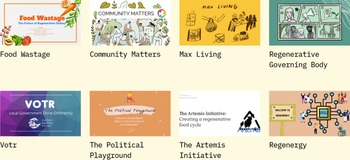
With a broad structure permitting contextual linkages to law at both local and global levels, the benefits of encouraging the free play of imaginative responses to ‘place-based problems’ can be fully utilised. In 2020 and 2021, Bronwen participated in productive experiments that helped her think through ways to redesign Law & the New Economy. She worked with Sydney Commons Lab in 2020 and Regen Sydney in 2021 – two non-university collectives who were ‘industry partners’ for a subject at the University of Technology of Sydney entitled Past, Present and Future of Innovation, the second-year capstone course of their transdisciplinary Bachelor of Creative Intelligence and Innovation (BCII) programme. After being primed on diverse alternative frameworks for exploring economic value, over 300 students created visions for districts across Sydney, redefining notions of value in relation to place. Their work drew on commons approaches, doughnut economics and other ways of reframing value creation and exchange, in the areas of food, health, housing and political voice. After a two-week intensive, they produced a series of group project visions (Past, Present and Future of Innovation, 2021), as well as day-in-the-life scenarios to further explore what living in these futures would look like.
Selection of group projects from the Past, Present and Future of Innovation course, 2021.

There were law students in this programme but law was not the direct focus: however, the visions and the day-in-the-life scenarios provide a concrete focus to ask what kinds of legal and regulatory frameworks would need to change for these visions and scenarios to unfold. The scenarios form an ideal pedagogical base for use in the Law & the New Economy course in 2023. Ideally, this will be developed in dialogue with non-lawyers, making the course interdisciplinary in appeal and structure by analysing the scenarios produced by the University of Technology Sydney course through a different disciplinary lens in each week of the course, moving through law, finance, architecture, planning and business.
More broadly, the possibility for conscious design of regenerative economies provides a fertile place-based foundation for pedagogies of hope. Interest in this is expanding rapidly in Australia, along with rapidly rising global interest in shifting economic development from a focus on sustainability to regeneration, a trajectory observable from the World Economic Forum in Davos through to indigenous communities (e.g. Regenerative Songlines, 2021). Cities have always been experimental sites of collective social change, from the era of the city-state through to the contemporary urban megalopolis. In contemporary times, the twin challenges of climate change and rocketing inequality create an increasing need to ‘think big’, imagining systems-level and transformative change. The scale of cities provides fertile soil for this kind of creative work, and a plethora of city-focused initiatives have emerged in response, linking researchers, policy-makers, communities and activists in networks and alliances and initiatives about fearless cities, critical cities, radical cities, living cities, healthy cities, city futures, smart cities, sharing cities and restorative cities. Work on ‘regenerative cities’ is the most recent frontier. Contemporary emergent experiments in Melbourne, Sydney and Brisbane were all initiated in 2021, with the aim of supporting the design of regenerative urban economies by linking community dialogue and deliberation with the framework of ‘doughnut economics’ articulated by Kate Raworth (Reference Raworth2017).
5 Core, electives and the place of text
It is worth recalling that these courses are electives, taken by twenty to forty students each time they are offered. As electives, they compete for limited space in the curriculum (meaning they will be rested every second or third year to enable other courses to run) and for limited student attention – most students take double degrees in Australia, leaving only limited space for Law electives. The benefit is that we have considerable freedom to shape these courses and to tailor the materials to contemporary developments. This raises two related questions. First, how replicable are the lessons from these courses – are they limited to experimental electives, or could they be applied to core teaching? Second, what role can textbooks play?
Core courses at UNSW are taught in large teams, often involving three or four permanent staff and even more sessional academics each term that they are offered – there is much less flexibility in this kind of teaching. Core courses must also cover the material set out in the Legal Profession Uniform Admission Rules (‘the Priestly 11’), which tends to promote a more doctrinal approach. But place-based, hopeful teaching need not be limited to electives. Teaching to regulatory requirements and with textbooks need not preclude contextual teaching. The Priestly 11 are actually quite brief and could be approached in a much more contextual, radical and/or hopeful way.
Core courses, like many electives, also tend to follow textbooks. Textbooks can be similarly doctrinal and (at least in those covering our jurisdictions) can encourage the opposite of what these courses attempt, separating areas of law and downplaying the degree to which fields such as property, planning, contract and company law overlap in practice. As efforts to re-centre both the legal and wider context through which law takes effect, our courses pull together a somewhat disparate range of materials. This includes materials found in many law courses, such as scholarly papers, extracts from books, cases and legislation, but also policy reports, agendas, minutes and motions from council and other government meetings, and materials from the press and social media. New materials, especially media and policy reports, are frequently added during the course to engage students in current developments and students are invited to add relevant materials to an online forum during the term. This approach is not based on a rejection of textbooks – indeed, we have often thought that a text consolidating key concepts and examples would greatly strengthen these courses – but a gap in current higher education publishing. Again, place-based, contextual teaching need not entail a shift away from texts. In the UK, the Law in Context book series was founded to create opportunities to teach core subjects from contextualised perspectives and this has opened up many pathways for fleshing out the practical policy implications of core subject doctrines. Textbooks that meld conceptual frameworks, accessible coverage of underlying theory and analysis of high-level principles and rules that apply across cases are thus an important part of the pedagogical vision we articulate in this chapter.
But while contextual teaching of core courses has strong viability, it is arguably more challenging to develop place-based approaches that foreground the hopeful creation of possible alternative pathways forward in legal development. As Annelise Riles remarks, in a chapter that queries rather than asserts the hopeful quality of law:
‘The power of law inheres in the reception and replications it calls forth, as it passes from one set of legal hands to another. … The replication, as experienced by the students, is both empowered and empowering. I would like to claim this power as a definition of hope, a reason for which we might say that [law] is hopeful.’ (Riles, Reference Riles, Miyazaki and Swedberg2016, pp. 141–142)
Linking hope to the replication of past and ongoing generalised lines of authority is certainly one form of power, but it tends to steer away from place-specificity in its preference for emancipatory generalisations. These overlap productively with the hopes for large-scale structural reform that often implicitly underpin critical theory, however, and that does provide some real opportunity to invest core courses with elements of a pedagogy of hope, even if rather different in texture to the open-ended, place-sensitive practices that we have stressed in our exploration of the three UNSW electives.
Moreover, there is potential to be creative about how ‘core’ education is addressed through electives. Many of the Priestly-type mandated requirements are addressed to some extent in the elective courses we have discussed here already, and more could be incorporated without much difficulty. If teachers collectively reorient their assumptions about how and where core content is delivered, the emphasis could instead be on equipping students with conceptual tools to identify and understand new developments and connections between different doctrinal areas and how they apply in practice, rather than focusing so strongly on setting out content. This is especially so given the rapid pace of legal change, particularly in areas like planning and economic regulation, which limits the value of teaching large bodies of law. The greater constraint is perhaps the weight of tradition, of practice rather than legal rules themselves.
In thinking about replication and the cultivation of educated hope, then, there is a need to look to not just our students, but also our colleagues. It is precisely this kind of exchange within the pages of a journal just such as this that constitutes one vital building block of laying the intercollegial foundations of contextual pedagogies of hope. Just as important, however, are the dimensions beyond words, texts and books that we articulate in each of our courses. Walking tours, op-eds and place-based projects that envision future scenarios and trajectories are just some of the techniques that place students in materially specific contexts at particular times in history and help them engage in ways that bring their learning to life.
6 Conclusion
At the end of the day then, we urge each other to share experiences as much as we do opinions or knowledge, and to weave that sharing into an appreciation of the importance of place in understanding how law works and what it does. We can also share theoretical resources – such as those we have discussed here like Latour's terrestrial politics and Doreen Massey's relational approach to space – that provide fertile starting points for injecting into legal teaching a material sense of how our everyday life as humans is grounded in an interdependent connection to the place where we are living. To return to the words of Giroux: ‘critical scholarship is crucial but it is not enough. Individual and social agency becomes meaningful as part of the willingness to imagine otherwise in order to act otherwise’ (Giroux, Reference Giroux and Cote2007, p. 39, emphasis in original).
In an ever-abstracted, over-extracted, damaged and fragile world, shared endeavours in this spirit may craft an opening for nurturing a pedagogy of hope.
Acknowledgements
We would like to acknowledge our UNSW Food Law colleagues Cathy Sherry, Cameron Holley, Amy Cohen, Marc de Leeuw, Kathy Bowrey, Alexandra Jones and Lucas Lixinski, as well as the UNSW Faculty of Law and Justice more broadly, for their hospitable and convivial openness to creative pedagogy.
Conflicts of Interest
None