Cetacean watching and environmental awareness
This section introduces the principal concepts of environmental awareness and empathy for conservation. Furthermore, it provides an overview of how these concepts can be employed in cetacean watching and ecotourism, worldwide, and more specifically in Latin America and Ecuador. It highlights the role of flagship charismatic species in building empathy and better policy compliance during dolphin-watching activities. Additionally, it addresses the importance of linking universities with societal projects and environmental education. Finally, knowledge gaps are identified in order to inform further research.
Objectives of environmental awareness and education
The main objective of environmental awareness activities is to generate positive attitudes and behaviours towards conservation and sustainability (Ahn et al., Reference Ahn, Bostick, Ogle, Nowak, McGillicuddy and Bailenson2016; Amerson & Parsons, Reference Amerson and Parsons2018; Burgess, Harrison, & Filius, Reference Burgess, Harrison and Filius1998; Daniel et al., Reference Daniel, Muhar, Arnberger, Aznar, Boyd, Chan and Grêt-Regamey2012; García-Cegarra & Pacheco, Reference García-Cegarra and Pacheco2017; Ip-Soo-Ching, Zyngier, & Nayeem, Reference Ip-Soo-Ching, Zyngier and Nayeem2018; Orams, Reference Orams1997; Stephenson, Reference Stephenson2011; Walpole & Leader-Williams, Reference Walpole and Leader-Williams2002; Whitmer et al., Reference Whitmer, Ogden, Lawton, Sturner, Groffman, Schneider and Bettez2010). The promotion of environmental awareness is generally twofold: first, encouraging protection of species for their continued survival, and second, protection of the community, taking into consideration the life of future generations (Chawla & Cushing, Reference Chawla and Cushing2007; Schuler & Pearson, Reference Schuler and Pearson2019). While ecotourism seeks to engender a positive influence on the conservation of natural values through the involvement of educational and interpretation features (De Los Monteros, Reference De Los Monteros2002; Karagiannis & Apostolou, Reference Karagiannis, Apostolou, Karagiannis and Reimer2004; Lee, Reference Lee2007; Schuler & Pearson, Reference Schuler and Pearson2019), improper tourism management can sometimes lead to deterioration of natural resources (De Los Monteros, Reference De Los Monteros2002; North & Hutson Reference North and Hutson2011).
Environmental Awareness, Flagship Charismatic Species and Empathy
Environmental education researchers aim to develop awareness, increase knowledge and consequently affect attitudes which will likely change behaviours and therefore social norms (Monroe, Andrews, & Biedenweg, Reference Monroe, Andrews and Biedenweg2008; Ardoin, Clark, & Kelsey, Reference Ardoin, Clark and Kelsey2013). Different strategies of training and education are implemented depending on the relation between the learner and the educator, as well as on the significance of the issues and actors involved (Monroe, Andrews, & Biedenweg, Reference Monroe, Andrews and Biedenweg2008). One of these strategies addresses flagship and charismatic species. Walpole and Leader-Williams (Reference Walpole and Leader-Williams2002) addressed the importance of connecting the flagship species with tourism for conservation purposes. Ducarme et al. (Reference Ducarme, Luque and Courchamp2013) defined flagship species concept and gave examples, considering dolphins (Delphinidae) and whales (Mysticeti), among others. These flagship species can play an important role in conservation by increasing the outcomes of environmental awareness programmes (García-Cegarra & Pacheco, Reference García-Cegarra and Pacheco2017; Genovart et al., Reference Genovart, Tavecchia, Enseñat and Laiolo2013). Addressing the tourism activities, Orams (Reference Orams1997) and Walpole and Leader-Williams (Reference Walpole and Leader-Williams2002) stressed that if people have direct contact with these species along with educational input, they will likely develop a deeper understanding and intention of conservation. Littledyke (Reference Littledyke2008) and Young, Khalil, & Wharton, (Reference Young, Khalil and Wharton2018) highlight the influence of empathy to promote the appreciation of the species and their ecosystem conservation, based on understanding the interconnectedness among living things. Combining descriptions on species characteristics, ecology and behaviours with real-life context, participants can identify with the drama the species face in their daily lives. This teaching strategy has been found to be useful as it involves people directly in the learning process (Littledyke Reference Littledyke2008). It is difficult for people to consider the needs of wildlife species, when both, the animals and their interests, are unknown. Therefore, when we recognise how our actions affect these species, an empathic concern can produce altruistic motivation (Batson et al., Reference Batson, Klein, Highberger and Shaw1995; Batson et al. Reference Batson, Lishner, Stocks, Schroeder and Graziano2015; Berenguer, Reference Berenguer2010; Littledyke Reference Littledyke2008; Schultz, Reference Schultz2000; Sevillano et al. Reference Sevillano, Aragonés and Schultz2007). Several authors (Ahn et al., Reference Ahn, Bostick, Ogle, Nowak, McGillicuddy and Bailenson2016; Ames, Jenkins, Banaji, & Mitchell, Reference Ames, Jenkins, Banaji and Mitchell2008; Berenguer, Reference Berenguer2010; Davis, Conklin, Smith, & Luce, Reference Davis, Conklin, Smith and Luce1996; Littledyke, Reference Littledyke2008; Pekrun, Reference Pekrun1992; Schultz, Reference Schultz2000; Young, Khalil, & Wharton, Reference Young, Khalil and Wharton2018) indicated that the conjunction of previously mentioned concepts improves the overall intention to help. Although several authors have linked the empathy-promoting exercises with improvement of attitudes towards objects or groups and environmentalism (Batson et al. Reference Batson, Lishner, Stocks, Schroeder and Graziano2015; Berenguer, Reference Berenguer2010; Littledyke, Reference Littledyke2008; Sevillano et al., Reference Sevillano, Aragonés and Schultz2007; Schultz, Reference Schultz2000), no relevant study was found applying it in correlation with the compliance of specific environmental norms or regulations. It is therefore of utmost importance to add the empathy-promotion environmental awareness approaches to the discussions about the importance of cetacean-watching-related regulations. We believe that this can lead to an overall increase in policy compliance related to whale- and dolphin-watching activities.
Linking universities with society
In addition, the environmental awareness of decision-makers and the public is often promoted by linking universities with society (Chawla & Cushing, Reference Chawla and Cushing2007; Kobori & Primack, Reference Kobori and Primack2003; Stephenson, Reference Stephenson2011; Whitmer et al., Reference Whitmer, Ogden, Lawton, Sturner, Groffman, Schneider and Bettez2010). University–community engagement is a common strategy to address complex problems through know-how offered by higher educational institutions (Chawla & Cushing, Reference Chawla and Cushing2007; Clarke & Roome, Reference Clarke and Roome1995; Glasser et al., Reference Glasser, Holt, Hall, Mueller, Norem, Pickering and Peters2003; Stephenson, Reference Stephenson2011). Work on community projects helps students apply their learned skills in different social groups and provides them with a unique professional experience (Chawla & Cushing, Reference Chawla and Cushing2007; Nunes, Franca, & Paiva, Reference Nunes, Franca and Paiva2017; Whitmer et al., Reference Whitmer, Ogden, Lawton, Sturner, Groffman, Schneider and Bettez2010). For example, Simpson (Reference Simpson2011) presents a project implemented by stakeholders of 12 university-engagement initiatives, resulting in success and low costs for both the community and university. In our project, six trained students from the biology department participated with expositions in the environmental education course and collected data from tourism activities.
Positive impacts of cetacean watching and conservation
One of the principal categories of nature-based tourism with promotion of environmental awareness is cetacean-watching ecotourism in coastal waters (Schuler & Pearson, Reference Schuler and Pearson2019; Wilson & Tisdell, Reference Wilson and Tisdell2003). Linking whale- and dolphin-watching activities to the promotion of ecosystem conservation broadens tourists’ knowledge and awareness and, in turn, improves the transfer of knowledge to the public (García-Cegarra & Pacheco, Reference García-Cegarra and Pacheco2017; Ip-Soo-Ching et al., Reference Ip-Soo-Ching, Zyngier and Nayeem2018; Schuler & Pearson, Reference Schuler and Pearson2019). Flagship or charismatic species such as dolphins can play an important role in environmental conservation and awareness (Ducarme, Luque, & Courchamp, Reference Ducarme, Luque and Courchamp2013; Genovart, Tavecchia, Enseñat, & Laiolo, Reference Genovart, Tavecchia, Enseñat and Laiolo2013; Walpole & Leader-Williams, Reference Walpole and Leader-Williams2002). Experiencing nature with dolphins generates sensitivity and positively influences the perception of the need for protection of the species (García-Cegarra & Pacheco, Reference García-Cegarra and Pacheco2017; Orams, Reference Orams1997). This impact has an intergenerational reach to personnel in tourism operations either directly or indirectly, thanks to the enhanced communication between generations and family and community members (Ballantyne, Fien, & Packer, Reference Ballantyne, Fien and Packer2001). The valuation of a resource also depends on the knowledge of the influence it has on the individual’s daily life, as it is in the case of dolphin-watching activities (Allen, Smith, Waples, & Harcourt, Reference Allen, Smith, Waples and Harcourt2007; Carlson, Rose, Kato, & Williams, Reference Carlson, Rose, Kato and Williams2014; Erbe, Reference Erbe2002; Lusseau, Reference Lusseau2005). Watching dolphins, whales or other marine animals can therefore become an effective platform that provides a unique experience based on positive emotions and education shared by both tourists and guides (Pekrun, Reference Pekrun1992; Schuler & Pearson, Reference Schuler and Pearson2019).
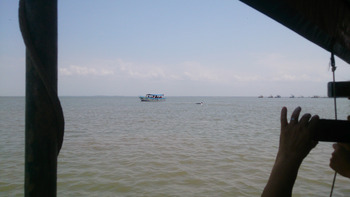
The number of people participating in cetacean-watching tours in Latin America grew steadily between 1998 and 2007, and this trend will likely continue (O’Connor, Campbell, Cortez, & Knowles, Reference O’Connor, Campbell, Cortez and Knowles2009). During the same period, the coast of Ecuador reported a 17.8% increase in these tours per year (Hoyt & Iñiguez, Reference Hoyt and Iñiguez2008). The Wildlife Refuge of the El Morro Mangroves (WREMM) received 15,000 visitors in 2008, with a maximum of 400 people/day in the high season and 40 people/day in the low season according to the Ecuador Ministry of Environment (Ecuador Ministry of Environment, 2010; National System of Protected Areas, 2018). The increased number of dolphin-watching tours included species from the smallest delphinid, Hector’s dolphin (Cephalorhynchus hectori), to the largest, the orca (Orcinus orca) (Bejder, Dawson, & Harraway, Reference Bejder, Dawson and Harraway1999; Erbe, Reference Erbe2002). Apart from the two localities, Puerto El Morro and WREMM, the coast area of Posorja has also become a popular place to watch the population of bottlenose dolphins (Tursiops truncatus) (Figure 1), known locally as bufeo (Félix, Calderón, Vintimilla, & Bayas-Rea, Reference Félix, Calderón, Vintimilla and Bayas-Rea2017).
Bottlenose dolphin Tursiops truncatus sighting at Posorja during a dolphin-watching activity (Source: Villalba-Briones).

Negative impacts of cetacean watching
The bottlenose dolphin Tursiops truncatus is one of the marine cetacean species known for substantial contact with human activities due to its generalist behaviour, adaptation capacity and living space near the coast (Nowacek, Wells, & Solow, Reference Nowacek, Wells and Solow2001). Increasing boat traffic, however, causes the dolphins auditory, physical and visual stress because it alters the distance between the cetaceans and forces them to escape the disturbance. This extraordinary activity alters the cetaceans’ decision-making as well as their reproductive success and population (Buckstaff, Reference Buckstaff2004; Constantine, Brunton, & Dennis, Reference Constantine, Brunton and Dennis2004; Erbe, Reference Erbe2002; Lusseau, Reference Lusseau2005; Meissner et al., Reference Meissner, Christiansen, Martinez, Pawley, Orams and Stockin2015; Nowacek et al., Reference Nowacek, Wells and Solow2001, Trave et al., Reference Trave, Brunnschweiler, Sheaves, Diedrich and Barnett2017). In addition, studies on whale-watching showed that repeated exposure to whale-watching vessel traffic can compromise the fitness of individual cetaceans, which can affect the entire population (IWC, 2006; Trave et al., Reference Trave, Brunnschweiler, Sheaves, Diedrich and Barnett2017). The magnitude of these effects remains poorly determined (Allen, Smith, Waples, & Harcourt, Reference Allen, Smith, Waples and Harcourt2007). In New Zealand, Bejder et al. (Reference Bejder, Dawson and Harraway1999) have shown that the exceedance of tourist boat carrying capacity may rapidly evolve into one of the biggest anthropic pressures for cetaceans. In addition, according to Félix et al. (Reference Félix, Calderón, Vintimilla and Bayas-Rea2017), boat traffic, principally cargo and fishing boats, probably represents a major impact on the dolphin communities within the Gulf. However, Lusseau (Reference Lusseau2006) stated that following the tour operators’ guidelines may minimise the short-term impacts of the tourism industry.
Regulations on cetacean watching
Initiatives and regulations to mitigate negative impacts on whale and dolphin watching have been developing over the past decades in various involved countries. In 1996, the International Whaling Commission established global reference guidelines for the management of whale watching to guarantee sustainable practices by the related tourist industries (Carlson et al., Reference Carlson, Rose, Kato and Williams2014). In the same year, a voluntary code of conduct for dolphin watching was elaborated in Port Stephens, Australia (Allen, Smith, Waples, & Harcourt, Reference Allen, Smith, Waples and Harcourt2007). Since 2014, Ecuador has applied a legislative framework that determines procedures in sighting activities to mitigate the possible impacts (Carlson et al., Reference Carlson, Rose, Kato and Williams2014; Ecuador Ministry of Environment, 2014). According to the Regulations for the Whale and Dolphin Watching of Ecuador (RWDWE) (Ecuador Ministry of Environment, 2014), distance of no less than 50 m from the boats to the groups of dolphins observed is mandatory in tourist activities. The distance of the tourist boat from the observed animals has been widely accepted as a key regulation factor, directly related to the impact of engine sound and the perception of threat (Christiansen, Reference Christiansen2019; Amerson & Parsons, Reference Amerson and Parsons2018; Lusseau, Reference Lusseau2005, Reference Lusseau2006; Nowacek et al., Reference Nowacek, Wells and Solow2001; Schuler & Pearson, Reference Schuler and Pearson2019). An object’s noise and movements of approach make it obvious that a greater proximity represents a greater threat for the wild animals (Szamado, Reference Szamado2008). Compliance of regulations and its evaluation during sightings is therefore essential to maintain healthy wild cetacean populations and perform a sustainable ecotourism (Amerson & Parsons, Reference Amerson and Parsons2018; Argüelles, Coscarella, Fazio, & Bertellotti, Reference Argüelles, Coscarella, Fazio and Bertellotti2016; Kessler & Harcourt, Reference Kessler and Harcourt2013).
Knowledge gaps and research questions
Despite the existing regulations, there is little information worldwide on how they are applied in dolphin- and whale-watching activities and which positive effects of the empathy-promoting strategies (such as training of guides and boat drivers) could be observed. Thus, this paper is the first study on the influence of knowledge-sharing and empathy-promoting strategies on dolphin-watching ecotourism in Ecuador. The following two questions were postulated: Who has greater influence on the compliance of dolphin-watching policy in a community? Can empathy-promoting knowledge and environment awareness influence the policy compliance? We believe that the results of this study, supported by statistical assessment, will substantially contribute to future practices in dolphin-watching ecotourism.
Research Methodology
The dolphin-watching study was initiated in 2016 through a written partnership agreement between the ESPOL university and the dolphin-watching tour operators in the community of Puerto Morro. A short site description is followed by the methodology of empathy-building training for guides and boat drivers, followed by field data collection from 68 dolphin-watching trips, two innovative surveys on policy compliance and on the quality of guidance, and by statistical identification and interpretation of differences in the policy compliance and quality of guidance, before and after the empathy-building training.
Site description
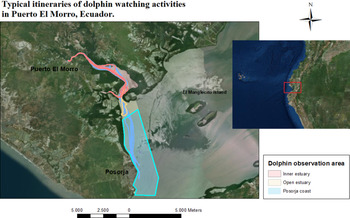
The dolphin-watching activities evaluated in this study were focused on two dolphin communities inhabiting the target areas of Puerto El Morro-WREMM and Posorja (Félix et al., Reference Félix, Calderón, Vintimilla and Bayas-Rea2017). WREMM is an approximately 10,000 ha protected area within El Morro locality, located west of the Gulf of Guayaquil, the most important estuarine area of the west coast of South America. The Gulf of Guayaquil encloses a 122.437 ha mangrove ecosystem which supplies environmental goods and services (Hamilton & Collins, Reference Hamilton and Collins2013) and, according to the Ecuador Ministry of Environment (2010), comprises 81% of Ecuador’s mangrove surface with a vast biodiversity. The mangroves support fish and seafood populations which have an important role in sustaining local economies (Hamilton & Collins, Reference Hamilton and Collins2013). In the case of Puerto El Morro, the community from the port area of El Morro, seafood, traditional fishing and tourism related to the WREMM are the main economic activities (Christiansen, Reference Christiansen2019). The dolphin-watching activities in the WREMM have been traditionally concentrated in the inner estuary, the open estuary and along Posorja’s coast (Figure 2). The inner estuary consists of a closed mangrove ecosystem, whereas the open estuary area refers to the outer area of the WREMM. Posorja’s coast area is located close to the port of Posorja, outside the protected area. These three areas are frequented by dolphin-watching tours which sail from Puerto El Morro. The area of WREMM holds an estimated population of 65 individual dolphins and 43 in Posorja (Félix et al., Reference Félix, Calderón, Vintimilla and Bayas-Rea2017). Due to the construction of Posorja’s commercial port, the dolphin community in the area could be at risk because of the possible separation of individual dolphins from their pods (Félix et al., Reference Félix, Calderón, Vintimilla and Bayas-Rea2017), which would affect tourism activities.
Map of typical itineraries of dolphin-watching activities within the inner estuary, the open estuary and Posorja’s coast (Source: Villalba-Briones & Campoverde).

The dolphin communities in Puerto El Morro and Posorja are actively visited by a float of 33 tourism boats from four tour agencies established in Puerto El Morro (Félix et al., Reference Félix, Calderón, Vintimilla and Bayas-Rea2017), with a total of 27 boat drivers identified through interviews. These tourism boats carry 4 to 16 passengers, and the itinerary spans approximately one and a half hours. During some watching activities, the boats are staffed only by a driver, without a guide. The main reasons for this were the guide’s absence and customers’ requests.
Empathy-building strategies
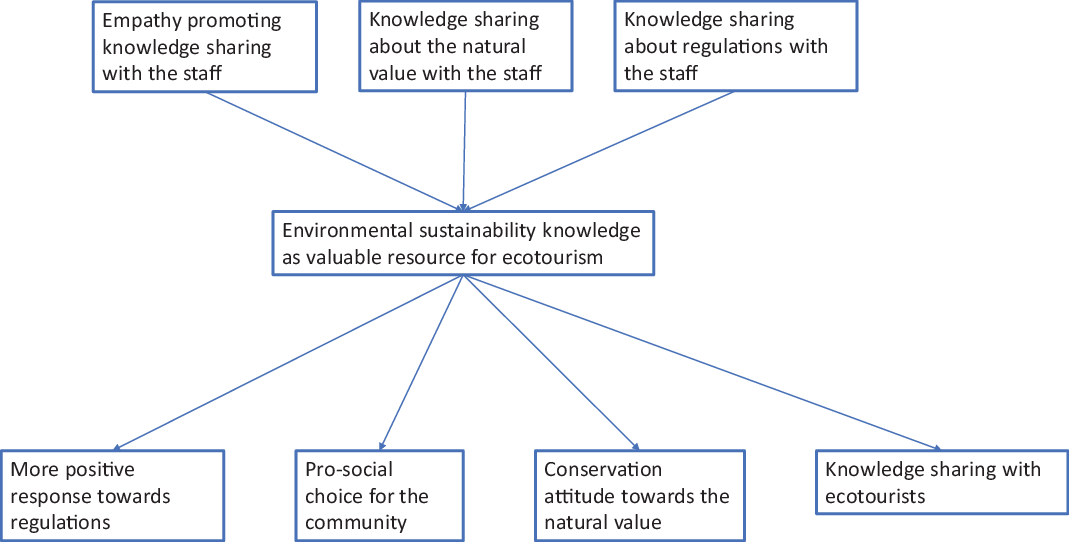
The study’s methodological framework was based on the empathy-promoting strategies (Figure 3), which generated a perspective of community and sustainability towards dolphin-watching activities (Berenguer, Reference Berenguer2010; Davis et al., Reference Davis, Conklin, Smith and Luce1996; Schultz, Reference Schultz2000).
Knowledge sharing on sustainability influence in ecotourism (Adapted from Ip-Soo-Ching et al., Reference Ip-Soo-Ching, Zyngier and Nayeem2018).

Guides and drivers of tourism boats were instructed (Figure 4) to promote conservation of dolphins, sustainability of local natural resources and the intrinsic importance of the species (Aburto-Oropeza et al., Reference Aburto-Oropeza, Ezcurra, Danemann, Valdez, Murray and Sala2008; Ahn et al., Reference Ahn, Bostick, Ogle, Nowak, McGillicuddy and Bailenson2016; Daniel et al., Reference Daniel, Muhar, Arnberger, Aznar, Boyd, Chan and Grêt-Regamey2012; García-Cegarra & Pacheco, Reference García-Cegarra and Pacheco2017; O’Neill, Reference O’Neill1992). Sensitisation activities were implemented with the local ecotourism operators using three different tools: (1) a training course with an empathetic approach, (2) instruction through dolphin-guiding activities and (3) distribution of an informational dolphin-watching guide to tourism operators (see Figure 4). Compliance with the policies and the quality of guidance during the watching trips were statistically evaluated before and after the training course.
Sequence of activities implemented during the project to improve the dolphin-watching activities in terms of compliance of the regulations and improving the guidance (Source: Villalba-Briones).

Forty-nine guides and boat drivers from a total of fifty-nine tourism operator staff (83%) participated in the course, with a variable success in course attendance. Whale-watching guides (33), boat drivers (16) and other interested individuals from the community and reserve guards attended the course – 91% of the guides from the four local operators and 62% of the boat drivers. Twenty hours of ex-situ training were carried out in the operators’ facilities and the offices of the Ministry of Environment of Ecuador, combined with on-site personal training during tourist dolphin-watching activities. After the training sessions, didactic material was delivered to the guides to a) improve the quality of the guidance and b) disseminate information and generate an information exchange within the community. The course promoted self-regulated good practices and encouraged tourism operators to consider the sustainability of their actions as a pro-social choice that generates benefits of collective and altruistic principles of behaviour (Batson et al., Reference Batson, Klein, Highberger and Shaw1995; Schultz, Reference Schultz2000). Video documentaries and recordings of dolphin life were used to encourage the audience to adopt the dolphins’ perspective and reduce the gap between the perceiver and perceived, generally to enhance empathy towards the observed dolphins (Ames, Jenkins, Banaji, & Mitchell, Reference Ames, Jenkins, Banaji and Mitchell2008; Schultz, Reference Schultz2000). We presented scientific, peer-reviewed, social and ecological behaviours, also in dolphin-watching case studies, and exposed our audiences to sounds originating from boats to encourage tourism operators to experience the dolphins’ perspective, seeking sensitive engagement (Ahn et al., Reference Ahn, Bostick, Ogle, Nowak, McGillicuddy and Bailenson2016). The knowledge disseminated to the guides and boat drivers was also focused on good practices in boat handling, regulations on whale- and dolphin-watching tourism and transmission of the information to tourists. Expositions with images, videos and participatory workshops were conducted to expand knowledge and encourage development of empathy and community cooperation (Ahn et al., Reference Ahn, Bostick, Ogle, Nowak, McGillicuddy and Bailenson2016; Ames et al., Reference Ames, Jenkins, Banaji and Mitchell2008; Berenguer, Reference Berenguer2010; Pekrun, Reference Pekrun1992). Video expositions explaining the dolphins’ intelligence, communication, social and family life and their interspecies relationships with other animals and humans were also shown (Daura-Jorge, Cantor, Ingram, Lusseau, & Simões-Lopes, Reference Daura-Jorge, Cantor, Ingram, Lusseau and Simões-Lopes2012; Littledyke, Reference Littledyke2008) in the workshops. Filmed research studies, documentaries and news constituted the base for scientific ethological descriptions and interactive workshops, where locals shared interesting interactions including witness accounts of the dolphins’ interactions with local dogs. In addition, sensorial strategies were developed to inform the audience about the impact of the noise of boat engines compared to the natural silence of the bufeo’s waters (Lusseau, Reference Lusseau2006; Mello & Amundin, Reference Mello and Amundin2005). At the same time, respect for whale- and dolphin-watching regulations in Ecuador was promoted, explaining the reasons and origin of their composition and international whale- and dolphin-watching experiences (Carlson et al., Reference Carlson, Rose, Kato and Williams2014; Lusseau, Reference Lusseau2006; Nowacek et al., Reference Nowacek, Wells and Solow2001).
Field data collection
Sixty-eight dolphin-watching trips were evaluated between October 2016 and July 2017 in Puerto El Morro and the WREMM. The evaluation had two components: one on compliance data and one on the quality of guidance and therefore involved two questionnaires. The questionnaires included all important aspects of Ecuador’s dolphin-watching legislation, in particular the technical procedures of observation activities covered by the eighth article of the RWDWE (Ecuador Ministry of Environment, 2014). For the purposes of data collection, undergraduate students of the Escuela Politecnica Superior del Litoral were trained on the legislation and its field implementation, paying special attention to distance estimation due to its importance in various evaluated criteria (Table 1) (Allen, Smith, Waples, & Harcourt, Reference Allen, Smith, Waples and Harcourt2007; Argüelles, Coscarella, Fazio, & Bertellotti, Reference Argüelles, Coscarella, Fazio and Bertellotti2016, Kessler & Harcourt, Reference Kessler and Harcourt2013; Schuler & Pearson, Reference Schuler and Pearson2019). Questionnaires A and B were filled out by trained students during dolphin-watching activities from the tour boats with the permission of the tourism agencies. The communities and tour operators were informed about our research and trained on the application of laws; however, the data collection was performed by the students. The course offered on dolphin-watching activities promoted all the evaluated issues, including the handling of the code of conduct and laws. The questionnaires were filled twice – before and after the course. Similar to other related works (Allen, Smith, Waples, & Harcourt, Reference Allen, Smith, Waples and Harcourt2007), boat drivers were also aware of our presence and the evaluation process. However, they typically did not agree to be personally identified during the on-site evaluations, citing the sensitive implications of such a personal survey. The data were therefore analysed in bulk, before vs after the training course, expecting to prove the influence of the high rate in course attendance, didactic material release and social information transference within the community (Ballantyne et al., Reference Ballantyne, Fien and Packer2001). Questionnaires obtained without the required information were dismissed.
Questionnaire A: Criteria extracted from the eighth article of the RWDWE (Ecuador Ministry of Environment, 2014) to evaluate compliance with the current rules

Questionnaire A (Table 1) consisted of the evaluation of compliance with the 8th article of the RWDWE (Ecuador Ministry of Environment, 2014). This article includes the accomplishment of eight common criteria for the observation, generally divided into three parts: (1) handling of the boat during observations of dolphins, (2) time spent in the observation and (3) number of boats (Allen, Smith, Waples, & Harcourt, Reference Allen, Smith, Waples and Harcourt2007; Argüelles, Coscarella, Fazio, & Bertellotti, Reference Argüelles, Coscarella, Fazio and Bertellotti2016; Kessler & Harcourt, Reference Kessler and Harcourt2013). These eight criteria were selected due to their importance in dolphin wellbeing during the dolphin-watching activities.
A value of 0 was assigned for non-compliance and 1 for compliance.
The quality of guidance as presented in the training courses was evaluated through the newly developed and implemented Questionnaire B. This questionnaire included knowledge provided to the guides during the training course. It evaluated three informational fields in a range from 0 to 42 points, covering bottlenose dolphin ecology, ethology, physiology, evolution and morphology, mangrove taxonomy, eco-systemic goods and values and avian species and their main characteristics.
The accuracy and limitations of the data gatherers were also examined considering technical constraints (Amerson & Parsons, Reference Amerson and Parsons2018). Following the approach of Williams Hedley and Hammond (Reference Williams, Hedley and Hammond2006), six observers carried out an exercise in estimation of a 50 m-distance in various directions and terrain settings. An average estimate of 50 m resulted in 53.57 m, with standard deviation of 8.68 m was registered among the observers. The tolerance value of 10 m was therefore considered in the evaluation of the 3rd criterion (C3) in Table 1. The distance was also quantitatively evaluated in 7th criterion (C7). The 2nd criterion (C2) was evaluated as an obvious and significative velocity reduction, due to the difficulty to record speed of the boats on the ocean with accuracy. The remaining criterions included identification of position of the observed dolphins with respect to the boat in various situations according to Kessler & Harcourt (Reference Kessler and Harcourt2013) and Arguelles et al. (Reference Argüelles, Coscarella, Fazio and Bertellotti2016), as well as counting the number of boats in dolphin watching. The compliance or not compliance of these criteria was therefore accordingly evaluated. In contrast, the speed of the boat cannot be recorded quantitatively, neither by the drivers, nor by the guides and the tourists.
Data analysis
The following tasks were assessed using a set of statistical methods:
-
1. A chi-square independence test (Pearson, Reference Pearson1900) was performed for each of the eight criteria (Table 1) of the normative to identify whether the training helped in the normative compliance. The overall scores before and after the training were then evaluated by testing the normality with (Shapiro–Wilk test) (Shapiro & Wilk, Reference Shapiro and Wilk1965), and equality of means using non-parametric Paired Wilcoxon test, to dependent samples (Wilcoxon, Reference Wilcoxon1945) to check for significant differences between scores.
-
2. To establish whether the guide presence on the boat helped in the normative compliance, we compared the overall scores obtained with and without the presence of a guide, using the Shapiro normality and the non-parametric Wilcoxon–Mann–Whitney tests to independent samples (Mann & Whitney, Reference Mann and Whitney1947; Wilcoxon, Reference Wilcoxon1945).
-
3. The guidance quality before and after training was compared, using the Paired Wilcoxon test (dependent samples).
-
4. The correlation between the overall scores of normative compliance and quality of guidance was examined, using the Pearson’s product-moment correlation test (Pearson, Reference Pearson1896).
All data were analysed using the R studio package (RStudio Team, 2016).
Results
Thirty-seven of the sixty-eight (54%) evaluated tourism trips recorded the location of the dolphin observation. Of those trips, 73% (25 trips) were to the WREMM-protected area and 27% (12 trips) to Posorja’s coast area.
It was found that the boat driver was often the owner of the boat (Escalante, personal comment). The average age of the boat driver was 42, and the guides’ ages were mostly below 20 (Figure 5). This information was verified in interviews with the managers of each tourism operator (Escalante et al., personal comment).
Age range of 27 boat drivers of the two largest operators in Puerto El Morro (Minimum age = 19, maximum age = 65, comments from operators’ managers) (Source: Villalba-Briones).

The section Results further addresses the comparison of normative compliance of all the 8 criteria in Questionnaire 1 (Table 1) before and after the training course (3.1.), the overall normative compliance before and after the training (3.2.) and the overall normative compliance with and without the presence of a guide (3.3.). The comparison of the guidance quality before and after the training is presented in section 3.4., and the correlations between the normative compliance and guidance quality are examined in section 3.5.
Comparison of normative compliance of the 8 categories before and after the training course
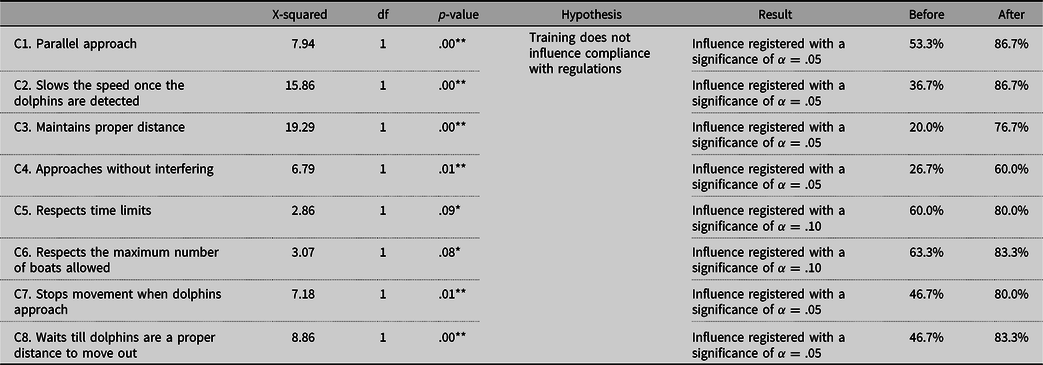
The scores of each criterion of the eighth article of the dolphin-watching regulations (Ecuador Ministry of Environment, 2014) were compared before and after the training course. Pearson’s Chi square test of independence was used to determine whether the two variables were independent (Kessler & Harcourt, Reference Kessler and Harcourt2013). The following equation was used to compare observed and expected frequencies:
 $${x^2} = \sum\limits_{i = 1}^k {{{{{({0_i} - {E_i})}^2}} \over {{E_i}}}} {\sim}x_{(\,f - 1)(c - 1)}^2$$
where O and E are the numbers of observed and expected cases, f denotes the number of categories in rows and c is number of categories in columns.
The results (Table 2) showed a significant difference between the values before and after the training with p-value < .05 in six of the eight evaluated criteria and with a p value < .1 in 2 criteria, C5 and C6 (Figure 6). The improvement in the behaviour of the boat drivers was most significant in the criteria on maintaining a correct distance from the dolphin (C3) and the least significant improvement was observed in compliance with the maximum number of boats present (C6) during the dolphin-watching activity (Figure 6).
Comparison (α = .05 and α = .10) of the compliance of the regulations in dolphin-watching activities before and after the training course. The samples are displaced towards the highest values in the case of those collected after the training, indicating an improvement in compliance with the regulations compared to the initial situation

* below 0.1; ** below 0.05.
Compliance percentage of the eight criteria evaluated from the Regulations for the Whale and Dolphin Watching of Ecuador (Source: Gonzalez-Narvaez & Villalba-Briones).

Overall comparison of normative compliance scores obtained before and after the training
The Shapiro normality test revealed that the groups were not normal. The paired Wilcoxon test was thus applied to determine whether there were significant differences in the score (95% confidence level) before and after the training. The obtained p-value .0001962 < .05 between the overall normative score before and after training indicates an improvement in the normative component. This finding is confirmed by the box and whisker plot in Figure 7.
A) Distribution of the regulation compliance data during dolphin-watching activities before (N = 30) and after (N = 30) the training courses. B) Average values showing the difference between the scores before (3.53 of 8) and after the training course (6.37 of 8) (Source: Villalba-Briones & González-Narvaez).

The pre-training scores were more variable and generally lower (mean = 3.53, standard deviation = ±2.54) than the ones after the course (mean = 6.37, standard deviation = ±1.61) (Figure 7 and Table 2). It must be stated that the evaluation of the normative compliance also included boat drivers who did not participate in the training. Therefore, the direct impact of the training may be underestimated in the presented data.
Comparison of normative compliance in boats with and without the presence of a guide
The above evaluated criteria of the normative compliance of the RWDWE (Ecuador Ministry of Environment, 2014) were also evaluated in the presence and absence of a guide. The data showed similarities between the two situations (Figure 8).
Box–whisker plot graph showing the distribution of the data in the absence (
 ${\rm{\overline x}}$
= 4, N = 25) and presence of the guide (
${\rm{\overline x}}$
= 6, N = 35) in the boat during the dolphin-watching activity (Source: Villalba-Briones & González-Narvaez).

The observations made after the training course showed statistically similar results between the behaviour of boats with the presence and the absence of a guide (Figure 8). The Levene’s test of variance (Gastwirth, Gel, & Miao, Reference Gastwirth, Gel and Miao2009; Levene, Reference Levene and Olkin1960; Lim & Loh, Reference Lim and Loh1996) revealed a homoscedasticity between the compliance and guidance score data (p-value < .05); it cannot be thus rejected that the two populations are equal. The Shapiro test indicated the non-normality of the data distribution with a p-value < .025 in both groups. The scores from 0 to 8 in the regulation compliance evaluation yielded average values of 4.24 (standard deviation = ± 2.76) in the absence of a guide (N = 25) versus 5.46 (standard deviation = ±2.29) when the guide was present (N = 35) (Figure 8). The non-parametric Wilcoxon–Mann–Whitney test for independent populations based on median values (Nachar, Reference Nachar2008) yielded a p-value of .095 (p > .05), indicating that we cannot reject that the two groups scored similarly in the compliance of the regulations. Thus, our data in the presence of a guide during the dolphin-watching activities did not influence the normative compliance. The amount of data regarding the situation before the training course was insufficient to conduct similar analyses.
Comparison of guidance quality before and after the training course
Guidance quality before the training course (N = 10) was compared to that after (N = 29) the course based on scores collected in Questionnaire B. Due to the small amount of data obtained before the course (N = 10) and in order to reach to the same quantity of samples in the “after training” group, a bootstrap procedure was performed on the pre-training data, completing 19 more observations based on the parameter p = percentage of answers “Yes” in each guidance evaluation question.
The paired Wilcoxon test was used to determine possible significant differences between the score of the operators before and after they received training. Significant differences were observed with 95% confidence (p-value = .00004 < .05) between the scores obtained in guidance quality before and after the training. The statistically significant improvement of the guiding quality after training is also shown in Figure 9. It reveals that the average score given to the guides was higher after the training (mean = 19.07, standard deviation = ± 9.82) compared to the values before the training (mean = 7.35, standard deviation = ±2.94).
Box–whisker graph of the guidance quality scores between the values before (N = 29,
${\rm{\overline x}}$
= 7.35) and after (N = 29,
${\rm{\overline x}}$
= 19.07) the training course (Source: Villalba-Briones & González-Narvaez).

Correlation of normative compliance and quality of guidance
The correlation between guidance quality and normative compliance values was analysed, using only those occasions when both questionnaires were filled during the same tour (N = 31) (See Figure 10). This allowed us to assess whether the results of the two activities were related.
Correlation (N = 31) between the scores in guidance quality and the normative compliance in the same dolphin-watching tour. We used 31 cases where compliance and guidance were evaluated in the same whale-watching activity to calculate the correlation between normative compliance and guidance (Source: Villalba-Briones).

The Pearson’s correlation coefficient was .26, which indicated a weak relation between the guides’ performance and the compliance of regulations. With a .95 level of confidence, the p-value of .161 does not confirm a linear correlation between the values in compliance and the values in guidance.
The overall results of the study therefore reveal that the capacity-building activities prior to the dolphin-watching activities influenced tourism operators to improve their results in compliance of the regulations and guidance.
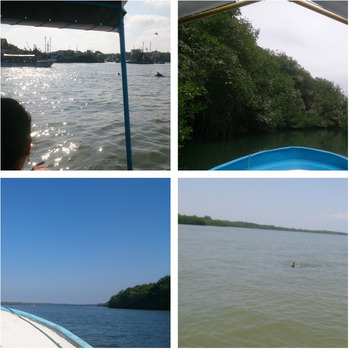
The comparison of the data regarding the scores in the regulation’s compliance evaluation (see Figure 7) indicates that the main objective, based on the awareness of protection of dolphin communities and the strengthening of regulation compliance, was accomplished. The pre-training overall scores on respecting the RWDWE were lower than those after the training (see Figure 7); thus, the regulation compliance after training improved with respect to the evaluated criteria. The sections with a major improvement were those easily related to the wellbeing of the dolphin, such as the proximity of the boat, where majority of drivers decided to stay at a farther distance from the dolphin than before the sensitisation activities (see Figure 11). Although not all boat drivers participated in the training, the handling and overall improvement of their practices were registered during the monitoring (see Figure 11).
Clockwise from top left: Posorja’s port sighting area, closed mangrove area inside of the Wildlife Refuge of El Morro Mangroves, open estuary with mangrove at one side and open estuary in a sighting. All pictures were made during dolphin-watching activities (Source: Villalba-Briones).

The results also showed an improvement in the guides’ informational activities during the dolphin-watching tours. According to the informal chat with the participants, the written manual with the information shared during the course helped in retaining the necessary information for guidance.
Discussion
The results provide a deeper, statistically supported insight into the topic of cetacean watching along the coast of Latin America, thus underpinning several theoretical concepts of environmental awareness, environmental education, empathy and flagship species. The results are discussed with respect to the research questions and knowledge gaps postulated in section 1.7.
Who has greater influence on the compliance of dolphin-watching policy in a community?
According to the data, the guide does not influence compliance with regulations about dolphin-watching activities (see Figures 8 and 10). The presence or absence of the guides did not significantly change boat-handling operations with respect to compliance. The dolphin-watching business in Puerto El Morro is managed and performed mainly by the local communities, thus making their involvement essential and social aspects an important factor for consideration (Trave et al., Reference Trave, Brunnschweiler, Sheaves, Diedrich and Barnett2017). All monitored guides were young (mainly below 20 years old), whereas the boat drivers were often in their forties and sometimes in their sixties (mean 41.64 years old). The age obviously influences the role of the guides and boat drivers, where the leadership of the tourism activity and behaviour of the boat are predominantly determined by the boat driver. The commanding driver of the boat is often its owner, but rarely the guide. This specific context could vary in other locations where dolphin-watching activities are performed.
Can empathy-promoting knowledge and environment awareness influence the policy compliance?
Although the attendance of boat drivers in the training course was not complete, 78% of the personnel from the operators attended at least 25% of the course. The results showed an overall effect in the behaviour towards dolphin-watching regulations. This positive effect can be further promoted to other beneficiaries within and outside the population of boat drivers and tour guides (Ballantyne et al., Reference Ballantyne, Fien and Packer2001; Daniel et al., Reference Daniel, Muhar, Arnberger, Aznar, Boyd, Chan and Grêt-Regamey2012). It has been shown that continuous efforts in sensitisation encouraged professional services to significantly improve their attitude towards ecotourism activities (Ballantyne et al., Reference Ballantyne, Fien and Packer2001). Law regulations on wildlife issued by authorities are not always easy implement (Amerson & Parsons, Reference Amerson and Parsons2018), moreover, when communities have been established before the protected area and the given norms. At the same time, having insufficient personnel on duty of law enforcement to count on can make it difficult to constrain economic activities when they are linked with natural values: for example, when the simultaneous dolphin-watching is limited to only a few of boats (Amerson & Parsons, Reference Amerson and Parsons2018; Kessler & Harcourt, Reference Kessler and Harcourt2013). In accordance with several authors (Littledyke, Reference Littledyke2008; Schultz, Reference Schultz2000; Young, Khalil, & Wharton, Reference Young, Khalil and Wharton2018), the self-induced codes of conduct, sustained with knowledge and sensitivity about their impact on natural resources, can be a powerful strategy to gain a commitment with the regulations for sustainable ecotourism. The consideration of sustainability is then crucial to maintain the integrity of the ecosystem (Shanee, Shanee, & Horwich, Reference Shanee, Shanee and Horwich2015). In this context, empathy-promoting strategies are a relevant subject to promote awareness towards wildlife and its conservation (Ahn et al., Reference Ahn, Bostick, Ogle, Nowak, McGillicuddy and Bailenson2016; Berenguer, Reference Berenguer2010; Littledyke, Reference Littledyke2008; Sevillano et al. Reference Sevillano, Aragonés and Schultz2007; Schultz, Reference Schultz2000; Young, Khalil & Wharton, Reference Young, Khalil and Wharton2018). It is obvious that ethology and the life cycle of the species play an important role in the sensitisation and generation of empathy. Thus, empathy-promoting exercises and knowledge reinforcement of the basic physiology, ethology and sensitivity of living organisms improve human engagement with wild species, the knowledge of their roles in the ecosystem and the anthropogenic effects on their populations (Ahn et al., Reference Ahn, Bostick, Ogle, Nowak, McGillicuddy and Bailenson2016; Berenguer, Reference Berenguer2010; Littledyke, Reference Littledyke2008; Sevillano et al. Reference Sevillano, Aragonés and Schultz2007; Schultz, Reference Schultz2000; Young, Khalil & Wharton, Reference Young, Khalil and Wharton2018). Although the concept of flagship species is very open (Home, Keller, Nagel, Bauer, & Hunziker, Reference Home, Keller, Nagel, Bauer and Hunziker2009), better results of this methodology can be expected when the conservation and protection of species are source of attraction to many people (Genovart, Tavecchia, Enseñat, & Laiolo, Reference Genovart, Tavecchia, Enseñat and Laiolo2013; Walpole & Leader-Williams, Reference Walpole and Leader-Williams2002). While the interest in the highly appreciated species could facilitate the accomplishment of the objective, less popular species should not be automatically discarded.
Overall, the study has confirmed that linking universities and communities to address environmental and social issues is a powerful strategy to positively impact the community and obtain an efficient engagement. In accordance with several authors (Nunes, Franca, & Paiva, Reference Nunes, Franca and Paiva2017; Simpson, Reference Simpson2011; Whitmer et al., Reference Whitmer, Ogden, Lawton, Sturner, Groffman, Schneider and Bettez2010), our study showed that an adequate and contextualised training of the students, in conjunction with supervision allows for successful results, like in our case, a proper evaluation of the dolphin-watching activities and raising the awareness of the communities about this environmental topic.
Conclusions and Recommendations
This paper presents the first study on the influence of knowledge-sharing and empathy-promoting strategies on dolphin-watching ecotourism regulation compliance in Ecuador. It included two principal research questions: (1) Who has greater influence on the compliance of dolphin-watching policy in a community? and (2) Can empathy-promoting knowledge and environment awareness influence the policy compliance? According to Trave et al. (Reference Trave, Brunnschweiler, Sheaves, Diedrich and Barnett2017), in order to seek sustainability in cetacean-watching activities efforts should be directed towards education and generating ecological awareness in both tourism operators and visitors. Our study revealed that the inclusion of empathetic approaches in sensitisation projects empowers the public conservation intention. Every regulation on dolphin protection is based on scientific information about dolphin biology, thus using powerful tools such as visual and phonetic techniques to achieve an empathetic response can support the compliance in restrictions. This approach could be an effective strategy to inform operators about optimising the results of their working procedure. Our results indicate that the training and awareness-raising work has generated a change of attitude regarding compliance with dolphin-watching regulations. Hence, the wellbeing of the dolphin population may not have been as impacted by tourism activities after the awareness activities developed by the workshops in this study as it was before. In addition, it was shown that previously unidentified parameters could positively affect respect for the regulations. According to our data in the context of our study area, the boat drivers influenced the handling of the compliance more than the guides. It is therefore recommended to include boat drivers in all aspects of the awareness-raising campaigns. Moreover, they should be considered the main target group in promoting compliance with the regulations. The dissemination of understanding of the species’ senses, behaviour, biology, threats and regulations enables the community to ensure sustainable practices for dolphin preservation. It is recommended to complete the elaboration of environmental awareness programmes involving diverse strategies to broaden the views of the participants regarding the current state of scientific knowledge on conservation issues. Adequate and contextualised training of university students is recommended to evaluate and improve the dolphin-watching processes and raise the environmental awareness in the communities.
Based on the results of this study, we recommend the implementation of future training through the following three complementary modules: (1) empathy-promoting workshops on dolphins (or the species of interest) with interactive activities for guides and boat drivers; (2) extension of general knowledge of the species and their conservation and (3) raising awareness about the norms to avoid impacts. The awareness-raising activities should be performed periodically to promote sustainable future compliance with dolphin-watching regulations. The results have reinforced the importance of the empathy promotion concept, which has been rather rarely mentioned and disseminated in the environmental education and awareness programmes. We believe that the presented results are of importance for both environmental education researchers and practitioners.
Acknowledgements
This study was supported by the ESPOL Community Outreach Project Nr. FCV-03-FCV-01-02 entitled “Fortalecimiento de las capacidades de avistamiento y sensibilización hacia los bufeos y los valores de la naturaleza por los operadores de turismo en el área de Puerto El Morro.” We thank the Outreach Unit of the ESPOL University (Ecuador) for their financial support and guidance. We thank Alex Escalante and Pedro Morales for support on the activities with the tourism operators. We thank Heather Jeanne Seltzer and Dr. Ben Dolan for their support. We also thank Mireya Pozo for her advice, and Katherine Alban, Guillermo Mora, Clara Tello, Kael Sellan and Vanesa Sanchez Crow for their work in the field. Finally, we want to thank Oscar Vascoñez and the Ministry of Environment of Ecuador, and the technicians of the Wildlife Refuge of El Morro Mangroves for their support during the project.
Financial Support
This manuscript is an original work that has not been submitted to nor published anywhere else.
Conflict of interest
None.
Ricardo Villalba-Briones is a teacher of conservation biology at ESPOL University. His work focuses in conservation and outreach projects dealing with conflicts between natural values and anthropic activities in tropical hotspots.
Mariela González-Narváez is an engineer in Statistics Computer teacher at ESPOL University, currently in her third year of a Ph.D. study in Applied Multivariate Statistics at the University of Salamanca, her work is focused on the use of three-way matrices in environmental data (STATIS family).
Tomas Vitvar has received an MSc in Geography from the Charles University Prague, Czech Republic, a PhD in Natural Sciences from the Swiss Federal Institute of Technology (ETH) Zurich, Switzerland, and a PostDoc from the State University of New York, USA. He has been working as Hydrologist in the International Atomic Energy Agency in Vienna, Austria, Researcher Hydrologist at the Czech Technical University in Prague and the Czech University of Life Sciences, now Invited Lecturer at the ESPOL.