

A person is said to be experiencing stress when there is an imbalance between the demands levied upon them and their resources. Burnout will be experienced when a person is exposed to prolonged stress, as it is considered to be the ‘end point’ or final stage of stress. According to Maslach and Schaufeli (Reference Maslach, Schaufeli, Schaufeli, Maslach and Marek1993), ‘burnout is a state of exhaustion in which one is cynical about the value of one's occupation and doubtful of one's capacity to perform’ (p. 206). Maslach characterised burnout as consisting of three related components, namely emotional exhaustion, depersonalisation and reduced feelings of personal accomplishment (Maslach & Jackson, Reference Maslach and Jackson1981).
Initially, the concept of burnout was limited to the human services domain (e.g., volunteer or social work, health care and education). Eventually, it was expanded to all types of occupations and professional groups. Today, its prevalence among health-allied workers and nursing professionals is well known. (Cañadas-De la Fuente et al., Reference Cañadas-De la, Vargas, San Luis, Garcia, Cañadas and De la2015; Alacacioglu, Yavuzsen, Dirioz, Oztop & Yilmaz, Reference Alacacioglu, Yavuzsen, Dirioz, Oztop and Yilmaz2009). As the concept of burnout evolved, the dimensions were also made more general – exhaustion, cynicism and professional efficacy (Schaufeli, Leiter, Maslach & Jackson, Reference Schaufeli, Leiter, Maslach, Jackson, Maslach, Jackson and Leiter1996) – and the Maslach Burnout Inventory – General Survey (MBI-GS) was developed. The MBI-GS has also been adapted for student populations, where it is known as the MBI – Student Survey (MBI-SS) (Schaufeli, Martinez, Pinto, Salanova & Bakker, Reference Schaufeli, Martinez, Pinto, Salanova and Bakker2002). In a study by G. Almeida, Souza, P. Almeida, B. Almeida and G. Almeida (Reference Almeida, Souza, Almeida, Almeida and Almeida2016), symptoms of burnout were evident in 14.9 per cent of students, with 57.7 per cent showing a risk of developing the syndrome.
Exhaustion is the first core dimension of burnout. Maslach and Goldberg (Reference Maslach and Goldberg1998) stated that the ‘major sources of emotional exhaustion are work overload and personal conflict at work’ (p. 64). People who are exhausted feel drained and used up without any source of replenishment. They lack the motivation to face another day or another person in need. They have few or no positive experiences from accomplishing task demands. Cynicism is the second core dimension of burnout. Cynicism may, in part, be the product of exhaustion, where an individual feels a distant attitude towards work, though not necessarily with other people (Schaufeli et al., Reference Schaufeli, Leiter, Maslach, Jackson, Maslach, Jackson and Leiter1996). The last component of burnout is reduced feelings of professional efficacy, characterised by feeling ineffective in doing work. In an article on personal accomplishment, Maslach and Goldberg (Reference Maslach and Goldberg1998) stated that:
Reduced personal accomplishment refers to a decline in one's self competence and productivity at work. A growing sense of inadequacy is experienced about one's own personal ability to help people, and this may result in a self-imposed verdict of failure (p.64).
A high score in the exhaustion and cynicism dimension and a low score in the professional efficacy dimension indicates a high degree of burnout.
While the quality of the work environment and its unique demands along with demands from family, school and other settings logically influence burnout (Hakanen, Schaufeli & Ahola, Reference Hakanen, Schaufeli and Ahola2008), variables internal to the person have received increasing attention from researchers. Internal variables influence how external demands are processed. Personality traits reflect a propensity or disposition toward those cognitions, emotions and behaviours that are consistent with the trait. Since situations are also important, traits do not determine behaviour, but instead influence its baseline probability. The connection between personality traits and any actual, concrete behaviour is therefore indirect and probabilistic. According to Chakraborty, Chatterjee and Chaudhury (Reference Chakraborty, Chatterjee and Chaudhury2012), it is increasingly recognised that some internal characteristics may prevent work-related tension from becoming stress-related health problems, thus preventing burnout. From the study of Vorkapić and Mustapić (Reference Vorkapić and Mustapić2012), the best predictors for increase in emotional exhaustion and depersonalisation were internal variables, especially lower levels of negative emotionality; for increase in personal accomplishment, the best predictor was age. Given that personality traits are widely viewed as influencing coping strategies, and comparable to SES and cognitive ability in predicting health outcomes (Roberts, Kuncel, Shiner, Caspi & Goldberg, Reference Roberts, Kuncel, Shiner, Caspi and Goldberg2007), a study of the psychological risk factors associated with burnout should include personality traits.
The most widely accepted model of personality is the Five-Factor Model (FFM; Costa & McCrae, Reference Costa and McCrae1992), which is composed of five broad factors, namely neuroticism, extroversion, conscientiousness, agreeableness and openness to experience. These personality traits are bipolar, meaning that one pole is generally considered positive or adaptive, while the other pole is typically negative or maladaptive. Typically, the adaptive pole is used to name the factor. The exception is neuroticism, which has as its adaptive pole emotional stability. The maladaptive poles are neuroticism, introversion, disinhibition, antagonism and rigidity. The importance of the FFM to categorising maladaptive behaviour is shown in the Alternative Model of personality pathology in the DSM-5 (American Psychiatric Association, 2013), which is composed of dimensions coordinated with the FFM, namely negative emotionality, introversion, disinhibition, antagonism and psychoticism.
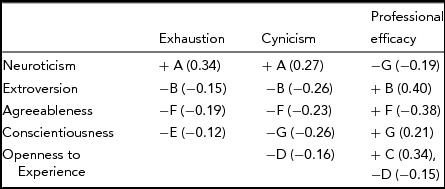
Because traits predispose the person toward cognitions, emotions and behaviours characteristic of that trait, personality traits should influence vulnerability to burnout (David, Reference David2010). A substantial research literature already exists that supports the relationship between the three components of burnout and the FFM at the factor level. Table 1 summarises these researches.
Correlations of Study Variables Based on Related Researches
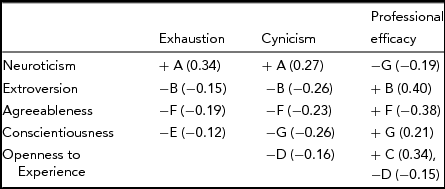
Note. A. Morgan and de Bruin (Reference Morgan and de Bruin2010), n = 297; B. Bakker, Van Der Zee, Lewig and Dollard (Reference Bakker, Van Der Zee, Lewig and Dollard2006), n = 80; C. Storm and Rothmann (Reference Storm and Rothmann2003), n = 131; D. Kokkinos (Reference Kokkinos2007), n = 447; E. Mills and Huebner (Reference Mills and Huebner1998), n = 225; F. Hudek-Knežević, Krapić, & Kardum (Reference Hudek-Knežević, Krapić and Kardum2006), n = 214; G. Azeem (Reference Azeem2013), n = 90
According to Morgan and de Bruin (Reference Morgan and de Bruin2010), there is a positive relationship between neuroticism and exhaustion, and neuroticism and cynicism. Furthermore, Azeem (Reference Azeem2013) reported that neuroticism was negatively related to professional efficacy. Neurotic people tend to experience more negative feelings than those who are emotionally stable; this may be the reason why people high in neuroticism tend to feel more exhausted and become cynical.
Extroversion was found to be negatively related to exhaustion and cynicism and positively related to professional efficacy (Bakker, Van Der Zee, Lewig & Dollard, Reference Bakker, Van Der Zee, Lewig and Dollard2006). Extroverts are more people-oriented and may find comfort in being around people. This may explain why they do not feel exhausted quickly and resist cynicism: They have interpersonal outlets when negative feelings arise.
Agreeableness has also been found to be negatively related to exhaustion and cynicism and positively related to professional efficacy (Hudek-Knežević, Krapić & Kardum Reference Hudek-Knežević, Krapić and Kardum2006). The inverse relationship indicates that agreeable people have lower scores on all Maslach's constructs. The maladaptive pole of agreeableness is antagonism. Antagonistic people tend to annoy and provoke others, being various shades and combinations of mistrustful, deceitful, selfish, uncooperative, grandiose and callous. Their exhaustion, cynicism and low efficacy could occur in response to the negative reactions they chronically evoke in others.
Mills and Huebner (Reference Mills and Huebner1998) reported a negative relationship between conscientiousness and exhaustion. Azeem (Reference Azeem2013) stated that there is a negative relationship between conscientiousness and cynicism and a positive relationship between conscientiousness and professional efficacy. Taken together, these findings suggest that conscientious people feel competent to complete task demands (high professional efficacy), but may sometimes overextend themselves and become exhausted.
Openness to experience means openness to both the negative and positive challenges that come along, hence its possible inverse relationship to cynicism, where negative expectations are the rule (Kokkinos, Reference Kokkinos2007). There are opposite findings with regard to openness and professional efficacy, with Kokkinos finding a weak inverse relationship with a large sample, and Storm and Rothmann (Reference Storm and Rothmann2003) finding a stronger positive relationship with a smaller sample.
The current study seeks to replicate the major relationships observed between the FFM and the three components of burnout, as summarised in Table 1, within a large sample of Filipino college students with ages ranging from 17 to 24. The sample was limited to this age range since college students in the Philippines are usually within this range. We wanted to generalise our findings to the typical college student. As such, older students were not surveyed.
Research objectives
The first objective of the study was to explore if a relationship exists between the FFM personality traits and Maslach's three dimensions of burnout specifically within a sample of Filipino college students at the factor and facet levels. Second, the researchers aim to determine whether the relationships replicate those presented in Table 1, which summarises the existing literature at the factor level. Previous researches have been conducted mostly in Western societies. If existing findings are replicated, this contributes to the development of a cross-cultural literature on burnout. Thus, it is important to explore as well whether burnout occurs in collectivist cultures like the Philippines, and which traits might play a role in its development. Third, the study attempts to identify those FFM traits that might be most important for the development of burnout. As mentioned earlier, a psychological trait influences behaviour and predisposes the individual toward actions that are consistent with the trait name. Traits thus influence susceptibility to a broad range of emotional outcomes, including burnout. According to Periard and Burns (Reference Periard and Burns2014), there is a significant base of literature on the significance of the factors of the FFM and burnout. However, there is lack of research examining the role of facet traits of the FFM in burnout. Fourth, the study investigates whether the prediction of burnout is stronger at the level of whole factors or at the level of individual traits. Fifth, we present the percentage of student participants experiencing various levels of burnout. This information is of enormous value to clinicians, since it determines whether burnout should be considered relatively rare or relatively common within this population.
Method
Research design
A correlational design was used to study the relationship between the FFM personality traits and burnout. Subsequently, stepwise forward regression was used to determine which FFM personality traits best predict burnout. The predictor variables were the FFM personality traits and the outcome variables were the dimensions of burnout according to Maslach (Schaufeli et al., Reference Schaufeli, Martinez, Pinto, Salanova and Bakker2002). Previous studies were all conducted with smaller samples; the current study was an opportunity to pursue the relationship between traits and burnout in a large sample that would support more stable and replicable results.
Participants
Using convenience sampling, 577 college undergraduate students (29 per cent male, 71 per cent female) were recruited with letters of request to private universities and colleges within Metro Manila. Ages ranged from 17 to 24 (M= 19.05; SD=1.23). Participants read and signed an informed consent form prior to completing the measures listed below. About two thirds of the students were 20 years old or younger. As such, they may be said to exist at the cusp of adolescence and adulthood. Chronological age is just one way of defining adolescence (APA, 2002). Various studies define the age range of adolescence in various ways, with 10 to 18 years being the most common. Nevertheless, adolescence may incorporate a span of 9 to 26 years depending on the source (APA, 2002 as cited by Curtis, Reference Curtis2015). Edberg (Reference Edberg2009) stated that the developmental stage of adolescence is understood as the period from 10 to 19 years of age, but also acknowledged that characteristics of adolescence may extend up to age 24.
Measures
Maslach Burnout Inventory–Student Survey (MBI-SS) University Form
The MBI-SS University Form (Schaufeli et al., Reference Schaufeli, Martinez, Pinto, Salanova and Bakker2002) is an adapted version of the Maslach Burnout Inventory – General Survey (MBI-GS) (Schaufeli et al., Reference Schaufeli, Leiter, Maslach, Jackson, Maslach, Jackson and Leiter1996) primarily for use with university students. The MBI-SS is a widely used instrument that includes 16 self-report items that measure burnout. Participants respond on a 7-point scale that ranges from (0) never to (6) every day. Statements come from the three core dimensions of burnout, namely exhaustion (e.g., I feel emotionally drained by my studies), cynicism (e.g., I have become less enthusiastic about my studies), and professional efficacy (e.g., I can effectively solve the problems that arise in my studies). Six items measure professional efficacy, five items measure exhaustion and five items measure cynicism. Scores of 16 or above on exhaustion, 11 or above for cynicism, and 23 or below on professional efficacy indicate a high degree of burnout.
According to Kutsal and Bilge (Reference Kutsal and Bilge2012), the Cronbach alpha coefficients of the MBI-SS are 0.75 for exhaustion, 0.78 for cynicism and 0.71 for professional efficacy. The Cronbach's alpha coefficients of the MBI-SS in the present study are 0.85 for exhaustion, 0.72 for cynicism and 0.76 for professional efficacy.
NEO Personality Inventory, Revised (NEO PI-R)
The NEO PI-R is a 240-item self-report measure of the Five Factor Model of personality developed by Robert McCrae and Paul Costa (Costa & McCrae, Reference Costa and McCrae1992). Test takers respond to items on a 5-point Likert-type scale ranging from strongly disagree (SD) to strongly agree (SA). Statements include ‘I often feel tense and jittery’ (neuroticism), ‘I often crave excitement’ (extroversion), ‘I am intrigued by the patterns I find in art and nature’ (openness to experience), ‘I would rather cooperate with others than compete with them’ (agreeableness), and ‘I try to perform all the tasks assigned to me conscientiously’ (conscientiousness). In the present study, the NEO PI-R Form S was used and the Cronbach's alpha reliabilities of the five factors were neuroticism (α = 0.88), extroversion (α = 0.87), openness to experience (α = 0.82), agreeableness (α = 0.82) and conscientiousness (α = 0.91). The alpha reliability coefficients for the various facets ranged from 0.40 to 0.79 with means ranging from 14.45 to 21.39.
Data gathering procedure
Filipino undergraduate students were sought as participants through convenience sampling. After securing an endorsement from the research ethical board to conduct the research, formal letters of request were sent to different universities and colleges around Metro Manila for approval of test administration. Once approved, the researchers required each participant to read and sign an informed consent prior to the receiving the instruments. The psychological tests were administered by the researchers through pencil and paper in a classroom setting. Instructions from the MBI-SS and NEO PI-R were read aloud to the participants by a researcher. The students did not receive any incentive for participating. The survey lasted for about one hour and data collection lasted for eight months.
Data Analysis
Data analysis progressed from general to specific. Correlations between the FFM factors and burnout factors were identified using Pearson R correlation. The Statistical Package for the Social Sciences (SPSS) was utilised in this study. This helped answer the first and second research objectives, which were to determine whether some relationship exists between the factors of the FFM and the three dimensions of burnout, and to determine whether this replicated previous research. Next, stepwise forward regression was used to predict the scores on the burnout traits at a factor level. This allowed us to develop a parsimonious model of burnout at the factor level, and to determine the amount of variance in the burnout dimensions that could be accounted for by the factors, which gets at the third goal of the study. Next, correlations were examined between the 30 FFM facet traits and the three components of burnout. A stepwise forward regression was used to determine which traits might be most important in conjointly predicting burnout, thereby accomplishing the third goal of the study. The amount of variance accounted for by the factor-level and facet-level models were then compared to determine which level of analysis performed better in the prediction of burnout, the fourth goal of the study. Finally, percentages of students experiencing various levels of burnout were calculated, the last goal of the study.
Results
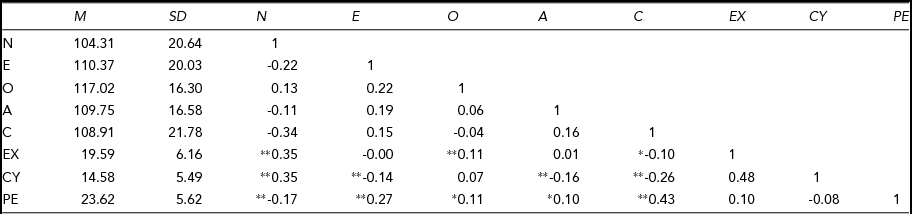
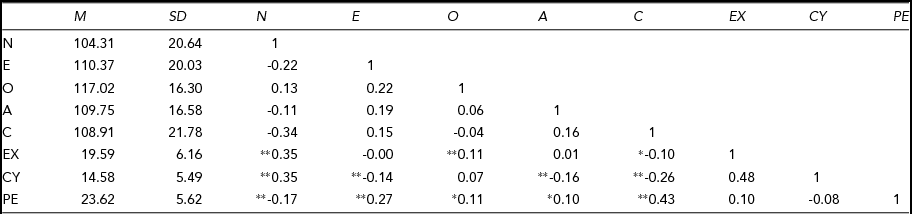
Pearson's Correlation analysis indicated several significant relationships among the three aspects of burnout and the Five Factor Model personality factors. Table 2 shows the means, SDs and correlations for these dimensions. Neuroticism and conscientiousness were significantly related to all three burnout dimensions. Agreeableness, extroversion and openness were each related to two burnout dimensions. Exhaustion was predicted by three factors, namely neuroticism, openness and conscientiousness. Cynicism was predicted by all factors except openness. Personal efficacy was predicted by all five factors. Since large samples generate more statistical power, it is possible to detect even weak relationships as statistically significant. Significant factor-level predictions ranged from 0.11 to 0.43. The highest relationship was between conscientiousness and personal efficacy.
Means (M), Standard Deviations (SD) and Pearson Correlations of the Study Variables
Note. N = 577
**p < 0.01, *p < 0.05
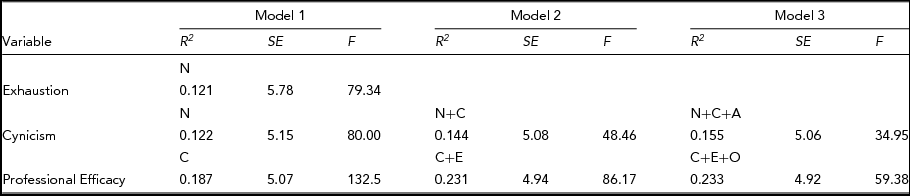
Table 3 presents the results of a stepwise forward regression analysis conducted to determine the unique contribution of each of the Five Factors to the three burnout constructs. The results of these regressions are organised by the Maslach dimensions. Exhaustion was predicted by neuroticism alone (β = 0.348, t = 8.907, p < 0.05). Cynicism was predicted as a combination of neuroticism (β = 0.289, t = 7.063, p < 0.05), conscientiousness (β = −0.145, t = −3.517, p < 0.05) and agreeableness (β = −0.103, t = −2.631, p < 0.05). Personal efficacy was predicted as a combination of conscientiousness (β = 0.408, t = 11.038, p < 0.05), extroversion (β = 0.192, t = 5.080, p < 0.05), and openness (β = 0.081, t = 2.165, p < 0.05).
Summary of Stepwise Regression Analysis of Domains
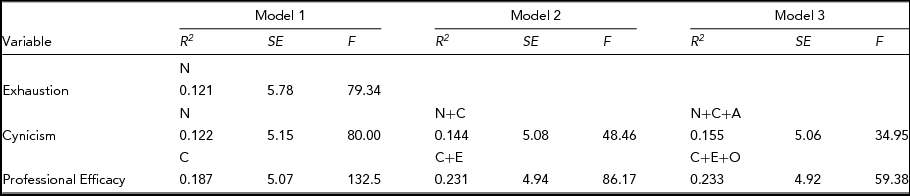
Notes. N = Neuroticism; E =Extroversion; O = Openness to Experience;
A = Agreeableness; C = Conscientiousness
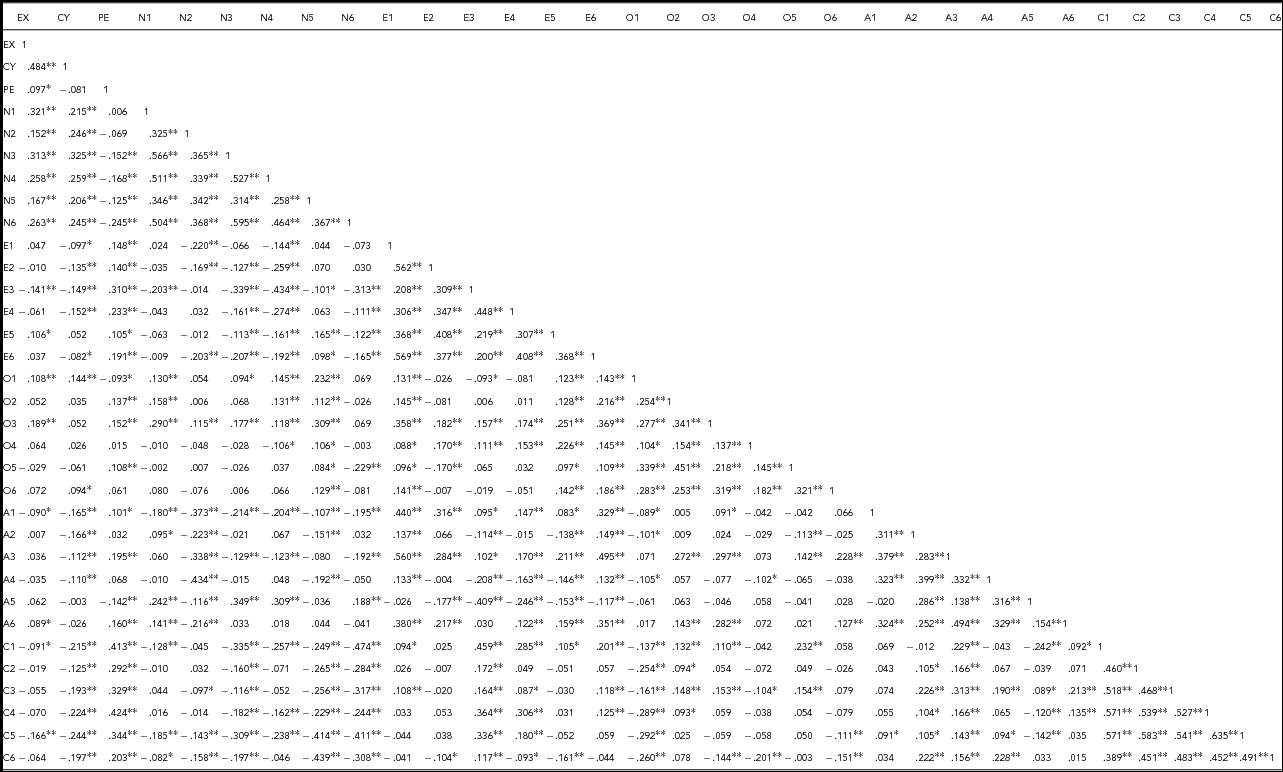
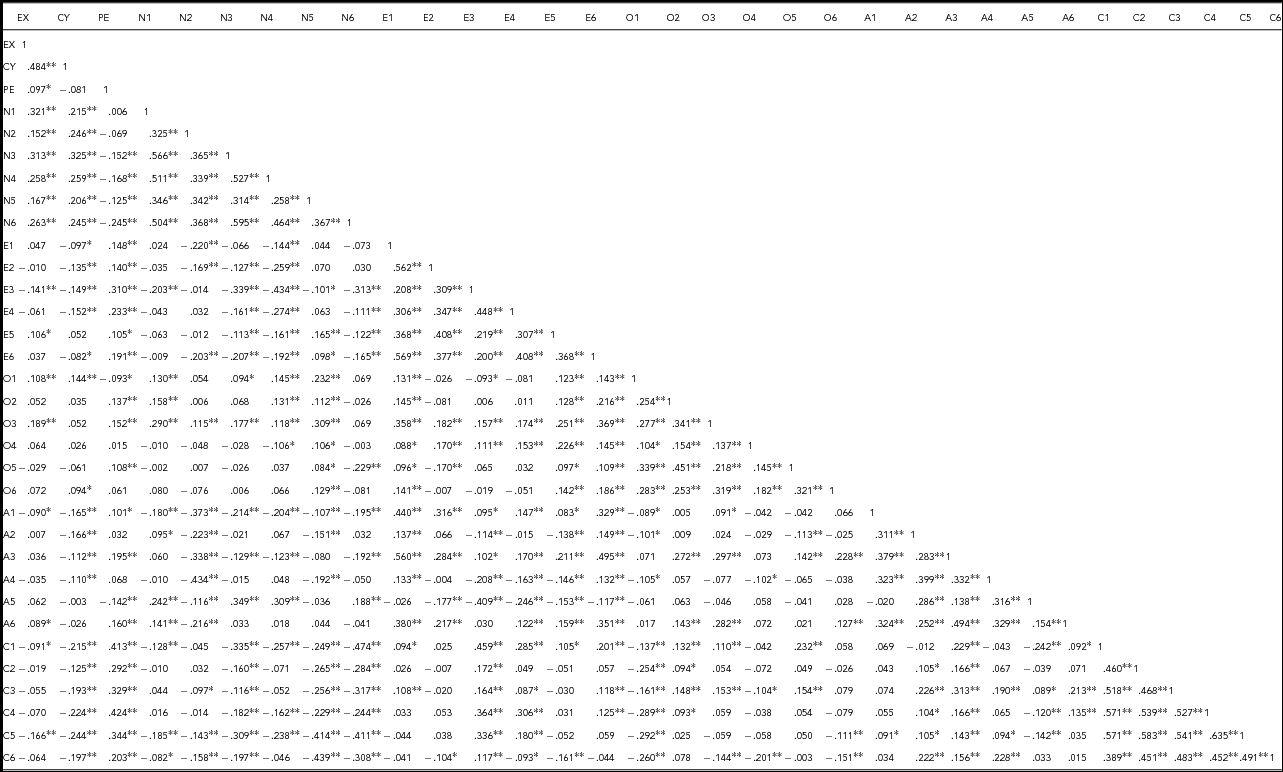
Table 4 shows the correlations found between the 30 facets of the NEO-PI-R and the three dimensions of burnout. Again, due to the statistical power generated by the large sample, a large number of correlations were found to be significant. The strongest correlations were professional efficacy and C4 achievement striving (r = 0.42; p < 0.01), C1 competence (r = 0.41; p < 0.01), C5 self-discipline (r = 0.34; p < 0.01), C3 dutifulness (r = 0.33; p < 0.01); exhaustion and N1 anxiety (r = 0.32; p < 0.01); cynicism and N3 depression (r = 0.32; p < 0.01).
Pearson Correlations of the Study Variables (NEO facets and Maslach dimensions)
Note. N = 577
**p < 0.01, *p < 0.05
Due to the large number of traits significantly correlated with the three burnout dimensions, a stepwise forward regression was used to suggest which facet traits might be most important. This also allowed us to compare the amount of variance accounted for at the factor level to the amount of variance accounted for at the facet level. For exhaustion, only neuroticism was a factor-level predictor (β = 0.348, t = 5.612, p < 0.05). At the facet level, the model began with anxiety (β = 0.212, t = 4.485, p < 0.05) and ended with anxiety and depression (β = 0.193, t = 4.083, p < 0.05). Thus, the factor level explained approximately 12 per cent of the variance (R² = 0.121, Adjusted R² = 0.120) whereas the facet level explained approximately 13 per cent of the variance in exhaustion scores (R² = 0.128, Adjusted R² = 0.125).
For cynicism, three factors were significant predictors: neuroticism (β = 0.289, t = 7.063, p < 0.05), conscientiousness (β = −0.145, t = −3.517, p < 0.05) and agreeableness (β = −0.103, t = −2.631, p < 0.05). At the facet level, prediction began with depression (β = 0.235, t = 4.849, p < 0.05), and was incremented by achievement striving, angry hostility, straightforwardness, self-consciousness and modesty (β = −0.101, t = −2.273, p < 0.05), in that order. The factor level accounted approximately 15 per cent of the variance (R² = 0.155, Adjusted R² = 0.150) while the six facets jointly account for 18 per cent of the variance (R² = 0.182, Adjusted R² = 0.173) in cynicism scores.
For professional efficacy, three factors were significant predictors: conscientiousness (β = 0.408, t = 11.04, p < 0.05), extroversion (β = 0.192, t = 5.080, p < 0.05) and openness to experience (β = 0.081, t = 2.165, p < 0.05). At the facet level, prediction began with achievement striving (C4; β = 0.224, t = 4.721, p < 0.05), and was incremented by competence (C1), gregariousness (E2), aesthetics (O2), assertiveness (E3) and dutifulness (C3; β = 0.092, t = 2.014, p < 0.05), in that order. The factor level accounted for approximately 24 per cent of the variance (R² = 0.237, Adjusted R² = 0.233), whereas the facet level jointly corresponds to approximately 26 per cent (R² = 0.256, Adjusted R² = 0.248) of the variance in professional efficacy scores.
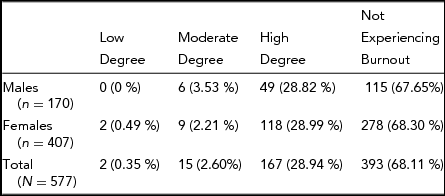
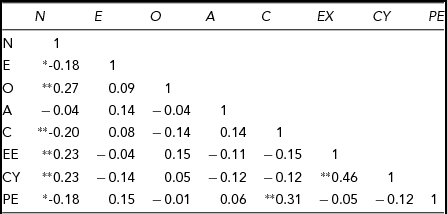
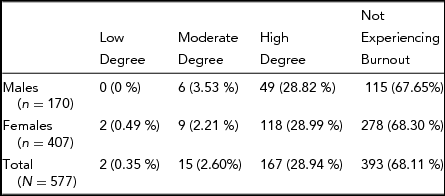
Table 5 summarises the percentage of students at various levels of burnout by gender and for the combined sample. Of the respondents, 29 per cent were considered highly burned out, 3 per cent moderately burned out and less than 1 per cent burned out at a low degree. About 68 per cent of the respondents were not experiencing burnout at the time of the study. The scores of these 393 respondents did not meet the criteria for a low, moderate or high degree of burnout, that is, scores of 16 or above on exhaustion, 11 or above for cynicism, and 23 or below on professional efficacy. Furthermore, as shown in Table 6, the researchers determined the correlations between the FFM traits and the three burnout dimensions specifically within the subsample of respondents possessing a high degree of burnout. The results revealed that, within this subsample, only neuroticism has a significant positive relationship with all the three aspects of burnout: exhaustion (r = 0.23; p < 0.01), cynicism (r = 0.23; p < 0.01) and professional efficacy (r = −0.18; p < 0.05). Conscientiousness had a significant positive relationship with professional efficacy (r = 0.31; p < 0.01).
Percentage of Burned Out Respondents
Correlations Between the FFM Traits and Respondents with High Degree of Burnout
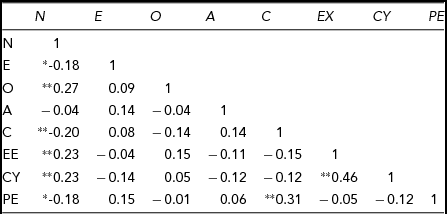
Note. N = 167
**p < 0.01, *p < 0.05
Discussion
By definition, a personality trait predisposes the individual to the specific classes of cognitions, emotions and behaviours associated with that trait. The current study sought to accomplish five objectives. First, when examined in the context of a large sample, there are significant relationships between the FFM and the three dimensions of burnout, both at the factor and facet levels. Due to time constraints and practical reasons, we were not able to gather data from regions of the country other than Metro Manila. In addition, only adolescents who were college undergraduates were utilised in this study. As such the generalisability of our findings to other age groups is unknown.
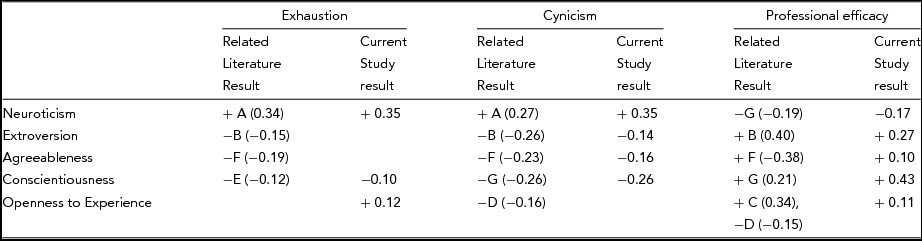
Second, the study asked whether the relationships already found in the literature would replicate among young Filipino college students. Previous factor-level relationships are summarised in Table 1. Table 7 compares the results of previous studies (as depicted in Table 1) with the current study. A relationship was considered to be replicated if the sign of the relationship (positive versus negative) was the same across both studies. A total of 11 relationships were replicated. In three relationships, a significant correlation was found in one of the cited studies, but not in the current study. Only in one study was the sign of the relationship different. Lastly, one relationship was found in the current study but was not found in any cited studies, namely, openness to experience and exhaustion. A review of Table 7 shows that only neuroticism is strongly related to exhaustion, with the relationship in the 0.35 range. Cynicism is more strongly predicted by neuroticism (about 0.25 to 0.40 ranges) and low conscientiousness (0.20 to 0.30 ranges). Professional efficacy is best predicted by extroversion and conscientiousness, with both relationships in the 0.20 to 0.45 range. Findings from past studies that did not replicate were generally of small effect size, and these studies had small sample sizes compared to the current study, which is notable because of the large sample size involved. These findings strongly support the cross-cultural validity of burnout in at least one collectivistic culture, namely the Philippines, and suggest that the pattern of results between Western studies and Filipino culture is likely to be similar.
Comparison of the Correlations of the Study Variables Based From the Current and Related Researches
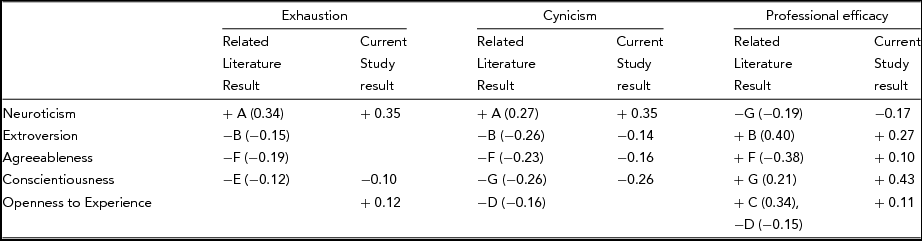
Note. A. Morgan and de Bruin (Reference Morgan and de Bruin2010), n = 297; B. Bakker, Van Der Zee, Lewig and Dollard (Reference Bakker, Van Der Zee, Lewig and Dollard2006), n = 80; C. Storm and Rothmann (Reference Storm and Rothmann2003), n = 131; D. Kokkinos (Reference Kokkinos2007), n = 447; E. Mills and Huebner (Reference Mills and Huebner1998), n = 225; F. Hudek-Knežević, Krapić, & Kardum (Reference Hudek-Knežević, Krapić and Kardum2006), n = 214; G. Azeem (Reference Azeem2013), n = 90.
Third, although the FFM consists of 30 facets, only 11 survived in the stepwise forward regression model. As such, we conclude that the facet traits are not equally important in predicting burnout.
Fourth, for each burnout dimension, prediction at the facet level accounted for more variance than at the factor level. Because these 11 facets predict the burnout dimensions as well or better than the five factors, the content of the facet traits is important in clarifying how each factor contributes to burnout. Different facet traits make different contributions, thereby allowing us to paint a more complete portrait of the person suffering burnout, as explained below.
Soliemanifar and Shaabani (Reference Soliemanifar and Shaabani2012) found neuroticism to be the sole predictor of exhaustion. They hypothesised that high neuroticism creates a vulnerability to all symptoms of burnout. Such individuals have a strong tendency to underestimate their own performance, reacting with intense emotion and self-criticism in stressful situations (Bakker et al., Reference Bakker, Van Der Zee, Lewig and Dollard2006). This hypothesis was supported by the present study, which found that certain facets of neuroticism – specifically anxiety and depression – predict exhaustion, especially among the high burnout group. As the anxiety and depression increase, so does the exhaustion component of burnout. Similarly, Plieger, Melchers, Montag, Meerman and Reuter (Reference Plieger, Melchers, Montag, Meerman and Reuter2015) found depression more closely related to exhaustion than to the other scales of the MBI.
Cynicism was found to be associated with numerous personality traits. A person may be emotionally reserved from having tendencies of depression and low warmth towards others. This claim is consistent with the study of Bakker et al. (Reference Bakker, Van Der Zee, Lewig and Dollard2006), which demonstrated that extroversion was negatively related to cynicism and positively related to professional efficacy. According to Maslach and Goldberg (Reference Maslach and Goldberg1998) and Pienaar and Wyk (Reference Pienaar and Wyk2006), cynicism will most likely occur due to the excessive emotional exhaustion one experiences. In the current study, cynicism was most strongly predicted by high depression, and high self-consciousness, low achievement striving, low straightforwardness and low modesty. Taken together, these facets suggest that the cynical person is likely to be depressed, feels a sense of shyness or social anxiety, deals with others through prevarication or deception, and compensates for low self-esteem and shortcomings with grandiosity. Low achievement striving further suggests that the cynical person is likely to experience burnout because he or she devalues achieving anything in the first place.
Our finding that extroversion exhibited a strong effect on diminished professional efficacy converged with the study of Zellarsi, Hochwarter, Perrewe, Hoffman and Ford (Reference Zellarsi, Hochwarter, Perrewe, Hoffman and Ford2004). Lack of professional efficacy was predicted by extroversion and, in particular, by low assertiveness and low gregariousness. Due to their expected lack of success and disapproval from others, there is a high tendency for individuals with burnout to become loners and to behave submissively. In addition, Azeem (Reference Azeem2013) found that conscientiousness positively predicted professional efficacy and negatively predicted cynicism, which converges with the results of the current study. As Maslach and Goldberg (Reference Maslach and Goldberg1998) stated, ‘reduced personal accomplishment refers to a decline in one's self competence’ (p. 64). Students with low scores on conscientiousness are content with their low level of achievement especially in school related matters. In turn, they have little faith in their capabilities, are not motivated to succeed, and therefore burned out more quickly.
Finally, the study of Storm and Rothmann (Reference Storm and Rothmann2003) found that openness to experience was associated with professional efficacy. This is similar to the present study, which found that a positive relationship exists between openness to experience and professional efficacy. A facet of openness to experience, low aesthetics, is said to reduce one's professional efficacy. This can imply that little attention to detail can affect one's professional efficacy negatively. However, there is a lack of research accounting for the relationship between aesthetics and professional efficacy.
Prevalence of burnout in the study
Although the main focus of the current paper is on traits that predispose to burnout, clinically it is important to determine whether burnout is relatively rare or relatively common, the last goal of our study. Perhaps the most startling finding of the current study is the large percentage of students who are already burned out. A person is considered to have a high degree of burnout when exhaustion and cynicism are high and professional efficacy is low. In the present study, 167 (29 per cent) out of the 577 participants were highly burned out, almost one in three. Within the high burnout subjects, all three burnout dimensions were predicted by neuroticism. In addition, conscientiousness predicted professional efficacy. The high prevalence of burnout within an academic environment suggests that academic achievement may be dramatically reduced by what is actually a temporary condition. Likewise, it suggests that counseling departments should have interventions for burnout already formulated, that professors should be taught to identify signs of burnout in their students as the semester progresses (e.g., declining grades, increasing absences, increasing problems with peer relations), and should refer such students to the counseling center for assessment and intervention due to burnout if signs are noted. The prevalence of burnout was surprising (nearly one in three students were highly burned out), since it cannot be attributed to the burnout inventory being administered near the end of the semester, when students have already endured several months of assignments and deadlines. Most of the students in our sample participated in the study near the middle of the semester. By the end of the semester, these numbers may be expected to increase further. More research is necessary to determine whether large portions of college students essentially exist in what may be termed ‘a chronically burned out state’.
Limitations and future directions
The current study has explored the relationship between personality factors and traits with Maslach's three facets of burnout. As internal dispositions, personality traits may be thought of as risk factors for the development of symptoms that arise from vulnerabilities created by these dispositions. While the FFM is a widely researched model of personality traits, continuing lexical research with personality traits from various languages has suggested other models, including the Honesty-Humility, Emotionality, Extroversion, Agreeableness, Conscientiousness, Openness to Experience Personality Inventory Revised (HEXACO PI-R) (Lee & Ashton, Reference Lee and Ashton2004) and the “wideband cross-language six’’ (WCL6; Saucier, Reference Saucier2009). Most of the facets in the HEXACO PI-R model are different from the FFM, having been chosen on the basis of their strong lexical roots. In contrast, the FFM facets were chosen by Costa and McCrae (Costa, McCrae & Dye, Reference Costa, McCrae and Dye1991) on their basis in the personality questionnaire literature. Likewise, Saucier (Reference Saucier2009) noted that lexical studies in Chinese, English, Filipino, Greek, Hebrew, Spanish and Turkish appeared to converge on six recurrent factors using a relatively narrow sample of lexical attributes. Sampling a broader range of attributes that included evaluative terms (e.g., great, awful), Saucier (Reference Saucier2009) found that the WCL6 structure outperformed the Five Factor Model in predicting dissociative tendencies, obsessive-compulsive symptoms, borderline personality, self-assessed health status, depression, mental health history and medical history, compulsive drinking, risk-taking after drinking, law-breaking and phobias. This could be true for predicting burnout as well. Though the FFM is widely used in personality research, it is hereby acknowledged as an important limitation of the current study. A substantial portion of the variance in the three burnout dimensions was not predicted by the FFM facets. Thus, additional traits from other major personality inventories suggest additional risk factors to be investigated.
Collectively, such studies may identify a ‘burnout profile’, that is, some collection of traits that can be used to identify students who are exceptionally vulnerable to burnout, before burnout develops. Interventions may then be addressed not only to the acute effects of burnout, but also to the longer-term personality characteristics that create a vulnerability to burnout.
Acknowledgements
This research received no specific grant from any funding agency, commercial or not-for-profit sectors.
Declaration of Interest
None.