Introduction
Family caregiving of dementia patients has well-documented negative effects on the health and well-being of caregivers (Schulz et al., Reference Schulz, O'Brien, Bookwala and Fleissner1995; Pinquart and Sorensen, Reference Pinquart and Sorensen2003b). Caregiver burden refers to the caregiver's perceived emotional, social, and financial consequences of care provision (Zarit et al., Reference Zarit, Reever and Bach-Peterson1980). Research on the health effects of dementia caregiving has largely been guided by the stress process model (Pearlin et al., Reference Pearlin, Mullan, Semple and Skaff1990; Aneshensel et al., Reference Aneshensel, Pearlin, Mullan, Zarit and Whitlach1995), which conceptualizes caregiving as the proliferation, or spread, of stress from primary stressors (e.g. measures of dementia severity) to increased risk of morbidity including major depression or depressive symptomatology.
Researchers have consistently demonstrated associations between the psychiatric or behavioral disturbances related to dementia (i.e. the behavioral and psychological symptoms of dementia, or BPSDs) and negative outcomes for caregivers of patients with dementia including increased caregiver burden, stress, or depressive symptoms (Pinquart and Sorensen, Reference Pinquart and Sorensen2003a; Black and Almeida, Reference Black and Almeida2004). BPSDs are often referred to as “problem behaviors” or simply “behavioral disturbances” and include verbal and physical aggression, agitation, psychotic symptoms (e.g. hallucinations and delusions), sleep disturbances, depression, oppositional behavior, and wandering. These behaviors are reported to be more stressful for caregivers than cognitive and functional problems in the patient, perhaps due to the capricious nature of BPSD. While the functional and cognitive trajectories for the dementia patient follow an expected steady decline, behavior problems can ebb and flow, which can leave the caregiver less prepared to handle such behaviors adequately. Additionally, because they effectively alter the patient's personality, BPSDs may serve as more dramatic reminders of the major changes that have occurred in the patient and the loss experienced by the caregiver. BPSDs are also associated with more caregiver anger and resentment toward the patient than other aspects of the disease (e.g. cognitive decline; Croog et al., Reference Croog, Burleson, Sudilovsky and Baume2006) suggesting that there is a negative emotional response to BPSDs, which could increase caregiver stress and negatively affect caregiver psychological health.
While BPSDs are increasingly recognized as important aspects of dementia that are associated with disease outcomes and require treatment, they are difficult to measure because symptoms are episodic and subject to environmental provocations, and caregivers often report on the frequency or intensity of BPSDs. Moreover, various measures exist and are used to assess the presence of BPSDs (Jeon et al., Reference Jeon2011) resulting in a lack of clear consensus as to which symptoms constitute BPSDs or how these symptoms should be categorized (Finkel et al., Reference Finkel, Costa e Silva, Cohen, Miller and Sartorius1996). BPSDs are most often measured in summative fashion, where the occurrence or frequency of behavior problems are summed and operationalized as a single construct of “behavior problems.” The vast majority of routinely cited references published in the past 20 years that provide evidence on the empirical relationships between BPSDs and caregiver negative outcomes did not examine or even review the effect of individual symptoms (e.g. delusions) or separate clusters of symptoms (e.g. psychotic behaviors) in favor of the summative approach to behavior problems (Schulz and Williamson, Reference Schulz and Williamson1991; Aneshensel et al., Reference Aneshensel, Pearlin, Mullan, Zarit and Whitlach1995; Burns, Reference Burns2000; Pinquart and Sorensen, Reference Pinquart and Sorensen2003a). Specific BPSDs (individual symptoms or clusters) should be examined to determine whether there are components of BPSDs that differentially impact caregiver burden or depression. The failure to capture the complexity of unique behaviors or clusters of behaviors limits our understanding of whether there are particular aspects of dementia behavior that have more deleterious effects on caregiver burden and depression, especially given that individual symptoms clearly have value in understanding the nature and progression of dementia.
Certain individual patient symptoms or symptom clusters may result in more burden or depression for the caregiver than others because they may be more difficult to manage physically, may be taken more personally by the caregiver, or may serve as more dramatic reminders of loss of a loved one. Specific psychotic behaviors (e.g. delusions of abandonment, paranoid delusions) may be particularly disturbing to caregivers who are being accused of not helping the patient despite all their efforts, whereas other behaviors that do not involve the caregiver (e.g. auditory hallucinations) may be less threatening to the caregiver. Individual behaviors may ultimately affect the caregiver's mood and ability to effectively care for the patient via different pathways, i.e. by differentially evoking more burden, fear, or sympathy. Understanding whether specific BPSD clusters have more negative impact on caregiver burden and depression and the mechanisms by which this occurs can help to target treatment and intervention efforts more effectively for patient–caregiver dyads.
Furthermore, as patient–caregiver relationships develop within the chronic disease context of dementia (which may last for years), considering the timing of behaviors (i.e. existence of sensitive time periods for onset of BPSD symptoms and caregiver adaptation to symptoms over time) relative to caregiver burden and depression is necessary. The dementia caregiver confronts challenges extending throughout the disease course, including patient cognitive and functional decline as well as variation in individual BPSDs, which are known to change with illness progression (Davis et al., Reference Davis, Buckwalter and Burgio1997; Aalten et al., Reference Aalten, de Vugt, Jaspers, Jolles and Verhey2005). Establishing whether and how the timing of individual behaviors affects caregiver response is paramount to understanding the etiology of caregiver burden and depression and developing effective interventions appropriate to the changing course of disease. By studying the impact of timing of behaviors, we may, for example, be able to focus on specific stages of the patient–caregiver relationship in which intervention for caregivers would be most beneficial.
Our aim was to review the literature on the relationship between BPSDs and caregiver outcomes to determine whether there are known symptoms or symptom clusters which exert undue negative impact on caregiver burden and depression. Additionally, we reviewed scales used to measure BPSDs and approaches used for classifying BSPD symptom clusters to determine whether variations in measurement/scaling may also account for differences in caregiver burden and depression. Finally, we look to see how the role of timing of symptoms has been examined within the literature.
Methods
Materials for this review were primarily identified through searches of two electronic databases for peer-reviewed published articles: the MEDLINE/Pubmed and PsychInfo. Search terms were selected based on initial review of relevant keywords across databases that were likely to yield relevant results. Initial search terms included the following keywords and/or subject headings: (1) “dementia” or “Alzheimer,” (2) “caregivers” or “caregiving,” and (3) “behavior symptom” or “BPSD” or “psychiatric” or “neuropsychiatric” or “hallucination” or “delusion” or “aggression” or “agitation” or “wandering” or “psychosis” or “depression” or “behavior.” A search of related articles in these databases, references in review articles and other relevant articles, and consultation with recognized experts yielded additional articles for review.
A set of 708 unique abstracts or articles was reviewed through 2010. Inclusion criteria were as follows: (1) published in the last 20 years (i.e. after 1989, in order to focus the review on the most recent information regarding caregiving); (2) written in English; (3) peer-reviewed; (4) original research (i.e. no review articles); (5) participants were informal or family caregivers of older adults with Alzheimer's disease (AD) or dementia in general; (6) included measure of caregiver depression, depressive symptoms, or caregiver burden as an outcome; and (7) included as exposure variable at least one specific dementia patient behavioral or psychological symptom/symptom cluster. Studies were included even if patient behavior–caregiver outcomes were not the primary research interest. Articles were excluded if they (1) were case reports, cases series, or contained 20 or fewer subjects; (2) assessed BPSD as a cumulative variable; (3) focused on a specific subtype of dementia other than AD; (4) did not perform a test to determine whether the association between individual patient behaviors and caregiver outcomes was statistically significant (e.g. baseline data from clinical trials that reported mean scores of caregiver distress outcomes for two or more symptoms); or (5) examined relationship between BPSD and caregiving among patients with unique neuropsychiatric profiles.
Of abstracts screened, 580 were excluded for not meeting initial eligibility criteria. Of the 128 studies retrieved, 55 were excluded because they did not study the association between individual BPSDs and caregiver burden or depression. Additionally, review studies (n = 6), clinical trials that did not measure impact of behaviors on caregivers (n = 9), descriptive studies that failed to quantify the association between BPSD and caregiver depression or burden (n = 17), and case reports or studies with n < 20 were also excluded (n = 6). The final number of articles included was 35.
Studies included in the analysis were reviewed to: (1) determine reasons for testing individual BPSDs or utilizing specific classification systems; (2) determine which individual symptoms or clusters were tested and had impact on caregiver outcomes; (3) identify any causal mechanisms hypothesized and tested; and (4) determine if and how the role of timing of symptoms was studied. As a part of this analysis, we extracted the following study data: design, setting, population, diagnosis, exposure and outcome measures, BPSD categorization schemas, analytical approaches, and control for potential confounding.
Impactful symptoms/symptom clusters were operationalized as follows: symptoms with effect estimates designated as statistically significant in adjusted analyses (or unadjusted when not available) based on p-value <0.05 or with 95% confidence intervals that did not include null values. In our review of findings across studies, we retained all original categorizations of symptoms by investigators and only combined symptoms when they represented the same construct but had different labels (e.g. depression and dysphoria were combined into one category referred to as depression). Symptoms that were combined by authors but consisted of more than one construct were separated when appropriate (e.g. we separated aggression/agitation, a single category within the Neuropsychiatric Inventory (NPI), into two symptoms, namely, aggression and agitation; see Cummings et al., Reference Cummings, Mega, Gray, Rosenberg-Thompson, Carusi and Gornbein1994). We also excluded memory problems as a type of BPSD as the focus of this paper is on non-cognitive behavioral and psychological symptoms.
We tallied which symptoms were reported as impactful across relevant studies and also examined how often symptoms were reported as impactful relative to how often the symptom was examined. Symptoms commonly examined (≥ three individual articles) were separately reviewed to determine those symptoms most often found to be impactful. All articles were examined to determine whether there were a priori hypotheses regarding which symptoms would have more severe effects for caregivers. Additionally, we noted whether studies included mediation analyses to determine causal mechanisms for patient–caregiver associations and reviewed study designs in detail to assess the role of timing of symptoms within longitudinal designs. Finally, we examined overall study quality (e.g. sample size, population source, statistical control for potential confounding) to determine whether poor quality factors such as small sample size contributed to our findings.
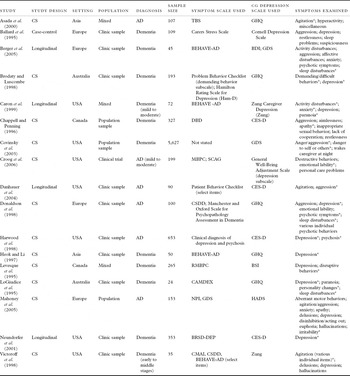
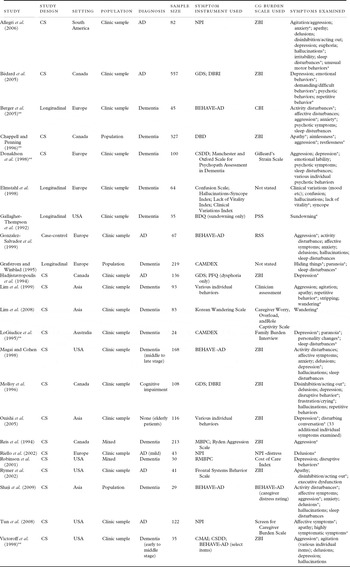
In addition to examining findings across all studies, we initially examined studies that assessed caregiver burden (n = 23) and caregiver depressive symptoms (n = 17) separately because caregiver burden and depression are different constructs. Five studies examined both caregiver burden and caregiver depression as outcomes (LoGiudice et al., Reference LoGiudice, Waltrowicz, McKenzie, Ames and Flicker1995; Chappel and Penning, Reference Chappel and Penning1996; Donaldson et al., Reference Donaldson, Tarrier and Burns1998; Victoroff et al., Reference Victoroff, Mack and Nielson1998; Berger et al., Reference Berger, Bernhardt, Weimer, Peters, Kratzsch and Frolich2005). These outcomes were considered separately, for a total of 35 articles and 40 outcomes assessed. Information from each study was extracted and is presented in Tables 1 (N = 17) and 2 (N = 23). These data are organized by study author and list all symptoms tested and associated with the outcome of interest.
Publications that examine association between individual BPSD symptom clusters and caregiver depression/depressive symptoms published 1990–2010 (n = 17)

*Symptom determined to be impactful in study.
CS = Cross-sectional; AD = Alzheimer's disease; CG = caregiver; BEHAVE-AD = Behavioral Pathology in Alzheimer's Disease; CES-D = Center for Epidemiologic Studies Depression Scale; CAMDEX = Cambridge Mental Disorders of the Elderly Examination; NPI = Neuropsychiatric Inventory; CMAI = Cohen-Mansfield Agitation Inventory; CSDD = Cornell Scale for Depression in Dementia; TBS = Troublesome Behavior Scale; GHQ = General Health Questionnaire; BDI = Beck Depression Inventory; GDS = Geriatric Depression Scale; DBD = Dementia Behavior Disturbance Scale; MBPC = Memory and Behavior Problem Checklist; SCAG = Sandoz Clinical Assessment-Geriatric; RMBPC = Revised Memory and Behavior Problem Checklist; BSI = Brief Symptom Inventory; HADS = Hospital Anxiety and Depression Scale; BRSD-DEP = Behavior Rating Scale for Depression.
Publications that examine association between individual BPSD symptom clusters and caregiver burden published 1990–2010 (n = 23)

*Symptom determined to be impactful in study; **Study also listed in Table 1.
CS = Cross-sectional; AD = Alzheimer's disease; CG = caregiver; NPI = Neuropsychiatric Inventory; GDS = Geriatric Depression Scale; BEHAVE-AD = Behavioral Pathology in Alzheimer's Disease; DBD = Dementia Behavior Disturbance Scale; CSDD = Cornell Scale for Depression in Dementia; CAMDEX = Cambridge Mental Disorders of the Elderly Examination; CMAI = Cohen-Mansfield Agitation Inventory; ZBI = Zarit Burden Interview; DBRI = Dysfunctional Behavior Rating Instrument; CBI = Caregiver Burden Interview; BDQ = Behavioral Disturbance Questionnaire; PSS = Perceived Stress Scale; RSS = Relative's Stress Scale; PFQ = Present Functioning Questionnaire; DBRI = Dysfunctional Behavior Rating Instrument.
Results
Approaches to measuring and categorizing individual symptoms
Across the 35 studies that met the inclusion criteria and investigated at least one individual symptom or symptom cluster, 25 different scales were used to measure BPSDs. Ten (29%) of the reviewed studies (Heok and Li, Reference Heok and Li1997; Magai and Cohen, Reference Magai and Cohen1998; Victoroff et al., Reference Victoroff, Mack and Nielson1998; Caron et al., Reference Caron, Boss and Mortimer1999; Gonzalez-Salvador et al., Reference Gonzalez-Salvador, Arango, Lyketsos and Barba1999; Riello et al., Reference Riello, Geroldi, Zanetti and Frisoni2002; Berger et al., Reference Berger, Bernhardt, Weimer, Peters, Kratzsch and Frolich2005; Mahoney et al., Reference Mahoney, Regan, Katona and Livingston2005; Allegri et al., Reference Allegri2006; Shaji et al., Reference Shaji, George, Prince and Jacob2009) made use of one of the following commonly used scales to study a broad range of behaviors: (1) the Behavioral Pathology in Alzheimer's Disease (BEHAVE-AD) rating scale (Reisberg et al., Reference Reisberg, Auer and Monteiro1996), which assesses behaviors occurrence over seven domains – delusions, hallucinations, activity disturbances, aggression, sleep, affective symptoms, and anxiety; and (2) the NPI (Cummings et al., Reference Cummings, Mega, Gray, Rosenberg-Thompson, Carusi and Gornbein1994), which assesses ten individual behaviors – delusions, hallucinations, agitation/aggression, disinhibition, abberant motor behavior, irritability, dysphoria, anxiety, apathy, and euphoria – with follow-up questions on severity and frequency of behavior. Measures vary as to whether they assess and/or give weight to the frequency of behavior occurrence (e.g. in the Revised Memory and Behavior Problems Checklist (Teri et al., Reference Teri, Truax, Logsdon, Uomoto, Zarit and Vitaliano1992), the caregiver notes how often behavior occurred on five-point Likert scale). Other studies employed one or more assessments used to measure more specific aspects of symptomatology: for example, four studies (Hadjistavropoulos et al., Reference Hadjistavropoulos, Taylor, Tuokko and Beattie1994; Molloy et al., Reference Molloy, Lever, Bedard, Guyatt and Butt1996; Bédard et al., Reference Bédard, Kuzik, Chambers, Molloy, Dubois and Lever2005; Mahoney et al., Reference Mahoney, Regan, Katona and Livingston2005) used the Geriatric Depression Scale (GDS; Brink et al., Reference Brink, Yesavage, Lum, Heersema, Adey and Rose1982), which measures patient depressive symptoms using 15 or 30 dichotomous (yes/no) questions. Additionally, not all studies made use of validated BPSD scales, instead relying on clinical diagnoses of behaviors such as psychosis (Harwood et al., Reference Harwood, Barker, Cantillon, Loewenstein, Ownby and Duara1998) or original lists of individual items to measure BPSD (Lim et al., Reference Lim, Sahadevan, Choo and Anthony1999; Onishi et al., Reference Onishi, Suzuki, Umegaki, Nakamura, Endo and Iguchi2005).
There was no consistent approach to the categorization of symptoms across studies. Two studies did not provide any information on categorization schema (Molloy et al., Reference Molloy, Lever, Bedard, Guyatt and Butt1996; Covinsky et al., Reference Covinsky2003) and almost half (n = 17) did not employ any system of categorization, instead using select individual items or diagnoses (Gallagher-Thompson et al., Reference Gallagher-Thompson, Brooks, Bliwise, Leader and Yesavage1992; Reis et al., Reference Reis, Gold, Andres, Markiewicz and Gauthier1994; Ballard et al., Reference Ballard1995; Grafstrom and Winblad, Reference Grafstrom and Winblad1995; Heok and Li, Reference Heok and Li1997; Brodaty and Luscombe, Reference Brodaty and Luscombe1998; Elmstahl et al., Reference Elmstahl, Ingvad and Annerstedt1998; Harwood et al., Reference Harwood, Barker, Cantillon, Loewenstein, Ownby and Duara1998; Magai and Cohen, Reference Magai and Cohen1998; Gonzalez-Salvador et al., Reference Gonzalez-Salvador, Arango, Lyketsos and Barba1999; Lim et al., Reference Lim, Sahadevan, Choo and Anthony1999; Neundorfer et al., Reference Neundorfer, McClendon, Smyth, Stuckey, Strauss and Patterson2001; Onishi et al., Reference Onishi, Suzuki, Umegaki, Nakamura, Endo and Iguchi2005; Allegri et al., Reference Allegri2006; Lim et al., Reference Lim, Son, Song and Beattie2008; Shaji et al., Reference Shaji, George, Prince and Jacob2009). The remainder of studies either used (1) subscales of instruments or (2) subscales and select individual scale items. The use of subscales and/or individual items resulted in the testing of a range of symptoms/symptom clusters that often include overlapping constructs: for example, while some studies (Donaldson et al., Reference Donaldson, Tarrier and Burns1998; Harwood et al., Reference Harwood, Barker, Cantillon, Loewenstein, Ownby and Duara1998) used the broader category of “psychosis,” others delineated between specific psychotic behaviors such as experiencing hallucinations and delusions (e.g. Allegri et al., Reference Allegri2006; Shaji et al., Reference Shaji, George, Prince and Jacob2009). Finally, seven studies (20%) employed factor analytic techniques to categorize symptoms based on how they clustered within patients (Hadjistavropoulos et al., Reference Hadjistavropoulos, Taylor, Tuokko and Beattie1994; Chappel and Penning, Reference Chappel and Penning1996; Caron et al., Reference Caron, Boss and Mortimer1999; Asada et al., Reference Asada, Kinoshita and Kakuma2000; Mahoney et al., Reference Mahoney, Regan, Katona and Livingston2005; Croog et al., Reference Croog, Burleson, Sudilovsky and Baume2006; Tun et al., Reference Tun, Murman and Colenda2008).
Symptoms that impact caregiver outcomes
No symptom/symptom cluster was consistently identified as having negative impact on either caregiver burden or caregiver depression by the majority of studies examined. For those studies assessing caregiver depression, 19 different patient symptoms/symptom clusters were cited as significantly impacting caregivers. Patient depression was the most frequently reported symptom associated with caregiver depression (35%; LoGiudice et al., Reference LoGiudice, Waltrowicz, McKenzie, Ames and Flicker1995; Heok and Li, Reference Heok and Li1997; Brodaty and Luscombe, Reference Brodaty and Luscombe1998; Donaldson et al., Reference Donaldson, Tarrier and Burns1998; Harwood et al., Reference Harwood, Barker, Cantillon, Loewenstein, Ownby and Duara1998; Neundorfer et al., Reference Neundorfer, McClendon, Smyth, Stuckey, Strauss and Patterson2001), although sleep disturbances (18%; LoGiudice et al., Reference LoGiudice, Waltrowicz, McKenzie, Ames and Flicker1995; Donaldson et al., Reference Donaldson, Tarrier and Burns1998; Berger et al., Reference Berger, Bernhardt, Weimer, Peters, Kratzsch and Frolich2005), anger/aggression (12%; Covinsky et al., Reference Covinsky2003; Danhauer et al., Reference Danhauer, McCann, Gilley, Beckett, Bienias and Evans2004), psychosis (12%; Donaldson et al., Reference Donaldson, Tarrier and Burns1998; Harwood et al., Reference Harwood, Barker, Cantillon, Loewenstein, Ownby and Duara1998), and agitation (12%; Victoroff et al., Reference Victoroff, Mack and Nielson1998; Asada et al., Reference Asada, Kinoshita and Kakuma2000) were also reported by multiple studies.
Twenty-eight different symptoms/symptom clusters were significantly associated with caregiver burden in at least one study. Anger/aggression (26%; Reis et al., Reference Reis, Gold, Andres, Markiewicz and Gauthier1994; Chappel and Penning, Reference Chappel and Penning1996; Victoroff et al., Reference Victoroff, Mack and Nielson1998; Gonzalez-Salvador et al., Reference Gonzalez-Salvador, Arango, Lyketsos and Barba1999; Berger et al., Reference Berger, Bernhardt, Weimer, Peters, Kratzsch and Frolich2005; Shaji et al., Reference Shaji, George, Prince and Jacob2009) and depression (17%; LoGiudice et al., Reference LoGiudice, Waltrowicz, McKenzie, Ames and Flicker1995; Donaldson et al., Reference Donaldson, Tarrier and Burns1998; Magai and Cohen, Reference Magai and Cohen1998; Onishi et al., Reference Onishi, Suzuki, Umegaki, Nakamura, Endo and Iguchi2005) were the most frequently cited patient symptoms associated with caregiver burden although sleep disturbances (13%; Grafstrom and Winblad, Reference Grafstrom and Winblad1995; LoGiudice et al., Reference LoGiudice, Waltrowicz, McKenzie, Ames and Flicker1995; Allegri et al., Reference Allegri2006) and repetitive behaviors (13%; Victoroff et al., Reference Victoroff, Mack and Nielson1998; Lim et al., Reference Lim, Sahadevan, Choo and Anthony1999; Bédard et al., Reference Bédard, Kuzik, Chambers, Molloy, Dubois and Lever2005) were also reported by multiple studies.
We ultimately included caregiver burden and depression studies together for analyses after finding no substantial differences between them. Combining the caregiver burden and depression studies (n = 35 articles that assessed n = 40 outcomes), we identified 36 different symptoms that had negative impact on caregivers. One study (Ballard et al., Reference Ballard1995) did not find any specific behavior patterns to be stressful. The most commonly reported symptoms for either caregiver burden or depression were: depression (25%; Hadjistavropoulos et al., Reference Hadjistavropoulos, Taylor, Tuokko and Beattie1994; LoGiudice et al., Reference LoGiudice, Waltrowicz, McKenzie, Ames and Flicker1995; Heok and Li, Reference Heok and Li1997; Brodaty and Luscombe, Reference Brodaty and Luscombe1998; Donaldson et al., Reference Donaldson, Tarrier and Burns1998; Magai and Cohen, Reference Magai and Cohen1998; Asada et al., Reference Asada, Kinoshita and Kakuma2000; Neundorfer et al., Reference Neundorfer, McClendon, Smyth, Stuckey, Strauss and Patterson2001; Onishi et al., Reference Onishi, Suzuki, Umegaki, Nakamura, Endo and Iguchi2005), anger/aggression (20%; Reis et al., Reference Reis, Gold, Andres, Markiewicz and Gauthier1994; Chappel and Penning, Reference Chappel and Penning1996; Victoroff et al., Reference Victoroff, Mack and Nielson1998; Gonzalez-Salvador et al., Reference Gonzalez-Salvador, Arango, Lyketsos and Barba1999; Covinsky et al., Reference Covinsky2003; Danhauer et al., Reference Danhauer, McCann, Gilley, Beckett, Bienias and Evans2004; Berger et al., Reference Berger, Bernhardt, Weimer, Peters, Kratzsch and Frolich2005; Shaji et al., Reference Shaji, George, Prince and Jacob2009), and sleep disturbances (15%; Grafstrom and Winblad, Reference Grafstrom and Winblad1995; LoGiudice et al., Reference LoGiudice, Waltrowicz, McKenzie, Ames and Flicker1995; Donaldson et al., Reference Donaldson, Tarrier and Burns1998; Allegri et al., Reference Allegri2006). Other symptoms linked to caregiving outcomes by at least three studies were paranoia (Grafstrom and Winblad, Reference Grafstrom and Winblad1995; LoGiudice et al., Reference LoGiudice, Waltrowicz, McKenzie, Ames and Flicker1995; Caron et al., Reference Caron, Boss and Mortimer1999), repetitive behaviors (Victoroff et al., Reference Victoroff, Mack and Nielson1998; Lim et al., Reference Lim, Sahadevan, Choo and Anthony1999; Bédard et al., Reference Bédard, Kuzik, Chambers, Molloy, Dubois and Lever2005), anxiety (Caron et al., Reference Caron, Boss and Mortimer1999; Berger et al., Reference Berger, Bernhardt, Weimer, Peters, Kratzsch and Frolich2005; Allegri et al., Reference Allegri2006), activity disturbances (Caron et al., Reference Caron, Boss and Mortimer1999; Berger et al., Reference Berger, Bernhardt, Weimer, Peters, Kratzsch and Frolich2005; Shaji et al., Reference Shaji, George, Prince and Jacob2009), and disruptive behaviors (Levesque et al., Reference Levesque, Cossette and Laurin1995; Molloy et al., Reference Molloy, Lever, Bedard, Guyatt and Butt1996; Robinson et al., Reference Robinson, Adkisson and Weinrich2001).
Because only those symptoms tested as predictors have the potential to have a demonstrated association with caregiver outcomes, we examined how often specific symptoms/symptom clusters were tested within studies. The following 13 symptoms were examined by at least three individual articles: affective symptoms, agitation, anger/aggression, activity disturbances, anxiety, delusions, depression, disinhibition/acting out, disruptive behaviors, hallucinations, paranoia, repetitive behavior, and sleep disturbances. The most commonly cited impactful symptoms were also those most frequently tested: 66% of reviewed studies tested the impact of depression, 43% tested the impact of anger/aggression, and 34% tested the impact of sleep disturbances. On the other hand, symptoms less frequently cited as having an impact, e.g. anxiety and paranoia, were each tested by only 9% of reviewed articles.
Limiting analyses to the 13 most commonly tested symptoms, we assessed the proportion of studies finding a symptom to be impactful using the number of studies in which the symptom was examined as the denominator. Six symptoms impacted caregivers in at least 75% of the studies in which they were examined: anxiety, paranoia, activity disturbances, disruptive behaviors, agitation and repetitive behavior. Among the three most commonly reported impactful symptoms, we found that patient depression impacted caregivers in 40% of the studies, anger/aggression impacted caregivers in 50% of the studies, and sleep disturbances impacted caregivers in 43% of the studies. On the other hand, while the effect of patient hallucinations was examined in six studies, only one found the symptom to affect caregiver burden (Donaldson et al., Reference Donaldson, Tarrier and Burns1998); similarly, while delusions were tested seven times, in only two cases were they found to have negative impact on caregiver burden or depression (Riello et al., Reference Riello, Geroldi, Zanetti and Frisoni2002; Shaji et al., Reference Shaji, George, Prince and Jacob2009).
Causal mechanisms by which individual BPSD have an impact on caregivers
None of the studies tested causal mechanisms by which a specific symptom/symptom cluster resulted in caregiver depression or burden. Furthermore, none of the studies presented a priori hypotheses indicating one symptom would specifically result in increased caregiver depression or burden than other symptoms. The overwhelming majority of studies were either exploratory in nature (i.e. interested in assessing which symptoms were associated with caregiver burden or depression) or tested hypotheses about other issues within the caregiving relationship such as the role of gender (Bédard et al., Reference Bédard, Kuzik, Chambers, Molloy, Dubois and Lever2005), attachment style (Magai and Cohen, Reference Magai and Cohen1998), or family boundary ambiguity (Caron et al., Reference Caron, Boss and Mortimer1999). Several studies were aimed at testing the influence of only one particular symptom/symptom cluster on caregiver mental health – e.g. wandering (Lim et al., Reference Lim, Son, Song and Beattie2008), delusions (Riello et al., Reference Riello, Geroldi, Zanetti and Frisoni2002), depression (Hadjistavropoulos et al., Reference Hadjistavropoulos, Taylor, Tuokko and Beattie1994; Neundorfer et al., Reference Neundorfer, McClendon, Smyth, Stuckey, Strauss and Patterson2001), and sundowning (Gallagher-Thompson et al., Reference Gallagher-Thompson, Brooks, Bliwise, Leader and Yesavage1992) – and therefore could not make hypotheses about the relative effect of multiple symptoms. Investigators who tested the association of more than one symptom (e.g. aggression and agitation; Danhauer et al., Reference Danhauer, McCann, Gilley, Beckett, Bienias and Evans2004) with caregiver outcomes did not hypothesize as to whether one symptom would have a greater impact on caregivers than another.
Dynamic relationships over time
Although the overwhelming majority of studies were cross-sectional in nature, seven articles (20%) examined the relationship between individual symptoms and outcomes over multiple time points; three (Caron et al., Reference Caron, Boss and Mortimer1999; Neundorfer et al., Reference Neundorfer, McClendon, Smyth, Stuckey, Strauss and Patterson2001; Danhauer et al., Reference Danhauer, McCann, Gilley, Beckett, Bienias and Evans2004) examined caregiver depression as an outcome, three (Gallagher-Thompson et al., Reference Gallagher-Thompson, Brooks, Bliwise, Leader and Yesavage1992; Grafstrom and Winblad, Reference Grafstrom and Winblad1995; Elmstahl et al., Reference Elmstahl, Ingvad and Annerstedt1998) examined caregiver burden as an outcome, and one (Berger et al., Reference Berger, Bernhardt, Weimer, Peters, Kratzsch and Frolich2005) examined both outcomes over time. No consistent patterns could be discerned from these studies due to the small number of longitudinal studies conducted, the studies' disparate aims relative to the role of behavior timing, wide variation in the number of time points assessed, period of time studied, and stage of disease/caregiving relationship. Yet, these study findings suggest that the timing of behaviors may impact the relationship between BPSDs and caregiver outcomes. First, specific behaviors may have more negative effects for caregivers at certain points in the caregiver–patient relationship. For example, Berger et al. (Reference Berger, Bernhardt, Weimer, Peters, Kratzsch and Frolich2005) found that across five time points, specific BPSD had varying associations with caregiver burden and depression (e.g. patient sleep disturbance was only correlated with caregiver depression at 24 months). Second, there is some evidence to suggest that there may be sensitive time periods in which patients' symptoms may have lasting impact on caregiver outcomes. Elmstahl et al. (Reference Elmstahl, Ingvad and Annerstedt1998) examined individual BPSD features at varying time points and found that lack of vitality (i.e. tiredness) during transition to group living facility affected caregiver burden 12 months later. Additionally, authors found that initial sundowning behaviors influenced increases in stress over time (Gallagher-Thompson et al., Reference Gallagher-Thompson, Brooks, Bliwise, Leader and Yesavage1992). Danhauer et al. (Reference Danhauer, McCann, Gilley, Beckett, Bienias and Evans2004), however, did not find baseline behaviors to impact subsequent caregiver depression. Finally, findings from two studies suggest that positive or negative changes in patient behaviors may similarly influence changes in caregiver behaviors (Caron et al., Reference Caron, Boss and Mortimer1999; Neundorfer et al., Reference Neundorfer, McClendon, Smyth, Stuckey, Strauss and Patterson2001).
Study quality
We examined overall study quality to determine whether factors such as sample size and lack of control for potential confounding limited our ability to find consistently impactful BPSD symptoms. Half of the studies included sample sizes of 100 dyads or less, which limits ability to detect smaller effect sizes. The median sample size across the 35 studies was 107, and only four studies included more than 300 dyads (Chappel and Penning, Reference Chappel and Penning1996; Harwood et al., Reference Harwood, Barker, Cantillon, Loewenstein, Ownby and Duara1998; Neundorfer et al., Reference Neundorfer, McClendon, Smyth, Stuckey, Strauss and Patterson2001; Covinsky et al., Reference Covinsky2003). Furthermore, most studies included in this review did not control for important confounders such as functional status or caregiver characteristics in part due to small sample size. Overall, there was a lack of statistical control for multiple covariates: 26% used unadjusted correlation analyses (n = 6; Gallagher-Thompson et al., Reference Gallagher-Thompson, Brooks, Bliwise, Leader and Yesavage1992; LoGiudice et al., Reference LoGiudice, Waltrowicz, McKenzie, Ames and Flicker1995; Caron et al., Reference Caron, Boss and Mortimer1999; Robinson et al., Reference Robinson, Adkisson and Weinrich2001; Berger et al., Reference Berger, Bernhardt, Weimer, Peters, Kratzsch and Frolich2005; Allegri et al., Reference Allegri2006), χ2 tests (n = 2; Riello et al., Reference Riello, Geroldi, Zanetti and Frisoni2002; Shaji et al., Reference Shaji, George, Prince and Jacob2009), or paired t-tests (n = 1; Grafstrom and Winblad, Reference Grafstrom and Winblad1995) to examine patient–caregiver associations. Control for such factors would have weakened observed associations and may account for why so many individual symptoms were found to negatively impact both caregiver burden and depression. Furthermore, studies failed to simultaneously control for the full range of BPSD symptoms, even if they successfully adjusted for the effects of multiple covariates. For example, Covinsky et al. (Reference Covinsky2003) controlled for important patient and caregiver characteristics including patient functional status using data from a large population-based study. While this study found that anger/aggression and danger to self or others were important predictors of caregiver depression, it unfortunately only tested three individual patient behaviors in total, failing to simultaneously consider the range of behaviors that are important stressors for caregivers.
Discussion
The literature has successfully revealed that BPSDs are empirically associated with caregiver burden and depression. We undertook this review in order to determine if there is evidence to suggest that individual BPSD symptoms or symptom clusters differentially impact these critical caregiver outcomes. The vast majority of studies addressing the relationship between patient behavior problems and caregiver burden and depression did not examine individual symptoms or symptom clusters and instead aggregated behaviors into one measure of BPSD such that each symptom was operationalized as equally contributing to caregiver stressors or depressive symptoms. While it is clear that BPSDs in general and many individual symptoms are associated with negative outcomes for caregivers, the evidence remains inconclusive as to whether some symptoms are more important than others. While we did find specific symptoms such as depression, aggression, and sleep disturbances to be commonly cited as impactful, there were no individual symptom/symptom cluster(s) that were consistently tested and found to result in increased burden or depression for caregivers. In fact, most symptom types were associated with either caregiver burden or depression in at least one study.
Furthermore, the most commonly cited impactful symptoms were also those most frequently tested. While most studies tested a range of symptoms that dementia patients are known to exhibit, several studies were specifically designed to test the effect of one specific symptom/symptom cluster (e.g. delusions, Riello et al., Reference Riello, Geroldi, Zanetti and Frisoni2002; wandering, Lim et al., Reference Lim, Son, Song and Beattie2008). While we included these studies in our review, they did not examine the impact of one symptom relative to others, and their inclusion makes the pool of symptoms examined less representative of all possible dementia behaviors. When we examined which symptoms were most often found as significantly associated with caregiver burden and depression relative to how often they were tested, we found that anxiety, activity disturbances, and disruptive behaviors were always statistically significantly associated with caregiver outcomes, whereas paranoia, repetitive behavior, and agitation had a significant impact 75% of the time. However, because none of these symptoms was examined by more than four studies, they were not commonly cited as impactful to caregivers among all articles reviewed. This discrepancy further substantiates our conclusion that research has yet to elucidate whether there are individual symptoms/symptom cluster(s) that result in the most negative outcomes for caregivers.
The lack of consistency in measurement of BPSDs ultimately limits our ability to reach a consensus as to which symptoms impact caregiver burden and depression. In addition to not measuring all aspects of BPSDs, scales do not consistently measure frequency of behaviors. How often the behavior occurs may affect the caregiver's response to the behavior, especially over time. The use of valid and consistent measures of BPSDs will improve future research on BPSDs in general (Jeon et al., Reference Jeon2011), and specifically improve our knowledge as to which symptoms have greatest influence on caregiver burden and depression.
Finally, we examined a variety of study characteristics as potential explanations for the heterogeneity of findings. First, we examined study setting variation given the wide range of international settings in which study samples were drawn and potential cultural differences in caregiver response to behaviors. Only one-third of studies examined were US-based; the remainder were from Europe (n = 8, 23%), Asia (n = 6, 17%); Canada (n = 6, 17%), Australia (n = 2, 6%), and South America (n = 1, 3%). When limiting the sample to those studies with large, US-based samples (n > 100) with caregiver depression as an outcome (n = 4), we still find the following range of symptoms associated with caregiver outcomes: psychosis (Harwood et al., Reference Harwood, Barker, Cantillon, Loewenstein, Ownby and Duara1998), depression (Harwood et al., Reference Harwood, Barker, Cantillon, Loewenstein, Ownby and Duara1998; Neundorfer et al., Reference Neundorfer, McClendon, Smyth, Stuckey, Strauss and Patterson2001), anger/aggressiveness (Covinsky et al., Reference Covinsky2003), and emotional lability (Croog et al., Reference Croog, Burleson, Sudilovsky and Baume2006). Although we reviewed studies published over a 20-year period, we did not find any variations in findings due to when the study was published. Furthermore, like most caregiving studies, the studies examined included samples largely recruited from memory clinics, hospitals, assisted living facilities, or caregiver support groups. When we restricted our review to studies with population samples (Grafstrom and Winblad, Reference Grafstrom and Winblad1995; Chappel and Penning, Reference Chappel and Penning1996; Covinsky et al., Reference Covinsky2003), we continued to find inconsistent patterns of findings. The majority of studies included patients with a mix of dementia diagnoses or unspecified dementia or cognitive impairment (see Tables 1 and 2). Among those studies that focused on patients with AD (n = 12), we did not find BPSDs that consistently influence caregiver burden or depression. Finally, the vast majority of studies did not consider effect modifiers such as race/ethnicity, which may affect the caregiver's response to specific symptoms.
Limitations
We maintained the study authors' original BPSD categorization schema (i.e. how symptoms are categorized within a study) for this analysis and did not systematically re-categorize symptoms across studies when counting which individual BPSDs were most often associated with caregiver burden and depression. Thus, the symptom categorization scheme used within each study (e.g. broad vs. more specific) may have influenced our findings. Even within individual studies, researchers reported different findings from models that incorporated broader subscales than models that included individual items. For example, when examining predictors of caregiver depression, Victoroff et al. (Reference Victoroff, Mack and Nielson1998) found that non-aggressive agitation as a subscale was predictive of caregiver depression, but when examining 29 individual agitation items, specific aggressive behaviors (e.g. making sexual advances and destroying property) were most predictive. Depression and aggression are broader symptom categories than specific behaviors such as hiding objects and hitting. While the latter symptoms were analyzed in this review as separate items, they may in fact be referring to similar constructs. Re-categorizing more specific behaviors/symptoms into broader categories could have influenced these findings.
While we initially planned to limit this review to studies that focused on caregiver depression as an outcome, because of the limited number of published studies examining individual symptoms we included caregiver burden studies as well. While we first reviewed these outcomes separately, we ultimately grouped them together after finding no differences between them. A wide range of assessments was used to measure depression and burden (see Tables 1 and 2). Within our review, researchers used nine different measures of caregiver depression and at least 13 different measures of caregiver burden (including one clinical assessment of burden; see Lim et al., Reference Lim, Sahadevan, Choo and Anthony1999). The use of a wide range of outcome measures may also contribute to inconsistent findings. Again, because of a lack of published studies, we were unable to limit this review to studies that measured depressive symptoms using identical assessments. We relied on a synthesis approach for this study, which effectively relies on a count of significant and non-significant effects in contrast to more advanced meta-analytic approaches that can empirically pool effect sizes. Because of the limited number of studies meeting inclusion criteria, and heterogeneity in study design and study measurements, meta-analysis techniques could not be employed to examine pooled estimates of effect. Similarly, due to a small number of studies that met our inclusion/exclusion criteria, we were not able to limit this analysis to review only the highest quality studies. However, we did attempt to examine different study subgroups to discern sources of heterogeneity in our findings. Finally, the search and categorization of articles was conducted by one individual (K.O) and the reliability of findings cannot be determined.
Implications and recommendations
An extensive body of research provides robust evidence suggesting that summed scores of BPSDs exert a negative impact on caregiver outcomes. The next step, not yet addressed in the literature, is to determine whether and how individual symptom clusters differentially impact the caregiver. Although individual BPSDs cluster together, increased specificity within the BPSD construct may help target interventions for caregivers since BPSDs as a whole are pervasive over the course of dementia. Based on this review, we recommend that future research should build upon existing knowledge of the relationship between BPSDs and caregiving and consider the following issues:
-
1 Categorizing individual BPSD based on the caregiver's perspective: Among studies reviewed, individual BPSDs were categorized based on how they manifest within the patient and not based on how they impact the caregivers, despite the fact that caregiver depression and burden were the outcomes of interest. Behaviors tend to be grouped together in order to describe clinical symptoms using similar domains used for non-dementia patients (e.g. psychotic vs. mood symptoms) or based on how they empirically cluster within the dementia patient. While these classifications may be clinically useful for understanding potential varying etiologies of BPSD syndromes (e.g. Aalten et al., Reference Aalten2003) and for assessing patient treatment options, they may not be fully capturing the impact of the behaviors on the caregiver. Each member of the patient–caregiver dyad is impacted by BPSDs, but not necessarily in the same way. Major events can differentially affect patients and caregivers; nursing home placement, for example, has positive effects for caregivers such as decreased stress but negative repercussions for patients including increased mortality. Therefore, researchers should begin to conceptualize BPSD components from the perspective of how they might impact the caregiver and consider how a behavior or symptom may differentially impact the caregiver and patient. For example, given the fact that psychotic behaviors are often unexpected and may be frightening to the caregivers who perceive them as non-normative, psychosis may have relatively little effect on quality of life for the patient, but may have huge implications for the well-being of the overwhelmed caregiver.
-
2 Delineating causal mechanisms: Studies have not identified pathways for the association between an individual symptom and caregiver outcomes. Further research is necessary to understand if and why individual behaviors or symptoms may increase caregiver burden or depression by operating through different pathways. While research suggests that the association between BPSDs in general and mental and physical health outcomes of caregivers are mediated by subjective stress appraisal (Goode et al., Reference Goode, Haley, Roth and Ford1998; Hooker et al., Reference Hooker2002; Son et al., Reference Son, Erno, Shea, Femia, Zarit and Stephens2007), it is not yet clear by which pathway individual symptoms ultimately result in negative caregiver outcomes. In addition to subjective stress, other pathways may be part of this process and should be further studied using mediation analysis.
-
3 The role of time and timing: While the majority of studies were cross-sectional, and the longitudinal studies reviewed were highly heterogeneous in aims and methodology, some evidences suggest that timing of BPSDs over the course of the patient–caregiver relationship is important for understanding the relationship between individual BPSDs and caregiver burden and depression. While this review suggests that specific time periods over the patient–caregiver relationship may be important to focus on and that change in patient behavior is associated with change in caregiver burden and depression, the paucity of studies evaluating the issue highlights a clear need for further study.
-
4 Emphasis on stage of illness: The vast majority of studies reviewed does not specify and control for stage of disease in assessing the relationship between symptoms and caregiver outcomes. Authors rarely examined stage of dementia except to systematically exclude institutionalized patients who typically have the most advanced dementia. We found that only five studies (Magai and Cohen, Reference Magai and Cohen1998; Victoroff et al., Reference Victoroff, Mack and Nielson1998; Caron et al., Reference Caron, Boss and Mortimer1999; Riello et al., Reference Riello, Geroldi, Zanetti and Frisoni2002; Croog et al., Reference Croog, Burleson, Sudilovsky and Baume2006) indicated that they restricted the sample to patients at a specific stage/stages of illness (e.g. mild to moderate or moderate to severe). Although controlling for cognitive status was a common technique used to address this issue, such an approach unfortunately may not succeed in capturing how long the patient has been suffering with illness or impairment or the actual stage of dementia progression. Grouping together dementia patients at all stages of disease progression may be problematic as disease stage affects caregiver outcomes (Ballard et al., Reference Ballard, Lowery, Powell, O'Brien and James2000). Gonzalez-Salvador et al. (Reference Gonzalez-Salvador, Arango, Lyketsos and Barba1999), for example, found that the associations between caregiver stress and individual behaviors in mild, moderate, and severe AD subgroups differ substantially. While the authors concluded that aggression was most important for all stages of AD, delusional ideation was independently associated with stress for those with mild and moderate AD but not for those with severe AD. Future research in this area should consider the impact of disease stage in analyses.
-
5 Diagnostic context: Additionally, studies have not differentiated between dementia subtypes. While our study excluded samples that focused exclusively on less common subtypes of dementia (e.g. dementia with Lewy bodies and frontotemporal dementia), only one-third of studies were restricted to patient samples who exclusively had diagnoses of AD (e.g. Donaldson et al., Reference Donaldson, Tarrier and Burns1998). Various BPSDs emerge in the context of different subtypes of dementia (Chiu et al., Reference Chiu, Chen, Yip, Hua and Tang2006). Etiology of dementia or diagnostic context may influence the way caregivers experience psychiatric features of dementia. According to attribution theory, perceptions of controllability of behaviors influence the emotional reaction of caregivers (Weiner, Reference Weiner1986). In other words, caregivers who perceive patients as having less control over their behaviors have a less emotional response and less negative effect. This relationship has been tested within the context of aging. Using vignette experiments, researchers found that disruptive behavior attributed to AD compared to aging alone or even depression was perceived as (1) more biological in nature, (2) less controllable by the patient, and (3) more likely to garner sympathy from the caregiver (Wadley and Haley, Reference Wadley and Haley2001). Diagnostic context may therefore play a role in explaining the relationship between BPSDs and caregiver depression such that those caregivers who attribute more behaviors to disease (based on their understanding of specific types of dementia) are less likely to experience negative outcomes. Testing these relationships across varied disease contexts can add to our understanding of how BPSDs affect caregivers and ultimately impact disease-specific design.
Conclusions
Our review finds that despite the consistency of the association between BPSDs and caregiver depression and burden, research has not focused on examining whether and how specific symptoms or groups of symptoms differentially impact caregiver outcomes. Moreover, very few studies have examined how these relationships change over time. In order to determine the key components of BPSDs that result in negative mental health for caregivers, studies are required that not only are designed to examine differences among BPSD symptom clusters but specifically categorize BPSDs based on how they negatively affect caregivers. Additionally, we recommend that studies examine casual mechanisms by which individual BPSDs impact caregivers and that subsequent research considers stage and subtypes of dementia. Such approaches will help to elucidate whether individual BPSDs differentially impact caregivers and allow for focused intervention and treatment efforts that benefit the patient–caregiver dyad.
Conflict of interest
None.
Description of author's roles
K. Ornstein was responsible for formulating the research study, analyzing the data, and preparation of the paper; J. E. Gaugler assisted in the writing of the paper and analysis of the data.
Acknowledgments
K. Ornstein acknowledges the following members of her dissertation committee who assisted with this project: Sharon Schwartz, PhD, Ann Stueve, PhD, Yaakov Stern, PhD, and Bruce Link, PhD. This research was supported by NIMH T32 MH013043-36 (K. Ornstein)