Introduction
Efforts are underway across the United States to reduce the population of individuals in our jails and prisons, such as through mental health diversion programs. Mental health diversion programs are now among the most common interventions for individuals with mental health problems who come into contact with the criminal justice system. Briefly, these programs divert individuals with mental health problems from traditional case processing into community-based behavioral health treatment and alternative case processing. The Sequential Intercept Model describes the points of interception or opportunities for diversion across multiple stages of case processing, from initial police contact (prebooking) through court appearance (postbooking) through sentencing (postconviction) and, even, re-entry.Reference Munetz and Griffin 1 There are now hundreds of mental health jail diversion programs in operation across the United States,Reference Case, Steadman, Dupuis and Morris 2 including over 400 mental health courts. 3 We focus herein on postbooking mental health jail diversion programs, including but not limited to mental health courts.
Increasingly, and not without controversy, risk assessment tools are being discussed as one strategy that may be used to support criminal justice reforms and alternatives to traditional case processing, such as mental health jail diversion programs.Reference Monahan and Skeem 4 – Reference Desmarais and Lowder 6 Risk assessment can be defined as the process of estimating the likelihood of future adverse outcomes. In the context of mental health jail diversion programs, the adverse outcome of interest is typically danger or threat to public safety (although the specific definition differs across jurisdictions and programs). Eligibility criteria for participation in mental health jail diversion programs, whether formally written in statute or otherwise, specify that for individuals with mental health problems to be diverted from the criminal justice system to alternative settings, including the community, they should not pose an unreasonable threat to public safety (see, for example, California Assembly Bill 1810). In other words, an individual should not be diverted from the criminal justice system to the community to the detriment of public safety.Reference Barber-Rioja, Rotter and Schombs 7
Traditionally, assessments regarding an individual’s threat to public safety—and thus, eligibility for diversion or other alternative to incarceration programs—are made by judges based on the facts of the case, official records, and any other information presented in court.Reference Talesh 8 This approach to risk assessment can be described as unstructured professional judgment because there is no validated checklist or protocol guiding what information should be considered and how this information should be combined or weighted to estimate threat to public safety. Instead, judges and other assessors relied rely on their professional training and experience to guide their identification, integration, and consideration of information to estimate an individual’s risk to public safety. On average, unstructured risk assessments are both less accurate and less consistent than those completed using structured risk approaches.Reference Ægisdóttir, White and Spengler 9 – Reference Grove, Zald, Lebow, Snitz and Nelson 11 The use of risk assessment tools also can lead to better public safety outcomes.Reference Mamalian 12 – Reference Vincent, Paiva-Salisbury, Cook, Guy and Perrault 15 The use of risk assessment tools, then, may help improve decisions regarding an individual’s appropriateness and eligibility for mental health jail diversion as a function of their estimated threat to public safety and the resources that would be required to mitigate that level of risk.Reference Barber-Rioja, Rotter and Schombs 7 Their use in mental health jail diversion programs also may contribute to improved individual and public safety outcomes.
In this paper, we first describe the process and components of risk assessment. We then consider the use of risk assessment tools in mental health jail diversion programs. In doing so, our goal is to provide an overview of the science and practice of risk assessment to inform decision-making and risk mitigation in the context of mental health jail diversion programs.
Process and Components of Risk Assessment
The process of risk assessment involves the gathering, consideration, and integration of information about characteristics of a person, their case, and their circumstances to estimate the risk they pose to public safety with the goal of informing decision-making and guiding risk management. There are 4 issues pertaining to the process of risk assessment in the context of mental health jail diversion programs that merit some elaboration and clarification before moving into a review risk assessment tools and their components.
First, there will always be uncertainty regarding whether or not a person presents a threat to public safety, even if a risk assessment is completed. People and their behavior do not occur in a void; individual behavior, including violence, is influenced by a complex and nested system of individual, social, community, and societal level factors (Figure 1).Reference Krug, Mercy, Dahlberg and Zwi 17 Risk assessment tools can help identify and estimate risk associated with some, but not all of these influences; some will remain unknown, unanticipated, or unexpected. Even after a well-done risk assessment, we cannot say with 100% certainty that a person does or does not present a danger to the public or that they will or will not engage in future violence. Instead, the process of risk assessment can help us improve the consistency and accuracy, as well as the transparency, with which we estimate risk to public safety.
Nested levels of factors relevant to threat to public safety among mental health jail diversion program participants. Note: Adapted from the Centers for Disease Control and Prevention’s Social-Ecological Model of violence prevention. 16 Factors listed at each level are examples and are not exhaustive.

Second, the process of risk assessment will occur in the context of mental health jail diversion regardless of whether or not a risk assessment tool is used. That is, every time a decision is made regarding the eligibility of an individual for mental health jail diversion, their threat to public safety will be considered. In the absence of the use of a risk assessment tool, a judge or other decision maker will review and integrate the facts of the case, official records, and whatever other information may be presented in court to arrive at a decision regarding whether the individual poses an unreasonable or unmanageable threat to public safety. Instead of replacing the exercise of judicial discretion, risk assessment tools provide information that can be used to inform these decisions.Reference Desmarais and Lowder 6 The information they produce should be considered within the full range of eligibility criteria, some—or even most—of which will not be addressed in the risk assessment process (eg, diagnostic criteria, evidence regarding the role mental health problems played in the charged offense[s]).
Third, the process of risk assessment should be distinguished from other types of screening or assessment processes that may occur in mental health jail diversion programs. For instance, risk assessment should be distinguished from risk screening, which differs in terms of both the process and goals. The goal of risk screening, on the one hand, is to quickly identify individuals who are potentially at heightened risk of threat to public safety and should be receive a more in-depth risk assessment.Reference Cartwright, Desmarais, Johnson and Van Dorn 18 Risk screening tools comprise just a handful of items that can be scored through a short interview, based on information readily available in records, or even self-administered. The process of risk assessment, on the other hand, involves a more comprehensive evaluation to inform an estimate regarding the risk they pose to public safety and how this risk can be managed (or not). Risk assessment will typically require more intensive data gathering efforts, more time, and a greater degree of training and expertise than risk screening, but it also should provide more in-depth and accurate information. For jurisdictions facing a high rate of bookings, risk screening might represent an efficient strategy for reducing the number of people for whom a full risk assessment is needed.Reference Cartwright, Desmarais, Johnson and Van Dorn 18 To do so, risk screening would be conducted as soon as possible to screen in those who require further evaluation.
Fourth, risk assessment should be distinguished from assessments of specific characteristics, behaviors, or domains of functioning, such as personality, substance use, cognitive functioning, or criminal thinking. As for risk assessment, assessments of specific characteristics, behaviors, or functioning may be completed via unstructured professional judgment or using clinical, behavioral, personality, and criminal thinking assessment tools. Such instruments were not designed to assess risk to public safety, even though their results may be statistically associated with risk to public safetyReference Dolan and Doyle 19 and they may be used for this purpose in practice.Reference Singh, Desmarais and Hurducas 20 , Reference Viljoen, McLachlan and Vincent 21 To be clear, results of these assessments can provide information relevant to understanding an individual’s threat to public safety, but they do not provide the full picture.
Risk and protective factors
Risk assessment tools are comprised of items that measure characteristics of a person, their case, and their circumstances. Some items are associated with increases in their risk to public safety. In the context of risk assessment, these characteristics are often referred to as risk factors. Other terms, such as precipitating or aggravating factors may be used in other settings or contexts with similar (but not exactly the same) meaning. Some items included in risk assessment tools may be associated with decreases in their risk to public safety. Although there is some discussion and debate regarding their exact definition and function, such characteristics are often referred to as protective factors. As for risk factors, protective factors may be referred to using different terms with similar but not exactly the same meaning, such as mitigating factors, buffers, resources, or strengths.
Even though the term risk factor is frequently applied in the context of risk assessment, a characteristic must meet 2 criteria to be appropriately labeled a risk factor. The first criterion is that the characteristic correlates (statistically) with the outcome of interest, in this case, threat to public safety. The second criterion is that it occurs before the outcome of interest.Reference Kraemer, Kazdin, Offord, Kessler, Jensen and Kupfer 22 For example, assuming violent recidivism is our working definition of threat to public safety, drug use is a risk factor if drug use is statistically correlated with violent recidivism and it occurs before the new violent crime is perpetrated. If the drug use occurs after perpetrating a new violent crime, then it is a correlate of violent recidivism but not a risk factor. The characteristic, in this example drug use, may be related to a person’s threat to public safety, but it does not predict or cause it. Kraemer et alReference Kraemer, Kazdin, Offord, Kessler, Jensen and Kupfer 22 further distinguish between types of risk factors that can and cannot change, a distinction we return to later.
There have been many different conceptualizations of the relationship between risk and protective factors.Reference Klepfisz, Daffern and Day 23 Protective factors have been described as qualitatively distinct from risk factors, showing direct and independent associations with key negative outcomes, including threat to public safety.Reference Webster, Nicholls, Martin, Desmarais and Brink 24 , Reference Rogers 25 For instance, the absence of a history of child abuse does not necessarily indicate the presence of a warm, supportive relationship with an adult caregiver during childhood. As another example, the absence of unemployment does not necessarily suggest the presence of stable, ongoing employment that would mitigate risk. Protective factors also have been described as mitigating factors that dampen the effect of a risk factor but do not directly predict negative outcomes.Reference Monahan and Skeem 4 , Reference Rutter 26 To demonstrate, a supportive family environment may buffer the severity of the impact of a risk factor, like substance abuse, on criminal behavior by affording opportunities for symptom monitoring in the community and facilitating treatment engagement. However, this definition may be limiting when one considers that a supportive family environment—even in the absence of problematic substance use—also may directly reduce an individual’s risk of criminal justice involvement. Although risk and protective factors may be correlated, research shows they contribute relevant and distinct information that improves the predictive accuracy of risk assessments,Reference Desmarais, Nicholls, Wilson and Brink 27 , Reference Serin, Chadwick and Lloyd 28 and in mental health jail diversion participants specifically.Reference Lowder, Desmarais, Rade, Coffey and Van Dorn 29 , Reference Lowder, Desmarais, Rade, Johnson and Van Dorn 30
Furthermore, in high risk and high need populations, such as mental health jail diversion program participants, protective factors may better discriminate between individuals than risk factors because the latter show ceiling effects. That is, mental health jail diversion program participants may have many—if not most—risk factors included in a given tool, there is greater variability in terms of the presence and strength of protective factors. To demonstrate, 1 investigation of 95 mental health jail diversion program participants showed that protective factors, as operationalized by Short-Term Assessment of Risk and Treatability (START)Reference Webster, Martin, Brink, Nicholls and Desmarais 31 assessments, were stronger predictors of rearrests and jail days relative to risk factors across multiple follow-up periods (ranging from 3- to 18-months). In the same study, protective factors showed less evidence of differential predictive validity as a function of race relative to risk factors.Reference Lowder, Desmarais, Rade, Johnson and Van Dorn 30 Other work shows that participants who succeed in mental health diversion programs often attribute their success to positive changes in their lives, such as increased participation in prosocial activities, improved family relationships, and greater community engagement.Reference Yuan and Capriotti 32 Overall, research suggests protective factors capture distinct information regarding an individual’s threat to public safety and should be considered in the context of mental health jail diversion programs.
Type and timing of factors
Understanding the different types and timing of risk and protective factors as they relate to an individual’s threat to public safety can improve the specificity, accuracy, and practical utility of risk assessment tools in the context of mental health jail diversion programs. Risk and protective factors can either be static or dynamic, as a function of the degree to which they can change. Static factors are historical or otherwise unchangeable characteristics, such as the age of first offense or the current charge(s). Dynamic factors are characteristics that may change over time or when targeted in treatment,Reference Douglas and Skeem 33 such as prosocial activities, employment, housing, or substance use. Dynamic factors can be either stable, changing relatively slowly, or acute, changing relatively quickly. For instance, procriminal attitudes or antisocial peers are potentially dynamic in nature but may be relatively stable, changing over time at a relatively slow rate. Other characteristics, such as an individual’s neighborhood, may be dynamic but stable due to external or systemic barriers (eg, poverty). At the same time, factors such as mental health symptoms or substance use may change more quickly, especially under stressful conditions such as release from jail into a community treatment setting. Community reentry, in particular, has been shown to trigger substance use relapse and to exacerbate mental health symptoms.Reference Osher, Steadman and Barr 34 As such, static, stable dynamic and acute dynamic factors would have different program implications and need to be addressed and monitored in different ways in the context of mental health jail diversion. Furthermore, static factors may be more relevant to decisions regarding interindividual risk level, such as appropriateness for diversion, whereas dynamic factors may be more relevant to decisions regarding intraindividual risk, including specific risk management strategies.Reference Douglas and Skeem 35
Risk and protective factors can also be distal or proximal, depending on when they occur. Distal factors are those factors that occurred in the more distant past, such as child abuse or a history of drug use, whereas proximal factors are those factors that occurred more recently or are currently present. Research suggests that distal factors are more relevant to outcomes over the longer term, spanning several months to years and that proximal factors are more relevant to outcomes over the shorter term, such as the coming days to weeks.Reference Johnson, Desmarais, Grimm, Tueller, Swartz and Van Dorn 36 , Reference Sadeh, Binder and McNiel 37 To demonstrate, a person may have a history of drug use but have been clean for several years. This history of drug use may elevate risk for perpetrating crime years into the future, but risk for perpetrating new violent crime over the coming months may be low (or, at least, be unaffected by this risk factor). Furthermore, there may be events that limit the relevance of historical factors, such as physical incapacity, setting, relationships, employment, intervention, or the passage of time.Reference Buchanan, Binder, Norko and Swartz 38 These distinctions are not just relevant to forecasting threat to public safety, but also mitigating risk.
Finally, a distinction is often made between factors that reflect risk versus need. Risk factors, as defined earlier, are associated with increased threat to public safety, but the association between needs and threat to public safety is more complicated. Criminogenic needs represent the intervention target(s) of identified dynamic risk factors.Reference Andrews and Bonta 39 For instance, if an individual has antisocial attitudes, then intervention should aim to reduce antisocial cognition, increase recognition of risky thinking and feeling, and promote anticriminal, less risky thinking and feeling. As another example, if an individual has substance use problems, then intervention could be focused on reducing substance misuse, on managing cravings, and reducing substance-use-related interpersonal supports and behaviors. Noncriminogenic needs, on the other hand, may represent important areas for treatment and intervention, such as emotional distress that do not directly contribute to risk public safety. Noncriminogenic needs are sometimes referred to as treatment or clinical needs.
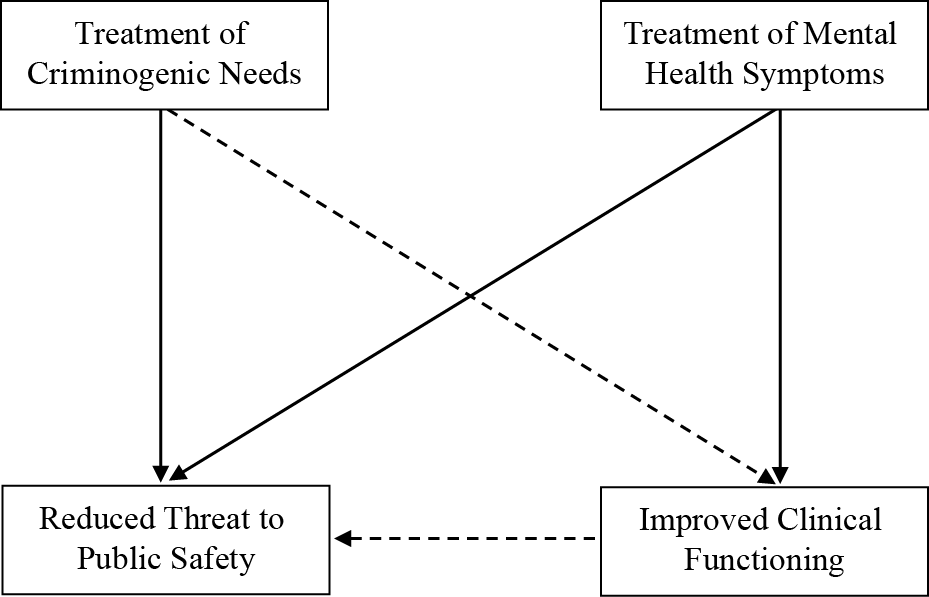
In the context of mental health jail diversion programs, however, treatment needs may in fact be criminogenic in nature. Specifically, eligibility criteria for participation in mental health jail diversion programs often include evidence that the mental disorder played a significant role in the commission of the charge(s) and that treatment of the mental health disorder would reduce an individual’s risk of recidivism.Reference Barber-Rioja, Rotter and Schombs 7 Although there is much debate in the field, methodologically rigorous studies show that some symptoms of serious mental disorders can be causally related to violence risk.Reference Van Dorn, Grimm, Desmarais, Tueller, Johnson and Swartz 40 There are also largescale studies demonstrating that psychiatric treatment, including medication and outpatient treatment, reduces recidivism rates among persons with serious mental disordersReference Van Dorn, Andel and Boaz 41 , Reference Van Dorn, Desmarais, Petrila, Haynes and Singh 42 (Figure 2). At the same time, there may be multiple factors contributing to risk to public safety among persons with serious mental disorders.Reference Skeem, Winter, Kennealy, Louden and Tatar 43 As such, treatment of mental health and criminogenic needs may be necessary to ultimately—and effectively—reduce risk. Indeed, research demonstrates the importance of criminogenic factors in predicting noncompliance and rearrest among mental health jail diversion participantsReference Honegger and Honegger 44 and suggests that programs targeting general risk factors, such as cognitive behavioral therapy, are more effective in reducing recidivism than is mental health treatment alone.Reference Skeem, Steadman and Manchak 45
Treatment of criminogenic and mental health needs among mental health jail diversion program participants. Note: Solid lines represent direct effects; dashed lines represent indirect effects.

Predicting outcomes
Risk assessment tools differ not only in their content, but also in their intended outcome. Not all risk assessment tools predict the same outcomes over the same period of time using the same strategies. By and large, risk assessment tools estimate threat to public safety in 1 of 2 ways: (1) the application of algorithms and actuarial tables, or (2) structured professional judgment. Actuarial risk assessment involves scoring items, and then weighting and combining these scores to arrive at total risk scores. The methods through which item ratings are weightened and combined differ, but generally reflect the degree to which the items are related to the outcome of interest and the statistical association between the items in the development sample(s). The risk scores, then, are cross-referenced with actuarial tables to identify the estimated outcome probabilities and assign a risk level.Reference Hilton, Harris and Rice 46 Some actuarial risk assessment tools have been developed and calibrated using machine learning, while others have used less complicated methods. Structured professional judgment tools, in comparison, guide assessors to consider conceptually relevant and evidence-based factors. Even though items may be given numerical scores, assessors ultimately estimate the risk level based on their professional judgment rather than using total scores and cutoffs.Reference Guy, Packer and Warnken 47 Research reviews show that both approaches predict public safety risks with comparable levels of consistency and accuracy.Reference Fazel, Sing, Doll and Grann 48 Some risk assessment tools use a hybrid approach that combines features of the actuarial and structured professional judgment approaches. Specifically, these instruments provide the assessor with the option to override the statistically estimated level of risk to assign a higher or lower final risk estimate. Research on the predictive validity of overrides is limited and the findings that do exist are mixed.Reference Guay and Parent 49 , Reference Schmidt, Sinclair and Thomasdóttir 50
Some risk assessment tools are designed to predict general recidivism risk, including committing a new crime (nonviolent and violent) and violating conditions of probation or parole. More than 60 such risk assessment tools have been identified as being used in criminal justice settings in the United States.Reference Desmarais, Johnson and Singh 51 Other tools are designed to forecast violence risk, which may or may not qualify as violent recidivism (eg, a first instance of violence or behavior that is violent in nature but does not meet standards to be prosecuted as a crime). Such tools forecast violence risk over different periods of time and among different populations, including adults with mental health problems. Other tools are designed to estimate risk of specific forms of violence or offending, including sexual violence, domestic violence, drug offenses, or traffic offenses. Most recently, in the wake of a new wave of bail reform, there has been considerable focus on risk assessment tools that are designed to estimate risk of failure to appear in court and perpetration of a new (violent) crime during the pretrial period.Reference Desmarais and Lowder 6 Other tools, still, estimate risk for multiple adverse outcomes, including but not limited to threats to public safety.Reference Webster, Martin, Brink, Nicholls and Desmarais 31
Risk assessment tools also differ in the degree to which they are designed to inform risk management.Reference Skeem and Monahan 52 Some risk assessment tools, referred to as the second generation of risk assessment, conceptualize risk prediction as the goal of risk assessment. Thus, their results—or the item ratings at least—are not intended to guide risk management and treatment planning through the identification of intervention targets.Reference Skeem and Monahan 52 Given the emphasis of mental health jail diversion programs on community-based risk management and treatment, second generation risk assessment tools may have less utility. Other risk assessment tools, referred to as the third generation of risk assessment, include dynamic factors that are relevant to risk management and treatment. Although they do include treatment-relevant factors, they do not explicitly (or automatically) incorporate assessment results into a risk management plan. Finally, some risk assessment tools, referred to as the fourth generation of risk assessment, explicitly integrate case planning and risk management into the risk assessment process, with the goal of enhancing treatment and supervision.
Predictive validity
To date, only a handful of studies have reported on the predictive validity of risk assessments conducted in mental health jail diversion programs, specifically. In a sample of 175 jail diversion participants with co-occurring mental health and substance use problems in New York City, for example, Broner et alReference Broner, Mayrl and Landsberg 53 examined the predictive validity of risk assessments completed using the Historical-Clinical-Risk Management 20 (HCR-20)Reference Webster, Douglas, Eaves and Hart 54 vis-à-vis program compliance and recidivism, defined as new jail bookings and felony rearrests. The HCR-20 assessments demonstrated validity in predicting these outcomes, but were a stronger predictor of felony rearrests than jail bookings. In another study, Barber-Rioja et alReference Barber-Rioja, Dewey, Kopelovich and Kucharski 55 examined the predictive validity of HCR-20 assessments with respect to diversion noncompliance and reincarceration in 131 mental health jail diversion participants. Findings revealed good validity in predicting outcomes assessed 12 months following the start of diversion program participation.
Two more recent investigations have examined the predictive validity of Level of Service Inventory-Revised (LSI-R)Reference Andrews and Bonta 56 assessments in 146 mental health court participantsReference Bonfine, Ritter and Munetz 57 and 95 mental health jail diversion participants,Reference Lowder, Desmarais, Rade, Johnson and Van Dorn 30 respectively. In the study of mental health court participants, LSI-R total scores were associated with likelihood of program termination, after controlling for offense characteristics, prior violations, prior jail days, and time in program.Reference Bonfine, Ritter and Munetz 57 (Recidivism was not examined as an outcome in this study.) In the study of mental health jail diversion program participants, LSI-R total scores predicted rearrests and jail days across 3- to 12-month follow-up periods, whereas the LSI-R risk classifications (ie, categorizations from very low to very high) predicted rearrests and jail days up to 18 months after assessment. This study also examined the validity of START assessments in predicting criminal justice outcomes. Results showed that START vulnerability total scores predicted rearrests and jail days across 6- to 18-month follow-up periods, whereas START strength total scores predicted rearrests and jail days across all follow-up periods (up to 18 months). In fact, strength total scores were the strongest predictor of recidivism across follow-up periods and outcomes. START general offending risk estimates (piloted in this study) predicted jail days across all follow-up periods, but only predicted rearrests at 12-month follow-up. In a final study of 550 mental health jail diversion program participants,Reference Lowder, Desmarais, Rade, Coffey and Van Dorn 29 START strength total scores predicted both rearrests and jail days 12 months following the date of assessment and after controlling for mental health diagnosis and demographic characteristics, whereas START vulnerability total scores predicted jail days but not rearrests.
Taken together, the extant research suggests assessments completed using structured risk assessment tools—the HCR-20, LSI-R, and START, in particular—can be used to evaluate risk of recidivism and other key program outcomes with good predictive validity among mental health jail diversion program participants. However, the number of published studies reporting on the predictive validity of risk assessments completed in jail diversion programs, mental health or otherwise, is relatively small. Consistent with implementation best practices,Reference Vincent, Guy and Grisso 58 there should be local, pilot implementation, and evaluation of risk assessment tools prior to full-scale implementation. Pilot implementation and evaluation will afford the opportunity to establish jurisdiction-specific validity and to identify local barriers to and facilitators of implementation with fidelity.Reference Desmarais 59
Using Risk Assessment Tools in Mental Health Jail Diversion Programs
The use of risk assessment tools in and of itself will not improve decisions and mitigate risk in the context of mental health jail diversion programs. Instead, risk assessment tools must be implemented with fidelity and their results must inform decisions and case planning in meaningful ways. Moreover, the resources to manage the identified threat to public safety and treat identified needs also must be available in the community. Additionally, the risk assessments should be routinely reviewed and amended throughout the duration of an individual’s participation in the mental health jail diversion program. We delve into these issues in more detail in the sections that follow.
Implementation
Done well, implementation of a risk assessment tool—in the context of mental health jail diversion programs or otherwise—is a time and resource intensive process. It is also key to promoting public safety. Many factors can affect the fidelity with which risk assessment tools are implemented in mental health jail diversion programs. To demonstrate, a recent systematic review of 11 studies evaluating the implementation of violence risk assessment tools in psychiatric and correctional settings identified 4 categories of factors that affected implementation outcomes: (1) characteristics of the risk assessment instrument itself (eg, adaptability, perceived utility); (2) characteristics of the assessors (eg, knowledge, attitudes, and beliefs); (3) characteristics of the setting (eg, size and complexity of the organization, staff turnover); and (4) the implementation process (eg, implementation plan, stakeholder engagement, implementation leaders).Reference Levin, Nilsen, Bendtsen and Bulow 60 A detailed discussion of evidence-based strategies to support implementation of risk assessment tools is beyond the scope of this paper. Readers are referred to the guidebook developed by Vincent et alReference Vincent, Guy and Grisso 58 to support the implementation of risk assessment tools in juvenile justice settings. Many of the strategies and resources provided therein could be adapted and applied to the context of mental health jail diversion programs.
There is scant research examining the implementation of risk assessment tools in mental health jail diversion programs. In a paper describing the implementation of START in the Miami-Dade Criminal Mental Health Project’s misdemeanor and felony pretrial diversion programs,Reference Desmarais, Van Dorn, Telford, Petrila and Coffey 61 results showed that the modal number of missing item ratings and missing risk estimates was zero, supporting the feasibility of completing START assessments in this setting. Furthermore, START strength and vulnerability total scores, as well as risk estimates, related with each other and differed in the expected directions across the misdemeanor and felony programs, suggesting that START assessments can be completed with fidelity in mental health jail diversion programs. However, this study did not report on other implementation outcomes, such as acceptability, adoption, penetration, and sustainability.Reference Proctor, Silmere and Raghavan 62 Additionally, Levin et al’s reviewReference Levin, Nilsen, Bendtsen and Bulow 60 raised concerns about the quality of risk assessment implementation studies more generally. Specifically, the authors rated just 2 of the 11 studies as being good quality; most studies were rated as inconsistent or poor in quality. As such, rigorous evaluation of the implementation of risk assessment tools in mental health jail diversion programs is an important avenue for future research.Reference Nonstad and Webster 63
Informing decisions
The Risk–Need–Responsivity (RNR) model provides a framework for how to use the results of risk assessment tools to inform decisions and case planning in mental health jail diversion programs. The risk principle describes the calibration of supervision and resources with an individual’s level of risk; the greater the level of risk, the greater the supervision and resources, and vice versa.Reference Andrews and Bonta 39 For mental health jail diversion programs, this principle speaks to 2 issues: (1) the appropriateness of an individual for diversion and (2) frequency and intensity of supervision and intervention. First, an individual must pose a level of risk that is high enough to warrant the level of resources, supervision, and intervention that will be afforded through participation in a mental health jail diversion program. There is a tendency to assume that lower risk individuals should be diverted and higher risk individuals should be detained; however, mental health jail diversion programs may be most appropriate for individuals who pose heightened risk to public safety, if resources are available to manage that risk in the community. Mental health jail diversion programs may represent a level of intervention that is too high for low risk individuals.Reference Hanley 64 – Reference Andrews and Dowden 66 In fact, over-intervening with low risk individuals can actually increase threat to public safety by increasing risk factors and reducing protective factors.Reference Lowenkamp, Latessa and Holsinger 67
Second, the frequency and intensity of supervision and intervention in mental health jail diversion programs should be calibrated with risk. Persons at lower risk to public safety should receive less frequent and less intense supervision and services, while those who pose greater risk to public safety should be assigned more frequent and more intense supervision and services. In practice, such calibration may occur in the context of mental health jail diversion programs through conditions and supervision strategies (eg, house arrest, electronic monitoring), frequency of supervision meetings or court appearances, and treatment dosage (both pharmacological and psychosocial). There are no universal standards or guidelines regarding the type and numbers of hours of supervision or treatment required at each level of risk to public safety. As noted earlier, some risk assessment tools provide case management recommendations that could include such guidance. There also have been efforts to develop recommendations regarding frequency and intensity of intervention that are not tool-specific, including a 5-level risk and needs system that includes guidance regarding approximate number of hours of supervision per level.Reference Hanson, Bourgon and McGrath 68 However, neither the tool-generated nor the 5-level risk and needs system guidelines have been evaluated in the context of mental health jail diversion programs. In practice, guidelines regarding the frequency and intensity of supervision and services vis-à-vis the results of a risk assessment tool should be developed prior to implementation.
The need principle asserts that interventions should target criminogenic needs. Much has been written about the “central eight” risk/needs factors that are major predictors of criminal behavior at a population level: criminal history, antisocial personality pattern, procriminal attitudes, antisocial peers, substance abuse, family/marital relationships, school/work, and leisure activities.Reference Andrews, Bonta and Wormith 69 Even though these “central eight” factors may increase risk across a population, they may or may not increase risk for a given person. As such, interventions should target needs that increase public safety risk for that individual. The reasons and motivations for criminal behavior may differ from person to person; 1 person may be heavily influenced by antisocial peers and have few prosocial contacts, while another person may have antisocial peers, but is not negatively influenced by their antisocial attitudes, beliefs, or behaviors. An intervention focused on positive peer support may have greater effectiveness in reducing risk in the former than latter case. Risk assessment tools that include at least some dynamic factors will provide critical, person-specific information regarding behaviors, beliefs, or other factors to be targeted in treatment.
There has been relatively limited investigation of the risk and need principles in the context of mental health jail diversion programs. In 1 study of 107 mental health court participants, Campbell et alReference Campbell, Canales, Wei, Totten, Macaulay and Wershler 70 examined the program’s adherence to the risk and need principles using the LSI/RNRReference Andrews, Bonta and Wormith 71 tool. Findings showed higher LSI/RNR total scores were associated with greater receipt of behavioral health interventions, providing support for adherence to the risk principal. The authors examined adherence to the need principle in a subset of 48 participants. Results showed that only 1 in every 3 needs were targeted in case plans, suggesting relatively poor adherence to the need principle (also referred to as “treatment match”). Yet, as the number of identified needs that were targeted through case plans increased, the rate of new offenses following exit from the mental health court decreased. Research conducted in other community-based, justice-involved populations has similarly demonstrated that implementation of risk assessment tools does not uniformly increase treatment match, but that increases in treatment match are associated with reductions in risk to public safety.Reference Singh, Desmarais, Sellers, Hylton, Tirotti and Van Dorn 13 , Reference Vieira, Skilling and Peterson-Badali 14 , Reference Nelson and Vincent 72 Although applying the need principle in practice may be challenging, when it is done well, there are observable improvements in public safety.
Finally, the responsivity principle describes the importance of tailoring risk management and treatment strategies to a person’s abilities, motivation, and strengths. There are 2 types of responsivity: general and specific. General responsivity refers to the use of cognitive social learning methods, such as prosocial modeling, reinforcement, and problem solving.Reference Dowden and Andrews 73 Specific responsivity refers to the adaptation of interventions to take into account a person’s strengths, personality, motivation, and social characteristics (eg, race, gender, culture). Evidence supporting the use of culturally appropriate,Reference Vergara, Kathuria, Woodmass, Janke and Wells 74 gender responsive,Reference Covington and Bloom 75 and trauma-informed interventionsReference Levenson and Willis 76 in criminal justice settings speaks to the importance of responsivity vis-à-vis risk reduction. Furthermore, interventions focused on enhancing motivation could promote service utilization and engagement, as well as overall treatment response.Reference Heilbrun, Pietruszka, Thornewill, Phillips and Schiedel 77 , Reference Van Dorn, Desmarais and Rade 78 No study, to the best of our knowledge, has examined responsivity—general or specific—in the context of mental health jail diversion programs. Nonetheless, responsivity may be the key to reducing public safety risk and improving outcomes among justice-involved persons with mental health problems. In particular, the severity of mental health problems that are often required to meet diversion eligibility criteria may represent a degree of cognitive impairment that necessitates treatment modifications to promote accessibility, acceptability, feasibility, and relevance.Reference Skeem, Manchak and Peterson 79 , Reference Young, Chick and Gudjonsson 80
Beyond application of the RNR principles, risk assessment results must be reviewed and amended over time to promote their utility and effectiveness in mental health jail diversion programs. A fundamental assumption of mental health jail diversion programs is that an individual’s risk to public safety can—and will—change over time as a result of intervention. As noted earlier, a person’s risk to public safety at any given time reflects a complex interplay of diverse factors that will be affected by changes in their circumstances.Reference Buchanan, Binder, Norko and Swartz 38 For these reasons, risk assessments will have a shelf life. Although research has demonstrated that dynamic factors do change over time,Reference Wilson, Desmarais, Nicholls, Hart and Brink 81 , Reference Sellers, Desmarais and Hanger 82 there is limited evidence regarding the optimal period of time for reassessment and review.Reference Webster, Nicholls, Martin, Desmarais and Brink 24 In practice, optimal periods for review and reassessment may differ per person as function of their case characteristics, current functioning, and circumstances. Mechanisms should be put in place to afford reassessment of a person’s threat to public safety, as well as policies and protocols that specify the circumstances that would trigger reassessment during their participation in mental health jail diversion programs. These may include but are not limited to regularly scheduled reviews (eg, every 3 months during community supervision meetings), major life events (eg, loss of a loved one, change in employment or housing status), or transitions (eg, reentry from a treatment center into the community).
Conclusion
Risk assessment tools were developed to support consistency and accuracy in criminal justice decisions, including those pertaining to supervision, release, and case management. To that end, risk assessment tools are increasingly being used in mental health jail diversion settings to inform decisions regarding an individual’s appropriateness and eligibility for mental health jail diversion programs as a function of their estimated threat to public safety and the strategies that may be necessary to risk. Even though there have been relatively few studies of risk assessment tools in the context of mental health jail diversion programs, specifically, what research does exist suggests that they can be implemented with fidelity and that their results predict a variety of relevant public safety outcomes, including recidivism and program completion, with good accuracy. That said, questions remain regarding the impact that risk assessment tools may have on mental health jail diversion program participation and outcomes. Given the unique considerations of mental health jail diversion programs and the typically high risk and high need nature of program participants, risk assessment tools that consider protective factors may be particularly well suited to support decision-making that leads to improved outcomes in this context.
Disclosures
Dr Sarah L. Desmarais is a coauthor of the risk assessment tool, the Short-Term Assessment of Risk and Treatability (START). Dr Evan M. Lowder has nothing to disclose.