Introduction
Challenging behaviours are widespread after severe traumatic brain injury (TBI), with significant rates of aggression (verbal, physical), inappropriate sexual behaviour, perseveration, wandering/absconding, inappropriate social behaviour and adynamia reported (Belanger et al., Reference Belanger, King-Kallimanis, Nelson, Schonfeld, Scott and Vanderploeg2008; Colantonio, Howse, & Patel, Reference Colantonio, Howse and Patel2010; James & Young, Reference James and Young2013; Kelly, Brown, Todd, & Kremer, Reference Kelly, Brown, Todd and Kremer2008; Rao et al., Reference Rao, Rosenberg, Bertrand, Salehinia, Spiro, Vaishnavi and Miles2009; Sabaz et al., Reference Sabaz, Simpson, Walker, Rogers, Gillis and Strettles2014; Simpson, Sabaz, & Daher, Reference Simpson, Sabaz and Daher2013; Wood & Liossi, Reference Wood and Liossi2006). A large number of negative impacts have been associated with such behaviours, including reduced independence, poor vocational status and lowered participation, while service providers and family caregivers have reported increased levels of stress and disruption (Feeney, Ylvisaker, Rosen, & Greene, Reference Feeney, Ylvisaker, Rosen and Greene2001; Grafman et al., Reference Grafman, Schwab, Warden, Pridgen, Brown and Salazar1996; Sabaz et al., Reference Sabaz, Simpson, Walker, Rogers, Gillis and Strettles2014; Todd, Loewy, Kelly, & Simpson, Reference Todd, Loewy, Kelly and Simpson2004; Wood & McMillan, Reference Wood and McMillan2001). Despite the large body of research documenting challenging behaviours after TBI, there has been limited investigation into the implications that challenging behaviours have for service utilisation.
Service utilisation is an important focus of health services research. The increasing pressure on resources within health systems globally highlights the importance of understanding patterns of service use to inform policy, planning and funding processes. Furthermore, in terms of clinical management, the availability versus the lack of availability of services can have a significant impact on a person's quality of life after TBI (High et al., Reference High, Gordon, Lehtnkuhl, Newton, Vandergoot, Thoi and Courtney1995; Hodgkinson, Veerabangsa, Drane, & McCluskey, Reference Hodgkinson, Veerabangsa, Drane and McCluskey2000; Marwitz, Cifu, Englander, & High, Reference Marwitz, Cifu, Englander and High2001). Therefore, understanding patterns of service use can be critical to the process of developing and refining service structures to enhance individual function, participation and wellbeing over time (Sloan, Winkler, & Callaway, Reference Sloan, Winkler and Callaway2004).
The few previous studies investigating service utilisation after TBI have found that the patterns of use vary significantly by injury severity and disability (Heinemann, Sokal, Garvin, & Bode, Reference Heinemann, Sokal, Garvin and Bode2002; High et al., Reference High, Gordon, Lehtnkuhl, Newton, Vandergoot, Thoi and Courtney1995; Hodgkinson et al., Reference Hodgkinson, Veerabangsa, Drane and McCluskey2000; Willemse-van Son, Ribbers, Stam, & van den Bos, Reference Willemse-van Son, Ribbers, Stam and van den Bos2009) but have not focused on challenging behaviours per se. Therefore little is known about the pattern of service utilisation that might be associated with such behaviours. These include questions about the types of staff, the range of services provided and the number of agencies involved. Moreover, multivariate testing is needed to investigate whether challenging behaviours make an independent contribution to increased service utilisation after controlling for the existing variables reported in the literature.
The pattern and predictors of existing service utilisation form only part of the picture, however. Unmet needs reported by people with TBI also suggest gaps in service provision, with up to 35–40% of people with TBI reporting at least one such need in the first year post-injury alone (Corrigan, Whiteneck, & Mellick, Reference Corrigan, Whiteneck and Mellick2004; Pickelsimer et al., Reference Pickelsimer, Selassie, Sample, Heinemann, Gu and Veldheer2007). Heinemann and colleagues (Reference Heinemann, Sokal, Garvin and Bode2002) developed an extensive list of 27 areas of needs specific to persons with TBI. Clients then identified their needs from this list, and also nominated which needs had been met by services received. The correlation between these needs and frequency of service use was low (r = −.27), suggesting substantial levels of unmet needs.
There are still questions to be answered in relation to such needs. The three cited studies relied on client report. However, community-based rehabilitation staff can provide a complementary perspective about unmet service need. Rehabilitation professionals are privy to important information about available service systems as well as the blockages or bottlenecks that limit service access of which clients may not be aware. Furthermore, impairments in awareness may mean that clients with TBI underestimate their service needs. Finally, although many of the needs identified by clients in the earlier studies (e.g., improving mood, controlling temper, managing stress; Heinemann et al., Reference Heinemann, Sokal, Garvin and Bode2002) may have been underpinned by challenging behaviour, the aggregated impact of such behaviours on unmet needs was not explicitly addressed.
An additional complication in the management of people with severe TBI is the presence of co-morbid mental health or drug and alcohol problems (e.g., Corrigan et al., Reference Corrigan, Whiteneck and Mellick2004; Koponen et al., Reference Koponen, Taiminen, Portin, Himanen, Isoniemi, Heinonen and Tenovuo2002). A significant association has been found between such mental health and/or substance misuse co-morbidities and challenging behaviours (Baguley, Cooper, & Felmingham, Reference Baguley, Cooper and Felmingham2006; Rao et al., Reference Rao, Rosenberg, Bertrand, Salehinia, Spiro, Vaishnavi and Miles2009; Sabaz et al., Reference Sabaz, Simpson, Walker, Rogers, Gillis and Strettles2014; Simpson et al., Reference Simpson, Sabaz and Daher2013). Clinical experience suggests that staff in brain-injury services (both rehabilitation and long-term community support) often face barriers in seeking access for their clients to needed mental health or drug and alcohol services (Sabaz, Reference Sabaz2010), but the extent to which this is exacerbated by the presence of challenging behaviours has yet to be investigated systematically.
In examining the link between service utilisation, unmet needs, challenging behaviours and co-morbidities, the organisational context will significantly shape the findings. Although many reports into the management of challenging behaviours derive from specialist neurobehavioural units (Alderman, Reference Alderman2007; Eames & Wood, Reference Eames and Wood1985; James & Young, Reference James and Young2013), aged services (Colantonio et al., Reference Colantonio, Howse and Patel2010; Winkler, Sloan, & Callaway, Reference Winkler, Sloan and Callaway2010) or other residential settings (Manchester, Hodgkinson, & Casey, Reference Manchester, Hodgkinson and Casey1997), most people with TBI, including those with challenging behaviours, reside and are managed in the community (Kelly & Parry, Reference Kelly and Parry2008; Sabaz et al., Reference Sabaz, Simpson, Walker, Rogers, Gillis and Strettles2014; Todd et al., Reference Todd, Loewy, Kelly and Simpson2004). The current study examined service utilisation within the context of the multidisciplinary community rehabilitation teams of the New South Wales Brain Injury Rehabilitation Program. The aims were to examine the patterns, predictors and unmet needs relating to service utilisation, as well as access to mental health and/or drug and alcohol services, among community-dwelling adults with severe TBI who displayed challenging behaviours and compare to those without challenging behaviour.
Methods
Setting and Sample
The New South Wales Brain Injury Rehabilitation Program (BIRP) comprises 11 adult and 3 paediatric services which provide a state-wide network of inpatient, transitional living and community-based rehabilitation services for people with severe TBI. Established in 1991, the BIRP is part of the New South Wales state health department and constitutes the primary provider of specialist brain injury rehabilitation services across the state. Under Australia's universal healthcare system, anyone who sustains a severe TBI within New South Wales aged between 0 and 65 can access BIRP services. The Brain Injury Rehabilitation Directorate coordinates the BIRP and collects state-wide data about BIRP participants
The 11 adult services provide community rehabilitation, with smaller numbers of the services also having inpatient rehabilitation units and/or transitional living units. Referral criteria are standard across the network (i.e., meet age and injury criteria, live within the geographic boundary of the treating service) with no exclusionary criteria in terms of behaviour. The community rehabilitation teams are multidisciplinary, integrating case managers, allied health staff (physiotherapists, occupational therapists, speech therapists), psychologists (clinical and/or neuropsychology), social workers and rehabilitation physicians. Each team has a slightly different mix of these staffing types. The teams provide needs-based neuro-rehabilitation and community support to clients meeting the state-wide referral criteria. Approximately one quarter of the clients are less than 1 year post-injury, with half of the clients being more than 2 years post-injury (Sabaz et al., Reference Sabaz, Simpson, Walker, Rogers, Gillis and Strettles2014). Clients receive a mix of rehabilitation and case-management services provided directly by the community rehabilitation teams, coupled with other needed support and treatment services accessed from government, non-government and private agencies across disability, family support, mental health, and drug and alcohol service sectors.
All clients of the 11 BIRP adult community rehabilitation teams who met the following inclusion criteria were included in the study: (1) between the ages of 18 and 65 years; (2) sustained a severe TBI (length of post-traumatic amnesia at 1 day or more, and/or Glasgow Coma Scale score of less than or equal to 8 (Teasdale, Reference Teasdale1995); and (3) an active BIRP client. ‘Active’ was defined as having received at least three occasions of service from the treating BIRP community rehabilitation team in the 6 months leading up to the study.
Measures
Standardised measures
Three standardised measures were employed. These measures were all designed for the brain impairment population and have good reliability and validity. The Overt Behaviour Scale (OBS; Kelly, Todd, Simpson, Kremer, & Martin, Reference Kelly, Todd, Simpson, Kremer and Martin2006) was the primary outcome measure. The OBS consists of nine subscales which measure the presence of challenging behaviour following acquired brain injury (ABI) over the previous 3 months. The nine subscales each have between 1 and 6 levels of behaviour (with higher levels indicating increasing severity) totalling 34 levels across the nine domains. A rating of zero on a level indicates absence, while a rating of one indicates presence of challenging behaviour. A total Severity score (range 0 to 34) is calculated by summing across the levels. Finally, a total Clinical Weighted Severity score (range 0–84) can be produced using the same 34 levels. While the Severity score gives each observed behaviour the same value, the Clinical Weighted score is calculated based on clinical opinion of the severity of each behaviour, with some behaviours weighted as more severe than others and given a higher score. The nine subscales are the Verbal aggression scale (4 levels), Physical aggression against objects (4 levels), Physical aggression against self (4 levels), Physical aggression against others (4 levels), Inappropriate sexual behaviour (6 levels), Perseveration/Repetition (3 levels), Wandering/Absconding (3 levels), Inappropriate social behaviour (5 levels) and Adynamia/Lack of initiation (1 level). Additional five-point Likert scales are used to assess the frequency (1 = less than once per month to 5 = multiple times daily) and impact (1 = no impact to 5 = extreme) of any identified challenging behaviour.
In an earlier study, Sabaz and colleagues (Reference Sabaz, Simpson, Walker, Rogers, Gillis and Strettles2014) devised a set of criteria using OBS data to generate a classification of challenging versus non-challenging behaviours. The criteria comprised a composite of the severity data (clients meeting specified severity levels were automatically classified as challenging); frequency data (clients with lower severity levels of behaviour but occurring at frequency levels of multiple times daily were also classified as challenging); and impact data (clients who did not meet the severity or frequency criteria, but whose behaviour was rated as having a severe or extremely severe impact). More information about the process for generating the cut-off scores can be found in Sabaz et al. (Reference Sabaz, Simpson, Walker, Rogers, Gillis and Strettles2014).
The Disability Rating Scale (DRS; Rappaport, Hall, Hopkins, Belleza, & Cope, Reference Rappaport, Hall, Hopkins, Belleza and Cope1982) was used to collect information on the level of functional ability. It comprises eight items, and produces a total score ranging from 0 to 29 (higher scores indicate higher disability). The scores can be used to classify clients into seven bands ranging from no disability to extremely severe disability. The Health of the Nation Outcome Scale-Acquired Brain Injury (HONOS-ABI; Coetzer & Du Toit, Reference Coetzer and Du Toit2001; Fleminger et al., Reference Fleminger, Leigh, Eames, Langrell, Nagraj and Logsdail2005) was used to measure current neuropsychiatric sequelae. The 12 items each measure a separate domain of functioning, rated on a five-point Likert scale (0–4; no problem, minor, mild, moderate, severe) with higher scores indicating greater severity (range 0–48). Four items within the HONOS-ABI specifically address mental health problems (self-directed injury; hallucinations/delusions/confabulation; depressive symptoms; other mental and behavioural problems) and one item addresses substance abuse (problem drinking or drug use).
Service utilisation and service access variables
A data protocol was devised to collect information on current service utilisation and access. Three items were devised by the project team, all experienced rehabilitation professionals, to measure current service utilisation. Item one listed all 11 types of BIRP staff working on the community rehabilitation teams. Item two listed the 11 categories of services that the BIRP staff provided. The third item listed 15 categories of non-BIRP services accessed from the government, non-government and private sectors, as well as an addition informal category of support provided by family/friends. To measure unmet need, the fourth item provided the same categories as item 3, but asked staff to identify those services that were required but not received by the client. For each item, clinician raters were asked to tick as many categories as applied. Two of the categories in items three and four comprised mental health/psychotherapy services and drug and alcohol services, respectively. Current utilisation referred to the same 6-month period as defined the ‘Active’ status of the clients.
In addition to the four items addressing service utilisation and unmet needs, two purpose-designed dichotomous items recorded the presence of pre-injury alcohol and pre-injury mental health problems (yes versus no). A pre-injury drug and alcohol problem was defined as evidence of significant disruption to the person's life as a consequence of the abuse (e.g., incurring legal charges, loss of job, relationship breakdown). A pre-injury mental health problem was defined as any lifetime history of diagnosis of mental illness, admission to a psychiatric service, treatment by a psychiatrist, or being on medication to treat a mental health condition.
Procedures
Ethics approval was obtained from the relevant New South Wales Health Human Research Ethics Committees prior to conducting the study. Permission was sought to waive consent for the use of client personal information in the study. Approval was provided on the grounds that: (1) the study involved clinicians rating clients based on their own knowledge of the client (supplemented by reference to the medical files), with no client or family member contacted to collect data; (2) if consent was required, there was a risk that more of the most challenging clients would withhold consent, thereby creating a study bias; and (3) all data would be de-identified and aggregated to ensure the privacy of all participants.
Clinicians at each of the 11 BIRP services were asked to complete the measures and data protocol for the clients allocated to them. Clients were allocated to the clinician who was most familiar with them. To maximise reliability, research staff visited each of the 11 centres to provide training and support to the clinicians during the data collection process. In addition to completing the measures and protocol, clinicians were asked to indicate how accurate they considered their ratings for each client on a four-point scale (very accurate, mostly accurate, somewhat accurate, not at all accurate). Clinicians entered their data directly into a laptop Microsoft Access Program. Using the Brain Injury Rehabilitation Directorate client unique identifier, the demographic and injury information (sex, country of birth, main language spoken, indigenous status, geographic location, age at injury, time post-injury, length of post-traumatic amnesia and injury circumstance) were then retrieved from the Brain Injury Rehabilitation Directorate database. Missing data across these fields were noted. Further detail about the procedures can be found in a previous report (Sabaz et al., Reference Sabaz, Simpson, Walker, Rogers, Gillis and Strettles2014).
Statistical Analyses
Data were transferred onto PASW-18 (SPSS Inc., Chicago, Illinois, USA) for analysis. Descriptive statistics were generated for all study variables (demographic/injury variables, standardised measures, service utilisation items). For the initial univariate analyses, Mann–Whitney U tests and simple binary logistic regressions were employed to test differences in the numbers of services used (challenging versus non-challenging behaviours) and unmet needs.
A total service utilisation aggregate variable (total service use) was obtained by summing the number of BIRP and non-BIRP services received by each client. Spearman's rank correlation coefficients were then employed to test the association among the measures (OBS, HONOS-ABI, DRS) and the aggregate score (total service use). Spearman's rank correlation coefficients were also conducted between the service utilisation aggregate (total service use) and sex, country of birth, geographic location, preferred language and indigenous status. The strength of the coefficients was interpreted by reference to Cohen (Reference Cohen1992). Variables significantly associated with total service use were grouped into three blocks (demographic, pre-injury, current status) and entered into the regression model. A combination procedure of sequential and stepwise regression was employed to produce the most parsimonious model for predicting the total service utilisation aggregate. Finally, descriptive statistics were employed to examine the relationship between challenging behaviours, co-morbidities, access to mental health and/or drug and alcohol services, and unmet needs.
Results
Sample
Data collection was conducted between November 2007 and August 2008, with 659 clients of the BIRP community rehabilitation teams rated. A total of 152 clients were excluded from the current analysis for either not meeting the injury severity criterion (n = 36, mild/moderate injuries; n = 79, no data available) or due to having a clinician accuracy rating score of ‘not at all accurate’ (n = 35; n = 2, no data available). The sample demographic and injury profile of the final study sample (n = 507) are displayed in Table 1.
Demographic and Injury Characteristics (N = 507)

SD, standard deviation; TBI, traumatic brain injury; OBS, Overt Behaviour Scale; HONOS-ABI, Health of the Nation Outcome Study-Acquired Brain Injury; DRS, Disability Rating Scale; MVA, motor vehicle accident; MBA, motor bike accident; PTA, post-traumatic amnesia.
A total of 54.4% (276/507) of clients were classified as challenging overall. Breaking this down into individual behavioural domains, the most common types of behavioural disturbance were socially inappropriate behaviour (33.3%, 169/507), verbal aggression (27.2%, 138/507) and adynamia/lack of initiation (23.1%, 117/507). After combining the four types of aggressive behaviour (verbal aggression, physical aggression against objects, physical aggression against self and physical aggression against others), any type of challenging aggressive behaviour is displayed among 31.9% (162/507) of the clients. Of those clients displaying challenging behaviours (n = 276), 34.8% (96/276) displayed only one type of behaviour, with the remaining 65.2% (180/276) displaying two or more different types.
BIRP Service Delivery
Staff providing services
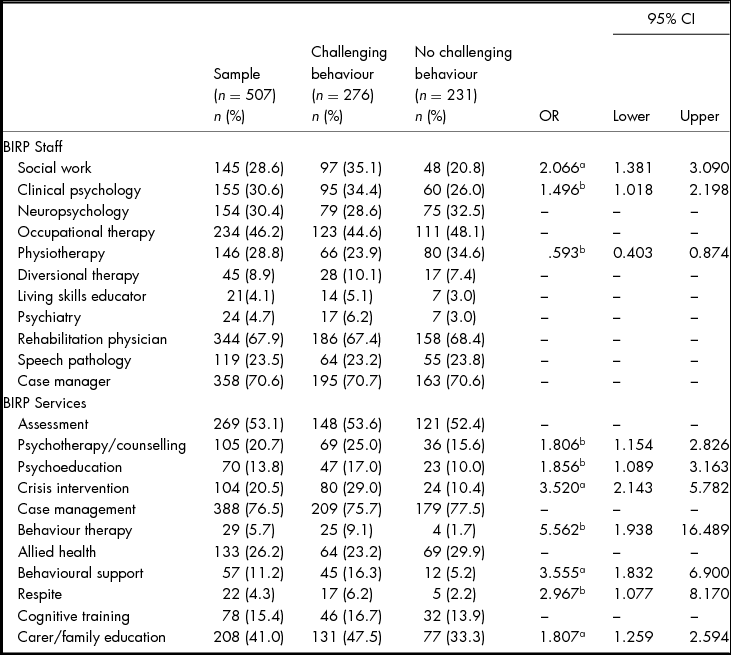
First, the number of staff from the BIRP community teams providing services to the clients was examined. The mean number of staff involved with each client was 3.45 ± 2.01 (N = 506, range 1–9). There was no significant difference in the number of BIRP staff managing clients with and without challenging behaviour (3.51 ± 1.20 versus 3.38 ± 2.02; Mann–Whitney U = 30357.5, p > .05). Uniformly high percentages of clients were seen by some categories of staff (e.g., rehabilitation physicians and case managers) regardless of their challenging status. However, there were significant differences among other BIRP professionals (see Table 2). Clients with challenging behaviour were significantly more likely to be seen by social workers and clinical psychologists, but less likely to be seen by physiotherapists.
Proportion of Clients Receiving Various Staff Services and BIRP Services (N = 507)
BIRP, Brain Injury Rehabilitation Program.
Behaviour Therapy refers to behaviour programs delivered directly to the client. Behavioural Support refers to provision of education, training and support to staff and family members supporting persons with challenging behaviours.
ap < .001, bp < .05.
Categories of services provided by the BIRP
Next, the categories of services provided by the BIRP community teams to clients were examined. The mean number of services provided to clients was 2.89 ± 1.81 (N = 507, range 1–9). Clients with challenging behaviours received significantly more categories of services overall from the BIRP teams compared to clients without challenging behaviour (3.20 ± 1.96 versus 2.52 ± 1.55; Mann–Whitney U = 25686.0, p < .001). In terms of specific service categories, clients with challenging behaviours were 5.6 times more likely to have been provided with behavioural therapy and 3.5 times more likely to have received behavioural support and crisis intervention services compared to clients without challenging behaviours (see Table 2).
Non-BIRP Service Delivery
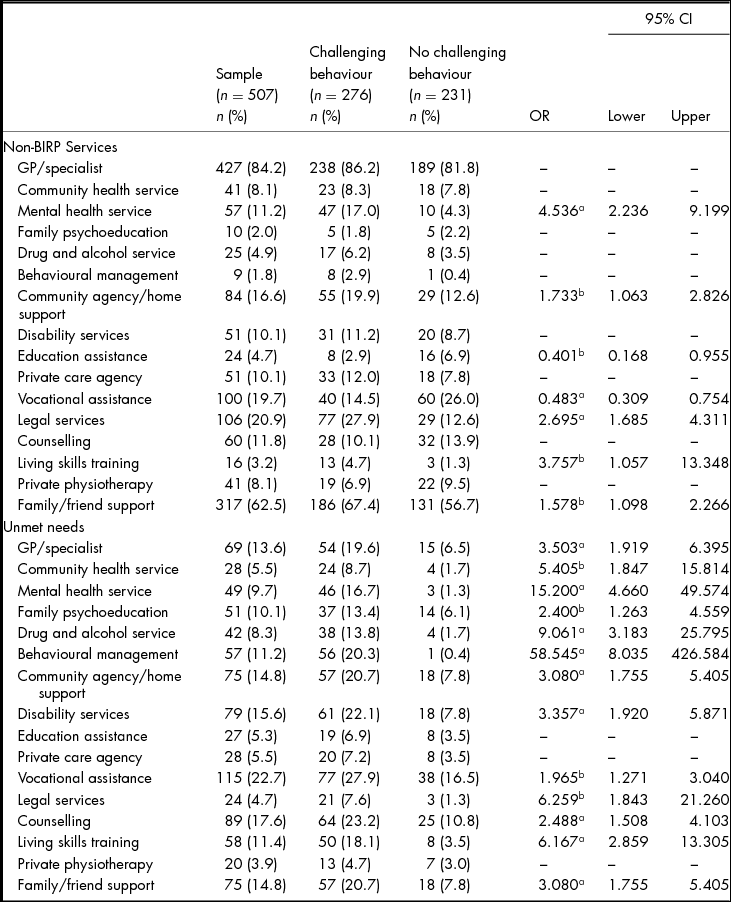
The proportion of clients receiving additional services outside of the BIRP network was also documented (see Table 3). The mean number of additional types of services (not counting informal support received from family or friends) received by clients was 2.17 ± 1.31 (N = 507, range 0–7). Clients with challenging behaviour received significantly more types of non-BIRP services than people without challenging behaviours (2.33 ± 1.35 versus 1.99 ± 1.25; Mann–Whitney U = 27458.5, p < .05). The specific service types are displayed in Table 3. Clients with challenging behaviour were 4.5 times more likely to have received mental health services, but less likely to have received educational or vocational assistance compared to clients without challenging behaviours. A number of clients also received informal (unpaid) support from family/friends. Clients experiencing challenging behaviour were 1.6 times more likely to receive this type of support.
Proportion of Clients Receiving Various Non-BIRP Services and with Unmet Needs for these Services (N = 507)
BIRP, Brain Injury Rehabilitation Program.
ap < .001, bp < .05.
Correlates of Service Utilisation
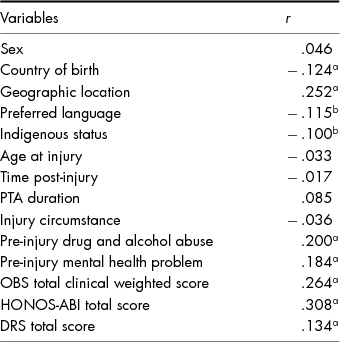
The total number of services used (BIRP and non-BIRP services barring family/friends) were aggregated to create the outcome variable (total services used). The average number of aggregated BIRP and non-BIRP services used across the sample was 5.07 ± 2.46 (n = 507, range 1–16). Correlational analysis was then conducted to investigate the association between total services used and the 14 study variables (as depicted in Table 4). Higher service use was correlated significantly with variables spanning demographic, pre-injury and clinical domains (see Table 4). However, the strength of coefficients were generally small (r = .10 to .30) with the HONOS-ABI and the OBS having the strongest correlations. All significant coefficients were below the .9 threshold for multicollinearity.
Spearman Correlation Coefficients of Study Variables with Total Services Used (N = 507)
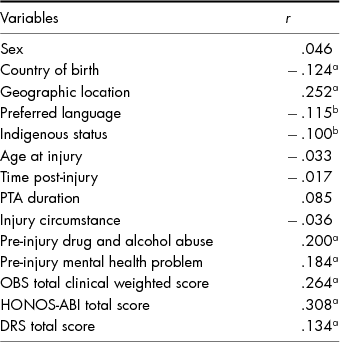
PTA, post-traumatic amnesia; OBS, Overt Behaviour Scale; HONOS-ABI, Health of the Nation Outcome Scale-Acquired Brain Injury; DRS, Disability Rating Scale.
ap < .01, bp < .05.
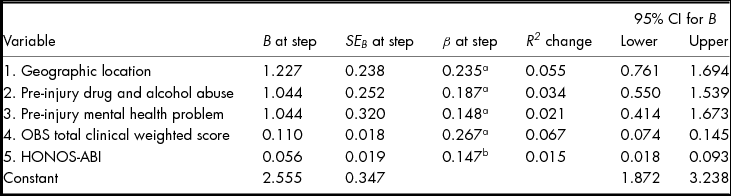
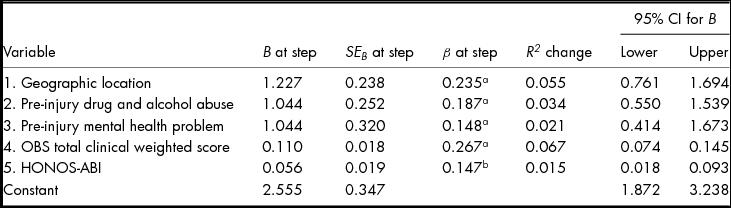
A model to predict total service use was then tested by multiple regression analysis. Independent variables with significant correlations to total service use were grouped into three blocks, comprising four demographic variables (geographic location, country of birth, preferred language, indigenous status); two pre-injury variables (history of drug and alcohol abuse, history of mental health problems), and three clinical variables (total scores on the OBS [clinical weighted score], HONOS-ABI, DRS). The blocks were entered using a combination of sequential and stepwise regression. The result of the regression analysis was significant (F (5, 454) = 27.71, p < .001, adjusted R2 = .184) accounting for 18.4% of the variance. Geographic location (resident of rural/remote as opposed to urban locations), a pre-injury history of mental health problems or drug and alcohol abuse (purpose designed variables), as well as higher levels of current challenging behaviour (OBS) or current co-morbid mental health problems (HONOS-ABI) were all significant individual predictors of total service use (p < .05). Level of functional ability (DRS) was not a significant predictor of total service use (p > .05). Table 5 shows the regression coefficients and standard errors for the predictor variables.
Multiple Regression Analysis for Predictors of Total Service Use (N = 507)
B, unstandardised regression coefficients; SEB, standard error of the coefficient; β, standardised coefficients; CI, confidence intervals.
OBS, Overt Behaviour Scale; HONOS-ABI, Health of the Nation Outcome Scale-Acquired Brain Injury.
ap < .001, bp < .05.
Unmet Needs
As a measure of unmet need, clinicians also identified additional services that were required but had not been accessed or received by the client (see Table 3). Overall, the mean number of unmet services for clients was 1.60 ± 2.18 (N = 507, range 0–12). Over half of the clients were identified as having at least one unmet need (58.2%, 295/507). Clients with challenging behaviour had a significantly higher amount of unmet needs than those without challenging behaviour (2.31 ± 2.53 versus 0.75 ± 1.21; Mann–Whitney U = 18289.5, p < .001). Although high proportions of clients saw a general practitioner, people with challenging behaviours were 3.5 times more likely to have unmet needs in accessing this service. People with challenging behaviours were significantly more likely to have unmet needs in all service areas, with the exception of education assistance, private care agencies and physiotherapy. The two largest odds ratios, both with wide 95% confidence intervals, were a function of the small cell sizes for clients without challenging behaviours (see Table 3). For 8 of the 15 service types, the unmet need (clients for whom the service was required but not accessed) was greater than the number of clients accessing such services.
Service Access for Clients with Co-morbid Mental Health or Drug and Alcohol Problems
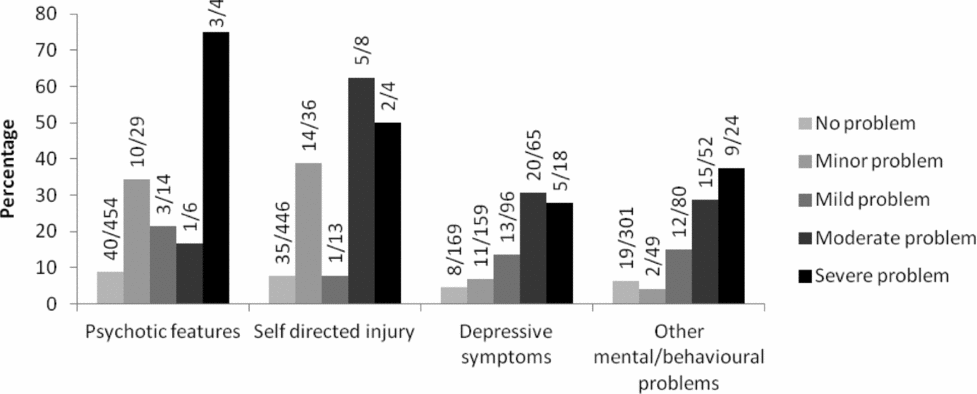
Aspects of access to mental health and drug and alcohol services were also investigated. First, mental health and drug and alcohol services were accessed by 32.4% (23/71) of clients with a pre-injury mental health problem and 14.4% (19/132) of clients with pre-injury drug and alcohol problems, respectively. Next, the pattern of mental health service use for people with current mental health problems was examined. The four HONOS-ABI items that were used to address current mental health status (psychotic features, self-directed injury, depressive symptoms, other mental/behavioural problems) were cross-tabulated with access to mental health services. The results suggested a differential pattern of access to mental health services based on the type of problem (see Figure 1). For clients rated in the severe category, 75% and 50% with psychotic features or self-directed injury, respectively, accessed mental health services. However, less than 40% of those classified with severe depressive symptoms or other mental health problems (most commonly anxiety-related) accessed such services.
Specialist mental health service access across different types of mental health problems (N = 507).
To examine the relationship between challenging behaviours, post-injury co-morbidities and service use, two new binary variables (presence versus absence of a current mental health or current drug and alcohol problem) were created using ratings from the HONOS-ABI. Clients with ratings no higher than ‘mild’ across any of the four mental health subscales were recoded as ‘no to minimal problem’ (75.3%, 382/507). Clients with a rating of moderate or severe on any one of the four subscales were recoded as having a significant current mental health problem (24.7%, 125/507). Similarly, people were classed as having a significant current drug and alcohol problem (moderate or severe, 30.0%, 152/507) versus no to minimal problem (70.0%, 355/507) using the relevant HONOS-ABI item.
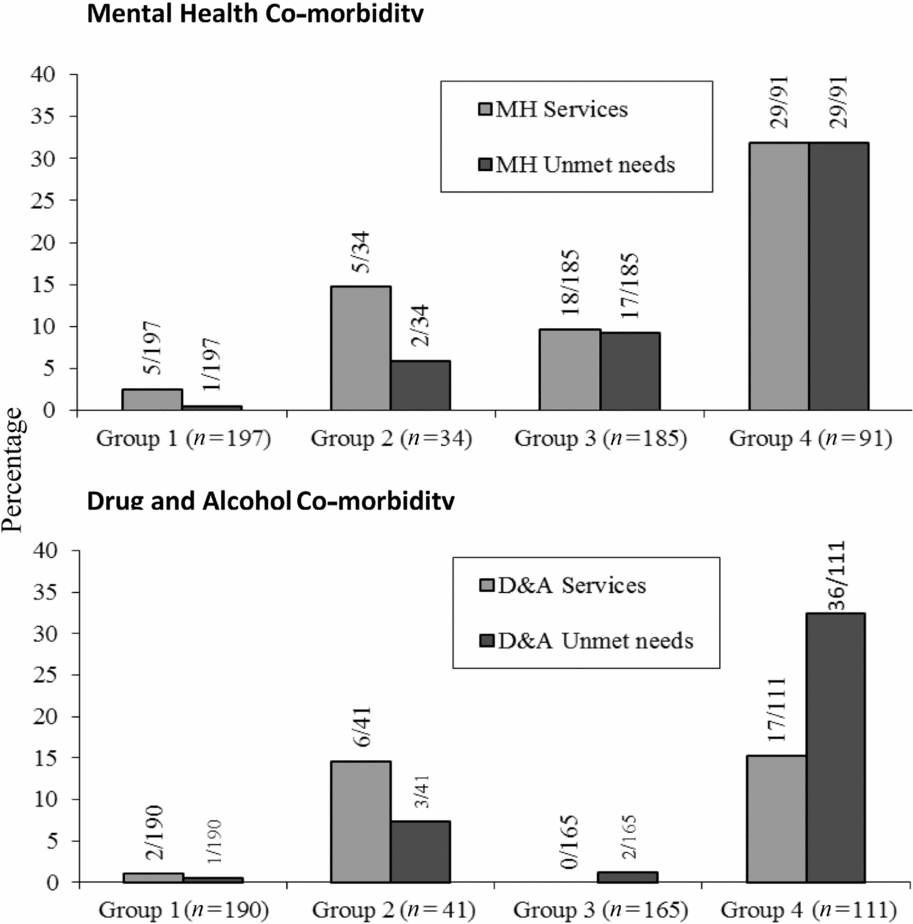
Two-by-two contingency tables were then constructed. The tables represented four possible conditions (presence versus absence of co-morbidity × presence versus absence of challenging behaviours) for both mental health state and drug and alcohol use. Frequencies were then generated for services accessed and unmet needs across the four conditions (see Figure 2). Visual inspection of the figure shows that, as expected, virtually no clients in Group 1 (no challenging behaviour, no co-morbidity) were using or had unmet needs for mental health or drug and alcohol services. Group 2 (no challenging behaviour with co-morbidity) also showed a similar pattern of service use for clients with either mental health or drug and alcohol problems but no challenging behaviours. For each co-morbidity, a greater proportion of clients were accessing services compared to the number who had unmet needs. The pattern of service use diverged for Group 3 (challenging behaviour, no co-morbidity). In this condition, an equal number of clients had accessed or had unmet needs for mental health services, suggesting that such services were still being used in some cases to help manage challenging behaviour among clients with no mental health problems, whereas no such service use or unmet need was reported for drug and alcohol services in the absence of drug and alcohol problems. Finally, for Group 4 (challenging behaviour and co-morbidity), equal numbers of clients with mental health co-morbidities either accessed services or had unmet service needs. In contrast, there was double the level of unmet needs among clients with a drug and alcohol co-morbidity compared to the number of clients able to access drug and alcohol services.
Proportion of clients with challenging behaviour and mental health or drug and alcohol co-morbidity who receive specialist services and who have unmet needs for these services (N = 507). Group 1, no challenging behaviour, no co-morbidity; Group 2, no challenging behaviour, with co-morbidity; Group 3, challenging behaviour, no co-morbidity; Group 4, challenging behaviour, with co-morbidity. Groups are not independent (9 clients identified as having mental health unmet needs have also accessed specialist mental health services, while 4 clients identified as having drug and alcohol unmet needs have also accessed specialist drug and alcohol services). MH, mental health; D&A, drug and alcohol.
Discussion
The study found that the presence of challenging behaviour was an independent predictor of higher levels of service utilisation among community-dwelling adults with severe TBI, in conjunction with the presence of pre- and post-injury co-morbidities and geographic location (specifically, living in a rural or remote area). Challenging behaviours were associated with higher use of BIRP and non-BIRP services and greater levels of unmet needs. In contrast, the degree of functional impairment, as measured by the DRS, did not correlate with the total service utilisation aggregate, despite 41.2% of clients classified as having a moderate, severe or extremely severe disability.
The level of variance accounted for by the current model was modest in comparison to the previous New South Wales service utilisation study by Hodgkinson et al. (Reference Hodgkinson, Veerabangsa, Drane and McCluskey2000). Regression analysis in their paper found that injury severity (as measured by post-traumatic amnesia or loss of consciousness) combined with functional outcome accounted for approximately 40% of the variance in the number of services used. However, it was a single-centre study, and part of the lower level of variance accounted for in the current study may be due to a greater variation in patterns of service use across the 11 participating centres. Furthermore, the current study employed a different approach to categorising services, and this may also account for the difference in the level of variance explained. The model employed in the current study could be further evaluated by testing the extent to which it accounts for the variance in the intensity of service use and not just the numbers of different types of service that are utilised.
It is logical that increases in service utilisation result in corresponding increases in costs. Studies that have examined the use of services and their respective costs have shown this to be the case (Ponsford et al., Reference Ponsford, Downing, Olver, Ponsford, Acher, Carty and Spitz2013; Prang, Ruseckaite, & Collie, Reference Prang, Ruseckaite and Collie2012; Turner-Stokes & Nyein, Reference Turner-Stokes and Nyein1999). Two recent reviews have been conducted into the service-related impact of challenging behaviours among brain-injured participants of statutory schemes providing lifetime support to people injured in road accidents within Australia. The Victorian Transport Accident Commission found that 21% of its Lifetime Care budget for clients with severe TBI related to challenging behaviours (National Trauma Research Institute, 2012). Price Waterhouse Coopers estimated that clients of the NSW Life Time Care and Support Scheme with high-level cognitive and behavioural issues following severe TBI cost 50% more than persons with a comparable level of disability due to TBI but no behavioural difficulties (Price Waterhouse Coopers, 2012). In Canada, Colantonio et al. (Reference Colantonio, Howse and Patel2010) reported significant care costs associated with challenging behaviours displayed by people with TBI resident in long-term aged care homes.
To the best of our knowledge, this is the first study to find an association between pre-injury or post-injury co-morbidities and longer-term community-based service utilisation among clients with severe TBI. This extends a previous finding by Ponsford et al. (Reference Ponsford, Downing, Olver, Ponsford, Acher, Carty and Spitz2013) that pre-injury psychiatric hospitalisation was associated with elevated medical costs but not longer-term community service costs. Despite the presence of challenging behaviours and co-morbidities, many clients were still able to receive concurrent rehabilitation interventions. However, clients with challenging behaviours received more services from social work and clinical psychology. The social work interventions were most likely to target family/friends supporting the client (Simpson, Simons, & McFadyen, Reference Simpson, Simons and McFadyen2002), whereas clinical psychology was most likely involved with the provision of behavioural interventions (Wood & McMillan, Reference Wood and McMillan2001) including emotional and prosocial behavioural supports (Ylvisaker & Feeney, Reference Ylvisaker and Feeney1998). The substantial levels of unmet needs were similar to the reports in earlier studies (Corrigan et al., Reference Corrigan, Whiteneck and Mellick2004; Pickelsimer et al., Reference Pickelsimer, Selassie, Sample, Heinemann, Gu and Veldheer2007) but the current study extends findings, documenting unmet need over a time frame extending to greater than 5 years post-injury.
A number of issues were identified in relation to mental health and drug and alcohol services. The study found initial evidence for a differential pattern of access based on the type of mental health presentation. Clients displaying symptoms of acute psychosis or at high risk of self-harm appeared to have better access than clients with depressive symptoms or other mental health problems. One caution though is the small numbers of clients associated with this result and further larger-scale studies will be required to confirm these initial findings.
Much lower rates of clients with moderate to severe levels of depressive symptoms after TBI accessed services, suggesting that significant numbers of people with TBI were experiencing untreated depression. Substantial rates of untreated or undertreated depression have been reported in other neurological groups, including multiple sclerosis (Feinstein, Reference Feinstein2002) and spinal cord injury (Fann et al., Reference Fann, Bombardier, Richards, Tate, Wilson and Temkin2011). Many problems can arise from untreated depression (Agency for Healthcare Research and Quality, 2011), not least of all the possible risk of suicide (Simpson & Tate, Reference Simpson and Tate2007).
There is a close relationship between challenging behaviours and co-morbid mental health disorders and/or drug and alcohol abuse (e.g., Baguley et al., Reference Baguley, Cooper and Felmingham2006; Rao et al., Reference Rao, Rosenberg, Bertrand, Salehinia, Spiro, Vaishnavi and Miles2009; Sabaz et al., Reference Sabaz, Simpson, Walker, Rogers, Gillis and Strettles2014). The current study provided the opportunity to tease out some of the differential effects of challenging behaviours with or without co-morbidities in service access. One finding was that people with challenging behaviours but no co-morbidities were still being linked with mental health services. Historically, such clients had limited alternatives for management apart from secure mental health units (Manchester et al., Reference Manchester, Hodgkinson and Casey1997; Wood, Reference Wood1987). However, alternative specialist neurobehavioural services have been able to demonstrate their efficacy in treating severe challenging behaviours (Alderman, Knight, & Brooks, Reference Alderman, Knight and Brooks2013; Manchester et al., Reference Manchester, Hodgkinson and Casey1997). Therefore, it will be important to further investigate whether the sole reason for the clients with challenging behaviours but no mental health co-morbidities accessing mental health services was the lack of appropriate alternative service options.
Second, the level of unmet needs for drug and alcohol services was double the number of clients able to access such services. It is a common enough experience within the drug and alcohol field that individuals with significant drug and alcohol problems lack the motivation and/or the awareness of the impact of their respective substance abuse/dependence disorder (Burke, Arkowitz, & Menchola, Reference Burke, Arkowitz and Menchola2003). However, people with TBI may have additional challenges with insight due to the frontally mediated impairments characteristic of this type of injury (Fleming & Ownsworth, Reference Fleming and Ownsworth2006). This additional level of impairment may mean that some people with TBI are unable to meet the higher demand characteristics that drug and alcohol services require of clients in taking individual responsibility and motivation to access treatment. The finding once again reinforces the call for services with specialist expertise to manage people with both severe TBI and co-morbid substance use disorders (Bogner & Corrigan, Reference Bogner and Corrigan2013).
There are a number of limitations to the study findings that need to be taken into account. First, the data collected were on the categories of services accessed, but not the intensity of service provision (i.e., the actual amount of services received), and the latter data may have a different pattern of relationship to challenging behaviour (e.g., the number of service categories may underestimate the degree of service intensity). In addition, data on unmet needs for BIRP services were not collected. Although the BIRP units provide services on a needs-basis it could not be assumed that all required services were provided, and therefore the results may underestimate the full extent of service needs. Next, the study was cross-sectional and so it is not known how patterns of service use might change over time. Moreover, data on the services were not collected using a validated instrument which may have strengthened the reliability. In addition, the services identified in the study are available within New South Wales. Differences in service systems or access arrangements for people with severe TBI in other state, provincial or national settings may limit the degree to which the current findings could be generalised.
Given these caveats, a number of clinical and service implications can be drawn from the study. It is important for staff in the field of TBI to have competencies in being able to manage challenging behaviours (Jackson & Manchester, Reference Jackson and Manchester2001). Furthermore, the percentage of clients with pre-morbid co-morbidities needing post-injury mental health or drug and alcohol services highlights the need for clinical pathways that address this need. The findings also reinforce calls for specialist services that are able to manage extremely challenging cases (Manchester et al., Reference Manchester, Hodgkinson and Casey1997; Bogner & Corrigan, Reference Bogner and Corrigan2013), albeit for a relatively small proportion of all community-dwelling adults with severe TBI. Finally, future research could examine the costs associated with the various types and intensity of services provided to people with TBI in non-inpatient settings, as there are limited data available about the costs associated with longer-term community support. Also, further investigation into the amount of informal care provided by caregivers will assist in understanding the full level of support required by people with severe TBI in community settings.
Acknowledgments
The New South Wales Agency for Clinical Innovation (ACI) funded the project. Dr Mark Sabaz was employed by ACI while undertaking the project. Thanks to Dr Jeff Rogers, Inika Gillis, the project steering committee and the participating BIRP clinicians.
Conflicts of interest
The authors declare no conflicts of interest.