Introduction
During the evolution of the androecium in some plant lineages, some stamens have ceased to produce and present pollen. These staminodes (rudimentary and sterile stamens) have thus lost the defining function of stamens as producers of viable male gametophytes (Walker-Larsen & Harder Reference Walker-Larsen and Harder2000). However, like many vestigial organs, they can still play functional roles. Morphological traits of staminodes have been shown in some plants to have pollination-related functions (Hawk & Tepedino Reference Hawk and Tepedino2007, Ronse Decraene & Smets Reference Ronse Decraene and Smets2001). For example, the fleshy and hooded staminode in flowers of Marantaceae acts as a triggering appendage instead of producing fertile pollen grains (Ley & Claßen-Bockhoff Reference Ley and Claßen-Bockhoff2012). Other studies have reported that staminodes can enhance pollination in multiple ways, such as by preventing selfing (Endress Reference Endress1984), providing food for insect pollinators (Cane Reference Cane1993), increasing pollinator attraction through their colours (Kaul & Koul Reference Kaul and Koul2012), and/or retaining staminal traits such as hairs that serve as visual cues to insect pollinators (Duffy & Johnson Reference Duffy and Johnson2015, Lunau Reference Lunau2000). Sandvik & Totland (Reference Sandvik and Totland2003) found that staminodes increased pollinator visitation rate and duration in Parnassia palustris (Celastraceae). Flowers of Penstemon palmeri (Plantaginaceae) from which staminodes were removed received more visits by male Xylocopa tabaniformis androleuca bees, whereas frequency of visits by females of this bee was not affected; Pollen removal and deposition can also be affected by the presence or absence of staminodes in this species (Walker-Larsen & Harder Reference Walker-Larsen and Harder2000). The large bristle staminode of Penstemon digitalis appears to act as a barrier affecting bees of different body size differently, thereby influencing rates of pollen removal and pollen deposition by different bees (Dieringer & Cabrera Reference Dieringer and Cabrera2002, Walker-Larsen & Harder Reference Walker-Larsen and Harder2001). All these studies focused mainly on the influence of staminodes on male success (Dieringer & Cabrera Reference Dieringer and Cabrera2002, Walker-Larsen & Harder Reference Walker-Larsen and Harder2001) or on interactions with pollinators (Guimarães et al. Reference Guimarães, Di Stasi and Mainoni-Rodella2008), whereas fewer studies have investigated staminode functions in relation to both female and male fitness.
In these previously studied cases, staminodes are quite large, robust structures, e.g. the trigger staminodes of Marantaceae and bristle staminodes of Penstemon. However, in many plants staminodes are small filamentous structures. We investigated the potential adaptive significance of staminodes in one such plant, Phanera yunnanensis (Franchet) (Wunderlin Reference Wunderlin2011) (Fabaceae, Caesalpinioideae), flowers of which possess three fertile stamens and seven highly reduced filamentous staminodes. To examine the effects of staminodes on different flower visitors and on male and female reproductive functions, we studied biological and morphological characteristics and floral phenology of P. yunnanensis, and performed manipulative experiments removing staminodes. We specifically tested the hypotheses that staminodes influence (1) the frequency and duration of pollinator visits, and (2) pollen removal and deposition rates.
Materials and methods
Study species
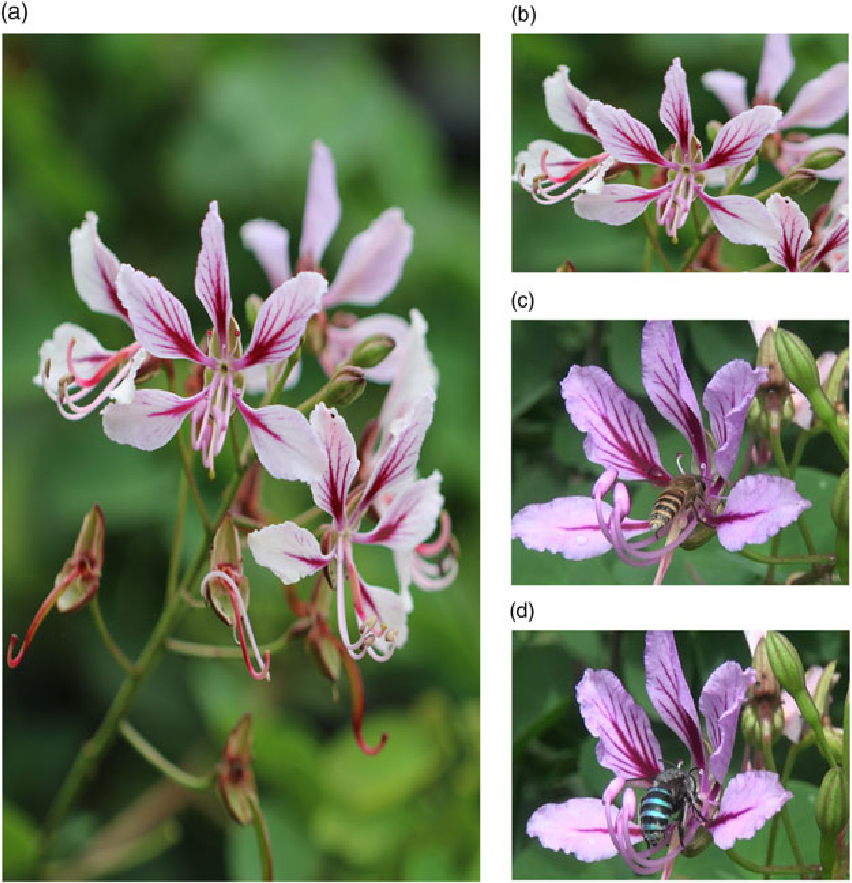
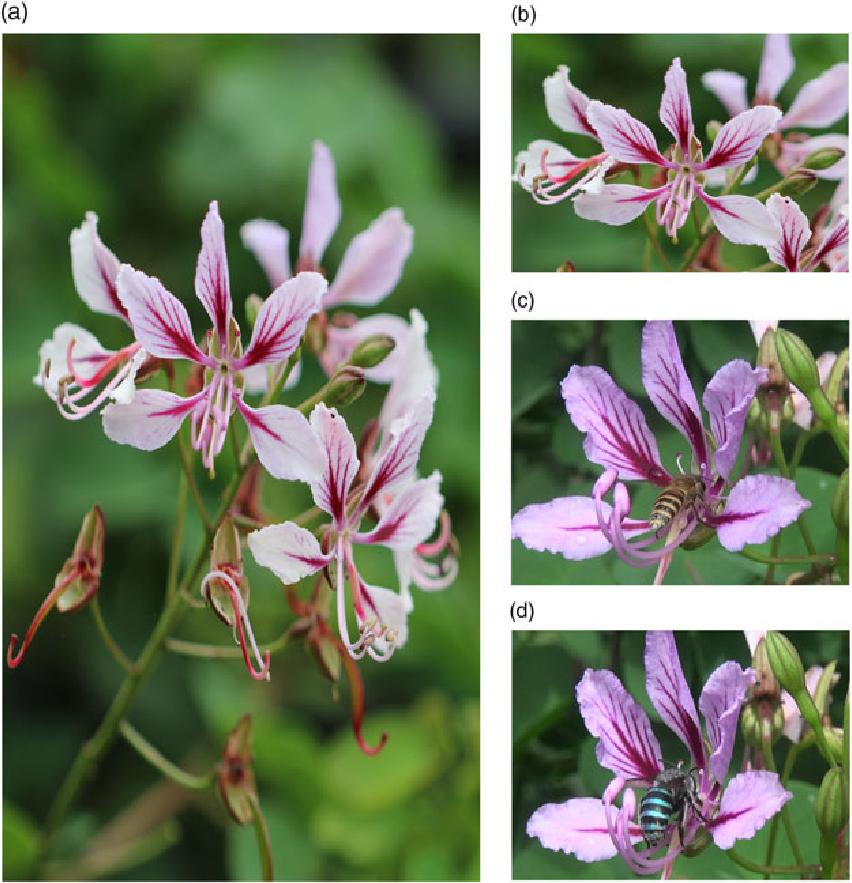
Phanera yunnanensis is a perennial liana commonly found in Yunnan, Sichuan and Guizhou Provinces of China (Chen et al. Reference Chen, Zhang, Larsen and Larsen2010). Flowers of this species have five light purple petals (three with dark purple nectar guides), a central pistil, three large fertile stamens with longer filaments and seven staminodes with very short filaments and tiny anthers, located around the nectary found in the receptacle at the base of the flower (Figure 1a, b). Its flowers attract various visitor species, but the most common are four bee species.
Floral characters of Phanera yunnanensis and presentation of its pollinators. An inflorescence of Phanera yunnanensis at Xishuangbanna Tropical Botanical Garden (XTBG), Yunnan Province, south-western China (a). An individual flower. Three long filaments bearing fertile anthers and seven small staminodes located centrally surrounding the entrance to the nectar produced in the receptacle (b). An Apis cerana visiting a flower and carrying pollen at the tip of its abdomen (c). An Amegilla zonata visiting a flower with pollen on its abdomen (d).
Phanera (Fabaceae, Caesalpinioideae) is the largest of the several genera resulting from the reorganization of Bauhinia sensu lato, now considered paraphyletic and to contain polyphyletic infrageneric taxa (Sinou et al. Reference Sinou, Forest, Lewis and Bruneau2009, Wunderlin Reference Wunderlin2010a). Molecular phylogenetic studies support the current circumscription of Phanera with 90–100 species all restricted to tropical Asia and Australasia (Hao et al. Reference Hao, Zhang, Zhang, Guo and Li2003, Sinou et al. Reference Sinou, Forest, Lewis and Bruneau2009, Wunderlin Reference Wunderlin2010a). Within this cluster of lineages, ecological studies have reported diverse animal-pollination syndromes in several neotropical species of the pantropical genus Bauhinia sensu stricto, including bats (B. ungulata: Ramirez et al. Reference Ramirez, Sobrevil, Enbech and Ruiz-Zapata1984; as B. benthamiana), moths (B. forficata: Neto Reference Neto2013; B. petersiana: Vogel Reference Vogel1954; as B. macrantha) and butterflies (B. galpinii: Vogel Reference Vogel1954). Pollination by bees and birds has been reported in two other neotropical species, B. glabra and B. guianensis, respectively (Hokche & Ramirez Reference Hokche and Ramirez1990), that are now placed in the genus Schnella (Wunderlin Reference Wunderlin2010b). In contrast, the floral biology and breeding systems of only three Phanera spp. have been studied, P. corymbosa, P. glauca and P. championii (Lau et al. Reference Lau, Saunders and Ramsden2009; all as Bauhinia in that study). These three species are pollinated mainly by bees and butterflies, but P. championii is also pollinated by wasps and flies (Lau et al. Reference Lau, Saunders and Ramsden2009).
Species of Phanera differ from almost all other members of this cluster of lineages in possessing staminodes. Almost all other species of Bauhinia s.l., including the sister genus of Phanera, Lysiphyllum (Wunderlin Reference Wunderlin2010a), possess 10 fertile stamens, whereas Phanera spp. have three (rarely two) fertile stamens and two to eight staminodes (Chen et al. Reference Chen, Zhang, Larsen and Larsen2010). There are no studies of the functional significance of intrafloral stamen differentiation in Phanera.
Study site
Our study was conducted in Xishuangbanna Tropical Botanical Garden (XTBG), Xishuangbanna, south-western China (21°56′N, 101°15′E, 580 m asl), dominated by many native forest components, including Lagerstroemia tomentosa (Lythraceae), Ficus callosa (Moraceae), Syzygium szemaoense (Myrtaceae) and others. XTBG is surrounded by a ∼255-ha patch of relatively little-disturbed tropical rain forest. We studied two groups of P. yunnanensis, in two plots 1.5 km apart in the garden. The plants were introduced into the garden from nearby forest and have been cultivated for many years in semi-garden conditions. Each group included around 10 individuals, all of which produce flowers and fruits every year.
Floral biology and phenology
We observed floral phenology of P. yunnanensis in two plots from July to October during 2014 and 2015. Due to the difficulty of distinguishing flowers from different individuals when several of these plants grew intermingled, we randomly selected 10 inflorescences from across the area bearing flowers in each plot, to maximize the probability that each inflorescence was from a different individual. We noted when the first flower opened and when the last one withered. At the same time, we selected 20 buds randomly from each plot, and recorded the phenology of individual flowers.
Morphological characteristics, including length and width of petals, lengths of filaments of fertile stamens and staminodes, and length of fertile anthers, were measured from about 50 flowers from each plot, using a Vernier calliper (at a scale of 0.01 mm).
We used pollen germination rate as an assay for pollen viability (Hu Reference Hu1993). For this, we randomly selected 10 flowers from across the area bearing flowers in each plot, each from a different inflorescence, and bagged them using nylon mesh nets before anthesis (which generally occurs at sunrise) to prevent insect visitation. Pollen viability was tested on warm sunny days by sampling the amount of pollen grains separately from each of these 10 bagged flowers at each plot, at around 20h00 (before anthesis) and every hour from 08h00 to 11h00 on the following day (after anthesis). We measured pollen viability as per cent of pollen that germinated.
To measure stigma receptivity, we collected at least five flowers, each from a different inflorescence across the area bearing flowers in each plot, during three consecutive days under warm, sunny weather conditions at each plot every 3 h after anthesis until flower wilting. Receptivity was assayed with the method developed by Dafni & Maués (Reference Dafni and Maués1998), which assesses stigma colour change and reaction intensity (0, 1, 2 or 3) after treatment with benzidine and hydrogen peroxide.
Preliminary observations revealed that staminodes did not produce nectar, so we sampled nectar from only the floral receptacle. We randomly selected and bagged one flower from each of 10 different inflorescences, taken across the entire flowering area in each plot, before anthesis. Volume of nectar produced by individual flowers was measured with capillary tubes (capacity = 28.3 μl) inserted into the receptacle cavity of flowers every 3 h from anthesis until flower wilting. Sugar concentration of nectar was also measured every 3 h with a refractometer (Atago Co., Ltd, range = 0–20%), using dilution samples if concentration was > 20%. Nectar collection and measuring were repeated for three consecutive days under warm, sunny weather conditions.
Mating system
The mating system of P. yunnanensis was unknown prior to our study. We used a series of pollination treatments to assess the capacity for autonomous autogamy and self-fertilization during the blooming peak (July–August) in 2014 and 2015. We selected about 30 individual inflorescences from across the area bearing flowers in each of the two plots, and assigned each randomly to one of eight treatments: (1) open-pollination (N, as control); (2) bagging (B, autonomous self-pollination); (3) emasculated (both stamens and staminodes removed) and bagged (EB, to test parthenogenesis); (4) emasculated and left open (RA, to test the effect of removal of both stamens and staminodes on fruit set in open-pollinated flowers); (5) staminodes removed (RSA, to test the effect of removal of staminodes on fruit set in open-pollinated flowers); (6) stamens removed (RBA, to test the effect of removal of stamens on fruit set in open-pollinated flowers); (7) hand selfing (S, to test for self-compatibility); (8) hand crossing (HC, to test for xenogamy); (9) hand geitonogamous pollinations (HG, to test for geitonogamy, i.e. fertilization resulting from transport of pollen from one inflorescence to another on the same plant). For all hand-pollination treatments, flowers were emasculated before anthesis. Fruits were collected 1 mo later and fruit set was calculated.
Further information on mating system was sought by examining pollen/ovule (P/O) ratio in flowers, which is expected to be high in obligately outcrossing plants. To determine mean P/O ratio, we collected 30 flowers from different inflorescences, three from a different plant, for each population. The three fertile anthers of each flower were fixed in 1 ml (1000 μl) 70% ethanol, then their pollen grains were squeezed out with tweezers. We then took 1 μl from the mixture and counted the number of pollen grains under a microscope (DM 2000 Leica, Germany). The numbers were then multiplied by the dilution factor of 1000 to estimate total pollen number. Ovaries of the 60 flowers from the two groups were dissected under a stereo-microscope (S8APO Leica, Germany) and the ovules counted. We then calculated the pollen/ovule ratio for each flower and the overall mean pollen/ovule ratio.
Flower visitors
Four bee species are the most frequent visitors of P. yunnanensis flowers. The two most common are the blue-banded bee, Amegilla zonata (Apidae, tribe Anthophorini, a solitary bee), and the Asian honeybee, Apis cerana (Apidae, a eusocial bee) (Figure 1c, d). The blue-banded bee is generally larger (average body length 12.8 mm) than the Asian honey bee (7 mm) (Jin et al. Reference Jin, Jiao and Chen2015, Zhang Reference Zhang2013). A third bee visitor, Xylocopa sp. (Apidae, tribe Xylocopini), is a large solitary bee (average body length 25 mm). Amegilla zonata, Apis cerana and Xylocopa sp. all forage for both nectar and pollen to feed their brood. The fourth species, Thyreus emarginata (Apidae, tribe Melectini; average body length = 10 mm), is a solitary cleptoparasitic cuckoo bee that forages for nectar and lays its eggs in nests of Amegilla spp. (Lieftinck Reference Lieftinck1968). These visitors are all native to the study region. When visiting P. yunnanensis flowers, their main activity is nectar collection. They are all effective pollinators, as they contact stamens or stigma during flower visits.
Manipulative experiment
To identify the functions of staminodes, we conducted two experiments during the 2014 blooming peak (July–August) with four treatments: (1) unmanipulated; (2) only staminodes removed; (3) only fertile stamens removed; and (4) all stamens and staminodes removed. Staminodes and/or stamens were removed before anthesis.
In the first experiment, we randomly selected about 10 flowers from different inflorescences (each from a different plant) for each treatment at each plot for observation of floral pollinators. Pollinator species, visitation rate and duration were recorded for each flower. Phanera yunnanensis produces nectar day and night. However, according to our observations, its flowers are not visited during night and most pollen grains were removed before noon on the first day of anthesis. Therefore, we recorded visitor behaviour between 08h00 and 12h00 using a video camera (Sony HDR-XR150E). The main pollinator species were identified (viz. Amegilla zonata and Apis cerana) based on their visiting behaviour. Only visits during which bees contacted anthers, stigma or both were recorded. Pollinator visitation rates were calculated based on frequency of visitation observed during a total of 36 h spread over nine mornings during a 13-d period. The duration of each visit was measured as the time between alighting of the insect on the flower and its departure from the flower. Duration of even very short visits could be accurately measured in video recordings. We also photographed flower visitors. Voucher specimens of insects were collected and preserved in the laboratory of the Research Group ‘Ecology and Evolution of Plant and Animal Interaction’ at XTBG.
In the second experiment, we used the same experimental treatments to test whether the presence of staminodes and/or stamens influenced pollen removal and deposition. Staminodes and/or stamens were removed, and each bud was covered with a paper bag before anthesis. Bags were removed when observation took place, from 08h00 to 12h00. Following a single pollinator visit, anthers and stigmas were collected and fixed separately in 70% ethanol. We collected anthers and stigmas from at least 30 flowers per treatment, each from a different inflorescence. When counting pollen grains deposited on stigmas, we included both pollen grains fixed to stigmas and those washed into the ethanol. Pollen removal from visited flowers was estimated using the difference between average pollen production of flowers and residual pollen grains on the anthers of the visited flower. Number of pollen grains was estimated by crushing the fertile anthers stored in 70% ethanol before anthesis and then following the procedures described above.
Data analysis
Before conducting analyses we first checked the normality of the variables we measured, using the Shapiro–Wilk test, which is suitable for small sample sizes. If these variables were normally distributed, we used ANOVA to test whether plot had any effect on them. For the difference in filament length between staminodes and fertile stamens, we used a paired-sample t-test. We used two-way ANOVA to test the effects of plot and time on pollen viability, stigma receptivity, nectar volume and concentration, and then used Tukey HSD tests to analyse pairwise differences in effects for each variable. In hand-pollination experiments, because we found no fruit produced under any of the selfing treatments (B, EB, S and HG) and because data were not normally distributed, we used two-way non-parametric ANOVA (Friedman test) to analyse differences in fruit set (data on seed production per fruit were not available) by different treatments (N, RA, RSA, RBA and HC), between years and their interactions, then used LSD tests to analyse pairwise differences between treatments. We used the same method to compare total pollinator visitation rate and duration among different treatments, and differences among treatments in the frequency and duration of visits separately for each species. To compare the efficacy of pollen deposition and removal by Amegilla zonata and Apis cerana, we used two-way ANOVA to test for effects among four treatments, between two pollinators and their interactions. For numerical variables we report mean ± SE throughout. All analyses were performed using R 3.3.2.
Results
Floral biology and phenology
Flowers of P. yunnanensis opened around 06h00; nectar was already present when flowers opened. In each inflorescence, a mean of 1.4 ± 0.1 (n = 20, range = 0–3) flowers opened per day and individual flowers lasted 3 d. Inflorescences produced 12.4 ± 0.6 (n = 20, range = 5–17) flowers in total, with at least one open flower being present on the inflorescence during a period of 9.2 ± 0.3 d (n = 20, range = 6–11). Individual flowers produced 21.3 × 10³–45.4 × 10³ (33.0 × 10³ ± 0.6 × 10³, n = 60) pollen grains and 5–15 (12 ± 0.4, n = 60) ovules, resulting in an average pollen/ovule ratio of 2905. Filaments of staminodes were much shorter (3.9 ± 0.002 mm, n = 94) than those of fertile stamens (20.4 ± 0.01 mm, n = 94; t = 112, P < 0.001). After anthesis, filaments of fertile stamens deflex, reaching a stable position during the first morning, whereas the style curls up, reaching its final position the following morning. None of the floral traits differed between plots (groups of plants) (Appendix 1).
This species proved to be protandrous. Some pollen grains were viable even before anthesis and pollen release began around 07h30–08h30. Pollen viability peaked (72.8% ± 4.5%, n = 10) around 09h00, then decreased until all pollen grains were removed (usually before noon; the presence or absence of pollen can be easily assessed visually). Stigma receptivity was low (1.33) at anthesis, increased quickly, reached a maximum (∼2.0) from 09h00 to 15h00, then declined after that until very early the next morning. After the first night post-anthesis, stigma receptivity again increased, reaching another peak (∼2.80) from 09h00 to 15h00 on the second day after anthesis. The stigma then remained receptive until the flower was shed. Pollen viability and stigma receptivity did not differ significantly between the two plots through time (Appendix 2).
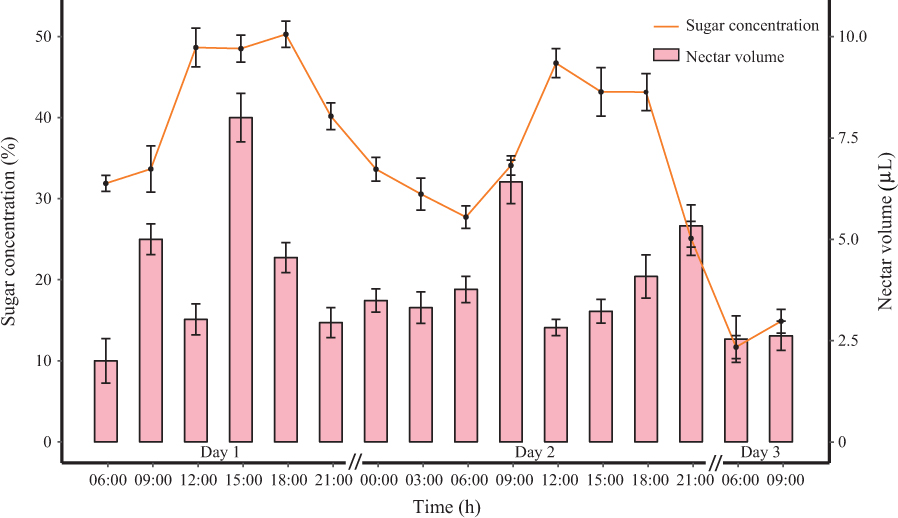
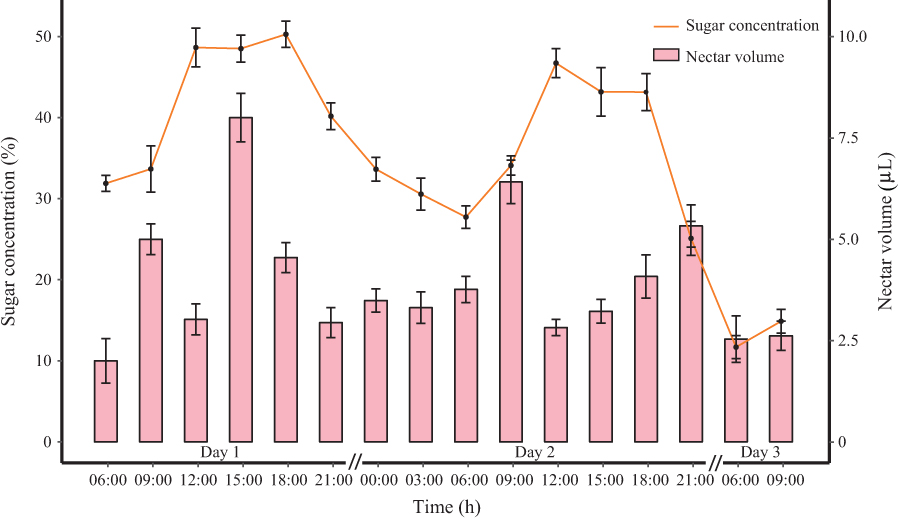
Flowers secreted nectar constantly over 3 d (Figure 2); nectar quantity varied greatly among individual flowers from different plants. Mean volumes secreted were highest from 09h00 to 15h00 on the first and second days after anthesis. Nectar concentration was highest from 12h00 to 18h00 on the first and second days after anthesis, exceeding 40%. Nectar was produced during the night as well as during the day (Figure 2). Nectar concentration and volume did not differ significantly between the study plots through time (Appendix 2).
Mean (± SE) sugar concentration (%) and nectar volume (μl) accumulated since the last observation in Phanera yunnanensis flowers during the first two days of flowering (n = 20) at Xishuangbanna Tropical Botanical Garden (XTBG), Yunnan Province, south-western China. Days of flowering were separated by breaks, Day 1: the day when flower opens; Day 2: the second day after anthesis; Day 3: the third day after anthesis.
Mating system
In both 2014 and 2015, none of the selfing treatments (hand-selfing, hand-geitonogamy and bagging) resulted in any fruit set. Phanera yunnanensis thus appears to be self-incompatible and to require insects as pollen vectors. Among other treatments, no significant differences among treatments (df = 4, F = 1.196, P = 0.313) or between years (df = 1, F = 2.893, P = 0.090) were detected; staminode removal did not affect fruit set. The number of inflorescences in each treatment was initially about 30, but sample sizes were reduced due to inclement weather conditions and herbivores.
Flower visitation
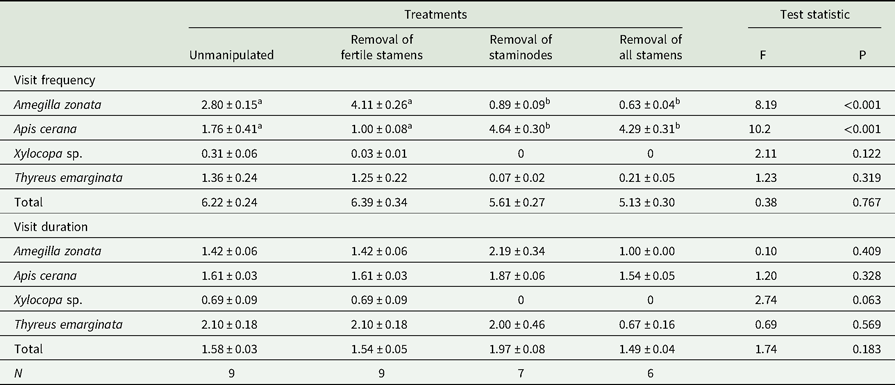
Four nectar-foraging bee pollinators, Amegilla zonata, Apis cerana, Thyreus emarginata and Xylocopa sp., visited P. yunnanensis flowers. All pollinators probed for nectar immediately after landing on the centre of the flower. The visit frequencies for Amegilla zonata and Apis cerana were 2.80 ± 0.15 and 1.76 ± 0.41 visits h−1 per flower, respectively. Durations of their visits were 1.42 ± 0.06 and 1.61 ± 0.03 s, respectively. Frequency of Thyreus emarginata visits was lower (1.36 ± 0.24 visits h−1 per flower) and its visits were of longer duration (2.10 ± 0.18 s). Visits by Xylocopa sp. were both less frequent (0.31 ± 0.06 visits h−1 per flower) and shorter in duration (0.69 ± 0.09 s) than for any of the other three bee species. Flower visit frequency and duration by the two last species did not differ significantly among the four treatments (Table 1). We thus excluded them from further analyses of results of the pollen removal and deposition experiments.
Visit frequency (number of visits h−1 per flower) and visit duration(s) of different visitors to Phanera yunnanensis flowers subjected to different treatments in Xishuangbanna Tropical Botanical Garden, Yunnan Province, south-western China. Different superscript letters identify significant differences (P<0.05).

Overall frequency and duration of visits by all pollinators combined did not differ significantly among the four treatments, but behaviour of both Amegilla zonata and Apis cerana during visits did differ among treatments (Table 1). Removal of staminodes, and of both staminodes and stamens, led to decreased visit frequency by Amegilla zonata relative to the other two treatments (unmanipulated or flowers from which only stamens were removed). In contrast, flowers from which staminodes, or both stamens and staminodes, had been removed received more visits by Apis cerana than did unmanipulated flowers or flowers from which only stamens had been removed. Xylocopa sp. did not visit flowers from which staminodes had been removed, regardless of whether fertile stamens were present. Visit duration for these four species did not differ significantly among the four treatments (Table 1).
Pollen deposition and removal
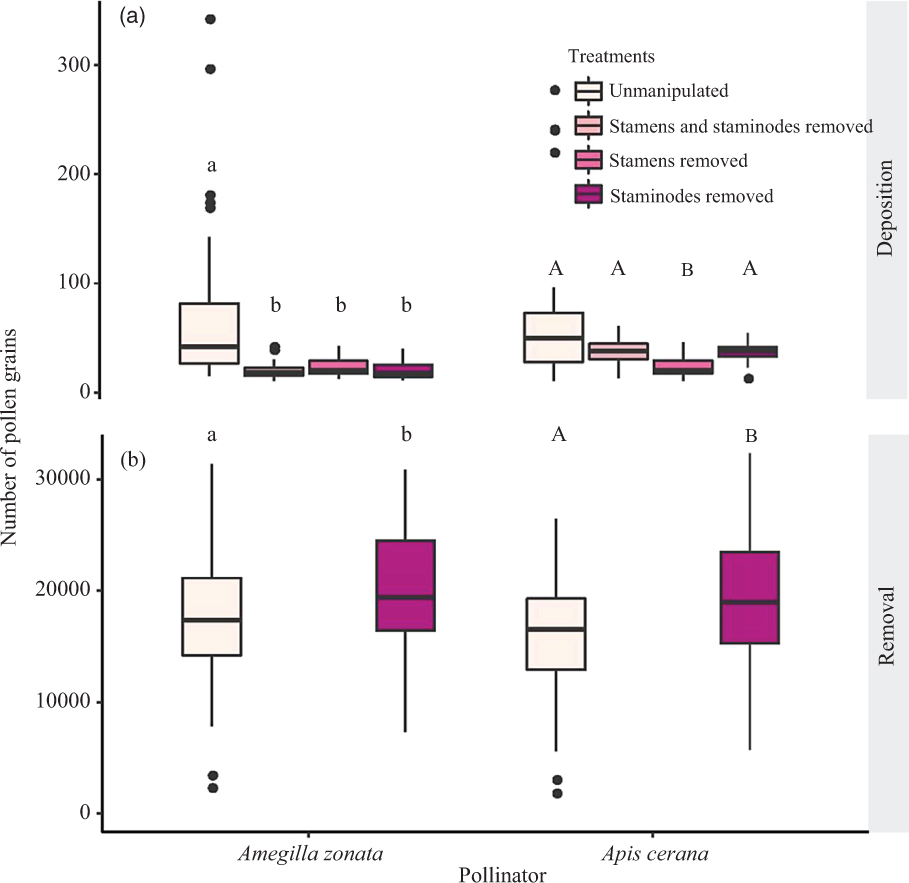
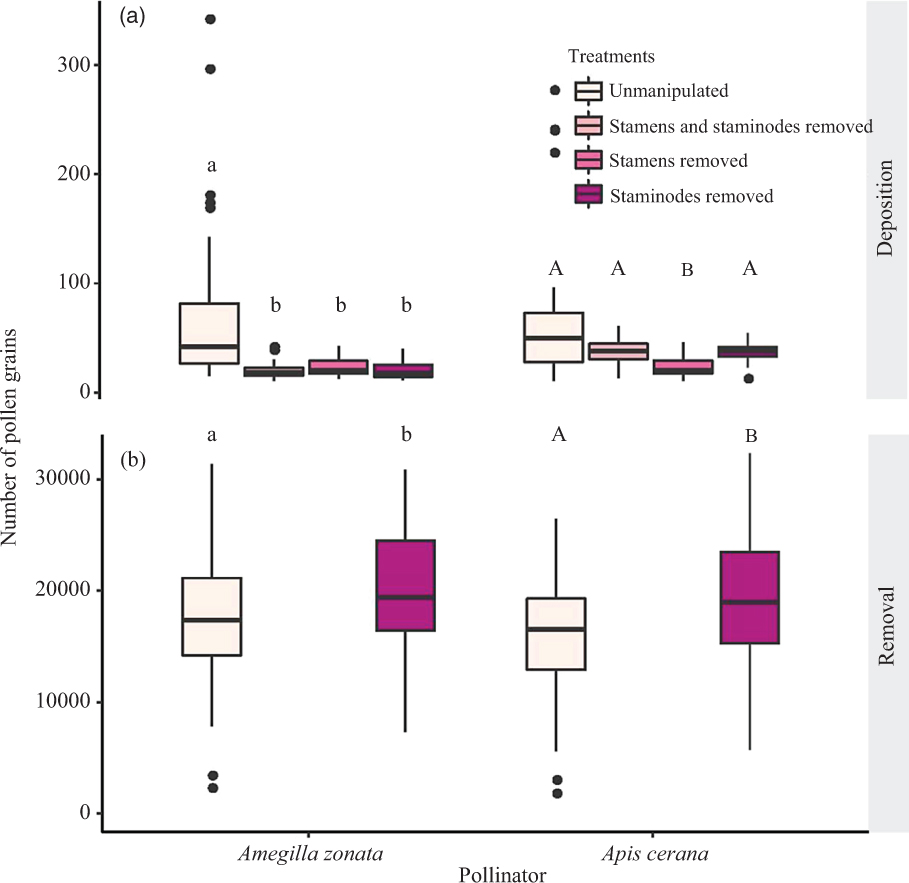
For pollen grain deposition, there were significant differences among flowers under different treatments (F = 25.3, P < 0.01), but not between the two principal pollinators Amegilla zonata and Apis cerana (F = 2.35, P = 0.13), and there were no interaction effects between treatments and pollinators (F = 1.76, P = 0.16) (Appendix 3). Unmanipulated flowers received significantly more pollen than all the different kinds of manipulated flowers after a single visit by Amegilla zonata (F = 21.5, P < 0.001) (Figure 3a). In contrast to Amegilla zonata, pollen deposition by Apis cerana did not differ significantly between unmanipulated flowers and flowers with staminodes or stamens plus staminodes removed. Only flowers without fertile stamens (but with staminodes) received significantly less pollen during Apis cerana visits (F = 18.0, P < 0.001) (Figure 3a). Pollen removal also showed the same pattern: different treatments had a significant effect on pollen removal (F = 12.0, P < 0.01), but there was no significant effect of different pollinators (F = 1.02, P = 0.31), and no interaction effects between treatments and pollinators (F = 0.632, P = 0.61) (Appendix 4). Pollen removal by both Amegilla zonata and Apis cerana increased significantly after staminode removal compared with unmanipulated flowers (for Amegilla zonata, t = −2.22, P = 0.029; for Apis cerana, t = −1.00, P < 0.001) (Figure 3b).
Mean (± SE, n = 30) amount of pollen grains deposited on stigmas (a) and pollen removed (b) of Phanera yunnanensis during first visits by Amegilla zonata and Apis cerana to unmanipulated flowers and to flowers from which staminodes had been removed at Xishuangbanna Tropical Botanical Garden (XTBG), Yunnan Province, south-western China. Different letters indicate significant differences (P<0.05).
Discussion
Floral biology
The results of hand-pollination experiments and the high pollen/ovule ratio (typical of primarily outcrossed plants; Cruden Reference Cruden1977) both show that Phanera yunnanensis is self-incompatible and requires for its reproduction insects that transport pollen between individual plants. Previously studied species of Phanera are also self-incompatible (Lau et al. Reference Lau, Saunders and Ramsden2009). Several floral characteristics of P. yunnanensis facilitate attraction of nectar-foraging pollinators. First, extended floral display likely enhances pollinator attraction, potentially increasing reproductive success (Jin et al. Reference Jin, Jiao and Chen2015). Second, prolonged receptivity of the stigma provides more time for the stigma to receive pollen, enhancing the opportunity for female reproductive success. Whereas all pollen grains were removed during the first two mornings after anthesis, the stigma remained receptive for 3 d until the flower was shed. Flowers of P. yunnanensis in effect turn to female phase after all pollen has been removed. Similar results have been found in Jatropha curcas (Euphorbiaceae) (Luo et al. Reference Luo, Li, Chen, Sun and Yang2007). Such temporal separation of sex roles, or dichogamy, reduces interference between female and male organs within the same flower, promoting outcross-pollen transfer (Barrett Reference Barrett2002). Third, the movement herkogamy (spatial separation of sexual organs within flowers) of anthers and stigma that we observed in P. yunnanensis should reduce within-flower self-pollination, as has been observed in Ourisia macrocarpa (Scrophulariaceae) (Schlessman Reference Schlessman1986) and Eremurus himalaicus (Liliaceae) (Verma et al. Reference Verma, Magotra and Koul2004).
Nectar is the main reward to pollinators of P. yunnanensis. In other plants, high sugar concentration is known to increase the duration of pollinator visits (Gleiser et al. Reference Gleiser, Internicol, Austerlitz and Bernasconi2014). Although nectar volume in P. yunnanensis is lower than that observed in other species of Bauhinia s.l., the concentration of its nectar is much higher (Lau et al. Reference Lau, Saunders and Ramsden2009, Neto Reference Neto2013). In our study, two peaks of nectar production were observed, during the mornings of the first and second days after anthesis, which also coincided with peaks in anther dehiscence and pollinator visits. Although nectar was produced continuously, volume and concentration of nectar were higher in the day than at night, coinciding with mostly diurnal visitor activity. Higher nectar concentration during the day could also result from greater evaporation. However, if evaporation was the whole story, nectar volume should also be lower in the day than at night, but that is not the case in P. yunnanensis. The continuous production of nectar in P. yunnanensis could maintain the attractiveness of flowers to pollinators.
Flower visitation
Phanera yunnanensis flowers attracted four species of nectar-foraging bees, two of which were the main pollinators, Amegilla zonata and Apis cerana. The open corolla of P. yunnanensis flowers allows easy access to multiple flower visitors. Staminodes have been reported to perform various functions in flowering plants, sometimes different from those assured by fertile stamens, including providing nectar and/or enhancing visual attraction to increase frequency of pollinator visits (Cronquist Reference Cronquist1981, Endress Reference Endress1984). In P. yunnanensis staminodes are neither conspicuous in colour nor nectar-rewarding, and the overall frequency and duration of visits, for all pollinators combined, to flowers with staminodes and those from which staminodes had been removed did not exhibit significant differences. However, staminodes of P. yunnanensis have different effects on different pollinators. Removal of staminodes decreased the frequency of visits by Amegilla zonata, but increased the frequency of visits by Apis cerana, and had no effect on the two other species of pollinators (Table 1).
Staminodes have been shown to perform different pollination-related functions in several plant species (Dieringer & Cabrera Reference Dieringer and Cabrera2002, Sandvik & Totland Reference Sandvik and Totland2003, Walker-Larsen & Harder Reference Walker-Larsen and Harder2000, Reference Walker-Larsen and Harder2001). For example, Dieringer & Cabrera (Reference Dieringer and Cabrera2002) found that of eight bee species attracted to the flowers of Penstemon digitalis (Plantaginaceae), only the medium-sized bee Anthophora terminalis (Apidae) avoided visiting flowers from which the staminode had been removed, while both larger and smaller bee species exhibited no preference between unmanipulated flowers and those with the staminode removed. That study proposed that the large bristle-like staminode constituted a barrier to some pollinators. Walker-Larsen & Harder (Reference Walker-Larsen and Harder2001) found that function of the staminode in Penstemon palmeri was related to its location in relation to corolla shape. In P. yunnanensis, none of the mechanisms by which staminodes have been proposed to affect pollinator visits in other plants appears to apply. Further research should explore the mechanisms acting in this species.
Pollen removal and deposition by different pollinators
Our results show that removal of staminodes increased the amount of pollen removed per visit for both Amegilla zonata and Apis cerana. By limiting the amount of pollen removed per visit, staminodes enable P. yunnanensis to increase the number of visits until all pollen is removed and thereby maximize the opportunities for pollen to be carried by different pollinator individuals. In Penstemon digitalis, Dieringer & Cabrera (Reference Dieringer and Cabrera2002) reported that removal of a large bristle staminode resulted in fewer pollen grains being deposited on stigmas and less pollen being removed from anthers by both large and small bees, but the contrary was true for medium-sized bees. That study suggested that the bristle staminode functions as a barrier for many pollinators, preventing excessive removal of pollen grains (Dieringer & Cabrera Reference Dieringer and Cabrera2002).
Whatever the mechanism by which staminodes influence duration of visits by different pollinators of P. yunnanensis, our results suggest that their effects alter pollen packaging (Harder & Thomson Reference Harder and Thomson1989), spreading pollen dispersal across a larger number of pollinator visits and thereby perhaps increasing male fitness. In addition, we observed that after removal of staminodes, pollen deposition on stigmas by one of the two main pollinators (Amegilla zonata) decreased significantly, while no change was detected for the other (Apis cerana). For Apis cerana, pollen deposition decreased only when it visited flowers from which fertile stamens had been removed. The presence of staminodes influences pollinator composition and visitation frequency, which together control rates of pollen removal and deposition. Regardless of what the mechanisms are, the overall effect of staminodes is to reduce the amount of pollen removed per visit, so that pollen is dispensed over a larger number of pollinator visits.
Conclusions
In this study, staminode removal significantly increased the frequency of visits by Apis cerana, but reduced the frequency of visits by Amegilla zonata, while the pollen removal rate was increased for both pollinator species. Staminode removal had different effects on pollen deposition by these two species. In unmanipulated flowers, pollen deposition did not differ between the two species. Whereas removal of staminodes had no effect on pollen deposition by A. cerana, staminode removal led to a dramatic decrease in pollen deposition by Amegilla zonata. Thus, staminodes of P. yunnanensis might alter the way in which amounts of pollen are dispensed across visits. By influencing pollinator composition and visitation, staminodes can influence pollen removal and deposition rates, promoting an optimal pollen-dispensing schedule for presenting pollen to their pollinators. Further studies are needed to investigate the mechanisms by which staminodes differentially affect pollen deposition and removal by different pollinators of P. yunnanensis and to determine whether such differential effects of staminodes are observed in other species in the genus. Like P. yunnanensis, each of the three other species of Phanera whose pollination ecology has been investigated is also visited by diverse insects (Lau et al. Reference Lau, Saunders and Ramsden2009), suggesting considerable scope for such differential effects.
Author ORCIDs
Menglin Wang https://orcid.org/0000-0003-2206-9503.
Acknowledgements
We thank Mr Qiaoshun Li and Changzong Zhu of Xishuangbanna Tropical Botanical Garden for their assistance in field experiments, Dr Jin Zhao for assistance with some data analysis and Professors Richard Corlett, Xiaodong Yang and Jin Chen, also of Xishuangbanna Tropical Botanical Garden, for their constructive suggestions and comments. We thank the reviewers for comments that greatly improved the manuscript. We also thank Dr Ravi K. Chaturvedi for English language editing.
Financial support
This work was supported by the National Natural Science Foundation of China (31670393) awarded to L. Zhang.
Appendix 1
Comparison of the floral traits of Phanera yunnanensis in two plots, using two-sample t-tests in Xishuangbanna Tropical Botanical Garden (XTBG), Yunnan Province, south-western China

Appendix 2
Tests for differences in floral traits of Phanera yunnanensis over the duration of flowering and between the two plots, using two-way ANOVA, in XTBG, Yunnan Province, south-western China

Appendix 3
Deposition of pollen of Phanera yunnanensis by Amegilla zonata and Apis cerana under different treatments (unmanipulated, fertile stamens removed, staminodes removed and all stamens removed) and their interactions, in XTBG, Yunnan Province, south-western China, compared using two-way ANOVA

Appendix 4
Removal of pollen of Phanera yunnanensis by Amegilla zonata and Apis cerana under different treatments (unmanipulated and staminodes removed) and their interactions, compared using two-way ANOVA, in XTBG, Yunnan Province, south-western China