Reading and writing do not stand in a separate functional relationship with inquiry [i.e., research], but are constitutive of it – essential elements of the whole.
1.1 Overview
Chapter 1 introduces the concept of research articles as the foundation of scientific knowledge, detailing their role in documenting discoveries and fostering reproducibility. It explains the structure of research literature, particularly the IMRaD format (Introduction, Methods, Results, and Discussion), which organizes articles into a logical and consistent framework for publication. This chapter emphasizes the importance of critical reading of research articles in scientific education and highlights common challenges, such as dense jargon, assumed background knowledge, and the nonlinear structure of research. It addresses the gap in formal instruction for critical reading, which leaves many readers unprepared to analyze the essential elements of claims, evidence, and reasoning. This chapter outlines various reading strategies, including structured frameworks and collaborative annotation methods, to enhance critical reading skills. These approaches empower readers to engage deeply with published research, overcome comprehension barriers, and contribute to scientific discourse.
1.2 Understanding Scientific Research Literature
Consider the moment a new scientific result enters the public record: A research article appears in an online journal, showing how a team transformed marine bacteria to “eat” microplastic waste in the ocean. If this lab discovery proves to be valid and scalable, the implications for ocean health are enormous (not to mention the news headlines and memes). Overnight, researchers worldwide download the article, eager to read the report, evaluate its argument, and consider the potential impact on their work. This firsthand research report is what scientists call a research article, and a collection of articles together forms the primary scientific literature – a genre of original, peer-reviewed research studies published in scientific journals, allowing others to critique, extend, and replicate the findings.
Learning to read these articles critically is a foundational skill for anyone who hopes to become a researcher and make a contribution to a scientific field. In this book, we focus on the natural sciences (i.e., astronomy, biology, chemistry, earth science, and physics). In Part I of this book, we aim to prepare student researchers at the undergraduate and graduate levels to analyze, critique, and synthesize original research. In Part II, we help you transfer these critical thinking skills to other literature-based work necessary for academic and career progress, including presentations and literature reviews.
1.2.1 Why We Care Enough about Reading Research Articles to Write a Book
Graduate school marks the transition from receiving knowledge to creating it, and critical reading is the lever that moves scholars across this divide (Norris & Phillips, Reference Norris and Phillips2003). The papers we dissect today become the proposals we draft tomorrow. Professional societies list “deep engagement with primary literature” among core research competencies. Yet, most programs devote far more time to teaching writing than to teaching reading – if they address reading at all (Kwan, Reference Kwan2008, Reference Kwan2009). Consequently, many graduate students reach their second year only to discover that a credible literature review requires analyzing every cited article, a task for which skimming abstracts and figures is wholly inadequate.
The curricular gap is evident in the data and in daily lab life. Reading-completion rates in higher education have declined for decades (Burchfield & Sappington, Reference Burchfield and Sappington2000; McMinn et al., Reference McMinn, Tabor, Trihub, Taylor and Dominguez2009), and skimming has become a survival tactic (Miller & Murillo, Reference Miller, Murillo, Duke and Asher2012). Weak reading strategies ripple outward, leading to poor evidence evaluation, unclear literature reviews, and stalled research designs. Indeed, “reading” is the second-most common but least acknowledged reason students quit graduate programs (Bjorn, Reference Bjorn2023). Journal clubs attempt to fill the void, yet their social dynamics often silence newcomers and reinforce the voices of the dominant group. Lab culture can amplify the problem: Hands-on bench work is labelled “real science,” while time spent grappling with papers is relegated to the margins as something we should already know how to do (Gorzycki et al., Reference Gorzycki, Desa, Howard and Allen2019).
At the same time, mastery of disciplinary discourse – defined as “the interplay of words, speech, text, and reasoning within an academic domain” (Sherboboevna, Reference Sherboboevna2020) – is a cornerstone of professional growth in every research field. Discourse varies by field but always includes shared background knowledge, specialized vocabulary, and preferred methodologies (Borg, Reference Borg2003; Carter-Thomas & Rowley-Jolivet, Reference Carter-Thomas and Rowley-Jolivet2008). We acquire these norms through guided reading, structured writing tasks, and dialogue with experienced colleagues; as we do, we shift from consuming concepts to producing knowledge (Brown & Renshaw, Reference Brown, Renshaw, Cowie and van der Aalsvoort2000). Iterative feedback from mentors and writing groups further refines both oral and written skills (Aitchison & Guerin, Reference Aitchison and Guerin2014; Spaulding & Rockinson-Szapkiw, Reference Spaulding and Rockinson-Szapkiw2012). Within this conversational cycle, well-composed research arguments act as bridges between current findings and future inquiries, positioning emerging scholars who can meaningfully critique research literature to steer its next wave.
The central claim of this book is that expert-level critical reading and thinking skills are learned, not innate. We, therefore, offer a systematic framework for identifying Claims, Evidence, Reasoning, Implications, and Context (CERIC) as a practical method for developing the critical reading and thinking skills that graduate education often leaves to chance. Chapter 2 begins that journey.
1.2.2 Calling Out the Hidden Curriculum
A hidden curriculum occurs in the form of unspoken expectations. The hidden curriculum for critical reading is that everyone who can read the words on the page can critique research articles fluently. This situation can fuel feelings of imposter syndrome (Parkman, Reference Parkman2016). Many people new to a research field may think the problem lies with them rather than with a lack of instruction. Instructors play a crucial role in demystifying these skills by designing targeted reading assignments, structuring group discussions of research articles, and offering explicit feedback on critical reading notes. However, many instructors do not assess critical reading – and, in fairness, most learned to critique research articles through trial and error and were never formally taught – which is why we are here now with this book as your guide. We want to break this cycle and provide a new model of clear, positive instruction.
In our experience, learners benefit from explicit support to boost confidence and develop solid critical reading habits. Tailored interventions – like reading workshops and structured peer groups and presentations – can reduce anxiety, boost confidence, and clear the path to becoming independent scholars (Bjorn, Reference Bjorn2024). Learners from under-resourced backgrounds and who are first-generation scholars may benefit most. By treating critical reading as a foundational skill, not a magical talent, we empower ourselves and others to succeed.
It is high time to move past assumptions that student researchers will figure out critical reading of research articles on their own. Integrating explicit instruction in critical reading across the spectrum of research and learning activities helps everyone build stronger arguments and enriches the entire scholarly conversation. By equipping you with the tools to analyze data, evaluate interpretations, and draw meaningful conclusions, we create a path that we hope will help you produce new knowledge with confidence and depth.
A research article refers to an individual study that presents new knowledge by the researchers who conducted it. For example, in a 2012 research article published in Nature, Church et al. demonstrated a method for encoding digital information into DNA, reporting the successful storage and retrieval of 700 terabytes per gram (Church, Gao, & Kosuri, Reference Church, Gao and Kosuri2012).
The primary literature refers to the broader collection of research articles published in peer-reviewed journals, forming a nonfiction genre called primary literature. For example, the above DNA storage study is part of the primary literature on synthetic biology, which includes thousands of peer-reviewed studies spanning topics like CRISPR gene editing, artificial chromosomes, and bioinformatics platforms.
A. Instructors often believe critical reading strategies require little formal instruction.
B. Journal publishers hide critical reading guidelines behind paywalls to restrict readers’ access.
C. Most peer-reviewed journals have replaced reading with videos and webinars.
D. Scientific societies discourage active reading techniques in higher education.
(Check your understanding using the Knowledge Check Key at the end of the book.)
1.3 Reading Primary Literature Compared to Other Texts
Reading primary literature is a unique kind of academic work. It is not a genre built for enjoyment or comfort. Unlike a novel read front to back, or a textbook consulted for clear, structured explanations, research articles ask us to piece together a puzzle that the author has not yet finished – and maybe does not know where it is going (Lie et al., Reference Lie, Abdullah, He and Tour2016). Comparing primary literature to other academic texts invites a reflection on the different reading strategies we need to use. Understanding these contrasts helps clarify what makes primary literature uniquely challenging – and uniquely valuable.
Fiction and narrative nonfiction invite immersive reading. The goal is to follow characters, narratives, and themes, often in linear order. Emotions guide the pace. Literary devices like metaphors and foreshadowing do the heavy lifting. Readers are encouraged to feel, imagine, and intuit rather than critique methods or evaluate empirical claims.
Magazine articles aim for broad accessibility. They often summarize scientific ideas or social trends in engaging, simplified language. These texts typically omit methodological details and references, which means they can be read quickly, often skimmed for takeaways. The reader’s role is passive – receiving information rather than interrogating it.
Textbooks are purposely dense texts written at a frustration level. Their job is to organize established knowledge into digestible chapters, usually structured from basic to advanced concepts. Readers often dip in selectively, looking up definitions, scanning examples, or reviewing diagrams. Textbooks rarely include original data. Instead, they translate research into foundational knowledge and disciplinary concepts.
Web content varies wildly in quality and intent. Some web articles summarize peer-reviewed research with care; others are casual opinion pieces or curated content with no clear source. Readers must become gatekeepers who evaluate credibility, authorship, and purpose. While this invites a form of critical reading, it is usually aimed at assessing the source quality, not the internal logic of a scientific argument.
Primary literature is none of these. It is a collection of original research reports, often dense, and demands a reading approach that is both analytical and nonlinear. Readers must understand how the authors designed their study, what they found, and – most importantly – whether their reasoning holds up. Indeed, most readers new to a field scan the abstract and read sequentially, but what most do not know is that this genre has the density of a textbook with the structure similar to a magazine article, and that research articles are never meant to be read from start to finish.
Scientific articles are dense for a reason: They are built to document, document, and document some more. This means loads of specialized vocabulary, method-heavy sections, various analyses, and other technical details that may be unfamiliar even to experienced readers. Understanding these articles often requires extensive background knowledge in the field and the ability to critically evaluate each element of the study – from the framing of the research question to the justification of the conclusions. As readers, we must reconstruct and evaluate the authors’ logic in relation to the evidence and decide if the claims are reliable. This kind of reading is really not reading at all as we typically know it, but an active, iterative investigation.
1.4 Common Challenges in Reading Primary Literature
Reading research articles can feel like being dropped into the middle of someone else’s weird dream – there’s no guide or key to understanding the symbols or deeper meaning. Even advanced critical readers can find the experience disorienting, especially when reading in a new field. As the authors of this book on critical reading, we still experience this disorientation each time we read in a new field, like when we start a new collaboration and need to read a lot of new research or critique research in fields in which we are not experts, as we did to develop many of the worked examples in the Student Supplement.
One of the reasons behind this experience of disorientation is that research articles rarely signal their argument points clearly. The main claim may be buried in the abstract and discussion; the evidence is scattered across the methods, findings, and discussion; and the reasoning may be implied rather than stated. Add to that a heavy dose of jargon and loads of required background knowledge, and it is easy to feel overwhelmed and adrift, uncertain of what matters most or how to connect the pieces.
However, we do not let discomfort stop us from engaging with new or challenging research articles. We use the methods we lay out in this book, and they work. We hope that by the end of this book, you will feel more equipped to work through feelings of discomfort and overwhelm.
One important caveat is that sometimes research articles are just very, very difficult. Some great research articles were cut from this book and moved to the supplement as worked examples because they were just too dense for most of us to understand. For example, there is an article about Hermitian by Rüter et al. (Reference Rüter, Makris, El-Ganainy, Christodoulides, Segev and Kip2010). It reports something about a mathematical matrix used in quantum mechanics, but beyond that, who knows? Give it a try if you feel bold.
1.4.1 The Abstract Leaves Out A Lot
Many readers start by skimming abstracts to decide whether an article is worth reading. This approach is highly practical. We use this approach to decide if an article is worth more time and effort. But abstracts, by design, are compressed summaries. They often skip the fine-grained details that make or break an argument, such as how the data were collected, why the methods were chosen, and what reasoning ties it all together. While abstracts are enormously useful for assessing if an article is relevant to a project, they rarely capture the study’s full arc of evidence and reasoning or its broader implications.
Learning to read past the abstract deeper into the main text – systematically and critically – is essential. This does not mean reading every word in order (Lie et al., Reference Lie, Abdullah, He and Tour2016). Instead, it means developing strategies for uncovering and evaluating what has been left unsaid in the abstract. Figuring out which strategies work best for you can reduce overwhelm and foster curiosity, especially when a deeper dive into an article’s main text reveals unexpected twists and turns.
Because of space limits in this book, we often quote an article’s abstract when modeling a specific reading skill. An abstract is compact enough to illustrate a strategy on a single page, yet still rich enough to show how the argument fits together. Please use our demonstrations as only a starting point only. Genuine critical reading means engaging with the full article whenever it is relevant to your project.
1.4.2 Jargon and the Curse of Expertise
A neuroscience major described her first encounter with a CRISPR article as, “I felt like I’d opened a cookbook written in another alphabet” (Bjorn, Reference Bjorn2023). The barrier she described is the dense shorthand expert research readers use among themselves. Unfamiliar terminology is the single strongest predictor of student disengagement (Nelms & Segura-Totten, Reference Nelms and Segura-Totten2019). A quick fix is to encourage novice research readers name the unknowns – literally listing unknown terms in the margin – then crowdsourcing definitions in class and research groups. The act of flagging gaps turns confusion into a question, and questions drive learning.
1.4.3 Finding the Argument in a Sea of Results
Beyond the traditional section headers like Introduction and Methods, published articles do not come with flags for the essential elements of the article’s argument from evidence. Rarely will you see headings labeled “Claim,” “Evidence,” or “Reasoning.” However, this is precisely the information we, as readers, must extract to evaluate the study’s validity. Readers are expected to reverse-engineer the logic: Figure out what the authors are arguing, why it matters, whether the data support it, and whether the reasoning is sound. This guessing game is shockingly opaque for a civilization built on scientific advancement. Many of our students have asked us: Why not just make the argument clear? That is an important question that we will dive into in section 1.8.
For now, let’s play a quick prediction game. Do not worry if microalgae engineering is not your field; it is not ours either. Consider the following research article title: “Engineered chlorophyll catabolism conferring predator resistance for microalgal biomass production” (Kashiyama et al., Reference Kashiyama, Ishizuka and Terauchi2021)
Now, predict the article’s main claim and the likely evidence the authors developed. Jot it down somewhere if you can…
How did you do? Here’s a quick check of our thinking:
Claim: “Engineered chlorophyll catabolism” … Somehow, tweaking the microalga’s chlorophyll breakdown pathway “conferring predator resistance” … makes the cells harder for grazers to eat, “microalgal biomass production” … so the culture ends up growing more total biomass.
Evidence: Although the title itself does not spell out data, we can use it to guess some possible types of evidence:
Evidence bucket #1: Predator-resistance tests to see if engineered microalgae get grazed a lot less than the control microalgae. Common micro-grazers could be small filter feeders, rotifers, microzooplankton, and other microscopic ocean creatures.
Evidence bucket #2: Biomass comparision to see if, over time, the engineered microalgae cultures rack up more weight or cell density than the control microalgae growing in the same light and nutrient conditions.
There are many more possible lines of evidence, and we went with the two that first came to mind. If you listed something else, like genetics or respiration, it is probably correct.
Next, let’s predict what kind of reasoning the authors might use to logically move from the evidence to the claim. Again, take about a minute to predict the authors’ reasoning and jot it down somewhere…
How did you do? Here’s a quick check of our thinking:
Reasoning: Changing how chlorophyll is broken down probably tweaks the release of compounds or pigment chemistry and those changes may put off grazers because of bad taste, wrong color, or toxicity, etc. With predators backing off, more microalgal cells survive each day, so the total biomass piles up faster.
Notice that we focus on the logic of what would have to be true for this evidence-claim pair to make sense: Changing how chlorophyll breaks down makes the microalgae taste or look bad, so predators leave them alone and they grow more. We do not cite any preexisting theories about predator–prey relationships or other articles with similar findings, although we certainly could if we knew more about this field.
Predicting in plain language an article’s main argument of claim, evidence, and reasoning improves our predictive understanding of what the article is about. Then, we can check our understanding as we critically read. This common sense approach holds true even if we are new to the topic. Claim–evidence–reasoning give us a strategic approach to critical reading and thinking that we can use every time we encounter a research article.
With claim–evidence–reasoning as our starting point, our practice in this book moves us from a simple prediction game to strategies for writing a full literature review, ultimately deepening and strengthening analytical reading skills. Once you can spot how scientific arguments are built, it is possible to understand how even the most complex research develops – one claim, one dataset of evidence, and one line of reasoning at a time.
1.5 Types of Primary Literature
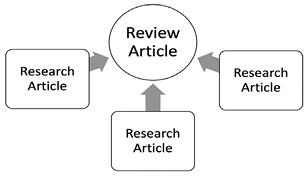
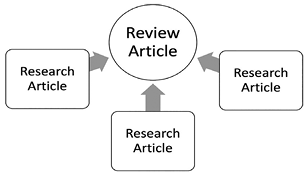
Primary literature is where scientific knowledge enters the world for the first time. But not all research articles serve the same function. There are two main types: research articles and review articles. Figure 1.1 shows how these types relate. A single review article might synthesize dozens – or even hundreds – of research articles. Both types are essential, but they offer different insights and require different reading strategies.
Research and review articles.
Review articles synthesize multiple studies, while research papers present original data.
1.5.1 Research Articles
Research articles are the initial reports of a scientific discovery, like our previous example of a plastic-eating microbe. They present new findings generated directly by the researchers conducting the study. These articles contribute original evidence to the field and are the building blocks of the scientific record. There are two common types of research articles:
Experimental articles report studies in which researchers observe or manipulate variables to test hypotheses, explore causal relationships, or evaluate interventions. These studies typically take place in controlled settings. For instance, a biology article might investigate how sleep deprivation affects immune performance by comparing test results of well-rested and sleep-deprived participants.
Theoretical articles propose, refine, or challenge frameworks that explain observed phenomena. Instead of collecting new data, these articles build arguments using logic, mathematics, simulations, or reinterpretations of existing studies. For example, a theoretical article in astrophysics might critique quantum models of spacetime and propose a classical alternative, grounded in simulation results and previous observations.
The boundary between these types is often porous. Theories inspire experiments. Experiments test and reshape theories. Scientific progress depends on this interplay.
1.5.2 Review Articles
Review articles serve a different purpose: they pull together what is already known. Instead of reporting new findings, they analyze and synthesize the results of many studies on a shared topic, method, or tool. Reviews are especially helpful for getting up to speed in a field, making them a go-to resource for beginning students, interdisciplinary researchers, or anyone scouting a topic’s current landscape. There are two advanced forms of review articles worth noting:
Meta-analysis focuses on quantitative research. It combines numerical results from multiple studies using statistical techniques. This allows researchers to detect patterns, weigh evidence across studies, and evaluate the strength of effects better than any single study can. For example medical research commonly uses meta-analysis, such as Cochrane reviews, to synthesize clinical trial results.
Meta-synthesis focuses on qualitative research. It gathers themes, metaphors, or conceptual insights from interview-based or observational studies. This allows researchers to weave the findings into a larger narrative or theoretical model and to surface testable hypotheses. For example, behavioral research uses meta-synthesis to surface new research questions and hypotheses.
Review articles are easy to spot: many journals label them prominently near the title. While they do not provide new data, they offer something just as valuable – a broader view of where a body of evidence points. Reading reviews helps readers zoom out, see connections and gaps between studies, and identify promising directions for further investigation.
A. A secondary source of summarized research findings compiled by professional editors.
B. An original research publication that claims new knowledge based on data.
C. A classroom handout that compiles excerpts from multiple journal articles.
D. A peer-reviewed editorial focusing exclusively on theoretical debates without data.
(Check your understanding using the Knowledge Check Key at the end of the book.)
1.6 Overview of Peer Review
Peer review is one of the oldest quality control systems in science – and one of the least standardized. Since 1665, when the Philosophical Transactions of the Royal Society first employed expert judgment to vet submissions, peer review has grown into the dominant model for assessing scientific credibility (Gregory & Denniss, Reference Gregory and Denniss2019). By 2020, scholars published over four million peer-reviewed journal articles annually, with estimates of annual growth between 5% and 6.5% (STM, 2021). These articles are cataloged in large commercial databases, such as Scopus and Web of Science, which cover almost every discipline. Scopus lists 25,000 active journals and Web of Science lists 18,000. However, the actual number of active journals is higher because no single platform captures the full scope of global scholarship. In addition, there are dozens of academic databases that cover specialty topics, such as PubMed for biology and medicine, and IEEE for engineering.
Despite this enormous publication output, there is no universal training for peer reviewers, and typically, individual publishers provide a patchwork of guidance (e.g., Elsevier, Inc., 2025). In many cases, peer reviewers are expected to intuit how to evaluate manuscripts without explicit guidance or shared criteria (Glonti et al., Reference Glonti, Boutron, Moher and Hren2019). Editors have described peer review instructions from publishers as vague, unspecific, or rough. This ambiguity raises real concerns, such as:
How do we assess the rigor of a system with no consistent standards?
How transparent is the process if its rules are unwritten?
As we will explore further in Chapter 10, these questions do not undermine the importance of peer review. Instead, they highlight the need to approach it critically and with great concern.
1.6.1 Why Peer Review Matters
Despite inconsistencies, peer review serves two essential purposes in scientific communication. First, it acts as a filter. Manuscripts are vetted to ensure that the knowledge they present is new, significant, and grounded in sound methods and reasoning. Second, it works as a refinement process, helping authors revise and strengthen their work before publication (e.g., Glonti et al., Reference Glonti, Boutron, Moher and Hren2019; Kelly et al., Reference Kelly, Sadeghieh and Adeli2014).
Peer review remains one of the key mechanisms by which scientific claims gain credibility. The process is flawed, but it adds friction to the publication pipeline, slowing things down just enough to include critique. Reviewers can challenge methods, interrogate assumptions, and assess whether conclusions follow from the evidence (The American Physiological Society, 2025). These challenges are what make peer-reviewed research more than just information; it adds a layer of trustworthiness.
1.6.2 Peer Review and Scientific Credibility
When done well, peer review can improve a study’s published report. Ideally, reviewers help catch errors, question overreach, and raise new possibilities. This critical dialogue between reviewer and author can make research stronger and support the integrity of the primary literature as a whole. A 2015 survey of researchers showed that 82% of respondents agreed that “without peer review there is no control in scientific communication” (Publishing Research Consortium, 2016).
Peer review also shapes behavior. Knowing that peer experts will scrutinize their work, researchers are more likely to follow ethical norms, use rigorous methods, and communicate clearly. In this way, peer review functions as a gatekeeping mechanism and as an incentive for scientific improvement.
However, peer review is not a guarantee. Like any human system, peer review is shaped by norms and assumptions. Understanding its value – and its limitations – is part of becoming a critical reader of scientific research.
A. To promote competition among journals
B. To screen and improve the quality of research articles before publication
C. To increase the number of published journals annually
D. To provide standardized training for peer reviewers
(Check your understanding using the Knowledge Check Key at the end of the book.)
1.7 Citing Research Articles
Citing other research is one of the defining practices of research articles. It shows where ideas come from, how evidence accumulates, and how knowledge builds across time. When you read research articles or reviews, including this book, you will notice citations scattered throughout. Each citation is a record of knowledge and an invitation for readers to trace the point back to its original publication.
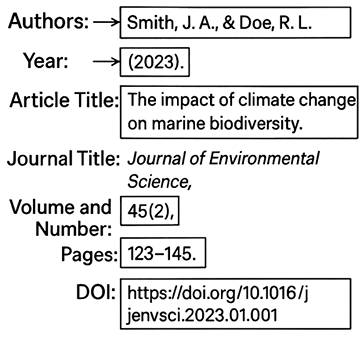
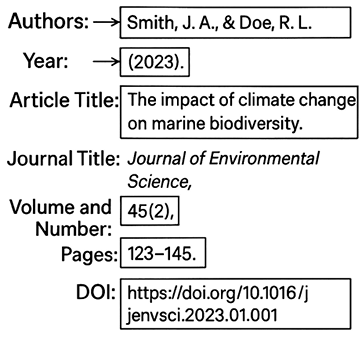
Different scientific fields use different citation styles, but the goal is always the same: to give credit, build context, and make sources easy to find. Figure 1.2 shows the anatomy of a journal article.
Anatomy of a citation.
Citation anatomy – author, year, title, journal, volume, pages – is essential for article retrieval.
Next, let’s look at the various citation styles used by disciplines in the natural sciences. Note that there are a lot of variations by sub-discipline and geography, and these are some broad usage patterns to orient us to citation practices. Below, each field name is followed by the style name, then an example underneath, and followed by the style’s source citation (note: this is a fictitious citation for illustration purposes).
Smith, J. A., & Doe, R. L. 2023, J. Environ. Sci., 45, 123–145. https://doi.org/10.1016/j.jenvsci.2023.01.001
Source: AAS (2025, June 14)
Biology: CSE – Name-Year
Smith JA, Doe RL. 2023. The impact of climate change on marine biodiversity. Journal of Environmental Science. 45(2):123–145. https://doi.org/10.1016/j.jenvsci.2023.01.001
Source: Council of Science Editors (2006)
Chemistry: ACS – Numeric/Superscript
Smith, J. A.; Doe, R. L. The impact of climate change on marine biodiversity. J. Environ. Sci. 2023, 45(2), 123–145. https://doi.org/10.1016/j.jenvsci.2023.01.001
Source: ACS Style Quick Guide (2020)
Earth Sciences: AGU – Author-Year
Smith, J. A., and R. L. Doe (2023), The impact of climate change on marine biodiversity, J. Environ. Sci., 45(2), 123–145. https://doi.org/10.1016/j.jenvsci.2023.01.001
Source: AGU Grammar and Style Guide (2025)
Physics: AIP – Numbered
[1] J. A. Smith and R. L. Doe, J. Environ. Sci. 45, 123 (2023). https://doi.org/10.1016/j.jenvsci.2023.01.001
Source: AIP Publishing LLC (2025, July 1)
Combination Fields: APA 7 (or latest edition)
Smith, J. A., & Doe, R. L. (2023). The impact of climate change on marine biodiversity. J. Environ. Sci., 45(2), 123–145. https://doi.org/10.1016/j.jenvsci.2023.01.001
Source: American Psychological Association (2020)
The last example of the American Psychological Association (APA 7) is used in fields that combine natural and social sciences – such as biology, psychology, and environmental science – especially when the research involves human behavior or interdisciplinary themes. We use APA 7 in this book because we are writing about human behavior – namely, critical reading and thinking.
Let’s review the key points about citations and their use.
Citations are a shorthand way to point you to a published research article, and each part of it has a specific function. They allow readers to quickly locate and evaluate sources based on the search criteria of authors, year, title, journal, volume, issue, page numbers, and DOI (a permanent Digital Object Identifier that links directly to the article online). Unlike URLs, which can break, DOIs are built to last.
Citations let us follow the argument back to its source, locate the study, and see who else has cited the work. If you’re unsure which citation style to use, start by checking the references in a published article from your field or consult the journal’s submission guidelines. You can also check with instructors, as many also include preferred styles in assignment prompts or syllabi.
Citing prior work is more than academic courtesy; it is how researchers join the ongoing conversation of their field. Citations reveal where ideas come from, how they evolve, and what questions remain unanswered. When done well, they position a study within the larger landscape of scientific knowledge, making its contribution clear and its relevance visible.
In these ways, citations act as the connective tissue of research, linking today’s questions to yesterday’s answers – and paving the way for tomorrow’s discoveries.
1.8 Research Article Structure
Grab your nearest research article and look at its overall structure. The title, authors, and all-important abstract appear at the top of a research article. Next comes the main body of the text, usually accompanied by illustrative figures and data-rich tables. Appendices and acknowledgments might follow this, and then a long list of references. Now, go back to the main body of the text and ignore everything except the subject headings. These are probably laid out in the following order: Introduction, Methods, Results, and Discussion (IMRaD) or with slight variations. The remainder of this section dives into why we have this structure and how we can work with it.
1.8.1 IMRaD
The standard organizational structure of scientific articles did not begin that way. In the eighteenth century, researchers shared their findings in letter form, weaving context, methods, and reflections into narrative prose. These letters were personal and compelling, but they were also inconsistent. Key details were often missing. Reproducibility was an afterthought. Science was a conversation, but not always a clear or repeatable one.
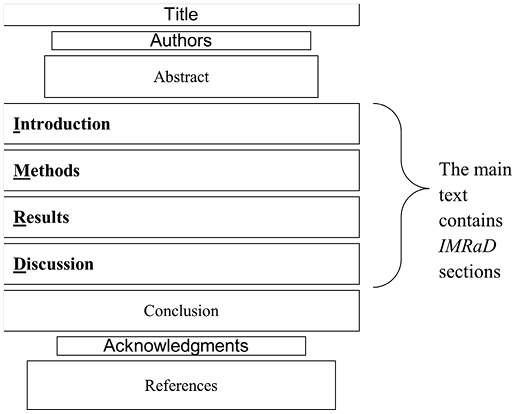
As the scientific enterprise grew in the nineteenth and early twentieth centuries, so did the need for clarity and consistency. Journals began to formalize what good reporting looked like. Readers needed more than a story: they needed a blueprint. The result was a shift toward structured communication, especially around methods and results, which laid the groundwork for the format we now know as IMRaD, as shown in Figure 1.3.
Typical IMRaD structure of a research article.
IMRaD stack from title to references, showing the standard publication format of Introduction, Methods, Results, and Discussion.
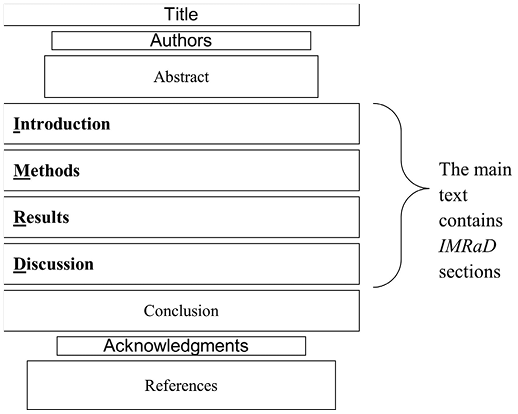
By the 1940s, that format – Introduction, Methods, Results, and Discussion – began to take hold in fields such as biology, chemistry, and medicine (Sollaci & Pereira, Reference Sollaci and Pereira2004). IMRaD tidied up research reports and standardized how science was communicated. Instead of letting each author decide how to organize their work, IMRaD offered a shared framework. Readers could quickly scan for methods, evaluate evidence, and follow conclusions with greater ease. This standardization helped science become more transparent, efficient, and cumulative. In the 1970s, the American National Standards Institute formally recommended the IMRaD format for scientific manuscripts, first in 1972 (ANSI, 1972) and again in 1979 (ANSI, 1979; Day, Reference Day1989). With that endorsement, IMRaD became the dominant model for research writing – a kind of common language for scientists across disciplines that endures to this day. It endures, in part, because IMRaD is a reliable structure that answers four essential questions:
Why did the authors do the study? (Introduction)
How did they do it? (Methods)
What did they find? (Results) and
What does it mean, and why does it matter? (Discussion)
This publication order reflects the classic arc of discovery. Tracing this arc is the first step toward unpacking research. Each IMRaD section has specific functions described in detail by Nair & Nair (Reference Nair and Nair2014) and Wu (Reference Wu2011) and summarized below:
Introduction: This section provides the background and context for the research. It consists of a review of relevant literature, the research question or hypothesis, and the study’s objectives.
Methods: This section details the procedures and techniques used to conduct the research. It includes information on the study design, data collection methods, and analysis techniques, allowing other researchers to expand or replicate the study.
Results: This section presents the study’s findings, often using tables, figures, and descriptive text. It focuses on the data collected and the analysis without interpretation.
Discussion: This section interprets the results, explaining their significance and implications. It relates the findings to the original research question, discusses limitations, and suggests areas for future research.
IMRaD’s standardized format is one reason many university writing centers teach it as a structured approach for writing research articles (e.g., Scientific Writing: IMRAD format; BYU Writing Center, 2025).
However, science rarely follows a script, nor do journals. The IMRaD structure is common across research articles, grant proposals, and technical reports, but many fields must adapt it to meet disciplinary practices. Some journals include additional elements such as abstracts, keywords, acknowledgments, and appendices to help readers navigate or contextualize a study (Nair & Nair, Reference Nair and Nair2014). Others customize the core structure itself, for example:
Nature moves the Methods section to the end of the article and prints it in a smaller font, subtly signaling its role as a technical appendix rather than part of the story arc (Wu, Reference Wu2011).
Science often omits formal Introductions altogether, embedding background in the opening paragraphs.
Hartley (Reference Hartley1999) proposed nesting topical subheadings within each IMRaD section to improve clarity and readability. This idea echoes what many journals already do: tailor structure to suit the discipline, the data, and the audience.
Despite these variations, IMRaD persists for good reasons. It supports the values that make science credible and shareable: transparency, reproducibility, and a common language for collaboration and replication. Like any reliable framework, it is designed to organize knowledge presentation and to make it possible for others to find and build on it.
1.8.2 Hero’s Journey Analogy
At first glance, the IMRaD structure might look like another outline. But look deeper, and you’ll see something much more familiar. The structure of a scientific article closely mirrors the arc of the Hero’s Journey: a storytelling pattern elucidated by Joseph Campbell found in myths, novels, and films across cultures. This analogy can help demystify why research articles are structured the way they are, and how each part serves a specific purpose in the logic of discovery. Let’s break it down:
The Introduction section is the call to adventure. Here, the research question is posed, the gap in knowledge revealed, and the stakes made clear. The hero – the study – emerges from the ordinary world of established knowledge to face a challenge that no one has fully solved.
The Methods section is the quest itself. This is where the path is chosen, the tools are assembled, and the journey unfolds step by step. It details the planning, procedures, and techniques used to navigate uncertainty and gather evidence.
The Results section is the moment of truth. The hero faces tests and trials, and we find out what was discovered. This is where the data appear, unembellished – just the raw outcomes of the journey, whether triumphant, surprising, or inconclusive.
The Discussion section is the return and reflection. The findings are interpreted, their meaning unpacked, and their implications weighed. This is where the hero shares hard-won wisdom with the scientific community, linking back to the original problem and pointing toward new horizons.
The Conclusion, when included, serves as the epilogue. It distills the key lessons of the journey, acknowledges the limits of what was learned, and gestures toward the next adventure – whether by proposing future studies or revisiting old assumptions with new insight.
Framing IMRaD as a journey humanizes research. It can help us as readers recognize that scientific research, like storytelling, unfolds with purpose. There is a beginning, a middle, and an end. There are challenges, tools, discoveries, and transformations. And when we learn to see research this way – not just as data, but as a structured quest for understanding – we read to critique its meaning. We argue in this book that an effective critique must center on the argument from evidence.
1.8.3 Reproducibility of the Primary Literature
These patterns in literature publication highlight a central point. While IMRaD gives research a tidy scaffold, the structure alone cannot guarantee that findings are reliable, verifiable, or even meaningful. The lasting value of a research article depends on what sits inside that framework, namely, transparent methods and reproducible results. Reproducibility – the capacity for independent teams to repeat a study’s procedures and arrive at comparable outcomes – improves scientific credibility because it lets the community confirm that claims survive beyond the originating researchers.
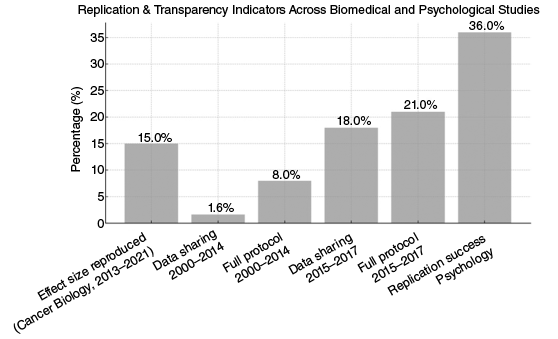
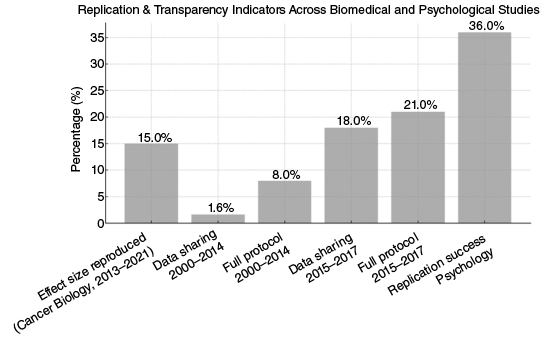
However, reproducibility has significant problems. Beginning in 2013, the Reproducibility Project: Cancer Biology (Center for Open Science, 2025) set out to replicate 50 pivotal experiments drawn from highly cited cancer articles. Several mouse-tumor replications were conducted, yet the aggregate analysis later showed median effect sizes that were about 85% smaller than the originals (Errington et al., Reference Errington, Denis, Perfito, Iorns and Nosek2021). That shortfall is not confined to cancer research. An audit of 441 biomedical articles published between 2000 and 2014 found that only 1.6% shared raw data and 8% included a full protocol (Iqbal et al., Reference Iqbal, Wallach, Khoury, Schully and Ioannidis2016). A follow-up survey of 149 articles from 2015 to 2017 showed that data-sharing statements climb to 18% and detailed methods to 21%, but comprehensive transparency was still the exception (Wallach et al., Reference Wallach, Boyack and Ioannidis2018). Similarly, in psychology, the Open Science Collaboration’s effort to replicate 100 studies found that only about 36% reproduced statistically significant results consistent with the original findings in psychology (Aarts et al., Reference Aarts, Anderson and Anderson2015).
Figure 1.4 visualizes these trends, showing at a glance how much work remains to achieve routine reproducibility. It is a sobering and nuanced picture. In cancer biology, for instance, the median effect sizes reproduced by the Reproducibility Project landed at roughly 15% of those reported initially. Psychology fared somewhat better on direct replications, yet only 36% of studies produced statistically significant results consistent with their originals. Across biomedical research more broadly, raw-data availability and full-protocol disclosure were vanishingly rare between 2000 and 2014, though both indicators improved modestly – if still inadequately – by 2015–2017. Audits across biomedicine (Iqbal et al., Reference Iqbal, Wallach, Khoury, Schully and Ioannidis2016; Wallach et al., Reference Wallach, Boyack and Ioannidis2018) and large-scale replication efforts in cancer biology and psychology (Ioannidis, Reference Ioannidis2017; Errington et al., Reference Errington, Denis, Perfito, Iorns and Nosek2021; Nosek & Errington, Reference Nosek and Errington2017) show how essential details for study replication are rarely, if ever provided.
Reproducibility trends.
Each bar shows some reproducibility trends, with the largest replication success in psychology (36 %), underscoring the need for transparent methods.
Closing this reproducibility gap demands ambitious change, such as open-science frameworks, preregistered protocols, and public repositories for data and analysis scripts. As journals and funders adopt these changes as new requirements, transparency could become the default and replication a feasible follow-up rather than a heroic, six-figure exception. For the time being, reproducibility remains a worthy, if largely unmet aim.
1.8.4 Validity through Evidence, Reasoning, and Limitations
While IMRaD offers a clear structure for organizing research, and reproducibility ensures that findings can be independently verified, neither guarantees that a study’s conclusions are trustworthy. For that, we need to look deeper at the quality of the evidence, the logic of the reasoning, and the transparency with which researchers acknowledge the study’s limitations. These elements form the core of scientific validity. Let’s unpack these ideas.
Evidence: In the natural sciences, empirical evidence forms the bedrock of credible research (Krajcik & McNeill, Reference Krajcik, McNeill and Gunstone2015). This evidence is derived from systematic observations, controlled experiments, and meticulous data collection. The credibility of such evidence is enhanced when it can be independently replicated and verified by other researchers. Detailed documentation of methodologies, data analyses, and experimental protocols is essential, as it allows for reproducibility and critical evaluation within the scientific community.
Reasoning: Transforming raw data into meaningful conclusions requires logical reasoning. This involves connecting evidence to hypotheses or research questions through structured argumentation (Allen & Baker, Reference Allen, Baker, Allen and Baker2016). Scientific reasoning often employs both inductive and deductive approaches. Inductive reasoning involves drawing general conclusions from specific observations, while deductive reasoning tests hypotheses based on established theories. The clarity and coherence of this reasoning process are vital for the validity of the research findings.
Limitations: Acknowledging the limitations of a study is a cornerstone of scientific integrity (Dawson et al., Reference Dawson, Julku and Pihlajamäki2024). Limitations may stem from various sources, such as study designs, sample size constraints, methodological challenges, or external factors influencing the results. By transparently discussing these limitations, researchers provide context for their findings and guide future investigations. This practice fosters a culture of openness and continuous improvement within the scientific community.
In summary, the validity of scientific research is underpinned by the rigorous collection of evidence, the application of rigorous logical reasoning, and the transparent acknowledgment of study limitations. These components collectively ensure that scientific findings are credible, logical, and reproducible.
1.9 Approaches to Reading Primary Literature
Reading primary literature is a skill that evolves over time and benefits from structured guidance. Educators have developed various strategies to help readers engage with scientific texts each tailored to different learning objectives and educational levels. These methods range from annotation and scaffolding to inquiry-based learning and argumentation frameworks (Goudsouzian & Hsu, Reference Goudsouzian and Hsu2023). Let’s break them down by approach.
1.9.1 Analysis and Annotation
Annotation serves as a powerful tool to demystify complex scientific articles. The American Association for the Advancement of Science (AAAS) offers the “Science in the Classroom” initiative, providing annotated research articles to support student understanding. Similarly, Kararo and McCartney (Reference Kararo and McCartney2019) advocated for annotated primary literature as a pedagogical tool that scaffolds undergraduate engagement with scientific texts. Building on these approaches, Bjorn (Reference Bjorn2024) introduced a method that focuses on the elements of a scientific argument, the CERIC method. This method is flexible, yet structured analysis that can integrate other approaches, including annotation and social collaboration to enhance critical reading skills. Here is an example:
Situation: You have been assigned to read a recent article on CRISPR diagnostics. You may work with a group, but if so, you must show how you read together.
Individual Steps:
Group Steps:
◦ Add margin notes that translate jargon, for example, write in the margin, “LOD = limit of detection, for example, the quietest sound a microphone can pick up.”
◦ When you meet with your lab or study group, share the annotated file so the colors guide discussion without anyone re-reading the whole article aloud.
◦ If the group decides to adopt this approach, consolidate similarities and differences in your margin notes.
Anecdotally, our students who have run this approach report to us feeling more interested in the research and confident in their findings.
1.9.2 Inquiry-Based and Interdisciplinary Methods
Inquiry-based learning encourages students to ask questions and explore scientific literature actively. Ness (Reference Ness2016) highlights the cognitive and motivational benefits of question generation in fostering reading comprehension. In an interdisciplinary context, Liotta and Almeida (Reference Liotta and Almeida2005) describe a seminar that combines organic chemistry and cell biology, using primary literature to tie together concepts from both fields. Here is an example:
Situation: You are in a joint biology–chemistry seminar and have been assigned to form a group with at least one biology major and one chemistry major. You have been assigned to critically read an article on testing athletes for illegal doping.
Individual Steps:
◦ Scan the abstract and main text, then brainstorm five “how/why” questions that neither discipline alone can answer (e.g., “How do natural metabolic products limit testing applications?”).
◦ Each person researches the question for 30 minutes.
Group Steps:
◦ Reconvene to pool answers and decide whether the article’s methods and findings really bridge both fields.
Anecdotally, our students who have run this exercise report a much better understanding of what makes and breaks interdisciplinary research.
1.9.3 Longitudinal and Intensive Programs
Long-term engagement with primary literature can lead to significant improvements in students’ comprehension and critical-thinking abilities. Sato et al. (Reference Sato, Kadandale, He, Murata, Latif and Warschauer2014) found that repeated exposure to scientific articles resulted in longitudinal gains in subsequent lab courses. Kozeracki et al. (Reference Kozeracki, Carey, Colicelli and Levis-Fitzgerald2006) describe an intensive, literature-based teaching program that prepares undergraduate science majors for advanced studies, facilitating their transition to doctoral programs. Here is an example:
Situation: You have been assigned to keep a weekly reading log for an entire term.
Steps:
◦ Each Friday, pick one core article in your thesis or dissertation area, complete a one-page notes summary, and brainstorm two follow-up experiments you might run.
◦ At week 12, submit the log plus a 500-word reflection on how your questions evolved.
Anecdotally, our students who have run this exercise report sharper qualifying exam answers because they see the growth trajectory of their own thinking.
1.9.4 Structured Frameworks and Argumentation
Structured frameworks help students dissect scientific arguments effectively. The Scientific Argumentation Model (SAM) is a heuristic that guides students through the rhetorical structure of research articles (van Lacum et al., 2026). Similarly, Koeneman et al. (Reference Koeneman, Goedhart and Ossevoort2013) used an argumentation analysis framework to teach students how to evaluate claims and evidence. The CERIC method builds on these frameworks by making analytical categories explicit, empowering a deeper understanding of the argument’s elements and how they interrelate. Here is an example:
Situation: You have been assigned a research article on microplastic uptake in fish to read critically in a journal club.
Steps:
◦ You choose the SAM and use a worksheet.
◦ After reading an article on you, fill in the SAM grid: Research question → Claim → Supporting Evidence → Underlying Reasoning → Possible Limitations.
◦ In the journal club meeting where you are leading, you focus the debate on the reasoning and limitations columns.
Anecdotally, our students who have run this exercise report that it forces the group to scrutinize and debate the logic instead of re-summarizing results.
1.9.5 Selecting an Appropriate Approach
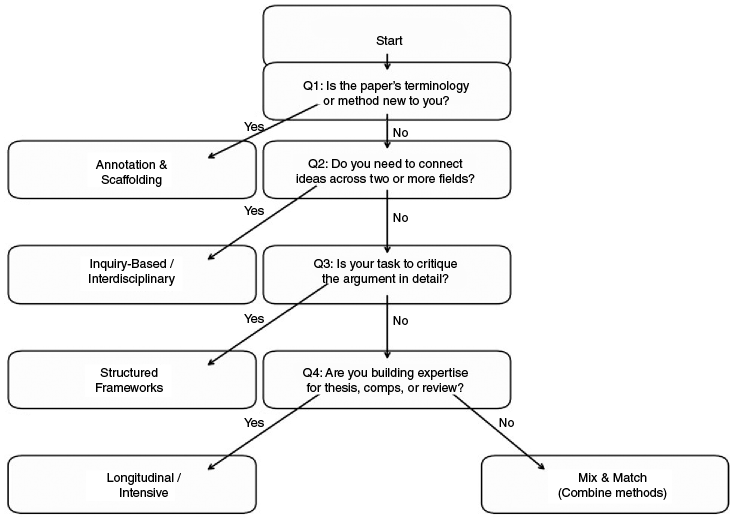
Choosing the right approach to critical reading of research articles depends on where you are in your learning journey. Figure 1.5 shows a decision tree to help choose the best reading approach for the situation: when to pick annotation, inquiry, structured frameworks, longitudinal reading – or simply mix and match. If you’re just beginning to read primary literature, start with annotation-based tools or guided frameworks like CERIC to help you break down unfamiliar texts into manageable parts. As you build confidence, try summarization or inquiry-driven reading to practice identifying main ideas and asking meaningful questions.
Decision tree for reading approaches.
Decision tree highlights how readers might skim, scan, or deep-read based on goal and time.
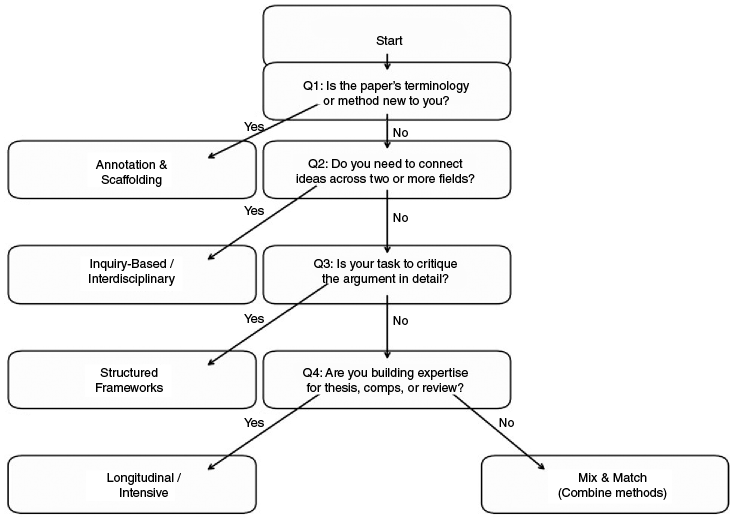
Advanced readers – especially those preparing for individual research projects, qualifying or comprehensive exams, or a graduate-level literature review – might benefit most from structured argumentation models or intensive critical reading programs that emphasize synthesis across articles. There’s no one-size-fits-all strategy; the key is to select a method that challenges you just enough to grow your skills without overwhelming your understanding. Do not be afraid to mix and match strategies. Some of the best reading habits emerge through a blend of structured support and self-directed exploration.
For example, annotation-based methods are suitable for introductory courses, providing more conceptual guidance for novice research readers. Structured frameworks like SAM and CERIC are beneficial for both novice and advanced readers, promoting critical analysis and argumentation skills. Inquiry-based and interdisciplinary approaches can stimulate curiosity and integrate knowledge across fields at any reading level. The key point here is that ongoing and critical engagement with research articles is necessary to develop the foundational skills necessary for research-intensive careers. Find a method or mix of methods that works for you and stick with it.
1.10 Conclusion and Looking Ahead
Understanding these foundational aspects of primary literature – its importance, types, credibility, the IMRaD structure, challenges with reproducibility, and reading strategies – prepares readers for the essential work of learning how to conduct a deeper critical analysis of research articles. Many approaches and methods exist for analyzing primary literature. This book focuses on the CERIC method as a guide to help advanced undergraduate and graduate students through a structured analysis of the essential elements of a scientific argument. CERIC can be easily combined with many other methods. The explicit CERIC categories of information are what we will hunt for and analyze in each article and in each chapter ahead, starting with Claims in Chapter 3. This method also provides instructors with a framework to assess and address critical reading challenges and growth.
1.11 Chapter Key Takeaways
1. Primary literature is a cornerstone of scientific research: Primary literature comprises original research articles that present new knowledge. These articles are essential for advancing scientific knowledge. The structured formats of IMRaD enhance clarity and consistency in publication.
2. Critical reading is a cornerstone skill: Critical reading is fundamental for academic success, particularly in graduate education in the natural sciences. Despite its importance, critical reading is often overlooked in formal instruction and coursework, leaving many learners underprepared to evaluate arguments, evidence, and methodologies. This gap hinders our abilities to analyze and synthesize knowledge.
3. Many barriers to understanding primary literature: Novice critical readers face many challenges, such as dense jargon, assumed background knowledge, and the nonlinear nature of the research process. Abstracts often omit critical details, requiring readers to engage deeply with the entire article to grasp its argument, methodology, and implications.
4. Effective teaching and learning: Effective methods to teach critical reading include annotation and summarization, peer discussions, interdisciplinary and inquiry-based approaches, and categorical frameworks like SAM and CERIC. These methods help readers locate and evaluate essential elements, such as claims, evidence, and reasoning.