Introduction
The emergency departments (ED) of many hospitals around the world are often overcrowded. The onset of a sudden emergency, whether man-made or natural, may cause a capacity strain that can challenge effective patient care. Despite the fact that major advancements in injury management continue to occur, the role of hospital resource management in patient care requires more attention. The key to emergency preparedness for an acute inflow of patients is to identify the availability and allocation of the healthcare resources needed to address the given situation. Reference Baker1,Reference Hick, Barbera and Kelen2 Surge capacity describes the ability of a healthcare system to effectively manage an acute inflow of patients requiring hospitalizations. Reference Davis, Poste, Hicks, Polk, Rymer and Jacoby3
To prepare for such events, hospitals can estimate their surge capacity using census management of hospitalized cases as well as existing capacity for patient care. Reference Hick, Barbera and Kelen2 Trauma surge estimation is usually based on expert opinion rather than real data and gap analysis; this could be a shortcoming. Reference Kaji, Koenig and Bey4,Reference Watson, Rudge and Coker5 The most studied estimation tool for traumatic surge is mass casualty events, which implies a marginal surge threshold of 10 trauma admissions within a single day. Reference Ball, Kirkpatrick, Mulloy, Gmora, Findlay and Hameed6,Reference Peleg, Rozenfeld and Stein7 However, this threshold only provides a rough estimation of surge capacity that does not consider the severity of injury, hospital resources and threshold difference of low versus high volume trauma centers. Size, space, staff and system are the key elements of surge capacity that need to be taken into consideration simultaneously to get a true sense of the point at which operational disruption of healthcare would occur.
To date, many studies that addressed the need to develop crisis surge capacity for continuous patient management have come from developed nations. There is a paucity of information from the Middle Eastern countries. Qatar is a small, rapidly-developing Middle Eastern country located in the Arabian Gulf. It has a population of 2.7 million divided across 8 municipalities with a huge concentration in the capital city. Less than 15% of the population are Qatari citizens, with 13% originating from other Arab countries while the remaining population are mainly from South Asian countries. 8 Hamad Medical Corporation (HMC) is the largest, non-profit, public healthcare provider in Qatar, which encompasses 15 public hospitals including Hamad General Hospital (HGH); the only tertiary hospital in the country with a Level 1 trauma center (Figure 1). HGH has a total staff of 7853, of which nurses account for 3686 and there are 827 physicians with different specialties. It has 152 critical care beds for adults and pediatrics, 181 emergency room beds and 20 operating rooms. HGH can rely on the wider HMC network for additional resources, when needed. 9
Qatar healthcare facilities.

The HMC Ambulance Service (HMCAS) provides patients with access to effective mobile healthcare including emergency and non-emergency ambulance services, inter-facility transfer services and other specialized mobile health resources as well as response to major incidents and disasters. HMCAS’s mainstream service (999 ambulance service) employs around 1300 clinical and support staff, has 200 ambulances, 22 rapid response vehicles, 16 bicycles, and a fleet of 3 helicopters that respond to over 100000 emergency calls a year.
Qatar’s healthcare system presents a unique opportunity to understand the surge capacity in a different context that is scalable and relevant to a myriad of other systems worldwide. The need to understand surge capacity and to establish nationwide mitigation plans for the health sector are pressing especially with the upcoming mass gathering that will be hosted in the county, including the FIFA World Cup in 2022. This study aims to assess the current breaking point of crisis surge capacity of trauma services in Qatar and to develop a mitigation plan.
Method
A retrospective study was conducted using prospectively collected data between June, 2017 and May, 2018. Data were retrieved from the trauma registry database of patients admitted or seen and discharged from the only Level 1 trauma center in the country at HGH. Specific data were also obtained from the emergency medical services (EMS), human resources department at HMC and Qatar’s Ministry of Public Health (MoPH). In Qatar, the EMS follows the SALT triage protocol of sort, assess, lifesaving interventions, treatment and/or transport for mass casualty triage. Reference Lerner, Schwartz and Coule10 Patients were triaged and designated with 1 of the 5 categories: immediate, expectant, delayed, minimal and dead. The EMS uses priority dispatch assigning a response based on patient acuity: priority 1 or T1 (emergency), 2 or T2 (urgent) and 3 or T3 (routine). Patients with asystole, Glasgow Coma Scale (GCS) motor score 1, who were brought in as dead to the ED were excluded from the study. The reason for this choice was that the motor component of the GCS has been shown in recent studies to be simpler and more specific in field triage for predicating severity of injury. Reference Kupas, Melnychuk and Young11
Data collected included patients’ demographics (age, gender, nationality), type of injury, details of hospital admission and discharge, mode of transportation, transfer from other facilities, associated injuries (head, chest, spine, pelvis, extremities), procedures, tracheostomy, intubation, initial vital signs, laboratory findings, injury severity score (ISS), GCS score at ED, Abbreviated Injury Score (AIS), Revised Trauma Score (RTS), Trauma and Injury Severity Score (TRISS), blood transfusion amount, massive transfusion, mechanical ventilation, length of stay in intensive care and hospital, surgical intervention, radiological examination, in-hospital complications, hospital bed capacity (emergency room, intensive care unit and inpatient unit), workforce (emergency physicians, nursing staff and paramedics), medication and supplies, and direct costing for the initial 24 hours post-admission.
The hospital surges consist of 3 categories of conventional, contingency and crisis, which are comprised of 4 key components: space, staff, supplies and system. Reference Hick, Barbera and Kelen2 System refers to the standard of care, expansion goals and resources. The conventional surge capacity refers to a 20% surge in the routine medical care using resources available within the healthcare facility without much change. In the case of contingency care, the medical facilities are being utilized with 100% increase in the usual capacity and in order to manage the influx, resource utilization must be expanded to non-traditional areas such as the wider community or at a regional level. Reference Hick, Einav and Hanfling12 Lastly, in crisis capacity all components are critically affected and support from national resources or beyond is needed to cope with the surge.
It is important to note that mass causality events are often unexpected and therefore are difficult to study in a real time fashion. Such events evolve rapidly and have a wide range of effecting variables from the cause, scale, duration or location; the variation in any 1 of these aspects can substantially alter the healthcare systems ability to respond effectively to it. In order to improve a healthcare systems capacity, we cannot look at an incident in isolation but rather we need to draw on existing information from retrospective data.
Most of the available research addressing this topic have attempted to draw conclusions based on computer-simulated incidents and modeled interventions that cannot account for the variations in cause and effect or the unpredictability at the very heart of mass causality events. What we have gained with a retrospective study that takes into account existing data from the trauma registry, is the ability to study the population, interventions, comparators, outcomes, timings, and settings in a way that allows us to scale it based on the unit of ‘disaster incident’ that was proposed in the study. This study considered all categories of hospital surges to explore the healthcare operation capacity at HGH. To assess the crisis surge capacity, ‘Disaster Incident’ was designated as a unit of measurement. The total trauma admissions and consultations that took place over a week were collectively considered as a single ‘Disaster Incident’ arriving at the hospital at 1 time. The same was again repeated cumulatively for each week, month and finally a year’s worth of trauma patients as a single ‘Disaster Incident. This allowed us to study the gaps in the systems and ultimately identify the breaking points from conventional management up to crisis using real data that considered the capacity within the healthcare system.
The Institutional Review Board at the Medical Research Center at HMC (MRC-01-18-432) approved the study with a waiver of informed consent. The study was reported according to the ‘Strengthening the Reporting of Observational studies in Epidemiology’ (STROBE) checklist.
Statistical Analysis
Data was presented as proportions, medians, or mean ± standard deviation (SD) as appropriate. Differences in categorical variables between respective groups were analyzed using chi square test. The continuous variables were analyzed using the Student’s t-test. For skewed continuous data, non-parametric Mann-Whitney tests were performed. 2-tailed P values of < 0.05 were considered significant. Data analysis was carried out using the Statistical Package for Social Services, version 18 (IBM Corporation, Armonk, New York).
Results
Over the study period of 1 year, a total of 2479 trauma patients were presented to the only Level 1 trauma center in the country. The mean age of patients was 30.9 ± 15.8 years. The majority were male (84%) and expatriates (79%) from 33 different countries (Table 1). A total of 16% of the patients sustained severe trauma that necessitated priority 1 activation. The priority 1 activation consists of 1 ambulance, 1 supervisor vehicle and/or 1 rapid response car within Doha and a helicopter, if the call is responding to a need outside Doha city. Reference Wilson, Alinier, Reimann and Morris13 After triage and initial assessment of all trauma cases at the ED, 314 patients (13%) were shifted to the operating room for surgical intervention, 417 (17%) were transferred to the trauma intensive care unit (TICU), 990 (40%) were sent to the surgical floor, 610 (25%) were treated and discharged while only 45 (1.8%) were transferred to other facilities (such as rehabilitation and long-term care) within the HMC network to receive specialized care. Overall, 169 (6.8%) patients died, with 66 in-hospital deaths and 103 dying at the scene or en route to the hospital.
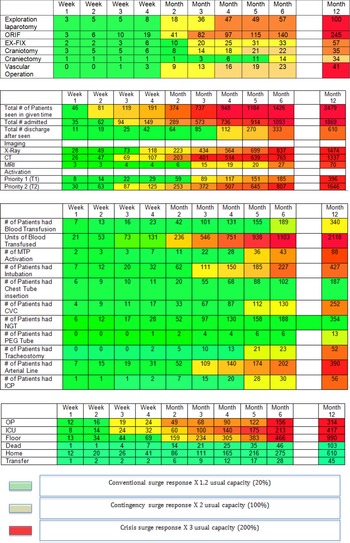
Trend of the cumulative data for trauma cases over a period of 1 year at Hamad Trauma Center (n = 2479)

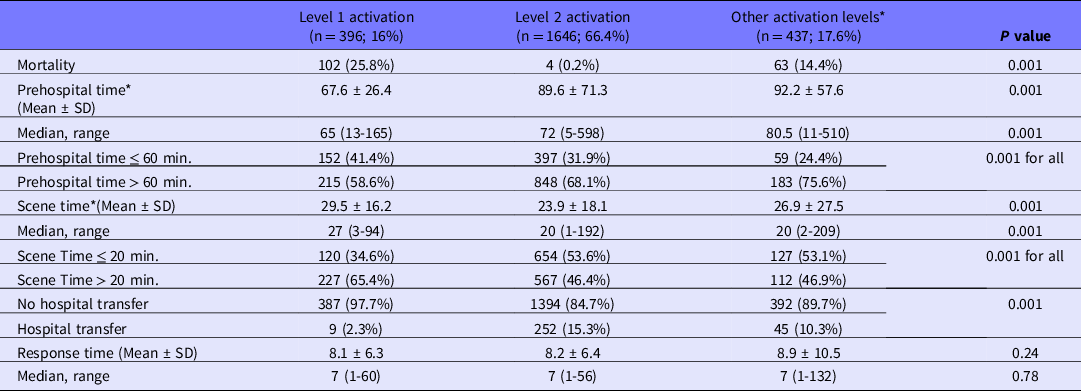
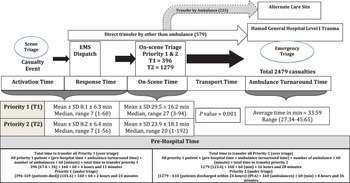
The majority of patients (76.5%) were transported to the HGH by EMS from the accident scene. The mean pre-hospital time for priority 1 was significantly lower (67.6 ± 26.4 vs. 89.6 ± 71.3 min; P = 0.001) when compared to priority 2 and other activation levels (Table 2). The mean on-scene time for priority 1 was prolonged (29.5 ± 16.2 vs. 23.9 ± 18.1 min; P = 0.001) than that for priority 2. The median ambulance turnaround time was 33.59 minutes (range 27.34 - 45.65). The overall time needed to transport all priority 1 cases was 4 hours and 11 minutes and 16 hours, 28 minutes for priority 2 cases based on the current number of ambulance units available at HMC. If we eliminate the patients who died or were discharged in the first 24 hours from the hospital during scene triage, the overall time needed to transport all priority 1 cases will decrease to 2 hours and 24 minutes and the priority 2 cases will decrease to 8 hours and 36 minutes (Figure 2).
Prehospital time and outcome by activation level

* level 3 and unclassified
Breakdown of prehospital times, activations, and disposition.

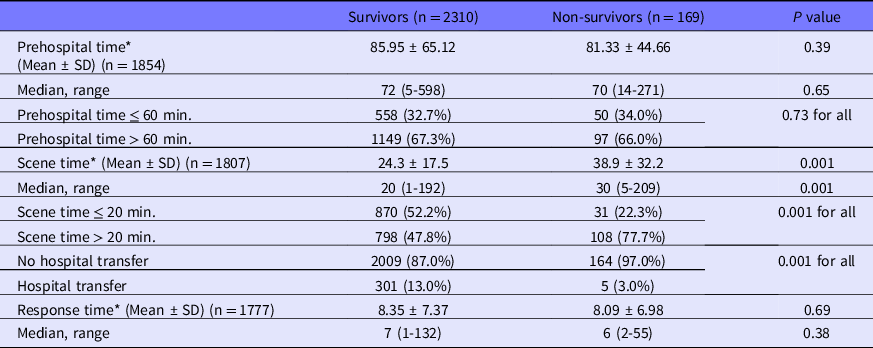
The pre-hospital and response times were comparable among the survivors and non-survivors. However, the median scene time was significantly higher among non-survivors [30 (5-209) vs. 20 (1-192); P = 0.001] when compared to survivors (Table 3). Also, survivors were more likely to be transferred to other facilities (P = 0.001). The EMS surge attained crisis of operational capacity at 5 months of disaster incident unit for priority 1, and 2 months for priority 2 patients.
Prehospital time and outcome in trauma patients

* minutes
The total number of patients presented at the trauma and emergency units reached operational crisis at 4 weeks. Blood transfusion units and availability of monitored beds were the first to reach operational crisis during resuscitation (Figure 3). The capacity for imaging examinations including ultrasonography (USG), radiography (XR), computed tomography (CT scan) and magnetic resonance imaging (MRI) was substantially higher than bed capacity and reached operational crisis at 3 months for the CT scan and 9 months for the MRI (Figure 3). Also, USG was done for all patients in the study as part of the Focused Assessment with Sonography in Trauma (FAST) for the initial examination. Medical supplies and equipment were found to be sufficiently available to operate in a conventional manner.
Breakdown of hospital resources surge capacity. The upper panel shows that the gap in the surge for surgical intervention was specialty-specific and reached crisis operation by month 3. The second panel shows that conventional imaging reached crisis at month 3. The third panel shows blood transfusions and the transfused amounts. The fourth panel shows that the ICU and operating rooms (OP) were the second to reach crisis operation.

Bed capacity for in-patients was the first to reach operational crisis followed by the ICU and the operating rooms. The surge in the number of deceased patients did not affect operations at the morgue. Patients transferred to other facilities and those discharged were found to be within the conventional capacity (Figure 3).
The crisis surge for surgical intervention was specific to the specialty as well as the type of operation. The orthopedic fixation (245 open reduction and internal fixations and 57 external fixations) was the most frequent surgical intervention and reached crisis operation by 3 months. Exploration laparotomy was the second highest surgical intervention, which reached operational crisis at 4 months. The crisis surge capacity for orthopedic procedures was attributed to the limited availability of operating rooms and shortage of surgeons (Figure 3).
The high-risk population included those who had pre-injury co-morbidities, those who were pregnant, and vulnerable age groups. Age and gender distribution impacted on resources and outcomes. Females accounted for 16%; of which 97 were pregnant. Pre-injury co-morbidities were associated with higher demands of healthcare resources in terms of longer ICU stay and post-discharge rehabilitation.
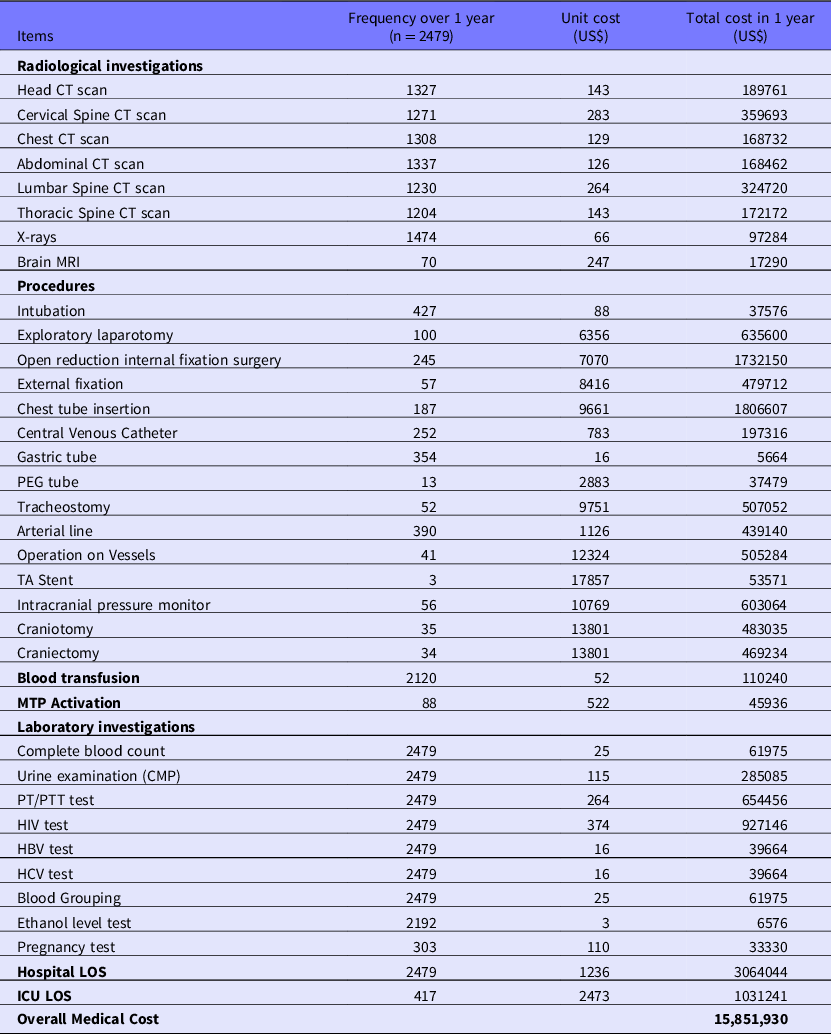
Table 4 analyzes the cost of radiological and surgical intervention/procedure, laboratory investigations, blood transfusion, ICU and hospital stay. The estimated total direct health care cost for all trauma patients within the initial 24 hours post admission was approximately US$15851930.
Direct related radiology, laboratory, procedure, and hospital stay cost of surge capacity in US$

Abbreviations: CT scan, computed tomography scan; MRI, magnetic resonance imaging; ORIF, Open reduction internal fixation; PEG, Percutaneous endoscopic gastrostomy; MTP, massive transfusion protocol; PT/PTT, prothrombin time/partial thromboplastin time; LOS, length of stay
Discussion
This is a unique study, especially within the context of the Middle East, which sought to conceptual a healthcare system’s surge capacity through a gap analysis using real-time data from the national trauma registry of Qatar. By contextualizing the various components of surge capacity within real data, this study captured potential means to simulate the progression of a disaster from the initial presentation to the trauma unit until discharge at the only Level 1 trauma center in the country. The study used the data to understand the breaking point of multiple dimensions of trauma surge capacity such as size, space, staff, and system with the help of cumulative measures of patients seen over the course of weeks, months, and a year.
Exceeding the ‘Golden Hour’ could affect trauma patients’ outcomes in a negative manner. However, in the event of a disaster event with mass causalities, both the action on-site and in the hospital need to be streamlined in order to improve outcomes for the injured, and for the management of the surge at the hospital. Introducing advanced medical support on-site, like a field hospital, can initiate management of the injured and allow for better triage. This can slow the depletion of ambulances, which often occurs with such incidents, and allow ambulances to transport the severely injured in a timely fashion. The adoption of other means of transportation can expedite the transportation of injured people and bring the transport time closer to the ‘Golden Hour’ window. Making use of ambulances within the private sector hospitals and Red Crescent can increase the transport capacity with paramedics. Additionally, the use of police cars, public transport and private vehicles can transport additional casualties to the hospital.
The key findings from this study were considered to identify the gaps in the system and derive potential disaster mitigation models to improve the healthcare system’s readiness. Interestingly, the ED at HGH was found to be crowded with an average patient flow of greater than 1000 patients seen per day. The ED, which routinely operates at capacity, would easily reach contingency care levels or beyond. This might pose detrimental effects on the outcome of patients as it increases the waiting times, chances of medical errors and could compromise patient management, safety and may increase mortality. A recent review showed that the impact of ED overcrowding is not only reflected in patient care but also affects the clinical staff and healthcare management causing treatment delays, worsened outcomes and staff burnout. Reference Morley, Unwin, Peterson, Stankovich and Kinsman14 In order to be better prepared in the face of a disaster, the ED needs to triage and refer uncomplicated cases to emergency facilities in other healthcare centers. This should be developed as a contingency approach for surge capacity that would better utilize the HMC network help relieve ED overcrowding and result in better patient outcomes. Reference Yarmohammadian, Rezaei, Haghshenas and Tavakoli15
The high occupancy of hospital beds is also a major constraint for space management in critical care settings. Reference Ebrahimian, Ghasemian-Nik, Ghorbani and Fakhr-Movahedi16 Similarly, the expansion of bed capacity remains a primary issue at our tertiary care hospital as the bed occupancy, if often high, can potentially influence surge capacity. However, in most settings, expansion of bed capacity is not feasible, hence better bed coordination and development of a ‘reverse triage’ system might overcome the problem of bed management. Reference Watson, Rudge and Coker5 The idea of reverse triage refers to the early identification of potential patients that can be safely discharged from the hospital and treated out-of-hospital for a certain period of time to facilitate system recovery. Reference Kelen, Sauer, Clattenburg, Lewis-Newby and Fackler17 This could be applicable to both adults and pediatrics without the allocation of major resources during a disaster event. Reference Kelen, Troncoso and Trebach18 It is a multi-dimensional approach that necessitates clinical expertise to establish guidelines and assessment of risk stratification based on the clinical condition of admitted patients. Development of such a system would facilitate protocol that identifies patients for discharge or transfer to other facilities in case of an urgent demand for bed capacity. This would result in efficiencies gained throughout the healthcare system without compromising the clinical care and patients’ outcomes. Reference Kelen, Sauer, Clattenburg, Lewis-Newby and Fackler17
Notably, it is difficult to maintain formal coordination between different stakeholders with the onset of a disaster event. Therefore, it is crucial to establish a multiple stakeholder response team with a national protocol to utilize the capacity and capability of available healthcare resources from military hospitals, primary healthcare centers and private healthcare partner in the case of an emergency. 19 A national level committee involving different ministries and other stakeholder needs to be convened to plan for disaster preparedness that stretches beyond the day-to-day healthcare delivery at HGH and HMC. While HGH has the only Level 1 trauma center, the resources available within the wider country can be utilized to undercut this limitation and minimize system vulnerability in the face of a disaster. Establishing Level 2 trauma centers in other municipalities at other hospitals in the HMC network can reduce strain and decentralize the influx of patients following disasters. Along with this coordination, the national committee could be charged with the task of identifying the strengths and weaknesses of the existing policies and work to reduce the risk of disaster through community and public awareness which has shown success in reducing the risk of disaster. 20
Healthcare staff is a key component of effect surge capacity management. Advanced planning and training is required to improve work efficiency, increase job satisfaction and reduce the potential of burnout at HGH and other hospitals across the country. Reference Terndrup, Leaming, Adams and Adoff21 This study also highlighted a gap in the availability of specialized staff, namely emergency surgeons, as poly-trauma patients often require various interventions involving multidisciplinary trauma teams including specialties in vascular, orthopedic and neurosurgery that require additional careful planning and coordination. Therefore, to achieve optimal delivery of care, effective medical leadership involving different subspecialties should collaborate to identify the major challenges in dealing with unfamiliar emergency situations. Reference Hershkovich, Gilad, Zimlichman and Kreiss22 In order to meet a sudden demand of specialized physicians, nurses and other allied healthcare professionals, bringing in these professionals, including those outside the HMC network (whether in the private sector), or even temporarily hiring from overseas can help to counter the workforce shortage. Additionally, medical and nursing students can acquire the desired knowledge and competencies for disaster preparedness through structured training programs. Reference Verson, Dyga, Agbayani, Serafin and Hondros23,Reference Bahrami, Aliakbari and Aein24 The lack of appropriate teaching programs has been a key factor for the lack of widespread awareness amongst healthcare staff about disaster preparedness and the expectations from their roles in the face of a disaster. Therefore, disaster preparedness training should be disseminated to medical and nursing students and physicians through continuing medical education. These courses can also be adapted and delivered to non-medical staff and volunteers from the public to provide auxiliary support services, which would also reduce the strain on the healthcare providers.
This study found that the radiological imaging department at HGH is well equipped with state-of-the-art facilities and can deliver services with optimum efficiency and short turn around which needs to be used as a benchmark across all hospitals in Qatar. Radiology departments should be integrated and involved in the institutional disaster management plan to improve coordination, preparedness and delivery of care. Reference Berger, Körner and Bernstein25
The availability of both medical and non-medical supplies and equipment can be impacted following a disaster. Availability of surgical equipment is a key limiting factor and Level 1 or Level 2 trauma centers should secure 15–20 major procedure trays in addition to other trays. Reference Hick, Nelson, Fildes, Kuhls, Eastman and Dries26 The post-disaster situation is unpredictable and thus the availability and access of hospital supplies are limited which results in the use of substitute medications or fluids to meet demands. Reference Kearns, Cairns and Cairns27 Interestingly, this study did not observe any gap in the surge capacity with respect to hospital supplies mainly due to continuous restocking of the essential hospital supplies, which is a very important component for disaster preparedness in Qatar. Moreover, this observation could be influenced by the study design which assess the hospital supplies over a year but did not consider a major event in a short span of time. However, there is a need for continuous investment and considered decision-making by the government and other stakeholders for surge capacity stockpiling of critical supplies in order to ensure the resilience of the national healthcare system in the face of a disaster.
Another key finding of this study is the system related issues that pose a potential risk for disaster preparedness. The Qatar National Health Emergency Management Plan has been developed but not yet implemented across all healthcare sectors. 28 There are also legal considerations and the framework required for the medical management of patients during times of disaster that need to be clearly articulated and codified. Finally, this study highlighted the high cost of treatment for the initial 24 hours post-admission. Therefore, financial cost should be considered for resource allocation depending upon the predicted surge capacity.
Limitations
There are several limitations to the present study. First, the time required for all the radiological imaging i.e., operational and reporting time of the radiology staff was not ascertained in our study. Notably, the radiology surge capacity (simultaneous operation of imaging devices) relies on the number of staff available at midnight and during weekends as injuries occurred frequently at this time. Also, this study used weeks, months, and a year as time points to understand surge capacity as there is no universal method for cumulative aggregation of disaster events for real-time data. The reception area capacity at the mortuary to receive relatives or family members was not evaluated in the present study. Additionally, the consultation rooms and the social workers that are needed to address the issues with the bereaved were not considered. This study assessed the outcome of high-risk groups as a part of the overall study but did not account for their need of supplies and workforce in terms of surge capacity.
Conclusion
This is a unique study from Qatar that highlights the surge capacity and capability of the healthcare system at a Level 1 trauma center. The identified gap in surge capacity requires several key components of healthcare resources to be addressed across the continuum of care from the pre-hospital until hospital discharge. The study emphasizes concerns regarding the healthcare surge capacity regarding size, space, staff and system during a real disaster, which necessitates careful implementation of healthcare emergency management planning. The methods used in this study can be replicated in healthcare systems of varying sizes and in different contexts to better understand their capacity and address gaps that could affect any future disasters events.
Acknowledgement
We thank the national trauma registry team in the Trauma Surgery Section, Hamad General Hospital, Qatar.
Author Contributions
All authors have contributed substantially in the study design, data analysis and interpretation, and manuscript writing and approval.
Funding Statement
This research did not receive any specific grant from funding agencies in the public, commercial, or not-for-profit sectors.
Ethical Standards
The Medical Research Center (MRC-01-18-432) at Hamad Medical Corporation, Qatar, has approved this study with a waiver of informed consent.