





Pregnancy and childbirth involve significant physiological, psychological and social changes, making this a period of rapid transition. Although childbirth is often seen positively, some women experience it as psychologically traumatic and develop childbirth-related post-traumatic stress disorder (CB-PTSD). CB-PTSD refers to trauma associated with labour, birth and the immediate postpartum period. Potential childbirth-related traumas include maternal complications, infant complications Reference Handelzalts, Ayers, Webb, Constantinou, Lucas and Grollman1 and maternal mistreatment (e.g. coercion Reference Silva-Fernandez, de la Calle, Arribas, Garrosa and Ramiro-Cortijo2 ). Traumatic birth has been variously defined and rates vary widely, with meta-analytic estimates that 19% of women experience their birth as traumatic. Reference Xu, Wang, Zhou, Xu, Wang and Zhang3 Some women who have a traumatic birth develop CB-PTSD, which is defined by DSM-5 as occurring when a person experiences threats of severe injury or death to themselves or significant others (in this case the infant), and has symptoms of re-experiencing the trauma, avoidance, hyperarousal and negative cognitions and mood. 4
Prevalence of CB-PTSD
Meta-analyses estimate that 3.1 to 4.7% of women develop CB-PTSD postpartum, with 12.3% experiencing clinically significant symptoms that do not meet diagnostic criteria (or are subthreshold) but still cause distress. Reference Yildiz, Ayers and Phillips5,Reference Heyne, Kazmierczak, Souday, Horesh, Lambregtse-van den Berg and Weigl6 As there are around 140 million births annually worldwide, even the lower bound of 3% prevalence means that over 4 million women develop CB-PTSD each year. One meta-analysis restricted to studies conducted since 2014 reported a pooled prevalence of 10%, suggesting that CB-PTSD rates may be increasing. Reference Osório and Borges7 Traumatic births and CB-PTSD have a substantial negative impact on women and families. CB-PTSD is associated with depression, Reference Dikmen-Yildiz and Ayers8 fear of future births, Reference Dencker, Nilsson, Begley, Jangsten, Mollberg and Patel9 reduced breastfeeding, Reference Garthus-Niegel, Horsch, Ayers, Junge-Hoffmeister, Weidner and Eberhard-Gran10 relationship strain Reference Delicate, Ayers, Easter and McMullen11 and possibly impaired mother–infant attachment and child behaviour. Reference Van Sieleghem, Danckaerts, Rieken, Okkerse, de Jonge and Bramer12
Gaps in the evidence
Most research on CB-PTSD comes from high-income countries such as the UK, USA and European countries. The majority of studies from low- and middle-income countries (LMICs) have been conducted in Middle Eastern countries, with significantly higher CB-PTSD rates in those countries (n = 14) compared with those in Europe (n = 35 Reference Osório and Borges7 ). This potentially greater prevalence in LMICs may be due to more limited maternity care, socioeconomic challenges and health inequalities. However, the use of different methodologies, measurement tools and cut-offs makes international comparisons difficult. A review of research on negative birth experiences found that risk factors differed according to country, study design and methodology employed. Reference Chabbert, Panagiotou and Wendland13 Thus, to enable accurate cross-country comparisons, standardised methods and measures are required. Comparable data on the prevalence of traumatic birth and CB-PTSD worldwide are important in establishing the disease burden and informing maternity care policies and practice. This research therefore aimed to estimate the prevalence of traumatic birth and CB-PTSD internationally, using standardised methods.
Method
Design
The INTERSECT study is a cross-sectional study of traumatic birth and CB-PTSD in women 6–12 weeks postpartum (mean 8.5 weeks, s.d. 1.9) that aimed to examine the international prevalence, symptom presentation and associated risk factors for traumatic birth and CB-PTSD. The protocol was preregistered Reference Ayers, Handelzalts, Webb, Lucas and Constantinou14 and the survey conducted between April 2021 and January 2024 for data in this data-set (edition 1, 2024 Reference Ayers and Handelzalts15 ). Results on the prevalence of traumatic birth and CB-PTSD are reported here. Findings on symptom presentations and risk factors are reported elsewhere. Reference Ayers and Handelzalts15,Reference Constantinou, Ayers, Webb, Handelzalts, Wright and Grollman16
Participants
INTERSECT (edition 1, 2024) includes data for 11 302 participants from 31 countries: Australia, Brazil, Chile, Croatia, Cyprus, Czechia, Estonia, Germany, Iceland, Ireland, Israel, Italy, Lithuania, Malawi, Nepal, Nigeria, Norway, Pakistan, Poland, Portugal, Romania, Saudi Arabia, Serbia, Slovakia, Slovenia, Spain, Sweden, Switzerland, Türkiye, United Arab Emirates (UAE) and the UK. Inclusion criteria were that participants: were 6–12 weeks postpartum; were legally adults in that country (i.e. aged 16 or 18 years or over); and consented to participate in INTERSECT and for their anonymised data to be part of the international data-set. Sample sizes ranged from 127 (Chile) to 1644 (Germany).
Procedures
Protocol procedures were designed to be flexible to accommodate differences in each country’s context and to ensure accessibility and feasibility, particularly in LMIC settings. Consent forms and participant information sheets were translated and adapted as appropriate for each country. The survey was conducted according to the protocol, Reference Ayers, Handelzalts, Webb, Lucas and Constantinou14 although principal investigators were permitted to include additional measures relevant to their local context. The survey could also be embedded within existing projects, provided that protocol procedures were adhered to and that the larger study design did not introduce systematic bias (e.g. intervention studies). Nevertheless, core protocol elements were standardised across countries, including the INTERSECT survey questions, inclusion criteria and timing of measurement (see www.intersectstudy.org). In addition, all participants were recruited within routine maternity services attended by all pregnant or postpartum women in that country, although procedures for survey administration varied across sites.
Participants were recruited through routine maternity services (e.g. hospitals, clinics, birth centres). Participants were approached either in person, by telephone, video call or email, and provided with information about the study. Those who agreed to participate gave their written or verbal informed consent and contact details. Surveys were completed between 6 and 12 weeks postpartum on paper or online (29 countries), or by telephone (Brazil, Germany).
The INTERSECT survey was developed in English and included validated measures e.g. City Birth Trauma Scale (City BiTS Reference Ayers, Wright and Thornton17 ) and the Edinburgh Postnatal Depression Scale (EPDS Reference Cox, Holden and Sagovsky18 ). The survey was administered in English in three countries (Australia, Ireland, UK) and in other languages in the remaining countries. Steps were taken to maximise the cross-cultural validity of the survey. Questionnaires were carefully chosen to prioritise those with validated translations (e.g. the EPDS is validated in over 60 languages). Where new translations were necessary, researchers followed consensus-based international guidelines. Reference Wild, Grove, Martin, Eremenco, McElroy and Verjee-Lorenz19 Examination of measures in INTERSECT samples indicates that they had good psychometric properties. Reference Škodová, Ďuríčeková, Bánovčinová, Urbanová, Bašková and Grendár20–Reference Ciuffo, Ionio, Epifania, Landoni, Bianchi and Webb22
Primary outcomes of traumatic birth and childbirth-related PTSD were assessed using the City BiTS, Reference Ayers, Wright and Thornton17 which consists of 29 questions that measure CB-PTSD according to DSM-5 diagnostic criteria. 4 Traumatic birth was assessed using two questions that ask about traumatic stressor characteristics according to DSM-5 criteria: (a) ‘Did you believe that you or your baby would be seriously injured?’ (b) ‘Did you believe that you or your baby would die?’. Traumatic birth was coded as present if participants responded yes to one or both questions. This operationalisation was used to capture women’s subjective perception of threat to life or serious injury during childbirth. Although it does not require or include the presence of post-traumatic symptoms, it reflects exposure to a potentially traumatic event and allows differentiation between the experience of traumatic birth and the subsequent development of CB-PTSD.
CB-PTSD was measured according to DSM-5 criteria, where symptoms were specifically related to labour, birth or events immediately after the birth. Symptoms of re-experiencing, avoidance, hyperarousal, and negative cognitions and mood, were rated for frequency over the past week (possible range 0–60). To meet DSM-5 diagnostic criteria for PTSD, participants had to report a traumatic birth according to DSM-5 criteria (see above), and a minimum of one re-experiencing symptom, one avoidance symptom, two symptoms of negative cognitions and mood and two hyperarousal symptoms at least once in the past week (i.e. a score of 1 or more). These symptoms had to have caused them distress and impairment, and to have been experienced for at least 1 month (duration criteria). The scale has good reliability and robust psychometric characteristics across translations, Reference Škodová, Ďuríčeková, Bánovčinová, Urbanová, Bašková and Grendár20–Reference Osorio, Darwin, Bombonett and Ayers25 and good diagnostic accuracy. Reference Osorio, Darwin, Bombonett and Ayers25,Reference Grundström and Östergötland26 Internal consistency in this sample was high (Cronbach’s α = 0·93).
Three subtypes of CB-PTSD were calculated:
-
(a) CB-PTSD with dissociative symptoms was coded when either of these dissociation items were endorsed: (i) ‘feeling detached or as if you are in a dream’ and (ii) ‘feeling things are distorted or not real’.
-
(b) Potential differential diagnoses were coded if participants indicated that their symptoms could be due to medication, alcohol, drugs or physical illness (yes or maybe).
-
(c) Acute CB-PTSD was coded if participants met all DSM-5 criteria for CB-PTSD except for duration criteria. This is not a diagnostic category, but might indicate delayed-onset CB-PTSD.
Demographic and obstetric information included age, ethnicity, household income, education, relationship status, immigration status, number of children, gestation, time since birth, type of birth and maternal or infant complications. Maternal and infant complications were perceived complications rated as none/minor/major. Demographic and obstetric information was collected by self-report.
Data were collected and coded in each country using a data dictionary to ensure consistency. Anonymised data from each country were uploaded to City, University of London’s servers using a secure Microsoft Teams site. A data protection impact assessment was approved by City, University of London. Research governance and data-sharing contracts between host and partner institutions were in place.
Some variations to protocol arose. Obstetric information was collected from medical records in Germany, and recruitment via social media was used in addition to protocol procedures in Norway and Slovenia.
Ethical standards
Ethical approval was obtained by principal investigators in each country (see supplementary materials for a list). The authors assert that all procedures contributing to this work comply with the ethical standards of the relevant national and institutional committees on human experimentation, and with the Helsinki Declaration of 1975 as revised in 2013. All procedures involving human subjects/patients were approved by local or regional research ethics boards.
Analysis
Data from each country were cleaned and harmonised. Non-eligible cases where the survey was completed outside 6–12 weeks postpartum (or where this interval could not be exactly calculated) were removed (n = 1025; absolute range per country, 0–223 records; proportional range per country, 0–40%). All other records were retained, regardless of missing data in some variables, to give analysts maximum discretion in decision-making about data analyses. Some variables (age, number of children, infant date of birth) were recoded to ensure that cases were not identifiable. Once a country’s data-set was fully compliant with the international data-set, the data were added to the INTERSECT (2024) data-set. Data are available via the UK Data Service. Reference Ayers and Handelzalts15
Prevalence estimates were calculated using the conditional modes from multilevel (mixed) logistic regressions, allowing the intercept to vary by the country. The intercept estimate was (β 0) ^= −1.29, with a 95% profile confidence interval of −1.55 to −1.03. Reference Grundström and Östergötland26,Reference Goldstein27 The conditional modes were calculated, which are the most likely deviations from this intercept for each country. Reference Wright and London28,Reference Efron and Morris29 These were then transformed into prevalence rates by the addition of (β 0) ^ and use of the inverse logistic transformation. This procedure increases the accuracy of individual estimates by using information from the whole sample. Reference Efron and Morris29 Between-country differences were evaluated graphically, showing their confidence intervals in caterpillar plots. Participants with missing data on outcome variables were excluded from analyses on a pairwise basis. Substantive analyses were conducted with SPSS version 29 for Windows (IBM Corp. Armonk, New York; https://www.ibm.com/products/spss-statistics) and R statistical software version 4.4.1 (R Foundation for Statistical Computing, Vienna, Austria; https://www.R-project.org/). The R package lme4 was used for multilevel models and for calculation of the conditional modes. Reference Bates, Mächler, Bolker and Walker30
Results
Sample characteristics
INTERSECT (edition 1, 2024) includes data for 11 302 participants from 31 countries. Seven of these countries were low- or middle-income countries (Brazil, Malawi, Nepal, Nigeria, Pakistan, Serbia, Turkey; n = 3355).
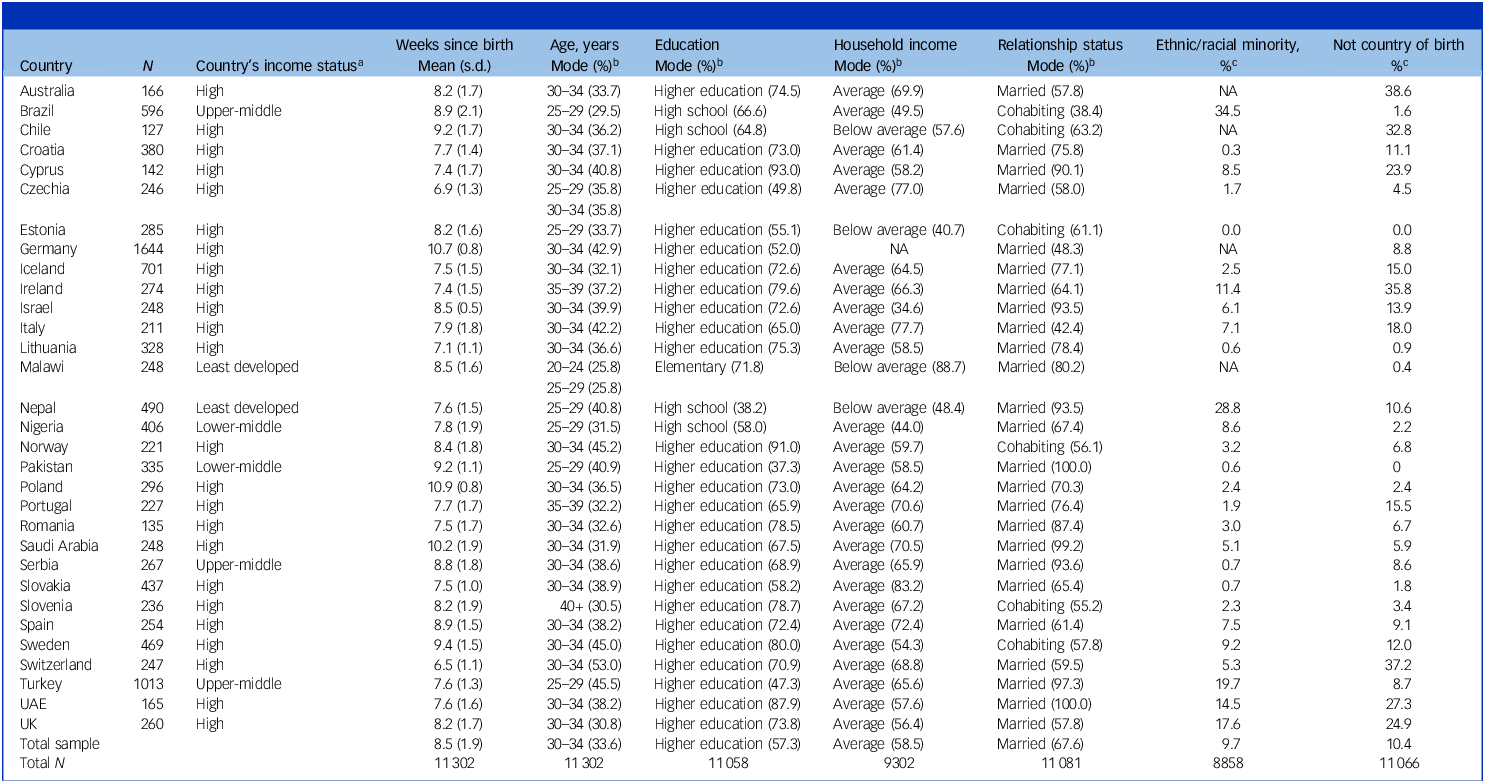
Table 1 shows the sociodemographic characteristics of samples in each country. Most participants were married, aged 30–34 years and reported average household income and higher education. Nine per cent (9.7%) of participants were from ethnic or racial minority groups, and a similar proportion (10.4%) were not living in their country of birth. However, there was substantial variation among countries. For example, the proportion of participants identifying themselves as being from ethnic or racial minorities ranged from 0 to 34.5%.
Sample sociodemographic characteristics

Table 1 Long description
The table presents sociodemographic characteristics of samples in each country. It includes data on weeks since birth, age, education, household income, relationship status, ethnic/racial minority status, and country of birth. The table has 12 columns and 46 rows, including headers. Column headers are Country, N, Country’s income status, Weeks since birth, Age, years, Education, Household income, Relationship status, Ethnic/racial minority, and Not country of birth. Row labels include country names. Each row provides specific data for each country. For example, Row 1: Australia, 166, High, 8.2 (1.7), 30-34 (33.7), Higher education (74.5), Average (69.9), Married (57.8), NA, 38.6. Row 2: Brazil, 596, Upper-middle, 8.9 (2.1), 25-29 (29.5), High school (66.6), Average (49.5), Cohabiting (38.4), 34.5, 1.6.
NA, not available; UAE, United Arab Emirates.
a. Countries’ income status according to the Official Development Assistance category used by the Development Assistance Committee of the Organisation for Economic Co-operation and Development.
b. Mode for each country and the percentage of the sample included in that modal group.
c. Percentage of each sample who were ethnic minorities or not living in their country of birth; all percentages are valid percentages (excluding missing data).
The obstetric characteristics of the samples in each country also varied (see supplementary materials). The median reported gestational age at birth was 39 weeks (range 15–46 weeks), 51.3% of participants were primiparous and 3.1% had a multiple pregnancy. Overall, 29.5% had a Caesarean (15.7% emergency, 13.8% elective), 64.3% had a vaginal birth and 6.2% had an instrumental vaginal birth. Rates varied greatly among countries, with vaginal births ranging from 26.7 to 89.3% and Caesarean from 10.4 to 67.4%. Major complications were experienced by 7.8% of women and 4.4% of their infants overall, but wide ranges were observed (major maternal complications 1.2–22.1%, major infant complications 0–18.2%).
Prevalence
Figure 1 shows the prevalence estimates for traumatic birth and CB-PTSD for the 31 different countries, ordered according to prevalence rates of traumatic birth from low to high.
Prevalence of traumatic birth and CB-PTSD in 31 different countries.
CB-PTSD, childbirth-related post-traumatic stress disorder; UAE, United Arab Emirates.

Traumatic birth prevalence ranged from 7 to 69% (mean 23.3, 95% CI 22.4–24.0), with wide variation among countries (Fig. 1). The interquartile range (IQR) was 14–27%, with half of countries falling within this range. The countries with the highest prevalence of traumatic birth were Malawi (69%), Chile (49%), Nepal (41%), Saudi Arabia (40%), Spain (35%) and Turkey (35%).
CB-PTSD prevalence ranged from 1 to 36% (mean 6.7, 95% CI 3.7–9.7), with wide variability among countries; the IQR was 3–7%. Countries with the highest prevalence of CB-PTSD were Malawi (36%), Saudi Arabia (33%), Turkey (14%), Estonia (10%), Pakistan (10%) and Nepal (9%).
A scatterplot showing each country’s prevalence estimates for traumatic birth and CB-PTSD is given in Fig. 2. This shows that Saudi Arabia and Malawi had particularly high rates of traumatic birth and CB-PTSD (i.e. a high birth trauma profile). Saudi Arabia is particularly noteworthy because, of the 97 respondents who reported a traumatic birth, 83 (86%) met the criteria for a diagnosis of CB-PTSD. In comparison, only 53% of those in Malawi reporting a traumatic birth met those criteria. Chile and Nepal had a high prevalence of traumatic births but fewer participants who reported a traumatic birth met criteria for CB-PTSD (17 and 22%, respectively). The UAE had a low prevalence of traumatic birth and CB-PTSD (low birth trauma profile).
Scatterplot of prevalence of traumatic birth and CB-PTSD, by country.
CB-PTSD, childbirth-related post-traumatic stress disorder; UAE, United Arab Emirates.

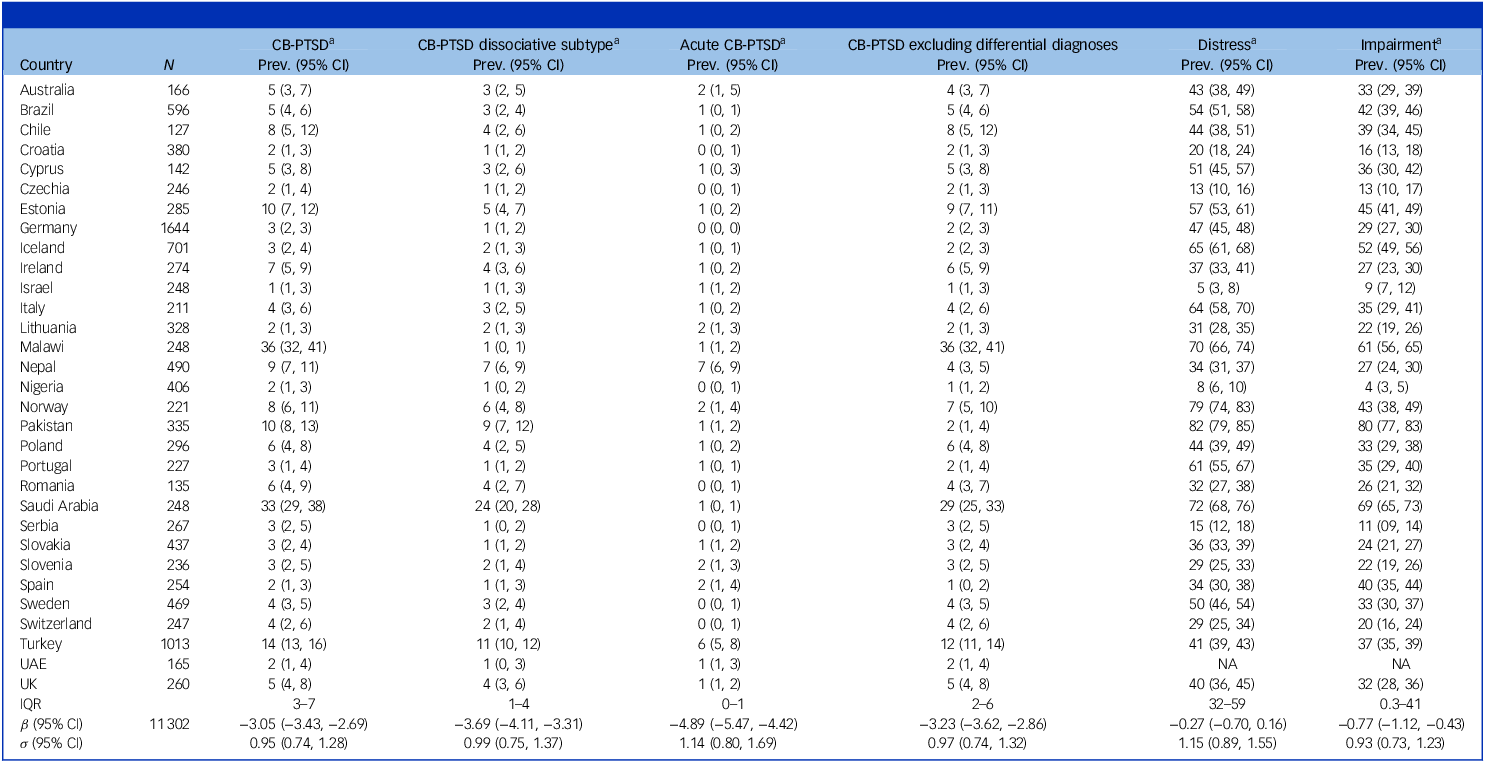
Table 2 shows the prevalence rates of CB-PTSD, CB-PTSD subtypes, distress and impairment.
Prevalence of CB-PTSD, subtypes, distress and impairment

Table 2 Long description
The table presents the prevalence rates of CB-PTSD, its subtypes, distress, and impairment across different countries. It includes data for 25 countries and a QR row summarizing the overall findings. The columns are labeled as follows: Country, N, CB-PTSD Prev. (95% CI), CB-PTSD dissociative subtype Prev. (95% CI), Acute CB-PTSD Prev. (95% CI), CB-PTSD excluding differential diagnoses Prev. (95% CI), Distress Prev. (95% CI), and Impairment Prev. (95% CI). Each row provides the prevalence rates and confidence intervals for each category. For example, Australia has 166 participants with a CB-PTSD prevalence of 5 (3, 7), a dissociative subtype prevalence of 3 (2, 5), an acute CB-PTSD prevalence of 2 (1, 3), a CB-PTSD excluding differential diagnoses prevalence of 4 (3, 7), a distress prevalence of 43 (38, 49), and an impairment prevalence of 33 (29, 39). The QR row summarizes the overall prevalence rates and confidence intervals across all countries.
CB-PTSD, childbirth-related post-traumatic stress disorder; UAE, United Arab Emirates; NA, not available; IQR, interquartile range.
a. These variables include participants who met the criteria for a possible differential diagnosis.
The intercept estimates and their standard deviations are shown at the bottom of the table, with their 95% confidence intervals. The intervals for the standard deviations show that there is considerable variation by country.
Distress and impairment varied significantly across countries: distress ranged from 5 to 82% (mean 44.5, 95% CI 36.5–52.6) and IQR was between 32 and 59%. Impairment ranged from 4 to 80% (mean 34.1, 95% CI 27.7–40.6) and IQR was 23–41%. These results indicate that many more women reported distress and impairment than those who met the criteria for a diagnosis of CB-PTSD, suggesting that subclinical symptoms also cause distress and impairment.
CB-PTSD dissociative subtype prevalence ranged from 1 to 24% (mean 3.8, 95% CI 2.1–5.4), and IQR was 1–4%. The prevalence of CB-PTSD dissociative subtype was over half that of CB-PTSD in many countries, suggesting that a large proportion of CB-PTSD includes dissociative symptoms. A notable exception to this is Malawi, where the CB-PTSD dissociative subtype was rare.
Acute CB-PTSD prevalence was near zero for most countries, with the exceptions of Nepal (7%) and Turkey (6%); IQR was 0–1%.
Differential diagnoses were not common. Table 2 shows that removal of participants with a possible differential diagnoses did not greatly affect prevalence rates in most countries, with the exception of Nepal (prevalence decreased from 9 to 4%), Pakistan (decreased from 10 to 2%), Saudi Arabia (decreased from 33 to 29%) and, to a lesser extent, Turkey (decreased from 14 to 12%).
Discussion
The INTERSECT study provides the first large-scale international estimates of traumatic birth and CB-PTSD, including CB-PTSD subtypes and differential diagnoses using standardised methods, across 31 countries. The mean prevalence of CB-PTSD was 6.7%, with half of countries reporting a prevalence between 3 and 7% (IQR); this is broadly consistent with meta-analytic estimates of 3.1–4.7%. Reference Yildiz, Ayers and Phillips5,Reference Heyne, Kazmierczak, Souday, Horesh, Lambregtse-van den Berg and Weigl6 The mean prevalence of traumatic birth was 23.3%, with half of countries having a prevalence between 14 and 27%. These results reveal significant variation among countries, with high trauma rates in Malawi and Saudi Arabia and low rates in Croatia, Czechia, Israel, Nigeria and UAE, suggesting that unique sociodemographic, cultural and healthcare factors in each country influence rates of birth trauma and CB-PTSD. The study was conducted during the COVID-19 pandemic when varying restrictions were imposed on maternity care, so this may also have contributed to variation in prevalence rates. The wide confidence intervals observed for several estimates indicate a degree of uncertainty, and these findings should therefore be interpreted with caution, particularly when comparing prevalence rates across countries.
The results show that a substantial proportion of postpartum women experience clinically significant trauma symptoms, many of whom do not meet full diagnostic criteria. Rates of distress and impairment were high in this sample, at 44.5 and 34.1%, respectively; this is greater than meta-analytic estimates of subclinical symptoms, at 12.3%. Reference Yildiz, Ayers and Phillips5,Reference Heyne, Kazmierczak, Souday, Horesh, Lambregtse-van den Berg and Weigl6 This difference probably reflects variation in how subclinical symptoms are defined and measured, and suggests that previous research may have underestimated the burden of subclinical CB-PTSD symptoms. This highlights the need for consensus around how subclinical CB-PTSD is defined and operationalised, as well as the importance of assessing distress and impairment alongside symptoms in both research and routine postpartum care.
Another unique aspect of this study is the investigation of CB-PTSD subtypes and differential diagnoses. The results showed that, in many countries, prevalence of the CB-PTSD dissociative subtype was over half that of CB-PTSD, suggesting that many cases of CB-PTSD include symptoms of dissociation. Acute CB-PTSD, where women did not meet the DSM-5 duration criterion, was rare but findings suggest that there is a small subset of women who might develop full CB-PTSD over time. Excluding participants with possible differential diagnoses of physical illness, medication or substance use did not significantly alter prevalence rates in most countries. This supports the validity of prevalence estimates from previous research that did not assess or account for differential diagnoses. However, removing those with differential diagnoses did affect prevalence rates in a few countries, highlighting potential regional factors that warrant further investigation, such as greater exposure to health-related complications or cultural differences in disclosure and stigma. This study did not include other psychiatric disorders as differential diagnoses, so this requires further examination.
Importantly, many women reported that their CB-PTSD symptoms had caused them significant distress (32–56%) and impairment (23–40%) despite not meeting the diagnostic criteria for CB-PTSD, emphasising the need to include women with non-diagnostic symptoms in screening and treatment. We need to be mindful that non-diagnostic symptoms can still cause distress and impact on a person’s daily functioning. Providing support and treatment for all women with CB-PTSD, including those with non-diagnostic symptoms, is therefore important.
Study limitations
This was an ambitious study with notable strengths, including the international scope and the use of a standard protocol and outcome measure that assessed CB-PTSD according to DSM-5 criteria. Limitations include reliance on self-reported questionnaire data, although evidence suggests that maternal recall of birth events is highly accurate. Reference Stuart, Skurnik, Roche, Tsigas, Rich-Edwards and Seely31 Because the questionnaires were developed in English, they required translation and may be less apt in non-Western cultures. Diagnostic interviews are the gold standard for assessment of psychiatric disorders, but resource constraints precluded the use of diagnostic interviews, particularly in low-income countries. The geographical sampling frames also varied, and the time frame coincided with the COVID-19 pandemic in some countries, and thus a country’s data are not necessarily representative of that country at the national level. The study relied on participants agreeing to take part, and response rates were not recorded in all countries so are unknown; therefore some selection bias is likely, reducing the generalisability of findings. In addition, variation in recruitment procedures and survey administration across sites may have further contributed to heterogeneity in the sample, and should be considered when interpreting cross-country comparisons.
These limitations partly reflect the need to balance standardised protocol procedures with adaptations required for implementation across multiple countries, particularly in ensuring the research was feasible and accessible to LMICs. Similarly, the nomothetic approach used to provide comparable data across countries necessarily precludes ideographic, culturally grounded approaches. Both nomothetic and ideographic approaches have strengths, and results can be triangulated to improve understanding. Finally, participants from LMICs comprised just under a third of the total sample and so were still underrepresented in the INTERSECT data-set (edition 1, 2024). Thus, further adequately resourced research is needed in order that national sampling frames and diagnostic interviews can be used to increase representativeness and accuracy across all countries. Future research may benefit from targeted follow-up in countries showing atypical prevalence patterns, in order to better understand potential contextual and methodological influences.
By providing a large, multinational sample, this study offers valuable estimates of international prevalence that can be used to inform future developments in perinatal mental health and maternity care. The prevalence of traumatic birth and CB-PTSD across multiple countries illustrates the substantial disease burden that is likely, especially given previous evidence on the negative impact of CB-PTSD on women and families. Reference Dikmen-Yildiz and Ayers8–Reference Van Sieleghem, Danckaerts, Rieken, Okkerse, de Jonge and Bramer12 Variations in CB-PTSD rates suggest the influence of unique sociodemographic, cultural and healthcare factors that may require targeted interventions; further research on contextual factors is therefore warranted. Learning from countries with low trauma rates can be used to help improve care and reduce trauma in those countries with higher rates. This includes strategies to prevent CB-PTSD, screening programmes to identify at-risk women, referral pathways and the provision of effective treatment. For example, results underscore the importance of routine, trauma-informed assessment following childbirth and the need for flexible, culturally informed approaches to identification and support in perinatal mental healthcare. The findings can also inform global initiatives, such as the United Nations maternal health goals 32 and World Health Organization campaigns to reduce disrespect and abuse during childbirth 33 and enhance childbirth experiences, 34 supporting better maternal mental health worldwide. In addition, the high prevalence of dissociative symptoms among women with CB-PTSD, together with the substantial distress and functional impairment observed in those with subthreshold symptoms, highlight the need for clinical assessment and support that extends beyond categorical diagnosis. Finally, the open-access INTERSECT data-set Reference Ayers and Handelzalts15 provides a valuable resource for further research into factors influencing traumatic birth and CB-PTSD worldwide, helping to inform intervention on an international scale.
Supplementary material
The supplementary material is available online at https://doi.org/10.1192/bjp.2026.10708
Data availability
Data and supporting documentation for the INTERSECT study (2024) are available through the UK Data Service (SN: 9295, doi: http://doi.org/10.5255/UKDA-SN-9295-1, URL: https://beta.ukdataservice.ac.uk/datacatalogue/studies/study?id=9295).
Acknowledgements
The INTERSECT Consortium includes all the authors listed above, and the following members:
-
• Stephanie Alves, HEI-Lab: Digital Human-Environment Interaction Labs, Lusófona University, Lisbon, Portugal.
-
• Carmen Amezcua-Prieto, Faculty of Medicine, University of Granada, Granada, Spain.
-
• Stefanía Birna Arnardóttir, Primary Health Care of the Capital Area, Reykjavík, Iceland.
-
• Pablo Asensio-Pastor, Poniente University Hospital, El Ejido, Spain.
-
• Ruveyde Aydin, Department of Nursing, Faculty of Health Sciences, Ondokuz Mayis University, Samsun, Turkey.
-
• Jovana Bacigalupo, Institute of Mental Health, Belgrade, Serbia.
-
• Barbara Baranowska, Department of Midwifery, Centre of Postgraduate Medical Education, Warsaw, Poland.
-
• Stefano Bianchi, S. Giuseppe Hospital, University of Milan, Milan, Italy.
-
• Annette Briley, College of Nursing and Health Sciences, Flinders University, Adelaide, Australia.
-
• Jelena Buzejic, Institute of Mental Health, Belgrade, Serbia.
-
• Magdalena Chrzan-Dętkoś, University of Gdansk, Faculty of Social Sciences, Institute of Psychology, Gdansk, Poland.
-
• Giulia Ciuffo, Trauma Research Unit, Catholic University of Milan, Milan, Italy.
-
• Suzana Drobnjak, The Obstetrics and Gynaecology Clinic Narodni Front, Belgrade, Serbia.
-
• Shannon Everest, Southern Cross University, Gold Coast, Australia.
-
• Daniela Fidalgo, HEI-Lab: Digital Human-Environment Interaction Labs, Lusófona University, Lisbon, Portugal.
-
• Deborah Fox, School of Nursing and Midwifery, Faculty of Health, University of Technology Sydney, Sydney, Australia.
-
• Beata Gidaszewski, Westmead Hospital, Sydney, Australia.
-
• Tina Jakše, School of Advanced Social Studies, University of Ljubljana, Moja Dula, Slovenia.
-
• Elaine Jefford, School of Health, University of Sunshine Coast, Sunshine Coast, Australia.
-
• Inês Jongenelen, HEI-Lab: Digital Human-Environment Interaction Labs, Lusófona University, Lisbon, Portugal.
-
• Hallfríður Kristín Jónsdóttir, National University Hospital, Reykjavik, Iceland.
-
• Teodora Jovanovic, Institute of Mental Health, Belgrade, Serbia.
-
• Asta Kirkilytė, Department of Obstetrics and Gynaecology, Medical Academy, Lithuanian University of Health Sciences, Kaunas, Lithuania.
-
• Zeljka Kosutic, Institute of Mental Health, Belgrade, Serbia.
-
• Diogo Lamela, HEI-Lab: Digital Human-Environment Interaction Labs, Lusófona University, Lisbon, Portugal.
-
• Antonia Letnic, Psychology Department, Universidad del Desarrollo, Santiago, Chile.
-
• Bojana Lukic, Institute of Mental Health, Belgrade, Serbia.
-
• Linda Bára Lýðsdóttir, Reykjavik University, Reykjavik, Iceland.
-
• Anna Malmquist, Institution of Learning and Behaviour, Linköping University, Linköping, Sweden.
-
• Julia Marsden, Southern Cross University, Gold Coast, Australia.
-
• Pablo L. Martin-Tortosa, Maternal and Child Hospital, Malaga, Spain.
-
• Marijana Matijaš, University Department of Psychology, Catholic University of Croatia, Zagreb, Croatia.
-
• Amera Mojahed, Institute and Polyclinic for Occupational and Social Medicine, Faculty of Medicine, TUD Dresden University of Technology, Dresden, Germany; Department of Psychotherapy and Psychosomatic Medicine, Faculty of Medicine and University Hospital Carl Gustav Carus, TUD Dresden University of Technology, Dresden, Germany.
-
• Ana Morais, HEI-Lab: Digital Human-Environment Interaction Labs, Lusófona University, Lisbon, Portugal.
-
• Natalia Murawska, Faculty of Social Sciences, Institute of Psychology, University of Gdansk, Gdansk, Poland.
-
• Elizabeth Mwangala, Department of Mental Health Nursing, School of Nursing, Kamuzu University of Health Sciences, Blantyre, Malawi.
-
• Valentin Offredi, University Department of Child and Adolescent Psychiatry, Lausanne University Hospital, Lausanne, Switzerland.
-
• Dharmintra Pasupathy, Westmead hospital, Sydney Medical School, Sydney University, Sydney, Australia.
-
• Maria Reyes-Morillas, Gongora Health Center, Granada, Spain.
-
• Agostina Rinon, Psychology Department, Universidad del Desarrollo, Santiago, Chile.
-
• Blanca Riquelme-Gallego, Faculty of Health Sciences, University of Granada, Granada, Spain.
-
• Dangyra Ruseckienė, Department of Obstetrics and Gynaecology, Medical Academy, Lithuanian University of Health Sciences, Kaunas, Lithuania.
-
• Annabel Sheehy, School of Nursing and Midwifery, Faculty of Health, University of Technology Sydney, Sydney, Australia.
-
• Lucie Sikorová, University of Ostrava, Faculty Hospital Ostrava, Ostrava, Czechia.
-
• Metka Skubic, Faculty of Health Sciences, University of Ljubljana, Ljubljana, Slovenia.
-
• Valerie Slavin, Gold Coast University Hospital, Gold Coast, Australia.
-
• Matilde Sousa, HEI-Lab: Digital Human-Environment Interaction Labs, Lusófona University, Lisbon, Portugal.
-
• Greta Sten, Department of Obstetrics and Gynaecology, Vrinnevi Hospital, Norrköping, Sweden; Institution of Clinical and Biomedical Sciences, Linköping University, Linköping, Sweden.
-
• Mariza Miranda Theme Filha, Department of Epidemiology and Quantitative Methods in Health, Sérgio Arouca National School of Public Health, Oswaldo Cruz Foundation, Rio de Janeiro, Brazil.
-
• Rachael Woodworth, School of Nursing and Midwifery, Faculty of Health, University of Technology, Sydney, Australia.
-
• Maja Žutić, University Department of Psychology, Catholic University of Croatia, Zagreb, Croatia.
Author contributions
Authors are all part of the INTERSECT Consortium. The INTERSECT study was conceptualised, designed and managed by S.A., J.E.H., R.W., G.C. and G.L. Data were managed and linked by C.G. and statistical analyses conducted by D.B.W. All other authors conducted and managed the INTERSECT survey in their respective countries and were thus involved in data curation, investigation, project administration, resources, supervision and validation. The manuscript was drafted by S.A. and reviewed by all authors. D.B.W. and S.A. had full access to all data in the study, and take responsibility for their integrity and the accuracy of data analysis.
Funding
The International Survey of Childbirth-Related Trauma (INTERSECT, www.intersectstudy.org) was conducted by the INTERSECT Consortium, funded by the Myriam de Senarclens Foundation and City St. George’s, University of London. Funding was also obtained in some countries for the survey to be conducted in that country (listed below). The views expressed are those of the authors and not necessarily those of the funding organisations or the INTERSECT Consortium. Chile: funding in Chile was provided by ANID under the project ‘Fondecyt de Iniciación 11170338’, and by research funding from the Psychology Department at Universidad del Desarrollo. Croatia: the study in Croatia was funded and supported by an approved research project of the Catholic University of Croatia: ‘Determinants, outcomes, and interrelation of mental and physical health during pregnancy and postpartum (MumHealth)’. Germany: funding in Germany was provided by Deutsche Forschungsgemeinschaft (DFG, German Research Foundation; nos GA 2287/7-1 and SCHE 1986/6-1). Iceland: the study in Iceland was funded and supported by the University of Iceland Research Fund. Portugal: this work was funded by Fundação para a Ciência e Tecnologia (FCT), under HEI-Lab R&D Unit (references UID/PRR/05380/2025, UID/PRR2/05380/2025, UID/05380/2025 with the DOIs https://doi.org/10.54499/UID/PRR/05380/2025; https://doi.org/10.54499/UID/PRR2/05380/2025; https://doi.org/10.54499/UID/05380/2025) and in the scope of the individual CEEC 2023.06934.CEECIND; https://doi.org/10.54499/2023.06934.CEECIND/CP2877/CT0001) and project 2022.01825.PTDC (http://doi.org/10.54499/2022.01825.PTDC). Sweden: the Swedish study was supported by Fredrik & Ingrid Thurings Stiftelse, award no. 2020-0056.
Declaration of interest
None.




 Open access


eLetters
No eLetters have been published for this article.