Introduction
Sustained ventricular tachycardia (VT) or ventricular fibrillation (VF) might lead to sudden cardiac arrest (SCA) and subsequently sudden cardiac death (SCD). In case of the occurrence of sustained VT or VF a prompt defibrillation is mandatory for life-saving as time to defibrillation determines the probability of survival (Reference Nolan, Soar and Zideman1). Defibrillation might be applied by bystanders or by ambulance service using external defibrillators. For primary and secondary prevention in patients with ischemic as well as non-ischemic cardiomyopathy indications (class IIa to IIb, LoE C to B-NR) a wearable cardioverter-defibrillator (WCD) is recommended to assure timely defibrillation (Reference Al-Khatib, Stevenson and Ackerman2). Patients with an indication for a WCD are in need for temporary protection against SCA/SCD due to sustained VT/VF until a decision of a final therapy can be made (Reference Piccini, Allen and Kudenchuk3). In case of an SCA caused by sustained VT/VF the WCD can defibrillate automatically. The only approved and commercially available wearable defibrillator in Europe today is the LifeVest (manufactured by ZOLL Inc.). The LifeVest consists of a monitor worn on a holster around the waist, sensing electrodes, and defibrillator electrodes. An alarm system gives alarms to warn that a shock is imminent. In this case, a conscious patient might press response buttons to prevent from being shocked inappropriately (Reference Klein, Goldenberg and Moss4). The WCD should be worn all-day long and only be taken off when taking a shower. Wearing the WCD might be associated with discomfort to the patient due to the weight of the defibrillator, sleep disturbance, or in sexual intercourse (Reference Lackermaier, Schuhmann and Kubieniec5;Reference Cheung, Olgin and Lee6).
In a previously published HTA we examined the effectiveness, efficacy, and safety of WCDs in the treatment of sudden cardiac arrest (Reference Aidelsburger, Seyed-Ghaemi, Guinin and Fach7). At that time the effects of WCD usage on some patient-reported outcomes (PRO) like health-related quality of life (QoL), utilities, or patient satisfaction had not been investigated sufficiently. Since then, further study results concerning these PRO have been published. The aim of this systematic review was to assess the effect of a wearable cardioverter defibrillator (WCD) in adult patients at increased risk of sudden cardiac death regarding patient-reported endpoints, especially QoL.
Methods
According to Population, Intervention, Comparator, and Outcome (PICO) criteria, study population was defined as adult patients with an indication for a WCD, thus patients with a temporarily need for protection due to a high risk for sudden cardiac arrest (Reference Al-Khatib, Stevenson and Ackerman2;Reference Piccini, Allen and Kudenchuk3). The LifeVest of ZOLL Inc. version 4000 and earlier versions were assessed as it is still the only WCD in the European market. The WCD was compared to external defibrillation at home or at public places by bystanders, in-hospital monitoring, or resuscitation by an emergency ambulance. We assessed PRO that can be defined as “an outcome reported directly by patients themselves and not interpreted by an observer; PRO may include patient assessments of health status, quality of life, satisfaction with care or symptoms, or patient-reported adherence to medication”(Reference Calvert, Blazeby and Altman8). Clinical symptoms as a manifestation of health status and adherence to WCD usage have been published earlier (Reference Aidelsburger, Seyed-Ghaemi, Guinin and Fach7). Therefore, in this systematic review we focus on QoL, utilities, and patient satisfaction during WCD usage. Electronic searches were conducted on the 22nd of February 2022 in Medline (via PubMed) and Cochrane Library databases without using recognized search filters. The following search terms were used in MEDLINE, and the equivalent search was repeated on Cochrane Library databases: “WCD,” “wearable defibrillator,” “wearable cardiac defibrillator,” “wearable cardioverter defibrillator,” “Lifevest,” “Life Vest,” “external defibrillator jacket,” “defibrillator vest,” “portable cardioverter,” “portable defibrillator,” “mobile cardioverter,” “mobile defibrillator.” Search terms were entered and combined by the operator “OR.” The next search step covered the search terms: “patient-related outcome,” “PROs,” “patient-reported outcome,” “Quality of Life,” “QoL,” “patient-related outcome,” “patient-reported outcome” and again combined by the operator “OR.” Both search steps were subsequently combined with the search operator “AND.” In addition to the search in literature databases, we viewed reference lists of each included study as well as the study registry ClinicalTrials.gov, in the latter case using the term “wearable cardioverter defibrillator.” We applied no limitations regarding the date or type of publication. According to methodological standards two reviewers independently selected the publications in two-step approach using predefined inclusion and exclusion criteria. For each article excluded, the main reason for exclusion was recorded and is reported in the Supplemental Material. Study quality and risk of bias of RCTs and other comparative studies were assessed by means of published quality checklists (9). Study quality of non-comparative trials was assessed using the “Quality Appraisal Tool for Case Series” (Reference Moga, Guo, Schopflocher and Harstall10). Data of all included articles were extracted by one author and approved by another author. The reviewers utilized data extraction templates that were developed for the specific type of study. The following study characteristics and data were extracted: study design, intervention, and comparator if available, patient flow and characteristics, research period, sponsor, number of centers/countries, recruitment method, inclusion and exclusion criteria for patients, outcome measures like health-related QoL scores and conclusion.
Results
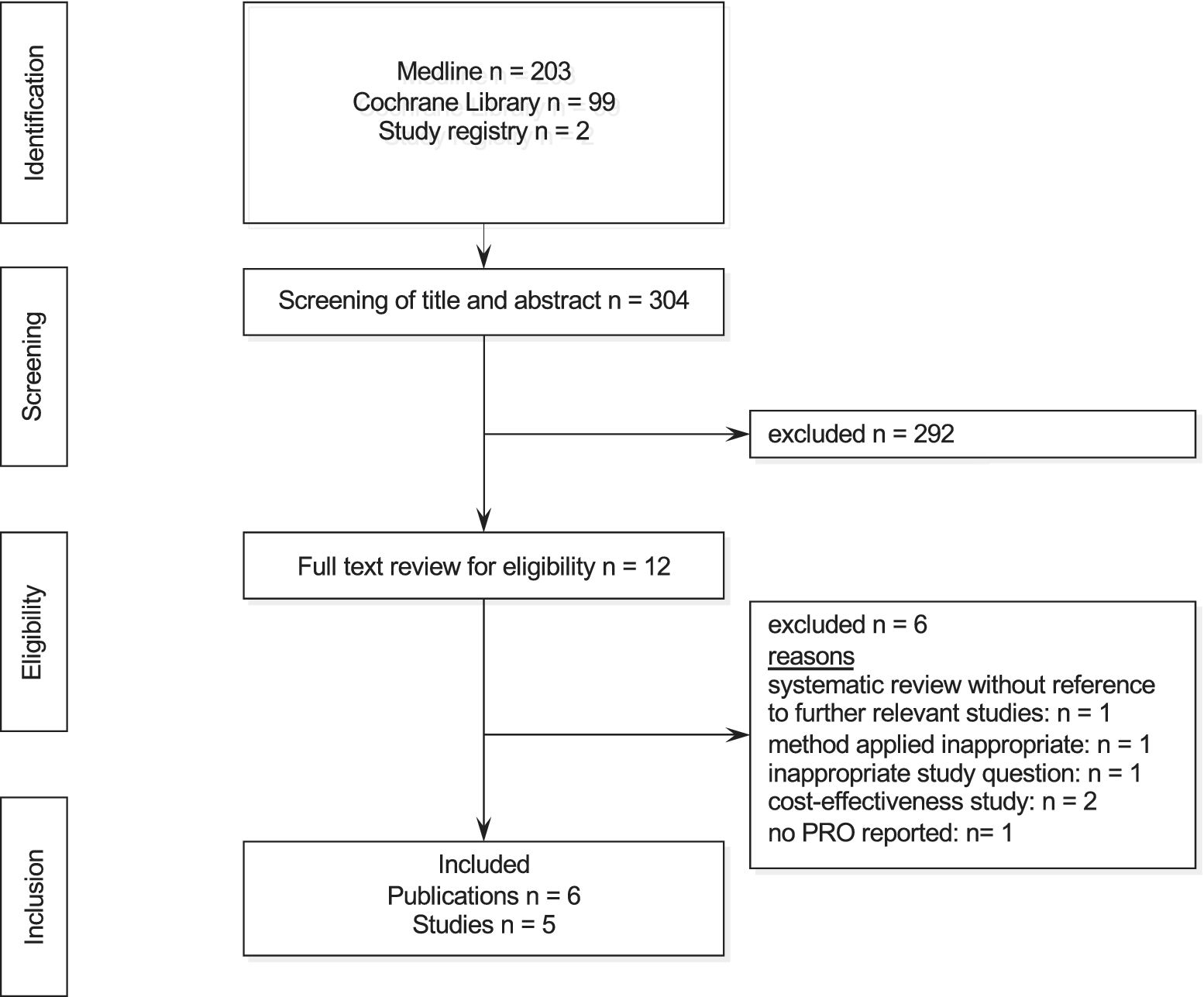
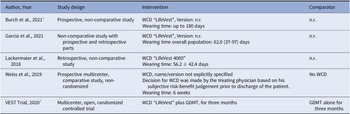
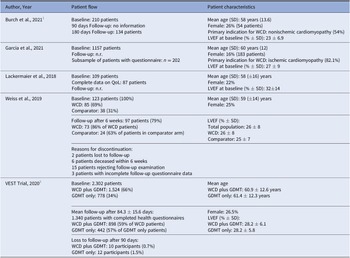
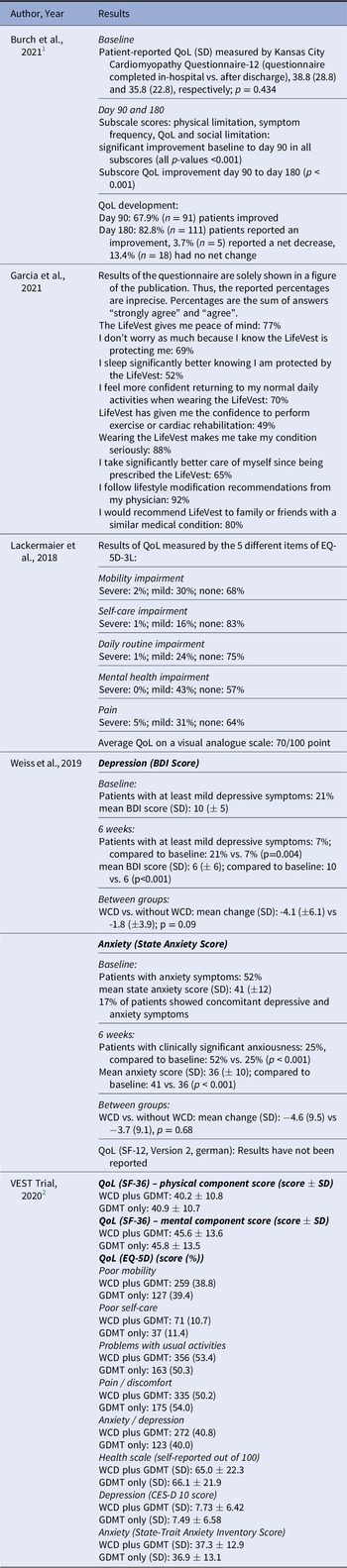
The systematic literature search yielded 304 citations (Medline n = 203 and Cochrane Library n = 99, study registry n = 2). Of these 292 were excluded during the first selection step considering title and abstract. Twelve studies were assessed in a second selection step by assessing the full text. After selection in full text one prospective, non-comparative study (Reference Burch, Colley and Döring11), one retrospective, non-comparative study (Reference Lackermaier, Schuhmann and Kubieniec5), one study with a retrospective and prospective part (Reference Garcia, Combes and Defaye12), one non-randomized prospective multicenter, comparative study (Reference Weiss, Michels and Eberhardt13), and one multicenter, open, randomized controlled trial (RCT) (Reference Cheung, Olgin and Pletcher14;Reference Olgin, Pletcher and Vittinghoff15) were included for final analysis (see Figure 1). The quality of the RCT was assessed as high with a low risk of bias, whereas the quality of the comparative non-randomized trial was assumed to be low with a high risk of bias. Due to the non-comparative study design the risk of bias was high for non-comparative studies. Study design, intervention, and comparator of all studies are presented in Table 1 in detail. Patient flow and patient characteristics are listed in Table 2 and study results are shown in Table 3. A detailed description of the performed quality assessment of all studies as well as further information about extracted data is given in the Supplemental Material.
Flow chart of the selection process.

Description of included studies: study design, intervention, and comparator

Note: GDMT = Guideline-Directed Medical Therapy, n.r. = not relevant, WCD = wearable cardioverter defibrillator.
1 Plus additional information from study registry (NCT03016754).
2 Olgin et al. (15) and Cheung et al. (14).
Description of included studies: patient flow and patient characteristics

Note: GDMT = Guideline-Directed Medical Therapy, LVEF = left ventricular ejection fraction, n.r. = not reported, QoL = quality of life, SD = standard deviation, WCD = wearable cardioverter defibrillator
1 Plus additional information from study registry (NCT03016754).
2 Olgin et al. (15) and Cheung et al. (14).
Results of included studies

Note: BDI = becks depression inventory; GDMT = Guideline-Directed Medical Therapy; QoL = quality of life; SD = standard deviation; WCD = wearable cardioverter defibrillator.
1 Plus additional information from study registry (NCT03016754).
2 Olgin et al. (15) and Cheung et al. (14).
The majority of study participants among the five included studies were male (range 73.5–84.2 percent of study population). Median or mean age was ≥ 58 years and baseline left ventricular ejection fraction (LVEF) < 35 or ≤ 35 percent in all studies. QoL was assessed in four included studies, but different assessment tools were used (EQ-5D-3L, SF-36, SF-12 Version 2, Kansas City Cardiomyopathy Questionnaire-12). Weiss et al. (Reference Weiss, Michels and Eberhardt13) additionally examined depressive and anxiety symptoms and Burch et al. (Reference Burch, Colley and Döring11) the sub-scores physical limitation, symptom frequency, and social limitation as part of the Kansas City Cardiomyopathy Questionnaire-12. In the latter study of Burch et al. (Reference Burch, Colley and Döring11) QoL Score at baseline was reported as poor to fair with 38.8 points in patients with newly diagnosed heart failure when assessed in-hospital (scale range is 1 to 100; lower scores represent more severe symptoms). Burch et al. (Reference Burch, Colley and Döring11) observed an improvement of QoL (one sub-scale of the Kansas City Cardiomyopathy Questionnaire-12) in 67.9 percent of patients between baseline and day 90 and in 82.8 percent of patients between baseline and day 180. All sub-scores of the Kansas City Cardiomyopathy Questionnaire-12 showed a statistically significant and clinically relevant improvement between baseline and day 90. A further statistically significant improvement between day 90 and 180 was observed for QoL only (Reference Burch, Colley and Döring11).
Lackermaier et al. (Reference Lackermaier, Schuhmann and Kubieniec5) assessed QoL once retrospectively after wearing a WCD and by means of EQ-5D-3L and additional own questions concerning fear of shock, feeling safe, sleep disturbance and impairment of usual activities in patients with symptomatic heart failure and reduced LVEF. No impairment ranged from 57 to 83 percent of patients over the five domains of the EQ-5D-3L. Report of severe impairment was uncommon (mental health issues 0 percent, self-care 1 percent, daily routine 1 percent, mobility 2 percent, pain 5 percent of patients). Mild impairment was found in all domains, most often mental health impairments like depression or anxiety (43 percent), followed by pain and mobility impairment (31 and 30 percent) as subdomains of the EQ-5D. According to the study authors’ own questions, 64 percent of patients felt adequately protected by the WCD but the study also reported negative issues due to WCD like fear of shock, sleep disturbance, and restriction in daily routine in 29, 48, and 48 percent of patients respectively (Reference Lackermaier, Schuhmann and Kubieniec5). However, 31 of 109 patients wore the WCD after ICD-explantation, which may itself be associated with infections, fear, and pain, making it difficult specifically assigning QoL effects to the patient’s condition or a WCD, respectively.
Weiss et al. (Reference Weiss, Michels and Eberhardt13) reported statistically significant decrease in percentage of patients with at least mild depressive or anxiety symptoms as well as a statistically significant decrease in scores for depressive or anxiety symptoms as shown in Table 3. Of 85 patients with a WCD 20 patients terminated WCD wearing early because of improved LVEF function or ICD-implantation and only two patients for own will (Reference Weiss, Michels and Eberhardt13). Within the patient group with WCD prescription a higher rate of patients had reported anxiety at baseline, before a decision concerning WCD prescription was made. Accordingly, a lower rate of patients reported anxiety at baseline in the group of patients without a WCD prescription (58.9 percent versus 29.2 percent, p = 0.02). The baseline state anxiety score however did not differ significantly between groups (Score (SD): 41 (13) versus 39 (13)); p = 0.22). Patients equipped with a WCD showed higher, but not statistically significant reduction in depression and anxiety scores (Reference Weiss, Michels and Eberhardt13).
The randomized controlled Vest Trial compared effectiveness and safety in patients after a myocardial infarction and an LVEF ≤35 percent with or without a WCD. Both groups received guideline-directed therapy. Results from the Vest Trial showed no significant differences between both groups in the assessed endpoints SF-36, EQ-5D, CES-D 10, and State-Trail Anxiety Inventory (Reference Cheung, Olgin and Pletcher14).
The WEARIT-France cohort study was the only trial that focused on WCD therapy acceptability rather than on QoL. Patients were asked for their agreements, assessed in a 5-point Likert agreement scale. Mostly agreed were the claims, “I follow lifestyle modification recommendations from my physician” (>90 percent) and “Wearing the LifeVest makes me take my condition seriously” (>85 percent), followed by “I would recommend LifeVest to family or friends with a similar medical condition” (80 percent). Mostly disagreed was, “I sleep significantly better, knowing I am protected by the LifeVest” (ca. 20 percent), followed by “LifeVest has given me the confidence to perform exercise and or cardiac rehabilitation (ca. 10 percent) (Reference Garcia, Combes and Defaye12).
Discussion
In our previously published health technology assessment, we stated that QoL during WCD usage has not been investigated sufficiently (Reference Aidelsburger, Seyed-Ghaemi, Guinin and Fach7). Since then, further study results concerning PRO have been published that justify the conduction of this systematic review.
The results of the comprehensive literature search revealed a limited number of trials. The Vest Trial provides results of high quality of evidence. Due to the design of an RCT of high quality, it assures comparability of patient characteristics in both groups. Even though the results on QoL are presented as a poster presentation (Reference Cheung, Olgin and Pletcher14) further information from an additional publication (Reference Olgin, Pletcher and Vittinghoff15) can be used to judge the overall study quality. One limitation of the Vest Trial is the missing information concerning improvement or deterioration of PRO between baseline and follow-up within groups. The study by Weiss et al. (Reference Weiss, Michels and Eberhardt13) used a comparative study design but did not randomize study participants. The authors hypothesized that psychological distress is high in acute high-risk cardiac patients eligible for a WCD and is associated with low QoL. They furthermore assumed that distress is aggravated by a WCD. Patients were recruited consecutively to the Colone Registry of External Defibrillator in case of an indication for a WCD. It was up to the decision of the treating physician if a WCD was prescribed. This led to a imbalance in group size (WCD: n = 85 versus no WCD: n = 38) and potential bias in study results. At baseline, patients with a later prescription of a WCD reported higher scores for depression and anxiety symptoms compared to patients without WCD prescription. In both groups improvement in symptoms was observed. The authors conclude that a WCD clearly is not associated with an increase of anxiety or depression. Forty-three percent of study participants in the trial of Lackermaier et al. (Reference Lackermaier, Schuhmann and Kubieniec5) report mild mental health impairment. Because of the lack of a comparator arm, it is uncertain if the high rate of mild mental health impairment is caused by the disease or by using the WCD. This is especially true for the 28.4 percent (31/109) of patients that had previously undergone ICD-explantation. In their single-arm study, Burch et al. report a statistically significant improvement in all domains of the Kansas City Cardiomyopathy Questionnaire between baseline and day 90. Due to the study design, no group comparison was applicable.
For the assessment of PRO adequate and validated assessment tools were used in the included studies. The additional own questions of Lackermaier et al. (Reference Lackermaier, Schuhmann and Kubieniec5) do not represent a validated assessment tool and statements based on these questions should therefore be interpreted with care due to potential bias.
Two statements of the questionnaire applied in the study of Garcia et al. (Reference Garcia, Combes and Defaye12) can be used for a comparison to the results of the study of Lackermaier et al. (Reference Lackermaier, Schuhmann and Kubieniec5). About 68 percent of patients with WCD report not worrying as much because they know that the WCD is protecting them (Reference Garcia, Combes and Defaye12). This is in line with 64 percent of patients feeling safe in the study of Lackermaier et al. (Reference Lackermaier, Schuhmann and Kubieniec5). In contrast, only about 20 percent of patients disagree with the statement that they sleep significantly better (Reference Garcia, Combes and Defaye12), compared to 48 percent of patients with sleep disturbances as reported in the study of Lackermaier et al. (Reference Lackermaier, Schuhmann and Kubieniec5).
We excluded one Health Technology Assessment that reported the results of a focus-group interview assessing the patient´s perspective (Reference Ettinger, Stanak and Szymanski16). Methodological recommendations suggest the assessment of PRO by asking affected patients directly (Reference Calvert, Blazeby and Altman8). However, interviewed persons had no experiences with using the WCD or knowledge about the WCD (Reference Ettinger, Stanak and Szymanski16). Therefore, we estimate the results of the focus group interview as not appropriate for an evaluation of PRO.
Our literature search was limited to the electronic databases Medline and Cochrane Library and the recall (sensitivity) of this literature search might be limited. But as the search in the Cochrane Library was not limited to Cochrane reviews solely, information about clinical trials listed in Embase was screened, too. The search in a study registry (clinicaltrials.gov) revealed two registry entries of trials that assess PRO as secondary endpoints (Reference Garcia, Combes and Defaye12;Reference Barsheshet, Kutyifa and Vamvouris17). The publication of Garcia et al. (Reference Garcia, Combes and Defaye12) was included into this systematic review. The study of the second registry entry (NCT01326624) was published but without reporting data concerning QoL (Reference Barsheshet, Kutyifa and Vamvouris17).
No Information specialist or medical librarian was involved in the development of the literature search. Further, we did not use recognized search filters. Potential impact might be an inadequate search strategy and missed studies.
Due to the limited number of studies, the generalization of the results of this review might be limited.
Conclusion
While patients eligible for a WCD seem to have an impaired QoL, the present evidence supports the conclusion that the usage of a WCD does not negatively affect patients regarding QoL or depression or anxiety. Furthermore, we found evidence that PRO might improve during WCD use.
Supplementary material
To view supplementary material for this article, please visit https://doi.org/10.1017/S0266462322003300.
Funding statement
This work was supported by ZOLL CMS GmbH.
Conflicts of interest
The authors Pamela Aidelsburger and Janine Seyed-Ghaemi received grants from ZOLL CMS GmbH Germany. The author Diana Bonderman did not receive grants for this work. Otherwise, she received grants or contracts from Alnylam, Pfizer, Ionis, Novartis, Boehringer Ingelheim, Astra Zeneca, Zoll CMS and Bayer.