
In 2012, a joke began to circulate in Ordos, Inner Mongolia Autonomous Region, that was usually told as follows: “Two elderly women in Ordos are sitting at a mahjong table chatting while surrounded by half-finished buildings. One asks the other: ‘Did you hear that Kim Jong-Il recently died?’ Startled by the news, the other responds, ‘Oh heaven, how terrible. Did you also lend him money?’” We relate this joke because it reveals one kind of popular response to an economic boom in Ordos that ended in 2011 following a string of collapses in local informal lending networks. The joke operates on multiple levels. Firstly, it conveys the ubiquity of informal lending operations in Ordos, where regular citizens of all social classes engaged in borrowing and lending through non-bank mechanisms amid a massive, decade-long economic boom. The various financial operations in Ordos were collectively referred to as gaolidai, literally “high-interest loan” schemes.Footnote 1 The gaolidai phenomenon has since come to define Ordos beyond its reputation as a coal-mining boomtown (Chen Reference Chen2012). The joke also situates the credit crisis in the context of urban ruins that the gaolidai spree helped produce through massive speculative property construction. And finally, the joke offers up some of the dark humor that developed around reports and rumors of suicides, murders, kidnappings, and extortion tied to the city's failed informal financial schemes. Ordos's gaolidai phenomenon, in other words, was also a deadly serious matter that brought to the fore the high stakes of recent urban growth and its attendant dislocations.
All of this mirth seemed to suddenly replace the excitement and optimism that barely a year earlier had justified the idea of Ordos as a model for Chinese resource-extraction cities to emulate. From being praised as a paragon of effective urban-industrial development (Pan Reference Pan2008; Yang Reference Yang2010; Zeng Reference Zeng2010), Ordos became roundly condemned for its “irrational” growth and speculative exuberance. As of the time of writing, the municipality's government and citizens were still reckoning with the fallout from the collapse of the informal credit and property markets. Ordos's immense new urban landscapes built in the 2000s, much of it abandoned and decaying in the region's harsh climate, no longer index a city on the make; instead, Ordos is now lampooned as China's paradigmatic modern “ghost town” (Powell Reference Powell2010; Xinhua 2012).
In his panoramic take on the role of finance in contemporary life, Randy Martin (Reference Martin2002, 3) states: “Finance, the management of money's ebbs and flows, is not simply in the service of accessible wealth, but presents itself as a merger of business and life cycles, as a means for the acquisition of self.” He continues: “The financialization of daily life is a proposal for how to get ahead, but also a medium for the expansive movements of body and soul.” Inspired by this proposal, our goal in this article is to examine the gaolidai phenomenon in Ordos as it relates to the financialization of the urban process and of daily life in a contemporary Chinese city.
Until 2000, the Ordos region was a rural prefecture officially named the Yeke Juu League. The league's economy had begun to see rapid expansion in the 1990s through resource extraction, chemical industry, and textiles, but deep poverty continued to be a defining regional trait, as it had for decades, even centuries. This picture changed abruptly and radically following the territory's designation as Ordos Municipality in 2001. Within ten years of its administrative switch, Ordos's GDP had grown fifteen-fold and per capita GDP was more than double that of Beijing or Shanghai. Coal was the main local product, though natural gas and oil production, rare earth element extraction and processing, and heavy industry were also important sectors of the local economy. By mid-decade, Ordos was China's leading supply region for coal, with a mix of state-owned enterprises and private local firms producing 630 million tons in 2013, about one-sixth of the national total. The region's breakneck economic growth stirred a tremendous amount of hype in China's popular press, as well as excitement and hope among the local populace that a durable prosperity was finally in the offing after lagging coastal regions in every developmental index. Year after year, the city's leadership trumpeted astonishing annual GDP growth rates—24 percent, 35 percent, 40 percent!Footnote 2 Ordos had become a juggernaut, and the informal lending spree of the boom decade seemed to ride a wave of overwhelming optimism fueled by the resource boom and a local (and national) environment saturated with alluring new urban imaginaries that could now be made real. But when rumors of defaults in informal lending networks began to circulate, the fluidity of local credit markets froze. As 2011 progressed, schemes collapsed one after another, evaporating households' lifetime savings and crashing the city's high-flying property market. Amid the resulting economic crisis, an estimated 200,000 people had left the city by the end of 2012, compounding the impacts of the failed gaolidai schemes on the local economy and exacerbating the housing glut (Zhou Reference Zhou2012). Ordos had gone from boom to bust.
Ordos's gaolidai and housing bubbles have been widely interpreted in hindsight as an example of a volatile boomtown economy, where an overwhelmed and unsophisticated state apparatus failed to maintain order over the market (M. Ding and Peng Reference Ding and Peng2012; Fan Reference Fan2012). More than a few local residents share this view, and it contains certain truths. But a closer look at the rise and fall of Ordos's gaolidai networks and housing market reveals a more complex story. As well as exemplifying peculiar aspects of a resource boomtown, the city's boom and bust illustrate profound dilemmas at the heart of China's urban growth model, one that is simultaneously an accumulation regime resting on the dispossession of millions of urban and rural residents and an ideological project aimed at producing modern, urban citizens (Shin Reference Shin2012). And while many were victimized by the collapse of lending schemes and the property market, the Ordos example also shows the urgency and optimism among regular people that helped to fuel an unfettered phase of urban transformation via informal finance.
Recent work on the political economy of Chinese urban development has shown that a pervasive feature of this process is an acute urgency to bring about monumental urban reconfigurations (see Smith Reference Smith2008 on monumentality; see also Hsing Reference Hsing2006, Reference Hsing2010; L. Ma Reference Ma2005; Ren Reference Ren2008). This urgency is driven by a bureaucratic imperative to achieve short-term economic growth: hitting predefined growth targets is a key criterion for urban officials' career advancement, and land-lease sales are an important part of local government budgets. Yet, as anthropologist Li Zhang (Reference Zhang2006) has argued, massive-scale urban construction in lower-tier cities and less-developed regions also reflects desires to “catch up” materially and representationally with leading cities like Beijing and Shanghai. Local officials, Zhang argues, seek to satisfy a pervasive sense of “lateness” by building the hallmark features of “spatial modernity,” namely the broad boulevards, expansive squares, and tall buildings commonly associated with the modern city.
This kind of urgency to bring about urbanization resonated during fieldwork in Ordos, where the local state's fervor to see through a monumental city-building agenda in the 2000s was palpable. The immense scale of urban construction amid the resource boom confirmed Uradyn Bulag's (Reference Bulag2002, 212) observation from Ordos in 2002 that the municipality's leadership seized upon the moment of rapid economic growth as an opportunity to effect a “shortcut to modernity.” Critically, this urgency extended beyond the city's hyperactive pro-growth coalitions of elites during the boom and enlisted a wide cross-section of society to become enthusiastic participants in—and, indeed, drivers of—the city's rapid growth through participation in private financial schemes. The result was a maelstrom of urbanization driven by excitement, optimism, and urgency in extremis akin to what Gunther Barth (Reference Barth1975, 231) in his landmark history of American boomtowns called “urbanization in the raw.”
To frame our ethnographic examination of gaolidai and its ties to the property bubble in Ordos, we propose the idea of “taking part.” We use this terminology for its dual meaning. In the first sense, taking part points to broad popular participation in gaolidai operations. Gaolidai schemes proliferated in Ordos in the 2000s and became integral to the local economy and urban expansion. Everyday people rushed to take part in the schemes, and the wealth it generated compounded the enthusiasm people felt toward urban redevelopment, despite its attendant dislocations. In the second sense, taking part refers to the acquisitive drive to claim for oneself a piece of the bonanzas erupting in Ordos in the 2000s. The taking was registered in the direct plunder of Ordos's resources, but it also describes the inscrutable mechanisms by which people acquired money, land, properties, and much else through gaolidai. Moreover, the term gaolidai, with its overt reference to the high interest rates charged, carries with it the implication that the take in such forms of lending is often large and that it was very much a social phenomenon with immediate consequences for lives and livelihoods.
The idea of taking part offers a way to expand an understanding of China's urbanization beyond a dichotomy of pro-growth elites, typically embodied in the state and its allied developers, who are contrasted with—and pitted against—the victims of urban expansion or inner-city redevelopment.Footnote 3 We submit that the Ordos case reveals how the notion of urbanization qua dispossession, which frames recent important work in this field (see, e.g., Hsing Reference Hsing2010; Lin Reference Lin2009; Shao Reference Shao2013), omits vital social dynamics at work in China's city-building process. Specifically, we find that popular participation in lending schemes was intimately linked with the city's urban build-out and indexes the capacity of non-state and non-elite actors to become directly engaged in the urbanization process, for better or worse. Taking part thus describes the opportunities presented by gaolidai and how people's participation in the urban build-out through myriad informal lending schemes was variously a cause of huge financial gains as well as losses. The argument here also highlights the local state's opportunistic forms of deregulation, how this abetted the gaolidai phenomenon, and how it fostered a casino environment around urban growth.
Scholars of informal finance have noted that it is a notoriously difficult topic to research due to its opacity and the social and political sensitivities surrounding such activities (see J. Li and Hsu Reference Li and Hsu2009). Yet the scope and quotidian character of informal lending in Ordos made it easily observable and an openly discussed feature of daily life in the city. Non-bank financial operations were part of the everyday landscape, operating out of downtown offices and figuring in ordinary conversation. The public visibility of gaolidai greatly facilitated our access to a wide range of people engaged in such activities. Our main research methods for this article were interviews and participant observation among creditors, debtors, loan officers in underground banks and micro-lending firms, and debt-collectors. In total we conducted 132 interviews of different lengths during fifteen months of research in Ordos. Inspired by Luis Small's (Reference Small2009) discussion of a “saturation methodology” for interview work, our interviews ranged from short conversations with migrant laborers to sustained, years-long contact with specific people, households, and communities. This method provided unique insights into the social experience of a bubble in informal credit. Following the trails of informal credit as far as possible, we also interviewed people in various local-state institutions, as well as the banking system, the courts, and provisional law-enforcement institutions established in 2011 to preempt a feared escalation of debt-related social disorder in the city. Our interviews were conducted in Dongsheng District and in towns and villages across Ordos Municipality between 2010 and 2014. Interview material is supplemented by readings of secondary reports and primary materials collected in Ordos and Beijing.
The following section introduces the boom economy in Ordos in order to contextualize the gaolidai phenomenon. We then lay out the testimonies of our respondents under the heading of “Taking Part.” Based on our ethnographic findings, the subsequent two sections present a discussion of the ties between gaolidai and urban visions in Ordos and transformations of the state, in that order. We then present a conclusion with a summary of our findings.
The Ordos Model and the Origins of the Boom
The pervasive nature of gaolidai in Ordos was inseparable from the region's bonanzas in resource extraction and in land and property development. In combination, these bonanzas transformed Ordos in the 2000s from an economically marginal region noted for its poverty, geographical isolation, and lack of urbanity to a dynamic frontier hosting a cutting-edge coalmining industry and exhibiting grandiose urbanizing ambitions (Woodworth Reference Woodworth2012).
The booms were predicated on reforms in Chinese domestic energy resource production introduced since the 1990s, which led to a decisive shift in the regional balance of coal production toward a cluster of contiguous municipal territories of Inner Mongolia and Shanxi and Shaanxi provinces, where reserves are abundant and geological conditions favorable to large-scale exploitation.Footnote 4 With an estimated 15 percent of China's domestic coal reserves and nearly a third of its natural gas, Ordos Municipality formed a key node in the new geography of domestic energy resource production in the 2000s (Liu and Wang Reference Liu and Wang2006). By mid-decade, production totals for thermal and other key categories of coal in Ordos had eclipsed output anywhere else in China (see Zhongguo nengyuan tongji nianjian 2014). Between 2000 and 2013, coal output in the municipality increased twenty-five-fold. These historical shifts in the energy resource sector helped make Inner Mongolia the fastest growing province in China in the 2000s and triggered a wave of urban development across the mining region, most dramatically in Ordos, which emerged as the epicenter of the resource boom.
The expansion of mining operations forced the displacement of tens of thousands of farming households in Ordos. A peculiarity of this process within the municipality was the provision of generous relocation compensation packages for the displaced that included large sums of cash as well as subsidized relocation housing in urban areas. Actual sums varied in practice, as did the types and quality of relocation housing. But payouts of several million RMB were not uncommon and were hailed by recipients and officials as an essential component of Ordos's purported “rapid and good development” (you kuai you hao de fazhan).Footnote 5 In urban areas, redevelopment campaigns spurred by the resource boom and the resulting influx of migrants to the city also led to the forced dislocation of tens of thousands of households (see figure 1). Official statistics note that 57,000 households were displaced by urban redevelopment in the Dongsheng District, Ordos's urban core, between 2006 and 2011 (Ordos Municipal Government 2011). Here too, relocation was hastened through large cash compensations and subsidized housing for the displaced (Z. Zhang Reference Zhang2007).
A door remains in a demolition site in Dongsheng District, Ordos Municipality, Inner Mongolia Autonomous Region. The inverted Chinese character “fu” pasted to the door indicates the arrival of prosperity. Photo: Michael Ulfstjerne.

The high-sum compensation model formed the centerpiece of a development agenda pioneered by Yun Feng, Ordos Municipality's charismatic mayor and Party secretary between 2001 and 2008, and his administration. Under Yun, the so-called Ordos Model envisioned using urbanization to absorb locally the accumulations in the resource sector and generate a virtuous cycle of reinvestment in local industry and commerce (Erdenyi and Shen Reference Erdenyi and Shen2002; Pan Reference Pan2008). Though the high-compensation relocation model was not enshrined in official policy or regulations, it was maintained in practice through administrative interventions in land development negotiations. The resource boom therefore triggered a wave of rural-urban migration and inner-city redevelopment that produced a significant cohort of urban residents with a sudden amassing of idle savings.
The resource and urban construction booms also generated a prosperous class of technical and managerial staff in the growing local mining firms as well as a cadre of entrepreneurs in fields like equipment leasing, construction materials, and logistics. Atop Ordos's socioeconomic ladder was a stratum of Communist Party and government officials as well as local barons in mining and real estate. Ordos featured a dense interpenetration of the state and local corporate spheres, as firms run by family members of high-level municipal and sub-municipal officials engaged in property development, construction, mining, road building, and non-bank finance (see figure 2). Accumulations of household wealth were rapid and widely shared: in 2011, among a population of 1.5 million, the municipality reportedly had over 6,000 households with assets over 100 million RMB and more than 20,000 households with assets over 10 million RMB (Qin Reference Qin2011). These figures evinced a decidedly redistributive form of resource-led growth, which was held up as evidence of Ordos's superior development model for resource-based cities.
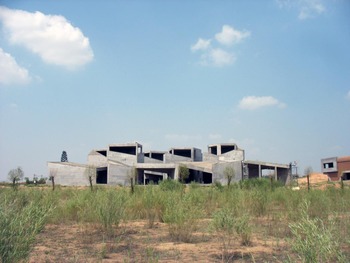
A half-constructed, abandoned villa in Kangbashi New District, Ordos Municipality, decays under the harsh environmental conditions. The villa and surrounding development were never completed. Photo: Max D. Woodworth.

It was within this milieu of hyper-rapid economic expansion that gaolidai practices arose. A precise calculation of the total capital mobilized through gaolidai networks in Ordos will likely never be achieved. Nonetheless, official inquiries by the Ministry of Housing and Urban-Rural Development in 2010 and 2011 estimated the volume of non-bank credit in Ordos to be an astonishing 200 billion RMB (about US$30 billion), or 83 percent of local GDP in 2010 (Qin Reference Qin2011). By comparison, non-bank credit at the national scale in 2011 was estimated at 3.8 trillion RMB, or roughly 7 percent of GDP (Mao and Luo Reference Mao and Luo2011). Yet, while the scale of informal lending in Ordos was inflated to extremes during the boom, the types of lending we observed are common across China and the use of non-bank financing for private consumption and investment is a pervasive practice.Footnote 6 Moreover, hotspots of informal lending activity similar to Ordos have been a perennial feature of the reform-era economic landscape. In Wenzhou Municipality, in China's southeastern Zhejiang Province, for example, highly articulated informal lending networks were estimated in 2011 to contain outstanding credit valued at roughly half of local GDP and possibly much higher (People's Bank of China 2011). Vibrant informal lending activities have also been observed in other Chinese resource-extraction regions, where the formal banking system tends to be underdeveloped and demand for credit is high (J. Li Reference Li, Li and Hsu2009). Ordos's feverish non-bank lending, which erupted amid a burst of accumulation in the resource sector, was thus symptomatic of broad economic trends even while its specificity tended toward extremes.
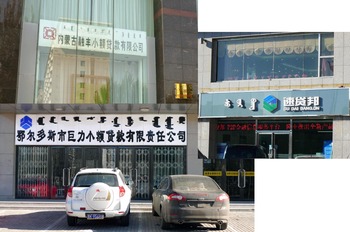
Private capital in Ordos was mobilized through an array of legal and illegal high-interest non-bank lending operations (see figure 3). The crucial distinction between legal and illegal financing activities hinges on the collection of deposits from the public for the purpose of lending to third parties. Only formal banks can legally perform this function. In 2010, there were 971 legally registered firms in Ordos engaged in non-bank financial activities, including pawnbrokers (36), investment firms (468), re-insurance firms (270), and microfinance firms (87). None of these existed ten years earlier (X. Li Reference Li2011). According to current regulations, micro-lending firms are permitted to lend at rates up to four times the People's Bank of China's official interest rate. This meant that micro-lending firms were permitted to issue loans with around 12 percent per annum interest rates during the boom. Pawnshops can legally lend at rates up to seven times the official rate. Alongside these legal operations were an unknown number of wholly unregulated illegal lending operations, such as underground banks (qianku), shell companies, personal direct loans, and pyramid schemes. Creditors to underground banks and other unregulated schemes could typically expect monthly dividends paid at rates ranging between 2 percent and 5 percent of the principal, though rates were sometimes higher, depending on the specifics of the loan.
Non-bank financial institutions in Dongsheng District, such as these, were a common feature of the local cityscape. Photos: Max D. Woodworth.

The informal financial sector featured two clear advantages over regular banks: speed and flexibility. As the gaolidai system shifted into high gear, operations were quick to respond with innovations tailored to the local market. For example, a firm named Su Dai Bang (literally, “speedy loan syndicate”), founded in 2011, specialized in extending loans of up to several million RMB within hours. In Ordos, speed was of the essence, its founders told us. Another of our frequent respondents who operated a well-reputed underground bank in Dongsheng explained that borrowers could obtain up to 100 million RMB within days from his operation. By contrast, formal banks can take months to approve even a much smaller loan, and rejection by banks is highly likely for most of Ordos's private-sector entrepreneurs given the complicated application process and stringent loan criteria.
Creative permutations of lending arrangements abounded. This led to blurred distinctions between bank and non-bank lending. Formal bank loans intended for one purpose were routinely illegally invested in underground banks and other gaolidai operations or in speculative property purchases. Collusion was rife between loan officers at banks and underground financial networks, bank officials revealed. In other cases, assets backed by gaolidai capital were used as collateral for bank loans that were then applied to legitimate investments. In other words, the institutional and extra-institutional banking sectors in Ordos were overlapping and interconnected.
Estimates of popular participation in gaolidai were also extraordinarily high. A survey conducted by the local branch of the People's Bank of China in 2008 found that 62.43 percent of respondents had either borrowed or loaned money in gaolidai circuits (X. Li Reference Li2011). Perceptions recorded among our respondents were that the participation rate was even higher. Indicative of the ubiquity of gaolidai was the popularization of a term in Ordos to characterize the lending and borrowing phenomenon: quanmin fangdai, or “mass lending.” In fact, creditors into schemes were often also at the same time borrowers in other schemes. The lending and borrowing flowed in every direction in very high volumes driven by a sheer abundance of opportunities.
Property development became the main outlet for gaolidai, spurred on by the local government's massive building spree, including the construction of a 35-square-kilometer new town and an expansion of Dongsheng District that more than doubled that city's urbanized land area (E'erduosi shi nianjian 2003–13; see also Y. Ma Reference Ma2013). Reportedly, almost 80 percent of capital invested in local property development originated in gaolidai networks rather than banks (X. Li Reference Li2011). Correspondingly, the flow of gaolidai capital into the property sector triggered rapid increases in property prices. Between 2001 and 2011, the average sale price of housing in Dongsheng rose from 750 RMB per square meter to 6,500 RMB (Sheng Reference Sheng2012). Growth in the property sector attracted more investment, leading to an upward spiral of price rises and investments chasing capital gains (Tian Reference Tian2012). As investment piled into real estate, the number of local property development companies rose as well, going from seven in 2001 to over 400 by 2011 (X. Li Reference Li2011). Though some local firms, such as Vibor, Elon, and Xintong, grew into sizeable property development firms with regional reach, the greater number of local real estate development companies were small, family operations that disappeared in the 2011 property crash.
Taking Part
In this section we explore the social experience of gaolidai operations in Ordos in order to reveal the dramatic implications of popularized informal finance in this urbanizing context. We do so through testimonies provided by participants in gaolidai schemes on both the lending and borrowing sides of operations. These retellings are organized under the heading of “Taking Part” in order to specify how the desire to participate in gaolidai and to not be left behind meshed with an acute sense of urgency connected to rapid urban expansion and to the generalized plunder occurring in Ordos during the boom of the 2000s.
Surviving in the City, Moving Up the Social Ladder
It was common for residents of different social classes in Ordos to turn to gaolidai as a practical way to earn a basic income or, for the ambitious and/or lucky, to propel oneself to a new socioeconomic status. Compared with cases where moral constraints have been shown to set limits on non-bank lending for lenders and borrowers in China (Jiang Reference Jiang, Li and Hsu2009; Yan Reference Yan2009), we observed that household subsistence exclusively from interest payments earned in gaolidai schemes—referred to as “chi lixi,” or “eating interest”—carried little stigma in Ordos during the boom. Earning income by drawing dividends from schemes was described as analogous to conventional investments in industrial or commercial enterprises. Gaolidai came to be seen as a path out of poverty. “We were once very poor” was a constant refrain in interviews with informants speaking about their participation in gaolidai.
The experience of Mrs. Chen and her family was typical among farmers relocated to Dongsheng.Footnote 7 In her late forties in 2012, she, her husband, and their twenty-four-year-old son had been moved into the city five years earlier. As part of the move, they were placed in an “immigration village” (yimin cun), which at the time was on the edge of the city but by 2011 had been engulfed by high-rise developments. Mrs. Chen claimed the family received 600,000 RMB as compensation for the move along with free housing in the resettlement site. None in the family had studied beyond secondary school, and for this reason, Mrs. Chen said, they were unsuited to the types of jobs available in the city. Dividends earned in gaolidai schemes hence became the family's most secure, regular income for lack of available and acceptable options:
There is nothing for us to do here. People look down on us because we have no education (mei you wenhua). All we can do is sweep the streets, pick garbage, and drive taxis. Why would we do such work when we can join gaolidai networks (fang gaolidai)? Gaolidai can earn you money so that you don't need to do jobs like street cleaning. If you have money, city people won't look down on you.
For families like the Chens, gaolidai was perceived as the only option available to them for a dignified existence in the city.
Since arriving in Dongsheng, Mrs. Chen had lent money into numerous lending schemes organized through networks of lifelong village acquaintances. These networks extended credit to local property developers and delivered a reliable stream of dividends paid out each month in the form of electronic transfers directly into her bank account. Dividend payments provided a comfortable monthly income of around 20,000 RMB—more than her family sometimes earned in a year of farming. The easy money permitted a leisurely lifestyle. In the years leading up to the bursting of the credit bubble, relocated peasants like Mrs. Chen began to form a new urban class of idle nouveau riche (baofahu) and financiers.
For many recent migrants to the city, taking part in the gaolidai phenomenon was thus a way to join and keep pace with others employing the same means for basic income generation. Emulation, as well as evidence, based on first experiences, that such lending could support a comfortable life in the city reduced the perceived risks: “When you see other people doing it, it puts your mind at ease.” “When the system works, it is easy to trust that it will continue to work without problems.” A snowball effect ensued whereby successful ventures spurred follow-up schemes and expansions of participant networks.
Taking part in gaolidai was also a way for urban white-collar workers to supplement their income and gain new social status. For low-level and mid-level office workers and civil servants earning modest salaries, gaolidai dividends provided an important boost to incomes and enabled the adoption of new identities as wealthy urbanites primed for extravagant consumption. Technically, rules prohibit civil servants from participating in lending schemes or holding sideline businesses. But such regulations did not hinder lending. Investments into lending schemes could quickly double households' incomes and, with some luck, utterly transform people's social positions. Conversations with such people regularly turned to the bemusement they experienced when realizing that relocation compensation and earnings through gaolidai tended to dwarf their regular salaries. A college graduate in his mid-twenties employed in Dongsheng and who invested heavily in property development through gaolidai networks and lost a large sum of money in 2011 described for us after the crisis the scene at his office at the height of the credit bubble thusly: “No one actually worked in the office. We surfed the Internet and kept in touch with the people in charge of lending operations.… We drove Mercedes and Range Rovers to work every day. We were just there to pass time.” Income generation and the urge to attain new, higher social status were thus key impetuses behind people's taking part in gaolidai. And for a brief period, it delivered on this promise, spectacularly in many cases.
Becoming Urban
Another theme running through our interviews with participants in gaolidai operations in Ordos was the view that taking part in such schemes was a way to realize urban dreams. Engaging in gaolidai operations was frequently expressed in terms of urbanism, or adopting new “ways of being urban” (Wirth Reference Wirth1938).
Mr. Liu, for example, was resettled from a peri-urban fringe area to a newly constructed residential high-rise area in June 2011. At our first interview in March 2011, Mr. Liu and his family resided in a single-story mud-brick home. The offer of cash compensation and subsidized housing helped him overcome his initial apprehension about the relocation to the city, and he soon came to enjoy what he called his “new life” (xin shenghuo) in Dongsheng. In a later interview, Liu recalled the mind-boggling experience of seeing and touching his relocation compensation money, stacked in cash on his kitchen table. It was more money than he had ever seen in his life. Such sums were unthinkable only a few years earlier. “Our family used to live five people crammed into less than 40 square meters in a simple house. Then over one single night we became millionaires (yiye zhijian, women bianchengle baiwan fuweng).”
Upon receiving the family's compensation, Mr. Liu and other members of his family made a joint investment in a gaolidai scheme and anticipated a new life where the old burdens of poverty would be relieved by the “sweet taste of dividends” (lixi de tiantou). Mr. Liu explained the rationale for their investment:
None of us knew anything about bonds or stocks. Neither did we understand how to make a business from property development or other kinds of industry. Also, interest rates in the bank are too low. So we finally decided to invest the funds in the business of a friend with whom we had a strong relation.
In 2011, Mr. Liu remarked that when contrasted with the spectacular wealth on display in the local built environment and the luxury vehicles jamming Ordos's streets, merely a few million RMB did not make one truly wealthy. Nevertheless he acknowledged the massive changes gaolidai had brought to his life. Not only did gaolidai mean that he no longer had to labor every day for low wages repairing other people's trucks in a local repair shop, he now could afford his own car. With the first payout from his gaolidai investment, Mr. Liu took the initial steps to open a small auto repair shop of his own along with two friends. Having opened a business, he imagined its profits would pay for a new apartment where he could settle down with his fiancée. Gaolidai had opened new horizons of prosperity, stability, and urbanity. But in the wake of the collapse in lending, dividend payments failed to materialize as before and the operator of the scheme to which he had contributed disappeared to whereabouts unknown. Mr. Liu was ultimately obliged to pawn his new car to service part of his own debt taken on to open the car repair shop. His wedding was postponed indefinitely, and his fiancée's family began to demand financial compensation for time allegedly wasted waiting in vain for marriage. Losses in gaolidai were hence much more than merely financial; participating in and losing at the gaolidai game carried grave implications for social relations and the ways that people were able or unable to live in the city. Stories similar to Mr. Liu's were recounted to us time and again after the crisis in 2011. His experience was hardly unique; indeed, it characterized for many the rollercoaster experience of the gaolidai phenomenon.
Concretizing the Boom
The credit bubble in gaolidai networks and the city's urban expansion were mutually reinforcing processes. Crucial to fueling this dynamic was a near-universal faith in the city's resource endowments to sustain the economy in perpetuity. Ordos's informal city slogan during the boom—yang mei tu qi—was a revealing expression of this confidence. The original roughly homonymous Mandarin expression (扬眉吐气) means to “feel proud and to have a restored dignity.” By changing the expression's four characters, the phrase was turned into a pun in Ordos meaning: “cashmere (yang 羊), coal (mei 煤), rare earths (tu 土), natural gas (qi 气).” Informants repeatedly evoked this creative colloquialism to argue that the city's new prosperity was secure and that local property prices could move only upward given Ordos's resource endowments. The takeoff in property prices described above and the wealth on display in the city lent credence to this perspective. By skillfully “flipping” properties, sometimes with borrowed gaolidai money, households accumulated tremendous wealth as the speculative dynamic continued its upward spiral. In this sense, participating in gaolidai activities also became a way to take a share of the circulating capital and fix it in space either as an investment or for personal consumption. Housing and other forms of real estate were essential ways of materializing the speculative values of informal credit.
The acquisition of multiple homes was thus viewed as a way to stabilize wealth and justified an accumulation of four homes per household on average in Ordos by 2011 (Chen Reference Chen2012). A common rationalization for this in our conversations with informants was the perceived security of speculative property purchases: “Homes are always a good investment. Everyone needs a home and the population will surely grow.” Indeed, the perception that homes functioned as a secure store of value precisely because they also featured a clear use value appeared to heighten the speculative rush into property over other investments. One of the few who conceded the existence of a bubble economy in Ordos, prior to the crisis, was a civil servant. But even his acknowledgment of the possibility of a mismatch between demand and supply in property was qualified: “If Ordos's economy is a bubble, at least it's an iron bubble (tie zuo de paomo).” Yet in per capita terms, developers in Ordos were building six times the floor space as in Beijing in 2010 (Qin Reference Qin2011). The discovery of a surfeit in property would only occur as prices stopped rising and lending ground to a halt.
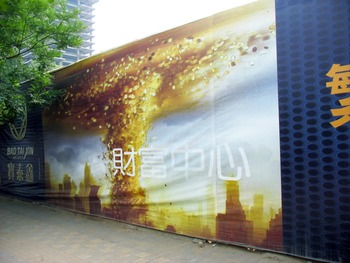
Real estate marketing practices in Ordos also emphasized the materialization of value in real estate. Brochures, advertisements, and on-site sales pitches stressed not just lavish amenities but also the investment potential of a purchase. Billboard images and text connecting property to safe investments and depicting connections between money and urban construction were ubiquitous in urban areas during the resource boom of the 2000s (see figures 4, 5, and 6).
A billboard advertisement for new property in downtown Dongsheng shows a tornado composed of gold coins ripping through a central business district, as though to dramatize the conversion of urban space into money. Photo: Max D. Woodworth.

An outdoor advertisement for real estate reads: “Where will you invest your money? Stocks? Bonds? Mutual funds? Gaolidai? Housing? Bank savings account? In your heart, it's already clear. In a storefront here.” Dongsheng District, Ordos Municipality. Photo: Max D. Woodworth.

A property advertisement in Dongsheng District shows a US dollar sign looming over a central business district. Photo: Max D. Woodworth.

Visions such as these were shaped by an environment dense with codings and performances of urban prosperity. At the height of the credit bubble, wealth and status were on extravagant display through a range of objects and practices. Dongsheng's downtown streets became jammed throughout the day with late-model luxury vehicles, and new shopping malls sold extravagant wares. Ritual occasions, including weddings and children's twelfth birthdays, were marked not just with extravagant traditional feasts but with convoys of luxury cars and lengthy (and illegal) fireworks displays. A boom in the urban sex trade was barely concealed. And in the sky, thrill-seekers could be seen flying private ultra-light aircraft over the city in flagrant violation of air-control regulations. New wealth tied to gaolidai circuits produced a full embrace of certain expressions of the urban good life as the consumptive flipside to the resource production boom.
Taking Others' Part
In Ordos, the opacity of lending and borrowing activities nurtured a milieu in which theft and foul play were also prominent drivers of gaolidai operations. As the system failed in 2011, a proliferation of blatant pyramid schemes was revealed, while operations billed as legitimate financial services firms dissolved amid fierce contention over the distribution of remaining assets. Borrowers and mediators of gaolidai capital seemed to be fleeing town in great numbers. The correspondence between lending patterns and personal relationship networks made the collapse in gaolidai intensely visceral for its participants, as marriages failed, familial ties were severed, and partnerships collapsed.
Given the inherent risks of losing investments in gaolidai without reliable recourse in the legal system, once the foundations of the informal lending system began to crumble, creditors began trying to reclaim principal from borrowers en masse. The mathematical impossibility of everyone reclaiming one's money triggered desperation. The urgency to take part in lending was suddenly replaced by the urgent need to seize any available portion of circulating money or to find means, fair and foul, to claim assets with clear value, such as luxury vehicles that could be quickly sold on second-hand markets in Beijing or Shanghai (Song Reference Song2012).
In their testimonies, our respondents noted that during the boom demands for collateral were frequently waived and delinquent payments and default sometimes excused.Footnote 8 Norms for lending between friends, family, and close acquaintances were flexible. With the collapse in lending schemes, however, these norms came under severe strain. In interview after interview, respondents spoke with palpable emotion about being swindled by childhood friends and close relatives. Delinquent debtors and their guarantors faced constant harassment for repayment from lenders. For example, an informant who worked as a local civil servant and who had agreed to sign as a “guarantor” (danbaoren) for a friend's loan found himself being contacted by officials in the local court system. As the friend had become delinquent on the loan, the debt was therefore to be settled by calling in the assets of those who had validated the debtor's creditworthiness. Employees at the court pressed the civil servant to call upon the debtor's family to repay the loan so debt repayment would not fall on him.
Reflecting upon the social repercussions of the collapse in lending, the civil servant explained:
In my analysis conditions will deteriorate…. We might face an unprecedented level of mistrust. That's the most serious effect. The most frightening one. With nobody trusting each other, then it really is a ghost town. When you go outside, what you see is people. But you don't trust them.… That's a kind of ghost, I guess?
Physical violence, or the threat thereof, was also an integral component of the gaolidai phenomenon, particularly as the bubble burst. Our respondents provided detailed accounts of violence meted out to delinquent borrowers. A middle-aged couple, both recent migrants to the city, retold for us the story of their attempt to recuperate a 400,000 RMB loan from a friend. They had kidnapped the man by luring him to their home for a banquet. The wife spoke:
We held the man in our home for six days. Yes, we had tied him to a chair in our living room and fed him every day. We allowed him to use his cellphone because he was supposed to make calls and get us the money. He said he would do so, but he eventually broke free and escaped out of a window. He even broke our window. He is a shameless man.
Another respondent, Mr. Lin, who worked loan repossession for his family's two micro-lending operations, regularly used threats of violence. During four years of contact starting in 2010, he revealed numerous kinds of assault carried out on delinquent borrowers, including kidnappings, beatings, and simulations of live burial in the desert outside Dongsheng. In a conversation in 2014, he insisted the violence was necessary: “This city is hell.… Everyone is trying to rip off someone here (zhan ren pianyi). Gaolidai was always all about robbing people at some level. The only way to prevent someone from robbing from you is by teaching him a lesson (shoushi ta).”
The severity of the gaolidai credit crisis in 2011 and 2012 prompted the municipal government to establish a special task force charged with collecting information from bilked lenders to try to prevent a deterioration of social order and organize the return of money or assets to deserving creditors. In theory, claimants were to work with investigators to follow lending chains and identify and seize assets of those running the schemes, put those assets up for public auction, and reclaim for creditors whatever portions of their principal could be recuperated. But the chances of recuperating money were slight. Borrowers, middlemen, and leaders of operations had gone into hiding, found ways to conceal their money, or simply fled the region. In the years since the gaolidai crisis erupted, a frequent topic of conversation with respondents was rumored sightings of Ordos's informal financial operators in places like Hainan Province, Beijing, Shanghai, and foreign countries. Such rumors were well founded. Mr. Lin's brother, who led the family gaolidai businesses, had fled the city fearing the post-crisis crackdown on non-bank financiers. By mid-2012, Ordos's district court was overwhelmed by thousands of cases filed by claimants seeking to recover deposits in gaolidai schemes.Footnote 9
After five or so years of generating enormous and rapid economic growth and private wealth, the gaolidai phenomenon degenerated into a scene where former friends, relatives, and acquaintances began with alarming frequency to try to get the better of each other. The impression of social cohesion and shared prosperity thrown up by the spree in lending and borrowing was quickly inverted. Fieldwork in 2014 revealed a decidedly somber outlook among longtime respondents. Optimism had turned to widespread dejection and misgivings about Ordos's future.
Transformations of Local State Power
The centrality of the gaolidai system to Ordos's urbanization raises important questions about the local state's leading role in urban expansions in China. Who or what was dictating the trajectory of urban expansion in Ordos, and with what effects? As the passages above have shown, massive amounts of private capital were mobilized through gaolidai circuits amid a bonanza in resource extraction, credit formation, and urban construction. Mutually reinforcing dynamics among these three critically shaped the nature and pace of local investment. Moreover, the tight repayment schedules and high interest rates in gaolidai placed enormous pressure on developers and, by extension, their partners in the state apparatus to circumvent land-development procedures and regulations. Step-by-step processes for obtaining land-use, construction, and sales permits were openly flouted. Such conditions allowed for an abundance of development ventures that straddled the boundaries between legal and illegal, private and public, and legitimate businesses and outright scams. A cavalier stance toward standard bureaucratic procedure was characterized by one official with the municipality's Land and Resources Bureau as a culture of “executing the criminal first, and reporting to the emperor afterwards” (xianzhan houzou)—essentially, preferring to seek forgiveness for various violations rather than permission.
The proliferation of gaolidai operations was both a symptom and cause of “institutional amphibiousness” and non-regulation amid the city's determined emphasis on achieving rapid urbanization (X. Ding Reference Ding1994). A prevailing ethos of growth by any means cultivated an eminently pragmatic posture toward regulation. In this, we find parallels with Ananya Roy's (Reference Roy2009, 80–81) observations from the different but comparable Indian context, where, she says, informality describes a “state of deregulation.… Here the state itself is a deeply informalized entity, one that actively utilizes informality as an instrument of accumulation and authority.” Informality, in other words, is not an extra-institutional realm operating at the margins. Rather, it describes a milieu of opportunism and flexibility shaped by the local state's selective bending of rules and regulations and disregard of violations, as well as a reliance on informal activities, such as finance in the Ordos case, but extending to all manner of employment and productive relations in cities throughout China, to sustain accumulation. Practices such as these proliferated in Ordos to the benefit of individual officials and the municipal government at large. This convoluted dynamic was exemplified by the municipal government's direct engagement in gaolidai activities with the establishment in 2011 of the Ordos Folk Capital Investment Center. Ostensibly a private financial services firm, its shareholders were the municipal government, the state-run local chamber of commerce, and three recently retired officials who had been handed the reins of the firm. With founding capital of 3 billion RMB, the firm's main business was micro-lending.
Local government officials' engagements with land developers and gaolidai networks also opened cleavages within the local state apparatus. The severity of these internal rifts was made plain during an exchange at a banquet hosted by the head of the local Communist Party School, attended during fieldwork. The feast had been organized to celebrate the release from jail of seven young toughs hired to help collect an outstanding gaolidai loan from a delinquent developer. The men had been intercepted at the Dongsheng train station when the developer alerted his business partner, the local police chief, to the men's arrival in Dongsheng. The men claimed to have been repeatedly electrocuted and beaten during a month in custody.
These scenarios point to an irregularized local rule in Ordos that became the norm and whose relation to the law and official regulatory frameworks was one of instrumentality and pragmatism. Harnessing gaolidai to advance the municipality's urbanization agenda was a means of promoting local accumulation and of translating the local state's visions into concrete realities. Thus, massive state-led urban development projects worked in and through the unregulated sphere of gaolidai. Indeed, the aggressive promotion of the local government's many development projects was a spur to informal finance, as developers and gaolidai networks sought to “follow the Party” (genzhe dang zou) under the assumption that Party-backed ventures were fail-safe. Local state-led land-development schemes therefore contributed to the profusion of volatile non-bank lending. This raises the prospect of an informalization of state power as a complement to what You-tien Hsing (Reference Hsing2010) has called the “urbanization of the local state” to describe the decisive influence of urban processes in shaping local governmental apparatuses and logics. Informal lending geared toward urban expansion gives an additional informal cast to the urbanized local state.
The Allures of Money and the City
The gaolidai phenomenon forged tight links between the realms of informal finance and urbanization, and it saturated the experience of the everyday in Ordos. The intersection of these two spheres sheds light on aspects of each. One possible, strictly economistic, view upon Ordos's credit and housing bubbles in the 2000s is that they were ephemeral and abnormal economic phenomena. This interpretation rests on a problematic assumption that Ordos's phase of super-heated lending and borrowing distorted a “natural” balance in the local credit and property markets and was, in some sense, aberrational. Under this assumption, Ordos's gaolidai experience is reduced to a curious anomaly and a demonstration of low state capacity. However, the material and perceptual linkages participants consistently noted between gaolidai and surrounding urban transformations revealed how deeper meanings became associated with these activities and how intertwined allures of money and the city underpin non-bank financing in China's rapidly urbanizing setting.
The preponderance of research on China's informal finance has aimed to show the vital role it plays in China's reform-era economy (Allen et al. Reference Allen, Qian and Qian2005; Ayyagari et al. Reference Ayyagari, Demirgüc-Kunt and Maksimovic2010; J. Li and Hsu Reference Li and Hsu2009; Pairault Reference Pairault, Leloup, Brot and Gerardin2012; Tsai Reference Tsai2002, Reference Tsai2004; Wang Reference Wang and Ma2011). This literature has emphasized how informal credit mechanisms relieve demand-side pressures in a context of private-sector exclusion from the formal, state-dominated banking system. On the other hand, non-bank credit systems also fulfill supply-side functions by mobilizing private accumulations amid low bank interest rates and immature capital markets. This research highlights informal finance's productive contributions to firm-level growth, but the recurrence of highly disruptive, localized, informal lending crises points to another side of the coin. Indeed, much of the literature celebrates informal financial operations while ignoring the bubbles, scams, and crises that are their perennial symptoms. Informal credit bubbles and collapses of informal schemes are not rare occurrences in reform-era China, and they generate durable impacts on places and society (Xia and Hu Reference Xia and Hu2012).
The taking part that we describe above as the key social force behind the inflation of Ordos's credit bubble was crucially buttressed by gaolidai’s purported materialization in the built environment. The fixity, durability, and physicality of built form consistently emerged in our conversations with borrowers and lenders as evidence that gaolidai capital was both “real” and secure. There is, then, more than a passing similarity in Ordos's credit bubble with findings from anthropological work on informal financial schemes in diverse geographical settings in recent years (see, e.g., Jarvis Reference Jarvis1999; Musaraj Reference Musaraj2011; Tsing Reference Tsing2000; Verdery Reference Verdery1995a, Reference Verdery1995b).
As Katherine Verdery noted in the case of a massive Ponzi scheme in post-Soviet Romania, the availability of easy money acquirable through dubious financial operations reflected much more than a simple case of mass greed and instead signified a reorientation of popular understandings of money, work, and value in the transition from a state-socialist model to a neoliberal one. In similar ways, across our conversations with lenders and borrowers in Ordos, informants consistently expressed amazement toward the amassing of sudden wealth in the absence of corresponding productive labor made possible by gaolidai schemes thrown up by the resource bonanza. The fantastic processes of effortless wealth creation that emerged in our collected testimonies echoed Jean and John L. Comaroff's (Reference Comaroff and Comaroff2000, 292–93) observations about “millennial capitalism” as a system driven by obscure speculative financial practices that become “invested with the capacity to transform the universe of the marginalized and disempowered” and quickly internalized as the natural order of things.
In our respondents' retellings, Ordos's gaolidai and real estate bubbles validated one another by purportedly concretizing values conjured through speculation. The security symbolized by construction legitimized and sustained widely shared hopes for local transformation. It is this sense of speculative bubbles as material and productive social phenomena raised by Smoki Musaraj (Reference Musaraj2011) in the case of Albania's catastrophic informal financial collapses in 1997 that such convulsive episodes represent important moments of enduring socio-spatial transformation. What are commonly lampooned as China's modern “ghost cities” might then, in light of the above, more accurately be defined as materializations of dense local networks of social interconnection forged through finance rather than simply spaces defined by a scarcity of inhabitants and failed economies. The “emptiness” of such sites reported about Ordos in fact represented, for our respondents, a vast accretion of social ties and conflict generated by the gaolidai system.
Conclusion
China's urban transformation in recent years has brought tremendous instability and change to spaces and communities. Concerns over excessive land development, unfair relocation compensation, housing affordability, and property bubbles are being voiced in the popular press and at the highest levels of the state with increasing frequency and mounting alarm. Scholarly work on this transformation has emphasized what geographer David Harvey (Reference Harvey2005) has termed “accumulation by dispossession” to theorize the urbanization process under China's contemporary conditions: state-led land acquisition, enclosure, and the seizing of people's various resources are situated as the precursors to the city-based accumulation process (Hsing Reference Hsing2010; Lin Reference Lin2009; Shao Reference Shao2013). Given the opposition of agents and victims that frames the understanding of this process, recent work on urban change has also focused on the capacities of people to mobilize for collective resistance (see Lee and Hsing Reference Lee, Hsing, Hsing and Lee2010) or engage in creative modes of opposition to the state's urbanization agendas (see Ong Reference Ong, Roy and Ong2011; L. Zhang Reference Zhang2006).
This article contributes to the literature on China's urban transformations, but from a different angle. Drawing on ethnographic data, it has examined how the urban transformation process in Ordos manifests in and through popular engagement in a diverse set of private financial operations. It reveals the place-specific ways that people in a Chinese city came to experience urban change as a sudden and deeply penetrating financialization of the everyday urban environment. While pecuniary gain was a widely shared goal among participants in gaolidai schemes, people of diverse social backgrounds who participated in schemes as lenders or borrowers (or both) ascribed an array of motivations and meanings to the inflation of the credit bubble. We have argued that optimism among everyday people that they could benefit materially from urban expansion and an acute urgency amid an astonishing local resource boom helped to fuel investments of relocation compensation sums and private savings into gaolidai schemes. This meant that participation and inclusion in the urban build-out via informal lending schemes were at the root of people's losses in the ensuing financial collapse. Eager, speculative engagements in the city-building project on display in Ordos painted a muddier picture of people's experiences of urbanization than the stories of accumulation by dispossession suggest. Further, Ordos's experience highlights informal lending as a critical site to observe the nature of city building in current-day China. It is in this sphere where money changes hands, credit is conjured, things are built, and new urban dreams are animated, that we can evince some of the profound social implications of city building as a matter of life and death—city-building “in the raw,” in other words.
Acknowledgments
Research for this article was made possible with generous funding provided by the University of California, Graduate Division; the Chiang Ching-Kuo Foundation for International Scholarly Exchange; the Association for Asian Studies China-Inner Asia Council; and the University of Copenhagen. We would like to thank Dr. You-tien Hsing, Dr. Wen-hsin Yeh, and three anonymous reviewers for their helpful comments. All errors are the sole responsibility of the authors, who contributed equally to this article.