1. INTRODUCTION
It is well known that innovative conceptual design in mechanical engineering is extremely difficult, and progress has been slow. For example, the vibration absorber technology widely used in automobiles was invented a century ago (Frahm, Reference Frahm1911), whereas the research in this field is still underexploited and remains a very productive research topic (Filipovic & Schroder, 1998). The widespread and critical application of vibration absorbers in structural control (Soong, Reference Soong1990; Spencer et al., Reference Spencer, Dyke and Deoskar1997), space structures, vehicle suspension (Hirata et al., Reference Hirata, Koizumi and Takahashi1995), high-speed trains (Moryz & Kuntze, Reference Morys and Kuntze1996), and helicopter vibration (Reference Tay, Flowers and BarrusStrehlow, 1992) makes it an interesting domain within which to develop automated approaches for generating innovative design solutions.
There are three primary types of vibration absorbers (Jalili, Reference Jalili2002). The earliest class of vibration absorbers is passive absorbers, which do not require any additional source of power to work. A further extension to this model is semipassive or adaptive-passive vibration absorbers, in which the controlled frequency range can be controlled or adapted in response to a changing environment by tuning the parameters of one or more components. The latest class of vibration absorbers is the active absorbers, which are based on modern control theory. Much progress has been reported on design of novel, patented or patent-pending active or semiactive absorbers; however, such progress is dependent on the talent and insights of human design experts.
Here we are trying to answer this question: can the Darwinian invention machine (Koza et al., Reference Koza, Andre, Bennett and Keane1999) based on evolutionary computation, or, more specifically, genetic programming (GP), be used to speed up the rate of innovation in mechanical design? Since 1997, it has been demonstrated that GP can generate human-competitive designs in a variety of domains including analog circuits (Koza et al., Reference Koza, Keane, Streeter, Mydlowec, Yu and Lanza2003), quantum circuits (Spector et al., Reference Spector, Barnum and Bernstein1998), and mechanical linkage mechanisms (Lipson, Reference Lipson2004). Compared to electrical circuits, distributed mechanical systems are more difficult to model. However, many mechanical systems can be effectively modeled and formalized to study their dynamic behaviors using current modeling tools such as bond graphs (Karnopp et al., Reference Karnopp, Margolis and Rosenberg2000), which are widely used for modeling multidomain engineering systems.
In our previous work, an automated synthesis framework based on genetic programming and bond graphs (GPBG) was used to successfully evolve a variety of mechatronic systems (Fan, 2001; Seo et al., Reference Seo, Hu, Fan, Goodman and Rosenberg2002). In this paper, we want to demonstrate that the GP-based GPBG system can be used to evolve better vibration absorbers with comparable or better performance than the passive vibration absorber invented a century ago. In addition, control systems have been shown to be synthesized effectively using GP (Koza et al., Reference Koza, Keane, Yu, Bennett and Mydlowec2000). We project that one would be able to evolve novel semiactive or active vibration absorbers by combining the GPBG framework with control system evolution demonstrated by Koza et al.'s work.
The remainder of this paper is organized as follows. Section 2 reviews some representative vibration absorber designs as well as previous work on automated synthesis of electrical circuits, mechatronic systems, and mechanical systems. Section 3 defines three vibration absorber design problems and presents our GPBG framework for their automated synthesis. The experiments and analysis of results are then introduced in Section 4. Finally, Section 5 concludes this paper with a discussion of planned future work.
2. RELATED WORK
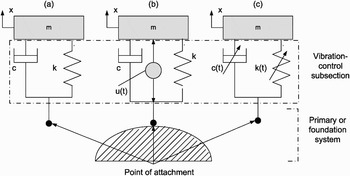
The invention history of vibration absorbers has spanned almost a century. The first vibration absorber was invented and patented by H. Frahm in 1911 (Frahm, Reference Frahm1911). As shown in Figure 1, his passive vibration absorber attaches a mass to a vibrating primary system (mass) through a damper and spring. By tuning the damping coefficient and the absorber stiffness of the spring, one can dramatically reduce the magnitude of vibration in response to a specified frequency of excitatory vibration. The limitation of these passive vibration absorbers is that they work well only at that specified frequency. If the frequency of the excitatory vibration changes, the vibration absorber will become ineffective or even become harmful because of the “de-tuning” phenomenon. A natural solution to this problem is to add an active controller to the whole system, as shown in Figure 1b. The benefits of active vibration absorbers are that they can track a change in frequency of the excitation source, and that they work for a wide frequency band. They are especially useful for vibration sources of unknown characteristics. The shortcoming of active controllers is that the combined system could suffer from control-induced instability and from large control effort requirements, making them inapplicable in many industrial applications (Jalili, Reference Jalili2002). The third type of vibration absorber, as shown in Figure 1c, combines the advantages of passive and active absorbers by integrating a tuning control mechanism with tunable passive devices, such as variable rate damping and stiffness (Nemir et al., Reference Nemin, Lin and Osegueda1994; Franchek et al., Reference Franchek, Ryan and Bernhard1995). These adaptive passive vibration absorbers are welcomed by industry because of their low energy requirements and low cost. There are several good reviews available for further details (Karnopp, Reference Karnopp1995; Jalili, Reference Jalili2002).
A typical primary structure equipped with three versions of vibration control systems (absorbers): (a) passive, (b) active, and (c) semiactive configuration.

There has recently been significant conceptual progress in design of vibration absorbers. Most of it relates to design of active controllers. Olgac and Holm-Hansen (Reference Olgac and Holm-Hansen1994) proposed a novel delayed resonant vibration absorber, which uses only a time-delayed feedback of the absorber mass displacement as the input signal for the control system. This patented absorber (Olgac, Reference Olgac1995) can effectively suppress discrete frequencies. Olgac et al. (Reference Olgac, Elmali and Vijayan1996) later introduced an even more interesting dual frequency fixed delayed resonator (DFFDR), which can effectively remove disturbances of two discrete frequencies. This DFFDR challenged the traditional understanding of the single mass/single natural frequency paradigm. Filipovic and Schroder (Reference Filipovic and Schroder1998) extended the concept of delayed resonator and developed the bandpass vibration absorber (patent pending), also using only the local feedback force without measuring the displacement of the primary system. This bandpass absorber can absorb all disturbances in a given frequency band. These developments imply that there is great potential for applying GP-based automated synthesis in this domain for improved designs.
Vibration absorbers are a class of dynamic systems, and can be modeled as analog circuits, block diagrams, bond graphs, and so forth. One special characteristic of these particular dynamic systems is that the building blocks usually have a fixed number interface ports and may not be connected arbitrarily. Automated synthesis of dynamic systems has been investigated intensively in the past 10 years. Most of that work is related to analog circuit synthesis, as pioneered by Koza and his colleagues (1999, 2003). Their work in automated analog circuit synthesis, including low-pass, high-pass, and asymmetric bandpass filters, is described in (Koza et al., Reference Koza, Bennett, Andre, Keane and Dunlap1997, Reference Koza, Andre, Bennett and Keane1999). Lohn and Colombano (Reference Lohn and Colombano1999) proposed a linear representation approach to evolve analog circuits. Ando and Iba (Reference Ando and Iba2000) suggested another simple linear genome method to evolve low-pass and bandpass filters with small numbers (<50) of components. Controllers, or dynamic systems represented as block diagrams, have also been synthesized automatically using GP by Koza et al. (Reference Koza, Keane, Yu, Bennett and Mydlowec2000). This work has led to the invention of a patentable controller having better performance than a standard PID controller.
Instead of using electrical circuits and block diagrams in our previous work, we developed a GP-based framework for automated synthesis of mechatronic systems using bond graphs as the modeling scheme. The so-called GPBG approach has been applied to automated synthesis of analog filters (Fan et al., Reference Fan, Hu, Seo, Goodman, Rosenberg and Zhang2001), redesign of an old-fashioned mechanical printer (Seo et al., Reference Seo, Hu, Fan, Goodman and Rosenberg2002) and pump (Seo et al., Reference Seo, Fan, Hu, Goodman and Rosenberg2003b), automated synthesis of MEMS systems (Fan et al., Reference Fan, Seo, Hu, Goodman and Rosenberg2004), and synthesis of robust analog filter circuits (Hu et al., Reference Hu, Goodman, Seo, Fan and Rosenberg2005). However, no attempt has been made to duplicate or compare with designs invented by experts.
3. MECHANICAL VIBRATION ABSORBER SYNTHESIS USING GPBG
In this section, we define three vibration absorber synthesis problems and present an improved methodology for open-ended computational synthesis of multidomain dynamic systems based on bond graphs (Karnopp et al., 2000) and GP, the GPBG approach = genetic programming + bond graphs. Compared to the basic GPBG approach introduced in Seo et al. (Reference Seo, Fan, Hu, Goodman and Rosenberg2003b), methodological improvements have been made several aspects, including the following two. First, a new GP function set was developed to improve on the basic set approach used in Fan et al. (Reference Fan, Hu, Seo, Goodman, Rosenberg and Zhang2001). This new approach is able to preserve the topology search flexibility of the basic method while greatly reducing the redundancy in evolved solutions. The second improvement is the parameter evolution method. Our previous approach used a numeric subtree to evolve each parameter, whereas here a special parameter mutation operator is used to evolve the parameters for each topology.
3.1. Problem definition: Synthesis of passive vibration absorbers
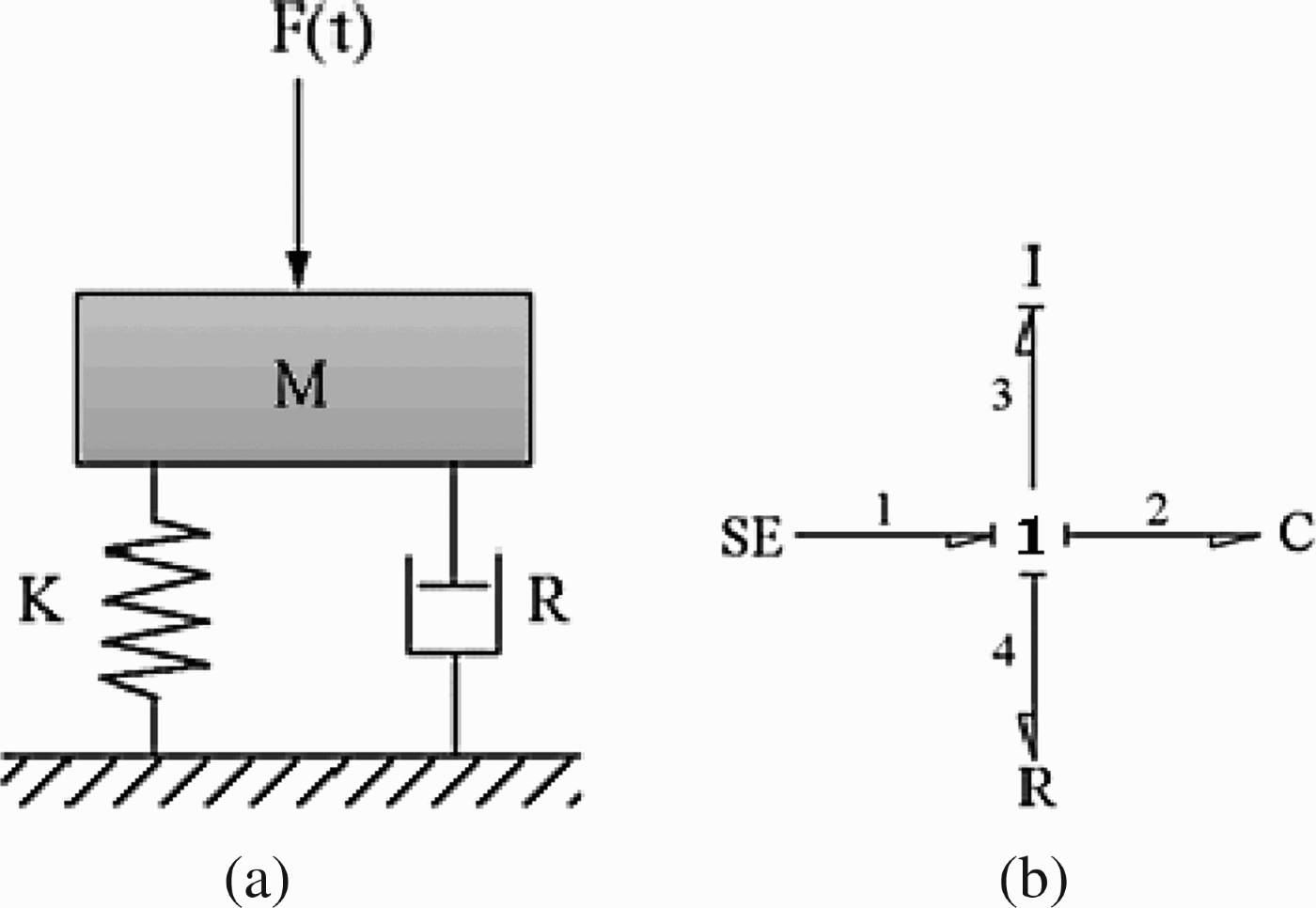
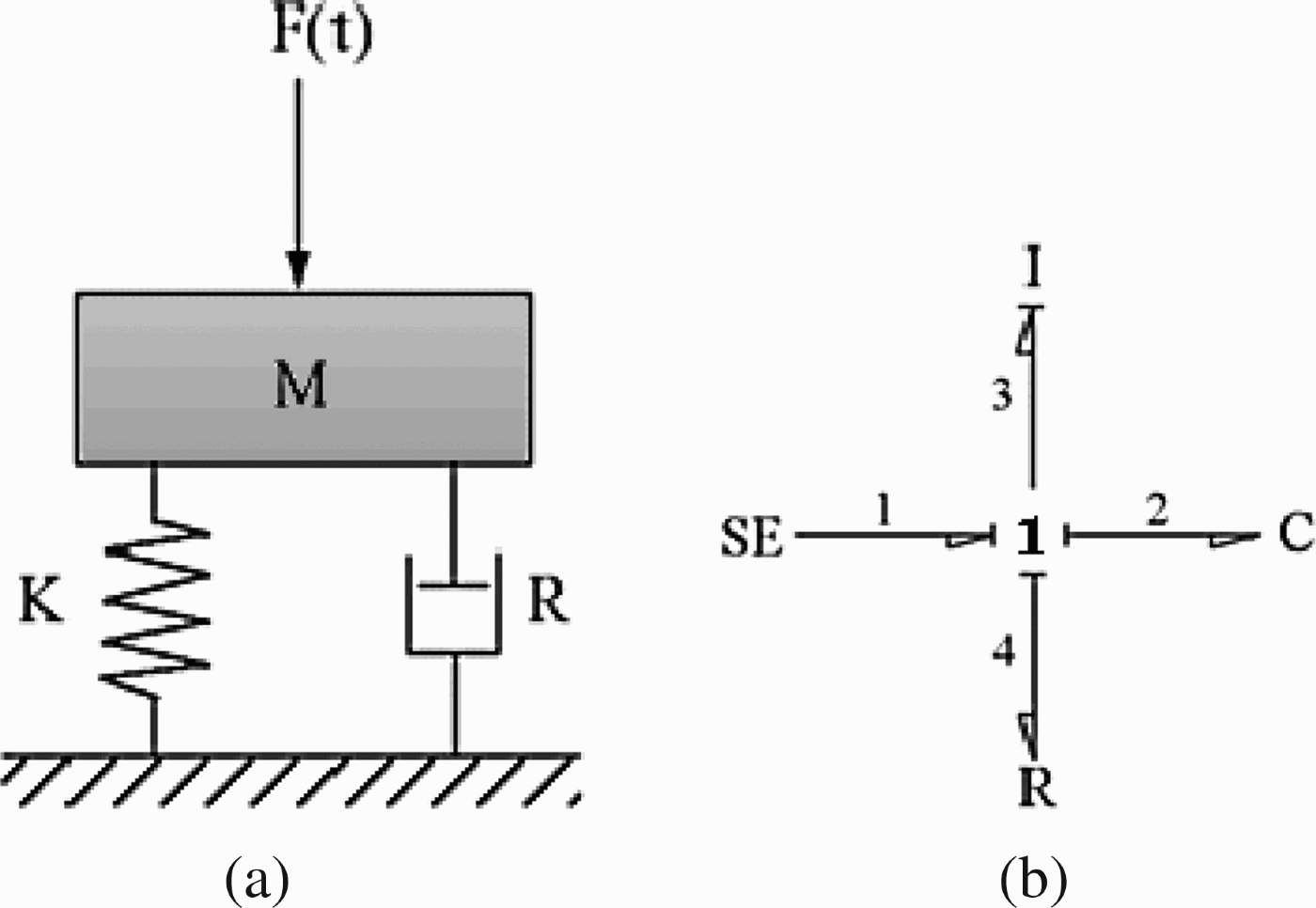
In this paper, we are mainly interested in synthesizing passive vibration absorbers to reduce the vibration response of primary systems of various configurations. Figure 2a shows a primary system and its corresponding bond graph model, where the mass, the spring, and the damper correspond to the inductor (I), resistor (R), and capacitor (C), respectively.
The bond graph structure of a primary system and its bond graph model. (a) Primary system under perturbation of excitation force F(t); (b) bond graph model.
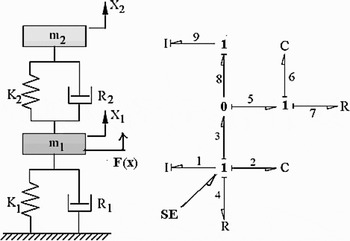
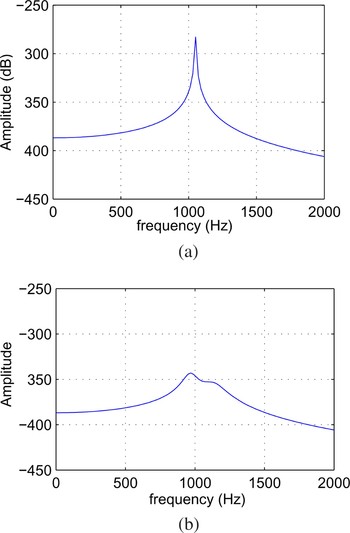
The design task is to attach some new components to the primary system such that the frequency response at the excitation frequency ω be minimized. Figure 3 shows the first vibration absorber, invented by Frahm in 1911, and its bond graph model. The frequency response of the stand-alone primary system and the primary system with vibration absorber is shown in Figure 4b. It can be seen that the vibration absorber can significantly quench the response of the primary systems at the excitation frequency. An advanced version of the vibration absorber synthesis problem is to minimize the sum of the frequency responses at two excitation frequencies (dual-frequency vibration absorber) or a frequency band to be minimized, corresponding to the band-vibration absorber described in Filipovic and Schroder (Reference Filipovic and Schroder1998).
The bond graph structure of the first patented vibration absorber and its bond graph model.

Frequency responses of the primary system under perturbation of excitation force F(t), without and with vibration absorber. (a) Without vibration absorber, (b) with a vibration absorber. [A color version of this figure can be viewed online at journals.cambridge.org/aie]

3.2. Bond graphs
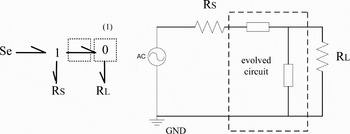
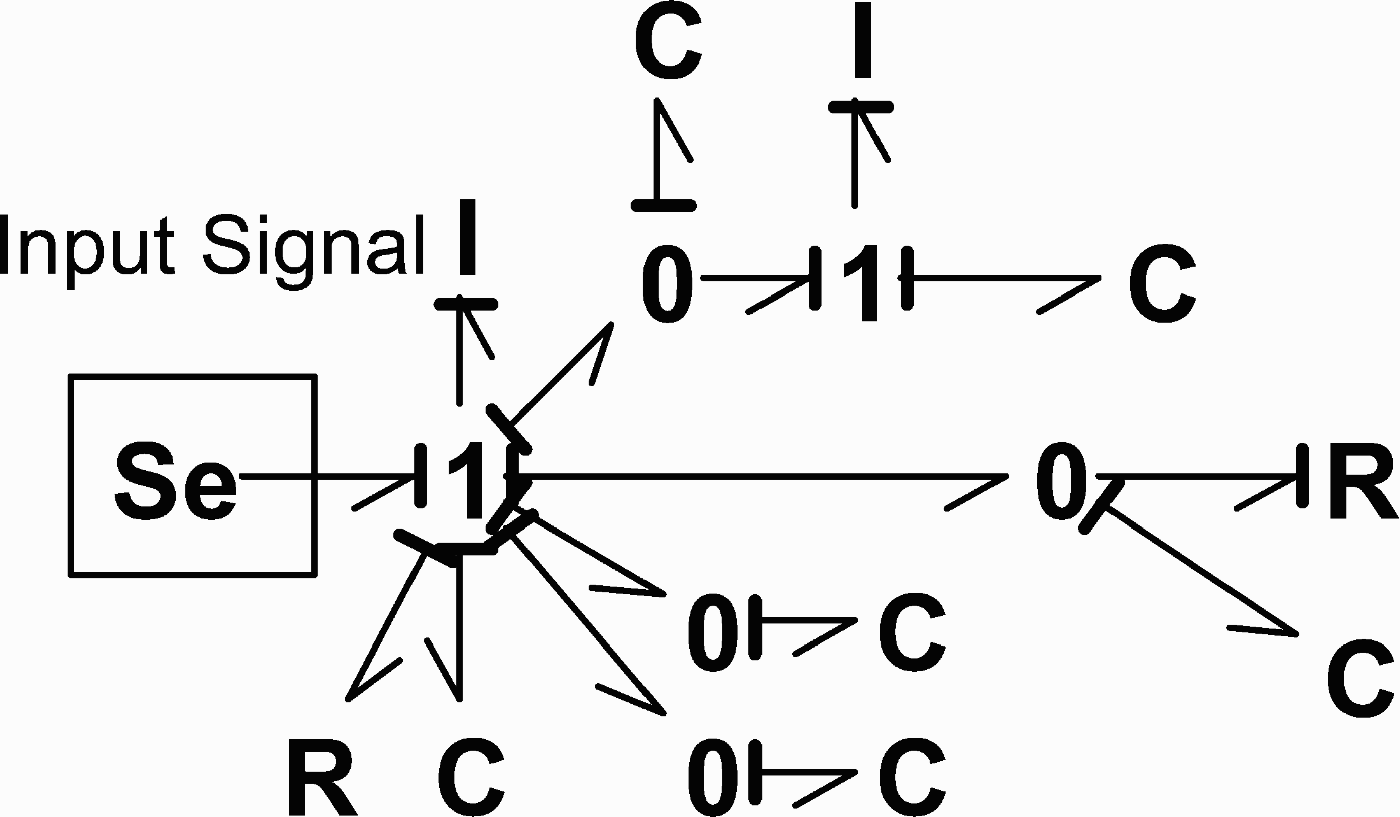
The bond graph is a multidomain modeling tool for analysis and design of dynamic systems, especially hybrid multidomain systems, including mechanical, electrical, pneumatic, hydraulic, and so forth, components (Karnopp et al., Reference Karnopp, Margolis and Rosenberg2000). One advantage of using bond graphs for open-ended design exploration is that the complex loops typical in electric circuit schematics can be transformed into treelike structures by the bond graph's 1-junction (serial connection) and 0-junction (parallel connection) concepts, which tend to be easier to evolve in general. Another advantage is that the multidomain nature of bond graph modeling facilitates evolution of mechatronic systems. Many researchers have explored the bond graph as a tool for dynamic system design, for example, Tay et al. (Reference Strehlow and Rapp1998). Details of notation and methods of system analysis related to the bond graph representation can be found in Karnopp et al. (Reference Karnopp, Margolis and Rosenberg2000). Figure 5 illustrates a small bond graph that represents the accompanying electrical system. Figure 6 shows the complex bond graph model of a low-pass filter. A typical simple bond graph model is composed of (using notation from electrical systems): inductors (I), resistors (R), capacitors (C), transformers (TF), gyrators (GY), 0-junctions (J0), 1-junctions (J1), sources of effort (SE), and sources of flow (SF). In this paper, we are only concerned with linear dynamic systems represented as bond graphs, which are composed of inductors, resistors, capacitors, sources of effort (as input signals), and sources of flow as output signal access points.
A bond graph and its equivalent electrical circuit. The dotted boxes in the left bond graph indicate modifiable sites at which further topological manipulations can be applied. R, resistors; SE, sources of effort.

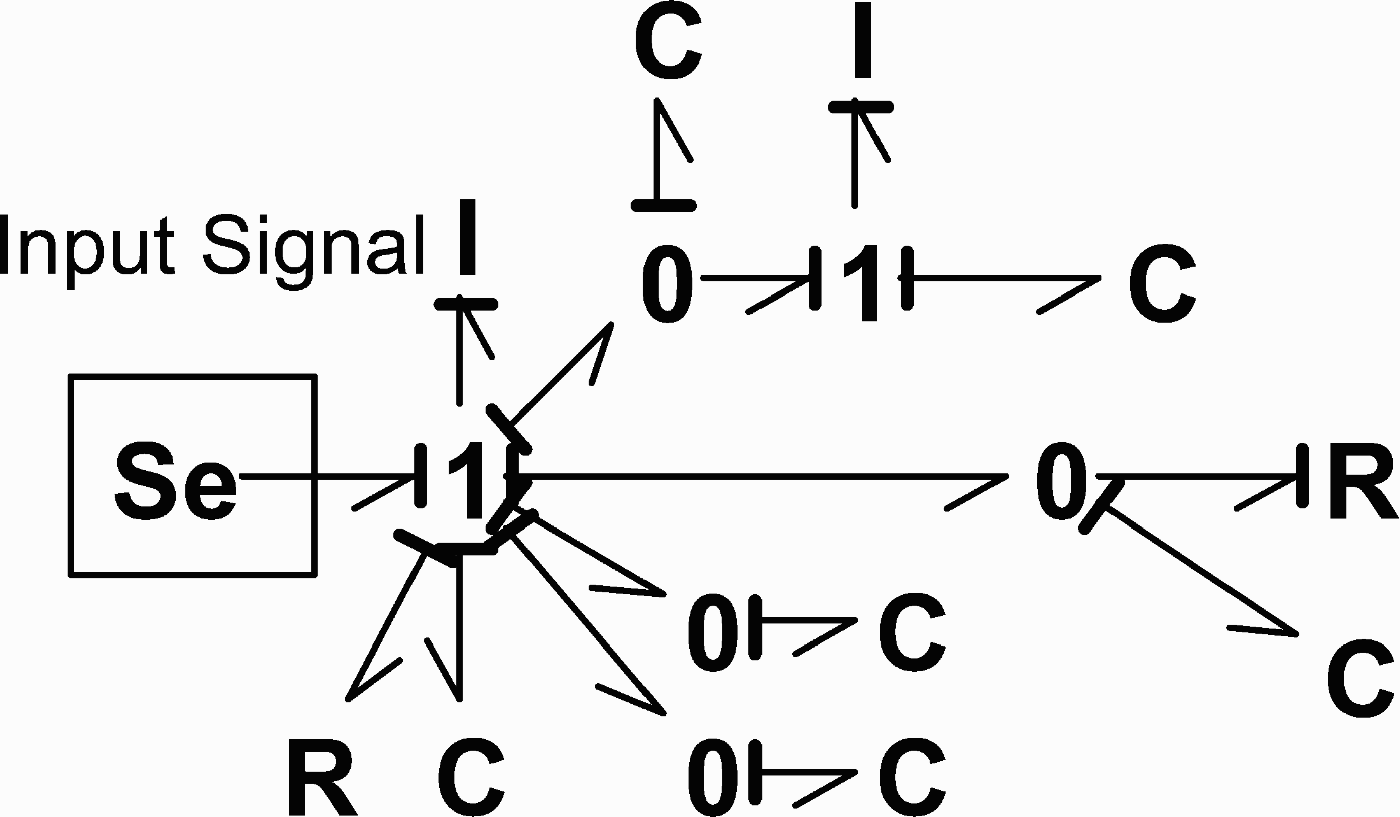
The bond graph structure of a vibration absorber with seven components exclusive of the embryo components. (Component sizing values are omitted in the figure for simplicity.)
3.3. Evolving dynamic systems using bond graphs and GP: The GPBG framework
The problem of automated synthesis of bond graphs involves two basic searches: the search for a good topology, and the search for good parameters for each topology, in order to be able to evaluate its performance. Based on Koza's work (Koza et al., Reference Koza, Andre, Bennett and Keane1999) on automated synthesis of electronic circuits, we created a developmental GP system for synthesizing mechatronic systems represented as bond graphs (Seo et al., Reference Seo, Fan, Hu, Goodman and Rosenberg2003b). This GPBG framework enables us to do simultaneous topology and parameter search. It includes the following major components: an embryo bond graph with modifiable sites at which further topological operations can be applied to grow the embryo into a functional system; a GP function set, composed of a set of topology manipulation and other primitive instructions that will be assembled into a GP tree by the evolutionary process (execution of this GP program leads to topological and parametric manipulation of the developing embryo bond graph); and a fitness function to evaluate the performance of candidate solutions.
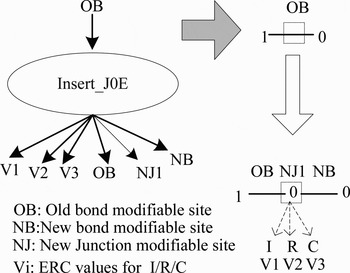
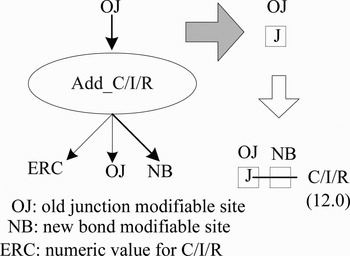
Choosing a good function set for bond graph synthesis is not easy. In our earliest work (Fan et al., Reference Fan, Hu, Seo, Goodman, Rosenberg and Zhang2001), a basic GP function set was used for evolutionary synthesis of analog filters. In that approach, the GP functions for topological operation included {Insert_J0/J1, Add_C/I/R, and Replace_C/I/R}, which allowed evolution of a large variety of bond graph topologies; see Figures 7 and 8. The shortcoming of this approach is that it tended to evolve redundant and sometimes causally ill-posed bond graphs (Seo et al., Reference Seo, Fan, Hu, Goodman and Rosenberg2003a). Later, we used a causally well-posed modular GP function set to evolve more concise bond graphs with much less redundancy (Hu et al., Reference Hu, Goodman and Rosenberg2004). However, that encoding had a strong bias toward a chain-type topology, and thus may have limited the scope of topology search (Hu et al., Reference Hu, Goodman, Seo, Fan and Rosenberg2005). In this paper we have improved the basic function set in Fan et al. (Reference Fan, Hu, Seo, Goodman, Rosenberg and Zhang2001) and developed the following hybrid function set approach to reduce redundancy while enjoying the flexibility of topological exploration:
The Insert_J0E genetic programming (GP) function inserts a new junction into a bond along with a certain number of attached components.

The Add_C/I/R genetic programming (GP) function adds a C/I/R component to a junction.


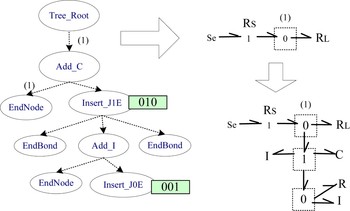
where the Insert_J0E, Insert_J1E functions insert a new 0-/1-junction into a bond while attaching at least one and at most three elements (from among C/I/R); EndNode and EndBond terminate the development (further topology manipulation) at junction modifiable sites and bond modifiable sites, respectively; the ephemeral random constant (ERC) represents a real number that can be changed by Gaussian mutation. In addition, the number and type of elements attached to the inserted junctions are controlled by three “flag” bits. A flag mutation operator is used to evolve these flag bits, each representing the presence or absence of the corresponding C/I/R component. Compared with the basic set approach, this hybrid approach can effectively avoid adding many bare (and redundant) junctions. At the same time, Add_C/I/R still provides the flexibility needed for broad topology search. For any of the three C/I/R components attached to each junction, there is a corresponding parameter to represent the component's value, which is evolved by a Gaussian mutation operator in the modified GP system used here. This is different from our previous work in which the “classical” numeric subtree approach was used to evolve parameters of components. Figure 9 shows a GP tree that develops an embryo bond graph into a complete bond graph solution. Our comparison experiments (Hu et al., Reference Hu, Goodman, Seo, Fan and Rosenberg2005) showed that this function set was more effective on both an eigenvalue and an analog filter test problem, so the new set was used in this paper.
An example of a genetic programming (GP) tree, composed of topology operators applied to an embryo, generating a bond graph after depth-first execution (numeric ERC nodes are omitted). Note that the 010 and 001 are the flag bits showing the presence of absence of attached C/I/R components. [A color version of this figure can be viewed online at journals.cambridge.org/aie]

3.4. Evolving vibration absorbers
In this paper, we are interested in evolving three types of vibration absorbers. The vibration absorbers of each type are evolved with several different configurations such as the maximum number of masses to be used, the starting embryo and its modifiable site, and the maximum number of components. The synthesis problems include the following.
3.4.1. Single-frequency vibration absorber
In this problem, we want to see if the GPBG system can reinvent the first patented vibration absorber, shown in Figure 3. The design problem is extracted from Jalili (Reference Jalili2002). The parameters of the primary system are as follows:

The parameters of the standard passive absorber solution are the following:

We used the bond graph embryos in Figure 2a for this problem. The modifiable site is the 1-junction. We could also have different function sets for this GP-based synthesis. Because it is not physically realistic to have many masses attached to the primary structures, we limit the maximum number of masses to two in all the experiments. In this problem, the synthesis objective is to synthesize a vibration absorber such that the frequency response

of the primary system mass (displacement) at the frequency ω of excitation force f = f 0 × sin × ωt is minimized. The normalized fitness is defined as
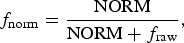
where NORM is a normalization term aimed at adjusting the f norm into the range of [0, 1]. This process transforms the minimization of deviation from target frequency response into a maximization of fitness process as used in our GP system. Because tournament selection is used as the selection operator, the normalization term can be an arbitrary positive number. For both lowpass and highpass filter problems, NORM is set to 10, which gives a fitness range within [0, 1].
According to Eq. (1), we need to calculate the frequency response as X 1(s)/F(s) where X 1 is the displacement of the primary mass and F(s) is the excitation force. However, we can only extract from a bond graph the source effort signal X 1(s). We use the following procedure to get the f raw:
1. calculate A, B, C, D matrices from a given bond graph,
2. convert A, B, C, D into transfer function TFraw,
3. TFnorm = TFraw × 1/s is equal to X 1(s)/F(s),
4. convert TFnorm back to A′, B′, C′, D′ matrices and simulate its frequency response with Matlab.
3.4.2. Dual-frequency vibration absorber
This problem is borrowed from Olgac et al.'s (1996) patented vibration absorber. In this problem, the parameters of the primary system and the corresponding standard passive absorber used in Olgac et al. (Reference Olgac, Elmali and Vijayan1996) are as follows:

The excitation force is

where ω1 = 25 Hz and ω2 = 70 Hz.
The raw fitness in this case is defined as

and the normalized fitness is defined in Eq. (2). Because, in this paper, only passive vibration absorbers are evolved, we are not aiming at outperforming the dual frequency absorber invented by Olgac et al. (Reference Olgac, Elmali and Vijayan1996), but at determining how well a passive absorber can approximate the performance of the active absorbers for this problem.
3.4.3. Bandpass frequency vibration absorber
This problem is taken from the patent-pending vibration absorber invented by Filipovic and Schroder (Reference Filipovic and Schroder1998). Their active absorber with a local feedback force has the capability to absorb all disturbance in a given frequency band rather than only at discrete frequencies as do most other vibration absorbers. In this problem, we are interested in testing how closely the evolved passive absorbers can approximate the performance of the invention.
The parameters of the primary system are the following:

The natural frequency is thus ωn = 35.7 rad/s. Filipovic and Schroder's (1998) absorber sets the following parameters for the corresponding passive absorber:

with the natural frequency ωa = ωn. The excitation force frequency bandwidth is bω = 10 rad/s and the center frequency is ω 0 = 35 rad/s.
To evolve a bandpass vibration absorber, we sum the frequency responses at 12 logarithmically distributed sampling frequencies in the frequency band and transform it into standard fitness score according to Eq. (2).
3.5. Modified developmental GP
Compared to the GP systems used in Koza et al. (Reference Koza, Andre, Bennett and Keane1999), our GP system is configured in a little different way in the following respects:
• A flag bit mutation operator is introduced to evolve the configuration of C/I/R elements attached to a junction.
• A subtree-swapping operator is used to exchange nonoverlapping subtrees of the same individual (GP tree). In such operations, two type-compatible nodes are randomly selected such that the two subtrees do not overlap, and then a normal crossover operation is applied. This operator does not add or remove components, but reconfiguring the connections among existing components or subcomponents was found to enable better topology search.
• An ERC mutation operator is developed to evolve the parameter values for all C/I/R components. Instead of evolving a numeric subtree for each parameter, a Gaussian perturbation method, as is commonly used in evolution strategies (Rechenberg, 1974), is used to evolve parameters. In each generation, some individuals are selected for parameter mutation. For each such selected individual, half of its parameters are randomly selected to be mutated by adding to the current values a Gaussian perturbation noise with mean 0 and standard deviation 1. These two parameters are determined based on the component value determination process. In our GP system, a mapping process is used to transform an ERC value to the actual component value, following the approach described in Koza et al. (Reference Koza, Andre, Bennett and Keane1999). This mapping process is used to constrain the component values into reasonable numeric ranges. The exponential numeric mapping means that a small change in ERC value can lead to large component value modification. We found that our parameter search method had the benefit of reducing the sizes of high-performance GP trees.
• Elitism is used throughout the evolution process.
In this paper, a standard strongly typed multipopulation generational GP enhanced with the above features is used to evolve analog filters represented as bond graphs. The running parameters are specified in Section 4.
4. EXPERIMENTS AND RESULTS
One of the major challenges to use GP-based automated synthesis system for design is to implement a fast fitness evaluation method. Instead of using the sophisticated SPICE simulator as used in many analog filter synthesis projects (Koza et al., Reference Koza, Bennett, Andre, Keane and Dunlap1997), we simulated the frequency responses of a bond graph for fitness evaluation in the following way: first a state equation of a bond graph is derived automatically from the model, which generates the state equation matrices A, B, C, D. These state space models were then simulated on a Linux machine using C++ simulation code generated from Matlab compiler 3.0. After we calculated the frequency responses of an individual, we then transformed them into standard fitness as defined in Eqs. (2) and (3).
4.1. Experimental settings
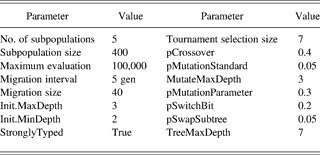
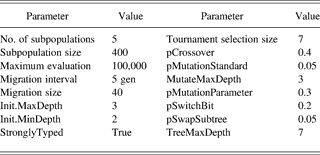
Compared to the evolutionary synthesis of electrical circuits, a mechanical vibration absorber usually has a much smaller number of components. So the topological and parameter search space is thus greatly decreased. Most of the experiments are finished in less than an hour. Some of them just take a few minutes. Here we set the maximum number of components to be 7. Other standard GP parameters are summarized in Table 1.
Experimental parameters for vibration absorber synthesis
4.2. Results
4.2.1. Single-frequency vibration absorber
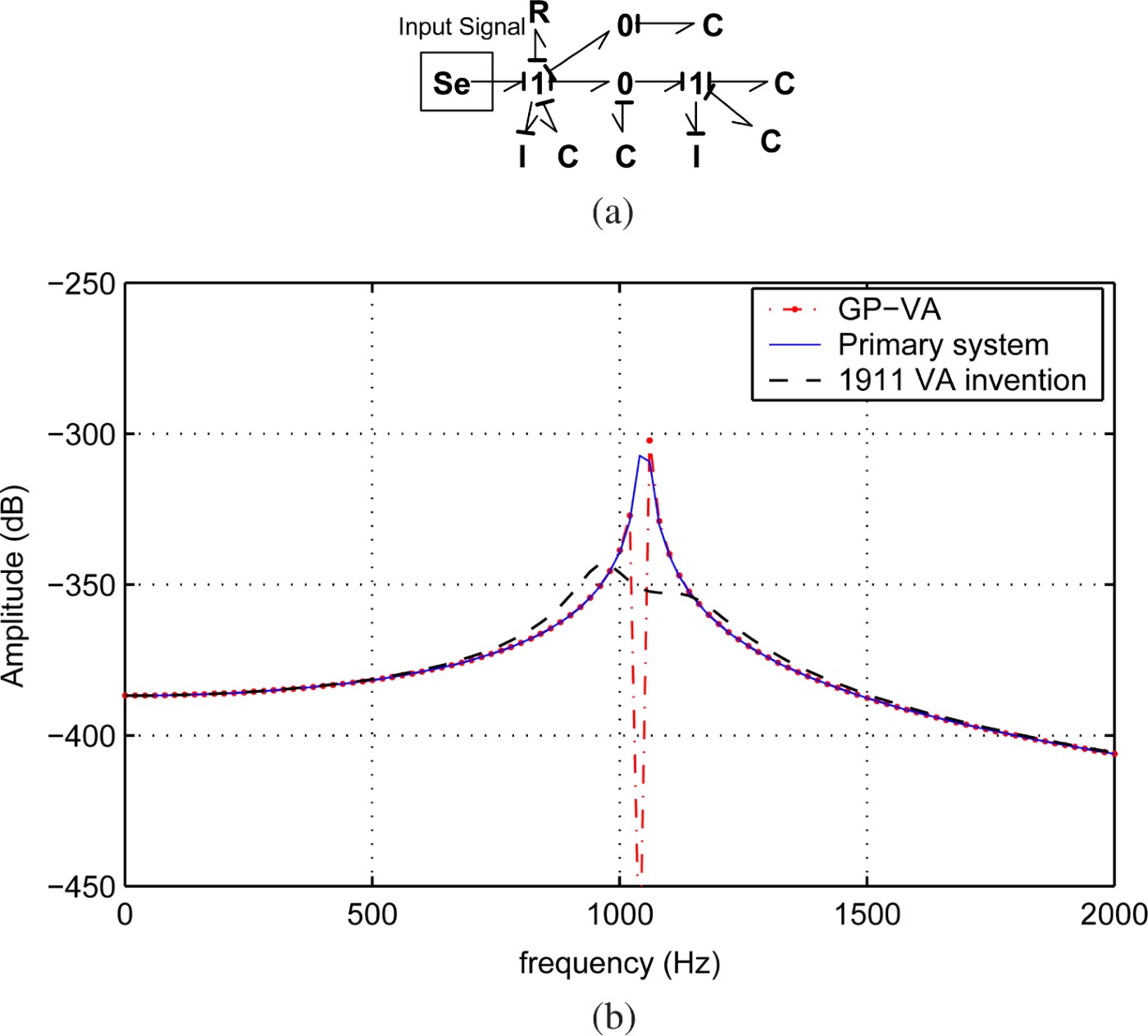
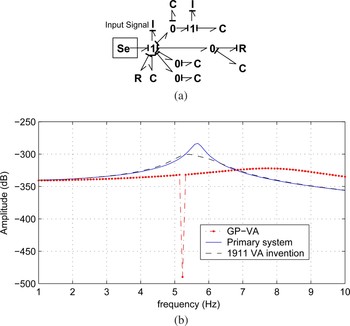
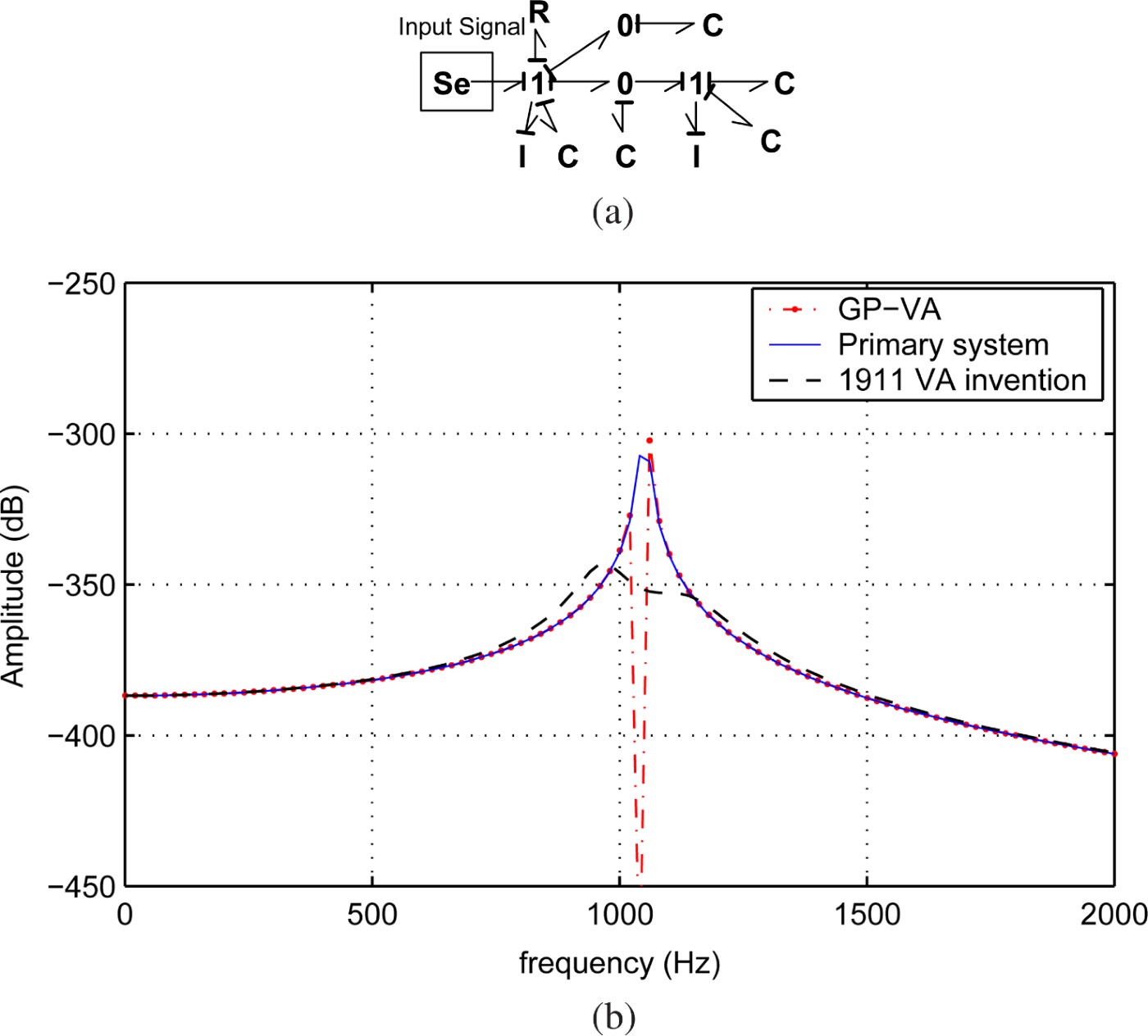
Figure 10b shows an evolved single frequency vibration absorber and its frequency response compared to the responses of the primary structure without any absorber and with standard passive absorber invented in 1912. It is very interesting that the frequency response of the evolved vibration absorber has a very deep spike at the excitation frequency to minimize the frequency response at that single frequency. If the excitation frequency is relatively constant with little shifting, our evolved absorber will achieve better performance at that specific frequency. Another observation of the evolved design is that it does not contain any damper but a single mass and four springs that can be reduced to three springs (C in the figure).
The evolved single-frequency vibration absorber and its performance compared to standard vibration absorber. [A color version of this figure can be viewed online at journals.cambridge.org/aie]
4.2.2. Dual-frequency vibration absorber
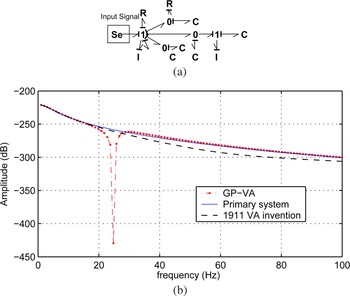
In this problem, the two excitation frequencies are 25 and 75 Hz, respectively. It is of interest that the GP system again evolved an absorber at 25 Hz with greatly reduced response, whereas the frequency response at 75 Hz is worse than the standard passive absorber (Fig. 11b). Compared to the solution in the previous problem, a damper is used in this dual-frequency vibration absorber. We also checked the parameter values of the evolved solution. The mass value is 3.93 kg, the damper ratio is 1499.58; both are in very reasonable range. The sizing values of other three springs are also easy to realize. However, the shortcoming of our evolved VA is that the frequency response at 75 Hz is not damped well, partially caused by our definition of the fitness function, which simply minimizes the average the frequency responses at these two frequencies. In this aspect, our vibration absorber is much better than the standard one.
The evolved dual-frequency vibration absorber and its performance compared to standard vibration absorber. [A color version of this figure can be viewed online at journals.cambridge.org/aie]

4.2.3. Bandpass vibration absorber
Figure 12 shows the evolved bandpass vibration absorber. It consists of one damper, one mass, and five springs. The parameters of this VA are relatively easy to realize, although we did not apply the parameter constraints during the evolution. The mass of the PVA is 10 kg, the damper ratio is 5994.39 kg/s. The spring parameters are all within realizable range. In this problem, the target frequency band is from 4.77 to 6.37 Hz. As we can see from the figure, the evolved VA has much lower frequency responses across all the band area. Compared to the standard passive absorber, our solution is significantly better using only passive components. However, we also find that this solution is not as good as the active bandpass absorber proposed by Filipovic and Schroder (Reference Filipovic and Schroder1998). Their active VA is able to almost completely damp any frequency response within the target band area. This discrepancy suggests the necessity and promise of introducing synthesis of both controllers and passive vibration absorbers simultaneously.
The performance of the evolved bandpass vibration absorber compared to the standard vibration absorber. [A color version of this figure can be viewed online at journals.cambridge.org/aie]

5. CONCLUSIONS
In this paper, we present a GP-based method for automated synthesis of passive mechanical vibration absorbers. Using this system, we have evolved a passive vibration absorber that has better performance than the first patented vibration absorber. Other advanced dual frequency and bandpass vibration absorbers have also been evolved successfully. These solutions can be very useful for inspiring design engineers to find new ways for implementing real-world vibration absorbers. In this work, we have not worked on semiactive or active absorbers as our current GP system has not yet be developed to evolve controllers. Because both mechatronic system synthesis based on bond graphs (Seo et al., Reference Seo, Fan, Hu, Goodman and Rosenberg2003b) and controller synthesis based on block diagrams and GP (Koza et al., Reference Koza, Keane, Yu, Bennett and Mydlowec2000) have been shown to be very successful, we are now combining them to rediscover or evolve better delayed response vibration absorbers, dual frequency vibration absorbers, and other conceptually novel vibration absorbers. Considering the importance and extensiveness of application of these devices, it appears very promising to explore this application domain further.
ACKNOWLEDGMENTS
This paper was based upon work supported by Grant EPS-0447660 from the National Science Foundation/EPSCoR. Any opinions, findings, and conclusions or recommendations expressed in this material are those of the authors and do not necessarily reflect the views of the National Science Foundation. Partial support is also provided by China NNSF Grant 50575047 (to J.H. and S.L.).
Jianjun Hu received his BS and MS degrees from Wuhan University of Technology, China, and his PhD in computer science from Michigan State University in 2004. He held postdoctoral positions in bioinformatics at Purdue University and the University of Southern California from 2004 to 2007. He is currently an Assistant Professor in the Department of Computer Science and Engineering at the University of South Carolina. His research interests include evolutionary algorithms, genetic programming, open-ended computational synthesis, data mining, and bioinformatics.
Erik D. Goodman is Cofounder and Vice President for Technology at Red Cedar Technology, Inc. He is a Professor of electrical and computer engineering and mechanical engineering at Michigan State University and performs research on evolutionary design of structural and dynamic systems. For 20 years he directed the Case Center for Computer-Aided Engineering and Manufacturing and currently codirects the Genetic Algorithms Research and Applications Group (GARAGe). Dr. Goodman was the Founding Chair of ACM SIEVO, the Special Interest Group on Genetic and Evolutionary Computation, and was elected a Senior Fellow of the International Society for Genetic and Evolutionary Computation.
Shaobo Li is currently a Professor and Associate Director in the Key Laboratory of Advanced Manufacturing Technology, Ministry of Education, Guizhou University. He received his BS degree from Huazhong University of Science and Technology, MS degree from Guizhou University of Technology, and PhD degree in computer science from the Institute of Computer Applications, Chinese Academy of Sciences, in 2003. Dr. Li's research interests include evolutionary algorithms, design automation and optimization of mechatronic systems, manufacturing information management, and information systems.
Ronald C. Rosenberg is a Professor of mechanical engineering in the Department of Mechanical Engineering at Michigan State University. Dr. Rosenberg's research interests are in modeling, simulation, and design of complex engineering systems. His specialty is the use of bond graph tools for understanding and simulating the dynamic behavior of multienergy domain problems. He is the coauthor of System Dynamics, a textbook that elucidates the bond graph approach. Other current research interests are modeling with genetic algorithms for improved system design.