INTRODUCTION
Bread wheat (Triticum aestivum L) is cultivated on 220 million ha worldwide and occupies more land area than any other commercial crop in the world (FaoStat 2014). Globally, wheat provides 0·21 of food calories and 0·20 of protein required for more than 4·5 billion people around the world. Successful wheat expansion in broad geographic areas from south to north is based on its large potential for adaptation to a wide range of environments. However, the growing world population poses a challenge for breeders to increase grain yield of wheat. To meet this challenge, the genetic yield potential should be enhanced and the gap between actual and potential yield should be minimized. Target manipulation of the genetic systems responsible for the wheat adaptation to specific local environments will be crucial to maximize wheat grain yield (Gomez et al. Reference Gomez, Vanzetti, Helguera, Lombardo, Fraschina and Miralles2014; Shcherban et al. Reference Shcherban, Borner and Salina2015).
Wheat adaptation is largely controlled by three genetic systems: vernalization response, photoperiod sensitivity and earliness per se (Worland Reference Worland1996; Worland et al. Reference Worland, Borner, Korzun, Li, Petrovic and Sayers1998; Snape et al. Reference Snape, Butterworth, Whitechurch and Worland2001). Allelic variation of Vrn genes determines spring or winter growth habit, some combinations of Vrn alleles confer an intermediate growth type. The Vrn gene system of winter wheat enables it to grow widespread over different climatic regions around the world and maximize utilization of soil moisture and solar energy.
Genetic studies of the winter wheat growth habit were initiated at the beginning of the 20th century (Gotoh Reference Gotoh1979). It has been determined the vernalization requirement is primarily controlled by alleles of Vrn-1 series genes, at three orthologous loci: Vrn-A1, Vrn-B1 and Vrn-D1, which are located on the long arms of chromosomes 5A, 5B and 5D, respectively. These vernalization requirement loci are closely linked to respective loci for freezing tolerance in wheat. Vrn-A1 is linked with Fr-A1 (formerly Fr1), Vrn-B1 with Fr-B1, and Vrn-D1 with Fr-D1 (formerly Fr2) at genetic distances of 2, 10 and 40 cM, respectively (Galiba et al. Reference Galiba, Quarrie, Sutka, Morgounov and Snape1995; Snape et al. Reference Snape, Semikhodskii, Fish, Sarma, Quarrie, Galiba and Sutka1997; Toth et al. Reference Toth, Galiba, Feher, Sutka and Snape2003; Kobayashi et al. Reference Kobayashi, Takumi, Kume, Ishibashi, Ohno, Murai and Nakamura2005). Additionally, series of Vrn-2, Vrn-3 genes and one Vrn-4 gene have been reported. They act as repressors and activators of Vrn-1 genes, connecting the vernalization system with environments in response to cold and daylength to regulate plant development and to provide wheat adaptability (Distelfeld et al. Reference Distelfeld, Li and Dubcovsky2009; Abbasabad et al. Reference Abbasabad, Mohammadi, Moghaddam and Kamali2015). The Vrn-1, Vrn-3 and Vrn-4 series of genes are recessive for winter growth habit: in contrast, the Vrn-2 series is dominant for winter growth habit (Kamran et al. Reference Kamran, Iqbal and Spaner2014). This vernalization system enables winter wheat to survive the severe, unfavourable conditions of winter in its vegetative phase, because in the reproductive phase the plants have only a limited ability to tolerate freezing stress (Danyluk et al. Reference Danyluk, Kane, Breton, Limin, Fowler and Sarhan2003).
The response to photoperiod (sensitivity or insensitivity) is controlled by a series of photoperiod (Ppd) genes. To date, three major genes Ppd-A1, Ppd-B1 and Ppd-D1 have been identified. Ppd-genes are ranked Ppd-D1 > Ppd-B1 > Ppd-A1 according to their effect on response to photoperiod (Worland et al. Reference Worland, Borner, Korzun, Li, Petrovic and Sayers1998; Diaz et al. Reference Diaz, Zikhali, Turner, Isaac and Laurie2012). Wheat plants with dominant alleles (photoperiod-insensitive) initiate heading earlier in the spring, compared with those with recessive alleles that start heading much later, not until exposure to long days (Worland et al. Reference Worland, Borner, Korzun, Li, Petrovic and Sayers1998). Ppd-D1 is the key photoperiod response gene that explains the main variation of photoperiod response in modern wheat cultivars. Polymorphisms associated with Ppd-A1 and Ppd-B1 occur rarely in the European pool of winter wheat. Langer et al. (Reference Langer, Longin and Würschum2014) studied 410 European winter wheat cultivars and found no dominant Ppd-A1 and Ppd-B1 alleles among them.
The third genetic system is earliness per se, also known as ear emergence per se, earliness in narrow sense and basic development rate, fine tunes the flowering time in a delicate way (Worland Reference Worland1996; Snape et al. Reference Snape, Butterworth, Whitechurch and Worland2001; Gomez et al. Reference Gomez, Vanzetti, Helguera, Lombardo, Fraschina and Miralles2014; Zikhali & Griffiths Reference Zikhali, Griffiths, Ogihara, Takumi and Handa2015). Genetic variation of the Eps genes generally results in differences of a few days in flowering time and it is suggested that genes of the earliness per se system regulate flowering independently of vernalization and photoperiod response genes, as they are not affected either by vernalization or photoperiod genes (Snape et al. Reference Snape, Butterworth, Whitechurch and Worland2001; Bullrich et al. Reference Bullrich, Appendino, Tranquilli, Lewis and Dubcovsky2002; Zikhali & Griffiths Reference Zikhali, Griffiths, Ogihara, Takumi and Handa2015). Earliness per se is defined as the time to heading when the plants are fully vernalized and grown under long days (Appendino et al. Reference Appendino, Bartoloni and Slafer2003; Zikhali & Griffiths Reference Zikhali, Griffiths, Ogihara, Takumi and Handa2015). Zikhali & Griffiths (Reference Zikhali, Griffiths, Ogihara, Takumi and Handa2015) proposed a visual definition, in accordance with which the Ppd and Vrn genes can be equivalent to the coarse adjustment knob of a microscope, whereas the Eps genes are equivalent to the fine adjustment knob. Photoperiod and vernalization genes are responsible for wheat plant adaptation to mega-environments while Eps genes can be used by breeders to fine-tune ear emergence for a particular local environment (Griffiths et al. Reference Griffiths, Simmonds, Leverington, Wang, Fish, Sayers, Alibert, Orford, Wingen, Herry, Faure, Laurie, Bilham and Snape2009; Zikhali & Griffiths Reference Zikhali, Griffiths, Ogihara, Takumi and Handa2015).
All three genetic systems determine plant adaptation to specific environments, as small differences in plant growth rate, especially during the autumn-winter growing period, can be crucial for winter survival. Optimum yields in different environments can be reached only when plant development corresponds to favourable environmental conditions, which are suitable for growth, enable maximal use of favourable vegetative growth period and avoid adverse conditions during the growth cycle. The proper combination of freezing tolerance, photoperiod sensitivity/insensitivity and vernalization duration requirement have a large influence both on winter hardiness and consequently on wheat grain yield productivity.
The objectives of the current study were: (i) to explore the relationships among LT50, photoperiod sensitivity, vernalization duration and earliness per se; (ii) to determine their significance for crop adaptation in Lithuania; and (iii) to study the variation of these traits in modern winter wheat cultivars from different geographic latitudes and climates.
MATERIALS AND METHODS
Plant material
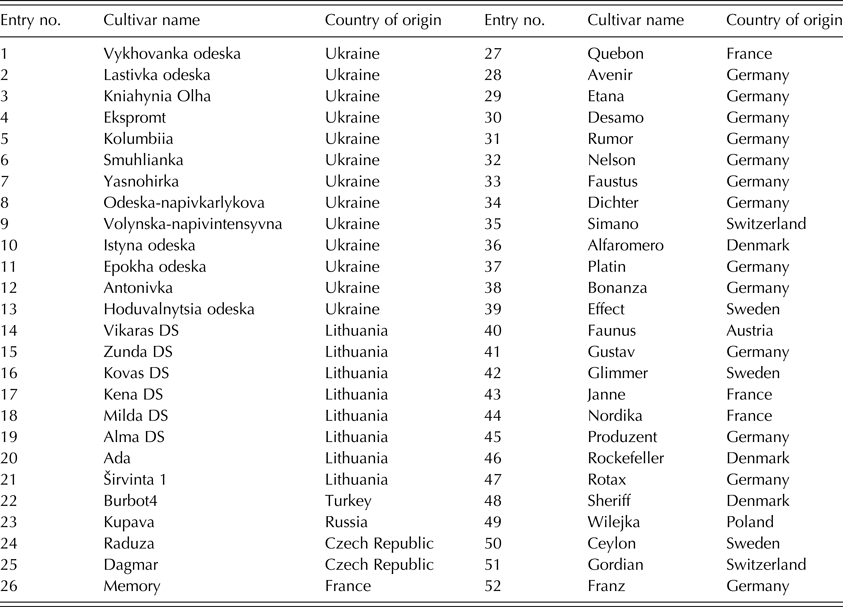
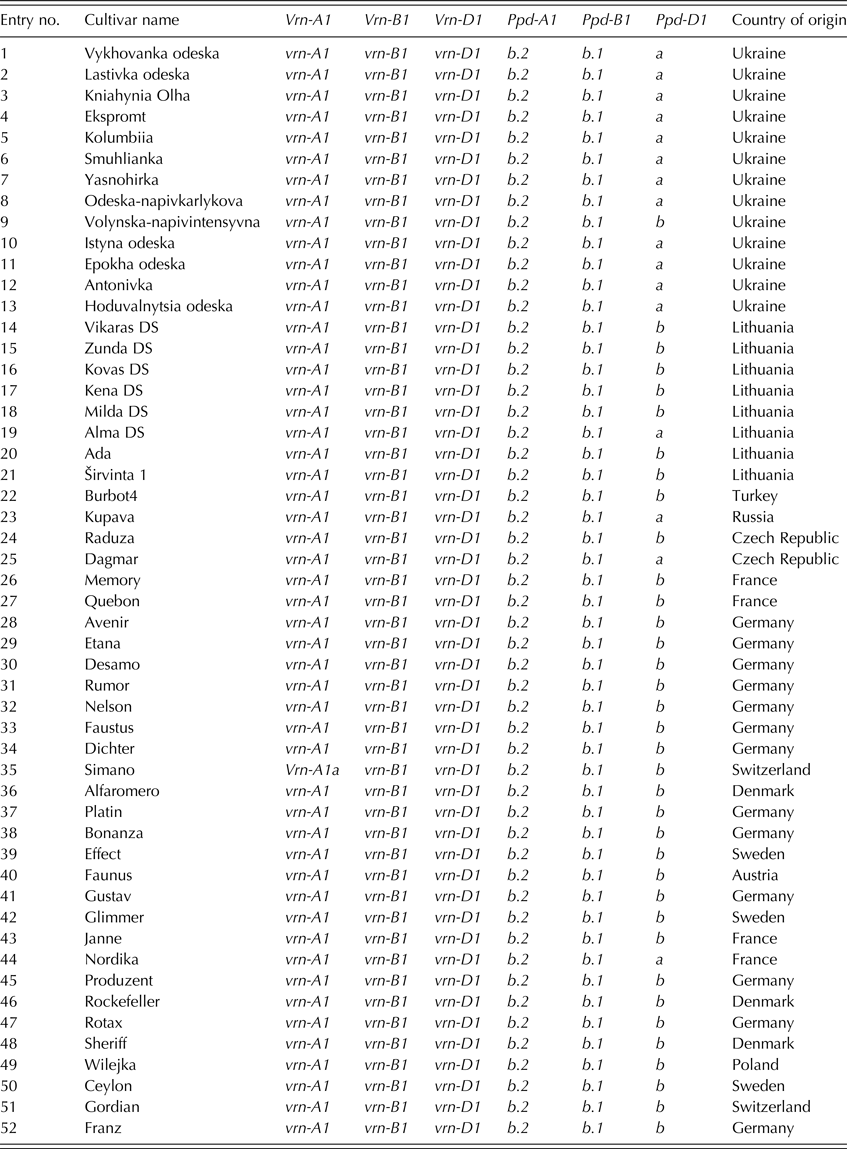
A total of 52 winter wheat cultivars from different ecoclimatic regions of Europe were studied (Table 1). The cultivars were selected by their geographic distribution and phenotypically contrasting expression of the studied traits. The cultivar Nordika was chosen as a control cultivar for winter hardiness.
List of cultivars

DNA extraction and marker screening
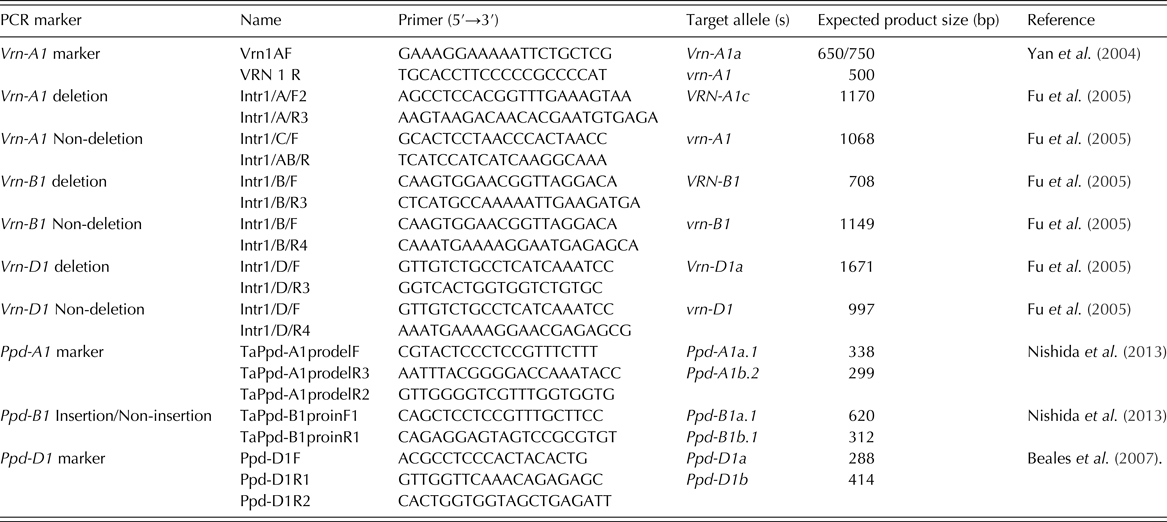
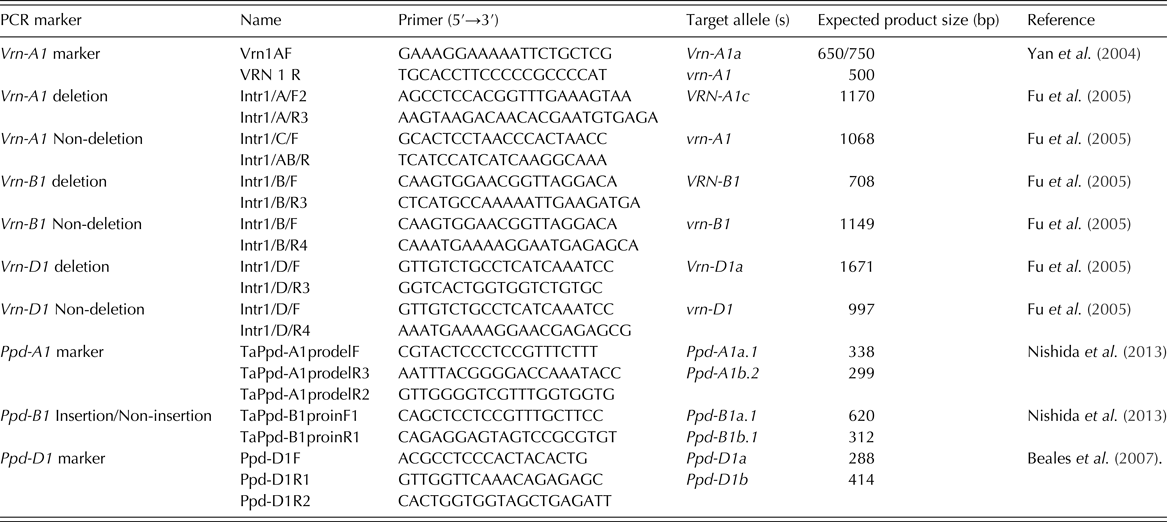
Genomic DNA was extracted from a 0·2 g sample of fresh leaf tissue from single plants according to Lassner et al. (Reference Lassner, Peterson and Yoder1989) with several modifications. These included an additional washing step with chloroform and RNA digestion with ribonuclease A. Polymerase chain reaction (PCR) primers reported in Yan et al. (Reference Yan, Helguera, Kato, Fukuyama, Sherman and Dubcovsky2004) and Fu et al. (Reference Fu, Szucs, Yan, Helguera, Skinner, Von Zitzewitz, Hayes and Dubcovsky2005) were used to detect the presence of dominant and recessive alleles in Vrn-A1, Vrn-B1 and Vrn-D1 genes. Presence of photoperiod-insensitive and sensitive alleles in Ppd-A1, Ppd-B1 and Ppd-D1 genes were detected using PCR markers described by Beales et al. (Reference Beales, Turner, Griffiths, Snape and Laurie2007) and Nishida et al. (Reference Nishida, Yoshida, Kawakami, Fujita, Long, Akashi, Laurie and Kato2013) (Table 2). The PCR amplification was conducted in a Mastercycler gradient thermo cycler (Eppendorf, Hamburg, Germany). The reaction mixture in a volume of 10 µl contained 50 ng of genomic DNA, 10× Dream Taq buffer (contains 20 mm MgCl2), 10 mm dNTP mix, 10 µm of each forward and reverse primer and 0·25 U Dream Taq polymerase (Thermo Scientific, Lithuania). Cycling conditions varied depending on the different PCR markers used in the current study according to previous studies (Yan et al. Reference Yan, Helguera, Kato, Fukuyama, Sherman and Dubcovsky2004; Fu et al. Reference Fu, Szucs, Yan, Helguera, Skinner, Von Zitzewitz, Hayes and Dubcovsky2005; Beales et al. Reference Beales, Turner, Griffiths, Snape and Laurie2007; Nishida et al. Reference Nishida, Yoshida, Kawakami, Fujita, Long, Akashi, Laurie and Kato2013). The PCR products were analysed in 1·5% agarose gels with ethidium bromide and visualized under ultra-violet (UV) light.
PCR primers used to identify Vrn and Ppd genes in winter wheat cultivars
Field experiments
Field experiments were set up in an eight-course crop rotation in Dotnuva, Lithuania (55°23′28″ N, 23°52′35″ E) during 2014–2016. The soil of the experimental site is Endocalcari-Epihypogleyic Cambisol (CMg-p-w-can), light loam (ISSS Working Group RB Reference Bridges, Batjes and Nachtergaele1998). It contained 1·5–2·0% humus, available phosphorus (P2O5) ranging from 190 to 240 mg/kg, available potassium (K2O) from 180 to 260 mg/kg and pH 6·5–7·0. Each trial was preceded by bare fallow and situated in the same field. Fertilizer nitrogen: phosphorus: potassium (N:P:K) rate before sowing was 15 : 60 : 90 kg/ha, and 90 kg N/ha was applied following the resumption of vegetative growth in the spring. Weeds were controlled by herbicides in the autumn. Other pesticides (insecticides and fungicides) during the plant growing season were not applied. Winter wheat cultivars were sown in 3/m2 plots using a randomized design with two replications at a seed rate of 450 seeds/m2. The seeds were not treated with pesticide. The evaluation of winter hardiness under field conditions was conducted in April 2015 and 2016 by visual scoring on a 1–9 basis (Armonienė et al. Reference Armonienė, Liatukas and Brazauskas2013), where 1 = 100% of plants killed and 9 = all plants survived.
Meteorological conditions
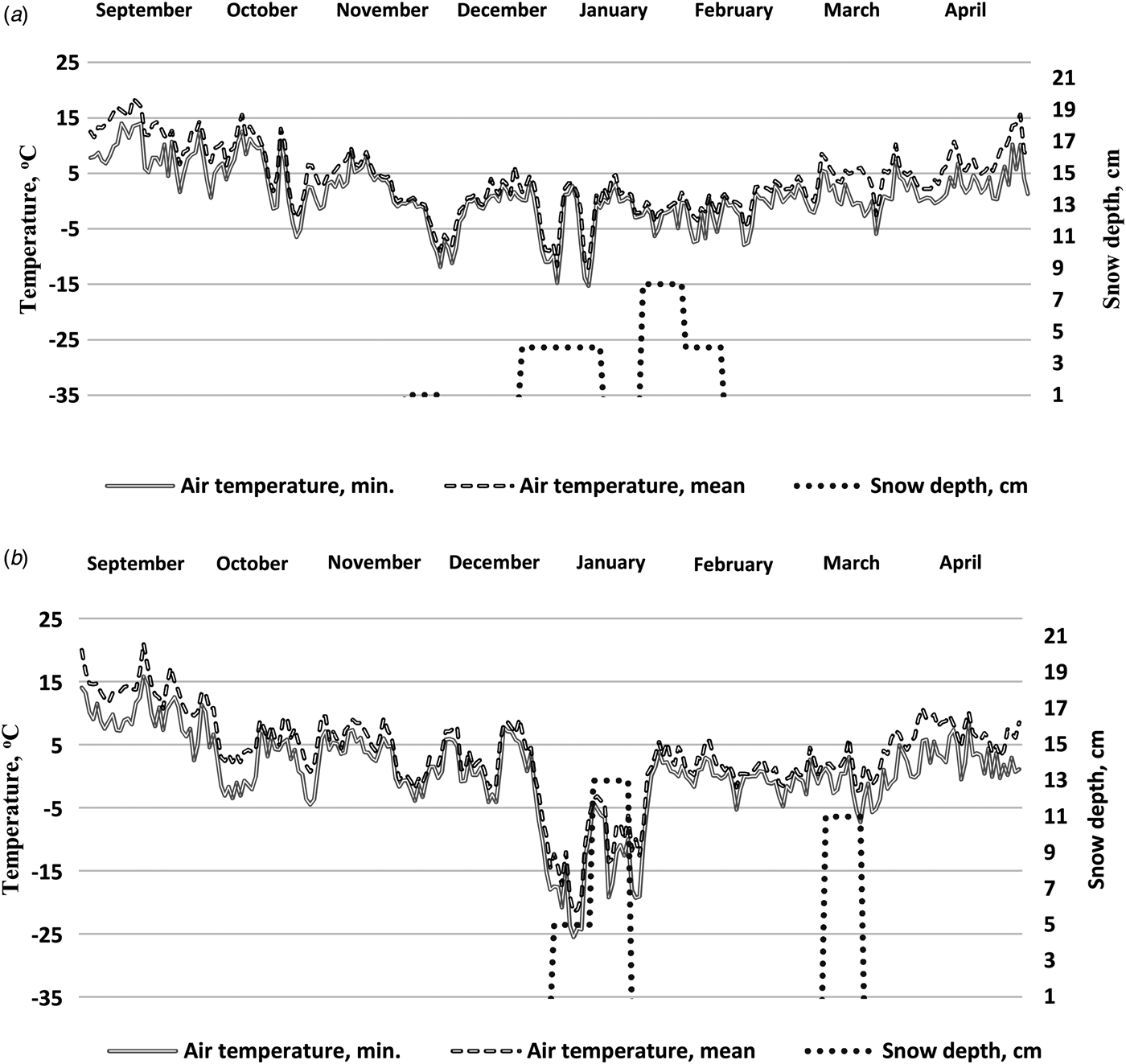
The two field experiments performed over the 2014/15 and 2015/16 autumn-winter seasons had different climatic conditions. The weather conditions during the winter of 2014/15 were too mild to evaluate winter hardiness in the field. However, the winter of 2015/16 was severe: the air temperature dropped to −25·5 °C in January (Fig. 1), which enabled evaluation of winter hardiness in the field in this season.
Daily minimal and mean air temperatures and snow depth during the growing seasons of (a) 2014/15 and (b) 2015/16.

Vernalization duration test and measurement of earliness per se
All 52 cultivars tested were studied for vernalization requirement duration. Each genotype was planted in four replications: one seed of each genotype was planted into a single cell (125/cm3) of a 28-cell pack, filled with universal peat substrate GP0428 (Durpeta, Lithuania). The plants were grown at 20 °C in a plant growth chamber (CLF Plant Climatics, Germany) with a 16-h photoperiod at a light intensity of 600 µmol m2/s and an absolute humidity of 12·1 g/m3 until the seedlings reached the 3-leaf stage. Afterwards each cultivar was vernalized for durations of: 3, 5, 7 and 9 weeks at 4 °C. After vernalization, the plants were grown in a greenhouse at 18–20 °C under a 16-h photoperiod. Plants were irrigated weekly with nutrient solution containing macro and micronutrients. The number of days till heading date for each plant was scored after the end of vernalization. The minimal and optimal vernalization requirements for each plant were determined. Minimal vernalization requirement is the period of vernalization that allows heading of all plants, although the plants are delayed. Optimal vernalization requirement is the period of vernalization when delay in heading is significantly the smallest. The difference of genotypes in earliness per se was measured in conditions when the plants were fully vernalized (9 weeks) and grown under 16-h photoperiod day.
Freezing tolerance test
Twelve winter wheat varieties with contrasting photoperiod sensitivity, vernalization duration requirement and winter hardiness (Table 3) were chosen for freezing tolerance evaluation. For each genotype tested, 10 seeds were planted into a single cell (125/cm3) of a 28-cell pack, in 2 mm granule size perlite-vermiculite (1 : 1) substrate (Agrowermikulit, Poland). Each genotype was planted in six replications for each temperature point with randomization. Plants were grown at 20 °C in a plant growth chamber (CLF Plant Climatics, Germany) with a 12-h photoperiod at a light intensity of 600 µmol m2/s and an absolute humidity of 12·1 g/m3 until seedlings reached the 3-leaf stage. The plants were then cold-acclimated by transferring them into the growth chamber set at 2 °C with an 8-h photoperiod at a light intensity of 200 µmol m2/s and an absolute humidity of 4·45 g/m3 for 3 weeks. The plants were irrigated weekly with nutrient solution containing macro and micronutrients. Just prior to freezing, plants were counted and the pots drenched with cold water. Freezing tests were carried out in a programmable freezing chamber PE 2412 UY-LX (Angelantoni Industrie, Italy). The temperature of the substrate in the plant cell pack at crown depth was monitored at 2-min intervals using the temperature probes attached to an automatic KD7 recorder (Lumel, Poland). The plants were kept at 2 °C for 1 h, whereupon the temperature in the freezer was reduced from 2 °C to −6 °C over a 5-h period and held at −6 °C for 72 h to allow the heat produced during ice formation to dissipate. The control plant group was removed. The temperature was then gradually decreased at a rate of 1·2 °C to a target temperature (−8 °C, −10 °C, −12 °C, −14 °C, −16 °C) and held at the target temperature for 4 h. After these steps, trays were transferred to a growth chamber with a constant temperature of 4 °C under a short-day regime for the first 24 h. Leaves were cut off after each freezing test and plants were moved to the greenhouse at 18 °C. Plant recovery was rated (alive v. dead) after 3 weeks and LT50 was calculated for each sample. A generalized linear model using a binomial distribution to fit a curve was employed, while MASS package (Venables & Ripley Reference Venables and Ripley2002) for R (R Core Team 2015) was used to calculate a fractional dosage value of 0·5 and to determine LT50 value for each cultivar.
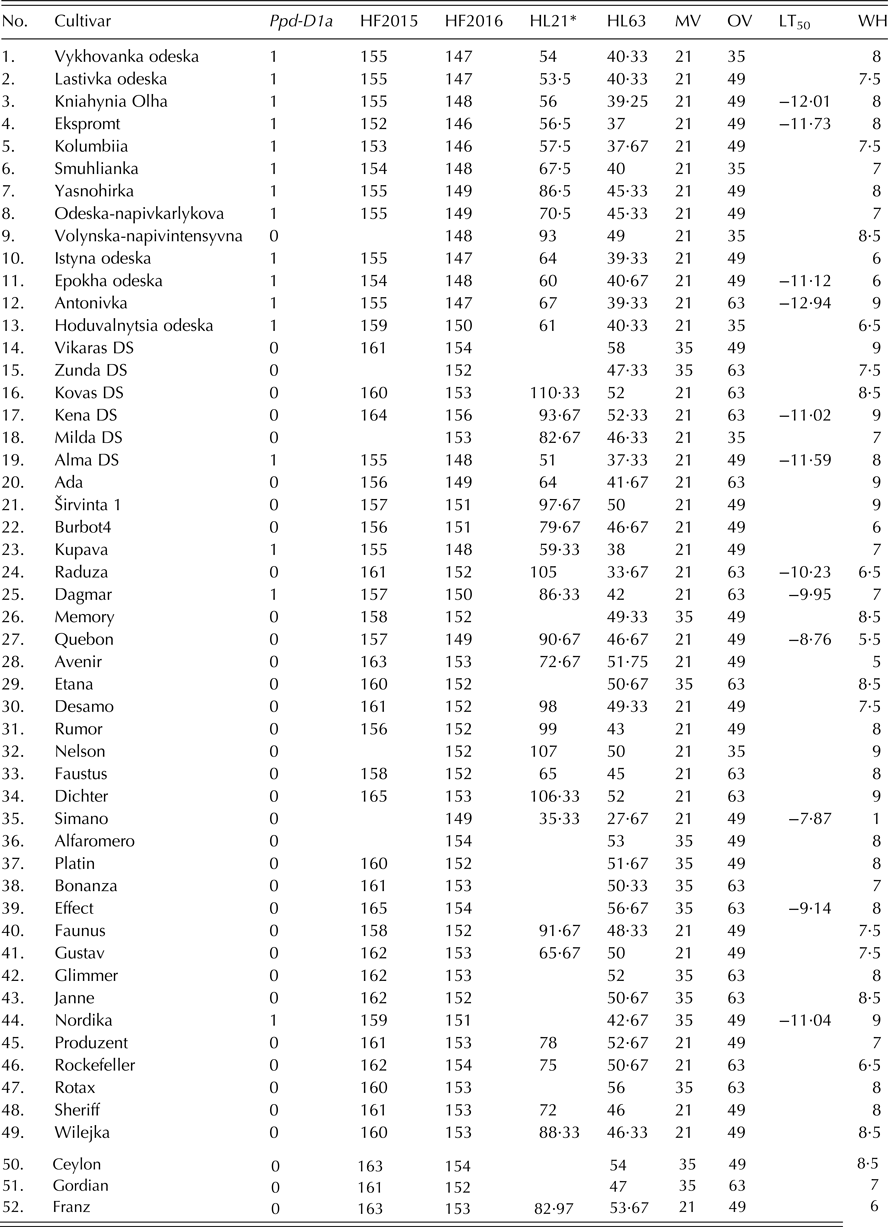
The mean values of studied traits

HF2015, days till ear emergence in the field 2015; HF2016, days till ear emergence in the field 2016; HL21, days till ear emergence in the laboratory (after 21 days of vernalization); HL63, days till ear emergence in the laboratory (after 63 days of vernalization) earliness per se; MV, minimal vernalization requirement; OV, optimal vernalization requirement; WH, winter hardiness, field score, from 9 to 1, where: 9 is 100% survived, 1 is 0%.
* Days till ear emergence counted only for genotypes which headed after 21 days of vernalization.
Statistical analysis
The differences in ear emergence due to the duration of vernalization treatment were analysed by one-way analysis of variance (ANOVA) followed by Student's t test and Fisher's Least Significant Difference (LSD) test.
Spearman correlation coefficients between the mean values of winter hardiness and other traits studied was reported at P < 0·05, 0·01 and 0·001.
All statistical procedures were performed using SAS software version 9·4.
RESULTS
Frequency of the Vrn-1 and Ppd-1 alleles
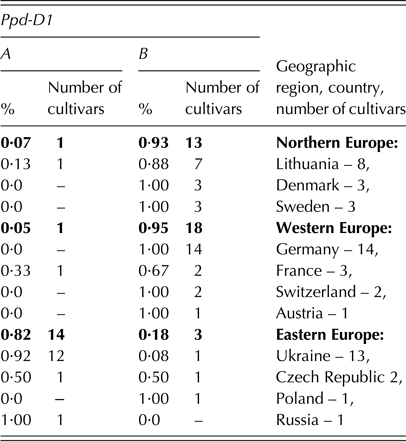
Analysis performed with gene-specific molecular markers revealed the presence of the recessive (winter) vrn-A1 allele in 0·98 of the genotypes in the winter wheat collection (Table 4). Only one facultative wheat cv. Simano carried the dominant allele Vrn-A1a. The recessive alleles vrn-B1 and vrn-D1 and photoperiod-sensitive alleles Ppd-A1b.2 and Ppd-B1b.1 were identified in all cultivars. By contrast, the main polymorphism was detected for Ppd-D1. Of the 52 cultivars tested, 36 (0·69) carried photoperiod-sensitive allele Ppd-D1b, whereas 16 (0·31) cultivars carried photoperiod-insensitive allele Ppd-D1a (Table 4). The latter was mainly found in wheat cultivars from Eastern Europe (14 out of 16 cultivars), whereas in other European regions, it was uncommon (two cultivars) (Table 5).
The variation of cultivars in Vrn and Ppd

Distribution of wheat cultivars with different Ppd-D1 alleles in different European regions

Analysis of vernalization requirement duration
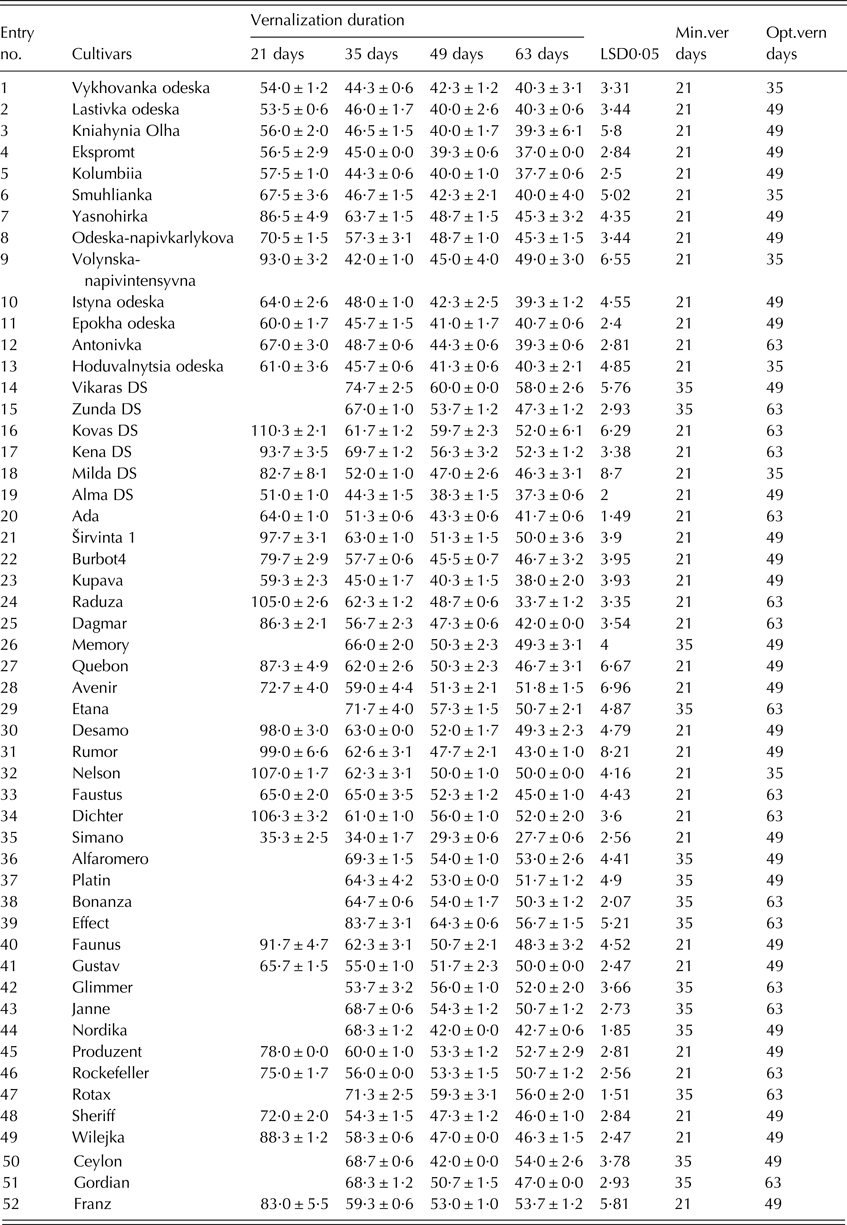
Phenotypic evaluation of minimal and optimal vernalization requirement duration revealed the variation of this trait between cultivars (Table 6). The group of cultivars with optimal vernalization requirement duration of 5, 7 and 9 weeks accounted for 0·12, 0·56 and 0·33, respectively. The group with the longest vernalization requirement duration consisted of cultivars from Northern Europe (0·41), Western Europe (0·41) and Eastern Europe (0·18).
The vernalization duration requirement of winter wheat cultivars

Cultivars from Northern Europe mainly required 9 weeks of optimal vernalization duration (0·58), 0·33 of them required 7 weeks and 0·08 required 5 weeks. Only one cultivar (0·08) from Ukraine required an optimal vernalization duration of 9 weeks, eight cultivars (0·62) needed 7 weeks and four cultivars (0·31) required 5 weeks (Table 6).
The relationship between Ppd-D1 alleles and ear emergence in field conditions
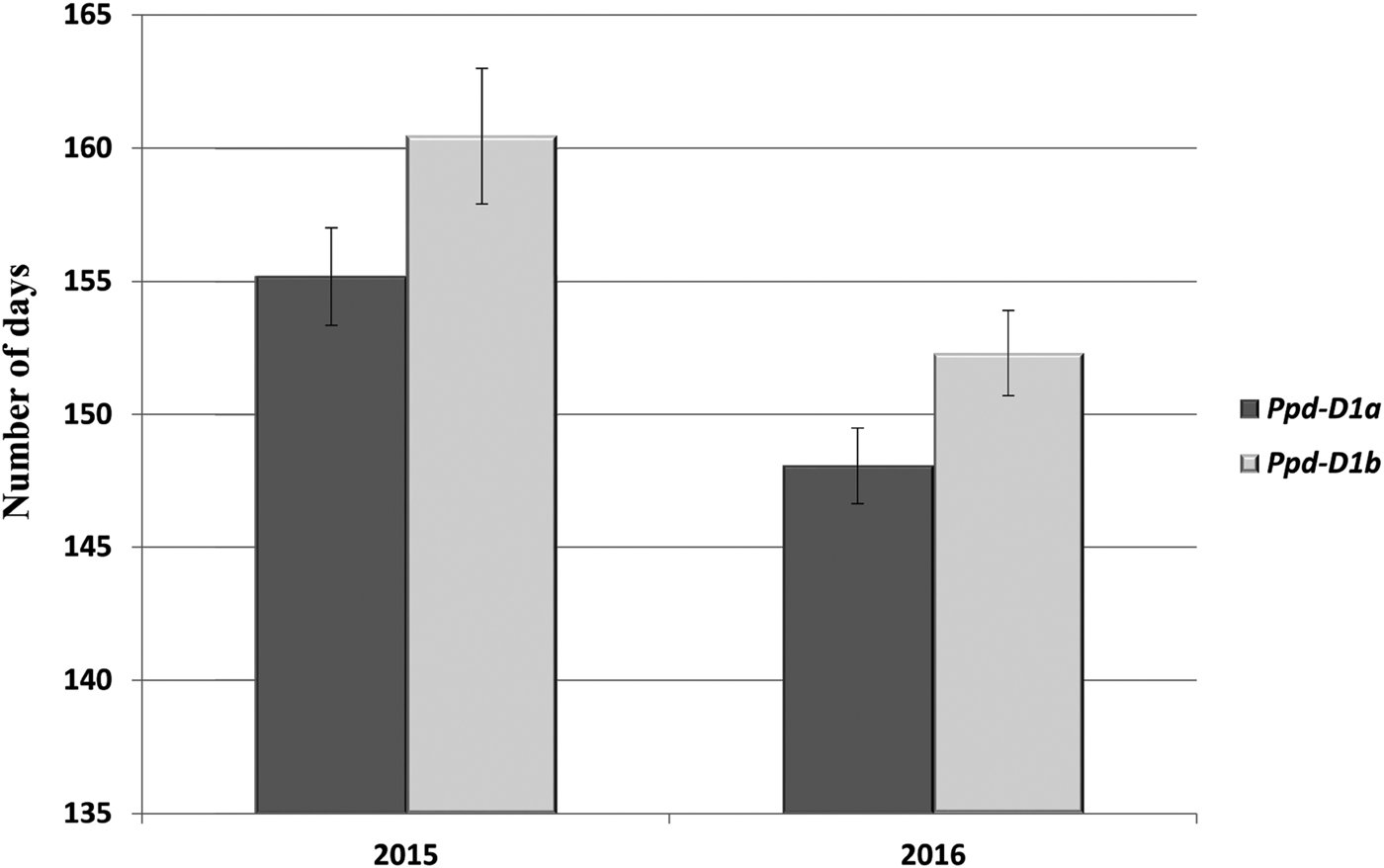
The group of cultivars with a photoperiod-insensitive dominant Ppd-D1a allele had significantly (P < 0·05) earlier heading (4–5 days earlier) compared with the group of cultivars carrying a photoperiod-sensitive recessive Ppd-D1b allele in both experimental years (Fig. 2).
The average number of days from 1 January till ear emergence for 52 wheat cultivars under field conditions. Error bars on the graph show standard deviation.

Earliness per se
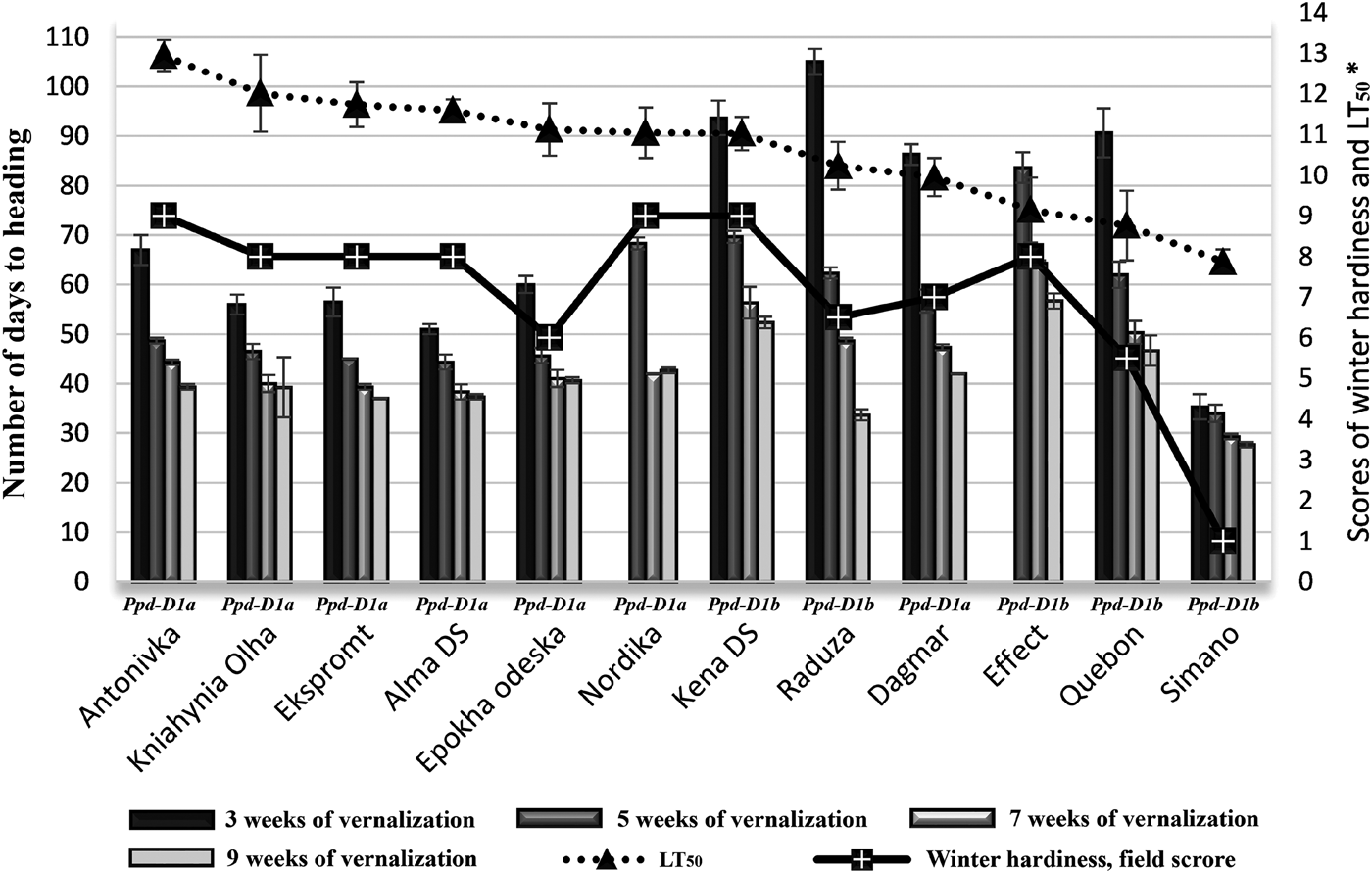
The cultivars studied showed broad variability in earliness per se: duration from vernalization to heading ranged from 28 days in cv. Simano to 58 days in cv. Vikaras DS (Table 3). The cv. Simano also differed from the other cultivars by possessing the dominant Vrn-A1a allele. Photoperiod-sensitive cv. Raduza, with strong vernalization requirement (optimal vernalization duration of 9 weeks), quickly reduced the duration of growing period from 105, 62, 48 to 33 days (duration from vernalization to heading) under 3, 5, 7 and 9 weeks of vernalization, respectively. However, under field conditions cv. Raduza belonged to the group of late cultivars in both studied years. Ukrainian cultivars belonged to the early group, requiring 37–45 days from vernalization to heading. The Lithuanian cv. Alma DS also belonged to the early group, which can be explained by its pedigree, as it originates from crossing the two Ukrainian cultivars Albatross odeskij and Kijanka.
The relationship among traits determining the level of winter hardiness
Winter hardiness was strongly correlated with the level of LT50 (r = –0·75, P < 0·01) in the 2015/16 autumn–winter growing season. The Ppd-D1 allele and heading date also showed strong correlation in both years of the study (P < 0·01). No significant correlation between winter hardiness and Ppd-D1 or winter hardiness and optimal duration of vernalization requirement was detected (Table 7).
Matrix of Spearman correlation coefficients for trait means of 52 winter wheat cultivars

HF2015 – days till ear emergence in the field, 2015.
HF2016 – days till ear emergence in the field, 2016.
HL3 – days till ear emergence in the greenhouse (after 3 weeks of vernalization).
HL9 – days till ear emergence in the greenhouse (after 9 weeks of vernalization) earliness per se.
OV – optimal requirement of vernalization.
WH – winter hardiness, field score, from 9 to 1, where: 9 is 100% survived, 1 is 0%.
* The correlation calculated only for plants which headed.
† LT50 with other traits correlated within 12 cultivars: Antonivka, Kniahynia Olha, Ekspromt, Alma DS, Epokha odeska, Nordika, Kena DS, Raduza, Dagmar, Effect, Quebon, Simano.
The present results indicate that under Lithuania's conditions better winter hardiness was observed in cultivars with LT50 from −12·63 °C to −11·59 °C. Ukrainian cv. Epokha odeska was characterized by higher LT50 (−11·12 °C), but already possessed a lower winter hardiness score of 6 (Fig. 3). LT50 of cv. Nordika (European control of cold tolerance) was −11·04 °C, but it was characterized by significantly longer vegetation period (>230 days) and winter hardiness score of 9. Kena DS is a local cultivar, highly adapted to winter stress in Lithuania. LT50 of Kena DS was lower than that of the group of Ukrainian cultivars, but it was characterized by extremely long vegetation period (274 days), and carried recessive PPD-D1b allele, its winter hardiness score was 9. The next group of cultivars with LT50 from −10·23 °C to −7·87 °C scored from 1 to 8, irrespective of the fact that they possessed PPD-D1b allele, long vernalization duration requirement and long vegetation period (Fig. 3).
The relationship among winter hardiness, LT50 and heading date after 3, 5, 7 and 9 weeks of vernalization. ‘Simano’ carries one dominant Vrn-A1.a and two recessive vrn-B1 and vrn-D1 alleles, other cultivars carry three recessive alleles (vrn-A1, vrn-B1 and vrn-D1). *The values of LT50 in figure are displayed as conditional positive numbers (score 1 corresponds to −1, 12 corresponds to −12, etc.).

DISCUSSION
Winter hardiness is a complex phenotypic trait under the control of multiple traits/genes, which interact in a complex pathway and is regulated by the environment. Wheat plants are subjected to different stresses: freezing, desiccation, anoxia, ice-encasement during the winter period. Moreover, these factors are endured for different durations, intensity and at different developmental stages. The primary component of winter hardiness is tolerance to low temperatures (Fowler et al. Reference Fowler, Gusta and Tyler1981). Large numbers of genes are triggered (down-regulated or up-regulated) in winter wheat leaves and crown tissue after exposure to low temperature (Laudencia-Chingcuanco et al. Reference Laudencia-Chingcuanco, Ganeshan, You, Fowler, Chibbar and Anderson2011; Armonienė & Brazauskas Reference Armonienė and Brazauskas2014). Moreover, the full expression of low temperature tolerance genes is enabled only in the vegetative stage. Wheat plants gradually lose their ability to tolerate freezing when vernalization requirement is met and photoperiod sensitivity does not delay growth. Fowler & Limin (Reference Fowler, Limin, Buck, Nisi and Salomón2007) reported that the strong photoperiod and vernalization requirements prevent plants transitioning from the vegetative phase into the reproductive growth stage until the risk of low temperature damage has passed. Batashova et al. (Reference Batashova, Dryzhenko, Tishchenko and Veisz2011) has shown that a combination of long vernalization period and strict photoperiod sensitivity solves the problem of winter wheat plants going through their development phases too quickly in the autumn and protects plants during ice-encasement in thawing periods and from freezing damage. Plants which require a long period for vernalization at the end of autumn and at the beginning of winter are less developed than those with short vernalization periods; such differences in some environments can be significant for winter survival. At the end of winter, growth of photoperiod-sensitive plants is delayed: thus, they possess an advantage for environments where late freezing occurs. In environments where summer conditions are hot and dry, which is common for southern latitudes and for some parts of eastern Europe, the photoperiod-insensitive cultivars resume growth earlier and have an advantage compared with cultivars with sensitive alleles, and consequently produce significantly larger grain yields. In contrast, genotypes possessing sensitive alleles and having a prolonged vegetative growth period usually produce higher grain yield under the conditions of northern Europe, where cool summers with plenty of rainfall are common (Worland et al. Reference Worland, Borner, Korzun, Li, Petrovic and Sayers1998; Snape et al. Reference Snape, Butterworth, Whitechurch and Worland2001; Fowler Reference Fowler, Appels, Eastwood, Lagudah, Langridge, Mackay, McIntyre and Sharp2008; Fowler et al. Reference Fowler, Byrns and Greer2014).
Due to the complexity of wheat adaptation the current study focused on the four main components, which determine wheat adaptation: freezing tolerance, vernalization, photoperiod requirement and earliness per se.
Evaluation of LT50, as the most accurate method, was chosen to study freezing tolerance. The LT50 index proved by Fowler et al. (Reference Fowler, Gusta and Tyler1981) is broadly applied in wheat breeding and has high correlation with field winter hardiness. In the current experiment, freezing tolerance evaluated via LT50 correlated highly with field winter hardiness for the 2015/16 growing season, when the most crucial stress over the winter was a drop in temperature to −25·5 °C with snow cover of only 5 cm on 6 January 2016.
The molecular analysis of Vrn1 alleles showed that all winter wheat cultivars except facultative cv. Simano carried all three recessive alleles of the Vrn1 gene. Among three Vrn alleles, the spring Vrn-A1a allele most effectively eliminates the need for vernalization and provides the earliest heading. Plants with one dominant Vrn-A1a allele require partial cold treatment or no vernalization at all (Shcherban et al. Reference Shcherban, Borner and Salina2015; Muterko & Salina Reference Muterko and Salina2017). The facultative cv. Simano showed partial requirement for vernalization, with vernalization to heading lasting for 35, 34, 29 and 28 days under 3, 5, 7 and 9 weeks of vernalization, respectively. Significantly, the smallest delay in heading was after 7 weeks of vernalization, meaning the cold temperature requirement was essentially fulfilled by 7 weeks of growth at low temperature. Along with the dominant Vrn-A1a allele, cv. Simano had the highest LT50 and was characterized by the lowest winter hardiness ability. It is generally known that the classical winter wheat cultivars carry all three recessive alleles (vrn-A1, vrn-B1 and vrn-D1) but at the same time the optimal vernalization length ranges mostly from 20 to 60 days (Petr & Hnilicka Reference Petr and Hnilicka2002; Fayt et al. Reference Fayt, Simonenko, Mokanu and Popova2007). Stelmakh et al. (Reference Stelmakh, Litvinenko and Fayt2004) reported that duration of vernalization is an important trait and that neglecting it could result in a reduction of wheat adaption during the winter period. Stelmakh et al. (Reference Stelmakh, Zolotova and Fayt2005) and Fayt (Reference Fayt2009) suggest that duration of vernalization is controlled by independent genes, which differ from the Vrn-1 series gene system, and designated them as Vrd genes (vernalization requirement duration genes) (Stelmakh et al. Reference Stelmakh, Zolotova and Fayt2005; Fayt Reference Fayt2009). Cytogenetic analysis has established that the Vrd1 gene is located on chromosome 4A, Vrd2 gene on chromosome 5D (Stelmakh et al. Reference Stelmakh, Zolotova and Fayt2005; Mokanu & Fayt Reference Mokanu and Fayt2008; Fayt Reference Fayt2009). However, this hypothesis has not been entirely confirmed by molecular genetics studies. Therefore, to determine the variation of cultivars for this trait, the current study used phenotypic evaluation of plants with different vernalization duration in a controlled climate chamber.
To study the photoperiod requirement, gene-specific analysis of all three Ppd loci was used, which showed that all of the studied cultivars were polymorphic for only one Ppd-locus (Ppd-D1). The polymorphism of a and b alleles of Ppd-D1 locus correlated with heading time in the greenhouse, and in the field during 2015 and 2016, respectively. The difference in heading time between wheat plants carrying the Ppd-D1b (sensitive) and Ppd-D1a (insensitive) alleles under field conditions vary commonly from 3 to 8 days depending on environmental conditions. Kiss et al. (Reference Kiss, Balla, Veisz, Lang, Bedo, Griffiths, Isaac and Karsai2014) demonstrated that the difference in heading time between the groups with these two alleles was 3–4 days under field conditions in Hungary. In the current study, a 4- to 5-day difference was observed under field conditions in Lithuania, while Wilhelm et al. (Reference Wilhelm, Boulton, Al-Kaff, Balfourier, Bordes, Greenland, Powell and Mackay2013) determined a 7- to 8-day difference between allelic groups under field conditions in the UK.
Molecular genetic studies of Ppd-D1 alleles showed higher occurrence of the photoperiod insensitive Ppd-D1a allele in the southern regions, while the photoperiod sensitive allele Ppd-D1b predominates western and northern regions of Europe (Šíp et al. Reference Šíp, Chrpová, Žofajová, Milec, Mihalik, Pánková and Snape2011; Kiss et al. Reference Kiss, Balla, Veisz, Lang, Bedo, Griffiths, Isaac and Karsai2014; Shcherban et al. Reference Shcherban, Borner and Salina2015). The current study confirms previous reports that expression of earliness is mainly determined by the polymorphism of Ppd-D1 alleles.
The broad variability in earliness per se between the studied cultivars (from 28 to 56) indicates that parameters of earliness per se can also be applied in wheat breeding for fine tuning to the specific environment. Lateness is suitable for northern and some western countries, where climate is favourable for a prolonged vegetation period and yield potential. However, earliness per se genes can be ‘replaced’ by strong requirements for vernalization and photoperiod. In laboratory tests it was determined that cv. Raduza, which carries the recessive Ppd-D1b allele and is characterized by strong requirement for vernalization, experienced a sharp reduction in the number of days from vernalization to heading from 105, 62, 49 to 34 days after 3, 5, 7 and 9 weeks of vernalization, respectively. Fully vernalized plants of cv. Raduza under long days belonged to the early group. However, in the field experiment, cv. Raduza belonged to the group of late cultivars in the 2 years of study. Obviously, the development of plants was slowed down by a strong requirement for vernalization and short photoperiod during autumn-winter period and by the long photoperiod requirement during spring. Thereby, it indicates that earliness or lateness of plants can be ‘tuned up’ by manipulation of all three components: earliness per se, requirements for vernalization and photoperiod. However, in the current experiment, no correlation was found between winter hardiness and earliness per se. The earliness per se genes do not have a considerable effect on the expression of freezing tolerance as they are generally not expressed until after the vegetative/reproductive transition signal occurs (B. Fowler, personal communication).
The current study aimed to discover how the main adaptive traits of cultivars from diverse ecoclimatic conditions differ and how these traits are correlated in the environment of Lithuania. It was found that cultivars from different geographic latitudes contrasted phenotypically in the main genetic systems, which provide wheat adaptability and a level of winter hardiness. No correlation was found in the current study between optimal duration of vernalization requirement and winter hardiness, or between winter hardiness and photoperiod sensitivity. This might be explained by the fact that cultivars from the southern geographic regions were characterized by the lowest level of LT50, and shorter vernalization duration requirement and photoperiod insensitivity. Gusta et al. (Reference Gusta, O'Connor and MacHutcheon1997) also observed that some northern European wheat cultivars with requirement for very long vernalization duration did not possess high levels of freezing tolerance. Fowler (Reference Fowler, Appels, Eastwood, Lagudah, Langridge, Mackay, McIntyre and Sharp2008) reported that in regions with long mild winters, a high level of freezing tolerance is often less important than strong vernalization and photoperiod requirement, which delays the sensitive reproductive growth stage until the risk of damage from freezing has passed. The results obtained in the current study confirm the statement that cultivars from northern and western Europe are characterized by strong vernalization and photoperiod requirements and at the same time higher LT50, compared with cultivars from the southern region (Ukraine). Winters in Ukraine are much shorter and followed by an early, warm spring; however, freezing temperatures (below −18 °C), without snow cover, occur during the winter. Such environments might have prompted breeders to develop cultivars with strong freezing tolerance and fewer vernalization and photoperiod requirements that enable wheat plants to survive winter and start growing quickly in early spring. The results of the current study show that earliness, weak vernalization and photoperiod requirements of the group of cultivars with lower levels of LT50 were not crucial for winter hardiness in the environment of Lithuania during the experimental years. Winter hardiness varied from 6 to 9 points in this group.
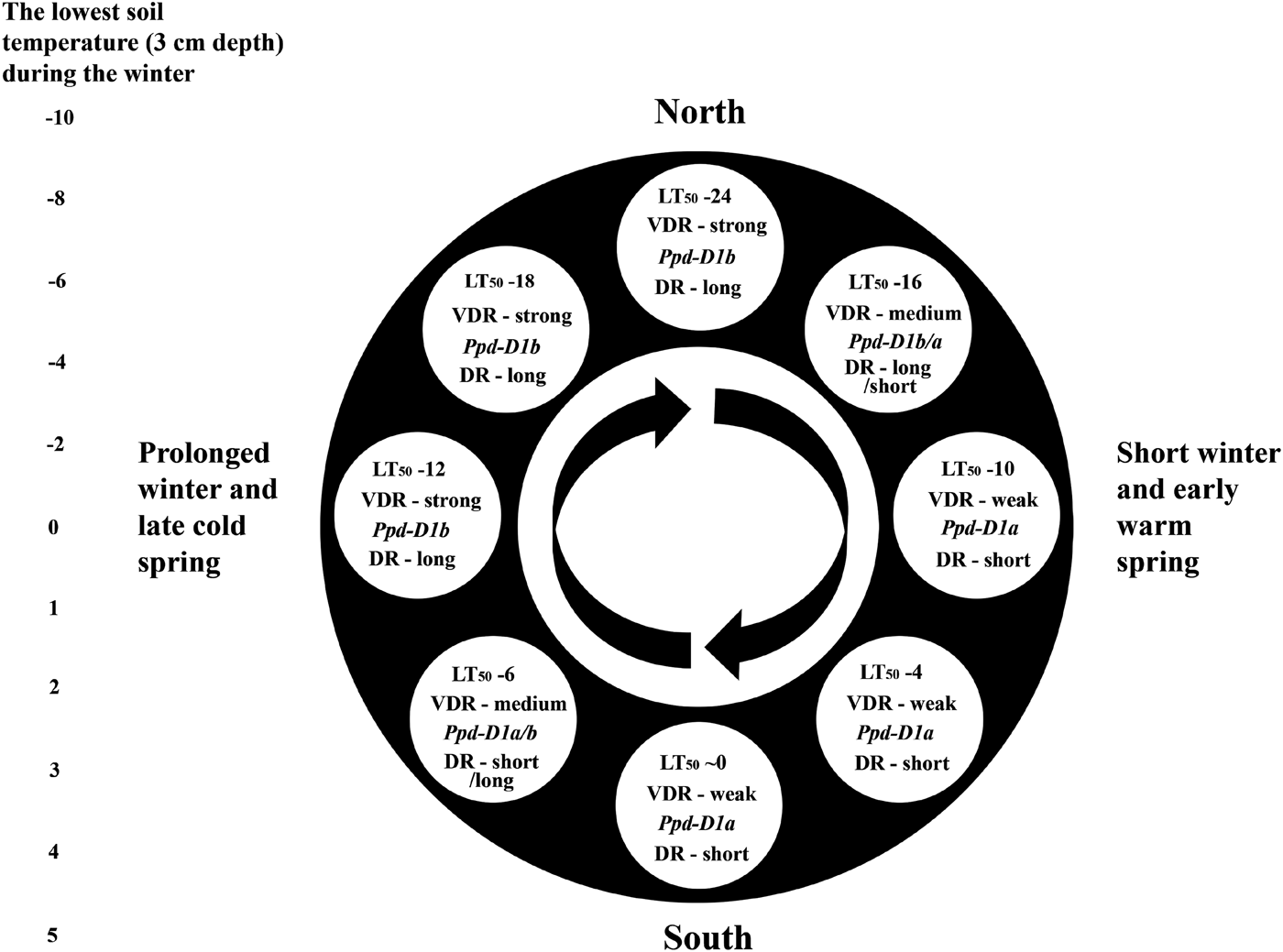
The results demonstrated that freezing tolerance, vernalization requirement, photoperiod requirement and earliness per se are highly interactive with the environment. Depending on fluctuation of minimal soil temperature during the winter, duration of winter and temperature during spring, the proper combination of above-mentioned components can be different (Fig. 4).
Modelling of optimal combinations of the four main components determining the adaptation and winter hardiness of winter wheat. VDR – vernalization duration requirement. Ppd-D1 – alleles (Ppd-D1b – recessive photoperiod sensitivity allele, Ppd-D1a – dominant photoperiod insensitivity allele). DR – development rate (earliness per se genes) – time to heading after vernalization and photoperiod requirements are satisfied.

Accordingly, correlation of these components with field winter hardiness will differ depending on the climate conditions of a particular environment and year fluctuations. LT50 is the most crucial component in environments where very low soil temperature (at 3 cm depth) is observed. Moreover, the LT50 will be better correlated with winter hardiness in environments where short winters and low freezing soil temperatures are observed compared with environments with a prolonged winter, where the significance of other components is increased. Variation of these genetic systems provides enormous scope for target manipulation and enables breeders to improve broad adaption of wheat to specific ecoclimatic conditions. Also, knowledge of cultivar characteristics provides additional valuable information for proper cultivation. For example, cultivars with a strong vernalization requirement and a recessive Ppd-D1b allele in environments with short winters and early springs can be sown earlier than those requiring short vernalization duration and possessing a photoperiod-insensitive Ppd-D1a allele.
To improve the potential of winter hardiness, genotypes with strong vernalization and photoperiod requirements and lower level of LT50 than local genotypes should be involved in breeding programmes. This can help develop segregating populations including genotypes with stronger winter hardiness, which are adapted to the local environment. It must be taken into account that the sources of required traits can be found in distinct ecoclimatic regions. However, it should be noted that plant material can possess undesirable genes along with desirable ones. The selection of genotypes with a desirable combination of genes can be facilitated via the use of molecular markers (Ppd-1D alleles) and artificial environment (LT50, vernalization duration and earliness per se). For example, if the chosen parent's components differ in Ppd-D1 alleles, the choice of genotypes required in the next population can be facilitated significantly by using molecular markers, especially in cases when the recessive Ppd-D1b allele is desired. For practical breeding, it is critical to identify what combination of the main adaptive components is optimal and what stresses are limiting for a given area during winter. The complex target manipulation of these genetic systems in wheat breeding programmes can improve the proper choice of parent components for crossing and the selection of valuable genotypes and will enable the development of new winter-hardy wheat cultivars adapted to specific environments and consequently maximize the grain yield.