Background
MindMatters, implemented by Principals Australia Institute, is a resource and professional development initiative supporting Australian secondary schools in promoting and protecting the mental health, and social and emotional wellbeing of members of school communities, preferring a proactive paradigm (Covey, Reference Covey1989) to the position of ‘disaster response’. This is achieved by the development of high quality activities and resources that support local school and community teams to work in schools with students. Its starting point assumes that through sharing the activities, the school/community teams build a shared local knowledge base that informs the mental health and wellbeing curriculum, as well as establishing a school/community-based support group. While the MindMatters national focus has continued, grown and become embedded in schools since its beginning in 2000, MindMatters staff have also specifically sought to establish localised mental health and wellbeing (MHWB) promotion in Aboriginal and Torres Strait Islander communities that empowers local school and community groups to build on community values and intergenerational capacities for supporting the MHWB of young people. This article outlines the processes for successful practice that have been developed in a very remote Aboriginal school context and highlights the strengths and benefits of this approach from the perspectives of Anangu (Pitjantjatjara/Yankunytjatjara people of Central Australia) educators. Statistically speaking, the incidences of mental health and wellbeing related concerns in these areas remain high and well in excess of mainstream occurrences. Australian Indigenous HealthInfoNet (2012) provides an alarming picture of Indigenous disadvantage across the country in comparison to the rest of the population, in terms of the indicators of mental health and wellbeing. This disparity is reflected repeatedly in national statistics relating to health, education, employment and financial status (see Australian Human Rights Commission, 2008; Australian Indigenous HealthInfoNet, 2012; Dusseldorp Skills Forum, 2009; Guenther, Reference Guenther2012). In relation to MHWB, the Australian Indigenous HealthInfoNet (2012) highlights that 80% of Aboriginal and Torres Strait Island Australians report higher rates of experiencing ‘stressor(s)’ (stressful events in a person's life) than the non-Indigenous population. Further, they state that:
In 2008–09, Indigenous people were almost twice as likely to be hospitalised for ‘mental and behavioural disorders’ than were other Australians. Indigenous people were twice as likely to die from these disorders as non-Indigenous people and, deaths from intentional self-harm are especially high for young Indigenous people.
From the MindMatters perspective, working closely and respectfully with Aboriginal and Torres Strait Islander communities goes far beyond a sense of mere symbolic justice or moral compulsion. As the data suggests, young Aboriginal and Torres Strait Island Australians are experiencing serious mental health and wellbeing issues at far higher rates when compared to the rest of the population. These incidences increase with the remoteness of the community. As a result, MindMatters has been seeking to engage in MHWB health promotion in new ways in order to address these issues for Aboriginal and Torres Strait Island young people in terms of self-harm, health outcomes and disengagement from meaningful or productive activities including education, training, employment and social (intergenerational) connection.
In the international context, Cooke, Mitrou, Lawrence, Guimond, and Beavon (Reference Cooke, Mitrou, Lawrence, Guimond and Beavon2007) clearly outline the statistical ‘gap’ that exists across four countries (Canada, the United States, Australia, and New Zealand) across a range of education, health, life expectancy and other measures between Indigenous and non-Indigenous populations, but make the following observation in comparing the contexts:
The resulting picture is best described as one of inconsistent progress. The improvement in overall HDI scores for Indigenous peoples in Canada, New Zealand, and the US is good news, but the lack of progress in Australia is worrying. (p. 10)
Cooke et al. (Reference Cooke, Mitrou, Lawrence, Guimond and Beavon2007) suggest some link between effective practices and various policy interventions, but highlight that the most commonly shared experience across these contexts is the statistical disparity between mainstream and Indigenous populations at national levels. The data also reveals increasing disadvantage as the remoteness of Aboriginal populations increases (see Australian Human Rights Commission, 2008; Dusseldorp Skills Forum, 2009; Guenther, Reference Guenther2012; McCuaig & Nelson, Reference McCuaig and Nelson2012; Villegas, in press). One explanation could be that this disparity in the data indicates a disparity in access to mainstream service provision, assuming that the key to statistical equality lies in equal access to the same service or opportunities. The Australian Bureau of Statistics (ABS, 2008) certainly highlights some of the access challenges for remote Indigenous secondary students:
While the majority of people in remote Indigenous communities in 2006 had relatively close access to primary schools, secondary school education was less readily accessible. Around 29% of people in remote Indigenous communities had a secondary school that went up to Year 10 level located within their community, whereas slightly less (26%) had a school that went to Year 12 level. A Year 10 school was located up to 10 kilometres away for a further 13% of people, while 9% had a school that went to Year 12 within 10 kilometres. (pp. 188–189)
In his address to the Sydney Institute on March 15, 2013, then opposition leader Tony Abbott announced that ‘access to education’ for Indigenous students would be the focus of his government should they win the upcoming election (see Fitzgerald, Reference Fitzgerald2013). There is an undeniable relationship between ‘access’ and ‘inequality’ in education terms (see also Young & Guenther, 2008). This relationship is also reflected in statements such as ‘Education is the key’ (Kronemann, Reference Kronemann2007), where having accessed and obtained the education ‘key’, doors of opportunity are opened; but as Guenther (Reference Guenther2012) highlights, simply accessing a service (in this case, attending school) does not necessarily end disadvantage, or in the terms the Australian government has come to adopt in analysing comparative population data, ‘close the gap’ (see Department of Families, Housing, Community Services and Indigenous Affairs, 2012).
In the remote Aboriginal and Torres Strait Islander community context, it may be more useful to see the image of the provision of education as the ‘key’ as an introduction to important questions about education provision and what this can achieve, rather than a simplistic, all-encompassing answer to the problem of educational disadvantage. Using the key analogy, the problematic nature of knowledge itself (discussed further in this article) suggests that an empowering education for remote Aboriginal and Torres Strait Islander students may require the acquisition of a range of alternative keys and doors, as opposed to the concept of a single key called ‘education’. Lingard, Hayes, Mills, and Christie (Reference Lingard, Hayes, Mills and Christie2003) emphasise that in order to deliver a ‘socially just’ education, educators of students in the margins must provide opportunities for students to acquire the ‘mechanical’ aspects of education (e.g., literacy and numeracy), but equally, the opportunity to engage intellectually in high order thinking that has meaning to the students is critical. Building on this definition of ‘socially just’, the need for education to affirm the identity and worth of Indigenous students in the classroom is viewed as critical. This must be reinforced by educators in a context that challenges and expects positive reciprocation from students and is well supported by academics internationally (see Bishop, Berryman, Tiakiwai, & Richards, Reference Bishop, Berryman, Tiakiwai and Richards2003; Delpit, Reference Delpit, Weis and Fine1993; Hayes, Mills, Christie, & Lingard, Reference Hayes, Mills, Christie and Lingard2006; Nakata, Reference Nakata2007b; Sarra, Reference Sarra2011).
Methodology
The aim of this article is to document and critically reflect on the process undertaken in moving the MindMatters community partnership approach from a mainstream resource into a program and resource that meets the MHWB needs of young people in remote Anangu community schools and communities. A literature review was undertaken to understand the policy, statistical and historical context to the MindMatters program. Multiple interviews were held in person and by written response with key MindMatters staff who have been involved in the process to describe the philosophy and processes engaged in the work with Anangu (Pitjantjatjara/Yankunytjatjara) community schools. Interviews were also conducted and recorded with Anangu and non-Anangu remote educators who have been involved in the program at the local school/community level. The interviews with Anangu educators were conducted in Pitjantjatjara language and translation for this process and publication was provided by the author and also by the Anangu Support Coordinator from Anangu Education Services. Follow-up meetings, discussions and interviews were held and written feedback was also provided to guide the work. The author also worked with Aboriginal Community Researchers (see Ninti One, 2012, 2013) to conduct student and community perception surveys on the MHWB of young people in three Northern Territory Anangu communities. This was conducted for the Nyangatjatjara College Board to provide some feedback on the impact of the MindMatters programs and the data has provided a source of information for this article.
A Tension Exists . . .
According to Rowling (Reference Rowling2007), a clinical approach to MHWB has traditionally held the dominant hand, both in terms of ideology and resources, in preference to what might be termed ‘community development’, ‘capacity building’ or ‘health promotion’ models. Increasingly, the national conversation in regards to ‘deficit data’ raised the level of demand for a different approach as worrying evidence (see Australian Human Rights Commission, 2008; Crocket, Reference Crockett2012; Rickwood, Reference Rickwood2005; Rowling, Reference Rowling2007) of inadequate service provision emerged. The tension that developed within the MHWB service provision industry between more traditional clinical approaches and community development, proactive health promotion advocates is summarised by Rowling (Reference Rowling2007):
Until the last decade, established youth mental health practitioners in schools, in youth focused agencies and in private practice, had predominantly focussed on services, treatment and early intervention and, to a lesser extent, on prevention. Given the different frame of reference of the work of these practitioners to those in health promotion, a population health approach to school mental health promotion was an unfamiliar area of practice for mental health workers. It was misunderstood and challenged as it was seen to be a threat. It was perceived as drawing resources from an established area of work that was already under-resourced rather than as an approach that complements existing practices. The moral and political imperatives of focussing on young people identified as ‘at risk’ or in need of extra support added pressure to maintain or increase existing services. (p. 3)
The MindMatters program recognises that mental health and wellbeing is a broader picture than the comparatively rigid frame that more traditional clinical approaches tend to apply. Services providers (including schools) do well to recognise the relational underpinnings of learning, growth and development and thereby prioritise the relational context in which the initiative is implemented. In practice, this means that services and resources need to be flexible, taking into account the complex, diverse and demanding nature of school and community settings. The MindMatters approach steps outside the prescriptive nature of the health sector or clinical/scientific models, prioritising flexible, localised and developmental approaches to MHWB support for young Australians within a community setting.
According to Rowling (Reference Rowling2007), the health promotion and community development approach to MHWB has, in recent times, formed a more constructive and collaborative relationship with other elements of the service provision industry, opening the way for a more holistic approach when working with young people: ‘This creation of a partnership between mental health and public health professionals is recognised internationally as leading practice’ (p. 2). The MindMatters approach has been to take this more cohesive partnership approach into a coalition with schools and the education sector more broadly, to further break down the historically segmented approach to MHWB education.
Taking the Challenge On
Against this backdrop, MindMatters was approached in 2004 by the Indulkana Anangu School to support mental health and wellbeing education programs through supporting staff and community collaboration. The Indulkana community is on the eastern fringe of the Anangu Pitjantjatjara Yankunytjatjara (APY) lands in the remote north-west corner of South Australia. As the relationship developed and the learning activities were created and taught, some of the more complex aspects of remote education began to emerge, demanding a reinterpretation of what an integrated, holistic approach to mental health and wellbeing education meant for the Anangu context. While MindMatters may have found more effective ways to synergise language, shared values and purpose from within the various elements of mental health promotion and service delivery organisations, the reality is that Anangu values, language and purposes could not be assumed to mirror those of other Australian community contexts.
Contested Knowledge Spaces
Not everything that counts can be counted; and not everything that can be counted counts. (Albert Einstein, n.d.)
MindMatters has continually sought and included Aboriginal and Torres Strait Islander perspectives (including employing Aboriginal staff and the formation of a national committee that involves Aboriginal members). They have made significant commitments to ‘walk the talk’ of respecting Aboriginal and Torres Strait Islander cultures in their work at every level. Even with all of the national level priority around working effectively with Aboriginal and Torres Strait Island communities, the program was once again faced with the challenge of producing place based materials and learning teams through a community partnership approach; a reminder that Australian Indigenous society is not a homogenous group, but in fact represents diverse languages, values histories, and cultural norms that do not necessarily fit neatly together, either with western knowledges or with each other.
Nakata (Reference Nakata2007a) describes the intersection between traditional and scientific (western) knowledge as the ‘cultural interface’. Nakata argues that: ‘In their differences, Indigenous knowledge systems and Western scientific knowledges are considered so disparate as to be “incommensurable” (Verran, Reference Verran2005) or “irreconcilable” (Russel, Reference Russel, Nakata and Langton2005)’ (p. 8).
As Aboriginal and Torres Strait Islander academics Arbon (Reference Arbon2008), Ford (Reference Ford2010) and Nakata (Reference Nakata2007a) explain, Aboriginal and Torres Strait Islander axioms, epistemologies, cosmologies and ontologies vastly differ from the inherent values, knowledges and implicit understandings that underpin the dominant western neo-liberal society's ‘norms’. Additionally, leading Aboriginal and Torres Strait Islander voices will be positioned from multiple and diverse standpoints (see Nakata, Reference Nakata2007b) in the debate about education and what is important for schools to consider. For example, Pearson (Reference Pearson2011) argues that in education terms, Aboriginal and Torres Strait Islander young people need to pursue the ‘serious’ (powerful) aspects of western education, without being distracted by claims of ‘cultural appropriateness’ that leave people stranded in between ‘powerful traditional knowledge’ and ‘powerful education’. On the contrary, Sarra (Reference Sarra2011) argues that affirming young people's Indigenous identity and values builds a sense of control, affording communities a sense of agency in their own pursuit of a ‘powerful’ education. Other academics highlight the impact on students where classroom social and academic norms differ greatly from their own lived experience. For example, Munns & McFadden (Reference Munns and McFadden2000) describe the resistance position taken by Aboriginal and Torres Strait Islander youth as their own implicit values and ontologies come into apparent conflict with the ‘implicit codes’ (Delpit, Reference Delpit, Weis and Fine1993) and values that inform ‘whitestream’ (Haraway, Reference Haraway and Harding2004) schooling and education.
These dynamics highlight the complexities and tensions that exist in framing universal education and mental health and wellbeing programs for Aboriginal and Torres Strait Islander youth, laying a powerful argument for the flexible, place-based community development approach that MindMatters prefers, to the prescriptive paradigm of the more traditional health models.
Returning to Nakata's (Reference Nakata2007a) ‘cultural interface’, another layer of complexity exists where service providers inevitably arrive at the remote community context from ‘somewhere else’. Leaving aside the professional context for a moment, in order to gain an understanding of how to work effectively in an Anangu community context, Piranpa (non-Anangu) first need to learn how to ‘hear’ what really matters for Anangu. Particularly in the field of mental health and wellbeing, this is not only a critical skill for effective communication, but underpins the ability for service providers to position their work to be engaged with in meaningful ways. In recognition of this challenge, resources such as Wangka Wiru (Eckert & Hudson, Reference Eckert and Hudson2010), Whitefella Culture (Hagan, Reference Hagan2008) and White Men are Liars (Bain, Reference Bain2006) have been produced to assist Piranpa (non-Aboriginal people) to better understand how to work in the Anangu context. An interesting sidenote here is that initially, Whitefella Culture (Hagan Reference Hagan2008) was written to allow Anangu to grasp a sense of the ‘Secret English’ (Bain, Reference Bain1979), or ‘implicit codes of power’ (Delpit, Reference Delpit, Weis and Fine1993), but has been augmented in its use by Piranpa for informing themselves of the cultural ‘codes of power’ in the Anangu sense.
As Osborne (Reference Osborne2012) explains, the remote Aboriginal community context is a complex space where moving from ‘listening to understanding’ can be easier said than done:
In the sense of the Pitjantjatjara term ‘kulini’ (listening), a deepening spiral exists as to the extent we can ‘hear’. The Pitjantjatjara/Yankunytjatjara dictionary ( Goddard, 1996) states the English meanings as: listening, hearing, thinking, deciding, knowing, understanding, feeling, premonition (sixth sense). In the sense of ‘kulini’, a dilemma exists for Piranpa educators in Anangu communities where an epistemological and ontological impasse exists (see, for example, Nakata 2007b, Ford 2010, Arbon 2008, Bain 2006) and time pressures loom imminently on a constant basis raising the inevitable question, ‘How can we really hear?’ (p. 2)
It can take many years to build an ‘understanding’ of Anangu values and ontologies, meaning that Piranpa need to either spend a very long time simply ‘being’ with Anangu to gain deep understandings from which to position their work, or their work needs to be positioned in a manner that Anangu can come to the work from a position of ‘knowers’ in the cultural and contextual sense and develop a growing understanding of the work. In the case of MindMatters, the logic of empowering the ‘knowers’ through sharing knowledge, program construction and commitment to the work has been a feature of their approach spanning the last 8 years.
The Process
Working for the first time in the Anangu context, MindMatters adopted a community capacity-building approach. In 2004, the invitation to work at Indulkana focused on finding avenues for building relationships between school staff and community members. This presented a demanding and unique challenge, heralding a new journey for the project both in context and practice. Immediately, it became clear that the MindMatters staff were required to build an understanding of the community in order to know where to begin in building a shared, developmental approach to the work as the activities raised key questions for the team, such as: ‘If this doesn't make sense for the community context, how can we reposition these activities so that it does?’ As Covey (Reference Covey1989) describes as a habit of the ‘character ethic’, it is important to ‘Seek first to understand, then to be understood’. It is critical that Piranpa adopt this approach, engaging with the challenge of kulini (hearing) in order to enable more effective practice in their professional pursuits in Anangu communities.
The three key principles that underpin the MindMatters Community Partnership pedagogy and developmental approach are: a strength-based approach, a distributed leadership focus, and empowerment of local educators and community members as a priority. This necessarily requires a privileging of existing capacity in the community to build identity, ownership and engagement, but ultimately allows communities to lead the MHWB agenda for young people at the local level, developing the skills and confidence to do it independently into the future. Nationally developed MindMatters activities and concepts are used as a basis to develop contextually relevant materials and resources. Three key educators in the APY lands, Katrina Tjitayi, Makinti Minutjukur and Sandra Ken, were asked to reflect on what it is about MindMatters that enabled them to take the initiative on and develop it as ‘their own’. Katrina made the following observations (recorded interview September 13, 2012):
KT: When we saw the MindMatters program, we were thinking we could see some really good things emerging, important things. I saw the activities and thought, ‘It would be great to have this for our students.’ We should have this in our schools and also have the stories shared ‘Anangu way’, from our people, our histories and culture. That's the reason Anangu have been learning to deliver the program, it's a shared story; Piranpa way and our way. When Anangu see that, they learn. When Anangu see just Piranpa talking or teaching, they can't really relate or engage, but when it involves Anangu and is spoken in our language, it opens our spirit to learning and being receptive to new things. That's something I've been reflecting on.
This makes it easy for Anangu to do the teaching. It also strengthens our own thinking and understanding of these things and children can engage with the concepts from a young age. I've been developing some new ideas about starting a wellbeing team. We develop the programs ourselves and send them out to other Anangu. We link up with Anangu teachers, AEWs (Anangu Education Workers), Anangu Coordinators and we bring together everyone's experiences and it grows the program together. I can't do it on my own, it leaves me weak and vulnerable, but as we've come together over and over, it strengthens the work around the idea of ‘better thinking’. I really like this collaborative approach to the work and it strengthens us, growing our identity too, joining our own thinking to the Piranpa concepts. I look at these ideas through the things that are important to us, through our culture and history and ways of understanding. It has been a wonderful experience to do this ourselves. When we take this approach, developing our own work, we get the thinking right.
The building of confidence and capacity with Anangu educators is a critical element to the MindMatters approach. Houltby describes the processes that were used for building confidence among educators and students in the development of the MindMatters, Anangu Way:
This was achieved through repetition and a pedagogy that involves the learners (first educators and then student groups) actively engaging in the work. ‘Look, Listen, Learn’ and the use of visual supports are all strategies that have proven to be successful in the work with Anangu community members and Anangu educators. We found that tactile approaches build engagement and interest, unlocking new approaches for thinking about the concepts being presented. Reinforcing the collective through group activities built confidence, rather than adopting more traditional approaches to teaching that are more strongly focussed on the individual. This reduced a sense of risk for the learners, building a strong sense of confidence. Within the context of the group, students were able to reflect on their individual learning within the group. The key element that threads all of this together is quality relationships. (personal communication, September 18, 2012)
In reflecting on and sharing the process of learning together, MindMatters has produced short DVDs that highlight these shared processes (see ‘Iwantja Indulkana Anangu Story’ and ‘Wiltja Story’ on the MindMatters website; ‘In our own words — Ernabella Anangu School’ on MindMatters Community Partnerships Process DVD; Department of Health and Ageing, 2010). Anangu educators also play a crucial role in linking education, health organisations and communities together as various challenges and situations emerge in young people's lives.
Learning to ‘Hear’
As suggested previously, in order to be effective as a Piranpa or ‘outside’ professional coming ‘in’, Piranpa need to make a strong commitment to learning to view, hear and ‘be’ from alternative paradigms to those they were raised in. Delpit (Reference Delpit, Weis and Fine1993) eloquently describes the ‘culture of power’ that exists and how:
. . . . members of any culture transmit information implicitly to co-members. However, when implicit codes are attempted across cultures, communication frequently breaks down. Each cultural group is left saying, ‘Why don't those people say what they mean?’ as well as, ‘What's wrong with them, why don't they understand?’ (p. 123)
This presents a twofold challenge for education and health professionals. They need to examine themselves and critically reflect on the ‘implicit codes’ and social norms, understandings and expectations that are often assumed as ‘shared knowledge’. On the other side, they are suddenly immersed in a context where ‘other’ (Anangu) ‘implicit codes of power’ exist. The Piranpa professional is immediately aware that their attempts at communication ‘frequently break down’ and that often, both Anangu and Piranpa stand looking blankly at each other, wondering, ‘Why don't they understand?’ Some professionals approach this dilemma from the perspective that ‘they’ need to understand and engage with what ‘we’ (the culture of power) have to offer ‘them’. This is an adoption of a particular power paradigm that redistributes disadvantage, leads to disengagement, and over the years has resulted in the evolution of subtle yet complex strategies of resistance (see Munns & McFadden, Reference Munns and McFadden2000; Osborne, Reference Osborne2012; Minutjukur & Osborne, Reference Osborne2012).
In order to address, in some way, the unequal power dynamics described here, the MindMatters process adopts a constructivist approach, building on the existing knowledge base and using a shared construction and design process in developing new work. In this way, MindMatters adapts to the context, rather than the context adapting to a pre-prepared kit of universally applied tools. This process requires the group to establish collective agreements on processes, goals and establishing a shared values base.
It is important to understand that many of the constructs and concepts of a western sense of MHWB do not necessarily exist in Pitjantjatjara language. Many of the accepted logic, language and practices make little or no sense in the Anangu context. This is, in part, why mainstream approaches, assumptions and language are of no use as they are. This is why so much effort has gone into the process of developing MindMatters materials for Anangu communities. In some cases, the work lies in language development, where, for example, women who are themselves grandmothers, work with their mothers and aunties to discover and reclaim ‘old’ language that had a similar sensibility to new concepts, but has seldom been used and consequently forgotten. The concept of being ‘organised’, or nyupurutjara is such an example. In other cases, the work lies in the process of removing the logic of a western, English-language activity and repositioning the entire discussion from an Anangu perspective so that the logic sits within an Anangu ontological framework and can be engaged with from a position of understanding. This aspect of the MindMatters process relies heavily on engaging with traditional knowledge, the power of existing language, Anangu ontology and identity. Finding a shared language and understanding for concepts such as ‘a mental health issue’, for example, demands a serious and lengthy shared process to establish ‘what we really mean’ and how we can talk about this together.
The work has initially sought to build a shared language around emotions, character strengths and behavioural alternatives, but working from the Anangu sensibility of these expressions. Many emotions and descriptions of one's state of MHWB are described in terms of associations to the body. For example, liri (the throat) tends to be the focus for various levels of anger, tjuni (the stomach) tends to be the barometer for the emotions such as tjuni tjulypilypa (dejected or depressed), tjuni wiya (no appetite for something or sense of detachment from), tjuni walykuringanyi (being upset/overcome with grief, or a premonition of something bad happening), tjuni kutju (lit. one stomach — in harmony), tjuni tjuta (lit. many stomachs — in discord). The sense in which English language might use the heart as the essence of life and the point of the deepest emotions is not the same for Anangu. The spirit (kurunpa) is the centre for the most intimate aspects of self. Again, many emotional states flow from an association to the spirit; kurunpa ini (lit. loose spirit) gives a sense of shock, being startled, anxious or unsettled. Kurunpa upa (lit. weak spirit) might be used to describe a lack of motivation, listlessness or dejection. Kurunpa waru (lit. hot spirit) can be used to describe being vengeful, as well as many other associations to the spirit (see Goddard, Reference Goddard1996). This work gets to the core of MHWB education in an Anangu context and cannot be reproduced from urban or national contexts if it is to resonate deeply with Anangu young people, again reinforcing the logic of the contextualised strength-based, capacity-building approach the MindMatters work has taken.
Enabling a ‘Coming to Voice’ for Anangu Educators
In reflecting on the experiences of engaging with MindMatters, Katrina Tjitayi, Makinti Minutjukur and Sandra Ken (unpublished interview, September 13, 2012) describe the process of confidence building and leadership development they have experienced:
KT: I was really pleased after presenting on my own with Makinti in Alice Springs. I have the confidence to do this now and have the skills to share without the supports we have had in the past.
MM: The MindMatters team has also supported new work across the border into other Pitjantjatjara communities in the Northern Territory, drawing on the important ideas and resources we have developed in SA. We were asked if our resources and activities could be used in these communities and we felt valued and respected in being asked as part of the process. We were really happy to go to the NT to share the work with our relations in those communities. It was a great experience to go and share the work and the thinking we have developed.
SK: One of the real strengths of the MindMatters process has been the shared approach to presenting the work, and it's been happening this way for a long time. We've been invited to present at a range of forums and it builds leadership capacity for Katrina and privileges Anangu voices in sharing their own work.
MM: Working together gives us confidence and strengthens each other. We have often shared our learning with complete strangers and they're able to learn from the things we've done.
The sense of achievement and the building of confidence and capacity described here has implications for remote education, health and service provision more broadly. Externally based remote service provision is costly and requires a long period of planning, establishment of infrastructure, community consultation and information. Where services run on funding agreements that have relatively short funding cycles (e.g., 1–3 years), building community capacity to continue to grow and deliver services can be challenging. The building of confidence, shared understanding, language and resources is a relatively slow process, but is essential in building programs that are valued, shared and subsequently continued by the community.
What Have Been the Outcomes?
Anecdotally, the Anangu educators (Tjitayi, Minutjukur, & Ken) describe the MindMatters process as one that builds a sense of respect, sharing and learning across Anangu and western knowledge bases, actively engaging and building a sense of confidence among both adult learners and school students. New learnings and important ideas are shared at home. A regional police officer provided important feedback to the MindMatters team, writing that communities who have engaged in the MindMatters process tended to have a confidence, language and understanding of issues around wellbeing and the effects of violence, enabling a shared discussion to occur. They also demonstrated an openness to deal with serious MHWB issues, whereas other communities were still more likely to lack the agency and confidence to even describe some of their experiences or request police assistance where required in responding to serious issues.
Significant MindMatters resources have been developed in Pitjantjatjara language and are adopted by Anangu educators (see ‘In our own Words’, Community Partnership Process DVD, Department of Health and Ageing, 2010). This process has inspired exploration outside of the limitations of this context, where Katrina Tjitayi adopted the MindMatters process and produced seven stunning pieces of artwork on canvas, each representing a key element of the mandated Keeping Safe Curriculum. From these paintings, posters were produced and bilingual guides to teaching the correlating concepts were printed on the reverse. Rather than ‘visitors’ coming to talk to Anangu children about child protection issues, Anangu educators could now easily lead a conversation in classes with the stimulus and foregrounding for the lesson starting with a discussion about Katrina's painting. For the first time, schools found a way to open discussions in a safe environment about issues that have always previously been taboo in Anangu communities. Using Katrina's resource, Anangu educators invite their elderly relations to come and provide support and guidance for the process.
Again, the three educators share their sense of achievement through the MindMatters process (unpublished interview, September 13, 2012):
MM: An Anangu teacher has been teaching MindMatters in the school and I asked her to reflect on the achievements. She said that she has noticed a significant reduction in student violence. It's been an issue that children become involved in serious violence in the past but there have been positive developments coming out of the work. As the students have grown in their learning, violence has decreased. It's kind of synchronising in this way and the children are also learning to look after each other.
SK: The consistent relationship with the MindMatters staff means we've got a good relationship. It's a person you know and the way they work, building strengths in people, looking at what we have and building on what we've done that can be made into activities from their understanding of the MindMatters resources. We initially started to try things and thought of words and things that are important for students to know about MHWB, but we had no idea of how we could actually teach it in the schools. Then MindMatters came in and didn't just look at our ideas, they saw what we had and were then able to incorporate our thinking into the framework. Through this, we began to see how we could take more of an active role in the process as the lead educators and the MindMatters presenters then took a step back. We start with a planning meeting and are asked about the concerns we have and then MindMatters develops some ideas for activities and we co-design resources and workshops.
MM: Katrina and I presented in Darwin and Alice Springs and Katrina made her own Powerpoints now that she has the confidence. It was an empowering experience to know that we can do this independently.
Katrina Tjitayi went on to explain that there is more to be done in order to move the work from the tightknit regional team to a collection of embedded local teams. Of note is the positive and hopeful frame the Anangu educators prefer in discussing their engagement with MHWB education in Anangu schools, rather than the deficit and despairing paradigm of comparative data and reinforcing a sense of disadvantage. Instead, the women's accounts highlight a sense of agency for change, hope and leadership in the field. Clearly, the value of respecting and privileging contextual knowledge and capacity cannot be overstated. In particular, the process is clearly the key to an approach that empowers and builds hope.
Taking it to the Territory
In 2009, traditional owners representing Uluru/Kata Tjuta asked the Central Land Council (who support community development projects funded by royalties pertaining to the 99-year lease of the Uluru/Kata Tjuta National Park) to undertake an investigation in to how royalty, or ‘rent’ money, might be used to support young people in communities. Initially, there was keen interest to use this money to send young people to boarding schools, but finally the group established that they wanted to find avenues where their ‘own money’ from their ‘own land’ would support young people and communities in a way that reflect Anangu identity and values. During this process, a number of traditional owners who live in the APY lands talked about the value of the MindMatters process in this regard and its potential to build community employment, language skills and whole of family engagement. As a result, funds were allocated to support the Anangu communities in the southern NT region to adopt the MindMatters initiative and process. As Makinti described, the South Australian-based Anangu educators came to the Northern Territory communities to share their work, their resources and their knowledge and to encourage them along the same journey.
Surveying the Communities
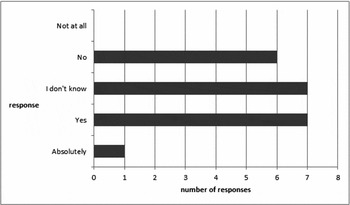
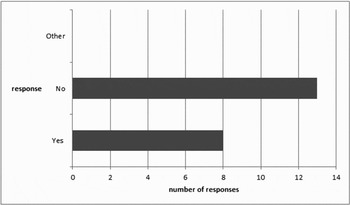
In 2012, Ninti One (2012) conducted a baseline survey in the three Anangu communities of Nyangatjatjara College (Mutitjulu, Imanpa, and Docker River in the southern region of the Northern Territory) to capture student and community perceptions of the MHWB of young people. The MindMatters program was in the early stages of implementation and in the following year, the survey was repeated to measure the impact of the MindMatters program for students and community members a year into the journey (see Ninti One, 2013). The surveys used a mixed methods approach, with opportunities for community members and students to contribute both quantitative and qualitative data. In the first cycle, students and community members had little confidence and limited language to discuss aspects of the MHWB of young people unless it was related to the more familiar discourse of the worries that community have in seeing their young people experiencing problems such as walking around all night, not going to school and so on. In general, responses tended towards an ‘I don't know’ response, as participants lacked the language and confidence to engage in conversation specifically relating to MHWB concerns, or were unfamiliar with the work.
The cycle of surveys was repeated a year later (see Ninti One, 2013). Of note, where community members had not been engaged in the MindMatters process, the questions and discussion remained unfamiliar and tended to elicit an ‘I don't know’ or even an ‘I don't understand what you mean’ response. The range of responses demonstrates the immense challenges that exist in informing and engaging the whole community (see Figure 1 and Figure 2).
Responses to question from Mindmatters Survey: The school provides opportunities for the families and communities to hear about mental health and wellbeing initiatives and to share their ideas and experiences. Note: Adapted from Ninti One 2013, p. 28.

Responses to question from Mindmatters Survey: Do you know what MindMatters/Wellbeing work is happening in the College/community? Note: Adapted from Ninti One, 2013, p. 28.

However, where students and communities had been involved in the MindMatters process, some useful information began to emerge that outlines a language and understanding of the processes of the MHWB field.
Qualitative responses to the question, ‘The school provides effective support for students who come back to school after a problem or mental health and wellbeing issue’, included:
When there's a problem the kids tend to get stuck in problems like smoking and drinking and they feel they can't go back. Sometimes they have mental health and wellbeing problems and even though mum tries to send them to school it seems they are damaging their thinking.
Maybe the school helps when they settle down and the anger has gone away but the kids need to be close to their family when they have those problems so they can watch.
Sometimes when these problems happen they get scared, but some kids can be determined and make their mind up to get through it and keep going.
Of particular interest, in the 2013 surveys some participants described aspects of young people dealing with MHWB issues, including grieving, family disconnection and more. This moved well beyond the range of responses provided in the previous year about MHWB ‘worries’ for young people:
They lost their friend this year when he died and they have struggled with the loss. They stopped talking and couldn't go to school. Now their tjuni (lit. stomach — a reference used as a barometer for stress/extreme emotion) is feeling better they are returning to school recently.
Some kids have tried so many schools. My granddaughter has tried [school name withheld] and other schools but she runs away. I talk to her about how I am her grandmother and how I'm related, to help her think about education. She is doing really well at the College.
There's a bit of sadness at the moment. Sometimes kids are at home no school, not feeling good about themselves. Anangu kids go to school when they have a good feeling about themselves.
Not only did this process highlight the development of a language and confidence to engage in the conversation among school community members, but became a highly informative process to help school teachers understand the MHWB implications and processes, from being informed about an Anangu perspective, and working across the Anangu and western knowledge spaces. The community responses also highlight the community capacity that exists to intimately understand the processes of grief and other MHWB concerns their young people are experiencing. Further, the responses indicate that families can identify the capacity and processes they have for supporting young people experiencing MHWB issues. Importantly, these comments speak from a position of understanding, strength and agency and are important voices to be heard.
Conclusion
The MindMatters ‘Anangu Way’ journey has both required and instilled a deep sense of learning, achievement and agency for change within both Piranpa and Anangu involved in the work. The deep sense of ownership expressed by the educators is a critical part of negotiating new knowledge into the contested knowledge space described earlier. The flexibility of the MindMatters process and framework has been allowed to feed into a work that has taken on an increasing sense of local importance commensurate with the deepening and ongoing relationship between the key players, with the local young people being the ultimate benefactors.
As school and broader community members have engaged in a developmental process of shared language, concepts and contextually relevant resources, the MHWB education process has moved beyond the delivery of an externally based service to a position where communities not only have a confidence to engage, but take on the role of informing and teaching from their own knowledge base. As teams of Anangu educators and community members engage in this process, they teach students from a contextually relevant knowledge and language base; in turn, building confidence and capacity among students. As students, school staff and community members grow in their understanding and confidence in the shared language of the MHWB field, young people are supported by a network of informed and caring family members and professionals who now share a language and understanding for where to begin.
The community surveys remind us that this is a developmental process, and despite the benefits of a shared learning process in a community context, when beginning to work with other community members or new communities, the process of building a shared language and understanding about the MHWB of young people begins all over again. The developmental process of working together across linguistic and epistemological divides cannot be cut short in the delivery of services if communities such as in the Anangu community context are going to share in the work with confidence and a sense of agency. The Ninti One (2013) surveys also highlight the need to move beyond a quantitative data approach to measuring the impact of this type of work, where nuanced language that indicates shared understandings are best understood by engaging in a first language, qualitative methodology.
Acknowledgments
In presenting this article, the author would like to acknowledge and recognise the significant contribution made not only to this paper, but to the development of mental health and wellbeing programs and resources for Anangu schools across South Australia and the Northern Territory. So thank you: Katrina Tjitayi — School Improvement Coordinator, APY (Anangu Pitjantjatjara Yankunytjatjara) Lands; Makinti Minutjukur — PYEC (Pitjantjatjara Yankunytjatjara Education Committee) Director; Sandra Ken — Anangu Teacher Support, APY Lands; Yaritji (Vanessa) Houltby — MindMatters Project Officer, Anangu Schools and Communities SA/NT. Also, formal acknowledgment and thanks go to the Principals Australia Institute who auspice and actively support the work of MindMatters nationally, as well as the Anangu community work described in this article.
About the Author
Sam Osborne is a Senior Research Fellow at UniSA and is undertaking a PhD through VU (Victoria University). He has worked in Aboriginal Education since 1995 across urban and remote contexts in a range of roles including primary and secondary teaching, Pitjantjatjara language teacher and Deputy Principal and Principal in Ernabella in the remote North West of South Australia. He has worked as a Central Australian consultant on the Principals Australia Institute Dare to Lead project and continues a range of roles in research and Pitjantjatjara language interpreting across remote communities in South Australia, Western Australia and the Northern Territory.