


Introduction: Decolonising archaeological practice in Sudan
The trajectory of archaeology in the Middle Nile Valley has been shaped by unique systemic challenges, primarily driven by the demands of large-scale development projects. After the 1898 reoccupation of Sudan, the country was reopened to Western researchers, but the following century of work was dominated by salvage operations required by the construction and successive raising of dams at Aswan (Adams Reference Adams2007; Ahmed Reference Ahmed, Emberling and Williams2020). The first international campaigns (1907–11 and 1929–34), led by figures such as George Andrew Reisner, Cyril Mallaby Firth, Walter B. Emery and Laurence P. Kirwan, were geographically limited to the far north between the First Cataract and Adindan (Ahmed Reference Ahmed, Emberling and Williams2020; Emery & Kirwan Reference Emery and Kirwan1935; Reisner Reference Reisner1910). While these missions were foundational, they systematically neglected Sudan’s wider cultural diversity. This monument-centric focus prioritized data recovery from elite contexts, reinforcing reliance on colonial-era documentation that treated sites as sterile spatial coordinates rather than as palimpsests of lived heritage (Näser Reference Näser, Emberling and Williams2020). The institutionalisation of these frameworks reflects a coloniality of power (Ugwuanyi Reference Ugwuanyi, Sinamai, Giblin, Chirikure and Odiaua2024), manifesting as a broadcast mode of archaeology in which knowledge production remains a unidirectional process, positioning local populations as passive consumers rather than active participants (Spencer et al. Reference Spencer, Fushiya, Ryan, Abd Rabo and Saad2024). The continued reliance on Western methodologies exacerbates this exclusion by marginalizing indigenous knowledge holders and producing out-of-context conclusions that fail to reflect local historical realities (Chigevenga Reference Chigevenga2022). Furthermore, these colonial legacies are often perpetuated within contemporary post-colonial institutional structures, where scientific, object-centred discourse is frequently prioritized over the lived insights and ancestral knowledge of descendant populations (Dores Cruz Reference Dores Cruz2023). This preference for empirical detachment maintains an epistemic distance that effectively severs the link between the archaeological record and the communities whose identities are inextricably tied to it.
Early Egyptological discourse, led by Reisner—often called the ‘father of Sudanese archaeology’—consistently produced interpretations that undermined the cultural distinctiveness of ancient Nubian societies. During the Harvard–Boston Expedition (1913–32), Reisner established the typological and chronological sequences for the A, B, C and X-Groups, as well as the Napatan and Meroitic royal lineages at El-Kurru, Nuri, Meroe and Jebel Barkal (Ahmed Reference Ahmed, Emberling and Williams2020; Dunham 1950; Reference Dunham1955). However, this Egyptocentric worldview, rooted in the nineteenth-century Prussian expeditions of Lepsius (1849–1859), portrayed Nubian culture as a subordinate ‘Other’—a late, degenerative reflection of Pharaonic civilization (Edwards Reference Edwards2004; Fitzenreiter Reference Fitzenreiter2011). A clear example of this bias was Reisner’s (Reference Reisner1923) initial attribution of the Kerma Kingdom to Egyptian occupants, an interpretation corrected only decades later when researchers used his precise documentation to demonstrate the indigenous Nubian character of the culture (Ahmed Reference Ahmed, Emberling and Williams2020). Although limited to the extreme north, these cultural sequences remain largely in use for the entire region, perpetuating ‘Ethnic Prehistory’ models that attribute cultural change to external invasions rather than local agency (Arkell Reference Arkell1961; Emery Reference Emery1965).
The 1959 UNESCO High Dam campaign was a ‘masterpiece of civil engineering’ in its dismantling and re-erection of monumental temples such as Abu Simbel, yet it further entrenched the discipline’s focus on monumental remains at the expense of regional and rural histories (Ahmed Reference Ahmed, Emberling and Williams2020; Säve-Söderbergh Reference Säve-Söderbergh1987). This mid-twentieth-century scientific turn marginalized oral traditions to assert empirical, positivist credentials (Paphitis Reference Paphitis2013). Such epistemic erasure is particularly acute in post-colonial contexts, where early legal systems—including Sudan’s 1905 and 1999 Antiquities Protection Ordinances—prioritized tangible monuments over living traditions (Näser Reference Näser, Emberling and Williams2020; Ndoro & Wijesuriya Reference Ndoro, Wijesuriya and Meskell2015). As Kratimenos (Reference Kratimenos2025, 271) argues, narratives of civilizational decline serve to sever the ontological link between contemporary indigenous peoples and their ancestors, implicitly justifying colonial stewardship over a fallen past. A truly decolonial archaeology must move beyond viewing local communities as mere informants and recognize them as active co-producers of knowledge (Lemos et al. Reference Lemos, Mberki, Owosent, Rai and Moffett2025). Achieving this requires a transition from Western-led institutional design to collaborative models that foreground local agency and indigenous heritage epistemologies (Pikirayi & Schmidt Reference Pikirayi, Schmidt, Pikirayi and Schmidt2016; Spencer et al. Reference Spencer, Fushiya, Ryan, Abd Rabo and Saad2024).
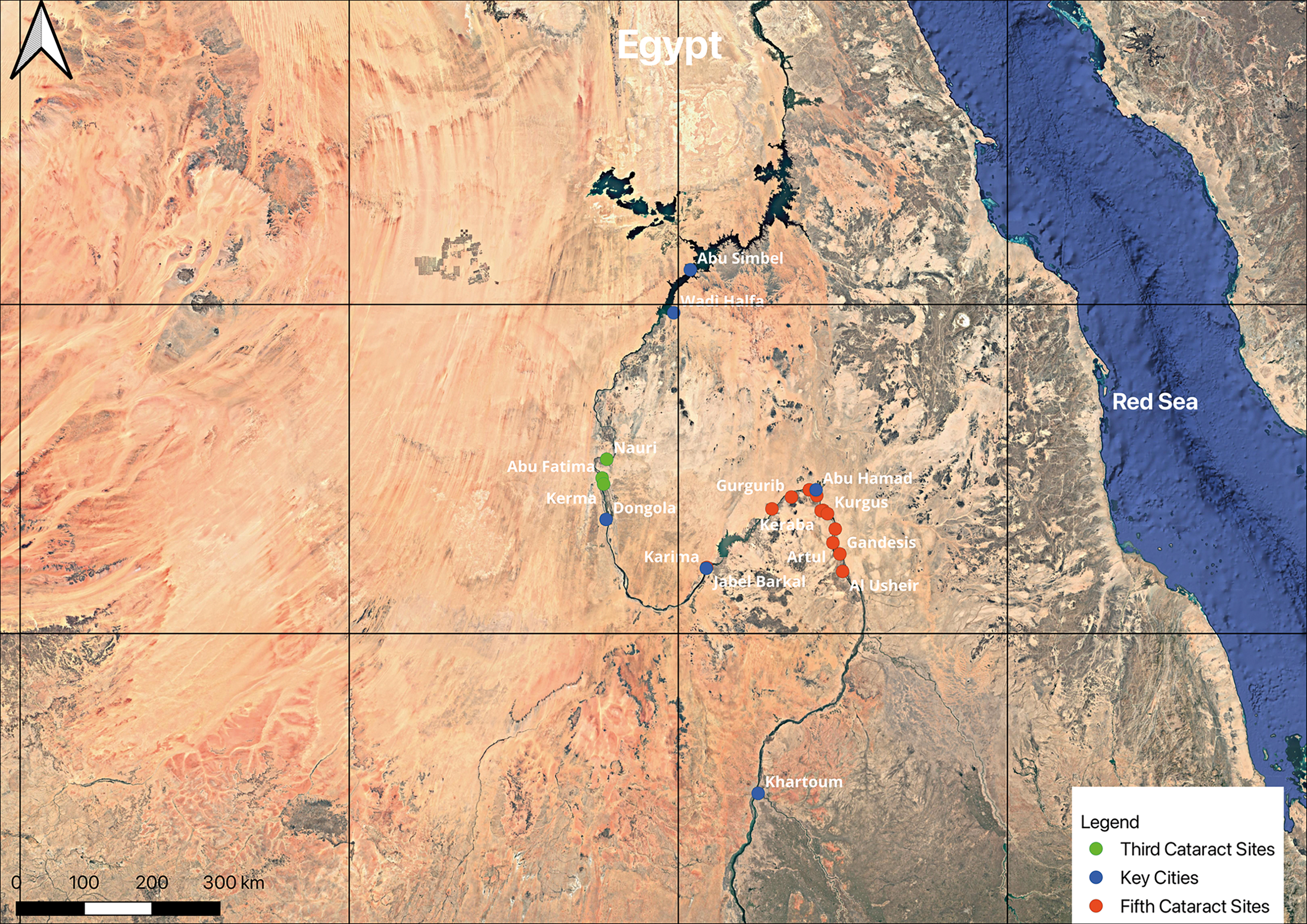
Sudan’s enduring ethno-linguistic landscape offers a rich, though historically neglected, archive for archaeological interpretation (Osman 1992; Reference Osman2008). At present, a burgeoning movement led by local researchers and the newly established departments at institutions such as Dongola, Gezira and Gadarief Universities is successfully bridging the divide between material science and folklore, marking a pivotal decolonial shift in the region. This paper advocates integrating such pluriversal pasts into practice. It argues that folklore—including legends, guardian beliefs and toponymic narratives—can (1) serve as a heuristic tool for site identification; (2) provide emic chronological markers and functional hypotheses where scientific dating requires refinement, such as the sequential occupation models proposed by Chirikure (Chirikure et al. Reference Chirikure, Manyanga and Pollard2012); and (3) function as informal protection mechanisms. Drawing on fieldwork from the Third and Fifth Cataract regions (Fig. 1), areas with dense multi-period distributions from the New Kingdom (1500–900 bc) to the Islamic era (c. 1500 ad), the paper outlines methodological procedures for incorporating folklore into archaeological workflows. By triangulating oral accounts with stratigraphic evidence, this approach addresses the limitations of purely material analysis and actively shapes decolonial futures for the Middle Nile.
Map of Sudan showing the sites discussed in the text. (Map: Tohamy Abualgasim.)
Epistemic intersections: folklore, local knowledge and the linguistic landscape
The reconstruction of past human lifeways and ideologies has traditionally relied on the interpretation of material records—settlements, artefacts, and landscapes—situated within their environmental contexts (Deagan Reference Deagan1982; Sutton Reference Sutton2018). As an interdisciplinary field, archaeology offers unique, long-term insights into cultural change and social evolution (Fagan & Durrani Reference Fagan and Durrani2021; Jones Reference Jones2009). However, a purely materialist focus often overlooks the intangible dimensions of the past. Folklore, which encompasses the traditions, beliefs, narratives and customs developed and transmitted within communities, provides a vital, non-material counterpart to the archaeological record (Al-Kaak Reference Al-Kaak1964; Sims & Stephens Reference Sims and Stephens2011).
The boundary between folklore and oral history is increasingly recognised as fluid; as Schmidt (Reference Schmidt2006) and Vansina (Reference Vansina1985) argue, oral traditions serve as both symbolic narratives and functional historical mnemonics. This epistemic synergy is evident in how oral accounts can verify site occupations (Posnansky Reference Posnansky1968), how myths preserve technological history (Schmidt & Mapunda Reference Schmidt and Mapunda1997) and how oral sources can correct or expand upon biased written records (Arazi Reference Arazi2005; Schmidt Reference Schmidt, Mitchell and Lane2013). While distinct from ethnoarchaeology—which uses living societies to infer past material behaviour—folklore constitutes a direct source of historical insight and non-material cultural heritage (Al-Amin Reference Al-Amin2008). As Gazin-Schwartz (Reference Gazin-Schwartz2012) argues, these fields can ‘dance’ together: folklore expands the archaeological database by identifying sites through oral traditions or toponyms that might otherwise lack visible material signatures.
The intersection of archaeology and folklore is best understood through the lens of heritage studies, a discipline distinct from traditional history. While history often seeks the facts of the past (Aitchison et al. Reference Aitchison, MacLeod and Shaw2000, 96), heritage is history interpreted through the prisms of mythology, ideology and identity (Carman & Sørensen Reference Carman, Sørensen, Sørensen and Carman2009; Schouten Reference Schouten and Herbert1995). Following Lowenthal (Reference Lowenthal1985), heritage is viewed not as a static or objective representation, but as a subjective creation rooted in contemporary sociocultural values. This subjectivity is closely linked to place attachment, where intangible meanings, spiritual associations and inherited narratives foster a profound sense of belonging to historic sites (Kaufman Reference Kaufman2009; Tan et al. Reference Tan, Tan, Kok and Choon2018). Consequently, the sustainability of heritage is inextricably tied to community involvement, blurring the conventional boundaries between natural and cultural landscapes (Byrne & Ween Reference Byrne, Ween and Meskell2015; Longstreth Reference Longstreth2008).
The urgency of this synthesis is particularly evident in the Sudanese interior, where folk traditions serve as a primary, diachronic archive that gives meaning to sites often overlooked by scientific surveys (Osman 1992; Reference Osman2008). This epistemic transition—championed by emerging departments at Dongola, Gezira and Gadarief Universities—acts as a corrective to colonial erasure by validating local interpretations as historically significant. This shift reflects a broader decolonial movement in African archaeology that seeks to move beyond the Western linear concept of becoming, which treats the past as a distant, finished moment, towards a ‘Janusian perspective’ (Stark Reference Stark2025). This perspective recognizes heritage as a cyclically active part of the contemporary landscape, where past and present exist in constant dialogue (Ugwuanyi Reference Ugwuanyi, Sinamai, Giblin, Chirikure and Odiaua2024). Such dialogue is anchored in an ontology defined by relationality and a holistic connection to the environment—a framework often articulated through the Ubuntu philosophy, which provides the foundation for more culturally resonant research paradigms (Chigevenga Reference Chigevenga2022). By treating folklore as a living archive, researchers can move beyond a detached colonial perspective, validate local theories of knowledge and ensure that archaeological narratives reflect the rich, multilayered identities of the communities who live among these ruins.
Living archives: toponymy and hydronymy as diachronic markers
Place names encode semantic and historical information that can guide archaeological interpretation and fieldwork. Toponymy—the study of place names—has been particularly valuable in Sudanese contexts since the UNESCO Nubian salvage campaign (1959–1969) (Hashim & Bell Reference Hashim and Bell2000). Early work, such as Herman Bell’s pioneering 1970 study Place Names in the Belly of Stones and Ali Osman’s Reference Osman1973 MA dissertation ‘Christian Nubia: Contribution of Archaeology to Its Understanding’, demonstrated how toponyms help identify site names, delineate historic Nubia and map the distribution of Nile Nubian languages. In multilingual and historically layered landscapes such as Sudan, analysing names not only reveals linguistic continuities and cultural identities that material remains alone may not fully convey (Osman Reference Osman2008, 72–3), but also highlights the inherent complexities of place-naming. As Chen (Reference Chen, Frey and Raja2024) argues, inconsistent naming traditions, arising from chronological change and multilingualism, pose significant challenges, but also offer valuable insights into cultural heritage.
These living archives provide a framework for connecting modern nomenclature with ancient settlement patterns. They often reveal linguistic continuities, such as the Nobiin term ‘Diffi’ (fortified house), which links modern structures to the ancient Kerma Deffufa (Hashim & Bell Reference Hashim and Bell2000). Gerasimov (Reference Gerasimov2024) describes these names as repositories of history, enabling researchers to trace the country’s development from antiquity to the present. However, these archives are increasingly threatened by toponymic erasure and Arabicisation. Bell & Ṣabbār (Reference Bell and Ṣabbār2017) note that after the 1964 High Dam resettlements, traditional names were often replaced by administrative numbers—such as the ancient Faras becoming Village One—severing the connection between the people and their ancestral geography. Furthermore, the Arabicisation of names often obscures original meanings; for example, the globally recognized Abu Simbel is likely a folk-etymology for the local Nobíin name Absámbal, which means high place and provides a more accurate geomorphological description (Bell & Ṣabbār Reference Bell and Ṣabbār2017).
In the hyperarid environments of Sudan and the Sahel, water is the primary determinant of human settlement—the spine upon which all life depends (Grzymski Reference Grzymski2004). Hydronyms (names of water bodies) act as linguistic archives that often outlast the languages that produced them. Even when their original meanings are lost, these names preserve deep roots, such as the name ‘Nile’ possibly deriving from the ancient Libyan lil [water] (Gerasimov Reference Gerasimov2024). These names often retain the memory of the landscape’s hydrological history, marking resource points even after channels have shifted. In the Fifth Cataract, names like ‘Al-Takaki’ [narrow passage] reflect physical geomorphology (Al Sheikh Reference Al Sheikh2009). A notable example of diachronic continuity is found in the toponym Kówwa; researchers have traced its phonetic evolution over 33 centuries, linking it to the Amarna-period Egyptian name Gem-’Aten (Bell & Ṣabbār Reference Bell and Ṣabbār2017). Similarly, persistent markers such as the Nubian suffix -ti [island] in Tuti or Salnarti identify landforms defined by their relationship to the Nile’s flow (Gerasimov Reference Gerasimov2024).
The tension between academic and indigenous nomenclature is evident at sites such as Amara West, known locally as Abkanisa—a term reflecting the broader tradition of designating pre-Islamic ruins as kanisa [church]. Prioritizing these local toponyms helps dismantle the trope of archaeological discovery, an unintentional gatekeeping device that often alienates communities from landscapes they have never lost (Spencer et al. Reference Spencer, Fushiya, Ryan, Abd Rabo and Saad2024; Ugwuanyi Reference Ugwuanyi, Sinamai, Giblin, Chirikure and Odiaua2024). Incorporating folklore and local toponymic knowledge moves archaeology beyond a detached, colonial perspective towards genuinely decolonial interactions. This approach recognizes place names not merely as technical data points, but as archives of local memory, historical experience and cultural identity (Chen Reference Chen, Frey and Raja2024). Such archives stand in stark contrast to colonial archaeological records, which, as Ward (Reference Ward2023) highlights, frequently imposed Western viewpoints while excluding nuanced local perspectives. Integrating these indigenous understandings fosters a more inclusive reconstruction of the past, respecting the diverse ways communities understand and name their landscape.
Traditions and epistemologies
Oral traditions serve as crucial chronological surrogates, especially where absolute dating evidence is limited or lacking. Academic discourse uses standardized taxonomies, categorizing material remains as ruins, fortresses, mounds or churches, while local communities employ a distinct vocabulary based on indigenous epistemologies. This nuanced nomenclature offers essential heuristic value for identifying and interpreting sites in ecologically complex or remote regions that might otherwise remain undetected by conventional survey methods.
In the Fifth Cataract region, local narratives situate material culture within a structured temporal framework. This indigenous chronology typically begins with a mythical stratum, characterized by primordial eras such as ‘sea-digging’ or zoomorphic speech, before progressing into a stratified historical timeline initiated by the ‘Anaj’ era (Al Sheikh & Bashir Reference Al Sheikh and Bashir2022). The ‘Anaj’ period, a cornerstone of regional oral tradition, often encompasses archaeological evidence from pre-Islamic and Christian phases. This is followed by the ‘Qayman’ era, associated with socio-political change, the ‘Jal’ kings, linked to specific defensive architecture, and the ‘Fung’ and ‘Saadab’ dynasties. The local sequence continues through the Badrab, Saifab, and Hijoula lineages, eventually intersecting with the documented periods of Turko-Egyptian rule (1820–85) and the Mahdiyya (1881–98) (Al Sheikh & Bashir Reference Al Sheikh and Bashir2022).
Although these oral chronologies may diverge from absolute scientific dating, they demonstrate a sophisticated historical consciousness—a community’s distinct ontological understanding of time and the recursive relationship between past and present (Stewart Reference Stewart2012). In the Sudanese context, this is expressed through the conceptual tension between turath [living, experiential heritage], which includes landscape, language and tradition, and the state-sanctioned category of athar [static antiquities] (Spencer et al. Reference Spencer, Fushiya, Ryan, Abd Rabo and Saad2024). These frameworks reflect an ontology of ‘being’, in which the past persists as a cyclically active component of the contemporary landscape. This sharply contrasts with the Western linear concept of ‘becoming’, which reifies the past as a teleological, finished moment (Ugwuanyi Reference Ugwuanyi, Sinamai, Giblin, Chirikure and Odiaua2024). This ‘Janusian perspective’ (Stark Reference Stark2025) enables a diachronic view of heritage, recognizing that contemporary social experiences are inextricably linked to ancestral lineages.
Parallel to European ‘mythscapes’ (Bell Reference Bell2003), the discordances between ‘Anaj’ narratives and formal archaeological records represent ideological phenomena (Propp [1928] Reference Propp and Wagner1968) fundamental to indigenous placemaking. These narratives enable inhabitants to negotiate legitimacy and establish deep spatial connections with the historical landscape. This ethnocultural knowledge provides a distinct, equally valid mode of historical accuracy, augmenting archaeological assessment by establishing relative chronological sequences and clarifying indigenous interpretations of site function, political authority and social organization.
Embracing these community-derived frameworks enables researchers to move beyond monolithic timelines and incorporate multiple temporalities (Lucas & Olivier Reference Lucas and Olivier2021; Mahuika Reference Mahuika2019; Tamm & Olivier Reference Tamm and Olivier2019). This approach recognizes that Western scientific epistemologies are often ill equipped to address questions rooted in local theories of knowledge (Pikirayi & Schmidt Reference Pikirayi, Schmidt, Pikirayi and Schmidt2016). Divergences from absolute scientific dating should be seen not as errors, but as complementary truths that illuminate local metanarratives, enriching archaeological interpretation and empowering communities as active co-producers of historical knowledge.
Methodology: towards a polyphonic and ethnographic archaeology
The historical relationship between archaeology and local knowledge has often been fraught, shaped by colonial-era dismissals and unequal power dynamics (Bruchac et al. Reference Bruchac, Hart and Wobst2016; Schmidt Reference Schmidt and Schmidt2009). This study reframes that interaction through the lens of Gazin-Schwartz (Reference Gazin-Schwartz2012), who describes the relationship between archaeology and folklore as a ‘dance’ rather than a conflict—complementary rather than antagonistic. Viewing these disciplines as partners moves beyond colonial disputes over historical accuracy, fostering a cooperative approach to understanding the Sudanese past. This is crucial in a context where the discipline has historically marginalized local voices, reinforcing the subaltern status of both local communities and scholars outside the North Atlantic mainstream (Lemos Reference Lemos2022, 22).
A central tenet of this approach is the question of who decides how heritage is treated, studied, or memorialized (Schrader et al. Reference Schrader, Fushiya, Saad and Mohamed2024). From a decolonial perspective, integrating folklore is not simply an enhancement of data collection but an epistemic reconstitution (Atalay Reference Atalay2012; Paphitis Reference Paphitis2019). This challenges the Sudanese colonial legacy institutionalized by early legal frameworks, such as the 1905 and 1999 Ordinances, which treated heritage as state property and effectively alienated communities from their own ancestral landscapes (NCAM 1999). Moreover, the uncritical application of Western-oriented ethical guidelines and formalized written consent can exacerbate this alienation, as such protocols often remain foreign or intimidating to local participants and may inadvertently obstruct the development of organic research relationships (Chigevenga Reference Chigevenga2022).
To address these non-neutral, often colonial effects, this paper adopts an ‘ethnographic archaeology’ framework. This approach moves beyond simple community outreach to investigate the specific contemporary meanings that diverse publics ascribe to material traces, recognizing these as integral to a site’s ongoing existence (Edgeworth Reference Edgeworth2010; Hamilakis & Anagnostopoulos Reference Hamilakis and Anagnostopoulos2009). Following Paphitis’s (Reference Paphitis2014; Reference Paphitis2019) application of Bakhtinian ‘polyphony’, I argue that Sudanese archaeological practice must enable scientific and folkloric voices to exist as independent, equally valid narratives. This requires rejecting the mid-twentieth-century ‘boundary-work’ (Binford Reference Binford1962) that dismissed oral traditions as unscientific—an act of epistemicide that severed the vital link between material and oral history (Burke Reference Burke2004).
In survey contexts, integrating folklore is transformative because it reveals sites and landscape features often absent or misinterpreted in material records (Osman Reference Osman2008; Ryden Reference Ryden1993). This absence includes both physically elusive sites and those whose cultural significance is overlooked without local knowledge, resulting in their omission from archaeological narratives. While Sudanese archaeology has progressed from early reconnaissance to large regional syntheses (e.g. Adams Reference Adams1977; Anderson & Welsby Reference Anderson and Welsby2014; Osman & Edwards Reference Osman and Edwards2012; Trigger Reference Trigger1965; Reference Trigger and Hintze1984), the field is only beginning to address its colonial foundations fully. Despite the impetus provided by the Qatar–Sudan Archaeological Project (QSAP) (2014–2019), many initiatives still require deeper engagement to redefine narratives of continuity from local perspectives. As Lemos (Reference Lemos2022, 28) notes, post-colonial archaeologies in the region have traditionally ignored local communities within nationalistic contexts, disconnecting modern populations from their ancient past.
This challenge reflects a broader symbiotic relationship between archaeology and state power (Díaz-Andreu Reference Díaz-Andreu2007; Fowler Reference Fowler1987; Trigger Reference Trigger2008). The urgency of this shift was highlighted by the Merowe Dam controversies, where local resistance from the Manasir community showed that archaeologists were often seen as agents of state power rather than custodians of local history (Hafsaas-Tsakos Reference Hafsaas-Tsakos2011; Näser & Kleinitz Reference Näser, Kleinitz, Kleinitz and Näser2012). These experiences compel researchers to pursue a genuinely decolonial practice that fundamentally re-evaluates its relationship with local knowledge (Kleinitz & Näser Reference Kleinitz and Näser2013).
This shift reflects broader decolonial trends across Africa. For example, Chirikure (Reference Chirikure2020; Chirikure et al. Reference Chirikure, Manyanga and Pollard2012) applied the ‘hunhu’ philosophy to sites such as Great Zimbabwe, aligning archaeological data with Shona and Venda traditions to show that capitals were occupied sequentially rather than simultaneously. These findings corrected errors caused by the ‘suck in and smear phenomenon’, where radiocarbon dating can falsely conflate distinct political eras (Chirikure et al. Reference Chirikure, Manyanga and Pollard2012). In Sudan, the approach to decolonizing survey work similarly involves moving away from a one-way extractive process. For local communities, the landscape is not a static repository of data; it is a living environment animated by ancestral narratives, spiritual beliefs regarding Jinn, and ongoing ritual practices (Osman Reference Osman2008).
Oral traditions help identify obscure pottery deposits, burial grounds, or rock art in remote locations. Theoretically, this integration validates diverse stories and creates opportunities for reciprocal knowledge production. Effective methodologies include co-designing community-led publications and building capacity through hands-on workshops that transfer specialized skills—such as bioarchaeological sampling or geomatics—to Sudanese students and professionals. This ensures knowledge transfer is a reciprocal dialogue based on local research interests (Stark Reference Stark2025). Therefore, this methodological framework foregrounds three propositions for achieving decolonial futures:
-
1. First, folklore serves not only as a navigational guide for site identification and landscape-scale interpretation, but also as a sophisticated system that redefines what constitutes legitimate historical evidence. This shift moves the discipline beyond Eurocentric empirical paradigms towards pluriversal ethics (Hutchings Reference Hutchings2019; Lemos Reference Lemos2022, 22). By recognizing local narratives as historically significant, archaeology can acknowledge multiple ways of knowing the past, effectively dismantling the hierarchy that prioritizes Western scientific output over indigenous intellectual heritage. Within this framework, the decolonization of archaeology is understood not merely as overtly radical social activism, but as a situated and context-specific process that prioritizes social intervention through the inclusion of subaltern narratives frequently marginalized by state-led agendas (Dores Cruz Reference Dores Cruz2023).
-
2. Second, community engagement must be understood as an active decolonial practice rather than a passive outreach requirement. This involves empowering local agency to reshape heritage outcomes by engaging with alternative ways of being in the world. Instead of imposing external, predefined heritage frameworks, this approach advocates a collaborative model in which the research agenda is co-produced, ensuring that the archaeological narrative serves the interests and identities of contemporary inhabitants.
-
3. Finally, it emphasizes the necessity of flexible, ethically grounded frameworks that enable diverse, locally adapted methodologies for integrating folkloric data. This approach facilitates decolonial healing (cf. Lemos Reference Lemos2022, 31) by re-establishing the links between modern populations and their ancestral landscapes—links historically severed by colonial narratives of civilizational decline. Rather than adhering to rigid, universalizing protocols, this framework allows for a practice responsive to the specific spiritual and social nuances of the Sudanese interior.
By triangulating oral accounts with stratigraphic and scientific evidence, this methodological approach enables researchers to ascend the upper rungs of Hawkes’s (Reference Hawkes1954) ‘ladder of inference’. While material remains alone often restrict archaeologists to the lower rungs of technology and economy, integrating folklore provides access to the social, religious and ideological dimensions of the past—spheres that are notoriously difficult to infer from objects alone. This synthesis does not seek to replace scientific rigour, but to enrich it, creating a more holistic and culturally resonant understanding of history. The following sections illustrate these propositions through case studies from the Third and Fifth Cataracts (Fig. 1), offering methodological inspiration for incorporating oral traditions and community participation into the core of Sudanese archaeological practice.
Case studies: memory and materiality at the Third and Fifth Cataracts
The regions of the Third and Fifth Cataracts serve as important laboratories for decolonial practice, where place names and oral traditions provide insights into the evolution of a historically layered landscape (Hashim & Bell Reference Hashim and Bell2000; Osman Reference Osman2001). In these areas, the past is not merely excavated; it is spoken and lived.
Lexical landscapes: toponymy and linguistic continuity
In the Third Cataract region, the Mahas Project at the University of Khartoum (1990–2012) demonstrated the interpretive value of systematic linguistic analysis. A notable example is the term Diffi—a Nobiin term for an ancient fortified dwelling—which establishes a diachronic connection between contemporary domestic architecture and the monumental Kerma Deffufa. This suggests a semantic development from the Old Nubian root for ‘town’ (ΔΙΝΝ), possibly passing through a ‘citadel’ stage (Hashim & Bell Reference Hashim and Bell2000, 77–8). Additionally, indigenous informants enabled the identification of physically elusive features, such as rock gongs named with onomatopoeic Nubian terms like Kiddálla and Konngéel, which often go undetected during standard visual surveys (Hashim & Bell Reference Hashim and Bell2000, 75).
In the Fifth Cataract, the toponym Al-Takaki (‘narrow passage’ in Dongolawi and Bejawi) is translated into Arabic as Al-Abwab (‘The Doors’), demonstrating a linguistic stratigraphy that reflects successive demographic horizons (Al Sheikh Reference Al Sheikh2009). The landscape is filled with such descriptive markers, which serve as functional signifiers, including references to ‘the Rum’, the ‘Anaj Tower’, the ‘Military House’ and the ‘Qantara’. Local dialects use specific architectural taxonomies: Hilla (e.g. Hilla Ad-Daifab) and Al-Kab (e.g. Kab Al-Marah) both mean ‘fortresses’, while Dangil refers specifically to red-brick ruins, and Hawsh (e.g. Hawsh Furnib) denotes elite enclosures or castles (Al Sheikh & Bashir Reference Al Sheikh and Bashir2022).
Funerary landscapes are similarly classified through indigenous oral taxonomies; ‘Anaj tombs’ are terms that distinguish pre-Islamic or Christian-era burials from modern Islamic cemeteries. These sites often develop into hagiographic shrines dedicated to saints, with attribute-based names such as Al-Saleh, Aisha Al-Saleha and Al-Faqeera, or titles such as Ragil al-Makan (‘Man of the Place’)—as seen with the guardians of Al-Aqaba, Al-Siyala and Al-Kindash (Al Sheikh Reference Al Sheikh2009; Al Sheikh & Bashir Reference Al Sheikh and Bashir2022). Additionally, toponyms preserve the memory of historical economic activities, particularly pottery and salt production. Markers such as Umm Qahf [Mother of Sherds], Umm Qanatir, and Qawz Al-Malahah [Salt Mound] provide important diagnostics for archaeologists seeking industrial production sites that lack the visibility of monumental architecture (Al Sheikh & Bashir Reference Al Sheikh and Bashir2022).
Functional reinterpretations: the commercial biography of El Ushier
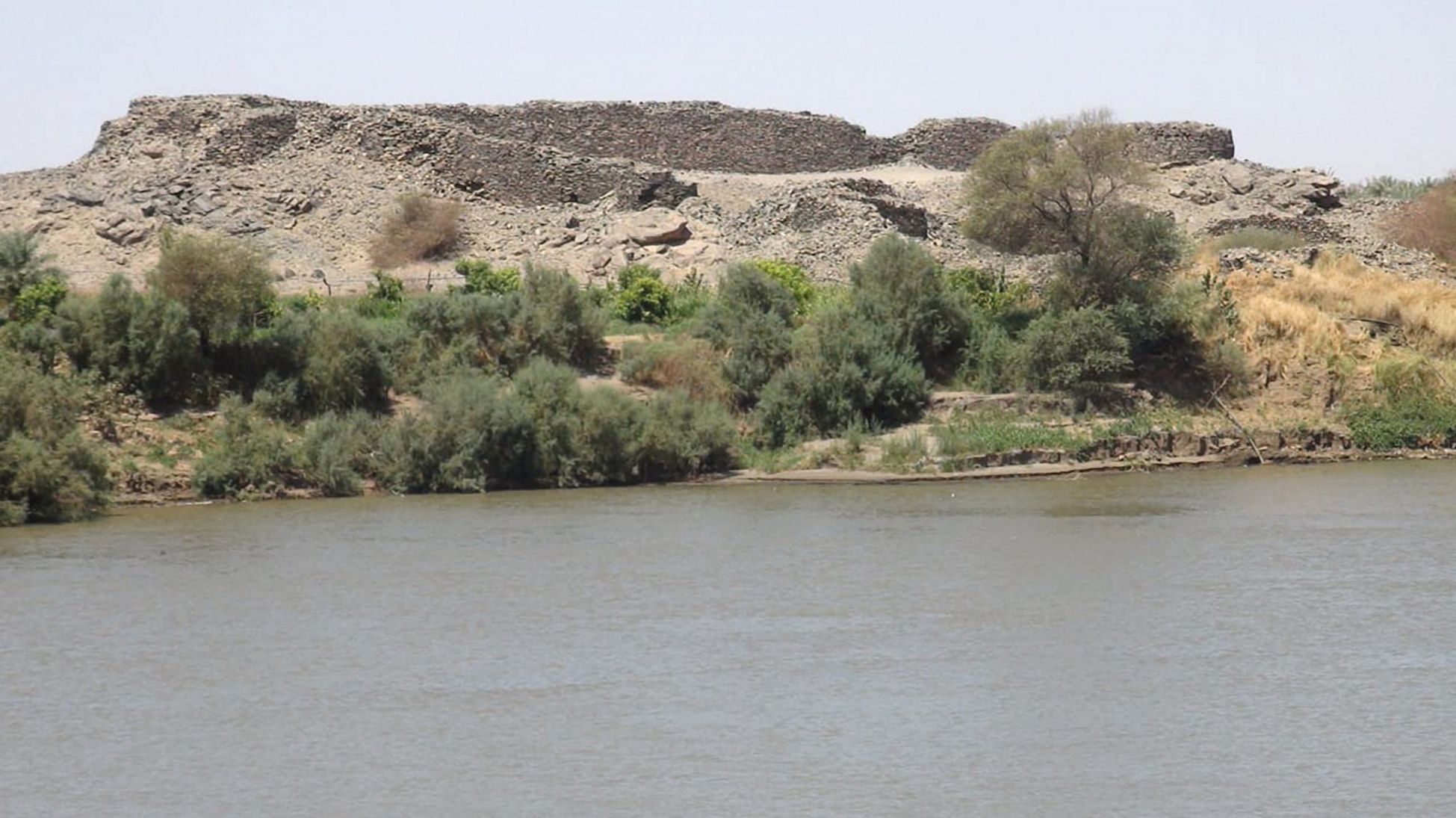
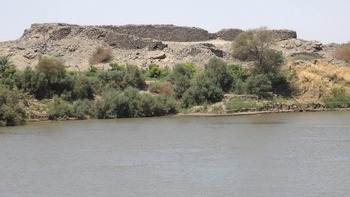
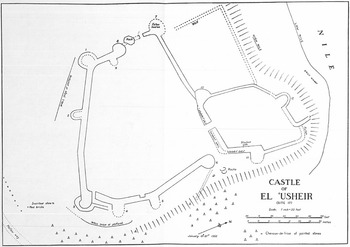
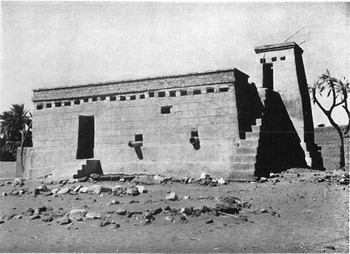
Utilizing indigenous oral frameworks, archaeological evidence from the study regions highlights heterogeneous site functions that challenge reductive classifications. While many sites display shared structural morphologies and masonry techniques, their specific roles and historical trajectories differ significantly. This functional diversity is evident among the dispersed fortresses of the Fifth Cataract (Crawford Reference Crawford1953); while some served purely defensive purposes, others operated as administrative centres for regional polities, and many functioned as integrated nexuses for trade-route surveillance (Drzewiecki Reference Drzewiecki and Vogel2011; Welsby Reference Welsby and Crummy2005). The El Ushier Fortress (Figs 2–3), situated on El Ushier Island, provides an illustrative example. While its architecture suggests a defensive role monitoring the Abu Hamed–Kursku desert corridor—a strategic disembarkation point for riverine and caravan traffic (Davies & Welsby Reference Davies and Welsby2020)—a synthesis of archaeological and folkloric evidence reveals a more complex commercial history. Specifically, the fortress served as an economic hub from the late Meroitic through the post-Medieval periods, facilitating the storage and transshipment of commodities, most notably enslaved populations (Al Sheikh & Bashir Reference Al Sheikh and Bashir2022).
El Ushier fortress. (Photograph: Abdelgadir Elkazin.)
Sketch of El Ushier fortress. (Adapted from Crawford 1951.)
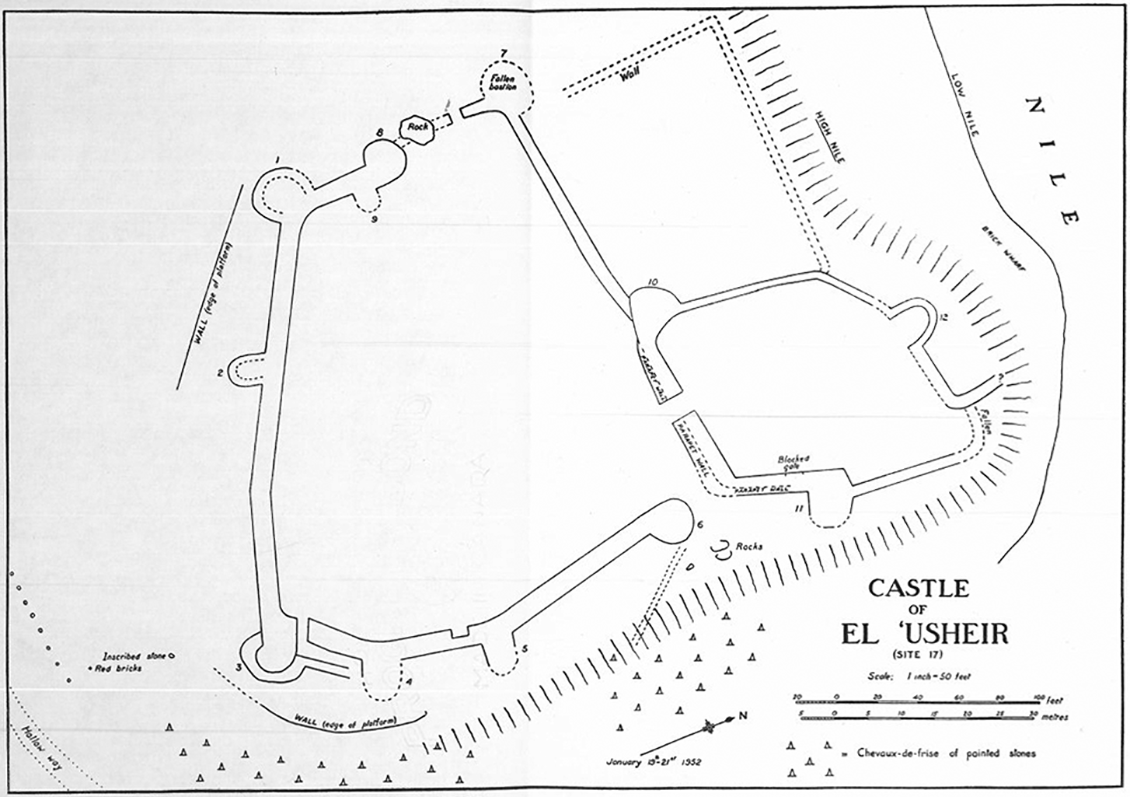
Excavated features, including substantial grinders and specialized sharp stones—locally interpreted as deterrents for escapees—complement petroglyphs of laden camels and river boats, designating the fortress as a primary node in the regional slave trade (Al Sheikh & Bashir Reference Al Sheikh and Bashir2022). Local nomenclature identifies a nearby littoral structure as a karkun (a Turkish-era prison) and preserves the memory of Rubatab King Naeem, who used the site for fiscal administration and trade oversight until his assassination following geopolitical friction with the Al-Ababda (Al Sheikh & Bashir Reference Al Sheikh and Bashir2022). Oral traditions further describe fortresses as kinship strongholds; for example, the Qareenah fortress is remembered for its role as a defensive asset against Hassaniya incursions under the leadership of King Abu Hijil (Al Sheikh & Bashir Reference Al Sheikh and Bashir2022). By triangulating these multi-vocal oral accounts with the material record—including nearby sites like Duimat (‘The Slave Family’)—archaeologists can move beyond reductive fortress models towards a more precise understanding of these sites as dynamic commercial stations integrated into the diachronic socio-economic history of the Nile trade.
The spiritual shield: intangible heritage as informal conservation
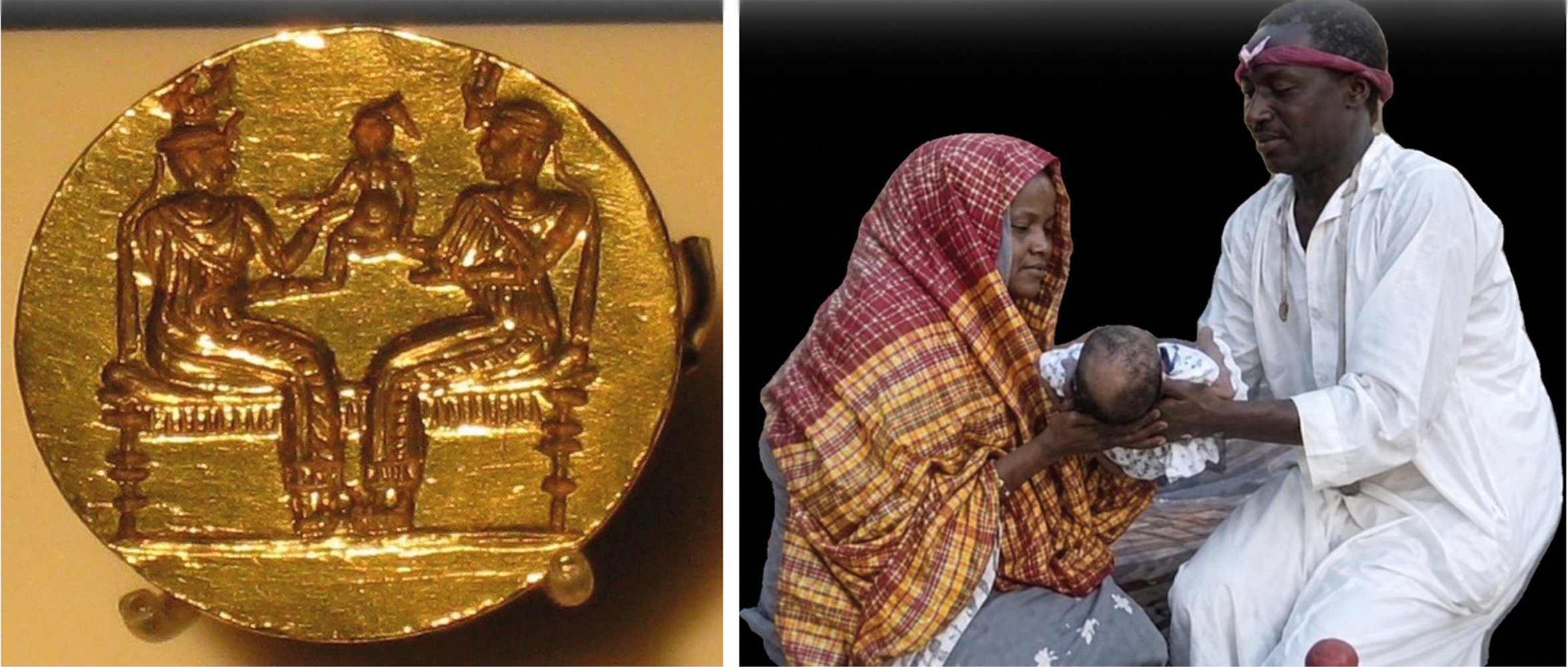
Beyond material reconstruction, folk traditions provide a critical framework for the semiotic interpretation of archaeological assemblages. A notable example is the carved ring attributed to Queen Amanishakheto, which depicts a formal investiture. Although archaeologists strictly categorize this as a royal scene (Kuckertz Reference Kuckertz, Droß-Krüpe and Fink2021), its iconography finds a contemporary parallel in the Jertiq marriage ritual (Fig. 4). This rite of passage, involving the symbolic coronation of the groom, demonstrates a profound diachronic link between Meroitic regal tradition and modern Sudanese social practice (Al Sheikh Reference Al Sheikh2016). Moreover, the continued use of specific ceramic forms—such as jars used in contemporary marriage and circumcision ceremonies, or the funerary Dahalib vessels—exemplifies cultural continuity, serving as tangible conduits for rituals preserved through oral transmission. These traditions also act as repositories of specialized knowledge regarding extinct or evolving local industries in the Fifth Cataract, including salt extraction, hydraulic technologies (water wheels), textiles and lithic-assisted leatherworking, all of which aid the identification and interpretation of industrial archaeological signatures (Al Sheikh & Bashir Reference Al Sheikh and Bashir2022; El-Mahi Reference El-Mahi2000).
Queen Amanishakheto’s ring alongside a modern Jertiq marriage ritual image. (Enhanced after Al Sheikh Reference Al Sheikh2016.)
In addition to formal legislative safeguards, indigenous belief systems often serve as powerful, though informal, protective mechanisms for archaeological sites. In Sudan, the widespread belief in Jinn—metaphysical entities linked to ancient places—marks archaeological sites as sacred or distinct spaces. While these narratives may inspire fear, their primary function is to confer an ontological status on the site that commands respect, similar to the ‘fear of ancient ghosts’ observed in wider heritage contexts (Lemos et al. Reference Lemos, von Seehausen, Di Giovanni, Giobbe, Menozzi and Brancaglion2017). Acknowledging the legitimacy of these traditional epistemologies within archaeological discourse is a fundamentally decolonial act (cf. Al Sheikh & Bashir Reference Al Sheikh and Bashir2022). This perspective shifts the analytical focus from physical monumentality to the complex social and spiritual biographies of a site (Pikirayi & Schmidt Reference Pikirayi, Schmidt, Pikirayi and Schmidt2016; Spencer et al. Reference Spencer, Fushiya, Ryan, Abd Rabo and Saad2024). These entities are believed to manifest through sensory phenomena—such as unexplained sounds or the movement of objects—creating a perceived presence that acts as a strong metaphysical deterrent to human disturbance (Al Sheikh & Bashir Reference Al Sheikh and Bashir2022). This fosters an indigenous ethic of reverence and caution, effectively discouraging the illicit alteration of sites. Thus, what external academic frameworks might dismiss as superstition emerges as a sophisticated, locally developed conservation strategy. Valuing these beliefs for both their practical role in heritage preservation and their contribution to a holistic understanding of a site’s ongoing significance enables an archaeology that is truly culturally resonant.
Beyond the Jinn, local cultural traditions attribute protective powers to specific spiritual figures and natural phenomena. Female entities, or ‘maidens’, are often associated with sites such as the ‘Church of Al-Mara’ (the Woman) in El Ushier and El Kab. Local narratives about these figures frequently emphasize a moral economy that values spiritual integrity over material gain, encapsulated in the metaphorical aphorism: ‘If it were not for the fear of inclining, we would not have exchanged the weight for the weight’ (Al Sheikh & Bashir Reference Al Sheikh and Bashir2022)—a reference to the rejection of precious metals (gold) in favour of intangible offerings. These traditions of female guardianship are widespread across the Middle Nile, extending to major complexes such as the UNESCO World Heritage Site of Jebel Barkal. Guardianship is also attributed to the geomorphological landscape; for example, the ‘Baboon Stone’ near Sheikh Mohamed’s tomb in Nadi is believed to emit a vocal warning if trespassed upon, while the Hujol fortress is reportedly protected by spiritual guardians via the Daksir canal (Al Sheikh & Bashir Reference Al Sheikh and Bashir2022).
Furthermore, the protection of antiquities is traditionally mediated by zoomorphic guardians, particularly serpents. Local folklore suggests that specific snakes, such as the ‘church snake’ or Dabbi al-Rum (the ‘Serpent of the Ancients’, where Rum denotes antiquity), serve as the primary custodians of sub-surface deposits (Al Sheikh & Bashir Reference Al Sheikh and Bashir2022). Legends at Nauri (Third Cataract) describe gold-guarding serpents inhabiting restricted sites, while in New Kingdom cemeteries, the appearance of a ‘gold wheel’ is said to be accessible only to those who approach with spiritual serenity (Osman Reference Osman2008, 75). In Nubian narratives, gold serves as a potent semiotic symbol for antiquity itself (Osman Reference Osman2008, 75). Similarly, guardian scorpions are believed to patrol funerary contexts, deterring illicit plundering (Al Sheikh & Bashir Reference Al Sheikh and Bashir2022). These deeply embedded belief systems, often reinforced by Islamic textual references to the supernatural, constitute the spiritual fabric of the regional landscape. A decolonial archaeological methodology does not dismiss these oral traditions as fantastical but respectfully integrates them as essential components of a site’s biography (cf. Lemos et al. Reference Lemos, Mberki, Owosent, Rai and Moffett2025). These narratives provide critical insights into indigenous epistemologies concerning land use, heritage value and historical consciousness.
Despite their historical efficacy, these locally constructed protective mechanisms represent an intangible buffer that has often outperformed state-sanctioned heritage laws. Where formal state management has proved insufficient, spiritual reverence has ensured the physical survival of sites such as the Artul church (repurposed as a mosque) and various Anaj mounds. However, this spiritual shield is now experiencing significant erosion. The expansion of certain Salafist ideologies, which actively discourage the veneration of local shrines and saints, together with acute economic pressures, has led to a decline in these traditional safeguards. Sites once stabilized by the perceived authority of figures such as Faki Dageer are increasingly vulnerable to the extraction of building materials (bricks and timber), resulting in the rapid degradation of historical structures (Al Sheikh & Bashir Reference Al Sheikh and Bashir2022). This contemporary crisis underscores the imperative for a heritage policy that acknowledges, validates and reinforces indigenous modes of guardianship as a prerequisite for sustainable preservation in Sudan.
Lineal custodianship and the challenges of local agency
In the Fifth Cataract region, the persistence of lineal custodianship serves as a critical, though informal, mechanism for site preservation. Several significant structures remain under the hereditary oversight of founding families; for example, the Daeifab Fortress in El-Gurayb and the Hijoula Fortress in Kedak are periodically maintained and restored by descendants who regard these sites as integral to their ancestral identity (Al Sheikh & Bashir Reference Al Sheikh and Bashir2022). The Hagg Saad structure in El-Gurayb and the Faki Mohammed structure in Nadi—curated by the Saadab lineage, descendants of a regional ruling dynasty (c. 1585–1821)—exemplify how archaeological remains can hold profound, multi-generational significance for specific kinship groups. Furthermore, preservation efforts are often driven by individual spiritual or personal motivations, as seen in the active curation of the ‘Absher Abu Bashriya’ structure in Futwar and sites in El-Abidab and Hagg Saad (Al Sheikh Reference Al Sheikh1985).
Gendered dimensions of guardianship are particularly salient in this context. Women often undertake the essential socio-cultural labour of cleaning, maintaining and advocating for the physical restoration of these edifices. This informal guardianship, rooted in local tradition and personal commitment, serves as a vital preservationist force (Al Sheikh Reference Al Sheikh1985). Such deep-seated, spiritually mediated connections to the landscape foreground indigenous epistemologies, fundamentally challenging the secular-materialist biases of colonial-era academic and archaeological institutions. This indicates that informal custodianship is a primary driver in sustaining both the tangible materiality and the intangible significance of Sudanese heritage.
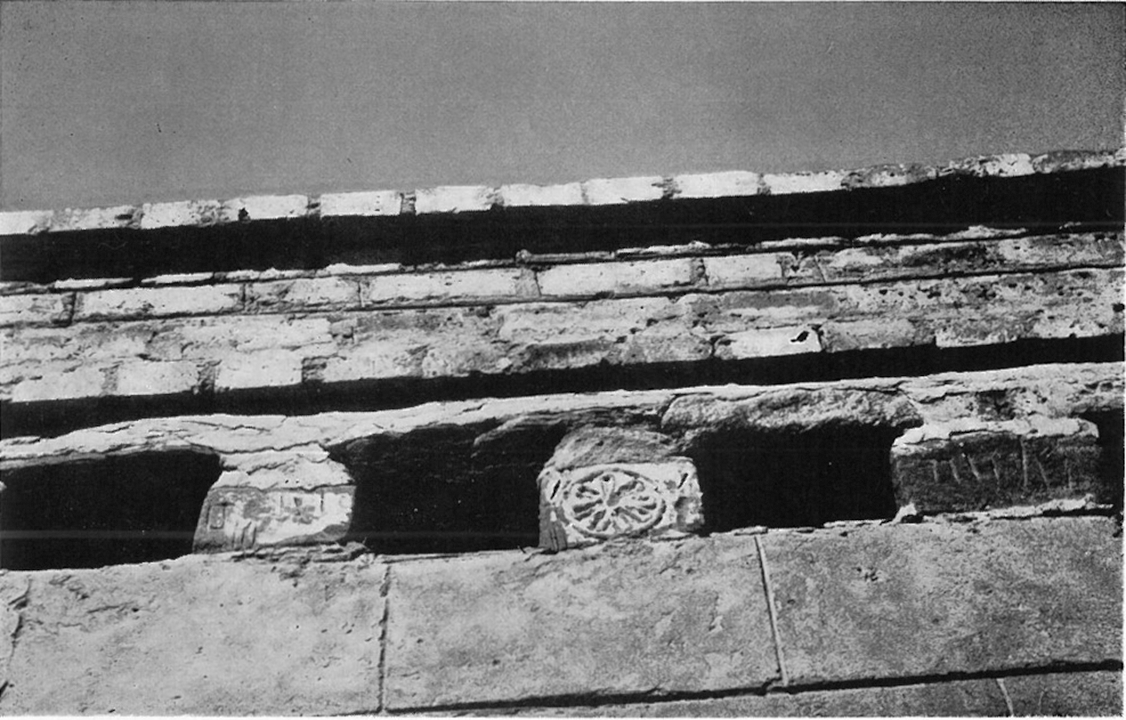
However, these localized efforts remain precarious, often undermined by a widespread lack of public awareness and insufficient formal institutional support. Paradoxically, unregulated community-led interventions, though well-intentioned, have sometimes compromised the archaeological integrity of the sites. For example, the Artul church—after its conversion into a mosque—saw its Christian motifs obscured during recent cement-based restoration works (Al Sheikh & Bashir Reference Al Sheikh and Bashir2022) (Fig. 5). Similarly, the modernisation of King Rahma’s Castle in Abu Hashim by his descendants led to the loss of its original architectural and historical character (Al Sheikh & Bashir Reference Al Sheikh and Bashir2022). Moreover, in the absence of robust preservation policies and under economic pressures, archaeological remains such as pavements and foundations are often pragmatically repurposed as livestock pens or building materials. These examples highlight the inherent tensions and challenges of safeguarding Sudan’s cultural heritage through unsupported local initiatives.
Christian motifs in Artul Church. (Adapted from Crawford 1951.)
The strategic integration of folklore and local narratives can be a powerful catalyst for resource mobilization in heritage management. As Paphitis (Reference Paphitis2013) demonstrated with Cadbury Castle in the UK, associating a site with popular legends, such as the Arthurian mythos, can attract public interest and funding far beyond the reach of purely scientific archaeology. In the Sudanese context, recognizing and validating local narratives—such as those concerning the ‘Anaj’ treasures—can similarly capture the public imagination. By reframing local inhabitants as legitimate stakeholders in a living legend rather than as mere subjects of academic inquiry, archaeological projects can cultivate the community support essential for protecting sites against encroachment and looting. This approach shows that spirituality and folk belief, historically marginalized by colonial academia, have the transformative potential to drive authentic, community-led preservation, ultimately contributing to genuinely decolonial outcomes.
Discussion: implications for decolonial practice in Sudan and Africa
The integration of folklore into archaeological practice in the Third and Fifth Cataract regions shows that the past is not a static repository of data, but a dynamic field of entangled temporalities where ancient materiality and contemporary belief systems are inextricably interwoven (Lemos et al. Reference Lemos, von Seehausen, Di Giovanni, Giobbe, Menozzi and Brancaglion2017; Witmore Reference Witmore and González-Ruibal2013). This requires an epistemic reconstitution that values local worldviews as equal to empirical data, moving the discipline towards a more pluriversal ethics.
Folklore as a protective mechanism
One of the most significant implications for decolonial practice is recognizing traditional belief systems as powerful, informal protective mechanisms. The widespread degradation of archaeological sites in Sudan is often exacerbated by a colonial legacy that nationalized heritage, treating it as state property and effectively alienating local populations (Adam & Taha Reference Adam and Taha2022). This structural detachment renders archaeological remains largely irrelevant to daily life. Alarmingly, local authorities have at times authorized development projects on identifiable archaeological sites without consulting heritage bodies, revealing a profound disconnection rooted in the colonial systematic separation of scholarly institutions from community life (Bashir Reference Bashir2026). This alienation is further entrenched by an ‘Authorised Heritage Discourse’ (AHD), in which national heritage bodies frequently align with state interests and international guidelines to the exclusion of local counter-narratives, thereby perpetuating the epistemic erasure of indigenous perspectives (Dores Cruz Reference Dores Cruz2023).
Paradoxically, amid these institutional and epistemic failures, traditional belief systems have served as a resilient protective shield. Where formal management has faltered, many sites have been preserved through folk heritage—a mechanism rooted in myths historically dismissed by academic frameworks (Mire Reference Mire2011). Sites imbued with religious veneration, such as Meroitic and post-Meroitic tombs, persist as shrines protected by spiritual reverence that secular laws fail to provide (Al Sheikh Reference Al Sheikh1985). This pattern is evident at the Abu Fatima site (Third Cataract) (Fig. 1), where Christian remains were preserved through their re-signification as sacred spaces (Osman & Edwards Reference Osman and Edwards2012). Such continuity reflects an ‘in-use’ model of heritage (Ugwuanyi Reference Ugwuanyi, Sinamai, Giblin, Chirikure and Odiaua2024), where the survival of structures is tied to their ongoing ritual value.
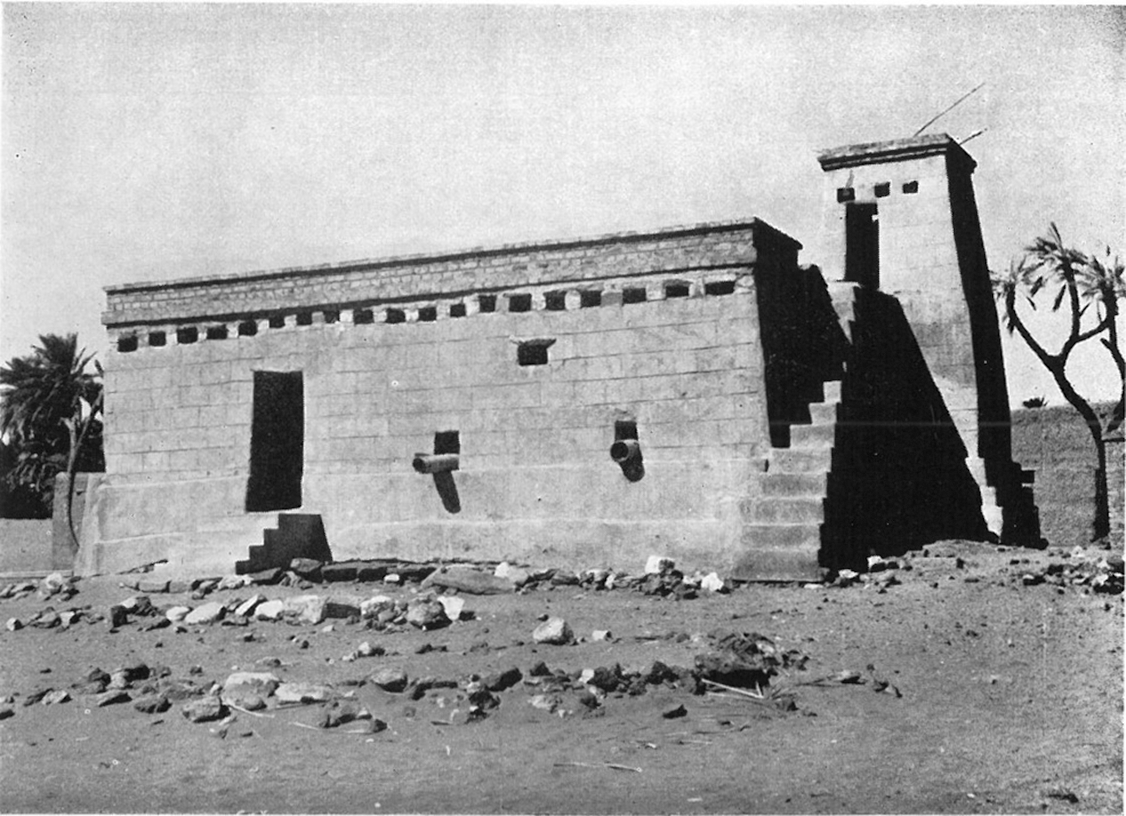
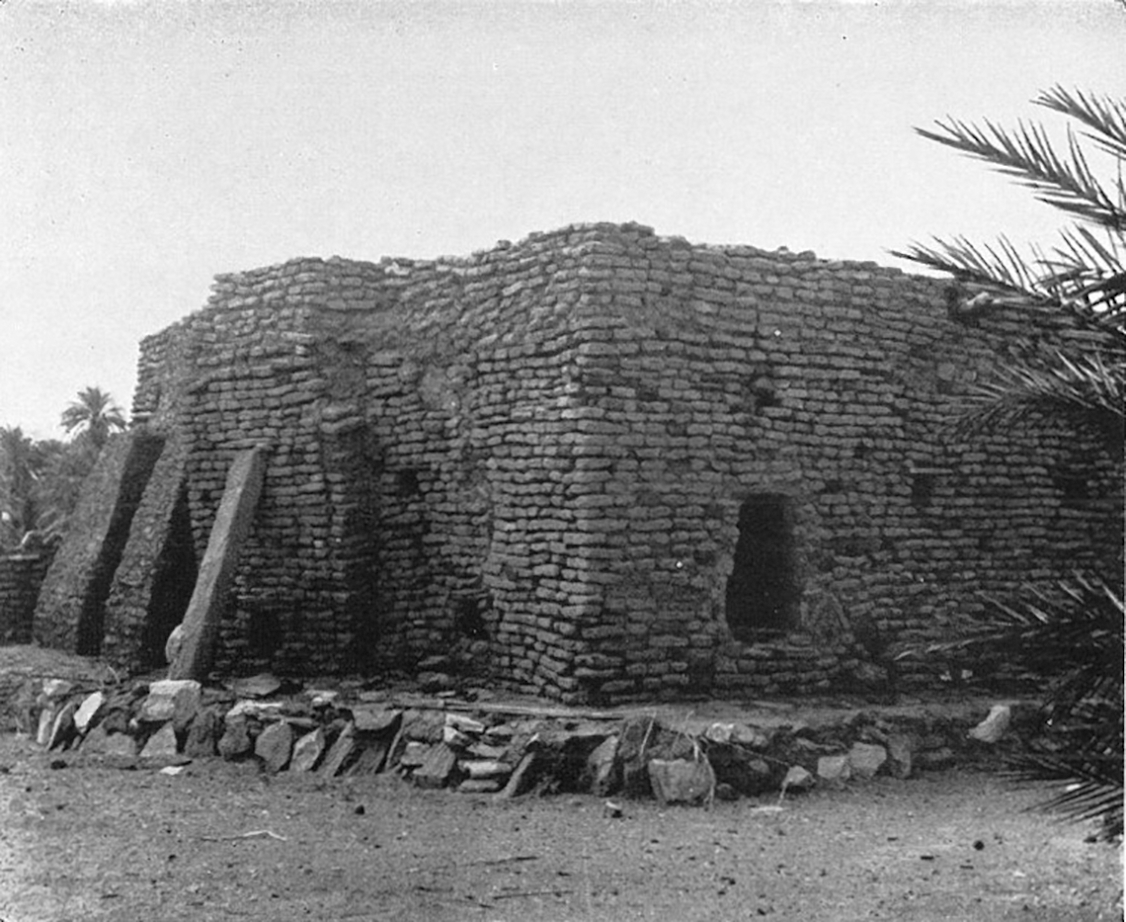
The conversion of Christian churches into mosques or shrines—such as the Bushab Mosque in Artul (Fig. 6) and the Wad Saleh Mosque in El Koro (Fig. 7), which retain Christian motifs despite their current Islamic functions—and the reuse of Qandeisi, Mari and El Usheir churches as shrines for Muslim saints (e.g. Sheikh Wad Fallati, Faki Wad Hussein, Faki Dageer) (Al Sheikh & Bashir Reference Al Sheikh and Bashir2022) represent an archaeological life-history (Holtorf Reference Holtorf1998) in which meaning is continually renegotiated. Just as European barrows were reinterpreted by medieval populations (Semple Reference Semple1998), and prehistoric artefacts were re-signified as ‘elf-stones’ or ‘thunderbolts’ for apotropaic purposes in Irish folk magic (Dowd Reference Dowd2018), Sudanese ‘Anaj’ sites have acquired new biographical chapters. The physical preservation of the Gandeisi Church (used as a shrine for Sheikh Wad Fallati) is not merely reuse, but a continuation of its social activity within the community. However, this spiritual shield is currently threatened by Salafist ideologies and economic desperation, which have precipitated the stripping of bricks and timber from sites such as Gandeisi and El Ushier Churches (Al Sheikh & Bashir Reference Al Sheikh and Bashir2022). This contemporary crisis highlights a decolonial truth: understanding the social role of material culture is not an academic intrusion, but a prerequisite for sustainable management.
Mosque-church in Artul. (Adapted from Crawford 1951.)
Mosque-church in El Koro. (Adapted from Crawford 1951.)
Addressing epistemic violence and exploitation
The failure to engage with folklore has created a vacuum exploited by illicit actors. Illicit networks pragmatically use local narratives of hidden treasures as actionable intelligence to fuel antiquities trafficking (Al Sheikh & Bashir Reference Al Sheikh and Bashir2022). A genuinely decolonial approach must transform local knowledge into a tool for protection rather than extraction. Engagement must be rooted in empathy rather than strategic narcissism—a practice in which Western research goals define the world (Abd el Gawad Reference Abd el Gawad2023).
Avoiding the ‘hauntological persistence’ (Stark Reference Stark2025) of colonial mentalities requires archaeology to serve as an interface for genuine collaboration. This entails implementing ethical economic models, ensuring equitable benefits and supporting community-led initiatives such as the Beit il-Turath in Abri (Spencer et al. Reference Spencer, Fushiya, Ryan, Abd Rabo and Saad2024). Moreover, disregarding local toponyms functions as an ‘unintentional gatekeeping device’ (Chen Reference Chen, Frey and Raja2024) that disadvantages local communities. Integrating these perspectives addresses the ‘epistemological violence’ inherent in frameworks that have historically objectified African history (Ugwuanyi Reference Ugwuanyi, Sinamai, Giblin, Chirikure and Odiaua2024) or engaged in what Kratimenos (Reference Kratimenos2025) terms ‘sublimation’—the embedding of colonial assumptions within modern chronologies.
Ultimately, the integration of folklore, including the ‘Anaj’ chronologies, redefines legitimate historical evidence. As Paphitis (Reference Paphitis2013) argues, these traditions represent metaphorical history—narratives that are symbolically true to a community’s identity. Ignoring them removes a vital layer of a site’s biography and perpetuates the colonial suppression of indigenous understandings (Lemos et al. Reference Lemos, Mberki, Owosent, Rai and Moffett2025). This fosters decolonial healing by re-establishing the link between contemporary populations and their ancestral landscapes.
Conclusion
Integrating folklore with archaeological practice in Sudan is a fundamental decolonial imperative for achieving ethical and effective stewardship of the nation’s past. Local oral traditions, toponyms and guardian beliefs provide epistemologically distinct lines of evidence that: (1) guide surveys to sites often invisible to conventional methods; (2) offer vital relative chronologies and functional interpretations, acknowledging indigenous historical consciousness; and (3) serve as potent informal protection mechanisms for vulnerable monuments, underscoring the resilience of indigenous knowledge. This integration, however, requires reflexive methodological rigour and transparent protocols to synthesise oral data ethically with stratigraphic and scientific analyses, thereby avoiding the perpetuation of colonial power dynamics through uncritical appropriation.
To operationalize this decolonial reconstitution, Sudanese archaeology must commit to three interconnected priorities. First, it requires epistemic reorientation through standardized field protocols to record oral narratives and toponyms as co-equal epistemologies within GIS-linked databases (Bashir Reference Bashir2026). Second, there must be a radical institutionalization of co-production, in which heritage institutions and local councils embed community stakeholders as active rights-holders. The urgency of this shift is starkly underscored by the current conflict in Sudan; as formal state apparatuses and institutional oversight are severely compromised by ongoing war, local community guardianship often represents the primary—and in many regions, the only—operational shield against the physical destruction and illicit exploitation of archaeological landscapes. Finally, legislative and pedagogical decolonization is crucial, necessitating reforms to university curricula and national guidelines to recognize community custodianship and indigenous legal frameworks formally (Bashir Reference Bashir2026).
When applied in practice, these measures will enhance interpretation—shedding light on the functions of fortresses, trade hubs and ritual landscapes from pluriversal perspectives. They will achieve sustainable conservation by aligning protection strategies with local worldviews rather than external frameworks. Beyond preservation, this approach counters illicit excavation by transforming local knowledge into empowered community assets, managed through equitable partnerships that foster self-determination. By fostering a reflexive dialogue between archaeology and folklore, Sudan can forge a more just history—one conducted for, by, and with the people—bridging the gap between ancient monuments and the vibrant, though imperilled, realities of modern Sudanese communities.
Acknowledgements
This article was prepared during an Alexander von Humboldt research fellowship at the University of Münster, Germany. I gratefully acknowledge this support. I also thank Rennan Lemos, Chloë Ward and Panos Kratimenos for their insightful comments on the manuscript, and Abdelgadir Ekhazin and Tohamy Abualgasim for providing the figures.





 Open access

