


Does meaningful decarbonization depend on policy stability that makes climate policies and institutional development irreversible, or does it depend on mastering a messy political conflict with steps forward and backward that might be inherent in large-scale political economy transitions? This chapter uses the example of energy transition in Brazil to suggest that policy stability in a bureaucratic and political status quo can in fact result in significant change, exemplified in the dramatic growth of wind power there since 2002. However, the Brazilian example also shows that the results were limited. Notably, solar power languished for a decade after wind power took off. Further, oil and gas production in Brazil expanded even faster than the new renewables. Thus, while a status quo policy stability enacted through bureaucratic politics led to some important changes in the Brazilian energy system, it proved unable to galvanize a full energy transition.
The delay to a full transition does not unequivocally point to politicization as a clear strategy either, however. A brief contrasting case study of South Africa, where politicization dominated the storyline as the country tried to move from its historic dependence on coal, shows the difficulty transformative forces faced as they took on powerful incumbent actors. While neither case casts a clear vote for either strategy, both show the virtues of a multifaceted approach to studying energy transition, which places climate motivations and political economies in the context of a wider set of interests and coalition building around renewable energy.
9.1 Overview of the Case Studies
In the first decade of the 2000s, both Brazil and South Africa began to contemplate the task of transforming their electricity sectors. For both, supply crises (in 2001 for Brazil, in 2008 for South Africa) were the proximate causes behind the shift, with new renewables like wind and solar power appearing as possible routes to diversifying the energy system for energy security despite their higher costs. Over the same decade, both also began to engage more extensively with international climate negotiations that increasingly called for comprehensive energy transitions and more commitments from emerging powers (Hochstetler Reference Hochstetler2012). By the end of the next decade, Brazil had seen an impressive rise in its installed capacity in wind power, although broader energy transformation there was patchy, as described. South Africa had made a promising start at decarbonizing its energy system in mid-decade, only to move into stalemate and even retreat.
These parallel experiences offer an excellent opportunity to look at the puzzle presented by this book. The opportunity is especially good since my recent study of the two concluded that the Brazilian case exemplified a more technical, self-reinforcing status quo process grounded in existing institutions and processes while the South African transition process faced continuous politicized scrutiny and opposition (Hochstetler Reference Hochstetler2021: 222). While the basic outcomes might seem to easily support those arguing in favor of aiming for a status quo of policy stability, this chapter argues for a more nuanced conclusion.
In particular, while the depoliticized Brazilian approach enabled specific achievements like the rapid growth of wind power, it proved unable to stimulate a wider process of energy transition, leaving Brazil’s petroleum ambitions untouched (Viola and Franchini Reference Viola and Franchini2018: 142–146). Extending to fuller energy transition would evidently require the more overtly contentious battle with powerful actors that South Africa has not been able to avoid, given that nearly all of the latter’s greenhouse gas (GHG) emissions are in the energy sector and nearly half of those in electricity. Thus, the final overarching argument is that full decarbonization faces an apparently inevitable confrontation over the distributive politics of shutting down existing and potential fossil fuel production and use (see VanDeveer, Chapter 5, this volume).
The need for confrontation does not mean the battle is inevitably lost. I argue that while decarbonization processes activate a powerful set of probable fossil fuel losers that will mobilize to resist change (see also Moe Reference Moe2015), other political economies of energy transition – industrial policy, consumption issues, and siting – may create either allies or opponents for them. That balance of incentives and disincentives for transition in the multiple political economies of energy transition sets the overall national transition outcome and allows important advances in decarbonization, if not a full achievement of it.
Brazil and South Africa are important case studies for this research puzzle, as much research on climate politics has focused on the advanced industrial democracies. As emerging powers, these countries widen the evidence base for drawing conclusions about broader theoretical questions. In addition, the countries are regional powers, which often are models for their regions. Finally, much of the world’s future GHG emissions is expected to come from emerging and other developing countries, so understanding climate politics there – and any differences with the Northern countries more commonly studied – is particularly important for understanding future GHG emissions trajectories. The conclusions are based on multiple periods of field research and about ninety original interviews with actors in the climate and energy sectors in the two countries. These are more fully referenced in my recent book on energy transition in Brazil and South Africa (Hochstetler Reference Hochstetler2021).
9.2 Energy Transition, Policy Stability, and Politicization: Four Political Economies
Energy systems and energy system change have wide and diverse effects on national and international political economies. That is, they reflect a series of different basic structures of interests that activate different coalitions of state and societal actors. Some of the most important are those related to climate change and decarbonization, where actors can be divided by whether they hold “climate-forcing” or “climate-vulnerable” assets (Colgan et al. Reference Colgan, Green and Hale2021). But energy systems also have other important political economies. There is a productive sector that produces the energy used, with its own firms, careers, technologies, innovations, and growth trajectories. Beyond that, energy is consumed in some form by both individual households and economic actors. Finally, energy infrastructure is placed in particular communities, which may or may not welcome it. All of these political economies of energy systems are potentially subject to state regulation and control. The energy sector is one that has historically seen significant state ownership and control, which has continued in most countries even after a period of partial liberalization (Victor and Heller Reference Victor and Heller2007; Victor et al. Reference Victor, Hults and Thurber2011). This makes energy transition a particularly relevant location to view the effects of state policy and whether policy stability or a more flexible and contention-savvy policy strategy will be more likely to build successful outcomes of energy transition.
The climate political economy of energy transition is where this theoretical debate has been put forward most explicitly (Paterson et al. Reference Paterson, Tobin and VanDeveer2022). On the one hand, many climate scholars argue that a status quo of policy stability is necessary because of the long time horizon of climate change and the need to provide credible signals of future policy to motivate the full range of public and private action needed. The exact logics and mechanisms behind this argument vary. From an economics or business perspective, the motivation is the need to reduce regulatory risk and to send clear and consistent signals to private economic actors (Blyth et al. Reference Blyth, Bradley and Bunn2007); such perspectives often prefer a carbon tax as mechanism. Others are more oriented to institutional or policy arrangements that are designed to deliberately lock in the desired pathway, including by creating positive feedback mechanisms (Levin et al. Reference Levin, Cashore, Bernstein and Auld2012; Lockwood et al. Reference Lockwood, Kuzemko, Michell and Hoggett2016). As a group, these approaches are looking to isolate climate policy from many current political debates and contestation.
Conversely, this same policy arena has generated some of the strongest counterarguments that decarbonization is an inherently conflictual and political process, which will belie any easy locked-in solutions on a scale that is fully adequate for the transformations necessary (Aklin and Mildenberger Reference Aklin and Mildenberger2021; Paterson et al. Reference Paterson, Tobin and VanDeveer2022). In fact, scholars argue, efforts to produce such long-term solutions that ignore politics are likely to lock in the preferences of powerful fossil fuel actors (e.g. Brulle Reference Brulle2018). The fact that decarbonization ultimately requires shutting down and leaving unexploited sources of fossil fuels contributes to this conflict. Yet the strength of many current political and economic elites derives either directly or indirectly from fossil fuels. That makes climate policy and true energy transition an existential threat to very powerful actors and requires substantial state capacity to restrain and manage their power, in this view (Meckling and Nahm Reference Meckling and Nahm2018; Moe Reference Moe2015).
The dynamics of stability/politicization in the production political economy are quite different, however. Here, energy transition is often driven through the dynamics of green industrial policy, or specific state initiatives to promote renewable energy and other related sectors, such as electric vehicles (e.g. Meckling and Nahm Reference Meckling and Nahm.2019). In green industrial policy literatures, some element of policy stability is seen as necessary to motivate public and private actors to respond to the incentives given. However, the industrial policy literature also places a great deal of emphasis on the need to plan withdrawal of the incentives in a timely fashion in order to prevent excessive rents and ensure efficient and competitive development of the new industries (Pegels Reference Pegels2014), so even the pro-stability argument is qualified in this area. Otherwise, the production dynamic is generally one of providing positive incentives for decarbonizing action, so it can generate allies for supporting stronger climate policy and consequently has less of the inherent conflict associated with climate politics.
In the consumption political economy of energy transition, scholars ask questions about energy access, the quality of energy supply, and energy pricing levels and structures, that is, whose energy use is subsidized or cross-subsidized (Hochstetler Reference Hochstetler2021: 132–135). There is little direct discussion about policy stability versus contention, but the political economy itself is one with implications for both. Policy stability can be enforced by the physical infrastructure of distribution, with options locked in and out. For example, if energy access is provided through centralized grids (electricity) and networks (e.g. vehicle fuel distribution), then certain kinds of policy choices become much more difficult. The large scale and long lifespans of existing infrastructure make change more difficult – although these considerations also work to reinforce transitions once new infrastructure, for example electrical vehicle charging networks, is built. The physical lock-in is commonly reinforced by political lobbying by actors who benefit from the system. For example, the utilities that manage central electricity grids have often been hostile to the development of small-scale solar power and warn of utility “death spirals” if self-provision is encouraged (Stokes Reference Stokes2020: 103). Quality and pricing issues are rarely themselves locked in directly, but decisions on these topics are very important for creating allies or opponents for energy transition. Consumer subsidies for fossil fuels, for example, are often defended with mobilized protests (e.g. Akanle et al. Reference Akanle, Adebayo and Adetayo2014) that provide a powerful force against leaving fossil fuels behind.
Finally, the political economy of energy transition siting – where fuels and industrial inputs are sourced, where energy is refined and produced, where the built infrastructures of electricity and pipelines are placed – share some of the features of the consumption political economy. The physical facilities themselves lock in particular energy choices and particular locations of impact, while the prospect of new ones, necessary for any transition to take place, often face significant resistance from prospective host communities (McAdam and Boudet Reference McAdam and Shaffer Boudet2012). Whether hosting an energy-related facility brings benefits like jobs and infrastructure to host communities (e.g. Xia and Song Reference Xia and Song2017) or imposes significant costs on often vulnerable hosts (e.g. Avila Reference Avila2018) is a matter of considerable theoretical debate. This is in part because the costs and benefits genuinely vary. The specific balance of costs and benefits is, again, likely to create opponents and proponents of energy transition. The solutions to those conflicts, to build or not to build, will then again physically reinforce any energy choice.
This discussion has remained quite abstract, while pointing out at numerous points that there is likely to be a fair amount of variation and specificity in national energy transition efforts. In addition, the final mix of the political economies will also matter. Thus, even policy and institutional consistency on climate change itself, narrowly defined, may be undermined – or reinforced – by decisions taken by other actors on, say, who has access to subsidized finance for building infrastructure (a production question). As a result, it is helpful to examine two vignettes of how energy transition debates unfolded in Brazil on the new alternatives of wind and solar power, and the simultaneous development of fossil fuel production in the oil and gas sector. This will be followed with a brief look at South Africa. Collectively, they will allow me to sketch how the political economies of energy transition can inform the broader question of this book.
9.3 Energy Transition in Brazil: Advancing the New Renewables
Energy transition in Brazil looks quite advanced, especially if one focuses on the growth of alternative renewables like wind power and (more recently) solar power (see Figure 9.1). Brazil has traditionally used hydroelectric power, which has fewer GHG emissions but more socio-environmental conflict than fossil fuel sources of electricity. Instead, almost all of its emissions have historically come from deforestation, agriculture, and other land-use sources of greenhouse gases (Basso Reference Basso2019: 5). Less than 3 percent of its GHG emissions come from electricity itself (Ministério de Minas e Energia 2018: 245). This means that the contentious debates there around climate change have rarely focused on energy or electricity, making it a country almost uniquely able to address climate change without engaging in a politicized debate around energy transition. In fact, most of Brazilian decision-making around renewable energy has in fact come in depoliticized, steady, standard operating-procedure bureaucratic decisions (Hochstetler Reference Hochstetler2021: 229–230).
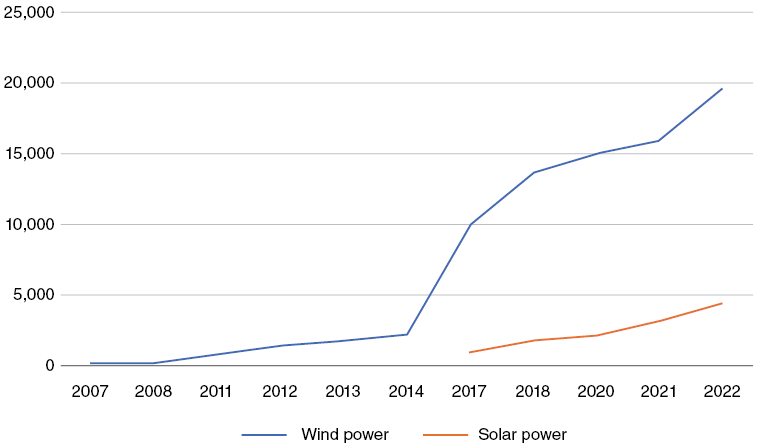
Figure 9.1 Long description
Line graph installed megawatts (MW) of wind and solar power in Brazil from 2007 to 2022. Two lines: wind power and solar power. Wind power increases steadily from 2007, notably rising from 2014 onwards. Solar power starts around 2017, increasing to 2022. Y-axis: 0 to 25,000 MW; X-axis: 2007 to 2022.
Figure 9.2 summarizes ten-year electricity planning in Brazil, showing the smooth and consistent expansion of wind and (eventually) solar power that resulted. Figure 9.2 shows why the idea of depoliticized, stable decision-making on climate is so appealing. The unfolding of wind power in Brazil exemplifies what climate activists hope for. Yet, while wind power expanded steadily after 2009 in Brazil, solar power lagged; the first auctions for the right to build solar power were held only in 2014 and it is only beginning to really take off a decade later. This difference cannot be explained by a narrow focus on climate change, since there are no climate-based reasons to avoid solar power in a sunny, tropical country. Instead, the different fates of wind and solar power in Brazil came down to the cost/consumption and industrial policy political economies of energy transition.
Ten-year electricity planning in Brazil: (a) ten-year wind power projections in Brazil, in installed MW and (b) ten-year solar power projections in Brazil, in installed MW.
Note: Starting points for each series are actual contracted/built quantities for that year.
Figure 9.2 long description.
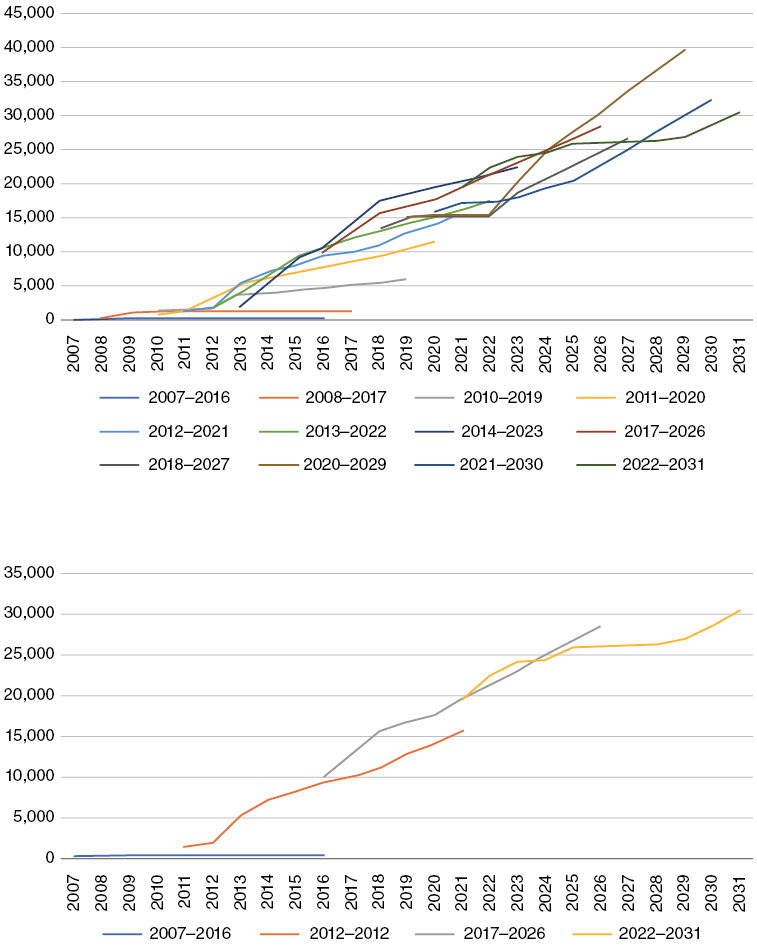
Figure 9.2 Long description
Two graphs showing ten-year electricity planning in Brazil. The top graph displays wind power projections in installed megawatts (MW) from 2007 to 2031, with various lines representing different ten-year periods. The bottom graph shows solar power projections in installed megawatts (MW) over the same period, also with different lines for various ten-year periods. Each line indicates projected growth in renewable electricity, starting from actual contracted or built quantities for each year.
Cost considerations – important for consumption decisions – are a significant part of the story. As Brazil first began to consider building the new renewables in 2001, solar power was much more expensive than wind power and other alternatives. While wind power was also more expensive than non-solar alternatives, Brazilian energy modelers believed the higher costs could be compensated with the greater potential to build an industrial sector that would supply components for wind power (Hochstetler Reference Hochstetler2021: 93).
Existing industrial capacities were further leveraged with routine policies in the Brazilian National Development Bank (BNDES) that provided subsidized funding for projects that included locally produced inputs, allowing them to win Brazil’s cost-based auctions to supply electricity to the grid. The result for wind power was the classic green spiral where industry and government worked together in a self-reinforcing way to steadily expand the sector (Hochstetler Reference Hochstetler2021: 103–104). Conversely, industrial development was much more difficult for solar power and BNDES finance was less decisive, so it lacked this self-reinforcing mechanism. Solar power did not expand until the sharp fall in the global cost of solar components took place after 2011. This contrast between wind and solar power therefore supports the versions of the policy stability model that emphasize path dependence, especially when reinforced through the building of new actors and coalitions in favor of the direction of transition.
As a final part of the story, the siting dimension of energy transition in Brazil worked against the dynamic established in the other political economies, although it was not decisive. About one-quarter of local host communities (nineteen of seventy-seven) strongly objected to and resisted the building of wind power farms in their communities. This resistance was most likely in communities where land tenure was uncertain, as in historic former slave communities where residents had had informal access to beaches and other locations without formal ownership of them (Hochstetler Reference Hochstetler2021: 202–205). The resistance was strong enough to generate a policy change away from a permissive environmental licensing process that had assumed there would be no negative local impacts (Hochstetler Reference Hochstetler2021: 191). Ultimately, the resistance was unable to block wind power and was more influential over time in determining exactly where wind power would be built in Brazil’s many potential sites. In contrast, there were no community mobilizations against hosting solar power, but that did not prove to be a decisive advantage for solar power given the other political economies of energy transition. It is worth noting that energy siting in Brazil is generally a highly contentious process, with communities and activists poised to quickly mobilize against new large hydropower sites – although fossil fuel-based electricity plants are the least likely to generate host community opposition (Hochstetler and Tranjan Reference Hochstetler and Tranjan2016).
9.4 Energy Non-transition in Brazil: Advancing the Oil and Gas Sector Too
All of Brazil’s gains in renewable energy production have not limited the continuing expansion of fossil fuels. Instead, the renewables and fossil fuels expanded together, following the discovery of large deposits of oil and gas deep offshore in 2007. Other scholars have noted this counterintuitive result (e.g. Aamodt Reference Aamodt2018; Basso Reference Basso2019; Viola and Franchesi Reference Viola and Franchini2018). In this chapter, I show that both outcomes result from very similar policy processes, with the exception of the climate political economy. With existing institutions repurposed to add more new renewables to the electricity sector without taking on a transformative climate ambition in the energy sector, Brazil is actually moving away from true climate-friendly energy transition even as its wind and solar power capacity continues to grow.
As noted, the climate political economy is the one that makes most explicit the demand that existing fossil fuel production must be truncated and even shut down to meet its end goals (Hochstetler Reference Hochstetler2021: 30). Unlike many countries with oil and gas production, Brazil does not have a long-standing dependency on the sector for state revenues and export earnings. Its historic reserves were small, and the available rents followed suit. Neither its fossil fuel subsidies nor the share of petroleum rents have surpassed 3 percent of gross domestic product (GDP).Footnote 1 Yet the state-controlled oil company, Petrobras, has long been “the most emblematic state-owned enterprise” (Mortari et al. Reference Mortari, Garcia Ribeiro, Loural and Oliveira2021: 147), a “jewel in the crown” of both Brazil’s domestic and international politics (Ceppi and Doval Reference Ceppi and Pereyra Doval2020: 102), with all of the cultural and economic power of other statist fossil fuel incumbents. Petrobras’s many deep ties to political and economic elites became evident when it became one of the primary targets of a large corruption scheme in the construction sector, known as Lava Jato or Carwash, eventually paying $853.2 million in fines to Brazil and the United States (Viswanatha and Lewis Reference Viswanatha and Lewis2018).
Neither Brazil’s 2016 nationally determined contribution (see Allan, Chapter 14, this volume) nor subsequent revisions even mention the fact that Brazil is an increasingly important oil and gas producer. They note instead that the renewables share in Brazil’s energy matrix was already three times the world average (Brazil Second Revised NDC 2022) and that they expect the share to rise by expanding non-hydro renewables. Governmental narratives on oil production and climate change either stress the way that petroleum expansion can pave the way for energy transition or assert that Brazil has a right to develop its resources in a world where most GHG emissions are associated with the Global North (Víglio et al. Reference Vígilio, Di Giulio, Barbi and da Costa Ferreira2019: 146, 148). The fact that deforestation and land-use change dominate Brazilian GHG emissions allows even actors serious about climate action to elide Brazil’s fossil fuel industry. Yet political conflict also intervened in this result. The Climate Law passed by the National Congress in 2009 included clauses that called for phasing out fossil fuels and replacing them with renewables but then (and current) President Lula da Silva used his line-item veto to remove them. The veto followed the wishes of the Ministry of Mines and Energy as well as Lula’s presidential successors (Aamodt Reference Aamodt2018: 386).
The regular ten-year energy planning documents that lay out steady expansion for wind and now solar power also contain chapters on oil and gas production. But while the former discussions frequently mention Brazil’s climate commitments, the latter do not mention climate change at all. They simply register amounts of reserves, rates of production and reserve depletion, and clearly are oriented toward maximizing possible production levels in the sector (e.g. Ministério de Minas e Energia 2023). In this chapter, but not in the rest of the document, sustainability means sustained production. The same sophisticated energy planning agency using its same standard optimization models bolstered the expansion of wind and solar power and also planned to boost oil and gas production. The planning logics are consistent on most metrics, favoring factors like low prices and energy security, but have opposite implications for decarbonization.
Similarly, BNDES used very similar decision-making metrics to support both wind power and oil and gas expansion. By statute, BNDES values Brazilian long-term economic development and both short- and long-term job creation, with a frequent focus on national industrial development. As seen in the last section, the local content conditions for its loans helped to promote the development of wind, but not solar, power, by providing an additional incentive and political support for wind power development through incentives for supply chain development. For oil and gas, BNDES’s loans were even more decisive for Petrobras’s investment needs after the pre-salt discovery. These coincided in time with the global financial crisis and a temporary disappearance of private investment funds. BNDES’s loans to Petrobras rose by more than five times (R$ 8.8 billion to R$ 47.87 billion) between 2007 and 2012. In that final year, loans to Petrobras were 30.69 percent of BNDES’s loan portfolio (Barbosa Reference Barbosa2013: 31), showing the importance of the petroleum parastatal to this public bank. The bank’s local content requirements were buttressed by an explicit governmental policy for oil and gas inputs, again providing increased political and economic incentives for the sector’s expansion (Mortari et al. Reference Mortari, Garcia Ribeiro, Loural and Oliveira2021). BNDES’s public database of all its lending shows no funds for extraction after 2013 and only loans for tankers and ports after 2014.Footnote 2 New public funds for Petrobras disappeared with austerity, the Lava Jato corruption scandal, and the Workers’ Party’s exit from the presidency, but BNDES still provided irreplaceable support for Petrobras’s expansion into deep sea production at a key moment that might otherwise have seen the initiative fail or develop more slowly.
The consumption political economy proved to be a double-edged sword for the oil and gas sector. The national government continues to control a majority of Petrobras’s shares and has frequently intervened in the company to pursue other national goals. Some of the most notable policies came in Dilma Rousseff’s first government (2011–2014) when Petrobras was forced to sell its products domestically at prices below what it paid for them internationally. Taxes were also lifted for automobiles as well as for oil and gas (Basso Reference Basso2019: 10). The policy was damaging to Petrobras as a company, but the subsidized prices also provided a climate-hostile subsidy for fossil fuel consumption. Gasoline was used at the expense of biofuels in Brazil’s common flex-fuel cars, for example (Basso Reference Basso2019: 10).
For local communities that host oil and gas installations, debates about local impacts have largely centered on the royalties long distributed to producing municipalities. These provided at least 5 percent of municipal budgets for 122 communities over a five-year period (Lima-de-Oliveira and Alonso Reference Lima-de-Oliveira and Alonso2017: 581). While the development outcomes for these municipalities did not improve (Lima-de-Oliveira and Alonso Reference Lima-de-Oliveira and Alonso2017: 584), they fought hard to retain the royalties through several contentious congressional debates (Trojbicz Reference Trojbicz2019). Alongside the political debates among elected elites, large crowds marched in Rio de Janeiro and other cities to demand continued royalties, even as there was a striking absence of contestation around the oil spills and other environmental hazards around offshore oil production (Hochstetler Reference Hochstetler2011). In other words, the question of local impacts spilled outside of standard bureaucratic processes in several ways, with both congressional and street mobilization dominated by those seeking continued oil and gas production.Footnote 3
In general, the political economies of the oil and gas sector (and the government policies that shaped them) thus worked to reinforce that sector even as wind and solar power expanded. Many of the same institutions – BNDES, the Energy Planning Agency, the climate institutions – promoted both, either intentionally or by omission, in the case of the climate institutions. Thus, the final summary of the Brazilian case shows that a status quo of bureaucratic politics can promote important changes in the energy sector but did not transform the sector as a whole. Contentiousness was generally low across the board but emerged in 2010 over the issue of adding a phaseout of oil and gas to the National Climate Law. Very new dynamics within Lula’s third presidency (2023–2027), beyond the scope of this chapter, also show that efforts to actually block the expansion of oil and gas sectors are introducing the politicization and conflict that had been avoided.
9.5 Energy Non-transition in South Africa
If South Africa is to reduce its GHG emissions, it can only do so by decarbonizing its energy sector, responsible for about 80 percent of its emissions (Hochstetler Reference Hochstetler2021: 36). However, it has the classic scenario expected by the authors who say transitions can only be politicized: The whole South African economy has been organized around a “minerals-energy complex” of political and economic elites who have relied on historically cheap coal-based electricity (Fine and Rustomjee Reference Fine and Rustomjee1996). For the parastatal Eskom and heavy electricity consumers in the Energy Intensive Users Group (EIUG), whose twenty-eight firms use 40 percent of South Africa’s electricity supply, the prospect of energy transition appeared as an existential threat from when it was first proposed in 1998. Early on, Eskom was able to simply block requests to diversify from coal, but after the crippling supply shortages after 2008, the sector quickly became the site of significant contestation, whether at consultative meetings on climate in 2009 or in debates around planning South Africa’s long-term electricity procurement plans (Hochstetler Reference Hochstetler2021: 39–57). Figure 9.3 illustrates the country’s inability to ever settle into a clear vision of its electricity sector, with successive plans for electricity procurement fluctuating wildly as different actors gained short-term influence in the planning process.
Projected total electricity procurement in installed MW to 2030 by fuel type in drafts of the South African Integrated Resource Plan for Electricity.
Figure 9.3 long description.
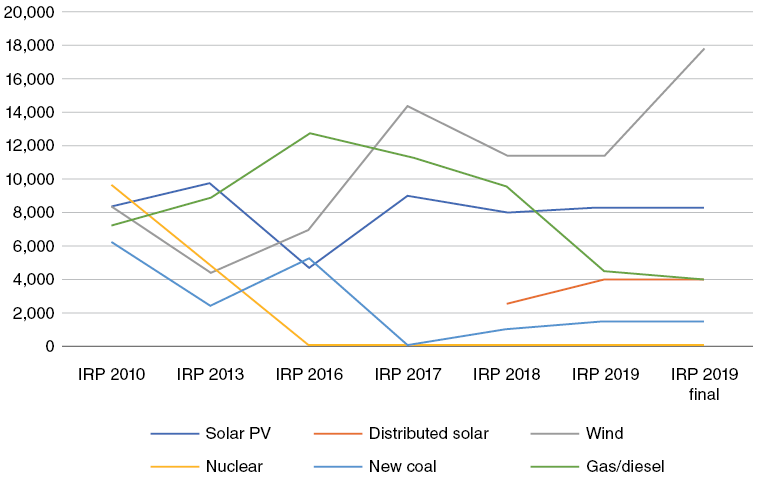
Figure 9.3 Long description
Line graph projected total electricity procurement in installed MW to 2030 by fuel type in South African drafts of the Integrated Resource Plan for Electricity. The x-axis represents drafts from 2010 to 2019. The y-axis shows installed MW from 0 to 20,000. The graph includes lines for Solar PV, Distributed solar, Wind, Nuclear, New coal, and Gas/diesel, each with different line styles and colors. The lines fluctuate wildly showing the short-term influence of different actors in the planning process. Distributed solar and Gas/diesel show moderate increases.
Institutions followed suit, with the 2009 Inter-Ministerial Committee on Climate Change omitting the most powerful relevant state actors, the Ministry of Energy, the Treasury, and Eskom, leaving a weak Ministry of Environmental Affairs unable to lead decisive climate action among its partners (Tyler and Hochstetler Reference Hochstetler2021: S191). In short, while effective climate policy might require policy stability and a steady hand, the South African experience shows that putting such policies and institutions in place is a daunting requirement in a context where there are powerful interests in blocking transition. There has been very little evidence that the South African state has the capacity to do so in the face of “the presence of a strong, well-resourced actor like Eskom fighting an existential threat [that] clearly drove the emergence of these counter-coalitions and their battles” (Hochstetler Reference Hochstetler2021: 224). Yet, while the basic South African climate story looks like the inevitable politicization following an activated fossil fuel power, the other dimensions of energy transition there show places where more harmonious and steady pro-transition coalitions and policies might have been built.
As already noted, the industrial policy and sectoral growth dimensions of energy transition have often provided a positive motivation for change, even resulting in a self-reinforcing green spiral of industry growth and governmental reinforcement for many early adopters (Zysman and Huberty Reference Zysman and Huberty2014). South African policymakers were very interested in this possibility, with numerous government departments putting forward plans (Hochstetler Reference Hochstetler2021: 112–115). This opportunity was interrupted in South Africa because reformers made the renewable energy program the entry point for private generation, which introduced the contentious and further politicized dynamics of sectoral privatization to decarbonization. This was in part because Eskom had earlier refused to decarbonize itself, but it eventually led to a poisonous association of public generation with coal and nuclear power while nearly all wind and solar power generation was private. This magnified Eskom’s opposition to shifting fuels and helped to shift the labor movement – supportive of climate action but ideologically opposed to private generation – into the opposition to developing wind and solar power (Hochstetler Reference Hochstetler2021: 115–117). The fits and starts visible in Figure 9.3 further drove away much private interest in localizing input manufacturing so that most jobs associated with renewable energy held little interest for labor, completing a negative rather than positive spiral.
Similarly, South African electricity planners had hoped that solar power could finally bring electrical service to all South Africans, especially the Black South Africans unserved by apartheid and still disproportionately unlinked to the national grid. Many of those disconnected rejected the minimal household service offered through solar power, however, with some researchers characterizing the offer as environmental injustice (Monyei et al. Reference Monyei, Adewumi and Jenkins2018). Instead, wind and solar power were most embraced by wealthier consumers opting for self-provision off the grid. The EIUG also appreciated the steadily dropping prices of renewables across the four auctions as coal prices simultaneously rose (Hochstetler Reference Hochstetler2021: 27). Thus, while this political economy can ease politicization and conflict, it did not in South Africa, with its racialized history of inequitable electricity service provision.
The South African government designed its renewable energy procurement program in ways that might have built opposition or support for broader energy transition in the local communities that host electricity infrastructure. On the one hand, it used the auction procurement mechanism for electricity, which tends to provide incentives for cheaper electricity – itself a source of support for transition – through larger and more intrusive installations that are more likely to encounter opposition from host sites (Grashof Reference Grashof2019). On the other hand, bidders won the auctions to build wind and solar farms based on bids that considered not only the price offered but also the benefits they promised to communities within 50 km of an installation. These included mandatory community ownership up to 5 percent, as well as promises for jobs for locals and for Black South Africans in particular (Tait et al. Reference Tait, Wlokas and Garside2013). In the end, only one community in South Africa had substantial mobilization against wind power (Hochstetler Reference Hochstetler2021: 210), but the small number of projects procured and built largely neutralized both the potential positive and negative benefits of renewable energy for local committees.
In summary, the South African experience demonstrates the basic dynamic of the politicized scenario. In a country with powerful actors committed to fossil fuels, politicization of energy transition was unavoidable. Those powerful actors, led by the parastatal Eskom, successfully outright blocked and maneuvered behind the scenes against energy transition for more than two decades. At the same time, the South African experience includes several places where there were points of intervention – actual and potential – that could have led to other outcomes, either less or more of an energy transition than actually happened. Had South Africans found a different way around the equally thorny politicization there around privatization, for example, transition might have been smoothed. Thus, its lesson is that politicization may be unavoidable in some circumstances but still leaves multiple potential leverage points that may affect outcomes.
9.6 Conclusions
Does meaningful decarbonization depend on policy stability that makes climate policies and institutional development irreversible, or does it depend on mastering a messy political conflict with steps forward and backward that might be inherent in large-scale political economy transitions? The case studies of energy transition in Brazil and South Africa that are considered here ultimately conclude that messy political conflict is probably an inevitable step in a full-scale energy transition in countries that produce fossil fuels. Fossil fuel producers and those allied with them politically and economically can see the existential threat that decarbonization holds for them and have the resources to fight that end. While this conclusion cannot be avoided, I would argue that the case studies here provide considerable nuance around it and even show important contributions that policy stability can make to the final outcome. Many of these nuances are best seen in considering other non-climate political economies around energy transition, which can skirt the direct threat that climate action poses to the fossil fuel coalitions.
The experiences of the two countries show that the potential for green industry developments can provide powerful short- and long-term counterweights to the fossil fuel coalition. Brazil shows this positively, as both public and private actors worked together in a mutually reinforcing green spiral to support ever-larger quantities of wind power production there; the absence of such a coalition slowed the introduction of solar power. South African shows it negatively, where policy instability in the form of electricity planning sent discouraging signals to private investors and installation firms, turning them away from the South African economy. Even though the expansion of Brazilian wind power was not enough to transform the whole energy sector, decarbonization requires having an alternative ready to replace the fossil fuels and Brazil shows how a state–society coalition can get that done. The consumption and siting political economies of energy transition are other dimensions where other allies can be developed as counterweights to the fossil fuel coalitions. It is noteworthy that this is not a process heavily shaped by NGOs in either country, although they have strong NGO sectors.
The discussion here sketches developments over two decades that also show that policy stability and politicization can both dominate at different points in time in the story. Brazil manages quite a bit of policy consistency in most political economies for most of those decades, but politicization emerges at key moments when fossil fuel producers are explicitly threatened, as with the 2009 climate legislation. For South Africa, the threats and politicization are more present most of the time, but there are also clear points where predictable policy interventions could have diffused some of the conflict, notably around privatization. Thus, the two approaches may necessarily appear together rather than being as clearly opposed as the literature can suggest.
How can countries overcome challenges to achieve radical sociotechnical transformation in response to the climate crisis? Many researchers have considered possible pathways to rapid decarbonization and expressed different views: Some underscore the necessity to generate path-dependent policy processes to break carbon lock-in through entrenched and increasing support (Bernstein and Hoffmann Reference Bernstein and Hoffmann2019; Levin et al. Reference Levin, Cashore, Bernstein and Auld2012; Rosenbloom et al. Reference Rosenbloom, Meadowcroft and Cashore2019), but others indicate the need for political conflicts to challenge the power of incumbents who want to delay or prevent transition (Colgan et al. Reference Colgan, Green and Hale2021; Paterson Reference Paterson2021a; Stokes Reference Stokes2020). However, these insights on climate politics and the resulting debate on policy stability versus (re)politicization have been largely drawn from cases with similar contexts, namely liberal democracies in the Global North. This bias leaves research on developing countries and emerging economies underdeveloped despite the critical role of these countries in global climate governance.
Our study recognizes the diversity of political economies across countries and the importance of contextual factors in shaping conditions for transition, and suggests that policy stability and political conflicts are not always incompatible, especially in non-Western contexts without liberal democracy (Roberts et al. Reference Roberts, Geels and Lockwood2018). We argue that policymakers can strategically make institutional arrangements to ensure durable policies that provide continuous support for low-carbon transition – what Chapter 1 refers to as “stability as policy lock-in” as well as “stability as the status quo.” In other words, when windows of opportunities remain open, powerful actors can design and promote policies with strong feedback effects to weaken anti-transition interests and strengthen pro-transition ones. Such situations are likely to occur when pro-climate state actors with a strong influence on the market can shift the interest of powerful incumbent actors toward decarbonization.
We use the case of China’s climate response to illustrate our argument. China is a crucial case due to its double role as the world’s largest greenhouse gas emitter and largest energy consumer and producer. At the same time, the Chinese case can contribute to the development of theories about climate politics by shedding light on the possibility of managing political conflict to support policy durability in a political economy context that significantly diverges from Western-centric narratives. In this way, we demonstrate how leaders avoid politicization given the potential risk for political conflict and instead look for ways to secure stability.Footnote 1 We illustrate this through an empirical analysis that focuses on the reforms of Chinese state-owned power producers and shows how the Chinese government has strategically regrouped fossil fuel and renewable producers to manage potential political conflict, and accordingly, ensure the durability of the country’s clean energy transition.
In the rest of our chapter, we present a brief overview of China’s climate governance, including recent targets and policies, along with different interpretations of China’s governance model. We then turn to a discussion of the role of the state in managing potential conflicts in the processes of low-carbon transition, viewed through reforms targeting China’s power sector. We argue that the Chinese state has attempted to shift the interests of big state-owned power producers by regrouping them with rising renewable producers. The China case thus contrasts with South Africa (see Hochstetler, Chapter 9, this volume) where the state-owned power sector has attempted to crowd out renewable providers. In this way, our chapter is a key contribution to the debate on the role of state actors in pursuing policy stability versus politicization. We demonstrate how, in the China case, politization is in fact state-led, in contrast to what we see in many other countries. Furthermore, while most studies of climate governance in China focus on the role of the central government, China’s climate response is not monolithic, and here we demonstrate the role of state-owned enterprises in the power sector. Based on this empirical case, we consider possible conditions under which the Chinese state can manage potential conflicts in transition. We conclude by discussing pathways and remaining challenges to reconciling policy stability and political conflict in the low-carbon transition.
10.1 Governing Climate Change in China: Challenges and Opportunities
As the world’s most populous country and largest emerging economy, China’s climate policy has large implications for the global effort to combat climate change. Since the 1990s, rapid development has not only transformed the Chinese economy and society but also made the country’s energy system increasingly carbon-intensive. When countries began to negotiate the United Nations Framework Convention on Climate Change (UNFCCC) in 1990, China’s carbon emissions represented only 11 percent of global emissions and less than half of the emissions of the United States (Ritchie et al. Reference Ritchie, Roser and Rosado2020). Accordingly, international pressure on China for emissions reductions remained limited and China was defined as a “non-Annex I” country in the Convention (see Allan, Chapter 14, this volume). However, since then, China’s emissions have grown dramatically, especially between 2000 and 2012, with an average annual increase rate of 9.5 percent (Sandalow et al. Reference Sandalow, Meidan and Andrews-Speed2022). In 2006, the country surpassed the United States to become the world’s largest emitter, and today, China’s carbon emissions account for more than 30 percent of the global total (see Figure 10.1). Although per capita emissions in China remain much lower than those in developed countries, improvements in the standards of living in the country have led Chinese people to continuously increase their carbon footprint, which is now above the global average (see Figure 10.2).
GHG emissions from energy since 1971: China, United States, and OECD Europe.
Figure 10.1 long description.

Figure 10.1 Long description
Graph showing GHG emissions from energy for China, the United States, and OECD Europe from 1971 to 2021. The y-axis represents emissions in million tons of CO2 equivalent, ranging from 0 to 14,000. China’s emissions, depicted by a solid black line, show a increase notably over time. The United States, represented by a solid gray line, shows relatively stable emissions before gradually declining from 2008. OECD Europe, indicated by a dashed black line, exhibits a gradual increase in emissions until around 2001, and then stabilization before declining from 2007.

Figure 10.2 Long description
Line graph comparing per capita CO2 emissions between China and the United States from 1971 to 2021. The y-axis represents emissions in million tons of CO2 equivalent per million people, ranging from 0 to 25. The x-axis spans the years from 1971 to 2021. The graph shows two lines: one for China (black) and one for the USA (gray). The USAs emissions start higher and fluctuate around 20-25 million tons per capita, while China’s emissions start lower and increase. Both lines show a general downward trend in recent years.
Hence, if China cannot take strong action to quickly decarbonize its economy, the chance of reaching the 2015 Paris Agreement’s goal is small. To date, China’s response to climate change has received a mixed reaction as it has been seen by some as a villain responsible for worsening climate change and by others as a champion of climate action, due to its rapid development of low-carbon technology. In 2020, China announced the ambitious goal of peaking its emissions before 2030 and achieving carbon neutrality by 2060. How has China responded to climate change, and to what extent is the country on track for a rapid and deep transition toward net zero? In what follows, we briefly review China’s policies and consider the key features of China’s climate governance model.
10.1.1 China’s Support for Low-Carbon Technologies and Dependence on Coal
As China has paid increasing attention to climate change, a major concern for its central government is to balance economic development and environmental protection (Qi and Wu Reference Qi and Wu2013). In other words, climate action should not undermine the country’s continuous growth. In fact, for a very long time the most important indicator to measure performance of governments at different levels in China has been targets on economic growth, and such challenges to maintaining growth may disincentivize and delay Chinese policymakers in taking strong action to combat climate change. At the same time, being considered a developing country by the UNFCCC, China has put strong emphasis on “common but differentiated responsibility” and asked for the support of developed countries for decarbonization.
Since the entry into force of the Kyoto Protocol in the early 2000s, China quickly became the largest beneficiary of the Clean Development Mechanism (CDM) by hosting thousands of renewable energy projects funded by economically developed countries (Schroeder Reference Schroeder2009). China’s CDM experiences not only facilitated transfer of and foreign investment in clean technology but also made Beijing realize that clean energy development can be a “win-win” solution for economic development and climate mitigation (Qi and Wu Reference Qi and Wu2013). Guided by this strategy, both the central and local governments created a range of policies since the mid 2000s to support homegrown industries of clean technologies, especially wind and solar power (Lewis Reference Lewis2013; Nahm Reference Nahm2017). With such government support, Chinese firms were able to establish unique capabilities for innovation in commercialization and scale up to mass production, so over the last decade the country began to lead the global production of clean energies (Helveston and Nahm Reference Helveston and Nahm2019). Although coal still dominates China’s energy mix, China is by far the global leader in terms of deployment of renewables, with its installed wind capacity accounting for 39 percent of the global share and solar capacity for 36 percent (Kyriakopoulou et al. Reference Kyriakopoulou, Xia and Xie2022). In this respect, China seems to be making consistent progress in transitioning toward a low-carbon energy system through technological development and market scaling-up.
Moreover, as China’s emissions continued to increase, the government increasingly began to set goals and targets on climate change. In 2011, response to climate change was for the first time mentioned as a chapter in China’s Five-Year Plan – the most important policy document detailing the government’s planned work. Since then, the government has continued to set specific targets on carbon intensity, energy intensity, and renewable energies in the subsequent 13th (2016–2020) and 14th (2021–2025) Five-Year Plans. The 14th Five-Year Plan also indicates the government’s strong intention to align its development with the goals of emission peak before 2030 and carbon neutrality before 2060 by controlling both carbon intensity and total emissions. This trend of enhanced climate action in China can be partly attributed to the government’s commitment to sustainable development due to its quest for performance legitimacy (Teng and Wang Reference Teng and Wang2021). In the early 2010s, worsening environmental conditions caused public dissatisfaction across China and undermined the Chinese Communist Party’s legitimacy (Fedorenko and Sun Reference Fedorenko and Sun2016; Wong and Karplus Reference Wong and Karplus2017). In response, China’s top leaders introduced various environmental targets to measure government performance and proactively championed green development, even introducing the concept of “ecological civilization” as an overarching governance principle (Hansen et al. Reference Hansen, Li and Svarverud2018).
With strong political motives and a rapidly expanding market on low-carbon technologies, the Chinese government was able to meet or even exceed almost all targets on climate change, especially those on renewable energy installed capacity (Lewis and Edwards Reference Lewis and Edwards2021). Internationally, China has also felt increasing pressure to take more action to reduce its emissions after the Copenhagen conference in 2009, and since then has played a more prominent role in global climate governance and provided strong support for the Paris Agreement (Hilton and Kerr Reference Hilton and Kerr2017). Taking such records into account and the recent momentum generated by China’s carbon neutrality target, one can expect the country to become an important driver of global climate action.
However, the abovementioned progress is not without caveats. Coal remains dominant in China’s energy mix and still accounts for more than half of China’s primary energy consumption. Today, China’s is still the world’s largest consumer and producer of coal, so coal phaseout in China would significantly accelerate global decarbonization efforts. In 2020, Beijing announced the ambitious goals to peak carbon emissions by 2030 and achieve carbon neutrality by 2060. But in 2022 alone, China added 106 GW of new coal power capacity, the equivalent of two new plants per week (Myllyvirta et al. Reference Myllyvirta, Yu, Champenois and Zhang2023). Partly due to insufficient effort to reduce fossil fuel use, China’s total emissions continued to grow after 2016, and economic recovery from the first wave of the COVID-19 pandemic in 2021 even led to the country’s largest emissions increase over the last ten years (Sandalow et al. Reference Sandalow, Meidan and Andrews-Speed2022). In international fora, the Chinese government has also expressed its reluctance to rapidly phase out coal use in the country as demonstrated by the quest of China and India to use the wording of “phase down” instead of “phase out”, when referring to unabated coal in the Glasgow Climate Pact (Depledge Reference Depledge2021). Therefore, many observers have criticized China’s existing climate action as “highly insufficient” and demanded the Chinese government raise its ambition and specify how its planned emissions pathway can be made consistent with the Paris goals (Climate Action Tracker 2021). From this perspective, one can expect that the Chinese government’s reluctance to strengthen or accelerate its climate mitigation efforts is due to resistance of some powerful incumbent actors who want to protect their interest in fossil fuels and coal in particular.
10.1.2 An Approach of State-Led Environmentalism
How can we understand China’s policy response to climate change? This question requires an unpacking of the policymaking processes in the country and the interests of key actors. With an authoritarian political system, China’s environmental and climate governance has been typically characterized by its state-driven processes. As pointed out by some experts, the relevant policymaking process is led by “consensus building” at the center in contrast to public and partisan debate in Western democracies, meaning the central government sets national targets and assigns responsibility of policy implementation to all levels of local governments and related companies (Qi and Wu Reference Qi and Wu2013). In other words, this is a very top-down approach, which allows policymakers in Beijing to decide targets for the country with little involvement of non-state actors and the public. For this reason, some researchers label China’s governance model as “authoritarian” environmentalism or “coercive” environmentalism (Gilley Reference Gilley2012; Li and Shapiro Reference Li and Shapiro2020). Indeed, research has shown that the state has always played a critical role in governing environmental change in China regardless of the specific instruments it may use (Guttman et al. Reference Guttman, Jing and Young2021; Rooij et al. Reference Rooij and Fürst2016; Sun Reference Sun2022).
At the same time, simply interpreting China’s climate governance as authoritarian environmentalism can be misleading. China’s authoritarian system in the reform era has been described for a long time as fragmented due to the lack of coordination across government agencies and between central and local governments (Lieberthal and Lampton Reference Lieberthal and Lampton1992; Mertha Reference Mertha2009). As a result, past research has shown much variation in local implementation of China’s environmental and climate targets, which sometimes undermines the goals set by the national government (Alkon and Wong Reference Alkon and Wong2020; Eaton and Kostka Reference Eaton and Kostka2014). As local governments may find leeway to interpret national targets and identify their own implementation strategy, businesses can accordingly lobby their local regulators to delay transition even if that was part of national policy. This might be especially the case for state-owned companies, which have a higher administrative status in the Chinese bureaucracy than provincial governments. Due to such fragmentation, many researchers remain pessimistic about China’s climate ambition.
That said, there has been a recent, continuous trend of consolidating power to the center in China for environmental governance and green development, particularly since Xi Jinping took over in 2012 (Kostka and Zhang Reference Kostka and Zhang2018). This trend has been likely driven in part by Xi’s own interest in the environment and his stated intention to use ecological civilization to challenge the Western development model (Weins et al. Reference Weins, Zhu, Qian, Barbi Seleguim and da Costa Ferreira2023). More specifically, the central government has made a series of institutional arrangements, including through national campaigns and inspection systems, to ensure the achievement of targets by relevant subnational and non-state actors (Li and Shapiro Reference Li and Shapiro2020; Shen and Jiang Reference Shen and Jiang2021). In these ongoing processes, we have observed the increasing use of regulatory power by the central government to enforce change within local governments and businesses. As the Chinese state gained more influence over the market to push for green development, an optimistic view with respect to the politics of decarbonization is that, to continue and even accelerate transition, the government may have the capacity to weaken the power of incumbent actors who are likely to resist necessary changes.
In the next section, we use the case of power sector reform to show how, in China’s unique political economy context, the state has tried to manage potential conflicts in the low-carbon energy transition.
10.2 Power Sector Reform and State-Owned Enterprise Restructuring
Restructuring state-owned power companies always been the central element of China’s decade-long power sector reforms. Before 2002, China had a highly centralized power system, with only one state-owned enterprise (SOE) – State Power Corporation of China (or SPCC) – managing all power generation, transmission, and distribution assets across the country (Xu and Chen Reference Xu and Chen2006). However, the Chinese government decided to terminate SPCC’s monopolistic status by breaking it up into eleven companies in December 2002, during which power generation activities were separated from transmission and distribution services. In addition, the then existing power generation assets were redistributed among five newly created state-owned companies, which were encouraged to compete equally for developing new power generation infrastructures in China (Yeh and Lewis Reference Yeh and Lewis2004). Meanwhile, the transmission and distribution system remained territorially monopolistic, with two utility companies responsible for northern and southern China respectively. The 2002 reform is often viewed as the beginning of a new “controlled but competitive” mode of power sector governance in China (Andrews-Speed and Zhang Reference Andrews-Speed and Zhang2019; Baker et al. Reference Baker, Shen and Ayele2021).
The main purpose of the reforms in 2002 was to enhance the efficiency of SOEs, which was believed to be the main cause of a chronic power supply shortage since the start of China’s marketization reforms in the 1980s. The effect was nearly immediate – power supply has been significantly enhanced since these reforms as illustrated in Figure 10.3, largely because of competition among the newly created “Big Five” power generation companies, known as Huaneng, Datang, Huadian, Guodian, and Zhongdiantou. The total installed capacity increased nearly fourfold between 2002 and 2016, from 356 GW to nearly 1650 GW. The “Big Five,” together with several relatively smaller state-owned power generation companies (e.g. Guotou, Guohua, Huarun, Three Gorges, Zhongguanghe, and Zhongjieneng) have dominated the landscape of the power generation sector since then.Footnote 2 In addition, while China once welcomed foreign and private investments in the power sector (primarily in the late 1990s), most of these independent power producers were gradually squeezed out of the market due to competition from the leading SOEs (Baker et al. Reference Baker, Shen and Ayele2021). As a result, by the time China started to introduce the development of non-hydro renewables at scale beginning in the mid 2000s, its power sector was dominated by state-owned incumbents.

Figure 10.3 Long description
Graph showing power supply sources in China from 1985 to 2020. The x-axis represents the years, and the y-axis represents power supply in terawatt-hours (TWh). Different power sources are color-coded: coal, oil, gas, nuclear, hydropower, wind, solar, and other renewables. The graph indicates a notable increase in overall power supply, with coal being the dominant source, followed by a rise in renewable sources such as wind and solar since the 2010s.
Renewable energy resources including wind and solar energy were never viewed as rivals to conventional energy resources by the Chinese government or SOEs in the earlier years of their development. At that time, conventional wisdom was that there was abundant space for both sectors to expand given a fast-growing economy and rising electricity demand (Shen and Xie Reference Shen and Xie2018). In fact, wind and solar energy resources were viewed as tools to enhance China’s energy security by increasing the country’s self-reliance in electricity production. Since 2007, the introduction of feed-in tariffs and government procurement programs provided clear policy signals and notable incentives for some SOEs to venture into renewable energy investments.
Although not all leading SOEs were convinced of the promising prospect of renewable energy projects at that time, some believed that renewables would present a potential strategic opportunity. For example, Guodian developed impressive onshore wind energy capacities, mainly via its subsidiary company Longyuan Power, whereas Zhongdiantou became a leading developer of solar photovoltaic (PV) capacities. Even Shenhua Group, China’s leading coal SOE, has developed several solar thermal projects around the country (Grikas Reference Grikas2016). While other SOEs lagged in renewable energy development during this initial period, many have caught up quickly in recent years.
10.2.1 Further Restructuring of the “Big Five” in the Era of Energy Transition
The “controlled and competitive model” largely resolved China’s chronic power supply shortages, which was critical for China’s fast-industrializing and fast-urbanizing economy. However, the fierce competition among leading SOEs in the power generation sector ultimately led to a significant overcapacity problem. As economic growth slowed from more than 10 percent to less than 5 percent between the early 2010s and 2020, total energy consumption in China slowed. To avoid unnecessary competition among the SOEs and prevent massive “stranded” power generation capacity, the Chinese central government initiated another round of restructuring among SOEs to reallocate and coordinate the assets and resources. This restructuring started as early as 2011 when dozens of state-owned engineering, construction, and consultancy companies were merged into two leading infrastructure engineering, procurement, and construction (EPC) companies, known as PowerChina and China Energy Engineering Corporation (CEEC). In 2015, one of the Big Five, Zhongdiantou, was merged with the State Nuclear Power Technology Corporation to create the State Power Investment Corporation (SPIC), which makes it the only company in the Big Five with a comprehensive portfolio that includes coal and nuclear as well as wind, solar, and other clean energy assets. The restructuring reached its peak in 2017 when another Big Five company, the Guodian Group, was merged with Shenhua Group, the then largest coal-producing SOE in China. The merger deal created a mammoth organization – China Energy Investment Group (CHN Energy) – even compared to other SOEs, with total assets of more than USD 600 billion and 180 GW total installed capacity.
This restructuring significantly affected these SOEs’ strategy for developing renewable energy capacities. The newly merged SPIC accelerated its investment in solar PV activities, and by 2019, it became the largest solar PV developer in the world in terms of accumulated capacity assets. It was also the first among the Big Five to achieve the 50 percent threshold of total installed generation capacity from renewable energy resources. Between 2015 and 2018, it was awarded twenty-one large-scale solar parks with a total of 2,175 MW under China’s Solar PV Front Runner Program, a grand government procurement scheme aimed at expanding advanced and efficient technological solutions often in difficult contexts such as deserts or plateaus.
In China, the price of coal is largely determined by the markets, whereas electricity tariffs have been highly centrally regulated. As a result, turbulence in coal prices has significantly impacted the operations and economic viability of coal-fired power producers, which eventually led to mergers to reduce the structural uncertainties. CHN Energy was thus established as a result of the vertical merger between China’s largest coal supplier, Shenhua, and the largest power producer, Guodian, which intended to mitigate the long-lasting conflicts between upstream and downstream activities in the thermal power sector. However, another notable impact of this merger is that it has created simultaneously the largest coal-fired and wind power producer in China, as the Longyuan Group under CHN Energy possesses more than 23.67 GW of wind energy capacity by 2021. The prospect of both coal-fired and wind power generation was reinforced as two pillars of the corporate strategy for CHN Energy. At the provincial level, a similar merger took place between two local SOEs in Shandong, Yankuang Group and Shandong Energy Group, which created a vertically integrated corporation in 2020 controlling both coal supply and power generation.
In 2023, another major SOE, China Three Gorges, reached a deal to hand over one of its major subsidiaries, China International Water & Electric Corporation (CWE), to the Zhongjiao Group. CWE has long been the leading dam builder around the globe, whereas Zhongjiao Group is the leading SOE for infrastructure and EPC construction, particularly in overseas markets. Such restructuring indicates that China Three Gorges will focus more on domestic markets in the future, particularly around the development and operation of hydro and solar energy capacities.
These cases illustrate the broader trend of major Chinese SOEs in the power generation sector being constantly restructured for different purposes over the past decade. Although the deployment of renewable energy capacity was not always the primary goal of these reforms, leading SOEs indeed consolidated their renewable energy capacities throughout these institutional changes. Notably, these reforms have simultaneously prevented the consolidation of fossil fuel interests in a few large power producers, instead incentivizing them to expand into renewable energy.
10.2.2 Transformed SOEs with Strong Interests in Clean Energy
Leading SOEs are indispensable forces in promoting the low-carbon transition in China, and ultimately helping the country achieve its dual goals of peaking carbon dioxide emissions before 2030 and achieving carbon neutrality before 2060. A key outcome of the Chinese central government’s restructuring of these SOEs is that the total share of renewable energy capacity within these companies’ portfolios increased substantially. By 2022, the share of renewable energy capacities within the Big Five’s portfolios ranged between 31 percent and 66 percent and the annual additions to the wind and solar energy capacity reached 16 GW for SPIC, followed by Huaneng (13 GW), CHN Energy (11.8 GW), Huadian (7 GW), and Datang (4.5 GW) (see Table 10.1). The trend is expected to accelerate in the coming years, as the leading SOEs have been awarded many new projects that year, mainly through various procurement programs run by different provinces. It is estimated that among a total of 240 GW awarded wind and solar capacities in 2022, the Big Five plus China Three Gorges secured more than 100 GW. Accordingly, these SOEs have also announced ambitious medium-term targets for further expanding their wind and solar energy capacities by 2025 (also see Table 10.1). In addition, all of them have established dedicated subsidiaries to compete in the growing renewables market for the expansion of wind and solar capacities. Over the past few years, some SOEs have already established distinctive advantages in particular technologies, such as SPIC in the solar PV sector and CHN Energy in the wind energy sector.

Moreover, onshore wind and solar PV projects have largely reached grid parity in China, which means that most of these newly contracted projects are no longer supported by state subsidies. As these wind and solar energy projects are becoming financially viable, they generate notable incomes that further justify their prominence within these SOEs. In comparison, the overall profitability of coal-fired power generation has been reduced significantly along with the curtailment of utilization hours. Although China’s investment in coal-fired power generation capacity has increased recently due to concerns over energy security in the aftermath of power shortages in 2021, the actual coal-fired electricity outputs are expected to remain stable as many of these new capacities were added for providing ancillary services and are operating at very low-capacity factors.
A strong interest in renewables is increasingly being reflected in recent statements by relevant practitioners. For instance, an expert from a Big Five company admitted in 2022 that:
nobody invests in coal-fired capacity for a profit nowadays. The money comes from the green energy sector, which is essential to keep the company going. It is just the opposite of the previous years when the green energy segment was heavily dependent on both government subsidies and revenues from coal-fired power capacities. The tables are now turned.Footnote 3
Hence, after the government’s reform to restructure these SOEs, leading Chinese power producers began to increasingly diversify their energy sources, and over time, entrench their interest in the clean energy market. In these processes, economic stability and energy security have always been a major concern of the Chinese government. At the same time, with strong commitments to climate action, policymakers in Beijing have been able to merge or regroup leading SOEs in the power sector, with the result being power sector incumbents did not form strong alliances to support fossil fuels and resist low-carbon transition.
10.3 Conclusions
The case of China’s power sector reform shows that the state can strategically design policies to avoid potential conflicts with fossil fuel interests and promote the continuing effort for decarbonization. In other words, while it may be difficult to fully eliminate political conflicts between incumbents and rising actors, a strong state can use its regulatory power to manage such conflicts by reconciling different interests. That said, China has a unique political economy context where the state has authority over large SOEs, which are major players in the country’s power market. The progress observed in China’s power sector is also in the shadow of China’s strong commitment to climate action and green development, namely the uptake of the norm to protect the planetary health by China’s leadership and policymakers. Otherwise, the government would have had fewer incentives to continuously support renewable energy development.
To what extent can the insights gained from the China case shed light on comparative climate politics, including in other countries with very different political economy contexts? While acknowledging the importance of contextual factors, we suggest that when the state has the capacity to influence the market and regulate businesses, it can provide incumbents with incentives to take stronger action on climate change by reorienting the types of assets held by influential businesses (Colgan et al. Reference Colgan, Green and Hale2021; Paterson Reference Paterson2021b). In recent years, many countries have begun to increasingly use industrial policies with the aim of accelerating decarbonization (Allan et al. Reference Allan, Lewis and Oatley2021; Lewis Reference Lewis2021). But the government’s support for new technologies alone often cannot address political conflicts between incumbents with entrenched interest in fossil fuels and rising green businesses. Accordingly, the case of Chinese power producer reforms sheds light on the importance of strategic management of political conflicts, and possible ways to prevent the formation or consolidation of anti-transition interests. To achieve such management, policymakers need to carefully design policies, including how to make and sequence institutional arrangements to shift the interest of powerful incumbents or weaken their resistance (Sewerin et al. Reference Sewerin, Cashore and Howlett2022).
Lastly, we must add caveats to the Chinese case, as resistance to the low-carbon energy transition has certainly not been fully eliminated. To date, many practitioners in the country’s power market may still be highly skeptical about the prospect of building a national energy system based on clean energy. Most recently, the power crisis in late 2021 led to the perception that an overly ambitious shift to clean energy was in fact the cause, as opposed to an overreliance on coal (Bloomberg News 2021). Accordingly, in order to continue and accelerate transition, the government needs to provide key actors with further incentives to reduce their interest in fossil fuels and increase their interest in clean energy. This would require the government to manage relevant conflicts in a durable way.
Despite an extensive body of scholarship devoted to the task, significant disagreement remains about how to pursue low-carbon transitions. As outlined in Chapter 1, a key point of contention is about the merits of aiming for policy stability over time versus (re)politicization and more conflictual modes of challenging the status quo. At the heart of this debate lies different assumptions about the role of political and societal consensus, which may be seen either as a way of ensuring stability as policy lock-in and thus protecting climate policy measures against backlash or, alternatively, as a way of maintaining the status quo which therefore needs to be disrupted in order to promote climate action.
To feed into this debate, we focus on a country that is often seen as marked by a consensual political culture, and where climate policy development demonstrates key facets of both dynamics. Norway has for a long time aspired to be a leader in climate policy development, with a set of relatively stable policies and broad consensus regarding overall ambition (Boasson and Lahn Reference Boasson, Lahn, Wurzel, Connely and Liefferink2017; Farstad Reference Farstad2019). Consensus has been underpinned by cross-party Climate Settlements (Klimaforlik) in 2008 and 2012, supported by all parties bar one (the right-wing populist Progress Party). Yet despite broad consensus about relatively ambitious climate goals, Norway has only reduced its domestic greenhouse gas (GHG) emissions by 4.7 percent between 1990 and 2022 (SSB 2023a). Moreover, in 2021, attempts to establish a new cross-party Climate Settlement similar to those in 2008 and 2012 failed. Does this failure to reach a new cross-party Climate Settlement constitute a break with Norway’s consensual climate tradition, and is this good or bad news for climate policy?
In this chapter, we investigate whether and to what extent the consensus characterizing the 2000s and 2010s contributed to climate policy development or stasis, and why. We do this through analyzing two key sectors of Norwegian climate policy, namely petroleum policy and transport policy (more specifically electrical vehicles – EVs). Constituting the two highest emitting sectors in Norway, these are critical cases to explore. Moreover, the two cases represent the largest sectors whose emissions are regulated by the European Union (EU) Emissions Trading Scheme (EU-ETS) and Effort Sharing Regulation (ESR) respectively, thus allowing us to assess the extent to which different regulatory systems affect (de/re)politicization. Through synthesizing documentary evidence, we analyze key developments within the two policy areas to explore the dynamic tensions between policy stability and (re)politicization.
The chapter is structured as follows. The first section outlines the key features of Norwegian climate policy, before the second and third sections outline the two cases – petroleum and EV policy respectively. For each sector, we attempt to identify reasons for de/repoliticization and its consequences. The final section discusses the findings and concludes.
11.1 Norwegian Climate Policy: Key Frameworks and Debates
Norway has been highlighted as an example of a corporatist state that actively includes new movements and issues into policy development, thus achieving a high degree of consensus across political divides as well as between state and civil society (Dryzek et al. Reference Dryzek, Downes, Hernes, Hunold and Schlosberg2003; cf. Grendstad et al. Reference Grendstad, Selle, Bortne and Strømsnes2006). This dynamic is clearly identifiable in climate policy development. Norway was among the world’s first countries to set a unilateral climate mitigation target – to stabilize emissions at 1989 levels by the year 2000 (Hovden and Lindseth Reference Hovden and Lindseth2004). A carbon tax was introduced in 1991 and an ETS in 2005 (which was incorporated into the EU-ETS in 2008). In 2007, the red–green coalition government under Prime Minister Jens Stoltenberg released a White Paper outlining a voluntary upgrade of Norway’s original Kyoto Protocol target by 10 percent. The strategy also committed to an unconditional reduction of GHG emissions by 30 percent below 1990 levels within 2020, and carbon neutrality by 2050. After what has been characterized as a climate policy “bidding war,” where the government also agreed to several major climate policy initiatives from the opposition, these ambitious goals were supported by all parties in the Norwegian parliament except the right-wing populist Progress Party (Hermansen Reference Hermansen2015). The cross-party Climate Settlement reached in 2008 was reiterated and strengthened in 2012, following a similar logic of party competition in the negotiations. In the run-up to the Paris Agreement in 2015, Norway set itself the more stringent target of at least 40 percent emissions reductions by 2030 compared to 1990 levels, with the aim of being carbon-neutral by 2050. Norway ratified the Paris Agreement on June 21, 2016, and in 2022 adopted a revised target of a 55 percent reduction compared to 1990 levels by 2030. Climate policy is also underpinned by a Climate Act introduced in 2018.
Yet, despite a high level of consensus regarding relatively ambitious targets, Norway has only reduced its domestic GHG emissions by 4.7 percent between 1990 and 2022 (SSB 2023a). This is largely due to a booming petroleum sector and the fact that Norwegian electricity supply is essentially already decarbonized due to the prominence of hydropower. The country’s emissions are therefore primarily related to petroleum, industry, transport, and agriculture, where emissions in many cases are costlier and technologically more difficult to abate, or require deeper structural changes to the economy. Norwegian climate policy has therefore been dominated by a logic of cost-efficiency, which has privileged international carbon trading over domestic emissions reductions as a means of achieving targets (Hermansen and Sundqvist Reference Hermansen and Sundqvist2022). The two major parties, Labour and Conservative, have historically functioned as veto players for setting stricter domestic mitigation targets, while smaller parties, such as the Christian Democrat, Liberal, and Socialist Left parties have traditionally argued for more ambitious domestic climate mitigation. Conflict over whether to meet climate commitments “at home” through domestic emissions reductions or “abroad” through international carbon trading has thus been a recurring topic in Norwegian climate policy (Hovden and Lindseth Reference Hovden and Lindseth2004), but agreement between Labour and the Conservatives ensured that the government largely relied on carbon trading to meet its commitments under the Kyoto Protocol (Hermansen and Sundqvist Reference Hermansen and Sundqvist2022). A high level of stability across shifting governments regarding overall policy ambitions (relatively ambitious international commitments) and the main policy instruments (carbon tax and trading) has thus coexisted with a relatively politicized debate marked by party competition on competing approaches to climate policy, which cut across the traditional left–right axis of Norwegian politics. This dynamic has had important implications for the link between climate and petroleum policy, as will be elaborated on in the next section.
In addition to already being part of the EU-ETS, in 2019 Norway chose to join the EU’s ESR for 2030 (which covers emissions from sectors such as road transport, agriculture, buildings, and waste) and the Land Use, Land Use Change and Forestry (LULUCF) Regulation. The ESR sets an overall emissions reduction target for the ESR sectors in Norway but also includes the option to buy emission allocations from EU countries. The decision to join the ESR was supported by a majority in parliament. Some (e.g. Christensen Reference Christensen2018) argue that the decision to join the ESR is in line with the Norwegian tradition of keeping options open for emissions cuts abroad. Others (Farstad et al. Reference Farstad, Hermansen, van Oort, Grasbekk and Brudevoll2022; Gulbrandsen and Hermansen Reference Gulbrandsen and Hermansen2022) suggest that the ESR decision “locks in” the need to cut emissions domestically through binding annual emission budgets.
The pressure to reduce domestic emissions has increased over time. In fact, the debate about whether to cut domestically has now largely been depoliticized as a consequence of adopting the ESR. However, with binding annual emissions budgets and an intensified pressure to cut emissions domestically by 2030, the ESR has also served to politicize climate policy, specifically about how Norway should reduce emissions. As Norway has already picked most of the “low hanging fruit” in terms of mitigation, governments are faced with increasingly difficult, costly, and controversial options for cutting GHGs.
Setting out how to reduce emissions in the ESR sectors, Prime Minister Erna Solberg’s conservative coalition government published a climate White Paper in January 2021. However, despite initial statements that the government desired a new cross-party Climate Settlement on the plan similar to those in 2008 and 2012, it failed to establish one. This failure caused uproar and was labeled a “climate crash” (Nationen 2021). The government downplayed the lack of a new Climate Settlement, with Prime Minister Solberg arguing that there was no longer a need for such agreements. Whereas previous cross-party Climate Settlements had been vague deals about overall ambitions, the current plan was about concrete implementation, she argued. However, it is likely that the failure to establish a new settlement sprung from the fact that domestic climate policies were serving to bring existing lines of conflict and political cleavages to the fore. It also didn’t help that a general election was coming up, with opposition parties keen to differentiate themselves from the government (Farstad and Aasen Reference Farstad and Aasen2022).
The emphasis on domestic cuts continued under the minority coalition government consisting of the Labour and Centre parties elected in 2021. Their government declaration signaled they would meet the 2030 target solely through domestic action, which marks a sharp contrast to the previously dominant strategy of pursuing cuts through carbon trading. This turning point was brought about not only by Norway joining the ESR but also in response to meager domestic results historically and the 2021 election being hailed as a “climate election,” thus ramping up party competition on the issue (Farstad and Aasen Reference Farstad and Aasen2022).
Overall, we have therefore seen how Norway has developed relatively ambitious and stable climate policies and cross-party consensus over time, although this has become increasingly strained and politicized as the emphasis shifts to trickier domestic action. Are we witnessing a break with Norway’s consensual climate tradition, and is this change for the better or for the worse? To answer these questions, we now turn to a more in-depth examination of the debates and developments within two key sectors, namely petroleum and EV policy.
11.2 Oil and Gas: Politicizing and Depoliticizing with Mixed Effects
Oil and gas extraction is Norway’s most significant economic sector, at times accounting for half the country’s export revenue. It is also the country’s largest source of GHG emissions. It is therefore not surprising that the future of the oil industry has been one of the most contentious topics in climate policy discussions in recent years, and a dominant topic in the general election campaigns of 2017 and 2021 (Farstad and Aasen Reference Farstad and Aasen2022). Seen in a longer perspective, however, this intense politicization is a rather recent phenomenon, as oil and gas extraction was generally not framed as a climate policy issue during the 1990s and 2000s (Bang and Lahn Reference Bang and Lahn2019). Environmental concerns over oil extraction tended to focus on the risk of oil spills and consequences for fisheries. Moreover, rather than focusing on the production of oil and gas for export, the 1990s and early 2000s saw intense debates about whether to increase the domestic use of natural gas through the construction of gas-fired power plants. In the remainder of this section, we first analyze the debates about gas power, which brought carbon capture and storage (CCS) technology to prominence. We then move on to the more recent politicization of the question of future oil and gas production.
11.2.1 Gas-Fired Power Plants and CCS
In 1995, the company Naturkraft applied for permits to construct three gas-fired power plants. The Labour and Conservative parties supported granting the permits, arguing that increasing emissions could be offset by buying emission credits from other countries. They were strongly opposed by smaller center and left parties, as well as environmental nongovernmental organizations (ENGOs), who argued that Norway should reduce emissions domestically and not introduce fossil fueled power to an effectively fully renewable energy system. The issue thus became a symbol of the party-political competition between the rival policy approaches of cutting emissions “at home” or “abroad,” which came to dominate Norwegian political life well into the 2000s (Tjernshaugen Reference Tjernshaugen2011).
From a relatively early stage, the coalition opposing gas power plants demanded that CCS be a prerequisite for granting any permits. Members of this coalition had different motivations for supporting CCS: While some were enthusiastic about the technology, others saw requirements for an expensive and undeveloped technology as strategic leverage for obstructing permits (Tjernshaugen and Langhelle Reference Tjernshaugen, Langhelle, Meadowcroft and Langhelle2009). In 2000, the conflict came to a head when the centrist minority government under Prime Minister Kjell Magne Bondevik (Christian Democrats) refused to grant the permits. The parliamentary majority overruled the government, prompting the prime minister’s resignation (Tjernshaugen Reference Tjernshaugen2011).
The new Labour government, headed by Prime Minister Jens Stoltenberg, immediately permitted the gas-fired power plants without requirements for CCS. Labour remained in power for only a year, however, and subsequent governments have all consisted of coalitions of parties supporting and opposing gas power. They have relied on different versions of a compromise in which existing permits are upheld but with a strong commitment to funding and encouraging CCS technology. When Bondevik returned as prime minister in a coalition with the Conservatives in 2001, the government increased R&D funding for CCS and established a state-owned innovation company to coordinate efforts (Boasson and Lahn Reference Boasson, Lahn, Wurzel, Connely and Liefferink2017). Stoltenberg then made a comeback as prime minister in 2005, as leader of a red–green coalition between Labour, the Socialist Left, and Centre parties. His government allowed Statoil to construct a new gas-fired power plant at the Mongstad refinery, based on an agreement that the state and Statoil work jointly toward full-scale CCS within a few years after the power plant was built. The agreement, a compromise between the pro-gas Labour party and the anti-gas Socialist Left, was later branded by Stoltenberg as a major technology-development commitment akin to “Norway’s moon landing” (Boasson Reference Boasson2015: 95).
Thus, the idea that CCS should be actively promoted won broad political support, albeit for different reasons: While the parties opposing gas power saw CCS requirements as a way of postponing new use of gas and preventing an increase in Norwegian emissions, the Labour and Conservative parties emphasized industrial and technological development. CCS thus came to function as a “political glue” that kept coalition partners with different climate policy views together (Tjernshaugen and Langhelle Reference Tjernshaugen, Langhelle, Meadowcroft and Langhelle2009) – or in other words, as a way of depoliticizing the controversial gas issue.
In the late 2000s, the appetite for gas-fired power waned. Only one of Naturkraft’s power plants had been constructed, and it was later decommissioned due to high gas prices. The Mongstad power plant has also been slated for decommissioning, and the government has subsequently abandoned plans for full-scale CCS at existing power plants. A strong commitment to developing CCS technology remains, but the debate has shifted from bridging differences on the contentious gas issue toward a focus on technological and industrial development (Boasson Reference Boasson2015: 84). In 2020, the government launched the “Longship” project, which aims to establish infrastructure for transporting carbon from CCS projects to storage sites in the North Sea (Gassnova 2022). The government now focuses on CCS connected to industrial sites such as cement production and waste incineration, as well as potential “blue hydrogen” and direct air capture projects.
In summary, CCS has been used to both politicize and depoliticize the gas debate, with mixed effects. The politicization of gas-fired power plants in the 1990s likely prevented the construction of several power plants and placed climate policy at the top of the Norwegian political agenda. It also helped establish CCS as a priority within climate policy and led to increased funding for technology development. However, when CCS was primarily used as “political glue,” it may have been less effective in terms of technological development, as several plans for full-scale CCS were later abandoned. In contrast, the more recent focus on industrial emissions and infrastructure for carbon transport and storage – a result of the gas power issue fading from the agenda and thus a depoliticization of the technology – could see a bigger long-term payoff in terms of developing CCS technology and new infrastructure for carbon storage.
At the same time, the politicization of gas and CCS may have had important spillover effects to other areas of climate and energy policy. When the Bondevik government resigned over the gas issue and the permits for gas power plants were granted in 2000, parliament also adopted a new objective of reducing energy demand and set up a state enterprise, ENOVA, to support energy efficiency in buildings. As Boasson (Reference Boasson2015: 137) notes, this happened in a highly depoliticized manner, giving experts and administrators much leeway to develop policies. However, it clearly happened in a context of demand for “uncontroversial” climate policies that could bolster the government’s green credentials following a polarizing fight over gas. This context likely created room for new initiatives in energy efficiency, cross-political support for new renewable energy production, and an increasing demand for ambitious climate policy in other areas.
11.2.2 Contesting the Future of Oil and Gas Production
While the domestic use of gas was highly politicized in the early 2000s, oil and gas extraction for export was less central to climate policy debates. This was partly a consequence of the international climate regime, which placed responsibility on the use rather than the production of fossil fuels (Bang and Lahn Reference Bang and Lahn2019). It was also partly made possible by Norway’s embrace of carbon trading as a means of fulfilling its international commitments. Since the early 1990s, it had been clear that the emissions from oil and gas extraction would grow significantly in the coming decades, which would make it difficult for Norway to combine ambitious climate commitments with continued oil production. As a result, the Norwegian government became an active supporter of carbon trading in the negotiations leading up to the Kyoto Protocol, and subsequently relied on carbon credits to offset increasing emissions from its growing oil industry. This helped depoliticize oil and gas extraction as a climate policy issue, although there were still controversies regarding expanded oil exploration in the 2000s related to local environmental risks and negative effects on fisheries (Bang and Lahn Reference Bang and Lahn2019).
Since the 2013 parliamentary election, however, there has been a marked shift in the debate about oil production, with an increasing politicization of the future of the oil industry. The shift is closely linked to international developments. The formal adoption of a global temperature target provided a common yardstick for global climate action, which has been further translated into a budget for total allowable carbon emissions, and used by a range of actors to call for a halt to new oil and gas developments (Paterson Reference Paterson2021). In Norway, ENGOs shifted their focus from contesting oil exploration in specific environmentally sensitive areas toward demands for a full stop in exploration and a planned phaseout of Norwegian oil production (Bang and Lahn Reference Bang and Lahn2019). These demands were taken up by the smaller green parties in parliament – in particular the Green Party, which won its first parliamentary seat in the 2013 election by campaigning to end oil production (Farstad Reference Farstad2014). It also became a key demand in the large-scale school strikes organized across Norway in 2018–2019, and a heated issue during the 2021 general election (Farstad and Aasen Reference Farstad and Aasen2022).
The response to the new challenges against further oil and gas extraction has been twofold. First, the larger parties have argued that any winding down of oil production will have to be market-led. The Labour and the Conservative parties have explicitly argued that climate change should be addressed on the demand-side rather than the supply-side, and that as long as there is a demand for fossil fuels, Norway should use its opportunities to meet that demand (Bang and Lahn Reference Bang and Lahn2019). Second, the oil industry has argued that Norway should aim to maintain or increase its share of global oil and gas markets because it is a more responsible, reliable, and democratic fossil fuel supplier with lower production-related emissions compared to Russia and OPEC. This line of argument has gained particular prominence following the 2022 energy crisis and cuts in Russian gas supplies to Europe.
However, the recent and intense politicization of oil production has so far led to few policy changes. A notable exception is a new commitment to assess the lifecycle emissions from oil production when approving new oil fields for development. In practice, however, such changes are unlikely to have much impact on the volume of Norwegian oil and gas extraction. In fact, policies for active exploration have been upheld, and oil production is likely to continue at high levels, fueled in part by COVID-19 support packages and increasing European demand for gas in light of the war in Ukraine.
11.3 A Generous EV Scheme Becomes Increasingly Effective, Expensive, and Politicized
The case of Norwegian EV policy has important parallels to the development of CCS policy, as it breaks with the prevalent discourse of cost-efficient cuts abroad. Moreover, part of the justification the political majority has provided for continuing exploration for new oil has been that climate policy should focus on managing the demand for fossil fuels, not the production (e.g. Helgesen Reference Helgesen2016). Norway’s ambitious EV policies can be seen as an example of consistency in this regard: While Norway will continue to produce oil to meet existing demand, the government’s EV policy is designed to undercut the demand for its main export.
Norwegian EV policy has its roots in the early 1990s (Ryghaug and Skjølsvold Reference Ryghaug, Skjølsvold, Finger and Audouin2019). A coalition of policy entrepreneurs comprising the ENGO Bellona, the pop group A-ha, and EV enthusiasts performed a number of public stunts, including civil disobedience (e.g. driving through toll roads without paying), which garnered public attention (Asphjell et al. Reference Asphjell, Asphjell and Kvisle2013). Combined with prospects of developing an EV industry carried forward by technical entrepreneurs in the small EV company PIVCO (later Think), the interest organization NORSTART (later the Norwegian EV Association) and ENGOs, EVs were gradually given a number of advantages, such as no vehicle registration tax on purchasing new cars (and from 2001 no VAT), no annual vehicle license fee, free public parking, no fees on toll roads, and permission to drive in bus lanes (Ryghaug and Skjølsvold Reference Ryghaug, Skjølsvold, Finger and Audouin2019).
Several of these policies, such as free public parking and passing through toll roads, had their origin at the local level, more specifically the municipality of Oslo (Ryghaug and Skjølsvold Reference Ryghaug, Skjølsvold, Finger and Audouin2019). Over time, these advantages and subsidies became durable and stable policies at the national level, also because EV owners, although few initially, organized in the Norwegian EV Association, which has grown into a large and powerful organization campaigning to maintain advantages in order to phase in more EVs. Norway failed to develop a domestic EV industry, but when mainstream automakers such as Citroën, Mitsubishi, and Nissan started offering larger and safer EVs with a decent range, EVs became more widespread, particularly for commuters in suburbs (Figenbaum et al. Reference Figenbaum, Assum and Kolbenstvedt2015). However, it was not until Tesla (and later the large incumbent actors in the automotive industry) started to offer family cars with longer ranges that the diffusion of EVs really picked up. New policy initiatives, such as the cross-party Climate Settlements, National Transport Plans, and large-scale urban contractual agreements (Tønnesen et al. Reference Tønnesen, Krogstad, Christiansen and Isaksson2019) also contributed to facilitate EV diffusion. The result of these advantages, combined with green and cheap electricity, is that Norway has the highest number of EVs per capita in the world, making up 21 percent of the car fleet in 2022. The same year, 79 percent of new cars sold were EVs (SSB 2023b).
Most EV advantages have been backed by bipartisan support, as transport is a large emitting sector and there is increasing recognition about the need to cut emissions. A high level of car taxation in general, partly because Norway has no domestic car industry, has also allowed for powerful incentives through tax exemptions. However, the EV scheme is costly due to losses in tax income for the state, amounting to NOK 30 billion per year. Consequently, the EV subsidy scheme has been increasingly politicized, for example in the general election of 2021. Particularly leftist parties argued that “luxury subsidies” for expensive EVs (that also largely benefit people living in and around cities rather than rural areas) should be limited by, for example, introducing a fiscal ceiling. Consequently, in 2023 the Labour–Centre party coalition government reintroduced VAT on EVs for the part of the purchase that exceeds NOK 500,000. The smaller “climate parties,” such as the Green, Socialist Left, and Liberal parties, disagreed with this move, arguing that it would slow the diffusion of EVs.
Thus, the initial success and subsequent politicization of EV policy can be explained by policy entrepreneurs, business prospects, and the absence of strong vested interests that eventually get overshadowed by discussions of social equality. Moreover, although Norway failed to develop a domestic EV production industry, the electrification of the transport sector has had a spillover effect on the shipping industry, where Norway tries to position itself in green shipping (Koasidis et al. Reference Koasidis, Karamaneas and Nikas2020).
11.4 Discussion and Conclusions
There has been a constant and dialectic tension between de/repoliticization within petroleum and EV policy. The case of Norway thus provides important nuance to the debate about policy stability versus (re)politicization. It shows that a large degree of consensus on addressing climate change and stability around overall ambitions in terms of international commitments may coexist with intensely politicized debates regarding means, and that policy stability in some areas can go hand in hand with party-political competition over competing policy approaches in others.
On the one hand, depoliticization strategies in the case of EVs have ensured stability as policy lock-in, which has served to increase climate policy ambition. Likewise, the later depoliticization of the gas issue has allowed CCS technology to develop more rapidly, with an increasing focus on emission sources other than fossil fuels. On the other hand, the oil debate reveals depoliticizing strategies by the major political parties and vested interests, which have had the effect of ensuring stability in the sense of maintaining status quo for the oil and gas industry and making domestic emissions reductions more difficult.
The only overtly politicized policy development has been the early debate over gas and CCS, although this had mixed effects. While the debate might have prevented some gas-fired power plants from being developed, and created positive spillover effects for other areas such as energy efficiency in buildings, focusing on CCS connected to gas may not have been the best solution for developing the technology as a whole. Furthermore, the repoliticization of the oil debate has had negligible effects, perhaps underlining the significant power of vested fossil fuel interests. Likewise, the more recent politicization of EVs has served to weaken EV subsidies, with potential impacts on take-up and therefore emissions.
The spillover effects identified in the chapter are interesting, as they show that politicization of one policy area can spill over to another, such as in the case of CCS and energy efficiency in buildings. Moreover, the CCS example demonstrates that despite the spillover effect resulting from a highly politicized debate, the affected policy area developed in a highly depoliticized manner. Echoing the mixed effects highlighted in the chapter, this depoliticization allowed the area of energy efficiency in buildings to develop in a relatively ambitious manner as it allowed experts and administrators to “get on with the job.” We see a similar spillover effect within sectors, such as in the case of EVs and green shipping, as well as the depoliticized EU-ETS making the ESR more politicized. We also reveal a multilevel spillover effect, whereby Europeanization and the decision to join the EU-ETS and ESR have affected national politicization, as well as local EV policy in Oslo affecting national-level policymaking. These spillover dynamics are significant and warrant further research in other cases and policy areas.
The variable success of the above de/repoliticization strategies can at least partly be explained by the factors influencing the de/repoliticization. Through our analysis, we have also identified explaining variables for de/repoliticization. On an overall level, European integration and Norway joining the ESR have served to both depoliticize and repoliticize climate policy through, on the one hand, “locking in” the need for domestic emissions reductions, while on the other hand creating heated debate about implementation. Likewise, over time, party competition has been a frequent explanation for repoliticization of climate policy, in most cases serving to increase ambition (e.g. relating to increasing domestic emissions targets). The exception is the case of the oil debate – whereas party competition has served to put the issue firmly on the political agenda, significant action has been hampered by the strength of fossil fuel and vested interests. Conversely, the absence of vested interests helps explain why EV policy has been easier to implement. The role of entrepreneurs also looms large in our review, with ENGOs acting as influential policy entrepreneurs in the case of petroleum policy, while the ENGO Bellona, EV enthusiasts, and local politicians were important technical entrepreneurs in the case of EV policy. Lastly, the international climate regime has influenced the dynamic tension between depoliticization and repoliticization, with the accounting rules under the Kyoto Protocol serving to depoliticize Norwegian petroleum expansion, while the Paris Agreement with its emphasis on the global carbon budget and domestic contributions has served to repoliticize the issue.
The mixed picture presented here thus reveals that depoliticization and (re)politicization can have both positive and negative effects on climate policy. However, it is important to emphasize that (re)politicization has rarely been about Norway’s overarching climate goals or international commitments, with debates instead relating to how to achieve these. It is therefore worth noting that although we point to the occasional positive effects of (re)politicization, this is within a context of strong cross-party consensus and policy stability regarding an overall commitment to tackle climate change and take on relatively ambitious international obligations. (Re)politicization might therefore conceivably have different effects in different contexts, such as where there is more debate about overall targets and responsibility (such as in polarized countries like the United States). We therefore argue that it might be useful to differentiate between different “levels” of politicization – one at an overarching level relating to policy frameworks, goals, and targets, and one relating to implementation of specific policies.
Finally, we have seen how key Norwegian climate policies have developed through a dynamic tension of depoliticization and repoliticization. Through reviewing whether policy developments and debates have been chiefly depoliticizing or repoliticizing strategies and with what effects, we have revealed how – contrary to proponents of agonistic politics – depoliticizing strategies can indeed increase climate policy ambition in certain cases. However – contrary to proponents of policy stability and depoliticization – we have also seen how (re)politicization has served to ramp up ambitions in other cases. As such, we can surmise that not only is Norwegian climate policy less consensual than first assumed but the recent “crumbling of Norway’s consensual tradition” might not be such bad news after all. Significantly, however, given the mixed effects revealed throughout, we argue that it is useful to embrace agnosticism in the debate over de/repoliticization, instead exploring this on an empirical and contextual basis.
Climate change has been characterized as a “super-wicked problem” (Lazarus Reference Lazarus2009) requiring unprecedented and concerted responses across all sectors of economy and society. Since the enactment of the UK’s pioneering Climate Change Act in 2008, framework climate laws have become an increasingly common governance response to the challenge of achieving the scale of transformation required. They are defined by Nash and Steurer (Reference Nash and Steurer2019: 1053) as:
framework legislation adopted by parliament that lays down general principles and obligations for climate change policymaking in a nation-state (or sub-state entity), with the explicit aim of reducing greenhouse gas (GHG) emissions in relevant sectors through specific measures to be implemented at a later stage.
Framework climate laws have been enacted across a growing range of countries in Europe and beyond. As of October 2023, twenty European countries have enacted such laws. In addition, the European Union’s (EU) European Climate Law entered into force in July 2021.
The precise design characteristics of framework climate laws vary from country to country, but many share a range of core elements (Duwe and Evans Reference Duwe and Evans2020a). Most framework climate laws include a long-term quantitative target for GHG emissions reduction. Many also include intermediate GHG targets or mechanisms for setting such targets, provisions for government to set out policy measures to achieve those targets, and mechanisms for monitoring progress. Framework climate laws also typically provide some structured arrangements for incorporating scientific and expert advice into the policy process, usually through the establishment of a climate council, though their composition and functions vary considerably. They also to a greater or lesser extent provide opportunities for public participation in climate policymaking, though again this differs significantly from case to case (Duwe and Evans Reference Duwe and Evans2020b).
The standard characterization of framework climate laws is that they serve to provide stability in terms of climate policymaking (Averchenkova and Nachmany Reference Averchenkova, Nachmany, Averchenkova, Fankhauser and Nachmany2018; Duwe and Evans Reference Duwe and Evans2020a). This they do through a variety of institutional mechanisms, including enshrining GHG emissions targets in law and enhancing the technocratic quality of policymaking by strengthening the role of scientific advice in policymaking. The aim of this chapter is to provide a more nuanced assessment of the characteristics and roles of framework climate laws. I argue that, while some common design elements of framework climate laws do indeed serve to bring stability to climate policy, in many important respects, framework climate laws depart from the ideal design type envisioned by the literature on time inconsistency, commitment devices, and non-majoritarian institutions (NMIs). Moreover, in some ways framework climate laws can actually serve to make explicit the political conflicts at the heart of climate policy. By placing more or less binding GHG constraints, framework climate laws can make explicit trade-offs and political choices, including between economic sectors, and can thus serve to politicize even as they depoliticize. Moreover, by seeking to introduce stability to climate policymaking in the sense of stability as policy lock-in, framework climate laws simultaneously and deliberately seek to undermine and challenge stability as the status quo.
The chapter draws on examples of framework climate laws principally in European countries, which are used to illustrate the argument. The chapter does not aim to provide a comprehensive analysis. It relies on a combination of primary research and secondary sources, particularly the detailed comparative analysis conducted by Ecologic Institute on climate laws in Europe (Duwe and Evans Reference Duwe and Evans2020a). While the precise details of national climate laws differ, there are significant similarities between framework laws across jurisdictions. This is a somewhat surprising outcome, given the diversity of national circumstances, including political, legal, and institutional characteristics.
The chapter is structured as follows. The next section frames the discussion by providing a brief review of the literature on stability, delegation, and climate policy. The following four sections consider respectively four core design features typical of framework climate laws: enshrining targets in law, provisions for expert advice, arrangements for policy planning, and arrangements for monitoring and accountability. Across these elements, the chapter argues that, even as they aim to bring stability to climate policymaking, framework climate laws provide significant opportunities for the (re)politicization of climate policymaking.
12.1 Stability, Delegation, and Politicization in Climate Policy
Paterson, Tobin, and VanDeveer (Reference Paterson, Tobin and VanDeveer2022) point to two contrasting strands in the literature on climate policy and politics, which emphasize respectively the need for policy stability and the need for politicization of climate policymaking. In Chapter 1, they elaborate on these themes and develop the themes of stability and (re)politicization in respect of climate policymaking. They distinguish between four forms of stability. Among these is stability as policy lock-in, which is a standard way that framework climate laws have been understood. This characterization builds on a longer strand of public policy literature focusing on the delegation of powers by governments to institutions that are not directly elected and not managed by elected politicians (Thatcher and Stone Sweet Reference Thatcher and Sweet2002). As a core component of these broader trends, so-called non-majoritarian institutions (NMIs) have proliferated in many policy areas and have taken different institutional forms, including independent regulatory agencies that are tasked with promoting competition and independent central banks.
Much of the literature on delegation adopts a rationalist principal–agent framework, focusing on the decision to delegate. According to this account, principals (governments) delegate to NMIs to resolve commitment problems, tie the hands of their successors, overcome information asymmetries in complex areas of governance, enhance the efficiency of rulemaking, and avoid taking blame for unpopular policies (Elgie and McMenamin Reference Elgie and McMenamin2005; Thatcher Reference Thatcher2002; Wonka and Rittberger Reference Wonka and Rittberger2010). Among these drivers, the most prominent is the need for governments to be able to credibly commit to policies from which they have incentives to defect in the future, or the problem of time inconsistency. Kydland and Prescott (Reference Kydland and Prescott1977) were the first to identify the problem of time inconsistency in the context of economic policy. They proposed what they called “commitment devices” – “institutional arrangements that make it a difficult and time-consuming process to change the policy rules in all but emergency situations” – as a means of overcoming the problem of time inconsistency (Kydland and Prescott Reference Kydland and Prescott1977: 487). In other words, commitment devices are mechanisms aimed at bringing stability as policy lock-in.
The problem of time inconsistency, and the need for policy stability, has been the focus of some attention in the literature on climate policy. Helm, Hepburn, and Mash (Reference Helm, Hepburn and Mash2003), for example, start from the observation that responding to climate change requires large-scale irreversible investments (in energy systems, for example), and that the profitability of those investments is very sensitive to climate policy decisions. They argue that a credible carbon policy must clear two hurdles, namely the need for government to define clear rules for resolution of trade-offs and to convince investors that it will not renege on their policy promises ex post. On the basis of this analysis, they advocate for the establishment of an independent “energy agency” analogous to the Monetary Policy Committee of the Bank of England.
In their discussion of the challenges of implementing long-term climate policy, Hovi, Sprinz, and Underdal (Reference Hovi, Sprinz and Underdal2009) also identify the problem of time inconsistency, as well as challenges of translating broad support for general measures into support for specific policy interventions and the problem of international cooperation in an anarchical international system. Brunner, Flachsland, and Marschinski (Reference Brunner, Flachsland and Marschinski2012) highlight the trade-off between commitment and flexibility to adjust climate policy according to new information. They note in particular three areas of uncertainty in climate policy, namely the benefits of emissions abatement, the cost of emissions abatement, and international climate policy, pointing to the benefits of flexibility to update policy in light of new information.
Viewed from this perspective, framework climate laws can be viewed as mechanisms aimed at stabilizing climate policymaking, sending a clear signal to all sectors of economy and society about a collective and durable commitment to climate action (Duwe and Evans Reference Duwe and Evans2020b: 4). In the words of Averchenkova and Nachmany (Reference Averchenkova, Nachmany, Averchenkova, Fankhauser and Nachmany2018: 110–111), enshrining climate commitments into law can limit the possibility of policymakers to “backtrack from earlier policy commitment … Embedding targets in law, as opposed to setting them informally through white papers or statements, makes them more difficult to change procedurally and politically.” Similarly, Duwe and Evans (Reference Duwe and Evans2020a: 12) write of framework climate laws that:
establishing the system … in legal form makes it harder to go back on promises made. Laws can of course be changed, but legislation acts as a significant hurdle for policy roll-backs. A law is also a clear statement of sincerity. This sign of commitment … is also heard by external actors. Combined with a concrete long-term time horizon, this enhances certainty for all involved in the implementation.
As such, framework climate laws can be viewed as institutional mechanisms aimed at bringing stability as policy lock-in to climate policymaking. It is the contention of this chapter, however, that such a view misses some important characteristics of framework climate laws as they have been developed across a variety of jurisdictions, and that they in fact serve to politicize climate policy in important ways. In Chapter 1, Paterson, Tobin, and VanDeveer identify four forms of politicization. This chapter focuses in particular on politicization as partisan competition and politicization as broader sociopolitical change. In the following sections, I focus on four core design features typical of framework climate laws – enshrining targets in law, provisions for expert advice, arrangements for policy planning, and arrangements for monitoring and accountability.
12.2 Enshrining Climate Targets in Law
One common feature of framework climate laws is to enshrine climate change mitigation targets in law in order to introduce policy stability by indicating a clear direction of travel toward a decarbonized economy and society. These typically come in two varieties: medium-to-long-term targets (many around mid-century) and shorter-term targets (typically five to ten years). Most European framework climate laws have enshrined long-term quantitative targets for GHG emissions, and a majority have chosen net zero by 2050 as this goal (Duwe and Evans Reference Duwe and Evans2020b: 50–51). GHG targets can be expressed in a variety of ways (Hilson Reference Hilson2020). They can be binding or nonbinding. Most, but not all, European framework climate laws have enshrined a target for GHG emissions reduction in law (Duwe and Evans Reference Duwe and Evans2020b: 50–51). In Sweden, for example, GHG targets are not contained in the climate law itself but rather in a separate, nonlegislative “Climate Policy Framework for Sweden” (Nash and Steurer Reference Nash and Steurer2019; O’Gorman Reference O’Gorman, Robbins, Torney and Brereton2020). GHG targets can also be expressed as absolute or net emissions reductions. Many countries are aiming for “net zero” or some variation thereof, but national practice in regard to defining carbon sinks and reporting practices varies significantly (Hilson Reference Hilson2020).
The time frame of the long-term target has emerged as an important consideration. As Hilson (Reference Hilson2020: 211) puts it, “[b]ecause, of course, the substantive target of net zero is itself already ambitious, the battleground over ambition has become focused on when it should be achieved.” A majority of climate laws in Europe set net zero by 2050 as a central mitigation goal (Duwe and Evans Reference Duwe and Evans2020b: 50–51) but there are exceptions, with Sweden and Germany (the latter under its revised climate law) pledging net zero by 2045, and Finland by 2035. The majority of these targets, however, are in the medium-to-long-term, but they can have shorter-term effects by providing a benchmark against which nearer-term mitigation targets can be set and assessed. Only once we know where we want to get to by some date several decades hence is it possible to assess whether targets for 2025 or 2030, for example, are reasonable. In other words, a long-term target allows us to determine appropriate milestones on the way to that destination. That is not to say that a chosen pathway will necessarily involve a perfectly linear trajectory from today until the end point. There may be reasons, such as delayed carbon abatement of large-scale infrastructure investment, for limited backloading of emissions reduction over the coming decade, for example. But, absent a legally enshrined long-term goal, there is no benchmark against which intermediate targets can be assessed.
Intermediate targets are a second variety of target-setting in framework climate laws. These again often seek to bring stability to climate policymaking by “locking in” climate targets through legal means. The UK’s Climate Change Act of 2008, the first of its kind worldwide that has been held up as a pioneer, took a distinctive approach (Carter Reference Carter2014; Carter and Childs Reference Carter and Childs2018). As well as setting quantitative GHG reduction targets for 2020 and 2050 (34 percent and 80 percent respectively, relative to 1990 levels),Footnote 1 the UK Climate Change Act also created a system of legally binding five-year carbon budgets – overall limits on permissible GHG emissions for a five-year period. These carbon budgets are set by government 11.5 years in advance and can only be amended for very limited, defined reasons.Footnote 2 In a review of the UK Climate Change Act after ten years, Fankhauser and colleagues (Reference Fankhauser, Averchenkova and Finnegan2018) reported that the carbon budgets approach had transformed the UK power sector by providing a stable, long-term policy signal. However, they distinguished between stability over the overall target and stability in terms of particular policies. When making investment decisions, they noted, businesses and individuals look for certainty and stability about specific policy supports perhaps more than certainty about a broader direction of travel.
France has also adopted a carbon budget approach in climate legislation through the Energy Transition Act of 2015 and the Energy and Climate Act of 2019 (Duwe and Evans Reference Duwe and Evans2020a: 20). Germany has employed a variation on the budget approach, by breaking down a national emissions pathway to 2030 into annual values for the country as a whole and for each main sector of the economy and assigning responsibility for achieving these targets to relevant ministers with limited flexibility allowed toward meeting them. Ireland’s 2021 Climate Action and Low Carbon Development (Amendment) Act, which significantly strengthened an earlier climate law passed in 2015 (Torney Reference Torney2017), also introduced a system of carbon budgeting, modeled significantly on the UK Climate Change Act.
By enshrining GHG targets – either long-term or intermediate – in primary legislation, framework climate laws seem to operate as classic commitment devices, aiming to introduce policy stability over time. Primary legislation is procedurally more difficult and politically challenging to row back on compared with nonstatutory targets. However, even this most emblematic of stabilizing instruments contains within it the seeds of repoliticization. Enshrining targets in law opens up the possibility of legal remedy through the courts. There has been an increasing trend toward strategic climate litigation since 2015 along with key judgments by apex courts (Setzer and Higham Reference Setzer and Higham2021; UNEP 2023). Indeed, White and O Callaghan-White identify “a strong interventionist trend in the approach of domestic courts in Europe to the issue of climate change” and suggest that a “domino effect” in climate litigation that, they argue, will “heighten the sensitivity of policymakers and significantly increase the evaluation of government action (and inaction) on climate change” (White and O Callaghan-White Reference White and O Callaghan-White2021: 2). Recent high-profile successful climate litigation cases, including in the Netherlands, Ireland, and Germany, have focused on the adequacy of climate targets or the adequacy of government policy plans.
Pursuing legal action is an important avenue for citizens and environmental groups to challenge the adequacy of government policy responses to climate change. It is striking that a number of strategic litigation cases brought by citizen groups have included a significant element of popular mobilization, including the Urgenda case in the Netherlands and the case brought by Friends of the Irish Environment in Ireland (commonly known as Climate Case Ireland). Nonetheless, it is also arguably the case that a focus on legal remedy in the event of failure to meet GHG emissions targets is somewhat misplaced. As Reid (Reference Reid2012) argues in the case of the UK Climate Change Act, accountability of the government to parliament rather than through the courts is the primary accountability mechanism within that law.
12.3 Arrangements for Incorporation of Expert Advice
Another central element of many framework climate laws is the creation of expert bodies to input into climate change policymaking. Averchenkova and colleagues (Reference Averchenkova, Nachmany, Averchenkova, Fankhauser and Nachmany2018: 2) argue that independent expert bodies can “strengthen climate governance by introducing a long-term perspective, enhancing the credibility of climate targets and ensuring more evidence-based policymaking.” However, in contrast with other policy areas, such as monetary policy in which important policymaking functions are delegated to independent technical experts to insulate decisions from political control, independent expert bodies in climate policymaking are generally imbued with advisory rather than policy-setting powers. Moreover, not all instances of delegating climate policy to NMIs result in more ambitious climate policy. Burns and Tobin (Reference Burns and Tobin2020) find that delegated and implementing acts have been used to dismantle EU climate policy.
In national framework climate laws, independent scientific climate councils typically serve to play roles as watchdogs, advisors, and conveners (Evans and Duwe Reference Evans and Duwe2021). The watchdog role involves producing regular independent assessments of government action or inaction. The strength of this role is conditioned by the body’s available resources and also whether the government is required to formally respond to its recommendations. In Denmark, France, and the UK, for example, the government is required to respond to recommendations (Evans and Duwe Reference Evans and Duwe2021: 36). The advisor role entails provision of input to climate policy formation. In the UK, the Climate Change Committee plays an important role in providing advice on the setting of carbon budgets, which is enhanced by the fact that the Climate Change Committee makes the first recommendation to which the government must respond rather than the other way around. The Danish climate council is required to prepare a catalogue of possible climate policy instruments for consideration by the government. The third role is as a convener. Some climate councils engage in stakeholder outreach to varying extents. The most developed of these is the Danish climate council, which is tasked with managing a dedicated public and stakeholder dialogue mechanism.
In terms of the composition of advisory bodies, Evans and Duwe (Reference Evans and Duwe2021) distinguish between those composed essentially only of scientists and other academic experts and those composed of a wider range of stakeholders. In general, independent scientific climate councils are typically composed of external experts who do not represent particular interest groups or government departments or bodies (Duwe and Evans Reference Duwe and Evans2020b; Evans and Duwe Reference Evans and Duwe2021), though there are some exceptions such as Ireland, where the principals of some state bodies serve as ex officio members (Weaver, Lötjönen, and Ollikainen Reference Weaver, Lötjönen and Ollikainen2019). Such composition increases the perceived independence and objectivity of climate councils, and also enhances their role as “knowledge-brokers” by building bridges between scientific research and policymaking (Evans and Duwe Reference Evans and Duwe2021; Weaver, Lötjönen, and Ollikainen Reference Weaver, Lötjönen and Ollikainen2019). Some climate laws, such as the UK Climate Change Act, stipulate that the climate council should include a diversity of expertise. In a number of cases, including in Denmark, Finland, France, Sweden, and Switzerland, the councils themselves self-select their members, who are then officially appointed by government with varying degrees of governmental oversight (Evans and Duwe Reference Evans and Duwe2021: 34).
While climate advisory bodies play a variety of arguably important roles, all of this is some distance away from an ideal-type technocracy in which policymaking functions are delegated to independent experts with a view to bringing stability to climate policy. Indeed, Helm, Hepburn, and Mash (Reference Helm, Hepburn and Mash2003) considered a model in which an independent agency would be given policy autonomy to pursue any necessary measures to achieve a specified GHG emissions reduction goal and explicitly rejected it on the basis that no government would ever agree to such delegation. So it has proved to be in practice.
12.4 Arrangements for Policy Planning
As well as setting targets for various time horizons or provisions for how such targets must be set, framework climate laws also set out various requirements on governments to develop policy plans to meet those targets, incorporating both longer-term strategies and shorter-term implementation plans. Only some framework climate laws, including those of Finland, France, and Spain, set specific arrangements for longer-term strategic climate policy planning. Many more framework climate laws provide arrangements for more detailed climate policy development over shorter time frames, usually a ten-to-fifteen-year time horizon (Duwe and Evans Reference Duwe and Evans2020b). These processes are typically repeated on a regular cycle of four to five years, with the Finnish and Swedish framework climate laws linking these to regular electoral cycles (Nash and Steurer Reference Nash and Steurer2019). Some framework climate laws, such as Denmark’s, also provide for annual climate policy planning in their framework climate laws. It should also be noted that the EU governance framework for climate action (EU Regulation 2018/1999) requires member states to develop long-term climate strategies with a thirty-year time horizon and national energy and climate plans with a ten-year time horizon, both to be updated every five years.
Some framework climate laws also make provision for adaptation policy planning, including requirements to produce periodic climate risk assessments and planning frameworks for adaptation to climate change. The UK Climate Change Act requires the government to produce five-year risk assessments and adaptation plans, as well as providing for independent evaluation of risk assessments and plans. The French climate law requires asset owners and managers to report on climate change risks (World Bank 2020). The new European Climate Law requires all member states to adopt, implement, and regularly update national adaptation strategies and plans (Article 5).
Generally, the requirements set out in framework climate laws for policy planning are procedural in nature – stipulating in what way and over what time periods policymaking must occur – and do not extend to prescribing specific policy instruments. There are, however, some exceptions. The French climate law, for example, includes a range of specific policies, including amendments to existing legal codes covering carbon tax, CO2 performance standards for thermal power plants, and renovation obligations. The Spanish climate law includes a ban on the sale of combustion engine vehicles by 2040 (Duwe and Evans Reference Duwe and Evans2020b: 25). Some framework climate laws also make provision for climate mainstreaming and connecting the climate policy cycle with the annual budget process, including in France, Germany, and Sweden (Duwe and Evans Reference Duwe and Evans2020b: 26; World Bank 2020). The French climate law makes provision for mainstreaming climate action into all government policymaking. The French climate law also places climate reporting obligations on financial institutions. Such enshrining of sectoral targets and policies in primary legislation – as distinct from overall targets for GHG emissions reductions – act more strongly to bring stability to the policy landscape. For the most part, however, arrangements for policy planning in framework climate laws impose procedural obligations on governments. These procedural obligations are, nonetheless, anchored by the legally enshrined targets that underpin them. That is to say, the policy plans and instruments developed under the procedural requirements set out in framework climate laws are required to be consistent with the GHG reduction targets set out in law or put in place under the provisions of the law (in the case of carbon budgets and equivalent).
While such measures aim to bring stability in terms of policy design over time, they can in fact serve to destabilize the status quo, bringing to the fore partisan political conflict and inter-sectoral trade-offs. In Ireland, for example, the process of setting so-called sectoral emissions ceilings – the division of overall statutory carbon budgets into sectoral shares, which each sector would be responsible for delivering – generated hugely contentious political conflict over the relative share of the total emissions reduction effort that would be taken on by the agricultural sector, which is one of the most powerful interest groups in the Irish economy and society (Torney and O’Gorman Reference Torney and O’Gorman2019).
12.5 Monitoring and Accountability
Progress monitoring is a core component of framework climate laws, but whether these arrangements serve to bring stability or to repoliticize climate policy depends on the institutional form and requirements on government to respond. Typically, framework climate laws provide a basis for evaluation and feedback through some combination of government reporting along with evaluation from more or less independent advisory bodies (Nash and Steurer Reference Nash and Steurer2019). Key questions in this regard concern which institutions are given responsibility for monitoring and reporting, and what mechanisms are in place to require a response to monitoring reports. Different national climate laws vary in terms of which government entity is responsible for reporting. In Sweden, Germany, and Denmark, responsibility for annual progress reporting lies with government, whereas in France and the Netherlands it is the scientific expert body that reports. In the UK, both the government and the Climate Change Committee are required to issue annual progress reports (Duwe and Evans Reference Duwe and Evans2020b: 27).
Framework climate laws also vary in terms of what obligations the government is under to respond to progress reviews, and particularly whether and in what ways progress monitoring can trigger requirements for additional action to address shortfalls. However, Duwe and Evans (Reference Duwe and Evans2020b) caution that such provisions can become “a formality without consequences” unless there is a clear and defined sequence of steps that must be undertaken in such circumstances. The German Climate Protection Law provides perhaps the most elaborate version of such an arrangement. The country’s 2030 target introduced national emissions pathways for each sector of the economy, with responsibility for meeting sectoral targets assigned to the ministry most responsible for that sector. The federal government is required to report annually on GHG emissions in each sector. If this reporting shows that emissions for the preceding year have exceeded the sectoral emissions limits set out in the law, the responsible government ministry is required, within three months, to present an “immediate action program for the relevant sector” that “shall ensure compliance with the annual sectoral emission budgets in the subsequent years” (Federal Ministry of Justice 2019).
In the UK, the government is formally required to respond to the annual reports of the Climate Change Committee. In addition, in the event of a carbon budget not being met, the secretary of state must explain to parliament why the budget has not been met and set out proposals to compensate for excess emissions in future periods. In France, the government is required to respond within six months to the scientific advisory body’s annual report, and to indicate how any gaps shortfalls in emissions reduction will be addressed through additional actions. In the Netherlands, a two-yearly progress report on the climate plan can trigger additional policy actions if required. In Denmark, the government is required to consider the need for additional measures when developing its annual climate program (Duwe and Evans Reference Duwe and Evans2020b: 25). Under Ireland’s revised climate law, the Climate Change Advisory Council is mandated to publish an annual review of government progress, and in turn the government can be required to account to a parliamentary committee regarding the findings of the Advisory Council’s annual review (Torney Reference Torney2021).
There is, in short, a diversity of approaches to monitoring and accountability in framework laws. This diversity includes variation in terms of the degree to which different branches of government – parliament and executive – are assigned responsibility for ensuring that commitments are adhered to. This variation, in turn, is likely to shape the degree to which accountability mechanisms politicize climate policy by, for example, bringing it explicitly into the domain of parliamentary politics.
12.6 Conclusions
Framework climate laws have typically been viewed in the literature and by proponents as legal and institutional mechanisms to introduce greater stability into climate change policymaking. However, upon closer examination the picture is more nuanced in at least three ways. First, despite the appearance of depoliticization and technocracy, framework climate laws do not remove politics from climate change policymaking. Enshrining targets in law may hide politics but it does not remove it. Moreover, the functions of technocratic expert bodies in climate policy are quite different from how NMIs have been designed in other policy spheres. In a range of policy arenas, such institutions are granted executive decision-making powers, such as in the case of central banks and regulatory institutions. By contrast, climate change expert advisory bodies as established under framework climate laws are exactly that – advisory rather than executive in nature.
Second, by providing one form of stability, framework climate laws actively diminish another. Returning to the distinction made in Chapter 1, while framework climate laws seek to introduce stability to climate policymaking in the sense of stability as policy lock-in, they simultaneously and deliberately seek to undermine and challenge stability as the status quo. This perhaps unavoidably generates political conflict, mobilizing status quo actors to defend their interests through a variety of means and serving to (re)politicize climate policymaking by bringing difficult choices such as sectoral trade-offs to the forefront of the political arena.
A third way in which framework climate laws serve to (re)politicize climate policymaking is by providing new institutional openings for political mobilization. The degree to which these institutional openings are created depends to some extent on the institutional design of specific climate laws, but two broad trends can be observed. The first stems from the legalization of climate targets, which provides new routes for mobilization through judicial challenge. We have seen such mobilization occur in a number of different settings, with climate litigation becoming an increasingly prominent phenomenon, including challenges brought under framework climate laws as can be seen, for example, in Germany and Ireland. The second new opening for politicization through framework climate laws comes through the mechanisms of parliamentary accountability they introduce. By requiring governments to submit to parliamentary scrutiny, framework climate laws bring climate policymaking firmly into the partisan political sphere.
Overall, what emerges from this analysis is a complex picture in which framework climate laws serve both to stabilize and to destabilize climate policymaking and provide new openings for politicization in the spheres of parliamentary politics as well as civil society mobilization. These conclusions support the contention of the volume as a whole that the relationship between stability and politicization should be seen as much more complex than a simple binary view of the two concepts would suggest.
A widespread belief exists that effective climate policymaking requires the establishment of independent institutions to insulate decision-making from short-term political pressures and provide stability for investors and other actors (Knaggård and Pihl Reference Knaggård, Pihl, Bäckstrand and Kronsell2015; Dudley et al. Reference Dudley, Jordan and Lorenzoni2021). From this perspective, the time structure of the climate change problem makes climate policy similar to an investment; the benefits are mainly in the distant future, while costs must be incurred up front (Jacobs Reference Jacobs2011; Lazarus Reference Lazarus2009). As a result, while governments might make initial climate policy commitments, they may also face incentives for policy retrenchment or reversal if short-term policy costs generate public backlash. Policies may also be reversed when governing parties change. Because of this “time inconsistency” problem, a government’s stated commitments may not be credible, especially to investors, who must be convinced that either current or future governments will not reverse the policy and strand their investments (e.g. Bosetti and Victor Reference Bosetti and Victor2011). The belief is that well-designed institutions to remove climate policy decision-making from the realm of party politics can solve this central policymaking challenge and provide policy stability (see Paterson, Tobin, and VanDeveer, Chapter 1, this volume).
This analysis and the concept of time inconsistency was originally developed in monetary policy by Kydland and Prescott (Reference Kydland and Prescott1977), where the problem was that political pressures to spend would lead to high inflation. Here, economists proposed a solution in the form of “commitment devices,” defined as: “institutional arrangements that make it a difficult and time-consuming process to change the policy rules in all but emergency situations” (Kydland and Prescott Reference Kydland and Prescott1977: 487). In Rogoff’s (Reference Rogoff1985) influential contribution, these arrangements were conceptualized as an independent central bank that would not be swayed by political considerations.
The idea that credible commitment to policies could be created by the delegation of decision-making to a politically insulated technocratic body subsequently spread across a range of policy areas in Europe and elsewhere. The resulting bodies were sometimes termed “non-majoritarian” institutions, that is, not reflecting the preferences of the majority of voters, and included arm’s-length regulators and specialist agencies (Majone Reference Majone2001; Thatcher and Stone Sweet Reference Thatcher and Stone Sweet2002). In turn, arguments about depoliticization have been extended to the establishment of credible climate commitment (Helm et al. Reference Helm, Hepburn and Mash2003; Brunner et al. Reference Brunner, Flachsland and Marschinski2012; Grosjean et al. Reference Grosjean, Acworth, Flachsland and Marschinski2016), where a now standard recommendation is the establishment of an independent advisory body for climate change policymaking, creating stability in climate policy trajectories (Averchenkova et al. Reference Averchenkova, Fankhauser and Finnegan2018). At the core of this argument is the idea that delegation to an independent technocratic body removes distributional conflict from the political sphere (Meckling and Nahm Reference Meckling and Nahm2018). This “depoliticizing” move is often conceptualized as the transfer of climate decision-making away from the realm of “formal politics” into more technocratic and less accountable spaces (see Paterson, Tobin, and VanDeveer, Chapter 1, this volume).
One critical response to this strategy has been to take the existence of such depoliticization at face value and draw attention to the kinds of democratic deficits that then arise (e.g. Wood Reference Wood2016; for an application to energy and climate policy, see Kuzemko Reference Kuzemko2016). Another is to point to the tensions between arguments for stability through depoliticization on the one hand and those for the inevitability of political conflict in establishing and maintaining climate ambition on the other (Paterson et al. Reference Paterson, Tobin and VanDeveer2022). As this volume makes clear, depoliticization and stability are not clearly correlated properties of climate policy systems.
Here, however, we take a different approach by exploring the origins of these climate advisory institutions and questioning the degree to which they can be understood as apolitical in the first instance. We argue that framing climate advisory bodies as institutional efforts to depoliticize climate policymaking misrepresents the political dynamics that led to their creation. Existing work too often reads the instrumental effects of new climate institutions as the logic that motivated policymakers to propose and pass these reforms in the first place (e.g. Brunner et al. Reference Brunner, Flachsland and Marschinski2012). We instead argue that many climate advisory institutions are the path-dependent product of distributive and partisan conflicts, rather than efforts to bypass climate politics. These institutions did not emerge merely as a result of norms about public goods provision and efforts to reshape intertemporal policymaking incentives, to provide stability, or to solve the gap between current and future welfare needs. Instead, they often emerged to solve the short-term tactical needs of political actors. The subsequent effect of these institutions on the long time trajectory of climate policymaking was a by-product of political conflict, not an effort to sidestep that conflict. What seems in many cases like depoliticization – upon closer examination – proves anything but.
The origins of these climate institutions, in turn, shape their ability to create stability in national climate policymaking regimes (see Paterson, Tobin, and VanDeveer, Chapter 1, this volume). We argue that the political context surrounding their creation tends to limit the degree to which they can stabilize policy over time or depoliticize climate policy debates. We thus offer a distinct understanding of these climate institutions grounded in historical institutionalism rather than economic rational choice institutionalisms (Hall and Taylor Reference Hall and Taylor1996). This approach builds on the wider literature in politics that recognizes the possibility of multiple reasons for, and outcomes of, delegation (Flinders Reference Flinders2008).
We develop our argument with political readings of four cases of “depoliticizing” climate institutions. These comprise two countries (Australia, the UK) that created new bureaucratic bodies to delegate decisions on climate policy stringency and two countries (Norway, Denmark) that created new organizational venues to create long-term, cross-party policy commitments. We analyze each case, drawing from documentary evidence and eighteen interviews with senior political actors, bureaucrats, interest group advocates, and environmental leaders (see also Lockwood Reference Lockwood2013, Reference Lockwood2021a, Reference Lockwood2021b; Mildenberger Reference Mildenberger2020).
In each case, we highlight the significant gap between the putative “depoliticizing” function of the country’s climate institution and the fundamentally political origins of these institutions. These institutions were not deliberately established to circumvent politics but instead addressed the distributive core of climate politics, the short- or medium-term political needs of incumbent governments, or both. We then discuss the implications of how climate institutions were created and how they have subsequently functioned. We conclude by emphasizing the importance of correctly specifying the origins of climate institutions. When we conflate one possible institutional function with the dynamics of institution-building, we risk undermining efforts to generate the robust, new climate institutions necessary to address the climate crisis (e.g. Dubash et al. Reference Dubash, Pillai and Flachsland2021).
13.1 The 2008 UK Climate Change Committee
The UK is often seen as the paradigmatic case of institutional innovation in climate policy, with the 2008 Climate Change Act and establishment of a Climate Change Committee (CCC). The act has been widely taken up and copied, in form if not always in content (Nash and Steurer Reference Nash and Steurer2019). Both the act and the CCC have been interpreted as mechanisms designed explicitly for strengthening the credibility of climate commitment (Brunner et al. Reference Brunner, Flachsland and Marschinski2012; Averchenkova et al. Reference Averchenkova, Fankhauser and Finnegan2018). However, while this idea was discussed by some actors involved in its genesis, the act and especially the CCC can more accurately be seen as primarily the outcome of an episode of political party competition in the UK in the mid 2000s (Carter Reference Carter2009; Lockwood Reference Lockwood2013; Institute for Government 2012).
Before 2004, the salience of climate change was low in the UK and not subject to any party competition (Carter Reference Carter2006; Carter and Childs 2018). On the contrary, the Treasury in the Labour government was wary of climate policy ambition after pushback in the late 1990s from energy-intensive industry and the road lobby, while the Conservatives were largely hostile. In early 2004, Labour Prime Minister Tony Blair launched a sustained campaign to raise the profile of the issue with a speech. However, this exposed the government, as its flagship climate change program from 2000 was widely acknowledged to be failing. Blair’s intervention encouraged the civil society group Friends of the Earth to focus their campaign efforts on climate policy (Carter and Childs Reference Carter and Childs2017), a move that was then picked up on by a wide range of actors, including churches and conservation organizations, as well as backbench MPs. Industry was still split (Mildenberger Reference Mildenberger2020), but leaders in key companies and the Confederation of British Industry were leaning in the direction of supporting greater ambition, reinforced by the publication of the “Stern Review,” a high-profile government-commissioned assessment of the economic costs and benefits of mitigating climate change, in late 2005.
The situation then changed radically at end of 2005 when the Conservatives elected a new leader, David Cameron, who immediately sought to reposition the party in the middle ground, using climate change as the issue to do this. He visited the Arctic, changed the party symbol to a tree, and used the slogan “Vote Blue, Go Green” in the 2006 local elections (Carter Reference Carter2009). The Conservatives and the Liberal Democrats signed a joint statement on a cross-party approach to climate change. Importantly, Cameron also publicly backed the civil society campaign for a new Climate Bill, which was getting wide support from backbenchers of all parties.
This strategy produced a large boost for the Conservatives in opinion polling, with Labour seriously challenged for the first time since 1997. The government came under huge pressure to respond – according to an aide, David Miliband, a high-profile Labour figure who as environment secretary was leading on climate policy, commented that “Labour could not get into the position of being the only major party not in favor of the proposed bill” (Institute for Government 2012: 115). Labour needed a solution and started looking at options in the second half of 2006 and formally announced its own bill in November 2006.
The origins of the CCC also lie in this process of political competition. The idea for an advisory and monitoring body did not come initially from the government, nor from the civil society campaign, which was instead very much focused on legally binding annual emissions reductions targets (Carter and Childs 2017). Instead, it was introduced by Cameron in an October 2005 speech (Tempest Reference Tempest2005), in the form of a proposal for a “Carbon Audit Office.” It then appears in the cross-party climate consensus statement in January 2006. Institutional innovation was thus part of the agenda being set by political competitors to which the government had to respond. By mid 2006, aides to Miliband were discussing a proposed “Carbon Policy Committee” as part regulator and part monitoring and advisory body. However, the attraction lay as much in the blame avoidance function such a body could play as in the creation of credibility.
Thus, the origins of the act and CCC lie in an episode of sharp political competition, marking the emergence of Conservative challenge to Labour from which the latter party did not really recover. In the absence of this competition, it is unlikely that the act and the Committee would have been brought into existence.
13.2 The 2011 Australian Climate Change Authority
Few countries have seen more contentious debates over climate policy than Australia – or larger oscillations in policy outcomes (e.g. Cashore and Howlett Reference Cashore and Howlett2007). During the 2007–2011 Labor government under Kevin Rudd, a high-profile effort to pass comprehensive climate reforms faltered and led to Rudd’s replacement with new Labor leader Julia Gillard. After Julia Gillard won a surprise minority government in the 2011 federal election, she initiated a new climate policymaking effort in partnership with the Australian Green Party and several climate-minded independents that she depended on to govern. These negotiations took place within a newly established Multi-Party Climate Change Committee (MPCCC), which all parties were invited into, but which the right-wing opposition declined to join. The MPCCC served as a coordination venue for climate policymaking, bringing the minority Labor government into conversation with its political allies. The committee also included four nongovernment members, brought on for their individual expertise: a scientist, an economist, a social service provider, and an energy stakeholder. While these members did not have voting rights, they otherwise were included as equal members of the committee.
However, the MPCCC quickly encountered differences in the climate policy ambitions of an industry-aligned Labor government and more stringent voices from the Green Party. While both sides were able to negotiate over the structure of a national emissions trading scheme, they could not agree on the pollution reduction trajectory this scheme should have. The Greens refused to accept anything less than 25 percent reductions below 2000 levels, while Labor was reluctant to agree to anything more ambitious than 5 percent reductions below 2000 levels. Facing intractable conflict, the MPCCC instead agreed to establish a new independent agency, the Climate Change Authority (CCA) in July 2011, whose bureaucrats would be tasked with formally recommending the stringency of Australia’s emissions trading scheme based on a set of jointly agreed-on criteria.
This move to delegate Australia’s carbon pollution reduction trajectory generated a short-term consensus largely because the Greens and Labor had very different expectations about the CCA’s likely recommendations. This stemmed from different interpretations of the CCA’s mandate, which asked the CCA to calibrate Australia’s response based on the actions of other countries. Greens and Labor Party negotiators had different perspectives on what level of foreign climate policies would induce accelerated domestic pollution cuts. At the same time, the Labor government reserved the right to set the eventual target at its 5 percent level, overruling the CCA, if the Australian parliament could not vote to accept the CCA’s report. In this sense, the CCA was a much weaker institution than its otherwise similar UK counterpart.
The CCA also proved weak because it could not survive Gillard’s loss to the anti-climate Liberal Party in Australia’s 2013 election. The MPCCC’s proposed targets were ultimately released after Tony Abbott’s election, surprising most Labor Party actors with its proposal of a 15 percent cut below 2005 levels – more ambitious than they had expected at the time of the CCA’s creation. However, Abbott was already in the process of dismantling Australia’s climate policy and the CCA’s report was purely symbolic. Instead, climate policy retrenched in Australia despite the CCA.
Still, despite these failures, it is again instructive to consider the political origins of this move to delegate policy stringency decisions to an independent agency. Rather than reflecting a commitment to delegation or depoliticization, the CCA emerged as the only viable solution to intractable political conflict between Labor and the Greens during policy negotiations. The decision responded to short-term political needs and was established to meet these, rather than serve the type of credibility-creating functions that could be retrospectively read into the example.
13.3 The 2008 Norwegian Climate Settlement
A different type of seeming “depoliticization” of climate change occurred in Norway in 2008, with the country’s Climate Settlement (Klimaforliket). These political agreements came in response to a government 2007 climate policy White Paper that brought all but one of the country’s major political parties together to outline a shared and stable framework for medium-term national climate policymaking. Only the far-right Progress Party, which has downplayed the climate change threat, refused to participate in the settlement. This effort to establish a shared set of policy priorities that could outlast changes in governments would, on the surface, seem an archetypical example of politicians working together to solve the credible climate commitment problem. Rather than leaving climate decisions to oscillate as a function of political control, all major stakeholders came together to establish a shared decarbonization trajectory (amounting to between 13 million and 16 million metric tonnes) that could guide climate policy over the coming years. Moreover, such multiparty agreements have some precedent in Norwegian healthcare and pension policymaking (Mildenberger Reference Mildenberger2020).
However, the political motivation for establishing this Climate Settlement had little to do with political concern over long-term policy credibility. Instead, the settlement was a short-term political solution to an internal crisis within the incumbent governing coalition, led by Labour Prime Minister Jens Stoltenberg and his junior governing party, the Norwegian Socialist Left (SV) party. This de facto red–green coalition, elected in 2005, made early progress on such environmental files as biodiversity but struggled to navigate tensions over climate policy ambition. In particular, the industrial wing of the Labour Party refused to compromise with the strong environmental wing of SV, leading to significant internal friction that led SV politicians to contemplate leaving government. When Labour pushed through a climate policy White Paper in 2007 that was viewed as relatively unambitious, these tensions crystallized. SV found its government being criticized from the right by such parties as the Norwegian Liberals (Venstre) and Christian Democrats for the White Paper’s willingness to allow Norway’s carbon reductions to come from supporting decarbonization abroad rather than imposing costs on domestic industry (see Farstad, Hermansen, and Lahn, Chapter 11, this volume). SV found this position politically untenable.
Labour’s solution to resolving this internal coalitional conflict was to expand the table to bring the opposition into the room. By including opposition parties in official climate policy development, they could defang the opposition’s ability to destabilize Labour’s partnership with SV. The ultimate settlement was only more ambitious than the White Paper and did not reflect any serious step change in Norwegian climate policy ambition. It remained significantly less ambitious than SV wanted and primarily innovated through its creation of a large-scale program to support avoided deforestation in the Global South. However, the settlement solved a political problem for the incumbent Labour–SV government, shielding the pro-climate SV from criticism by other political parties. In other words, the settlement was not motivated by a shared desire to create a credible reduction trajectory for the country. Instead, it was designed to protect a governing coalition from outside criticism.
13.4 The 2020 Danish Climate Act
The 2020 Danish Climate Act involves a combination of dynamics from the UK and the Norwegian case. A Social Democrat-led government had adopted an earlier Climate Change Act in 2014, which was superficially modeled on the UK’s CCA and included a Climate Council (Klimarådet) to mirror the UK’s CCC (Dyrhauge Reference Dyrhauge2021; Lockwood Reference Lockwood2021a). However, because attempts to gain opposition support were only partially successful, the Danish act lacked quantitative targets for emissions reduction or carbon budgets, gave a restrictive advisory remit to the Climate Council, and was seen as largely symbolic in nature (Nash and Steurer Reference Nash and Steurer2021).
By the late 2010s, the wider context had changed. Following the Paris Agreement, the salience of climate change in Denmark was rising sharply (Concito 2018; Dyrhauge Reference Dyrhauge2021), and there was pressure from groups in civil society for a new Climate Change Act with quantitative targets and an interim planning system for reaching these (Nash and Steurer Reference Nash and Steurer2021). The center-right government in power by this time did not, however, manage to negotiate another climate agreement to form the political basis for a new act before the 2019 election.
The issue-attention cycle on climate change made the 2019 election in part a “climate election,” and there was political competition over the issue, especially among the left parties (the Socialist People’s Party [SPP], Social Liberals, and Red–Green Alliance) that led these to adopt the civil society proposals in full. However, the 2019 election was also about immigration (Green-Pedersen Reference Green-Pedersen2020), where the main center-left party, the Social Democrats, had moved to the right, to compete for votes from the populist Danish People’s Party (DPP) (Kosiara-Pedersen Reference Kosiara-Pedersen2020). To convince voters that they would not abandon their hardline stance on immigration in postelection negotiations with the left parties, the Social Democrats announced beforehand that they would form a minority government if elected with the largest share. In the event, this was indeed the outcome, with the DPP vote collapsing.
However, this electoral shift put the Social Democrats in a difficult position; to govern they still needed the support of parties on the left but they had stood on a platform of restricting immigration and promoting integration that those parties, especially the SPP and the Red–Green Alliance, opposed. Negotiations took twenty days, the longest period since 1988, complicated by the need to reach a trade-off between changes to the Social Democrats’ immigration policy and the left parties’ demands on climate targets (Selsoe Sorensen Reference Selsoe Sorensen2019). The resulting platform meant the Social Democrats had to accept a stronger proposed agreement, making Denmark “one of the most ambitious countries in the world on climate change,”Footnote 1 but gave it a basis to govern. A consequent Climate Agreement was reached with eight out of ten parties in December 2019, followed by a new Climate Change Act in 2020 with the new targets, a planning review system, a stronger role for the Climate Council, and greater parliamentary oversight (Lockwood Reference Lockwood2021a; Nash and Steurer Reference Nash and Steurer2021).
As in the UK in the 2000s, a wave of heightened salience of climate change created party-political competition but created a problem for the Social Democrats who were as much, if not more, focused on competition over immigration with the DPP. Once elected as the largest single party, but committed to forming a minority government, they faced a short-term political problem of how to gain parliamentary support without giving way on their immigration policy position. The resulting Climate Agreement and Climate Change Act proposals, stronger than those that the center parties would have wanted, can thus be seen as the outcome of a solution to that problem.
13.5 The Illusion of Apolitical Climate Policy
Across the world, a handful of climate institutions have been held up as possible models for a new apolitical approach to addressing the climate crisis. Here, we have suggested that – upon closer empirical reexamination and comparison – four of the most prominent global examples of “depoliticizing” climate institutions proved anything but. In each case, these institutions did not respond to a desire to circumvent politics or enhance credible commitments. Instead, these institutions helped bridge otherwise intractable conflicts or protected incumbent governments from political controversy. Often, they resulted from a stalemate over policy stringency between different coalition or government actors. These cases highlight at least three critical considerations when it comes to the analysis of climate institutions: the importance of giving attention to the political conditions that led to the creation of these new institutions; the limited capacity of these institutions to transcend these initial political conditions; and the broader diversity of institutional solutions that will likely be necessary to overcome the challenging politics of climate change.
First, climate institutions – including institutions that provide the appearance of depoliticizing climate policy – have to be understood in the context of how they were created. Notwithstanding the eventual functions that these “depoliticizing” institutions have played in each of these four countries, a careful unpacking of their origins reveals a gap between the political motivations that established them and these potential functions. For example, in both Norway and Australia, the delegation of climate policymaking decisions to either an independent agency or cross-party agreement did not reflect desire to address long-term problems of credible commitment and policy stability. Instead, these institutions provided short-term political benefits to incumbent governments, helping them to navigate contentious political conflicts. Similarly, in the UK both the Climate Change Act and the accompanying institutional innovation of the Climate Change Committee and in Denmark the 2020 Climate Agreement and Climate Act were driven by episodes of intense party-political competition.
The issue, of course, is that a theory of institutional origins that privileges potential long-term functions and a theory that focuses on short-term distributive-political drivers can yield observationally equivalent institutional designs. In other words, the outcomes of these distinct institution-building stories can be similar, even if they have radically different operational logics. This creates a premium on empirical study of the motivations behind climate institution-building, to better predict and support the conditions under which subsequent climate institutions can emerge (Dubash et al. Reference Dubash, Pillai and Flachsland2021).
Second, the origins of these institutions have significant implications for institutional efficacy and policy stability over time. Because the creation of the four institutions considered here was driven primarily by the need to solve immediate political problems rather than long-term policy problems, their design was typically based on a set of compromises and they are often relatively weak, that is, they usually lack the decision-making authority seen in central banks and other non-majoritarian bodies (i.e. regulators). Such powers were explicitly ruled out in the case of the UK’s much-celebrated CCC, for example (Lockwood Reference Lockwood2013, Reference Lockwood2021b). As a result, the repoliticization of climate policy, in the sense of partisan or distributive conflict, or both, is inevitable (and, indeed, is a misnomer of sorts since the institutions did not necessarily accomplish meaningful depoliticization in our account).
Moreover, as Posen (Reference Posen2010) points out, even the effectiveness of independent central banks to whom decisions on interest rates are delegated depends ultimately on political support from others:
The only way that central banks can credibly commit to price stability over the long-term is to maintain a political constituency in civil society supportive of such a policy regime. That support from civil society, not any legal statute, is what protects central banks when they make a hard decision that angers politicians. Absent that support, laws regarding central banks can be changed or threatened to be changed until monetary policy is changed. Central bank independence is endogenous to that support, and it will be curtailed when such support is lost.
The same is arguably even more true for the climate domain. The relative weakness of credible climate commitment institutions matters because, while they may attract less attention from opponents and are thus more likely to survive, it also means that they are less likely to produce positive feedback effects. They are likely to leave the actors, conflict between whom originally produced them, untransformed. Institutions are unlikely to become a route to circumvent politics. Instead, we should expect that institutions are the route through which politics will continue to structure climate policymaking over the coming decades.
A reasonable objection here is to consider whether the logic of credible commitment and the logic of blame avoidance (e.g. responsibility for imposing costs on voters) are functionally different (Flinders Reference Flinders2008). One might argue that the mechanism of a delegation either to a technocratic body or to a political agreement have similar tactical justifications. For instance, the Canadian province of New Brunswick established a multiparty select committee to plan its carbon price in 2016 (Mildenberger Reference Mildenberger2020). Here, the intent was to obscure responsibility for potential costs resulting from the policy. Still, in at least the Australian and Norwegian cases, we see political maneuvering that is clearly more oriented toward handling short-term conflicts. By contrast, the UK case has a slightly different orientation. In the lead-up to the Climate Change Act, there was a supportive wind of public opinion for stronger action, external policy entrepreneurs pushing for a long-term framework, and a resurgent opposition making climate change central to its platform. This situation created a problem of party-political competition for action for the government, in the context of the widely held perception that its climate change program of the early 2000s had failed. In Denmark, all political parties were under pressure from civil society and public opinion to raise ambition, but the outcome was again determined by short-term political trade-offs with the immigration issue agenda in the 2019 election.
If the institutions we discuss here were created purely for the purposes of meeting climate commitment functions, we would expect to see consensual or technocratic policymaking, or at least that conflicts which arose after they came into being would be managed and resolved by those institutions. However, in some cases we find the opposite, that is, that when short-term political conflicts over climate policy resurface, they are played out outside the architecture of credible commitment. This is especially the case for delegation approaches (Lockwood Reference Lockwood2021a). For example, when in 2013 there was conflict between the Conservatives and the Liberal Democrats in the UK about the setting of the fourth carbon budget (with business and environmentalist campaign groups pitching in), this was resolved not by the Climate Change Committee but rather by an informal negotiation process between party leaders (Lockwood Reference Lockwood2013, Reference Lockwood2021b). The same is the case in Australia. While delegation to the CCA initially allowed for management of the distributive conflict between otherwise aligned Labor and Green Party political actors, it obviously could not protect the country’s carbon pricing system from retrenchment when the anti-climate Liberal government came into power in 2015.
Third, and finally, these political dynamics remind analysts, advocates, and policymakers that a richer institutional landscape will be necessary to address climate policy needs. There are no institutional silver bullets for managing the complex economic and social conflict implied by decarbonization. At one level, while all four of our country examples involved institutional innovation, they differed in nature. Australia and the UK adopted the standard recommendation from institutional economics for addressing the credible commitment problem by setting up independent non-majoritarian bodies. By contrast, in Norway and Denmark, political parties brokered consensus-based agreements or settlements. This contrast arguably reflects different wider institutional contexts, notably proportional representation electoral rules and coalition politics in the two Scandinavian cases (Lockwood Reference Lockwood2021a), in contrast to the majoritarian systems in Australia and the UK.
Yet even this variation exists within a narrow range of institutions that delegate or change the venue for decision-making. Instead, institutions that happen to solve credible commitment problems are not the only ones – nor necessarily the best ones – to solve distributive-institutional conflict. We do not see anything universal about “credible commitment” institutions as the recipe for solving climate policy conflict – conflict that instead varies across countries and demands tailored institutional responses. Consider the case of the United States, which instead pursued a deliberate policy of rejecting credible commitment policy features during the Obama administration. In particular, Environmental Protection Agency (EPA) bureaucrats chose a policy of what might be characterized as maximum threat with uncertainty (Mildenberger Reference Mildenberger2020). They felt that the best way to achieve real transitions in investment structure was to create uncertainty about policy ambition over medium time horizons. Here, the Clean Power Plan is instructive: Its EPA champions viewed it as having an uncertain future before the US Supreme Court. However, rather than trying to pass a policy that was viewed as legally durable, advocates felt it was more important to threaten a more ambitious – even if uncertain – framework to reshape business expectations about long-term investment payoffs. At least one architect of the policy expressed agnosticism about whether the Clean Power Plan would come into effect (Mildenberger Reference Mildenberger2020). Instead, simply the proposal – even under review by the courts – could impact business perceptions of future policymaking environments and serve its purpose in the absence of coming into effect.
In sum, prominent “depoliticizing” climate institutions have been misunderstood. Their apolitical nature is illusory and misinterprets their origins, their potential impacts, and their contributions to supporting climate policy stability through time. It is tempting to wish for institutional innovations that can circumvent the distributive politics of climate change. To date, however, there are no institutional ways to bypass climate policy conflict. Instead, climate advocates and policymakers have no choice but to recognize and engage with this conflict and work through it.
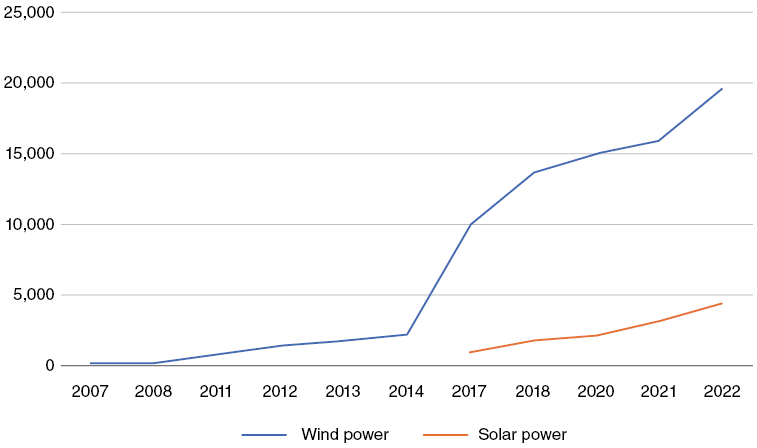
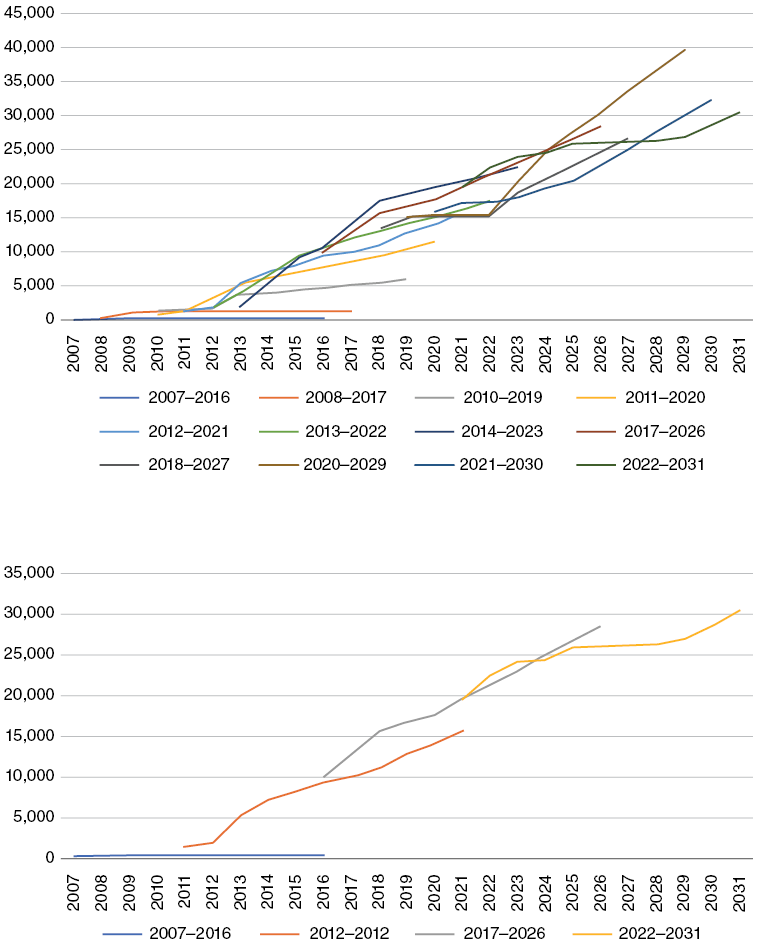
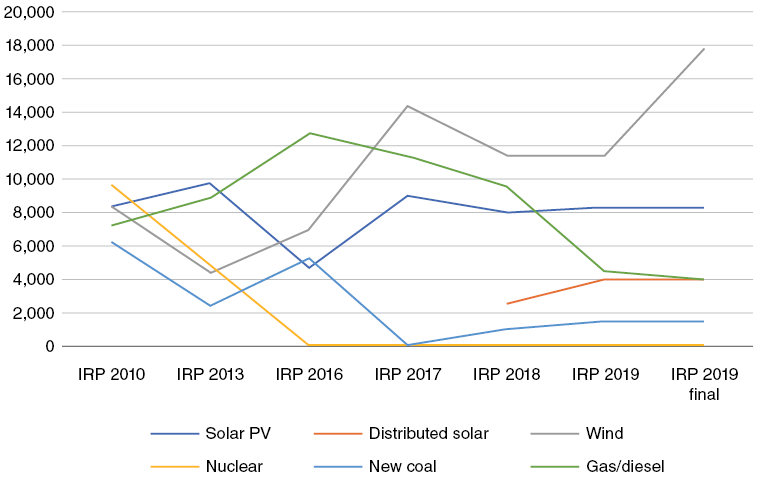


 Open access