INTRODUCTION
There is growing recognition that comprehensive care for cancer patients involves attending to the psychosocial needs of their informal caregivers, as well as the various needs of the patients themselves (Breitbart & Alici, Reference Breitbart and Alici2009). Informal caregivers (ICs) are defined as any relatives, friends, or partners who have a significant relationship with and provide assistance (i.e., physical, emotional) to a patient with a life-threatening, incurable illness (Hudson & Payne, Reference Hudson, Payne, Hudson and Payne2009). In 2009, 65,700,000 people in the United States served as ICs for medically ill relatives, including 4,600,000 cancer patients (National Alliance for Caregiving, 2009). This number may be a reflection of the rising costs of healthcare, which have placed the responsibility of caring for the chronically medically ill – including cancer patients – on family caregivers (Pasacreta & McCorckle, Reference Pasacreta and McCorkle2000). As the number of ICs will likely continue to rise in the future, special attention should be paid to the unique burden of ICs, not only for the benefit of the caregiver but also for that of the patient.
CAREGIVER BURDEN
Providing care to a patient with cancer has been described as a full-time job (Rabow et al., Reference Rabow, Hauser and Adams2004). When family/friends become caregivers, they take on the responsibilities of the patient and the household, in addition to their own, which often leads to caregiver burden (e.g., Vess et al., Reference Vess, Moreland and Schwebel1985; Northouse, Reference Northouse1989; Siegel et al., Reference Siegel, Reveis and Houts1991; Schott-Baer, Reference Schott-Baer1993; Kissane et al., Reference Kissane, Bloch and Burns1994; Boyle et al., Reference Boyle, Blodgett and Gnesdiloff2000; Kuijer et al., Reference Kuijer, Buunk and Ybema2002). Given et al. (Reference Given, Kozachik, Collins, Maas, Buckwalter and Hardy2001a, p. 5) describe such burden as a “multidimensional biopsychosocial reaction resulting from an imbalance of care demands relative to caregivers' personal time, social roles, physical and emotional states, financial resources, and formal care resources given the other multiple roles they fulfill” (as cited in Given et al., Reference Given, Given and Azzouz2001b). ICs are often unprepared to take on all of the aspects that this new role entails (Hinds, Reference Hinds1985; Morse & Fife, Reference Morse and Fife1998; Northouse et al., Reference Northouse, Mood and Templin2000; Carlson et al., Reference Carlson, Ottenbreit and St. Pierre2001; Given et al., Reference Given, Wyatt and Given2001b; Nijboer et al., Reference Nijboer, Tempelaar and Triemstra2001; Bishop et al., Reference Bishop, Beaumont and Hahn2007) and often have a wide range of unmet needs (Northouse, Reference Northouse1984; Hileman et al., Reference Hileman, Lackey and Hassanein1992; Laizner et al., Reference Laizner, Yost and Barg1993; Covinsky et al., Reference Covinsky, Goldman and Cook1994; Kissane et al., Reference Kissane, Bloch and Burns1994; Hodgkinson et al., Reference Hodgkinson, Butow and Hobbs2007; Kim & Given, Reference Kim and Given2008). Not only do ICs face the physical and emotional demands associated with caregiving, but, also, the patients for whom they provide care may no longer be able to provide them with the emotional support that they once did (Francis et al., Reference Francis, Worthington and Kypriotakis2010). Therefore, ICs are not only often unprepared to provide instrumental support (i.e., the “doing” of caregiving), but they also often may be in great need of emotional support themselves.
Perhaps not surprisingly, then, ICs experience a range of psychological complications (Ell et al., Reference Ell, Nishimoto and Mantell1988; Johnson, Reference Johnson1988; Pederson & Valanis, Reference Pederson and Valanis1988; Northouse, Reference Northouse1989; Oberst, Reference Oberst, Thomas and Gass1989; Sales, Reference Sales1991; Kissane et al., Reference Kissane, Bloch and Burns1994; Toseland et al., Reference Toseland, Blanchard and McCallion1995; 1999; Weitzner et al., Reference Weitzner, McMillan and Jacobson1999; Emanuel et al., Reference Emanuel, Fairclough and Slutsman2000; Manne, Reference Manne2007; Murray et al., Reference Murray, Kendall and Boyd2010), including fear, hopelessness, and mood disturbances (Dumont et al., Reference Dumont, Turgeon and Allard2006; Oldham et al., Reference Oldham, Kristjanson and White2006). Studies have reported rates of anxiety and depression among family caregivers that are comparable to (Given et al., Reference Given, Stommel and Given1993, Reference Given, Given and Sikorskii2006; Kornblith et al., Reference Kornblith, Herr and Ofman1994; Baider et al., Reference Baider, Kaufman, Perez, Baider, Cooper and De-Nour1996; Cliff & MacDonagh, Reference Cliff and Macdonagh2000; Kris et al., Reference Kris, Cherlin and Prigerson2006; Rivera, Reference Rivera2009) and even surpass (Baider et al., Reference Baider and De-Nour1988, Reference Baider, Perez and De-Nour1989; Ey et al., Reference Ey, Compas and Epping-Jordan1998; Cliff & Macdonagh, Reference Cliff and Macdonagh2000; Gallagher et al., Reference Gallagher, Parle and Cairns2002; Braun et al., Reference Braun, Mikulincer and Rydall2007; McLean et al., Reference McLean, Walton and Matthew2011) those of the patients for whom they provide care. For example, rates of depression between 12 and 59% (Grunfeld et al., Reference Grunfeld, Coyle and Whelan2004; Hauser & Kramer, Reference Hauser and Kramer2004) and anxiety between 30 and 50% (Grunfeld et al., Reference Grunfeld, Coyle and Whelan2004) have been reported in samples of family caregivers, in comparison to rates of depression between 10 and 25% (Pirl, Reference Pirl2004) and rates of anxiety between 19 and 34% (Traeger et al., Reference Traeger, Greer and Fernandez-Robles2012) in patient samples.
In addition to mental health issues, ICs also experience a range of physical health complications as a result of their role (e.g., Burton et al., Reference Burton, Newsom and Schulz1997; Given & Given, Reference Given and Given1992; Given et al., Reference Given, Wyatt and Given2004). These include sleep difficulties (Carter, Reference Carter2003; Cho et al., Reference Cho, Dodd and Lee2006; Hearson & Clement, Reference Hearson and Clement2007), fatigue (Jensen & Given, Reference Jensen and Given1991; Teel & Press, Reference Teel and Press1999), cardiovascular disease (Lee et al., Reference Lee, Colditz and Berkman2003; von Kanel et al., Reference von Kanel, Mausbach and Patterson2008), poor immune functioning (Kiecolt-Glaser et al., Reference Kiecolt-Glaser, Glaser and Shuttleworth1987; Rohleder et al., Reference Rohleder, Marin and Ma2009), and increased mortality (Schulz & Beach, Reference Schulz and Beach1999; Christakis & Allison, Reference Christakis and Allison2006). Studies have also reported an increase in alcohol and tobacco use, lack of exercise, and decreased health service utilization among family caregivers (e.g., Riess-Sherwood et al., Reference Riess-Sherwood, Given and Given2002; Sherwood et al., Reference Sherwood, Given and Donovan2008).
Additionally, caring for a patient with cancer places a large financial and temporal demand on those providing care (e.g., Hauser & Kramer, Reference Hauser and Kramer2004; Grov et al., Reference Grov, Fossa and Sorebo2006). Data from a national survey of caregivers showed that, on average, cancer caregivers provide care for 8.3 hours each day for 13.7 months (Yabroff & Kim, Reference Yabroff and Kim2009), and that this care includes providing emotional, instrumental, tangible, and medical support. Moreover, the annual economic value of caregiving in the United States was recently estimated at $375 billion (National Alliance for Caregiving, 2009). Therefore, the burden experienced by ICs is multifaceted and includes the potential for significant psychological, physical, temporal, and financial demands.
STUDY PURPOSE
This recognition of the importance and needs of ICs has been met by the development of an increasing variety of psychosocial interventions designed specifically to address these needs. Such interventions range from psychoeducation to cognitive behavioral therapy to supportive psychotherapy delivered to individuals, couples, and groups, in person, over the phone, and via the Internet. Recent meta-analyses (Northouse et al., Reference Northouse, Katapodi and Song2010) and systematic reviews (Harding & Higginson, Reference Harding and Higginson2003; McMillan, Reference McMillan2005; Hudson et al., Reference Hudson, Remedios and Thomas2010) have highlighted the potential for various interventions (i.e., psychoeducational, skill building, supportive) to ameliorate the burden experienced by ICs. These studies have also highlighted the great variation in study design and stage of development of current interventions targeted to ICs of cancer patients. Such variations may serve as potential limitations, such that many pilot studies and quasi-experimental designs without reported effect sizes cannot be evaluated via meta-analyses. Additionally, as was noted by Harding and Higginson (Reference Harding and Higginson2003), rarely are null findings reported. However, such studies serve as sources of rich descriptive information regarding intervention feasibility and elements of interventions that are potentially efficacious. Caregiver intervention research is a relatively new area of study, and therefore attention should be paid to studies that are not yet presented as randomized clinical trials. Indeed, in their systematic review of interventions for caregivers of cancer patients using home or palliative care services, Harding and Higginson (Reference Harding and Higginson2003) acknowledge that their review is limited by the ability to implement a randomized controlled trial (RCT) in the palliative care population, and that additional thought should be given to studies of interventions at earlier stages of development, a conclusion echoed by Hudson et al. (Reference Hudson, Remedios and Thomas2010).
The purpose of the present study was to characterize the state of the science of psychosocial interventions for informal cancer caregivers. This comprehensive systematic review was inclusive of RCTs, as well as interventions not yet at the RCT level (i.e., pilot studies). Additionally, by including ICs of patients across the entire cancer trajectory we sought to expand upon the recent review of Hudson et al. (Reference Hudson, Remedios and Thomas2010), which was limited to interventions delivered to ICs of patients receiving palliative care. The current review was also inclusive of interventions conducted with ICs of patients across all cancer diagnoses and in varying relationships (i.e., spouse, child, parent) to the patient.
METHOD
A medical librarian conducted a literature search in the following databases: PubMed, Embase, Cumulative Index to Nursing and Allied Health Literature (CINAHL®), PsycINFO® via the Ovid platform, and the Cochrane Library via the Wiley platform. Although limits were not placed on language or publication type, only publications from 1980 to the present were selected. Controlled vocabulary (Medical Subject Headings [MeSH], EMTREE, CINAHL Subject Headings, and PsycINFO Subject Headings) as well as keywords were used. PubMed was last searched on January 13, 2011. The PubMed search strategy and terminology were modified for other databases.
Three broad categories of concepts were searched, and the results were combined using the Boolean operator and. The broad categories included: 1) nonprofessional caregivers of people with illness/disease; 2) the psychosocial impact of the IC role; and 3) interventions or coping mechanisms that ease negative impacts of this role. Each of these broad categories had multiple terms that were combined using the Boolean operator or.
Search terms for the caregiver category included caregiver(s) combined in various ways with spouse, family, informal, or partner. Terms for the psychosocial category included caregivers/psychology, burden, strain, irritability, concentration, vulnerable, demand, mental health, psychosocial, anxiety, depression, depressed, confidence, bereavement, grief, unmet need, psychological, or sleep. Terms for the intervention category included adjustment, psychological adaptation, intervention, resilience, resilient, treatment, therapy, psychotherapy, uplift, hope, support, effect, existential, spiritual, spirituality, religious, religion, emotional, meaning, cultural, faith, cope, coping, resource, resources, education, educational, creative, creativity, music, movement, intervention studies, program evaluation, social support, ‘religion and psychology’, benefit, acceptance, positive, appreciation, or empathy.
This search produced 2,199 articles. Titles were scanned and abstracts of 76 articles were retrieved for review by both authors of this article to identify studies evaluating psychosocial interventions for caregivers of patients with cancer. Any differences of opinion in these initial review phases were settled through discussion. Reference sections of the retrieved articles were also scanned for relevant studies, which produced an additional 42 articles to be reviewed.
Data were then abstracted twice from 49 relevant articles using a standardized data abstraction form. This involved a primary reviewer, who completed the data abstraction form, and a secondary reviewer, who checked the primary review for accuracy and completeness. Data captured on the abstraction forms included the type of intervention evaluated and mode of delivery, the type of patients being cared for (including cancer diagnosis and stage), the relationship between the caregiver and patient (i.e., spouse, child, parent, friend), and study design. Both reviewers performed an independent assessment of the studies' eligibility, and unresolved disagreements between reviewers were adjudicated by a third reviewer from the Psychotherapy Laboratory in the Department of Psychiatry and Behavioral Sciences at Memorial Sloan-Kettering Cancer Center. Studies not eligible for review were categorized into one of the following reasons for exclusion: participants were not caregivers, caregivers were providing care for non-cancer patients, and articles were written in languages other than English.
RESULTS
A final sample of 49 interventions was reviewed. Seventy three percent (n = 36) of these were delivered completely in person, 6% (n = 3) were delivered over the phone, and 20% (n = 10) combined in-person and telephone-delivered components. Twenty-eight percent (n = 14) of the interventions were delivered individually to ICs, 47% (n = 23) were delivered to the IC/partner (or family) dyad/unit, 16% (n = 8) to groups of ICs, and 8% (n = 4) to groups composed of both ICs and patients.
In terms of the relationship between ICs and the patients for whom they provided care, 39% (n = 19) of the interventions were delivered specifically to spouse/partner ICs, 4% (n = 4) to parents, 45% (n = 22) to ICs in mixed relationships to patients, and 10% (n = 5) did not specify the relationship between the IC and patient. Additionally, 31% (n = 15) of the interventions targeted caregivers of patients with specific cancer diagnoses (i.e., breast (Christensen, Reference Christensen1983; Bultz et al., Reference Bultz, Speca and Brasher2000; Northouse et al., Reference Northouse, Kershaw and Mood2005; Badger et al., Reference Badger, Sagrin and Dorros2007; Budin et al., Reference Budin, Hoskins and Haber2008; Baucom et al., Reference Baucom, Porter and Kirby2009), prostate (Manne et al., Reference Manne, Babb and Pinover2004; Campbell et al., Reference Campbell, Keefe and Scipio2006; Northouse et al., Reference Northouse, Mood and Schafenacker2007), brain (Horowitz et al., Reference Horowitz, Passik and Malkin1996), hematopoietic stem cell transplantation (HSCT) (Bevans et al., Reference Bevans, Castro and Prince2010), and lung tumors (Goldberg & Wool, Reference Goldberg and Wool1985), and pediatric cancers (Sahler et al., Reference Sahler, Varni and Fairclough2002; Stehl et al., Reference Stehl, Kazak and Alderfer2009)). Additionally, 29% (n = 14) of the interventions specifically targeted ICs of patients who had advanced disease/were receiving palliative care (Walsh & Schmidt, Reference Walsh and Schmidt2003; Cameron et al., Reference Cameron, Shin and Williams2004; Harding et al., Reference Harding, Higginson and Leam2004; Hudson et al., Reference Hudson, Aranda and Hayman-White2005, Reference Hudson, Quinn and Kristjanson2008; Keefe et al., Reference Keefe, Ahles and Sutton2005; McMillan et al., Reference McMillan, Small and Weitzner2005; Milberg et al., Reference Milberg, Rydstrand and Helander2005; Northouse et al., Reference Northouse, Kershaw and Mood2005; Carter, Reference Carter2006; Kissane et al., Reference Kissane, McKenzie and Bloch2006; Duggleby et al., Reference Duggleby, Wright and Williams2007; Walsh et al., Reference Walsh, Jones and Tookman2007; Bowman et al., Reference Bowman, Rose and Radziewicz2009), whereas the remaining 71% (n = 35) enrolled ICs of patients who were heterogeneous with regard to their disease stage.
Subsequently, we categorize these interventions into one of the following categories: psychoeducation, problem-solving/skills building interventions, supportive therapy, family/couples therapy, cognitive-behavioral therapy (CBT), interpersonal therapy (IPT), complementary and alternative medicine (CAM) interventions, and existential therapy. We recognize that many of these interventions are integrative in nature and as such, incorporate elements of several different types of interventions, but have categorized them according to what we believe is their primary focus.
Psychoeducation
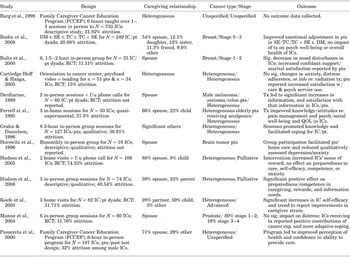
The information needs of cancer caregivers are great (Aoun et al., Reference Aoun, Kristjanson and Currow2005; Adams et al., Reference Adams, Boulton and Watson2009; Gansler et al., Reference Gansler, Kepner and Willacy2010). According to a review of information needs of ICs (Adams et al., Reference Adams, Boulton and Watson2009), these needs fall into the following 11 categories: treatment-related information; diagnosis-/prognosis-related information; coping information; information on self-care/homecare; cancer-specific information; information about impact on the family; information on support; information about impact of relationship with partners; information on practical issues; information on hospital care; and follow-up/rehabilitation information. In light of the wide range of needs of ICs, it is not surprising that a large number of psychoeducational interventions have been designed to provide them with these various types of information. Indeed, components of psychoeducation were incorporated in the majority of the interventions included in this systematic review. Additionally, of the studies retrieved, interventions that identified themselves primarily as psychoeducational made up the greatest number (n = 13; see Table 1).
Psychoeducation interventions for informal cancer caregivers

IC= informal caregiver; pt = patient; DM = disease management; SE = standardized psychoeducation; TC = telephone counseling; RCT = randomized controlled trial; tx = treatment; QOL = quality of life.
The majority of the psychoeducational studies targeted ICs of patients who were recently diagnosed with cancer, or at early stages of their disease (e.g., Grahn & Danielson, Reference Grahn and Danielson1996; Derdiarian, Reference Derdiarian1989; Bultz et al., Reference Bultz, Speca and Brasher2000; Manne et al., Reference Manne, Babb and Pinover2004; Cartledge Hoff & Haaga, Reference Cartledge Hoff and Haaga2005; Budin et al., Reference Budin, Hoskins and Haber2008), whereas three were developed specifically for ICs of advanced or palliative care patients (Hudson et al., Reference Hudson, Aranda and Hayman-White2005, Reference Hudson, Quinn and Kristjanson2008; Keefe et al., Reference Keefe, Ahles and Sutton2005). In all but three of the psychoeducational studies reviewed (Barg et al., Reference Barg, Padacreta and Nuamah1998; Cartledge Hoff & Haaga, Reference Cartledge Hoff and Haaga2005; Keefe et al., Reference Keefe, Ahles and Sutton2005), ICs receiving the intervention were primarily spouses. Additionally, the majority of interventions were delivered to both patients and caregivers (Ferrell et al., Reference Ferrell, Grant and Chan1995; Derdiarian, Reference Derdiarian1989; Cartledge Hoff & Haaga, Reference Cartledge Hoff and Haaga2005; Hudson et al., Reference Hudson, Aranda and Hayman-White2005; Keefe et al., Reference Keefe, Ahles and Sutton2005; Budin et al., Reference Budin, Hoskins and Haber2008). All of the psychoeducational interventions reviewed had an in-person component, although some conducted follow-up sessions over the phone (i.e., Derdiarian, Reference Derdiarian1989; Hudson et al., Reference Hudson, Aranda and Hayman-White2005; Budin et al., Reference Budin, Hoskins and Haber2008).
Overall, the psychoeducational interventions had a positive impact on ICs' knowledge and/or ability to provide care (e.g., Ferrell et al., Reference Ferrell, Grant and Chan1995; Grahn & Danielson, Reference Grahn and Danielson1996; Horowitz et al., Reference Horowitz, Passik and Malkin1996; Derdiarian et al., Reference Derdiarian1989; Pasacreta et al., Reference Pasacreta, Barg and Nuamah2000; Keefe et al., Reference Keefe, Ahles and Sutton2005; Hudson et al., Reference Hudson, Quinn and Kristjanson2008). Several also led to significant and positive changes in psychological correlates of burden (Horowitz et al., Reference Horowitz, Passik and Malkin1996; Bultz et al., Reference Bultz, Speca and Brasher2000). Notably, although their intervention was delivered to ICs, Bultz et al. (Reference Bultz, Speca and Brasher2000) report that patients whose ICs received the intervention reported improved confidant (i.e., functional) support and marital satisfaction.
In the only psychoeducation study that collected outcome data but reported null findings, Cartledge Hoff and Haaga (Reference Cartledge Hoff and Haaga2005) found that although enrollment of patients and their caregivers in their Cancer Center Orientation Program (which included psychoeducation about cancer and its related psychological and physical effects on patients and family members, a tour of the Radiation Oncology Department, and a description of the multidisciplinary services offered therein) did not lead to significant changes in anxiety or distress, it did lead to increased satisfaction with clinic care and psychological service utilization among patients. The authors hypothesize that their null findings may be a reflection of the significant yet transient effect of the orientation program on mood, as they evaluated mood up to 8 weeks after the program was delivered, and note that previous evaluations of psychoeducation interventions that found significant mood outcomes had shorter follow-up periods. The authors also note that the orientation program may have had benefits that were not captured in their study, such as an impact on engagement in recreational activities, and suggest that future studies should include a broader assessment of the potential benefits of psychoeducation interventions.
Problem Solving/Skills Building Interventions
Caregivers are often unprepared to provide the care needed by the cancer patient (e.g., Bucher et al., Reference Bucher, Trostle and Moore1999; Schubart et al., Reference Schubart, Kinzie and Farace2008) and such skills deficits contribute to the psychological burden they experience (Nijboer et al., Reference Nijboer, Tempelaar and Triemstra2001). Not surprisingly, enhancing caregivers' ability – and confidence in their ability – to provide care may attenuate burden (Sörensen et al., Reference Sörensen, Pinquart and Duberstein2002). Problem-solving and skills building interventions aim to develop ICs' repertoire of caregiving skills, including the ability to assess and manage patients' symptoms. They also teach ICs how to quickly identify solutions to caregiving problems that arise, and enhance caregivers' ability to cope with cancer caregiving in general.
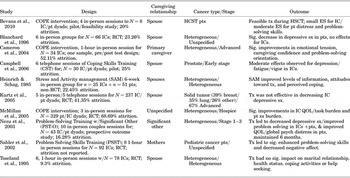
Ten of the interventions reviewed fell into this category of problem-solving and skills building interventions (see Table 2). There was more variability among these studies in terms of the types of patients to whom ICs were providing care; two studies targeted ICs of advanced/hospice patients (Cameron et al., Reference Cameron, Shin and Williams2004; McMillan et al., Reference McMillan, Small and Weitzner2005), one specifically for ICs of HSCT patients (Bevans et al., Reference Bevans, Castro and Prince2010), whereas the remaining seven targeted patients at early and middle stages of the cancer trajectory. In eight of these interventions, ICs were limited to spouses/partners, whereas one study focused on mothers (Sahler et al., Reference Sahler, Varni and Fairclough2002) and two (those targeting advanced/hospice patients) did not specify the relationship between the patient and IC. Half of the interventions (Toseland et al., Reference Toseland, Blanchard and McCallion1995; Blanchard et al., Reference Blanchard, Toseland and McCallion1996; Sahler et al., Reference Sahler, Varni and Fairclough2002; Cameron et al., Reference Cameron, Shin and Williams2004; Kurtz et al., Reference Kurtz, Kurtz and Given2005) were delivered to ICs alone, whereas the other five (Heinrich & Schag, Reference Heinrich and Schag1985; Nezu et al., Reference Nezu, Nezu and Felgoise2003; McMillan et al., Reference McMillan, Small and Weitzner2005; Campbell et al., Reference Campbell, Keefe and Scipio2006; Bevans et al., Reference Bevans, Castro and Prince2010) were delivered to IC/patient dyads.
Problem solving/skills building interventions for informal cancer caregivers

IC = informal caregiver; pt = patient; COPE: Creativity, Optimism, Planning, Expert; HCST = hematopoietic stem cell transplantation; ES = effect size; tx = treatment; sx = symptoms; RCT = randomized controlled trial; QOL = quality of life.
All but two studies (Toseland et al., Reference Toseland, Blanchard and McCallion1995; Kurtz et al., Reference Kurtz, Kurtz and Given2005) reported significant and positive effects of the interventions on psychological correlates of burden and/or problem-solving skills for ICs and/or patients. In terms of outcomes for patients, most interventions (Heinrich & Schag, Reference Heinrich and Schag1985; Blanchard et al., Reference Blanchard, Toseland and McCallion1996; Nezu et al., Reference Nezu, Nezu and Felgoise2003; Bevans et al., Reference Bevans, Castro and Prince2010) reported positive effects, including decreased depressive symptomatology (Blanchard et al., Reference Blanchard, Toseland and McCallion1996; Nezu et al., Reference Nezu, Nezu and Felgoise2003) and attitudes toward treatment and coping (Heinrich & Schag, Reference Heinrich and Schag1985). Additionally, the intervention designed to be delivered to HSCT patients and their caregivers concurrent with medical treatment (Bevans et al., Reference Bevans, Castro and Prince2010) was not only determined to be feasible, but resulted in clinically significant improvements in distress and problem-solving skills for both ICs and patients.
Kurtz et al. (Reference Kurtz, Kurtz and Given2005) found that spouse ICs of predominantly advanced cancer patients enrolled in their 10 contact 20 week intervention did not experience decreases in depressive symptomatology that were significantly different from ICs in the control group. The intervention aimed to enhance caregivers' ability to support patients emotionally and instrumentally, and the authors hypothesized that symptoms of depression among ICs would decrease as their sense of mastery increased. The authors propose that their null findings may be a reflection of the combination of their relatively short follow-up period and the potentially delayed effects on depressive symptomatology. Despite these null findings, Kurtz et al. reported that ICs with higher mastery scores tended to be less depressed than ICs who were less confident in their ability to provide care, which highlights the relationship between confidence in one's ability to perform tasks of caregiving and depression. Toseland et al. (Reference Toseland, Blanchard and McCallion1995) enrolled ICs of patients who were past the initial diagnostic phase but who were not yet terminal in a six session “Coping with Cancer” intervention, which included support, problem-solving, and coping skills training. The authors also found that the intervention did not have a significant impact on psychosocial outcomes for ICs, including health status, coping skills, help seeking, and marital functioning, which they attribute to the relatively low level of distress expressed by their sample of ICs (a hypothesis supported by exploratory analyses that examined differential changes in these indices for more and less distressed/burdened ICs). As the inclusion criteria did not involve meeting a certain distress or burden threshold, the authors hypothesize that significant effects would have been demonstrated had their sample been more distressed.
Supportive Therapy
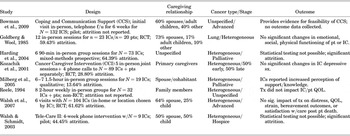
ICs also have great need for emotional support (e.g., Hileman et al., Reference Hileman, Lackey and Hassanein1992; Milberg & Strang, Reference Milberg and Strang2000), and hence, the majority of psychosocial interventions developed for this population seem to include at least some element of support. In Table 3 we summarize the eight studies included in this review that evaluated the effects of various interventions that were primarily supportive in nature. Five of these targeted caregivers of patients with advanced disease or who were receiving palliative care (Walsh & Schmidt, Reference Walsh and Schmidt2003; Harding et al., Reference Harding, Higginson and Leam2004; Milberg et al., Reference Milberg, Rydstrand and Helander2005; Walsh et al., Reference Walsh, Jones and Tookman2007; Bowman et al., Reference Bowman, Rose and Radziewicz2009), whereas the other three were delivered to caregivers of patients at all stages of their disease. Six of these studies were conducted with samples composed at least 50% (and in two cases, 100%) of spouse/partner ICs. Three interventions were delivered to both patients and their ICs (Reele et al., Reference Reele1994; Kozachik et al., Reference Kozachik, Given and Given2001; Bowman et al., Reference Bowman, Rose and Radziewicz2009), whereas five were delivered to ICs alone (Goldberg & Wool, Reference Goldberg and Wool1985; Walsh & Schmidt, Reference Walsh and Schmidt2003; Harding et al., Reference Harding, Higginson and Leam2004; Milberg et al., Reference Milberg, Rydstrand and Helander2005; Walsh et al., Reference Walsh, Jones and Tookman2007). Three interventions were delivered in group format, with groups made up either solely of ICs (Harding et al., Reference Harding, Higginson and Leam2004; Millberg et al., Reference Milberg, Rydstrand and Helander2005) or ICs and the patients for whom they provide care (Reele et al., Reference Reele1994). Support was also delivered individually to ICs (or to pairs of ICs; Goldberg & Wool, Reference Goldberg and Wool1985; Kozachik et al., Reference Kozachik, Given and Given2001; Walsh et al., Reference Walsh, Jones and Tookman2007; Bowman et al., Reference Bowman, Rose and Radziewicz2009). All but one (Walsh & Schmidt, Reference Walsh and Schmidt2003, delivered over the telephone) of the supportive psychotherapeutic interventions reviewed were delivered at least partly in person, with two (Kozachik et al., Reference Kozachik, Given and Given2001; Bowman et al., Reference Bowman, Rose and Radziewicz2009) combining in-person and telephone sessions.
Supportive psychotherapy interventions for informal cancer caregivers

IC = informal caregiver; pt = patient; RCT = randomized controlled trial; tx = treatment; sx = symptoms; QOL, quality of life.
One study (Bowman et al., Reference Bowman, Rose and Radziewicz2009) did not present outcome data, and in another two, statistical analysis of effects was impeded by high rates of attrition (Walsh & Schmidt, Reference Walsh and Schmidt2003; Harding et al., Reference Harding, Higginson and Leam2004). Only one intervention (Millberg et al., Reference Milberg, Rydstrand and Helander2005) reported positive effects of the intervention on caregiver outcomes; ICs of palliative care patients reported increased perception of support and knowledge after six to seven 90-minute supportive psychotherapy sessions. However, the content of the groups was examined qualitatively and therefore no outcome data regarding caregiver burden and psychological correlates of burden exist.
The majority of studies for which outcome data were collected found no significant impact of the supportive interventions on psychological correlates of burden (i.e., emotional well-being, anxiety, depression; Goldberg & Wool, Reference Goldberg and Wool1985; Reele et al., Reference Reele1994; Kozachik et al., Reference Kozachik, Given and Given2001; Walsh et al., Reference Walsh, Jones and Tookman2007). A potential explanation for these null findings is the recruitment of ICs with low-to-moderate levels of distress, for whom the interventions may have had minimal impact. Indeed, both Kozachik et al. (Reference Kozachik, Given and Given2001) and Goldberg and Wool (Reference Goldberg and Wool1985) report that ICs who refused enrollment or were lost because of attrition were likely more distressed and had more psychopathology than ICs enrolled, and hence their samples were biased toward higher functioning ICs. Additionally, through a closer examination of changes in depressive symptomatology in ICs between follow-up intervals, Kozachik et al. (Reference Kozachik, Given and Given2001) suggested that their follow-up period may not have been long enough to capture clinically meaningful changes, which they believed would have manifested given more time.
Family/Couples Therapy
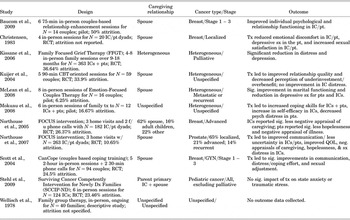
Eleven interventions reviewed were designed with the explicit intention of improving the functioning of the couple/family unit (versus many of the interventions reviewed previously, which were delivered to ICs and patients jointly but were not specifically focused on the functioning of the couple or family unit; see Table 4). Three of these interventions were delivered to advanced/palliative care patients (Northouse et al., Reference Northouse, Kershaw and Mood2005; Kissane et al., Reference Kissane, McKenzie and Bloch2006; McLean et al., Reference McLean, Jones and Rydall2008), whereas the other eight enrolled patients at earlier stages of their disease. Seven interventions were delivered to couples (Christensen, Reference Christensen1983; Stehl et al., 1999; Kuijer et al., Reference Kuijer, Buunk and De Jong2004; Scott et al., Reference Scott, Halford and Ward2004; Northouse et al., Reference Northouse, Mood and Schafenacker2007; McLean et al., Reference McLean, Jones and Rydall2008; Baucom et al., Reference Baucom, Porter and Kirby2009) and four to families (Wellisch et al., Reference Wellisch, Mosher and van Scoy1978; Northouse et al., Reference Northouse, Kershaw and Mood2005; Kissane et al., Reference Kissane, McKenzie and Bloch2006; Mokuau et al., Reference Mokuau, Braun and Wong2008). All but two of the interventions were delivered entirely in person (Scott et al., Reference Scott, Halford and Ward2004; Northouse et al., Reference Northouse, Kershaw and Mood2005).
Family/couples interventions for informal cancer caregivers

IC = informal caregiver; pt = patient; RCT = randomized controlled trial; CBT = cognitive-behavioral therapy; tx = treatment; sx = symptoms; QOL, quality of life; dx = diagnosed.
All of the couples interventions reported positive and significant outcomes for ICs and patients, including improvements in relationship quality and functioning (Kuijer et al., Reference Kuijer, Buunk and De Jong2004; McLean et al., Reference McLean, Jones and Rydall2008; Baucom et al., Reference Baucom, Porter and Kirby2009), communication (Scott et al., Reference Scott, Halford and Ward2004; Northouse et al., Reference Northouse, Mood and Schafenacker2007) and sexual satisfaction (Christensen, Reference Christensen1983) in both partners, as well as improvements in physical functioning (Northouse et al., Reference Northouse, Mood and Schafenacker2007) and psychological functioning (i.e., depression, anxiety, posttraumatic growth) in patients (Christensen, Reference Christensen1983; Scott et al., Reference Scott, Halford and Ward2004; McLean et al., Reference McLean, Jones and Rydall2008; Baucom et al., Reference Baucom, Porter and Kirby2009) and ICs (Christensen, Reference Christensen1983; Scott et al., Reference Scott, Halford and Ward2004; McLean et al., Reference McLean, Jones and Rydall2008; Baucom et al., Reference Baucom, Porter and Kirby2009).
The family-based interventions also led to significant improvements in psychological functioning in patients and ICs. For example, Kissane et al.'s (Reference Kissane, McKenzie and Bloch2006) study of family focused grief therapy found that the intervention (which involved four to eight family sessions delivered from the palliative care through bereavement phases) led to significant reductions in distress and depressive symptomatology for family members identified at baseline as having the greatest amount of distress, depression, and social adjustment problems. The intervention did not, however, lead to clinically significant changes in family functioning. The culturally sensitive six session intervention developed by Mokuau et al. (Reference Mokuau, Braun and Wong2008) for Native Hawaiian women with cancer and their family caregivers led to significant increases in coping skills for both ICs and patients, increased self-efficacy in ICs, and decreased depressive symptomatology in patients. Northouse et al. (Reference Northouse, Kershaw and Mood2005) evaluated the impact of the FOCUS intervention, which included three sessions conducted in the home and two follow-up phone calls, which focused on the following five components: family involvement, optimistic attitude, coping effectiveness, uncertainty education, and symptom management. The intervention led to significant decreases in negative appraisals of caregiving for ICs and decreased hopelessness and negative appraisals of illness in patients.
Of the family interventions reviewed that collected outcome data, only one failed to demonstrate a significant positive impact of the intervention on ICs' psychosocial well-being or relationship functioning. Stehl et al. (Reference Stehl, Kazak and Alderfer2009) evaluated the impact of the Surviving Cancer Competently Intervention Program-Newly Diagnosed (SCCIP-ND), a three session intervention for parent caregivers of a child newly diagnosed with cancer, which was designed to promote healthy family adjustment to pediatric cancer and prevent the development of longer-term cancer-related traumatic stress symptoms. There were no significant changes in anxiety or traumatic stress symptoms between ICs assigned to the intervention and control arms at the follow-up assessments. The authors attribute these results partly to the dynamic nature of distress in families at diagnosis and the high premorbid functioning of families at baseline, as well as to the preventive model of the intervention. As such, families who were enrolled and functioning well at baseline may not have found engagement in the intervention a priority. Attrition may have also been the result of the requirement that both parents of the patient be enrolled. The authors hypothesize that if the study had been open to single parent families who may have been isolated, financially strained, or with limited support, their likely higher levels of baseline distress would have yielded more significant outcomes.
Cognitive Behavioral Therapy
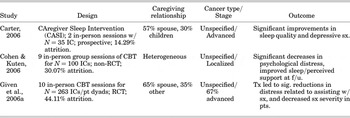
Three of the studies reviewed (Carter, Reference Carter2006; Cohen & Kuten, Reference Cohen and Kuten2006; Given et al., Reference Given, Wyatt and Given2006) were Cognitive Behavioral Therapy (CBT) interventions. These interventions are summarized in Table 5. All three of these interventions led to clinically significant improvements in psychological functioning in ICs.
Cognitive behavioral interventions for informal cancer caregivers

IC = informal caregiver; pt = patient; RCT = randomized controlled trial; CBT = cognitive-behavioral therapy; tx = treatment; sx= symptoms.
Carter (Reference Carter2006) evaluated the feasibility and effectiveness of the CAregiver Sleep Intervention (CASI), which incorporates stimulus control, relaxation therapies, cognitive therapy, and sleep hygiene, all of which have been found to be effective in the treatment of insomnia and other sleep disorders. The two 1 hour sessions of CASI were delivered to primarily spouse and child ICs of patients with advanced cancer. There were improvements in sleep quality and depressive symptoms for all ICs enrolled in the study (including those in the attention control group), although ICs who received the CASI demonstrated significantly better sleep quality at 5 weeks and 4 months. The study suggests that the integration of multiple elements of sleep interventions may have long-term beneficial effects for ICs. As insomnia is one of the most common, distressing, and debilitating comorbidities experienced by ICs (Hinds et al., Reference Hinds, Hockenberry-Eaton and Gilger1999; Jepson et al., Reference Jepson, McCorkle and Adler1999; Nijboer et al., Reference Nijboer, Triemstar and Tempelaar1999; Carter & Chang, Reference Carter and Chang2000; Kozachik et al., Reference Kozachik, Given and Given2001; Carter, Reference Carter2003), the ability of this brief intervention to affect clinically significant changes is noteworthy.
Cohen and Kuten (Reference Cohen and Kuten2006) assessed the effect of a nine session group CBT intervention on psychological distress and adjustment of ICs of patients with localized disease. The intervention, which was based on the cognitive theory of Beck (Beck, 1978), the cognitive-behavioral model of Moorey and Greer (Reference Moorey and Greer2002) and the model of relaxation and guided imagery of Baider et al. (Reference Baider, Uziely and De-Nour1994), led to significant decreases in psychological distress and improvements in sleep immediately after the intervention was completed, and improvements in perceived support at the 4 month follow-up assessment.
Given et al. (Reference Given, Wyatt and Given2006a) evaluated the impact of a 10 week cognitive behavioral intervention delivered separately to patients and their ICs that was intended to reduce symptom severity among patients and negative reactions to assisting with symptom management among ICs, in addition to more frequent assistance from ICs per symptom. The 10 week intervention, delivered primarily (65%) to spouse caregivers of patients with advanced disease (67%), focused on the etiology and maintenance of symptoms, the integration of assistance into daily lives, and communication with patients and physicians about symptom management for ICs (for patients, the intervention focused on self-care, cognitive reframing, and coping and communication strategies). The intervention was successful in reducing negative reactions of ICs to assisting with symptoms, and the total number of symptoms for which the patients required assistance.
Interpersonal Therapy
One intervention used an interpersonal therapeutic model delivered over the telephone (Table 6). Badger et al. (Reference Badger, Sagrin and Dorros2007) conducted a randomized controlled trial of telephone interpersonal counseling (TIP-C) for breast cancer patients (stages 1–3) and their spouse caregivers, which was based on interpersonal counseling techniques (Weissman et al., 2000) and included an element of cancer education. The TIP-C intervention was delivered over the telephone to patients and their spouse caregivers separately for 6 weeks, and resulted in significant decreases in symptoms of depression and anxiety in both groups (phone calls were made weekly to patients, and every other week to caregivers).
Interpersonal therapy interventions for informal cancer caregivers

IC = informal caregiver; pt = patient; RCT = randomized controlled trial; sx = symptoms.
Complementary and Alternative Medicine Interventions
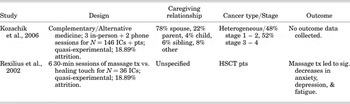
Two of the interventions reviewed described complementary and alternative medicine (CAM) interventions (Table 7). Kozachik et al. (Reference Kozachik, Wyatt and Given2006) conducted a quasi-experimental study to describe the use of an 8 week (five contact) nurse-delivered complementary therapy (CT) intervention that involved guided imagery, reflexology, and reminiscence therapy delivered to patients (heterogeneous with respect to cancer type and stage) and their primarily (78%) spouse caregivers. Sessions 1, 3, and 5 were conducted in person with the patient and IC conjointly, whereas sessions 2 and 4 were conducted individually with patients and ICs over the telephone. The study examined patterns of use of CT (as participants could choose which combination of the three they wanted to focus on), but not use of CT in relation to psychosocial outcomes. Therefore, we are unable to draw conclusions regarding the impact of CT on correlates of caregiver burden. However, the authors do suggest that one CT is the optimal number of such interventions to incorporate into patients' and ICs' lives during the course of cancer treatment.
Complementary and alternative medicine interventions for informal cancer caregivers

IC = informal caregiver; pt = patient; tx = treatment; HSCT = hematopoietic stem cell transplantation.
Rexilius et al. (Reference Rexilius, Mundt and Megel2002) evaluated the effects of massage therapy and healing touch on anxiety, depression, fatigue, and subjective burden of ICs of patients undergoing autologous hematopoietic stem cell transplantation. Caregivers received six, 30 minute massage therapy or healing touch treatments over a 3 week period. The results indicated a significant decline in anxious and depressive symptomatology and general fatigue, motivation fatigue, and emotional fatigue for participants who received massage therapy only. There were no significant changes in perceived burden for any participants.
Existential Therapy
Finally, one intervention focused on existential concerns experienced by ICs (Table 8). Duggleby et al. (Reference Duggleby, Wright and Williams2007) developed the Living with Hope Program (LVHP), a theory-based intervention designed to foster hope in ICs of patients with advanced cancer. The intervention, which was based upon the three subprocesses specified by the hanging on to hope theory (living in the moment, having a positive approach, and writing your own story), consisted of a hope-focused activity in which ICs wrote for approximately five minutes at the end of each day for 2 weeks, reflecting on their challenges and what gave them hope, in addition to watching a video entitled, “Living with Hope.” The small sample size (n = 10) prevented statistical analysis of the relation between hope and quality of life outcomes, although the authors report that average scores on these outcomes did increase. Their qualitative analysis of themes that emerged in participants' writing suggests that the intervention fostered participants' search for hope in new and different ways (i.e., outside of hoping for recovery) and acknowledgement of the benefits of focusing themselves and having their feelings valued and heard. The results suggest that the intervention is acceptable and feasible among ICs in various relationships to palliative care patients, and may have the potential to lead to clinically significant changes in quality of life for ICs.
Existential therapy interventions for informal cancer caregivers

IC = informal caregiver; pt = patient; QOL = quality of life.
DISCUSSION
This systematic review produced 49 interventions developed specifically for ICs of patients with cancer. This large number of studies reflects the field's growing recognition of the severity of burden experienced by ICs, and the subsequent need to provide care to caregivers, in addition to cancer patients (Surbone et al., Reference Surbone, Baider and Weitzman2010).
Overall, 65% of the studies reviewed led to positive and significant improvements in functioning for ICs and/or the patients for whom they provide care. Had all of the interventions collected outcome data (three did not), and had statistical analysis of outcomes not been hindered by attrition (as was the case for three additional studies), an even greater percentage would have likely led to such positive outcomes.
Conclusions Regarding Specific Intervention Genres
As indicated in Table 1, the largest category of studies included in this review was psychoeducational interventions. These interventions positively impacted ICs' knowledge base and ability to provide care, and several also led to improvements in psychological correlates of burden (i.e., depressive and anxious symptomatology) and patient functioning, even when patients were not the direct recipients of the intervention (Bultz et al., Reference Bultz, Speca and Brasher2000).
The majority of the problem solving/skills building interventions (Table 2) were successful in improving ICs' ability (and confidence in these abilities) to provide care, including the ability to assess and manage patients' symptoms, identify solutions to problems that arose during caregiving, and enhance ICs' overall ability to cope with this role. In the study conducted by Bevans et al. (Reference Bevans, Castro and Prince2010), participants attended 90% of sessions and reported high levels of program satisfaction, which further highlights the benefits of delivery of treatment to ICs concurrent with patients' medical care. The efficacy of problem solving interventions across the caregiving trajectory is likely the result, in part, of their being structured and time limited (i.e., between 1 and 10 sessions in length), and addressing specific needs of ICs at particular points in caregiving (i.e., communication and coping skills at diagnosis, symptom management during palliative care).
Our review provided less support for the benefits of supportive psychotherapeutic interventions (Table 3) in mitigating burden among ICs. A large proportion of these studies were negatively impacted by attrition, which in some cases (i.e., Walsh & Schmidt, Reference Walsh and Schmidt2003; Harding et al., Reference Harding, Higginson and Leam2004) prevented statistical analyses of outcomes. It is possible that ICs who refused enrollment or who dropped out were already receiving sufficient support and did not believe in the utility of this additional resource. Indeed, our group has found that cancer patients and their caregivers often receive increased nonprofessional support as patients' disease status worsens (Applebaum et al., under review). These ICs may have been receiving sufficient support and concurrently experiencing heightened distress (i.e., depression) as a result of their loved one's physical decline, which prevented them from enrolling (a hypothesis in accord with the suggestions of Goldberg and Wool (Reference Goldberg and Wool1985) and Kozachik et al. (Reference Kozachik, Given and Given2001)). Therefore, in order to better understand the utility and appropriateness of supportive psychotherapy for ICs, future studies should attend to existing support and perceived need for support during the screening process, as well as during follow-up periods. Additional consideration should also be given to outcome measures (i.e., perceived support versus clinical depression), as it is likely that attention to changes in supportive needs and general distress may be more visible than clinically significant changes in depression over short time periods in this vulnerable population.
Overall, the family and couples interventions (Table 4) led to clinically significant improvements in IC functioning, in addition to the functioning of the couple or family unit as a whole. As indicated by several of the studies reviewed (e.g., Christensen, Reference Christensen1983; Kuijer et al., Reference Kuijer, Buunk and De Jong2004), these positive results may have even been attenuated by low-to-moderate levels of baseline distress in ICs and patients and high rates of attrition. Family and couples interventions may therefore confer even greater benefits to ICs who are distressed than those reported in these studies.
The cognitive behavioral and interpersonal therapies (Tables 5 and 6) reviewed here also provide evidence for the efficacy of CBT and IPT to target psychological distress in ICs and patients. Rates of attrition in these studies were also notably lower than those reported in the supportive and psychoeducational interventions, which may be a reflection of the structured, manualized, and progressive nature of these therapy protocols. For example, none of the participants randomized to the TIP-C condition in Badger et al.'s (Reference Badger, Sagrin and Dorros2007) study were lost to follow-up, whereas 18% in Given et al.'s (Reference Given, Wyatt and Given2006) CBT intervention were. The potential benefits of such structured interventions in terms of retention should be considered, as new interventions are developed for this population.
Finally, it appears that interventions that were integrative in their approach (i.e., combining elements of psychoeducation and support or communication skills training) conferred multiple benefits for ICs (e.g., Bultz et al., Reference Bultz, Speca and Brasher2000; Northouse et al., Reference Northouse, Kershaw and Mood2005; Campbell et al., Reference Campbell, Keefe and Scipio2006; Budin, Reference Budin, Hoskins and Haber2008). For example, elements of psychoeducation were often combined with support (e.g., Bultz et al., Reference Bultz, Speca and Brasher2000; Budin et al., Reference Budin, Hoskins and Haber2008) and problem solving and coping skills training (e.g., Campbell et al., Reference Campbell, Keefe and Scipio2006). It appears that ICs have varying informational needs across the caregiving trajectory and despite targeting unique areas of functioning (i.e., couples communication), the inclusion of education (regarding cancer treatment, side effects, symptom management) augmented the overall impact of the treatment and may have contributed to the relatively lower rates of attrition in these studies. Given the temporal demands of caregiving, it is possible that interventions that offer multiple components are more attractive to ICs than those that are one-dimensional.
Conclusions Regarding Mode of Intervention Delivery
Overall, it is difficult to draw conclusions regarding the relative efficacy of interventions delivered in group or individual formats, those delivered in person versus over the telephone, or the appropriate number of sessions. With the exception of an ongoing family therapy group (Wellisch et al., Reference Wellisch, Mosher and van Scoy1978), all of the interventions reviewed were time limited and involved between 1 and 12 sessions. Moreover, whereas individually delivered therapies attend to the temporal demands faced by ICs, the group setting has the benefit of providing social support, even when support is not the focus of the intervention. Therefore, whereas individual psychotherapies clearly have the potential to be delivered more flexibly than groups, rates of attrition from both types of delivery varied significantly, and, therefore, this review does not provide convincing evidence that one modality is superior in terms of retention.
The majority of interventions reviewed were delivered completely in person. A closer examination of the three interventions delivered over the telephone (Walsh & Schmidt, Reference Walsh and Schmidt2003; Campbell et al., Reference Campbell, Keefe and Scipio2006; Badger et al., Reference Badger, Sagrin and Dorros2007) revealed that they were generally acceptable and feasible and conferred benefits to ICs and patients. The qualitative analysis of post-treatment interviews of couples enrolled in Campbell et al.'s (2004) six session telephone-based coping skills training program for spouses of early stage prostate cancer patients revealed that 27% of the sample found sessions conducted over the phone convenient and conducive to being more open regarding sensitive topics than they would have felt in person. However, five couples expressed a preference for some degree of face-to-face contact in spite of the acknowledged benefits of telephone-based participation. Whereas attendance in Campbell et al.'s telephone-based study was nearly perfect (as it was in Badger et al.'s [2007] study of telephone interpersonal counseling), attrition from Walsh & Schmidt's (Reference Walsh and Schmidt2003) study of a four session supportive psychotherapy intervention delivered over the phone (Tele-Care II) was significant and prevented statistical analysis of results. Participants in the latter intervention included ICs of patients newly admitted to hospice care, and attrition was primarily because of the need/desire to attend to the dying patient. It is likely that the flexibility of telephone-administered sessions may be attractive to many ICs and promote retention for those who are not providing care for a patient who is near death, whereas engaging in treatment in any modality is likely not a priority when the patient is actively dying. It is also likely that regardless of the type of intervention delivered or the length of the session, phone contact may be enough to promote therapeutic change, as indicated by the 94% adherence rate reported by Badger et al. (Reference Badger, Sagrin and Dorros2007) for their self-managed exercise program control arm. Indeed, we have found that a strong therapeutic alliance and resultant benefits may be achieved over the telephone (Applebaum et al., in press) and are not limited to face-to-face therapy.
One of the strengths of this systematic review is its inclusive nature; the review did not have limitations on the type of relationship between ICs and patient, or the type and stage of cancer. This heterogeneity in the study samples included, however, precludes our ability to draw conclusions regarding the appropriateness of certain interventions for various caregiver populations. Whereas the family and couples interventions clearly targeted the functioning of the couple or family unit, and many of the interventions that specifically enrolled spouse ICs also focused on couple functioning, in general, the remaining studies did not address the ways in which the targeted interventions impacted IC functioning in the context of their relationship to the patient. Similarly, whereas the interventions that specifically enrolled ICs of patients with advanced disease or who were receiving palliative care did attend to end-of-life issues and those that enrolled HSCT or brain tumor patients attended to the specific nature of these patients' treatment, the remaining studies did not focus specifically on ways in which the patients' diagnosis or prognosis potentially mediated intervention efficacy. Instead, the majority of studies reviewed provided more general evidence for the utility of these treatment approaches more broadly for ICs of cancer patients. However, a growing body of evidence suggests that burden experienced by ICs is shaped by the multiple roles that they play, including their specified relationship to the patient (Nagatomo et al., Reference Nagatomo, Akasaki and Uchida1999; Gaugler et al., Reference Gaugler, Mittelman and Hepburn2009; Given et al., Reference Given, Kozachik, Collins, Maas, Buckwalter and Hardy2001a; Kim et al., Reference Kim, Baker and Spillers2006; Campbell, Reference Campbell2010; Wadhwa et al., Reference Wadhwa, Burman and Swami2011), in addition to the patient's functional status (Weitzner et al., Reference Weitzner, McMillan and Jacobson1999; Andrews, Reference Andrews2001; Dumont et al., Reference Dumont, Turgeon and Allard2006). Interventions that attend to the particular burden of ICs managing multiple caregiving roles (i.e., caring for a spouse with cancer, as well as young children and/or aging parents) and which incorporate a developmental perspective into their approach (i.e., acknowledge the unique experience of caring for an ill parent when one is in late adolescence/early adulthood versus late adulthood) may produce added benefits for cancer caregivers.
Conclusions Drawn from Studies with Null Findings
An additional strength of this review was its inclusion of studies of interventions that did not provide evidence of efficacy or effectiveness with ICs. A close examination of these nine studies highlighted several commonalities in design that may have potentially hindered the emergence of significant and positive results.
The first common theme that emerged was the timing of follow-up assessments. Cartledge Hoff and Haaga (2011), for example, highlighted the potential impact of a long follow-up period on findings of significant changes in quality of life outcomes. This and other interventions may have had a significant – but transient – impact on participants' mood (or other correlates of burden), which would have manifested in the results had such assessments occurred earlier. Another example comes from the CBT group intervention of Cohen and Kuten (Reference Cohen and Kuten2006), which was successful in reducing psychological distress and improving sleep quality in ICs. However, improvements in perceived social support were not observed during or immediately following the intervention, only at the follow-up assessment. The authors hypothesize that participants in the group setting were already receiving significant support from that context, which overshadowed additional support received outside of the group. It is likely, therefore, that assessments of fluctuations in perceived support for patients currently or recently engaged in a supportive group intervention may not be informative. Conversely, however, a short follow-up period may not allow for psychological changes to be internalized. Kurtz et al. (Reference Kurtz, Kurtz and Given2005) found that spouse ICs of predominantly advanced cancer patients enrolled in their 10 contact 20 week intervention did not experience decreases in depressive symptomatology, and propose that their null findings may be a reflection of the combination of their relatively short follow-up period and the potentially delayed effects on depressive symptomatology. Therefore, attention to the appropriateness of the follow-up period should be considered in the context of chosen outcomes, with those that are more transient (i.e., state anxiety) warranting a more immediate assessment, whereas more global changes (i.e., clinically significant improvements in depression) would require a greater amount of time to emerge.
Additionally, it seems that outcome measures chosen should be tailored to match the targets of the interventions. For example, whereas Cartledge Hoff and Haaga's (2011) psychoeducation intervention did not lead to clinically significant improvements in burden, it did lead to improvements in knowledge about radiation therapy and may have conferred other benefits not assessed, such as increased psychosocial service use or engagement in leisure activities. It is possible that, had several of the supportive psychotherapeutic interventions assessed perceived support as opposed to fluctuations in anxiety, depression, or general distress, they might have reported positive results. Broader assessments of ICs' needs and quality of life rather than exclusively traditional categories of mental health may therefore be warranted.
Another theme that emerged was the low level of baseline distress in participants, which may have hindered the emergence of clinically significant changes in related outcomes (e.g., Goldberg & Wool, Reference Goldberg and Wool1985; Toseland et al., Reference Toseland, Blanchard and McCallion1995; Kozachik et al., Reference Kozachik, Given and Given2001; Rexilius et al., Reference Rexilius, Mundt and Megel2002; Cohen & Kuten, Reference Cohen and Kuten2006). For example, Toseland et al. (Reference Toseland, Blanchard and McCallion1995) examined the impact of a six session “coping with cancer” intervention, which included support, as well as problem-solving and coping skills training. The intervention did not have a significant impact on psychosocial outcomes for the spouse ICs enrolled, including health status, coping skills, help seeking, and marital functioning, which the authors attribute to the relatively low level of distress expressed by their sample (a hypothesis supported by exploratory analyses of differential changes in these indices for more and less distressed/burdened ICs). As the inclusion criteria did not involve meeting a certain distress or burden threshold, it is possible that significant effects would have been demonstrated had their sample been more distressed. Several other interventions reviewed recruited ICs with low-to-moderate levels of distress, for whom the interventions may have had minimal impact. For example, Kozachik et al. (Reference Kozachik, Given and Given2001) and Goldberg and Wool (Reference Goldberg and Wool1985) reported that ICs who refused enrollment from their supportive psychotherapeutic interventions or who were lost because of attrition were likely more distressed and had more psychopathology than did ICs who accepted enrollment. Whereas overall, the family and couples interventions led to clinically significant improvements in IC functioning, these positive results may have even been attenuated by low to moderate levels of baseline distress in ICs, and it is possible that such interventions may confer even greater benefits than those reported for ICs who are distressed. Indeed, Kissane et al. (Reference Kissane, McKenzie and Bloch2006) found that their family focused grief therapy yielded the greatest significant reductions in distress and depressive symptomatology for family members identified at baseline as having the greatest amount of distress and depression.
LIMITATIONS
This systematic review was conducted in January 2011, and included articles that had been published between 1980 and 2011. As a result, studies of psychosocial interventions for informal cancer caregivers that were published after that date were not included. As mentioned previously, the inclusion of interventions delivered across the entire cancer trajectory and in a variety of formats was a strength of this review, but such inclusion hinders our drawing firm conclusions about the appropriateness of particular interventions at specific time points or in various modes of delivery.
FUTURE DIRECTIONS
The 2009 Institute of Medicine (IOM) report “Retooling for an Aging America: Building the Health Care Workforce” highlighted the responsibility of healthcare professionals to prepare ICs for their role and the need to establish programs to assist them with managing their own stress that results from providing care (Institute of Medicine, 2008). This review highlighted the clinically significant benefits of certain interventions (i.e., problem solving and skills building interventions, CBT) and provided less evidence for such benefits of others (i.e., supportive psychotherapy). It also seems that ICs have a great need for education, the target of which shifts across the caregiving trajectory. Whereas it is likely that receiving any type of intervention may be beneficial and that attention alone to ICs who may otherwise feel isolated may contribute to improvements above and beyond specific techniques, structured, goal-oriented, and time-limited interventions that are integrative appear to be the most feasible and to offer the greatest benefits for ICs of cancer patients.
One domain that received limited attention was existential issues, a significant area of concern for ICs of patients with cancer, particularly those in the advanced/palliative care phase (Farran et al., Reference Farran, Keane-Hagerty and Salloway1991; Kim et al., Reference Kim, Schulz and Carver2007; Northfield & Nebauer, Reference Northfield and Nebauer2010; Thombre et al., Reference Thombre, Sherman and Simonton2010). Only one intervention specifically targeted existential concerns of ICs (Duggleby et al., Reference Duggleby, Wright and Williams2007), whereas several others acknowledged the importance of existential issues, including the importance of finding meaning through the cancer caregiving experience (Toseland et al., Reference Toseland, Blanchard and McCallion1995; Scott et al., Reference Scott, Halford and Ward2004; Northouse et al., Reference Northouse, Kershaw and Mood2005; Kozachik et al., Reference Kozachik, Wyatt and Given2006; McLean et al., Reference McLean, Jones and Rydall2008). Our group (Applebaum, Reference Applebaum2011) has developed a meaning-centered psychotherapy for informal cancer caregivers, designed to enhance meaning and ultimately reduce suffering. Future studies are needed to examine the impact of making meaning of the caregiving experience on caregiver burden.
In regard to study design, it is critical for researchers to recognize that distressed participants are likely to self-select out, and interventions delivered to ICs who are only mildly distressed are less likely to yield significant outcomes. In order to capitalize on potential change, researchers should carefully attend to the choice of outcome measures, and match them to the type of intervention delivered, as well as the point of delivery in the caregiving trajectory. Psychoeducation and skills building interventions, for example, may be most appropriate for ICs who are recently diagnosed/receiving treatment, or during the survivorship phase, whereas supportive psychotherapy, CAM interventions, and existential therapies may be most appropriate for ICs of patients with advanced cancer and/or those receiving palliative care. Interventions that are integrative, and include elements of psychoeducation along with other components, are likely to be most beneficial and utilized.
Finally, as informal caregivers of cancer patients represent a vulnerable population that, despite a growing number of interventions developed in the setting of research, are underserved and difficult to reach, a primary challenge for future interventions is how to address the broader network of caregivers involved in the care of one patient. The increased use of telephone and alternative modalities (i.e., Skype) for intervention delivery is likely one solution to the barriers to delivery. Future studies should therefore examine the specific benefits and challenges of delivering interventions in these alternative modalities.
ACKNOWLEDGMENTS
We thank the Memorial Sloan-Kettering Cancer Center medical librarians who assisted with the electronic database search for this review, Alexandra Sarkozy and Janet Waters. We also thank Allison DiRienzo for her assistance with the preparation of this manuscript.