Introduction
The transition from fetal to neonatal life represents one of the most profound physiological adaptations in human development. At birth, the newborn must rapidly shift from placental oxygenation to pulmonary respiration while simultaneously establishing stable cardiovascular, respiratory, and autonomic regulation. This transition involves major changes in pulmonary blood flow, oxygen saturation, and circulatory dynamics, accompanied by the closure of fetal shunts and the initiation of independent respiratory control.Reference Rudolph1,Reference Polin, Abman and Rowitch2 Although most infants complete this transition without clinically significant complications, transient respiratory irregularities and fluctuations in oxygen saturation are frequently observed during the early neonatal period as physiological control systems stabilize.
Early neonatal respiratory regulation is characterized by developmental immaturity of central respiratory control mechanisms. Patterns such as periodic breathing, transient pauses in respiration, and mild oxygen desaturation are well documented in both term and preterm infants during the first weeks of life.Reference Poets, Stebbens and Alexander3,Reference Martin and Wilson4 These phenomena reflect ongoing maturation of brainstem respiratory centers and the feedback mechanisms that regulate ventilation in response to changes in carbon dioxide and oxygen levels. In most cases, such episodes resolve spontaneously as respiratory control stabilizes and are generally regarded as benign features of early neonatal physiology.
Similarly, oxygen saturation during the immediate postnatal period does not reach adult levels instantaneously. Newborn oxygen saturation typically rises gradually during the first minutes after birth as pulmonary gas exchange becomes established.Reference Dawson, Kamlin and Vento5 Variability in this process may occur because of differences in lung aeration, respiratory effort, or cardiovascular adaptation.Reference Hooper and te Pas6 While these fluctuations are usually transient and clinically insignificant, they illustrate that early neonatal oxygen regulation is physiologically dynamic rather than perfectly stable.
Clinical practice also recognizes that a subset of newborns experience brief transitional difficulties requiring minimal supportive measures, such as tactile stimulation or short periods of supplemental oxygen, despite subsequently demonstrating normal clinical recovery. Because such infants typically stabilize quickly and show no evidence of hypoxic–ischemic injury, these episodes are generally interpreted as benign components of neonatal transition. However, whether all mild and transient neonatal oxygen instability is physiologically indistinguishable from completely stable adaptation has rarely been systematically examined, particularly when such instability remains below the diagnostic threshold for established hypoxic conditions such as hypoxic–ischemic encephalopathy (HIE).Reference Volpe7
An important consideration is that the neonatal period represents a time of rapid maturation of multiple regulatory systems, including respiratory control, autonomic balance, and stress-response pathways. Developmental biology has demonstrated that early-life physiological exposures may influence the maturation of regulatory systems even when they do not produce immediate clinical disease. This concept is central to the Developmental Origins of Health and Disease (DOHaD) framework, which proposes that early physiological environments may shape later biological function through developmental programming mechanisms.Reference Barker8,Reference Gluckman, Hanson, Gluckman and Hanson9
Within the DOHaD paradigm, physiological exposures occurring during critical developmental windows may have relevance beyond their immediate clinical manifestations. Transient oxygen instability during neonatal transition may therefore represent an underexplored early-life physiological exposure. Whether such instability is uniformly benign or, in some circumstances, reflects a measurable state of transient physiological vulnerability remains an open empirical question.
The term and concept of subclinical neonatal hypoxic stress (SNHS) have recently been introduced in relation to excessive unexplained crying in early infancy, with transient disturbances associated with neonatal adaptation hypothesized to contribute to excessive crying through altered behavioral and neuroregulatory responsiveness.Reference Raham10 That application considered excessive unexplained crying as a specific potential behavioral manifestation of SNHS; however, SNHS has not yet been empirically established as a distinct physiological state, and its proposed relationship with excessive unexplained crying remains hypothetical and requires independent validation. Importantly, proposing a potential manifestation of SNHS does not itself establish the physiological boundaries or defining characteristics of the underlying construct.
A broader conceptual gap therefore remains: whether a distinct subclinical oxygen-related physiological state can be identified during neonatal adaptation, how such a state can be distinguished from ordinary physiological variability and clinically significant hypoxia, and how its proposed boundaries can be operationalized for empirical testing. The present article addresses this gap by developing SNHS as a theoretical physiological framework describing mild and transient oxygen-related physiological stress occurring during early neonatal adaptation without overt hypoxic–ischemic injury or clinically recognized neonatal disease. SNHS is conceptualized neither as an established pathological condition nor as synonymous with ordinary physiological fluctuation. Rather, it represents a hypothesized subclinical physiological vulnerability state in which transient oxygen-related instability may be accompanied by measurable alterations in regulatory physiology without implying tissue injury, clinical disease, or inevitable adverse developmental consequences. Whether such a state can be empirically distinguished from benign transitional variability is itself a central testable question of the hypothesis.
Accordingly, the present article develops the conceptual and physiological basis of SNHS within the context of neonatal adaptation and the DOHaD framework. By integrating established observations regarding neonatal oxygen-saturation variability, respiratory-control maturation, cardiopulmonary transition, and autonomic regulation, the article examines how this proposed subclinical state could be operationalized and empirically investigated. The framework does not presuppose that transient neonatal oxygen instability has adverse consequences; rather, it provides a testable basis for determining whether SNHS represents a physiologically distinguishable vulnerability state, a component of benign neonatal adaptation, or a spectrum encompassing both possibilities.
Methodological approach
This hypothesis article was developed through a focused narrative review of literature relevant to neonatal transition and the proposed SNHS framework. Literature was identified through searches of PubMed and Google Scholar using combinations of terms related to “neonatal transition”, “oxygen saturation”, “oxygen desaturation”, “neonatal hypoxia”, “respiratory control”, “periodic breathing”, “cardiopulmonary transition”, “autonomic regulation”, and “developmental origins of health and disease”. Additional relevant sources were identified from reference lists of key publications. Literature was selected according to its relevance to the physiological mechanisms underlying neonatal oxygen adaptation, established patterns of respiratory and oxygen-saturation variability, and the distinction between normal transitional physiology and clinically significant hypoxic states. Because the objective of the article is hypothesis generation rather than systematic evidence synthesis, the literature review was narrative and was not intended to constitute a systematic review or meta-analysis. The selected evidence was integrated conceptually to identify the proposed physiological gap addressed by SNHS and to formulate empirically testable predictions.
Physiological basis of neonatal oxygen instability
The early neonatal period is characterized by dynamic adjustments in respiratory and cardiovascular regulation as the newborn adapts from placental to pulmonary gas exchange. At birth, oxygen delivery must rapidly shift from placental diffusion to pulmonary ventilation while the cardiovascular circulation reorganizes to support independent oxygenation. This transitional physiology forms the basis of contemporary neonatal stabilization and resuscitation approaches. Although this transition is usually successful, several physiological processes may contribute to variability in oxygen stability during the first hours and weeks of life. These include maturation of respiratory control systems, the mechanical processes involved in lung aeration, and the evolving interaction between autonomic and cardiovascular regulation.Reference Polin, Abman and Rowitch2,Reference Niermeyer, Velaphi, Prommalikit and Singhal11
One important contributor to early oxygen variability is the developmental immaturity of central respiratory control mechanisms located in the brainstem. Neonatal respiratory rhythm generation depends on neural networks within the medulla that continue to mature during early postnatal life. Consequently, breathing patterns in newborns may exhibit irregular rhythms, including periodic breathing, brief pauses in respiration, and fluctuations in ventilation.Reference Martin and Wilson4,Reference Mortola12 These patterns commonly occur during sleep and are generally attributed to developmental immaturity in the feedback systems that regulate ventilation in response to changes in carbon dioxide and oxygen levels.
In addition to neural control mechanisms, the mechanical process of lung aeration contributes to early oxygen variability. At birth, the lungs must transition from fluid-filled structures to air-filled organs capable of effective gas exchange. This process involves rapid clearance of fetal lung fluid, establishment of functional residual capacity, and expansion of pulmonary blood flow.Reference Polin, Abman and Rowitch2,Reference Hooper and te Pas6 Variability in the efficiency or timing of these processes may temporarily influence oxygenation, particularly during the immediate postnatal period when pulmonary circulation and ventilation are still stabilizing.
Cardiovascular adaptation also plays a critical role in neonatal oxygen dynamics. Following birth, the closure of fetal circulatory pathways – including the ductus arteriosus and foramen ovale – gradually redirects blood flow through the pulmonary circulation. During this transitional phase, fluctuations in pulmonary vascular resistance and cardiac output may influence systemic oxygen delivery.Reference Dawes13Although these adjustments usually occur rapidly, they may contribute to short-term variability in oxygen saturation during early neonatal adaptation.
The maturation of autonomic regulation further interacts with respiratory and cardiovascular function. The neonatal autonomic nervous system undergoes substantial postnatal development as sympathetic and parasympathetic influences on heart rate, respiration, and vascular tone become increasingly coordinated. During this period of maturation, variability in respiratory rhythm, heart rate, and vascular regulation may occur as stable homeostatic control mechanisms are established.Reference Martin and Wilson4,Reference Mortola12
Importantly, most research on neonatal oxygen instability has focused on severe or prolonged hypoxic events associated with overt clinical conditions. In contrast, mild fluctuations in oxygen saturation occurring during otherwise normal neonatal transition have received comparatively limited attention. Because these fluctuations are typically transient and do not produce recognizable neurological injury, they are generally considered benign features of neonatal physiology.
However, the presence of multiple physiological mechanisms capable of producing transient oxygen variability suggests that mild oxygen instability may represent a broader spectrum of neonatal transitional dynamics than is currently appreciated. Understanding the physiological sources of such variability is therefore essential for evaluating whether these transient events are uniformly benign or whether they may occasionally interact with developmental processes during early life.
Within this physiological context, the concept of SNHS can be considered a theoretical framework for examining subtle oxygen-related physiological stress occurring during neonatal adaptation but remaining below the threshold of recognized hypoxic pathology. Exploring the mechanisms underlying neonatal oxygen instability may therefore provide important insights into the potential developmental significance of transient oxygen-related stress during this critical period of physiological maturation.
Several interacting physiological processes – including immature respiratory control, ongoing cardiopulmonary transition, and developing autonomic regulation—may collectively contribute to transient oxygen instability during neonatal adaptation, as illustrated conceptually in Fig 1.
Figure 1.
Physiological factors potentially contributing to Subclinical Neonatal Hypoxic Stress (SNHS). Immature respiratory control, ongoing cardiopulmonary transition, and autonomic regulatory instability may interact during neonatal adaptation and contribute to transient oxygen-related instability. These interacting processes may be associated with short-lived fluctuations in oxygenation, respiratory regulation, heart-rate variability, and autonomic balance during early neonatal life.
We therefore propose the hypothesis that a subset of transient oxygen-instability events during neonatal transition may represent a distinguishable subclinical physiological vulnerability state – SNHS – in which mild, short-lived oxygen-related physiological stress occurs without overt clinical hypoxia and may be detectable through contemporary neonatal physiological monitoring.
Distinguishing SNHS from classical neonatal hypoxia
Neonatal hypoxia is traditionally discussed in the context of clinically significant oxygen deprivation associated with identifiable pathological conditions. Severe hypoxic events occurring during the perinatal period may result in well-recognized disorders such as HIE, which is characterized by neurological dysfunction, metabolic acidosis, and impaired cerebral perfusion. These conditions represent clearly defined pathological states with established diagnostic criteria and recognized risks for long-term neurological sequelae.Reference Volpe7,Reference Shankaran14
In contrast, the concept of SNHS refers to a substantially different physiological context. SNHS is proposed as a hypothesized subclinical physiological vulnerability state during neonatal adaptation, in which mild oxygen-related physiological stress may arise without reaching the threshold required to produce overt hypoxic–ischemic injury or clinically recognizable disease. The distinction between these states therefore lies primarily in severity, duration, and clinical manifestation.
Classical neonatal hypoxia typically involves sustained impairment of oxygen delivery sufficient to disrupt cellular metabolism and produce detectable tissue injury. Diagnostic indicators may include low Apgar scores, persistent metabolic acidosis, abnormal neurological examination findings, and neuroimaging evidence of hypoxic injury. Such conditions frequently require intensive clinical management and are associated with well-defined neurological risk profiles.Reference Volpe7
By contrast, SNHS is hypothesized to occur within the spectrum of physiological neonatal transition. In this context, oxygen instability may be transient, mild, and rapidly compensated by normal regulatory mechanisms. Episodes potentially consistent with SNHS may involve subtle fluctuations in oxygen saturation, brief respiratory irregularities, or short periods of transitional instability that resolve without producing measurable neurological deficits or identifiable neonatal pathology.
Another important distinction relates to clinical detectability. In contrast to classical hypoxic conditions, SNHS is by definition subclinical, meaning that it may occur without clear diagnostic markers and may therefore remain unrecognized during routine neonatal assessment. Episodes potentially consistent with SNHS may include cases in which newborns exhibit brief transitional instability – sometimes accompanied by minimal supportive measures such as tactile stimulation or short periods of supplemental oxygen – but rapidly regain physiological stability and are subsequently regarded as clinically normal. Because these episodes resolve quickly and do not meet criteria for recognized hypoxic disorders, they are typically interpreted as benign transitional events and are therefore rarely subjected to systematic physiological investigation.
Importantly, SNHS is conceptualized as a subclinical physiological vulnerability state rather than a pathological diagnosis. In this context, vulnerability refers to transient oxygen-related and regulatory instability that may be physiologically measurable while remaining below thresholds associated with clinically recognized hypoxia or tissue injury. The designation does not imply that SNHS necessarily produces adverse outcomes or progresses to clinically significant hypoxia.
Accordingly, SNHS is intended to distinguish a hypothesized pattern of subclinical physiological stress from both ordinary neonatal variability and established hypoxic pathology. Whether this proposed vulnerability state can be reproducibly identified, and whether it has any short- or long-term developmental significance, are separate empirical questions. Potential neurobehavioral, autonomic, or stress-response consequences should therefore be regarded as downstream hypotheses requiring independent validation rather than defining characteristics of SNHS.
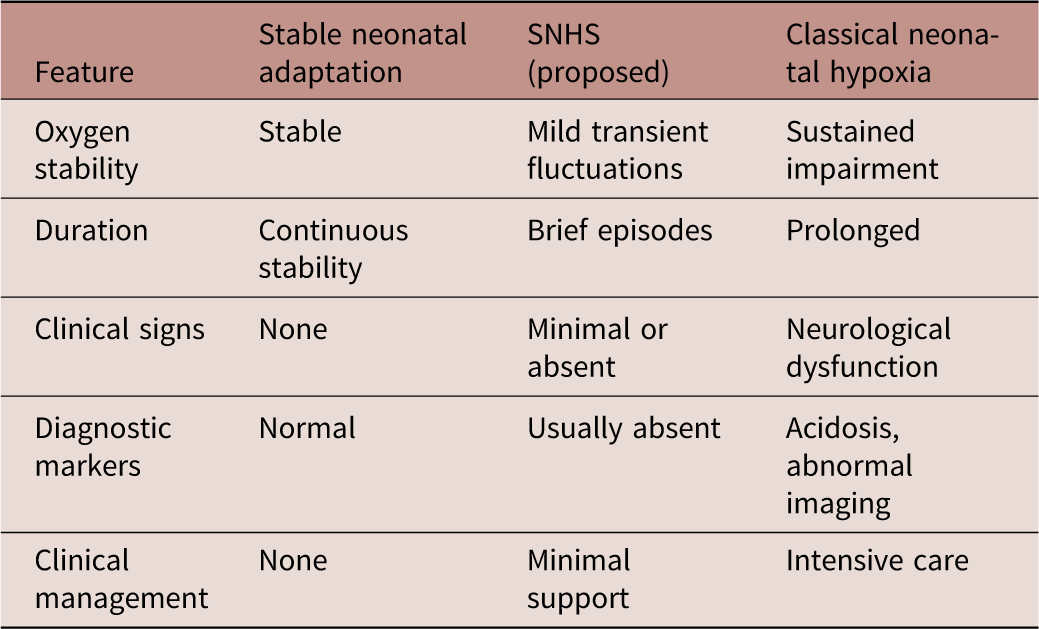
The conceptual distinctions between stable neonatal adaptation, the proposed SNHS state, and classical neonatal hypoxia are summarized in Table 1.
Table 1.
Conceptual comparison between stable neonatal adaptation, SNHS, and classical neonatal hypoxia
Table 1. Long description
A table comparing stable neonatal adaptation, SNHS, and classical neonatal hypoxia across five features. The table has five rows and four columns, including the header row. The columns are labeled Feature, Stable neonatal adaptation, SNHS (proposed), and Classical neonatal hypoxia. The rows are labeled Oxygen stability, Duration, Clinical signs, Diagnostic markers, and Clinical management. Row 1: Oxygen stability, Stable, Mild transient fluctuations, Sustained impairment. Row 2: Duration, Continuous stability, Brief episodes, Prolonged. Row 3: Clinical signs, None, Minimal or absent, Neurological dysfunction. Row 4: Diagnostic markers, Normal, Usually absent, Acidosis, abnormal imaging. Row 5: Clinical management, None, Minimal support, Intensive care.
Observable neonatal phenomena potentially consistent with transitional oxygen instability
Several observable physiological phenomena during the early neonatal period illustrate the dynamic and sometimes unstable nature of respiratory and autonomic regulation as the newborn adapts to extrauterine life. These phenomena are widely recognized as part of normal neonatal transition and typically resolve without lasting clinical consequences. Nevertheless, they demonstrate that short-lived variability in respiratory rhythm, oxygenation, and autonomic regulation may occur during this developmental window. Such observations provide a physiological context within which the concept of SNHS may be considered.
One commonly described phenomenon is periodic breathing, a respiratory pattern characterized by cycles of regular breathing interrupted by brief pauses in respiration. Periodic breathing is frequently observed in healthy neonates, particularly during sleep, and reflects developmental immaturity of central respiratory control mechanisms.Reference Poets, Stebbens and Alexander3,Reference Martin and Wilson4,Reference Mortola12 Although these pauses are typically short and self-limited, they may be accompanied by transient fluctuations in ventilation and oxygen saturation. In most infants, periodic breathing decreases as respiratory control systems mature during the first weeks of life.
A second observable feature of neonatal adaptation involves transitional respiratory and circulatory instability during the immediate postnatal period. Some newborns experience brief difficulties in establishing stable respiration and oxygenation after birth. These episodes may occasionally be accompanied by simple supportive measures such as tactile stimulation or short periods of supplemental oxygen, after which physiological stability is rapidly restored and the infants demonstrate normal clinical recovery. Because stabilization occurs promptly and no evidence of hypoxic injury is present, such events are generally regarded as part of the spectrum of normal neonatal transition.Reference Polin, Abman and Rowitch2,Reference Niermeyer, Velaphi, Prommalikit and Singhal11
A third relevant observation relates to the immaturity of autonomic regulatory systems during early neonatal life. The neonatal autonomic nervous system undergoes rapid maturation after birth as sympathetic and parasympathetic influences on respiration, cardiovascular regulation, and metabolic control become increasingly coordinated.Reference Mortola12 During this developmental period, variability in respiratory rhythm, heart rate, and vascular tone is commonly observed, reflecting the ongoing establishment of stable homeostatic control mechanisms.
Taken together, these phenomena demonstrate that transient variability in respiratory, oxygenation, and autonomic regulation occurs during neonatal adaptation. The SNHS hypothesis asks whether a subset of these events can be physiologically distinguished from ordinary benign variability without implying pathological hypoxia or neurological injury. This distinction remains an empirical question requiring systematic physiological investigation.
Conceptual model of SNHS
The observations described in the preceding sections suggest that neonatal transition may involve a continuum of physiological stability rather than a strictly binary distinction between normal adaptation and overt hypoxic pathology. In most newborns, respiratory and cardiovascular regulation stabilizes rapidly after birth, enabling consistent oxygen delivery and effective physiological adaptation. At the opposite end of this continuum are infants who experience clinically significant hypoxic events associated with identifiable pathological conditions, such as hypoxic–ischemic encephalopathy.
Between these two extremes, it is plausible that a subclinical physiological vulnerability state may exist in which mild oxygen-related physiological stress occurs without reaching the threshold required to produce overt injury or clinically recognizable disease. The concept of SNHS is proposed as a framework for describing this hypothesized vulnerability state within the continuum of neonatal oxygen adaptation (Fig 2). In this conceptual model, neonatal oxygen regulation can be viewed as a physiological spectrum ranging from stable neonatal adaptation to clinically significant hypoxic injury, with SNHS representing a hypothesized subclinical physiological vulnerability state characterized by mild and transient oxygen-related physiological stress, rather than an obligatory stage in progression toward clinically significant hypoxia.
Figure 2.
Conceptual spectrum of neonatal oxygen-related physiological adaptation. SNHS is positioned as a hypothesized subclinical physiological vulnerability state within a spectrum ranging from stable physiological adaptation to clinically significant neonatal hypoxia. Its position on this spectrum represents increasing physiological disturbance and does not imply a sequential or inevitable progression from SNHS to clinically significant hypoxia or hypoxic–ischemic encephalopathy.
In this model, SNHS may arise from the interaction of several features of early postnatal physiology. These include immature respiratory control mechanisms, ongoing cardiopulmonary transition, and developing autonomic regulatory systems. The combined influence of these processes may occasionally produce short-lived fluctuations in oxygen delivery or regulatory stability during the neonatal adaptation period. Such fluctuations would typically be mild and rapidly compensated by normal homeostatic mechanisms.
Importantly, SNHS does not imply persistent hypoxia or sustained impairment of oxygen delivery. Rather, it refers to brief episodes of physiological instability that remain below the threshold of recognized hypoxic pathology. Because these episodes may resolve quickly and leave no clear clinical markers, they may pass largely unnoticed during routine neonatal observation and therefore remain insufficiently characterized in the current clinical literature.
The SNHS framework does not redefine transient oxygen instability as pathology. Rather, it provides a conceptual basis for investigating a hypothesized subclinical physiological vulnerability state within the continuum of neonatal oxygen adaptation, without implying inevitable progression toward clinically significant hypoxia. Whether this state can be empirically distinguished from benign physiological variability remains to be determined.
Testability of the SNHS hypothesis
A central requirement for a useful physiological hypothesis is that it generates empirically testable predictions. The concept of SNHS proposes that mild and transient oxygen-related physiological stress may occur during neonatal transition without producing overt manifestations of clinically significant hypoxia or hypoxic injury. Operationalization of SNHS may initially be approached through three complementary dimensions: physiological oxygen instability, transient clinical expression, and intervention requirement. A physiological criterion could be based on objectively documented SpO2 deviation from expected values for gestational age and postnatal transitional stage. Transient clinical expression could include short-lived alterations in routinely assessed indicators of neonatal adaptation, including individual Apgar components, without requiring a predefined total Apgar-score threshold. An intervention dimension could identify deviation from uncomplicated neonatal transition sufficient to prompt intervention beyond routine care, as defined within established neonatal stabilization or resuscitation protocols, followed by rapid recovery without evidence of clinically significant hypoxic injury. Prospective studies should determine which combination of physiological deviation, transient clinical features, and intervention requirement most reliably distinguishes candidate SNHS events from ordinary physiological variability.
One testable prediction of the SNHS hypothesis is that transient oxygen variability should occur in a measurable subset of otherwise healthy newborns during early neonatal transition. Continuous high-resolution physiological monitoring, including pulse oximetry combined with respiratory monitoring, could be used to identify and characterize short-lived episodes of oxygen or respiratory instability occurring in the absence of identifiable pathological conditions. Previous studies documenting oxygen saturation dynamics in healthy neonates demonstrate that measurable variability in oxygenation can occur during early neonatal adaptation.Reference Poets, Stebbens and Alexander3, Reference Dawson, Kamlin and Vento5, Reference Niermeyer, Velaphi, Prommalikit and Singhal11 Prospective monitoring during the first hours and days after birth could characterize the frequency, depth, duration, recovery pattern, and physiological context of such events and determine whether reproducible patterns consistent with a subclinical physiological vulnerability state can be distinguished from ordinary neonatal variability.
A second prediction concerns the regulatory dynamics associated with these episodes. If transient oxygen instability represents a form of mild physiological stress, it may be accompanied by measurable alterations in autonomic regulatory activity. Heart rate variability provides insight into autonomic nervous system function and maturation during the neonatal period.Reference Cardoso, Silva and Guimarães15 Simultaneous monitoring of heart rate variability, respiratory patterns, and oxygen saturation could therefore determine whether candidate SNHS events are associated with short-lived shifts in autonomic balance or cardiorespiratory regulation. Most investigations of neonatal stress-response physiology have focused on severe hypoxic conditions, such as HIE or significant birth asphyxia.Reference Volpe7, Reference Perlman16 These conditions are associated with activation of stress-response pathways, including the hypothalamic–pituitary–adrenal axis, catecholaminergic signaling, and inflammatory responses. Whether candidate SNHS events are accompanied by more subtle or transient alterations in these regulatory pathways represents an additional testable question.
Importantly, these investigations would not presuppose pathological consequences of transient oxygen instability. Rather, their purpose would be to determine whether reproducible physiological patterns consistent with SNHS can be identified during neonatal transition and distinguished from ordinary physiological variability. Demonstrating consistent patterns of transient oxygen-related physiological stress would provide empirical support for the existence of such a subclinical physiological vulnerability state, whereas the absence of identifiable patterns would argue against the hypothesis.
By generating specific predictions that can be evaluated using contemporary physiological monitoring and observational study designs, the SNHS framework satisfies the fundamental requirement that a biological hypothesis remain empirically testable and potentially falsifiable.
Research directions for evaluating the SNHS hypothesis
Following initial physiological characterization and operationalization of candidate SNHS events, further research should focus on comparative validation, advanced physiological characterization, and investigation of potential short- and longer-term associations. These objectives require carefully designed observational and longitudinal studies capable of evaluating candidate SNHS events within the broader context of neonatal adaptation.
One research direction involves prospective comparative cohort studies in which newborns with physiologically characterized events meeting candidate SNHS criteria are compared with newborns demonstrating stable physiological adaptation. Such studies could determine whether candidate SNHS events are associated with reproducible differences in oxygenation, respiratory, or autonomic regulatory patterns and could evaluate subsequent differences in early physiological parameters and regulatory maturation. Longitudinal follow-up would provide further evidence relevant to the validity and physiological significance of the proposed construct.
In addition, advanced physiological data analysis and computational modeling may provide further insight into neonatal transitional dynamics. High-frequency physiological data obtained from neonatal monitoring systems could be analyzed using modern analytical approaches to identify patterns of transient oxygen variability and regulatory instability that may not be readily detectable through routine clinical observation. These methods may help characterize the dynamic features of neonatal respiratory and cardiovascular adaptation in greater detail.
Potential downstream associations are not proposed as defining features of SNHS. Rather, they represent secondary hypotheses that should be investigated only after the physiological existence and operational characteristics of SNHS have been established. Following physiological identification and initial validation of candidate SNHS events, subsequent investigations may examine whether these events are associated with measurable differences across established domains of neonatal regulation. Candidate domains for such investigation include autonomic regulation, assessed through measures such as heart rate variability or sympathetic–parasympathetic balance;Reference Cardoso, Silva and Guimarães15 respiratory control, including periodic breathing or ventilatory responsiveness;Reference Martin and Wilson4, Reference Mortola12 and neurobehavioral organization, including sleep–wake organization, crying patterns, and behavioral state control.Reference Bell, Lucas and White-Traut17 Whether candidate SNHS events are associated with alterations in any of these domains would require prospective empirical investigation.
Longer-term observational studies could also explore whether physiologically characterized candidate SNHS events are associated with later differences in autonomic, respiratory, or neurobehavioral regulation, while recognizing that such relationships would remain exploratory and require careful investigation.
Taken together, these research directions provide a staged pathway from physiological identification and comparative validation of candidate SNHS events to investigation of their potential short- and longer-term regulatory significance. If SNHS is empirically supported as a distinguishable physiological construct, these studies could subsequently determine whether it has relevance beyond the immediate neonatal transitional period.
Conclusion
The immediate priority for the SNHS hypothesis is prospective empirical validation. Pediatric and neonatal researchers are encouraged to test the hypothesis using continuous high-resolution pulse oximetry integrated with respiratory monitoring and, where feasible, measures of autonomic regulation such as heart-rate variability. Initial studies should determine whether reproducible oxygen-related and regulatory patterns can be identified and distinguished from ordinary neonatal variability using prospectively defined candidate criteria.
NICUs and neonatal clinical settings provide practical environments in which such investigations could begin using routinely available physiological monitoring technologies, supplemented where feasible by synchronized cardiorespiratory data and high-frequency physiological signal analysis. Particular priority should be given to deriving and validating operational boundaries based on the depth, duration, frequency, recovery characteristics, and clinical context of candidate events rather than presuming pathological significance or adverse developmental consequences.
The SNHS hypothesis therefore defines a directly testable and falsifiable research agenda. Demonstration of reproducible oxygen-related and regulatory patterns would provide empirical support for SNHS as a distinguishable subclinical physiological vulnerability state, whereas failure to identify such patterns would argue against the hypothesis. If validated, subsequent prospective studies could determine whether SNHS has relevance for neonatal monitoring, regulatory development, or longer-term outcomes.







 You have
Access
Introduction
The transition from fetal to neonatal life represents one of the most profound physiological adaptations in human development. At birth, the newborn must rapidly shift from placental oxygenation to pulmonary respiration while simultaneously establishing stable cardiovascular, respiratory, and autonomic regulation. This transition involves major changes in pulmonary blood flow, oxygen saturation, and circulatory dynamics, accompanied by the closure of fetal shunts and the initiation of independent respiratory control.Reference Rudolph1,Reference Polin, Abman and Rowitch2 Although most infants complete this transition without clinically significant complications, transient respiratory irregularities and fluctuations in oxygen saturation are frequently observed during the early neonatal period as physiological control systems stabilize.
Early neonatal respiratory regulation is characterized by developmental immaturity of central respiratory control mechanisms. Patterns such as periodic breathing, transient pauses in respiration, and mild oxygen desaturation are well documented in both term and preterm infants during the first weeks of life.Reference Poets, Stebbens and Alexander3,Reference Martin and Wilson4 These phenomena reflect ongoing maturation of brainstem respiratory centers and the feedback mechanisms that regulate ventilation in response to changes in carbon dioxide and oxygen levels. In most cases, such episodes resolve spontaneously as respiratory control stabilizes and are generally regarded as benign features of early neonatal physiology.
Similarly, oxygen saturation during the immediate postnatal period does not reach adult levels instantaneously. Newborn oxygen saturation typically rises gradually during the first minutes after birth as pulmonary gas exchange becomes established.Reference Dawson, Kamlin and Vento5 Variability in this process may occur because of differences in lung aeration, respiratory effort, or cardiovascular adaptation.Reference Hooper and te Pas6 While these fluctuations are usually transient and clinically insignificant, they illustrate that early neonatal oxygen regulation is physiologically dynamic rather than perfectly stable.
Clinical practice also recognizes that a subset of newborns experience brief transitional difficulties requiring minimal supportive measures, such as tactile stimulation or short periods of supplemental oxygen, despite subsequently demonstrating normal clinical recovery. Because such infants typically stabilize quickly and show no evidence of hypoxic–ischemic injury, these episodes are generally interpreted as benign components of neonatal transition. However, whether all mild and transient neonatal oxygen instability is physiologically indistinguishable from completely stable adaptation has rarely been systematically examined, particularly when such instability remains below the diagnostic threshold for established hypoxic conditions such as hypoxic–ischemic encephalopathy (HIE).Reference Volpe7
An important consideration is that the neonatal period represents a time of rapid maturation of multiple regulatory systems, including respiratory control, autonomic balance, and stress-response pathways. Developmental biology has demonstrated that early-life physiological exposures may influence the maturation of regulatory systems even when they do not produce immediate clinical disease. This concept is central to the Developmental Origins of Health and Disease (DOHaD) framework, which proposes that early physiological environments may shape later biological function through developmental programming mechanisms.Reference Barker8,Reference Gluckman, Hanson, Gluckman and Hanson9
Within the DOHaD paradigm, physiological exposures occurring during critical developmental windows may have relevance beyond their immediate clinical manifestations. Transient oxygen instability during neonatal transition may therefore represent an underexplored early-life physiological exposure. Whether such instability is uniformly benign or, in some circumstances, reflects a measurable state of transient physiological vulnerability remains an open empirical question.
The term and concept of subclinical neonatal hypoxic stress (SNHS) have recently been introduced in relation to excessive unexplained crying in early infancy, with transient disturbances associated with neonatal adaptation hypothesized to contribute to excessive crying through altered behavioral and neuroregulatory responsiveness.Reference Raham10 That application considered excessive unexplained crying as a specific potential behavioral manifestation of SNHS; however, SNHS has not yet been empirically established as a distinct physiological state, and its proposed relationship with excessive unexplained crying remains hypothetical and requires independent validation. Importantly, proposing a potential manifestation of SNHS does not itself establish the physiological boundaries or defining characteristics of the underlying construct.
A broader conceptual gap therefore remains: whether a distinct subclinical oxygen-related physiological state can be identified during neonatal adaptation, how such a state can be distinguished from ordinary physiological variability and clinically significant hypoxia, and how its proposed boundaries can be operationalized for empirical testing. The present article addresses this gap by developing SNHS as a theoretical physiological framework describing mild and transient oxygen-related physiological stress occurring during early neonatal adaptation without overt hypoxic–ischemic injury or clinically recognized neonatal disease. SNHS is conceptualized neither as an established pathological condition nor as synonymous with ordinary physiological fluctuation. Rather, it represents a hypothesized subclinical physiological vulnerability state in which transient oxygen-related instability may be accompanied by measurable alterations in regulatory physiology without implying tissue injury, clinical disease, or inevitable adverse developmental consequences. Whether such a state can be empirically distinguished from benign transitional variability is itself a central testable question of the hypothesis.
Accordingly, the present article develops the conceptual and physiological basis of SNHS within the context of neonatal adaptation and the DOHaD framework. By integrating established observations regarding neonatal oxygen-saturation variability, respiratory-control maturation, cardiopulmonary transition, and autonomic regulation, the article examines how this proposed subclinical state could be operationalized and empirically investigated. The framework does not presuppose that transient neonatal oxygen instability has adverse consequences; rather, it provides a testable basis for determining whether SNHS represents a physiologically distinguishable vulnerability state, a component of benign neonatal adaptation, or a spectrum encompassing both possibilities.
Methodological approach
This hypothesis article was developed through a focused narrative review of literature relevant to neonatal transition and the proposed SNHS framework. Literature was identified through searches of PubMed and Google Scholar using combinations of terms related to “neonatal transition”, “oxygen saturation”, “oxygen desaturation”, “neonatal hypoxia”, “respiratory control”, “periodic breathing”, “cardiopulmonary transition”, “autonomic regulation”, and “developmental origins of health and disease”. Additional relevant sources were identified from reference lists of key publications. Literature was selected according to its relevance to the physiological mechanisms underlying neonatal oxygen adaptation, established patterns of respiratory and oxygen-saturation variability, and the distinction between normal transitional physiology and clinically significant hypoxic states. Because the objective of the article is hypothesis generation rather than systematic evidence synthesis, the literature review was narrative and was not intended to constitute a systematic review or meta-analysis. The selected evidence was integrated conceptually to identify the proposed physiological gap addressed by SNHS and to formulate empirically testable predictions.
Physiological basis of neonatal oxygen instability
The early neonatal period is characterized by dynamic adjustments in respiratory and cardiovascular regulation as the newborn adapts from placental to pulmonary gas exchange. At birth, oxygen delivery must rapidly shift from placental diffusion to pulmonary ventilation while the cardiovascular circulation reorganizes to support independent oxygenation. This transitional physiology forms the basis of contemporary neonatal stabilization and resuscitation approaches. Although this transition is usually successful, several physiological processes may contribute to variability in oxygen stability during the first hours and weeks of life. These include maturation of respiratory control systems, the mechanical processes involved in lung aeration, and the evolving interaction between autonomic and cardiovascular regulation.Reference Polin, Abman and Rowitch2,Reference Niermeyer, Velaphi, Prommalikit and Singhal11
One important contributor to early oxygen variability is the developmental immaturity of central respiratory control mechanisms located in the brainstem. Neonatal respiratory rhythm generation depends on neural networks within the medulla that continue to mature during early postnatal life. Consequently, breathing patterns in newborns may exhibit irregular rhythms, including periodic breathing, brief pauses in respiration, and fluctuations in ventilation.Reference Martin and Wilson4,Reference Mortola12 These patterns commonly occur during sleep and are generally attributed to developmental immaturity in the feedback systems that regulate ventilation in response to changes in carbon dioxide and oxygen levels.
In addition to neural control mechanisms, the mechanical process of lung aeration contributes to early oxygen variability. At birth, the lungs must transition from fluid-filled structures to air-filled organs capable of effective gas exchange. This process involves rapid clearance of fetal lung fluid, establishment of functional residual capacity, and expansion of pulmonary blood flow.Reference Polin, Abman and Rowitch2,Reference Hooper and te Pas6 Variability in the efficiency or timing of these processes may temporarily influence oxygenation, particularly during the immediate postnatal period when pulmonary circulation and ventilation are still stabilizing.
Cardiovascular adaptation also plays a critical role in neonatal oxygen dynamics. Following birth, the closure of fetal circulatory pathways – including the ductus arteriosus and foramen ovale – gradually redirects blood flow through the pulmonary circulation. During this transitional phase, fluctuations in pulmonary vascular resistance and cardiac output may influence systemic oxygen delivery.Reference Dawes13Although these adjustments usually occur rapidly, they may contribute to short-term variability in oxygen saturation during early neonatal adaptation.
The maturation of autonomic regulation further interacts with respiratory and cardiovascular function. The neonatal autonomic nervous system undergoes substantial postnatal development as sympathetic and parasympathetic influences on heart rate, respiration, and vascular tone become increasingly coordinated. During this period of maturation, variability in respiratory rhythm, heart rate, and vascular regulation may occur as stable homeostatic control mechanisms are established.Reference Martin and Wilson4,Reference Mortola12
Importantly, most research on neonatal oxygen instability has focused on severe or prolonged hypoxic events associated with overt clinical conditions. In contrast, mild fluctuations in oxygen saturation occurring during otherwise normal neonatal transition have received comparatively limited attention. Because these fluctuations are typically transient and do not produce recognizable neurological injury, they are generally considered benign features of neonatal physiology.
However, the presence of multiple physiological mechanisms capable of producing transient oxygen variability suggests that mild oxygen instability may represent a broader spectrum of neonatal transitional dynamics than is currently appreciated. Understanding the physiological sources of such variability is therefore essential for evaluating whether these transient events are uniformly benign or whether they may occasionally interact with developmental processes during early life.
Within this physiological context, the concept of SNHS can be considered a theoretical framework for examining subtle oxygen-related physiological stress occurring during neonatal adaptation but remaining below the threshold of recognized hypoxic pathology. Exploring the mechanisms underlying neonatal oxygen instability may therefore provide important insights into the potential developmental significance of transient oxygen-related stress during this critical period of physiological maturation.
Several interacting physiological processes – including immature respiratory control, ongoing cardiopulmonary transition, and developing autonomic regulation—may collectively contribute to transient oxygen instability during neonatal adaptation, as illustrated conceptually in Fig 1.
Physiological factors potentially contributing to Subclinical Neonatal Hypoxic Stress (SNHS). Immature respiratory control, ongoing cardiopulmonary transition, and autonomic regulatory instability may interact during neonatal adaptation and contribute to transient oxygen-related instability. These interacting processes may be associated with short-lived fluctuations in oxygenation, respiratory regulation, heart-rate variability, and autonomic balance during early neonatal life.
We therefore propose the hypothesis that a subset of transient oxygen-instability events during neonatal transition may represent a distinguishable subclinical physiological vulnerability state – SNHS – in which mild, short-lived oxygen-related physiological stress occurs without overt clinical hypoxia and may be detectable through contemporary neonatal physiological monitoring.
Distinguishing SNHS from classical neonatal hypoxia
Neonatal hypoxia is traditionally discussed in the context of clinically significant oxygen deprivation associated with identifiable pathological conditions. Severe hypoxic events occurring during the perinatal period may result in well-recognized disorders such as HIE, which is characterized by neurological dysfunction, metabolic acidosis, and impaired cerebral perfusion. These conditions represent clearly defined pathological states with established diagnostic criteria and recognized risks for long-term neurological sequelae.Reference Volpe7,Reference Shankaran14
In contrast, the concept of SNHS refers to a substantially different physiological context. SNHS is proposed as a hypothesized subclinical physiological vulnerability state during neonatal adaptation, in which mild oxygen-related physiological stress may arise without reaching the threshold required to produce overt hypoxic–ischemic injury or clinically recognizable disease. The distinction between these states therefore lies primarily in severity, duration, and clinical manifestation.
Classical neonatal hypoxia typically involves sustained impairment of oxygen delivery sufficient to disrupt cellular metabolism and produce detectable tissue injury. Diagnostic indicators may include low Apgar scores, persistent metabolic acidosis, abnormal neurological examination findings, and neuroimaging evidence of hypoxic injury. Such conditions frequently require intensive clinical management and are associated with well-defined neurological risk profiles.Reference Volpe7
By contrast, SNHS is hypothesized to occur within the spectrum of physiological neonatal transition. In this context, oxygen instability may be transient, mild, and rapidly compensated by normal regulatory mechanisms. Episodes potentially consistent with SNHS may involve subtle fluctuations in oxygen saturation, brief respiratory irregularities, or short periods of transitional instability that resolve without producing measurable neurological deficits or identifiable neonatal pathology.
Another important distinction relates to clinical detectability. In contrast to classical hypoxic conditions, SNHS is by definition subclinical, meaning that it may occur without clear diagnostic markers and may therefore remain unrecognized during routine neonatal assessment. Episodes potentially consistent with SNHS may include cases in which newborns exhibit brief transitional instability – sometimes accompanied by minimal supportive measures such as tactile stimulation or short periods of supplemental oxygen – but rapidly regain physiological stability and are subsequently regarded as clinically normal. Because these episodes resolve quickly and do not meet criteria for recognized hypoxic disorders, they are typically interpreted as benign transitional events and are therefore rarely subjected to systematic physiological investigation.
Importantly, SNHS is conceptualized as a subclinical physiological vulnerability state rather than a pathological diagnosis. In this context, vulnerability refers to transient oxygen-related and regulatory instability that may be physiologically measurable while remaining below thresholds associated with clinically recognized hypoxia or tissue injury. The designation does not imply that SNHS necessarily produces adverse outcomes or progresses to clinically significant hypoxia.
Accordingly, SNHS is intended to distinguish a hypothesized pattern of subclinical physiological stress from both ordinary neonatal variability and established hypoxic pathology. Whether this proposed vulnerability state can be reproducibly identified, and whether it has any short- or long-term developmental significance, are separate empirical questions. Potential neurobehavioral, autonomic, or stress-response consequences should therefore be regarded as downstream hypotheses requiring independent validation rather than defining characteristics of SNHS.
The conceptual distinctions between stable neonatal adaptation, the proposed SNHS state, and classical neonatal hypoxia are summarized in Table 1.
Conceptual comparison between stable neonatal adaptation, SNHS, and classical neonatal hypoxia
Table 1. Long description
A table comparing stable neonatal adaptation, SNHS, and classical neonatal hypoxia across five features. The table has five rows and four columns, including the header row. The columns are labeled Feature, Stable neonatal adaptation, SNHS (proposed), and Classical neonatal hypoxia. The rows are labeled Oxygen stability, Duration, Clinical signs, Diagnostic markers, and Clinical management. Row 1: Oxygen stability, Stable, Mild transient fluctuations, Sustained impairment. Row 2: Duration, Continuous stability, Brief episodes, Prolonged. Row 3: Clinical signs, None, Minimal or absent, Neurological dysfunction. Row 4: Diagnostic markers, Normal, Usually absent, Acidosis, abnormal imaging. Row 5: Clinical management, None, Minimal support, Intensive care.
Observable neonatal phenomena potentially consistent with transitional oxygen instability
Several observable physiological phenomena during the early neonatal period illustrate the dynamic and sometimes unstable nature of respiratory and autonomic regulation as the newborn adapts to extrauterine life. These phenomena are widely recognized as part of normal neonatal transition and typically resolve without lasting clinical consequences. Nevertheless, they demonstrate that short-lived variability in respiratory rhythm, oxygenation, and autonomic regulation may occur during this developmental window. Such observations provide a physiological context within which the concept of SNHS may be considered.
One commonly described phenomenon is periodic breathing, a respiratory pattern characterized by cycles of regular breathing interrupted by brief pauses in respiration. Periodic breathing is frequently observed in healthy neonates, particularly during sleep, and reflects developmental immaturity of central respiratory control mechanisms.Reference Poets, Stebbens and Alexander3,Reference Martin and Wilson4,Reference Mortola12 Although these pauses are typically short and self-limited, they may be accompanied by transient fluctuations in ventilation and oxygen saturation. In most infants, periodic breathing decreases as respiratory control systems mature during the first weeks of life.
A second observable feature of neonatal adaptation involves transitional respiratory and circulatory instability during the immediate postnatal period. Some newborns experience brief difficulties in establishing stable respiration and oxygenation after birth. These episodes may occasionally be accompanied by simple supportive measures such as tactile stimulation or short periods of supplemental oxygen, after which physiological stability is rapidly restored and the infants demonstrate normal clinical recovery. Because stabilization occurs promptly and no evidence of hypoxic injury is present, such events are generally regarded as part of the spectrum of normal neonatal transition.Reference Polin, Abman and Rowitch2,Reference Niermeyer, Velaphi, Prommalikit and Singhal11
A third relevant observation relates to the immaturity of autonomic regulatory systems during early neonatal life. The neonatal autonomic nervous system undergoes rapid maturation after birth as sympathetic and parasympathetic influences on respiration, cardiovascular regulation, and metabolic control become increasingly coordinated.Reference Mortola12 During this developmental period, variability in respiratory rhythm, heart rate, and vascular tone is commonly observed, reflecting the ongoing establishment of stable homeostatic control mechanisms.
Taken together, these phenomena demonstrate that transient variability in respiratory, oxygenation, and autonomic regulation occurs during neonatal adaptation. The SNHS hypothesis asks whether a subset of these events can be physiologically distinguished from ordinary benign variability without implying pathological hypoxia or neurological injury. This distinction remains an empirical question requiring systematic physiological investigation.
Conceptual model of SNHS
The observations described in the preceding sections suggest that neonatal transition may involve a continuum of physiological stability rather than a strictly binary distinction between normal adaptation and overt hypoxic pathology. In most newborns, respiratory and cardiovascular regulation stabilizes rapidly after birth, enabling consistent oxygen delivery and effective physiological adaptation. At the opposite end of this continuum are infants who experience clinically significant hypoxic events associated with identifiable pathological conditions, such as hypoxic–ischemic encephalopathy.
Between these two extremes, it is plausible that a subclinical physiological vulnerability state may exist in which mild oxygen-related physiological stress occurs without reaching the threshold required to produce overt injury or clinically recognizable disease. The concept of SNHS is proposed as a framework for describing this hypothesized vulnerability state within the continuum of neonatal oxygen adaptation (Fig 2). In this conceptual model, neonatal oxygen regulation can be viewed as a physiological spectrum ranging from stable neonatal adaptation to clinically significant hypoxic injury, with SNHS representing a hypothesized subclinical physiological vulnerability state characterized by mild and transient oxygen-related physiological stress, rather than an obligatory stage in progression toward clinically significant hypoxia.
Conceptual spectrum of neonatal oxygen-related physiological adaptation. SNHS is positioned as a hypothesized subclinical physiological vulnerability state within a spectrum ranging from stable physiological adaptation to clinically significant neonatal hypoxia. Its position on this spectrum represents increasing physiological disturbance and does not imply a sequential or inevitable progression from SNHS to clinically significant hypoxia or hypoxic–ischemic encephalopathy.
In this model, SNHS may arise from the interaction of several features of early postnatal physiology. These include immature respiratory control mechanisms, ongoing cardiopulmonary transition, and developing autonomic regulatory systems. The combined influence of these processes may occasionally produce short-lived fluctuations in oxygen delivery or regulatory stability during the neonatal adaptation period. Such fluctuations would typically be mild and rapidly compensated by normal homeostatic mechanisms.
Importantly, SNHS does not imply persistent hypoxia or sustained impairment of oxygen delivery. Rather, it refers to brief episodes of physiological instability that remain below the threshold of recognized hypoxic pathology. Because these episodes may resolve quickly and leave no clear clinical markers, they may pass largely unnoticed during routine neonatal observation and therefore remain insufficiently characterized in the current clinical literature.
The SNHS framework does not redefine transient oxygen instability as pathology. Rather, it provides a conceptual basis for investigating a hypothesized subclinical physiological vulnerability state within the continuum of neonatal oxygen adaptation, without implying inevitable progression toward clinically significant hypoxia. Whether this state can be empirically distinguished from benign physiological variability remains to be determined.
Testability of the SNHS hypothesis
A central requirement for a useful physiological hypothesis is that it generates empirically testable predictions. The concept of SNHS proposes that mild and transient oxygen-related physiological stress may occur during neonatal transition without producing overt manifestations of clinically significant hypoxia or hypoxic injury. Operationalization of SNHS may initially be approached through three complementary dimensions: physiological oxygen instability, transient clinical expression, and intervention requirement. A physiological criterion could be based on objectively documented SpO2 deviation from expected values for gestational age and postnatal transitional stage. Transient clinical expression could include short-lived alterations in routinely assessed indicators of neonatal adaptation, including individual Apgar components, without requiring a predefined total Apgar-score threshold. An intervention dimension could identify deviation from uncomplicated neonatal transition sufficient to prompt intervention beyond routine care, as defined within established neonatal stabilization or resuscitation protocols, followed by rapid recovery without evidence of clinically significant hypoxic injury. Prospective studies should determine which combination of physiological deviation, transient clinical features, and intervention requirement most reliably distinguishes candidate SNHS events from ordinary physiological variability.
One testable prediction of the SNHS hypothesis is that transient oxygen variability should occur in a measurable subset of otherwise healthy newborns during early neonatal transition. Continuous high-resolution physiological monitoring, including pulse oximetry combined with respiratory monitoring, could be used to identify and characterize short-lived episodes of oxygen or respiratory instability occurring in the absence of identifiable pathological conditions. Previous studies documenting oxygen saturation dynamics in healthy neonates demonstrate that measurable variability in oxygenation can occur during early neonatal adaptation.Reference Poets, Stebbens and Alexander3, Reference Dawson, Kamlin and Vento5, Reference Niermeyer, Velaphi, Prommalikit and Singhal11 Prospective monitoring during the first hours and days after birth could characterize the frequency, depth, duration, recovery pattern, and physiological context of such events and determine whether reproducible patterns consistent with a subclinical physiological vulnerability state can be distinguished from ordinary neonatal variability.
A second prediction concerns the regulatory dynamics associated with these episodes. If transient oxygen instability represents a form of mild physiological stress, it may be accompanied by measurable alterations in autonomic regulatory activity. Heart rate variability provides insight into autonomic nervous system function and maturation during the neonatal period.Reference Cardoso, Silva and Guimarães15 Simultaneous monitoring of heart rate variability, respiratory patterns, and oxygen saturation could therefore determine whether candidate SNHS events are associated with short-lived shifts in autonomic balance or cardiorespiratory regulation. Most investigations of neonatal stress-response physiology have focused on severe hypoxic conditions, such as HIE or significant birth asphyxia.Reference Volpe7, Reference Perlman16 These conditions are associated with activation of stress-response pathways, including the hypothalamic–pituitary–adrenal axis, catecholaminergic signaling, and inflammatory responses. Whether candidate SNHS events are accompanied by more subtle or transient alterations in these regulatory pathways represents an additional testable question.
Importantly, these investigations would not presuppose pathological consequences of transient oxygen instability. Rather, their purpose would be to determine whether reproducible physiological patterns consistent with SNHS can be identified during neonatal transition and distinguished from ordinary physiological variability. Demonstrating consistent patterns of transient oxygen-related physiological stress would provide empirical support for the existence of such a subclinical physiological vulnerability state, whereas the absence of identifiable patterns would argue against the hypothesis.
By generating specific predictions that can be evaluated using contemporary physiological monitoring and observational study designs, the SNHS framework satisfies the fundamental requirement that a biological hypothesis remain empirically testable and potentially falsifiable.
Research directions for evaluating the SNHS hypothesis
Following initial physiological characterization and operationalization of candidate SNHS events, further research should focus on comparative validation, advanced physiological characterization, and investigation of potential short- and longer-term associations. These objectives require carefully designed observational and longitudinal studies capable of evaluating candidate SNHS events within the broader context of neonatal adaptation.
One research direction involves prospective comparative cohort studies in which newborns with physiologically characterized events meeting candidate SNHS criteria are compared with newborns demonstrating stable physiological adaptation. Such studies could determine whether candidate SNHS events are associated with reproducible differences in oxygenation, respiratory, or autonomic regulatory patterns and could evaluate subsequent differences in early physiological parameters and regulatory maturation. Longitudinal follow-up would provide further evidence relevant to the validity and physiological significance of the proposed construct.
In addition, advanced physiological data analysis and computational modeling may provide further insight into neonatal transitional dynamics. High-frequency physiological data obtained from neonatal monitoring systems could be analyzed using modern analytical approaches to identify patterns of transient oxygen variability and regulatory instability that may not be readily detectable through routine clinical observation. These methods may help characterize the dynamic features of neonatal respiratory and cardiovascular adaptation in greater detail.
Potential downstream associations are not proposed as defining features of SNHS. Rather, they represent secondary hypotheses that should be investigated only after the physiological existence and operational characteristics of SNHS have been established. Following physiological identification and initial validation of candidate SNHS events, subsequent investigations may examine whether these events are associated with measurable differences across established domains of neonatal regulation. Candidate domains for such investigation include autonomic regulation, assessed through measures such as heart rate variability or sympathetic–parasympathetic balance;Reference Cardoso, Silva and Guimarães15 respiratory control, including periodic breathing or ventilatory responsiveness;Reference Martin and Wilson4, Reference Mortola12 and neurobehavioral organization, including sleep–wake organization, crying patterns, and behavioral state control.Reference Bell, Lucas and White-Traut17 Whether candidate SNHS events are associated with alterations in any of these domains would require prospective empirical investigation.
Longer-term observational studies could also explore whether physiologically characterized candidate SNHS events are associated with later differences in autonomic, respiratory, or neurobehavioral regulation, while recognizing that such relationships would remain exploratory and require careful investigation.
Taken together, these research directions provide a staged pathway from physiological identification and comparative validation of candidate SNHS events to investigation of their potential short- and longer-term regulatory significance. If SNHS is empirically supported as a distinguishable physiological construct, these studies could subsequently determine whether it has relevance beyond the immediate neonatal transitional period.
Conclusion
The immediate priority for the SNHS hypothesis is prospective empirical validation. Pediatric and neonatal researchers are encouraged to test the hypothesis using continuous high-resolution pulse oximetry integrated with respiratory monitoring and, where feasible, measures of autonomic regulation such as heart-rate variability. Initial studies should determine whether reproducible oxygen-related and regulatory patterns can be identified and distinguished from ordinary neonatal variability using prospectively defined candidate criteria.
NICUs and neonatal clinical settings provide practical environments in which such investigations could begin using routinely available physiological monitoring technologies, supplemented where feasible by synchronized cardiorespiratory data and high-frequency physiological signal analysis. Particular priority should be given to deriving and validating operational boundaries based on the depth, duration, frequency, recovery characteristics, and clinical context of candidate events rather than presuming pathological significance or adverse developmental consequences.
The SNHS hypothesis therefore defines a directly testable and falsifiable research agenda. Demonstration of reproducible oxygen-related and regulatory patterns would provide empirical support for SNHS as a distinguishable subclinical physiological vulnerability state, whereas failure to identify such patterns would argue against the hypothesis. If validated, subsequent prospective studies could determine whether SNHS has relevance for neonatal monitoring, regulatory development, or longer-term outcomes.
Data availability statement
No primary datasets were generated or analyzed in this study. All statements are based on previously published literature and conceptual analysis.
Author contribution
The author conceived the hypothesis, conducted the literature review, developed the conceptual framework, and wrote the manuscript.
Funding statement
The author received no specific funding for this work.
Competing interests
The author declares that there are no competing interests.
Ethical approval
Not applicable. This article presents a conceptual hypothesis and does not involve human participants, animals, or identifiable personal data.
AI acknowledgment / disclosure
Generative AI tools (ChatGPT, OpenAI; GPT-5) were used in a limited supportive capacity to assist with language refinement, structural editing, and clarity of presentation. AI tools were not used to generate data, perform analyses, or produce scientific conclusions. All conceptual development, interpretation, and final editorial decisions were made solely by the author, who takes full responsibility for the content of the manuscript.