Introduction
Patients with vestibular schwannomas who are suitable for translabyrinthine resection of their tumour understand that, secondary to their surgery, they can expect dizziness and imbalance in the post-operative period.Reference Čada, Balatková, Chovanec, Čakrt, Hrubá and Jeřábek1,Reference Broomfield, Mandavia, Nicholson, Mahmoud, King and Rutherford2 Many patients are asymptomatic pre-operatively, because of the gradual vestibular dysfunction caused by the usually slow tumour growth, which allows time for vestibular and central compensation. In contrast, however, labyrinthectomy causes acute and total unilateral vestibular deafferentation. This is believed to occur via two main mechanisms, the labyrinthectomy itself, and by direct trauma to the nerve, brainstem and cerebellum in cases of vestibular schwannoma resection.Reference Čada, Balatková, Chovanec, Čakrt, Hrubá and Jeřábek1
Mantokoudis et al. used the six-canal video head impulse test and described the process of vestibular rehabilitation in the initial post-operative period, in vestibular schwannoma patients who underwent retrosigmoidal resection.Reference Mantokoudis, Schubert, Saber, Ali, Wong and Agrawal3 They demonstrated an initial decrease in vestibular ocular reflex gain on the contralateral side, followed by recovery 4 days later. They hypothesised that this was an attempt by the central nervous system to achieve some symmetry in the firing rate of each side.Reference Mantokoudis, Schubert, Saber, Ali, Wong and Agrawal3 Although this report gave us some insight into video head impulse test results during vestibular rehabilitation, six-canal video head impulse test results might differ in patients undergoing a translabyrinthine approach. Since its initial description in 1988, the video head impulse test has gradually replaced caloric vestibular testing in several centres, as it can provide valuable information on each individual canal.Reference Mantokoudis, Schubert, Saber, Ali, Wong and Agrawal3–Reference MacDougall, Weber, McGarvie, Halmagyi and Curthoys5
The use of intratympanic gentamicin for pharmacological or chemical ablation of the labyrinth is adequately described, and is a well-recognised form of therapy for Ménière's disease patients.Reference Pullens and van Benthem6,Reference Watson, Nelson and Irving7 Lately, a few studies have utilised such treatment as ‘pre-habilitation’ in patients undergoing translabyrinthine resection of vestibular schwannoma, without, however, providing any information on the contralateral function and its possible significance.Reference Giannuzzi, Merkus and Falcioni8–Reference Tjernström, Fransson, Kahlon, Karlberg, Lindberg and Siesjö10
Given the lack of similar studies in the literature, our objective was to determine the impact of pre-operative intratympanic gentamicin injection on patients undergoing surgical labyrinthectomy, and to examine the effect of such an intervention on contralateral vestibular function following surgery, using the objective six-canal video head impulse test.
Materials and methods
Basic settings
A prospective, case–control pilot study was conducted in a tertiary referral university centre. Ethical approval in the form of permission from the Caldicott Guardian was sought and granted, with the study being classified as a quality improvement project. Additional informed consent was obtained at every step of the study.
Patients
We included eight patients who underwent labyrinthectomy, allocated to two equally sized groups.
Group one consisted of four patients who did not receive pre-operative intratympanic gentamicin. Three of the patients underwent translabyrinthine resection for vestibular schwannoma resection; in the fourth patient, the aim was to obtain clear margins in temporal bone malignancy.
Group two included four patients who received pharmacological ablation with pre-operative intratympanic gentamicin. They all underwent a translabyrinthine resection of a vestibular schwannoma.
Gentamicin injections and labyrinthectomies
The number of intratympanic gentamicin injections required ranged from two to three. There was a one-week interval between the injections, which was sufficient time to assess the patient clinically and with the video head impulse test, and to decide if additional injections were required. All four patients in group two received the injections until an abnormal response was documented in all three ipsilateral canals. A 40 mg/ml solution of gentamicin was utilised, with approximately 0.6–0.8 ml of solution instilled into the middle ear via a 22 G spinal needle under topical anaesthesia.
The labyrinthectomies and translabyrinthine resections took place in the same tertiary centre, and were performed by the same surgical team. Patient recovery occurred on the same in-patient ward, following a standard local protocol.
Video head impulse test
All patients in both groups had pre-operative six-canal video head impulse test results demonstrating normal function on the contralateral side and a variety of responses on the ipsilateral sides.
The post-operative six-canal video head impulse test was conducted 12–28 weeks following surgery, at the stage when the patients had no imbalance symptoms and were fit for such testing. All patients had follow-up appointments at pre-determined intervals; however, the video head impulse test was performed at the stage when they felt fit for such a test.
The patients in group two additionally underwent pre-operative, post-gentamicin injection video head impulse tests to monitor their response to gentamicin. Injections ceased when pharmacological ablation of the labyrinth on the operative side was achieved, as measured by the video head impulse test.
The six-canal video head impulse test was performed by experienced, subspecialised audiologists using the Otometrics six-canal video head impulse test device and software (Taastrup, Denmark), with a targeted velocity of over 200 degrees per second, to ensure accurate, reproducible results. A vestibular ocular reflex gain between 0.8 and 1.2 was considered normal, as per a previous study.Reference MacDougall, Weber, McGarvie, Halmagyi and Curthoys5 We additionally analysed the raw data for each semicircular canal, documenting the presence of covert and/or overt saccades.
Outcome measures
Our main outcome measures were length of in-patient stay (in days), from the day of the operation to the day of discharge, and the contralateral semicircular canal responses on the video head impulse test. We documented the video head impulse test gain for each individual canal, on both the ipsilateral and contralateral sides. We also analysed the raw data, assessing the presence of covert and/or overt saccades. Additionally, we documented demographic factors and tumour size.
The analysis of variance test was used for direct statistical comparison of the groups (using IBM SPSS® statistical software). The p-value was set at 0.05.
Results
Demographics and duration of stay
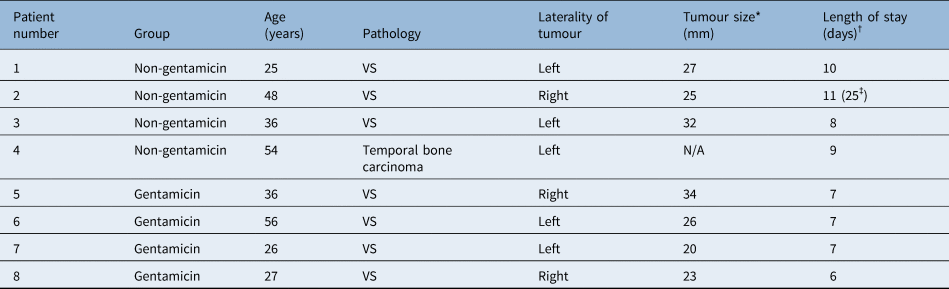
In the non-gentamicin group (group one), the average age was 40.7 years (range, 25–54 years). The average maximal intracranial diameter of the tumours was 28 mm (range, 25–32 mm). These patients were fit and well, with no co-morbidities, regular medicine use or other documented reasons for additional imbalance. The average length of stay in this group was 9.5 days (range, 8–11 days). Of note, one patient had a complication on the expected day of discharge (delayed cerebrospinal fluid leak and meningitis), which extended his stay. If this is taken into account, the average length of stay in the group would have been 14 days; this complication was not related to balance issues however (Table 1). The p-value was 0.0073, which is statistically significant.
Patient demographics and pathology

*Intracranial component. †P-value = 0.0073. ‡The actual in-patient stay was 25 days because of a complication apparent on the day of planned discharge. VS = vestibular schwannoma; N/A = not available
The average age of patients in the gentamicin group (group two) was 36.3 years (range, 26–56 years). The average maximal intracranial diameter of the tumours was 25.8 mm (range, 20–34 mm). None of the patients had any co-morbidities that could account for additional imbalance. The average length of post-operative stay was 6.75 days (range, 6–7 days).
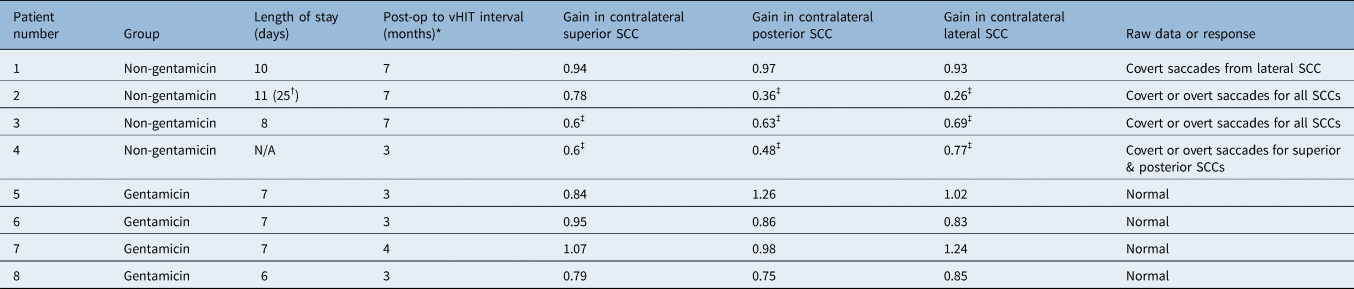
All patients were well, without any dizziness or balance problems at their clinic follow up. The follow-up appointments took place at a later stage in group one (average of 6 months; range, 3–7 months) than in group two (average of 3.25 months; range, 3–4 months), indicative of the prolonged recovery in the non-gentamicin group (p = 0.037, statistically significant) (Table 2).
Post-operative contralateral vestibular ocular reflex gain and raw data

*P = 0.037, for the interval from the time of surgery to the time when patients were fit to undergo the video head impulse test. †The actual in-patient stay was 25 days because of a complication apparent on the day of planned discharge. ‡Indicates abnormal vestibular ocular reflex gain. Post-op = post-operative; vHIT = video head impulse test; SCC = semicircular canal; N/A = not available
Video head impulse test on contralateral side
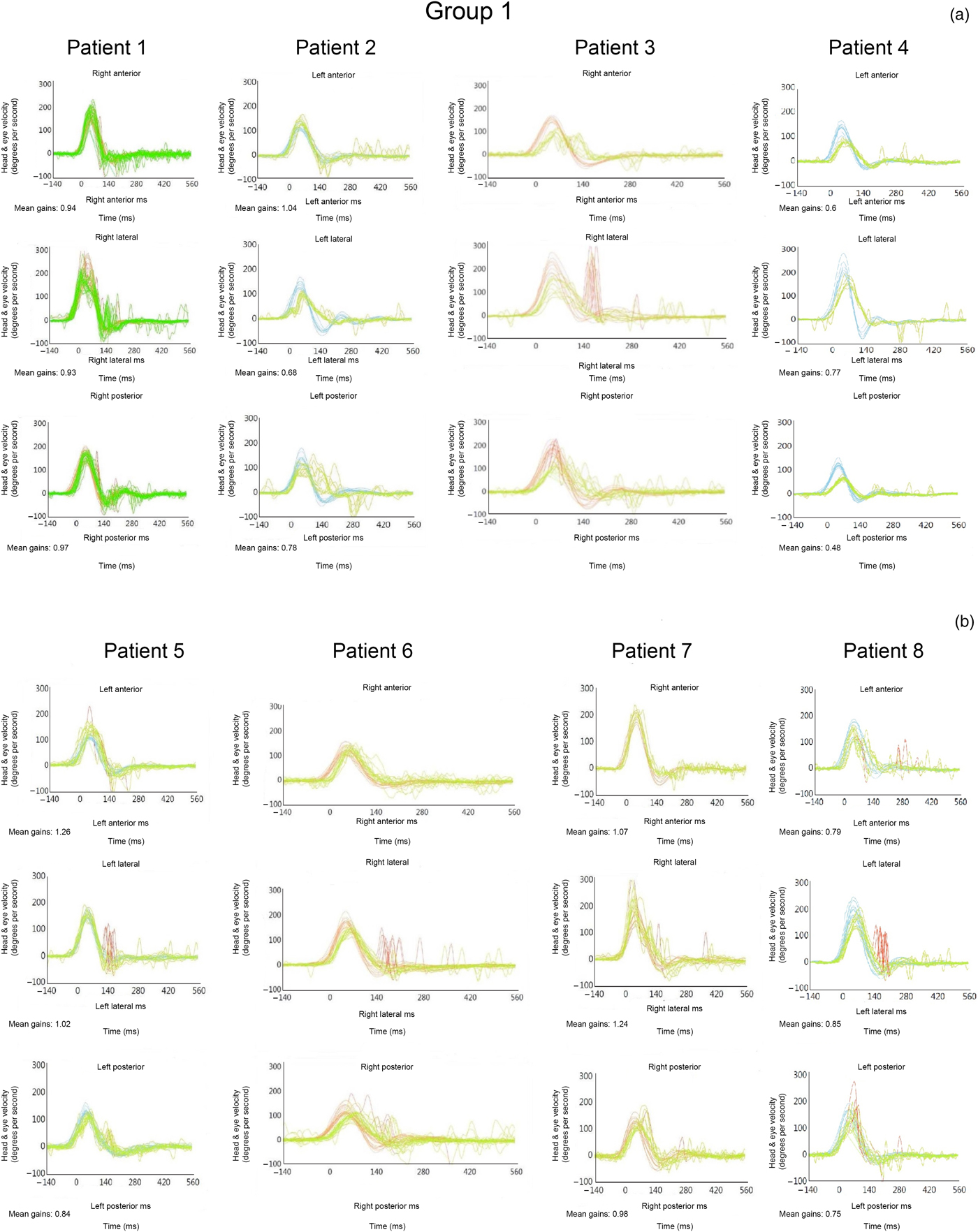
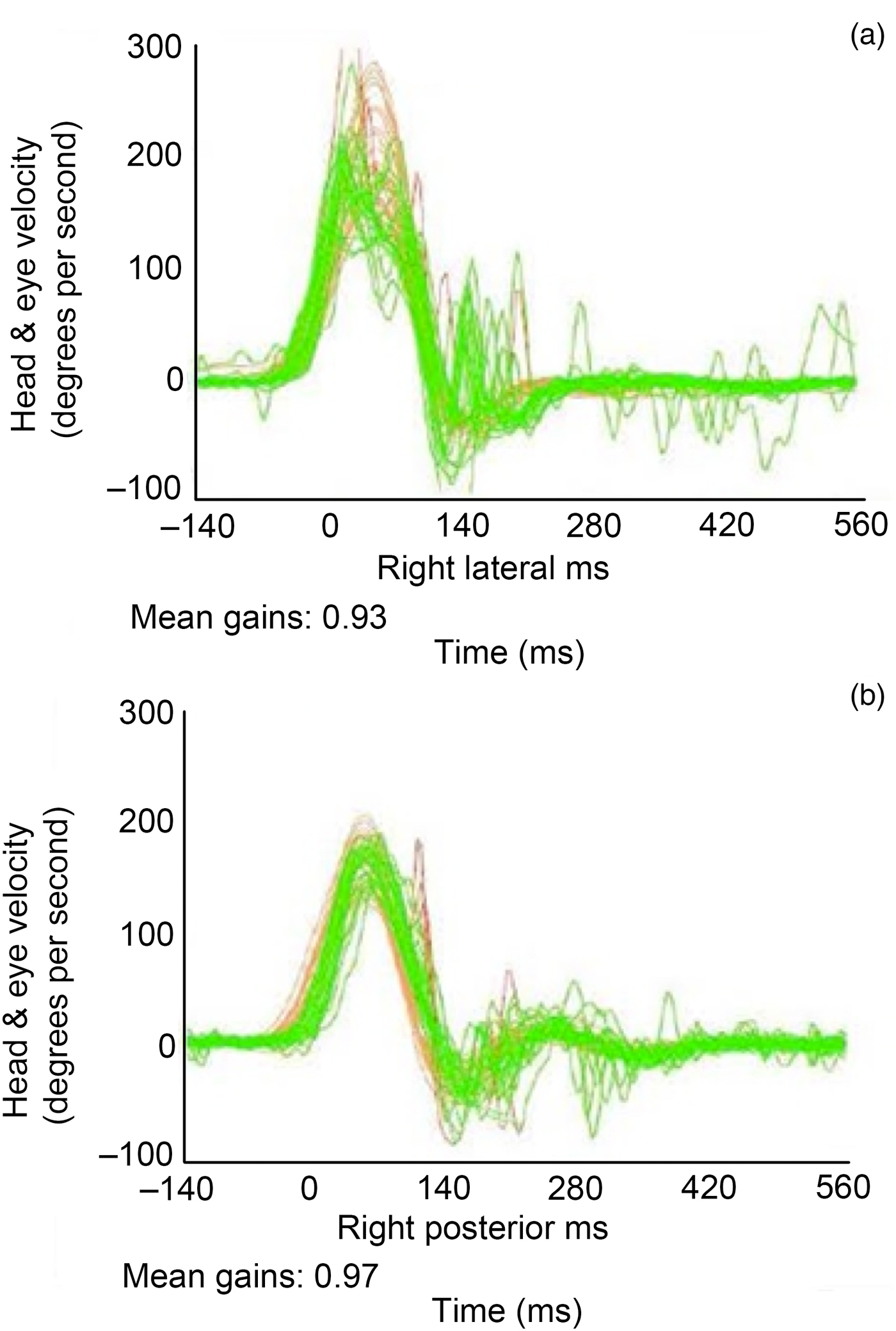
None of the patients from the gentamicin group had abnormal gain on the contralateral side. However, all patients from the non-gentamicin group demonstrated abnormal responses from at least one semicircular canal on the contralateral side (because of abnormal gains in three patients and the presence of saccades in one patient) (Table 2 and Figure 1). As expected, there was no documented response from the side of the labyrinthectomy in any of the patients.
Post-operative contralateral video head impulse test raw data for the (a) non-gentamicin and (b) gentamicin groups, showing abnormal responses in the non-gentamicin group only.

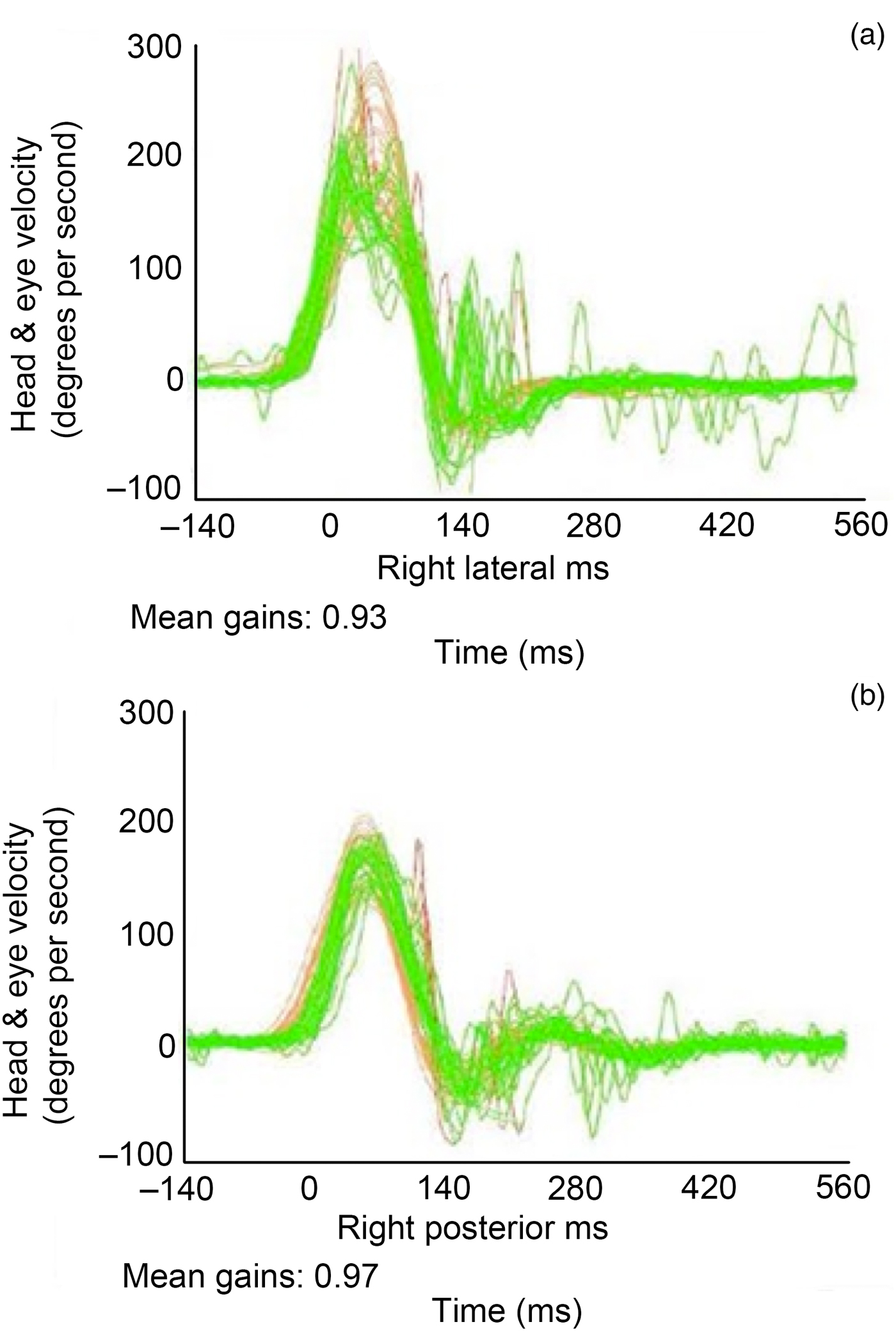
Of note, in one of the non-gentamicin group patients, the video head impulse test gains from the contralateral ear were within the normal range; however, analysis of the raw data showed abnormal responses (covert saccades) from the contralateral lateral semicircular canal (Figure 2).
Abnormal responses and covert saccades in patient one from the non-gentamicin group, for the right-sided (a) lateral and (b) posterior semicircular canals; despite the normal vestibular ocular reflex gain, analysis of the raw data showed abnormal responses from the contralateral lateral semicircular canal.
Discussion
Translabyrinthine access to the skull base for tumour resection can result in a prolonged post-operative in-patient stay. Patients experience acute vertiginous symptoms, nausea and imbalance. These symptoms can continue until vestibular rehabilitation begins, and can prolong the recovery until safe mobilisation is achieved.
Herein, we show that such debilitating symptoms can be better controlled with pre-operative ablation of the labyrinth with intratympanic gentamicin injections, allowing rehabilitation to start pre-operatively, and to occur in a more controlled and better-tolerated manner. Additionally, we demonstrate (via the six-canal video head impulse test), to our knowledge for the first time, that such positive effects can be related to the contralateral benefits of the pharmacological, pre-labyrinthectomy preparation.
Impact of pre-operative labyrinthine ablation with gentamicin
The indications for pharmacological ablation of the labyrinth are expanding. A recent study demonstrated the potential of pharmacological ablation combined with a ‘watch and wait’ approach for the management of small stable vestibular schwannoma in elderly co-morbid patients suffering from vertigo.Reference Watson, Nelson and Irving7
The first authors to describe the use of pharmacological ablation to improve post-operative outcomes for vestibular schwannoma patients were Magnusson et al., who introduced the concept of ‘pre-habilitation’.Reference Magnusson, Kahlon, Karlberg, Lindberg and Siesjö9,Reference Tjernström, Fransson, Kahlon, Karlberg, Lindberg and Siesjö10 Subsequently, Čada et al. showed an increase in the resilience of the pre-treated group to a complex visual environment post-operatively that the control group did not have.Reference Čada, Balatková, Chovanec, Čakrt, Hrubá and Jeřábek1
Following on from this, our study evaluated the post-operative recovery time and course of patients undergoing vestibular schwannoma resection; we also provided new data on contralesional responses in the post-operative period, using a relatively new technique.
In particular, in each of the groups, unilateral complete ipsilesional vestibular deafferentation was achieved at different time points. In group one (non-gentamicin group), this occurred at the time of surgery; in group two (gentamicin group), it was achieved pre-operatively by pharmacological ablation with intratympanic gentamicin application. The resultant gradual failure of the labyrinth following gentamicin application seemed to aid vestibular integration. Thus, the osseous labyrinthectomy in group two did not have the same, severe impact as in the non-gentamicin group, where the osseous labyrinthectomy led to sudden, complete failure of the ipsilateral vestibular system.
Both groups eventually achieved good balance outcomes; however, the patients in the gentamicin group recovered faster. In short, ‘pre-habilitation’ of the vestibular system starts before the surgery.
The reasons for this are not entirely clear. One possible explanation could be that although the same process of rehabilitation is occurring in each group, it is this ‘separation of traumas’, as described by Čada et al., that can so markedly improve the recovery demonstrated in group two.Reference Čada, Balatková, Chovanec, Čakrt, Hrubá and Jeřábek1,Reference Batuecas-Caletrio, Santa Cruz-Ruiz, Muñoz-Herrera and Perez-Fernandez11,Reference Lacour and Bernard-Demanze12 Another explanation could be the unaffected or less affected contralateral vestibular system, as shown in our study, which facilitates faster compensation and recovery.
Significance of video head impulse test findings
The six-canal video head impulse test has been shown to be more useful and accurate in the measurement of vestibular responses in vestibular schwannoma patients than caloric testing, mostly because it can assess all six canals. In a review of 50 patients with vestibular schwannoma, 31 had normal caloric responses while 45 had abnormal video head impulse test findings.Reference Batuecas-Caletrio, Santa Cruz-Ruiz, Muñoz-Herrera and Perez-Fernandez11 The video head impulse test appears to be a quick and objective tool for assessing individual canal function.Reference Mantokoudis, Schubert, Saber, Ali, Wong and Agrawal3–Reference MacDougall, Weber, McGarvie, Halmagyi and Curthoys5,Reference Batuecas-Caletrio, Santa Cruz-Ruiz, Muñoz-Herrera and Perez-Fernandez11,Reference Stevens, Garrison and Kaylie13 Such features can be of great clinical importance. However, care should be taken when interpreting the results.
In addition to vestibular ocular reflex gain, our study also involved a review of the raw data, to ensure accuracy of testing. Specifically, we looked for signs of goggle slippage, overshoot and appropriate velocity of testing. As gain is generated by the software, it is not appropriate to simply report video head impulse test results solely in terms of gain. Notably, there are three main components of raw data analysis to consider: firstly, whether the eye movement is equal and opposite to head movement; secondly, whether there are any covert or overt saccades; and lastly, the presence of gain reduction.Reference Halmagyi, Chen, MacDougall, Weber, McGarvie and Curthoys4,Reference MacDougall, Weber, McGarvie, Halmagyi and Curthoys5 The post-operative results for the non-gentamicin group were abnormal in at least one canal, because of abnormal gain and the presence of overt and/or covert saccades.
Importantly, in our study, the video head impulse test indicated an impact of labyrinthectomy on the contralateral side, which was eliminated by the pre-operative, gradual pharmacological ablation of the labyrinth with gentamicin (none of the patients treated with gentamicin had abnormal contralateral video head impulse test responses following labyrinthectomy). Our findings provide a possible explanation for the ‘pre-habilitation’ with gentamicin, because of the gradual damage of the labyrinth, instead of a one-off, sudden trauma. In addition, we demonstrated the indirect impact of labyrinthectomy on the contralateral vestibular system using objective measurements.
Strengths and weaknesses
There are very few studies of this kind in the literature,Reference Čada, Balatková, Chovanec, Čakrt, Hrubá and Jeřábek1,Reference Giannuzzi, Merkus and Falcioni8–Reference Tjernström, Fransson, Kahlon, Karlberg, Lindberg and Siesjö10,Reference Han, Song and Kim14 and none have reported their post-operative findings in terms of objective video head impulse test results. Studies of this nature can be limited by a department's capacity to perform specialised testing pre- and post-operatively. The centralisation of our service and the presence of subspecialised audiologists trained to use the video head impulse test have facilitated our study, enabling us to collect accurate and reproducible results. Additionally, the prospective design and inclusion of a control group are important strengths of our study.
The weaknesses arise from the small numbers of patients, which did not allow any randomisation or blinding. However, this was a pilot study, which showed normal contralateral responses and shorter in-patient stay in those who received gentamicin pre-treatment. Research in this field is ongoing in our unit. Future studies will aim to include a quality of life assessment with validated questionnaires. It will also include specific vestibular physical therapy regimes in both groups, as these have been shown to further improve outcomes.Reference Čada, Balatková, Chovanec, Čakrt, Hrubá and Jeřábek1,Reference Magnusson, Kahlon, Karlberg, Lindberg and Siesjö9,Reference Cohen15–Reference Whitney, Alghardir and Anwer17
• Translabyrinthine resection of vestibular schwannomas affects patients’ balance, hindering post-operative recovery
• Intratympanic gentamicin injected prior to resection has a positive effect on post-operative balance and recovery speed
• Six-canal video head impulse test results demonstrated normal contralateral vestibular responses post-operatively in patients treated pre-operatively with intratympanic gentamicin
• Patients who did not receive gentamicin treatment had abnormal responses from at least one contralateral semicircular canal
• These responses indicate gradual ablation of labyrinthine function through gentamicin prior to resection
Conclusion
Our pilot study demonstrated the benefits of pre-operative gentamicin ablation of the labyrinth in patients undergoing vestibular schwannoma resection. Additionally, we showed, using video head impulse testing, the impact of translabyrinthine resection on the contralateral side, and how this was eliminated by pre-operative gentamicin injections.
Competing interests
None declared