1. Introduction
This paper explicates and argues for the thesis that individual rational judgment, of the kind required for rational justification in non-formal, substantive domains (i.e., in empirical knowledge or in morals, both ethics and justice) is in fundamental part socially and historically based, although these social and historical roots of rational justification are consistent with realism about the objects of empirical knowledge and with strict objectivity about basic moral principles. The central thesis is that, to judge fully rationally that one judges—in ways which provide rational justification of one’s judgment about any substantive matter—requires recognizing one’s inherent fallibility and consequently also recognizing our mutual interdependence for assessing our own and each others’ judgments and their justification. This explication provides a pragmatic account of rational justification in substantive domains which undercuts the distinction, still influential today, between “rational” and “historical” knowledge. The central thesis of this paper is Hegel’s, who both in theory and in practice was subtle and sophisticated about philosophically central issues and methods regarding critical assessment and rational justification.Footnote 1 The textual and interpretive issues involved in this attribution are here set aside, to highlight the fundamental role of mutual recognition in rational justification in substantive domains.Footnote 2
2. The Pyrrhonian Dilemma of the Criterion
2.1 The most fundamental challenge to rational justification, especially within substantive domains, is the Pyrrhonian Dilemma of the Criterion, which poses the problem of justifying criteria of truth (or mutatis mutandis of justification) within any disputed domain:
[I]n order to decide the dispute which has arisen about the criterion [of truth], we must possess an accepted criterion by which we shall be able to judge the dispute; and in order to possess an accepted criterion, the dispute about the criterion must first be decided. And when the argument thus reduces itself to a form of circular reasoning the discovery of the criterion becomes impracticable, since we do not allow [those who claim to know something] to adopt a criterion by assumption, while if they offer to judge the criterion by a criterion we force them to a regress ad infinitum. And furthermore, since demonstration requires a demonstrated criterion, while the criterion requires an approved demonstration, they are forced into circular reasoning.Footnote 3
Pyrrhonian scepticism has pervasively influenced philosophy,Footnote 4 though only recently have analytic epistemologists much discussed it. Fogelin is an exception, though he neglects the Dilemma of the Criterion.Footnote 5 Chisholm substitutes for the Pyrrhonian “Dilemma” his own “Problem” of the Criterion.Footnote 6 Though often mistaken for the original,Footnote 7 Chisholm’s “Problem” oversimplifies the original Dilemma.Footnote 8
2.2 The Pyrrhonian Dilemma of the Criterion refutes two standard accounts of justification: coherentism and foundationalism. Against coherentism, the Dilemma raises the charge of vicious circularity. Coherence alone cannot distinguish, in any principled way, between genuine improvement in our knowledge (or belief set), in contrast to mere change in belief, nor between a true set of beliefs and an elaborately detailed, coherent fiction, which may coherently embed the statements, ‘this set of beliefs is true’, or ‘this version of the coherence theory is true’. Coherentism’s foremost contemporary advocate, Laurence BonJour, conceded that coherentism provides no adequate criterion of truth or justification, unwittingly recapitulating the key point made by von Juhos and Ayer against Hempel in the mid-1930s.Footnote 9
2.3 Foundationalist models of justification typically distinguish between historia and scientia. Experiential knowledge (historia) derives from sensory and memorial data; rational knowledge (scientia) is deduced from first principles.Footnote 10 This distinction remains common, e.g., in the distinction between “conceptual” and “empirical” issues. Both models involve justifying conclusions by deriving them unilaterally from basic foundations: justification flows from basic foundations to other, derived claims, not vice versa. This holds whether justificatory relations are strictly deductive or involve other kinds of rules of inference (e.g., induction, abduction) or weaker forms of basing relations (e.g., “probabilification,” “self-warrant”).
The Dilemma of the Criterion exposes foundationalist models of justification as dogmatic and as committing a petitio principii because such models can provide no justification to those who fundamentally dispute either the foundations or the basing relations invoked by any foundationalist analysis or theory, or the foundationalist model itself, because this model explicates justification solely in terms of derivation from first premises of whatever kind. In principle, foundationalism only addresses the (nearly) converted, and commits a petitio principii against those who dissent; once disputed, foundationalism can neither justify its criteria of truth or of justification, nor any particular, disputed claim.
2.4 In these regards, the Dilemma of the Criterion challenges coherence and foundationalist theories of justification, not simply the justification of any particular first-order claim(s). In this important regard, the Dilemma of the Criterion differs from and is more challenging than what Williams calls “Agrippa’s Trilemma,” which challenges first-order claims by noting that any mere claim is neither more nor less justified than any other, and that justifying a claim by appealing to another claim threatens to launch an infinite regress, to argue viciously in a circle or to appeal to another mere assertion.Footnote 11 (Williams omits possible appeal to a falsehood.) The Dilemma of the Criterion stresses that solving the problem of cognitive justification at the first order must be coordinated with solving the problem of epistemic justification at the second order of justifying any theory of justification. Trying to solve either problem before the other threatens to prejudice the issues.Footnote 12 Contemporary epistemologists have taken notice of “Agrippa’s Trilemma,” but tend to ossify it into a taxonomy of standard alternatives within theory of justification.Footnote 13 They thus neglect the second-order, the reflexive, and the fully general character of the Dilemma of the Criterion. The Dilemma of the Criterion raises not only the second- or third-person question, How might a philosopher justify his or her second-order analysis of first-order justification, together with his or her original first-order claim, without dogmatism, petitio principii, infinite regress, vicious circularity, or mistaken appeal to falsehood?Footnote 14 The Dilemma of the Criterion also raises the reflexive first-person question, How might I qua philosopher justify my second-order analysis of first-order justification, together with my original first-order claim, without dogmatism, petitio principii, infinite regress, vicious circularity, or mistaken appeal to falsehood? This reflexive character derives in part from Pyrrhonian suspension of judgment: the Pyrrhonist does not argue, but remarks how the dialectical situation appears to him or her at the moment, leaving it to us who claim to know something either to meet or to dissolve the challenges apparently raised, inter alia, by the Dilemma of the Criterion. Unlike both Chisholm’s “Problem of the Criterion” and Williams’ “Agrippan Trilemma,” the Pyrrhonian Dilemma of the Criterion raises these issues in their fully general, fully flexible, reflexive form.Footnote 15 (Hereafter I refer simply to the ‘Dilemma of the Criterion’.)
3. Deduction, Scientia and Infallibilism
3.1 What form(s) of proof or justification can we attain in philosophy or in other kinds of inquiry? “Infallibilism” is the thesis that justification sufficient for knowledge entails the truth of what is known. The presumption that rational inquiry can achieve infallible knowledge derives from the Attic Greek model of scientia, in which rational first principles suffice for the deduction of more specific corollaries.Footnote 16 How, whether, or to what extent this model (or family of models) might be fitted to empirical domains has been a philosophical preoccupation from Aristotle to contemporary efforts (e.g., by logical positivists) to use axiomatic systems within natural sciences, especially physics.Footnote 17
The three most sophisticated attempts to analyze our empirical knowledge in accord with an infallibilist model of scientia are Descartes’ Meditations, Kant’s Transcendental Idealism, and Carnap’s Logische Aufbau der Welt.Footnote 18 Strictly internal critique of their views reveals insurmountable problems with each. Descartes’ Meditations are vitiated by five distinct vicious circularities.Footnote 19 Kant developed his Transcendental Idealism in order to secure apodeictic knowledge of the necessary, a priori conditions which make possible human experience and knowledge (KdrV, Axv). However, Transcendental Idealism ultimately fails to justify our basic causal judgments, and one of Kant’s most basic lines of analysis refutes his own core arguments supporting Transcendental Idealism.Footnote 20 The empiricist attempt to replace talk of physical objects with talk of sets of sense data fails because it cannot define, but instead must presuppose time, the temporal sequence of events, our competent use of the concepts ‘time’, ‘times’ (periods of time), and our awareness of temporal sequences.Footnote 21 Hence neither can ego-centric empiricism support infallibilism about cognitive justification.Footnote 22
3.2 Appeals to self-evidence have been perennial favourites among foundationalists. Though some substantive claims are infallible (e.g., Descartes knows he exists, whenever he considers whether he does), typically infallibility is achieved by stripping candidate claims of any further implications. Perhaps one cannot at any moment mistake what one seems to experience at that moment. However, such self-evidence is a function of the logic of ‘seems’, not of any apparent content of experience. Such self-evidence is evidence for nothing else. Only because such claims are justificatorily vacuous can they be infallible.Footnote 23 When more substantive claims are made, appeals to self-evidence are challenged to distinguish reliably and credibly in principle and in practice between these two cognitively very different scenarios:
(i) Grasping a truth, and only on that basis having, and recognizing one has, infallible knowledge of it.
(ii) Being utterly, even incorrigibly, convinced one has grasped a truth, and solely on that basis claiming (mistakenly) to have infallible knowledge of that purported truth.
This distinction holds regardless of the truth or falsity of the claim in question; it is a cognitive distinction marking a crucial justificatory difference. No advocate of self-evidence has devised plausible criteria for distinguishing reliably between them, in connection with claims substantive enough to contribute to justifying further claims.
3.3 Infallibilism is ill-suited to substantive domains. The alternative is fallibilism, according to which justification sufficient for knowledge strongly indicates the truth of what is known, but does not entail it. ‘Fallible knowledge’ requires that the truth condition of knowledge be fulfilled; it denies that its satisfaction is entailed by justification sufficient for knowledge. Infallibilists have condemned fallibilism as capitulating to scepticism. Clarifying why this is not so requires distinguishing between formal and non-formal domains. Strictly speaking, formal domains contain no existence postulates; only thus can sentences be valid or justified (or not) solely due to their form. Strictly speaking, the one purely formal domain is a careful reconstruction of Aristotle’s Square of Opposition.Footnote 24 All further logical or mathematical domains involve various sorts of existence postulates, including semantic postulates. We may define ‘formal domains’ more broadly to include all formally defined logistic systems.Footnote 25 The relevance of any such logistic system to any non-formal, substantive domain rests, however, not upon formal considerations alone, but also upon substantive considerations of how useful a specific logistic system may be within a non-formal, substantive domain.Footnote 26 Within any specified logistic system, deduction suffices for justification only within that system; the use of that system within any non-formal domain of its application requires further justificatory resources, not limited to formal deduction. This holds too for the use of that system in justifying any particular claim within its domain of application. Within any substantive domain, fallibilism is no sceptical capitulation, not because infallibilist standards of justification are too stringent, but because in principle they are inappropriate to substantive domains. Conversely, within any substantive domain, a merely logical possibility has no cognitive status and so cannot serve to “defeat” or to undermine (refute) an otherwise well-grounded line of justificatory reasoning within that domain (see further below, §5).
4. Solving the Dilemma of the Criterion
Solving the Dilemma of the Criterion within non-formal, substantive domains requires a philosophical sea-change, only partly inaugurated by Kant’s Critical philosophy, and only partly undertaken by post-Gettier analytic epistemologists.Footnote 27 I mention six features of its solution briefly (§4), in order to focus on three central aspects of its solution (§§5–7).
4.1 Distinguish the kinds of justification appropriate to formal and to non-formal domains. Per above (§3.3), solving the Dilemma of the Criterion requires distinguishing properly between strictly formal and non-formal domains, and within non-formal, substantive domains rejecting justificatory infallibilism (i.e., within both empirical knowledge and practical philosophy). This requires rejecting the thesis that to know something requires knowing that one know it (the “K-K Thesis”).Footnote 28
4.2 Justificatory Internalism and Externalism. Solving the Dilemma of the Criterion requires rejecting justificatory internalism, the thesis that the only factors relevant to cognitive justification are such that one is aware of them, or can easily become aware of them upon simple reflection. Conversely, it requires accepting justificatory externalism, the thesis that some aspects of justification fulfill their justificatory role(s) without the subject being (readily) aware of them.Footnote 29 Justificatory externalism involves some form(s) of “reliabilism,” the thesis that, to some extent and in some way(s), beliefs or claims may be justified (at least in part) by reliable processes which generate them—most plausibly, simple perceptual beliefs (cf. below, §§4.4–4.6).
4.3 Integrating Justificatory Internalism and Externalism. An adequate account of rational justification in substantive domains, and a tenable solution to the Dilemma of the Criterion, require recognizing and integrating both internalist and externalist aspects of cognitive justification.Footnote 30
4.4 Distinct Levels of Epistemic Analysis. Solving the Dilemma of the Criterion requires distinguishing different levels of justificatory issues and analysis,Footnote 31 in particular, between being justified in (e.g.,) a perceptual belief, justifying that belief by appeal to sufficient reasons, and justifying the epistemology which shows why those kinds of reasons suffice. These distinctions are highlighted by the Dilemma of the Criterion by its express mention of criteria of truth in relation to (first-order) cognitive claims, and by its express insistence that such criteria themselves require justification.
4.5 Epistemic Circularity. Solving the Dilemma of the Criterion requires recognizing that not all forms of justificatory circularity are vicious.Footnote 32 For example, if many simple perceptual beliefs are typically generated by suitably reliable psycho-physiological processes, these may count as perceptual knowledge. On the basis of such perceptual knowledge, we then may be able to formulate and to justify the cognitive principle that, in favourable circumstances, many simple perceptual beliefs are typically generated by suitably reliable psychological processes, and so count as perceptual knowledge. So doing involves justificatory circularity, but this circularity is not in principle vicious. Having reliably formed perceptual beliefs which thereby count as knowledge may settle one important issue, but for most substantive domains, we can only justify our cognitive or moral claims by appeal to reasons and their assessment (including the domain of perceptual beliefs) in any case of controversy, unclarity, or particular importance (e.g., large-scale construction, legal testimony, or scientific data collection). Accordingly, the remainder examines justification by reasoning within non-formal, substantive domains.
4.6 Distinguishing Virtuous from Vicious Epistemic Circularity. Such two-step “track-record” arguments must be carefully assessed in order to identify genuine cases of non-vicious, positive justification of principles of justification, and to distinguish these from justificatorily vicious cases of pseudo-justification.Footnote 33 The relevant kind of assessment requires two linked analyses, one of the possibility of constructive self-criticism, the other of the possibility of constructive mutual assessment. Before considering these topics (§§6, 7), consider first the prospects of strictly internal critique (§5).Footnote 34
5. Determinate Negation
Following Kant,Footnote 35 Hegel realized that a sound fallibilist account of rational justification requires identifying and assessing our basic cognitive and practical capacities, together with their attendant incapacities. This rational self-assessment is required to assess and to establish sound principles of justification and their appropriate use for and by beings with our form of cognitive and practical agency. To conduct this self-assessment while avoiding petitio principii, the Phenomenology of Spirit (1807) examines a wide range of principles of justification, both cognitive and practical, as used by their paradigmatic exponent within their intended domains. Each candidate set of principle, exponent, use, and intended domain is presented as a “form of consciousness.” Each candidate set is relevant because it plausibly highlights one or another of our putative cognitive or practical capacities or abilities.
Hegel holds that, to avoid petitio principii, cogent refutation must be internal, and that each candidate principle of justification can be assessed strictly internally to each proponent form of consciousness: thorough internal critique enables us to understand both the insights and the oversights of the assessed principle and its paradigmatic use. Deepening our understanding of that principle and its purported domain and use in this way enables us to assess the adequacy and the justificatory status of that principle, to identify its strengths and weaknesses, and to justify the introduction of a superior successor principle, which incorporates those strengths while remedying the identified weaknesses. This successor principle is then subjected to internal critique. Through this process, we also improve our understanding of our actual cognitive capacities and incapacities. This is part of what enables us to winnow the insights from inadequate forms of consciousness and to understand the rationale for introducing more adequate, more sophisticated, more comprehensive successor forms of consciousness.
Hegel’s use of this kind of strictly internal critique reflects his contrast between “abstract” negations of philosophical views, which stop at finding fault (e.g., Socratic elenchos, Pyrrhonian equipollence, Popper’s falsificationism), and “determinate” negations, which result from thorough, strictly internal critique.Footnote 36 External criticism can be blocked by dogmatic re-assertion of the original view; “abstract” criticism undermines the justification of a view, but provides no constructive steps towards a superior alternative. Determinate negation via thorough internal critique provides genuine refutation and strong regressive proof, while avoiding petitio principii. Regressive proofs start from an acknowledged phenomenon (e.g., the claim ‘now is night’), and purport to show that the phenomenon in question could not occur unless certain specific preconditions for it are satisfied (e.g., possession and competent use of the conceptions ‘time’, ‘times’ and ‘individuation’). These preconditions are thus necessary grounds for that phenomenon.Footnote 37 What sorts of “preconditions” these may be, and why (and in what ways) they may be necessary, depend upon the domain and topic at issue. In the 1807 Phenomenology, Hegel argues, e.g., against individualist accounts of thought and action that the phenomena of individual thought and action are possible because as individual human agents, we are each fundamentally social practitioners.Footnote 38
6. The Possibility of Constructive Self-Criticism
6.1 Resolving the sceptical trope of vicious circularity, and distinguishing instances of vicious justificatory circularity from permissible instances of epistemic circularity require that we are capable of constructive self-criticism, both to assess our own, and to assess others’ justificatory reasoning. Hegel’s analysis of how constructive self-criticism is possible is subtle and intricate. Two central points are these: First, our experience of the world involves our experience of ourselves in and as we experience the world. Second, our experience is constituted in part by the conceptions we use and by how we use them to grasp their objects, and also in part by the objects we thereby grasp, however (in)adequately. This implies both that we are incapable of aconceptual “knowledge by acquaintance,” and that we are not trapped within our “conceptual schemes.” Instead, sustained use of our conceptions of the world and of ourselves (as cognizant agents) to know the world and to know ourselves can inform us about whether or how we must revise or replace our conceptions (or our use of them) to better comprehend our objects. Because the character and content of our experience depend both upon our conceptions and upon their—that is, upon our—objects, our conceptions of the world and of ourselves can be made adequate to our experience of ourselves and of the world only if our conceptions adequately correspond to their—that is, to our—objects: to the world itself and to our actual cognitive capacities and activities. These theses (and some related ones) must be true in order for constructive self-criticism to be possible; they need not be known to be true for constructive self-criticism to be possible (per §4.5).Footnote 39 From these rudiments Hegel develops a powerful criterion for the truth and the justification of philosophical theories of knowledge and of human action and its principles, which solves the Dilemma of the Criterion.Footnote 40 Here I present Hegel’s analysis for our practical knowledge regarding our actions.Footnote 41
6.2 Hegel’s analysis of the possibility of constructive self-criticism explicates our consciousness as a relation to an extra-mental object. Even subjective idealists must account for the apparent commonsense distinction between our awareness of our surroundings and those surroundings themselves, and also between what we aim to do and the efforts and tactics required to achieve our aims.Footnote 42 Hegel’s starting with this commonsense distinction commits no petitio principii.
Hegel distinguishes the object itself, of which we are aware, from our conception of the object itself. Likewise, he distinguishes ourselves as actual cognitive agents in our actual cognitive and practical engagements from our self-conception as engaged cognitive and practical agents. Making these basic distinctions allows us to explicate our experience of an object, and likewise our experience of ourselves as cognitive practical agents, as resulting from our use of our conceptions in attempting to know, or to act upon, or to achieve our ‘objects’: Our experience of the object results from our use of our conception of the object in attempting to know or to act upon the object itself. Likewise, our self-experience as cognizant, practical agents results from our use of our cognitive and practical self-conception in attempting to know ourselves in our cognitive and practical engagements.
In the practical domain, the relevant conceptions are of (A) the situation in which we act, and what we intend and expect to achieve, on the one hand, and (1) of ourselves as agents who can act—and who may, should or should not act—as we intend, on the other. The relevant objects are (D) the situation itself and what it does and does not allow to occur, on the one hand, and (4) our actual capacities, abilities, skills, and resources as agents, on the other. Two further factors, which may be informative if, and to the extent that, our conceptions are inadequate, are features of our context or of our own agency which are closely related to those we experience, but are not included (centrally) within our conceptions and may not be explicitly experienced (C, 3); these Hegel marks using dative grammatical constructions. What sorts of features these may be, and how they may be related to our experience of ourselves and of our objects, depends upon the specifics of the form of consciousness in question. For the practical context, these distinctions are:

On this account, our experience of the situation and the execution of our intention (B) results from using our conception of the situation (A) in which we act and what we intend and expect to achieve by coping as well as we are able with the situation itself (D) and what it does and does not enable us to effect. Likewise, (2) our self-experience as agents results from using (1) our self-conception as agents who can—and either may, should or should not—act as we intend to guide and exercise (4) our actual capacities, abilities, skills, and resources as agents.
Put positively, our experience of our context of action and the execution of our action (B) corresponds with our context of action itself, and what it either allows or disallows us to effect (D), if and only if our conception of our context of action, our intention(s), and our expected consequences (A) also corresponds with our context of action itself, and what it either allows or disallows us to effect (D). Likewise, our experience of ourselves as active agents (2) corresponds with our actual capacities, abilities, and skills as agents and our actual behaviour as such (4) if and only if our self-conception as agents who can and do act intentionally (1) also corresponds with our actual capacities, abilities, and skills as agents and our actual behaviour as such (4).
Put negatively and critically, insofar as our conception of our context of action, our intention(s), and our expected consequences (A) fails to correspond with our context of action itself, and what it either allows or disallows us to effect (D), we can detect and correct this lack of correspondence through sustained, concerted attempts to comprehend our context of action itself, and what it (dis)allows us to effect (D) through use of our conception of our context of action, our intention(s), and our expected consequences (A) in our experience of our context of action and the execution of our action (B). By using and scrutinizing our conception of our context of action in this way, further of its features (C), closely related to those which we initially, explicitly experience (B), can be made manifest and inform our self-assessment and revision of our concept of our context of action.
Analogously, insofar as our self-conception as intentional agents (1) fails to correspond with our actual capacities, abilities, and skills as agents and our actual behaviours as such (4), we can detect and correct this lack of correspondence through sustained, concerted attempts to comprehend our actual capacities, abilities, and skills as agents and our actual behaviours as such (4) through the use of our self-conception as intentional agents (1) in our experience of ourselves as active agents (2). By using and scrutinizing our self-conception as agents (1) in this way, further features of our agency (3), closely related to those which we initially, explicitly experience (2), can be made manifest and inform our self-assessment and revision of our self-conception qua agents.
Accordingly, how we experience our actions as we execute them (B, 2) can inform us whether and how our conceptions of our actions and agency (A, 1) can and must be revised in order to improve their correspondence with our context of action and our actual agency (D, 4), in part by revealing further, related features of our context of action and our agency (C, 3).
Furthermore, our conception of our context of action, our intention(s), and our expected consequences (A) and our practical self-conception (1) must mutually correspond, so that we conceive of our context of action, our intention(s), and our expected consequences (A) in ways which can be conceived and executed in accord with our practical self-conception (1), and our practical self-conception (1) must be of an agent who can conduct such actions as we conceive them (A). These conceptions must positively support each other. Likewise, our experience of ourselves as active agents (B) and our practical self-experience (2) must support each other.
Finally, our conception of our context of action, our intention(s), and our expected consequences (A) must be such that it renders our practical self-experience (2) intelligible, and our practical self-conception (1) must render our experience of our context of action and the execution of our action (B) intelligible. In sum, the four aspects of our practical consciousness and experience (A, B, 1, 2) must mutually correspond and mutually support each other so that they ground and justify each other. However, this can be achieved only insofar as our conceptions (A) and (1) correspond to their—i.e., to our—objects (D) and (4).
At the broad level of the critical examination of key conceptions of human agency, where different conceptions (or models) of our context of action, our intention(s), and our expected consequences (A) require different self-conceptions (or models) of our agency (1), this complex of correspondences is a sufficient criterion of the truth, and also the justification, of an account of our agency. In commonsense agency and action, these criteria provide substantial criteria for the assessment of our practical claims at the first order, in part because the relevant conceptions and their objects can be specified as much as we need to suit the particular case at hand.
The self-critical capacities and activities identified by this model allow us to examine, detect, and assess gaps between intentions and actual consequences, and between our self-conceptions as agents and our actual behaviour, capacities, and abilities. The prospects for such critical self-assessment are augmented through social interactions involving the sociological law of unintended consequences (e.g., Smith’s “invisible hand”), according to which groups of interacting individuals who behave in the same ways may bring about effects, whether good or ill, unintended and unforeseen by any of them.Footnote 43
The counterpart distinctions for empirical knowledge are these:
Because these distinctions parallel their practical counterparts (above), the same account of their relations and their self-critical and criterial functions holds also in the theoretical case of empirical knowledge and our conceptions (including theories) of it.
The key points of Hegel’s account of the possibility of constructive self-criticism should now be sufficiently clear for present purposes.Footnote 44 This explication of critical self-assessment is constructive because it enables us to identify both the insights and the shortcomings of a view (including one’s own), so that we can seek to incorporate its insights while remedying its shortcomings when developing a superior view. The main point for now is to show that constructive self-criticism is humanly possible, that we are not condemned in principle to vicious circularity or petitio principii in the very attempt to assess our own views critically. The possibility of constructive self-criticism resolves the Pyrrhonian trope of vicious circularity because it shows that, when assessing or re-assessing any piece of justificatory reasoning by reviewing its basic evidence, principles of inference, and its use of each of these, we can revise, replace, or re-affirm as need be any component and any link among components within the justificatory reasoning in question (see below, §6.5). Because self-criticism and constructive mutual assessment are both fallible and corrigible, this explication of rational justification is fundamentally fallibilist. However, fallibilism about justification is consistent with realism about the objects of empirical knowledge, and with strict objectivity about basic moral principles.Footnote 45 This account provides for telling critical assessments of theory types, of the views espoused by various “cultural circles” and of philosophical “stances.” Hegel’s method of internal critique generates significant, constructive results.Footnote 46 Here the merits of this account can be highlighted by considering mature judgment.
6.3 Mature judgment involves these skills and abilities: to discern and define the basic parameters of a problem, to distinguish relevant from irrelevant and more relevant from less relevant considerations bearing on a problem, to recognize and to formulate important questions and sub-questions which require answers in order to resolve a problem, to determine proper lines of inquiry to answer those questions, to identify historical or social factors which lead people—including ourselves!—to formulate questions or answers in particular ways, to think critically about the formulation or reformulation of the issues, to consider carefully the evidence or arguments for and against proposed solutions, to accommodate as well as possible the competing considerations bearing upon the issue, through these reflections and inquiries to resolve a problem (so far as possible), and ultimately to organize and to present these considerations clearly and comprehensively to all interested (all affected) parties. These qualities of judgment are cardinal intellectual virtues. They are central to intellectual inquiry, both theoretical and practical; they are crucial to philosophy; and they are central to any intelligent inquiry in any of life’s many activities, whether professional, commercial, political, or personal.Footnote 47
This explication of mature judgment should not be surprising, yet it shows that the Pyrrhonian trope of circularity is often merely a trope. Conversely, when someone in fact argues in a vicious circle, this can only be established through mature judgment. Likewise, we can only distinguish vicious from benign epistemic circularity through mature judgment. We are not condemned in principle to viciously circular reasoning because we are capable of constructive self-critical assessment, in ways deeply obscured by alleged “knowledge by acquaintance,” by internalism about mental content, and by descriptions theories of reference, though in ways illuminated by this explication of the self-critical structure of human consciousness. Recognizing that mature judgment involves this complex of factors helps to show that rational judgment, and hence rational justification, is fallible and thus requires the critical scrutiny of others (§7). First, some details require clarification.
6.4 The criterion for the truth and the rational justification of a view developed here is not a version of any standard coherence theory of justification. The present account is a mixed internalist-externalist view (per above, §4.3). Within the domain of empirical knowledge, two externalist elements in this theory of justification are reliabilism about sensory awareness, in conjunction with a direct (rather than a representational or “indirect”) theory of perception. These two theses need merely be true, they do not need to be known to be true, in order for them to contribute to the justificatory status of empirical knowledge. This is to reject the “K-K Thesis,” the strongly internalist (and typically infallibilist) thesis that in order to know that x, one must know that one knows that x.Footnote 48
A third externalist element in this theory of justification is externalism about mental content, the thesis that some basic mental contents can only be specified by reference to extra-mental objects in one’s environment. Those anti-sceptical arguments which appeal to mental content externalism as a premise commit a petitio principii against global perceptual scepticism. This problem can be avoided by genuinely transcendental proof of (rather than “from”) mental content externalism. The key point of this proof is that we human beings cannot be self-conscious unless we inhabit a natural world which provides us a sufficient minimum degree of identifiable similarities and differences among the contents of our sensations and (analogously) among the spatio-temporal objects of our awareness. Without a natural world exhibiting this very general level of identifiable regularities, we could neither develop nor use empirical concepts, nor could we identify any particulars in our environment, nor could we distinguish ourselves from the objects we happen to sense.Footnote 49 No available coherence theory of justification provides proof of mental content externalism; it is very hard to understand how coherence (Davidsonian semantics not withstandingFootnote 50) could justify mental content externalism. Also, the social dimensions of rational justification are optional, rather than central to standard coherence theories. In these important regards, the present account of rational justification is not a coherence theory of justification (cf. above, §§4.2–4.3).Footnote 51
The present account’s nearest kin would be Haack’s “Foundherentism,” which includes a direct (not representational) theory of perception based in the proper functioning of our neuro-psychology of perception, a mixed internalist-externalist theory of justification, and “a better understanding of the difference between legitimate mutual support and vicious circularity.”Footnote 52 Yet the present account greatly augments Haack’s foundherentism with a solution to the Dilemma of the Criterion via the explication of the possibility of constructive self-criticism, a robust explication of mature judgment, a greater emphasis on the social and historical dimensions of rational justification (§§7, 8), and transcendental proof of mental content externalism.Footnote 53
6.5. The fallibilism inherent in the present explication of the possibility of constructive self-criticism is built into Kant’s constructivist strategy for rational justification.Footnote 54 Because constructivist rational justification is fallibilist, it dispenses with the illicit tendency to unilateral judgment embedded in foundationalist models of justification. Moral philosophy obviously concerns human interactions. So too does empirical knowledge. Claims to empirical knowledge are rightly formulated in this way: ‘It is true that x’, not merely, ‘I believe that x’ or ‘it seems to me that x’. Only through cognitive justification, which in all but the very simplest perceptual cases involves rational justification,Footnote 55 can we justify claims of the form, ‘It is true that x’, as contrasted with the mere belief that x (even if reliably and correctly formed). Typically, in making empirical claims to truth, we make claims concerning one or another feature of the public world, to which others also have access. In contrast, e.g., to after-images, fantasies, or private musings, a defining feature of mind-independent objects and events is that they admit of a variety of perspectives, both literally in terms of points of view and figuratively in terms of conceptions, selective attention, or interpretations. This multitude of perspectives, both literal and metaphorical, does not entail relativism. Instead, it is a cornerstone of pragmatic realism, provided we learn and understand how to avail ourselves constructively of this multitude of perspectives upon the public world we inhabit and share.Footnote 56
7. The Social Dimensions of Rational Judgment and Rational Justification
Because constructivist rational justification is fallibilist, it underscores that in non-formal, substantive domains, to judge rationally is to judge matters thus:
To the best of my present abilities, understanding and information, this conclusion is justified for the following reasons and in the following regards—what do you think?
Because rational judgment is fallible, and because it involves one’s own, as it were, “perspectival” assessment of the relevant evidence, principles, and the interrelations among these, rational judgment is also fundamentally social. Constructive mutual criticism facilitates constructive self-criticism and renders it a social phenomenon by facilitating (or enabling) the identification of discrepancies between our conceptions of our knowledge and the objects of our knowledge, or between our experience of the objects we know and our experience of our own cognitive constitution and activities, and analogously for action, regarding either intended and actual consequences or purported and actual justifying reasons (above §6.3). The essential social dimensions of constructive self-criticism are revealed by the following considerations.
7.1 First, the norms, principles, and objects or events involved in any judgment have implications far beyond one’s present context, and indeed far beyond the purview of any individual person, even in commonsense judgments such as ‘This is a physical object’, or ‘That is a goldfinch’. The indefinite scope of these implications is, in part, a feature of the “open texture” of our empirical concepts: our empirical judgments cannot rule out that objects may behave very differently than we expect, based on how we conceive (classify) them.Footnote 57 Consequently, the scrutiny of the norms and principles one uses even in simple empirical judgments, as also the scrutiny of one’s own judgments, falls not only to oneself but also to other parties. Indeed, these norms, principles, classifications (concepts), and judgments have the content they do, and are justified to whatever extent they are, through their critical scrutiny by all concerned parties, presently, historically, and in the future. Even the most ordinary and commonsense concepts, norms, and classifications have this kind of social history. Commonsense was at one time thoroughly animistic; for a millennium in the Occident, it was broadly Aristotelian. Only with great difficulty did Occidental commonsense become Newtonian, and in some regions of the Occident today, commonsense is still struggling with (or against) Darwinism. None of us today habitually make alchemical classifications. “We” have learned better, though not—not even “in principle,” as it is too glibly said—by effecting our own individual chemical revolution, so as to supercede alchemical notions by our own individualist diligence.
Consider Gerd Buchdahl’s example, used to assess Hume’s view that possibility is a function of conceivability, of whether we can conceive of lunar flowers.Footnote 58 We can picture flower-like cartoon images protruding from a picture of lunar soil and increasing in size, or even passing through the externally visible aspects of morphological development from a shoot to a mature plant. However, these are only images, even if they were drawn, say, by Buffon, Haeckel, or Audubon. Plants as we actually know and conceive them (starting no later than early elementary school science classes) are biological organisms which require nutrients in their soil, water, sufficient carbon dioxide in the surrounding atmosphere, and sufficient atmosphere to maintain a suitably temperate environment, where the relevant “suitability” is a function of the plant’s physiology. None of these conditions is satisfied by the moon; hence flowers cannot grow on the moon. This is true, not as a matter of conceptual stipulation, but of conceptual understanding of plant physiology developed historically by a large collective of pioneering scientists, some of whose results have become commonsense and part of elementary science education. Analogous points can be made across the spectrum of our commonsense conceptions and beliefs.Footnote 59 To factor out the social and historical bases of our plethora of commonsense conceptions and beliefs by appealing to notions of “narrow content,” according to which the core content of our beliefs, experiences, or concepts is strictly and entirely introspectable, would leave us bereft of commonsense conceptions and beliefs, including those required to understand the very point of defining or appealing to (alleged) “narrow content.” Furthermore, the putative distinction between “narrow” and “broad” mental content can only be drawn post facto, after discovering a discrepancy between someone’s conception and the object so conceived. This is as it should be, according to Hegel’s explication of our conscious experience as resulting from our use of our conceptions for comprehending our putative objects (per §6).
7.2 Second, the very terms in which we formulate our views and investigate whatever issues we do are acquired, that is, learned, in various ways from various groups. This is especially plain in any kinds of expertise and the so-called “division of cognitive labour,” which includes both experts and commoners, and both intellectual and manual labour. Where and when we do innovate by devising new conceptions, methods, procedures, techniques, materials, etc., we human beings can do so only by exploiting inherited, socially acquired conceptual, methodological, and often technical as well as material resources. We initially adopt these resources by being taught them as the best-available and best justified resources for the domain at issue.Footnote 60 Through using these resources, we may augment their justification, extend their use, or further refine their character and also, on the basis of our grounds for such refinements, justify these refinements. Yet also in cases where we identify the limits, defects, or inadequacies of these resources, or confront novel circumstances which require refashioning our resources, we human beings can do so only in and through using those resources in ways which substantially inform and indeed make possible our developing improved successors. In these ways, individual innovation, and the justification individuals develop for their innovations, are socially based. The idea that human creation must be ex nihilo, which is required for creation to be a strictly individualist phenomenon (even on that lesser scale called “innovation”), has had far more credence in our intellectual and cultural history than it deserves, though it lives on in contemporary philosophical appeals to “Crusoe cases,” in which internalists typically neglect Robinson Crusoe’s having been raised by others to adulthood prior to his ill-fated voyage.Footnote 61
7.3 As mentioned (§7.1), the judgments each of us make and the principles we use to make them have implications which far transcend one’s present situation and indeed one’s entire purview. Among these are implications for domains, issues, and examples to which one might never attend, or ever be able to attend. This raises a third important social dimension of the rational justification of individual judgment: We require the critical assessment of others who are engaged in other activities and concerns, both directly and indirectly related to our own, because they can identify implications of our judgments and the justifying grounds of our judgments which we cannot. None of us can adequately simulate for ourselves the confrontation of our rational judgments with the loyal opposition by also playing for oneself the role of loyal opponent. Though important, being one’s own devil’s advocate is inherently limited and, of course, fallible. Each of us can do our best to try to determine what those who disagree with us may say about our own judgments, and we may do well at this, though only if we are sufficiently broad-minded and well-informed to be intimately familiar with contrasting or (especially) opposing analyses of, and positions on, the matter at hand. Yet even this cannot substitute for the actual critical assessment of one’s judgments by knowledgeable, skilled interlocutors who actually hold differing or opposed views, or (alternatively) views only tangentially related to our own. Ineluctably we have our own reasons for selectively gaining expertise in some domains rather than others, for focusing on some issues rather than others, and for favouring some kinds of accounts rather than others. However extensive our knowledge and assessment may be, we cannot, so to speak, see around our own corners. Our own fallibility, limited knowledge, and finite skills and abilities, together with the complexities inherent in forming mature judgments, require us to seek out and to take seriously the critical assessment of any and all competent others. Failing to do so renders our judgments less than maximally informed, less than maximally reliable, and so less than fully rationally justified, so far as we are humanly or individually capable of achieving rational justification.
This feature of rational justification through rational judgment has been obscured by over-specialization within the field of philosophy, because a high degree of specialization is too easily conjoined with disinterest in or ignorance of other specialties, whether closely or less directly related to one’s own. The account of rational justification advocated here opposes the presumed sufficiency of the “divide and conquer” approach to philosophical problems characteristic of early analytical philosophy, which sought to replace systematic with piecemeal analysis and resolution of problems. This “divide and conquer” approach was exposed as a mirage when Carnap adopted a weakly holistic semantics,Footnote 62 one consequence of which is that the terms and principles used in any one speciality—however narrowly construed—are related, directly or indirectly, for their meaning, content, significance, and ultimately also their justification to the terms, principles, and analyses used in other domains. This methodological implication of Carnap’s semantics was highlighted by Wick,Footnote 63 though it has been widely neglected.
Therefore, due to our fallibility and limited knowledge, both factual and inferential, any particular judgment anyone makes is justified only to the extent that the judge does his or her utmost to exercise mature judgment on that occasion, which due to our fallibility and finitude requires us to submit our judgments to critical scrutiny by all concerned parties and to respond constructively to their considered assessments of our judgment. Because mature judgment is socially based, so is rational justification in non-formal, substantive domains.Footnote 64 We are each responsible for the critical assessment of our own and of others’ rational judgments. Genuine, maximally rational judgment requires constructive self-critical and mutually critical assessment of each and everyone’s judgment. Any consensus thereby reached is and remains justified—and continues to justify conclusions based upon it—because it identifies the very best available principles, evidence, analyses, and conclusions, and because it always remains open to continuing and to future critical re-assessment.Footnote 65
7.4 A typical rejoinder takes the form, “yet couldn’t we in principle assess our own judgments fully for ourselves, without relying on others?” This appeal to what we allegedly could do “in principle” is an open invitation to Cartesian dreams of rational self-sufficiency, because the only constraints upon such possibilities “in principle” are the law of non-contradiction, the logically contingent premise, “I think, I am,” whatever one can introspectively identify as one’s “own” (putative) thoughts or experiences and the uncharted expanses of one’s powers of imagination. If mere logical possibilities are relevant to justification, the only possible form of justification is infallibilist, the only possible kinds of mental content are “narrowly” (if deceptively) non-social (recall Buchdahl’s example; above, §7.1), while the logical gap between one’s apparent experiences and their putative objects (namely, that the former do not entail the latter) condemns one to the infallibilist internalism of the Cartesian-Humean ego-centric predicament.Footnote 66 If such views may avoid precisely that ego-centric predicament by rejecting representationalist accounts of perception, they construct an equally pernicious one by mistaking rational justification for defending one’s view, come what may, against critics and dissenters.
This kind of individualism and internalism about cognition and about rational justification is undercut by the transcendental proof of realism mentioned earlier (§6.5). Internalism about mental content or about justification may be consistent with realism about ordinary objects and events, but strict internalism of either variety precludes justifying such realism. This complex issue may be considered here by noting an example of social influences upon basic features of human visual perception. The Müller-Lyer illusion is familiar, as is the fact that, even after comprehending its character, those who experience it cannot make themselves simply and literally see two equal length lines, conjoined at their respective ends to either convergent or divergent “arrow-heads”:
The Müller-Lyer Illusion
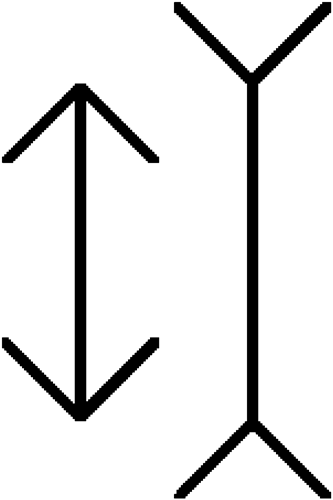
The Müller-Lyer illusion results from inappropriate correction of visual information by our visual system’s constancy mechanisms.Footnote 67 Perceptual “constancy” systems allow us to perceive objects in our environment as maintaining their size through changes in distance and angle of view, despite vast changes in the arc which any object subtends within one’s visual field as one’s proximity to it changes. In this regard, it is very fortunate for our abilities to identify and re-identify physical objects that our visual systems do not follow the laws of geometrical optics.
The significant point here is that cross-cultural research shows that there is a decided social influence upon human perception at this basic level because groups which do not build rectilinear structures suffer either very little or not at all from the Müller-Lyer Illusion.Footnote 68 This level of perceptual experience counts as “basic” because it concerns visual appearances, regardless of our judgments or beliefs about what we sense. This perceptual example is germane to my explication of rational judgment because it undermines strong individualism and strict internalism about mental content, by belying glib distinctions between “narrow” and “broad” perceptual content, by showing that social factors enter into what would otherwise be considered “narrow” perceptual content and by showing that “narrow” cannot be distinguished from “broad” perceptual content on the basis of purported “narrow” content alone. The only way to salvage “narrow” mental content is to repeat Descartes’ (2. Med., AT 7:29) fiat of defining “sensing strictly speaking” in terms solely of what one seems to sense. So doing may be “irrefutable” to the satisfaction of internalists, but such fiat reinstates insoluble global perceptual scepticism because it reinstates infallibilism about rational justification, though in a substantive domain (putative empirical knowledge) to which it in principle does not pertain. Much more is required to justify one’s view in any substantive domain than to escape overt self-contradiction.
To devise a theory of rational justification on the slender basis of individualism and internalism about mental content in order, in effect, to comply with the dictates of Descartes’ evil deceiver, is to devise a theory for some merely logically possible cognizant subject, not for human beings. Such accounts nevertheless remain subject to the Dilemma of the Criterion; satisfying oneself by one’s own best judgment is no substitute for justifying one’s claims rationally, and it makes substantive error far more incorrigible than it need be.Footnote 69 Our concern must be the rational justification, so far as we can obtain it, of our best judgments, using the best of our actual (rather than our imagined) rational capacities, abilities, skills, and information. Our rational capacities are finite: we lack omniscience and omni-competence; we can only base our judgments upon information, principles, evidence, examples, and reasonings we actually have and use. Our legitimate and ineluctable predilections to focus on some activities, issues, or inquires rather than others, the division of cognitive labour this naturally generates, and the manifold implications of our own judgments for domains and issues beyond our cognisance, entail that others have information which bears upon, and can provide for rational assessment and justification or revision of our own judgments, no matter how ordinary or expert our judgments may be. The present account aims to understand the kind of rational justification we can and do have, not the kinds we might have if we were “in principle” some other kind of utterly self-sufficient, though merely logically possible rational being.
7.5 All of these considerations and measures are required, and understanding all of them is required, in order rationally to judge that ‘I judge’, and not merely to utter the words ‘I judge’, thereby merely feigning rationality. The central significance of Hegel’s account of mutual recognition (Anerkennung) for rational justification is this:
For anyone accurately and justifiedly to judge that she or he is a rationally competent judge requires:
(1) recognizing one’s own rational fallibility,
(2) judging that others are likewise rationally competent judges,
(3) recognizing that we are equally capable of, and responsible for, assessing rationally our own and each other’s judgments, and
(4) recognizing that we each require each other’s assessment of our own judgments, in order to scrutinize and thereby maximally to refine and to justify rationally our own judgments.
This rich and philosophically crucial form of rational self-consciousness requires our correlative consciousness of others, that we are all mutually interdependent for our capacity of rational judgment, our abilities to judge rationally, and our exercise of rational judgment. This requirement is transcendental, for unless we recognize our critical interdependence as fallible rational judges, we cannot judge fully rationally, because unless we acknowledge and affirm our judgmental interdependence, we will seriously misunderstand, misuse, and over-estimate our own individual rational, though fallible and limited powers of judgment. Thus recognizing our own fallibility and our mutual interdependence as rational judges is a key constitutive factor of our being fully rational, fully autonomous rational judges, so far as is humanly or individually possible. Only by recognizing our judgmental interdependence can we each link our human fallibility and limited knowledge constructively with our equally human corrigibility, with our ability to learn: especially from constructive criticism. This form of mutual recognition involves mutually achieved recognition of our shared, fallible, and also corrigible rational competence. This recognition involves recognizing the crucial roles of charity, tolerance, patience, and literal forgiveness in our mutual assessment of our rational judgments and those of others, to acknowledge that oversights, whether our own or others’, are endemic to the human condition, and not as such grounds for blame or condemnation of anyone’s errors.Footnote 70 Therefore, fully rational justification requires us to seek out and to actively engage with those who critically assess our judgments.
The present account implies, indeed in many ways, that rational justification comes in degrees or extents or regards. My main aim is to identify the social dimensions of rational justification in non-formal, substantive domains by explicating the character of fully rational judgment. It is a further question to consider the extent to which any individual or any group exercises rational judgment on any particular occasion, though considering this question, too, requires exercising rational judgment to our utmost—and hence collective—abilities.
8. Mutual Critical Assessment and the Historical Dimensions of Rational Justification
8.1 Assessing any piece of important reasoning requires substantive training in the relevant issues. Yet such training does not suffice to assess the reasoning in question. Assessment requires autonomous judgment about the merits of the case made in and by that piece of reasoning. To address the Dilemma of the Criterion (above, §2), the justification of any substantive view in a non-formal domain requires the thorough, constructive internal critique of all relevant opposed views so far as we can determine them, whether historical, contemporary, or possible. This is built into Hegel’s concept of “determinate negation” (above, §5). The twin requirements of “all” and “relevant” pull, as it were, in opposite directions; which alternatives count as relevant is always subject to critical scrutiny and re-assessment. This is as it should be. Because the list of relevant alternative views can always be extended, in part by devising new variants on previous accounts, and in part doing so when confronting new kinds of circumstances, rational justification is fallible and inherently provisional. Consequently, rational justification is fundamentally historical, because it is based upon the current state of knowledge, because it is fallible and thus provisional, and because the list of relevant alternatives and information typically expands historically. Reviewing the development of the empirical sciences (and likewise developments within any empirical science) in view of the present account reveals many concrete examples of discoveries and innovations being made in just the ways highlighted by the present explication of rational judgment and its social and also natural bases. Consider briefly an illustrative example of this phenomenon.
8.2 In 1938, Hahn and Strassmann bombarded uranium salts with neutrons. Yet after exacting re-examination of their procedures, theories, and explanations, they could not resolve equivocal results. They reported that chemically, the products of their experiment were barium, which contradicted everything they then knew about nuclear physics. Shortly after learning of their results, Lise Meitner devised an alternative interpretation of their results which achieved consistency by making an important theoretical advance that showed that they had succeeded at producing—for the first time—nuclear fission.Footnote 71 To achieve her pioneering result, Meitner had to draw upon everything she had learned from others about both chemistry and nuclear physics, yet her own innovative re-thinking of these conceptual and experimental resources enabled her to produce her innovative (and sound) explanation of Hahn’s and Strassmann’s otherwise deeply puzzling results. This example nicely illustrates how individuals can contribute to social institutions (in this case, scientific institutions, including disciplinary methods and theories), though only by drawing upon conceptual and material resources which are socially and historically developed and transmitted.
8.3 The case is similar across engineering. To devise a solution to an assigned problem, engineers routinely use established kinds of devices, designs, and materials, tailoring them to the specific parameters of the current problem, in order to plan and assemble the required works. Significant engineering problems arise when available designs, devices, and materials cannot readily be adapted to the present, hence problematic situation. Such situations call for genuine innovation. The parameters of the specific problem can be determined, in many important regards, by determining why available designs and devices are insufficient. This kind of specification affords a focused search for the required innovation. There are no algorithms for innovation; innovation is required precisely where standard procedures are insufficient. Yet the history of engineering repeatedly shows how innovative engineers can be. Of course, prior innovation—beginning in pre-historic times with the simple machines—is what produces today’s stock of available designs and techniques, for any “day” we select. The same phenomenon is found across the trades and industry in all kinds of production, economic or otherwise.
8.4 As mentioned (§§7.2, 8.2), individual innovation relies upon unappreciated resources and possibilities of modification found within established, “traditional” practices, in response to unfulfilled aims and aspirations found in those practices or in unexpected circumstances or events; typically, in a combination of these. In these ways “tradition” and “reason” are deeply intertwined, because the traditions we now have (for any relevant ‘now’) generally are the product of intelligent, rational activities guided by our manifold efforts to cope with ourselves, our neighbours or societies, and the natural and social world we inhabit. Current practices and procedures may not have been devised by particularly sound, effective, or durable reasoning, yet it is reasoning; such are precisely the cases which most benefit from critical scrutiny of their current and on-going effectiveness.Footnote 72
These broad, central insights into the character and requirements of rational judgment and justification are not philosophical commonplaces, nor are the present explications of the possibility of constructive self-criticism and of mutual critical assessment and their central, ineliminable roles in rational justification. Sextus’ Dilemma of the Criterion has received scant philosophical attention since the early 19th Century; recent attempts to solve it tend to over-simplification.Footnote 73 That we often engage in constructive mutual criticism is nothing new. Neither is it news that we often thwart it instead. What we achieve by constructive mutual criticism and how we achieve it are not obvious; it is neglected by most theories of justification.Footnote 74 If the present account is correct, we can and ought to engage in constructive self- and mutual criticism because only in this way can we achieve genuine, maximally rational justification, to the extent humanly possible, and thus only in this way can we aspire—or justifiably claim—to achieve it.
Hegel was the first to understand and to argue that these social and historical aspects of rational justification in substantive domains are consistent with, and ultimately require, realism about the objects of empirical knowledge and strict objectivity about basic moral norms. It is widely supposed that ‘pragmatic realism’ is oxymoronic. This supposition, Hegel rightly argued, rests on a series of false dichotomies.Footnote 75 In non-formal domains, cultural and intellectual history, including all forms of empirical inquiry, play central, ineliminable roles within rational justification. Philosophy itself, as a rational examination of substantive issues within substantive domains, is essentially historical and social. Hegel elevated the history of philosophy to a specifically philosophical discipline because he recognized (in the 1807 Phenomenology of Spirit Footnote 76) that comprehensive, critical, philosophical history of philosophy is essential to rational justification in non-formal, substantive domains of philosophical inquiry.
9. Conclusion
It is significant to show that, and how, we can achieve rational justification through self-criticism and mutual critical assessment. I have argued for a stronger thesis, that the Dilemma of the Criterion must be addressed by any tenable account of rational justification in non-formal, substantive domains, and that the present fallibilist account of rational justification via constructive self- and mutual criticism solves it. Because rational justification involves using various grounds of justification, we must be able to distinguish genuine and relevant from false or irrelevant justificatory grounds, and justificatory links among these grounds. So doing requires solving the Dilemma of the Criterion.
The present account augers a fundamental change in philosophical orientation. If it is correct, philosophy cannot consist in pure conceptual analysis, nor solely in piecemeal problem solving. Systematic analysis and deductive proof are necessary, though insufficient, for philosophy (in non-formal, substantive domains), in part because conceptual analysis must be replaced by conceptual explication of concepts in use.Footnote 77 Conceptual explication requires taking usage and changes in usage carefully into philosophical account. This requires a broad form of naturalism, according to which philosophical theories in non-formal domains must take the natural and social sciences and their histories into philosophical account, along with intellectual and cultural history more broadly. So doing is no capitulation to historicist relativism. The broad naturalism advocated here requires rejoining philosophy with copious amounts of careful scholarship. The intricacy of these issues requires caution, keeping our philosophical theories of rational judgment and justification as simple as possible. Yet the crucial importance of these issues requires minding Einstein’s corollary to Ockham’s razor: “Everything must be made as simple as possible, but not any simpler.”Footnote 78 Too often, philosophers of all stripes have retreated into groups of like-minded thinkers—identified by early Logical Positivists as “cultural circles”—and have thus retreated from serious engagement with considered dissent by able and informed interlocutors. We can and ought to do better.Footnote 79
Acknowledgments:
An Michael Wolff sehr herzlich