In September 1947, Quincy Bent, vice president of the Bethlehem Steel Corporation, in Bethlehem, Pennsylvania, received a letter from Guest, Keen, and Baldwins Iron and Steel Company, one of four collaborating firms involved in building a new steel works at Port Talbot, on the south coast of Wales. It sought permission for their melting shop superintendent, Bill Evans, to visit Bethlehem’s Sparrows Point works that autumn. The letter’s author, Fred Cartwright, described Sparrows Point as “the finest melting shop in the world, and a target to aim at in performance and efficiency.” He continued, “I do hope that when we finish building the works at Port Talbot we will at least have something in Great Britain which is worthwhile an American visiting us to see … do not believe that Britain is done for yet.” Footnote 1
By the 1940s, the idea of superior American industrial productivity was becoming something of a national obsession in Britain. Comparative data published in 1943 on industrial performance in Britain, Germany, and America revealed that iron and steel product output levels were four times greater in the United States than in Britain. Footnote 2 In the context of Britain’s post-1945 economy, this was especially significant. After World War II, Britain’s acute balance of payments deficit, coupled with the decline in exports of its coal and textiles, intensified the importance of the steel-consuming industries of motor vehicle production and engineering as drivers of economic recovery. Footnote 3 Growing perceptions of a significant productivity gap fueled knowledge exchange initiatives designed to enlighten British industry. The ensuing work of the Anglo-American Council on Productivity (AACP), which sent sixty-six teams representing different British industries to the United States in the late 1940s and early 1950s, helped spread awareness of some of the key features of American industrial practice, including mass production, systematic management, rationalization, and competition. Footnote 4 As the body formally charged with gathering and disseminating information about American productivity, the activities of the AACP have been well documented by British historians. Footnote 5 By comparison, studies of company-led productivity investigations by British industrial firms in the immediate post-war period have been sparse. Footnote 6 While contemporaries heralded the AACP’s reports as bringing “a stimulus to improvement in individual firms,” Footnote 7 the firms themselves, by implication, appear more as passive recipients of knowledge than active participants in the process of investigating American industrial practice. Few studies exist of steel companies in the post-war period to suggest that there was much active scrutiny of American industrial performance beyond the remit of the AACP’s iron and steel industry productivity team. Footnote 8 If anything, studies of Britain’s steel industry history in the post-war period have served to reinforce the picture of passivity, depicting an industry enjoying full employment and buoyant market demand but characterized by complacency and riven with managerial conservatism. Footnote 9
This study presents a different view by examining the process of international knowledge-gathering at one steel firm in which managers responsible for modernization and expansion planning undertook regular, transatlantic, information-gathering visits. There was nothing unique in this; across Europe there were examples of steel firms whose managers and directors were proactive in undertaking their own investigations of American industrial productivity. Footnote 10 The significant thing about this case study of the Steel Company of Wales (SCOW) is not so much that the company was engaged in U.S. productivity studies of its own, but that it was doing so in a way different from the approach adopted by the AACP. In method, extent, and focus, SCOW’s experience of U.S. knowledge-gathering was more personal, in-depth, and bespoke. Moreover, its investigations of the U.S. industry to some extent preceded and informed the work of the AACP iron and steel productivity team. Far from waiting for productivity information to percolate down from official reports, the SCOW became, in its own right, a disseminator of knowledge about the American steel industry, suggesting the need for a reassessment of the idea of key productivity messages in the industry radiating from the center to the periphery.
The Steel Company of Wales has been identified as one of the “most dynamic companies” in the post-war British steel industry, staffed by “a new generation of professional managers,” Footnote 11 yet its efforts to learn about American steel industry practices in the 1950s have not been widely explored. There are a number of reasons for this. Histories of Britain’s steel industry in the post-1945 years have been dominated by the industry’s relationship with the state and the impact of nationalization, de-nationalization, and re-nationalization in the 1950s and 1960s. Footnote 12 The role of the central institutions and control boards established to plan the industry, although important, provide few insights into the U.S. connections developed by firms and managers at the forefront of the steel modernization process in the post-war years. Footnote 13 Historians’ attempts to explore SCOW’s activities have also been hampered by a lack of access to its business records, with the result that voices like that that of Cartwright at Port Talbot have been barely audible. Using a body of archival records—previously not used by researchers—documenting SCOW’s post-war business history, Footnote 14 this study reveals an intense and ongoing commitment by the company to the study of U.S. steel industry culture. In the first decade after the war, a nearly continuous stream of information on U.S. production methods, filtered through to SCOW’s management, provided the company with insights that were more detailed and tailored to their own needs than those gleaned by the AACP study teams. Despite this, SCOW’s responses to its own findings on U.S. productivity were cautious and selective. Not surprisingly, for a firm created to build a new steel works, the question of how to modernize plant and processes dominated its early enquiries. This emphasis began to shift by the mid-1950s to a more critical review of labor productivity, but it was not until the 1960s that voices in the company advocating for greater scrutiny of management practices and work study were fully heeded and an extensive manpower review commissioned. This change of pace and focus at SCOW in the 1960s was part of a wider intensification of productivity debates in Britain in that decade. Footnote 15 It goes some way to explaining the dearth of attention to company initiatives in the 1950s, but it should not overshadow the prolonged efforts to gather knowledge from the United States in the first decade after the war. Then, an output-oriented focus on installing new plant and equipment was favored, not only by the technocrats at SCOW, who were responsible for building and equipping Britain’s first new steelworks of the post-war era, but also by the fiscally minded chairman and directors, for whom ideas of culture change to labor and management practices seemed unnecessarily radical and risky.
Attempts by British steel firms to learn lessons from the industry in America did not begin after 1945. In the interwar period, a number of firms were investigating the acquisition of U.S. wide strip mill technology. Footnote 16 The hot rolling of wide strip steel was a revolutionary process pioneered in the 1920s in the United States in response to growing demand in the motor industry for high-quality sheet steel. By 1940 there were twenty-eight wide strip mills operating in America. Footnote 17 The firm of John Summers and Sons of Shotton, then the largest of Britain’s sheet steel producers, sent representatives to the United States in the late 1920s to investigate strip mill technology, before eventually placing an order in 1937 with the Pennsylvania-based Mesta Machine Company. Footnote 18 Meanwhile, ongoing investigations by Richard Thomas and Company into the new American strip mill process resulted in the purchase of a wide strip mill from ARMCO, which was installed at Ebbw Vale, in Wales, in 1938. Footnote 19 Plans for a wide strip mill at Port Talbot also predated the war. Guest, Keen, and Baldwins, led by its chairman, Sir Charles Wright, and later its managing director, J. S. Hollings, had enlisted the help of American engineers with the design as early as March 1938. Footnote 20 The outbreak of war disrupted momentum but, even before its end, the announcement of Board of Trade proposals for the merger of four Welsh steel firms to facilitate the construction of a new works at Port Talbot reinstigated the process; two years later, the Steel Company of Wales was born. Footnote 21 In America, the steel industry had been reshaped by a series of amalgamations in the early twentieth century, with the United States Steel Corporation and the Bethlehem Steel Corporation emerging as the two largest players, Footnote 22 but in Britain the SCOW experience was not typical. Although there had been some steel company mergers in the interwar years, in recognition of the fact that adoption of new mass production techniques, especially in sheet steel, was not economically viable by a multiplicity of small firms, the scale of reorganization in South Wales was unusual. Elsewhere, dominant family interests hindered restructuring and uncertainty about the size of the market for new sheet products gave some firms the excuse they needed to avoid a major reorganization. Footnote 23
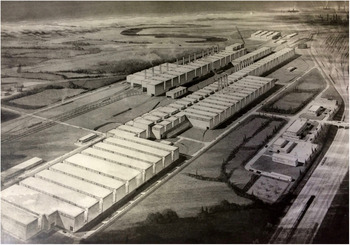
The Steel Company of Wales’ remit, however, was to build the £60 million Abbey Steelworks at Port Talbot (Figure 1). This project was part of the five-year modernization plan drawn up in 1945, at the government’s behest, by the British Iron and Steel Federation, which emphasized the urgent need for “new plant at the finishing end of the industry which would increase exports.” Footnote 24 Located on a 1,700-acre coastal site adjacent to the existing Margam Steelworks of Guest, Keen, and Baldwins, the Abbey Steelworks was a vast industrial complex with a new strip mill, melting shop, and cold mill at its core. Alongside this, the rebuilding of the blast furnaces and melting shop at Margam and the extension of a wharf and transporter bridges at the local docks made for an ambitious and costly modernization scheme that had a transformative effect on the town of Port Talbot. Footnote 25 The project was heralded by contemporaries as “good news in a grim world” and seen by some as emblematic of Britain’s post-war reconstruction. Footnote 26 With a sizeable purse from Marshall Aid to draw on for the purchase of U.S.-made plant and equipment, there were good reasons to see this as a decisive break with the past. One American observer predicted that it would be “the great and efficient foundation for a much needed modernization and expansion of the steel industry of Great Britain.” Footnote 27
Abbey Steelworks. Photograph used with permission by County Archivist, West Glamorgan Archive Service Archifydd y Sir, Gwasanaeth Archifau Gorllewin Morgannwg.

The Steel Company of Wales had a talented cohort of early and mid-career managers who provided the kind of outward-looking, strategic perspective sometimes thought to have been lacking in the post-war British steel industry. Footnote 28 In keeping with a growing trend in post-war British firms, men with backgrounds in accountancy and finance filled some of the top positions in the new company. Footnote 29 Ernest Lever, SCOW’s first chairman, was an actuary who began his career with the Prudential Assurance Company. By the time of his appointment at the Steel Company of Wales, he had a proven track record as a steel industry modernizer, having overseen the financial and organizational restructuring of Richard Thomas and Company. Footnote 30 Julian Pode, SCOW’s managing director, began his steel career in 1926 as an accountant at Dowlais Works, in Merthyr, after a period in the Navy. Footnote 31 Technically skilled men were also prominent among SCOW’s first wave of directors. Fred Cartwright, assistant managing director and general manager of SCOW’s steel division, eschewed university in favor of engineering training with the Great Western Railway. Like Pode, his career in the steel industry had begun at Dowlais Works during the interwar depression, but he also spent several months in 1930 at steel companies in the Ruhr, Germany, before returning to Wales to take up a position with Guest, Keen, and Baldwins, who were then building a new steelworks at East Moors, in Cardiff. Footnote 32 Sid Graeff, appointed in 1947 as director of rolling mills for SCOW, was an American engineer who had previously advised Richard Thomas and Company on the installation of its hot strip mill in Ebbw Vale in 1938. Footnote 33 Below the level of directors was a crop of technically astute middle managers, including Gavin Smellie, works manager, recruited in the mid-1930s by Guest, Keen, and Baldwins from the William Beardmore and Company Steelworks, in Lanarkshire, Scotland, Footnote 34 and Bill Evans, SCOW’s melting shop superintendent and later assistant general manager, who was an acknowledged authority on open-hearth furnaces and “a very highly qualified metallurgist.” Footnote 35 Another rising star was Campbell Adamson, who began his career in the South Wales steel industry as a management trainee with Richard Thomas and Company and Guest, Keen, and Baldwins before leading labor relations work for SCOW and then overseeing construction in 1958 of the new Spencer Works at Llanwern, in Wales, for Richard Thomas and Company and Guest, Keen, and Baldwins. Footnote 36
These men were among a dozen or so staff involved in a series of visits to the United States, organized by SCOW, beginning in 1945 and continuing into the late 1950s. Footnote 37 Cartwright and Graeff made the first visit in February 1945, followed by Evans in 1947. The trips were undertaken as the Abbey Steelworks was being planned and constructed, and they brought back intelligence on the latest plant and design, which fed directly into the building project. The eight-week visit by Cartwright and Graeff “to investigate the manufacture of wide strip” Footnote 38 was, on the face of it, a continuation of the kinds of investigations British steel firms had been undertaking since the 1920s. On their return, they wrote a report recommending an eighty-inch, fully continuous wide strip mill for Abbey Steelworks, to be supplied by the United Engineering and Foundry Company. Footnote 39 In practice, however, the study of strip mill technology occupied much less attention in the early post-war period than other aspects of the American industry. After all, British steel firms had been learning about U.S. developments in the hot rolling of strip steel since the late 1920s, and there had been little technical innovation in the U.S. industry during the war. Footnote 40 More important in raising U.S. wartime production levels had been the huge steel construction program underway since the early 1940s, and it was this, especially the evolution in steelworks design, that was the real revelation to the first wave of Welsh-based steelmakers who visited the United States after World War II.
The projected wartime increase in demand for steel in the United States led to a growth in production capacity of some 15.4 million tons between 1938 and 1945. Footnote 41 This was met through expanding existing works and with the construction of two brand new steel works: one in Fontana, California, and the other in Geneva, Utah. Both featured long, low-rise, flat-roofed mill buildings, spaciously arranged on newly developed sites, an aesthetic that had begun to develop in the United States in the interwar period as a response to the demands of the new, fast-moving, high-volume production methods adopted by large manufacturers, including American sheet steel producers. Footnote 42 Cartwright and Graeff gained only a partial insight into these developments in 1945 because their visit, albeit to more than a dozen steelworks and machine makers, was confined mainly to the American steelmaking heartlands of Pennsylvania and Ohio, and did not include the two newest steelworks in Utah and California. Footnote 43 Nevertheless it was sufficient to provide them with a vision of how the design of modern steelworks was evolving and with a new blueprint for the construction of Abbey Steelworks.
Following the visit, Cartwright shared his insights into the U.S. steel industry in a lecture to the South Wales Institute of Engineers. He drew attention to the fundamental U.S. shift in design from pitched roof mills to flat-profile “monitor” roof buildings. He enthused about the practical advantages of the new buildings:
Lighting is excellent. The windows are all vertical and extremely easy to clean and keep clean. Due to the insulation there is no condensation on the underside of the steel-decking. It is easy and safe to get at. The ventilation is even across the width. It lends itself to rigid joint construction.” Footnote 44
The long, flat-roofed mills also facilitated the installation of special equipment such as overhead craneways, which aided the speedy movement of materials through the workspace. This emphasis on rapid throughput was a key part of the approach to factory design favored by American industrial engineers since the early twentieth century. Footnote 45 These new trends in steel mill design led to radical alteration of the original plans for the new Abbey Steelworks strip mill and melting shop buildings, which had been drawn up before the war. In winter 1945, a new firm of consultant structural engineers, W. S. Atkins and Partners, with no prior experience of steelworks construction, was appointed by the Guest, Keen, and Baldwins team and charged with delivering this new-look steelworks on the Abbey site. In William Atkins they had found a like-minded modernizer who disliked the traditional pre-1939 British factory buildings, with their typical pitched roofs and “sides covered with black corrugated bituminous coated sheeting.” Footnote 46 When provided with photographs of the recently constructed U.S. steel mills, with their innovative roof designs, Atkins saw the possibility of building something different at Port Talbot.
The adoption of the American mill designs not only brought practical and aesthetic benefits, but also it provided an opportunity to reflect the modernity of the new steelworks in its external appearance. Characteristics of the new modernism, which British architects were beginning to embrace in the post-war years, included clean surfaces, the importance of light, and the use of modern materials such as plate glass and reinforced concrete. Footnote 47 These principles were espoused by Sir Percy Thomas, the Cardiff-based president of the Royal Institute of British Architects, who was consulted by SCOW on the Abbey Steelworks designs. He had extensive experience in factory architecture, thanks to his work on the interwar trading estate projects in Wales and his regional work for the Ministry of Supply and the Ministry of Production during the war. Footnote 48 At Abbey Steelworks, he advised on the use of long vertical window panels to complement the glazed sections in the monitor roof, positioned to maximize the natural lighting in the internal working spaces, and selected an external paint color for the corrugated steel panels cladding the buildings to reflect the sand dunes surrounding the Abbey Steelworks site. Footnote 49 The result was an edifice strikingly different in appearance from other British steelworks. One newspaper correspondent described the new strip mill as “a row of gigantic sand coloured buildings of modern design with massive curved windows dividing the building into segments.” Footnote 50 Another praised it as “a monument in glass, steel and concrete” with “gracefully impressive walls,” which was a stark contrast to the adjacent old Port Talbot works that “like a tired old man … looks shabby alongside its gleaming son.” Footnote 51
As well as encouraging new trends in the external design features of steelworks, the adoption of wide strip mills for sheet steel production had knock-on effects for other aspects of steelmaking, not least of which was the open-hearth process, which had to deliver increased quantities of steel to feed the new high-volume strip process. As the first post-war British plant to be built from scratch around a new strip mill, the Abbey Steelworks and its new melting shop had to be equipped to produce sufficient steel to keep the mills operating to the fullest capacity possible. It presented a significant design challenge for SCOW’s management, and again they looked to the United States for guidance. The great construction drive in the U.S. steel industry during World War II saw open-hearth capacity increase from 72.9 million tons in 1939 to 84.2 million tons in 1945. Footnote 52 The open-hearth furnace was the dominant method of steelmaking in the United States until the last third of the twentieth century, and the process had undergone a succession of refinements to ensure that steel supply met the increasing demands of the strip mills. Footnote 53 The result, as Cartwright observed after his 1945 visit, was “a formidable difference between the best American practice and the best British.” Footnote 54 The Steel Company of Wales’ team turned to one of the most experienced men in the U.S. industry, George Danforth, of the Open-Hearth Combustion Company, in Chicago, Illinois, to design the furnaces for the new melting shop planned for the Abbey Steelworks. Danforth was credited with major improvements in the open-hearth process and his company had been a key supplier to the U.S. steel industry. Footnote 55 However, aged 68 in 1947, he was nearing the end of his career and could not be persuaded to make a site visit during the crucial Abbey melting shop construction phase. Footnote 56 Danforth’s unwillingness to travel to Wales heightened the need for SCOW to mobilize homegrown expertise in the process of installing its new U.S. equipment. It was a pattern of adapting and modifying imported U.S. methods experienced in other British firms in the post-war era. Footnote 57 The Steel Company of Wales responded by sending Bill Evans, its own principal open-hearth specialist, on a fact-finding mission to America and by undertaking a program of on-site operational research to inform the design process. Footnote 58
Evans’s visit to examine the design and operation of the more modern American open-hearth plants was hastily arranged in autumn 1947. It lasted ten weeks, took in sixteen different plants and twenty-two melting shops, and covered a total of 19,401 miles, including travel to and from the United Kingdom. Footnote 59 In Cartwright’s estimation, it amounted to an opportunity that “few steel men in Great Britain have ever had.” Footnote 60 Armed with a detailed questionnaire covering all aspects of open-hearth operation and design, which he drew up before the visit, Evans became the key agent in channeling detailed information back to SCOW. He sent frequent letters to convey the most urgent construction information in answer to queries from Cartwright about such matters as brickwork design and flooring materials. Footnote 61 He was also authorized to take with him copies of the plans for the layout of the Abbey melting shop, which he shared and discussed with a number of U.S. operators. At Homestead Works in Pittsburgh, Pennsylvania, he reported that the plant superintendent and his assistants were “enthusiastic” about the plans and “were struck by the resemblance of our plant to theirs,” and that they also commended novel features in the plan such as “our idea of building in blocks of four furnaces with spaces between each block.” Footnote 62 Such exchanges suggest that, far from engaging in a one-way knowledge-gathering process, SCOW saw its productivity visits to the United States, to at least some degree, as opportunities for reciprocal information exchange with their U.S. counterparts. What they learned of U.S. open-hearth steel production was further supplemented by the results of internal research activity. Back at Port Talbot, Cartwright and his staff organized trials and experiments designed to help them avoid congestion and delays in open-hearth production. A miniature working model of the entire Abbey Steelworks melting shop was built so that the most efficient ways of conveying materials around the space could be worked out and different methods of charging tested. Footnote 63 This elaborate task involved the modeling of every crane and piece of rolling stock so that the most efficient angles of movement could be calculated. Footnote 64 It was, in effect, a pioneering piece of operational research aimed at ensuring rapid throughput of materials. It demonstrated the extent to which SCOW’s productivity focus was trained on the efficiency of its plant and systems in this period, and it presaged the establishment of an Operational Research (OR) department at SCOW in the early 1950s, the early work of which was similarly focused on throughput efficiencies. Footnote 65
The knowledge of American steelmaking that SCOW had amassed by the late 1940s placed the company in an authoritative position in relation to the AACP’s iron and steel industry productivity team, which was then being assembled. Instead of participating in the AACP team visit to the United States, along with representatives from many of Britain’s other major steel firms, Footnote 66 the company contributed to its activities in an advisory role as a disseminator of knowledge of U.S. steel production to the British industry team. Sir Charles Goodeve, director of the British Iron and Steel Research Association, Footnote 67 and the man tasked with leading the iron and steel team visit to the United States in May 1951, contacted SCOW for advice on which U.S. plants to visit. In return, Cartwright passed on the most up-to-date information he possessed, including a copy of the extensive visit report written by Evans. Footnote 68 Running to more than two hundred pages, it was possibly the most detailed written survey of the U.S. steel industry in the immediate post-war period by any British observer. The AACP team also visited the Abbey Steelworks shortly before its departure for “a pre-view of Britain’s newest and largest steelworks.” Footnote 69 In terms of its own remit, however, the AACP iron and steel team adopted a focus very different from that of SCOW. Instead of investigating sheet steel, it focused its attention on the heavy rolled product sector. Footnote 70 British firms involved in heavy plate production, in particular, were perceived to have been slow to modernize in the post-war years, Footnote 71 suggesting that Goodeve’s team was directing its efforts where it felt the need was greatest. They also spent much less time examining steelworks design and layout than had Cartwright and his colleagues. By the time of their visit in 1951, the economic case for building new steelworks was being questioned and attention had turned more to achieving maximum productivity in the use of resources. Footnote 72 The result was that its activities overlapped little with what SCOW had been doing, and did not lessen the incentive for the Welsh firm to continue pursuing its own program of scrutinizing the U.S. steel industry.
As Goodeve’s sixteen-member delegation completed its five-week trip, Cartwright was in the advanced stages of planning another visit of his own later the same year, this one aimed at investigating developments in furnace design and new uses for sheet steel. Footnote 73 The activities of formal industry productivity teams, however, did have implications for ongoing company initiatives like those of SCOW. Cartwright’s 1951 visit plans had to compete for space in a calendar crowded with official visit programs, such as those of the Economic Cooperation Administration (ECA) technical assistance division, which began promoting productivity studies by western European countries in the United States. Footnote 74 He acknowledged in his correspondence with United States Steel, “[Y]ou Americans must be fed up with the sight of Englishmen wishing to see your plants,” Footnote 75 and some of his closest contacts were slower than usual to respond to his letters. Charles Muchnic, of the United Engineering and Foundry Company, wrote: “We have had so many visitors from Europe who came here under the auspices of the ECA and the National Association of Manufacturers that I was kept very busy.” Footnote 76 In some quarters, greater demand led to greater formalization of access procedures. Despite Cartwright’s familiarity with most of the leading U.S. companies, and regardless of the readiness with which they had assisted his previous requests for information, he was warned in September 1951 to be sure of making “application for entrée to some of the steel plants you propose to visit, as frankly many of these plants are very sticky about permitting visitors.” Footnote 77
In the increasingly crowded world of 1950s industrial knowledge-exchange activity, SCOW still enjoyed some advantages over members of the industry-wide teams visiting the United States. Unlike the large group tours undertaken by these parties, the visits by Cartwright, Evans, and their colleagues, undertaken individually or in pairs, provided scope for a more personal level of interaction, including valuable one-on-one discussion time with operators, superintendents, and company bosses. At Gary Works, in Indiana, for example, Cartwright’s 1951 tour of the sheet and tin plant was followed by a private meeting with the company vice president, H. W. Johnson, and included the use of the company president’s chauffeur to transport him around the different sites. Footnote 78 In Utah, Cartwright was personally driven around by Walter Mathesius, president of Geneva Steel and a director of the United States Steel Corporation. Footnote 79 In addition, his itinerary of plant visits was supplemented by a hectic social schedule of cocktail parties, country club lunches, theatre visits, and dinners, all of which cemented friendships with some key American steel counterparts that went well beyond the professional. Footnote 80 Crucial to this aspect of the visit was the fact that, unlike the sixteen-strong, all-male productivity team led by Goodeve, Cartwright traveled to the United States in 1951 accompanied only by his wife, Sally. On informing his U.S. contacts of this, he found himself in receipt of dinner invitations and offers of hospitality even before he had left Britain. C. B. Randall, president of Inland Steel Company, wrote, “[I]f it can possibly be arranged, my wife and I shall insist on having you for dinner”; and K. C. Gardener, of United Engineering and Foundry Company, suggested that Sally Cartwright spend time with his wife while Cartwright visited the works. Footnote 81 In post-war Britain, the degree to which managers’ wives entered the company worlds of their husbands extended little beyond attendance at the annual dinner-dance, but in America a much greater level of visibility of corporate wives was expected. Footnote 82 Such social networking roles, described by scholars as “enabling” activities, were familiar territory to American executives’ wives of the period and were undertaken in the belief that they helped their husbands to reach their full potential in business. Footnote 83 It was a relatively simple equation summed up by a respondent to one sociological study undertaken in the 1970s: “If a man wants you to go out to dinner and you haven’t got your wife, he has to leave his wife out. If your wife is there, his wife can come too. Often wives get to know each other and it’s good for them and good for business.” Footnote 84
The access gained by Welsh-based steel men into the business and social worlds of the American industry enabled them to scrutinize firsthand the modern plant design and technologies employed by American steelmakers. Their knowledge-gathering brought tangible rewards in terms of SCOW’s annual output, which rose from 463,000 ingot tons in 1950, to 1,559,000 ingot tons in 1954. These kinds of gains prompted some self-congratulatory rhetoric in the British steel industry in the mid-1950s. In 1956, for example, the AACP’s successor organization, the British Productivity Council, produced a report that claimed that the productivity gains in iron and steel since the war were unmatched in any other manufacturing sector. Footnote 85 These figures, however, were achieved in the context of a favorable sellers’ market and full employment, and to some extent masked deeper problems that were exposed when the economic climate began to change. At SCOW’s Abbey Steelworks, manning levels had increased over the same period from 4,863 to 11,051, Footnote 86 making it comparable in terms of workforce size with some of the largest steelworks in the United States. The trouble was that in terms of output per worker, the gulf remained as wide as ever. In September 1954, output figures were received from the Inland Steel Company, in Chicago, which suggested that, for all of the reorganization and capital investment, the Steel Company of Wales was not achieving anything like the same productivity levels as its American counterparts. Some 160 ingot tons per man-year was produced at Abbey Steelworks as compared to 260 at Inland, despite the fact that Abbey was “much the more modern of the two.” Footnote 87 This revelation prompted a new phase of investigation by SCOW into U.S. industrial performance. On this occasion, the knowledge-gathering responsibilities were entrusted to two managers: Gavin Smellie, who had twenty years of experience as a manager in the Port Talbot steel industry, and his younger colleague, Campbell Adamson, who had been appointed personnel superintendent by SCOW in 1952. Footnote 88 They traveled to the United States in February 1955 for a three-month fact-finding visit, six weeks of which were spent at Inland. Their approach was characterized by a much more critical appraisal of performance than either SCOW’s own previous investigations or those of the official productivity teams in the early to mid-1950s. Rather than focusing on technological or design issues, as their predecessors had done, they identified quality of management as the most significant factor affecting production. They produced a hard-hitting report into the failure of the British steel industry in this regard, in which they lamented:
[I]t is distressing with the number of Productivity Teams that have reported since the war, to find how comparatively little has been done to act on their recommendations … we have attempted to find excuses for any radical changes … and appear to have lulled ourselves into a false sense of security about our efficiency. Footnote 89
In particular, they highlighted two failings in British management as contributory factors to the enduring productivity gap: one was the lack of job evaluation as a means of exerting control over the labor force; the second was the growth of joint consultation between shop floor and management via works councils, which resulted in the erosion of the role of foremen in British steelworks.
In the United States, “scientific management” had evolved since the late nineteenth century as an approach to the control of labor through the establishment of fixed time and output measures for specific jobs. Footnote 90 In the American steel industry, an intensive program of job evaluation was undertaken from 1944 to 1947 by the Co-operative Wages Board, which agreed to work rates and wage levels across key roles in the industry. The iron and steel productivity team’s report, produced for the AACP in 1952, noted the impact of job evaluation in the U.S. steel industry but did not make any specific recommendations about its implementation in Britain. Footnote 91 Likewise, Cartwright, during his visit to the United States in autumn 1951, had informal discussions with Walter Mathesius, the president of the Geneva Steel Company, about job evaluation, but did not attempt to introduce any similar schemes at Abbey Steelworks. Footnote 92 Some of the more hard-edged management practices in the United States appeared unpalatable both to Cartwright and Evans. At the Bethlehem Corporation’s Sparrows Point Works, in Maryland, for example, Evans noted that the staff “worked harder than at any other plant I visited, and all appeared tired and ready to go at 5 pm.” Footnote 93 Its reputation for efficiency was based on the fact that the plant prided itself in its ability to extract maximum return out of its men and machinery. Footnote 94 It was not a working culture that the Steel Company of Wales wanted to emulate, and Cartwright concluded: “I am not sure whether from the human point of view, the type of organisation they have there is a good one, as they are driving their staff to the limit of human endurance.” Footnote 95
Such responses were not unusual in post-war Britain, where some contemporaries viewed American scientific management methods as dehumanizing. For much of the early post-war period, the growth of trade unionism and full employment underpinned more conciliatory labor relations, with many employers favoring welfare-based approaches to management, with an emphasis on human relations. Footnote 96 At SCOW, these developments manifested themselves in a keen level of attention to environmental factors, such as the appearance and cleanliness of buildings and the quality of amenities in the workplace. Artworks were hung in the amenity blocks; the regime of cleaning and inspection of canteen facilities, locker rooms, and lavatories was stepped up; and efforts were made to enlarge showering and drying room facilities to keep pace with the expanding workforce. Such matters occupied the bulk of the business of the Abbey’s Works Council, chaired by Cartwright and comprising representatives of the various trade unions with members on-site. Footnote 97 In part, this was a carry-over from the interwar period, when the provision of worker welfare and amenities were seen as key components of labor relations and productivity, Footnote 98 but it did not seem at odds with what SCOW managers had observed in some of the newer American steelworks, where attempts had been made to create a pleasant working environment. Evans, for example, was impressed by the attractive landscaping of the Fontana Works, in California, and observed: “[T]he horticultural adornment of the plant … must be in part responsible for the very excellent labour relations which exist here and for the general care of ‘housekeeping’ which is evident.” Footnote 99 While studies of other employment sectors have cast doubt on the extent to which workers really cared about such issues, Footnote 100 they were viewed by Cartwright as vital to avoiding “labour trouble,” Footnote 101 and came to dominate the work of the growing numbers of personnel staff that SCOW, in common with many other UK firms, added to the ranks of its employees in the 1950s. Footnote 102
Following their U.S. visit, Smellie and Adamson pressed for a more professional approach to management, one less steeped in the labor relations practices of the interwar years. To them, a more assertive approach to workforce control appeared urgent if the tendency toward overemployment, and thereby limited productivity at SCOW by the mid-1950s, was to be halted. They compared the number of bricklayers employed at Inland and SCOW to illustrate the extent of the problem, revealing that the Inland Company was operating twice the number of open-hearth furnaces with fewer than half the number of bricklayers used for the same job in SCOW, yet still achieving greater output. Footnote 103 It was a situation that had been allowed to develop, they argued, because British managers lacked reliable information about what percentage of each working day was occupied by each job and where additional manpower was needed. “In the British steel industry,” Smellie and Adamson observed, “no one has this information and can therefore exercise no real control when extra men are asked for.” Footnote 104 What they had identified was the need for a wholesale job evaluation exercise as a prelude to reorganization of manning throughout the plant. It was a radical vision and, ultimately, one that proved to be almost a decade ahead of its time. The seller’s market in Britain in this period meant that there was a much stronger emphasis on maximizing output than reducing employment levels. Any attempt at the latter would have risked undermining labor relations and upsetting the multiple trade unions. In this context, Smellie and Adamson’s report made for such uncomfortable reading for SCOW’s top hierarchy that its chairman, Sir Ernest Lever, recommended it be destroyed. Footnote 105 The size of the labor force continued to increase unchecked at Abbey Steelworks during its various phases of expansion in the 1950s.
The adverse reaction displayed at the top level of the company to Smellie and Adamson’s findings demonstrated the gulf that existed, in some British firms of the period, between the directors with decision-making powers and the lower-level plant managers who, in practice, often lacked the support and influence to implement radical change. Footnote 106 Faced with this situation, Cartwright’s approach was pragmatic. He found other elements of Smellie and Adamson’s report—particularly their recommendations relating to the role of foremen—that were more like a continuation of initiatives already underway at SCOW to improve communication with the burgeoning workforce. The problem of how to convey management decisions effectively and cultivate a sense of loyalty and common purpose among a workforce of more than 11,000 was a challenging one for managers more accustomed to the employment levels of Britain’s pre-war steelworks. Footnote 107 In their early visits to the United States, Evans and Cartwright expressed a general admiration for the way in which American companies seemed able to foster a strong sense of shared endeavor. At Kaiser Company’s Fontana Works, Evans observed “an unmistakeable air of determination to get the most out of the plant, both by the staff and the men.” Footnote 108 Smellie and Adamson attempted to delve deeper into what lay behind this culture and concluded that the “key man” in achieving good communications between management and shop floor was the foreman. At Inland’s Indiana Harbor Works, as well as at Fontana, in Geneva, and the other sites they visited in 1955, they found that “the foreman is held responsible for all dealings with the men, all orders or information passed to them from any source, all first decisions on their grievances, and all disciplinary action taken, and is complete master of his department.” It was this, they argued, that was “probably the most vital single fact about successful management in America,” whereas in Britain, “the foreman position has weakened in the period of full employment that we have enjoyed.” Footnote 109
It had taken a decade or more of disputes, restructuring, and collective organization for U.S. industrial foremen to reach this influential position. Footnote 110 At SCOW, the rejuvenation of the foreman’s role had already been identified as a means of streamlining communications between management and shop floor, but it proved difficult to achieve via the mechanisms of joint consultation, overseen by senior members of the burgeoning personnel department at Abbey Steelworks. A Foremen’s Council had been established in 1954, but attendance at its meetings was poor. Footnote 111 Efforts to revitalize interest in it and, in particular, to spread knowledge of the role of U.S. foremen gathered pace after the return of Smellie and Adamson from the United States. To this end, an American speaker was engaged to address members of SCOW’s Foremen’s Council on “The Place of Foremen in U.S. Industry.” Footnote 112 An initiative was also introduced to make foremen more distinctive and recognizable figures on the shop floor by issuing them dustcoats. Footnote 113 Tellingly, even these small measures, which Cartwright considered uncontroversial, had to be negotiated carefully with the foremen via the works’ personnel superintendent, to whom he wrote:
[I]n a very large plant, I would have thought the identification of foremen was very important, but I quite realise that it is of no use pushing it through if foremen are against it. It is one of those things which has to come naturally or not at all. Footnote 114
The following year, attempts were made to increase the responsibilities of foremen in their departments, particularly in relation to safety and accident prevention. This time the plant’s welfare manager urged tact and patience: “This is, I realize, only a small step towards the appropriate imitation of American practices here,” he explained to Cartwright, “but I am sure that you and Mr Smellie would agree that we should not attempt to imitate them all at once.” Footnote 115
Such exchanges provide some insights into why American productivity messages proved so difficult to implement at the company level. They go some way to explaining why, in the 1950s, SCOW’s initiatives were tentative compared to the far-reaching manpower review of the following decade, and certainly did not deliver any improvements in levels of output per employee in the short term. Footnote 116 The cautious approach adopted in these years fell far short of the urgent call for action that Smellie and Adamson had tried to convey in their report, but typified the non-confrontational attitude to labor relations that SCOW pursued as it attempted to carry its burgeoning workforce through the boom years of high demand and rapid expansion. At one level, this conservative approach by SCOW managers, at the end of a decade in which they had invested so much time and effort in attempting to learn the secrets of the U.S. steel industry’s success, seems to point to the kind of managerial failure and lack of strategic thinking identified in studies of post-war British industrial management, but the full picture of SCOW’s productivity investigations tells a different story.
The evidence from the Steel Company of Wales’s U.S. visits in the late 1940s and early 1950s reveals a picture of a firm fully engaged with the issue of productivity and addressing it primarily through the modernization of its facilities and processes. A number of its early managers were highly practical, technically skilled men who excelled at finding solutions to the operational and design questions that they encountered as they worked to develop and refine a sheet steelmaking operation capable of satisfying the buoyant market for sheet and tinplate in the 1950s. For a company that had been created to build and equip a brand new steelworks, this preoccupation with plant and premises was understandable. Starting in 1945, the Welsh-based specialists who were building the new steelworks at Port Talbot went ahead and developed their own links with American firms as part of a thorough and personal immersion into the business and social cultures of leading U.S. steel companies. Their self-reliant and sustained commitment to the study of U.S. productivity was designed to answer queries and solve production problems specific to their own operations, and evolved quite independently from the parallel productivity missions of the period. The detailed fact-finding visits by members of SCOW’s management throughout its first decade of operation made the company one of the best-informed UK steel firms on the features of American steel production. As a consequence of this, SCOW’s expertise was used by the AACP’s iron and steel productivity team, and SCOW itself became the focus of modernization studies by other European steel firms. Throughout the 1950s, the Abbey Steelworks hosted visits by steel company managers from Germany, France, Italy, Sweden, and the Netherlands after a wave of Marshall Aid-funded economic development programs rejuvenated steel production across Europe. Footnote 117 For many of them, Abbey Steelworks was, for a brief period, the nearest place where they could view up-to-date American equipment and discuss associated operational issues with staff in the new melting shop and strip mill.
Thanks to their detailed scrutiny of the U.S. steel industry from the mid-1940s onward, SCOW managers were far from oblivious to the greater levels of control of pay and manning that were in place in the U.S. industry. Even at the height of the post-war boom, there was a growing awareness of the need to review employment structures in order to improve competitiveness. The fact that these ideas were not acted upon at the time was less a sign of complacency and more a consequence of some of the limiting effects of the post-war British economic climate. No matter how well informed or modernizing in outlook the industrial managers of the mid-1950s, their ability to implement the productivity lessons learned from examining U.S. business practices was constrained by factors much closer to home. Prevailing market conditions, legacies of welfare-based approaches to management from the interwar period, and the growth of a culture of joint consultation combined to provide a check on the extent to which plant managers could push through their ideas and the appetite of company bosses to support them. This combination of circumstances did not last for long. Growing “panic” about Britain’s decline in the early 1960s did much to create a climate more favorable for addressing problems of labor productivity. Footnote 118 At the same time, increased international competition created a more challenging trading environment that was conducive to a more systematic review of job roles and manpower productivity. Footnote 119 In the case of SCOW, the twin developments in the early 1960s of falling demand for steel and craftworkers’ claims for improved holidays and pay restructuring, which the company calculated would cost £85,000 per annum to meet, prompted in May 1964 the commissioning of a wide-ranging manpower productivity review by a firm of U.S. management consultants. Footnote 120
The Steel Company of Wales, formed as a kind of flagship for the rejuvenation of the industry, was not a “typical” British steel firm of the post-war years. Without additional studies based on the activities of other British steel companies in the same era, it is difficult to know how far its efforts at international knowledge-gathering and its familiarity with U.S. practices were mirrored in other British firms. Nevertheless, its struggle to implement productivity lessons learned in one economic environment into another very different one was shared by sheet steelmakers elsewhere in Europe, where the process was equally selective and “piecemeal.” Footnote 121 In terms of broader patterns of knowledge acquisition and dissemination in the sector after World War II, there are insights to be gained from a single company study. In an industry that was highly subject to centralized planning from the interwar period onward, Footnote 122 the SCOW case provides a useful reminder of the autonomy and proactivity of the individual firm when it came to learning productivity lessons from across the Atlantic. It also raises questions about the extent to which notions of managerial complacency during the post-war boom can be applied uniformly across the steel sector. Evidence of SCOW’s activity ultimately provides an important counter-point to the more familiar story of the AACP as a disseminator of American practice in British industrial circles. This article reveals a more nuanced picture in which particular business objectives and individual perspectives contributed to the process of steel modernization in Britain.