Introduction
Major depression is a highly prevalent and disabling mental health problem. Despite the significant increase in mental health service use in the past decades, there has been no measurable change in the prevalence of major depression (Jorm, Patten, Brugha, & Mojtabi, Reference Jorm, Patten, Brugha and Mojtabi2017). The unchanged prevalence suggests that effective early preventive interventions are needed. One public health strategy for early prevention is selective prevention, e.g. identifying people who are at high risk and taking preventive actions to lower the risk before depression occurs. Accurate identification of people who are at high-risk hinges on our capability of risk estimation.
In medicine, multivariable risk prediction (MVRP) tools have been used to calculate personalized risk which is one's probability of developing a disease in a given time period. MVRP tools such as the Framingham risk score (Anderson, Wilson, Odell, & Kannel, Reference Anderson, Wilson, Odell and Kannel1991) have contributed important advances in treatment and disease prevention. In the past decade, the development of MVRPs for mental health problems has grown rapidly. Several MVRPs for the onset of major depression have been developed using large samples from primary care settings (Bellon et al., Reference Bellon, de Dios Luna, King, Moreno-Kustner, Nazareth, Monton-Franco and Torres-Gonzalez2011; Chondros et al., Reference Chondros, Davidson, Wolfe, Gilchrist, Dowrick, Griffiths and Gunn2018; King et al., Reference King, Walker, Levy, Bottomley, Royston, Weich and Nazareth2008) and the general population (Wang et al., Reference Wang, Manuel, Williams, Schmitz, Gilmour, Patten and Birney2013, Reference Wang, Sareen, Patten, Bolton, Schmitz and Birney2014). Personalized risk estimated by the MVRPs may be communicated to end users, with the goal of a better understanding of health status, better decisions for treatment and prevention (Collins, Green, Guttmacher, & Guyer, Reference Collins, Green, Guttmacher and Guyer2003), and motivating high-risk individuals to engage in effective self-help and help-seeking behaviours to reduce their risk and their need for healthcare resources (Collins et al., Reference Collins, Green, Guttmacher and Guyer2003). While communicating personalized depression risk information may be beneficial, it is unknown whether communicating the risk information may lead to any unintended harms, and whether harms may differ in men and women because of the sex differences in the prevalence of depression, symptom manifestations, health and help-seeking behaviours and depression literacy (Friedrich, Reference Friedrich2017; Patten et al., Reference Patten, Williams, Lavorato, Wang, McDonald and Bulloch2015; Wang et al., Reference Wang, Patten, Williams, Currie, Beck, Maxwell and El-Guebaly2005, Reference Wang, Adair, Fick, Lai, Evans, Perry and Addington2007). Understanding the potential harms associated with the provision of personalized depression risk information has important implications for individual health, ethics, implementation and formulating sex/gender-specific interventions. The objectives of this study were to investigate the impact of providing personalized depression risk information on non-specific psychological distress, functional impairment, and absenteeism at 6 and 12 months.
Methods
This study is a mixed-methods randomized controlled trial (RCT) with one intervention arm and one control arm (1:1). Participants were assessed at baseline, 6 months, and 12 months. To obtain in-depth perspectives about how the personalized depression risk information is processed and used by participants, we conducted qualitative interviews 1 month after the personalized risk information was provided. Detailed information about study design and data collection can be found in the published trial protocol (Wang et al., Reference Wang, MacQueen, Patten, Manuel, Lashewicz and Schmitz2019). This trial was approved by the Ethics Review Board of The Royal Hospital.
Participants and recruitment
Participants were recruited across 10 provinces and three territories in Canada. Recruitment, screening, baseline assessment, and randomization were conducted by a telephone survey firm which has access to a complete list of household telephone numbers and validated cell phone number database in Canada. The target population were Canadians in the community who were at high risk of a major depressive episode (MDE). The personalized depression risk was estimated using sex-specific MVRPs for 4-year risk of MDE that were previously developed in Canadians aged 18 + years old (Wang et al., Reference Wang, Manuel, Williams, Schmitz, Gilmour, Patten and Birney2013). The inclusion criteria of this trial were:
• no MDE at baseline, or if had a MDE in the past 12 months, the individuals were in full remission for at least 2 months before the interview (see the question below),
• aged 18 + years,
• at high risk of MDE based on the MVRPs (predicted risk of 6.5% + for men and of 11.2% + for women) (Wang et al., Reference Wang, Manuel, Williams, Schmitz, Gilmour, Patten and Birney2013), which represent the top two deciles of the populations.
The status of remission was assessed by the question: ‘In the past 2 months or longer, has your mood been much improved or back to normal AND you DIDN'T have the symptoms of?’ This question was adopted from the US National Epidemiological Survey on Alcohol and Related Conditions (Grant et al., Reference Grant, Hasin, Stinson, Dawson, Patricia Chou, June Ruan and Huang2005). Because the MVRPs for MDE are sex-specific, we recruited participants and conducted randomization in males and females separately, which is aligned with the efforts for removing sex and gender disparity in enrolment in medical and health research (Mauvais-Jarvis et al., Reference Mauvais-Jarvis, Merz, Barnes, Brinton, Carrero, DeMeo and Suzuki2020).
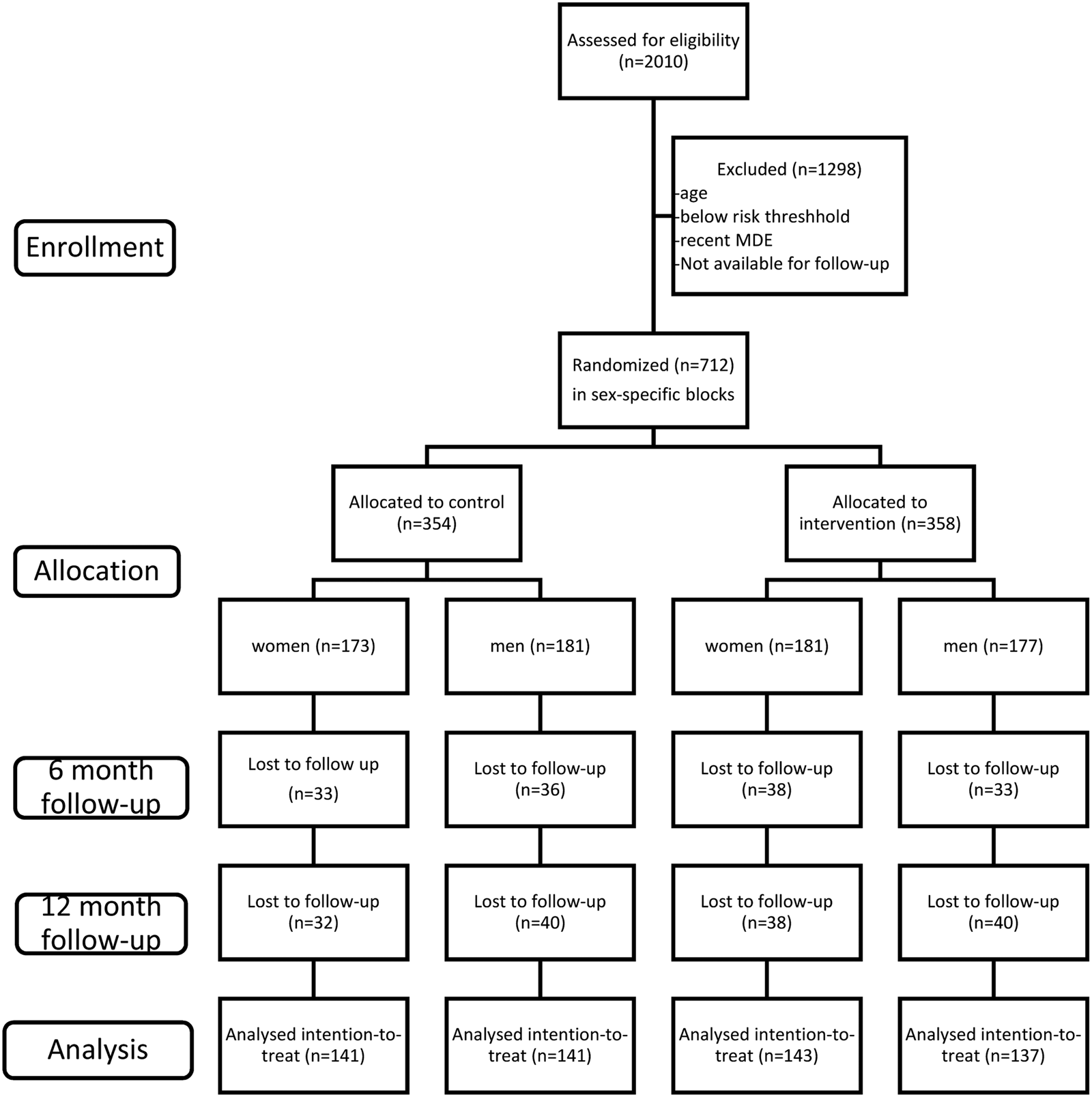
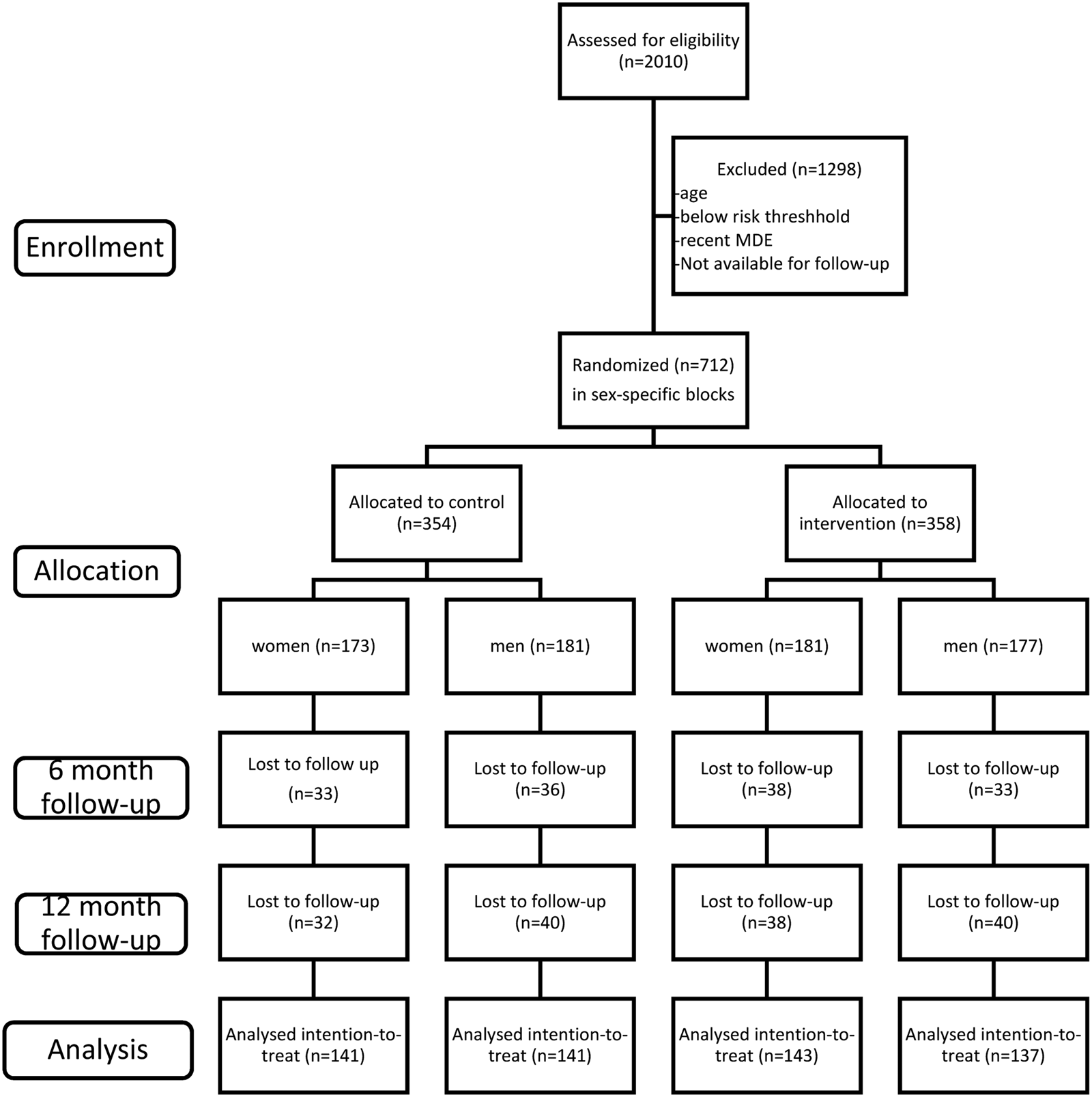
We assessed 2010 participants for eligibility. A total of 712 participants who were at high risk of MDE were recruited, including 358 high-risk men and 354 high-risk women, and these 712 participants were randomized into intervention and control groups, in males and females separately. The CONSORT 2010 flowchart is in Fig. 1.
CONSORT 2010 Flow Diagram – Risk Calculator Project.
Screening
Once a potential participant was identified, the interviewer confirmed the participant's age and administered the Composite International Diagnostic Interview – Short Form for Major Depression (CIDI-SFMD) and the sex-specific MVRPs for MDE.
Baseline assessment
In eligible participants, the interviewer administered a battery of instruments described below.
The follow-up assessments were conducted at the telephone interview laboratory at The Royal Hospital. One month before the scheduled follow-up interviews, letters were sent to participants to remind them of the upcoming interview.
Randomization was carried out in males and in females separately. The telephone survey firm used a software tool built by VOXCO. The tool contains a random number generator which randomly creates a digit when the telephone script reads the function.
Masking
The telephone survey firm securely transferred encrypted baseline data to the project coordinator on a weekly basis. The group assignment data were transferred in a separate file. The interviewers who conducted randomization at the survey firm were not involved in follow-up interviews. The interviewers who conducted the follow-up interviews in Ottawa and the research team members did not have access to participants' group status.
Intervention and control
For all the trial participants, they were told at the beginning of the study that the eligible participants of our study are adults who do not have depression currently but are at high risk. As such, all participants understood that they were at high risk of having MDE. After administering the questionnaire, participants in the intervention group were told that ‘the researchers have developed a tool that can calculate your personalized risk of having depression in the next four years based on the information you just provide. Would you like to know the information?’ If the participant answered ‘yes’, the personalized risk (i.e. probability) was provided and the interviewer informed the participant that they would be contacted again at 6 and 12 months. Participants in the intervention group were also informed that some may be contacted in 1 month for a 30-minute qualitative interview. For participants in the control group, the interviewer informed them that they would be contacted again at 6 and 12 months and that their personal risks would be provided at the 12-month interview.
Qualitative interviews
We obtained in-depth information about how disclosing personalized depression risk affects participants' decision processes, mental health and health behaviours, by conducting qualitative interviews via telephone. The qualitative study sample included an initial random sub-sample of 20 males and 20 females from the intervention groups. The interviews were audio-recorded. Qualitative interviews were transcribed verbatim then analysed using descriptive thematic analysis (Sandelowski & Leeman, Reference Sandelowski and Leeman2012). In our analysis, we followed the interpretive practices of constant comparison and attempt to uncover patterns both within and between interviews (Berg, Reference Berg2004). Nvivo 10 software was used to support thematic analysis.
Primary outcome
The Non-Specific Psychological Distress (K10) is a 10-item screening scale intended to yield a global measure of distress based on questions about the frequency of anxiety and depressive symptoms that a person has experienced in the most recent 4 week period (Kessler et al., Reference Kessler, Andrews, Colpe, Hiripi, Mroczek, Normand and Zaslavsky2002). The answer to each question was coded as 1 = none of the time, 2 = a little of the time, 3 = some of the time, 4 = most of the time, and 5 = all of the time. The scale strongly discriminated between community cases and non-cases of DSM-IV disorders (Kessler et al., Reference Kessler, Andrews, Colpe, Hiripi, Mroczek, Normand and Zaslavsky2002). In this study, participants had K10 scores, ranging from 10 to 50, with a higher score indicating greater psychological distress.
Secondary outcomes
Functional impairments
As part of the K10, after the questions about the presence of depressive and anxiety symptoms in the past 4 weeks, participants were asked: ‘How much do these experiences usually interfere with your activity you can do at home?’, ‘How much do these experiences usually interfere with your activity you can do at work or school?’ and ‘How much do these experiences usually interfere with other activities, such as transportation or leisure?’. The answer to each question may be: 1 = a lot, 2 = some, 3 = a little, or 4 = not at all.
Absenteeism
We also asked participants who were employed about their number of days off work due to health problems in the past month. For example, participants were asked: ‘In the past four weeks, how many days did you: Miss an entire work day because of problems with your physical or mental health?’, ‘In the past four weeks, how many days did you: Miss part of a work day because of problems with your physical or mental health?’
Other measures
Sex-specific MVRPs for MDE were administered to identify individuals at high risk for MDE over the next 4 years, to determine eligibility. The predictors in the MVRPs include demographics, personal and family history of MDE, ongoing stressors and childhood traumatic experiences, but differ by sex. Detailed information about the predictors in the algorithms can be found in the development paper (Wang et al., Reference Wang, Manuel, Williams, Schmitz, Gilmour, Patten and Birney2013). The output of the MVRPs is a probability between 0 and 100. The MDE risk of X% means that, among 100 people like the user, X will develop a MDE over the next 4 years. The algorithms had good discrimination (C statistic of 0.76 for women and of 0.79 for men) (Wang et al., Reference Wang, Manuel, Williams, Schmitz, Gilmour, Patten and Birney2013), which is consistent with the range of C statistics of risk algorithms (0.75–0.80) in cardiology (Lloyd-Jones, Reference Lloyd-Jones2010).
CIDI-SFMD was administered at the screening stage to determine eligibility for participation. The CIDI-SFMD is a structured diagnostic interview for MDE in the past year and has been used in all cycles of the National Population Health Survey conducted by Statistics Canada, based on the DSM-IV criteria (American Psychiatric Association, 1994). The CIDI-SFMD was developed and validated at the University of Michigan (Kessler & Mroczek, Reference Kessler and Mroczek1994).
Additionally, we collected data about demographic and socioeconomic characteristics, self-rated health, history of MDE, and mental health service use using standard field-tested questions from Statistics Canada surveys.
Data analysis
All analyses were carried out using STATA 16 (STATACorp, 2019). We performed an intention-to-treat analysis based on randomization and included participants with complete information about outcome measures. We estimated the means of primary and secondary outcomes of the intervention and control group at baseline, 6 and 12 months. We used the repeated measures mixed modelling to examine the intervention effect, controlling for the baseline status of the outcome variable (Twisk et al., Reference Twisk, Bosman, Hoekstra, Rijnhart, Welten and Heymans2018). We also included an interaction term of ‘sex × group status’. The significance of the interaction term was used to determine if the sex difference in intervention effect existed. As a sensitivity analysis, we repeated the analyses in participants with and without a history of MDE, by education levels, and by excluding participants who were not interested in receiving personalized depression risk information.
There were no previous studies investigating whether providing personalized depression risk information would lead to unintended psychological harms. As such, the sample size of the trial was calculated to test the hypothesis that the intervention group would have a significant improvement in self-help scores than the control group with an effect size of 0.40 (Wang et al., Reference Wang, MacQueen, Patten, Manuel, Lashewicz and Schmitz2019). Assuming a response rate of 75% over 12 months and providing the power of 0.80 to detect the effect of 0.40, the recruitment target was 350 high-risk males and 350 high-risk females (Wang et al., Reference Wang, MacQueen, Patten, Manuel, Lashewicz and Schmitz2019).
Results
From January 2018 to February 2019, 2010, the trial included 358 high-risk males and 354 high-risk females who were randomized into intervention and control group. Participants in the intervention group were asked whether they were interested in knowing their personalized risk of having MDE over the next 4 years. Data showed that 93.2% of males and 93.4% of females answered ‘yes’ to this question and these participants were provided their personalized depression risk information. At 6-month, 69 male and 71 female participants had dropped out of the trial. The 6-month response rate was 80.7% in males and 80% in females, respectively. At 12-month, 80 males and 70 females had dropped out of the trial. The 12-month response rate was 77.7% in males and 80.2% in females, respectively. The completers and non-completers resembled with each other in baseline characteristics (see online Supplementary Table s1).
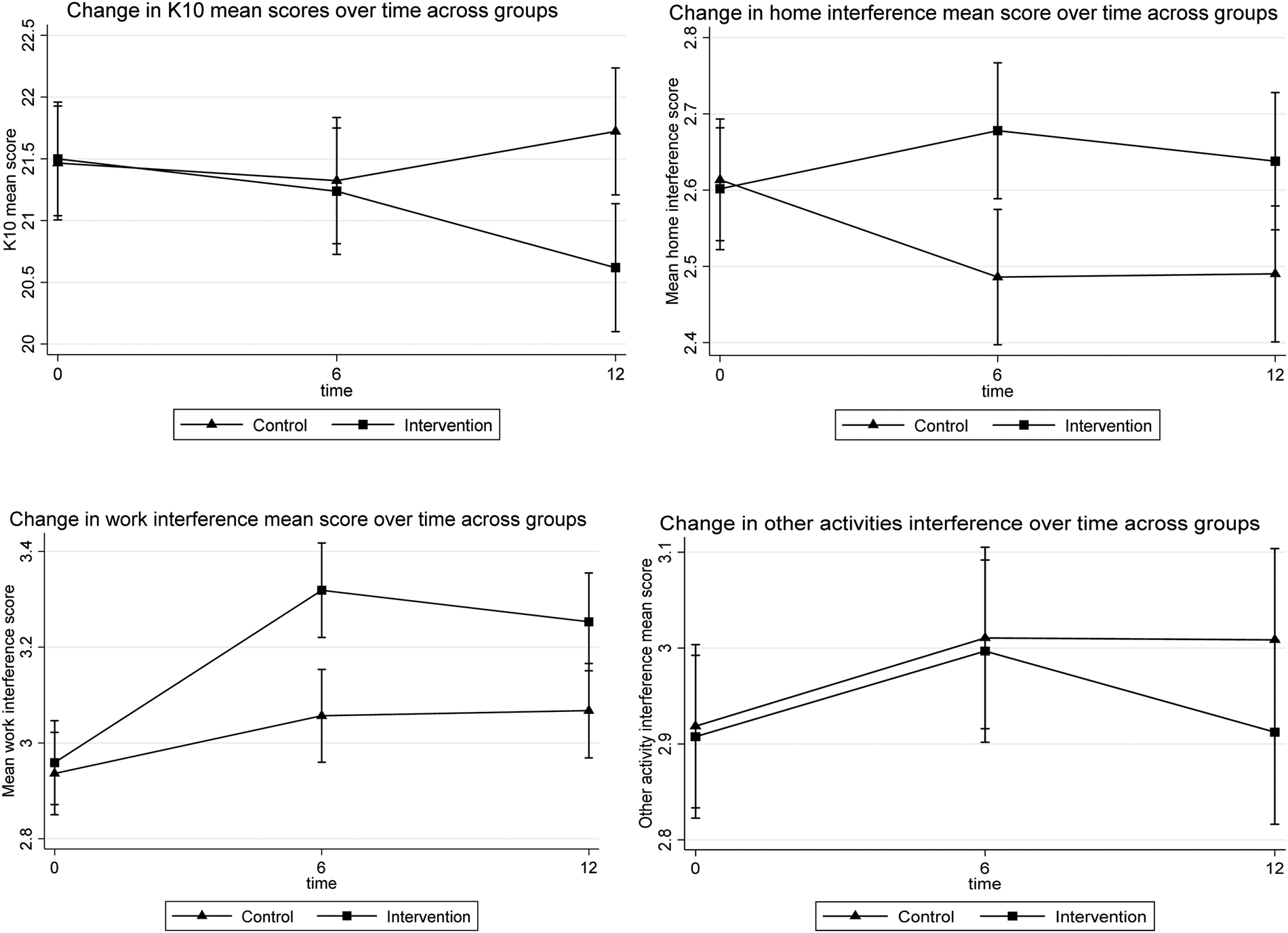
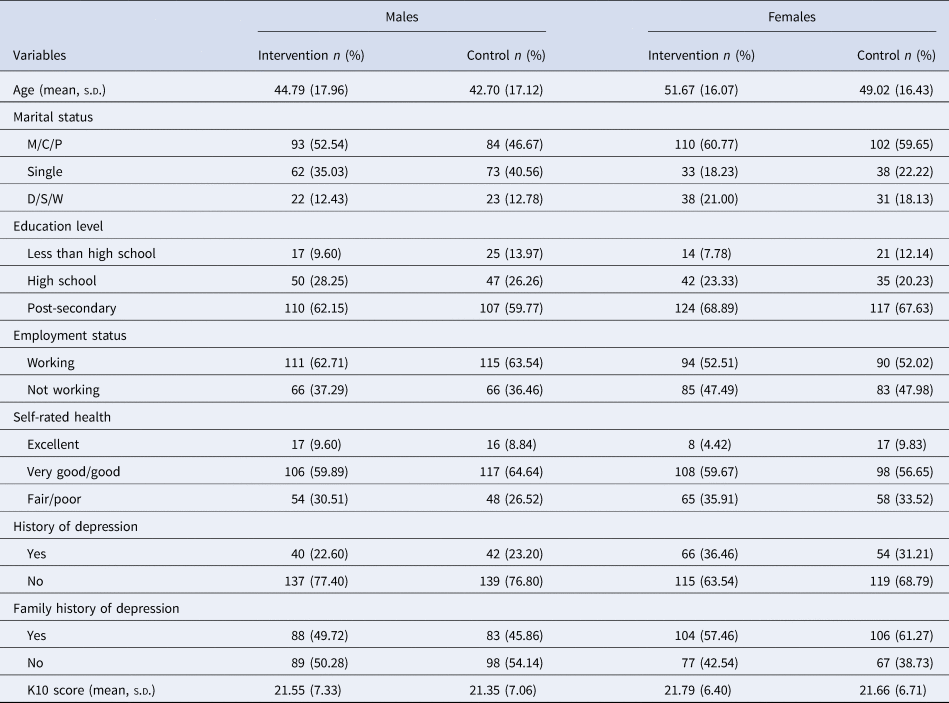
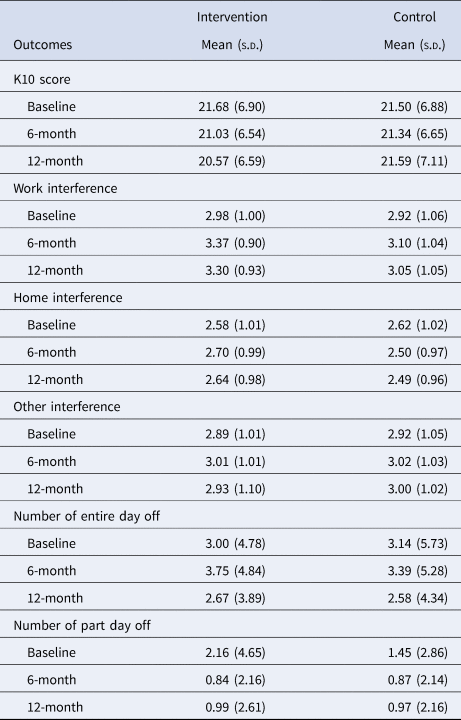
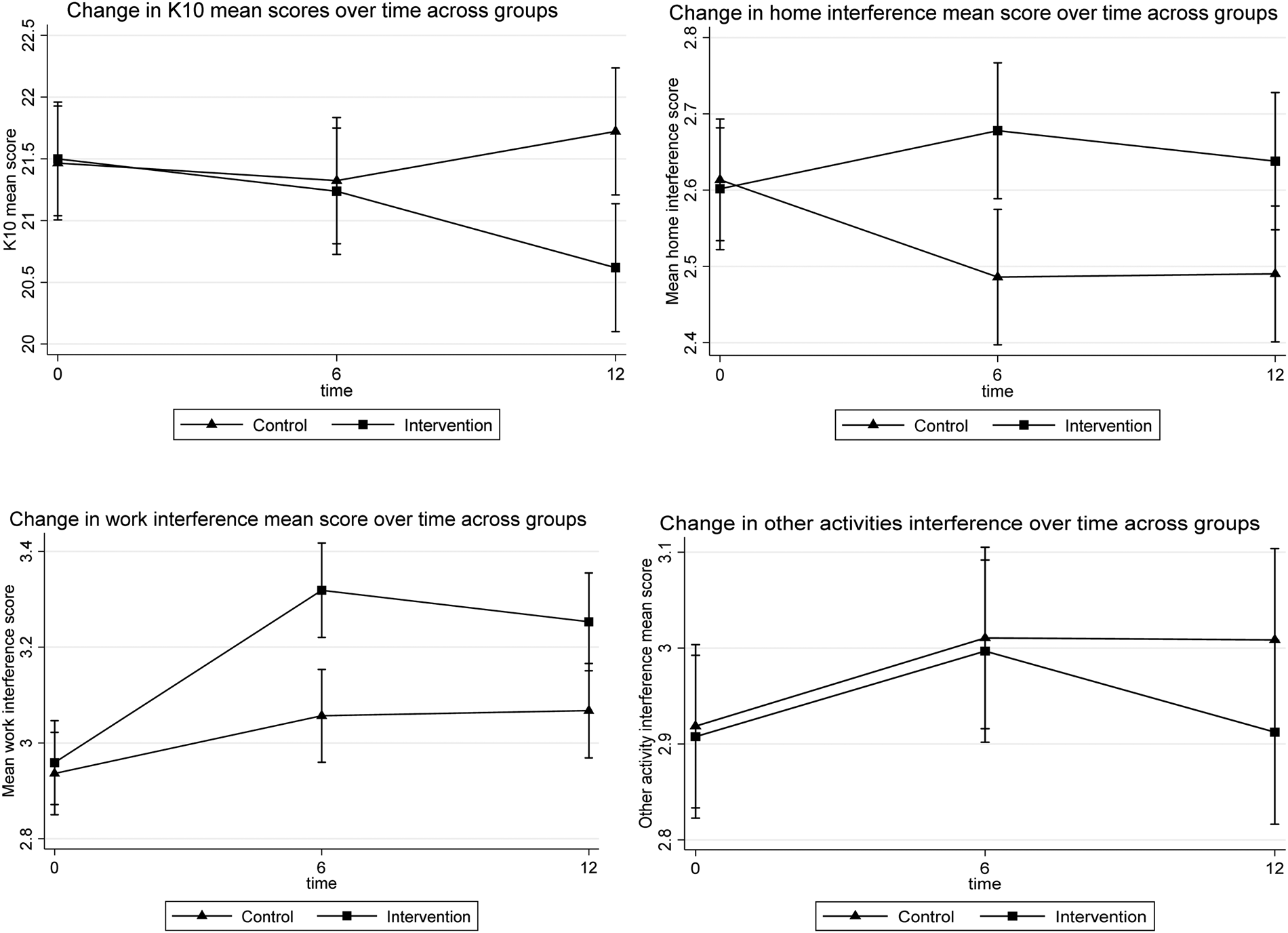
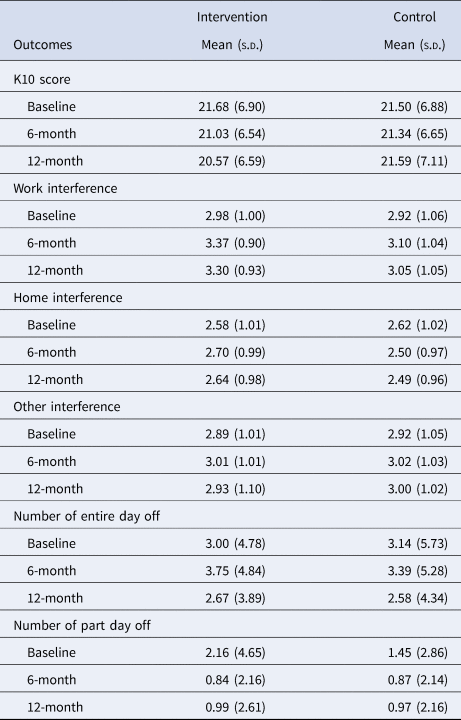
The baseline demographic, socioeconomic, and clinical characteristics of participants in the intervention and control group are in Table 1. The intervention and control groups did not differ in baseline characteristics, including K10 scores, irrespective of sex. The means of outcomes in the intervention and control group at each time point are presented in Table 2. The changes in the primary and secondary outcomes over time are depicted in Fig. 2.
The means of the outcome measures at baseline, 6 and 12 months in participants.
Baseline characteristics of male and female participants in the intervention and control groups
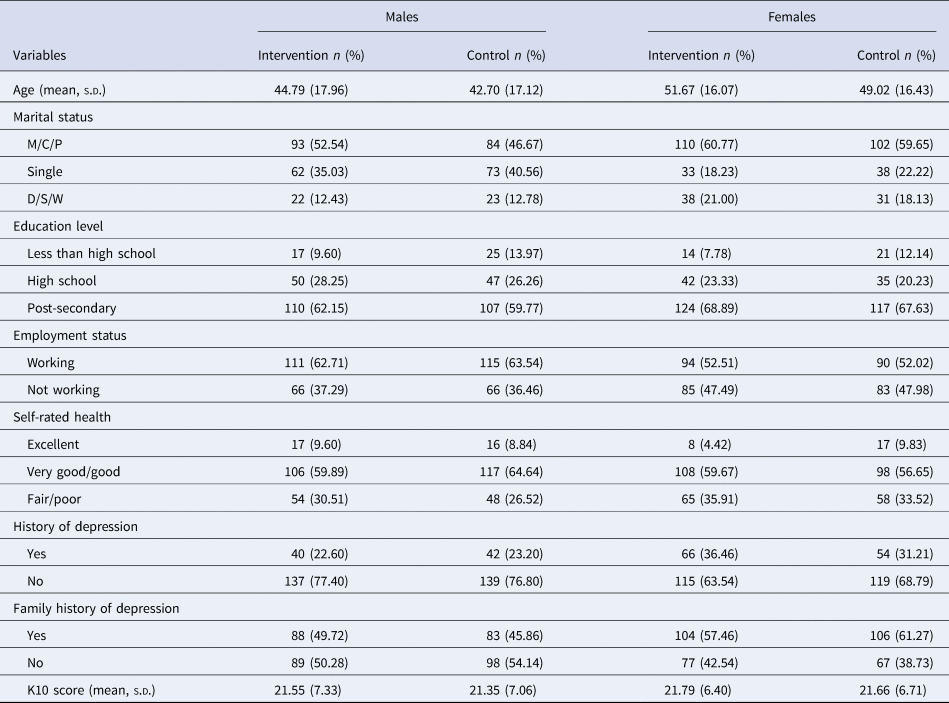
M/C/P: married, common-law, or partnership.
D/S/W: divorced, separated, or widowed.
The means of outcomes at baseline, 6 and 12 months
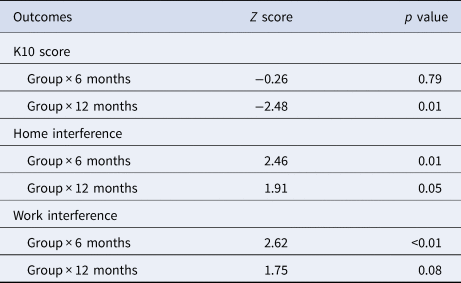
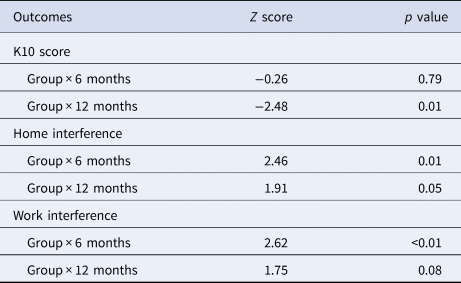
The data showed that the interaction term of ‘sex × group status’ was not statistically significant in the repeated measures mixed modelling, suggesting no evidence of significant sex differences in intervention effects. However, the modelling revealed that the interaction term of ‘group status × time’ was statistically significant, indicating that the intervention group had a greater reduction in K10 score over 12 months than the control group (Table 3). The between-group difference in mean K10 change score was 1.17 (95% CI 0.12–2.23) at 12 months. Compared to the control group, participants in the intervention group also showed a significant reduction in interference in the home at 6 and 12 months and in work or school activity at 6 month (Table 3). There were no differences in absenteeism between the intervention and control group at 6 and 12 months.
The results of repeated measures mixed modelling in male and female participants
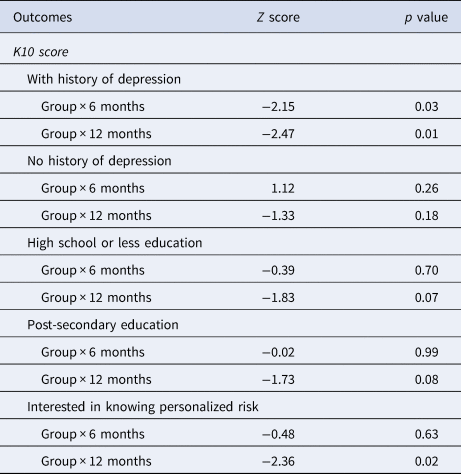
The analyses were repeated in participants with and without previous MDE, by educational levels (high school or less v. higher than high school), and by excluding participants in the intervention group who were not interested in knowing their personalized depression risk. The data showed that participants in the intervention group who had previous MDE had a more significant reduction in K10 score than their counterparts (Table 4). The results did not differ by educational levels.
The results of sensitivity analysis

To understand how providing personalized depression risk information may affect participants, we conducted qualitative interviews with a random sub-sample of 20 male and 20 female participants from the intervention group, who had received personalized depression risk information. Participants were interviewed via telephone 1 month after having received their risk information. They were first asked about initial reactions to their personalized depression risk. Participants shared a range of perceptions about their depression risk which we organized into five categories: (1) Informative/enlightening. Personalized depression risk is new. Many participants had never thought about their personal risk in the form of a probability. For example, participants commented: ‘I hadn't really thought about it much…it was a bit of a realization’ and ‘…whenever I find information about myself… it's always enlightening’. (2) Inaccurate/skeptical. Some participants were sceptical that one's future risk of having depression could be estimated. They argued that ‘‘No I don't feel it was accurate actually’ or ‘I'm not sure what you guys base your analysis on.’ One participant said ‘I'm not sure what I'm supposed to do with a number. How does that help me, right?’. (3) Accurate/not surprising. On the other hand, some participants, especially those who had a MDE before, were not surprised by the personalized risk and considered the risk information as ‘‘nothing I didn't know’ or ‘I'm not in denial that it could happen.’ One participant said ‘it's the truth’ while another noted ‘…it just kind of validated what I already know’. (4) Surprised. Some participants were surprised that they were at high risk of having MDE over the next 4 years. ‘I have never really thought of myself as high risk’ and ‘I was surprised’. (5) Apathetic. Some participants did not have strong views about personalized depression risk information. This was reflected by comments such as ‘I'm not affected by the data at all’ and ‘I don't think I really gave it too much thought… [it] didn't mean too much to me’, as well as ‘I don't really contemplate that sort of risk too much’.
When asked about how knowing their personalized depression risk information had affected their physical and mental health, most participants reported no changes to physical or mental health within the last month. One participant did note that he was ‘a bit more chipper’, which he said was partly due to changes he had made since finding out his score and partly because he had been off work.
Most participants responded to questions about positive or negative impacts of their personal risk disclosure by indicating that they liked getting the information. Sample comments include: ‘it's good to know’ and ‘I prefer to know what is real, what is true and to deal with it’ as well as ‘knowledge is power’. However, a very small number of participants reported that it had negative impacts on them. One participant said that ‘it took me in the wrong direction… I started questioning my – really? Am I that person? … it's always on my mind’.
When asked if people should have access to their own personalized risk, a few themes were evident. First, several participants said that this type of information may be helpful for prevention, or might help promote awareness and push people to get help, and allow people to ‘be proactive if they want’. Secondly, some participants reported that risk information may be helpful for some, but not for others. A participant commented that ‘it depends a lot on how they are gonna take it… they might just say I better do something or they might just say, go even further down’. On the other hand, a small number of participants expressed that the information may cause anxiety noting ‘some people might not be prepared for that type of truth’. One participant was concerned with the potential danger associated with depression risk information including the means through which this information was delivered: ‘it's a very arbitrary score…I mean you ask a person a bunch of questions in half an hour period, and you think you can come up with a score that would mean something to them? I think that's very dangerous.’
Discussion
Through this mixed-methods RCT, we found that providing personalized depression risk information may have a positive impact on reducing non-specific psychological distress and lessen the interference of depressive and anxiety symptoms with their home, and work or school activities. There was no evidence of sex difference in intervention effect. The quantitative results were supported by the qualitative findings that the risk information had no negative influence on participant physical and mental health. Participants had generally positive views that the personalized risk information may be helpful for depression prevention, promoting awareness, motivating people to get help, and allowing people to be proactive. They did caution that this type of information may negatively affect certain sub-populations.
The data of our study showed that the intervention group had a significant reduction in psychological distress over 12 months than the control group. The trial by Bellón et al. (Reference Bellón, Conejo-Cerón, Moreno-Peral, King, Nazareth, Martín-Pérez and De Dios Luna2016) found that the 18-month incident proportions of MDE in the group receiving personalized depression risk information were not significantly different from that in the control group. There are notable differences between the two trials. The aim of Bellon et al.'s trial was to confirm that personalized depression risk communication may prevent the incidence of MDE (Bellón et al., Reference Bellón, Conejo-Cerón, Moreno-Peral, King, Nazareth, Martín-Pérez and de Dios Luna2013), whereas our trial was to determine whether providing personalized depression risk information may lead to any psychological harms. The objectives and outcome measures of the two trials are different.
The qualitative findings of our study were consistent with a qualitative study by Bellon's group in 52 primary care patients in that participants have a positive attitude towards knowing their personalized risk and risk profile in order to take preventive actions; mechanisms should be in place to help those who are at high risk; certain sub-populations (not the participants themselves) may be alarmed by this type of information with undesired effects (Bellón et al., Reference Bellón, Moreno-Peral, Moreno-Küstner, Motrico, Aiarzagüena, Fernández and Amezcua2014). Participants were not explicit about which sub-populations may be negatively affected by the risk information. In our qualitative interviews, the few participants who had such concerns had a history of MDE. However, our sensitivity analyses by the history of MDE and education levels yielded no evidence that participants with history of MDE and who had a low educational level were more likely to report worsening outcomes. More research is needed to fully identify vulnerable populations. In our qualitative interviews, some showed sceptical views about depression risk information, which may hinder people's acceptance of the information and motivation of taking preventive actions. It should be noted that such sceptical views are one of five themes identified from the interviews. Studies are needed to quantify the proportion of people holding sceptical views and to investigate how such views may be modified.
Because depression is still stigmatized, health professionals may be reluctant to communicate personalized depression risk to their patients due to the concerns about potential psychological harms. Similar concerns may exist when it comes to communicating personalized depression risk to individuals in the community on a large scale. Our data did not support that providing personalized depression risk information leads to elevated psychological distress, functional impairment and absenteeism over 12 months. Indeed, participants in the intervention group had better outcomes in the domains of non-specific psychological distress, home, and work or school activities. It is possible that the personalized depression risk information raised people's awareness about their mental health status. The participants in the intervention group may have reflected upon the information, and thereby, became more conscious and mindful about how they deal with stress, which may partly contribute to reduced psychological distress and better functioning in home, work or school activities. Nevertheless, more studies are needed to replicate the results of this trial.
The results of this study provided evidence to support the safety of providing personalized depression risk information. The goal of providing risk information is to facilitate decision-making and effect health behaviour changes, leading to better health outcomes. Such risk information may be provided in conjunction with preventive interventions. On the other hand, provision of risk information itself may be viewed as an intervention. In other medical disciplines, a growing body of research has been aimed at examining the impact of how risk information is presented, and the impact of the presentation format has on end-users' risk perception, decision-making, and health behaviour changes (Edwards et al., Reference Edwards, Naik, Ahmed, Elwyn, Pickles, Hood and Playle2013; Zipkin et al., Reference Zipkin, Umscheid, Keating, Allen, Aung, Beyth and Feldstein2014). The health behaviour changes may include using appropriate self-help strategies, seeking professional help, sharing the information with people they trust, or adhering to treatments and these health behaviour changes may lead to optimal health outcomes such as the reduced risk of depression and alleviated severity of depressive symptoms. Presently, we have a little knowledge about how personalized depression risk information should be formatted and presented in order to effect these behaviour changes. Research is needed to investigate how personalized depression risk information should be built in a comprehensive risk communication package that incorporates the elements of personalized risk information, visual presentation, message framing and decision aids, like the risk communication tools for physical illnesses (Edwards et al., Reference Edwards, Naik, Ahmed, Elwyn, Pickles, Hood and Playle2013; French, Cameron, Benton, Deaton, & Harvie, Reference French, Cameron, Benton, Deaton and Harvie2017; French, Olander, Chisholm, & Mc Sharry, Reference French, Olander, Chisholm and Mc Sharry2014; Sheridan et al., Reference Sheridan, Viera, Krantz, Ice, Steinman, Peters and Lungelow2010; Zipkin et al., Reference Zipkin, Umscheid, Keating, Allen, Aung, Beyth and Feldstein2014). Such a risk communication package can be studied regarding its impact on health behaviour change, and how behaviour change may lead to improved health outcomes such as reduced incidence of MDE. These should be a direction of future research.
This study had several limitations. First, the data were based on participant self-report. Thus, recall and reporting biases are possible. Second, although the trial achieved a high response rate of about 80% over 12 months and the completers and non-completers resembled each other in baseline characteristics, it is still possible that attrition might cause selection bias that may affect the validity or generalizability of the findings. Third, the objectives were to investigate how the provision of personalized depression risk information affects health outcomes among Canadian adults who are at high risk of having a MDE. The findings may not be directly applicable to other mental health problems and the populations in other countries. Similar studies in different countries are needed to provide more definitive evidence. Although the trial data indicated a long-term positive effect associated with risk disclosure and the qualitative study found no negative physical and mental impacts, we did not evaluate the short-term effect. As such, we cannot entirely exclude the possibility that some may experience enhanced distress within a few weeks after receiving personalized depression risk information. Fifth, depression literacy and stigma may differ by race. However, this trial did not collect information about race which is a limitation. Finally, this study focused on the impacts of providing personalized depression risk information on non-specific psychological distress, functional impairment, and absenteeism. The outcome measures did not cover all possible harms. Studies that assess other outcomes using different measures such as the symptoms of depression and anxiety, will be useful.
Risk predictive analytics for mental health problems has become a burgeoning field. With the rapid development of medical artificial intelligence and machine learning techniques, more MRVPs for mental health problems will be developed to guide clinical decision-making, risk communication, mental health service delivery, and population mental health planning. There is a shift in health care toward more consumer/patient involvement in decision-making and active participation in care. Meanwhile, mental health problems are still highly stigmatized. Therefore, prior to implementing MVRPs at a large scale, it is imperative to ensure that disclosing the risk information causes no harms. The evidence produced by this large mixed-methods RCT supports the safety of risk disclosure. However, more studies are needed to build a knowledge base to guide future depression risk communication.
Supplementary material
The supplementary material for this article can be found at https://doi.org/10.1017/S0033291720003955.
Acknowledgements
We acknowledge Rachel Smail-Crevier, Gabrielle Powers, Doaa Nadouri, and Chelsea Noel for their contribution to data collection. This study was supported by a grant from the Canadian Institutes of Health Research. Dr Patten holds the Cuthbertson & Fischer Chair in Paediatric Mental Health at the University of Calgary.
Conflict of interest
The authors reported no biomedical financial interests or potential conflicts of interest.