Introduction
Australia's ageing population is steadily increasing. Advances in health care and associated increased life expectancy have seen the proportion of the population aged 65 years and over increase to 14 per cent (3.34 million), with apparent female longevity particularly in the 85+ group (Australian Bureau of Statistics (ABS) 2013). Many of these people are still active and independent, with healthy lifestyles, good nutrition and regular medical care contributing to health and wellbeing. From age 65, however, and especially after 85, there is an increase in the number of people living with disability, or long-term health conditions, with concurrent limitations in their daily activities (Australian Institute of Health and Welfare (AIHW) 2012). As a result, some form of aged and/or health-care assistance is usually required, and with the shortage of aged-care workers there is pressure on families to meet health, social, safety and other daily needs of their elderly members. Often families cannot meet these needs, and as a consequence the number of residential care places is expected to increase from 190,000 in 2012 (with associated government expenditure estimated at Aus$9.4 billion) to 470,000 in 2050 (AIHW 2014a; ARC Centre of Excellence in Population Ageing Research 2014).
A health-focused survey of 1,200 Australian households found that respondents felt the most important improvement for aged care was the provision of services to allow older people to live longer in their own homes (Menzies Centre 2012). Assistive technologies and in-home monitoring designed specifically for healthy older people would provide an intermediary step between family or community-assisted home stay and residential care. Over the last two decades there has been an emergent trend in ‘smart homes’ across the world. Smart homes are outfitted with sensors designed to monitor household variables of interest. In health care, these variables correspond to activities of daily living such as meal preparation, bathing, sleep and dressing. Different technologies are employed for healthy older people, frail older people, and people with early dementia or Alzheimer's disease (see Cash Reference Cash2003; Demiris and Hensel Reference Demiris and Hensel2008; Rialle et al. Reference Rialle, Duchêne, Noury, Bajolle and Demongeot2002).
Qualitative evaluations of smart homes have reported positive responses to the technologies including increased independence and lowered frustration (Institute for Broadband Enabled Studies 2012). One study, consisting of 46 frail older people trained on internet use and smart home software and 67 older people in a control group, found that despite some difficulties with the technology, the majority of residents (91%) would recommend the system (Tomita et al. Reference Tomita, Mann, Stanton, Tomita and Sundar2007). Interestingly, this two-year study also found that while residents in the control group showed physical and cognitive deterioration, the experimental group maintained their level of physical and cognitive independence.
For older people, smart homes are designed to maintain independent living to delay or avoid a move to residential care. User centricity has been the focus of two Australian studies into the design of sensor-based in-home monitoring systems (Bradford, Freyne and Karunanithi Reference Bradford, Freyne and Karunanithi2013; Larizza et al. Reference Larizza, Zukerman, Bohnert, Russell, Busija, Albrecht, Rees, Masthoff, Mobasher, Desmarais and Nkambou2012). Both these studies sought the views of stakeholders on in-home monitoring systems, one with vision-impaired older people who could potentially benefit from smart homes (Larizza et al. Reference Larizza, Zukerman, Bohnert, Russell, Busija, Albrecht, Rees, Masthoff, Mobasher, Desmarais and Nkambou2012) and one with prospective participants of the pilot study here described (Bradford, Freyne and Karunanithi Reference Bradford, Freyne and Karunanithi2013). Conducted independently, the studies yielded similar findings in that the system needed to be affordable, low maintenance and easy to operate. It also needed to emphasise safety, allow the resident autonomy over alert settings and have its limitations clearly articulated. The practicality and pertinence of the system was raised by older people in both studies, many of whom felt ‘they didn't need [elements of the system] now’. This highlights a difficult issue, where if the system is installed when residents are cognitively and physically independent they are able to take up the technology, even though they may not depend on it. If, however, the system is installed once they do require in-home monitoring, residents may find the technology difficult to grasp.
The findings of these studies with prospective residents are not dissimilar from those found in an older study by Demiris et al. (Reference Demiris, Rantz, Aud, Marek, Tyrers, Skubics and Hussam2004), also with prospective residents. These candidates for smart home technologies felt invasive technology like cameras would violate the resident's privacy, and that older people had increasing functional limitations that made using devices difficult. In all three studies, the majority of participants had positive attitudes towards the technology overall, and felt the system would be of benefit mainly because they had increasing concerns for their welfare. While privacy has been identified as an issue, several studies have indicated that residents are willing to trade privacy for the autonomy provided by living in their own homes (reviewed in Townsend, Knoefel and Goubran Reference Townsend, Knoefel and Goubran2011).
More recently, Doyle et al. (Reference Doyle, Bailey, Ni Scanaill and van den Berg2014) have provided a list of recommendations for deploying technologies into the homes of older people that are likely to circumvent many of the issues raised around user centricity, privacy and invasiveness. The privacy issue is well discussed in smart home literature (e.g. Ganyo, Dunn and Hope Reference Ganyo, Dunn and Hope2011; Lie, Lindsay and Brittain Reference Lie, Lindsay and Brittain2016; Mortenson, Sixsmith and Woolrych Reference Mortenson, Sixsmith and Woorych2013), and relates not just to the act of monitoring per se, but perceived uses of the data collected. In our previous study (Bradford, Freyne and Karunanithi Reference Bradford, Freyne and Karunanithi2013), residents felt that their families should be provided with enough information to know the resident was fine, but not the finer details of daily patterns or medical information. This preference suggests that rather than enhancing autonomy, smart homes and assistive technologies may hinder autonomy due to unwanted interference, the stigma of being monitored and the service response to detected events (Ganyo, Dunn and Hope Reference Ganyo, Dunn and Hope2011). Developing trusting relationships between residents and their families and service providers has been found to be integral in ensuring the monitoring system does not disrupt the habits and norms of residents (Lie, Lindsay and Brittain Reference Lie, Lindsay and Brittain2016).
In order to determine the full range of benefits provided by smart homes and their assistive technologies, qualitative studies have been conducted in the United States and Ireland (Doyle, Bailey and Dromey Reference Doyle, Bailey and Dromey2009; Smith et al. Reference Smith, Lunde, Hathaway and Vickers2007; Wild et al. Reference Wild, Boise, Lundell and Foucek2008). These interviews with actual smart home residents (as opposed to the prospective residents above) have highlighted positive and negative aspects of non-invasive monitoring and have explored some of the ethical issues raised by Ganyo, Dunn and Hope (Reference Ganyo, Dunn and Hope2011), including privacy, peace of mind and technology acceptance. As the Smarter Safer Homes (SSH) project is the first of its kind in Australia, recording the first impressions of residents and their families is crucial in identifying pathways and barriers to future uptake. This will allow tailoring of services to meet the needs of residents and, where possible, redesign any elements of the system perceived as negative. To achieve this aim, we replicated the study by Wild et al. (Reference Wild, Boise, Lundell and Foucek2008), with modifications to their procedure to suit our study parameters and population.
The purpose was to seek the views and perspectives of SSH residents using in-home monitoring to ensure that systems and services could monitor daily activity and health in an ethically responsible manner to potentially enhance their wellbeing and confidence in living independently and to inform implementation of future digital services. The research also sought the perspectives of relatives of SSH residents who, with the permission of the resident, were granted access to their relative's activity and health data via an online portal.
Methodology
Participants
The pilot study was conducted in accordance with approval from the Commonwealth Scientific and Industrial Research Organisation (CSIRO) Health and Medical Research Human Research Ethics Committee (12/17) and a local university facilitated recruitment of participants through residential care staff. Participants were residents of independent-living units within the residential care facility, and self-selected for participation in the SSH trial. In order to qualify, participants had to be aged over 70 years and have no home care arrangements in place. Participants with pre-existing conditions with compromised cognition or early onset dementia were excluded. For this qualitative study of perceptions, participants also included three relatives, comprising two adult daughters and one teenage grandson.
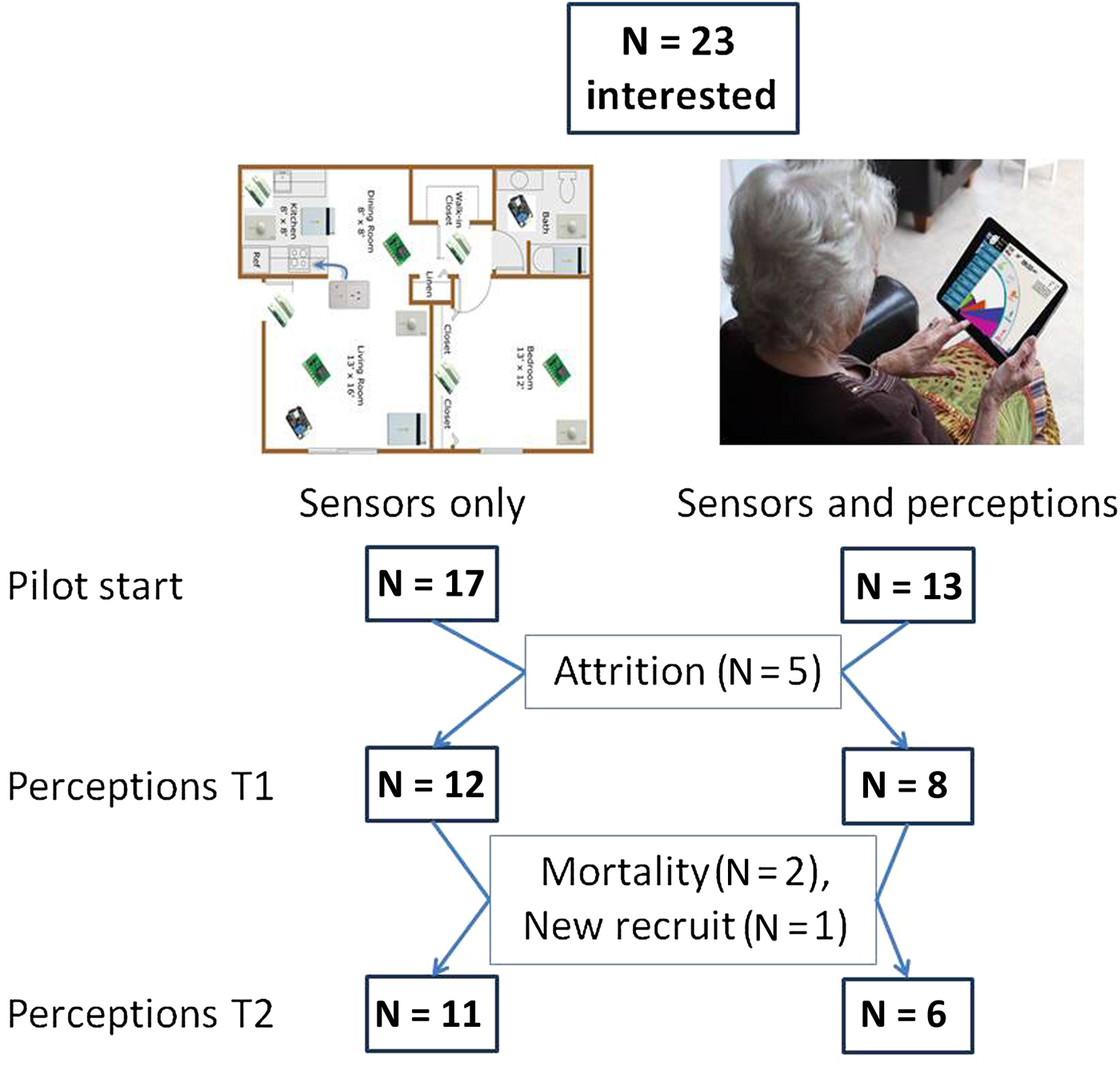
Residents who expressed interest in the pilot (N = 23) received information letters at their home address (a total of 21 units, two dual occupancy), and some of these residents (N = 7) had previously attended workshops for prospective participants (Bradford, Freyne and Karunanithi Reference Bradford, Freyne and Karunanithi2013). Of those who received information letters, 17 signed consent forms for participation in the trial. Two residents chose to have only the sensors installed, and requested no further contact for their perceptions of the system. Although both residents in the dual occupancy units signed consent forms, for practical reasons only one resident in each was interviewed for the perceptions study. Attrition in the remaining participants was high (N = 7) and occurred across the pilot, with residents withdrawing due to morbidity, mortality (see e.g. Bradford and Zhang Reference Bradford and Zhang2016), relocation, or stress due to ill health or family circumstances. This meant that of the eight residents participating in the initial interview (six females and two males), only six were available for the follow-up interview (five females and one male) (Figure 1). The interviewed residents were aged between 79 and 87 (mean = 84) with varying levels of education from primary to post-graduate, and previous experience with computers ranging from none (N = 3) to considerable (N = 1).
Attrition is high in elderly populations. Of 23 interested residents, 17 signed consent forms for the Smarter Safer Homes pilot, 13 of whom agreed to participate in the perceptions study. By the first interview (Perceptions T1), five of these left the pilot, with an additional two leaving before the second interview (Perceptions T2).

Equipment
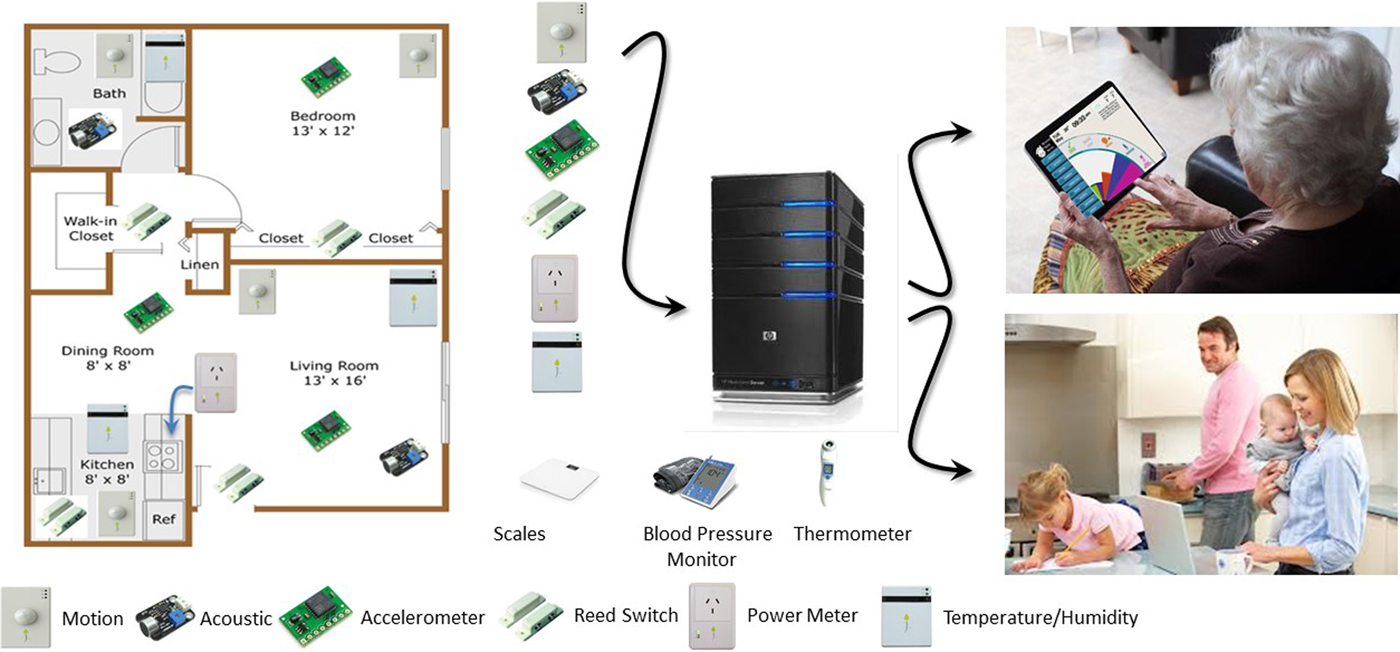
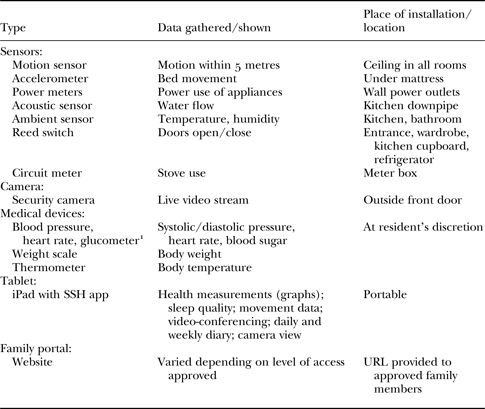
The pilot was commenced with the latest lifestyle technologies. As a result, much of the technology had yet to be tested in a real-world setting as part of a platform of interacting components. Participation included installation of a fibre optic cable for data transmission, provided just prior to installation of the monitoring system. Once the cable was installed, each unit was outfitted with approximately 30 in-home sensors (Figure 2), depending on the unit layout. Participants were provided with a suite of electronic medical devices comprising weight scales, thermometer, and a combined blood pressure monitor and glucometer unit with the glucometer function only used by diabetic residents (N = 1). Each of the sensors and devices gathered specific data relevant to the resident's daily activity and health (Table 1). The final component of the system was an iPad with a custom SSH app. Information from the sensors and medical devices was sent to secure servers and relayed to the app to be displayed in graphical form, with the exception of the thermometer, the data for which were entered manually by the resident. Data displays allowed residents to self-monitor their activities of daily living and health, and the app also facilitated connection with family through an integrated video-conferencing application. In addition, sensor and medical device data were uploaded to a website (family portal) where authorised relatives could remotely monitor health and daily activities for their family member.
Sensors and devices installed in each unit. Units were of a similar size and varied slightly in layout. Each unit contained a combination of motion, humidity and power sensors, accelerometer, reed switches and a circuit meter. Residents were provided with medical devices to monitor weight, blood pressure, glucose and temperature. Data from the devices was transmitted to a secure server and returned to residents in graphical form through a custom app on the iPad and in tabular form to approved family members via a website portal.
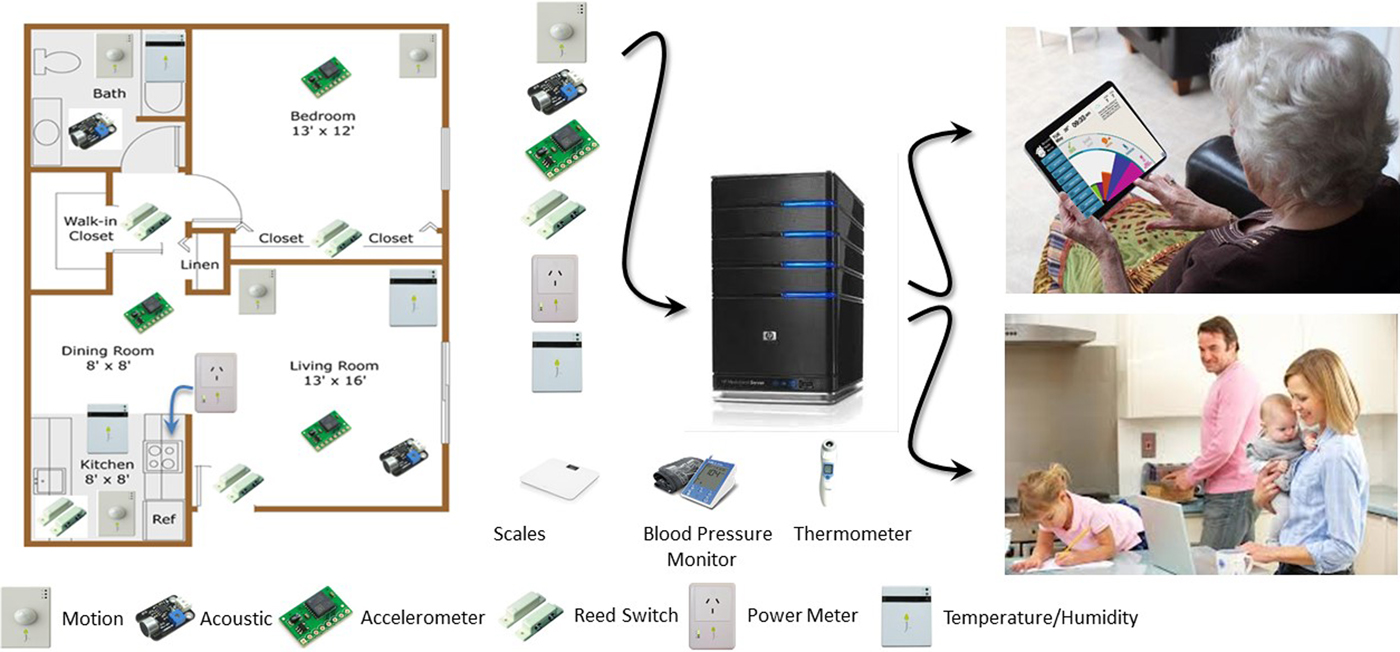
Components of the Smarter Safer Homes (SSH) platform installed for the pilot study

Note: 1. Glucometer used only if required.
Incentives
No monetary incentives were offered, but residents had free installation of fibre optic cable and free high-speed broadband access for the period of the pilot. At the completion of the pilot they could transfer the account into their own name, or revert to their existing ADSL connection. Participants were able to keep the iPad as a token of appreciation.
Procedure
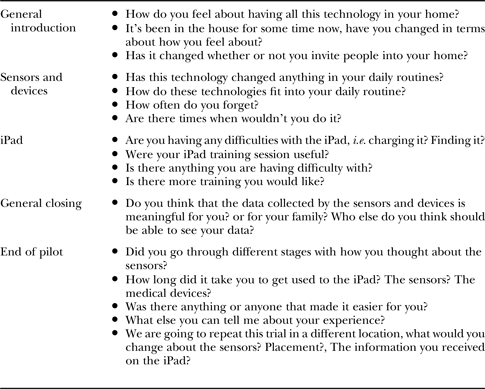
Semi-structured one-hour one-on-one interviews with participants were conducted by two researchers on two occasions: two months and nine months after installation of the sensors. Each researcher interviewed the same set of residents on both occasions. The same interview protocol was used at both time-points with only minor modifications to accommodate changing perceptions over time. Interview questions covered how residents felt having the technology in their home and about the data being sent via the internet, and how the technology impacted routines and or lifestyle (Table 2). For each individual device or sensor, interviewers explored concerns, awareness of the sensors, and potential benefits to themselves or others in accordance with Wild et al. (Reference Wild, Boise, Lundell and Foucek2008). Modified versions of Microsoft's Desirability Toolkit (Benedek and Miner Reference Benedek and Miner2002) were used to assess perceptions of technology by providing two different lists of 20 adjectives with a balance between positive and negative descriptors. The first list was used to assess attitudes towards those sensors which required no input from the resident; and the second list for the devices which were dependent on resident input for data gathering. The word lists were agreed upon by two researchers and conducted in accordance with Doyle, Bailey and Dromey (Reference Doyle, Bailey and Dromey2009). Residents were not restricted in the amount of words they could choose.
Examples of interview questions

Residents were encouraged to invite relatives or friends to attend both interviews and contribute to the resident interview procedure at their will. At the second interview, and with the resident's permission, available relatives (N = 3) were interviewed in a free format on their own perceptions of the technology and the benefits of being able to access their relative's data online.
Data analysis
The audio-taped interviews were transcribed verbatim and content analysis of interview data was undertaken by two researchers using QSR NVivo10 software (QSR International, Australia). Content relating to perceptions of the technologies were drawn out for both residents and family members using a flexible approach similar to that used in grounded theory (Charmaz Reference Charmaz2006).
Results
There was an initial adjustment period, the length of which differed between residents from days to a couple of weeks, but after this time all residents found that the sensors did not interfere significantly with their routines. By the second interview, all conceded that they did not notice any but the most obvious sensors. While residents had varying responses to the relative benefits of individual sensors and devices, they generally felt that the system as a whole was useful and of value to their demographic, and this sentiment was echoed by their families. When asked if they felt the sensors were useful for others (i.e. other older people would benefit from having the sensors in place), residents overwhelmingly answered in the affirmative. When answering for themselves, however, they often responded with ‘not yet’. This suggests that they felt the technologies would become more useful as their frailty increased.
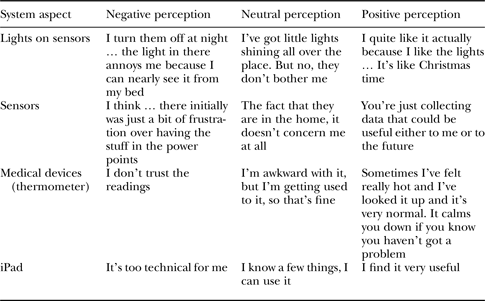
Relatives or friends attended some of the resident interviews, however, few relatives were available to be interviewed individually. Relatives’ interviews centred on the components of the technology that most involved family interaction, while residents’ interviews covered the whole platform. In most cases, positive, negative and neutral perceptions of the same aspect of the system were held by different residents (Table 3). As this is the case, results are presented in terms of concepts arising from the platform that were important to the participants and the varying perceptions of the technology associated with those concepts.
Examples of differing perceptions of the same aspect of the in-home monitoring system

The silent watcher
The issue that gave rise to the most concern in the first round of interviews was the perception that someone was watching what residents were doing. Despite being told there were no indoor cameras, one resident expressed self-consciousness around dressing, showering and sleeping due to the worry that someone was ‘sitting at a table, watching everything I do’ (Resident A, female). This specific concern was reflected more generally in conversations with some of the other residents (N = 3). The sense of physically being watched was only expressed during the first round of interviews, and this concern was allayed when researchers and relatives reiterated that there was no active surveillance.
Less alarming, but more enduring, was the perception that there was someone looking at the data who would speculate on the resident's behaviours, potentially leading to erroneous or unflattering conclusions. This was particularly true of data inferred from the reed switches (Figure 2) on the wardrobe and refrigerator doors, for example, ‘[If I don't open my wardrobe because I wear the same clothes the next day] I wonder if they wonder whether I'm not dressed’ (Resident B, female). In some cases, ‘wondering what someone will wonder’ actually caused residents to consider changing their wardrobe behaviour: ‘I think, oh well I'll take the whole bundle and put them all in together … if I'm re-hanging things’ (Resident C, female). This was also true for the way they used the refrigerator: ‘It's just that I think well, do I try and remember to get everything out at the one time, rather than put something back and get something else out…’ (Resident C). The perception that someone was forming opinions of the residents based on the firing of the sensors also extended to the accelerometer (Figure 2): ‘they must think I'm the most terrible sleeper’ (Resident A).
In some cases, the idea of a silent watcher was viewed positively, a source of mirth or the sense that someone was watching over the resident, from which comfort was derived. There were, however, residents who genuinely questioned whether they should rethink their usual activities. Interestingly, the perception that the watcher would speculate on residents’ data did not extend to physiological measures. No residents mentioned a sense of judgement over high blood pressure readings or weight gain; although weight lost or maintained was a source of pride for individuals and between family members.
Medical devices contribute to health autonomy
Residents varied in their frequency and use of the medical devices, however, all residents used at least one device once per week. The cool ambient temperature was a prohibitive factor for some residents as they did not want to expose themselves for long enough to take the weight and blood pressure measurements each day. All but one of the residents were comfortable with the weight scales, and of the four measurements (weight, temperature, blood pressure and glucose), weight was taken most frequently with the practice quickly incorporated into routine. For some residents, blood pressure and temperature were taken once per week, unless they were feeling ill, in which case the devices were used to determine whether or not further action was required. On two occasions, residents had followed up with their doctor on the basis of a reading outside the normal range. Five residents mentioned they derived peace of mind from the readings and a sense of control over their own health. Residents also used the devices following prescribed changes such as monitoring potential weight gain after being put on protein drinks, and monitoring blood pressure after switching medication.
The most common words chosen to describe the devices in the first interview were ‘straightforward’, ‘understandable’, ‘easy to use’, ‘fast’ and ‘convenient’, with only one resident choosing a negative descriptor (‘frustrating’). This negative term was in response to the thermometer specifically, which was a new piece of technology that this resident found difficult to use (the technique involved depressing a button and moving the thermometer slowly across the forehead), and ill use resulted in inaccurate readings. In contrast to the other devices, data from the thermometer had to be manually entered. The resident circumvented the issue by using a traditional thermometer and entering the results. In the second interview, ‘easy to use’, ‘straightforward’ and ‘understandable’ were again common choices, with only one negative descriptor chosen (‘time-consuming’). Interestingly, in the first interview, the word ‘motivating’ was chosen by one resident, and this increased to three residents by the second interview. The motivational value of the devices was an unexpected positive outcome.
Grandchildren drive iPad skill development
The iPad was found to be the most challenging component of the platform. The main purpose of providing the iPad was for residents to access the SSH app which included data derived from the sensors displayed graphically, video-conferencing facilities and the viewing function for the outdoor camera (Table 1). Residents were encouraged to use the iPad for additional activities and the most popular of these were emails, news feeds and card games. Despite the provision of face-to-face training and an instruction manual, many residents felt out of their depth with the new technology. The majority of residents had little (N = 2) or no (N = 3) previous experience with computers. Many felt lack of familiarity and difficulty remembering were prohibitive factors in learning how to use the iPad and making use of its various functions. The touch screen, navigation and troubleshooting were areas that caused the greatest concern, often leaving the resident with a negative self-perception of their ability: ‘I just can't do this. I'm too old to do this. But I know I'm going to really like it’ (Resident D, female).
Despite the difficulties, residents liked the concept of the iPad, as it delivered family photos, humorous emails, household tips and the opportunity to hone card-playing skills. It was perceived as a convenient way to show websites to their families or health data to their doctor, although they needed wifi (not then available in the medical centres) to access the SSH app. Because of the iPad benefits, most residents sought further informal training of their own volition. The most effective source of learning was the grandchildren, who used various apps to engage with the residents and showed them how to navigate the iPad. Residents who did not have local grandchildren turned to friends, staff at the residential facility or the project team for help. Over the course of the pilot, all residents improved their iPad use, and by the end many were able to send emails or photos, use the video-conferencing, play card games such as patience, and/or search for kitchen or gardening ideas.
Issues of annoyance
Despite its usefulness, the iPad was the device the residents felt most frustration over. Residents also experienced frustration when data from the medical devices did not upload to the app either due to mechanical or operator error. There were also a number of frustrations over some of the sensors, with two residents unhappy with those that took up space or power points. Nonetheless, residents soon got used to having them in the house. For some, the lights on sensors were annoying, especially those visible from the bedroom (Table 3), but this problem was rectified by a tape covering the light on the motion sensor or switching the power sensor off at the power point. Two residents reported turning the power points off, or removing power sensors to save electricity. Frugality is characteristic in this generation, and there was some concern that the technology would increase the electricity bill. The one resident who compared bills found no difference in consumption. Each of these issues of annoyance affected one or two residents; there was no one issue that affected all, or the majority of, residents.
Current and future benefits for relatives
Three relatives were available for interviews. Amongst these three, there were different levels of family discussion regarding entering the pilot. Despite this variation, all three relatives reported that the resident was unfazed by the presence of sensors in their homes. During the interviews, relatives focused on the aspects of the pilot most relevant to themselves: the conferencing feature of the iPad, the family portal and the potential for the system to generate alerts for families.
Both the iPad and the family portal led to improved family communication
While most of the iPad features were for the use of the resident, the video-conferencing was found to be valuable for some relatives. One found that it gave them visual cues of mental and physical wellbeing, reporting that ‘It is amazing what you can tell by looking at a person rather than listening on the phone’ (Relative A, female). Other comments included that it improved communication, was preferred over the phone and was a topic for conversation with younger generations.
All three interviewed relatives were able to communicate via conferencing; and the initial apprehension of some residents was overcome with family advice and support. While inarguably the most challenging aspect of the pilot for residents, relatives saw in residents the greatest advances in technical know-how with the iPad, particularly evident in improved communication through video and email traffic, and in discussing apps and features with grandchildren.
Relatives who had been granted access by their family member were able to log in to the family portal, through which they could view medical device data as well as other indicators of daily living (sleep quality, estimated step count). Of the three interviewed relatives, one looked at the family portal daily, one every couple of days and the third occasionally. The last of these was a local who felt that the family portal would be more valuable for people who lived out of town. Regardless of the distance between relative and resident, where the resident does not like to discuss health or problems, the family portal was able to provide activity cues in the same way video-conferencing provided visual cues. As such, relatives did not have to rely on the resident to tell them if something was wrong. The family portal also opened conversations on where their health impacted their routines, especially if the resident knew the relative was checking the portal. Whereas in the past the resident may have only mentioned feeling unwell if questioned, now they might sometimes say ‘Don't worry about [the data], I was just a little bit tired that day’ (Relative B, female). As such, data from the health devices obtained through the family portal were able to alleviate family concerns in two ways. First, the family were able to determine that the resident was currently well based mainly on health data. Secondly, the carrying out of routines was an indication that the resident was capable of conducting their usual daily activities. Based on the value of this information provision, two of the relatives felt there would be an increasing need for the platform as resident frailty increased.
The potential to generate alerts for families was perceived as valuable
All three relatives felt that alert features would be useful if available for families. These would be most useful if based on the resident's particular routine, as relatives felt there were specific activities that, if undertaken, would indicate that all was well within the unit. Examples include morning bathroom patterns and kitchen appliance use at specific times. Conversely, if these activities were not undertaken, this would allow the relative to check on the resident, or make alternative plans for their immediate care. One relative indicated that ‘when [resident] was sick [they] didn't cook for themselves’ (Relative A); therefore an alert on kitchen motion and appliance use would allow the relative to check if a doctor was required and/or arrange for meals to be delivered if necessary.
Alerts for absence of motion were considered to be of great potential value, particularly if the resident had a fall and was beyond the reach of the wall-mounted call alerts provided by the facility. Similarly, alerts on health data could prompt relatives to suggest a doctor's visit. Relatives felt that all alert settings would need to be individually set to be sufficiently sensitive to detect issues of concern, but not give rise to alert fatigue (the receipt of so many alerts that the relatives stop paying attention to them).
Discussion
In this novel pilot study, positive and negative perceptions that may foster or limit uptake of smart homes were identified. Residents experienced peace of mind from the health devices and, once accustomed, were unperturbed by the presence of sensors. They felt that the system would be valuable as the ageing process impacted physical and cognitive independence and this sentiment was echoed by family members. Minor annoyances derived from sensor placement and function could be easily overcome in future applications of the system. Greater engagement with family members would have resulted in the system being more useful for relatives, with an improved website user interface and generation of alerts based on variations in resident routine. One of the unexpected outcomes of the pilot was an increase in family communication in three main ways. Firstly, it improved avenues of dialogue, adding video-conferencing and email exchanges to complement phone calls and more rarely visits. Secondly, it prompted conversations on health and wellbeing that had not previously been held. Thirdly, the iPad provided a source of common ground for communication with grandchildren, which may have benefits for both generations.
Of old dogs, new tricks and young masters
The challenge of adopting new technology is magnified for this age group by age-related changes in perception, physical ability and cognition; particularly when multiple difficulties co-exist (Hanson Reference Hanson2011). Many residents had difficulty in accurately activating the touch screen, due to unfamiliarity with the action, vision impairments and/or deficits in fine motor skills. Provision of a stylus helped somewhat, but residents were still frustrated by an inability to make it work when they knew what needed to be done, which led to some residents avoiding using the iPad. This frustration was different to the feelings experienced through not knowing what to do – either for trouble shooting (not realising that the black screen meant it needed charging) or to use programs (Google search, news feeds). In these instances, they turned to family, friends or staff for assistance. Those who were supported and encouraged by grandchildren, the young masters of technology, seemed to gain the most confidence in using the iPad. As a result, these residents had greater recall of specific functions and became more persistent with troubleshooting and therefore less likely to avoid using the iPad.
The difficulties caused by age-related challenges were compounded in this sample by the level of education available in Australia 60–80 years ago, particularly for women. There is a strong positive relationship between educational attainment and internet use (ABS 2014), with the proportion of users dropping considerably in the group who attained high school or below. Half of the residents who participated in both interviews did not finish high school, with one leaving as early as primary school. Future generations of older people will have a higher level of background education as a foundation on which to build confidence with technology. This shift is already being seen in a significant increase in internet users from 26 per cent of those aged 65 and over recorded in 2006 (ABS 2007) to 46 per cent in 2012–13 (ABS 2014).
With this increase in internet use coupled with the pervasiveness of technology, future aged populations are likely to be more tech-savvy than the current population; however, the technology will still have a new interface to be learned, and the perceptive, physical and cognitive challenges will still apply. Training tailored to older learners, as identified in the study by Demiris et al. (Reference Demiris, Rantz, Aud, Marek, Tyrers, Skubics and Hussam2004), will be a key factor for success in smart home implementation. Holding regular sessions to cover hints and tips for new technologies may be an effective way to address deficits in technology use, while fostering social interaction and dispelling negative self-perceptions. As an added benefit, increased internet use has also been shown to reduce the social boundaries that lead to isolation and loneliness, with internet use associated with a 33 per cent difference in depression scores between users and non-users in a sample of 12,300 retirees aged over 50 (Cotten et al. Reference Cotten, Ford, Ford and Hale2014). Therefore, sessions held to improve technology use are also likely to have a flow-on effect for overall wellbeing.
Health reform begins at home
While governments currently subsidise approximately 70 per cent of health expenditure (AIHW 2014a), the costs for individuals are increasing. There is a sharp upward trend in health expenditure, rising more than three-fold from 65 to 85 years of age (AIHW 2014b). Consequently, there is an ever-growing need to manage health conditions more effectively. Provision of medical devices fostered health autonomy, such that residents were able to determine if they should seek medical advice based on device readings. Where the readings were normal, there were dual advantages, the resident's concerns were allayed and the doctor's time was saved. Conversely, where readings were outside the normal range, the resident's prompt action may provide the health professional with an opportunity to prevent a more serious health condition or incident. This prevention, however, will depend on co-ordinated action between the monitoring system, the response service and the medical health team (this is illustrated in Bradford and Zhang Reference Bradford and Zhang2016). The sensors in our study were able to provide information on activities of daily living (Zhang et al. Reference Zhang, Karunanithi, Bradford and van Kasteren2014) that could be made available to a health professional directly through the system, augmenting information supplied by the medical devices. This kind of home health monitoring may also circumvent hospital and nursing home admissions (Mortenson, Sixsmith and Woolrych Reference Mortenson, Sixsmith and Woorych2013). The peace of mind derived from the medical devices was not an unexpected outcome, however, we did not predict that residents would find the medical devices ‘motivating’. The ability of medical devices to motivate older people to monitor and better manage their own health is likely to reduce costs associated with aged health care.
The perpetuity of perceptions
One of the interesting elements of the perceptions research was how enduring perceptions were and what impact, if any, they had on behaviour. In the workshops conducted with prospective residents, a number of positive and negative perceptions of the system were identified (Bradford, Freyne and Karunanithi Reference Bradford, Freyne and Karunanithi2013). While the positive aspects identified in those workshops (e.g. easier family communication, peace of mind and flow-on benefits for others) were valued throughout the pilot, most of the negative aspects (e.g. need for maintenance, extension cords, privacy invasion) did not arise during resident interviews. This is largely due to modifying these aspects prior to implementing a pilot and demonstrates the value of qualitative studies with prospective residents (e.g. Demiris et al. Reference Demiris, Rantz, Aud, Marek, Tyrers, Skubics and Hussam2004; Larizza et al. Reference Larizza, Zukerman, Bohnert, Russell, Busija, Albrecht, Rees, Masthoff, Mobasher, Desmarais and Nkambou2012; see also Doyle et al. Reference Doyle, Bailey, Ni Scanaill and van den Berg2014) to ensure the system is tailored to meet the expectations of the target demographic and that any unfavourable aspects are addressed.
Similarly, perceptions of the system did not change dramatically from the first to the second round of interviews during the pilot. There was a slight positive shift in the adjectives used to describe sensors and devices, but the perceived benefit to self and others was consistent. While there was some modification to behaviour for three residents from the ‘silent watcher’ concept, none of these residents left the pilot, and by the second interview were less cognisant of the feeling. Having the opportunity to air their concern with researchers was the most remedial action for this perception. This finding has implications for a wider rollout of smart home technology. Despite being told at the beginning of the study that there was no active surveillance, and specifically no indoor cameras, residents still felt ‘watched’. This phenomenon has been reported in other sensor-based monitoring trials (Mortenson, Sixsmith and Woolrych Reference Mortenson, Sixsmith and Woorych2013; Sixsmith Reference Sixsmith2000). While Sixsmith (Reference Sixsmith2000) did not report how they addressed this issue, in our study researchers and relatives reassured residents that they were not being ‘watched’ in any way. In a commercial setting where this feedback may be unavailable, the resident's perception of being watched could linger, impacting their spontaneity and promoting self-regulation and censorship (Mortenson, Sixsmith and Woolrych Reference Mortenson, Sixsmith and Woorych2013), particularly if it leads to behaviour change. The residents in our study did contemplate changes in behaviour, and specifically reported thinking of altering the way they used the fridge and wardrobe. As stated earlier, this perception waned over time and longitudinal studies would determine if it disappeared altogether. Being oblivious to monitoring, however, raises its own ethical issues. Ganyo, Dunn and Hope (Reference Ganyo, Dunn and Hope2011) present a scenario where a resident ‘forgets’ that they are being monitored and behaves in ways that they would not want their family to observe. While this is unlikely to be an issue with fridge or wardrobe behaviour, other sensor data (such as the accelerometer on the bed) could cause family discord. It is interesting to note that the feeling of being watched and the temptation for consequent behaviour change did not extend to the medical devices. This could in part be due to the fact that residents could authorise who was able to access their data. A more fine-grained control over data dissemination could ensure autonomy is maintained and provide less pressure to ‘keep up appearances’ for relatives and service providers.
Inaccuracies in sensor data and difficulties in sensor placement proved frustrating for residents and researchers alike, and were overcome in the early stages of the trial. These complications demonstrated the value of a personable, competent onsite technician. The technician was the main point of interaction with the residents, and ended up assisting with all components of the system including iPad advice. This face-to-face customer care was held in high regard by all residents. One of the concerns raised by prospective smart home residents in the perceptions study conducted by Demiris et al. (Reference Demiris, Rantz, Aud, Marek, Tyrers, Skubics and Hussam2004) was the replacement of human assistance by technology. A strong human element should therefore form part of any future business model for Australian smart homes.
Limitations
Social desirability bias is a potential limiting factor in this perceptions study. This bias ‘reflects the tendency on behalf of the subjects to deny socially undesirable traits and to claim socially desirable ones, and the tendency to say things which place the speaker in a favourable light’ (Nederhof Reference Nederhof1985: 264). Residents self-selected for the study, and it is possible that they felt an obligation to be positive about the pilot study and avoid negative issues. There are, however, several reasons to believe that the positive responses from residents were genuine. First, acquiescence research among older people has shown that the elderly are less prone to acquiesce with service utilisation or service need (Calsyn, Roades and Calsyn Reference Calsyn, Roades and Calsyn1992). Second, the presence of relatives or friends at interviews was helpful in creating a safe environment and validating responses. Third, regular visits from the researchers to provide information on, and rectify misperceptions of, the system components were particularly important in reducing sources of anxiety and putting residents at ease in their altered environment.
The reported perceptions were derived from a small sample of older, predominantly female, residents (Figure 1), and an even smaller sample of their relatives. Nonetheless, the findings are consistent with, and expand on, similar research conducted in the same demographic (Doyle, Bailey and Dromey Reference Doyle, Bailey and Dromey2009; Lie, Lindsay and Brittain Reference Lie, Lindsay and Brittain2016; Townsend, Knoefel and Goubran Reference Townsend, Knoefel and Goubran2011; Wild et al. Reference Wild, Boise, Lundell and Foucek2008).
Acceptability of smart homes
The Intergenerational Report (Attorney-General's Department 2010) projects that Commonwealth expenditure on aged residential care will increase from 0.8 per cent of Gross Domestic Product in 2009–10 to 1.8 per cent by 2049–50, representing a 125 per cent increase. Small changes in aged care management and services can result in large savings, for example, keeping 10 per cent of the current residential care group in the community and preventing 10 per cent of falls could potentially save over Aus $600 million per year (Tegart Reference Tegart2010). Smart homes can potentially realise these savings and represent a new avenue for health-care service delivery, by providing an intermediary step between family or community-assisted home stay and residential care. The degree to which they are adopted will largely depend on the way they are perceived by residents and their families. A literature study by Townsend, Knoefel and Goubran (Reference Townsend, Knoefel and Goubran2011) indicated that there is a trade-off between privacy and autonomy, where residents are willing to accept the intrusiveness of home monitoring for the ability to remain in their own home. This study has shown that smart home sensor technology need not be intrusive, while still fostering independence and enhanced health management.
Conclusion
Smart home technology has the potential to mitigate the challenges associated with aged-care health and residential costs while affording an increased quality of life for seniors and peace of mind for their families. To ensure that the technology meets the balance of service provision and preservation of dignity, the perceptions of older residents and their families are paramount in informing the face and function of in-home monitoring. Our findings suggest this will be achieved through a combination of considered placement of in-home technology, straightforward medical devices, and a supportive platform moderated by a gentle and genuine human element. This, together with a reliable response service and invested medical professionals, would form a health model based on personalised care provision. Overcoming the barriers in the design of SSH by accommodating for each individual's perceived needs may result in better uptake and adherence of SSH. The ultimate aim for smart homes is to provide a congenial environment in which to age. Despite its small sample size, this pilot has demonstrated that this environment can be achieved with non-wearable sensors and resident autonomy over health in their own home. In the words of Resident D: ‘I feel more comfortable. I feel comfortable with the way I live’.
Acknowledgements
The authors extend their sincere thanks to residents and relatives interviewed as part of this study, and to the staff at the residential facility where the study was held. Thanks also to University of New England, Armidale, New South Wales staff, including Stephen Winn and Leanne White for handling recruitment and Alwaleed Alssamani for technical support combined with genuine care for the residents during the pilot.