I. Introduction
Recent research has fundamentally complicated the once widespread view of the Catholic Church as a homogeneous and uniform body throughout its long history. Despite an unambiguously hierarchical structure (culminating in the popes being considered the successors of Saint Peter) and central guidance in matters of faith and government (through councils and the Roman congregations), historians point to numerous variations at all points in time. In the Middle Ages, for example, quite apart from the dramatic divisions during the Investiture Crisis and Great Schism, there were countless regional patterns in terms of worship and liturgy; during the early modern centuries, we can distinguish between a more ‘baroque’ form of Catholicism in Italy and a less exuberant ‘classicist’ type in France, while the split between ultramontane and cisalpine orientations during the Kulturkampf or the debates about the “liberation theology” movement from the 1970s provide cases in point for the modern period.Footnote 1
The advent of social history in the 1960s and 1970s provided an important stimulus for new scholarly approaches to the European Reformations. Breaking with the previous fixation on official doctrines, the new generation of historians shifted its attention to social issues and lay practices, prompting new readings of religious change.Footnote 2 In this framework, particular attention was paid to how both the Catholic and Protestant Churches tried to transform Christianity from the sixteenth century, eradicating long-standing religious practices and encouraging the development of strong confessional identities.Footnote 3 Through the “confessionalization paradigm,” scholars came to describe how the emerging early modern states cooperated with the established churches to enhance conformity and social discipline among the population through similar methods—for example, by implementing clear norms of religious practice, using propaganda, embarking on local visitations, and fostering education.Footnote 4 With regard to the specific character of the Catholic Reformation (alternatively referred to as the Counter-Reformation, the Catholic Revival, or early modern Catholicism),Footnote 5 studies on single dioceses have traced how gradually better-trained priests attacked well-entrenched unorthodox practices by imposing reforms on their flocks. The confessionalization paradigm thus stimulated fruitful comparisons between the ways in which both the Catholic and Protestant Churches strove to promote inner homogeneity and establish clear confessional boundaries.Footnote 6
Nonetheless, the emphasis on similarities has also been criticized, along with the concept's link between confessionalization and modernization, its state-centered approach, and the top-down perspective.Footnote 7 Concerning the latter, for example, Mark Forster has convincingly demonstrated that, in the southwest German Diocese of Speyer, lay piety and village communes had a decisive influence on the shape of early modern Catholicism.Footnote 8 Doubts have also been cast on the wider geographical applicability of a paradigm forged to explain links between confessional and political developments in the Holy Roman Empire; for example, scholars have questioned its relevance with regard to religiously divided kingdoms like France.Footnote 9 In Ireland, as Ute Lotz-Heumann has argued, there were conflicting confessionalization processes steered from above (for the Protestant minority supported by the English crown) and below (among the domestic Catholic majority, itself divided into an increasingly Tridentine Anglo-Irish and a less receptive Gaelic community). Here again, there were no straightforward links between confessionalization and state formation, not least because of Ireland's peripheral position within the Tudor/Stuart “multiple kingdom,” where the interests of government bodies in Dublin and London often failed to coincide.Footnote 10 In fact, issues emerged even for the study of Catholic Germany itself, with many scholars challenging the relative disregard of its theological and doctrinal distinctions on the one hand and the alleged significance of the process for sociopolitical modernization on the other.Footnote 11 It is now beyond doubt that the implementation of the decrees of Trent on sacraments, justification, seminaries, better record keeping, and enhanced papal-diocesan control, as well as the renewal of Catholic life and worship, proved laborious, lengthy, and heterogeneous.Footnote 12 Many factors—such as location, distance from Rome, cultural and social landscape, political framework, and presence of other religious communities—affected the outcome, leading to substantial local varieties and many intermediate forms.Footnote 13
This article contributes to the ongoing debate on the diversification of post-Reformation Catholicism by juxtaposing two peripheral settings at considerable distance from “Trent”: the village republic of Gersau in the Central Alps and the Catholic communities established in the Holy Land over the course of the seventeenth century. Moving from center to periphery, three key aspects of scholarly debate shall be addressed: First, we will examine the role of the secular framework for church reforms and local religious provision. For most areas, concerted backing by state authorities formed an important part of Catholic regeneration.Footnote 14 Our self-governing Alpine case study, however, formed a polity without a prince, while in Ottoman-controlled Palestine, the Catholic Church could only count on its moral authority. The shared absence of a major component of the confessionalization concept—that is, a Christian ruler wishing to enhance territorial coherence—provides meaningful ground for comparison, despite stark contextual differences. The way in which people made their livelihoods (be it through agriculture, crafts, or services) also mattered, as did the relative prosperity of a region.
Secondly, we wish to focus on local ecclesiastical organization. From the late sixteenth century, churches evolved from “principal place[s] of worship and the celebration of the sacraments within the community” to “vehicles for religious reform and educating the faithful.”Footnote 15 In the Catholic world, the Decrees of Trent strengthened the centrality of the parish and emphasized the role of its priest, charged with regular preaching and dogmatic instruction. The whole system was revised with a view to creating more homogeneous communities of similar sizes and resources; similarly, boundaries were tightened to clarify pastoral and financial responsibilities, while church interiors and decorations reflected new liturgical and religious priorities. The significance of the parochial framework for reform initiatives—albeit in various intensities and chronologies—duly emerges in many European settings.Footnote 16 Yet, despite the church's harmonizing efforts, confessional competition and global expansion challenged the uniformity and very definition of the parish.Footnote 17 In what follows, particular attention shall be paid to aspects such as church foundations and furnishings, divine service, the administration of sacraments, pastoral organization, elements of “voluntary” religion, and the relationship with other denominations.
Thirdly, the article explores the extent to which early modern parish life was shaped by clerical and/or lay impulses. Trent envisaged tighter priestly control and more regular archidiaconal or diocesan supervision, typically through visitations and/or ecclesiastical jurisdiction. Recent work has emphasized the constant negotiation of church discipline, since—under the conditions of (not yet bureaucratized) early modern government—any kind of change depended upon the active collaboration of subjects. There has also been much greater emphasis on the role played by the people themselves. Traditional understandings of top-down processes—in which change is imposed on passive recipients—have been fundamentally revised, with growing recognition of the influence of grassroots interests, differentiated uptakes of reform elements, and local self-regulation.Footnote 18
Thanks to its wide geographical perspective, this article will also contribute to the debate over the relationship between European and overseas missions.Footnote 19 Some scholars emphasize a Tridentine model of precept and authority and a missionary model of practice and ministry; others highlight their substantial uniformity and unity.Footnote 20 There is no doubt that regional divergences extended to the application of canon law,Footnote 21 albeit on the background of strong Roman efforts to globalize its hierarchical structure.Footnote 22 Yet our case studies help to challenge the idea of a clear dichotomy between a “Tridentine” and a “missionary” model.Footnote 23 Rather, they suggest heavily localized varieties reflecting the influence of regional characteristics, government systems, and socioeconomic structures. These factors not only shaped the organization of Catholic life in the area but also its position in the wider “church geography.”
Given entirely different contexts, this study rests on heterogeneous empirical foundations. The only common genre are parish registers, in many ways the flagship sources of Tridentine reform. In both contexts, the first surviving books date from the early seventeenth century.Footnote 24 A series of accounts, anniversary books, and inventories make up the rest of the ecclesiastical sources available for Gersau, with further clues deriving from the secular archives of the village, specifically in holdings such as charters, compilations of local laws, and official correspondence.Footnote 25 A particularly distinctive set, straddling the sacred and profane spheres, comprises chronicles deposited, in accordance with a widespread Germanic custom, in the tower ball of the parish church on the occasion of major repairs from 1655.Footnote 26 Further clues on parish life in seventeenth-century Palestine are furnished by Franciscan documents—such as chroniclesFootnote 27 and books of conversions—and by the correspondence between the Franciscans and the Roman congregations, such as those of the Roman and Universal InquisitionFootnote 28 and of the Propaganda Fide. Founded in 1622, the latter was in charge of Catholic missionary activity in places without an established church hierarchy (such as Palestine). Besides letters, its archive also contains reports on the life of the custody, which had to be submitted every two years by the custos of the Holy Land, guardian of the St. Savior monastery in Jerusalem, and minister provincial of the Friars Minor living throughout the Middle East.Footnote 29
In the subsequent sections dedicated to secular frameworks (section II), ecclesiastical organization (section III) and lay-clerical relations (section IV), the scrutiny of “extreme” settings shall help us to enhance our understanding of post-Tridentine Catholicism more generally (section V). Both case studies draw on the findings of larger research projects, one focusing on the political/ecclesiastical autonomy of peasant polities and the other on aspects of cultural exchange and migration in the Mediterranean, a collaboration facilitated by the My-Parish network.Footnote 30
II. The Secular Framework
Gersau was a micropolity on the shores of Lake Lucerne in the Central Alps. Its “peripheral” character resulted not so much from its location, given that the major Gotthard trade route passed along its boundaries, but the fact that the village was surrounded by high mountains and accessible only by boat. Originally part of the estates of the monastery of Muri, it forged a loose alliance with the neighboring Swiss Waldstätte (Forest Cantons)—a rare association of urban and rural republics in an area of weak lordship—in the early fourteenth century and obtained the political freedom of an “imperial” village by purchasing all feudal and jurisdictional rights in 1390.Footnote 31 For the next four hundred years until the Helvetic Revolution of 1798, this “one-parish-state” of a few hundred inhabitants—arguably Europe's most autonomous rural community—ran its own affairs, taking fundamental decisions at twice-yearly assemblies of all male burghers, with day-to-day government in the hands of a council presided by the land mayor (Landammann). Secular powers were rounded off by a royal grant of high jurisdiction (conveyed in 1418) and a general confirmation of all privileges by Emperor Sigismund in 1433.Footnote 32 From the late fifteenth century, the entire region began to detach itself from the Holy Roman Empire and gained a formal exemption—effectively independence—in the Peace of Westphalia (1648). Socioeconomically, most people engaged in Alpine pastoral husbandry, coordinated by an agricultural association of all burghers (Genossame), complemented by a fair range of rural crafts and related occupations (including, from the eighteenth century, a flourishing silk industry). A property register compiled for rating purposes in 1510 reveals significant differences in wealth: Peter Baggenstoss owed the highest contribution of £105 (from seven plots of land), Jost Scheffer the lowest of £4 (from one), and “average” householders somewhere between £40 to £50.Footnote 33
With the defeat of the Byzantines and the (seventh-century) Arab conquest, Palestine entered a long period of Islamic rule. The arrival of the crusaders in 1095 and the establishment of the Latin Kingdoms (1098–1291) temporarily slowed the spread of Islam, but within a century, Palestine returned to Muslim rule under Ṣalāḥ al-Dīn and its Islamization resumed. By the time of the Ottoman conquest in 1517, the majority of the population in Palestine was Muslim, with Jewish and Christian minorities (the former concentrated in Jerusalem and Safed and the latter—Orthodox Greeks and members of the Eastern churches—primarily in Galilee as well as south of Jerusalem). There is no record of local Catholics until the Franciscan Minors embarked on the “reconciliation” of the Orthodox community from the mid-sixteenth century.Footnote 34
During the Ottoman period, Palestine belonged to the Province of Damascus and was divided into districts, each ruled by a district governor (sanjaq-bay). From the late 1500s, centrifugal tendencies gained ground in the Arab lands. During the first half of the seventeenth century, and even though formally under Ottoman control, local families succeeded in retaining key positions, including that of district governor. In the second half of the century, however, Istanbul started to impose governors sent from the capital. Besides the sanjaq-bay, who was the chief administrative and military authority of the district, other officials were charged with tax collection, police tasks, and the functioning of day-to-day administration. Religious communities, guilds and village communities all had a certain degree of autonomy in allocating financial dues among their members and in choosing their representatives. One example is rural government. Villagers were represented by elected leaders (shuyūkh al-qarya) drawn from the oldest and wealthiest inhabitants. Their tasks included attending the court of justice alongside the negotiation and collection of communal taxes.Footnote 35 Christian inhabitants had their own representatives. Even though religious communities were responsible for the welfare of their members and the regulation of marriage, divorce, and inheritance, the use of force remained a prerogative of the Ottoman ruler. All they had, therefore, was moral authority without the backing of a sympathetic political power, a situation fundamentally different from that in Catholic (and Protestant) territories in Europe, where secular support was crucial for the implementation of church discipline and princes or city councils took active roles in church government.Footnote 36 These circumstances shaped the missionary activity of the Franciscans and local religious life. First, the Ottoman ban on apostasy from Islam, which incurred the death penalty, forced the friars to focus their recruitment activities on the other Christians. The lack of political support, as we will see, also restricted their capacity to discipline the new Catholics and to implement canon law well into the eighteenth century.
Economic conditions affected parish life as well. Palestine was dominated by agriculture, especially the cultivation of wheat, barley, and—in the mountains—olives and grapes. In Bethlehem and Jerusalem, part of the population found employment in crafts, some of them producing religious goods for the pilgrim market. Since their arrival and well before the beginning of the missionary activity, the Franciscans participated in the local economy as buyers, money lenders, and employers. They also got very involved in the production and trade of devotional objects, a key sector in the area. This clearly boosted the spread of Catholicism particularly in and around Bethlehem, as did the foundation of schools and other services. The importance of this phenomenon can be gauged from the fact that soon almost all the Catholics in the villages worked as artisans.Footnote 37
III. Local Ecclesiastical Organization
Papal charters of 1179 and 1189 supply the first references to a church in Gersau.Footnote 38 Here, as throughout Latin Christendom, the High Middle Ages saw the gradual formation of a network of clearly demarcated units for the administration of the cure of souls to all residents, that is the emergence of “parishes” in the canonical sense of the term.Footnote 39 At a time when social organization was mainly based on personal bonds (for example, between kings and vassals, knights and retainers, lords and peasants), the emergence of territorial units was a remarkable and innovative feature. This provided the local population with an institutional framework, a source of identity and—via shared tasks and resources—a collective capacity, not just in ecclesiastical matters: Gersau's political emancipation was initially driven by the “parishioners.”Footnote 40 There are few sources for the late medieval period, but in those which are extant, we encounter “typical” features such as clerical nonresidence and the quest for salvation, not least via the acquisition of indulgences.Footnote 41 Crucially for our purposes, and in line with wider tendencies toward lay control in the region, the parishioners purchased the right of patronage in 1483 and gradually expanded their corporate influence over local ecclesiastical affairs.Footnote 42 At the same time, the influence of the bishop (seated in far-away Constance) and his diocesan courts eroded to a bare minimum,Footnote 43 leading to the emergence of a “communal Catholicism,” characterized by doctrinal orthodoxy (Gersau sided against the “heretical” Zwinglians in the Swiss civil wars of Kappel 1529–1531), religious fervor (especially with regard to the worship of saints and the cult of the dead), and almost total local control over ecclesiastical affairs in the early modern period.Footnote 44 In contrast to other heartlands of the old religion (like Austria, Spain, or Bavaria), there was no prince or state bureaucracy to push the Tridentine agenda—Gersau thus provides rare, “unfiltered” insights into early modern Catholicism from below.
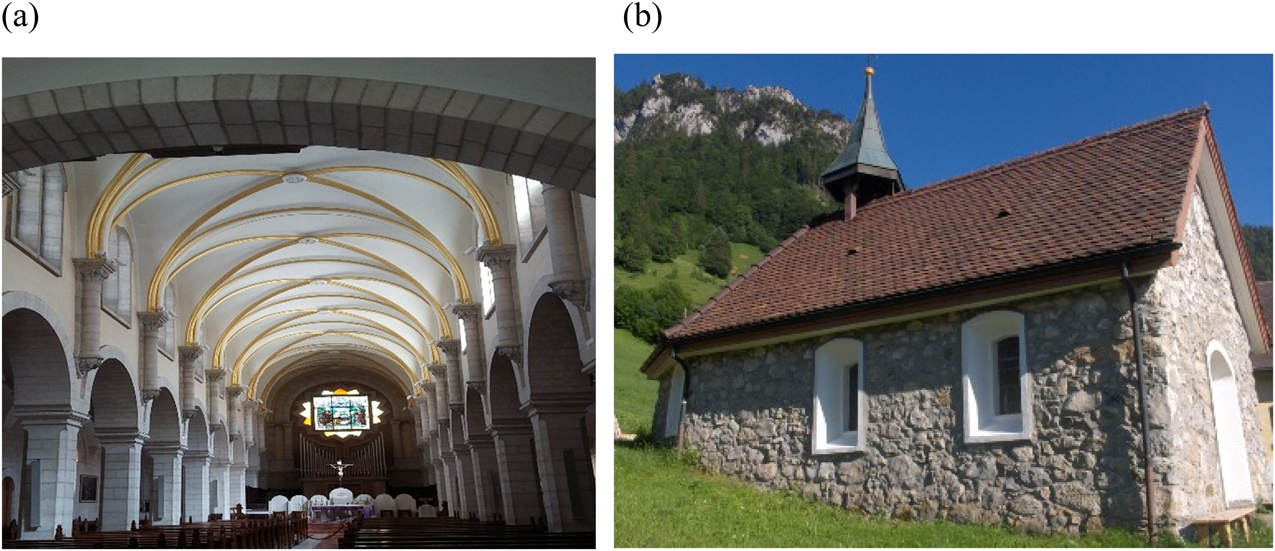
In Palestine, the first establishment of an episcopal hierarchy and parish network separate from the Greeks dates back to the First Crusade (1095–1099).Footnote 45 With the fall of the Latin Kingdoms (1291), this organization collapsed, and the religious orders all left the region. Supported by the crown of Aragon, the Franciscans had already returned to Jerusalem during the fourteenth century. Upon their arrival, their main tasks were the maintenance of the Holy Sites and offering assistance to pilgrims. From the last decades of the sixteenth century, when the first Catholic missionaries arrived in the Middle East, they also embarked on the spreading of the Roman faith among local Christians. This movement sparked the reemergence of a pastoral organization. In fact, even before the post-Reformation spread of Catholicism, Middle Eastern Franciscans had churches and chapels where they administered the sacraments to Catholic merchants and diplomats. In 1627, the custody had six monasteries, each with one or more churches (two in Jerusalem and one each in Bethlehem [fig. 1a], Nazareth, Aleppo, and Larnaca in Cyprus) and seven chapels. These were usually located in leading trading cities and harbors, often in the areas inhabited by foreigners (as exemplified by the two mendicant chapels in Alexandretta in Lebanon—one of which catered for Venetians and the other for the French nazione).Footnote 46 With the onset of missionary initiatives, these churches started to serve converts as well, along with other new churches established elsewhere.
(a) The Church of St. Catherine, Bethlehem. Photograph by Felicita Tramontana. (b) The herdsmen chapel of St. Joseph, Käppeliberg, above Gersau, erected in 1683. Photograph by Beat Kümin.

The process was accelerated by the converts’ adoption of the Latin rite, as promoted by the Franciscans against the prescription of the Propaganda Fide (which advocated the maintenance of oriental rites). When the congregation was established, the Franciscans already had a few pastoral bases: Nazareth was founded in 1620, following the acquisition of the monastery itself. It is not clear when those of Bethlehem and Jerusalem emerged, but the first evidence of a sacrament administered in Bethlehem dates from 1618. In Jerusalem, because of the presence of foreigners, it is likely that Franciscans also pursued pastoral activity during the previous centuries. Later, the friars set up further local bases in Jaffa (1654) and Ayn Karim (1674).Footnote 47 Slowly the number of Catholics grew, and the pastoral network consolidated. A report sent by the custos to the Propaganda Fide in 1664 offers a first detailed picture: by that year, Bethlehem looked after 98 souls, Rama 60, and Nazareth 24.Footnote 48 The last decades of the century saw further growth. With the spread of Catholicism in Bayt Jālā and Bayt Sāḥūr, these villages became affiliated to the neighboring parish of Bethlehem. The establishment of schools and charitable institutions also played a central role in parish life.
The meaning of the term “parish” in the Palestinian context deserves some clarification. Even though parochia is the word used by Franciscan documents, there were clear differences compared to the standard pattern sketched above. Unlike in Latin Christendom, the Franciscans would not collect tithes (see below) and there were no firmly defined local ecclesiastical boundaries. Rather than as territorial units in the European sense, Franciscan pastoral bases in Palestine could be defined as “sacrament centers” focused on the celebration of masses and the administration of baptisms, marriages, and funerals for a scattered flock of believers. The same might in fact apply to other early missionary areas (for example in the Americas) or countries with strong Catholic minorities (such as early modern England).Footnote 49
In stark contrast to Gersau, furthermore, the Franciscan network of spiritual provision was established only after the council of Trent. For the Propaganda Fide, the Franciscan custody of the Holy Land with its sacrament centers constituted a mission in partibus infidelium under its jurisdiction, which—in the friars’ self-perception—threatened their order's autonomy. Like all missionaries, the Franciscans now had to submit reports and accounts to the congregation.Footnote 50 The Propaganda Fide also reserved the right to approve newly elected guardians and forwarded complex canon law cases to the Roman Inquisition. In return, the friars obtained certain privileges: the custos of the Holy Land officially received the prerogatives of a vicar apostolic—a titular bishop serving in a territory without an episcopal see—formalizing powers gradually acquired before. Additionally, in a decree of September 25, 1628, the congregation confirmed Franciscan pastoral rights over Jerusalem, Bethlehem, and Nazareth, preventing missionaries of other orders from settling in these places.Footnote 51 From a comparative perspective, therefore, even though Palestine counted as a missionary territory, it should be seen as a special case. For a start, before the Arab conquest in the seventh century, Christianity had actually been the majority religion in the area. Furthermore, the presence of the faith's holiest sites prompted a steady flow of pilgrims and alms from Europe since the Middle Ages. Last but not least, the position of the Franciscans themselves stands out. Their early arrival as guardians of the sacred sites guaranteed them a stable income, and initially at least, the relationship with local society was of a primarily economic nature. As we will see, this was to have a major influence on the development of local ecclesiastical life.
IV. Lay-Clerical Relations and Local Religious Experience
In the European heartlands, ever since the Fourth Lateran Council of 1215, all Christians had to make confession to—and take communion from—their local priest at least once a year.Footnote 52 For this purpose, local inhabitants supported a dedicated clergyman who was canonically entrusted with the cure of souls in return for the receipt of tithes and customary fees. These incumbents were often nonresident, badly educated, and in illegitimate relationships with concubines (as documented at Gersau in 1586Footnote 53), but they knew that they had to provide for their flock, at least through the appointment of a deputy or curate to say mass and administer the sacraments.Footnote 54 Regular assemblies for worship on Sundays, major feasts, and for church government, shared financial burdens (tithe, fees, building, maintenance), and membership of parish confraternities all fostered a sense of belonging, pride, and Christian community, albeit one with social inequalities, sometimes fierce conflict, and exclusion of marginals.Footnote 55 To address deficiencies and cater for supplementary needs, congregations often desired an “increase of divine service,” typically by means of individual or collective endowments of additional masses, clerical posts, and/or houses of worship; at Gersau, for example, this took the form of a chapel on the lakeside (in atonement for a child murder that had scandalized the inhabitants) in 1570, another one halfway up the mountain to cater for the herdsmen working on the Alps during the summer months in 1683 (fig. 1b), and a curacy in the parish church a year later.Footnote 56 Collective pilgrimages to local and more distant shrines became another hallmark of early modern Catholic life; at Gersau, similarly, village representatives went to Steinerberg in Schwyz and to the Benedictine monastery of Einsiedeln.Footnote 57 In all these respects, our Alpine case study conforms to the “European norm.”
Yet Gersau also had some very distinctive features. As highlighted above, its political autonomy went hand in hand with disproportionate lay influence over ecclesiastical life. The (male) parishioners, effectively the same people who made up the secular citizenship, not only elected their own parson from the late fifteenth century but they also administered all financial assets associated with the church: on top of fabric, chapel, curacy, and poor funds, as in many other places, they even controlled the resources of the benefice (including tithes) itself.Footnote 58 Startlingly, at least for Catholic prelates used to clerical preeminence, priests had to sign “benefice contracts” (Pfrundbriefe) which committed them to the conscientious serving of their cure and effectively turned them into communal employees. One of the articles appearing in Gersau's documents asked them to reapply for their position every year; others emphasized the need to observe all the local devotional practices!Footnote 59 On the whole, relations with the clergy appear harmonious, with the exception of an acrimonious dispute during the 1720s. Josef Anton Müller, who hailed from neighboring Schwyz, chose to ride roughshod over communal customs and absented himself from numerous religious and convivial occasions. After several warnings and complaints to the episcopal commissary for the Forest Cantons, the commune took its case all the way to Constance. There, the bishop's officials were left under no illusion that, failing a dismissal for neglect of duties, Gersau would eject the recalcitrant priest on its own authority.Footnote 60 Alongside such assertive dealings with the clergy, parish assembly and council exercised local church government in similarly proactive fashion, deciding, for example, to reject the Reformation (fighting in the Kappel Wars on the side of their Catholic neighbors), establishing new forms of worship (such as processions to ward off floods), and seeking modifications of the liturgical calendar (successfully petitioning the papal nuncio at Lucerne in 1663 to abolish eleven minor feasts).Footnote 61 By the time of a visit from the archbishop of Milan—the later canonized Charles Borromeo—to the region in 1570, the Counter Reformation figurehead acknowledged that popular piety remained orthodox and vibrant, while criticizing lay influence as unacceptably extensive.Footnote 62
In contrast to Gersau, our Franciscan parishes in Palestine knew neither lay financial control nor communal patronage, at least not officially. Just like other missionary orders, the Palestine friars sought to stay in charge of all related affairs. Yet, since mendicants could not manage the alms they received, Clement VI—when recognizing the custody in the Nuper charissimae bull of 1342—initially arranged for a lay administrator to do so. When this proved difficult to sustain because of the paucity of men desiring to spend a long time in the area, the same pope allowed the friars of the custody to own and administer properties. The arrangement was confirmed in 1458 by Calixtus III's Devotionis vestrae ardor. The custody's income consisted mainly of alms collected in other Franciscan provinces and sent to Jerusalem for the maintenance of the friars and of the holy sites. Other receipts derived from donations, economic activities, and sales. Even though, in theory, alms could not be used for missionary activity, in practice they were, as testified by numerous complaints of the Propaganda Fide.Footnote 63 In fact, these donations were probably the primary source of funding for pastoral activities as well. Because of their relatively weak position, the friars could not tax their flocks as in Europe. In other missionary territories like Guatemala, too, the Spanish Crown decided to exempt the Indians from the payment of tithes, as this would discourage conversions.Footnote 64 Among the Franciscan economic records, there is also no trace of any fees for the administration of sacraments. A further interesting characteristic of the system implemented in Palestine was the lack of autonomy for individual churches and houses, as the central institution of the custody, the St. Savior monastery in Jerusalem, met all their expenses directly.
Because of the lack of political support and the fierce competition between faiths, the spread of Catholicism progressed slowly in Palestine, and returns to the former faith remained common. Even though clerical authority was not threatened by assemblies and councils of lay people, as at Gersau, these factors affected the control the friars had over their flocks, especially in the first century. Moreover, in line with the friars’ local entanglement, well before the beginning of the missionary activity, the relationship with new converts was often based on material exchange. Thus, in contrast to parish priests in Europe and in other missionary territories such as South America, not only were the Franciscans unable to make any kind of fiscal imposition on their flocks, but they bestowed material assistance on the local laity in order to encourage conversions and to avoid their returning to their former faith.Footnote 65
Starting in the 1590s and growing with the increasing Franciscan missionary activity in the area, the names of local Catholics are cited among the alms recipients. Many of them, for instance the Maronite “Giorgio,” are mentioned more than once. Indeed, sources suggest that some families were regularly helped by the friars. Those who are mentioned most often were the dragomans (interpreters) of the monasteries and other people who had close ties with them. Between 1620 and 1636, for example, the Maronite gatekeeper “Hannā” and his sons were regularly given money, clothing, and wheat. Less often but still frequently, the list also mentions “Battista” and his sons and the relatives of “Betros.”Footnote 66
These data are corroborated by the correspondence with the Propaganda Fide: a letter sent to the sacred congregation in 1660, for example, states that the friars “maintain them [the Catholics that live in Jerusalem and Bethlehem] with love and charity.” It further specifies that many of their number are poor and that the friars “give them economic assistance so as to prevent them from begging.”Footnote 67 Apart from the economic incentives, the scarce power that the Franciscans had over their flocks is also revealed by the friars’ difficulties in implementing canon law and punishing any offences.
V. Early Modern Catholicism: A Tridentine Church?
Bearing the details of these case studies in mind, to what extent do they conform to the models and ideals of the Catholic Reformation? How influential was the secular framework and the respective power of laity and clergy? For the area in and around Gersau, as we have seen, the impression of Borromeo in 1570 was mixed. His was an early verdict, however, and in the longer term we see marked changes compared to the medieval situation. Visitations, albeit tolerated for the clergy only, seem to have had the desired effect. By the eighteenth century, there were no more concubines and most resident priests, such as incumbent Johann Balthasar Camenzind in 1785, appear to have been conscientious and morally upright servants of the parish.Footnote 68 Throughout the Forest Cantons region, more emphasis was now placed on training for the priesthood, with many candidates attending the Jesuit college in Lucerne or the Collegium Helveticum in Milan. Popular piety displayed all the hallmarks of Baroque Catholicism: the inhabitants placed great emphasis on an elaborate ornamentation of their parish church (when it was rebuilt in the early nineteenth century, Gersau's artistically notable set of pulpit, pews, font, and side altars was donated to Lauerz in Schwyz, where it can still be viewed in situ today).Footnote 69 Alongside such investment, people joined confraternities (catering, for example, for subgroups like the herdsmen or for special devotions like rosary veneration) and endowed anniversary services (the earliest surviving calendar dating from 1627), the churchwardens regularly paid for visiting preachers, and in the 1720s, the village council cooperated with a nearby Capuchin house to establish a monthly “Soul Sunday,” offering the laity further edificatory sermons and opportunities for confession.Footnote 70 On the other hand, lay control over the clergy remained undiminished; exchanges with papal or diocesan authorities appear limited to matters of communal interest (such as the removal of Parson Müller, discussed above, or particularly tricky marriage disputes), and parish conviviality resisted church appeals for greater social discipline.Footnote 71
The Palestine case study yields a similarly differentiated picture. For sure, increasing conformity to Tridentine norms can be noted in several respects. Liturgical objects and church furnishings for Palestine monasteries and chapels were usually sent by the commissariats of the custody spread in other Franciscan provinces, sometimes upon the request of the guardian himself. These included chalices, altar cloths, lamps, and corporals, to take just some examples. Even though such items had helped to constitute sacred spaces since antiquity,Footnote 72 their importance was emphasized in the period of the Counter Reformation. The Council of Trent reaffirmed the didactic role of sacred furnishings as means to enhance people's devotion. On the basis of the council prescriptions on the celebration of the Eucharist, the same Carlo Borromeo elaborated on how churches had to be built and furnished in his Istructionum Fabricae et supellectilis Eclesiasticae (1577).Footnote 73 Accordingly, among the objects requested by the guardian in the 1650s is the cartegloria (the framed Latin text of the mass) whose usage was introduced by Borromeo himself.Footnote 74
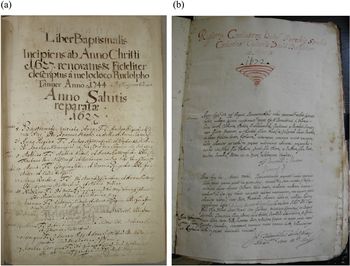
Because of the importance given to church rites, as symbols of belonging to a specific denomination, sacraments—and especially baptisms and marriages—were closely monitored and registered. The Council of Trent made their recording mandatory and Pope Paul V issued more detailed instructions.Footnote 75 Unlike in Gersau, where they were introduced under close communal supervision (fig. 2a), parish books kept in other Catholic communities often came to be one of the instruments of hierarchical control and confessionalization. From the point of view of this essay, our case studies thus illustrate that even conscientious implementation of the decrees of Trent—regarding both the administration of sacraments and the keeping of parish registers—failed to trump the influence of political and socioeconomic contexts.
(a) The first book of baptisms surviving for Gersau—an eighteenth-century copy of previously kept records—reaches back to the year 1627. The entries record at least dates plus the names of the infants, fathers, mothers, and godparents; occasionally they include supplementary parish information like the election of a new priest. Taufbuch, 1627–1807, Pfarreibuch, no. 3, Parish Archive, Gersau. Photograph by Beat Kümin. (b) Page from the Registrum coniugatorum of the parish of Bethlehem, starting in 1672, with signatures of the officiating priests. This record is part of the holdings of the Archivio storico della Custodia di Terra Santa, Jerusalem. Photograph by Felicita Tramontana.

Palestine offers particularly detailed information about church rites. At the beginning of the century, sacraments were recorded in common books for different places, with the earliest surviving example covering all baptisms in Ramleh, Jerusalem, and Bethlehem from the 1610s. This practice was probably linked to the low number of Catholics. Accordingly, with more and more conversions, each parish started to keep its own books for the various sacraments. The first separate book for Bethlehem records all the sacraments from 1618, and from 1669 Bethlehem and Jerusalem started keeping parish registers devoted to just one sacrament each (fig. 2b). The 1670s, in fact, represent a turning point from many points of view, starting with the practice of recording itself. Originally, sacraments were not registered at the time of administration but were probably instead copied into the book at a later stage; thus, none of the entries were signed. From 1672, however, they were written down immediately by the officiating clergyman (who certified the act with his own signature), as prescribed by the Roman ritual (1614). From that moment, moreover, the office of the parish priest itself gained in importance, another aspect that shows an increasing conformity with church reform. The latter not only promoted better clerical training but also personal residence, regular preaching, and reliable record keeping. Before the 1670s, sacraments had often been administered by the guardian of Jerusalem or the monastery, who would simultaneously exercise the office of parish priest. From that decade, in contrast, most of the entries feature the signature of another priest delegated by him. As in Gersau, we sometimes find additional information such as the appointment of a new parish priest (for example, Dionisio da Cutro in 1672), and in another intriguing parallel to the Alpine case study, clergymen retained their post for a limited time span, varying from a few months to some years. With regard to the level of detail recorded for each sacrament, canon law prescriptions seem to have been followed since the very beginning, with some personal variations but also a tendency toward greater uniformity over time. For baptisms, as at Gersau, most of the entries contain the name of the child, the relevant date, and the names of the parents and godparents. The mother's name, however, is sometimes missing and in many cases also the date of birth. Marriage records follow the prescriptions of the Tametsi decree,Footnote 76 featuring the presence of witnesses and the spouses’ consent verba de praesenti. They also report the pronouncement of three banns before the wedding, not only in the parish where the wedding was celebrated but also in those of the spouses. The records also mention any dispensations, mostly of consanguinity, which were awarded by the guardian of Jerusalem.
Overall, while parish registers from Palestine represent an aspect of parish life in close alignment with the prescriptions of Trent and canon law, important qualifications apply. First, as at Gersau (but for different reasons), the ecclesiastical hierarchy proved rather weak. In Palestine, the functions of the bishop were exercised by the vicar apostolic, that is, the Franciscan custos. In theory, all ecclesiastical matters fell under his power, but in practice, this was not always the case. Because of the growing competition between religious orders, some regulars refused to acknowledge the superior position of the custos. Rather than turning to him as an intermediary authority, they wrote directly to the Propaganda Fide in Rome. In addition, the enforcement of canon law in the area was a long and difficult process. As for other missionary territories, the analysis of the documentation kept by the Roman congregations reveals constant negotiation between the central church authorities, local clergy, and their flocks which accompanied the implementation of the Tridentine canons. For Palestine, evidence for these kinds of interactions derives from the dubia submitted to the Inquisition,Footnote 77 from the correspondence with the Propaganda Fide,Footnote 78 and from the parish books themselves. While openly attesting the formal respect of the canons of Trent, the latter also contain some hints on difficulties with regard, for example, to mixed marriages. Banned in principle by the Propaganda Fide, the liber coniugatorum in Bethlehem contains records of a few instances where such marriages took place, possibly no more than the tip of the iceberg. To adduce just one example from the 1670s, Custos Teofilo da Nola married some Bethlehem couples consisting of a Catholic and a Greek Orthodox spouse; the ceremonies took place in Jerusalem, apparently to avoid the “murmur grecorum” (mutterings of the Greeks).Footnote 79 Even more problematic were those marriages that were celebrated in Greek churches and in accordance with the Greek rite as they were followed by the return of the Catholic spouse (and sometimes even of his family) to the Greek Orthodox Church.Footnote 80
Mixed marriages (a phenomenon unknown in the denominationally homogeneous Gersau context) are only one of the problems that friars faced in Palestine. Other issues related to the comunicatio in sacris (sacramental sharing) with other denominations were commonly raised in correspondence with the Roman congregations, such as the Catholics’ participation in Orthodox ceremoniesFootnote 81 or the presence of hidden Catholics, who had secretly joined the Church of Rome but were still officially part of their former churches.Footnote 82 Among the friars’ efforts to have effective control over new Catholics, the centrality given to interactions with other denominations strongly suggests the existence of a connection between the implementation of canon law, on the one hand, and the construction of clear boundaries between denominations and more broadly of a Catholic identity, on the other. This connection influenced the negotiations between missionaries, local clergy, and the Roman congregations in the whole of the Middle East, mirroring the close relationship between social discipline and confessionalization, which characterized early modern European history.Footnote 83
VI. Conclusions
Inspired by recent work on the diversity of early modern Catholicism in increasingly global perspective, this article sets out to juxtapose two “extreme” examples of religious life on the periphery—one in Alpine Europe, the other in the Middle East. In spite of numerous contextual differences, their common denominator is the absence of Christian princes with state-building ambitions (and, thus, of a key component of the confessionalization paradigm). The preceding discussion of local government structures, ecclesiastical organization, and lay-clerical relations revealed that, in the late sixteenth and early seventeenth centuries, the administration of sacraments was gradually aligned to Tridentine norms, but also that the clerics faced continuing difficulties in disciplining their flocks, both in the well-established Catholic context of Gersau and during the first phases of missionary activity in Palestine. Many aspects of the analysis presented here reflect scholarly findings for other settings, particularly observations regarding the long duration of reform processes, the bottom-up influences on religious change, and the peculiar conditions in areas of confessional plurality. If anything, however, the absence of state backing led to even lower levels of external interference than elsewhere. At Gersau, priests needed to adapt to a local republican regime with rights of patronage and control over benefice affairs; in Palestine, the Franciscans resorted to material “incentives,” not least to stem competition from rivalling religious orders.
All in all, studying early modern Catholicism by placing “extreme” cases alongside other, more typical communities reveals it to be a very “broad church,” not just from political, social, and economic perspectives but also in terms of spiritual organization. Our comparative investigation accentuates the question of whether there was such a thing as a post-Tridentine “standard” at all. The burghers of Gersau maximized lay influence within the Tridentine ideal of a territorial parish with resident parsons, tightly defined boundaries, and a confessionally homogeneous population;Footnote 84 the Franciscans of the Holy Land—as regulars rather than diocesan agents—administered the cure of souls through a more punctual network of poorly institutionalized “sacrament centers” for small groups of converts within an overwhelmingly non-Christian environment. Apart from lay powers and local organization, other key variables include the strength of archidiaconal and diocesan structures, which—again—were near-absent in both case studies.
What appears at Gersau might be termed Reformed Catholicism without hierarchization and diocesan consolidation, while the Holy Land saw the emergence of a post-Tridentine system without classical parishes. Decentralizing the viewpoints, therefore, gets us closer to early modern religious experience and enriches our understanding of local communities as individually negotiated manifestations of a global brand.
Acknowledgments
This research has been funded by the European Union's Horizon 2020 research and innovation programme, Marie Skłodowska Curie-Actions, Project: MIGMED; Grant Agreement n. 657118; and by a research grant awarded by the British Academy.