Introduction
Trauma is the leading cause of death in the United States for people under the age of 44. 1 Thoracic injuries are common and may be a contributing factor in up to 60 percent of deaths in the setting of multisystem trauma. 2 Many life-threatening injuries to the thorax cannot be treated in the prehospital setting; however, tension pneumothorax, which can cause death within minutes of occurrence, can be temporized by the use of needle thoracostomy (NT), which converts a tension pneumothorax to a simple pneumothorax. Needle thoracostomy is also one of the few interventions that has been shown to make a difference in survival for prehospital traumatic cardiac arrest.Reference Lockey, Crewdson and Davies 3 , Reference Leis, Hernandez, Blanoc, Paterna, Hernandez and Torres 4
The American College of Surgeons (Chicago, Illinois USA) Advanced Trauma Life Support and Prehospital Trauma Life Support courses currently recommend NT as a treatment for presumed tension pneumothorax until a tube thoracostomy can be performed, and a majority of urban Emergency Medical Service (EMS) systems allow the use of NT in patients with traumatic cardiac arrest or severe chest trauma. 2 , 5 - Reference Warner, Copass and Bulger 8 This being said, there is extreme variability in the use of NT in urban settings and ongoing concerns regarding inappropriate patient selection, NT misplacement leading to iatrogenic injury, and treatment failures due to improper equipment and body habitus.Reference Bulger, Nathens and Rivara 6 - Reference Warner, Copass and Bulger 8 Even less is known about the utility of this procedure in rural or wilderness environments where patients can face prolonged transport times to definitive care. In such settings, the benefit of NT may outweigh any potential risks due to delays in reaching a setting where tube thoracostomy can be performed.
The primary purpose of this study was to assess whether there is a difference in survival of patients who underwent NT in the setting of prolonged transport times versus those with short transport times in an EMS system that includes urban, rural, and wilderness settings. A secondary objective was to describe differences in mechanisms and complications in these two groups.
Methods
This was a retrospective, matched, case-control study of all trauma patients cared for by the Central California EMS Agency (CCEMSA; Fresno, California USA) during the time period from April 1, 2007 through April 1, 2013.
The CCEMSA serves four counties (Fresno, Kings, Madera, and Tulare) with a wilderness, rural, and urban catchment of greater than 1.6 million persons.Reference McCraig 9 It is a 2-tiered EMS system, with the first response staffed by emergency medical technician-firefighters who are trained to provide Basic Life Support, and the second tier staffed by paramedics who are trained to provide Advanced Life Support. There is one primary prehospital provider for the CCEMSA, but there are also several smaller provider agencies, a mixture of fire-service-based and private companies, that provide care in the more remote areas of the jurisdiction. Community Regional Medical Center (Fresno, California USA) is the only Level One trauma center for the region and receives all patients with serious trauma. Care by both first responders and paramedics is protocol driven, with the option to contact a base hospital for further orders or assistance. There are 37 paramedic treatment protocols that are based on chief complaint. The trauma treatment protocol allows for the use of NT in the setting of trauma arrest and when tension pneumothorax is suspected if the patient is hypotensive with a systolic blood pressure of less than 90. The procedure for NT includes using a 14 gauge intravenous catheter that is at least two inches long for adult patients and placement of the NT at the second intercostal space, mid-clavicular line on the side with decreased breath sounds, or bilaterally for patients in trauma arrest. When there is air return, the paramedic advances the catheter and removes the needle. A one-way valve is then attached to the catheter hub and the catheter is secured to the chest wall.
Beginning in 2007, the CCEMSA required all its providers to maintain an electronic prehospital care report (PCR). A PCR is entered by paramedics, for all encounters in the CCEMSA’s jurisdiction, into a program named SIMON (American Ambulance; Fresno, California USA). This information is then stored in an electronic data base called NOMIS (American Ambulance; Fresno, California USA). SIMON and NOMIS are software programs that were developed by American Ambulance and continue to be managed and monitored by this agency. SIMON is designed so that all key information must be entered by the paramedics before they can finish and print the PCR. Data from NOMIS are only accessed for quality improvement and for research projects that are approved by an Institutional Review Board and by the CCEMSA.
NOMIS was queried for all patients who accessed EMS during the study period with a chief complaint of trauma and who also underwent NT. This search revealed 182 patients. When these calls were limited to those with a greater than 60 minute total transport time, the search was narrowed to 32 cases. Each of these patients was then matched with a control from the remaining 150 patients with short transport times using a computerized search of the Excel 2010 Spreadsheet (Microsoft; Redmond, Washington USA), using the same age and gender. Sixty minutes was chosen as the delineation between prolonged and short transport times because the delay to definitive care of greater than one hour is often used to describe wilderness medicine and care in remote settings. 2 , Reference Tilton and Hubbell 10
Prehospital data collected from the NOMIS records included: age; sex; personal identifiers; mechanism of injury; call status (stat trauma versus trauma arrest); unilateral or bilateral NT; positive response to NT, defined as an improvement in vital signs or patient condition; need for repeat NT; time to scene; time on scene; transport time to hospital; total transport time; and mode of transportation. The CCEMSA defines a stat trauma as a patient with a potentially life- or limb-threatening condition, who is unstable or has a rapidly changing status, as identified by the assessment and vital signs. A trauma arrest is a patient found in the setting of trauma who is pulseless and not breathing.
Prehospital records were linked to hospital records using personal identifiers including name, age, date of service, and medical record number. Hospital data collected included: need for repeat NT; chest tube placement; reported complications due to NT; and final outcome. All prehospital and hospital data were manually extracted by principal investigators and entered into an Excel 2010 Spreadsheet where means and standard deviations were calculated, when appropriate.
Although this was mainly a descriptive study, data was imported into SPSS version 20.0.0 (IBM; Chicago, Illinois USA) where univariate and multivariate analyses were conducted, as appropriate, to assess the primary outcome of survival between the case and control groups, as well as to compare differences in mechanism and complications.
This study was approved by the Community Medical Centers/University of California San Francisco Fresno (Fresno, California USA) Institutional Review Board and by the CCEMSA.
Results
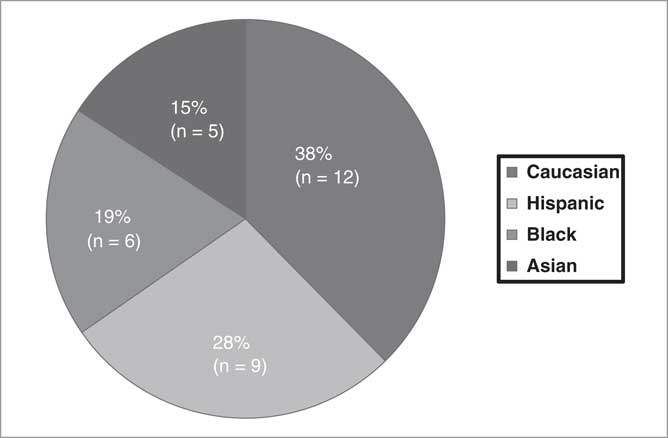
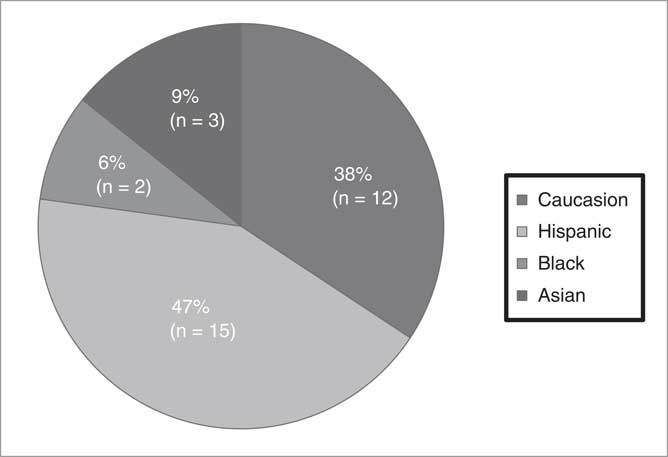
The mean age in both groups was 40, and 84% of the patients were male. Caucasian was the identified ethnicity for 38% of the patients in both the case and control groups, but there were other differences in ethnic breakdown between the two groups (Figure 1 and Figure 2).
Ethnic Breakdown of Patients with Short Transport Times.

Ethnic Breakdown of Patients with Prolonged Transport Times.

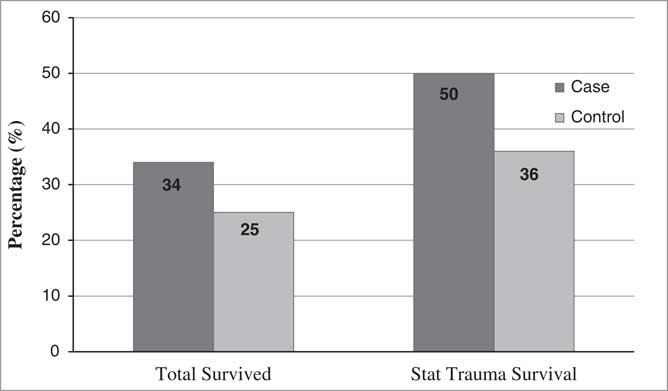
With regard to the primary outcome measure of survival, when the two groups were looked at in a dichotomous manner (short versus prolonged transport times), there was no significant difference between the two group: 11 (34%) of the patients with prolonged transport times survived to hospital discharge in comparison to the control group where 8 (25%) survived (P=.41; Figure 3). All trauma arrest patients in both groups failed to be resuscitated and were declared dead at the hospital. When trauma arrest patients were removed from the comparison, survival rates were 50% in the patients with prolonged transport times and 36% in the control group (P=.184; Figure 3).
Overall Survival Rate and Stat Trauma Survival Rate in Case (Prolonged Transport) and Control (Short Transport) Groups.

The primary outcome of survival was also evaluated, looking at total transport time as a continuous variable, assessed in minutes, and a multivariate logistic regression model was developed. In this model, total time was treated as the independent variable and survival was treated as the dependent variable. The resulting regression coefficient was B=−0.015, which equates to an odds ratio=0.985 (95% CI, 0.97-1.0; P=.18), again supporting that there was no significant difference between the case and control groups.
Finally, to control for any additional covariates between the case and control groups, a multivariate logistic regression model was constructed that took into account: mechanism of trauma (blunt versus penetrating); call status (stat trauma versus trauma arrest); and reported clinical improvement after NT. The inclusion of these covariates also did not change the association between transport time and survival (odds ratio=0.99; 95% CI, 0.96-1.02; P=.57).
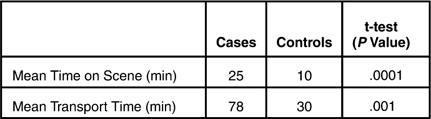
With regard to the more descriptive aspects of this study, as expected, the total transport times were significantly greater in the case (prolong transport time) group when compared to the control. Of interest, time on scene was also longer in the case group (Table 1).
Comparisons Between the Case (Prolonged Transport) and Matched Controls (Short Transport) Regarding Time on Scene and Total Transport Time

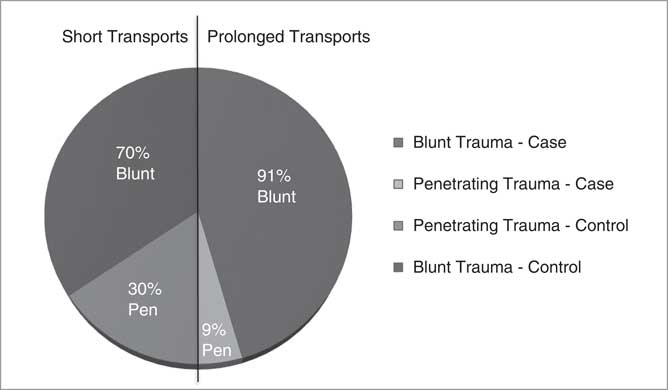
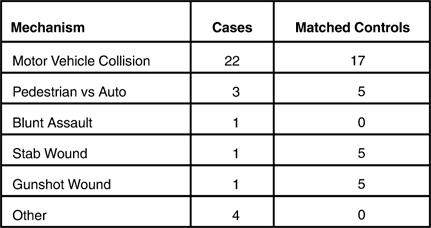
Blunt trauma was the most common mechanism in both groups; however, penetrating trauma was more common in patients with short transport times (30% vs 9%; P=.003; Figure 4). Motor vehicle collision was the most common form of blunt trauma, and stab wounds and gunshot wounds were the main causes of penetrating trauma (Table 2).
Mechanism of Trauma for Case (Prolonged Transport) and Control (Short Transport) Groups.

Mechanism of Injury in the Study Group and Matched Controls

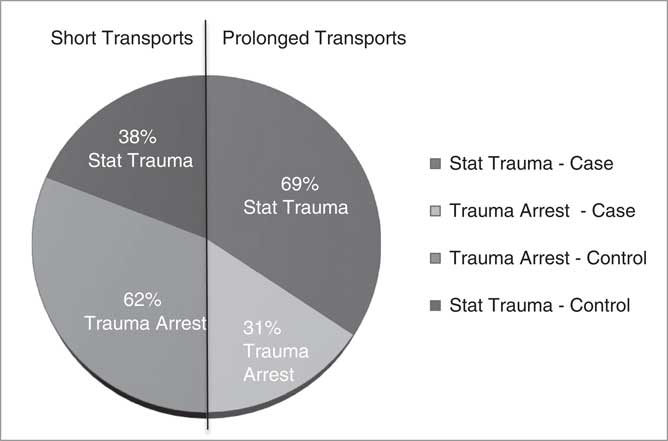
Patients with short transport times were more likely to present as trauma arrests (62% vs 31%; P=.003; Figure 5). Eleven patients in the prolonged transport time group were described as having improvement after NT compared with six in the control group (34% vs 19%; P=.03). No patient in either group underwent repeat NT.
Code Status for Case (Prolonged Transport) and Control (Short Transport) Groups.

All patients who survived to discharge had a final diagnosis that included chest trauma and pneumothorax or hemothorax on the side where the prehospital NT was performed. No complications of NT were documented in the hospital records of any of the patients, including review of operative records in the four patients (three in the case and one in the control group) who underwent thoracotomy.
Discussion
Prehospital NT, in the setting of traumatic cardiac arrest or suspected tension pneumothorax, is a procedure that is included in the scope of practice for paramedics in the majority of United States EMS systems.Reference Warner, Copass and Bulger 8 , Reference Leigh-Smith and Harris 11
Tension pneumothorax is a rapidly progressive and life-threatening process that, if not recognized quickly and treated, leads to cardiovascular collapse. 2 - Reference Leis, Hernandez, Blanoc, Paterna, Hernandez and Torres 4 Although some aeromedical nurse/paramedic teams in the US perform tube thoracostomy, NT is the only technique that ground paramedics have to treat this condition.Reference Mistry, Bleetman and Roberts 12 Needle thoracostomy can decrease intrathoracic pressure temporarily to allow adequate venous return to the heart until tube thoracostomy can be performed. 2
An attempt to elucidate differing characteristics between patients who underwent NT with prolonged versus short transport times, with regard to the primary outcome of survival, revealed no significant difference between the two groups. However, when looking at more descriptive data, some interesting differences were discovered. Patients with prolonged transport times were more likely to have sustained blunt trauma as their mechanism of injury. This is consistent with other studies that have shown that people in rural areas are less likely to be victims of violent crime and are thus less likely to sustain penetrating trauma.Reference Peek-Asa, Zwerling and Stallones 13
More patients with prolonged transport times had vital signs when paramedics arrived on scene. The cause of this difference in comparison to the control group is most likely multifactorial; however, the fact that the prolonged transport group had more patients with a blunt mechanism is a major contributing factor. Previous studies have suggested that patients with blunt thoracic injuries are more likely to survive to hospital arrival than those with penetrating trauma.Reference Dosios, Salemis, Angouras and Nonas 14 , Reference Swaroop, Straus and Agubuzu 15
Patients in the case group were also more likely to have improvement after NT. This is most likely in part because more patients in this group had vital signs on paramedic arrival. Previous studies have suggested that patients who most benefit from NT are those who are in extremis but still have vital signs.Reference Lockey, Crewdson and Davies 3 , Reference Leis, Hernandez, Blanoc, Paterna, Hernandez and Torres 4 , Reference Eckstein and Suyehara 7 , Reference Warner, Copass and Bulger 8
Of interest, patients with prolonged transport times also had prolonged on scene times. This might suggest that these cases were more complicated or that it took more time to get the adequate resources on scene to care for the patient, as has been suggested in previous studies.Reference Peek-Asa, Zwerling and Stallones 13
There were no reported complications of NT in either the case or control group.
Limitations
The primary limitations of this study were its retrospective nature and the small sample size. Although the descriptive aspects of the study were not affected by these limitations, the statistical analysis is of limited value due to lack of power.
Another limitation was that, during the study period, the protocol for NT only required a 14 gauge needle at least two inches long. Recent studies have suggested the need for larger and longer needles and the potential benefit of a mid-axillary versus the previous mid-clavicular line approach.
Finally, there was no way to determine which patients had a true tension pneumothorax prior to NT. Thus, the possibility of creation of iatrogenic pneumothorax due to NT could not be ruled out.
Conclusions
There was no significant difference in survival rates in patients who underwent NT when comparing prolonged to short transport times. No complications of NT were reported in the hospital records in either group. Patients with prolonged transport times who underwent NT in the prehospital setting were more likely to have sustained blunt trauma, to have vital signs on EMS arrival, and to have clinical improvement after NT when compared with a control population with short transport times.
Acknowledgements
This manuscript was presented at the 2014 National Association of EMS Physicians (Olathe, Kansas USA) Annual Meeting, January 16-18, Tucson, Arizona USA. The authors would like to thank Dr. Paul Mills for his assistance with statistical analysis of the data.