Although natural disasters are often perceived solely as physical events, their escalation into full-scale disasters is, in fact, closely linked to underlying social vulnerabilities. Natural hazards such as hurricanes, earthquakes, and floods do not merely impact the physical environment; they disproportionately affect communities that are rendered vulnerable by poverty, social exclusion, inequality, and inadequate infrastructure. 1 , Reference Wesner, Gaillard and Kelman 2 In this light, disasters should be understood not only as outcomes of natural processes but also as manifestations of social structures. Consequently, effective disaster risk reduction requires the integration of physical interventions with policies explicitly designed to address social inequalities.Reference Cutter, Boruff and Shirley 3
On February 6, 2023, at 04:17 and 13:24 Turkish time, two devastating earthquakes, with magnitudes of Mw 7.7 and Mw 7.6 respectively, occurred with epicenters in Pazarcik (Kahramanmaras) and Elbistan (Kahramanmaras). 4 , 5 The Kahramanmaras Earthquakes (2023), considered the largest and most destructive earthquakes in the history of the Republic, affected an area of 108 812 km2 covering 11 provinces (Adana, Adiyaman, Diyarbakır, Elaziğ, Gaziantep, Hatay, Kahramanmaras, Kilis, Malatya, Osmaniye, and Sanliurfa). 5 , 6 The Kahramanmaras Earthquakes (2023) were classified as a level 4 disaster, prompting requests for national and international assistance. 4 Over the 23 days following the earthquake, 11 020 aftershocks were recorded. 7 The findings from damage assessment studies unveiled the extent of devastation within the earthquake zone: 35 355 buildings collapsed, while an additional 17 491 were deemed urgently in need of demolition. Furthermore, 179 786 structures were classified as severely damaged, with 40 228 showing moderate damage, and 431 421 exhibiting slight damage. 8 A total of 9 207 204 individuals were affected by the Kahramanmaras Earthquakes (2023), with 50 339 fatalities reported. 5 , 9 Furthermore, more than 216 000 people were displaced. 9 The conditions in the region where these massive destructions occurred can significantly impact the psychology of the disaster victims.
In addition to physical injuries, disaster survivors experience many mental health problems due to anxiety and fear.Reference Haden, Scarpa and Jones 10 , Reference Park and Bae 11 Therefore, alongside addressing the physical effects, such as death and injury following a disaster, it is crucial to rapidly address the psychological effects as well.Reference Hobfoll, Watson and Bell 12 If these traumatic emotions are not addressed, disaster survivors may experience mental health problems such as sleep disorders,Reference Narmandakh, Roest and de 13 , Reference Lai, La Greca and Colgan 14 SP,Reference Elling, Forstner and Seib-Pfeifer 15 depression,Reference Alfano, Zakem and Costa 16 suicidal tendencies,Reference Karimi, Bazyar and Malekyan 17 PTSD,Reference Wang and You 18 and other mental health issues. These mental health problems also negatively impact adolescents.Reference Danese, Smith and Chitsabesan 19
The severity of disaster experiences and exposure to trauma significantly predict mental health problems.Reference Crum, Cornacchio and Coxe 20 , Reference Comer, Dantowitz and Chou 21 Additionally, mental health problems observed during childhood and adolescence can persist into adulthood and increase the risk of comorbidity.Reference Mohammadi, Badrfam and Khaleghi 22 , Reference Adebäck, Schulman and Nilsson 23 For example, a study conducted in China reported the continued effects of depression and anxiety disorders six months after an earthquake.Reference McDermott and Cobham 24 For these reasons, children and adolescents are among the vulnerable groups in disasters.Reference Balaban 25 Moreover, natural disasters such as earthquakes and floods particularly lead to mental health problems in adolescents.Reference Esterwood and Saeed 26 In adolescent disaster survivors, various mental health problems such as PTSD,Reference Wang, Shi and Chen 27 SAD,Reference Hoven, Duarte and Wu 28 depression,Reference Kar 29 GAD,Reference Li, Duan and Chen 30 and SPReference Hayward, Killen and Kraemer 31 are observed.
SAD is one of the common anxiety disorders seen during adolescence and affects the developmental process of adolescent disaster survivors.Reference Behmanesh, Alhosseini and Azadi 32 , Reference Lawrence, Murayama and Creswell 33 This mental health problem (SAD), also leads to other mental health issues such as PTSD and depression.Reference Allen, Blatter-Meunier and Ursprung 34 PTSD is a mental health problem studied in various groups (such as women, children, adolescents, etc.) and its effects are extensively researched.Reference Punamäki and Sezgin 35 , Reference Vetter, Rossegger and Rossler 36 PTSD is also a risk factor for SAD and leads to difficulties such as adolescent traumas and disruptions within the family.Reference Milrod, Keefe and Choo 37 In a study, depression was observed alongside PTSD in displaced children and adolescents.Reference Ahmad 38 Additionally, it is known that the combination of SAD and depression in adolescent disaster survivors leads to negative outcomes such as suicide and other phobias.Reference Feldman and Wilson 39 Furthermore, SP is another mental health problem that affects SAD and is among the anxiety disorders following concerns about physical injury in disasters.Reference Moalla, Reagu and Alabdulla 40 Moreover, in research, it has been noticed that while PTSD effects tend to be focused on adolescent disaster survivors, GAD, an important issue, is often overlooked.Reference Varner, Langhinrichsen-Rohling and Bell 41 , Reference Acierno, Ruggiero and Galea 42 However, individuals with GAD and SAD experience fear of being alone and abandonment, negatively impacting their lives.Reference Eisen and Schaefer 43
Outside of disasters, SAD is known to cause school phobia in children and adolescents.Reference Hanna, Fischer and Fluent 44 SAD has been studied in various sample groups such as women,Reference Anwar, Mpofu and Matthews 45 adults,Reference Silove, Momartin and Marnane 46 the elderly,Reference Wijeratne and Manicavasagar 47 individuals with disabilities,Reference Jonker, Sterkenburg and Van Rensburg 48 and parents.Reference Li and Zhou 49 In the field of disaster management, separation anxiety has been studied in various other disasters besides earthquakes such as floods,Reference Fatima and Rana 50 attacks,Reference Hoven, Duarte and Lucas 51 wars,Reference Silove, Momartin and Marnane 46 and migrations.Reference Liu, Li and Ge 52 Regarding adolescent disaster survivors, there are studies that separately examine separation anxiety with PTSD,Reference Rezayat, Sahebdel and Jafari 53 -Reference Dyregrov and Yule 55 GAD,Reference Kar, Kumar Bastia and Kumar 56 , Reference Li, Duan and Chen 57 depression,Reference Boelen 58 and SP.Reference Blasco-Belled, Tejada-Gallardo and Torrelles-Nadal 59
Studies on adolescent disaster survivors generally examine PTSD and depression.Reference Baddam John, Russell and Russell 60 -Reference Felton, Cole and Martin 62 Additionally, most studies on separation anxiety in disasters focus on either the relationship between parents and adolescents or on individuals in childhood.Reference Bountress, Gilmore and Metzger 63 -Reference Cobham, McDermott and Haslam 65 Due to the limited number of studies on separation anxiety in disasters among adolescents, current research suggests more detailed and up-to-date studies.Reference Hoven, Duarte and Wu 28 In this context, the information obtained from the tests and scales applied during the Kahramanmaras Earthquakes (2023), which are the most devastating earthquakes in the Republic of Turkey, will contribute to the literature. Additionally, this study focuses on one of the most vulnerable groups, adolescents, and is expected to contribute to the literature in disaster psychology. In this study, first, separation anxiety disorder will be measured in adolescents exposed to the Kahramanmaras Earthquakes (2023). Then, the impact of PTSD, SP, GAD, and depression on SAD will be investigated. The aim of the study is to answer the following questions:
-
1 What is the level of SAD among adolescent earthquake survivors?
-
2 What are the levels of PTSD, depression, SP, and GAD among adolescent earthquake survivors?
-
3 Are mental health problems such as PTSD, depression, SP, and GAD effective in influencing separation anxiety?
1. Theoretical Background, Research Model, and Hypotheses
SAD is defined as the experience of intense stress, anxiety, and fear in situations of separation from an attachment figure (typically a parent or primary caregiver). 66 Adolescence, on the other hand, can be regarded as a critical developmental period in which the individual undergoes identity formation and progresses toward achieving independence. Mental health problems experienced during this stage negatively impact future academic achievement, social adjustment, and emotional development.Reference Marchetti, Pedretti and Iannattone 67 Therefore, examining SAD in adolescents will not only support healthy adolescent development but also contribute to the existing body of literature.Reference Kerns, Tomich and Aspelmeier 68
SP is known as the tendency to avoid crowded environments due to the intense anxiety experienced in such settings. 66 With the acquisition of peer relationships and social life during adolescence, adolescents experiencing SP in this period face negative impacts on their academic performance and psychological well-being.Reference La Greca and Stone 69 Therefore, SP has become a subject of academic interest in terms of improving the mental health of adolescents.
GAD is a mental health condition defined as excessive and difficult-to-control worries related to daily life events. 66 GAD experienced during adolescence negatively affects academic success, emotional development, and social life.Reference Costello, Mustillo and Erkanli 70 Accordingly, investigating GAD, which adversely influences adolescents’ lives, holds significant importance in the literature, particularly in minimizing potential mental health problems during adulthood.
PTSD is a mental health condition that develops as a result of exposure to an event that threatens one’s life or generates intense feelings of fear, horror, and helplessness. 66 This condition can manifest through reexperiencing, avoidance behaviors, and heightened arousal symptoms. Traumatic experiences during adolescence can leave lasting impacts on an individual’s emotional life and interpersonal communication.Reference McLaughlin, Koenen and Hill 71 Therefore, research in this area provides a critical scientific basis for the development of both clinical interventions and preventive policies.
Depression is a mental health disorder characterized by persistent sadness, hopelessness, and impairment in functioning. 66 Depression experienced during adolescence has been a long-standing priority in academic research due to its significant consequences, not only in social relationships but also in creating vulnerability to mental health problems later in life, particularly in terms of diagnosis and intervention.Reference Kessler, Avenevoli and Merikangas 72
Additionally, the age range of 11-17 years, as defined by the American Psychiatric Association (APA), developmentally corresponds to the adolescent period and, within the context of the Turkish education system, aligns with middle and high school students. 66 In Turkey, middle school education begins in the fifth grade and concludes at the end of the eighth grade (approximately ages 10-14), while high school education spans from the ninth to the 12th grade (approximately ages 14-18). Therefore, the 11-17 age group identified as adolescence in the DSM-5 by the APA refers to the student population encompassing both middle and high school levels in Turkey.
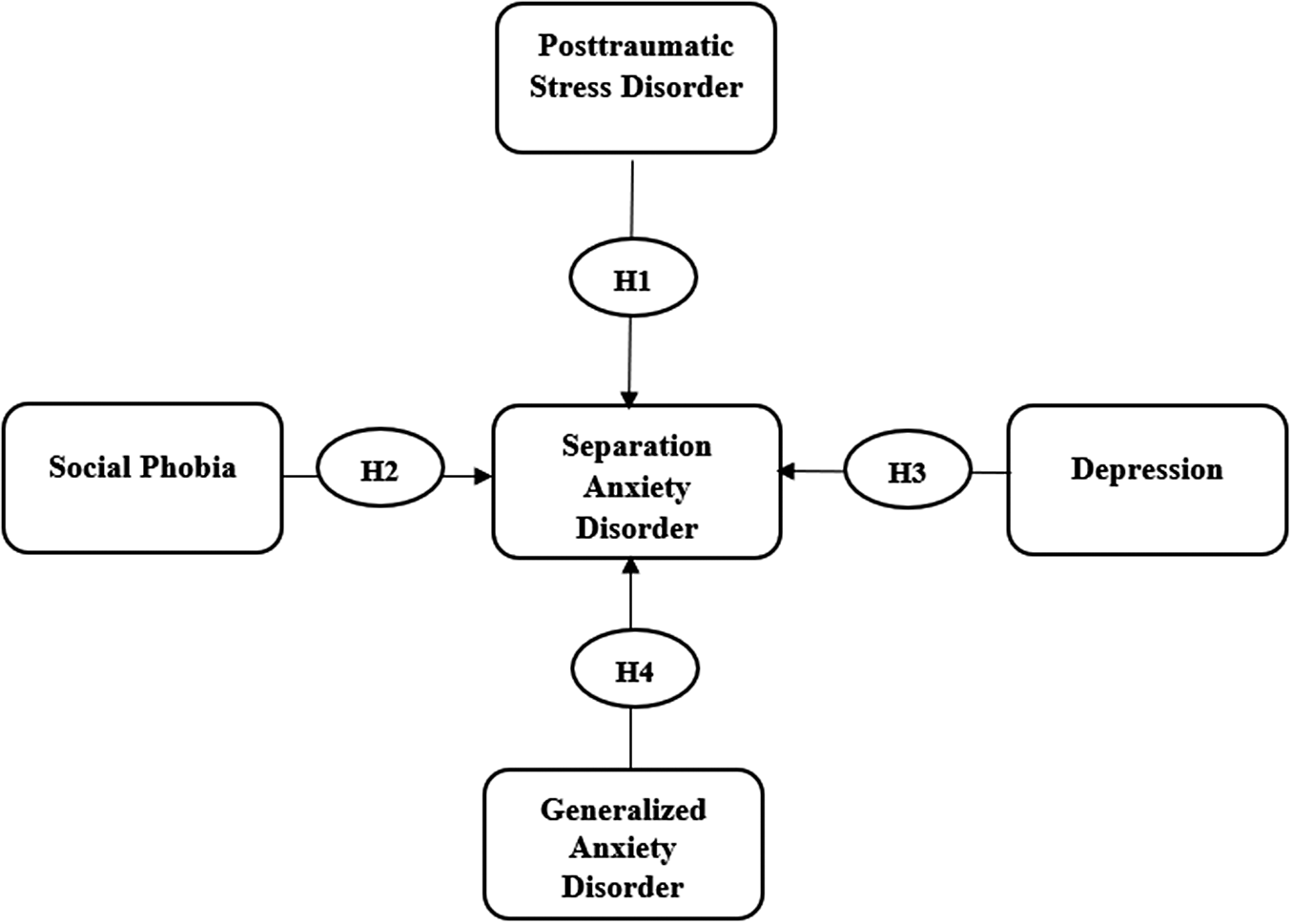
The independent variables used in the study were created based on the current research findings obtained from the literature review. Four hypotheses were tested in this study to examine the factors influencing SAD in adolescent earthquake survivors. The model tested in the study is presented in Figure 1.
Research model.

PTSD and separation anxiety are two psychological conditions that can significantly affect an individual’s mental health. In individuals exposed to disasters, PTSD can be observed alongside effects of the disaster such as loss of life and fear of separation from loved ones. Similarly, adolescents who are a vulnerable group in disasters may experience mental health problems, such as PTSD, when they face any disaster. In adolescent disaster survivors who develop PTSD, SAD may occur due to the impact of trauma and the fear of detachment from attachment figures. It is known that adolescents facing the threat of being displaced, and therefore separated from their loved ones, may exhibit PTSD symptoms.Reference Olness 73 In a study examining SAD symptoms in pregnant women seeking emergency care in East Timor, experiencing stresses such as partner conflict, traumatic loss, and family conflict was associated with separation anxiety.Reference Silove, Tay and Tol 74 In a study examining separation anxiety in 166 patients with complicated grief and PTSD, it was found that women experiencing PTSD or complicated grief had higher symptoms of SAD compared to men.Reference Dell’Osso, Carmassi and Musetti 75 In a study involving 70 preschool children who survived the 2005 Hurricane Katrina, oppositional defiant disorder or SAD along with PTSD were found to be the most prevalent mental health issues.Reference Scheeringa and Zeanah 76 In a study investigating the psychiatric symptoms of adolescents who survived the 2008 Wenchuan earthquake, a significant and positive relationship was found between PTSD and SAD six and eighteen months after the earthquake.Reference Geng, Liang and Shi 77 It was found that there was a high rate of comorbidity between PTSD and SAD in children affected by the World Trade Center attack.Reference Hoven, Duarte and Wu 78 In contrast, a study examining symptoms of internalizing disorders among teenagers during the 1998 Hurricane Georges found a prevalence of 6.1% for separation anxiety and 1.1% for PTSD symptoms.Reference Rubens, Vernberg and Felix 79 Current research indicates that PTSD leads to separation anxiety. Additionally, there are some inconsistencies between PTSD and SAD in the literature. Analyses conducted in this study will contribute to a better understanding of the relationship between PTSD and separation anxiety. Based on the current literature, Hypothesis 1 is proposed to test the relationship between PTSD and SAD in this study.
Hypothesis 1 (H1): In adolescents affected by the Kahramanmaras Earthquakes (2023), there will be a significant and positive relationship between PTSD and SAD.
Adolescence is a critical developmental period characterized by numerous physical, cognitive, and emotional changes. During this time, individuals begin to navigate the complexities of social interactions and form their own identities. However, for some adolescents, this developmental stage can be fraught with challenges such as SAD and SP. SAD and SP are commonly co-occurring at high levels.Reference Hughes, Mohatt and Bennett 80 A study conducted on elementary school children found that children with SP and SAD had similar patterns of interpreting situations, indicating that these two mental health problems can coexist.Reference Bögels, Snieder and Kindt 81 In a study examining symptoms of SP and SAD in community and clinical samples, it was observed that women were more likely than men to exhibit both SP and SAD symptoms simultaneously.Reference Compton, Nelson and March 82 In a study involving genetic analysis, the highest correlation among hereditary mental health disorders was found between SAD and SP.Reference Eley, Rijsdijk and Perrin 83 Research highlights that school refusal in boys aged 6-18 with autism who experience bullying at school is due to stress from separation from their parents rather than avoiding social situations.Reference Bitsika, Sharpley and Heyne 84 Current research indicates that traumatic events trigger both SP and SAD in adolescents. Additionally, SP has shown a high correlation with SAD. Based on the current literature, Hypothesis 2 is proposed in this study to test the relationship between SP and SAD.
Hypothesis 2 (H2): In adolescents affected by the Kahramanmaras Earthquakes (2023), there will be a significant and positive relationship between SP and SAD.
GAD and SAD are significant mental health issues that can profoundly impact adolescents’ lives. These mental health disorders may have negative effects on adolescents’ social relationships and overall well-being. In other words, negative emotions experienced with GAD may trigger SAD and create adverse effects in adolescent disaster survivors. Symptoms of SAD and GAD tend to manifest at an early age and exhibit high comorbidity.Reference Hughes, Mohatt and Bennett 80 In a study investigating the relationship among mental health issues in adolescents aged 10-17, it was observed that SAD and GAD provided high comorbidity values.Reference Júnior, da, Gomes and de 85 Another study, examining GAD and other mental health issues in a sample comprising 5 children, 12 adolescents, and 93 adults aged 12-67, predicted that untreated GAD in adolescents could lead to the development of SAD symptoms.Reference Showraki, Showraki and Brown 86 A study conducted in Iran investigating the prevalence and comorbidity of GAD among children and adolescents aged 6-18 indicated that the most common mental health issue observed alongside GAD was separation anxiety, with a prevalence rate of 29.8%.Reference Mohammadi, Pourdehghan and Mostafavi 87 In a study on adolescents exposed to the 2013 Ya’an earthquake in China three years after the earthquake, which explored anxiety subtypes, it was found that adolescents with GAD symptoms also exhibited SAD symptoms.Reference Tang, Xu and Xu 88 Reviewing the literature, it is generally observed that individuals with GAD symptoms also exhibit SAD symptoms. GAD symptoms can be a risk factor for developing SAD symptoms. It is predicted that early treatment of GAD symptoms will reduce SAD symptoms. Investigating the relationship between GAD and SAD in adolescents exposed to the Kahramanmaras Earthquakes (2023), the most significant and devastating earthquakes in the Republic of Turkey, will contribute to the literature. Based on the current literature, Hypothesis 3 is proposed in this study to test the relationship between GAD and SAD.
Hypothesis 3 (H3): In adolescents affected by the Kahramanmaras Earthquakes (2023), there will be a significant and positive relationship between GAD and SAD.
Depression in adolescent disaster survivors is not only a serious mental health issue but can also lead to other mental health problems. In adolescents affected by the disaster, the presence of depression may lead the adolescent to seek only their loved ones by their side. They may experience fear of losing or being separated from their loved ones due to the traumatic event. Confronting traumatic events in adolescents triggers the relationship between depression and other mental health issues.Reference Weems, Russell and Neill 89 Bosnian refugee adolescents arriving in the United States were observed to meet depression criteria a few months later.Reference Weine, Becker and McGlashan 90 A study examining migration from rural to urban areas in China revealed that adolescents separated from their parents had high levels of separation anxiety and depression.Reference Liu, Li and Ge 52 A study investigating the depression symptoms of individuals separated from their families during World War II indicated that those separated from their parents showed more severe depression symptoms in the third year, during school age, and when they reached adulthood.Reference Pesonen, Räikkönen and Heinonen 91 In a study investigating the relationship between depression and anxiety in pregnant mothers with SAD, a significant relationship was found between depression and SAD.Reference Eapen, Johnston and Apler 92 Current literature indicates that depression has a predictive effect on SAD symptoms. Conversely, SAD may also lead to depression. Testing conducted in the current study will contribute to a clearer understanding of the relationship between SAD and depression. Based on the current literature, Hypothesis 4 is proposed in this study to test the relationship between depression and SAD.
Hypothesis 4 (H4): In adolescents affected by the Kahramanmaras Earthquakes (2023), depression will have a significant and positive effect on SAD.
2. Methods
2.1. Research Design
In the research, descriptive research methods were employed. Quantitative research methods were used as Likert-type scales were applied to investigate whether PTSD, SP, GAD, and depression are associated with SAD. The research followed both a correlational survey design and a causal comparative design. A correlational survey design is a quantitative research design that examines the relationship between different variables by measuring the variables.Reference Heath 93 A causal comparative design involves comparing samples that are different in terms of one variable but similar in other aspects.Reference Ahmadvand and Karami 94
2.2. Study Area
In Turkey, there are three main fault lines: the North Anatolian Fault Zone (NAF), the East Anatolian Fault Zone (EAF), and the West Anatolian Fault Zone (WAF).Reference Öcal 95 The Kahramanmaras Earthquakes (2023) occurred on February 6, 2023. The first one took place on the Pazarcık Segment of the EAF main branch, covering 82 km within the Narlı Fault, while the second one occurred on the Cardak Fault, an 85 km long segment of the northern branch of the EAF. 96 The epicenters of the earthquakes are shown in Figure 2. The Kahramanmaras Earthquakes (2023) were the largest and most destructive earthquakes in the history of the Republic, affecting a total of 11 provinces: 5 in the Mediterranean Region (Adana, Hatay, Kahramanmaras, Kilis, Osmaniye), 4 in the Southeastern Anatolia Region (Adıyaman, Diyarbakir, Gaziantep, Sanliurfa), and 2 in the Eastern Anatolia Region (Elazig, Malatya). 4
Representation of Kahramanmaras Earthquake (2023) epicenters on the map. 97

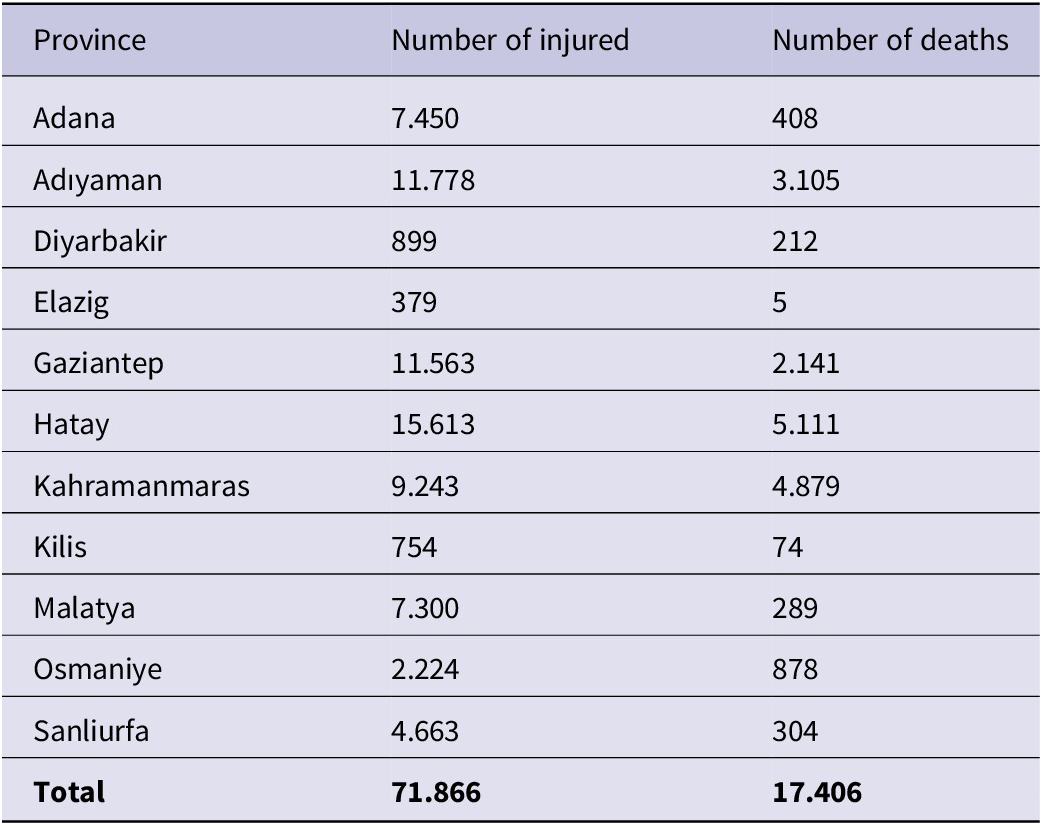
While approximately 15.8 million people reside in the earthquake-stricken area, a press release issued by the Ministry of Health on April 4, 2023, 98 reported a total of 17 406 fatalities across 11 provinces. 98 The number of injured and deceased individuals by province is shown in Table 1. Hatay province recorded the highest number of fatalities in the earthquake, while Elazig province had the lowest. Out of the affected provinces, 1 971 589 individuals were evacuated. To address their housing, personal hygiene, and nutrition needs, authorities set up 8500 containers, 332 tent cities, 360 167 tents, 2284 mobile showers, 5058 toilets, and 369 mobile kitchens in the earthquake-stricken area. 7 , 99 Additionally, transportation issues were experienced in the region. Adıyaman, Hatay, Kahramanmaras, and Malatya airports sustained damage, affecting road transportation to 11 provinces and neighboring areas significantly. 8
Number of deaths by province 98

Note: These data are arranged according to the announcement published on 04/04/2023.
2.3. Participants
The population of the study consists of 1 851 894 adolescents aged 11-17 who were exposed to the Kahramanmaras Earthquakes (2023) that occurred on February 6, 2023. 100 Due to cost and time constraints that could pose challenges in the study, a simple random sampling method was deemed appropriate,Reference MdM, Tabash and Salamzadeh 101 and random sampling was used in the research. According to a 95% confidence interval and a 5% margin of error, the sample size for the research should include at least 384 earthquake-affected adolescents.Reference Taherdoost 102 A total of 605 individuals were reached in the research. The sample of the study is appropriate for the population. Demographic information regarding the earthquake-affected adolescents is presented in Table 2. The survey used in the research was administered to the earthquake-affected adolescents either online or face-to-face.
Individual characteristics of participants

2.4. Data Collection Tools
In this research, a survey was used for data collection purposes. The survey consists of 6 sections. The first section contains questions related to the demographic information of the earthquake-affected adolescents. These demographic details include details related to gender, age, educational status, family’s economic situation, number of siblings, loss status, and the province where they experienced the earthquakes. The demographic information forms the independent variables of the study. In the other sections, the shortened forms of SAD, PTSD, SP, GAD, and depression adapted for adolescents aged 11-17, in accordance with the Diagnostic and Statistical Manual of Mental Disorders (DSM-5) criteria, were used. For each short form, the opinions of 2 clinical psychologists and 2 psychiatry specialists were obtained after explaining the purpose, scope, and content of the study, and their scientific and visual evaluations were requested.
Severity Measure for Separation Anxiety Disorder (SAD) : The Severity Measure for SAD used in adolescents aged 11-17 is based on the short form available on the APA’s official website. 66 The applied short form consists of 10 questions aimed at determining the severity of SAD in the earthquake-affected adolescents, such as “I have felt moments of sudden terror, fear, or fright when separated” and “I have felt anxious, worried, or nervous about being separated.” The responses to the questions are on a 5-point Likert scale ranging from 0 to 4 (0 = Never; 1 = Occasionally; 2 = Half of the time; 3 = Most of the time; 4 = All of the time). The form can yield a total score ranging from a minimum of 0 to a maximum of 40 points. A higher total score indicates a more severe SAD. In the SAD short form, the earthquake-affected adolescents were asked to evaluate their feelings and thoughts arising from the fear of being separated from their family or loved ones over the past 7 days.
Severity of Post-Traumatic Stress Disorder (PTSD) Symptoms: The short form available on the APA’s official website was utilized for assessing PTSD in those adolescents aged 11-17. 66 The applied short form consists of 9 questions aimed at measuring the severity of PTSD in the earthquake-affected adolescents, such as “Having ’flashbacks,’ that is, you suddenly acted or felt as if a stressful experience from the past was happening all over again (for example, you reexperienced parts of a stressful experience by seeing, hearing, smelling, or physically feeling parts of the experience)” and “Feeling very emotionally upset when something reminded you of a stressful experience?” The answers to the questions are on a 5-point Likert scale ranging from 0 to 4 (0 = Not at all; 1 = A little bit; 2 = Moderately; 3 = Quite a bit; 4 = Extremely). The form can yield a total score ranging from a minimum of 0 to a maximum of 36 points. A higher score indicates a higher severity of PTSD. In this short form, the earthquake-affected adolescents were asked to rate their feelings, thoughts, and experiences related to PTSD over the past 7 days.
Severity Measure for Social Anxiety Disorder (Social Phobia) (SP): The short form available on the APA’s official website was utilized for measuring SP in the adolescents aged 11-17. 66 The applied short form comprises 10 questions aimed at evaluating the severity of SP in the earthquake-affected adolescents, such as “I have felt moments of sudden terror, fear, or fright in social situations” and “I have felt anxious, worried, or nervous about social situations.” The responses to the questions are rated on a 5-point Likert scale ranging from 0 to 4 (0 = Never; 1 = Occasionally; 2 = Half of the time; 3 = Most of the time; 4 = All of the time). In the SP short form, the earthquake-affected adolescents were asked to assess their situation in social contexts over the past 7 days, including speaking in public, speaking in meetings, conversing, participating in social activities or parties, introducing themselves to others, giving and receiving compliments, making requests from others, and eating in public.
Severity Measure for Generalized Anxiety Disorder (GAD): The short form available on the APA’s official website was utilized for measuring GAD severity in the adolescents aged 11-17. 66 The applied short form consists of 10 questions aimed at assessing the severity of GAD in the earthquake-affected adolescents, such as “I have felt moments of sudden terror, fear, or fright” and “I have felt anxious, worried, or nervous.” The responses to the questions are rated on a 5-point Likert scale, ranging from 0 to 4 (0 = Never; 1 = Occasionally; 2 = Half of the time; 3 = Most of the time; 4 = All of the time). The total score on the form varies between 0 and 40. In this short form, the earthquake-affected adolescents were asked to evaluate their feelings related to anxiety disorders concerning family, health, economic status, and work over the past 7 days.
Severity Measure for Depression (SMD): The short form available on the APA’s official website, adapted for adolescents from the Patient Health Questionnaire-9, was utilized to measure the severity of depression in the adolescents aged 11-17. 66 The short form consists of 9 questions aimed at assessing the severity of depression in the earthquake-affected adolescents, such as “Feeling down, depressed, irritable, or hopeless?” and “Little interest or pleasure in doing things?” The responses to the questions are rated on a 4-point Likert scale, ranging from 0 to 3 (0 = Not at all; 1 = Several days; 2 = More than half the days; 3 = Nearly every day), with a total score ranging from 0 to 27. Scores between 0-4 indicate no depression, 5-9 indicate mild depression, 10-14 indicate moderate depression, 15-19 indicate moderately severe depression, and scores between 20-27 indicate severe depression.
2.5. Data Analysis
All data analysis was conducted using IBM Statistical Package for Social Sciences (SPSS) 25 and Analysis of Moment Structure (AMOS) 24 package programs. Descriptive statistics were utilized to determine the demographic characteristics of the earthquake-affected adolescents, as well as the means (M), standard deviations (SD), counts (n), and percentages (%) of the scales and factors used in the study. SEM was employed to construct a hypothetical model concerning the psychological disorders of the adolescents affected by the Kahramanmaras Earthquakes (2023). The primary reason for choosing SEM is its advanced and multivariate nature, allowing for the analysis of causal relationships among variables in the model.Reference Hair, Black and Babin 103 Meanwhile, maximum likelihood estimation was used to estimate the parameters of the model established to test the relevant research theory within SEM.
The reliability of the scales was tested using Cronbach’s alpha (CA). Confirmatory factor analysis (CFA) was conducted to test the model fit indices of the scales used in the study. To assess the validity of the measurement model, parameters such as xReference Wesner, Gaillard and Kelman 2/Degree of Freedom (xReference Wesner, Gaillard and Kelman 2/df), Root-Mean-Square Error Approximation (RMSEA), Goodness-of-Fit Index (GFI), Comparative Fit Index (CFI), Incremental Fit Index (IFI), Tucker-Lewis Index (TLI), and Adjustment Goodness of Fit Index (AGFI) were evaluated. Additionally, average variance extracted (AVE) and composite reliability (CR) were applied to test the convergent and discriminant validity of the structures.Reference Fornell and Larcker 104 , Reference Hair, Hult and Ringle 105 The significance level for statistical analyses was set at 0.05.
3. Results
In the scope of the research, 605 adolescent earthquake survivors were reached. Table 2 displays the demographic data of the adolescent earthquake survivors. Of the adolescents, 58.2% are female and 41.8% are male. Regarding education, 67.1% of the adolescents are in high school, while 32.9% are in middle school. Regarding family income, 75.0% of the adolescents come from families with moderate income, 14.5% from families with low income, and 10.4% from families with high income. Regarding the number of siblings, 41.3% of the adolescents have more than 2 siblings, 28.1% have 2 siblings, 18.5% have 1 sibling, and 12.1% have no siblings. Among the adolescent earthquake survivors, 20.8% lost relatives in the Kahramanmaras Earthquakes (2023). The youngest adolescent survivor is 11, while the oldest is 17 years old. The average age of the adolescent survivors reached in the research is 14.50 years. The adolescent survivors of the Kahramanmaras Earthquakes (2023) in 11 affected provinces (Hatay, Adıyaman, Kahramanmaras, Malatya, Diyarbakir, Gaziantep, Adana, Osmaniye, Sanliurfa, Elazig, and Kilis) were reached.
In the model established within the scope of the research, formative and reflective measurements may exist; therefore, validity and reliability were examined first when evaluating the model.Reference Hair, Hult and Ringle 105 Table 3 displays the validity and reliability results of the measurement model. Following the recommendation of Hair et al. (2010), structures with values below 0.50 were removed to improve the model fit of the study.Reference Hair, Black and Babin 103 The factor loadings of each item used in the measurement model exceed the threshold value of 0.50,Reference Fabrigar and Wegener 106 indicating that all indicators are convergent and reliable.Reference Henseler, Ringle and Sinkovics 107 Additionally, the AVE and CR values of all latent variables were greater than 0.5 and 0.7, respectively,Reference Fornell and Larcker 104 , Reference Hair, Hult and Ringle 105 ensuring convergent validity for each variable. Furthermore, all scales had a CA value above 0.7, indicating the reliability of the survey.Reference Garson 108 , Reference Nunally 109
Measurement model assessment results

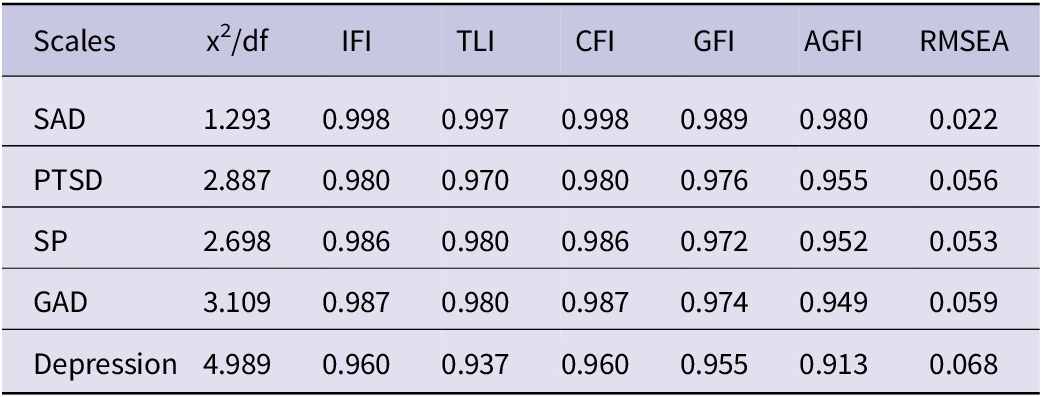
Table 4 presents the model fit indices for the variable scales. Confirmatory factor analysis was conducted to assess the model fit indices of the scales. Model fit indices, including xReference Wesner, Gaillard and Kelman 2/df, IFI, TLI, CFI, GFI, AGFI, and RMSEA parameters, were evaluated. IFI, TLI, CFI, and AGFI values should exceed 0.80,Reference Gefen, Straub and Boudreau 110 xReference Wesner, Gaillard and Kelman 2/df should be less than 5,Reference Hair, Black and Babin 103 and RMSEA should be less than 0.700.Reference Steiger 111 The results of the confirmatory factor analysis indicated that the SAD scale (xReference Wesner, Gaillard and Kelman 2/df = 1.293, IFI = 0.998, TLI = 0.997, CFI = 0.998, GFI = 0.989, AGFI = 0.980, RMSEA = 0.022), the PTSD scale (xReference Wesner, Gaillard and Kelman 2/df = 2.887, IFI = 0.980, TLI = 0.970, CFI = 0.980, GFI = 0.976, AGFI = 0.955, RMSEA = 0.056), the SP scale (xReference Wesner, Gaillard and Kelman 2/df = 2.698, IFI = 0.986, TLI = 0.980, CFI = 0.986, GFI = 0.972, AGFI = 0.952, RMSEA = 0.053), the GAD scale (xReference Wesner, Gaillard and Kelman 2/df = 3.109, IFI = 0.987, TLI = 0.980, CFI = 0.987, GFI = 0.974, AGFI = 0.949, RMSEA = 0.059), and the depression scale (xReference Wesner, Gaillard and Kelman 2/df = 4.989, IFI = 0.960, TLI = 0.937, CFI = 0.960, GFI = 0.955, AGFI = 0.913, RMSEA = 0.068) demonstrated good fit.
Model fit indexes of the scales

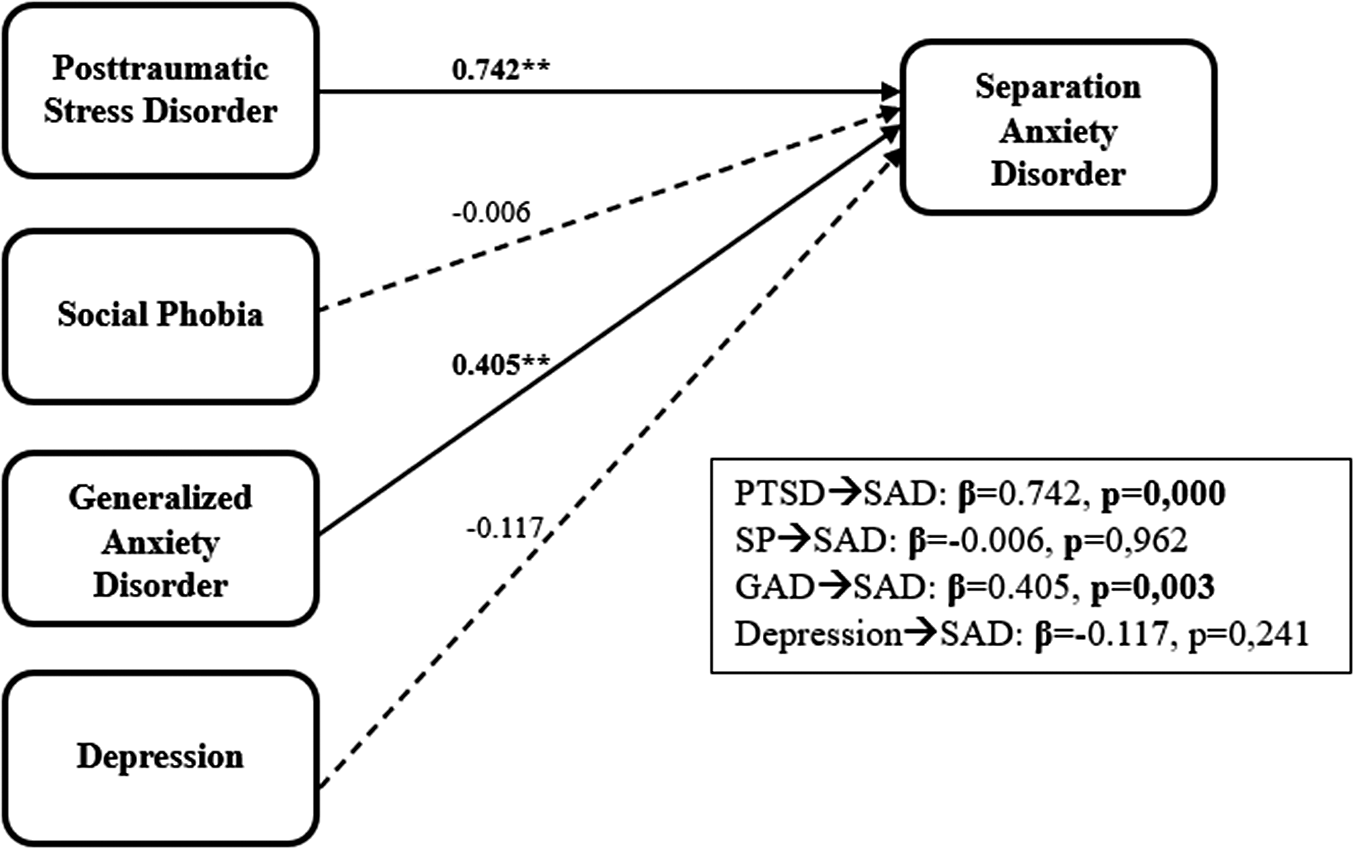
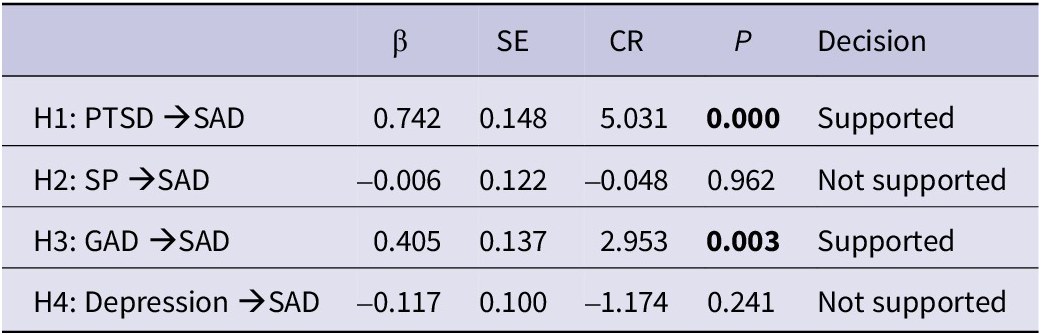
To assess the structural model and test the relevant research theory, a SEM evaluation was conducted. A significance level of P < 0.05 with a 95% confidence interval was used to test the direct effects of the latent variables (see Figure 3 and Table 5). The structural model established for those adolescents affected by the Kahramanmaras Earthquakes (2023) is significant (P = 0.000) and demonstrates good fit indices (xReference Wesner, Gaillard and Kelman 2/df = 2.600, IFI = 0.925, TLI = 0.919, CFI = 0.925, GFI = 0.831, AGFI = 0.809, RMSEA = 0.051).
Structural equation modeling of mental disorders among adolescents affected by the Kahramanmaras Earthquakes (2023).

Path coefficient and hypothesis test results

The results indicate that in the adolescents affected by the earthquakes, PTSD has a significant and positive effect on SAD (β = 0.742, P = 0.000), confirming H1. However, SP does not have a significant effect on SAD (β = −0.006, P = 0.962), leading to the rejection of H2. Additionally, GAD has a significant and positive effect on SAD (β = 0.405, P = 0.003), supporting H3. On the other hand, depression does not have a significant effect on SAD (β = −0.117, P = 0.241), resulting in the rejection of H4.
4. Discussion
Disasters can profoundly impact the lives of many individuals worldwide, both naturally and through human causes. Earthquakes, floods, fires, and other disasters are known to affect society’s infrastructure, causing physical, economic, and psychological effects. Especially for vulnerable groups such as adolescents, the psychological effects of traumatic events can be challenging. The adolescent period is already a time filled with physical, emotional, and social changes. In the event of a disaster, these challenges can be further exacerbated. Moreover, it is expected that adolescents affected by the Kahramanmaras Earthquakes (2023), the largest and most devastating earthquake of the period, are significantly affected by the traumatic event. Based on these reasons, four hypotheses were formulated in the study to measure the effects of PTSD, SP, GAD, and depression on SAD in earthquake-affected adolescents aged 11-17. The data obtained in the study supported half of the formulated hypotheses. Additionally, due to the limited number of studies clearly elucidating the relationships between independent variables and SAD, it is thought that this study will contribute theoretically to the literature.
Consistent with H1, there is a significant and positive effect of PTSD on SAD. Similar studies supporting this hypothesis can be found in the literature. In a prospective study conducted on first to 12th grade students exposed to war in state schools in South Lebanon and South Bekaa, higher rates of SAD were observed in those with pre-war PTSD.Reference Karam, Fayyad and Karam 112 Researchers believe that this situation is predicted by financial problems, exposure to war at a young age, chronic illnesses, and mourning. Compared to our study, in addition to natural disasters, such as earthquakes and floods, there is also a relationship between SAD and PTSD in technological and human-induced disasters such as wars. During wars, adolescents may experience the loss of loved ones, a situation also seen in natural disasters such as earthquakes. Therefore, it is natural to see similar results in wars and earthquakes. In a study examining three mediating factors in reducing PTSD symptoms with morphine treatment (reduced pain, weakened norepinephrine, and SAD), a significant negative relationship (β = −0.335) was found between SAD and morphine treatment, while a significant positive relationship (β = 0.314) was found between SAD and PTSD at the 3-month mark.Reference Saxe, Geary and Bedard 113 In our study, a significant and positive relationship between SAD and PTSD was found despite the absence of medication treatment. This indicates that there is a relationship between SAD and PTSD even without medical treatment. A study investigating PTSD symptoms in adolescents exposed to the Wenchuan Earthquake (2008) in China revealed that the effects between PTSD and SAD persisted even at 6 months after the earthquake.Reference Geng, Zhou and Liang 114 When comparing our study with that by Geng et al. (2019), some similarities can be observed.Reference Geng, Zhou and Liang 114 While the Kahramanmaras Earthquakes (2023) had magnitudes of 7.7 and 7.6, the Wenchuan Earthquake (2008) had a magnitude of 7.9. In other words, both earthquakes were large-scale disasters causing significant physical, economic, and psychological effects. Additionally, in our study, the effect of PTSD on SAD was examined at 6 months, showing similarity with the current study. In a study conducted on 151 complex elderly adults, it was found that lifetime PTSD effects were associated with more comorbidity in individuals with SAD compared to those without SAD.Reference Gesi, Carmassi and Shear 115 Furthermore, the National Comorbidity Survey Replication (NCS-R), conducted face-to-face with 9282 individuals aged 18 and above in the United States between February 2001 and April 2003, revealed that PTSD had the highest comorbidity with SAD among other mental and substance use disorders.Reference Shear, Jin and Ayelet Meron Ruscio 116 In our study, similarly, the highest variable among other mental and substance use disorders affecting SAD was found to be PTSD (P = 0.000, β = 0.327). This finding indicates that similar results exist not only in adolescents but also in adults. A study conducted six months after the 6.9 magnitude earthquake in Armenia in 1988 included 218 children from eight elementary schools located in three cities significantly affected by the earthquake.Reference Goenjian, Pynoos and Steinberg 117 The studies found a significant and positive relationship between SAD and PTSD. When comparing this study with our research, some similarities are evident. Both earthquakes were large-scale and had high impact levels. The study periods and outcomes align with our study. Overall, when H1 is evaluated, the existing literature suggests that there is a significant and positive relationship between SAD and PTSD. Our research on survivors of the Kahramanmaras Earthquakes (2023) among adolescents is thought to contribute to a clearer and more precise understanding of the relationship between SAD and PTSD during adolescence. The literature needs further exploration and strengthening through qualitative studies, clinical interviews, or case studies. Therefore, future research should explore mediating variables in the impact of PTSD on SAD.
Inconsistent with H2, surprisingly, a significant relationship between SP and SAD was not detected. However, there are studies in the literature that contradict this finding. A study conducted on 199 children attending Dr. Sami Ulus Maternity and Children’s Hospital in Istanbul (Turkey) aimed to measure the anxiety experienced by their families and themselves during the COVID-19 pandemic.Reference Terin, Açıkel and Yılmaz 118 It was found that those with high COVID-19 anxiety had higher rates of both SAD (P = 0.001) and SP (P = 0.001) compared to those without. In a study conducted on 154 patients aged between 18 and 65 with SP who presented to the psychiatry department of a university hospital,Reference Dogan, Yoldas and Kocabas 119 various mental health problems (MHPs) and sociodemographic variables were compared between those with and without SAD in childhood and adulthood. In the current study, those with comorbidity of SAD and SP showed higher rates of comorbidity with other MHPs compared to those without SAD. Based on this result, a relationship between SAD and SP can be interpreted. When considering the importance of SP in adolescence, it is a significant period where social interactions and belonging within peer groups, school, sports, and other activities become more frequent and complex. In other words, adolescence is a crucial period for social interactions. Experiencing excessive anxiety, lack of self-esteem, and isolation during such interactions can lead to social phobia in adolescents. Additionally, the traumatic experiences that adolescents endured during the Kahramanmaras Earthquakes of 2023, declared as a level 4 disaster, may lead to a shaken sense of trust in oneself and the environment. Managing and treating this situation in adolescents is crucial for their future lives. However, it is thought that there are reasons why SP does not affect SAD after traumatic events in our study. Traumatic events such as earthquakes may reduce the effects of SP due to the extraordinary stress and emergency response experienced by individuals. After an earthquake, people typically come together to survive, protect their loved ones, and meet basic needs. This may lead to SP that an individual would normally feel taking a back seat. Emergencies are times when people tend to come together in solidarity and support each other, focusing on a common goal. This collective sense of danger that arises after an earthquake may temporarily alleviate the feelings of isolation and separation anxiety typically experienced by individuals with SP. However, in the long term, individuals’ SP may resurface, highlighting the importance of emotional support and professional assistance during this process. Since our study is cross-sectional, it is not possible to understand the long-term effects of SP on SAD. Therefore, future studies should investigate the long-term effects of SP on SAD.
Consistent with H3, a significant and positive relationship between GAD and SAD was found. This finding is similar to studies in the literature. GAD and anxiety disorders are distinct concepts and should not be confused with each other since GAD is a subtype of anxiety disorder. In a study conducted by Verduin and Kendall (2003),Reference Verduin and Kendall 120 involving 199 children aged 8-13, participants were divided into three groups (GAD, SAD, and SP) based on primary diagnoses. The study found that 74% of children with SAD received a secondary diagnosis of GAD, while 20% received a diagnosis of SP. Comparing our study with the one mentioned, we similarly found that GAD (β = 0.405) had a greater impact on SAD compared to SP (β = −0.006). In a study conducted in Chile involving children aged 4-11 and adolescents aged 12-18, the relationship between SAD, GAD, and SP was examined.Reference de la, Vicente and Saldivia 121 Among 76 individuals with SAD, 38.10% showed high comorbidity with GAD, while among 51 individuals with GAD, 57.10% showed high comorbidity with SAD. GAD and SAD can affect adolescents’ emotional health, and their predictive effects on each other have been observed in research. For example, if an adolescent is diagnosed with GAD, SAD may exacerbate these worries because separation situations can create more anxiety and tension. Similarly, an adolescent diagnosed with SAD may increase the level of GAD due to a tendency to be constantly anxious. A study conducted by the Department of Child Neurology and Psychiatry at the University of Pisa (Italy) examined GAD symptoms and comorbidity in 58 children and adolescents applying to the department.Reference Masi, Mucci and Favilla 122 Among 19 children with GAD, 42% had SAD, while among 39 adolescents with GAD, 10% had SAD. In other words, SAD was more prevalent in children compared to adolescents. As observed, the presence of GAD and SAD in children and adolescents is evident even without a disaster occurring. When H3 hypothesis is evaluated overall, GAD holds significant importance for the health and sustainability of adolescents’ lives. This is because these issues can be managed more effectively with early diagnosis and intervention. Moreover, since SAD is among childhood MHPs, early treatment of children diagnosed with SAD will prevent the development of additional mental health issues in youth and adulthood.Reference Kossowsky, Pfaltz and Schneider 123 Furthermore, our study may increase general social awareness and contribute to the development of education and support services in this regard. Additionally, investigating the mutual effects of these psychological problems in adolescents will contribute to the literature. In conclusion, researching SAD and GAD during adolescence is an important step in supporting psychological health both at the individual and social levels. Therefore, the conducted research will contribute to the literature and provide guidance for future studies.
In contrast to H4, surprisingly, a significant and positive effect of depression on SAD could not be found. However, studies contrary to the hypothesis exist in the literature. A study evaluating the future mental health issues of individuals with SAD in childhood included 42 out of 1079 individuals diagnosed with SAD in childhood.Reference Lewinsohn, Holm-Denoma and Small 124 These individuals were reevaluated at ages 19 and 30. The results indicated that adolescents diagnosed with SAD had a higher likelihood of receiving a diagnosis of depression in later years compared to those with panic disorder and those with no remission. Based on the current study, depression is among the long-term effects of SAD. In other words, depression is observed in individuals with SAD in the long term (up to the age of 30). Therefore, there is a need for long-term studies investigating the impact of SAD on depression. It is imperative not to overlook the psychological ramifications of the Kahramanmaras Earthquakes (2023), not only in the immediate aftermath but also when considering their long-term impact. A study examining 343 women attending prenatal clinics investigated the overlap between adult separation anxiety (ASA) and depression and other anxiety symptoms during pregnancy.Reference Eapen, Johnston and Apler 92 It has been observed that depression is more prevalent in women with ASA compared to those without ASA. When considering H4 overall, the contradictory results of our study to the literature can be attributed to the magnitude and impact of the event experienced. In other words, earthquakes are natural events involving material losses and changes in lifestyles. Adolescents may be compelled to spend more time in social environments and crowded areas during such circumstances, leading to a lack of personal space which could contribute to depression. The period where people assist each other for months during such events may have prevented adolescents from experiencing depression. Consequently, further investigation into other contributing factors besides depression in major and devastating events such as the Kahramanmaras Earthquakes (2023) is necessary. This is because there are very few studies in the literature that clearly elucidate this situation.
4.1 Limitations
This study has some limitations. Firstly, it was not possible to reach individuals who experienced the earthquakes but were evacuated from the region or displaced from their homes. Therefore, our study cannot be generalized to all adolescent earthquake survivors. Secondly, since our study is cross-sectional, the long-term effects of factors influencing SAD are not known. Thirdly, it is not known whether those adolescent earthquake survivors had preexisting mental health issues before the earthquakes. This could make it difficult to understand the origin of the stress caused by the earthquakes and hinder the identification of factors triggering SAD. Fourthly, our study involved conducting a survey with adolescent earthquake survivors. Although the measurement tools used were individually validated, they may be insufficient for adolescents affected by the earthquakes to express themselves fully. Therefore, there is a need for qualitative studies conducted using in-depth interviews and observational methods.
5. Conclusion
Our study revealed that the Kahramanmaras Earthquakes (2023) not only negatively affected adults but also adolescents by bringing significant impacts and traumas. The earthquakes also brought about MHPs. To mitigate or eliminate the effects of MHPs in adulthood, SAD in adolescent earthquake survivors should not be overlooked. This study contributes to the burgeoning literature on disaster psychology by investigating four factors inherent in MHPs that influence SAD. Existing literature is gradually converging on the notable and affirmative correlation between PTSD and GAD with SAD.Reference Bitsika, Sharpley and Heyne 84 , Reference Geng, Zhou and Liang 114 , Reference Gesi, Carmassi and Shear 115 , Reference de la, Vicente and Saldivia 121 , Reference Kossowsky, Pfaltz and Schneider 123 The findings of our study align with this literature, affirming the impact of PTSD and GAD on SAD and contributing to the expanding understanding of disaster psychology. Interestingly, contrary to our expectations, our study reveals no significant positive relationship between SP and depression with SAD. Contrary to the literature, it is thought that this may be due to the lack of environments where individuals can experience their own emotional problems in a region where the most destructive and significant earthquakes occurred during the period. Therefore, drawing from the outcomes of our present study, it is advisable to conduct a more thorough and lucid exploration into the effects of depression and SP on SAD. Additionally, it is crucial to delve into the underlying reasons and mediating factors contributing to this observed discrepancy within existing literature.
5.1 Implications of SAD in Adolescents
SAD is among the mental health issues prevalent during adolescence. Adolescence is considered a period filled with identity exploration,Reference Meeus, Van De Schoot and Keijsers 125 a desire for independence,Reference Gowers 126 and emotional development. During this period, adolescents experience many experiences through friendships and family ties. Among various mental health issues that can be seen in adolescents during this process, SAD should not be overlooked. In other words, in addition to the likelihood of experiencing negative situations such as suicidal tendencies or substance use, adolescents may also experience SAD. Traumatic events such as disasters can make SAD even more likely for adolescents. SAD experienced during disasters can lead adolescents to disconnect from the social bonds they trust and to suddenly experience a change in their world. Moving away from their families, friends, or familiar environments can create a deep sense of anxiety and uncertainty in adolescents. For adolescents, SAD may have a significant impact on their identity formation and quest for independence. Therefore, paying special attention to the emotional needs of adolescents during disaster situations, keeping communication channels open, and maintaining support networks are important steps in supporting the recovery process after a disaster. The detailed and comprehensive examination of SAD is crucial for the sustainability of future life and mental health. This is why our study focused on SAD. Hence, it is time for academics and scientists to conduct detailed research, especially in sensitive groups such as adolescents, on SAD, which has significant traumatic effects in large-scale disasters. When considering the hypotheses overall, it can be seen that half of the hypotheses are supported. This further emphasizes the importance of our study. However, literature reviews reveal a limited number of studies that thoroughly and comprehensively examine the relationship between SAD and other mental health issues. Current studies suggest deeper research into SAD due to its significance in mental health issues.Reference Gallagher, Richardson and Forbes 127 In our study, the impact of four mental health issues on SAD was examined in line with current recommendations, emphasizing the importance of not overlooking this topic in future research.
5.2 Contributions in the Context of the Kahramanmaras Earthquakes (2023)
Large-scale disasters such as the Kahramanmaras Earthquakes (2023) deeply impact families and communities. Such earthquakes can bring to light various factors that increase SAD in adolescents. For instance, traumatic experiences such as losing their homes, losing loved ones, and the loss of a sense of safety can shake adolescents’ emotional balance and sense of security. They can also undermine social bonds by affecting families and communities. The experienced SAD can lead to profound effects on their mental health. These effects may include depression, anxiety, and other psychological issues. Therefore, investigating this topic is a fundamental step in understanding and improving the mental health of adolescents. Additionally, understanding SAD in adolescents contributes to the development of effective psychosocial support programs for adolescent earthquake survivors. Our research provides foundational data for the better design and implementation of guidance services, psychotherapy, and other support mechanisms. In other words, the research conducted can increase academic and social awareness on the subject and thus shed light on future research. In conclusion, investigating SAD in adolescents is an important step toward enhancing health and well-being at both individual and social levels. Such studies can play an illuminating role in strengthening the psychosocial health of communities affected by future disasters.
Authors Contributions
Both authors read and approved the final manuscript.
Data availability statement
The data that support the findings of this study are available from the corresponding author, upon reasonable request.
Funding statement
The authors report no funding.
Competing interests
The authors have no conflicts of interest to declare that are relevant to the content of this article.
Ethical standard
Participants participated in the study voluntarily. The questionnaire was administered to participants online and face-to-face. Participants were informed that they could leave the test at any time. Consent was obtained from the parents of the adolescents affected by the earthquake. The Scientific Research and Publication Ethics Committee of Gumushane University approved this study scientifically and ethically in its meeting dated 6/14/2023 with decision number 2023/3.