




No CrossRef data available.
Article contents
Markers of endothelial dysfunction and severity of hypoxaemia in the Eisenmenger syndrome
Published online by Cambridge University Press: 16 September 2005
Abstract
Endothelial dysfunction has been reported in hypoxaemic patients with the Eisenmenger syndrome, but a direct correlation between levels of endothelial markers and the severity of hypoxaemia has not been explored. With this in mind, we compared the levels in the plasma of tissue-type plasminogen activator, thrombomodulin, and von Willebrand factor in 25 patients with the Eisenmenger syndrome. They had a median age of 31 years, and were divided into 2 groups according to their recent clinical history. Thus, 18 patients were stable, being in functional class II or III, seen as outpatients, and having peripheral saturations of oxygen of 89 plus or minus 5 percent. In contrast, 7 patients were unstable, showing episodes of symptoms placing them in functional class IV, requiring care in hospital, and manifesting saturations of oxygen of 77 plus or minus 5 percent. We were able to follow 12 patients, 8 who were stable and 4 unstable, for 24 months. At baseline, levels of von Willebrand factor were higher in the unstable patients when compared to those who were stable, at 142 plus or minus 29 and 110 plus or minus 25 units per decilitre, respectively (p equal to 0.013). This correlated positively with oxygen desaturation (p less than 0.020). The structural abnormalities also correlated positively with the magnitude of hypoxaemia (p less than 0.020). Levels remained higher in the unstable patients throughout the period of follow-up (p equal to 0.006). Tissue-type plasminogen activator was also increased, at 14.3 plus or minus 8.4 versus 6.5 plus or minus 2.7 nanograms per millilitre in controls (p less than 0.001), whereas thrombomodulin was decreased, with values of 14.4 versus 34.6 nanograms per millilitre in controls (p for median values of less than 0.001). There was no correlation with saturations of oxygen. We conclude that measurement of von Willebrand factor, as compared with tissue-type plasminogen activator and thrombomodulin, will prove a better marker of endothelial response to hypoxaemia in patients with the Eisenmenger syndrome.
Keywords
Information
- Type
- Original Article
- Information
- Copyright
- © 2005 Cambridge University Press
Hypoxia has been shown to alter several biochemical mechanisms in endothelial cells,1 with a shift demonstrated toward a procoagulant and prothrombotic state. In addition, hypoxia induces the endothelial expression of adhesion molecules and chemokines, thereby promoting the recruitment of circulating cellular elements, mainly neutrophils.2, 3 Thus, there is a general agreement that hypoxia induces a proinflammatory and prothrombotic endothelial phenotype.
Endothelial abnormalities have been described in patients with cyanotic congenital cardiac malformations that are potentially associated with increased risk for thrombotic events.4, 5 Although most such malformations are now repaired in early infancy or childhood, there are patients who remain hypoxaemic for several reasons. Also, some patients will never be ideal candidates for corrective surgery because of the early onset of pulmonary hypertension. Some of these patients are hypoxaemic from birth, while others will develop hypoxaemia sometime in life.
In the particular setting of the Eisenmenger syndrome, endothelial abnormalities may be even more pronounced in view of the altered conditions of flow, and the progressive development of blood hyperviscosity. In these patients, several authors, including ourselves, have demonstrated the occurrence of thrombosis in the pulmonary6–8 and systemic9 circulations. The specific effect of hypoxia on endothelial behaviour, however, is difficult to determine, since during life many other factors may play a role. As far as we are aware, thus far there have not been any studies seeking to correlate the levels of markers of endothelial dysfunction in the plasma of such patients with the severity of their hypoxaemia. Neither has the effect of decreased tensions of oxygen been explored on the different markers. With these deficiencies in mind, we designed this study to investigate whether abnormalities of circulating markers of endothelial dysfunction correlate with peripheral saturations of oxygen in patients with pulmonary hypertension as a consequence of congenital cardiac disease. Most patients had the Eisenmenger syndrome. In particular, we planned to make a comparative analysis between three biochemical markers, namely tissue-type plasminogen activator, thrombomodulin, and von Willebrand factor.
Methods
Patients
Our population consisted of individuals with congenital cardiac malformations associated with pulmonary hypertension and peripheral desaturation of oxygen who were admitted for diagnosis and treatment to the Heart Institute, São Paulo, Brazil, from January 2002 to December 2003. We extended the study to include patients with normal peripheral saturations of oxygen at rest, but who became cyanotic during mild exercise, and in whom bidirectional shunting was demonstrated by echocardiographic analysis. Although they would not meet the pure criterions for diagnosis of Eisenmenger syndrome, their inclusion seemed to be advantageous, since we sought to explore a wide range of saturations of oxygen when testing the correlation with levels of biochemical markers. All patients were considered unsuitable for surgical correction of the cardiac defects, based on the assumption of advanced pulmonary vascular disease, a loud second heart sound on the pulmonary area, absence of pulmonary congestion, decreased vascular markings at the periphery of lung fields on the chest X-ray, predominant right ventricular hypertrophy on the electrocardiogram and right-to-left or bidirectional shunting on the echocardiogram. All the patients, or their parents in case of children and adolescents, gave their informed consent for inclusion. The study protocol was approved by the Scientific and Ethics Committee of the Heart Institute.
The patients entered the study consecutively. Once included, we stratified them as stable or unstable based on their recent clinical history. Those presenting with symptoms placing them in class II or III of the classification of the New York Heart Association, who were seen as outpatients, and who had no relevant changes in their clinical state over the year prior to their inclusion, were classified as stable. Those with symptoms placing them in class III, or episodes of class IV manifestations requiring hospital care, were classified as unstable. These episodes were characterized by moderate to severe dyspnoea at rest, worsening of hypoxaemia, and the need for continuous administration of oxygen. We hypothesized that the unstable patients would be more hypoxaemic than those considered stable. Importantly, for the purpose of the study, laboratory tests were always performed in steady conditions, never during hospital care. We established that, in order to address the central subject of the study, namely a possible association between peripheral saturations of oxygen and levels of biochemical markers, it would be adequate to recruit 25 patients (see also statistical analysis). We planned to perform one measurement per patient at baseline, achieving the main objective of the study after the inclusion of the twenty-fifth patient. As a secondary objective, we also decided to observe the behaviour of the endothelial markers over time. For this purpose, we planned to perform measurements every 6 months from baseline. We did not plan to include all patients in this part of the study. Initially we estimated that, by the time of the inclusion of the twenty-fifth case, approximately half of the patients would have completed 24 months of follow-up. We therefore planned to consider this particular subgroup for statistical analysis of the repeated measurements performed over time.
Medical treatment
We used only conventional medical therapy, with no vasodilators, during the study. Thus, treatment consisted of administration of warfarin, with rigorous medical supervision to maintain an international normalized ratio between 2.0 and 2.5; administration of oxygen at concentrations of 28 to 32 percent over periods of 8 to 10 hours each day, and cautious use of diuretics when absolutely necessary. Isovolemic haemodilution was performed in some patients only to relieve the symptoms related to hyperviscosity, and not to correct any abnormalities in the haematocrit. Iron was administered orally whenever necessary to replenish stores and prevent microcytosis. Normal hydration, and control of systemic blood pressure, was strongly encouraged.
General collection of data
We recorded demographic data, as well as the functional class, the peripheral saturation of oxygen as determined using pulse oximetry, and the haematocrit for all patients. The morphologic characteristics of the congenital cardiac malformations were defined by Doppler echocardiography in most cases, although angiography was necessary in some instances. We report the mean pulmonary arterial pressure as estimated noninvasively, since this measure was available for all patients. This was obtained using continuous-wave Doppler recordings to evaluate the curve of pulmonary regurgitation.
Biochemical analyses
Laboratory analyses were performed by one of the authors in a blinded fashion. Levels of tissue-type plasminogen activator, thrombomodulin and von Willebrand factor antigen were measured in the plasma by enzyme-linked immunosorbent assay using commercially available kits (Diagnostica Stago, Asnières, France). Results were obtained by comparison with a standard curve using reagents provided by the manufacturer. The multimeric pattern of von Willebrand factor was analyzed by Western immunoblotting as previously described,10 using a specific rabbit anti-human von Willebrand factor polyclonal antibody (Dako Corporation, Carpinteria, California, United States of America). The multimers were visualized by chemiluminescence (Western blot detection kit; Amersham Biosciences, Buckinghamshire, United Kingdom) and luminographs were analyzed by laser densitometry. The density of low molecular weight multimers, representing the five lower bands in the luminographs, was calculated and expressed as a ratio relative to the sum of all multimers. Control plasma for biochemical analyses was obtained from 20 healthy individuals with ages similar to the patients, choosing equal numbers of males and females. For Western blotting, we used pooled normal plasma.
Design of the study
In the first part of the study, variables were analyzed at baseline, and comparisons were made between patients and controls, and between stable and unstable patients. In addition, the markers of endothelial dysfunction were correlated with peripheral saturations of oxygen. Afterwards, biochemical markers were analyzed over time, comparatively between stable and unstable patients, for those who had been followed for 24 months.
Statistical analysis
Based on our previous studies, we estimated that inclusion of 24 individuals in two groups would be adequate for demonstrating differences of 0.85 standard deviation, with a power of 80 percent, and a level of significance of 0.05. We therefore decided to include 25 patients in the study. Results are expressed as mean and standard deviation or median and range, as appropriate. Comparisons between patients and controls, or between stable and unstable patients, were performed using the Student's t-test or the Mann–Whitney test for univariate analysis. Differences between stable and unstable patients were further tested by multivariate analysis using Fisher's linear discriminant function. Receiver operator characteristic curves were constructed to analyze the sensitivity and specificity of variables in discriminating between the groups. Correlations between variables were tested using linear and nonlinear models. The long-term differences between stable and unstable patients regarding the biochemical indexes were tested using two-factor analysis of variance with repeated measures of one factor. In all procedures, we assumed a level of significance of 0.05. The statistical analysis was carried out using the SPSS statistical software, version 12.0 (Chicago, United States of America).
Results
We enrolled 25 patients, 13 of whom were female, with ages ranging from 4 to 52 years, and with a median age of 31 years. General diagnostic data of the individual patients is shown in Table 1. The mean pulmonary arterial pressure was 55 plus or minus 15 millimetres of mercury. Peripheral saturation of oxygen at rest was 86 plus or minus 7 percent, decreasing to 68 plus or minus 14 percent after a six-minute walk. The haematocrit was 58 plus or minus 7 percent. All patients presented with cyanosis during mild exercise, even those with normal saturation of oxygen at rest. According to the criterions we had established, we classified 18 patients as stable, leaving 7 patients who were deemed to be in an unstable clinical condition.
Table 1. Diagnostic data of individual patients.

At baseline, all 3 markers of endothelial dysfunction were altered in patients in comparison with controls. von Willebrand factor antigen, and tissue-type plasminogen activator, were increased (p equal to 0.0005), while thrombomodulin was decreased (p less than 0.0001) (Table 2). In addition, the relative concentration of the low molecular weight fractions of von Willebrand factor was increased in the patients in comparison with their controls (p less than 0.0001). von Willebrand factor antigen correlated significantly and negatively with the saturation of oxygen (r equal to −0.47, p less than 0.02 – Fig. 1), but tissue-type plasminogen activator and thrombomodulin did not (r equal to −0.06, p equal to 0.78, and r equal to −0.13 and p equal to 0.56, respectively). The abnormalities of von Willebrand factor multimeric composition also correlated significantly with the severity of hypoxaemia. Patients with the lowest saturations of oxygen had the highest density of small multimers (r equal to −0.57, p less than 0.02 – Fig. 1). Discrimination between groups by univariate analysis is shown in Table 3. In the unstable patients, as compared with those deemed stable, the peripheral saturation of oxygen was significantly lower, as expected (p equal to 0.0001). There were no differences between stable and unstable patients regarding age, mean pulmonary arterial pressure, or haematocrit. von Willebrand factor antigen, but not tissue plasminogen activator or thrombomodulin, was differentially displayed between the stable and unstable patients (p equal to 0.0135). In multivariate analysis, that included age, mean pulmonary arterial pressure, peripheral saturations of oxygen at rest and after a six-minute walk, haematocrit, and all three biochemical markers, the saturations of oxygen and levels of von Willebrand factor were found to be the most important predictors of stability as opposed to instability. A simplified multivariate model, including only saturations of oxygen at rest and exercise, and concentrations of von Willebrand factor, was still highly predictive (p equal to 0.0003). As shown in Figure 2, saturation of oxygen was superior in terms of sensitivity and specificity of prediction. After removal of saturation from the model, however, the discrimination between stable and unstable patients based on the levels of von Willebrand factor still remained significant (p equal to 0.0083).
Table 2. Abnormalities of circulating endothelial markers.


Figure 1. Influence of saturations of oxygen on plasma von Willebrand factor antigen (a) and its multimeric composition (b). The density of low molecular weight fractions (insert, Western blot, five lower bands) was measured and expressed as a percentage of total multimer density. The numbers of patients in the insert are the same as Table 1. Patient 16 had a peripheral saturation of oxygen in the range of 88 to 91 percent. In patient 3, the range was 68 to 75 percent. Expressed are the means of triplicate observations per patient
Table 3. Discrimination between stable and unstable patients.


Figure 2. Receiver operator characteristic curves for peripheral saturations of oxygen and levels of von Willebrand factor antigen in the plasma in the discrimination between stable and unstable patients with Eisenmenger syndrome. A saturation of oxygen below 84 percent (sensitivity and specificity of 94 and 80 percent respectively) and levels of von Willebrand factor antigen above 121 units per decilitre (sensitivity and specificity of 60 and 90 percent respectively) were predictive of unstable disease.
The follow-up lasted from 5 to 30 months, with a median of 24 months. Although some patients improved their symptoms on medical treatment, the analyses of biochemical markers over time were carried out taking into account the original categorization as stable or unstable, the more so since the peripheral saturations of oxygen changed only minimally during the follow-up (see below). Of the stable patients, 2 died suddenly at 5 and 6 months (patients 18 and 10 respectively, Table 1). For the remaining ones, no specific changes were made in therapy. In 7 of 18 stable patients, and 3 of 7 patients deemed to be unstable, sessions of haemodilution were required for relief of symptoms related to hyperviscosity, such as worsening of dyspnoea, headache, and visual disturbances. Although patients with class IV symptoms were considered candidates for heart and lung transplantation, all of them were still under medical treatment by the time the study was terminated.
Repeated measures were available for 12 patients over a period of 24 months. These showed that 4 patients deemed unstable had peripheral saturations of oxygen persistently lower when compared to the 8 stable subjects. The respective levels were 76 plus or minus 7 percent, and 87 plus or minus 3 percent at the beginning of the follow-up (p equal to 0.0025), and 78 plus or minus 5 percent and 90 plus or minus 4 percent at 24 months (p equal to 0.0011). Although the peripheral saturations of oxygen as measured in room air did not change significantly, they increased transiently during administration of oxygen at home, with an average increase of 11 percent. A differential behaviour of endothelial markers was observed. von Willebrand factor antigen decreased progressively over time (p equal to 0.0001), with persistently higher levels in unstable as compared to stable patients (p equal to 0.0063 – Fig. 3). In contrast, tissue-type plasminogen activator decreased significantly (p equal to 0.0301), with no differences noted between the groups. Thrombomodulin remained at low levels in both stable and unstable patients.

Figure 3. Behaviour of endothelial markers in 12 patients with Eisenmenger syndrome who were subjected to medical treatment and followed-up for 24 months (left, open circles). Data from stable patients (open squares, N = 8) and unstable patients (closed squares, N = 4) are shown on the right. A progressive decrease in plasma von Willebrand factor antigen (p < 0.0001) and tissue-type plasminogen activator (p = 0.0301) was observed, with significant differences between groups detected for von Willebrand factor antigen only (p = 0.0063). Thrombomodulin remained decreased in both groups. Results are expressed as mean plus or minus standard deviation (von Willebrand factor antigen and tissue-type plasminogen activator) or median and range (thrombomodulin).
Discussion
We have made a comparative analysis of three markers of endothelial dysfunction in hypoxaemic patients with the Eisenmenger syndrome. The same endothelial markers have been analyzed in patients with a variety of acute and chronic disorders,11 but not, as far as we are aware, in those with hypoxaemia or pulmonary vascular disease. We demonstrated that abnormalities of circulating von Willebrand factor, but not tissue-type plasminogen activator or thrombomodulin, correlated significantly with oxygen desaturation. In the overall group of patients, quantitative and qualitative abnormalities of von Willebrand factor were directly related to the severity of hypoxaemia. Furthermore, in patients presenting with worse symptoms, and lowest saturations of oxygen, von Willebrand factor antigen was significantly increased in comparison with less symptomatic and less hypoxaemic individuals, and remained so for 24 months of follow-up. Although levels of tissue-type plasminogen activator and thrombomodulin were abnormal in the plasma from the patients as compared with their controls, they did not correlate with the magnitude of hypoxaemia.
There have been many studies of the association of hypoxia with pulmonary vasoconstriction and vascular remodelling.12–14 This association becomes even tighter if one considers that a genetic background impairing synthesis of nitric oxide in the lungs, and thus representing a particular form of endothelial dysfunction, is associated with development of pulmonary hypertension and pulmonary oedema after exposure to hypobaric or hypoxic conditions.15 In the setting of the advanced pulmonary vascular abnormalities that occur in the Eisenmenger syndrome, the exact impact of hypoxia on endothelial behaviour may be difficult to establish in view of several other factors that may alter endothelial function. In this way, previous studies, including data from our laboratory, have demonstrated abnormalities in the circulating levels of endothelial markers in this syndrome,8, 16, 17 although as far as we know, correlations between levels of different markers and the severity of hypoxaemia have not been investigated.
One possible explanation for the association between heightened levels of von Willebrand factor antigen in the plasma and the severity of hypoxaemia observed in our patients is the hypoxia-induced modification of the architecture of endothelial cells, with an increased number of pores for secretion. These pores represent the fusion of Weibel–Palade bodies with the luminal membrane of endothelial cells, thus corresponding to exocytosis.18 It has been demonstrated, indeed, that hypoxia induces endothelial release of P-selectin and von Willebrand factor, both stored within the Weibel–Palade bodies.19 Although these events have been observed during acute hypoxia, the possibility exists that they also occur in chronic situations.
Chronic administration of oxygen, for 8 to 10 hours a day, particularly during sleep, is routinely recommended in our Institution for hypoxaemic patients with Eisenmenger syndrome. We speculate that such administration of oxygen may have accounted in part for the progressive decrease in levels of von Willebrand factor in the plasma over time, even though the peripheral saturation of oxygen at the end of the follow-up, as measured in room air, did not differ from baseline. It is noticeable that persistently higher levels of von Willebrand factor were registered for the more hypoxaemic patients throughout the period of follow-up. In addition to hypoxaemia itself, a number of other factors may have accounted for the higher levels of von Willebrand factor observed in these patients with unstable disease. Haemodynamic factors may have played an important role. As a limitation of the present study, however, we were unable to correlate biochemical abnormalities with haemodynamic variables such as pulmonary flow and vascular resistance. In some patients, an invasive diagnostic was not considered necessary, while in others, the haemodynamic evaluation and the biochemical analyses were not coincident.
The correlation between hypoxaemia and the differences in the multimeric composition of von Willebrand factor observed in our study is more difficult to explain. The loss of larger multimers associated with increased concentration of smaller fractions is likely a consequence of abnormal enzymatic digestion of von Willebrand factor protein. Several enzymes that are able to cleave von Willebrand factor, such as elastase and plasmin, may be present in the circulation of these patients. The control of the size of the the multimers of von Willebrand factor is largely dependent on the proteolytic action of ADAMTS-13.20, 21 It is also dependent on the reductase activity of thrombospondin-1 present in endothelial cells and platelets.21 Whether these enzymatic activities are enhanced in hypoxaemic patients with the Eisenmenger syndrome is not currently known. On the other hand, immobilization of large multimers on platelet membrane under certain conditions of flow,22 or endothelial cell membrane via P-selectin,23 may facilitate the cleaving action of proteases.
In our study, we observed a two-fold increase in tissue-type plasminogen activator in the plasma of patients compared with controls. The parallel increase of tissue-type plasminogen activator and von Willebrand factor at baseline is consistent with the previous observation that these proteins are colocalized to endothelial Weibel–Palade bodies.24 It is likely that they share mechanisms of secretion. In contrast to von Willebrand factor, however, the level of tissue-type plasminogen activator in the plasma did not correlate with the magnitude of hypoxaemia. Furthermore, discrimination between stable and unstable patients over the follow-up was not as evident as in the case of von Willebrand factor. These differences may be partly explained by the fact that hypoxia influences endothelial expression of tissue-type plasminogen activator by different ways. For example, while vascular endothelial growth factor and basic fibroblast growth factor synergistically induce tissue-type plasminogen activator,24 the response of these growth factors to hypoxia is quite different. Hypoxia induces the expression of vascular endothelial growth factor1 but abolishes the synthesis of basic fibroblast growth factor by endothelial cells.25
Thrombomodulin is a cell-surface proteoglycan that serves as a receptor for thrombin. The thrombomodulin–thrombin complex suppresses coagulation by generating activated protein C which catalyzes the degradation of clotting factors V and VIII.26 Its soluble fraction represents proteolytic fragments of the membrane-bound proteoglycan. In contrast to tissue-type plasminogen activator and von Willebrand factor, which are secreted by endothelial cells, the rise in levels of thrombomodulin in the plasma is generally associated with structural damage to endothelial plasma membrane, a process that involves the action of proteases.11
Our finding of decreased levels of thrombomodulin in the plasma is in agreement with previous observation in the same syndrome,17 and might be a result of hypoxia-mediated suppression of thrombomodulin synthesis by endothelial cells. Although this is difficult to demonstrate during life, in cultured endothelial cells, hypoxia has been shown to suppress the expression of thrombomodulin.27 The pathophysiological consequence is that the combination of hypoxia with decreased endothelial expression of thrombomodulin is associated with extensive deposition of fibrin in the lungs, at least in experimental conditions.28 In spite of the significant decrease in thrombomodulin in the plasma from our patients, a correlation between circulating levels of this proteoglycan and the magnitude of hypoxaemia was not demonstrated at baseline, nor during the follow-up. Such lack of correlation probably reflects the multiplicity of mechanism that influences the levels of thrombomodulin in the plasma during life. In pathological conditions, the circulating level of thrombomodulin may be the result of a combination of mechanisms, including altered synthesis, enhanced proteolytic degradation and possibly abnormal renal clearance.
In conclusion, in the hypoxaemic conditions of the Eisenmenger syndrome, altered levels of endothelial markers in the plasma reflect the perturbation of endothelial function, possibly as a result of several pathophysiological insults, of which hypoxia is likely to play an important role. Of three biochemical markers potentially influenced by hypoxia, only the abnormalities observed in the levels of von Willebrand factor were in close relationship with the severity of hypoxaemia. A potential implication for our findings is that these abnormalities of von Willebrand factor may be associated with increased interactions between the platelets and the endothelial cells, since this protein plays a central role in adhesion and aggregation of the platelets. On the other hand, any therapeutic interventions that increase the saturation of oxygen in these patients may improve the abnormalities in von Willebrand factor, thus decreasing the risk of thrombotic events. Since this possibility was only suggested in this study, further investigation is necessary. During treatment with vasodilators, for example, the impact of haemodynamics and saturations of oxygen on the markers for endothelial dysfunction could be analyzed using a multivariate model.
Acknowledgements
We thank Mrs. Roseli Polo for her technical assistance in preparing this manuscript. This work was supported by FAPESP, Grand 00/002845-8.
References
Michiels C, Arnould T, Remacle J. Endothelial cell responses to hypoxia: initiation of a cascade of cellular interactions. Biochim Biophys Acta 2000; 1497: 1–10.Google Scholar
Ginis I, Mentzer SJ, Faller DV. Oxygen tension regulates neutrophil adhesion to human endothelial cells via an LFA-1-dependent mechanism. J Cell Physiol 1993; 157: 569–578.Google Scholar
Karakurum M, Shreeniwas R, Chen J, et al. Hypoxic induction of interleukin-8 gene expression in human endothelial cells. J Clin Invest 1994; 93: 1564–1570.Google Scholar
Ferreiro CR, Chagas AC, Carvalho MH, et al. Influence of hypoxia on nitric oxide synthase activity and gene expression in children with congenital heart disease: a novel pathophysiological adaptive mechanism. Circulation 2001; 103: 2272–2276.Google Scholar
Horigome H, Murakami T, Isobe T, Nagasawa T, Matsui A. Soluble P-selectin and thrombomodulin-protein C – protein S pathway in cyanotic congenital heart disease with secondary erythrocytosis. Thromb Res 2003; 112: 223–227.Google Scholar
Perloff JK, Hart EM, Greaves SM, Miner PD, Child JS. Proximal pulmonary arterial and intrapulmonary radiologic features of Eisenmenger syndrome and primary pulmonary hypertension. Am J Cardiol 2003; 92: 182–187.Google Scholar
Silversides CK, Granton JT, Konen E, Hart MA, Webb GD, Therrien J. Pulmonary thrombosis in adults with Eisenmenger syndrome. J Am Coll Cardiol 2003; 42: 1982–1987.Google Scholar
Caramurú LH, Maeda NY, Bydlowski SP, Lopes AA. Age-dependent likelihood of in situ thrombosis in secondary pulmonary hypertension. Clin Appl Thromb Hemost 2004; 10: 217–223.Google Scholar
Droste DW, Ritter MA, Monning G, Kemeny V, Breithhardt G, Ringelstein EB. Abundance of microembolic signals detected by transcranial doppler ultrasound in a patient with Eisenmenger's syndrome. Cerebrovasc Dis 1999; 9: 334–336.Google Scholar
Lopes AA, Soares RPS, Maeda NY. A mathematical framework for group analysis of von Willebrand factor multimeric composition following luminography. Braz J Med Biol Res 2002; 35: 1259–1263.Google Scholar
Takahashi H, Ito S, Hanano M, et al. Circulating thrombomodulin as a novel endothelial cell marker: comparison of its behavior with von Willebrand factor and tissue-type plasminogen activator. Am J Hematol 1992; 41: 32–39.Google Scholar
Weir EK, Archer SL. The mechanism of acute hypoxic pulmonary vasoconstriction: the tale of two channels. FASEB J 1995; 9: 183–189.Google Scholar
Humbert M, Morrell NW, Archer SL, et al. Cellular and molecular pathobiology of pulmonary arterial hypertension. J Am Coll Cardiol 2004; 43: 13S–24S.Google Scholar
Mandegar M, Fung Y-CB, Huang W, Remillard CV, Rubin LJ, Yuan JX-J. Cellular and molecular mechanisms of pulmonary vascular remodeling: role in the development of pulmonary hypertension. Microvasc Res 2004; 68: 75–103.Google Scholar
Droma Y, Hanaoka M, Ota M, et al. Positive association of the endothelial nitric oxide synthase gene polymorphisms with high-altitude pulmonary edema. Circulation 2002; 106: 826–830.Google Scholar
Cacoub P, Dorent R, Maistre G, et al. Endothelin-1 in primary pulmonary hypertension and the Eisenmenger syndrome. Am J Cardiol 1993; 71: 448–450.Google Scholar
Cacoub P, Karmochkine M, Dorent R, et al. Plasma levels of thrombomodulin in pulmonary hypertension. Am J Med 1996; 101: 160–164.Google Scholar
Goerge T, Niemeyer A, Rogge P, Ossig R, Oberleithner H, Schneider SW. Secretion pores in human endothelial cells during acute hypoxia. J Membr Biol 2002; 187: 203–211.Google Scholar
Pinsky DJ, Naka Y, Liao H, et al. Hypoxia-induced exocytosis of endothelial cell Weibel–Palade bodies: a mechanism for rapid neutrophil recruitment after cardiac preservation. J Clin Invest 1996; 97: 493–500.Google Scholar
Dong J-F, Moake JL, Nolasco L, et al. ADAMTS-13 rapidly cleaves newly secreted ultralarge von Willebrand factor multimers on the endothelial surface under flowing conditions. Blood 2002; 100: 4033–4039.Google Scholar
Pimanda J, Hogg P. Control of von Willebrand factor multimer size and implications for disease. Blood Rev 2002; 16: 185–192.Google Scholar
Pareti FI, Lattuada A, Bressi C, et al. Proteolysis of von Willebrand factor and shear stress-induced platelet aggregation in patients with aortic valve stenosis. Circulation 2000; 102: 1290–1295.Google Scholar
Padilla A, Moake JL, Bernardo A, et al. P-selectin anchors newly released ultra-large von Willebrand factor multimers to the endothelial cell surface. Blood 2004; 103: 2150–2156.Google Scholar
Pepper MS, Rosnoblet C, Di Sanza C, Kruithof EK. Synergistic induction of t-PA by vascular endothelial growth factor and basic fibroblast growth factor and localization of t-PA to Weibel–Palade bodies in bovine microvascular endothelial cells. Thromb Haemost 2001; 86: 702–709.Google Scholar
Shreeniwas R, Ogawa S, Cozzolino F, et al. Macrovascular and microvascular endothelium during long-term hypoxia: alterations in cell growth, monolayer permeability, and cell surface coagulant properties. J Cell Physiol 1991; 146: 8–17.Google Scholar
Esmon CT. The roles of protein C and TM in the regulation of blood coagulation. J Biol Chem 1989; 56: 151–157.Google Scholar
Ogawa S, Gerlach H, Esposito C, Pasagin-Macaulay A, Brett J, Stern D. Hypoxia modulates the barrier and coagulant function of cultured bovine endothelium. J Clin Invest 1990; 85: 1090–1098.Google Scholar
Healy AM, Hancok WW, Christie PD, Rayburn HB, Rosenberg RD. Intravascular coagulation activation in a murine model of thrombomodulin deficiency: effects of lesion size, age, and hypoxia on fibrin deposition. Blood 1998; 92: 4188–4197.Google Scholar
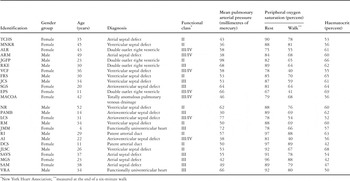
Table 1.

Table 2.

Influence of saturations of oxygen on plasma von Willebrand factor antigen (a) and its multimeric composition (b). The density of low molecular weight fractions (insert, Western blot, five lower bands) was measured and expressed as a percentage of total multimer density. The numbers of patients in the insert are the same as Table 1. Patient 16 had a peripheral saturation of oxygen in the range of 88 to 91 percent. In patient 3, the range was 68 to 75 percent. Expressed are the means of triplicate observations per patient
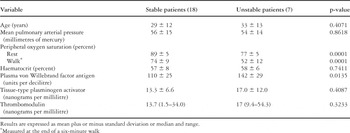
Table 3.

Receiver operator characteristic curves for peripheral saturations of oxygen and levels of von Willebrand factor antigen in the plasma in the discrimination between stable and unstable patients with Eisenmenger syndrome. A saturation of oxygen below 84 percent (sensitivity and specificity of 94 and 80 percent respectively) and levels of von Willebrand factor antigen above 121 units per decilitre (sensitivity and specificity of 60 and 90 percent respectively) were predictive of unstable disease.

Behaviour of endothelial markers in 12 patients with Eisenmenger syndrome who were subjected to medical treatment and followed-up for 24 months (left, open circles). Data from stable patients (open squares, N = 8) and unstable patients (closed squares, N = 4) are shown on the right. A progressive decrease in plasma von Willebrand factor antigen (p < 0.0001) and tissue-type plasminogen activator (p = 0.0301) was observed, with significant differences between groups detected for von Willebrand factor antigen only (p = 0.0063). Thrombomodulin remained decreased in both groups. Results are expressed as mean plus or minus standard deviation (von Willebrand factor antigen and tissue-type plasminogen activator) or median and range (thrombomodulin).
 You have
Access
- 9
- Cited by