





Introduction
Diabetes is estimated to affect more than 500 million people worldwide and ranks eighth among the leading causes of global disability-adjusted life years (GBD 2019 Diseases and Injuries Collaborators et al., Reference Abbas, Abbasi, Abbasifard, Abbasi-Kangevari, Abbastabar, Abd-Allah, Abdelalim, Abdollahi, Abdollahpour, Abolhassani, Aboyans, Abrams and Abreu2020; Ong et al., Reference Ong, Stafford, McLaughlin, Boyko, Vollset, Smith, Dalton, Duprey, Cruz, Hagins, Lindstedt, Aali, Abate and Abate2023). The incidence of diabetes has been reported to increase during the COVID-19 pandemic, potentially due to both direct post-infection effects and indirect metabolic risk factors, such as reduced physical activity and worsening dietary habits (Izzo et al., Reference Izzo, Pacella, Trimarco, Manzi, Lombardi, Piccinocchi, Gallo, Esposito, Lembo, Piccinocchi, Morisco, Santulli and Trimarco2023; Li et al., Reference Li, Li, Wang, Liu, He and Zhang2023; Sánchez-Sánchez et al., Reference Sánchez-Sánchez, Ramírez-Vargas, Avellaneda-López, Orellana-Pecino, García-Marín and Díaz-Jimenez2020).
Significant alterations in blood glucose regulation were reported throughout the COVID-19 period, primarily due to the extraordinary circumstances associated with the pandemic. In a global survey of healthcare professionals, diabetes was reported as the disease most affected by reductions in healthcare services during the pandemic (Chudasama et al., Reference Chudasama, Gillies, Zaccardi, Coles, Davies, Seidu and Khunti2020). Glycemic and metabolic parameters, particularly body weight, were notably affected, likely due to home confinement, reduced physical activity, and changes in eating habits (Maestre et al., Reference Maestre, Sospedra, Martínez-Sanz, Gutierrez-Hervas, Fernández-Saez, Hurtado-Sánchez and Norte2021; Sánchez-Sánchez et al., Reference Sánchez-Sánchez, Ramírez-Vargas, Avellaneda-López, Orellana-Pecino, García-Marín and Díaz-Jimenez2020; Shiba et al., Reference Shiba, Cowden, Counted, VanderWeele and Fancourt2024; Tazegül et al., Reference Tazegül, Aydın, Kıraç Aksuna, Dik, Aksoy, Koç, Tiryaki, Kurt, Görk, Erdoğan, Aysevinç, Çeçen Düzel, Topçu, Güven, Akıcı and Fak2026). A systematic review of eleven studies involving more than 16,000 patients with type 2 diabetes reported significant increases in HbA1c, fasting blood glucose, and body mass index during periods when restrictions were extensively implemented (Ojo et al., Reference Ojo, Wang, Ojo, Orjih, Pavithran, Adegboye, Feng and McCrone2022). Another systematic review reported improvements in blood glucose control; however, these were not reflected in HbA1c values, and the data predominantly originated from countries with widespread use of high-technology devices, thereby limiting the generalizability of the findings to the global population (O’Mahoney et al., Reference O’Mahoney, Highton, Kudlek, Morgan, Lynch, Schofield, Sreejith, Kapur, Otunla, Kerneis, James, Rees, Curtis, Khunti and Hartmann‐Boyce2022).
Access to medications was also among the healthcare components adversely affected during the pandemic. A French study reported that during the first wave of pandemic-related restrictions, refill rates of antidiabetic prescriptions remained comparable to the pre-pandemic period, while new prescriptions decreased by 1.6% to 9%, likely due to difficulties in accessing healthcare services (Mathieu et al., Reference Mathieu, Pambrun, Bénard, Pernelle and Faillie2022). In this context, understanding how the use of antidiabetic agents, which play a key role in glycemic control, changed during the pandemic is particularly important not only for evaluating continuity of diabetes care, but also for assessing potential implications for pharmaceutical expenditure in a chronic disease requiring long-term pharmacotherapy. Thus, this study aimed to examine the changes in the utilization, expenditure, and prescribing patterns of antidiabetic drugs in relation to the implementation and subsequent relaxation of pandemic restrictions.
Methods
This study constitutes the antidiabetic-focused component of the “Trends in Drug Utilization During COVID-19 Pandemic in Turkey” (PANDUTI-TR) project. The parent study evaluated drug consumption, expenditure, and prescribing trends across commonly encountered metabolic and psychiatric conditions (Vizdiklar et al., Reference Vizdiklar, Aydin, Tazegul, Kaskal and Akici2024; Reference Vizdiklar, Aydin, Gultekin, Tazegul and Akici2025a; Reference Vizdiklar, Aydin, Yilmaz and Akici2025b; Reference Vizdiklar, Aydin, Yilmaz and Akici2026). Accordingly, we investigated changes in antidiabetic drug consumption, related expenditure, and prescribing patterns throughout COVID-19 pandemic-associated restrictions. The study was approved by Marmara University School of Medicine Ethics Committee for Clinical Studies (approval number: 09.2022.825).
Data collection
Study data were provided by the Turkish office of IQVIA, an organization that delivers comprehensive pharmaceutical market data on a multinational scale (Vizdiklar et al., Reference Vizdiklar, Aydin, Tazegul, Kaskal and Akici2024). The antidiabetic agents analysed in the study were classified according to the World Health Organization (WHO) Anatomical Therapeutic Chemical classification system (Figure S1) (WHO Collaborating Centre for Drug Statistics Methodology, 2024). Consumption and expenditure levels of antidiabetics over the study period (from 01.03.2018 to 31.12.2022) were assessed using a nationwide, real-world monthly consumption dataset, based on the number of drug units distributed from pharmaceutical warehouses to community pharmacies. Prescribing levels for the corresponding timeframe were calculated using a nationwide quarterly prescribing projection dataset of antidiabetics prescribed for non-type 1 diabetes mellitus diagnoses (International Classification of Diseases-10 codes: E11–E14). This dataset was derived from outpatient prescription data collected from 1000 physicians across the country over a 7-day period.
Measures and outcome
We assessed and compared average monthly antidiabetic drug consumption and expenditure, along with average quarterly prescribing levels, across three distinct periods defined by the implementation and subsequent lifting of COVID-19 restrictions: ‘before restrictions’ (BfR, 01.03.2018–31.03.2020), ‘during restrictions’ (DuR, 01.04.2020–31.03.2022), and ‘after restrictions’ (AfR, 01.04.2022–31.12.2022). In defining these periods, we accounted for the potential delay between wholesale drug transfers and their reflection in retail drug consumption. Drug consumption was expressed in units and defined daily doses per 1,000 inhabitants per day (DID), where appropriate. DID is a standardized measure of drug consumption within a population in a specific geographic area (WHO Collaborating Centre for Drug Statistics Methodology, 2024). In these calculations, combination products, including premixed insulins, were accounted for based on the respective proportions of their active substances. For drug expenditure analyses, antidiabetic expenditure data were obtained in Turkish liras and converted to euros using the official euro/Turkish lira exchange rates periodically declared by the Turkish Ministry of Health (Turkish Medicines and Medical Devices Agency, 2022). Average quarterly prescribed units and DID values of antidiabetics prescribed for diabetes mellitus were calculated and compared across BfR, DuR, and AfR periods. The results were also presented stratified by user type, distinguishing new users (those prescribed an antidiabetic for the first time following a new diagnosis) from ongoing users (who were already receiving antidiabetic treatment).
Analysis of regional variations in utilization
The association between antidiabetic drug consumption and socioeconomic status at the provincial level was explored to identify potential regional differences in trends. Thus, the Socio-Economic Development Index-2017 (SEDI-2017) scores were used to assess the level of socioeconomic development across all 81 provinces in Turkey. SEDI-2017 evaluated the socioeconomic status of the provinces using 52 indicators grouped into eight domains, that is, demography, employment, education, health, competitive and innovative capacity, finance, accessibility, and quality of life, resulting in a numerical score for each province (General Directorate of Development Agencies of the Turkish Ministry of Industry and Technology, 2019).
Statistical analysis
All analyses were conducted using GraphPad Prism 10.1 (GraphPad Software, Boston, MA, USA) and IBM SPSS 29.0 (IBM Corp., Armonk, NY, USA) software. Results were expressed as numbers and percentages or as mean ± standard deviation, where appropriate. The normality of continuous variables was evaluated using the Shapiro–Wilk test. Data with normal distribution were compared via one-way analysis of variance followed by Tukey’s post hoc test, whereas the Kruskal–Wallis test with Dunn’s post hoc test was applied to data with non-normal distribution. Spearman’s correlation was used to evaluate the relationship between provincial drug consumption levels and numerical SEDI scores, and the resulting coefficients were compared across the three study periods (MedCalc Software Ltd., 2024). Statistical significance was defined as a type I error rate of less than 5%.
Results
A total of 375.1 million units of antidiabetic medications were consumed during the 58-month study period, corresponding to an overall expenditure of €4.4 billion. Insulins accounted for 19.9% of total antidiabetic consumption but 39.4% of overall expenditure. The total number of antidiabetic units prescribed by physicians was 130.2 million, of which 14.4% were insulins.
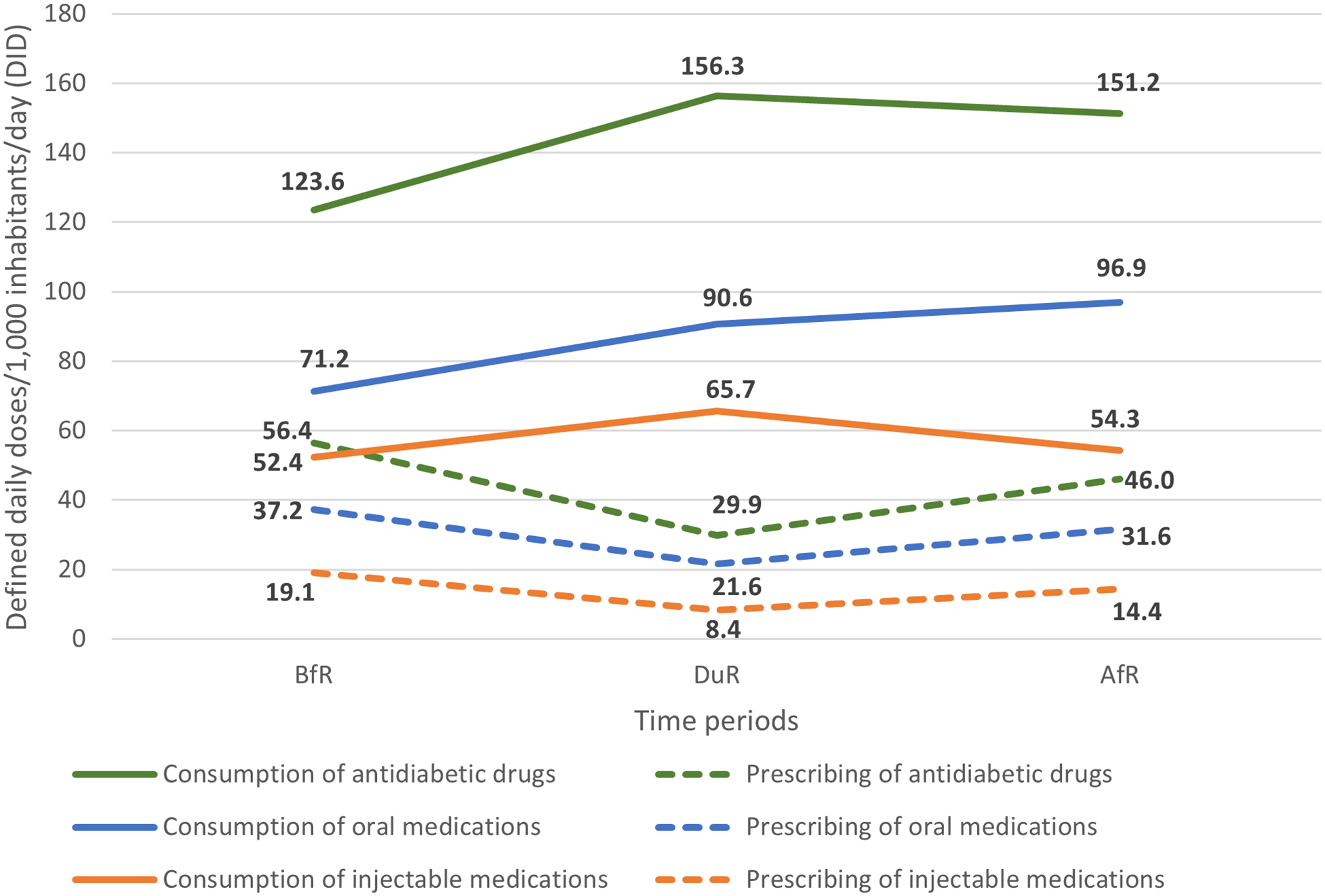
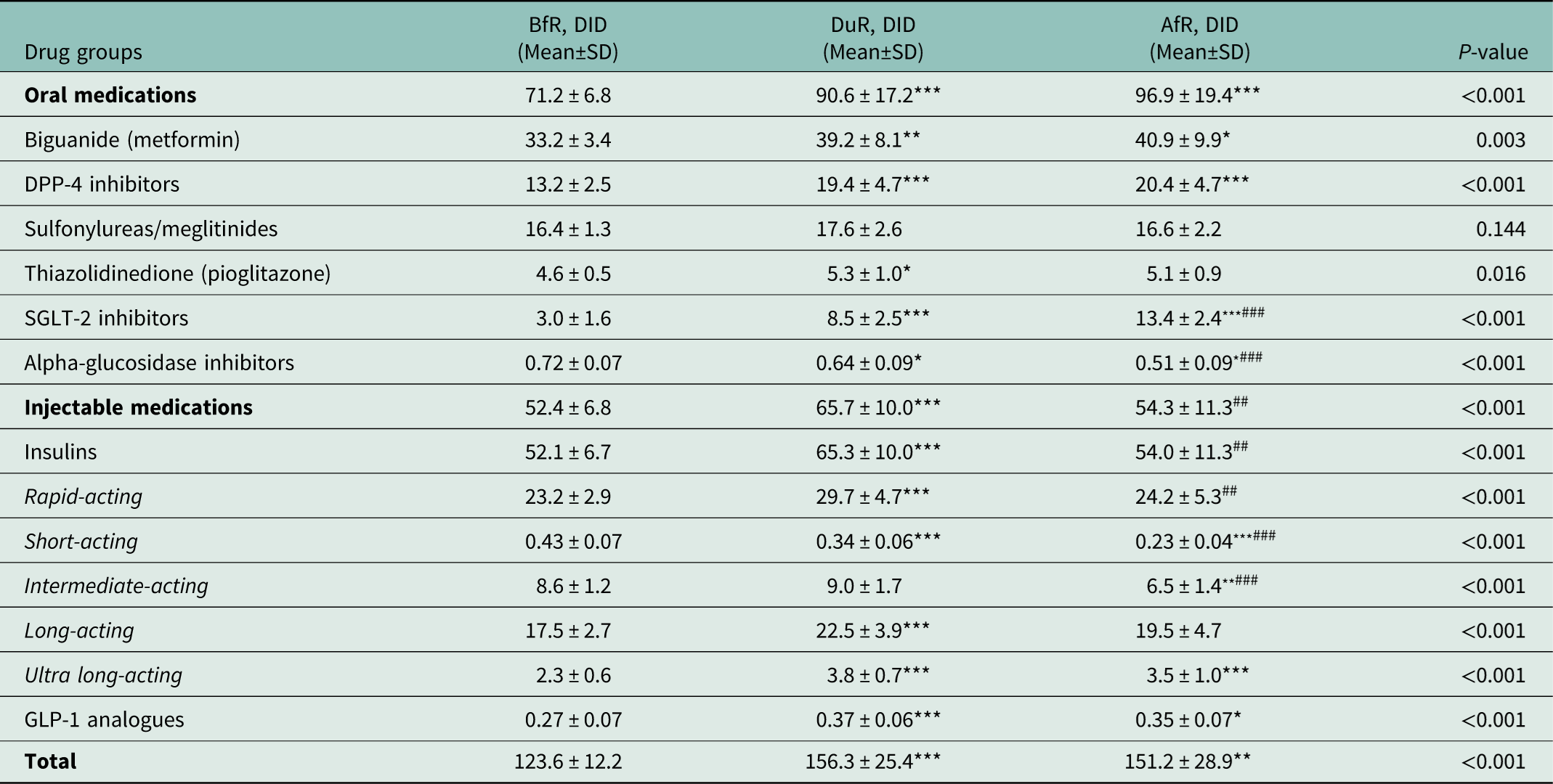
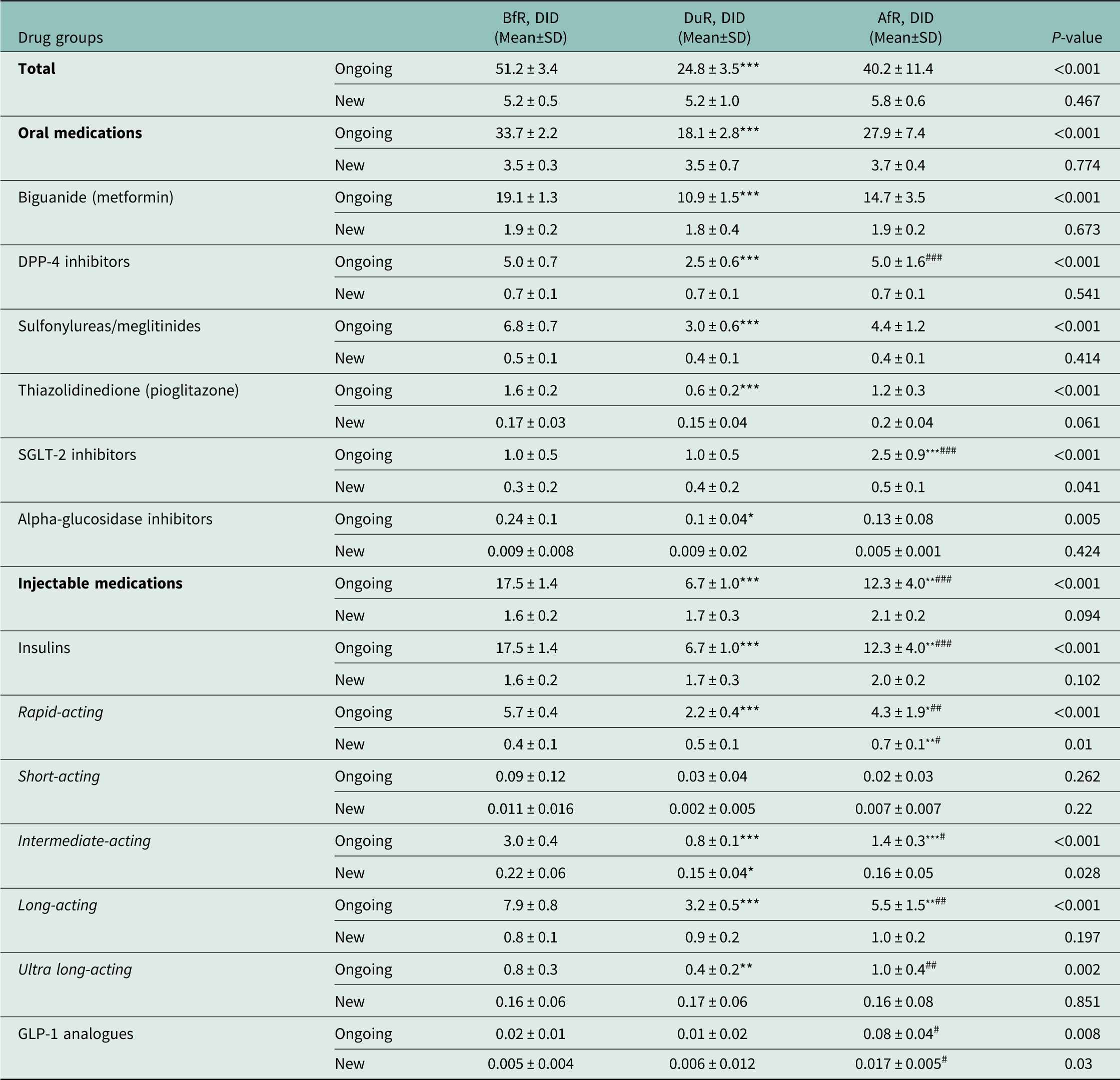
Average monthly antidiabetic consumption throughout the restriction periods increased from 123.6 ± 12.2 DID in BfR to 156.3 ± 25.4 DID in DuR (p < 0.001), then slightly decreased to 151.2 ± 28.9 DID in AfR while remaining higher than BfR (p = 0.004; Table 1). Mean monthly antidiabetic expenditure followed a similar pattern, rising significantly from €63.6 m ± 8.4 m in BfR to €85.1 m ± 14.8 m in DuR (p < 0.001) and remaining elevated in AfR (€83.9 m ± 19.1 m, p = 0.004 vs. BfR; Table S1). In contrast to consumption and expenditure trends, overall prescribing levels showed a marked reduction from BfR (56.4 ± 3.5 DID) to DuR (29.9 ± 3.6 DID, p < 0.001), with a subsequent but nonsignificant increase in AfR (46.0 ± 10.9 DID, p > 0.05 vs. BfR and DuR; Figure 1). This decline was mainly observed among ongoing users, whereas prescribing for new users was stable across the three periods (5.2 ± 0.5, 5.2 ± 1.0, and 5.8 ± 0.6 DID, respectively; p > 0.05; Table 2).
Comparison of average monthly consumption and quarterly overall prescribing of antidiabetics across COVID-19 restriction-associated periods. BfR, before restrictions; DuR, during restrictions; AfR, after restrictions.

Figure 1. Long description
A line graph comparing the average monthly consumption and quarterly overall prescribing of antidiabetics across different COVID-19 restriction-associated periods. The horizontal axis represents time periods labeled as BfR (before restrictions), DuR (during restrictions), and AfR (after restrictions). The vertical axis represents defined daily doses per 1,000 inhabitants per day (D D D). The graph includes six lines representing different data series: consumption of antidiabetic drugs, prescribing of antidiabetic drugs, consumption of oral medications, prescribing of oral medications, consumption of injectable medications, and prescribing of injectable medications. Each line shows trends over the three time periods. The consumption of antidiabetic drugs increases from 123.6 to 156.3 and then slightly decreases to 151.2. The prescribing of antidiabetic drugs shows a slight decrease from 56.4 to 29.9 and then increases to 46.0. The consumption of oral medications increases from 71.2 to 90.6 and then to 96.9. The prescribing of oral medications decreases from 37.2 to 21.6 and then increases to 31.6. The consumption of injectable medications increases from 19.1 to 65.7 and then decreases to 54.3. The prescribing of injectable medications decreases from 52.4 to 8.4 and then increases to 14.4.
Distribution and comparison of average values of monthly consumption of antidiabetics across COVID-19 restriction-associated periods

Table 1. Long description
A table comparing the average monthly consumption of various antidiabetic drug groups across three periods: BfR, DuR, and AfR. The table has 15 rows and 5 columns. Column headers are Drug groups, BfR DID (Mean±SD), DuR DID (Mean±SD), AfR DID (Mean±SD), and P-value. Row labels include Oral medications, Biguanide (metformin), DPP-4 inhibitors, Sulfonylureas/meglitinides, Thiazolidinedione (pioglitazone), SGLT-2 inhibitors, Alpha-glucosidase inhibitors, Injectable medications, Insulins, Rapid-acting, Short-acting, Intermediate-acting, Long-acting, Ultra long-acting, GLP-1 analogues, and Total. Each row provides the mean and standard deviation of the daily defined dose (DID) for each period and the P-value indicating statistical significance. Notable trends include an increase in consumption from BfR to DuR, followed by a slight decrease in AfR but remaining higher than BfR. Significant differences are marked with asterisks.
GLP, glucagon-like peptide; DPP, dipeptidyl peptidase; SGLT, sodium-glucose cotransporter; BfR, before restrictions; DuR, during restrictions; AfR, after restrictions; DID, defined daily doses per 1,000 inhabitants per day. *, P< 0.05 vs. BfR, **, P< 0.01 vs. BfR, ***,P< 0.001 vs. BfR; #, P< 0.05 vs. DuR; ##, P< 0.01 vs. DuR; ###, P< 0.001 vs. DuR.
Distribution and comparison of average values of quarterly prescribing of antidiabetics to ongoing and new users across COVID-19 restriction-associated periods

Table 2. Long description
A table comparing the distribution and comparison of average values of quarterly prescribing of antidiabetics to ongoing and new users across COVID-19 restriction-associated periods. The table has 12 rows and 5 columns. Column headers are Drug groups, BfR, DID (mean±SD), DuR, DID (mean ± SD), AfR, DID (mean±SD), and P-value. Row labels include Total, Oral medications, Biguanide (metformin), DPP-4 inhibitors, Sulfonylureas/meglitinides, Thiazolidinedione (pioglitazone), SGLT-2 inhibitors, Alpha-glucosidase inhibitors, Injectable medications, Insulins, Rapid-acting, Short-acting, Intermediate-acting, Long-acting, Ultra long-acting, and GLP-1 analogues. Each row provides data for ongoing and new users under each period. Notable trends include significant differences in prescribing patterns across different drug groups and periods, with P-values indicating statistical significance.
GLP, glucagon-like peptide; DPP, dipeptidyl peptidase; SGLT, sodium-glucose cotransporter; BfR, before restrictions; DuR, during restrictions; AfR, after restrictions; DID, defined daily doses per 1,000 inhabitants per day. *, P < 0.05 vs. BfR, **, P < 0.01 vs. BfR, ***, P < 0.001 vs. BfR; #, P < 0.05 vs. DuR; ##, P < 0.01 vs. DuR; ###, P < 0.001 vs. DuR.
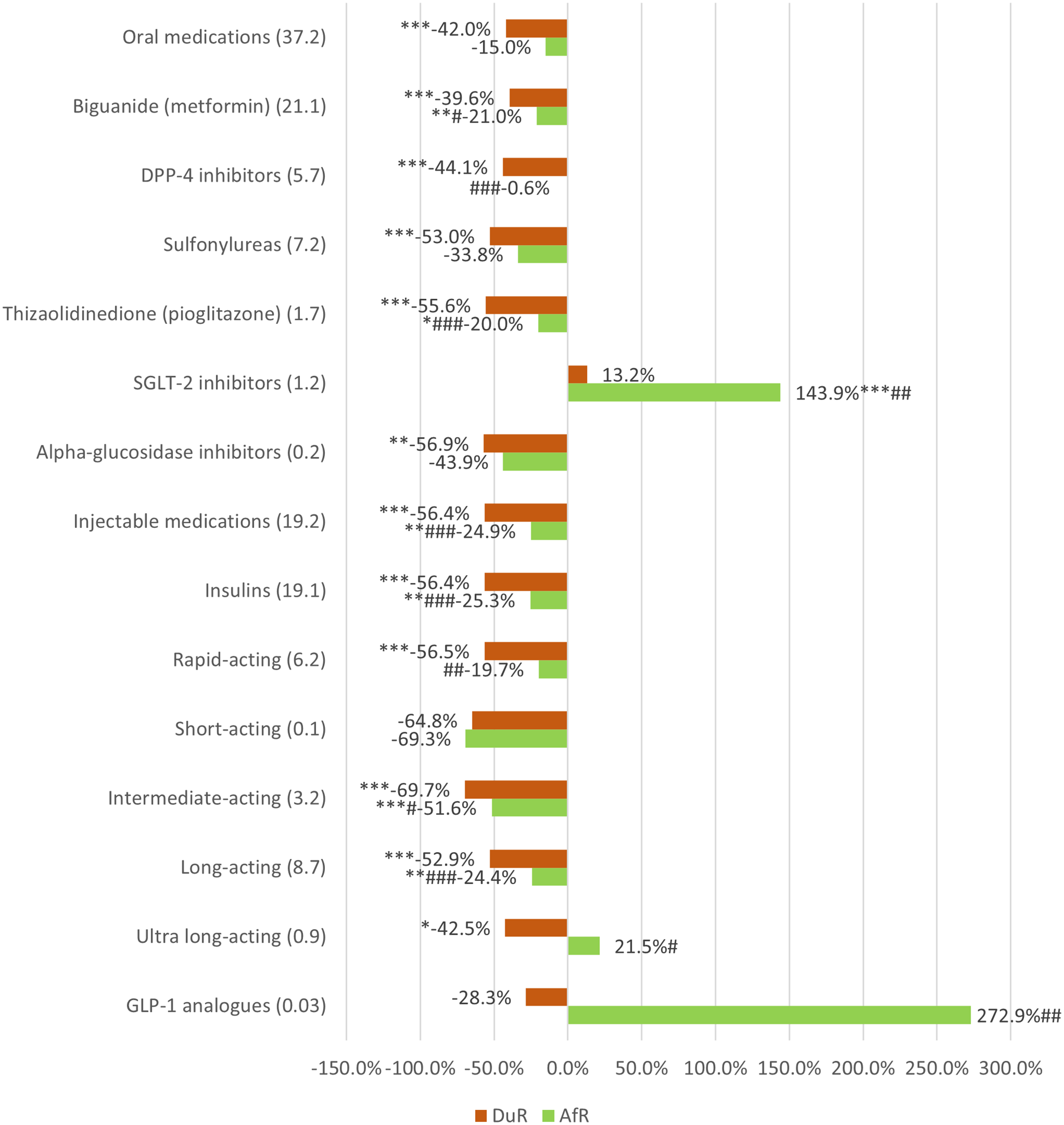
Mean monthly consumption levels of oral antidiabetics rose from 71.2 ± 6.8 DID in BfR to 90.6 ± 17.2 DID in DuR (p < 0.001) and further elevated to 96.9 ± 19.4 DID in AfR (p < 0.001 vs. BfR; Table 1). Prescribing levels decreased from BfR to DuR (p < 0.001) and subsequently showed a nonsignificant rebound in AfR (p > 0.05; Figure 2). Metformin and dipeptidyl peptidase-4 (DPP-4) inhibitors exhibited consumption patterns similar to those of overall oral antidiabetics, with increases observed in both successive periods compared to BfR (Table 1). Among oral antidiabetics, sodium-glucose cotransporter-2 (SGLT-2) inhibitors showed the most pronounced relative increase, surging from 3.0 ± 1.6 DID in BfR to 8.5 ± 2.5 DID in DuR (p < 0.001) and reaching 13.4 ± 2.4 DID in AfR (p < 0.001 vs. both BfR and DuR; Table 1). Overall prescribing rates of oral antidiabetics decreased during restrictions (p < 0.001) and subsequently showed a partial recovery from DuR to AfR (p > 0.05; Figure 2). Prescribing for ongoing users sharply decreased in DuR (p < 0.001) and then partially rebounded in AfR (p > 0.05), while prescribing for new users remained stable across all periods (p > 0.05; Table 2). SGLT-2 inhibitors were the only oral antidiabetic class to exhibit an upward prescribing trend, increasing nonsignificantly from 1.2 ± 0.7 DID to 1.4 ± 0.4 DID in DuR (p > 0.05), followed by a significant rise to 3.0 ± 0.9 DID in AfR (p < 0.001 vs. BfR; p = 0.002 vs. DuR; Figure 2).
Change in antidiabetic drug prescribing in ‘during restrictions’ (DuR) and ‘after restrictions’ (AfR) periods compared with ‘before restrictions’ (BfR) period. GLP, glucagon-like peptide; DPP, dipeptidyl peptidase; SGLT, sodium-glucose cotransporter; DID, defined daily doses per 1,000 inhabitants per day. DID levels in BfR are shown in parentheses. Comparisons between periods were performed using one-way analysis of variance with Tukey’s post hoc test for normally distributed data or the Kruskal–Wallis test with Dunn’s post hoc test for non-normally distributed data. *,P < 0.05 vs. BfR; **, P < 0.01 vs. BfR; ***, P < 0.001 vs. BfR; #, P < 0.05 vs. DuR; ##, P < 0.01 vs. DuR; ###, P < 0.001 vs. DuR.

Figure 2. Long description
A horizontal bar graph compares the change in antidiabetic drug prescribing during restrictions (DuR) and after restrictions (AfR) periods compared with before restrictions (BfR) period. The x-axis represents the percentage change, ranging from -150 percent to 300 percent. The y-axis lists different types of antidiabetic drugs, including oral medications, biguanide (metformin), D P P-4 inhibitors, sulfonylureas, thiazolidinedione (pioglitazone), S G L T-2 inhibitors, alpha-glucosidase inhibitors, injectable medications, insulins, rapid-acting, short-acting, intermediate-acting, long-acting, ultra long-acting, and G L P-1 analogues. Each drug type has two bars, one for DuR and one for AfR, colored in brown and green respectively. Notable trends include a significant increase in the prescribing of S G L T-2 inhibitors and G L P-1 analogues during the AfR period, with percentage changes of 143.9 percent and 272.9 percent respectively. Other drugs generally show a decrease in prescribing during both periods. Annotations indicate statistical significance with symbols such as asterisks and hashes, representing different levels of significance compared to BfR and DuR periods.
Injectable antidiabetic medications increased from BfR (52.4 ± 6.8 DID) to DuR (65.7 ± 10.0 DID, p < 0.001), followed by a decrease in AfR (54.3 ± 11.3 DID, p < 0.01 vs. DuR). Mean monthly consumption of insulins, which comprised the majority of injectable therapies, increased substantially from 52.1 ± 6.7 DID in BfR to 65.3 ± 10.0 DID in DuR (p < 0.001), before returning to 54.0 ± 11.3 DID (p > 0.05 vs. BfR, p = 0.006 vs. DuR; Table 1). Overall prescribing of these drugs decreased from 11.6 ± 0.8 DID in BfR to 4.1 ± 0.6 DID in DuR (p < 0.001), then partially recovered to 7.3 ± 2.2 DID in AfR (p < 0.001 vs. both BfR and DuR; Figure 2). Although glucagon-like peptide-1 (GLP-1) receptor agonists represented a small absolute share of injectable antidiabetic use, their consumption increased from 0.27 ± 0.07 DID in BfR to 0.37 ± 0.06 DID in DuR (p < 0.001), then remained higher than BfR in AfR (0.35 ± 0.07 DID, p < 0.05 vs. BfR; Table 1). In terms of prescribing, these agents showed no marked change from BfR (0.03 ± 0.01 DID) to DuR (0.02 ± 0.03 DID, p = 0.05), followed by a significant increase in AfR (0.1 ± 0.04 DID, p = 0.009 vs. DuR; Figure 2). This elevation was observed in both ongoing and new users (Table 2). Similar to the overall injectable prescribing pattern, prescribing among ongoing users decreased sharply in DuR (p < 0.001), followed by a partial rebound in AfR (p > 0.05 vs. both BfR and DuR). Prescribing levels for new users maintained similar levels throughout the restriction-related periods (p > 0.05; Table 2).
Provincial antidiabetic drug consumption levels and SEDI scores showed a moderately strong positive correlation across all the restriction-related periods. Correlation coefficients between provincial antidiabetic consumption and SEDI scores were comparable across BfR, DuR, and AfR (p > 0.05, Table S2).
Discussion
This study, reflecting the impact of the COVID-19 pandemic and its associated restrictions on antidiabetic drug utilization, showed that antidiabetic consumption increased with the onset of the pandemic over a period of nearly five years, accompanied by a parallel increase in pharmaceutical expenditure. Following the relaxation of restrictions, oral antidiabetics demonstrated a distinct upward trajectory compared with overall trends and insulin-dominated injectable therapies, largely driven by increased use of SGLT-2 inhibitors. While antidiabetic drug consumption increased, prescribing levels declined during the period of intensified pandemic-related disruption and reduced healthcare utilization, possibly reflecting temporary measures that enabled continued medication dispensing without a new prescription. Although prescribing partially recovered after restrictions were eased, it remained below pre-pandemic levels. Prescribing for new users remained largely unchanged; however, GLP-1 receptor agonists among injectable therapies showed an increasing trend, especially after restrictions were eased.
Previous studies from countries such as Bulgaria and France reported no significant changes in overall antidiabetic consumption during the COVID-19 pandemic (Mathieu et al., Reference Mathieu, Pambrun, Bénard, Pernelle and Faillie2022; Mitkova et al., Reference Mitkova, Stanimirova, Manova, Gerasimov, Mitov and Petrova2025). In contrast to these findings, our study demonstrated an increase in consumption in DuR, which was also accompanied by rising expenditure in that period. This finding appears particularly concerning given that Turkey has the highest diabetes prevalence in Europe, with approximately one-sixth of the population having a confirmed diagnosis of diabetes mellitus, a burden that has remained largely unchanged (International Diabetes Federation, 2021; International Diabetes Federation, 2025). Several behavioural and healthcare-related factors may help explain this observation, including panic stockpiling. Diabetes mellitus is a well-established risk factor for adverse COVID-19 outcomes (Sonmez et al., Reference Sonmez, Demirci, Haymana, Tasci, Dagdelen, Salman, Ata, Sahin, Emral, Cakal, Atmaca, Sahin, Celik, Demir, Ertugrul, Unluturk, Caglayan and Satman2021), leading to specific clinical recommendations for this vulnerable population (Bornstein et al., Reference Bornstein, Rubino, Ludwig, Rietzsch, Schwarz, Rodionov, Khunti, Hopkins, Birkenfeld, Boehm, Amiel, Holt, Skyler, DeVries, Renard, Eckel, Zimmet, Alberti, Geloneze, Chan, Mbanya, Onyegbutulem, Ramachandran, Basit, Hassanein, Spinas, Beuschlein and Mingrone2021). In parallel, substantial disruptions in routine follow-up and outpatient care during the pandemic, coupled with efforts to compensate for unmet healthcare needs through telehealth services (Adhikari et al., Reference Adhikari, Titus, Baum, Lopez, Kanchi, Orstad, Elbel, Lee, Thorpe and Schwartz2023), may have contributed to patients adopting a more cautious approach to glycemic control and medication adherence. Accordingly, a study from Malaysia has reported improvements in both parameters during the COVID-19 lockdown (Sim et al., Reference Sim, Chong, Loganadan, Hussein, Adam and Lee2023).
The parallel increase in expenditure further emphasizes the policy relevance of the observed period-related utilization trends. In this context, emergency medication-access policies for chronic diseases requiring continuous pharmacotherapy should consider not only treatment continuity and total utilization, but also expenditure monitoring during and after periods of healthcare disruption. Differences in the contribution of antidiabetic classes to pharmaceutical expenditure, particularly insulins, further suggest that such monitoring might benefit from a drug-class-specific perspective.
Notably, the increase in consumption in DuR was accompanied by a concomitant decline in prescribing. Access to routine healthcare services and physician consultations necessary for prescribing was substantially reduced during this extraordinary period, both in Turkey and internationally (Uğur and Durak, Reference Uğur and Durak2024; Zhong et al., Reference Zhong, Ma, Ionova, Bhatt, Vargas, Banh and Wilson2025). Moreover, prescribing levels in AfR remained below pre-pandemic levels, potentially reflecting heightened risk perception among this vulnerable population, which might have discouraged patients from attending healthcare facilities or seeking physician consultations for prescription-related care. The divergence in consumption and prescribing trends might be partly explained by the nationwide implementation of prescription-free dispensing practices aimed at facilitating patient access to medications during the pandemic (Turkish Medicines and Medical Devices Agency, 2020), a strategy that has also been associated with similar outcomes in other countries (Mathieu et al., Reference Mathieu, Pambrun, Bénard, Pernelle and Faillie2022). Comparable patterns associated with this practice were also identified in other components of the parent study examining the utilization of different drug groups over the same timeframe (Vizdiklar et al., Reference Vizdiklar, Aydin, Tazegul, Kaskal and Akici2024; Reference Zhong, Ma, Ionova, Bhatt, Vargas, Banh and Wilson2025a; Reference Vizdiklar, Aydin, Yilmaz and Akici2025b; Reference Vizdiklar, Aydin, Yilmaz and Akici2026). The results indicate that this practice might have played a role in maintaining treatment continuity and improving access to chronic medications. Conversely, it may also have carried a potential risk of inadvertently enabling patients to obtain antidiabetic drugs in quantities exceeding short-term therapeutic needs. From a pharmaceutical policy perspective, such practices might require safeguards to preserve continuity of care while avoiding unnecessary accumulation, wastage, and avoidable excess expenditure. The distinct consumption trends in AfR between injectable medications, predominantly insulins, and oral antidiabetic drugs might further support this interpretation. Overall antidiabetic consumption levels were slightly lower in AfR than those observed in DuR, with injectable medications returning to pre-pandemic levels, whereas oral antidiabetic drugs continued to exhibit a modest, statistically nonsignificant increase. Compared with oral antidiabetic drugs, insulin requires stricter storage conditions and is more vulnerable to stability issues related to environmental factors, rendering it less amenable to stockpiling (Heinemann et al., Reference Heinemann, Braune, Carter, Zayani and Krämer2020). Consequently, the utilization of previously accumulated insulin supplies may have contributed to the discontinuation of stockpiling behaviour and a subsequent reduction in demand after the most critical phase of the pandemic.
Given the central role of primary care in the management of type 2 diabetes (Seidu et al., Reference Seidu, Cos, Brunton, Harris, Jansson, Mata-Cases, Neijens, Topsever and Khunti2022), the observed changes in antidiabetic utilization have direct implications for primary care practice. The disruptions in routine healthcare services during the COVID-19 pandemic (Uğur and Durak, Reference Uğur and Durak2024; Zhong et al., Reference Zhong, Ma, Ionova, Bhatt, Vargas, Banh and Wilson2025), along with temporary medication-access policies (Turkish Medicines and Medical Devices Agency, 2020), emphasize the importance of coordination between primary care physicians and community pharmacists in supporting continuity of chronic disease management (Angibaud et al., Reference Angibaud, Jourdain, Girard, Rouxel, Mouhib, Nogueira, Rat and Huon2024). Such collaborative approaches might help preserve appropriate medication access, reduce unnecessary stockpiling, and support rational medicine use during future public health emergencies.
Among oral antidiabetic drugs, metformin and DPP-4 inhibitors accounted for the majority of consumption and are regarded as widely used agents in the pharmacological management of diabetes; notably, metformin is also among the top-utilized medicines in Turkey (Bajaj et al., Reference Bajaj, McCoy, Balapattabi, Bannuru, Bellini, Bennett, Beverly, Briggs Early, ChallaSivaKanaka, Echouffo-Tcheugui, Everett, Garg, Laffel, Lal, Matfin, Nelson, Neumiller, Pandya, Pekas, Peters, Pilla, Romeo, Rosas, Sadhu, Segal, Simmons, Szmuilowicz and ElSayed2026; Bayram et al., Reference Bayram, Vızdıklar, Aydın, İşli and Akıcı2020). However, the increase that persisted into AfR was largely driven by SGLT-2 inhibitors, a more recently introduced class of antidiabetic therapies (Bajaj et al., Reference Bajaj, McCoy, Balapattabi, Bannuru, Bellini, Bennett, Beverly, Briggs Early, ChallaSivaKanaka, Echouffo-Tcheugui, Everett, Garg, Laffel, Lal, Matfin, Nelson, Neumiller, Pandya, Pekas, Peters, Pilla, Romeo, Rosas, Sadhu, Segal, Simmons, Szmuilowicz and ElSayed2026). Consumption of these drugs increased to approximately 3-fold in DuR and reached nearly 4.5-fold pre-pandemic levels thereafter. This increase may partly reflect consensus recommendations issued by the American Diabetes Association and the European Association for the Study of Diabetes shortly before the start of the pandemic, emphasizing earlier use of SGLT-2 inhibitors in selected patient populations, particularly those with established cardiovascular disease, heart failure, or chronic kidney disease, and potentially contributing to switches from other antidiabetic agents and increased consumption of these therapies (Buse et al., Reference Buse, Wexler, Tsapas, Rossing, Mingrone, Mathieu, D.’Alessio and Davies2020). In addition, the introduction of SGLT-2 inhibitors in heart failure treatment algorithms in major cardiology guidelines during the pandemic period might have substantially contributed to the increase in consumption (Heidenreich et al., Reference Heidenreich, Bozkurt, Aguilar, Allen, Byun, Colvin, Deswal, Drazner, Dunlay, Evers, Fang, Fedson, Fonarow and Hayek2022; McDonagh et al., Reference McDonagh, Metra, Adamo, Gardner, Baumbach, Böhm, Burri, Butler, Čelutkienė, Chioncel, Cleland, Coats, Crespo-Leiro, Farmakis, Gilard, Heymans, Hoes, Jaarsma, Jankowska, Lainscak, Lam, Lyon, McMurray, Mebazaa, Mindham, Muneretto, Francesco Piepoli, Price, Rosano, Ruschitzka, Kathrine Skibelund, Christian Schulze, Abdelhamid, Aboyans, Adamopoulos, Anker, Arbelo, Asteggiano, Bauersachs, Bayes-Genis, Borger, Budts, Cikes, Damman, Delgado, Dendale, Dilaveris, Drexel, Ezekowitz, Falk, Fauchier, Filippatos, Fraser, Frey, Gale, Gustafsson, Harris, Iung, Janssens, Jessup, Konradi, Kotecha, Lambrinou, Lancellotti, Landmesser, Leclercq, Lewis, Leyva, Linhart, Løchen, Lund, Mancini, Masip, Milicic, Mueller, Nef, Nielsen, Neubeck, Noutsias, Petersen, Sonia Petronio, Ponikowski, Prescott, Rakisheva, Richter, Schlyakhto, Seferovic, Senni, Sitges, Sousa-Uva, Tocchetti, Touyz, Tschoepe, Waltenberger, Adamo, Baumbach, Böhm, Burri, Čelutkienė, Chioncel, Cleland, Coats, Crespo-Leiro, Farmakis, Gardner, Gilard, Heymans, Hoes, Jaarsma, Jankowska, Lainscak, Lam, Lyon, McMurray, Mebazaa, Mindham, Muneretto, Piepoli, Price, Rosano, Ruschitzka and Skibelund2021). Accordingly, while these agents may have been preferentially used in diabetic patients with COVID-19-related renal complications, the upward trend in their utilization appears to be only partly related to the pandemic itself (Bailey et al., Reference Bailey, Day and Bellary2022). In contrast to other oral antidiabetic agents, this pronounced peak in consumption was accompanied by stable prescribing levels in DuR and a subsequent significant increase in AfR, limited to ongoing users. As our prescribing data included only prescriptions for diabetes mellitus, SGLT-2 inhibitor use for non-diabetic indications was not reflected in prescribing trends, potentially explaining the stable trend in new users. Conversely, the rise in prescribing for ongoing users might indicate a preference for these agents in patients with diabetes and relevant comorbidities. From an expenditure perspective, the shift toward SGLT-2 inhibitors might also reflect broader changes in antidiabetic treatment patterns, underscoring the need to interpret short-term pharmaceutical spending alongside their potential long-term clinical value.
Injectable antidiabetic agents displayed a distinct utilization pattern, with insulin accounting for the majority of this category and following a fluctuating trend throughout the periods as discussed earlier, while GLP-1 receptor agonists exhibited a rise persisting into AfR. In addition to increased consumption, GLP-1 receptor agonists also showed rising prescribing trends in AfR among both ongoing and new users, a pattern that may be partly explained by their relatively recent introduction and their potential role in weight management among patients with diabetes. In particular, the increase in prescribing to first-time users in AfR might have been influenced by the demand for weight management associated with reduced physical activity and changes in dietary habits resulting from pandemic-related confinement (Maestre et al., Reference Maestre, Sospedra, Martínez-Sanz, Gutierrez-Hervas, Fernández-Saez, Hurtado-Sánchez and Norte2021; Sánchez-Sánchez et al., Reference Sánchez-Sánchez, Ramírez-Vargas, Avellaneda-López, Orellana-Pecino, García-Marín and Díaz-Jimenez2020; Shiba et al., Reference Shiba, Cowden, Counted, VanderWeele and Fancourt2024; Tazegül et al., Reference Tazegül, Aydın, Kıraç Aksuna, Dik, Aksoy, Koç, Tiryaki, Kurt, Görk, Erdoğan, Aysevinç, Çeçen Düzel, Topçu, Güven, Akıcı and Fak2026), which might have contributed to the preference for this drug class. Nevertheless, it should be noted that newer GLP-1-based therapies, including GLP-1 receptor agonists such as semaglutide and dual GLP-1/gastric inhibitory polypeptide receptor agonists such as tirzepatide, which are also approved for indications such as weight management, were not available in the Turkish pharmaceutical market during the study period. Consequently, the observed trends may not fully capture the extent of potential subsequent increases in GLP-1-based therapy use, which might become increasingly relevant for future evaluations of antidiabetic pharmaceutical expenditure and budget impact.
Several limitations should be considered when interpreting the findings of the study. The nationwide drug consumption dataset was generated from pharmaceutical wholesaler-to-pharmacy distribution records, whereas the prescribing dataset was based on a nationally representative projection of a sample of prescriptions issued for diabetes mellitus diagnoses excluding type 1 diabetes. Accordingly, the methodological limitations previously described in publications from the parent project, arising from the nature of the data, are also applicable to the present analysis (Vizdiklar et al., Reference Vizdiklar, Aydin, Tazegul, Kaskal and Akici2024; Reference Zhong, Ma, Ionova, Bhatt, Vargas, Banh and Wilson2025a; Reference Vizdiklar, Aydin, Yilmaz and Akici2025b; Reference Vizdiklar, Aydin, Yilmaz and Akici2026). The use of these drugs for different indications could not be distinguished in the consumption data, which constitutes an inherent limitation of the study. Although prescribing data were restricted to prescriptions issued for non-type 1 diabetes mellitus, which partly mitigated this limitation, this discordance should be considered when interpreting the findings in a broader context. Expenditure calculations were based on the euro/Turkish lira exchange rate set by the national health authority, which is updated annually or at multi-month intervals; therefore, short-term fluctuations in real-world exchange rates may not have been fully reflected in the results. Finally, to minimize potential confounding related to the profound disruptions in healthcare access after the February 2023 earthquake in Turkey (Manirambona et al., Reference Manirambona, Obnial, Musa, Miranda, Haruna and Shomuyiwa2023), AfR was deliberately limited to nine months.
In conclusion, this study demonstrated a sustained increase in antidiabetic drug consumption after the implementation of COVID-19-related public health restrictions, with elevated levels persisting even after the subsequent easing of most measures. Policies implemented to facilitate access to medications during extraordinary circumstances might have contributed to the maintenance of these utilization levels, alongside other potentially reinforcing factors such as panic stockpiling, improved adherence to glycemic control, and the introduction of newer pharmacological options into routine clinical practice. Findings from a country with a high burden of diabetes, such as Turkey, might therefore provide valuable insights for strengthening primary care-based diabetes management, enhancing coordination between family physicians and community pharmacists, and supporting medication access, pharmaceutical expenditure monitoring, and preparedness for future public health emergencies.
Supplementary material
The supplementary material for this article can be found at https://doi.org/10.1017/S1463423626101868.
Data availability statement
The data that support the findings of this study are available from the corresponding author upon reasonable request.
Acknowledgements
We thank IQVIA Turkey for their contributions in data collection.
Author contributions
Caner Vizdiklar: Conceptualization, data curation, formal analysis, funding acquisition, investigation, methodology, resources, visualization, writing – original draft, writing – review & editing; Volkan Aydin: Conceptualization, funding acquisition, investigation, methodology, project administration, supervision, validation, writing – original draft, writing – review & editing; Gokhan Tazegul: Conceptualization, funding acquisition, investigation, supervision, writing – original draft, writing – review & editing; Ahmet Akici: Conceptualization, funding acquisition, methodology, project administration, resources, supervision, writing – review & editing.
Funding statement
The project encompassing this study was supported by Türkiye Sağlık Enstitüleri Başkanlığı (Health Institutes of Türkiye, project number: 21298).
Competing interests
Dr. Gokhan Tazegul has received honoraria for lectures from Sanofi S.A., Neutec Grup İlaç Sanayi Ticaret A.Ş., and Sanovel İlaç Sanayi ve Ticaret A.Ş. and has participated in clinical trials sponsored by Sandoz İlaç Sanayi ve Ticaret A.Ş. The other authors declare no conflict of interest.
Ethical standards
This study was approved by Marmara University School of Medicine Ethics Committee for Clinical Studies (approval number: 09.2022.825).


 Open access

