Introduction
The spring barley crop plays a central role within the Irish arable farming sector: of the 291 k hectares devoted to wheat, barley and oats in 2015, >133 k hectares were utilized for the cultivation of spring barley (Anon, 2015). The cool but bright maritime climate of Ireland enables large numbers of grains to set in barley, which facilitates high grain yield (GY) potential (Kennedy et al., Reference Kennedy, Bingham and Spink2017).
Approximately 0.20 of the Irish spring barley crop is devoted to the production of malting barley. A recent trend within the Irish malting industry has been an increased demand for spring malting barley varieties with low grain nitrogen concentration (GNC) (<1.49%) for distilling malt production (Patrick Kennedy, personal communication). This trend is on the back of continued expansion and growth in Irish whiskey production, with exports in this sector predicted to double on current levels by the year 2020 (Anon, 2017).
In addition to a high germinative capacity, the protein/grain nitrogen (N) concentration of malting barley is the most important grain quality (GQ) specification (Atherton, Reference Atherton and Gallagher1984; Molina-Cano et al., Reference Molina-Cano, Swanston, Moralejo, Polo, Rubio, Macgregor, Spunar and Janikova2004). This is due to the long-established, inverse relationship between grain N and extract/starch levels (Bishop, Reference Bishop1930; Meredith et al., Reference Meredith, Anderson, Hudson and Cook1962; Briggs, Reference Briggs1998). The principal emphasis within malt distilling is to maximize the amount of alcohol production from malted barley: this contrasts with brewing, which requires high levels of extract/sugars to deliver both alcohol and flavour in the final product (Bathgate et al., Reference Bathgate, Martinez-Frias and Stark1978; Bringhurst, Reference Bringhurst2015). Spirit/alcohol yields are reported in the literature as being correlated positively with extract levels (Briggs, Reference Briggs1998; Bringhurst et al., Reference Bringhurst, Glasgow, Agu, Brosnan, Thomas, Ceccarelli and Grando2008) but negatively with grain N content (Swanston et al., Reference Swanston, Thomas, Powell, Meyer, Bringhurst, Pearson, Brosnan and Broadhead2000; Bringhurst et al., Reference Bringhurst, Glasgow, Agu, Brosnan, Thomas, Ceccarelli and Grando2008). Thus, malt distillers require low N barley which can be malted easily to produce high-quality malts with good alcohol yields and processing properties (Bringhurst and Brosnan, Reference Bringhurst, Brosnan, Russell and Stewart2014).
The final GNC/grain protein concentration in cereal crops is dependent on a multitude of factors that include, amongst others: the remobilization of accumulated N to the grain (Spiertz and de Vos, Reference Spiertz and De Vos1983; Grashoff and D'Antuono, Reference Grashoff and D'Antuono1997); soil mineral N supply (McTaggart and Smith, Reference McTaggart and Smith1995; Abeledo et al., Reference Abeledo, Calderini and Slafer2008); environmental conditions such as temperature during the growing cycle (Schelling et al., Reference Schelling, Born, Weissteiner and Kuhbauch2003; Andersson and Holm, Reference Andersson and Holm2011) or drought stress (Savin and Molina-Cano, Reference Savin, Molina-Cano, Slafer, Molina-Cano, Savin, Araus and Romagosa2002); soil type and seasonal interactions (Froment et al., Reference Froment, McDonald and Withers1993; Conry, Reference Conry1994); previous cropping (Le Bail and Meynard, Reference Le Bail and Meynard2003; Turkington et al., Reference Turkington, O'Donovan, Edney, Juskiw, Mckenzie, Harker, Clayton, Xi, Lafond, Irvine, Brandt, Johnson, May and Smith2012); and genotype × environmental interactions (Emebiri and Moody, Reference Emebiri and Moody2004; O'Donovan et al., Reference O'Donovan, Turkington, Edney, Clayton, McKenzie, Juskiw, Lafond, Grant, Brandt, Harker, Johnson and May2011).
Final GNC is also dependent on the GY of the crop, as GY and grain protein concentration (Torp et al., Reference Torp, Doll and Haahr1981; Simmonds, Reference Simmonds1995; Bogard et al., Reference Bogard, Allard, Brancourt-Hulmel, Heumez, Machet, Jeuffroy, Gate, Martre and Le Gouis2010) GNC (Heitholt et al., Reference Heitholt, Croy, Maness and Nguyen1990; Triboi et al., Reference Triboi, Martre, Girousse, Ravel and Triboi-Blondel2006) have been reported to be inversely related in cereal crops.
Many of the above factors, however, are difficult for malting barley growers to control or even manipulate in a practical way to produce grain of the correct end-use specification. However, agronomic factors such as sowing date and applied N rate have long been regarded as important management tools for malting barley growers. Earlier sowing dates have been reported in the literature as producing: (i) higher GYs (Conry, Reference Conry1995; de Ruiter and Brooking, Reference de Ruiter and Brooking1996; Juskiw and Helm, Reference Juskiw and Helm2003); (ii) lower GNC/GPC (Weston et al., Reference Weston, Horsley, Schwarz and Goos1993; Cranstoun, Reference Cranstoun1999; O'Donovan et al., Reference O'Donovan, Turkington, Edney, Juskiw, McKenzie, Harker, Clayton, Lafond, Grant, Brandt, Johnson, May and Smith2012); (iii) larger grain size/reduced screenings (Cranstoun and Garstang, Reference Cranstoun and Garstang1993; Conry, Reference Conry1998) in spring malting barley crops.
The relationship between higher N application and increased GPC (Birch and Long, Reference Birch and Long1990; Conry, Reference Conry1994; O'Donovan et al., Reference O'Donovan, Turkington, Edney, Clayton, McKenzie, Juskiw, Lafond, Grant, Brandt, Harker, Johnson and May2011) or GNC (Lord and Vaughan, Reference Lord and Vaughan1987; Martin and Daly, Reference Martin and Daly1993; Conry, Reference Conry1995; Cranstoun, Reference Cranstoun1999) in malting barley crops has been widely established across a range of growing environments.
There is less research on the effects of agronomic practices on the final malt quality of barley. Therrien et al. (Reference Therrien, Grant, Carmichael and Noll1994) reported that malting quality was influenced to a greater degree by genetic and environmental factors rather than agronomic factors such as fertilizer application. However, research from the UK by Wade and Froment (Reference Wade and Froment2003) also concluded that agronomic practices such as sowing date, seeding date and N rate were important factors in determining malt quality.
In Scotland, Cranstoun (Reference Cranstoun1999) reported that early sowing dates consistently produced distilling malts with greater malt extract values and higher spirit yields. Similarly, in the Midwest region of the USA, Weston et al. (Reference Weston, Horsley, Schwarz and Goos1993) observed that delayed planting also reduced malt extract; however, most recently, O'Donovan et al. (Reference O'Donovan, Edney, Izydorczyk, Turkington, Juskiw, McKenzie, Grant, Harker, May, Johnson, Smith and Clayton2016) reported that sowing date had little influence on malt quality under Canadian Prairie conditions. Other studies across different growing environments have reported detrimental effects of increased N application on malt extract (Martin and Daly, Reference Martin and Daly1993; Weston et al., Reference Weston, Horsley, Schwarz and Goos1993). Edney et al. (Reference Edney, O'Donovan, Turkington, Clayton, McKenzie, Juskiw, Lafond, Brandt, Grant, Harker, Johnson and May2012) also reported that increasing N application had a negative effect on malt extract but also on modification analyses such as Kolbach index and friability. However, to the best of the current authors’ knowledge, no work has evaluated the effects of sowing date on malting quality of spring barley in Ireland and only one previous study (Gately, Reference Gately1971) has investigated the effect of N on malt quality.
The objectives of the current study were:
(i) To clarify the role of key agronomic factors specifically, sowing date and N rate application in producing malting barley with low GNC (<1.49%).
(ii) To evaluate the effects of these agronomic factors on the key distilling malt quality parameters including soluble extract (SE), predicted spirit yield (PSY), fermentable extract, soluble nitrogen ratio (SNR) and friability.
Materials and methods
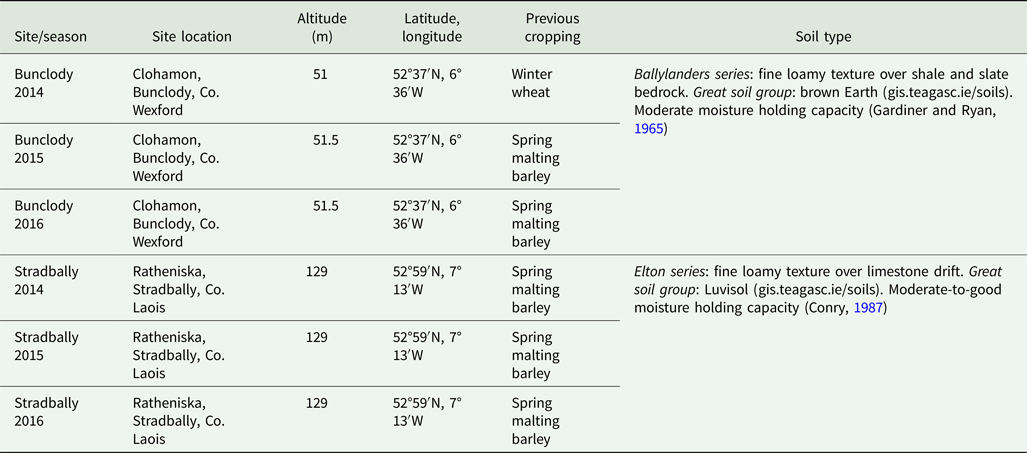
This research was conducted at two sites in the south midlands and south east of Ireland from 2014 to 2016. The sites were located at Clohamon, Bunclody, Co. Wexford (Bunclody) and Ratheniska, Stradbally, Co. Laois (Stradbally; Table 1). Both experimental sites had been in long-term, continuous arable cropping for >20 years and are widely used for the commercial cultivation of spring malting barley. Meteorological data such as rainfall and maximum and minimum daily temperatures were obtained from Met Eireann the National Meteorology service (Met Eireann, Glasnevin, Dublin 9, Ireland). Rainfall data were sourced from as close as possible to the sites (<11 km), whilst temperature data were sourced from stations no further than 20 km away.
Location, latitude/longitude, altitude, previous cropping and soil properties for the two experimental sites: Clohamon, Bunclody, Co. Wexford (Bunclody) and Ratheniska, Stradbally, Co. Laois (Stradbally)

Experimental design
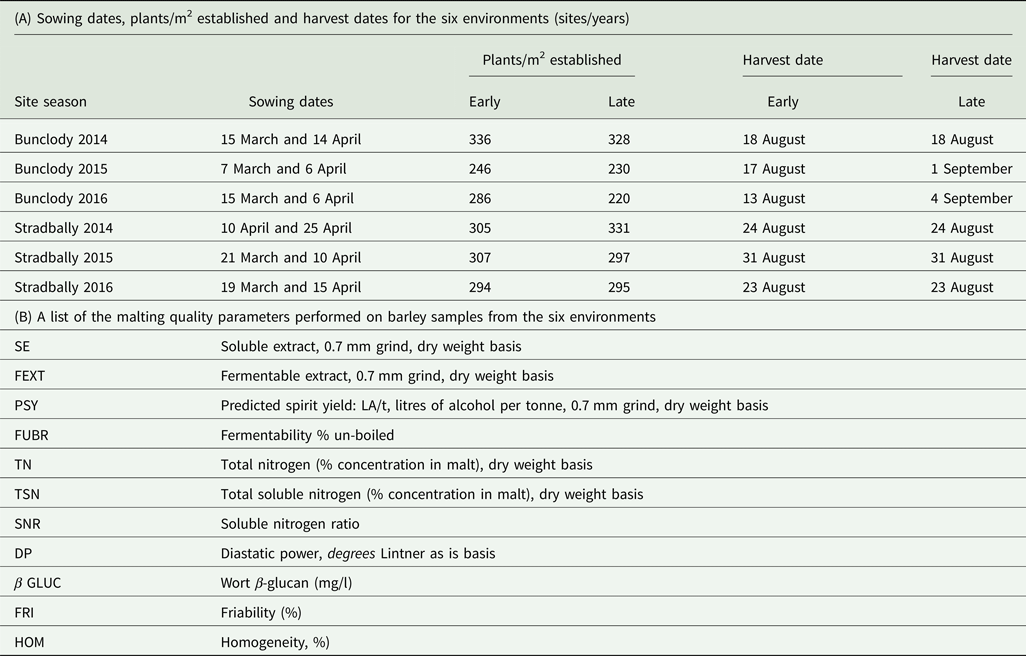
A trial area was measured out in fields destined for commercial spring malting barley crops at two experimental sites in Ireland over 3 years (six site/year combinations). The experiments in all six site/year combinations were laid out as a split-plot design with four replications using sowing dates as the main plot and N rate as the sub-plot. Main plots (sowing date) were 68 m long and these were divided into 15 m long sub-plots for the four N rates (90, 110, 130 and 150 kg N/ha) with a 2 m gap between each sub-plot to avoid fertilizer overlap. Every intention was made to sow as early as possible within the season, but the first date of sowing in each year was ultimately guided by when soil conditions were dry, friable and soil temperatures were >6 °C. The interval between early and late sowing dates was always >15 days. Details of the sowing dates for each of the sites are presented in Table 2A.
Information on sowing dates and malting quality analyses performed

Crop husbandry
Seedbeds were prepared using a reversible mouldboard plough to a depth of approximately 20 cm and a tilth was created using tined harrows at both site locations. The trial was sown at 350 seeds/m2 using a 1.5 m wide Wintersteiger (Wintersteiger AG, Austria) plot drill equipped with Lemken double-disc seed coulters (Lemken GmbH, Alpen, Germany) with a row spacing of 150 mm. All plots in the six experiments were sown using certified, first-generation seed from the same source (Limagrain, Market Rasen, UK): cv. Overture, a high yield potential, two-row spring malting barley with excellent malting quality recommended on the Department of Agriculture, Food and the Marine malting barley variety list (Anon, 2014).
In-field assessments and operations
Across all the six site/seasons, 60 kg N/ha in the form of a N: phosphorus: potassium fertilizer was broadcast onto the seedbed prior to establishment, with the remaining balance of 30, 50, 70 and 90 kg/ha (actual N) applied at growth stage (GS) 11–13 (Zadoks et al., Reference Zadoks, Chang and Konzak1974) in the form of 27.5% calcium ammonium nitrate. These relatively high N rates are reflective of commercial N usage on Irish spring malting barley crops, which are typically grown on soils in longer term arable crop rotations with lower soil mineral N levels.
Nitrogen was applied to individual plots using a manual, land-wheel-driven 1.5 m wide Fiona (Fiona Maskinfabrik A/S, Denmark) plot fertilizer spreader. A crop protection programme according to recommended rates and timings was applied by the host farmer and this amounted to an herbicide and insecticide application at Zadoks GS21–23 and two broad-spectrum fungicides applied at GS29–31 and GS39–45, respectively.
Once the trial had established, plant counts were taken at two random points within each sub-plot using a 0.25 m2 quadrat. Prior to harvest, ears were counted along a 1 m length at three points within each individual plot. If lodging was present in plots, an assessment score was taken prior to harvest. Plots were harvested using a Sampo Rosenlew 2010 (Sampo Rosenlew Ltd, Pori, Finland) plot combine harvester with on-board weighing system. A 1.5 kg sample was taken from each plot during harvesting to perform GQ analyses. The weight of each plot was recorded and adjusted to 85% dry matter (DM) to determine GY.
Grain quality and yield component determination
Grain N concentration was determined using an Agricheck (Bruins Instruments, Salem, NH, USA) near-infra red analyser, which was calibrated using a standard determined by the Dumas method on a LECO auto analyser (LECO Corportion, St. Joseph, MI, USA). Grain N uptake (GNU; kg/ha) was calculated using the following formula:
 $$\hbox{Grain yield} (100 \%\, {\rm DM}) \times \hbox{grain N} (100\% \,{\rm DM}) \times 10$$
Thousand grain weight (TGW) was determined by counting 1000 grains with a Pfueffer Contador (Pfeuffer Gmbh, Kitzingen, Germany) automated seed counter and grain weight was expressed to within 50 mg. The percentage of screenings was determined by weighing out 100 g of each sample and passing this over 2.5 and 2.25 mm slotted sieves on a Pfeuffer Sortimat (Pfeuffer Gmbh) screener for 2 min. Yield determinants such as grain number/m2 were calculated using these TGW and plot yield data figures.
Germination and micro-malting
Prior to micro-malting, barley samples were tested for germinative energy using the 4 and 8 ml test as described in the Institute of Brewing Recommended Methods of Analysis (IOB, 1997). Samples of 500 g were screened across a >2.5 mm sieve and micro-malted using a Joe White micro-malting unit (Joe White Malting Systems Ltd, Australia) under the following protocol: steeping (6 h (wet) at 14 °C, 15 h (dry) at 15 °C, 5 h (wet) at 15 °C, 15 h (dry) at 17 °C, 2 h (wet) at 16 °C), germination (24 h at 16 °C, 24 h at 15 °C, 24 h at 14 °C, 24 h at 13 °C), kilning (6 h at 58 °C, 5 h at 63 °C, 2 h at 68 °C, 6 h at 72 °C and 2 h at 76 °C). Given the time-consuming nature of the micro-malting process, it was decided that three replicates of two sowing dates and two N rates (110 and 150 kg/ha) from the six site/year combinations would be malted. Due to poor germination percentages, it was not possible to micro-malt the early sowing date from Stradbally in 2014.
Malt analysis
A list of the malt quality parameters analysed for the current study is provided in Table 2B. Key distilling malt analyses included: (i) SE, a measurement of the quantity of dissolved solids that are released from a malt during mashing; (ii) fermentability, an estimate of the percentage of the extract that can be fermented into alcohol; (iii) fermentable extract, which represents the quantity of sugars available for fermentation into alcohol by yeast; it is derived by multiplying SE % × fermentability %; (iv) PSY, an estimate of the yield of alcohol that can be obtained from malt; (v) SNR, an indicator of malt modification which measures the proportion of total soluble N in a malt divided by malt total N multiplied by 100; (vi) diastatic power (DP) and α-amylase (DU), a measurement of the level of enzymes in a malt which degrade starch into fermentable sugars during mashing in a distillery. All malt analyses were performed in the laboratory of a commercial maltings (Boortmalt, Bury St. Edmunds, UK) according to the Institute of Brewing Recommended Methods of Analysis (IOB, 1997).
Mashing of malt samples
Worts were prepared as outlined under the Institute of Brewing Recommended Methods of Analysis. Using a Buhler Universal Laboratory Disc Mill (Buhler AG, Switzerland), 50 g portions of the barley malt sample were ground into a coarse (0.7 mm) grist, which was then mixed with 360 ml distilled water and mashed at a constant 65 °C for 1 h using a mash bath. Worts were then filtered, collected and the specific gravity calculated using a Kyoto DA510 Density Meter (Kyoto Electronics, Tokyo, Japan). Hot water extract was determined using the Institute of Brewing Recommended Methods of Analysis (IOB, 1997). This was then expressed as SE % as reported by Gressick and Cantrell (Reference Gressick and Cantrell1993). Other malt analysis such fermentability (un-boiled wort) and % fermentable extract was determined from these worts as described in the Institute of Brewing Recommended Methods of Analysis. From this, the PSY was determined using the accepted empirical factor: fermentable extract × 6.06 as reported by Dolan (Reference Dolan2000). The total soluble N and β-glucan dissolved in the wort were also analysed according to the Institute of Brewing Recommended Methods of Analysis (IOB, 1997). Other malt quality parameters, namely: friability, homogeneity, DP, α-amylase were determined as per the Institute of Brewing Recommended Methods of Analysis (IOB, 1997).
Statistical analyses
Grain yield, GY components, GQ and malting parameters from the six site/seasons were analysed using a general analysis of variance (ANOVA) structure using GenStat (Version 18.1 for Windows) software package (VSN International, Hemel Hempsted, UK).
Bartlett's test of homogeneity was conducted on the six site/year data sets for both agronomic and malting quality variables. The variances across the six site/years were homogenous for almost all variables and thus it was appropriate to combine data over the six site/year combinations. However, variance within the data sets for the GQ parameters of TGW and % retention >2.5 mm were not homogenous across site/years and these were analysed individually by year and site. Amongst the malting quality parameters, the variances of only one variable, DU, were found to be heterogeneous across the six site/years. Due to unexplained variation and a concern over the reliability of the data, the DU parameter was excluded from the results of the current study.
When significant effects of quantitative factors (N rates) and/or interactions with other factors (sowing dates) were detected, regression analysis using N rate as a quantitative factor was performed. Regression analysis was also utilized to determine the relationship between grain and other GY components/GQ variables. Linear and quadratic effects were tested to determine the most appropriate fit by variance. The resulting linear and quadratic polynomials were of the form: y = a + bx and y = a + bx + cx 2 where y is the GY/GQ variable, x is the N fertilizer rate and the parameters are a (intercept), b (linear coefficient) and c (quadratic coefficient). Statistical significance for all tests was evaluated at P ⩽ 0.05.
Results
Climatic conditions
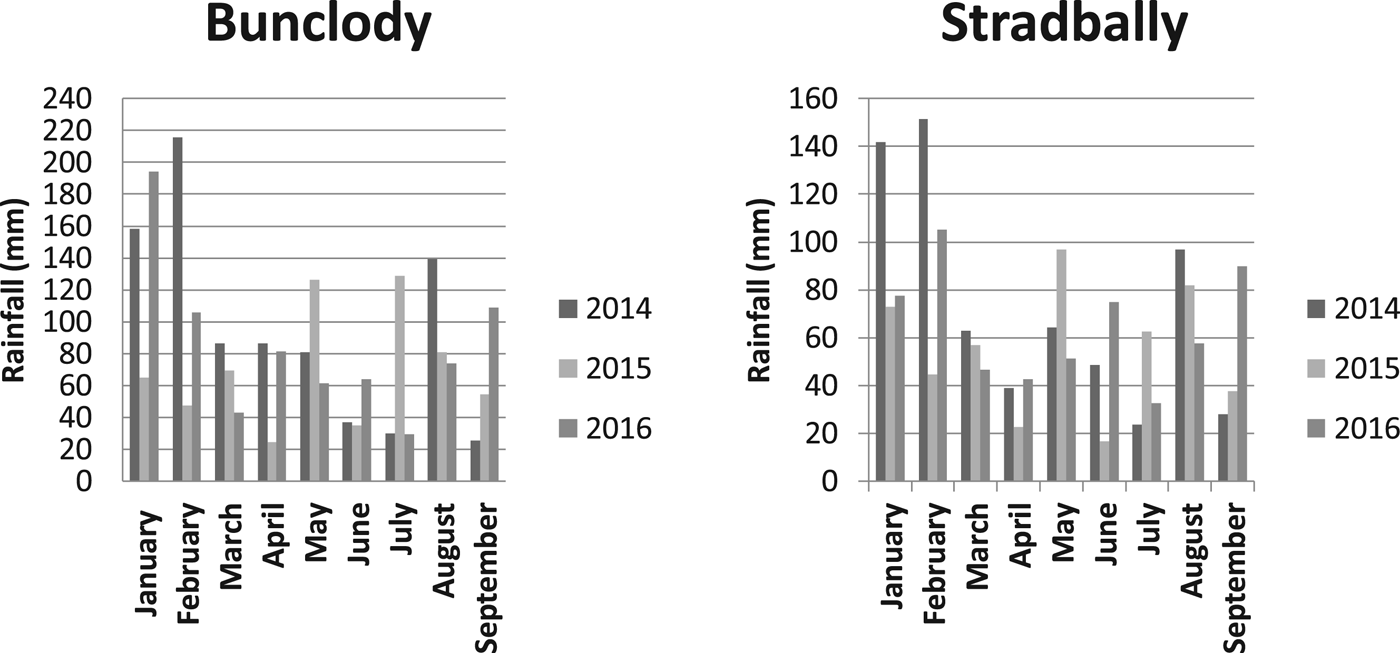
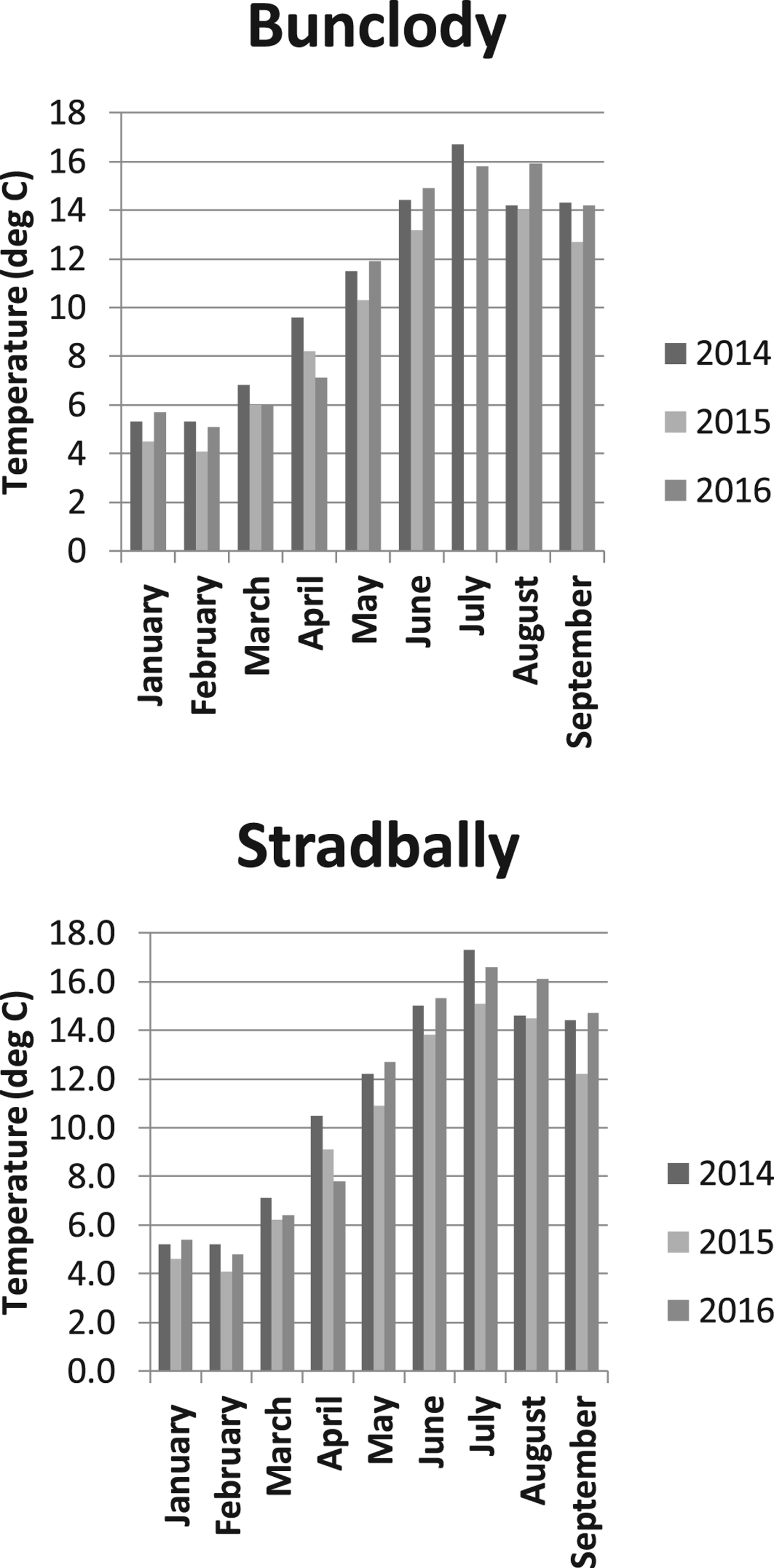
Mean monthly rainfall and air temperature data for the two sites from 2014 to 2016 are presented (Figs 1 and 2). Rainfall varied between site locations, with considerably more rain falling at the Bunclody site in all three growing seasons. The year 2014 was the wettest growing season at both sites, whilst 2015 and 2016 were drier. There were particularly high levels of rainfall recorded at both sites in January and February of 2014 and 2016 and similarly the months of November and December 2014 (data not presented) were exceptionally wet. This made sowing experiments in January and February impossible in all three seasons. The June–July periods featured relatively dry conditions except for July 2015 at the Bunclody site, which received high rainfall amounts (>100 mm) during this month.
Monthly rainfall values (mm) from January to September for the Bunclody and Stradbally sites from 2014 to 2016.

Monthly mean air temperatures (°C) from January to September for the Bunclody and Stradbally sites from 2014 to 2016.

There was little difference in the mean air temperatures recorded near the two sites, but individual seasons saw greater variations. The year 2015 saw the lowest mean air temperatures in 8 of the 9 months, with cooler conditions resulting in the most prolonged and favourable grain fill period. In 2014 and 2016, mean air temperatures were higher but generally followed a very similar trend, except during April 2016 which was much colder and resulted in slower plant growth and development.
Grain yield and quality
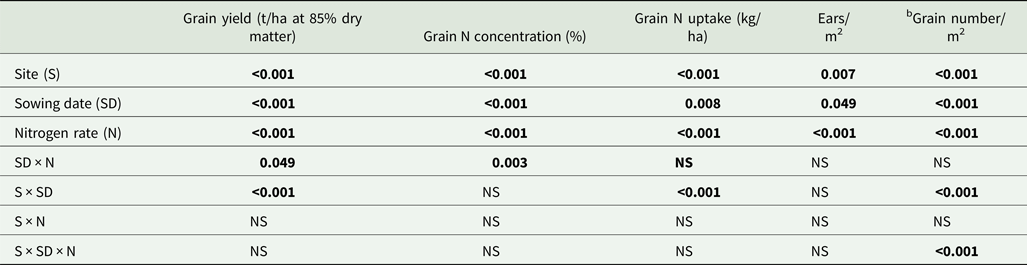
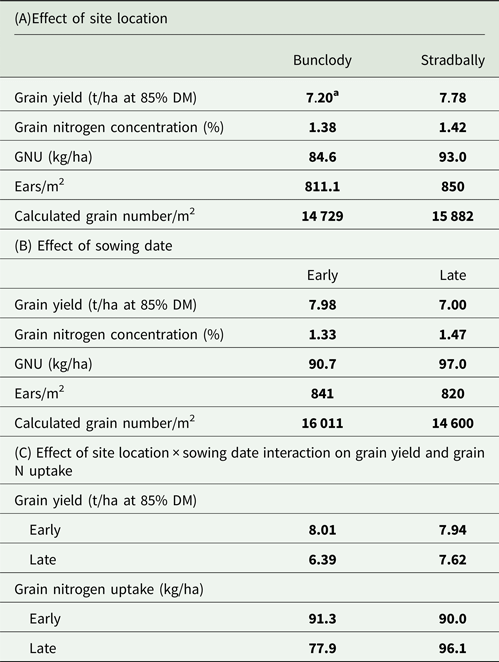
The ANOVA performed for the agronomic variables (Table 3) showed that both sowing date (Tables 3 and 4B) and N rate had significant influence on the GY and GQ in the current study. Site location also had a significant influence on several agronomic variables (Tables 3 and 4A).
Analysis of variance for site, sowing date, nitrogen (N) rate on malting barley agronomic variablesa

a Means presented in bold are significantly different at P < 0.05 level.
b Calculated using plot grain yield and thousand grain weight data.
Effect of site location, sowing date and site x sowing date interaction on malting barley agronomic variables

DM, dry matter.
a Means presented in bold are significantly different at P < 0.05 level.
A significant interaction (P < 0.001) was observed between site location and sowing date for GY (Tables 3 and 4C). At both site locations, GYs were significantly (P < 0.001) lower for later sowing dates. However, at the Bunclody site, the later April sowing dates suffered a 1.6 t/ha mean GY penalty, whilst at the Stradbally site, the GY reduction associated with later sowing was more modest at 0.3 t/ha. GNU and GNC were significantly higher (both P < 0.001) at the Stradbally site in comparison with the Bunclody site. A highly significant interaction (P < 0.001) was observed between site and sowing date for GNU (Table 4C), with later sowing at the Stradbally site resulting in higher N uptake, but at the Bunclody site, GNU decreased at the later sowing dates.
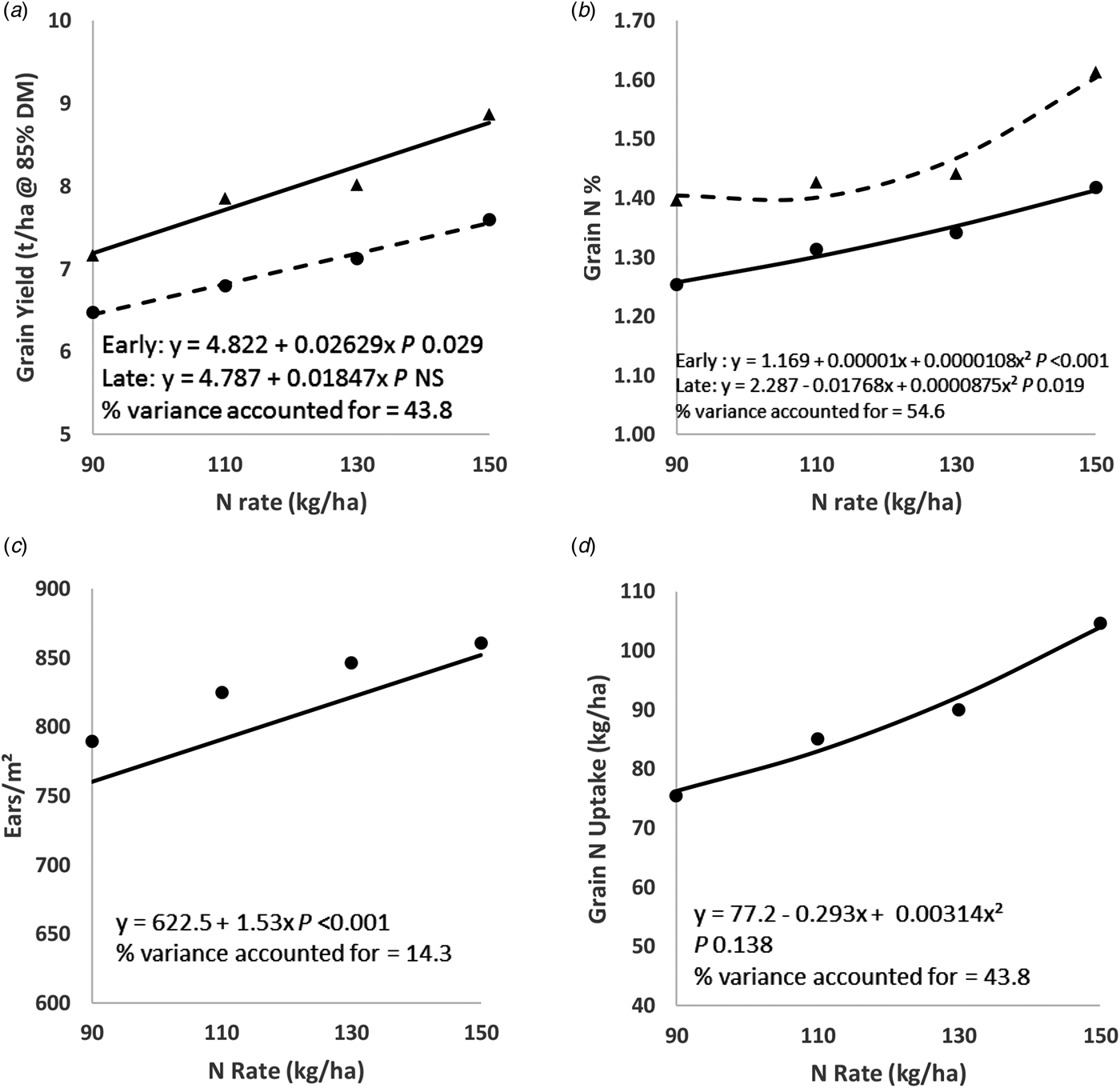
GY and GNC increased consistently with greater increments of fertilizer N at both sowing dates (Fig. 3a and b). Significant interactions between sowing date and N rate occurred for GY and GNC. This interaction was particularly visible for GNC at the April sowing date where 150 kg N/ha increased GNC by +0.17% over 130 kg N/ha. By comparison, the mean increase in GNC between the same N rates at the earlier sowing date was <+0.1%.
Effect of sowing date × N interaction on (a) grain yield, (b) grain nitrogen concentration (early sowing = smooth line; late sowing = dashed line). Effect of N rate on ears/m2 (c) and grain nitrogen uptake (d). Symbols represent data averaged over all environments; line equations were derived using regression analysis.

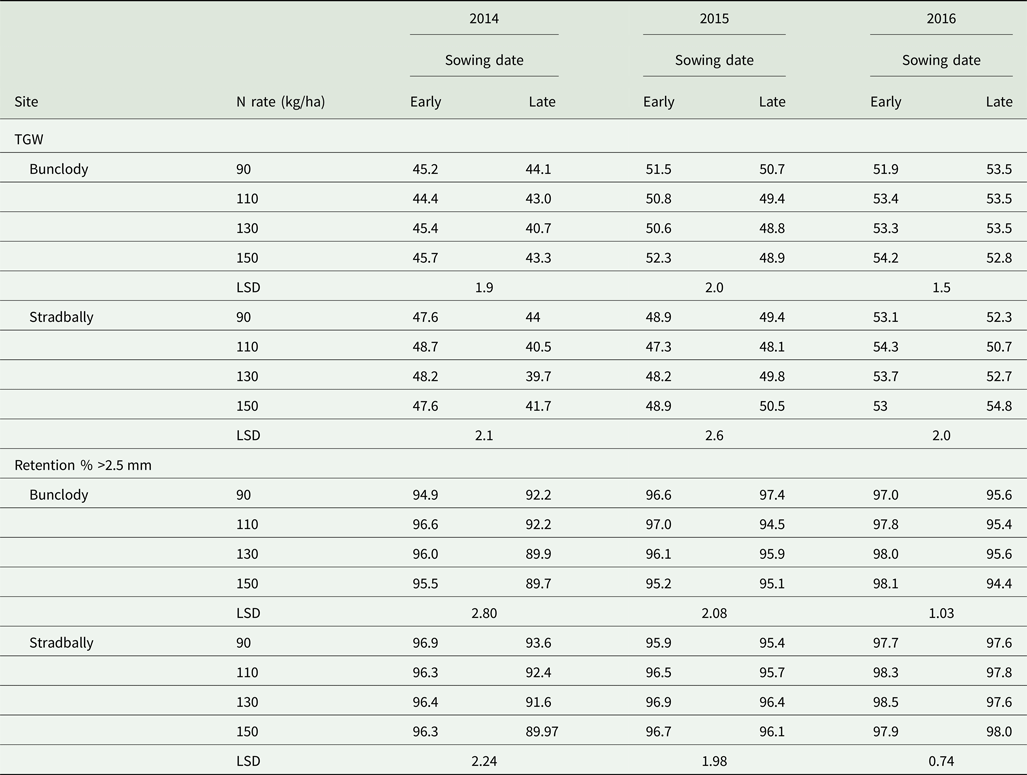
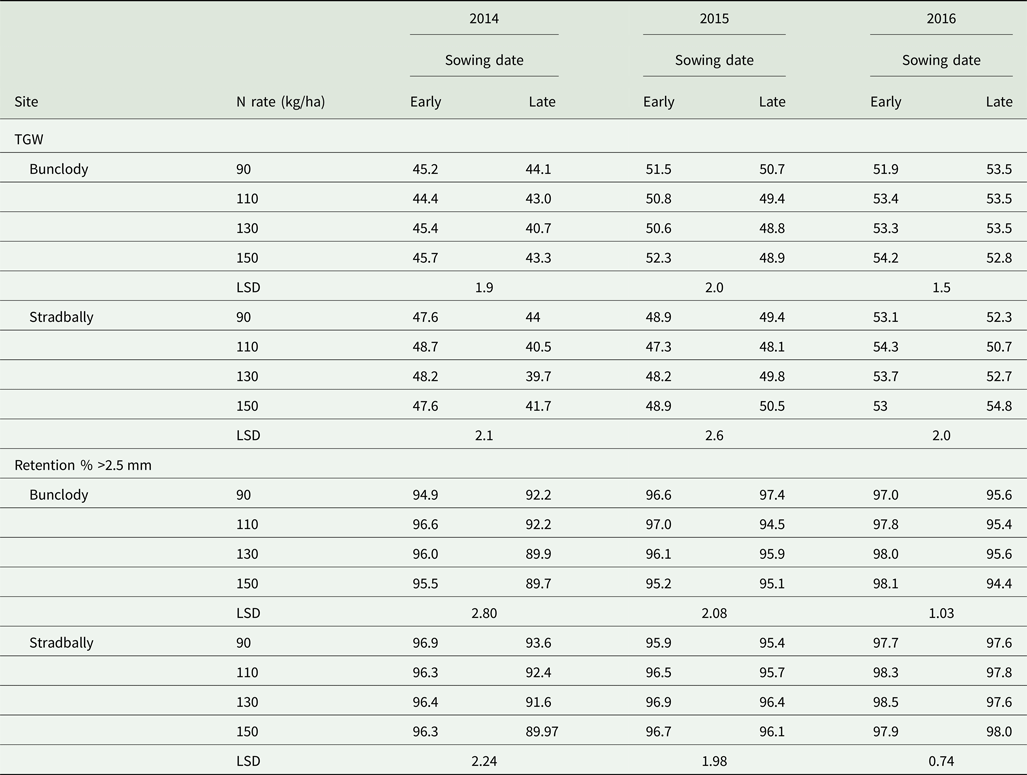
Grain retention (% >2.5 mm) was subject to high levels of seasonal variation; data are presented for individual years and sites in Table 5. In general, earlier sowing dates produced samples with higher retention % than later sowing dates, but this increase was not always significantly higher between years and sites.
Effect of N rate on the thousand grain weight (TGW) and percentage >2.5 mm of malting barley sown at two dates over six environments (site/years) in Ireland
Yield components
Ear number/m2 was affected significantly by sowing date (P = 0.049), N rate (P < 0.001) and site location (P = 0.007). Earlier sowing dates resulted in significantly higher (P = 0.049) ears/m2 (841) compared with later sowing dates (820), whilst the Stradbally site had a higher mean ear population (850) relative to the Bunclody site (811). Ear numbers increased in response to higher N application rates, but the response plateaued between the higher rates of 130 and 150 kg/ha (Fig. 3c).
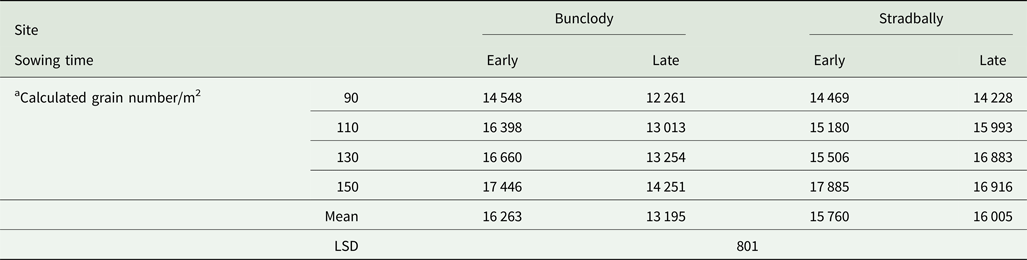
Overall, grain number/m2 accounted for most of the variation in GY across the six site/years (P < 0.001, adjusted R 2 = 0.68). A significant interaction (P < 0.001) between site × sowing date × N rate occurred for grain number/m2 (Tables 3 and 6). The effects of sowing date on grain number/m2 was influenced significantly by site location (P < 0.001). At the Bunclody site, later sowing dates reduced the grain number/m2 significantly (P < 0.001). In contrast, at the Stradbally site, the trend for later sown crops was for higher grain numbers v. the early sowing date, but this trend was not significant. Increasing N application rate consistently enabled the production of higher grain numbers/m2 at both early and late sowing dates across the two site locations. The response of grain number/m2 to increasing N fertilization was higher for earlier sowing dates at both site locations. Increasing N application from 90 to 150 kg/ha resulted in grain number gains of 20–23% for early sowing but only by 16–19% for later sowing dates. The highest N application rate of 150 kg/ha also increased grain number/m2 significantly over 110 kg/ha at both sowing dates and both locations.
Site × sowing date × N rate interaction for calculated grain number/m2, values derived from combined analysis of variance (ANOVA) for six environments (site/years)

a Calculated from plot grain yield and thousand grain weight data.
Thousand grain weight values in the six experiments were subject to high levels of seasonal variation at both site locations and are presented separately (Table 5). Overall, earlier sowing produced higher TGW values over later sowing dates in five out of six experiments, but these differences were generally not significant. Responses to individual N rates were variable and a consistent trend was not demonstrated.
Malting quality
Malting results from the samples selected for micro-malting from the six year/site locations were generally of excellent quality and very appropriate for distilling (data not shown). This is primarily due to the low GNC values generated from the six experiments. As a result, SE values and PSY values were generally very high and above industry specifications in many instances. Results from parameters such as friability, homogeneity and soluble N indicated that malts were generally well modified; however, cell wall modification as indicated by variable wort β-glucan levels within replicates did provide some cause for concern.
Effect of site location
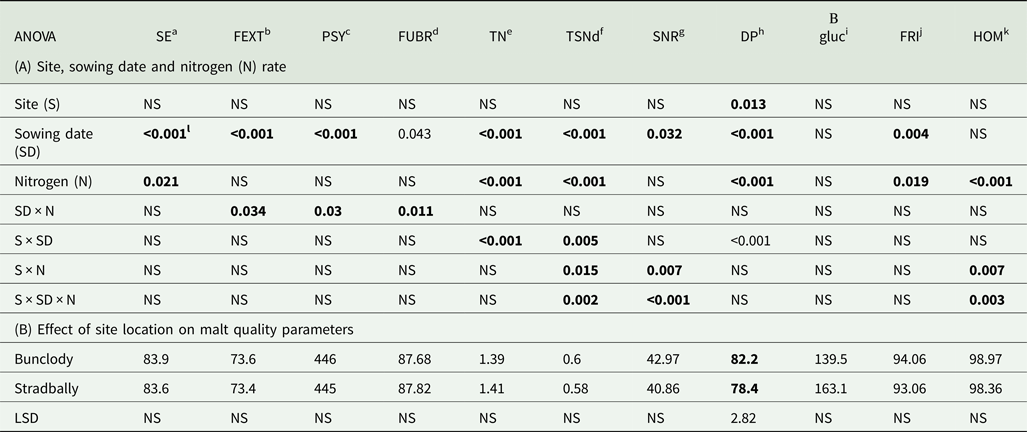
Overall, site location did not significantly influence most of the malt quality analyses (Table 7). Site location did, however, influence malt enzymatic activity in which the Bunclody site exhibited significantly (P < 0.01) higher levels of DP (82.2) compared with the Stradbally site (78.4).
(A) P values from the analysis of variance (ANOVA) for the effects of site location, sowing date and nitrogen rate on malt quality parameters. (B) Effect of site location on malt quality parameters
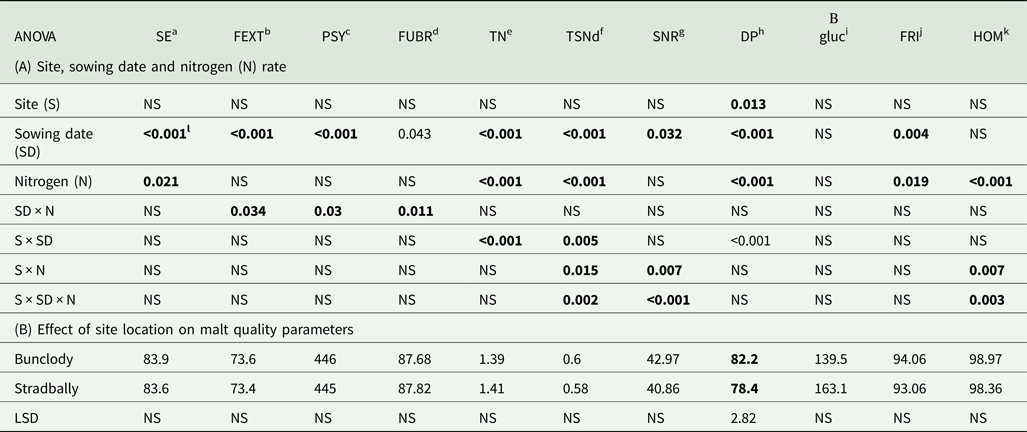
a–k See Table 2B
l Significant effects (P < 0.05) are highlighted in bold
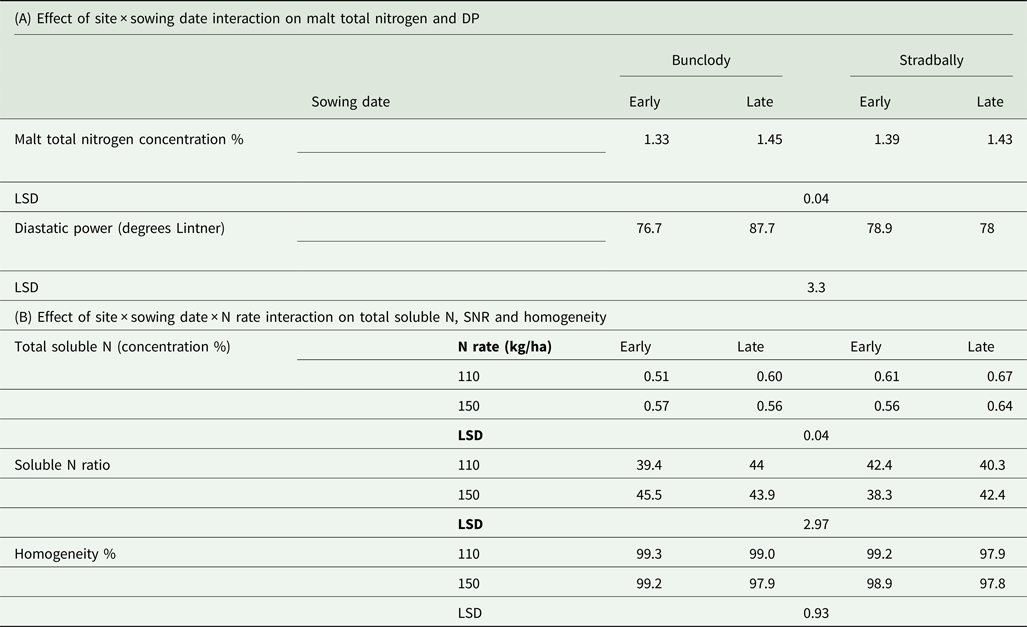
Interactions between site location and sowing date were significant for DP (P < 0.001), malt total N (P < 0.001) and malt total soluble N (P = 0.005) (Tables 7 and 8A). Later sowing dates at the Bunclody site increased DP significantly over the earlier sowing dates (P < 0.001). At the Stradbally site, however, malt total N and DP values were not significantly different between the two sowing dates.
Effect of site × sowing date and site × sowing date × N rate interactions on various malting quality parameters
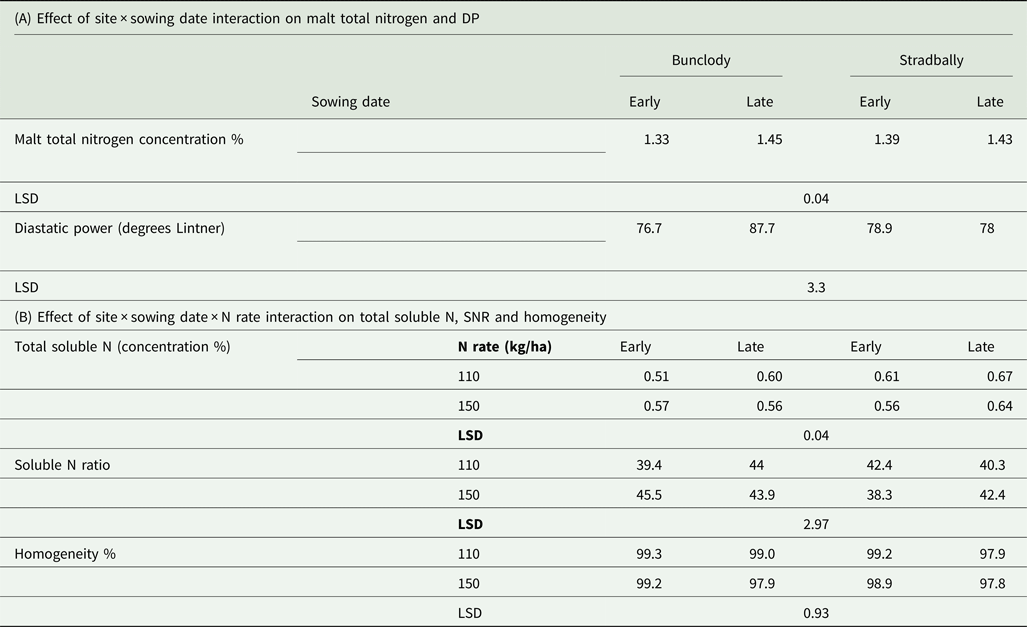
Interactions between both agronomic factors (sowing date and N rate) and site location were significant for total soluble N (P = 0.02), SNR (P = 0.007) and homogeneity (P = 0.007) (Tables 7 and 8B). In the early sowing dates at the Bunclody site, soluble N %, SNR and homogeneity increased significantly at the 150 kg rate over the 110 kg rate, whilst in the later sown crops 150 kg decreased soluble N and homogeneity, but the SNR remained almost identical. For both sowing dates at the Stradbally site, soluble N and homogeneity decreased when the N rate increased from 110 to 150 kg/ha; however, at the earlier sowing date, SNR decreased at the 150 kg/ha rate but increased for the same rate at the later sowing date.
Effect of sowing date
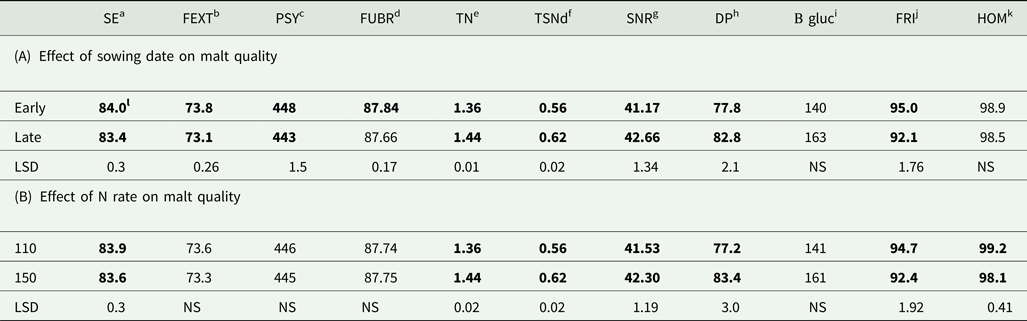
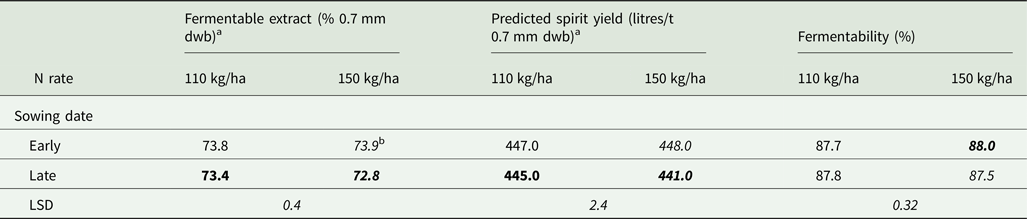
Sowing date influenced almost all the malt quality parameters within the current study (Tables 7 and 9A). Earlier sown barley produced malts with significantly higher SE (P < 0.001), fermentable extract (P < 0.001), PSY (P < 0.001), fermentability values and friability values than later April-sown crops (×Table 9A). Significant interactions between sowing date and N rate were observed for fermentable extract (P = 0.03), PSY (P = 0.03) and fermentability (P = 0.01) (Table 10), whereby in the earlier sown barley crops neither fermentable extract nor spirit yield decreased significantly at the higher N application rate. In contrast, for later April-sown barley, both fermentable extract and PSY values declined significantly when the N application rate increased from 110 to 150 kg/ha. In general, late-sown barley at the 150 kg N/ha rate reduced fermentable extract, PSY and fermentability compared with early-sown barley at the same N rate but not at 110 kg/ha. Later sown barley crops showed differences in modification patterns with lower friability % and higher levels of soluble N. Diastatic power (β-amylase) was also significantly greater (P < 0.001) for the later sown barley compared with the earlier sowing dates.
Effect of sowing date and nitrogen rate on malt quality parameters
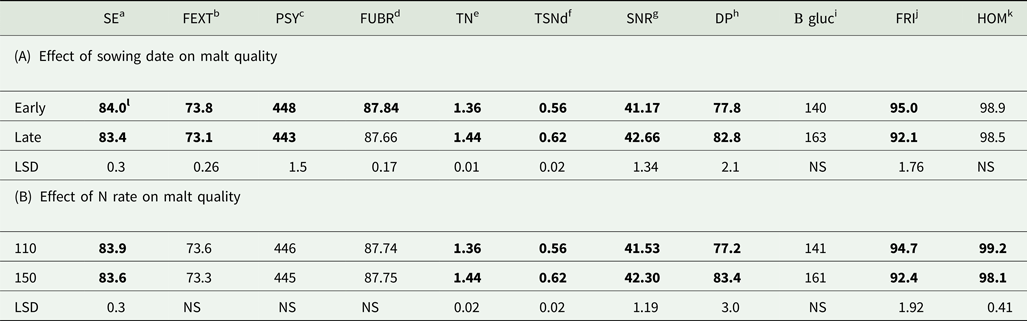
a–k See Table 2B.
l Means presented in bold are significantly different at P < 0.05 level.
Effect of interaction between sowing date and nitrogen (N) rate on fermentable extract, predicted spirit yield and fermentability

a See Table 6.
b Values in bold or italics differ significantly (P < 0.05).
Effect of nitrogen rate
Higher N fertilizer application affected several of the malt quality parameters (Tables 7A and 9B). Overall, the higher N rate of 150 kg/ha reduced SE significantly (P = 0.02) when compared with the lower rate of 110 kg/ha, but fermentable extract and PSY were not significantly affected. The higher N rate also resulted in less uniform endosperm modification with significantly lower friability and homogeneity values. Both total malt-soluble N levels and DP increased significantly (both P < 0.001) at the higher N rate of 150 kg/ha.
Discussion
Grain yield and quality
From the current series of experiments, it can be shown that both sowing date and N rate are important agronomic factors in enabling the production of high yielding malting barley with excellent GQ. The GY range of 8.2–8.8 t/ha at 85% DM achieved in the current experiments from the early-sown, higher N treatments illustrates clearly the high yield potential that exists for barley at these site locations. The higher GYs achieved in comparison with those achieved by Conry (Reference Conry1995, Reference Conry1998) across very similar environments is also testament to the improved genetic potential of spring malting barley varieties over the past two decades.
GYs were affected significantly by site location, with the deeper, more moisture-retentive soils at the Stradbally site generally producing higher yields than the Bunclody site. Overall, earlier sowing produced significantly higher GYs, and this is in general agreement with previous studies (Lauer and Partridge, Reference Lauer and Partridge1990; Conry, Reference Conry1995; de Ruiter and Brooking, Reference de Ruiter and Brooking1996; O'Donovan et al., Reference O'Donovan, Turkington, Edney, Juskiw, McKenzie, Harker, Clayton, Lafond, Grant, Brandt, Johnson, May and Smith2012). The GY response to sowing date was influenced significantly by site location, whereby on the shallower, shale-based soils of the Bunclody site, sowing in the first half of March was critically important in producing higher GYs. Grain yield reductions of 20% (−1.6 t/ha) were associated with later April sowing on these soils and this was due to significantly lower number of grains/m2, which in turn was directly attributed to a significantly lower number of grains per ear. These findings were in line with those observed in Irish spring malting barley crops by Conry (Reference Conry1995). However, in comparison, the deeper sandy loam soils of the Stradbally region were more tolerant of later April sowing dates, which resulted in only a 5% (−0.3 t/ha) GY reduction. Similar variations in the response of GY in malting barley to sowing dates have also been reported in previous studies (Cranstoun, Reference Cranstoun1999; O'Donovan et al., Reference O'Donovan, Turkington, Edney, Juskiw, McKenzie, Harker, Clayton, Lafond, Grant, Brandt, Johnson, May and Smith2012). However, it should be noted that the interval between sowing dates at the Bunclody site was always longer relative to that at the Stradbally site and this may have been a contributory factor to the higher treatment response observed on the Bunclody soil type. In the current study, there was never a feasible opportunity to sow any of the experiments at very early sowing dates such as in January or February. This was principally due to high rainfall amounts and/or poor drying conditions during the December–February periods within the three study seasons. However, in a previous study, Conry (Reference Conry1995) reported only variable successes in sowing spring barley in the months of January and February on similar soil types.
GNC values achieved over the course of the current experiments were low, with a grand mean of 1.40%, and hence were within the distilling malt industry specification of <1.49%. GNC varied by site location, with the Stradbally site producing significantly higher GNC values than the Bunclody site; however, GNU was also significantly greater at the Stradbally site. GNC increased progressively with greater increments of N as per the traditional relationship previously reported by others (Gately, Reference Gately1971; Lord and Vaughan, Reference Lord and Vaughan1987; Martin and Daly, Reference Martin and Daly1993).
A significant interaction between sowing date and N rate occurred in respect of GNC. This was most pronounced at the highest N rate of 150 kg/ha, at which the earlier sown crops produced a desirable combination of high GYs and low GNC values which were within the threshold for distilling malt. In contrast, the application of 150 kg N/ha to later, April-sown crops produced more moderate GYs and a GNC which was unacceptable for distilling malt. Withers and Dyer (Reference Withers and Dyer1990) observed variation in the amount of N required to meet malting quality when barley was sown in either March or April. Cranstoun (Reference Cranstoun1999) subsequently reported similar findings in Scotland, in which GY response to applied N was much lower when the sowing date was later or delayed.
Many studies have reported the inverse relationship between GY and grain protein concentration in cereal crops (Torp et al., Reference Torp, Doll and Haahr1981; Simmonds, Reference Simmonds1995; Bogard et al., Reference Bogard, Allard, Brancourt-Hulmel, Heumez, Machet, Jeuffroy, Gate, Martre and Le Gouis2010) or GNC (Heitholt et al., Reference Heitholt, Croy, Maness and Nguyen1990; Triboi et al., Reference Triboi, Martre, Girousse, Ravel and Triboi-Blondel2006). One hypothesis proposed for this correlation is that N accumulated within the grain is diluted by carbohydrates during grain filling (Acreche and Slafer, Reference Acreche and Slafer2009). Weather conditions in the current study during the months of June–July were favourable for good grain filling with cool temperatures combined with relatively high levels of solar radiation. This enabled a prolonged period of starch accumulation within the developing grains and thus diluting the relatively high levels of N also remobilized during this process. The significant interaction for GNU between site location and sowing date was an interesting feature of the current research. The higher GNU at Stradbally site can satisfactorily explain the higher final GNC, for the later sowing dates. However, the higher GNC amongst the later sowing dates at the Bunclody cannot be based on increased GNU. The higher GNU for the later sowing dates at the Stradbally site was surprising, as the longer growing season of the earlier sowing dates would be expected to have a greater N uptake. An explanation for this could include a reduction in the length or rate of grain filling resulting from later sowing dates, which reduced starch accumulation in the grain. de Ruiter and Brooking (Reference de Ruiter and Brooking1996) reported that later sown malting barley crops in New Zealand had lower accumulation of DM (carbohydrate) and more N in the grain. It is therefore conceivable that a similar phenomenon occurred in the current study, with lower carbohydrate accumulation amongst the later sowing dates and consequently less dilution of N occurring in the grain. Alternatively, the later sown barley at the Stradbally may have had greater uptake of late season soil mineral N leading to higher remobilization of N to the grain.
In the present study, both GY and GNC were found to be largely independent of each other due to the poor relationship between the two factors (P = 0.678, adjusted R 2 = NS), which is consistent with previous studies on malting barley (Welch and Gosden, Reference Welch and Gosden1983; Abeledo et al., Reference Abeledo, Calderini and Slafer2008). In wheat, Fischer et al. (Reference Fischer, Howe and Ibrahim1993) reported that the relationship between GY and grain N was influenced by soil N availability, whilst Le Bail and Meynard (Reference Le Bail and Meynard2003) and Abeledo et al. (Reference Abeledo, Calderini and Slafer2008) also reported similar findings in malting barley crops. Although soil mineral N availability was not estimated in the current study, both sites were in long-term cereal crop rotations with little or no history of organic manure application and therefore soil mineral N availability was assumed to be moderate to low.
Physical GQ characteristics such as grain weight are important characteristics in malting barley as high grain weight has been reported to be associated with a high starch content by Molina-Cano et al. (Reference Molina-Cano, Swanston, Moralejo, Polo, Rubio, Macgregor, Spunar and Janikova2004). Yu et al. (Reference Yu, Tan, Zou, Hu, Fox, Gidley and Gilbert2017) also recently reported that grain retention size (>2.5 mm) was also positively correlated with starch content in barley. It is therefore conceivable that earlier sowing dates, with their generally higher TGW and retention values and lower GNC values, resulted in grain with higher starch content.
Malting quality
Malting quality was influenced significantly by season (data not presented) and similar variations in malting quality in response to environmental changes have been previously reported by Swanston et al. (Reference Swanston, Newton, Hoad and Spoor2006) and Edney et al. (Reference Edney, O'Donovan, Turkington, Clayton, McKenzie, Juskiw, Lafond, Brandt, Grant, Harker, Johnson and May2012). Site location did not affect many quality parameters except for DP activity. Differences in malt modification parameters such as friability and SNR were limited between the sites, whilst variation in modification patterns across sites was reported by Swanston et al. (Reference Swanston, Newton, Hoad and Spoor2006).
Sowing date had a significant influence on almost all malt quality parameters in the current study, which is in contrast to the recent findings of O'Donovan et al. (Reference O'Donovan, Edney, Izydorczyk, Turkington, Juskiw, McKenzie, Grant, Harker, May, Johnson, Smith and Clayton2016) who reported that sowing date had little influence on malting quality in Canada. However, one factor that may have influenced this treatment response in the present study was the length of the interval between sowing dates, with an average of 24 days between sowing dates, with a range of 15–30 days. In contrast, the later sowing dates in the studies by O'Donovan et al. (Reference O'Donovan, Turkington, Edney, Juskiw, McKenzie, Harker, Clayton, Lafond, Grant, Brandt, Johnson, May and Smith2012, Reference O'Donovan, Edney, Izydorczyk, Turkington, Juskiw, McKenzie, Grant, Harker, May, Johnson, Smith and Clayton2016) were only about 2 weeks apart, with a range of 10–23 days. Moreover, differences in growing conditions and season length between Ireland and the Canadian prairie region may also have contributed to the observed differences between the two studies. Later sowing dates resulted in significantly lower SE %, which is consistent with the previous studies by both Weston et al. (Reference Weston, Horsley, Schwarz and Goos1993) and Cranstoun (Reference Cranstoun1999). Malt extract values are of considerable importance to distillers due to the strong correlation with spirit yields that can be produced in the distillery (Bringhurst, Reference Bringhurst2015).
Overall, increasing the N rate from 110 to 150 kg/ha had a lesser impact on malt quality in comparison with sowing date. The higher N rate of 150 kg/ha resulted in a moderate increase in both total malt N and total soluble N, as was expected. Soluble extract values, nonetheless, declined in response to these small changes in malt N, as has been widely acknowledged for many years (Bishop, Reference Bishop1930; Briggs, Reference Briggs1998). Fermentable extract and consequently PSY did not decrease significantly with higher N rates; however, this should be viewed in context of the significant interaction between sowing date and N rate for these parameters, with later sowing dates and higher N rates resulting in significant reductions in spirit yield. The influence of N rate on fermentability % was found to be very small.
Later sowing dates and higher N rates both increased DP levels, which was probably caused by the increased grain N content as reported by Arends et al. (Reference Arends, Fox, Henry, Marschke and Symons1995). Increases in DP and reductions in other parameters such as friability in response to higher applied N rates were also reported by Edney et al. (Reference Edney, O'Donovan, Turkington, Clayton, McKenzie, Juskiw, Lafond, Brandt, Grant, Harker, Johnson and May2012) in Canada.
The decline in spirit yield associated with later sown barley can be attributed to the corresponding fall in SE, fermentable extract and fermentability as spirit/alcohol production has been described as a function of extract produced and its fermentability (Evans et al., Reference Evans, Collins, Eglinton and Wilhelmson2005). Bathgate (Reference Bathgate2016) also states that fermentable extract and by extension spirit yield are highly dependent on achieving the maximum amount of carbohydrate in the wort. The decrease in fermentable extract associated with later sowing dates can only be because of a concomitant reduction in available carbohydrates resulting from an increase in malt total N. Previous work by Agu and Palmer (Reference Agu and Palmer2001) observed that extract development and availability was consistently related to N levels within the grain, whilst Yu et al. (Reference Yu, Tan, Zou, Hu, Fox, Gidley and Gilbert2017) recently reaffirmed that starch content was negatively correlated with protein (N) in barley.
Bathgate et al. (Reference Bathgate, Martinez-Frias and Stark1978) reported an inverse relationship between the fermentability of distilling malt and the level of soluble N present in a wort and a similar explanation may account for the lower fermentability values in the later sowing dates in the current study. In Scotland, Cranstoun (Reference Cranstoun1999) also observed that later sowing of malting barley resulted in small differences in fermentability and lower spirit yields. Other studies by Edney et al. (Reference Edney, Eglinton, Collins, Barr, Legge and Rossnagel2007) have identified the importance of malt modification in optimizing fermentability, the small but significant reduction in malt friability associated with later sowing dates in the current study may have also been a contributory factor in this regard.
Conclusion
In conclusion, the results of the current experiments show that earlier March sowing dates are an important agronomic factor in improving the likelihood of achieving spring malting barley crops with the lower GNC required to produce distilling malt. Earlier, more timely sowing dates also further optimized the quality of distilling malt through increased SE, PSYs and fermentability values. Higher N rates increased GY but overall had a negative effect on malt quality by reducing SE, spirit yields and malt homogeneity values.
Earlier March sowing dates facilitated the use of higher applied N rates (150 kg/ha) which improved GY potential without exceeding the acceptable GNC threshold of <1.49%. This more intensive approach to N application on malting barley crops did not adversely affect the key distilling malt quality parameters of SE, PSY and fermentability. Agronomic practices which improve GY potential whilst enhancing end-use quality are important in maximizing competitiveness for primary producers and increasing efficiencies for maltsters and distillers.
Acknowledgements
The authors are especially grateful to Geert Van Dhuynslager, Peter Zsoldos and all the staff within the Boortmalt laboratories who assisted with the micro-malting and analysis of the malt samples and to the host farmers for the use of their fields over the 3 years. The technical assistance of E. Brennan, C. McCabe and C. O'Flaherty during the field trials is also gratefully acknowledged.
Financial support
This research was generously funded under the Irish Research Councils Employment Based Postgraduate Scheme in conjunction with Boortmalt Ireland (t/a Minch Malt Ltd).
Conflict of interest
None.
Ethical standards
Not applicable.