











1. Introduction
Symmetric square  $L$-functions play an important role in problems ranging from number theory to quantum chaos. In this regard, subconvexity estimates on the critical line and at the central point are of particular importance, since they act as a natural barrier in many equidistribution problems. An example is the approach of Holowinsky and Soundararajan to the quantum unique ergodicity problem (see [Reference Holowinsky and Soundararajan18]), where the ‘weak’ subconvexity (with logarithmic saving over convexity) estimate established by Soundararajan ([Reference Soundararajan30]) was crucial.
In order to make further progress on this and other problems (see [Reference Iwaniec and Sarnak21]), it is highly desirable to establish power saving subconvexity estimates for symmetric square  $L$-functions at the central point. A possible approach is the method of moments. The strongest known result in the level aspect is due to Iwaniec and Michel [Reference Iwaniec and Michel20], who proved the mean Lindelöf estimate on the second moment of symmetric square
 $L$-functions associated to holomorphic cusp forms of large prime level. The weight aspect (for holomorphic forms) or spectral aspect (for Maass forms) are even more complex than the level aspect, and therefore require additional averaging by a weight or spectral parameter, see [Reference Khan22], [Reference Khan23], [Reference Lam24], [Reference Luo25], [Reference Tang and Xu32]. In this setting, for the central values of symmetric square
 $L$-functions, we are far from obtaining even the mean Lindelöf bounds for the second moment on extremely short intervals. The best result so far is the interval
 $(T,T+T^{1/5})$ established by Khan and Young (see [Reference Khan23]), and thus a subconvexity estimate remains out of reach. Note that even the mean Lindelöf bound on an interval of length
 $T^{\epsilon}$ is not sufficient to break convexity, but it would give hope for future research.
Nevertheless, for values on the critical line  $1/2+it$, Khan and Young succeeded in estimating the second moment on an interval short enough to yield a hybrid subconvexity estimate. Precisely, let
 $u_j$ be a Hecke–Maass cusp form with Laplace eigenvalue
 $\kappa_{j}=1/4+t_{j}^2$. Khan and Young proved the following result (see [Reference Khan23, Theorem 1.1]).
Theorem 1.1 Let  $0 \lt \delta \lt 2$ be fixed, and let
 $t$,
 $T$,
 $G \gt 1$ be such that
 \begin{equation}
\frac{T^{3/2+\delta}}{G^{3/2}}\le t\le(2-\delta)T.
\end{equation}
The following estimate holds:
 \begin{equation}
\sum_{T \lt t_j\le T+G}\alpha_{j}|L(\operatorname{sym}^2 u_{j},1/2+it)|^2\ll T^{1+\epsilon}G.
\end{equation}
A direct corollary of Theorem 1.1 is the following subconvexity estimate, see [Reference Khan23, Corollary 1.2].
Corollary 1.2. For  $0 \lt \delta \lt 2$ and
 \begin{equation}
|t_j|^{6/7+\delta} \lt t \lt (2-\delta)|t_j|
\end{equation}
one has
 \begin{equation}
|L(\operatorname{sym}^2 u_{j},1/2+it)|\ll |t_j|^{1+\epsilon}t^{-1/3}.
\end{equation}
The condition  $|t_j|^{6/7+\delta} \lt t$ guarantees that the estimate (1.4) is better than the convexity estimate
 \begin{equation}
|L(\operatorname{sym}^2 u_{j},1/2+2it)|\ll (1+|t|)^{1/4+\epsilon}|t_j|^{1/2+\epsilon}.
\end{equation}
Note that in the case when  $|t-t_j| \lt t_j^{1/3}$, Huang [Reference Huang19, Corollary 1.8] proved the estimate (1.4) by a different method. Our main result allows us to extend the range (1.1) in Theorem 1.1 as follows.
Theorem 1.3 For  $G\gg \max\left(\frac{t^{2/3}}{T^{1/3}},\frac{T}{t}\right)T^{\epsilon}$ and
 $ t\ll T^{6/7-\epsilon}$ one has
 \begin{equation}
\sum_{T \lt t_j\le T+G}\alpha_{j}|L(\operatorname{sym}^2 u_{j},1/2+it)|^2\ll T^{1+\epsilon}G.
\end{equation}
Corollary 1.4. The following bounds hold:
 \begin{equation}
|L(\operatorname{sym}^2 u_{j},1/2+it)|\ll\frac{|t_j|^{1+\epsilon}}{\sqrt{t}}\quad\hbox{for}\quad|t_j|^{2/3+\epsilon}\ll t\leq |t_j|^{4/5},
\end{equation}
and
 \begin{equation}
|L(\operatorname{sym}^2 u_{j},1/2+it)|\ll(|t_j|t)^{1/3}|t_j|^{\epsilon}\quad\hbox{for}\quad|t_j|^{4/5}\leq t\ll |t_j|^{6/7-\epsilon}.
\end{equation}
The condition  $t\gg |t_j|^{2/3+\epsilon}$ guarantees that (1.7) is better than the convexity bound (1.5). The restriction
 $t\ll |t_j|^{6/7-\epsilon}$ is of technical nature (see Remark 6.5).
Note that in the special case of central values  $L(\operatorname{sym}^2 u_{j},1/2)$, Khan and Young (see [Reference Khan23, Theorem 1.3]) proved the mean Lindelöf estimate over a much shorter interval, namely for
 $G\gg T^{1/5}$. In this case, our method yields the same result, as shown in [Reference Frolenkov13]. The proof of Theorem 1.3 follows the same lines as our proof of [Reference Khan23, Theorem 1.3] in [Reference Frolenkov13]. The main difference is that the analysis of special functions is technically more complicated. In fact, a deeper study of hypergeometric functions is exactly what allows us to improve on the result of Khan and Young. Since a detailed comparison of our method with the one of Khan and Young has been provided in [Reference Frolenkov13, Sec.1], we will now discuss only the main steps of the proof, along with the ideas behind them and the reasons why they are beneficial.
Over the past decade, some of the best known results on the moments of  $L$-functions have been obtained using reciprocity type formulas, see e.g. [Reference Blomer and Khan8], [Reference Blomer and Khan9] and references in [Reference Balkanova and Frolenkov5]. The approach based on reciprocity type formulas has two main advantages compared to using an approximate functional equation. First, it usually simplifies the analysis of the arithmetic part of the proof, since instead of considering multiple Dirichlet series we get some
 $L$-functions. Of course, some calculations performed on multiple Dirichlet series are included in the calculations leading to
 $L$-functions, but they are usually simpler. Second, in the analytic part instead of multiple integrals of exponential functions, Gamma factors, and some smooth functions, we obtain either special functions (usually hypergeometric functions) or integrals of special functions. This allows us to use various integral representations (not only Mellin–Barnes integrals) and apply more techniques from the theory of asymptotic analysis of special functions. For example, in order to obtain an asymptotic expansion of a special function, it is possible to use not only the saddle point method, but also the Liouville–Green method, whereas in the case of multiple integrals only the first method is applicable.
For these reasons, we would also like to study the second moment (1.6) using some formula of this kind. Unfortunately, the existing reciprocity type formula [Reference Balkanova and Frolenkov5, Theorem 1.1] does not isolate the main term of the second moment, which makes it difficult to apply for asymptotic analysis. Being unable to prove a reciprocity type formula and unwilling to use only approximate functional equations, we combine both of these methods by representing one of  $L(\operatorname{sym}^2 u_{j},1/2+it)$ using an approximate functional equation, and then applying the reciprocity type formula for the twisted first moment proved in [Reference Balkanova2] (see also [Reference Balkanova and Frolenkov4, sec.3]). This formula relates the first twisted moment of
 $L(\operatorname{sym}^2 u_{j},1/2+it)$ to the first moment of Zagier
 $L$-series. Accordingly, we translate the problem of estimating the second moment (1.6) to the study of the double sum
 \begin{equation}
\sum_{m\ll T^{1+\epsilon}\sqrt{t}}\left(\sum_{n \lt 2m}+\sum_{n \gt 2m}\right)\mathscr{L}_{n^2-4m^2}(1/2+it)\frac{I(n/m,1/2+it)}{n^{1/2-2it}m^{1/2\pm2it}},
\end{equation}
where  $I(x,\rho)$ is an integral (over
 $r$) of the Gauss hypergeometric function (the reason why we distinguish the cases
 $n \lt 2m$ and
 $n \gt 2m$ is that the function
 $I(x,\rho)$ has different integral representations in these cases).
As the next step, we prove an asymptotic formula for the function 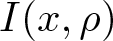 $I(x,\rho)$. To this end, we first substitute asymptotic expansions of the Gauss hypergeometric functions (proved in [Reference Balkanova3], [Reference Frolenkov14]) into the integral representation of
 $I(x,\rho)$. The proofs of these two asymptotic expansions are quite nontrivial due to the fact that we are looking for a uniform expansion in three variables
 $x,r,t$. As already mentioned, there are two methods (uniform saddle point method and the Liouville–Green method) for obtaining such expressions. In turns out that in one case it is easier to apply a version of the saddle point method (due to Temme), and in the second case the Liouville–Green method is more suitable. Note that in the latter case, we perform a two-step process to obtain the asymptotic expansion. At the first stage, the Gauss hypergeometric function is approximated by Bessel functions of large purely imaginary order, and at the second stage, the resulting Bessel functions are approximated by Airy functions. The final result is quite complicated because the argument of the Airy function differs for
 $x \gt rless1-t^2/r^2$. Since such methods are a little unusual for number theorists, we decided to present the results on approximating special functions in separate articles [Reference Balkanova3] and [Reference Frolenkov14]. We believe that these asymptotic results are the key point where the improvement of Khan and Young’s method was achieved. Indeed, in [Reference Khan23, Remark before sec.9] Khan and Young mentioned that in the case of some special restrictions on the parameters (that they do not need to consider), the corresponding integrals should also be approximated using the Airy function. As a result, in order to approximate the function
 $I(x,\rho)$, it is required to study the integrals of the Airy functions and some exponents. This has been done by using some standard facts about Airy functions, the saddle point method, and tedious calculations.
Next, we substitute the resulting asymptotic formula for  $I(x,\rho)$ in (1.9) and perform the change of variables:
 \begin{equation}
n-2m=q,\quad n+2m=\mathbf{r}.
\end{equation}
Since  $I(n/m)$ is not negligible only if
 $q$ is very small compared to
 $\mathbf{r}$ (approximately if
 $q\ll \mathbf{r} t/(TG)$), we make one more change of variables
 $\mathbf{r}=l/q$, obtaining sums of
 $\mathscr{L}_{l}(1/2+it)$ over the arithmetic progression
 $l\equiv0\pmod{q}$. To handle this congruence, we rewrite it with the use of additive harmonics. This allows us to apply a Voronoi summation formula for the sum over
 $l$. Arithmetic part of the further computations is identical to that in [Reference Frolenkov13]. Finally, we obtain the second moment of Dirichlet
 $L$-functions, which we estimate using the Heath-Brown large sieve for quadratic characters. The analytic part of computations (after application of Voronoi’s formula) is more complex than in [Reference Frolenkov13], since the integral transform in Voronoi’s formula now includes the Bessel functions
 $J_{it}(x)$ and
 $K_{it}(x)$. Therefore, we have to use uniform asymptotic expansions for these Bessel functions, which causes some additional technical difficulties.
The paper is organized as follows. In Section 2, we provide some background information. Section 3 is centred around the Voronoi summation formula for Zagier  $L$-series. Next, in Section 4, we state a formula representing the first moment of symmetric square
 $L$-functions in terms of sums of Zagier
 $L$-series. In Section 5, we collect various asymptotic formulas for the hypergeometric functions appearing in the exact formula for the first moment. In Section 6, we start proving Theorem 1.3 by rewriting the second moment in terms of sums of Zagier
 $L$-series and by transforming these sums into a form suitable for the application of Voronoi’s summation formula. Section 7 is devoted to the analysis of various integrals arising as a result of applying the Voronoi summation formula. Finally, in Section 8, we complete the proof of Theorem 1.3.
2. Notation and preliminaries
Let  $e(x):=\exp(2\pi ix)$ and let
 $\Gamma(z)$ denote the Gamma function. For a fixed
 $\sigma$ and
 $|t|\rightarrow\infty$ Stirling’s formula yields the asymptotic formula:
 \begin{align}
\Gamma(\sigma+it)&=\sqrt{2\pi}|t|^{\sigma-1/2}\exp(-\pi|t|/2)
\exp\left(i\left(t\log|t|-t+\frac{\pi t(\sigma-1/2)}{2|t|}\right)\right) \nonumber\\
&\quad \times
\left(1+\sum_{j=1}^{N-1}a_j/t^j+O(|t|^{-N})\right).
\end{align}
Let  $\{u_j\}$ be an orthonormal basis of the space of Maass cusp forms of level one such that each
 $u_j$ is an eigenfunctions of all Hecke operators and the hyperbolic Laplacian. We denote by
 $\{\lambda_{j}(n)\}$ the eigenvalues of Hecke operators acting on
 $u_{j}$ and by
 $\kappa_{j}=1/4+t_{j}^2$ (with
 $t_j \gt 0$) the eigenvalues of the hyperbolic Laplacian acting on
 $u_{j}$. It is known that
 \begin{equation*}
u_{j}(x+iy)=\sqrt{y}\sum_{n\neq 0}\rho_{j}(n)K_{it_j}(2\pi|n|y)e(nx),
\end{equation*}
where 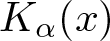 $K_{\alpha}(x)$ is the
 $K$-Bessel function and
 $\rho_{j}(n)=\rho_{j}(1)\lambda_{j}(n).$ We also define the normalized coefficient
 $\alpha_j$ as
 $\alpha_j=\frac{|\rho_{j}(1)|^2}{\cosh(\pi t_j)}.$ This coefficient is well-controlled due to the estimate (see [Reference Harcos and Michel16, (30)])
 $t_j^{-\epsilon}\ll \alpha_j \ll t_j^{\epsilon}.$
The associated symmetric square  $L$-function, defined for
 $\Re{s} \gt 1$ by the series
 \begin{equation*}
L(\operatorname{sym}^2 u_{j},s)=\zeta(2s)\sum_{n=1}^{\infty}\frac{\lambda_{j}(n^2)}{n^s},
\end{equation*}
can be analytically continued to the whole complex plane and has the functional equation
 \begin{equation}
L_{\infty}(s,t_j)L(\operatorname{sym}^2 u_{j},s)=L_{\infty}(1-s,t_j)L(\operatorname{sym}^2 u_{j},1-s),
\end{equation}
where
 \begin{equation}
L_{\infty}(s,t_j)=\pi^{-3s/2}\Gamma\left(\frac{s}{2}\right)\Gamma\left(\frac{s+2it_j}{2}\right)\Gamma\left(\frac{s-2it_j}{2}\right).
\end{equation}
The analytic conductor of  $L(\operatorname{sym}^2 u_{j},1/2+2it)$ is equal to
 \begin{equation*}
Q:=(1+|t|)(1+|t+t_j|)(1+|t-t_j|).
\end{equation*}
Therefore, in the case when  $t \lt (1-\delta)t_j$ the convexity estimate is follows:
 \begin{equation*}
|L(\operatorname{sym}^2 u_{j},1/2+2it)|\ll Q^{1/4+\epsilon}\ll (1+|t|)^{1/4+\epsilon}|t_j|^{1/2+\epsilon}.
\end{equation*}
Applying (2.2), it is possible to derive the approximate functional equation stated in the next lemma.
Lemma 2.1. One has
 \begin{align}
L(\operatorname{sym}^2 u_{j},1/2-2it)&=\sum_{m=1}^{\infty}\frac{\lambda_j(m^2)}{m^{1/2-2it}}V(n,-t,t_j) \nonumber\\
&\quad +
\frac{L_{\infty}(1/2+2it,t_j)}{L_{\infty}(1/2-2it,t_j)}
\sum_{m=1}^{\infty}\frac{\lambda_j(m^2)}{m^{1/2+2it}}V(n,t,t_j),
\end{align}
where for any  $y \gt 0$ and
 $a \gt 0$
 \begin{equation}
V(y,t,t_j)=\frac{1}{2\pi i}\int_{(a)}\frac{L_{\infty}(1/2+2it+z,t_j)}{L_{\infty}(1/2+2it,t_j)}\zeta(1+4it+2z)G(t,z)y^{-z}\frac{dz}{z},
\end{equation}
and
 \begin{equation}
G(t,z)=\exp(z^2)P_n(t,z^2).
\end{equation}
Here,  $P_n(t,\cdot)$ is a polynomial of degree n such that
 $P_n(t,0)=1$,
 $P_n(t,-4t^2)=0$ and
 $P_n(t,(1/2\pm2it+2j)^2)=0$ for
 $j=0,\ldots, n-1$.
Proof. The proof is similar to [Reference Khan22, Lemma 2.2] (see also [Reference Tang and Xu32, Lemma 1] and [Reference Ng26, Lemma 7.2.1]).
Arguing in the same way as in [Reference Tang and Xu32, Lemma 2] and applying (2.3), (2.1), we obtain the following results.
Lemma 2.2. For any positive  $y,\,t_j$,
 $0\le|t| \lt t_j^{1-\epsilon}$ and
 $A$ we have
 \begin{equation*}
V(y,t,t_j)\ll\left(\frac{t_j\sqrt{1+|t|}}{y}\right)^{A}.
\end{equation*}
For any positive integer  $N$ and
 $1\le y\ll t_j^{1+\epsilon}\sqrt{1+|t|}$,
 $0\le|t| \lt t_j^{1-\epsilon}$ the following asymptotic formula holds:
 \begin{align}
V(y,t,t_j)&=
\frac{1}{2\pi i}\int_{(a)}
\left(\frac{\sqrt{t^2_j-t^2}}{\pi^{3/2}y}\right)^z
\frac{\Gamma(1/4+it+z/2)}{\Gamma(1/4+it)}\zeta(1+4it+2z)G(t,z) \nonumber\\
&\quad \times
\left(1+\sum_{k=1}^{N-1}\frac{p(t/t_j,w/t_j)}{t_j^k}\right)\frac{dz}{z}+O(t_j^{-N+\epsilon}),
\end{align}
where  $w=\Im(z)$ and
 $p(x_1,x_2)$ are some rational functions uniformly bounded in
 $|x_1|,|x_2|\ll1$.
Note that the part of the integral in (2.7) over  $|\Im(z)|\gg|t_j|^{\epsilon}$ is negligible, so we may assume that
 $|\Im(z)|\ll|t_j|^{\epsilon}$. Furthermore, we remark that the polynomial
 $P_n(t,z^2)$ in (2.6) is introduced to cancel the poles of
 $\Gamma(1/4+it+z/2)\zeta(1+4it+2z)$ in (2.7).
Lemma 2.3. For  $r\sim T,$
 $T^{\epsilon}\ll t\ll T^{1-\epsilon}$ one has
 \begin{equation}
V(y,t,r-iN)\ll \frac{(1+|t|)^N(1+|r|)^{2N+\epsilon}}{y^{2N}}.
\end{equation}
Proof. First, we move the line of integration in (2.5) to  $\Re{z}=2N.$ Writing
 $z=2N+2iw$, using (2.3) and the estimate
 $|w|\ll T^{\epsilon/2}$, we infer that
 \begin{align}
\frac{L_{\infty}(1/2+2it+z,t_j)}{L_{\infty}(1/2+2it,t_j)} &\ll
\frac{\Gamma\left(\frac{1}{4}+N+i(w+t)\right)\Gamma\left(\frac{1}{4}+2N+i(w+t+r)\right)}
{\Gamma\left(\frac{1}{4}+it\right)\Gamma\left(\frac{1}{4}+N+i(t+r)\right)} \nonumber\\
&\quad \times
\frac{\Gamma\left(\frac{1}{4}+i(w+t-r)\right)}{\Gamma\left(\frac{1}{4}+i(t-r)-N\right)}\ll
t^{N}r^{2N}e^{-\pi v/2}.
\end{align}
Substituting (2.9) to (2.5) and estimating the resulting integral trivially, we prove the lemma.
Lemma 2.4. For  $t_j=T+Gv$,
 $|v|\ll \log^2 T$,
 $G\ll T^{1-\epsilon}/\sqrt{t}$ and
 $\alpha_0=t/T\ll T^{-\delta}$ one has
 \begin{equation}
\frac{L_{\infty}(1/2+2it,t_j)}{L_{\infty}(1/2-2it,t_j)}=C(t,T)\exp\left(2iGv\log\frac{1+\alpha_0}{1-\alpha_0}\right)
\sum_{j=0}^{N}\frac{c_j}{T^{j\delta_0}}+O(T^{-A}),
\end{equation}
where  $C(t,T),c_j\ll1$,
 $\delta_0 \gt 0$ is some fixed number and
 $A$ is an arbitrary large constant and
 $N$ depends on
 $A$.
Proof. It follows from (2.1) that
 \begin{align}
\frac{\Gamma(\sigma+iy)}{\Gamma(\sigma-iy)}&=
\exp\left(i\left(2y\log|y|-2t+\frac{\pi y(\sigma-1/2)}{|y|}\right)\right) \nonumber\\
&\quad \times \left(1+\sum_{j=1}^{N-1}a_j/y^j+O(|y|^{-N})\right).
\end{align}
Using (2.3), (2.11) and writing  $t=\alpha t_j$, we prove that
 \begin{align}
\frac{L_{\infty}(1/2+2it,t_j)}{L_{\infty}(1/2-2it,t_j)}&=C(t)
\exp\left(2it_j(\left(2\alpha\log|t_j|+f(\alpha)\right)\right)\nonumber\\
&\quad \times
\left(1+\sum_{j=1}^{N-1}\frac{a_j}{T^j}+O(T^{-N})\right),
\end{align}
where
 \begin{equation}
f(\alpha)=(1+\alpha)\log(1+\alpha)-(1-\alpha)\log(1-\alpha)-2\alpha=-\alpha^3/3+O(\alpha^5).
\end{equation}
Note that
 \begin{equation*}\alpha=\frac{t}{t_j}=\frac{t}{T+Gv}=\frac{\alpha_0}{1+Gv/T}.\end{equation*}
Next, we are going to expand the function  $\exp\left(2it_j(\left(2\alpha\log t_j+f(\alpha)\right)\right)$ in the Taylor series at the point
 $v=0$. First, we write the asymptotic formula:
 \begin{equation*}
4it_j\alpha\log t_j=4it\log(T+Gv)=4it\log T+4iGv\alpha_0+O\left(\frac{tG^2v^2}{T^2}\right).
\end{equation*}
Next, for the sake of simplicity, we let  $g(x):=f(\frac{\alpha_0}{1+x}).$ Then
 \begin{align*}
f(\alpha)&=g(Gy/T)=g(0)+g'(0)\frac{Gv}{T}+O\left(\alpha^3\frac{G^2v^2}{T^2}\right)\\
&=
f(\alpha_0)-\alpha_0f'(\alpha_0)\frac{Gv}{T}+O\left(\alpha^3\frac{G^2v^2}{T^2}\right).
\end{align*}
Consequently,
 \begin{align}
t_jf(\alpha)&=Tf(\alpha_0)+Gv\left(f(\alpha_0)-\alpha_0f'(\alpha_0)\right)+O(\alpha_0^3\frac{G^2v^2}{T}) \nonumber\\
&=
Tf(\alpha_0)+Gv\left(\log\frac{1+\alpha_0}{1-\alpha_0}-2\alpha_0\right)+O(\alpha_0^3\frac{G^2v^2}{T}).
\end{align}
Finally, assuming that  $G\ll T^{1-\epsilon}/\sqrt{t}$, we prove that
 \begin{align*}
\exp\left(2it_j(\left(2\alpha\log t_j+f(\alpha)\right)\right)&=
\exp\left(4it\log T+2iTf(\alpha_0)\right)\nonumber\\
&\quad \times
\exp\left(2iGv\log\frac{1+\alpha_0}{1-\alpha_0}\right)\left(1+O\left(\frac{tG^2v^2}{T^2}\right)\right).
\end{align*}
Lemma 2.5. For  $t_j=T+Gv$,
 $|v|\ll \log^2 T$,
 $G,t\ll T^{1-\delta_0}$ one has
 \begin{equation}
V(y,t,T+Gv)=V(y,t,T)+\tilde{V}(y,t,t_j)+O(t_j^{-N+\epsilon}),
\end{equation}
 \begin{align*}
\tilde{V}(y,t,t_j)&=
\frac{1}{2\pi i}\int_{(a)}
\left(\frac{\sqrt{T^2-t^2}}{\pi^{3/2}y}\right)^z\sum_{j=0}^{M}\frac{c_j(T,G,v,t,z)}{T^{j\delta_0}}
\frac{\Gamma(1/4+it+z/2)}{\Gamma(1/4+it)} \nonumber\\
&\quad \times \zeta(1+4it+2z)G(t,z) \left(1+\sum_{k=1}^{N-1}\frac{p(t/t_j,w/t_j)}{t_j^k}\right)\frac{dz}{z}+O(t_j^{-N+\epsilon}),
\end{align*}
where  $c_j(T,G,v,t,z)\ll1$.
Proof. First, we truncate the integral in (2.7) to the region  $|\Im{z}|\ll T^{\epsilon}$ producing a negligibly small error term. Now, the statement of the lemma follows from the formula
 \begin{equation*}
\left(t_j^2-t^2\right)^z=\left(T^2-t^2+2TGv+G^2v^2\right)^z=\left(T^2-t^2\right)^z\left(1+\frac{2TGv+G^2v^2}{T^2-t^2}\right)^z
\end{equation*}
after expanding the last bracket in the Taylor series.
According to [Reference Gradshteyn, Ryzhik, Jeffrey and Zwillinger15, Eq. 3.323.2,Eq. 3.462.2] we have
 \begin{align}
\int_{-\infty}^{\infty}\exp(-p^2y^2+qy)dy&=\frac{\pi^{1/2}}{p}\exp\left(\frac{q^2}{4p^2}\right),
\quad\hbox{if}\quad\Re(p^2) \gt 0, \nonumber\\
&\int_{-\infty}^{\infty}x^n\exp(-y^2+qy)dy=P_n(q)\exp\left(\frac{q^2}{4}\right),
\end{align}
where  $n$ is a nonnegative integer and
 $P_n(q)$ is a polynomial of degree
 $n.$
For  $\Re{s} \gt 1$ we define the Zagier
 $L$-series by
 \begin{equation}
\mathscr{L}_{n}(s)=\frac{\zeta(2s)}{\zeta(s)}\sum_{q=1}^{\infty}\frac{\rho_q(n)}{q^{s}},\quad
\rho_q(n):=\#\{x\ (\text{mod}\ 2q):x^2\equiv n\ (\text{mod}\ 4q)\}.
\end{equation}
Zagier [Reference Zagier33, Proposition 3] proved a meromorphic continuation of (2.17) to the whole complex plane and a functional equation for  $\mathscr{L}_{n}(s)$ relating the values
 $s$ and
 $1-s$.
Another useful property is that for  $n=Dl^2$ with
 $D$ fundamental discriminant one has
 \begin{equation*}
\mathscr{L}_{n}(s)=l^{1/2-s}T_{l}^{(D)}(s)L(s,\chi_D),
\end{equation*}
where  $L(s,\chi_D)$ is a Dirichlet
 $L$-function for primitive quadratic character
 $\chi_D$ and
 \begin{equation*}
T_{l}^{(D)}(s)=\sum_{l_1l_2=l}\chi_D(l_1)\frac{\mu(l_1)}{\sqrt{l_1}}\tau_{s-1/2}(l_2).
\end{equation*}
To estimate various integrals, we will use the following lemma (see [Reference Blomer, Khan and Young10, Lemma 8.1] and [Reference Aggarwal, Holowinsky, Lin and Qi1, Lemma A1]).
Lemma 2.6. Suppose that there are parameters  $P,R,V,X,Y \gt 0$ such that
 \begin{equation}
|f'(x)|\gg R,\quad
f^{(i)}(x)\ll\frac{Y}{P^i},\quad
g^{(j)}(x)\ll\frac{X}{V^j}
\end{equation}
for  $i\ge2,j\ge0$. Then
 \begin{equation}
I=\int_a^{b}g(x)e(f(x))dx\ll(b-a)X\left(\frac{1}{RV}+\frac{1}{RP}+\frac{Y}{R^2P^2}\right)^{A}.
\end{equation}
For the sake of simplicity, let us consider the following conventions. Quite often in this paper, we study functions of several variables and parameters and obtain uniform asymptotic expansions with respect to one of the parameters, say
 \begin{equation*}
f(x_1,\ldots,x_k, T)=\sum_{j=0}^{n}\frac{c(x_1,\ldots,x_k, T)}{T^j}+O(T^{-n-1}).
\end{equation*}
In this case, we usually only consider the contribution of the main term  $c(x_1,\ldots,x_k, T)$. Further, if we are not interested in dependence on some variables, we use the following notation:
 \begin{equation*}
f(x_1,\ldots,x_k, T)\sim c(x_{i_1},\ldots,x_{i_l}).
\end{equation*}
3. Voronoi’s summation formula for  $\mathscr{L}_n(1/2+2it)$

The arithmetic structure of Voronoi’s formula for  $\mathscr{L}_n(1/2+2it)$ is the same as for the central values
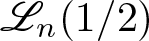 $\mathscr{L}_n(1/2)$. As explained in [Reference Frolenkov13], it is sufficient to consider only the case of
 $c\equiv0\pmod{4}$ as all other cases can be treated similarly. Therefore, we provide detailed computations only for
 $c\equiv0\pmod{4}$ in order to demonstrate required changes in the analysis of integral transforms.
Following Dunster [Reference Dunster12, (3.4a), (3.4b)], we define
 \begin{equation*}
F_{\mu}(z):=\frac{J_{\mu}(z)+J_{-\mu}(z)}{2\cos(\pi\mu/2)},\quad
G_{\mu}(z):=\frac{J_{\mu}(z)-J_{-\mu}(z)}{2\sin(\pi\mu/2)}.
\end{equation*}
Let  $L_{\mu}(z)$ be either
 $F_{\mu}(z)$ or
 $G_{\mu}(z)$. The function
 $\omega_L(z)=L_{2it}(2tz)\sqrt{z}$ satisfies the differential equation (see [Reference Dunster12, (5.1)]):
 \begin{equation}
\frac{d^2\omega_L}{dz^2}=-\frac{1+16t^2(1+z^2)}{4z^2}\omega_L(z).
\end{equation}
The following uniform asymptotic formulas take place (see [Reference Dunster12, (5.15),(5.16)]):
 \begin{equation}
L_{2it}(z)=\frac{1}{\sqrt{\pi t}(1+z^2)^{1/4}}\sum_{\pm}e^{\pm2it\xi(z)}E_{\pm}(t,(1+z^2)^{-1/2}),
\end{equation}
where
 \begin{equation}
\xi(z)=\sqrt{1+z^2}+\log\frac{z}{1+\sqrt{1+z^2}},\quad
\xi'(z)=\frac{\sqrt{1+z^2}}{z},
\end{equation}
and the non-oscillatory functions  $E_{\pm}(t,p)$ have the Poincare type asymptotic expansion (one can express these functions as a series with decreasing powers of
 $t$ and with an error that is smaller than the last term of the expansion).
Similar results hold for the  $K$-Bessel function. The function
 $\omega_K(z)=K_{2it}(2tz)\sqrt{z}$ satisfies the differential equation (see [Reference Dunster12, (4.1)]):
 \begin{equation}
\frac{d^2\omega_K}{dz^2}=\frac{1+16t^2(z^2-1)}{4z^2}\omega_K(z).
\end{equation}
For  $1-z\gg t^{-2/3+\epsilon}$ the following uniform asymptotic formula takes place (see [Reference Balogh7], [Reference Dunster12, sec.4]):
 \begin{align}
e^{\pi t}K_{2it}(2tz)&=\frac{\sqrt{\pi}}{\sqrt{t}(1-z^2)^{1/4}}
\left(
\cos(2t\eta(z)-\frac{\pi}{4})\sum_{s=0}^n\frac{U_{2s}((1-z^2)^{-1/2})}{(2t)^{2s}} \right.\nonumber\\
&\quad +
\sin(2t\eta(z)-\frac{\pi}{4})\sum_{s=0}^{n-1}\frac{U_{2s+1}((1-z^2)^{-1/2})}{(2t)^{2s+1}}\nonumber\\
&\quad
\left.+O\left(\frac{1}{(t(1-z^2)^{1/2})^{2n+1}}\right)
\right),
\end{align}
where  $U_j(x)=O(x^j)$ and
 \begin{equation}
\eta(z)=-\sqrt{1-z^2}+\log\frac{1+\sqrt{1-z^2}}{z},\quad
\eta'(z)=-\frac{\sqrt{1-z^2}}{v}.
\end{equation}
In the remaining ranges of  $z$, we apply the results of [Reference Booker, Strömbergsson and Then11]. More precisely, for
 $z-1\gg t^{-2/3+\epsilon}$
 \begin{equation}
e^{\pi t}K_{2it}(2tz)\ll (zt)^{-A}.
\end{equation}
For  $|x-2t|\ll t^{1/3+\epsilon}$ one has
 \begin{equation}
e^{\pi t}K_{2it}(x)\ll \frac{1}{t^{1/3}},\quad
e^{\pi t}\frac{\partial^j}{\partial x^j}K_{2it}(x)\ll\frac{(t^{2/3}/x)^j}{t^{1/3}}.
\end{equation}
In the above settings, for  $k=1/2$ and
 $\rho=it$ the functions
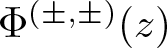 $\Phi^{(\pm,\pm)}(z)$ ( see [Reference Balkanova and Frolenkov6, (1.9)]) can be written in the following form :
 \begin{equation}
\Phi^{(+,+)}(z)=\frac{\sqrt{z}}{\sqrt{2}}\left(F_{2it}(2\sqrt{z})-G_{2it}(2\sqrt{z})
\right),
\end{equation}
 \begin{equation}
\Phi^{(-,-)}(z)=\frac{-\sqrt{z}}{\sqrt{2}}\left(F_{2it}(2\sqrt{z})+G_{2it}(2\sqrt{z})
\right).
\end{equation}
We also modify slightly the definition of  $\Phi^{(\pm,\mp)}(z)$ (see [Reference Balkanova and Frolenkov6, (1.10)]) putting
 \begin{equation}
\Phi^{(-,+)}(z):=\frac{2\sqrt{z}K_{2it}(2\sqrt{z})}{\Gamma(1/4+it)\Gamma(3/4-it)},
\end{equation}
 \begin{equation}
\Phi^{(+,-)}(z):=\frac{2\sqrt{z}K_{2it}(2\sqrt{z})}{\Gamma(1/4-it)\Gamma(3/4+it)}.
\end{equation}
To formulate the Voronoi formula, it is also required to define the theta multiplier (see [Reference Strömberg31, p.2380]):
 \begin{equation*}
\vartheta(M):=\bar{\epsilon}_{d}\left(\frac{c}{d}\right),
\end{equation*}
where the symbol  $\left(\frac{c}{d}\right)$ is given on [Reference Shimura29, p.442] (for positive odd
 $d$ it coincides with a classical Jacobi symbol) and
 $\epsilon_{d}=1$ if
 $d\equiv1\pmod 4$ and
 $\epsilon_{d}=i$ if
 $d\equiv-1\pmod 4$.
Lemma 3.1. Let  $\phi$ be a smooth function with compact support. For
 $c\equiv0\pmod{4}$ and
 $ad\equiv1\pmod{4}$ one has
 \begin{align}
&\sum_{n \gt 0}\phi(n)e\left( \frac{an}{c}\right)\frac{\mathscr{L}_n(1/2+2it)}{n^{1/2-it}}=
\vartheta(M_0)e(1/8)\sqrt{2}\mathcal{R}_{+}(c,t) \nonumber\\
&\quad +
\vartheta(M_0)e(1/8)\sum_{n\neq0}\widehat{\phi}^{+}\left(\frac{4\pi^2n}{c^2}\right)e\left( -\frac{dn}{c}\right)
\frac{\mathscr{L}_n(1/2+2it)}{|n|^{1/2-it}},
\end{align}
 \begin{align}
&\sum_{n \lt 0}\phi(n)e\left( \frac{an}{c}\right)\frac{\mathscr{L}_n(1/2+2it)}{|n|^{1/2-it}}=
\vartheta(M_0)e(1/8)\sqrt{2}\mathcal{R}_{-}(c,t)\nonumber\\
&\quad +
\vartheta(M_0)e(1/8)\sum_{n\neq0}\widehat{\phi}^{-}\left(\frac{4\pi^2n}{c^2}\right)e\left( -\frac{dn}{c}\right)
\frac{\mathscr{L}_n(1/2+2it)}{|n|^{1/2-it}},
\end{align}
where
 \begin{align*}
\mathcal{R}_{\pm}(c,t)&=
\frac{2^{4it}\phi^{\pm}(1/2+it)}{c^{1+2it}}\zeta(1+4it)+
\frac{\pi^{2it}\phi^{\pm}(1/2-it)}{c^{1-2it}} \nonumber\\
&\quad \times \zeta(1-4it)\frac{\Gamma\left(\frac{2\pm1}{4}+it\right)\Gamma(1/2-2it)}{\Gamma\left(\frac{2\pm1}{4}-it\right)\Gamma(1/2+2it)},
\end{align*}
 \begin{equation}
\phi^{+}(s)=\int_{0}^{\infty}\phi(\pm x)x^{s-1}dx,\quad
\widehat{\phi}^{+}(\pm y)=\int_{0}^{\infty}\frac{\phi(x)}{x}\Phi^{(\pm,+)}(xy)dx,
\end{equation}
 \begin{equation}
\phi^{-}(s)=\int_{0}^{\infty}\phi(-x)x^{s-1}dx,\quad
\widehat{\phi}^{-}(\pm y)=\int_{0}^{\infty}\frac{\phi(-x)}{x}\Phi^{(\pm,-)}(xy)dx.
\end{equation}
Proof. This follows from [Reference Balkanova and Frolenkov6, Theorem 1.2, Corollary 1.5] after some straightforward calculations.
For  $c\equiv0\pmod{4}$ and
 $ad\equiv1\pmod{4}$, let
 \begin{equation*}
\Theta_0(c,n):=\sum_{\substack{a\pmod{c}\\ (a,c)=1}}\vartheta(M_0)e\left( -\frac{dn}{c}\right)=
\sum_{\substack{a\pmod{c}\\ (a,c)=1}}\bar{\epsilon}_{d}\left(\frac{c}{d}\right)e\left( -\frac{dn}{c}\right).
\end{equation*}
According to [Reference Frolenkov13, (3.10)]
 \begin{equation}
\sum_{c\equiv0\pmod{4}}\frac{\Theta_0(c,n)}{c^{2s}}=\frac{L^{\ast}(2s-1/2,n)}{\zeta_2(4s-1)}\overline{r_2(\bar{s},n)},
\end{equation}
where the function  $r_2(s,n)$ is defined in [Reference Petridis, Raulf and Risager28, (3.6),(3.7)], the series
 $L^{\ast}(z)$ is defined in [Reference Petridis, Raulf and Risager28, (2.8)] and it coincides up to a finite product with a Dirichlet
 $L$-function. As shown in [Reference Frolenkov13, Sec.3],
 $L^{\ast}(z)$ and
 $\mathscr{L}_n(z)$ differ slightly from each other.
Using Heath-Brown’s large sieve inequality [Reference Heath-Brown17] (see [Reference Khan23, (3.1)] or [Reference Petridis, Raulf and Risager28, (2.28)]) one obtains ( see [Reference Khan23, (3.2)], [Reference Petridis, Raulf and Risager28, Theorem 2.9, Remark 2.10]) the following upper bounds:
 \begin{equation}
\sum_{n\le N}|L^{\ast}(1/2+it,n)|^2\ll\left(N+\sqrt{N(1+|t|)}\right)\left(N(1+|t|)\right)^{\epsilon},
\end{equation}
 \begin{equation}
\sum_{n\le N}|\mathscr{L}_n(1/2+it)|^2\ll\left(N+\sqrt{N(1+|t|)}\right)\left(N(1+|t|)\right)^{\epsilon}.
\end{equation}
4. Reciprocity formula for the first twisted moment
Let
 \begin{equation*}
\mathcal{M}_1(l,\rho;h):=\sum_{j}h(t_j)\alpha_{j}\lambda_{j}(l^2)L(\operatorname{sym}^2 u_{j},\rho),
\end{equation*}
where  $h(t)$ is a weight function satisfying the following conditions:
C1
$h(r)$ is an even function;C2
$h(r)$ is holomorphic in the strip
$|\Im(r)| \lt \Upsilon$ for some
$\Upsilon \gt 1/2$;C3
$h(r)$ is such that the following estimate
$h(r)\ll(1+|r|)^{-2-\epsilon}$ holds in the strip
$|\Im(r)| \lt \Upsilon$,
$\Upsilon \gt 1/2$;C4
$h(\pm(n+1/2)i)=0$ for
$n=0,1,\ldots N-1$, where
$N \gt 0$ is a sufficiently large integer.


A standard choice for the function  $h(r)$ is
 \begin{equation}
h(T,G,N;r):=q_N(r)\exp\left(-\frac{(r-T)^2}{G^2}\right)+q_N(r)\exp\left(-\frac{(r+T)^2}{G^2}\right),
\end{equation}
where for an arbitrary large integer  $N$
 \begin{equation}
q_N(r):=\frac{(r^2+1/4)\ldots(r^2+(N-1/2)^2)}{(r^2+100N^2)^N}.
\end{equation}
Note that  $q_N(r)=1+O(1/r^2)$. To simplify the notation, we write
 $h(r)$ instead of
 $h(T,G,N;r)$. For
 $x \geq 2$, let
 \begin{align}
I(x,\rho;h)&:=\frac{2^{2-\rho}i}{\pi^{3/2}}\int_{-\infty}^{\infty}\frac{rh(r)}{\cosh(\pi r)}\left(\frac{2}{x}\right)^{2ir}
\frac{\Gamma(1/2-\rho/2+ir)\Gamma(1-\rho/2+ir)}{\Gamma(1+2ir)} \nonumber\\
&\quad \times \sin\left( \pi(\rho/2-ir)\right) {}_2F_{1}\left(1/2-\rho/2+ir,1-\rho/2+ir,1+2ir;\frac{4}{x^2} \right)dr,
\end{align}
 \begin{align*}
I(2,\rho;h)&:=\Gamma(\rho-1/2)
\frac{2^{2-\rho}i}{\pi^{3/2}}\int_{-\infty}^{\infty}\frac{rh(r)}{\cosh(\pi r)}
\sin\left( \pi(\rho/2-ir)\right)\\
&\quad \times \frac{\Gamma(1/2-\rho/2+ir)\Gamma(1-\rho/2+ir)}{\Gamma(\rho/2+ir)\Gamma(1/2+\rho/2+ir)}dr
\end{align*}
and for  $0 \lt x \lt 2$
 \begin{align}
I(x,\rho;h)&:=\frac{2i}{\pi^{3/2}}\int_{-\infty}^{\infty}\frac{rh(r)}{\cosh(\pi r)}x^{1-\rho}
\frac{\Gamma(1/2-\rho/2+ir)\Gamma(1/2-\rho/2-ir)}{\Gamma(1/2)} \nonumber\\
&\quad \times \cos\left( \pi(\rho/2+ir)\right) {}_2F_{1}\left(1/2-\rho/2+ir,1/2-\rho/2-ir,1/2;\frac{x^2}{4} \right)dr.
\end{align}
According to [Reference Balkanova2, Theorem 5], the following explicit formula holds.
Theorem 4.1 For any function  $h(t)$ satisfying the conditions
 $(C1)-(C4)$ and
 $\Re{\rho}=1/2$ we have
 \begin{equation}
M_1(m,\rho;h)=MT(m,\rho;h)+CT(m,\rho;h)+ET(m,\rho;h)+S_1(m,\rho;h)+S_2(m,\rho;h),
\end{equation}
where
 \begin{equation*}
MT(m,\rho;h)=\frac{\zeta(2\rho)}{\pi^2m^{\rho}}\int_{-\infty}^{\infty}rh(r)\tanh(\pi r)dr+
(2\pi)^{\rho-1}\zeta(2\rho-1)\frac{I(2,\rho;h)}{(2m)^{1-\rho}},
\end{equation*}
 \begin{equation}
CT(m,\rho;h)=-\frac{\zeta(\rho)}{\pi}\int_{-\infty}^{\infty}\frac{\tau_{ir}(m^2)\zeta(\rho+2ir)\zeta(\rho-2ir)}{|\zeta(1+2ir)|^2}h(r)dr,
\end{equation}
 \begin{align*}
ET(m,\rho;h)&=-\frac{2\zeta(2\rho-1)}{\zeta(2-\rho)}\tau_{(1-\rho)/2}(m^2)h\left(\frac{1-\rho}{2i}\right)\\
&\quad +\mathscr{L}_{-4m^2}(\rho)\frac{2^{1-\rho}i}{(4\pi m)^{1-\rho}\pi}
\int_{-\infty}^{\infty}\frac{rh(r)}{\cosh(\pi r)}\frac{\Gamma(1/2-\rho/2+ir)}{\Gamma(1/2+\rho/2+ir)}dr,
\end{align*}
 \begin{equation*}
S_1(m,\rho;h)=(2\pi)^{\rho-1}\sum_{n=1}^{2m-1}\frac{1}{n^{1-\rho}}\mathscr{L}_{n^2-4m^2}(\rho)I\left(\frac{n}{m},\rho;h\right),\quad
\end{equation*}
 \begin{equation*}
S_2(m,\rho;h)=(2\pi)^{\rho-1}\sum_{n=2m+1}^{\infty}\frac{1}{n^{1-\rho}}\mathscr{L}_{n^2-4m^2}(\rho)I\left(\frac{n}{m},\rho;h\right).
\end{equation*}
5. Asymptotic formulas for hypergeometric functions
For the hypergeometric function appearing in (4.3), the following asymptotic formula holds (see [Reference Balkanova3]).
Proposition 5.1. For  $0 \lt z \lt 1,$
 $r\to\infty$ and
 $r^{-1+\delta}\ll\alpha\ll r^{-\delta}$ one has
 \begin{align}
&{}_2F_1\left(1/4+ir(1-\alpha),3/4+ir(1-\alpha),1+2ir;z\right) \nonumber\\
&=
\frac{\exp\left(2irl_1(\alpha,z)\right)}{(1-(1-\alpha^2)z)^{1/4}}
\left(1+\sum_{j=1}^{N}\frac{c_j(\alpha,r)}{(\alpha r)^j}\right)+O((\alpha r)^{-N-1}),
\end{align}
where
 \begin{align}
l_1(\alpha,z)&=\log2-\alpha\log(1+\alpha)-\log(1+\sqrt{1-(1-\alpha^2)z}) \nonumber\\
&\quad +\alpha\log(\alpha+\sqrt{1-(1-\alpha^2)z}).
\end{align}
To simplify the notation, we use the sign  $\sim$ to indicate the main term of an asymptotic expansion up to some constants.
Corollary 5.2. For  $0 \lt z \lt 1,$
 $r=T+Gv$,
 $|v|\ll \log^2 T$,
 $G\ll T^{1/2-\epsilon}$ and
 $\alpha_0=t/T\ll T^{-\delta}$, the main term in the asymptotic expansion (5.1) can be rewritten as
 \begin{align}
& {}_2F_1\left(1/4+ir(1-\alpha),3/4+ir(1-\alpha),1+2ir;z\right)\sim
(1-(1-\alpha_0^2)z)^{-1/4} \nonumber\\
&\quad\times
e^{2iT\left(-\log(1+\sqrt{1-(1-\alpha_0^2)z})+\alpha_0\log(\alpha_0+\sqrt{1-(1-\alpha_0^2)z})\right)} \nonumber\\
&\quad \times e^{2iGv\left(-\log(1+\sqrt{1-(1-\alpha_0^2)z})+\log2\right)}.
\end{align}
Proof. The statement can be proved similarly to Lemma 2.4. As in (2.14) one has
 \begin{equation}
rl_1(\alpha,z)=Tl_1(\alpha_0,z)
+Gv\left(l_1(\alpha_0,z)-\alpha_0l_1'(\alpha_0,z)\right)+O\left(\frac{G^2v^2}{T}\right),
\end{equation}
where the derivative is taken over  $\alpha.$ Direct calculations (see (5.2)) show that
 \begin{equation}
l_1(\alpha_0,z)-\alpha_0l_1'(\alpha_0,z)=\log2-\log(1+\sqrt{1-(1-\alpha_0^2)z}).
\end{equation}
Let
 \begin{align}
F_2(r,\alpha,x)&:=
\frac{\Gamma(1/4-it+ir)\Gamma(1/4-it+ir)}{\Gamma(1/2)} \nonumber\\
&\quad \times {}_2F_1\left(1/4-it+ir,1/4-it-ir,1/2;x \right) \nonumber\\
&=\frac{\Gamma(1/4+ir(1-\alpha))\Gamma(1/4-ir(1+\alpha))}{\Gamma(1/2)} \nonumber\\
&\quad \times {}_2F_1\left(1/4+ir(1-\alpha),1/4-ir(1+\alpha),1/2;x \right).
\end{align}
This function appears in (4.4) and its asymptotic behaviour was studied in [Reference Frolenkov14]. In particular, [Reference Frolenkov14, Corollary 1.3] states that the leading term of the asymptotic expansion has the following form.
Proposition 5.3. For  $0 \lt y \lt 1$,
 $r\to\infty$ and
 $r^{1-\delta}\ll\alpha\ll r^{-\delta}$ one has
 \begin{equation}
F_2(r,\alpha,y)\sim
e^{irl_2(\alpha,y)}
\frac{2^{3/2}\pi e^{-\pi r\alpha}}{(2r\alpha)^{1/3}}\left(\frac{\alpha^2\hat{\zeta}(y)}{y-1+\alpha^2}\right)^{1/4}Ai(-(2r\alpha)^{2/3}\hat{\zeta}(y)),
\end{equation}
where
 \begin{equation}
l_2(\alpha,y)=\alpha\log(1-y)-2\alpha\log r+(1-\alpha)\log(1-\alpha)-(1+\alpha)\log(1+\alpha)+2\alpha,
\end{equation}
 \begin{align}
\hat{\zeta}(y)&=\left\{
\begin{array}{ll}
-\left(3\mathbf{a}_0(\alpha,y)/(2\alpha)\right)^{2/3}, & \hbox{if} \quad y \lt 1-\alpha^2 \\
\left(3\mathbf{a}_1(\alpha,y)/(2\alpha)\right)^{2/3}, & \hbox{if} \quad y \gt 1-\alpha^2,
\end{array}
\right. \nonumber\\
\mathbf{a}_0(\alpha,y)&=
\frac{\pi(1-\alpha)}{2}-\arctan\frac{\sqrt{y}}{\sqrt{1-\alpha^2-y}}+\alpha\arctan\frac{\alpha\sqrt{y}}{\sqrt{1-\alpha^2-y}},
\end{align}
 \begin{align}
\mathbf{a}_1(\alpha,y)&=
\alpha\log\left(\alpha\sqrt{y}+\sqrt{y-1+\alpha^2}\right)-\log\left(\sqrt{y}+\sqrt{y-1+\alpha^2}\right) \nonumber\\
&\quad -\frac{\alpha}{2}\log(1-y)+
\frac{1-\alpha}{2}\log(1-\alpha^2), \nonumber\\
\mathbf{a}_0(\alpha,y)&=
\frac{(1-\alpha^2)(1-\alpha^2-y)^{3/2}}{3\alpha^2y^{3/2}}\left(1+O\left(\frac{1-\alpha^2-y}{\alpha^2}\right)\right).
\end{align}
Note that by [Reference Frolenkov14, p.10] one has
 \begin{equation}
\mathbf{a}_1(\alpha,y)=
\frac{(y-1+\alpha^2)^{3/2}}{3\alpha^2\sqrt{1-\alpha^2}}\left(1+O\left(\frac{y-1+\alpha^2}{\alpha^2}\right)\right).
\end{equation}
In the case when the argument of the Airy function is bigger than  $r^{\delta}$, it is possible to apply asymptotic formulas [Reference Olver, Lozier, Boisvert and Clarke27, (9.7.5),(9.7.9)] for the Airy function as shown in [Reference Frolenkov14, Corollary 1.2, 1.3].
Corollary 5.4. For  $0 \lt y \lt 1-\alpha^2-\frac{\alpha^{4/3}}{r^{2/3-\delta}}$ one has
 \begin{equation}
F_2(r,\alpha,y)\ll
\frac{e^{-\pi r\alpha}e^{-2r\mathbf{a}_0(\alpha,y)}}{\sqrt{r}(1-\alpha^2-y)^{1/4}}\ll\frac{e^{-\pi r\alpha}}{r^{A}}.
\end{equation}
Corollary 5.5. For  $1-\alpha^2+\frac{\alpha^{4/3}}{r^{2/3-\delta}} \lt y \lt 1$ the leading coefficient in the asymptotic expansion for
 $F_2(r,\alpha,y)$ is given by
 \begin{equation}
F_2(r,\alpha,y)\sim
2\sqrt{\pi}e^{irl_2(\alpha,y)}e^{-\pi r\alpha}
\frac{\cos\left(2r\mathbf{a}_1(\alpha,y)-\pi/4\right)}{\sqrt{r}(y-1+\alpha^2)^{1/4}}.
\end{equation}
6. The second moment on the critical line and sums of Zagier
$L$-series

In order to estimate
 \begin{equation*}
\sum_{T \lt t_j\le T+G}\alpha_{j}L(\operatorname{sym}^2 u_{j},1/2-2it)L(\operatorname{sym}^2 u_{j},1/2+2it),
\end{equation*}
we represent the first  $L$-function via approximate functional equation (2.4), and then apply Theorem 4.1 with
 $\rho=1/2+2it$ and a test function
 $h(r)$ being either
 \begin{align*}
H_0(t,r)&=V(m,-t,r)h(T,G,N;r)\quad\hbox{or}\quad
H_{\infty}(t,r) \nonumber\\
&=\frac{L_{\infty}(1/2+2it,r)}{L_{\infty}(1/2-2it,r)}V(m,t,r)h(T,G,N;r),
\end{align*}
where  $h(T,G,N;r)$ is given by (4.1) and (4.2). Since the function
 $H_{\infty}(t,r)$ does not satisfy the conditions at the beginning of Section 4, we first replace it by (2.12). It is enough to consider only the main term of this approximation, since all other terms can be treated in the same way. Therefore,
 \begin{equation*}
H_{\infty}(t,r)=
e^{2ir(\left(2\alpha\log|r|+f(\alpha)\right)}
V(m,t,r)h(T,G,N;r),
\end{equation*}
where  $f(\alpha)$ is given by (2.13) and
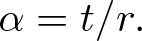 $\alpha=t/r.$ All summands in (4.5) except
 $S_1(m,\rho;h)+S_2(m,\rho;h),$ can be easily bounded by
 $T^{1+\epsilon}G$. The contribution of
 $CT(m,\rho;h)$ can be estimated as in [Reference Balkanova and Frolenkov4, Lemma 5.3]. In fact, arguing as in [Reference Balkanova and Frolenkov4, Lemma 5.3], we obtain a product of six zeta-functions (one extra zeta-function appears because of the presence of
 $\zeta(\rho)$ in (4.6)). Using the bound
 $|\zeta(1/2+iy)|\ll y^{1/6}$, and further estimating the integral over the short interval trivially, we obtain
 $t^{1/3}T^{2/3+\epsilon}G\ll T^{1-\epsilon}G$ since
 $t\ll T^{1-\epsilon}$. Consequently,
 \begin{equation}
\sum_{T \lt t_j\le T+G}\alpha_{j}|L(\operatorname{sym}^2 u_{j},1/2+2it)|^2\ll T^{1+\epsilon}G+S_1(t)+S_2(t),
\end{equation}
where
 \begin{align}
S_1(t)&=
\sum_{m\ll T^{1+\epsilon}\sqrt{t}}\sum_{n=1}^{2m-1}\frac{\mathscr{L}_{n^2-4m^2}(1/2+2it)}{n^{1/2-2it}} \nonumber\\
&\quad \times \left(\frac{I\left( \frac{n}{m},1/2+2it;H_0\right)}{m^{1/2-2it}}+\frac{I\left( \frac{n}{m},1/2+2it;H_{\infty}\right)}{m^{1/2+2it}}\right),
\end{align}
 \begin{align*}
S_2(t)&=
\sum_{m\ll T^{1+\epsilon}\sqrt{t}}\sum_{n=2m+1}^{\infty}\frac{\mathscr{L}_{n^2-4m^2}(1/2+2it)}{n^{1/2-2it}}\nonumber\\
&\quad \times
\left(\frac{I\left( \frac{n}{m},1/2+2it;H_0\right)}{m^{1/2-2it}}+\frac{I\left( \frac{n}{m},1/2+2it;H_{\infty}\right)}{m^{1/2+2it}}\right).
\end{align*}
6.1. Preliminary estimate of
$S_1(t)$

Let us use the following notation:
 \begin{equation*}
\rho:=1/2+2it,\quad\alpha:=\frac{t}{r},\quad y:=\frac{n^2}{4m^2}.
\end{equation*}
Using definitions (4.4) and (5.6) we infer that
 \begin{equation}
I\left(\frac{n}{m},\rho;h\right)\sim\int_{-\infty}^{\infty}\frac{rh(r)}{\cosh(\pi r)}\cos\left( \pi(\rho/2+ir)\right)y^{1/2-\rho/2}
F_2(r,\alpha,y)dr.
\end{equation}
For simplicity, we only consider the contribution of the first exponent in (4.1). Therefore, the contribution of  $r \lt 0$ to (6.3) is negligible and we can assume that
 $r \gt 0$
 \begin{equation}
I\left(\frac{n}{m},\rho;h\right)\sim\int_{-\infty}^{\infty}rh(r)y^{1/4-ir\alpha}e^{\pi r\alpha}F_2(r,\alpha,y)dr.
\end{equation}
We make the change of variables  $r=T+Gv$ in (6.4). It immediately follows from (4.1) that the contribution of
 $|v|\gg\log^2T$ is negligible, so from now on we assume that
 \begin{equation*}
r=T+Gv,\quad |v|\ll\log^2T,\quad
\alpha=\alpha(x)=\frac{\alpha_0}{1+x},\quad x=Gv/T,\quad \alpha_0=t/T.
\end{equation*}
Our next step is to apply Corollaries 5.4 and 5.5. A small difficulty arises while verifying the conditions of these corollaries because now  $\alpha$ depends on
 $v$. Nevertheless, for
 $G\ll T^{1+\delta}/t^{2/3}$ one has
 \begin{equation*}
\frac{\alpha_0^{4/3}}{T^{2/3-2\delta}}\gg\alpha_0^2\frac{Gv}{T},
\end{equation*}
and therefore,
 \begin{equation}
y \gt 1-\alpha_0^2+\frac{\alpha_0^{4/3}}{T^{2/3-2\delta}} \gt 1-\alpha^2+\frac{\alpha^{4/3}}{T^{2/3-\delta}},
\end{equation}
 \begin{equation}
y \lt 1-\alpha_0^2-\frac{\alpha_0^{4/3}}{T^{2/3-2\delta}} \lt 1-\alpha^2-\frac{\alpha^{4/3}}{T^{2/3-\delta}}.
\end{equation}
In the case of (6.6), it follows from (6.4) and (5.12) that
 \begin{equation*}I\left(\frac{n}{m},\rho;h\right)\ll T^{-A}.\end{equation*}
Recall that  $r=T+Gv$. Substituting (5.7) to (6.4) and using (5.8), we show that
 \begin{align*}
&I\left(\frac{n}{m},\rho;h\right)\sim
y^{1/4-it}(1-y)^{it}G
\int_{-\infty}^{\infty}(T+Gv)h(T+Gv)\\
&\quad \times
\frac{e^{-2it\log (T+Gv)+i(T+Gv)l_2(\alpha)}}{(T+Gv)^{1/3}\alpha^{1/3}} \left(\frac{\alpha^2\hat{\zeta}(y)}{y-1+\alpha^2}\right)^{1/4}\\
&\quad \times Ai\left(-(2((T+Gv))\alpha)^{2/3}\hat{\zeta}(y)\right)
dv,
\end{align*}
where
 \begin{equation*}
l_2(\alpha)=(1-\alpha)\log(1-\alpha)-(1+\alpha)\log(1+\alpha)+2\alpha.
\end{equation*}
Applying (2.15) and (2.10) one has
 \begin{align*}
I\left(\frac{n}{m},\rho;H_0\right)&\sim
y^{1/4-it}(1-y)^{it}V(m,-t,T)G \int_{-\infty}^{\infty}(T+Gv)h(T+Gv)\\
&\quad \times\frac{e^{-i(T+Gv)(2\alpha\log (T+Gv)-l_2(\alpha))}}{(T+Gv)^{1/3}\alpha^{1/3}}\left(\frac{\alpha^2\hat{\zeta}(y)}{y-1+\alpha^2}\right)^{1/4}\\
&\quad\times
Ai\left(-(2(T+Gv)\alpha)^{2/3}\hat{\zeta}(y)\right)dv,
\end{align*}
 \begin{align*}
I\left(\frac{n}{m},\rho;H_{\infty}\right)&\sim
y^{1/4-it}(1-y)^{it}V(m,t,T)G
\int_{-\infty}^{\infty}(T+Gv)h(T+Gv)\\
&\quad\times
e^{2iGv\log\frac{1+\alpha_0}{1-\alpha_0}}
\frac{e^{-i(T+Gv)(2\alpha\log (T+Gv)-l_2(\alpha))}}{(T+Gv)^{1/3}\alpha^{1/3}}\left(\frac{\alpha^2\hat{\zeta}(y)}{y-1+\alpha^2}\right)^{1/4}\\
&\quad\times Ai\left(-(2(T+Gv)\alpha)^{2/3}\hat{\zeta}(y)\right)
dv.
\end{align*}
Note that
 \begin{equation*}
2\alpha\log (T+Gv)-l_2(\alpha)=
2\alpha\log (T+Gv)+f(\alpha),
\end{equation*}
where  $f(\alpha)$ is given by (2.13). Therefore, arguing as in Lemma 2.4 we prove that
 \begin{align}
\frac{I\left(\frac{n}{m},\rho;h\right)}{y^{1/4-it}(1-y)^{it}}&\sim
V(m,\varepsilon (h)t,T)G
\int_{-\infty}^{\infty}e^{i\varepsilon (h)Gv\log\frac{1+\alpha_0}{1-\alpha_0}} \nonumber\\
&\quad \times
\frac{(T+Gv)h(T+Gv)}{(T+Gv)^{1/3}\alpha^{1/3}}\left(\frac{\alpha^2\hat{\zeta}(y)}{y-1+\alpha^2}\right)^{1/4}\nonumber\\
&\quad \times Ai\left(-(2(T+Gv)\alpha)^{2/3}\hat{\zeta}(y)\right)dv,
\end{align}
where
 \begin{equation*}
\varepsilon (h)=-1\quad\hbox{if}\quad h=H_0,\quad
\varepsilon (h)=-1\quad\hbox{if}\quad h=H_{\infty}.
\end{equation*}
In the case (6.5) using [Reference Olver, Lozier, Boisvert and Clarke27, 9.7.8] (see also (5.13)) one has
 \begin{align*}
&\frac{I\left(\frac{n}{m},\rho;h\right)}{y^{1/4-it}(1-y)^{it}}\sim
V(m,\varepsilon (h)t,T)G
\int_{-\infty}^{\infty}e^{i\varepsilon (h)Gv\log\frac{1+\alpha_0}{1-\alpha_0}}
\frac{h(T+Gv)\sqrt{T+Gv}}{(y-1+\alpha^2)^{1/4}}\\
&\quad \times \sum_{\pm}e^{\pm2i(T+Gv)\mathbf{a}_1(\alpha,y)}dv.
\end{align*}
Substituting (5.10) one has
 \begin{align*}
\frac{I\left(\frac{n}{m},\rho;h\right)}{y^{1/4-it}(1-y)^{it}}&\sim
\sum_{\pm}\frac{V(m,\varepsilon (h)t,T)T^{1/2}G}{(1-y)^{\pm it}}\\
&\quad \times \int_{-\infty}^{\infty}e^{i\varepsilon (h)Gv\log\frac{1+\alpha_0}{1-\alpha_0}}
\frac{e^{-v^2}e^{\pm2i(T+Gv)\mathbf{a}_1(\alpha)}}{(y-1+\alpha^2)^{1/4}}dv,
\end{align*}
where
 \begin{align}
\mathbf{a}_1(\alpha)&=
\alpha\log\left(\alpha\sqrt{y}+\sqrt{y-1+\alpha^2}\right) \nonumber\\
&\quad -\log\left(\sqrt{y}+\sqrt{y-1+\alpha^2}\right)+
\frac{1-\alpha}{2}\log(1-\alpha^2).
\end{align}
For  $x=Gv/T$, the following identity holds:
 \begin{equation*}
(y-1+\alpha^2)^{-1/4}=\alpha^{-1/2}\left(1+\frac{y-1}{\alpha_0^2}\left(1+x\right)^2\right)^{-1/4}.
\end{equation*}
In order to expand this function into a Taylor series around the point  $x=0$, it is required to have the estimate
 \begin{equation*}
\frac{x}{1+\frac{y-1}{\alpha_0^2}}=\frac{x\alpha_0^2}{y-1+\alpha_0^2}\ll T^{-\delta/2}.
\end{equation*}
Applying (6.5) we conclude that
 \begin{equation*}
\frac{x}{1+\frac{y-1}{\alpha_0^2}}\ll x\alpha_0^{2/3}T^{2/3-2\delta}\ll Gt^{2/3}T^{-1-\delta} \ll T^{-\delta/2}
\end{equation*}
as long as  $G\ll T^{1+\delta/2}/t^{2/3}$. Assuming that this condition is satisfied, one has
 \begin{align}
\frac{I\left(\frac{n}{m},\rho;h\right)}{y^{1/4-it}(1-y)^{it}}&\sim
\sum_{\pm}\frac{V(m,\varepsilon (h)t,T)T^{1/2}G}{(1-y)^{\pm it}(y-1+\alpha_0^2)^{1/4}} \nonumber\\
&\quad \times
\int_{-\infty}^{\infty}e^{i\varepsilon (h)Gv\log\frac{1+\alpha_0}{1-\alpha_0}}
e^{-v^2}e^{\pm2i(T+Gv)\mathbf{a}_1(\alpha)}dv.
\end{align}
Recall that  $\alpha=\alpha(x)=\alpha_0/(1+x),$
 $x=Gv/T$. Let
 \begin{equation}
F(x):=(1+x)\mathbf{a}_1\left(\frac{\alpha_0}{1+x}\right).
\end{equation}
Then the following Taylor series expansion around  $x=0$ takes place:
 \begin{equation}
(T+Gv)\mathbf{a}_1(\alpha)=TF(0)+F'(0)Gv+\sum_{k=2}^{\infty}\frac{F^{(k)}(0)}{k!}\frac{(Gv)^k}{T^{k-1}}.
\end{equation}
Here,  $F(0)=\mathbf{a}_1(\alpha_0)$ and
 \begin{align*}
&F'(0)=\mathbf{a}_1(\alpha_0)-\alpha_0\frac{d}{d\alpha}\mathbf{a}_1(\alpha_0),\quad
F''(0)=\alpha^2_0\frac{d^2}{d\alpha^2}\mathbf{a}_1(\alpha_0),\\
&F^{(k)}(0)=\sum_{j=2}^kc_j\alpha^j_0\frac{d^j}{d\alpha^j}\mathbf{a}_1(\alpha_0),
\end{align*}
where  $c_j$ are some absolute constants. Denote by
 $f_j(\alpha)$ the
 $j$th summand in (6.8) so that
 $\mathbf{a}_1(\alpha)=f_1(\alpha)-f_2(\alpha)+f_3(\alpha).$ Consider
 \begin{align}
f_1'(\alpha)&=\log\left(\alpha\sqrt{y}+\sqrt{y-1+\alpha^2}\right)+\frac{\alpha(\alpha+\sqrt{y}\sqrt{y-1+\alpha^2})}{(\alpha\sqrt{y}+\sqrt{y-1+\alpha^2})\sqrt{y-1+\alpha^2}} \nonumber\\
&=
\log\left(\alpha\sqrt{y}+\sqrt{y-1+\alpha^2}\right)+
\left(\frac{\alpha}{\sqrt{y}}+\sqrt{y-1+\alpha^2}\right) \nonumber\\
&\quad \times
\left(\frac{1}{\sqrt{y-1+\alpha^2}}-\frac{1}{\alpha\sqrt{y}+\sqrt{y-1+\alpha^2}}\right).
\end{align}
To evaluate the derivative of the product of two brackets on the right-hand side of (6.12), we apply the product rule, then open the brackets, and finally use the relations
 \begin{align*}
&\frac{1}{\sqrt{y}\sqrt{y-1+\alpha^2}}-\frac{1}{\sqrt{y}(\alpha\sqrt{y}+\sqrt{y-1+\alpha^2})}\\
&\quad -
\frac{\alpha}{\sqrt{y-1+\alpha^2}(\alpha\sqrt{y}+\sqrt{y-1+\alpha^2})}=0,\\
&\quad\frac{\alpha(\alpha+\sqrt{y}\sqrt{y-1+\alpha^2})}{\sqrt{y}\sqrt{y-1+\alpha^2}(\alpha\sqrt{y}+\sqrt{y-1+\alpha^2})^2}+
\frac{\alpha+\sqrt{y}\sqrt{y-1+\alpha^2}}{(\alpha\sqrt{y}+\sqrt{y-1+\alpha^2})^2}\\
&\quad=
\frac{(\alpha+\sqrt{y}\sqrt{y-1+\alpha^2})^2}{\sqrt{y}\sqrt{y-1+\alpha^2}(\alpha\sqrt{y}+\sqrt{y-1+\alpha^2})^2},
\end{align*}
showing that
 \begin{align*}
f_1''(\alpha)&=\frac{\alpha+\sqrt{y}\sqrt{y-1+\alpha^2}}{(\alpha\sqrt{y}+\sqrt{y-1+\alpha^2})\sqrt{y-1+\alpha^2}}
-\frac{\alpha^2}{(y-1+\alpha^2)^{3/2}\sqrt{y}}\\
&\quad +
\frac{(\alpha+\sqrt{y}\sqrt{y-1+\alpha^2})^2}{\sqrt{y}(\alpha\sqrt{y}+\sqrt{y-1+\alpha^2})^2\sqrt{y-1+\alpha^2}}.
\end{align*}
Note that while evaluating  $f_1''(\alpha)$ the terms
 $\frac{\pm\alpha}{y-1+\alpha^2}$ were cancelled out. One has
 \begin{equation*}
f_2'(\alpha)=\frac{\alpha(y-1+\alpha^2)^{-1/2}}{(\sqrt{y}+\sqrt{y-1+\alpha^2})}=
\frac{\alpha}{\sqrt{y}\sqrt{y-1+\alpha^2}}-\frac{\alpha}{(\sqrt{y}+\sqrt{y-1+\alpha^2})\sqrt{y}},
\end{equation*}
 \begin{equation*}
f_2''(\alpha)=\frac{(y-1+\alpha^2)^{-1/2}}{(\sqrt{y}+\sqrt{y-1+\alpha^2})}-\frac{\alpha^2}{(y-1+\alpha^2)^{3/2}\sqrt{y}}+
\frac{\alpha^2(y-1+\alpha^2)^{-1/2}}{\sqrt{y}(\sqrt{y}+\sqrt{y-1+\alpha^2})^2}.
\end{equation*}
Therefore,
 \begin{align}
F'(0)&=
-\log\left(\sqrt{y}+\sqrt{y-1+\alpha_0^2}\right)+\frac{1}{2}\log(1-\alpha_0^2)+\frac{\alpha_0^2}{1+\alpha_0} \nonumber\\
&\quad +
\frac{\alpha_0^2}{\sqrt{y-1+\alpha_0^2}}\left(\frac{1}{\sqrt{y}+\sqrt{y-1+\alpha_0^2}}-
\frac{\alpha_0+\sqrt{y}\sqrt{y-1+\alpha_0^2}}{\alpha_0\sqrt{y}+\sqrt{y-1+\alpha_0^2}}\right) \nonumber\\
&=
-\log\left(\frac{\sqrt{y}+\sqrt{y-1+\alpha_0^2}}{\sqrt{1-\alpha^2_0}}\right)
\end{align}
and
 \begin{align*}
\frac{F''(0)}{\alpha_0^2}&=\frac{\alpha_0}{1-\alpha_0^2}-\frac{1}{(1+\alpha_0)^2}+
\frac{\alpha_0+\sqrt{y}\sqrt{y-1+\alpha_0^2}}{(\alpha_0\sqrt{y}+\sqrt{y-1+\alpha_0^2})\sqrt{y-1+\alpha_0^2}}\nonumber
\\
&\quad +
\frac{(\alpha_0+\sqrt{y}\sqrt{y-1+\alpha_0^2})^2}{\sqrt{y}(\alpha_0\sqrt{y}+\sqrt{y-1+\alpha_0^2})^2\sqrt{y-1+\alpha_0^2}}-
\frac{(y-1+\alpha_0^2)^{-1/2}}{(\sqrt{y}+\sqrt{y-1+\alpha_0^2})}\\
&\quad -
\frac{\alpha_0^2(y-1+\alpha_0^2)^{-1/2}}{\sqrt{y}(\sqrt{y}+\sqrt{y-1+\alpha_0^2})^2}.
\end{align*}
In view of (6.5), the following estimates hold:
 \begin{equation*}
F''(0)\ll\frac{\alpha_0^2}{\sqrt{y-1+\alpha_0^2}},\quad
F^{(k)}(0)\ll\frac{\alpha_0^{2k-2}}{(y-1+\alpha_0^2)^{k-3/2}},
\end{equation*}
and consequently,
 \begin{equation}
\frac{F^{(k)}(0)(Gv)^k}{T^{k-1}}\ll T^{3\delta/2}\left(\frac{Gt^{2/3}\log^2T}{T^{1+\delta}}\right)^k\ll T^{-k\delta_1}
\end{equation}
provided that  $G\ll T^{1+\delta/4}/t^{2/3}$. Therefore, one can rewrite (6.9) as
 \begin{align*}
\frac{I\left(\frac{n}{m},\rho;h\right)}{y^{1/4-it}(1-y)^{it}}&\sim
\sum_{\pm}\frac{V(m,\varepsilon (h)t,T)T^{1/2}G}{(1-y)^{\pm it}(y-1+\alpha_0^2)^{1/4}}
e^{\pm2iT\mathbf{a}_1(\alpha_0)}\\
&\quad \times \int_{-\infty}^{\infty}e^{2iGv\left(\varepsilon (h)\log\frac{\sqrt{1+\alpha_0}}{\sqrt{1-\alpha_0}}\pm F'(0)\right)}
e^{-v^2}dv.
\end{align*}
Applying (2.16), we show that
 \begin{align*}
\frac{I\left(\frac{n}{m},\rho;h\right)}{y^{1/4-it}(1-y)^{it}}&\sim
\sum_{\pm}\frac{V(m,\varepsilon (h)t,T)T^{1/2}G}{(1-y)^{\pm it}(y-1+\alpha_0^2)^{1/4}}
e^{\pm2iT\mathbf{a}_1(\alpha_0)}\\
&\quad \times e^{-G^2\left(\varepsilon (h)\log\frac{\sqrt{1+\alpha_0}}{\sqrt{1-\alpha_0}}\pm F'(0)\right)^2}.
\end{align*}
Using (6.13), we obtain
 \begin{align*}
\epsilon(H_0)\log\frac{\sqrt{1+\alpha_0}}{\sqrt{1-\alpha_0}}\pm F'(0)&=-\log\frac{\sqrt{1+\alpha_0}}{\sqrt{1-\alpha_0}}
\mp\log\left(\frac{\sqrt{y}+\sqrt{y-1+\alpha_0^2}}{\sqrt{1-\alpha^2_0}}\right)\\
&=
\mp\log\left(\frac{\sqrt{y}+\sqrt{y-1+\alpha_0^2}}{1\mp\alpha_0}\right),
\end{align*}
 \begin{align*}
\epsilon(H_{\infty})\log\frac{\sqrt{1+\alpha_0}}{\sqrt{1-\alpha_0}}\pm F'(0)&=\log\frac{\sqrt{1+\alpha_0}}{\sqrt{1-\alpha_0}}
\mp\log\left(\frac{\sqrt{y}+\sqrt{y-1+\alpha_0^2}}{\sqrt{1-\alpha^2_0}}\right)\\
&=
\mp\log\left(\frac{\sqrt{y}+\sqrt{y-1+\alpha_0^2}}{1\pm\alpha_0}\right).
\end{align*}
Let  $y=1-\alpha_0^2+\beta^2$. It follows from (6.5) that
 $\beta \gt \frac{\alpha_0 T^{\delta}}{t^{1/3}}$. As a result,
 \begin{align}
\log\left(\frac{\sqrt{y}+\sqrt{y-1+\alpha_0^2}}{1\pm\alpha_0}\right)&=
\log\left(\sqrt{1-\alpha_0^2+\beta^2}+\beta\right)\mp\alpha_0+O(\alpha_0^2) \nonumber\\
&=
\beta\mp\alpha_0+O(\alpha_0^2).
\end{align}
Therefore, for  $G\ll T^{1+\delta/4}/t^{2/3}$,
 $G\alpha_0\gg T^{\delta}$ one has
 \begin{equation*}e^{-G^2\log^2\left(\frac{\sqrt{y}+\sqrt{y-1+\alpha_0^2}}{1-\alpha_0}\right)}\ll T^{-A}.\end{equation*}
Thus
 \begin{equation*}
\frac{I\left(\frac{n}{m},\rho;H_0\right)}{y^{1/4-it}(1-y)^{it}}\sim
\frac{V(m,-t,T)T^{1/2}G}{(1-y)^{-it}(y-1+\alpha_0^2)^{1/4}}
e^{-2iT\mathbf{a}_1(\alpha_0)}
e^{-G^2\log^2\left(\frac{\sqrt{y}+\sqrt{y-1+\alpha_0^2}}{1+\alpha_0}\right)}.
\end{equation*}
 \begin{equation*}
\frac{I\left(\frac{n}{m},\rho;H_{\infty}\right)}{y^{1/4-it}(1-y)^{it}}\sim
\frac{V(m,t,T)T^{1/2}G}{(1-y)^{it}(y-1+\alpha_0^2)^{1/4}}
e^{2iT\mathbf{a}_1(\alpha_0)}
e^{-G^2\log^2\left(\frac{\sqrt{y}+\sqrt{y-1+\alpha_0^2}}{1+\alpha_0}\right)}.
\end{equation*}
We are left to consider the interval complementary to (6.5), (6.6), namely
 \begin{equation*}
1-\alpha_0^2-\frac{\alpha_0^{4/3}}{T^{2/3-2\delta}} \lt y \lt 1-\alpha_0^2+\frac{\alpha_0^{4/3}}{T^{2/3-2\delta}}.
\end{equation*}
On this interval, the argument of the Airy function in (6.7) is bounded by  $T^{\epsilon}$. Heuristically, this means that the Airy function does not oscillate (or at least its oscillation does not affect the integral) and can be replaced by one. Doing so, one obtains the integral (see (6.7)):
 \begin{equation*}
\int_{-\infty}^{\infty}e^{i\varepsilon (h)Gv\log\frac{1+\alpha_0}{1-\alpha_0}}dv=e^{-(G/2)^2\log^2\frac{1+\alpha_0}{1-\alpha_0}}\ll T^{-A}
\end{equation*}
for  $G\alpha_0\gg T^{\delta}$. In order to prove this rigorously, we consider several cases. We will work out in all details only the case
 $y \gt 1-\alpha_0^2$ since the case
 $y \lt 1-\alpha_0^2$ can be treated analogously. It follows from (5.11) that for
 $G\ll T^{1-2\delta}t^{-2/3}$ and
 \begin{equation*}
|y-1+\alpha_0^2| \lt \frac{\alpha_0^{2}}{t^{2/3}T^{\delta}},
\end{equation*}
one has (we use the notation  $y:=1-\alpha_0^2+\beta^2$,
 $\beta \lt \frac{\alpha_0}{T^{\delta/2}t^{1/3}}$)
 \begin{align*}
(T\mathbf{a}_1(\alpha,y))^{2/3}&\ll \frac{T^{2/3}(y-1+\alpha^2)}{\alpha_0^{4/3}} \ll
\frac{T^{2/3}(\beta^2+\alpha^2-\alpha_0^2)}{\alpha_0^{4/3}}\\
&\ll
\frac{T^{2/3}(\beta^2+\alpha_0^2GT^{-1+\epsilon})}{\alpha_0^{4/3}}\ll
\frac{T^{2/3-\delta}\alpha_0^{2/3}}{t^{2/3}}\ll T^{-\delta}.
\end{align*}
Therefore, the argument of the Airy function is less than  $T^{-\delta}$, and one can represent the Airy function via its Taylor series representation [Reference Olver, Lozier, Boisvert and Clarke27, 9.4.1].
We are left to consider the case
 \begin{equation}
\frac{\alpha_0^{2}}{t^{2/3}T^{\delta}} \lt y-1+\alpha_0^2 \lt \frac{\alpha_0^{4/3}}{T^{2/3-2\delta}}.
\end{equation}
Under these conditions, we represent the argument of the Airy function in (6.7) as a function of  $x=Gv/T$ and again expand it in the Taylor series at the point
 $x=0$. Applying (5.9), (5.10), (6.8) and (6.10), we show that the argument can be written as
 \begin{equation*}
(3r\mathbf{a}_1(\alpha,y))^{2/3}=\left(-\frac{3t}{2}\log(1-y)+3(T+Gv)\mathbf{a}_1(\alpha)\right)^{2/3}.
\end{equation*}
Applying (6.11), (6.13), (6.14) and arguing as in (6.15), we obtain
 \begin{equation}
(3r\mathbf{a}_1(\alpha,y))^{2/3}=
\left(3T\mathbf{a}_1(\alpha_0,y)+O(G^{1+\epsilon}\sqrt{y-1+\alpha_0^2})\right)^{2/3}.
\end{equation}
For the main term of (6.17) we have the following lower bound
 \begin{equation*}T\mathbf{a}_1(\alpha_0,y) \gt T^{-3\delta/2},\end{equation*}
which is the consequence of (5.11) and (6.16). Furthermore, the error term in (6.17) is less than  $T^{-3\delta}$ if
 $G\ll T^{1-4\delta}t^{-2/3}$. Therefore, the Airy function in (6.7) looks like
 \begin{equation*}Ai((M+E)^{2/3})=Ai(M^{2/3}+Y),\end{equation*}
where
 \begin{equation*}
M=3T\mathbf{a}_1(\alpha_0,y),\quad E=O(G^{1+\epsilon}\sqrt{y-1+\alpha^2}),\quad
Y=O(EM^{-1/3})
\end{equation*}
since  $E\ll T^{-\delta}M$, and
 $Ai((M+E)^{2/3})$ can be expanded into the Taylor series as follows:
 \begin{equation*}
Ai((M+E)^{2/3})=Ai(M^{2/3}+Y)=\sum_{k=0}^{\infty}Ai^{(k)}(M^{2/3})\frac{Y^k}{k!}.
\end{equation*}
Since  $Ai^{(k)}(z)\ll \max(z^{k/2},1)Ai(z)$ and
 $M^{2/3}Y^2\ll T^{-\delta}$, the series above yields the asymptotic expansion. This means that we have proved the following result.
Proposition 6.1. For  $T^{1+\epsilon}/t\ll G\ll T^{1-\epsilon}/t^{2/3}$ one has
 \begin{align}
S_1(t)&\ll T^{1/2}G
\sum_{h=H_0,H_{\infty}}\sum_{m\ll T^{1+\epsilon}\sqrt{t}}\sum_{0 \lt 2m-n\ll m\alpha_0G^{-1+\epsilon}}\frac{\mathscr{L}_{n^2-4m^2}(1/2+2it)}{n^{1/2-2it}m^{1/2+2i\varepsilon (h)t}}
U \nonumber\\
&\quad \times \left(\varepsilon (h),\frac{n^2}{4m^2}\right),
\end{align}
where  $\varepsilon (h)=-1$ if
 $h=H_0$,
 $\varepsilon (h)=1$ for
 $h=H_{\infty}$ and
 \begin{align}
U\left(\varepsilon (h),y\right)&=
\frac{V(m,\varepsilon (h)t,T)(1-y)^{i(1-\varepsilon (h))t}y^{1/4-it}}{(y-1+\alpha_0^2)^{1/4}} \nonumber\\
&\quad \times e^{2iT\varepsilon (h)\mathbf{a}_1(\alpha_0)}
e^{-G^2\log^2\left(\frac{\sqrt{y}+\sqrt{y-1+\alpha_0^2}}{1+\alpha_0}\right)}
\end{align}
with  $\mathbf{a}_1(\alpha_0)$ defined as in (6.8).
6.2. Preliminary estimate on
$S_2(t)$

Our goal is to estimate the term  $S_2(t)$ using Proposition 5.1. We start with truncating the summation over
 $n$ in (6.2).
Lemma 6.2. For  $h=H_0$ or
 $h=H_{\infty}$ and
 $x\gg \max(T^{1+\delta}m^{-1}\sqrt{1+|t|},1)$ one has
 \begin{equation*}
I\left(x,1/2+2it;h\right)\ll T^{-A}.
\end{equation*}
Proof. Using the integral representation [Reference Olver, Lozier, Boisvert and Clarke27, 15.6.1] for the hypergeometric function in (4.3), we obtain
 \begin{align*}
I(x,1/2+2it;h)&\ll\int_{-\infty}^{\infty}\frac{rh(r)\sin\left( \pi(1/4-ir+it)\right)}{\cosh(\pi r)}
\frac{\Gamma(1/4+ir-it)}{\Gamma(1/4+ir+it)}\\
&\quad \times
\left(\frac{2}{x}\right)^{2ir}
\int_0^1\frac{y^{-1/4+ir-it}(1-y)^{-3/4+ir+it}}{(1-4y/x^2)^{1/4+ir-it}}dydr.
\end{align*}
Let  $x\gg1$. Moving the line of integration to
 $\Im{r}=-N$, estimating the Gamma-factors and using (2.8), we prove that
 \begin{align*}
I(x,1/2+2it;h)&\ll\int_{T-G^{1+\epsilon}}^{T+G^{1+\epsilon}}r
\frac{(1+|t|)^N(1+|r|)^{2N+\epsilon}}{m^{2N}}\\
&\quad \times
\left(\frac{2}{x}\right)^{2N}
\int_0^1\frac{y^{-1/4+N}(1-y)^{-3/4+N}}{(1-4y/x^2)^{1/4+N}}dydr
\ll T^{-A}
\end{align*}
for  $mx\gg T^{1+\delta}\sqrt{1+|t|}$.
Lemma 6.2 shows that the part of (6.2) with  $n\gg T^{1+\delta}\sqrt{t}$ is negligibly small. Therefore, from now on, we may assume that
 \begin{align}
S_2(t)&=
\sum_{m\ll T^{1+\epsilon}\sqrt{t}}\sum_{2m \lt n\ll T^{1+\delta}\sqrt{t}}\frac{\mathscr{L}_{n^2-4m^2}(1/2+2it)}{n^{1/2-2it}}
\left(\frac{I\left( \frac{n}{m},1/2+2it;H_0\right)}{m^{1/2-2it}} \right. \nonumber\\
&\quad \left.+\frac{I\left( \frac{n}{m},1/2+2it;H_{\infty}\right)}{m^{1/2+2it}}\right).
\end{align}
Since all sums in (6.20) are now finite, it is sufficient to consider only the contribution of main terms in asymptotic expansions. Furthermore, we are not interested in keeping track of various constants independent of summation variables. To simplify the notation, we use the sign  $\sim$ to indicate the main term of an asymptotic expansion up to such constants.
Let 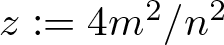 $z:=4m^2/n^2$. Substituting (5.1) to (4.3), one has
 \begin{align}
I(\frac{n}{m},\rho;h)&\sim\int_{-\infty}^{\infty}\frac{rh(r)z^{ir}}{\cosh(\pi r)}
\frac{\Gamma(1/4+ir(1-\alpha))\Gamma(3/4+ir(1-\alpha))}{\Gamma(1+2ir)}\nonumber\\
&\quad \times\sin\left( \pi(1/4-ir(1-\alpha))\right)
\frac{\exp\left(2irl_1(\alpha,r,z)\right)}{(1-(1-\alpha^2)z)^{1/4}}dr.
\end{align}
The Stirling formula (2.1) implies that
 \begin{align*}
&\frac{\Gamma(1/4+ir(1-\alpha))\Gamma(3/4+ir(1-\alpha))}{\Gamma(1+2ir)\cosh(\pi r)}\sin\left( \pi(1/4-ir(1-\alpha))\right)\\
&\quad \sim
\frac{e^{2ir\left(-\alpha\log r+(1-\alpha)\log(1-\alpha)+\alpha-\log2\right)}}{r^{1/2}}.
\end{align*}
Then for  $r=T+Gv$,
 $|v|\ll \log^2 T$,
 $G\ll T^{1-\epsilon}/\sqrt{t}$ and
 $\alpha_0=t/T\ll T^{-\delta}$ arguing in the same way as in Lemma 2.4, we obtain
 \begin{align}
&\frac{\Gamma(1/4+ir(1-\alpha))\Gamma(3/4+ir(1-\alpha))}{\Gamma(1+2ir)\cosh(\pi r)}\sin\left( \pi(1/4-ir(1-\alpha))\right) \nonumber\\
&\quad \sim
e^{2iGv\left(\log(1-\alpha_0)-\log2\right)}T^{-1/2}.
\end{align}
Making in (6.21) the change of variables  $r:=T+Gv$, and then applying (6.22), (5.3) and (2.15), we infer that for
 $G\ll T^{1/2-\epsilon}$
 \begin{align*}
I(\frac{n}{m},\rho;H_0)&\sim \frac{T^{1/2}G V(m,-t,T)}{(1-(1-\alpha_0^2)z)^{1/4}}
e^{2iTh_1(\alpha_0,z)}\\
&\times \int_{-\infty}^{\infty} e^{-v^2}
e^{2iGv\left(\log(1-\alpha_0)-\log(1+\sqrt{1-(1-\alpha_0^2)z})+\log\sqrt{z}\right)}dv,
\end{align*}
where
 \begin{align}
h_1(\alpha_0,z)&=-\log(1+\sqrt{1-(1-\alpha_0^2)z})+\alpha_0\log(\alpha_0 \nonumber\\
&\quad +\sqrt{1-(1-\alpha_0^2)z})+\log\sqrt{z}.
\end{align}
Similarly, but also using (2.10), one has
 \begin{align*}
I(\frac{n}{m},\rho;H_{\infty})&\sim \frac{T^{1/2}G V(m,t,T)}{(1-(1-\alpha_0^2)z)^{1/4}}
e^{2iTh_1(\alpha_0,z)}\\
&\times \int_{-\infty}^{\infty} e^{-v^2}
e^{2iGv\left(\log(1+\alpha_0)-\log(1+\sqrt{1-(1-\alpha_0^2)z})+\log\sqrt{z}\right)}dv.
\end{align*}
Applying (2.16), we conclude that
 \begin{equation*}
I(\frac{n}{m},\rho;H_0)\sim \frac{T^{1/2}G V(m,-t,T)}{(1-(1-\alpha_0^2)z)^{1/4}}
e^{2iTh_1(\alpha_0,z)}
e^{-G^2\log^2\frac{(1-\alpha_0)\sqrt{z}}{1+\sqrt{1-(1-\alpha_0^2)z}}},
\end{equation*}
 \begin{equation*}
I(\frac{n}{m},\rho;H_{\infty})\sim \frac{T^{1/2}G V(m,t,T)}{(1-(1-\alpha_0^2)z)^{1/4}}
e^{2iTh_1(\alpha_0,z)}
e^{-G^2\log^2\frac{(1+\alpha_0)\sqrt{z}}{1+\sqrt{1-(1-\alpha_0^2)z}}}.
\end{equation*}
Therefore, for  $G\ll T^{1/2-\epsilon}$ one has
 \begin{align}
S_2(t)&\ll T^{1/2}G
\sum_{m\ll T^{1+\epsilon}\sqrt{t}}\sum_{2m \lt n\ll T^{1+\delta}\sqrt{t}}\frac{\mathscr{L}_{n^2-4m^2}(1/2+2it)}{n^{1/2-2it}}\frac{V(m,\pm t,T)}{m^{1/2\pm 2it}}\nonumber\\
&\quad \times
W_{\pm} \left(\frac{4m^2}{n^2}\right),
\end{align}
where
 \begin{equation}
W_{\pm}\left(z\right)=
\frac{e^{2iTh_1(\alpha_0,z)}}{(1-(1-\alpha_0^2)z)^{1/4}}
\exp\left(-G^2\log^2\frac{(1\pm\alpha_0)\sqrt{z}}{1+\sqrt{1-(1-\alpha_0^2)z}}\right).
\end{equation}
Let
 \begin{equation*}f_{\pm}(z):=\log\frac{(1\pm\alpha_0)\sqrt{z}}{1+\sqrt{1-(1-\alpha_0^2)z}}.\end{equation*}
The right-hand side of (6.24) is negligibly small unless  $|f_{\pm}(z)|\ll G^{-1+\epsilon}.$ Since
 \begin{equation*}f'_{\pm}(z)=\frac{1}{2z\sqrt{1-(1-\alpha_0^2)z}},\end{equation*}
these functions are increasing on the interval  $0 \lt z \lt 1$. Consequently,
 \begin{equation*}
f_{-}(z) \lt f_{-}(1)=\log\frac{1-\alpha_0}{1+\alpha_0}\ll -\alpha_0,
\end{equation*}
and for  $G\alpha_0\gg G^{\epsilon}$ one has
 $|f_{-}(z)|\gg G^{-1+\epsilon}$. As a result,
 $W_{-}\left(z\right)\ll T^{-A}.$ In the plus case, we consider separately two cases:
 $0 \lt z \lt 1-\alpha_0^2$ and
 $1-\alpha_0^2 \lt z \lt 1$. In the first case, one has
 \begin{equation*}
f_{+}(z) \lt f_{-}(1-\alpha_0^2)=(1-\sqrt{2})\alpha_0+O(\alpha_0^2)\ll -\alpha_0.
\end{equation*}
Therefore, for  $G\alpha_0\gg G^{\epsilon}$,
 $0 \lt z \lt 1-\alpha_0^2$, the following estimate holds:
 $W_{+}\left(z\right)\ll T^{-A}.$ In the case when
 $1-\alpha_0^2 \lt z \lt 1$, one has
 \begin{equation}
g_{+}(z):=f_{+}(z)+\frac{1-z}{4\alpha_0} \lt 0,
\end{equation}
and therefore, for  $G\alpha_0\gg G^{\epsilon}$ the estimate
 $W_{+}\left(\frac{4m^2}{n^2}\right)\ll T^{-A}$ holds unless
 $|n-2m|\ll m\alpha_0G^{-1+\epsilon}$. Since
 $g_{+}(1)=0$ to prove (6.26) it is enough to show that
 $g'_{+}(z) \gt 0$ for
 $1-\alpha_0^2 \lt z \lt 1$. Note that
 \begin{equation*}
g''_{+}(z)=\frac{3(1-\alpha_0^2)z-2}{2z^2(1-(1-\alpha_0^2)z)^{3/2}} \gt 0.
\end{equation*}
Therefore, we are left to verify that  $g'_{+}(1-\alpha_0^2) \gt 0$. This follows from straightforward computations:
 \begin{equation*}
g'_{+}(1-\alpha_0^2)=\frac{1}{2(1-\alpha_0^2)(1-(1-\alpha_0^2)^2)^{1/2}}-\frac{1}{4\alpha_0}=\frac{2-(1-\alpha_0^2)(2-\alpha_0^2)^{1/2}}{4\alpha_0(1-\alpha_0^2)(2-\alpha_0^2)^{1/2}} \gt 0.
\end{equation*}
Finally, we prove the following result.
Proposition 6.3. For  $G\ll T^{1/2-\epsilon},$
 $\alpha_0\gg G^{-1+\epsilon}$ one has
 \begin{align}
S_2(t)&\ll T^{1/2}G
\sum_{m\ll T^{1+\epsilon}\sqrt{t}}\sum_{0 \lt n-2m\ll m\alpha_0G^{-1+\epsilon}}\frac{\mathscr{L}_{n^2-4m^2}(1/2+2it)}{n^{1/2-2it}}\frac{V(m,t,T)}{m^{1/2+2it}}\nonumber\\
&\quad \times
W_{+} \left(\frac{4m^2}{n^2}\right).
\end{align}

6.3. Preparing to use the Voronoi formula
In this section, we transform the expressions on the right-hand sides of (6.18) and (6.27) following the strategy used in [Reference Frolenkov13, Sec. 4] in order to obtain a form suitable for the application of the Voronoi summation formula. First, we substitute (6.25) and (6.23) to (6.27), showing that
 \begin{align}
S_2(t)&\ll T^{1/2}G
\sum_{m\ll T^{1+\epsilon}\sqrt{t}}\sum_{0 \lt n-2m\ll m\alpha_0G^{-1+\epsilon}}\frac{
\mathscr{L}_{n^2-4m^2}(1/2+2it)V(m,t,T)}{m\left(\alpha^2-1+n^2/(4m^2)\right)^{1/4}}\nonumber\\
&\quad \times
W \left(T,\frac{n}{2m}\right),
\end{align}
 \begin{equation}
W(T,y)=\exp\left(-G^2\log^2\frac{y+\sqrt{y^2-1+\alpha_0^2}}{1+\alpha_0}\right)e^{2iTh_1(y)},
\end{equation}
 \begin{equation}
h_1(y)=\alpha_0\log(y\alpha_0+\sqrt{y^2-1+\alpha_0^2})-\log(y+\sqrt{y^2-1+\alpha_0^2}).
\end{equation}
For the sake of simplicity, we will write  $W(y)$ instead of
 $W(T,y)$. Now we make the following change of variables in (6.28):
 \begin{equation*}
n-2m=q,\quad
n+2m=\mathbf{r}.
\end{equation*}
Doing so, we obtain a congruence condition  $\mathbf{r}\equiv q\pmod{4}$, which can be rewritten as in [Reference Frolenkov13, (4.11)]. This results in four sums. All these sums can be treated analogously to each other (see [Reference Frolenkov13, Remark 4.1, 6.1]). Therefore, as in [Reference Frolenkov13, Sec. 4], it is sufficient to study only one sum. For example, let us consider
 \begin{align}
S_2(t)&\ll T^{1/2}G
\sum_{\mathbf{r}\ll T^{1+\epsilon}\sqrt{t}}\sum_{0 \lt q\ll \mathbf{r}\alpha_0G^{-1+\epsilon}}\frac{
\mathscr{L}_{q\mathbf{r}}(1/2+2it)V\left(\frac{\mathbf{r}-q}{4},t,T\right)}{(\mathbf{r}-q)^{1/2}\left(\alpha^2(\mathbf{r}-q)^{2}+4rq\right)^{1/4}}\nonumber\\
&\quad \times
W \left(\frac{\mathbf{r}+q}{\mathbf{r}-q}\right).
\end{align}
Note that the sum over  $q$ in (6.31) is much shorter than the one over
 $\mathbf{r}$. Accordingly, for
 $\alpha_0G\gg G^{\delta}$ using the Taylor series expansion one has
 \begin{align*}
S_2(t)&\ll \frac{T^{1/2}G}{\sqrt{\alpha_0}}
\sum_{\mathbf{r}\ll T^{1+\epsilon}\sqrt{t}}\sum_{0 \lt q\ll \mathbf{r}\alpha_0G^{-1+\epsilon}}\frac{1}{\mathbf{r}}\mathscr{L}_{q\mathbf{r}}(1/2+2it)V\left(\frac{\mathbf{r}-q}{4},t,T\right)\nonumber\\
&\quad \times W \left(\frac{\mathbf{r}+q}{\mathbf{r}-q}\right).
\end{align*}
Next, we perform one more change of variables  $\mathbf{r}:=l/q$, obtaining
 \begin{align*}
S_2(t)&\ll \frac{T^{1/2}G}{\sqrt{\alpha_0}}
\sum_{q\ll t^{3/2}G^{-1+\epsilon}}\sum_{\substack{q^2G^{1-\epsilon}/\alpha_0\ll l\ll qT^{1+\epsilon}\sqrt{t}\\l\equiv0\pmod{q}}}
\frac{q}{l}\mathscr{L}_{l}(1/2+2it)V\left(\frac{l-q^2}{4q},t,T\right)\nonumber\\
&\quad \times W \left(\frac{l+q^2}{l-q^2}\right).
\end{align*}
Our next step is to estimate trivially the contribution of  $q\ll Q_0$. Performing a dyadic partition of the sum over
 $l$, applying the Cauchy-Schwartz inequality and (3.19), we show that for
 $q^2G^{1-\epsilon}/\alpha_0\ll L\ll qT^{1+\epsilon}\sqrt{t}$
 \begin{equation}
\sum_{l\equiv0\pmod{q}}
\frac{U(l/L)}{l}\mathscr{L}_{l}(1/2+2it)V\left(\frac{l-q^2}{4q},t,T\right)
W\left(\frac{l+q^2}{l-q^2}\right)\ll\frac{(L+\sqrt{Lt})^{1/2}L^{\epsilon}}{\sqrt{qL}}.
\end{equation}
Therefore, the contribution of small  $q$ is bounded by
 \begin{equation}
\frac{T^{1/2+\epsilon}G}{\sqrt{\alpha_0}}
\sum_{q\ll Q_0}\left(\left(\frac{\alpha_0t}{G}\right)^{1/4}+\sqrt{q}\right)\ll
T^{1+\epsilon}G\left(\left(\frac{\alpha_0}{tG}\right)^{1/4}Q_0+\frac{Q_0^{3/2}}{\sqrt{t}}\right)\ll T^{1-\epsilon}G,
\end{equation}
provided that
 \begin{equation}
Q_0\ll t^{1/3}T^{-\epsilon},\quad
Q_0\ll \left(\frac{tG}{\alpha_0}\right)^{1/4}T^{-\epsilon}.
\end{equation}
For the rest of the computations, we need
 \begin{equation}
Q_0=T^{\epsilon}\alpha_0\sqrt{t},
\end{equation}
therefore, the conditions (6.34) are satisfied if
 \begin{equation*}
G\gg tT^{\epsilon}\alpha_0^5, \quad
t\ll T^{6/7-\epsilon}.
\end{equation*}
These conditions can be simplified to  $t\ll T^{6/7-\epsilon}$ since in Proposition 6.1
 $G\gg T^{1+\epsilon}/t$, and for
 $t\ll T^{6/7-\epsilon}$ one has
 $T^{1+\epsilon}/t\gg tT^{\epsilon}\alpha_0^5 $. Therefore, from now, we may assume that
 \begin{equation}
G\alpha_0\gg T^{\epsilon}, \quad t\ll T^{6/7-\epsilon}.
\end{equation}
Under these conditions, one has
 \begin{align}
S_2(t)&\ll \frac{T^{1/2}G}{\sqrt{\alpha_0}}
\sum_{Q_\ll q\ll t^{3/2}G^{-1+\epsilon}}\sum_{\substack{q^2G^{1-\epsilon}/\alpha_0\ll l\ll qT^{1+\epsilon}\sqrt{t}\\l\equiv0\pmod{q}}}
\frac{q}{l}\mathscr{L}_{l}(1/2+2it)V \nonumber\\
&\quad \times \left(\frac{l-q^2}{4q},t,T\right)
W\left(\frac{l+q^2}{l-q^2}\right).
\end{align}
Remark 6.5. The restriction  $t\ll T^{6/7-\epsilon}$ is not sharp as it is a consequence of the non-optimal estimate (6.32). If one can prove the following generalization of (3.19)
 \begin{equation*}
\sum_{\substack{N \lt n \lt 2N\\ n\equiv0\pmod{q}}}|\mathscr{L}_n(1/2+it)|^2\ll\frac{1}{q}\left(N+\sqrt{N(1+|t|)}\right)\left(N(1+|t|)\right)^{\epsilon},
\end{equation*}
then instead of (6.33), we obtain
 \begin{equation*}
\frac{T^{1/2+\epsilon}G}{\sqrt{\alpha_0}}
\sum_{q\ll Q_0}\left(\left(\frac{\alpha_0t}{q^2G}\right)^{1/4}+1\right)\ll
T^{1+\epsilon}G\left(\left(\frac{\alpha_0Q_0^2}{tG}\right)^{1/4}+\frac{Q_0}{\sqrt{t}}\right)\ll T^{1-\epsilon}G.
\end{equation*}
This inequality holds for  $Q_0=T^{\epsilon}\alpha_0\sqrt{t}$ if
 $t\ll T^{1-\epsilon_0}.$
Expressing the congruence condition  $l\equiv 0\pmod{q}$ in terms of additive harmonics
 \begin{equation*}
\delta_q(l)=\frac{1}{q}\sum_{c|q}\sum_{\substack{a\pmod{c}\\ (a,c)=1}}e\left(\frac{al}{c}\right),
\end{equation*}
making the sum over  $c$ an outer one and performing a dyadic partition, we obtain
 \begin{align}
&S_2(t)\ll \frac{T^{1/2}G}{\sqrt{\alpha_0}}
\sum_{C\ll t^{3/2}G^{-1+\epsilon}}\sum_{Q_0/C\ll Q\ll t^{3/2}G^{-1+\epsilon}/C} \nonumber\\
&\sum_{Q^2C^2G^{1-\epsilon}/\alpha_0\ll L\ll QCT^{1+\epsilon}\sqrt{t}}S_2(C,Q,L),
\end{align}
where
 \begin{equation}
S_2(C,Q,L)=
\sum_{c}U\left(\frac{c}{C}\right)\sum_{q}U\left(\frac{q}{Q}\right)
\sum_{\substack{a\pmod{c}\\ (a,c)=1}}\sum_{l}
\frac{\mathscr{L}_{l}(1/2+2it)}{l^{1/2-it}}\phi_2(l)e\left(\frac{al}{c}\right),
\end{equation}
 \begin{equation}
\phi_2(l)=\frac{U(l/L)}{l^{1/2+it}}V\left(\frac{l-(qc)^2}{4qc},t,T\right)
W\left(\frac{l+(qc)^2}{l-(qc)^2}\right)
\end{equation}
and  $U(x)\neq0$ only if
 $1/2 \lt x \lt 2.$
Now we are going to transform  $S_1(t)$ similarly to
 $S_2(t)$. It follows from Proposition 6.1 that
 \begin{align*}
S_1(t)&\ll T^{1/2}G
\sum_{h=H_0,H_{\infty}}\sum_{m\ll T^{1+\epsilon}\sqrt{t}}\\
&\quad \times\sum_{0 \lt 2m-n\ll m\alpha_0G^{-1+\epsilon}}
\frac{\mathscr{L}_{n^2-4m^2}(1/2+2it)V(m,\varepsilon (h)t,T)}{m\left(\alpha^2-1+n^2/(4m^2)\right)^{1/4}}\\
&\quad \times
(4m^2-n^2)^{i(1-\varepsilon (h))t}
W\left(\varepsilon (h)T,\frac{n}{2m}\right),
\end{align*}
where the function  $W$ is defined by (6.29),
 $\varepsilon (h)=-1$ if
 $h=H_0$ and
 $\varepsilon (h)=1$ for
 $h=H_{\infty}.$ Making the change of variables
 \begin{equation*}
2m-n=q,\quad
n+2m=\mathbf{r},
\end{equation*}
and arguing as in the case of  $S_2(t)$, we conclude that
 \begin{align*}
S_1(t)&\ll \frac{T^{1/2}G}{\sqrt{\alpha_0}}
\sum_{h=H_0,H_{\infty}}
\sum_{C\ll t^{3/2}G^{-1+\epsilon}}\sum_{Q_0/C\ll Q\ll t^{3/2}G^{-1+\epsilon}/C}\\
&\sum_{Q^2C^2G^{1-\epsilon}/\alpha_0\ll L\ll QCT^{1+\epsilon}\sqrt{t}}S_1(h,C,Q,L),
\end{align*}
where
 \begin{align}
S_1(h,C,Q,L)&=
\sum_{c}U\left(\frac{c}{C}\right)\sum_{q}U\left(\frac{q}{Q}\right)
\sum_{\substack{a\pmod{c}\\ (a,c)=1}}\sum_{l}
\frac{\mathscr{L}_{-l}(1/2+2it)}{l^{1/2-it}}\phi_1(l)e \nonumber\\
&\quad \times \left(\frac{-al}{c}\right),
\end{align}
 \begin{equation}
\phi_1(l)=\frac{U(l/L)}{l^{1/2+i\varepsilon (h)t}}V\left(\frac{l+(qc)^2}{4qc},\varepsilon (h)t,T\right)
W\left(\varepsilon (h)T,\frac{l-(qc)^2}{l+(qc)^2}\right).
\end{equation}
7. Integral transforms
As explained in [Reference Frolenkov13, Sec. 6], it is sufficient to consider only the case  $c\equiv0\pmod{4}$. Accordingly, we apply the Voronoi formula (3.13) to the sum over
 $l$ in (6.39).
First of all, it is required to estimate and evaluate the integral transforms of  $\phi_2(x)$ arising in (3.13). To this end, we assume that (6.35) holds and that the conditions (6.36) are satisfied. Under these restrictions, one has
 \begin{equation}
L\gg\frac{(QC)^2}{\alpha_0^2}T^{\epsilon_1},\quad
L\ll\frac{(QC)^2}{\alpha_0}T^{1-\epsilon_1}.
\end{equation}
These conditions are satisfied for  $L$ in (6.37) since
 \begin{equation*}
\frac{(QC)^2}{\alpha_0^2}T^{\epsilon_1}\ll Q^2C^2G^{1-\epsilon}/\alpha_0,\quad
QCT^{1+\epsilon}\sqrt{t}\ll\frac{(QC)^2}{\alpha_0}T^{1-\epsilon_1}
\end{equation*}
if  $\alpha_0G\gg T^{\epsilon_0}$,
 $QC\gg Q_0\gg\alpha_0T^{\epsilon_0}\sqrt{t}.$
Lemma 7.1. Suppose that (6.36) and (7.1) hold. Then
 \begin{equation*}
\phi_2^{+}(1/2\pm it)\ll T^{-A}.
\end{equation*}
Proof. Using (6.40), (6.29) one has
 \begin{equation}
\phi_2^{+}(1/2\pm it)\sim\int_0^{\infty}U_2(y)e^{2iTF_2(y,\pm)}\frac{dy}{y},
\end{equation}
where
 \begin{equation*}
U_2(y)=U(y)V\left(\frac{yL-(qc)^2}{4qc},t,T\right)
\exp\left(-G^2\log^2\frac{z+\sqrt{z^2-1+\alpha_0^2}}{1+\alpha_0}\right),
\end{equation*}
 \begin{equation}
F_2(y,\pm)=h_1(z)+(\pm1-1)\alpha_0\log\sqrt{y},\quad z=\frac{yL+(qc)^2}{yL-(qc)^2}.
\end{equation}
To estimate (7.2), one may apply Lemma 2.6. To this end, it is required to define the parameters  $P,R,V,X,Y$ in (2.18). First, note that
 \begin{equation*}
z=1+\frac{2(qc)^2}{yL-(qc)^2}=1+O(\frac{\alpha_0G^{\epsilon}}{G}),\quad\hbox{so that}\quad
z^2-1\ll\frac{\alpha_0G^{\epsilon}}{G}\ll\alpha_0^2,
\end{equation*}
and
 \begin{equation*}
\sqrt{z^2-1+\alpha_0^2}\sim\alpha_0,\quad
\frac{dz}{dy}=\frac{-2L(qc)^2}{(yL-(qc)^2)^2}\sim\frac{(qc)^2}{L}.
\end{equation*}
Using (6.30) one has
 \begin{equation}
\frac{d}{dz}h_1(z)=\frac{\alpha_0^2-1}{\alpha_0z+\sqrt{z^2-1+\alpha_0^2}}.
\end{equation}
Finally, since  $\frac{(qc)^2}{L\alpha_0}\ll\alpha_0$, we conclude that
 \begin{equation*}
\frac{d}{dy}F_2(y,\pm)\gg \frac{(qc)^2}{L\alpha_0}+(\pm1-1)\alpha_0.
\end{equation*}
Therefore, we choose the parameter  $R$ in (2.18) as follows:
 \begin{equation}
R(+)=\frac{T(qc)^2}{L\alpha_0},\quad
R(-)=T\alpha_0.
\end{equation}
Now, let us consider the second partial derivative:
 \begin{align*}
\frac{d^2}{dy^2}F_2(y,\pm)&\sim\frac{d^2}{dz^2}h_1(z)\frac{(qc)^4}{L^2}+
\frac{d}{dz}h_1(z)\frac{(qc)^2}{L}+(\pm1-1)\alpha_0\sim
\frac{(qc)^4}{L^2\alpha_0^3}\\
&\quad +
\frac{(qc)^2}{L\alpha_0}+(\pm1-1)\alpha_0\sim
\frac{(qc)^2}{L\alpha_0}+(\pm1-1)\alpha_0.
\end{align*}
Arguing in the same way to estimate 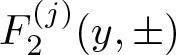 $F^{(j)}_2(y,\pm)$, we infer
 \begin{equation*}
Y(\pm)=R(\pm),\quad
P(\pm)=1.
\end{equation*}
Estimating (7.3) trivially one has  $X=T^{\epsilon}$. Finally,
 \begin{align}
&\frac{d}{dy}\exp\left(-G^2\log^2\frac{z+\sqrt{z^2-1+\alpha_0^2}}{1+\alpha_0}\right)\ll
G^2\log\left(\frac{z+\sqrt{z^2-1+\alpha_0^2}}{1+\alpha_0}\right) \nonumber\\
&\quad \times \frac{1}{\sqrt{z^2-1+\alpha_0^2}}\frac{dz}{dy} \ll
G^{1+\epsilon}\frac{(qc)^2}{L\alpha_0}\ll T^{\epsilon}.
\end{align}
since  $L\gg Q^2C^2G^{1-\epsilon}/\alpha_0$. Hence,
 $V=T^{-\epsilon}$ and applying Lemma 2.6 one has
 \begin{equation*}
\phi_2^{+}(1/2\pm it)\ll
\frac{T^{\epsilon}}{\left(R(\pm)T^{-\epsilon}\right)^{A}}\ll T^{-A}
\end{equation*}
provided that  $R(\pm)\gg T^{\epsilon_0}.$ These inequalities follow from (7.5) together with (6.36) and (7.1).
Now we are going to investigate the integral transforms of  $\phi_2(x)$ arising on the right-hand side of (3.13).
Lemma 7.2. Suppose that (6.36) and (7.1) are satisfied. Then
 \begin{equation}
\widehat{\phi_2}^{+}\left(\frac{4\pi^2n}{c^2}\right)\ll \frac{1}{(nT)^{A}}\quad\hbox{for}\quad
n\gg\frac{C^2t^2}{L}T^{\epsilon},
\end{equation}
 \begin{equation*}
\widehat{\phi_2}^{+}\left(\frac{4\pi^2n}{c^2}\right)\ll \frac{1}{T^{A}}\quad\hbox{for}\quad
0 \lt n\ll\frac{C^2t^2}{L}T^{\epsilon}.
\end{equation*}
Proof. Let  $y=\frac{2\pi\sqrt{n}}{c}$. It follows from (3.15), (3.9) and (6.40) that
 \begin{align}
\widehat{\phi_2}^{+}\left(y^2\right)&=
\frac{y}{\sqrt{2}}\int_{0}^{\infty}\left(F_{2it}(2y\sqrt{x})-G_{2it}(2y\sqrt{x}\right)
\frac{U(x/L)}{x^{1+it}}V\left(\frac{x-(qc)^2}{4qc},t,T\right)
W \nonumber\\
&\quad \times \left(\frac{x+(qc)^2}{x-(qc)^2}\right)dx.
\end{align}
Due to the properties of functions  $F_{2it}(z)$ and
 $G_{2it}(z)$, the two integrals in the formula above can be treated in the same way. To prove (7.7), we first perform the change of variables
 $x=\frac{4t^2}{y^2}z^2$, then use the relation (3.1), and finally, integrate by parts twice, obtaining
 \begin{align*}
\widehat{\phi_2}^{+}\left(y^2\right)&\ll
y\int_{0}^{\infty}\frac{d^2}{dz^2}\Biggl(U\left(\frac{4t^2z^2}{y^2L}\right)
\frac{z^{1/2-2it}}{1+16t^2(1+z^2)}
V\left(\frac{4t^2z^2/y^2-(qc)^2}{4qc},t,T\right)\\
&\quad \times
W\left(\frac{z^2+(yqc/2t)^2}{z^2-(yqc/2t)^2}\right)\Biggr)\sqrt{z}F_{2it}(2tz)dz.
\end{align*}
Since  $n\gg\frac{C^2t^2}{L}T^{\epsilon}$, we conclude that on the interval of integration
 $z\sim\frac{y\sqrt{L}}{t}\gg (nT)^{\epsilon}$. Using (6.29), (7.4) and (7.6) one has
 \begin{align*}
\frac{d}{dz}W\left(\frac{z^2+(yqc/2t)^2}{z^2-(yqc/2t)^2}\right)&\ll W'\left(\frac{z^2+(yqc/2t)^2}{z^2-(yqc/2t)^2}\right)\frac{(yqc/t)^2}{z^3}
\\
&\lll
\left(\frac{T}{\alpha_0}+G^{1+\epsilon}\frac{(qc)^2}{L\alpha_0}\right)\frac{q^2c^2}{Lz}
\ll\frac{Tq^2c^2}{Lz\alpha_0}\ll\frac{T^{1+\epsilon}}{zG}\ll\frac{t}{z}.
\end{align*}
Accordingly, after integration by parts, we obtain an integral similar to the original one but multiplied by
 \begin{equation*}\frac{t^2}{1+t^2(1+z^2)}\ll\frac{1}{z^2}\ll\frac{1}{(nT)^{\epsilon}}.\end{equation*}
Repeated application of such integration by parts leads to (7.7).
In the remaining case:  $0 \lt n\ll\frac{C^2t^2}{L}T^{\epsilon}$, we first make the change of variables
 $x=c^2z$ in (7.8):
 \begin{align*}
\widehat{\phi_2}^{+}\left(y^2\right)&\ll
y\int_{0}^{\infty}\left(F_{2it}(4\pi\sqrt{nz})-G_{2it}(4\pi\sqrt{nz}\right)
\frac{U(c^2z/L)}{z^{1+it}}V\left(c\frac{z-q^2}{4q},t,T\right) \\
&\quad \times W\left(\frac{z+q^2}{z-q^2}\right)dz.
\end{align*}
Now we are going to substitute the asymptotic formula (3.2). As usual, it is enough to consider only the contribution of the main term
 \begin{equation}
\widehat{\phi_2}^{+}\left(y^2\right)\ll
\frac{\sqrt{n}}{c\sqrt{t}}\sum_{\pm}\int_{0}^{\infty}U_3(z)e^{2iTF_3(z,\pm)}dz,
\end{equation}
where
 \begin{align*}
U_3(z)&=
\frac{U(c^2z/L)}{z\left(1+\frac{4\pi^2nz}{t^2}\right)^{1/4}}V\left(c\frac{z-q^2}{4q},t,T\right)\\
&\quad \times \exp\left(-G^2\log^2\frac{x(z)+\sqrt{x^2(z)-1+\alpha_0^2}}{1+\alpha_0}\right),\\
F_3(z,\pm)&=h_1(x(z))\pm\alpha_0\xi\left(\frac{2\pi\sqrt{nz}}{t}\right)-\alpha_0\log\sqrt{z},\quad x(z)=\frac{z+q^2}{z-q^2}.
\end{align*}
Now we argue in the same way as in Lemma 7.1. To estimate (7.9), one can apply Lemma 2.6. To this end, we need to define parameters  $P,R,V,X,Y$ in (2.18). Using (3.3) and (7.4), we obtain
 \begin{equation}
\frac{d}{dz}F_3(z,\pm)=\frac{1-\alpha_0^2}{\alpha_0x(z)+\sqrt{x(z)^2-1+\alpha_0^2}}\frac{2q^2}{(z-q^2)^2}
\pm\frac{\alpha_0}{2z}\sqrt{1+\frac{4\pi^2nz}{t^2}}-\frac{\alpha_0}{2z}.
\end{equation}
Since  $z\sim L/c^2$, it follows from (7.1) that
 $\frac{q^2}{\alpha_0z^2}\ll\frac{\alpha_0}{z}T^{-\epsilon}$. Therefore,
 \begin{equation}
\left|\frac{d}{dz}F_3(z,-)\right|\gg\frac{\alpha_0}{2z},\quad
\frac{d}{dz}F_3(z,+)\gg\frac{q^2}{\alpha_0z^2}+\frac{\alpha_0n}{t^2\sqrt{1+\frac{4\pi^2nz}{t^2}}}\gg
\frac{q^2}{\alpha_0z^2}+\frac{\alpha_0n}{t^2T^{\epsilon}}.
\end{equation}
Note that the derivative is smaller in the plus case, and therefore, it is sufficient to study further only this case. Accordingly, we choose
 \begin{equation}
R:=T\frac{q^2c^4}{\alpha_0L^2}+\frac{\alpha_0n}{t^2}T^{1-\epsilon}.
\end{equation}
Evaluating the second derivative of  $F_3(z,+)$, one has
 \begin{equation*}
\frac{d^2}{dz^2}F_3(z,+)\ll\frac{1}{\alpha_0^3}\frac{q^4}{z^4}+\frac{q^2}{\alpha_0z^3}+\frac{\alpha_0n^2}{t^4}\ll
\frac{q^2}{\alpha_0z^3}+\frac{\alpha_0n^2}{t^4}\ll
\frac{q^2}{\alpha_0z^3}+\frac{\alpha_0n}{t^2}\frac{T^{\epsilon}}{z}.
\end{equation*}
Therefore,
 \begin{equation}
P=\frac{L}{c^2T^{\epsilon}},\quad Y=PR.
\end{equation}
Calculating the derivatives of  $U_3(z)$, using the estimate
 \begin{align}
\frac{d}{dz}\exp\left(-G^2\log^2\frac{x(z)+\sqrt{x^2(z)-1+\alpha_0^2}}{1+\alpha_0}\right)&\ll\frac{G^{1+\epsilon}}{\alpha_0}\frac{dx}{dz}\ll
\frac{G^{1+\epsilon}q^2}{\alpha_0z^2} \nonumber\\
&\ll\frac{G^{1+\epsilon}(qc)^2}{\alpha_0Lz}\ll\frac{T^{\epsilon}}{z},
\end{align}
which holds since  $L\gg(QC)^2G^{1-\epsilon}/\alpha_0$, we finally conclude that
 $V=\frac{L}{c^2T^{\epsilon}}.$ Applying Lemma 2.6 to estimate (7.9) we infer
 \begin{equation*}
\widehat{\phi_2}^{+}\left(y^2\right)\ll
\frac{\sqrt{n}}{c\sqrt{t}}\left(T\frac{q^2c^2}{\alpha_0LT^{\epsilon}}+\frac{\alpha_0Ln}{c^2t^2}T^{1-\epsilon}\right)^{-A}.
\end{equation*}
Suppose that  $n\gg\frac{(qc^2t)^2}{(\alpha_0L)^2}$. Under this assumption, using (7.1) one has
 \begin{equation*}
\frac{\alpha_0Ln}{c^2t^2}T^{1-\epsilon}\gg T^{1-\epsilon}\frac{(qc)^2}{\alpha_0L}\gg T^{\epsilon},
\end{equation*}
and therefore,
 \begin{equation*}
\widehat{\phi_2}^{+}\left(y^2\right)\ll
\frac{\sqrt{n}}{c\sqrt{t}}\left(\frac{\alpha_0Ln}{c^2t^2}T^{1-\epsilon}\right)^{-A}\ll T^{-A}.
\end{equation*}
Suppose that  $0 \lt n\ll\frac{(qc^2t)^2}{(\alpha_0L)^2}$. Under this assumption, according to (7.1) one has the estimate
 \begin{equation*}
\widehat{\phi_2}^{+}\left(y^2\right)\ll
\frac{\sqrt{n}}{c\sqrt{t}}\left(T\frac{q^2c^2}{\alpha_0LT^{\epsilon}}\right)^{-A}\ll T^{-A}.
\end{equation*}
This completes the proof.
Lemma 7.3. Suppose that (6.36) and (7.1) hold. Then
 \begin{align}
&\widehat{\phi_2}^{+}\left(-\frac{4\pi^2n}{c^2}\right)\ll \frac{1}{(nT)^{A}},\quad\hbox{for}\quad
0 \lt n\ll\frac{Q^2C^4t^2}{\alpha_0^2L^2},\quad
n\gg\frac{Q^2C^4t^2}{\alpha_0^2L^2}, \nonumber\\
&\widehat{\phi_2}^{+}\left(-\frac{4\pi^2n}{c^2}\right)\sim
\frac{U_0(z_0)e^{2iTF_0(z_0)}}{c^{1+2it}\sqrt{z_0}},
\quad\hbox{for}\quad n\sim\frac{Q^2C^4t^2}{\alpha_0^2L^2},
\end{align}
where
 \begin{align*}
U_0(z)&=U\left(\frac{c^2z}{L}\right)V\left(c\frac{z-q^2}{4q},t,T\right)
\exp\left(-G^2\log^2\frac{x(z)+\sqrt{x^2(z)-1+\alpha_0^2}}{1+\alpha_0}\right),\\
F_0(z)&=h_1\left(\frac{z+q^2}{z-q^2}\right)-\alpha_0\eta\left(\frac{2\pi\sqrt{nz}}{t}\right)-\alpha_0\log\sqrt{z},
\end{align*}
 $\eta(v)$ is defined in (3.6) and
 $z_0$ is a solution of
 \begin{equation}
\frac{1-\alpha_0^2}{\alpha_0x(z)+\sqrt{x(z)^2-1+\alpha_0^2}}\frac{2q^2}{(z-q^2)^2}=\frac{2\pi^2n\alpha_0/t^2}{1+\sqrt{1-\frac{4\pi^2nz}{t^2}}},
\quad x(z)=\frac{z+q^2}{z-q^2}.
\end{equation}
Moreover, one has  $z_0\approx\frac{qt}{\alpha_0\sqrt{n}}$ and
 $z_0$ is independent of
 $c$.
Proof. Let  $y=2\pi\sqrt{n}/c.$ It follows from (3.15), (3.11) and (6.40) that
 \begin{align}
\widehat{\phi_2}^{+}\left(-y^2\right)=
\frac{2y}{\pi}\sin(\pi/4+\pi it) \nonumber\\ \times \int_{0}^{\infty}K_{2it}(2y\sqrt{x})
\frac{U(x/L)}{x^{1+it}}V\left(\frac{x-(qc)^2}{4qc},t,T\right)
W\left(\frac{x+(qc)^2}{x-(qc)^2}\right)dx.
\end{align}
For  $n\gg\frac{C^2t^2}{L}T^{\epsilon}$ the integral (7.17) is bounded by
 $(nT)^{-A}$. The proof of this fact is similar to the one of (7.7), since the differential equations (3.4) and (3.1) differ slightly from each other in the range
 $z\gg T^{\epsilon}.$ From now on, we may assume that
 $0 \lt n\ll\frac{C^2t^2}{L}T^{\epsilon}$. Making the change of variables
 $x=c^2z$ in (7.17), one has
 \begin{align}
\widehat{\phi_2}^{+}\left(-y^2\right)&=
\frac{2y}{\pi c^{2it}}\sin(\pi/4+\pi it)\int_{0}^{\infty}K_{2it}(4\pi\sqrt{nz})
\frac{U(c^2z/L)}{z^{1+it}}V\left(c\frac{z-q^2}{4q},t,T\right) \nonumber\\
&\quad \times W\left(\frac{z+q^2}{z-q^2}\right)dz.
\end{align}
The behaviour of  $K_{2it}(x)$ is different for small
 $x$, large
 $x$ and
 $x\sim1$. Accordingly, we use the following smooth partition of unity:
 \begin{equation}
\chi_0\left(\frac{2\pi\sqrt{nz}}{t}\right)+\chi_1\left(\frac{2\pi\sqrt{nz}}{t}\right)+\chi_{\infty}\left(\frac{2\pi\sqrt{nz}}{t}\right)=1,
\end{equation}
where
 \begin{equation*}
\chi_0(x)=1\,\hbox{for }\,0 \lt x \lt 1-2t^{\epsilon-2/3},\,
\chi_0(x)=0\,\hbox{for }\,x \gt 1-t^{\epsilon-2/3},
\end{equation*}
 \begin{equation*}
\chi_{\infty}(x)=1\,\hbox{for }\,x \gt 1+2t^{\epsilon-2/3},\,
\chi_{\infty}(x)=0\,\hbox{for }\,x \lt 1+t^{\epsilon-2/3},
\end{equation*}
 \begin{equation*}
\chi_{1}(x)=1\,\hbox{for }\,|x-1| \lt t^{\epsilon-2/3},\,
\chi_{1}(x)=0\,\hbox{for }\,|x-1| \gt 2t^{\epsilon-2/3}.
\end{equation*}
The part of the integral (7.18) with  $\chi_{\infty}\left(\frac{2\pi\sqrt{nz}}{t}\right)$ is negligible in view of (3.7). Let us consider the part with
 $\chi_{1}$ function. One has
 \begin{equation*}
\widehat{\phi_2}^{+}\left(-y^2\right)\ll
\int_{0}^{\infty}U_4(z)e^{2iTF_4(z)}dz,
\end{equation*}
where
 \begin{align*}
U_4(z)&=e^{\pi t}K_{2it}(4\pi\sqrt{nz})\chi_{1}\left(\frac{2\pi\sqrt{nz}}{t}\right)
\frac{U(c^2z/L)}{z}V\left(c\frac{z-q^2}{4q},t,T\right)\\
&\quad \times
\exp\left(-G^2\log^2\frac{x(z)+\sqrt{x^2(z)-1+\alpha_0^2}}{1+\alpha_0}\right),\\
F_4(z)&=h_1(x(z))-\alpha_0\log\sqrt{z}.
\end{align*}
Once again, we intend to apply Lemma 2.6. With this goal, we compute derivatives of  $F_4(z)$ (see (7.10) for similar computations) and choose parameters in (2.18) as follows:
 \begin{equation*}
R=\frac{tc^2}{L},\,
P=\frac{c^2}{L},\, Y=t.
\end{equation*}
According to (3.8) one has
 \begin{equation*}
e^{\pi t}\frac{\partial^j}{\partial z^j}K_{2it}(4\pi\sqrt{nz})\ll\frac{(t^{2/3}/z)^j}{t^{1/3}}.
\end{equation*}
Therefore, evaluating the derivatives of  $U_4(z)$, we set
 \begin{equation*}V=\frac{L}{c^2t^{2/3}}\end{equation*}
in Lemma 2.6. Finally, we show that
 \begin{equation*}
\widehat{\phi_2}^{+}\left(-y^2\right)\ll
\frac{T^{\epsilon}}{t^{1/3}}\left(\frac{1}{(RP)^A}+\frac{1}{(RV)^A}\right)\ll t^{-A/3}.
\end{equation*}
It is left to consider the part of the integral (7.18) with  $\chi_{0}\left(\frac{2\pi\sqrt{nz}}{t}\right)$. As usual, it is enough to consider only the contribution of the main term in the asymptotic expansion (3.5):
 \begin{equation}
\widehat{\phi_2}^{+}\left(-y^2\right)\sim\frac{\sqrt{n}}{c^{1+2it}\sqrt{t}}
\int_{0}^{\infty}U_5(z)e^{2iTF_5(z,\pm)}dz,
\end{equation}
where
 \begin{align*}
U_5(z)&=\chi_{0}\left(\frac{2\pi\sqrt{nz}}{t}\right)
\frac{U(c^2z/L)}{z\left(1-\frac{4\pi^2nz}{t^2}\right)^{1/4}}V\left(c\frac{z-q^2}{4q},t,T\right)\\
&\quad \times \exp\left(-G^2\log^2\frac{x+\sqrt{x^2-1+\alpha_0^2}}{1+\alpha_0}\right),\\
F_5(z,\pm)&=h_1(x(z))\pm\alpha_0\eta\left(\frac{2\pi\sqrt{nz}}{t}\right)-\alpha_0\log\sqrt{z},\quad x(z)=\frac{z+q^2}{z-q^2}.
\end{align*}
Note that  $U_5(z)\neq0$ only if
 \begin{equation*}n \lt \frac{c^2t^2}{2\pi^2L}(1-t^{-2/3+\epsilon})^2.\end{equation*}
Using (3.6) and (7.4), we prove that
 \begin{equation*}
\frac{d}{dz}F_5(z,\pm)=\frac{1-\alpha_0^2}{\alpha_0x(z)+\sqrt{x(z)^2-1+\alpha_0^2}}\frac{2q^2}{(z-q^2)^2}
\mp\frac{\alpha_0}{2z}\sqrt{1-\frac{4\pi^2nz}{t^2}}-\frac{\alpha_0}{2z}.
\end{equation*}
One has
 \begin{equation*}\frac{d}{dz}F_5(z,+)\gg\frac{\alpha_0}{2z}.\end{equation*}
Consequently, this case is easier than the second one:
 \begin{equation}
\frac{d}{dz}F_5(z,-)=\frac{1-\alpha_0^2}{\alpha_0x(z)+\sqrt{x(z)^2-1+\alpha_0^2}}\frac{2q^2}{(z-q^2)^2}
-\frac{2\pi^2n\alpha_0/t^2}{1+\sqrt{1-\frac{4\pi^2nz}{t^2}}}.
\end{equation}
The saddle point  $z_0$ is a solution of the equation (7.16).
It seems difficult to write down an explicit formula for  $z_0$. Nevertheless, we know that the left-hand side of (7.16) is approximately
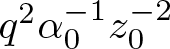 $q^2\alpha_0^{-1}z_0^{-2}$, and therefore,
 $z_0\approx\frac{qt}{\alpha_0\sqrt{n}}$. This point belongs to the interval of integration only if
 \begin{equation}
n\sim\frac{q^2c^4t^2}{\alpha_0^2L^2}=:N.
\end{equation}
Hence, it is required to consider three cases:  $n\ll N,$
 $n\sim N$, and
 $n\gg N$.
First, suppose that  $n\ll N.$ In order to apply Lemma 2.6, it is require to choose parameters in (2.18). According to (7.1) one has
 \begin{equation*}\frac{q^2c^4t^2}{\alpha_0^2L^2}\ll\frac{c^2t^2}{2L}T^{-\epsilon}.\end{equation*}
As a result, for  $n \lt cN$, the following estimate holds:
 \begin{equation*}\frac{4\pi^2nz}{t^2}\ll T^{-\epsilon}.\end{equation*}
Therefore,  $\chi_{0}\left(\frac{2\pi\sqrt{nz}}{t}\right)=1$. Furthermore, it is possible to expand
 $\left(1-\frac{4\pi^2nz}{t^2}\right)^{1/4}$ in the Taylor series so that
 $U_5(z)$ simplifies to
 \begin{equation}
U_5(z)=
\frac{U(c^2z/L)}{z}V\left(c\frac{z-q^2}{4q},t,T\right)
\exp\left(-G^2\log^2\frac{x+\sqrt{x^2-1+\alpha_0^2}}{1+\alpha_0}\right).
\end{equation}
Consequently, (as in the case of the  $U_3(z)$ function in Lemma 7.2) we choose
 $V=L/(c^2T^{\epsilon})$ in (2.18). Moreover, since
 $\frac{4\pi^2nz}{t^2}\ll T^{-\epsilon}$ it follows from (7.10), (7.21) that the parameters for
 $F_5$ can be identified in the same manner as for
 $F_3$ (see (7.12) and (7.13)):
 \begin{equation*}
R=T\frac{q^2c^4}{\alpha_0L^2}+\frac{\alpha_0n}{t^2}T\gg T\frac{q^2c^4}{\alpha_0L^2}, \quad P=\frac{L}{c^2},\quad Y=PR.
\end{equation*}
Finally, using (2.19) and (7.1) we infer that
 \begin{equation*}
\int_{0}^{\infty}U_5(z)e^{2iTF_5(z,\pm)}dz\ll T^{-A}.
\end{equation*}
Second, suppose that  $N\ll n \lt \delta\frac{c^2t^2}{L}.$ The constant
 $\delta$ is chosen in such a way that
 \begin{equation*}
\chi_{0}\left(\frac{2\pi\sqrt{nz}}{t}\right)=1\quad\hbox{and}\quad\left(1-\frac{4\pi^2nz}{t^2}\right)^{1/4}\gg1.
\end{equation*}
This guarantees that as in the previous case one can take  $V=L/(c^2T^{\epsilon})$ in (2.18). Furthermore,
 \begin{equation*}
T|\frac{d}{dz}F_5(z,-)|\gg R:=T\frac{n\alpha_0}{t^2}=\frac{n}{t},
\end{equation*}
 \begin{equation*}
\frac{d^2}{dz^2}F_5(z,-)\ll \frac{q^2}{\alpha_0z^3}+
\frac{n\alpha_0}{t^2}\frac{n}{t^2}.
\end{equation*}
Therefore, since  $n/t^2\ll c^2/L$ one has
 $P=\frac{L}{c^2}$,
 $Y=PR.$ It follows from (7.1), (7.22) that
 \begin{equation*}
RP \gt RV \gt \frac{nL}{tc^2T^{\epsilon}}\gg\frac{NL}{tc^2T^{\epsilon}}\gg\frac{q^2c^2t}{\alpha_0^2LT^{\epsilon}}\gg
\frac{Q^2C^2T^{1-\epsilon}}{\alpha_0L}\gg T^{\epsilon}.
\end{equation*}
As a result,
 \begin{equation*}
\int_{0}^{\infty}U_5(z)e^{2iTF_5(z,\pm)}dz\ll \frac{1}{(RV)^{A}}+\frac{1}{(RP)^{A}}\ll T^{-A}.
\end{equation*}
Third, suppose that
 \begin{equation*}\delta\frac{c^2t^2}{L} \lt n \lt \frac{c^2t^2}{2\pi^2L}(1-t^{-2/3+\epsilon})^2.\end{equation*}
In that case, the parameter  $R$ is the same as in the previous case, namely
 \begin{equation*}R=T\frac{n\alpha_0}{t^2}=\frac{n}{t},\end{equation*}
but  $\chi_{0}(\cdot)$ may not be equal to one, and therefore,
 \begin{align}
\frac{d}{dz}
\frac{\chi_{0}\left(\frac{2\pi\sqrt{nz}}{t}\right)}{\left(1-\frac{4\pi^2nz}{t^2}\right)^{1/4}}&\ll
\frac{\sqrt{nz}}{tz}\frac{t^{2/3-\epsilon}}{\left(1-\frac{4\pi^2nz}{t^2}\right)^{1/4}}+\left(1-\frac{4\pi^2nz}{t^2}\right)^{-5/4}\frac{n}{t^2} \nonumber\\
&\ll
\left(1-\frac{4\pi^2nz}{t^2}\right)^{-1/4}\frac{t^{2/3-\epsilon}}{z}.
\end{align}
Accordingly, we set
 \begin{equation*}V=\frac{L}{c^2t^{2/3-\epsilon}}, X=t^{1/6-\epsilon}\end{equation*}
in (2.18). It is left to determine the parameters  $P$ and
 $Y$. Note that
 \begin{equation*}
\frac{d^2}{dz^2}F_5(z,-)\ll \frac{q^2}{\alpha_0z^3}+
\frac{n\alpha_0}{t^2}\frac{n}{t^2\sqrt{1-\frac{4\pi^2nz}{t^2}}}.
\end{equation*}
Moreover, while computing higher derivatives, a multiple  $\frac{n}{t^2\left(1-\frac{4\pi^2nz}{t^2}\right)}$ appears. Hence,
 \begin{equation*}P=\frac{L}{t^{2/3-\epsilon}c^2}, \quad Y=PR.\end{equation*}
Furthermore, since
 \begin{equation*}
RP=RV \gt \frac{n}{t}\frac{L}{t^{2/3-\epsilon}c^2}\gg
t^{1/3+\epsilon},
\end{equation*}
we prove that
 \begin{equation*}
\int_{0}^{\infty}U_5(z)e^{2iTF_5(z,\pm)}dz\ll \frac{t^{1/6-\epsilon}}{(RV)^{A}}+\frac{t^{1/6-\epsilon}}{(RP)^{A}}\ll T^{-A}.
\end{equation*}
Finally, it is left to consider the case  $n\sim\frac{q^2c^4t^2}{\alpha_0^2L^2}=N$ (that is to prove (7.15)). In this case, the function
 $U_5(z)$ may be simplified to (7.23) (and thus
 $V=\frac{L}{c^2T^{\epsilon}}$). Evaluating the derivative of (7.21), we show that
 \begin{align*}
\frac{d^2}{dz^2}F_5(z,-)&=
\frac{1-\alpha_0^2}{\left(\alpha_0x(z)+\sqrt{x(z)^2-1+\alpha_0^2}\right)^2}\left(\alpha_0+\frac{x(z)}{\sqrt{x(z)^2-1+\alpha_0^2}}\right)\frac{4q^4}{(z-q^2)^4}\\
&\quad -\frac{1-\alpha_0^2}{\alpha_0x(z)+\sqrt{x(z)^2-1+\alpha_0^2}}\frac{4q^2}{(z-q^2)^3}\\
&\quad -\frac{\alpha_0(2\pi^2n/t^2)^2}{\left(1+\sqrt{1-\frac{4\pi^2nz}{t^2}}\right)^2\sqrt{1-\frac{4\pi^2nz}{t^2}}}.
\end{align*}
Up to some constants,
 \begin{equation*}
\frac{d^2}{dz^2}F_5(z,-)\sim
\frac{q^4}{\alpha_0^3z^4}-\frac{q^2}{\alpha_0z^3}-\frac{\alpha_0n^2}{t^4}.
\end{equation*}
Since  $n\sim N$, one has
 $\frac{\alpha_0n^2}{t^4}\sim\frac{q^4}{\alpha_0^3z^4}\ll\frac{q^2}{\alpha_0z^3}T^{-\epsilon}$. Therefore,
 \begin{equation*}
\frac{d^2}{dz^2}F_5(z,-)\sim-\frac{q^2}{\alpha_0z^3} \quad\hbox{and}\quad
|\frac{d^j}{dz^j}F_5(z,-)|\ll\frac{q^2}{\alpha_0z^{1+j}}.
\end{equation*}
Using (7.16), one can write down an asymptotic formula for  $F_5''(z_0,-)$, but the main term in this formula will still depend on
 $z_0$:
 \begin{align}
\frac{d^2}{dz^2}F_5(z_0,-)&=
-\frac{1-\alpha_0^2}{\alpha_0x(z_0)+\sqrt{x(z_0)^2-1+\alpha_0^2}}\frac{4q^2}{(z-q^2)^3}\left(1+O(T^{-\epsilon})\right)\nonumber\\
&=
\frac{-4\pi^2n\alpha_0/t^2}{\left(1+\sqrt{1-\frac{4\pi^2nz}{t^2}}\right)(z_0-q^2)}\left(1+O(T^{-\epsilon})\right) \nonumber\\
&=
\frac{-2\pi^2n\alpha_0}{z_0t^2}\left(1+O(T^{-\epsilon})\right).
\end{align}
In order to obtain an asymptotic expansion for (7.20), we apply the saddle point method in a form given in [Reference Blomer, Khan and Young10, Proposition 8.2]. We use [Reference Blomer, Khan and Young10, Proposition 8.2] with the parameters:
 \begin{equation}
X=\frac{c^2T^{\epsilon}}{L},\quad
V=\frac{L}{c^2T^{\epsilon}},\quad
V_1=\frac{L}{c^2},\quad
Y=\frac{Tq^2c^2}{\alpha_0L},\quad
Q=\frac{L}{c^2}.
\end{equation}
The conditions in [Reference Blomer, Khan and Young10, Proposition 8.2], namely  $V_1 \gt V \gt QT^{\epsilon}/\sqrt{Y}$ and
 $Y \gt T^{\epsilon}$, are satisfied in view of (7.1). Finally, using (7.25), one has
 \begin{equation*}
\widehat{\phi_2}^{+}\left(-y^2\right)\sim\frac{\sqrt{n}}{c^{1+2it}\sqrt{t}}
\frac{U_5(z_0)e^{2iTF_5(z_0,-)}}{\sqrt{T|F_5''(z_0,-)|}}\sim
\frac{\sqrt{z_0}}{c^{1+2it}}
U_5(z_0)e^{2iTF_5(z_0,-)}.
\end{equation*}
Our next step is to evaluate and estimate the integral transforms of  $\phi_1(x)$ (see (6.42)) arising in (3.14). To this end, one can use techniques similar to those applied for
 $\phi_2(x).$
Lemma 7.4. Suppose that (6.36) and (7.1) hold. Then
 \begin{equation}
\phi_1^{-}(1/2\pm it)\ll T^{-A}.
\end{equation}
Proof. Using (6.42), (6.29) one has
 \begin{equation*}
\phi_1^{-}(1/2\pm it)\sim\int_0^{\infty}U_6(y)e^{2i\varepsilon (h)TF_6(y,\pm)}\frac{dy}{y},
\end{equation*}
where
 \begin{align*}
U_6(y)&=U(y)V\left(\frac{yL+(qc)^2}{4qc},\varepsilon (h)t,T\right)
\exp\left(-G^2\log^2\frac{z+\sqrt{z^2-1+\alpha_0^2}}{1+\alpha_0}\right),\\
F_6(y,\pm)&=h_1(z)+(\pm\varepsilon (h)-1)\alpha_0\log\sqrt{y},\quad z=\frac{yL-(qc)^2}{yL+(qc)^2}.
\end{align*}
Lemma 7.5. Suppose that (6.36) and (7.1) hold. Then
 \begin{align}
&\widehat{\phi_1}^{-}\left(-\frac{4\pi^2n}{c^2}\right)\ll \frac{1}{(nT)^{A}},\quad\hbox{for}\quad
0 \lt n\ll\frac{Q^2C^4t^2}{\alpha_0^2L^2},\quad
n\gg\frac{Q^2C^4t^2}{\alpha_0^2L^2}, \nonumber\\
&\widehat{\phi_1}^{-}\left(-\frac{4\pi^2n}{c^2}\right)\sim
\frac{U_1(z_1)e^{2i\varepsilon (h)TF_1(z_1)}}{c^{1+2i\varepsilon (h)t}\sqrt{z_1}},
\quad\hbox{for}\quad n\sim\frac{Q^2C^4t^2}{\alpha_0^2L^2},
\end{align}
where
 \begin{align*}
U_1(z)&=U\left(\frac{c^2z}{L}\right)V\left(c\frac{z+q^2}{4q},\varepsilon (h)t,T\right)\\
&\quad \times \exp\left(-G^2\log^2\frac{x(z)+\sqrt{x^2(z)-1+\alpha_0^2}}{1+\alpha_0}\right),\\
F_1(z)&=h_1\left(\frac{z-q^2}{z+q^2}\right)+\alpha_0\xi\left(\frac{2\pi\sqrt{nz}}{t}\right)-\alpha_0\log\sqrt{z},
\end{align*}
 $\xi(v)$ is defined in (3.3) and
 $z_1$ is a solution of the equation:
 \begin{equation*}
\frac{1-\alpha_0^2}{\alpha_0x(z)+\sqrt{x(z)^2-1+\alpha_0^2}}\frac{2q^2}{(z+q^2)^2}=\frac{2\pi^2n\alpha_0/t^2}{1+\sqrt{1+\frac{4\pi^2nz}{t^2}}},
\quad x(z)=\frac{z-q^2}{z+q^2}.
\end{equation*}
Moreover, one has  $z_1\approx\frac{qt}{\alpha_0\sqrt{n}}$ and
 $z_1$ is independent of
 $c$.
Proof. Let  $y=\frac{2\pi\sqrt{n}}{c}$. It follows from (3.16), (3.10) and (6.42) that
 \begin{align}
\widehat{\phi_1}^{-}\left(-y^2\right)&=
\frac{-y}{\sqrt{2}}\int_{0}^{\infty}\left(F_{2it}(2y\sqrt{x})+G_{2it}(2y\sqrt{x}\right)
\frac{U(x/L)}{x^{1+i\varepsilon (h)t}}\nonumber\\
&\quad \times
V\left(\frac{x+(qc)^2}{4qc},\varepsilon (h)t,T\right)W\left(\varepsilon (h)T,\frac{x-(qc)^2}{x+(qc)^2}\right)dx.
\end{align}
For  $n\gg\frac{C^2t^2}{L}T^{\epsilon}$, arguing as in the proof (7.7), we obtain the estimate (7.28).
Next, let us consider the remaining case:  $n\ll\frac{C^2t^2}{L}T^{\epsilon}$. First, we make the change of variables
 $x=c^2z$ in (7.29). As a result,
 \begin{align*}
\widehat{\phi_1}^{-}\left(-y^2\right)&=
\frac{-y}{c^{2i\varepsilon (h)t}\sqrt{2}}\int_{0}^{\infty}\left(F_{2it}(4\pi\sqrt{nz})+G_{2it}(4\pi\sqrt{nz}\right)\\
&\quad \times
\frac{U(c^2z/L)}{z^{1+i\varepsilon (h)t}}V\left(c\frac{z+q^2}{4q},\varepsilon (h)t,T\right)
W\left(\varepsilon (h)T,\frac{z-q^2}{z+q^2}\right)dz.
\end{align*}
For the expression above, we substitute the asymptotic formula (3.2). As usual, it is enough to consider only the contribution of the main term:
 \begin{equation*}
\widehat{\phi_1}^{-}\left(-y^2\right)\sim
\frac{\sqrt{n}}{c^{1+2i\varepsilon (h)t}\sqrt{t}}\int_{0}^{\infty}U_7(z)e^{2i\varepsilon (h)TF_7(z,\pm)}dz,
\end{equation*}
where
 \begin{align*}
U_7(z)&=
\frac{U(c^2z/L)}{z\left(1+\frac{4\pi^2nz}{t^2}\right)^{1/4}}V\left(c\frac{z+q^2}{4q},\varepsilon (h)t,T\right)\\
&\quad \times \exp\left(-G^2\log^2\frac{x(z)+\sqrt{x^2(z)-1+\alpha_0^2}}{1+\alpha_0}\right),\\
F_7(z,\pm)&=h_1(x(z))\pm\varepsilon (h)\alpha_0\xi\left(\frac{2\pi\sqrt{nz}}{t}\right)-\alpha_0\log\sqrt{z},\quad x(z)=\frac{z-q^2}{z+q^2}.
\end{align*}
Using (3.3) and (7.4), we obtain
 \begin{equation*}
\frac{d}{dz}F_7(z,\pm)=\frac{-(1-\alpha_0^2)}{\alpha_0x(z)+\sqrt{x(z)^2-1+\alpha_0^2}}\frac{2q^2}{(z+q^2)^2}
\pm\varepsilon (h)\frac{\alpha_0}{2z}\sqrt{1+\frac{4\pi^2nz}{t^2}}-\frac{\alpha_0}{2z}.
\end{equation*}
Therefore,  $|\frac{d}{dz}F_7(z,-\varepsilon (h))|\gg\frac{\alpha_0}{z}$ and this case as before produces a negligible contribution. So it is required to consider
 \begin{equation}
\frac{d}{dz}F_7(z,\varepsilon (h))=\frac{-(1-\alpha_0^2)}{\alpha_0x(z)+\sqrt{x(z)^2-1+\alpha_0^2}}\frac{2q^2}{(z+q^2)^2}
+\frac{2\pi^2\alpha_0n/t^2}{1+\sqrt{1+\frac{4\pi^2nz}{t^2}}}.
\end{equation}
The saddle point  $z_1$ is a solution of the equation:
 \begin{equation}
\frac{1-\alpha_0^2}{\alpha_0x(z)+\sqrt{x(z)^2-1+\alpha_0^2}}\frac{2q^2}{(z+q^2)^2}=\frac{2\pi^2n\alpha_0/t^2}{1+\sqrt{1+\frac{4\pi^2nz}{t^2}}}.
\end{equation}
The left-hand side of (7.31) is approximately  $q^2\alpha_0^{-1}z_1^{-2}$, and as a result,
 $z_1\approx\frac{qt}{\alpha_0\sqrt{n}}$. This point belongs to the interval of integration only if
 $n\sim\frac{q^2c^4t^2}{\alpha_0^2L^2}=N$ (this is the same
 $N$ as in (7.22)). Thus, similarly to Lemma 7.3, we consider three cases:
 $n\ll N,$
 $n\sim N$ and
 $n\gg N$. Note that due to (7.1) one has
 \begin{equation*}\frac{q^2c^4t^2}{\alpha_0^2L^2}\ll\frac{c^2t^2}{2L}T^{-\epsilon}\end{equation*}
, and therefore, for  $n \lt cN$ the estimate
 \begin{equation*}\frac{4\pi^2nz}{t^2}\ll T^{-\epsilon}\end{equation*}
holds. The cases  $n\ll N$ and
 $n\gg N$ can be treated in the same way as in Lemma 7.3. Doing so, we prove (7.28). Note that now the case
 $n\gg N$ is simpler than in Lemma 7.3 due to the absence of
 $\chi()$ function and the plus sign under the square root in (7.30). Consider the case
 $n\sim N$. Once again the function
 $U_7(z)$ can be simplified to the following expression:
 \begin{align*}
U_7(z)&=
\frac{U(c^2z/L)}{z}V\left(c\frac{z+q^2}{4q},\varepsilon (h)t,T\right)\\
&\quad \times \exp\left(-G^2\log^2\frac{x(z)+\sqrt{x^2(z)-1+\alpha_0^2}}{1+\alpha_0}\right).
\end{align*}
Consequently, (see (7.14)) the parameter  $V$ in [Reference Blomer, Khan and Young10, Proposition 8.2] can be taken as
 $V=L/(c^2T^{\epsilon})$. Evaluating the derivative of (7.30), we show that
 \begin{align*}
\frac{d^2}{dz^2}F_7(z,\varepsilon (h))&=
\frac{1-\alpha_0^2}{\left(\alpha_0x(z)+\sqrt{x(z)^2-1+\alpha_0^2}\right)^2}\\
&\quad \times \left(\alpha_0+\frac{x(z)}{\sqrt{x(z)^2-1+\alpha_0^2}}\right)\frac{4q^4}{(z+q^2)^4}\\
&\quad +\frac{1-\alpha_0^2}{\alpha_0x(z)+\sqrt{x(z)^2-1+\alpha_0^2}}\frac{4q^2}{(z+q^2)^3}\\
&\quad-\frac{\alpha_0(2\pi^2n/t^2)^2}{\left(1+\sqrt{1+\frac{4\pi^2nz}{t^2}}\right)^2\sqrt{1+\frac{4\pi^2nz}{t^2}}}.
\end{align*}
Up to some constants, the asymptotic relation holds:
 \begin{equation*}
\frac{d^2}{dz^2}F_7(z,\varepsilon (h))\sim
\frac{q^4}{\alpha_0^3z^4}+\frac{q^2}{\alpha_0z^3}-\frac{\alpha_0n^2}{t^4}.
\end{equation*}
Since  $n\sim N$ one has
 $\frac{\alpha_0n^2}{t^4}\sim\frac{q^4}{\alpha_0^3z^4}\ll\frac{q^2}{\alpha_0z^3}T^{-\epsilon}$. Therefore,
 \begin{equation*}
\frac{d^2}{dz^2}F_7(z,\varepsilon (h))\sim\frac{q^2}{\alpha_0z^3} \quad\hbox{and}\quad
|\frac{d^j}{dz^j}F_7(z,\varepsilon (h))|\ll\frac{q^2}{\alpha_0z^{1+j}}.
\end{equation*}
Using (7.31) one can write down an asymptotic formula for  $F_7''(z_1,\varepsilon (h))$ but the main term will still depend on
 $z_1$:
 \begin{align*}
\frac{d^2}{dz^2}F_7(z,\varepsilon (h))&=
\frac{1-\alpha_0^2}{\alpha_0x(z)+\sqrt{x(z)^2-1+\alpha_0^2}}\frac{4q^2}{(z+q^2)^3}\left(1+O(T^{-\epsilon})\right)\\
&=
\frac{4\pi^2n\alpha_0/t^2}{\left(1+\sqrt{1+\frac{4\pi^2nz}{t^2}}\right)(z_1+q^2)}\left(1+O(T^{-\epsilon})\right)\\
&=
\frac{2\pi^2n\alpha_0}{z_1t^2}\left(1+O(T^{-\epsilon})\right).
\end{align*}
Finally, applying [Reference Blomer, Khan and Young10, Proposition 8.2] with parameters (7.26), we prove that
 \begin{equation*}
\widehat{\phi_1}^{-}\left(y^2\right)\sim
\frac{\sqrt{z_1}}{c^{1+2i\varepsilon (h)t}}U_7(z_1)e^{2i\varepsilon (h)TF_7(z_1,\pm)}.
\end{equation*}
The proof of the next result is similar to the one of Lemma 7.2.
Lemma 7.6. Suppose that (6.36) and (7.1) hold. Then
 \begin{equation*}
\widehat{\phi_1}^{-}\left(\frac{4\pi^2n}{c^2}\right)\ll
\frac{1}{(nT)^{A}},\quad\hbox{for}\quad
n\gg\frac{C^2t^2}{L}T^{\epsilon},
\end{equation*}
 \begin{equation*}
\widehat{\phi_1}^{-}\left(\frac{4\pi^2n}{c^2}\right)\ll \frac{1}{T^{A}},\quad\hbox{for}\quad
0 \lt n\ll\frac{C^2t^2}{L}T^{\epsilon}.
\end{equation*}
Proof. Let  $y=\frac{2\pi\sqrt{n}}{c}$. It follows from (3.16), (3.12) and (6.42) that
 \begin{align}
\widehat{\phi_1}^{-}\left(y^2\right)&=
\frac{2y}{\pi}\sin(\pi/4-\pi it)\int_{0}^{\infty}K_{2it}(2y\sqrt{x})
\frac{U(x/L)}{x^{1+i\varepsilon (h)t}}\nonumber\\
&\quad \times
V\left(\frac{x+(qc)^2}{4qc},\varepsilon (h)t,T\right)
W\left(\varepsilon (h)T,\frac{x-(qc)^2}{x+(qc)^2}\right)dx.
\end{align}
For  $n\gg\frac{C^2t^2}{L}T^{\epsilon}$ the integral (7.32) is bounded by
 $(nT)^{-A}$. The proof is similar to the one of (7.7), since the differential equations (3.4) and (3.1) differ from each other only slightly in the range
 $z\gg T^{\epsilon}.$ From now on, we assume that
 $n\ll\frac{C^2t^2}{L}T^{\epsilon}$. Making the change of variables
 $x=c^2z$ in (7.32), we show that
 \begin{align}
\widehat{\phi_1}^{-}\left(y^2\right)&=
\frac{2y}{\pi c^{2i\varepsilon (h)t}}\sin(\pi/4-\pi it)\int_{0}^{\infty}K_{2it}(4\pi\sqrt{nz})
\frac{U(c^2z/L)}{z^{1+i\varepsilon (h)t}}\nonumber\\
&\quad \times
V\left(c\frac{z+q^2}{4qc},\varepsilon (h)t,T\right)
W\left(\varepsilon (h)T,\frac{z-q^2}{z+q^2}\right)dx.
\end{align}
Next, similarly to Lemma 7.3, we make a partition of the integral (7.33) with the use of (7.19). The part with  $\chi_{\infty}()$ is negligible since the K-Bessel function is rapidly decreasing. In the same manner as in Lemma 7.3 one can show that the part with
 $\chi_{1}()$ is also negligible. So we are left to study the part with
 $\chi_{0}()$. As usual, it is enough to consider only the contribution of the main term of the asymptotic expansion (3.5):
 \begin{equation}
\widehat{\phi_1}^{-}\left(y^2\right)\sim\frac{\sqrt{n}}{c^{1+2i\varepsilon (h)t}\sqrt{t}}
\int_{0}^{\infty}U_8(z)e^{2i\varepsilon (h)TF_8(z,\pm)}dz,
\end{equation}
where
 \begin{align*}
U_8(z)&=\chi_{0}\left(\frac{2\pi\sqrt{nz}}{t}\right)
\frac{U(c^2z/L)}{z\left(1-\frac{4\pi^2nz}{t^2}\right)^{1/4}}V\left(c\frac{z+q^2}{4q},\varepsilon (h)t,T\right)\\
&\quad \times \exp\left(-G^2\log^2\frac{x(z)+\sqrt{x^2(z)-1+\alpha_0^2}}{1+\alpha_0}\right),\\
F_8(z,\pm)&=h_1(x(z))\pm\varepsilon (h)\alpha_0\eta\left(\frac{2\pi\sqrt{nz}}{t}\right)-\alpha_0\log\sqrt{z},\quad x(z)=\frac{z-q^2}{z+q^2}.
\end{align*}
Note that  $U_8(z)\neq0$ only if
 $n \lt \frac{c^2t^2}{2\pi^2L}(1-t^{-2/3+\epsilon})^2$. Using (3.6) and (7.4), we obtain
 \begin{equation*}
\frac{d}{dz}F_8(z,\pm)=\frac{-(1-\alpha_0^2)}{\alpha_0x(z)+\sqrt{x(z)^2-1+\alpha_0^2}}\frac{2q^2}{(z+q^2)^2}
\mp\varepsilon (h)\frac{\alpha_0}{2z}\sqrt{1-\frac{4\pi^2nz}{t^2}}-\frac{\alpha_0}{2z}.
\end{equation*}
Since
 \begin{equation*}\frac{d}{dz}F_8(z,\varepsilon (h))\gg\frac{\alpha_0}{2z},\end{equation*}
this case is easier than the second one, namely
 \begin{equation}
\frac{d}{dz}F_8(z,-\varepsilon (h))=\frac{-(1-\alpha_0^2)}{\alpha_0x(z)+\sqrt{x(z)^2-1+\alpha_0^2}}\frac{2q^2}{(z+q^2)^2}
-\frac{2\pi^2n\alpha_0/t^2}{1+\sqrt{1-\frac{4\pi^2nz}{t^2}}}.
\end{equation}
We remark that in the last case there are no saddle points and that the derivative (7.35) has much in common with the one in (7.11). Nevertheless, the presence of  $\chi_{0}\left(\frac{2\pi\sqrt{nz}}{t}\right)$ and
 $\left(1-\frac{4\pi^2nz}{t^2}\right)^{1/4}$ in
 $U_8(z)$ makes computations in some sense similar to the one performed for the functions
 $F_5(z),U_5(z)$ (see Lemma 7.3).
To estimate (7.34) we apply Lemma 2.6. To this end, we need to determine parameters  $P,R,V,X,Y$ in (2.18). One has
 \begin{equation*}
\left|\frac{d}{dz}F_8(z,-\varepsilon (h))\right|\gg
\frac{q^2}{\alpha_0z^2}+\frac{\alpha_0n}{t^2}.
\end{equation*}
Consequently,
 \begin{equation*}
R=T\frac{q^2c^4}{\alpha_0L^2}+\frac{\alpha_0n}{t^2}T.
\end{equation*}
Evaluating the second derivative of  $F_8(z,-\varepsilon (h))$, we show that
 \begin{equation*}
\frac{d^2}{dz^2}F_8(z,-\varepsilon (h))\ll\frac{1}{\alpha_0^3}\frac{q^4}{z^4}+\frac{q^2}{\alpha_0z^3}+\frac{\alpha_0n^2}{t^4\sqrt{1-\frac{4\pi^2nz}{t^2}}}\ll
\frac{q^2}{\alpha_0z^3}+\frac{\alpha_0n^2}{t^4\sqrt{1-\frac{4\pi^2nz}{t^2}}}.
\end{equation*}
Suppose that  $\delta c^2t^2/L \lt n \lt \frac{c^2t^2}{2\pi^2L}(1-t^{-2/3+\epsilon})^2$. In this case,
 \begin{equation*}R=\frac{T\alpha_0c^2}{L},
\quad P=\frac{L}{t^{2/3-\epsilon}c^2}, \quad Y=PR.\end{equation*}
Evaluating the derivatives of  $U_8(z)$ (see (7.24)), we infer that
 \begin{equation*}V=\frac{L}{c^2t^{2/3-\epsilon}}, \quad X=t^{1/6-\epsilon}.\end{equation*}
Therefore,
 \begin{equation*}
RP=RV \gt \frac{T\alpha_0}{t^{2/3-\epsilon}}=t^{1/3+\epsilon},
\end{equation*}
and we prove that
 \begin{equation}
\int_{0}^{\infty}U_8(z)e^{2i\varepsilon (h)TF_8(z,\pm)}dz\ll\frac{t^{1/6-\epsilon}}{(RV)^{A}}+\frac{t^{1/6-\epsilon}}{(RP)^{A}}\ll T^{-A}.
\end{equation}
Suppose that  $n \lt \delta c^2t^2/L$ and thus
 $1-\frac{4\pi^2nz}{t^2}\gg1.$ In this case,
 \begin{equation*}P=L/c^2, \quad Y=PR, \quad V=\frac{L}{c^2}T^{-\epsilon}.\end{equation*}
Furthermore, let us suppose that  $\frac{q^2t^2c^4}{\alpha_0^2L^2} \lt n \lt \delta c^2t^2/L.$ Then
 $R=\frac{\alpha_0n}{t^2}T$. Accordingly, using (7.1), we obtain
 \begin{equation*}
RP \gt RV \gt \frac{\alpha_0n}{t^2}\frac{L}{c^2}T^{1-\epsilon} \gt \frac{q^2c^2}{\alpha_0L}T^{1-\epsilon}\gg T^{\epsilon},
\end{equation*}
which results in (7.36).
Suppose that  $n \lt \frac{q^2t^2c^4}{\alpha_0^2L^2}.$ Then
 $R=T\frac{q^2c^4}{\alpha_0L^2}$ and
 \begin{equation*}
RP \gt RV \gt \frac{q^2c^2}{\alpha_0L}T^{1-\epsilon}\gg T^{\epsilon}.
\end{equation*}
This proves (7.36).
8. Proof of Theorem 1.3
The proof of Theorem 1.3 is similar to the one of [Reference Frolenkov13, Theorem 1.1] presented in [Reference Frolenkov13, sec.6]. We split the sum over  $c$ in (6.39), (6.41) into three parts:
 \begin{equation*}
c\equiv0\pmod{4},\, (c,2)=1,\, c\equiv2\pmod{4},
\end{equation*}
and then apply a suitable Voronoi summation formula to each of the cases. As in [Reference Frolenkov13, sec.6], in order to demonstrate the proof it is enough to consider only one case, for example, when  $c\equiv0\pmod{4}$. Applying the Voronoi formula (see Lemma 3.1) and using the properties of integral transforms proved in Section 7, we obtain
 \begin{align}
S_2(C,Q,L)&\ll
\sum_{c\equiv0\pmod{4}}U\left(\frac{c}{C}\right)\sum_{q}U\left(\frac{q}{Q}\right)
\sum_{n}\Theta_0(c,-n)
\frac{\mathscr{L}_{-n}(1/2+2it)}{|n|^{1/2-it}}\nonumber\\
&\quad \times
\frac{U_0(z_0)e^{2iTF_0(z_0)}}{c^{1+2it}\sqrt{z_0}}U\left(\frac{n\alpha_0^2L^2}{Q^2C^4t^2}\right),
\end{align}
 \begin{align}
S_1(h,C,Q,L)&\ll
\sum_{c\equiv0\pmod{4}}U\left(\frac{c}{C}\right)\sum_{q}U\left(\frac{q}{Q}\right)
\sum_{n}
\Theta_0(c,-n)\frac{\mathscr{L}_{-n}(1/2+2it)}{|n|^{1/2-it}}\nonumber\\
&\quad \times
\frac{U_1(z_1)e^{2i\varepsilon (h)TF_1(z_1)}}{c^{1+2i\varepsilon (h)t}\sqrt{z_1}}U\left(\frac{n\alpha_0^2L^2}{Q^2C^4t^2}\right).
\end{align}
The right-hand sides (8.1) and (8.2) are almost identical, so we consider further only (8.1). Since  $F_0(z_0)$ does not depend on
 $c$, we first perform the summation over
 $c$ in the same way as in [Reference Frolenkov13, sec.6]. Let
 $\mathcal{W}(c)=U\left(\frac{c}{C}\right)U_0(z_0)$, then applying (3.17), we show that
 \begin{align}
&\sum_{c\equiv0\pmod{4}}U\left(\frac{c}{C}\right)U_0(z_0)
\frac{\Theta_0(c,-n)}{c^{1+2it}} \nonumber\\
& =\frac{1}{2\pi i}\int_{(1/2)}\tilde{\mathcal{W}}(z)
\frac{L^{\ast}(1/2+2it+z,-n)}{\zeta_2(1+4it+2z)}\overline{r_2(1/2-it+\bar{z}/2,-n)}dz.
\end{align}
Note that  $\tilde{\mathcal{W}}(z)\ll C^{\Re{z}}((1+|\Im{z}|)T^{-\epsilon})^{-A}.$ Hence, truncating the integral in (8.3) at
 $\Im{z}=T^{\epsilon}$ produces a negligibly small error term. Using
 $z_0^{-1/2}\approx C/\sqrt{L}\approx\frac{\sqrt{nL}}{TCQ}$, (3.18) and (3.19), we prove that
 \begin{equation}
S_2(C,Q,L)\ll
Q\frac{\sqrt{L}}{TCQ}\left(\frac{Q^2C^4t^2}{\alpha_0^2L^2}+\frac{QC^2t^{3/2}}{\alpha_0L}\right)T^{\epsilon}\ll
\left(\frac{Q^2C^3T}{L^{3/2}}+\frac{QCt^{1/2}}{L^{1/2}}\right)T^{\epsilon}.
\end{equation}
Substituting (8.4) to (6.38) yields
 \begin{align*}
S_2(t) &\ll \frac{T^{1+\epsilon}G}{t^{1/2}}
\sum_{C\ll t^{3/2}G^{-1+\epsilon}}\sum_{Q_0/C\ll Q\ll t^{3/2}G^{-1+\epsilon}/C}\\
&\sum_{Q^2C^2G^{1-\epsilon}/\alpha_0\ll L\ll QCT^{1+\epsilon}\sqrt{t}}
\left(
\frac{Q^2C^3T}{L^{3/2}}+\frac{QCt^{1/2}}{L^{1/2}}\right)\\
&\ll
\frac{T^{1+\epsilon}G}{t^{1/2}}\sum_{C\ll t^{3/2}G^{-1+\epsilon}}\sum_{Q_0/C\ll Q\ll t^{3/2}G^{-1+\epsilon}/C}
\left(\frac{T\alpha_0^{3/2}}{G^{3/2}Q}+\frac{t^{1/2}\alpha_0^{1/2}}{G^{1/2}}\right)\\
&\ll
T^{1+\epsilon}G\left(\frac{t}{G^{3/2}T^{1/2}}+\frac{t^{1/2}}{G^{1/2}T^{1/2}}\right)\ll T^{1-\epsilon}G,
\end{align*}
provided that
 \begin{equation*}
G\gg \frac{t^{2/3}}{T^{1/3-\epsilon}}.
\end{equation*}
The same estimate holds for  $S_1(t)$, and therefore, (see (6.1)) we prove (1.6) provided that (6.36) is satisfied, that is
 \begin{equation*}
G\gg \max\left(\frac{t^{2/3}}{T^{1/3}},\frac{T}{t}\right)T^{\epsilon},\quad t\ll T^{6/7-\epsilon}.
\end{equation*}
Acknowledgements
We thank the referee for helpful comments.
Funding
This work was supported by the Russian Science Foundation under grant no 24-71-10005, https://rscf.ru/project/24-71-10005/



