Introduction
Following the personal computers and the internet, the “Maker Movement” is claimed to be the next digital revolution that is being experienced by the masses (Anderson, Reference Anderson2012). It is characterized by the use of distributed networks of prototyping and manufacturing tools and a digital-first design mind-set. Unlike the Do-it-yourself culture, which has existed for decades, the Maker Movement brings the web's culture of collaboration to the process of making physical things and appeals to the “digital-born” generations (Lipson and Kurman, Reference Lipson and Kurman2013).
FabLabs (Gershenfeld, Reference Gershenfeld2008), Hackerspaces (Moilanen, Reference Moilanen, Hammouda, Lundell, Mikkonen and Scacchi2012), and Makerspaces (Van Holm, Reference Van Holm2014) are the physical manifestations of this movement, where makers collaborate through loosely coupled networks and explore new ways of creating and sharing digital and physical products (Colegrove, Reference Colegrove2013; Van Holm, Reference Van Holm2014). Makerspaces started as self-organized, community-driven, and non-profit organizations, where individuals could tinker together and make things using shared tools in shared spaces (Moilanen, Reference Moilanen, Hammouda, Lundell, Mikkonen and Scacchi2012). This aspect of innovation was quickly taken up by libraries, municipalities, and educational institutions and a new class of institutionalized makerspaces have also emerged.
Academic makerspaces that are being opened in colleges and universities are one particular and very popular form of these institutionalized offerings. Universities are traditionally organized as top-down hierarchies, and the knowledge is dispersed from the experts to learners. In that regard, academic makerspaces provide alternative and hybrid means for learning, which is learner-driven rather than teacher-driven (Kurti et al., Reference Kurti, Kurti and Fleming2014). Academic makerspaces are widespread among institutions that offer science, technology, and engineering degrees as they facilitate project and problem-based courses, provide alternative learning environments and student innovation activities (Jensen et al., Reference Jensen, Özkil and Mougaard2016; Saorín et al., Reference Saorín, Melian-Diaz, Bonnet, Carrera, Meier and De La Torre-Cantero2017). Furthermore, there are strong correlations between the core elements of engineering design education and the offerings of makerspaces, such as application of rapid prototyping tools, product development processes that include both ideation and fabrication stages of design, and multi-disciplinary approaches to knowledge generation and creativity (Böhmer et al., Reference Böhmer, Beckmann and Lindemann2015).
Due to the rather broad definition of the term Makerspace, there is a wide range of adaptations and value propositions in different academic makerspaces. One of the first reviews of academic makerspaces was reported in Barrett et al. (Reference Barrett, Pizzico, Levy, Nagel, Linsey, Talley, Forest and Newstetter2015), where authors compiled information on 40 academic makerspaces from USA and presented what these makerspaces provide in terms of equipment and how they are governed. A similar work is presented in Wong and Partrige (Reference Wong and Partridge2016), where authors reviewed 12 academic makerspaces in Australia and reported on their staffing practices, activities, and the equipment they provide. Wilczynski and McLaughlin (Reference Wilczynski and McLaughlin2017) studied select USA-based institutions from a broader angle and reported on similarities and differences between centers for entrepreneurship, innovation, and makerspaces. These studies reveal that, depending on the mission, values, and the culture of their host institutions, academic makerspaces and innovation centers are governed and organized in quite different ways. On one hand, there are makerspaces, such as Georgia Tech “Invention Studio” that act as student-run facilities with a focus on self-initiated learning (“Invention Studio”, 2016). On the other hand, there are makerspaces like Stanford University “Product Realization Lab”, which act as an integrated part of the engineering curriculum and project-oriented learning (“PRL”, 2016).
Maker movement, makerspaces, and their impact on higher education are emerging topics of research and the earlier work in this field has mostly been descriptive and qualitative. In Halverson and Sheridan (Reference Halverson and Sheridan2014), authors studied the driving factors behind the maker movement in education. They described the theoretical roots of the movement and highlighted the points of tension between formal education practices and making. As the phenomenon rapidly spread through academic institutions, a number of reviews of these makers also emerged. While some of these studies attempted to discover where makerspaces are located, what they offer, and how they are organized (Barrett et al., Reference Barrett, Pizzico, Levy, Nagel, Linsey, Talley, Forest and Newstetter2015), others focused on a smaller number of well-known makerspaces and mapped their taxonomies, compositions, governance structures, and value propositions (Forest et al., Reference Forest, Hashemi Farzaneh, Weinmann and Lindemann2016; Wilczynski and McLaughlin, Reference Wilczynski and McLaughlin2017).
Another body of work on academic makerspaces are ethnographic studies, where authors aim to understand makers and making with thorough in-depth studies. Through a comparative case study of three makerspaces, Sheridan et al. (Reference Sheridan, Halverson, Litts, Brahms, Jacobs-Priebe and Owens2014) study how the users of makerspaces learn through complex design and making practices. The work presented in Riley et al. (Reference Riley, Mcnair and Masters2017) focuses on the diversity practices in makerspaces through different perspectives, such as socio-economic inclusivity, gender identity, racial and ethnic diversity, and diversity of ideas. Tomko et al. (Reference Tomko, Schwartz, Newstetter, Alemán, Nagel and Linsey2018) further investigates the learning experiences in a university makerspace in USA, with a particular focus on female students.
These studies provide many insights and an overall understanding of the rise and growth of the maker movement in academic institutions. But there is not yet enough data to evaluate their influences on the constructive alignment of curriculums, teaching/learning activities, and assessment methods as quantitative and empirical studies on makerspaces and the maker culture are very limited (Biggs, Reference Biggs2011; Papavlasopoulou et al., Reference Papavlasopoulou, Giannakos and Jaccheri2017). A recent survey with 99 academic makerspaces reveals that only a limited number of academic makerspaces collect systematic data on users and tool or facility access (Imam et al., Reference Imam, Ferron and Jariwala2018) and there are very few studies that utilize these types of data sources to derive insights on their users (Hunt and Culpepper, Reference Hunt and Culpepper2017; Rodgers and Williamson, Reference Rodgers and Williamson2018; Schoop et al., Reference Schoop, Huang, Khuu and Hartmann2018).
This paper aims to address this gap through a detailed analysis of an academic makerspace. The analysis is based on multiple data sources and it aims to provide insights on the users, usage, effect, and satisfaction of the academic makerspace. The focus of our case study (DTU Skylab) belongs to the minority of makerspaces, where data on users and usage are collected periodically and systematically. Furthermore, it is tightly integrated with a number of courses, which provides an additional set of data that can be used to correlate teaching and learning activities in regular courses, and the offerings of the makerspace. Finally, focusing on a Danish offering; this work provides a different cultural and operational perspective, as the majority of the research in this field reports on studies conducted in USA-based makerspaces. By adopting a data-driven approach to understand the impact and outreach of an academic makerspace in Denmark, this paper also contributes to the body of quantitative and empirical studies on making and makers. We believe that the results presented in this paper can both benefit the practitioners who are managing makerspaces, as well as researchers who are interested in the practical and socio-technical implications of makerspaces in design, engineering, and education.
Case study: Skylab at the technical university of Denmark
DTU Skylab is an academic makerspace at the Technical University of Denmark. It was established in September 2014, with the aim of providing a creative space for students where they can “feel free to experiment, create, prototype, test ideas, fail and try again, and do this in a place where they are not being judged” (https://www.rhgraham.org/page-2/skylab/). DTU Skylab is run by the central administration of the university. Skylab's facilities and offerings are available to all students of the university, as well as affiliated third parties through common courses and projects; such as other universities and companies that are involved in joint-courses or collaboration projects. As previously mentioned, many university makerspaces try to differentiate themselves in one way or another DTU Skylab has several elements of a makerspace, but it also acts as a teaching venue, as an organization that facilitates hackathons, design challenges, and debates, and as a pre-incubation facility for very early-stage entrepreneurship activities. In other words, DTU Skylab positions itself as the student innovation hub of the university and it is driven by an active and entrepreneurial community. It is a typical example of a “Single Center Model”, where innovation, entrepreneurship, and making are addressed through a central entity in an organization (Wilczynski and McLaughlin, Reference Wilczynski and McLaughlin2017). Three focus areas of DTU Skylab are (i) academic courses that drive innovation entrepreneurial behavior, (ii) real-world collaboration projects with the industry (such as innovation challenges and hackathons), and (iii) early-stage startups and student entrepreneurship activities. These areas are tightly coupled with the Conceive–Design–Implement–Operate (CDIO) inspired teaching didactics that are adopted by the university (Crawley et al., Reference Crawley, Malmqvist and Östlund2007).
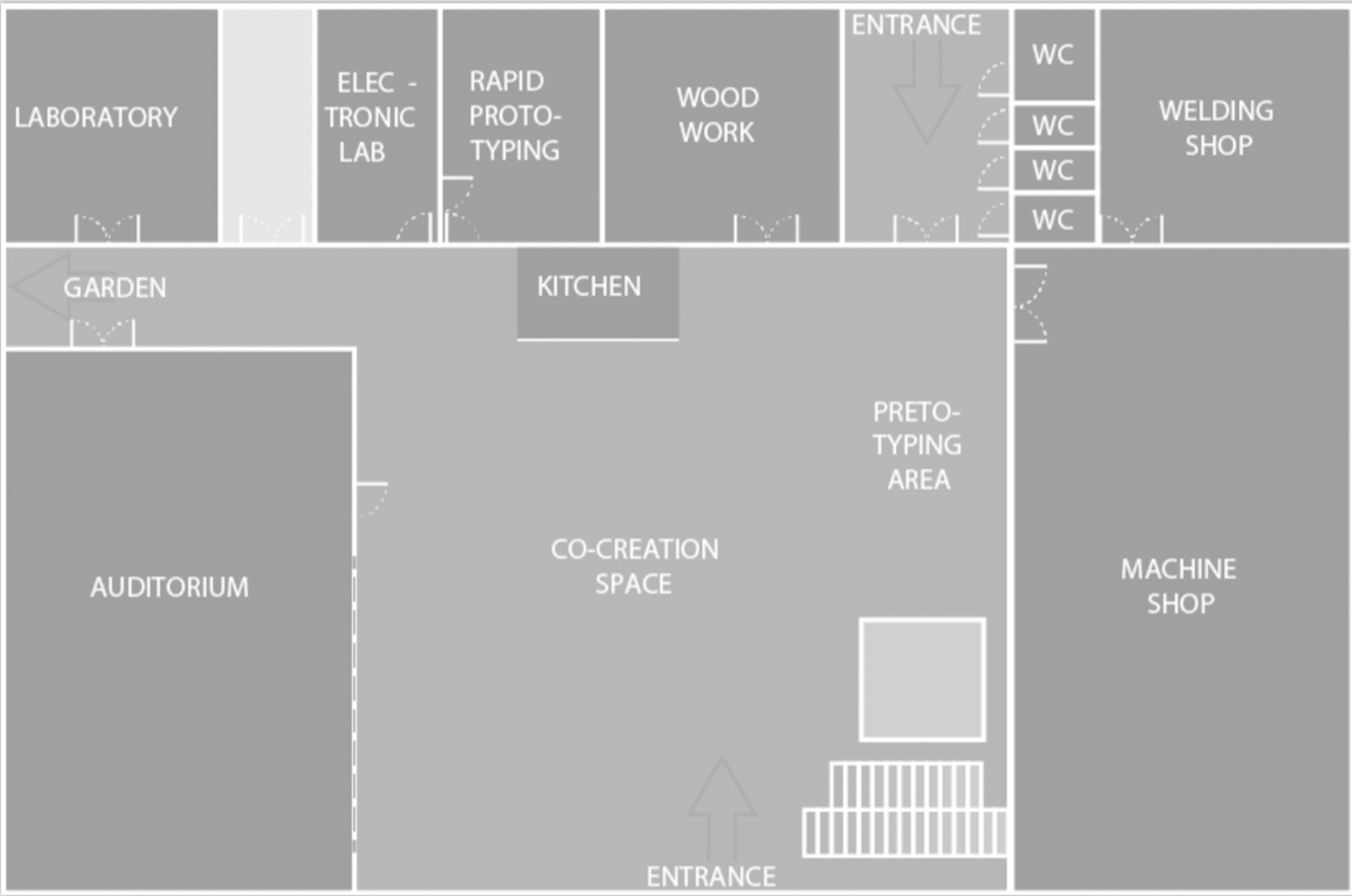
Figure 1 illustrates the floorplan for the ground floor of DTU Skylab, and it summarizes its main physical offerings. These include labs and workshops that can be used for making prototypes and conducting experiments in connection to the three focus areas mentioned above, an open workspace for doing project work, a flexible and reconfigurable auditorium that can host courses and events, and a number of meeting rooms that can be booked for meetings and project work. Labs and machines that are available in DTU Skylab are frequently expanded and upgraded, and the full list of labs and equipment can be seen on their website (https://www.skylab.dtu.dk/prototyping).
Floorplan for DTU Skylab ground floor, where workshops are located. Apart from these facilities, there are storage and pretotyping areas in the basement, meeting and project rooms on the first floor, and a recently opened Foodlab that will feature an industrial kitchen and food processing area.

The upstart phase of DTU Skylab was already reported in Jensen et al. (Reference Jensen, Özkil and Mougaard2016). Since then, the impact and outreach of the makerspace have rapidly evolved, with an increased level of activity in each of the focus areas. As a result, DTU Skylab is currently undergoing a significant expansion, both in terms of physical size (2500–5500 m2) and in terms of staff that will be supporting these new activities. Under the light of Skylab's planned expansion, increased activities, and new offerings; this paper aims to understand the key factors that drive the growth and the expansion of the makerspace by answering the following questions:
• Who are the users and how do they use DTU Skylab?
• What are the effects of having access to DTU Skylab on users?
• What is their level of satisfaction with the offerings?
Methodology
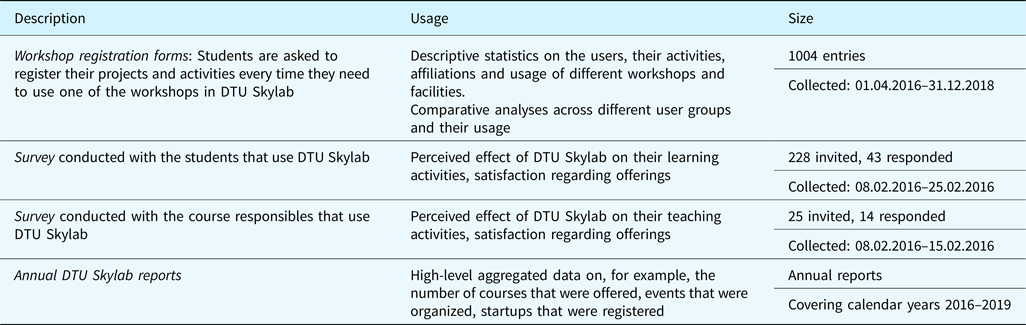
Driven by these questions, the analysis provided in this paper is based on the data that have been collected for operational purposes, as well as surveys that were conducted for this study. Table 1 provides an overview of the available data and their characteristics and the following sections describe how these data points are used for the analysis.
Data sources used for the analysis

Workshop registration forms
DTU Skylab demands users to register their activity when they use the workshops. The main purpose of the workshop registration forms is to collect data to inform stakeholders about the workshop occupancy and dynamics about the users and their needs. Additionally, these forms serve as a basis for empirical data collection for research studies. Workshop registration forms aim to capture as much information as possible about the users and the projects that are utilizing the workshops, and the questions and the form structure was established through a collaborative effort between the authors and the DTU Skylab workshop Team Leader.
Data collection has taken place directly through a kiosk mode laptop placed in or just outside various workshops at DTU Skylab. Data were collected throughout the period 01.04.2016–31.12.2018. The registration forms are designed using a flow chart logic where not all variables were relevant to all respondents – for instance, questions on company information are only shown to respondents who specified that the project they are registering is a start-up-related activity.
The dataset in total has 41 variables where 21 variables are respondent specific data, such as student ID and response time. Only 11 variables were found relevant for the analysis in this particular study. Three of these variables were open-ended and allowed for students to provide (optional) free text response regarding the context of the project and the time expected to complete it.
Surveys
The surveys aim to understand how the users of Skylab perceives its offerings and their effects. They were conducted with students and the course responsibles and the respective surveys can be considered as mirrors of each other. This allowed for a comparative analysis of the results presented in the following sections. The surveys have the following structure:
• Descriptive questions/demographics: (partially optional) questions about the survey participants, their affiliations, courses, and job functions.
• Questions on “Effect”: Five questions that are related to the evaluation of the quality of offerings and extent of perceived effects of using the DTU Skylab facility. Students and course responsibles stated how much they agreed that they perceived a particular effect of Skylab by providing responses on a 5-point Likert scale (5: Strongly agree–1: Strongly disagree). A sixth question asked participants how they would assess the overall effect of Skylab (5: Very positive effect–1: No effect).
• Questions on “Satisfaction”: Five questions that are related to the satisfaction of the participants with respect to various offerings. Students and course responsibles stated how satisfied they were with a particular offering by providing responses on a 5-point Likert scale (5: Very satisfied–1: Very unsatisfied).
• The Net Promoter Score (NPS): This question both serves as a measure for assessing users’ overall satisfaction with the offerings, as well as an anchor to evaluate how the previous questions on specific offerings contribute to the overall satisfaction (Reichheld, Reference Reichheld2003). The question asks the users how likely it is that they will recommend DTU Skylab to a friend or colleague (11 point scale, from 0: not at all likely to 10: Extremely likely).
Figures 10 and 12 summarizes these questions, as well as the answers provided by the users.
Annual reports
DTU Skylab collects and compiles various types of data in terms of annual reports. These reports provide an overview and support a deeper understanding of the activities in the facility. Data presented in the annual reports draw on different formalized and internal reporting documents at DTU Skylab. These include:
• Number of events, such as hackathons and conferences
• Number of student entrepreneurship cases with or without official company registrations
• Number of participants at events and overall visitors at the facility (via an automatic person counter)
• Number of courses and other curricular activities that were hosted
• Material usage in prototyping labs and workshops, in terms of gross aggregates
Data analysis
The data from the workshop registration forms, annual reports, and the surveys have been subject to statistical analysis where relevant and evaluations were made using a python-based toolchain that consists of standard packages (Pandas for data structures, Scikit for statistical analysis, and Seaborn for data visualization). A shared dataset and a computing environment were used to facilitate the data analysis, which was a collaborative process between the authors.
It should be noted that the majority of the results of this study draw on a high-volume dataset that mainly consists of standardized responses. Open-ended responses are very few, compared to the rest of the data – while they serve as supporting arguments to some of their findings, they were not coded nor analyzed by multiple raters.
Results and findings
The following sections present our results and findings, which are divided into three parts:
• Users and usage: Who are the users, what they are using in the makerspace, and how they are utilizing its offerings
• Effect: How different stakeholders perceive the effects of having a makerspace on teaching and learning activities
• Satisfaction: What is the level of satisfaction among the users of the makerspace, which aspects are well received, and what drives high satisfaction
Who are the users and how do they use DTU Skylab?
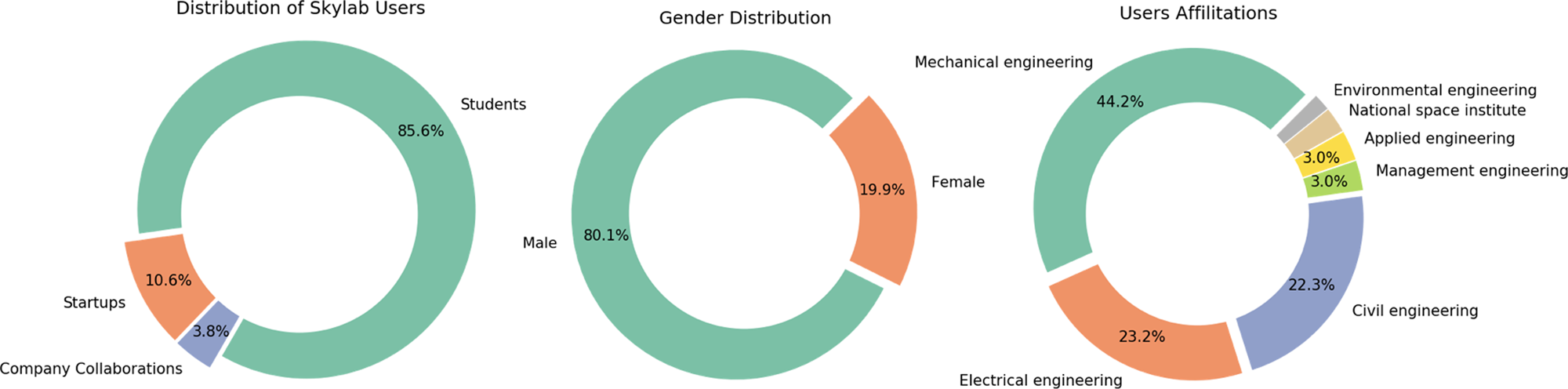
A typical user of the DTU Skylab is a male student, affiliated with the mechanical, electrical, or civil engineering departments and he is using the workshops mainly for courses and study-related activities (Fig. 2). While the female workshop users are below the university average (19% vs 33%), gender distribution is comparable to the average distribution of the student body of the three departments [ME, EE, C'Eng] that are actively using DTU Skylab resources (20.6%) and to the numbers reported by similar studies (Lensing et al., Reference Lensing, Schwuchow, Oehlandt and Haertel2018; Rodgers and Williamson, Reference Rodgers and Williamson2018). Startups (10.6%) and company collaboration projects (3.6%) are the other two modes of use. Collaboration projects have a slightly better gender distribution (34.5% F), while only 2.4% of the users that represent startups are female. It should be noted that activities that are related to startups and company collaborations are reported rather sparsely, and it is difficult to derive the nature of the collaborations and the domain of operation for the startups.
Different characteristics of the workshop users: mode of use, gender, affiliations.

DTU Skylab's auditorium is one of its key features that allows the educators to use DTU Skylab as a teaching facility. The auditorium is a flexible classroom/event space with a removable glass wall and it can host events and courses with up to 150 participants (72 with the glass wall in place). This allows DTU Skylab to host six to eight courses per semester. These courses use the auditorium and teaching facilities, as well as the workshops. Courses are selected through an application process based on a number of criteria, such as the size and time schedule of the course as well as the relevance of the course to the offerings and the diversity it can provide. DTU Skylab normally prioritizes courses that intrinsically use workshops as a part of the course program; for instance, by requiring prototypes as a part of the course deliveries (DTU Skylab, n.d.).
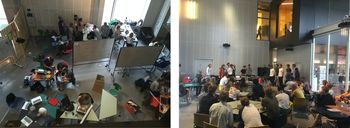
One of the courses that are hosted by DTU Skylab is the Design for Mechatronics course. Course lectures take place in the auditorium while the co-creation space is used for group work and the workshop for prototyping in the hands-on exercises and development projects that are part of the course program. Prototyping is a learning objective and the last 3 weeks of the course are spent almost exclusively with the students developing functional prototypes to prove the feasibility of a new concept. During a normal teaching module, a lecture will first be given in the auditorium, after which students working in groups will use either the available whiteboards and paper prototyping kits or the workshops depending on their progress in the course. As Figure 3 illustrates, the physical space can quickly be transferred to fit the teaching or learning activities of the course. Just like other courses, academic staff is responsible for organizing the course and supervising the students, but DTU Skylab employees assist the course and the students while using the facilities and workshops.
DTU Skylab's architecture allows a great deal of flexibility. Almost all furniture are mobile, which facilitates different types of course and project activities in the same physical place.

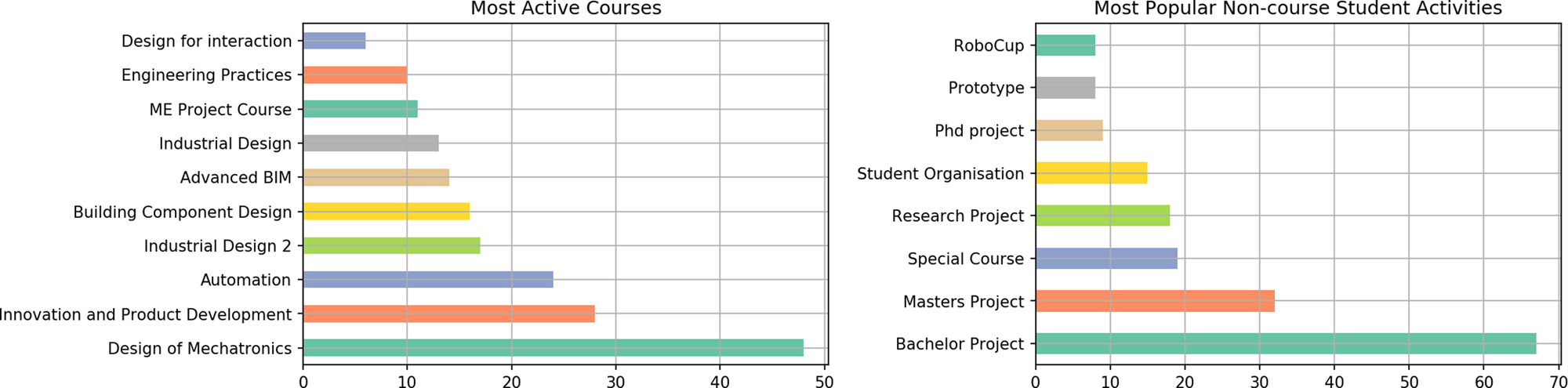
Figure 4 provides an overview of the courses that actively use the workshops in DTU Skylab. All of these courses are offered by the three key departments (Fig. 2) and except two of them (Industrial design 1&2) they are being taught at DTU Skylab auditorium. Workshop registration forms reveal that students from 47 different courses have accessed the facilities over an academic year. This means that, apart from students that attend DTU Skylab hosted courses, students from courses that take place outside of DTU Skylab are also active users of the workshops.
Courses and study-related activities with most active users (# of users).

In addition to the courses, there are a number of other study-related activities that utilize DTU Skylab, such as masters and bachelor's projects, special courses, and projects that are related to the activities of student organizations, such as the Robocup and the rocket building club (Fig. 4).
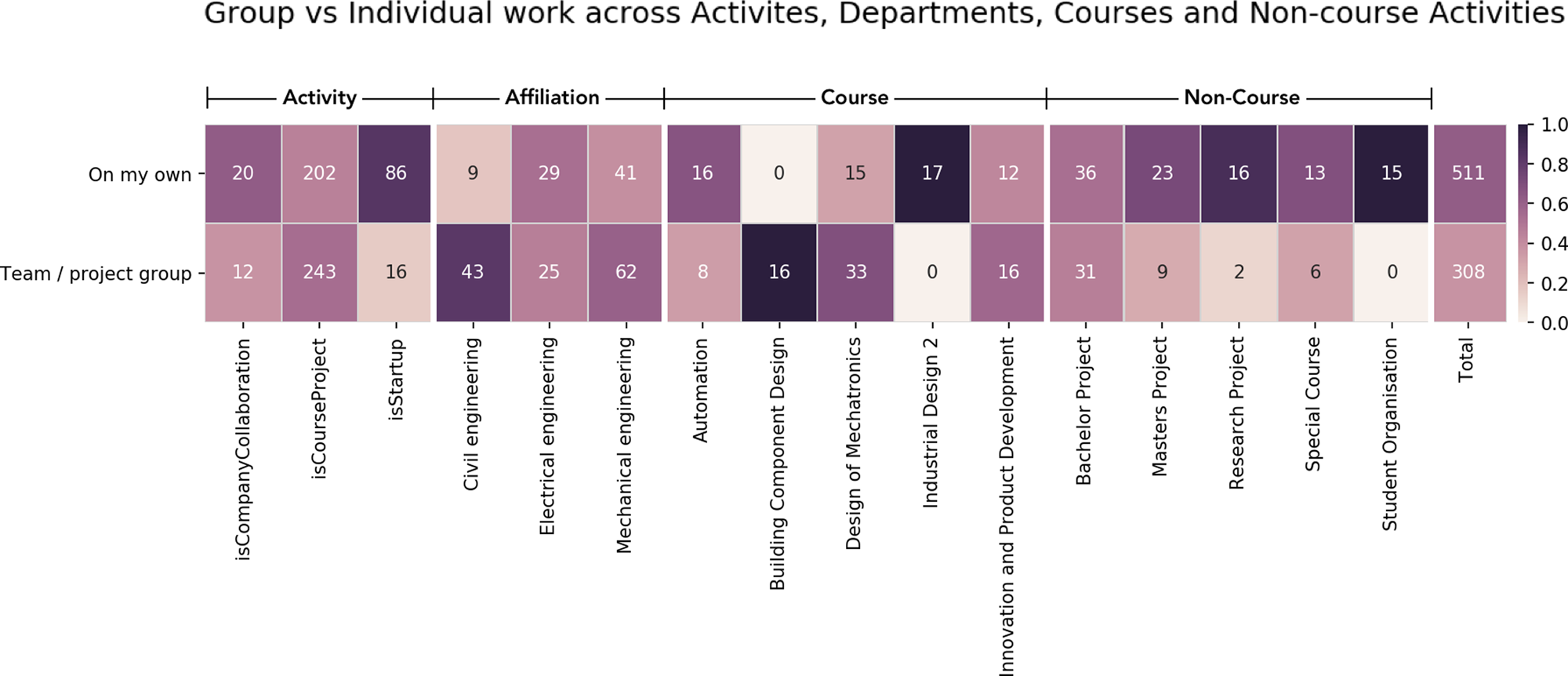
DTU is a part of the CDIO initiative and the study programs are designed after the CDIO principles (Crawley et al., Reference Crawley, Malmqvist and Östlund2007), therefore project- and group-based learning are commonly utilized in the courses. This can also be seen in our data; according to the registration forms, 37% of the users using are doing project work as a part of a team or a group. Figure 5 provides an overview of the prevalence of group work across different modes of use, departments, courses, and other study activities. Group work is more commonly observed in courses and bachelor projects by the users affiliated with civil or mechanical engineering departments.
Group projects versus individual work across different types of activities, users’ affiliations, (top) courses, and non-course activities.

Usage of the facilities
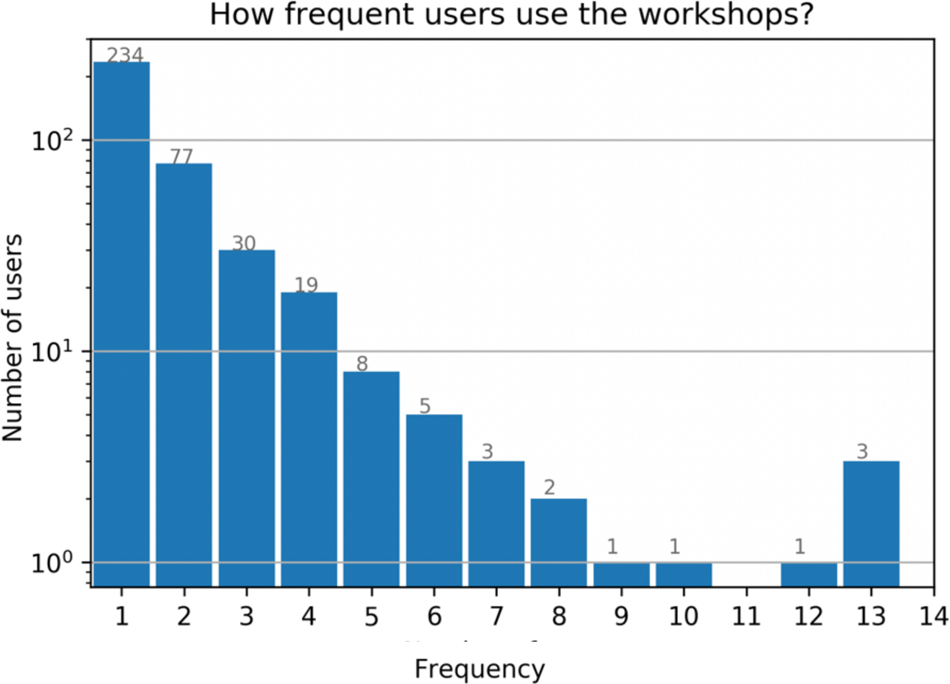
Figure 6 illustrates the usage frequency of the facilities by the individual users. It is a typical Zipf distribution, where the usage is very low for very high numbers of users. This can be attributed to a few different factors, but we believe that one of the key reasons is the “business model” of DTU Skylab. Unlike most other academic makerspaces, access to DTU Skylab does not require membership and any student or affiliate can use the facilities for free. This makes it possible for a number of students to use DTU Skylab workshops for one-off projects, where students come to DTU Skylab with their own incentive and use the offerings.
Frequency of workshop usage per user. Almost ¼ of the users (234) have used the facilities only once.

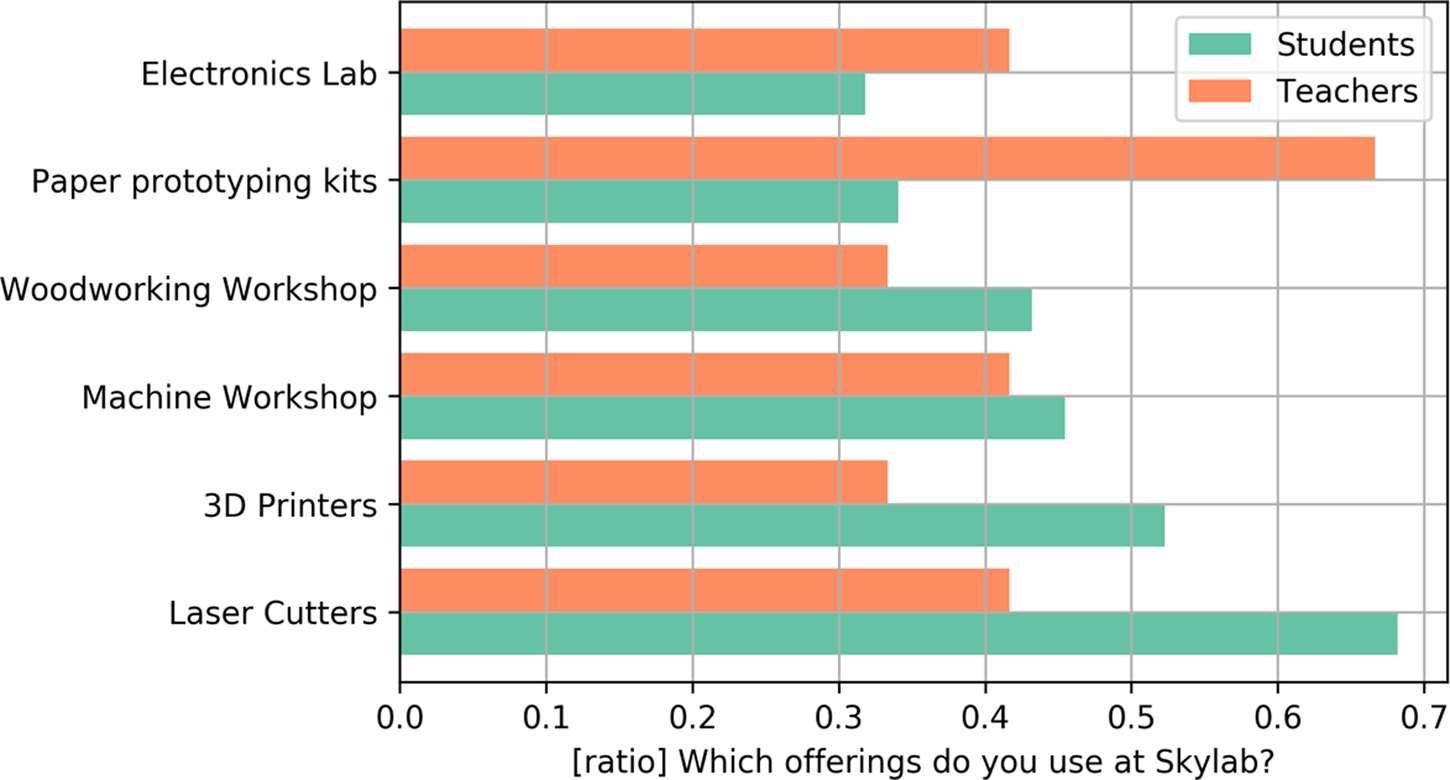
Similar to other academic makerspaces, rapid prototyping tools (such as laser engraving machines and 3D printers) are the most frequently used offerings by students at DTU Skylab (Fig. 7). These digital manufacturing technologies provide a “low floor-high ceiling” environment for iterative design and prototyping activities: They are easy to use, relatively fast, require minimal tooling, and they are still advanced technologies that can be used for realizing complicated designs.
Usage of the workshops and offerings by the students and teachers taking/offering courses at DTU Skylab.

On the other hand, “paper prototyping kits” – toolboxes with various stationery items for low fidelity prototyping – are very popular among the teachers. It should be also noted that a small number of teachers and students have also reported that they are only using the auditorium and the meeting rooms without using any of the workshops at DTU Skylab.
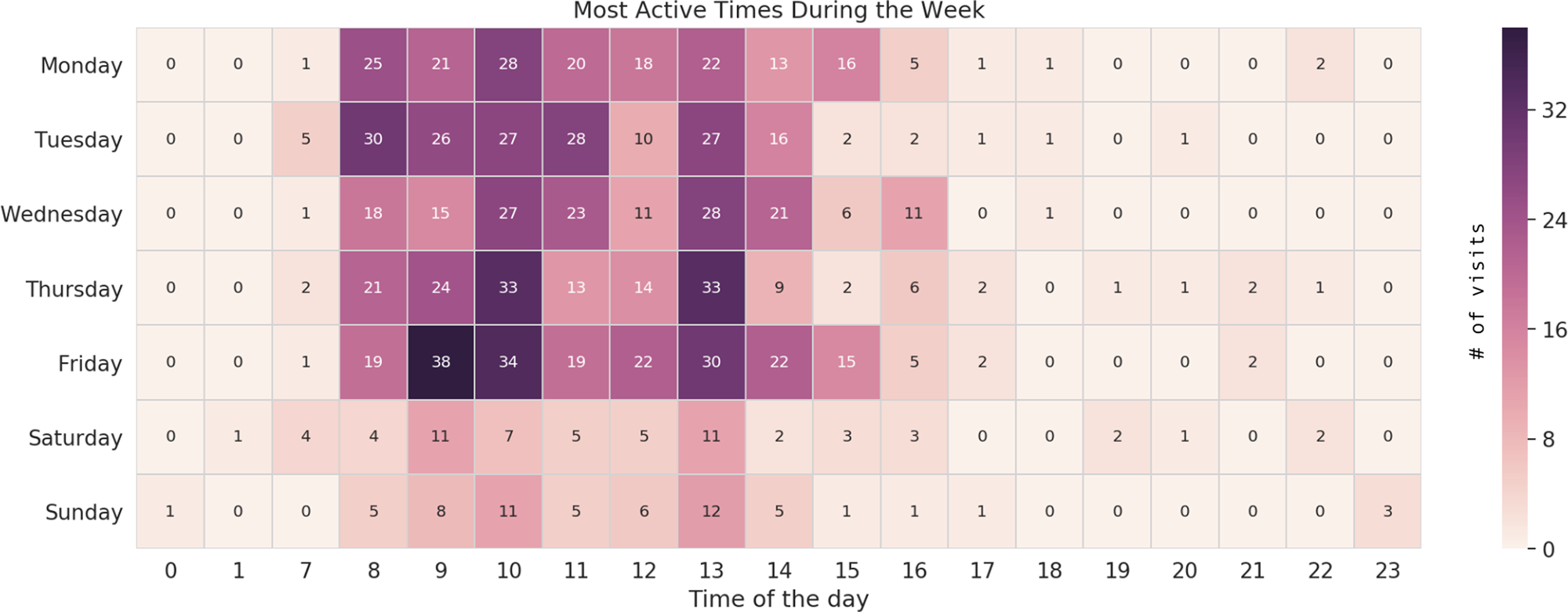
DTU Skylab is actively used throughout the week during the business hours (Fig. 8). The morning hours are typically very busy as the workshops open and the 3D printers become available again after long run times that usually stretch overnight. 10:00-11:00 and 13:00-14:00 are generally the busiest time slots during the week and the peak load is observed on Friday mornings. The machine shops are closed during the weekends (and evenings) whereas the electronics lab and the rapid prototyping lab remain accessible.
Heatmap for the most popular hours of the week (aggregated).

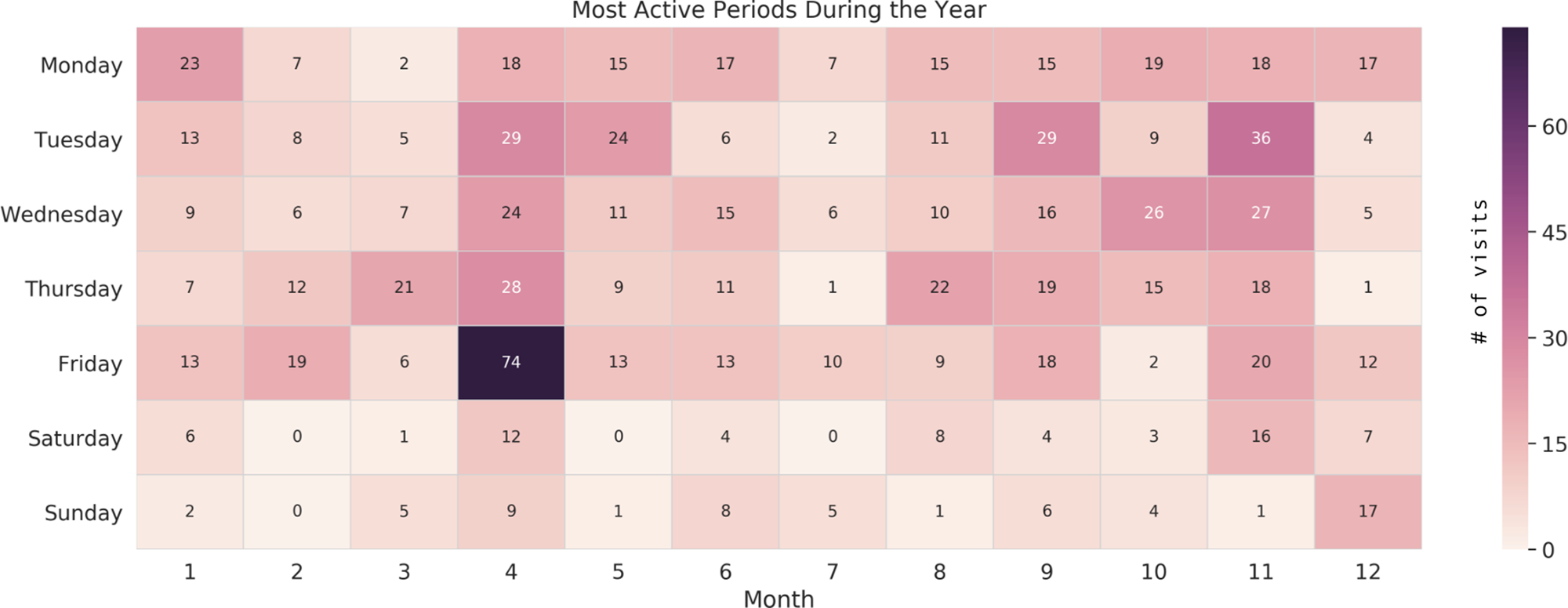
Workshop activity in Skylab follows the semester structure of the university. The academic year starts with 3-week courses in January, followed by the 13-week spring semester and 3-week courses in June. After the summer break, the 13-week fall semester starts again at the end of August. Accordingly, workshop usage peaks towards the end of the 13-week semesters in April and November (Fig. 9).
Heatmap for the most active periods during the study year.

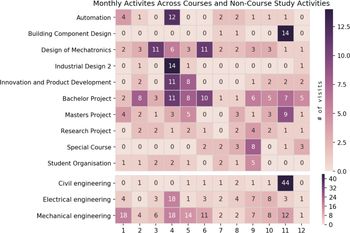
Looking at different courses and study activities (Fig. 10) reveals that Spring semesters are particularly busy because of the three prototyping-heavy courses (Industrial Design 2, Mechatronics, Innovation, and Product Development) and the bachelors’ projects (which are normally scheduled for the spring semester). Furthermore, Figure 10 illustrates that the intensity of the workshop use and prototyping activities varies significantly across courses and project activities. In certain cases, such as “Industrial Design 2” and “Building Component Design”; prototyping activities are condensed at the last weeks of the semester, whereas it is a continuous activity in Bachelors’ projects and courses like “Mechatronics”.
Heatmap for the most dominant courses, study activities, and affiliations during over the year (months).

What are the effects of having access to DTU Skylab on users?
Academic makerspaces provide tools, facilities, and human resources that are dedicated to facilitating open, inspiring, and creative cultures and learning environments that do not necessarily follow the traditional teaching and learning activities at universities (Halverson and Sheridan, Reference Halverson and Sheridan2014). Therefore, in addition to knowing who the users of the makerspace are, it is also important to understand how having access to these creative spaces affect the teaching and learning activities.
Our analysis of the survey responses from the educators who teach courses at DTU Skylab and students who have been actively using the workshops constitutes the basis for the assessment of the effect of DTU Skylab. In summary, both educators and students agree that the overall effect of having the tools, workshops, flexible and reconfigurable workspaces, and the other offerings provided by DTU Skylab is very positive on their teaching and learning activities.
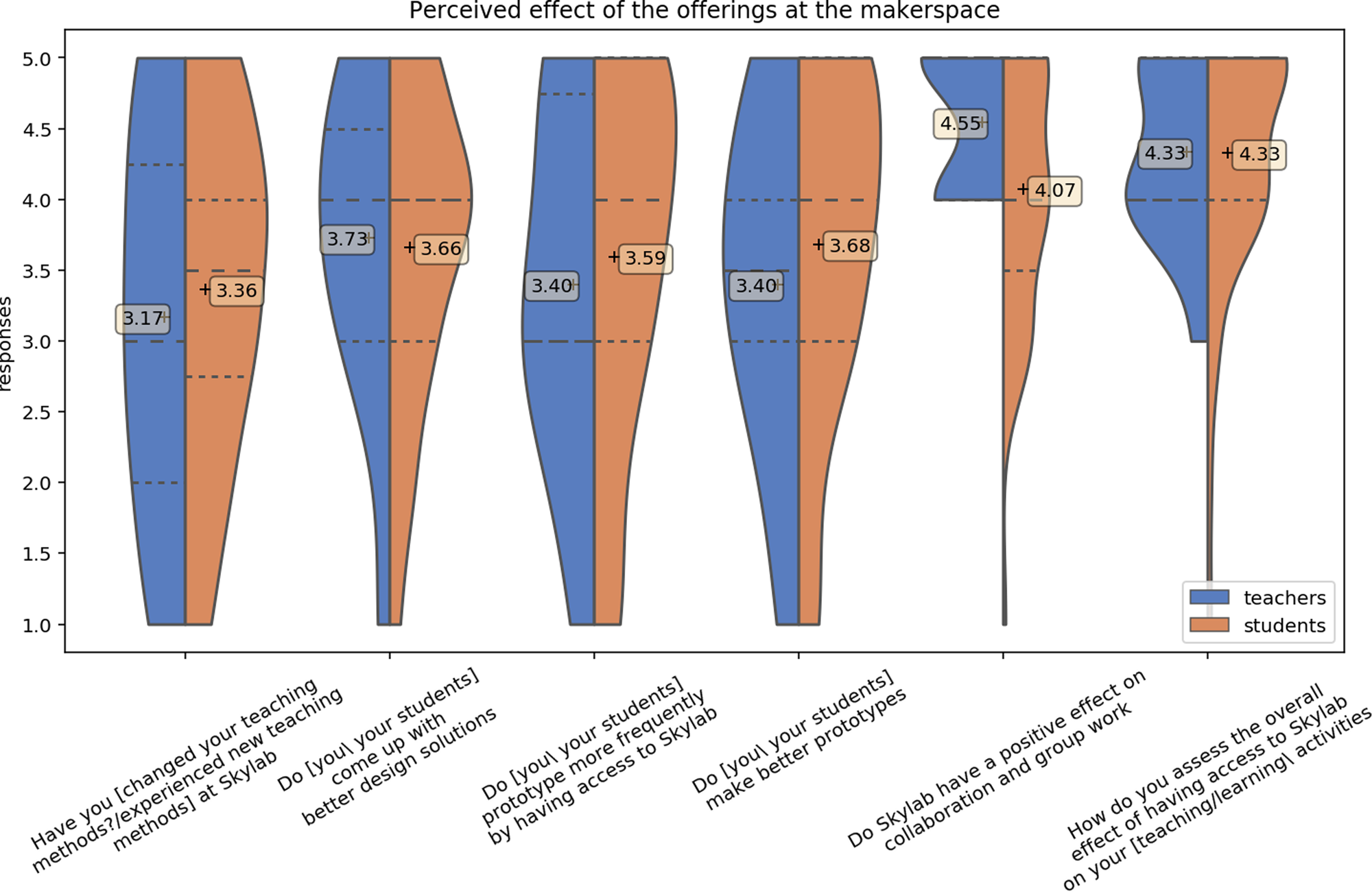
DTU Skylab's management, who was involved in preparing the survey, identified five measures that are important and beneficial to assess. Figure 11 summarizes these questions and the responses of the participants. Both teachers and students report experiencing changes in teaching and learning methods due to their courses and study activities taking place at DTU Skylab. It can still be considered as a rather new facility and a young organization, which is undergoing transformations and significant expansions. In that regard, the courses that use DTU Skylab will see some organizational and structural changes to better utilize the new offerings.
Perceived effect of the offerings on students’ and teachers’ design skills, prototyping skills, and frequency and group/project work (5: strongly agree–1: strongly disagree).

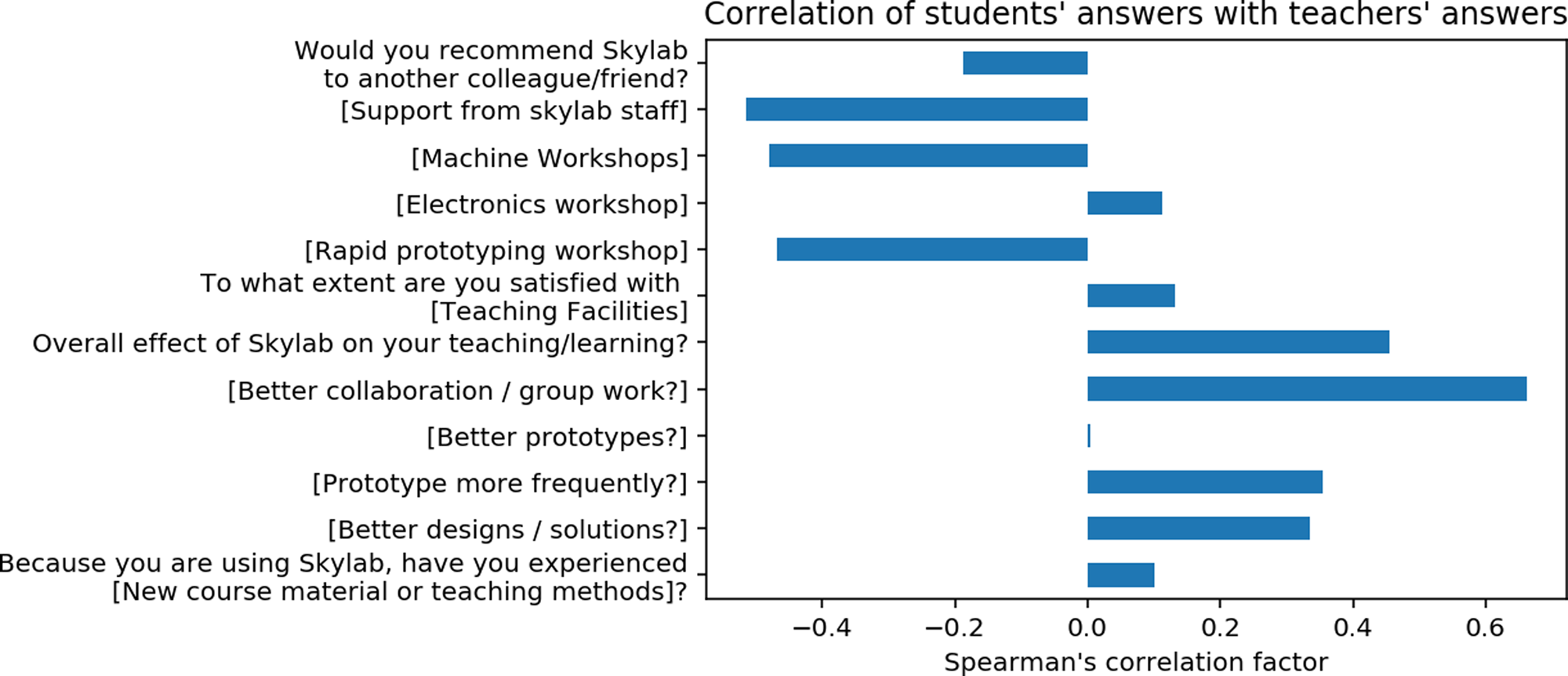
The analysis of users and usage show that engineering design courses and students from departments that are traditionally associated with “making” are very active users of the workshops. Therefore, the survey also directs specific questions regarding designing and prototyping at DTU Skylab. While teachers evaluate the perceived effects slightly lower than the students do, there is a general agreement on the positive effects of having access to tools and facilities on design and prototyping processes (Fig. 11), and a moderately positive correlation between teachers’ and students’ responses (Fig. 12). We believe that having access to new and easily accessible rapid prototyping tools, such as laser engraving machines and 3D printers, has a direct causal relationship with the reported effect on the quality of designs and prototypes and the frequency of prototyping activities.
Correlation between teachers’ and students’ survey responses on effect and satisfaction.

DTU Skylab's architectural and interior design has a particular focus on flexibility and modularity. The glass walls of the auditorium can be opened to adapt the space for events and courses of different sizes and the tables can be moved to form various configurations. This provides a great deal of flexibility that can easily facilitate different forms of teaching, collaboration, and group work for various sizes of teams. Consequently, the effect of DTU Skylab on collaboration and group work is the highest-rated aspect by the users (Fig. 11).
In terms of perceived effect, there is a general agreement among teachers and students, with a single exception where teachers report significantly better responses on their perceived effect on students’ collaboration and group work (Table 2).
Summary of the responses on effect and satisfaction.

Teachers rate the effect on collaboration and group work and satisfaction on the rapid prototyping & machine workshops and the support from staff significantly higher than students.
How satisfied are the users with the offerings?
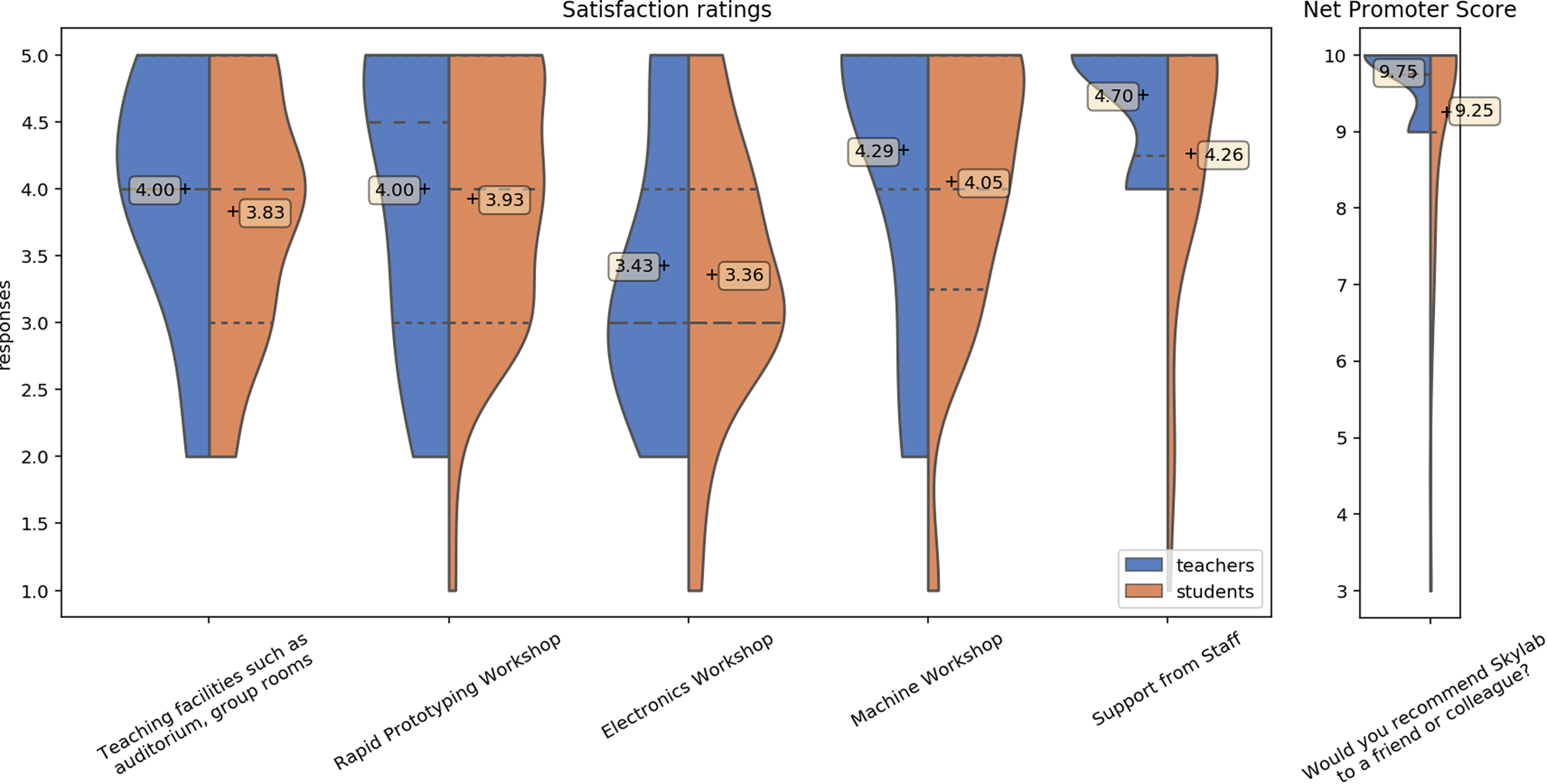
Similar to the perceived effects, there are very positive responses from both teachers and students in terms of satisfaction with the offerings of DTU Skylab. Figure 13 and Table 2 summarize the responses of the teachers and students regarding satisfaction. Teachers have an overall tendency to evaluate their levels of satisfaction more positively than students. Three specific measures of satisfaction: Rapid prototyping workshop, machine shop, and support from staff are rated significantly higher by the teachers (Table 2).
Satisfaction ratings for facilities, workshops, and support based on the responses from the students/teachers taking/offering courses at Skylab. (5: strongly agree–1: strongly disagree).

Among the facilities, the electronics workshop is the one that provided the least satisfying experiences to the users. It is a rather small and non-staffed facility with limited space for equipment and it is proven to be difficult to keep stock of a large variety of components that are needed by various user groups. The machine shop, on the other hand, is always staffed and we believe that the high satisfaction ratings are partially due to the personal contact and advice students can get from the shop staff, as well as having easy access to an array of equipment and machinery. In addition to the specific questions that evaluate different aspects; users were also asked the standardized NPSNet Promoter Score question (Reichheld, Reference Reichheld2003) as a measure for the overall satisfaction with the offerings of DTU Skylab.
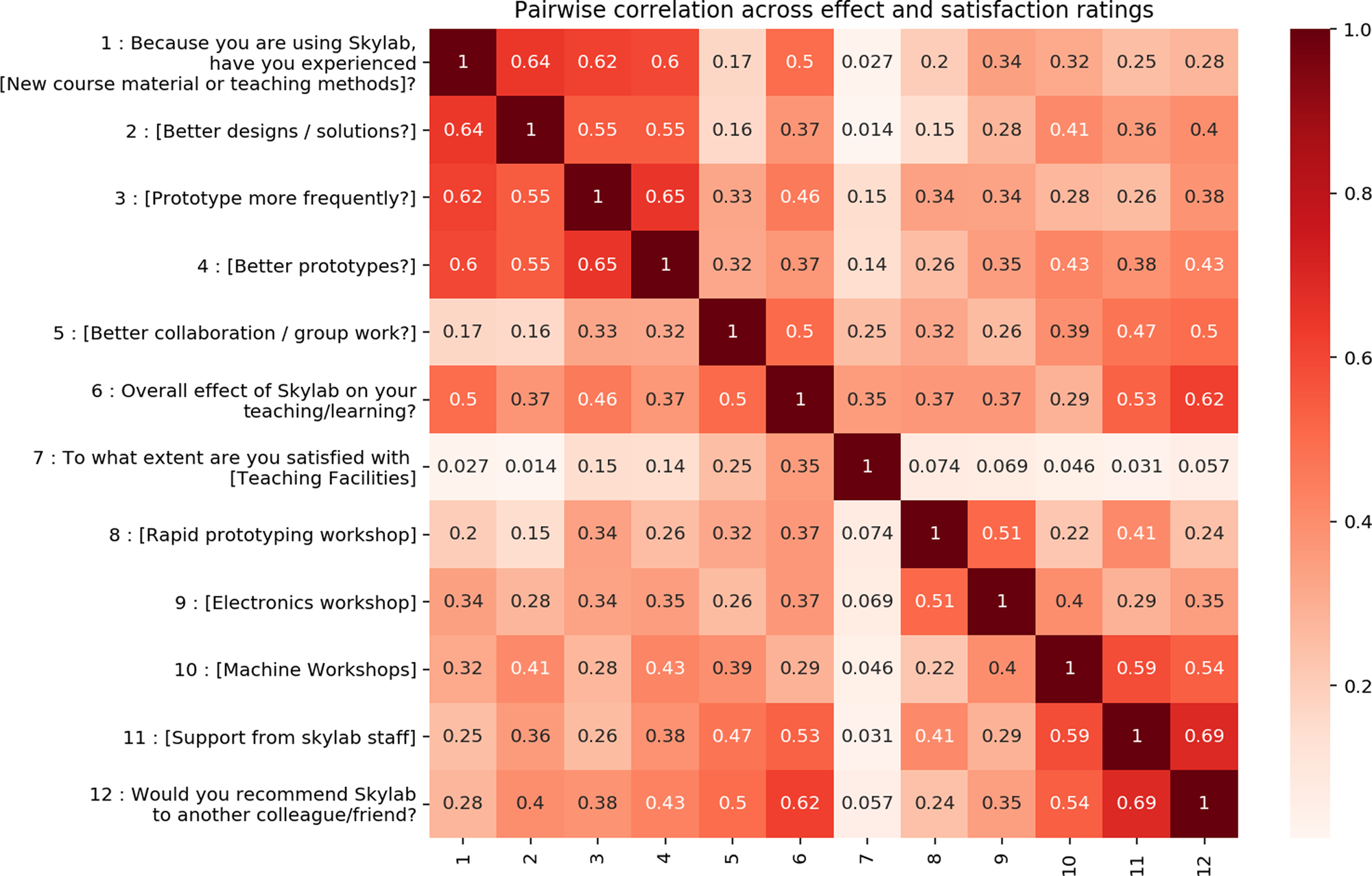
Figure 14 provides an overview of the correlations between the responses on effect [q:1,6] and satisfaction [q:7,12]. Submatrices A, B, and C, respectively, reveal how the individual responses are related to each other within [A, B] and between the measures of perceived effect and satisfaction.
Pairwise correlations between (aggregated) responses on effect and satisfaction.

Effect: There are strong correlations between the perceived effect of the DTU Skylab on new teaching methods [q:1], achieving better designs and prototypes [q:2,4], and making better prototypes more often [q:3]. This is somehow expected as some of the offerings – such as the laser engraving machines and 3D printers – were not available or easily accessible for the large portion of the student population before they became available via DTU Skylab. Being able to access to these facilities simply makes it possible to prototype quickly and more frequently. Despite being rated highly by both teachers and students (mean = [4.55, 4.07]), better “collaboration and group work” does not seem to be related to achieving better design and prototyping skills. What is more interesting is the moderately weak correlations between the specific assessment of the effect of different measures [q:1–5] and the overall assessment of the effect of having access to DTU Skylab on teaching and learning activities [q:6]. We believe that the overall effect captured by [q:6] might be due to other positive effects that are not inquired by the survey questions [q:1–5] and the data captured in this study.
Satisfaction: Similar to effect; satisfaction also reveals moderate and strong correlations across different measures. One exception is the satisfaction on teaching facilities [q:7], which does not show any effect on the other questions regarding satisfaction. The strong correlation on satisfaction between machine workshops [q:10] and support from staff [q:11] can be attributed to the fact that the machine workshop is the only manned workshop and the users have to talk to the workshop staff to be able to use the facility. The main driving question in this section is the NPS question [q:12], which is a measure of the overall satisfaction of the users. Correlations between [q:7,11] and [q:12] reveal that the support from DTU Skylab staff and the offerings at the machine workshops are the key driving factors for satisfaction.
Effect × Satisfaction: There are some moderate correlations between the perceived effect of having access to DTU Skylab and users’ satisfaction on the offerings. Strong and moderately strong correlations are mainly seen at the bottom left corner of Figure 14-C; which shows the interplay between [q:5,6 × q:11,12]: the perceived effect on collaboration/groupwork and overall effect of having access to DTU Skylab versus satisfaction on the support from DTU Skylab and the overall satisfaction captured by the NPS. While it is expected that the overall satisfaction and satisfaction on the support from staff are related to the overall perceived effect, the correlation between the effect on groupwork and overall satisfaction should be further investigated to understand whether there is an actual causation between these two metrics.
Discussion
Recent years witnessed an increased focus on the “entrepreneurial university” that emphasizes alternative ways of teaching and learning, free tinkering, and entrepreneurship (Etzkowitz et al., Reference Etzkowitz, Webster, Gebhardt and Terra2000). Combined with the rise of the maker movement and collective design (Blikstein and Krannich, Reference Blikstein and Krannich2013; Halverson and Sheridan, Reference Halverson and Sheridan2014; Martin, Reference Martin2015; Özkil, Reference Özkil2017), the need for catalyzing student innovation activities manifested itself in terms of FabLabs, makerspaces, and innovation hubs in academic institutions all around the world.
DTU Skylab illustrates a good example for this global trend among higher education institutions. In terms of all three perspectives presented in the analysis above, it can be claimed that DTU Skylab has been very successful in terms of attracting students and academics to its premises and creating meaningful and satisfying teaching and learning experiences.
Since its inception, DTU Skylab very quickly managed to engage with the students and the academic staff beyond single courses and created a community around itself. It is currently going through a significant expansion, and to ensure the continuing success and increased value of offerings, this work has sought to learn from the current usage and identify important effect and success factors. The rest of this section discusses the findings and provides our reflections on the analysis.
Main drivers for perceived effect and satisfaction
Students and teachers agree that having access to DTU Skylab has an overall positive effect and both groups will promote the makerspace to their peers. Students are particularly positive about the support they received from the staff, offerings in the machine workshop, and the effect working at DTU Skylab has on their collaboration and group work. Users express high levels of overall satisfaction, but the survey does not reveal a single dominating factor that drives satisfaction and perceived effects of having access to Skylab. There are other factors that are not included in this survey that may contribute to the overall effect; such as the informal, entrepreneurial atmosphere, newer facilities compared to other parts of the university, access to free materials for prototyping, or free coffee. We believe that the survey results derive from the combination of different and sometimes unique elements that make DTU Skylab a makerspace.
The data show that different user groups have different motivations, expectations, and experiences while using DTU Skylab. For instance, not all users experienced a change in teaching methods at DTU Skylab, but those who did also experienced improved design solutions, as well as better and more frequent prototyping. This suggests that DTU Skylab plays an important role in teaching alternative ways of working related to makerspaces to students that are not already familiar with them. Students from the three departments [ME, EE, C'Eng] that have participated in several courses hosted by DTU Skylab may not experience new learning methods, but they might still have improved experiences that are enabled by having continuous access to workshop facilities and having open spaces for group work.
While many of DTU Skylab's offerings are used equally often by students and teachers (e.g. woodworking and machine workshop), there are also some notable differences between their use patterns. Paper prototyping kits are mostly favored by the teachers, as they can easily be incorporated in their courses; whereas having access to 3D printers and laser cutters are deemed to be more important by the students. Looking at the survey responses, there is a higher level of agreement among the teachers than the students. Our analysis cannot provide the reasons for the larger variation within students responses, but we believe that teachers generally report on their overall impression of the makerspace's influence on their courses, whereas individual students might be influenced by their specific negative experiences – such as not being able to use specific machines when they need them. Students also have a different relationship with the makerspace than teachers, who can be seen as part users and part co-organizers.
A teaching facility or a makerspace?
As an academic makerspace and innovation hub, DTU Skylab is an activity-driven space that is bound to the semester structure and the schedule of the courses it hosts. Our analysis shows how the demand for the tools, offerings, and facilities can fluctuate significantly, even over shorter periods of time. In the short run, these results can be used to communicate the peak demand periods for the facilities and manage the expectations of the users. A more involved and effective approach requires a thorough coordination with the educators that use the facilities and implementing changes in specific courses to optimize the utilization of the facilities and avoid sudden peak demands. The multipurpose role of an academic makerspace creates an extended opportunity to shape and influence their own usage that goes beyond securing the availability of offerings. The collaboration between the makerspace and courses allows the makerspace to formalize the knowledge generation that takes place in its facilities, while bringing its positive effects on collaboration and prototyping practices into traditional coursework.
Though activities at DTU Skylab are highly influenced by the courses that are taught in Skylab, the satisfaction of teaching facilities is not correlated with other offerings of the makerspace. This suggests that the satisfaction with the makerspace is not driven by the traditional teaching activities and lectures. Hosting courses at academic makerspaces is important to create exposure, but satisfaction is driven by what takes place outside the lectures and the auditorium. The academic makerspace is both a teaching and a making facility and there needs to be a balance between these two modes of operation. For instance, an ongoing project at DTU Skylab aims to investigate how students can learn the strategic aspects of prototyping such as “when and why to prototype” instead of learning only how to fabricate prototypes – which is the traditional focus in a makerspace. This, in turn, has led to the development of a design support tool, the Prototyping Planner, which teaches novice designers to identify a purpose and make a plan for their prototype before they start building it (Hansen et al., Reference Hansen, Jensen, Özkil and Pacheco2020).
Nurturing a grassroots culture in a top-down organization
FabLabs and makerspaces are the physical manifestation of the maker movement and it is crucial to nurture an innovative ecosystem around these places by supporting openness (Troxler, Reference Troxler2011). While it is possible to maintain this type of flat grassroots culture in self-organized or student-driven makerspaces, staff-driven academic makerspaces can have difficulties to provide the same levels of participatory decision making. Depending on the objectives of the makerspace, both approaches can have benefits and limitations.
Staff-driven makerspaces – such as DTU Skylab – are usually much better funded than community-driven makerspaces (which often rely on membership fees and donations) but they also have boundary conditions as they need to define their missions, visions, focus areas, and how they organizationally fit into the universities and their traditional offerings. Consequently, the usage of the tools, machines, and facilities implies a certain level of “seriousness” and formal ties to the focus areas of the makerspace. Community-driven makerspaces, on the other hand, can facilitate free tinkering that stems from basic curiosity and they do not necessarily have ties to courses or study activities. Tinkering is a learning activity in its own way and there should be room for it in formally organized academic makerspaces as it can boost the innovation capacity (Bevan et al., Reference Bevan, Gutwill, Petrich and Wilkinson2015). A stronger focus on the inclusion of the users who just want to “play” can provide inspiration to other users, and at the same time orient the tinkerers to innovation and entrepreneurship-related activities.
Diversity
DTU Skylab's current user base is focused around engineering disciplines that already have workshop traditions. Departments like mechanical engineering and electrical engineering already have workshops, labs, and facilities that are used by their own students for specific purposes. As a part of the central university administration, DTU Skylab is a facility for all students. Therefore, it is important to broaden the offerings to include other knowledge domains that are not within the scope of traditional makerspaces and workshop facilities. Two recent initiatives – a “wet lab” for chemical experiments and a “food lab” that provides facilities for food preparation and processing – can be seen both as an acknowledgement for the need for a more diverse user base and also as an attempt to attract students from other backgrounds.
Another area of focus should be attracting female students. The underlying problem is multi-faceted and it is not makerspace-specific; gender mis-balance is a common issue in science, technology, engineering, and math disciplines, as well as tech startups (Riegle-Crumb and King, Reference Riegle-Crumb and King2010; Tomko et al., Reference Tomko, Schwartz, Newstetter, Alemán, Nagel and Linsey2018; Guzman and Kacperczyk, Reference Guzman and Kacperczyk2019). It needs to be addressed through culture and policy changes and makerspaces like DTU Skylab can develop specific campaigns to raise awareness of the offerings among potential female users and incentivize them to participate in the community.
One of the most important channels for DTU Skylab to generate awareness and attract students is the courses that are run at DTU Skylab premises. Figure 4 shows that most of the activity related to university courses comes from the courses that were also hosted by DTU Skylab. With the expansion of the floor space and facilities, it will be possible to increase the number of courses hosted by DTU Skylab. However, the data also show a high degree of activity from a couple of courses that are not hosted by DTU Skylab. As students in these particular courses also usually participate in the courses taking place at DTU Skylab, this suggests that students will use DTU Skylab again when they have been introduced to through a previous course. We therefore believe that engaging with courses and educators from underrepresented departments should be prioritized. Future research should investigate whether hosting less obvious courses in DTU Skylab has a positive effect on collaboration, alternative teaching methods, as many of the current users experienced. These engagements can be through introductory modules on design tools and principles for specific study lines, or through inter-disciplinary courses on innovation, entrepreneurship, and design thinking that can host students from various backgrounds.
Limitations of the study
Our study utilizes a number of data sources and provides insights based on quantitative analyses, but we should acknowledge that data can only provide a partial picture of the reality and our results should be seen complementary to the existing body of qualitative and ethnographic studies on academic makerspaces. Furthermore, there are some limitations to the data that are generated (through workshop usage forms) and collected (via surveys conducted with the users).
DTU Skylab has an open-door policy and the number of visitors can reach thousands on days of events. In principle, these visitors can be considered as “users” since they utilize the open workspaces of DTU Skylab. Our analysis, on the other hand, has a more conservative approach and it defines the “users” as the users of the workshops, who filled the workshop registration forms for their projects. DTU Skylab requires the users to register their use at computers located outside the workshops before they can get access to the machines; but it is not a very strictly enforced policy and we have observed that some of the users do not use the registration forms if they are doing an iteration of an earlier design that was already registered.
The structure of the workshop registration forms also poses a limitation on the data that are collected from the users. As a user could be a student, member of a startup, a company collaborator, or an affiliate – all at the same time – different sets of questions that are defined for user groups might not be able to capture the whole extent of the project that is being registered.
Skylab is going through a continuous expansion and new offerings, such as the wet lab and the food lab only recently became available to the users and there are no data related to these facilities in our datasets. These new offerings are expected to attract users from chemistry, biotechnology, and food technology departments, which are currently underrepresented in our dataset. As these groups of users become more aware of the offerings and start using the facilities, some our findings on users and usage might change.
Conclusion
This study presents an in-depth analysis of a staff-driven academic makerspace and it provides insights on who the users are, what tools and facilities they use, which effects they perceive on their teaching and learning, and what level of satisfaction they experience with the offerings. The analysis shows that the makerspace is very actively used by students, teachers, courses, projects, and startups throughout the academic year, it facilities new teaching and learning methods, provides a good environment for group work, and offers a range of tools and machines for designing, prototyping, and making. It also explains what drives users’ satisfaction and which offerings could be improved for even better experiences.
The trend for establishing academic makerspaces will likely to continue, as universities and higher education institutions become more entrepreneurial and innovation oriented. The analysis and findings provided in this study cannot be directly generalized to other academic makerspaces or innovation hubs, but we believe that they can provide insights to practitioners and pointers to researchers for future studies.
Ali Gürcan Özkil is with GN Audio and he holds a PhD in Engineering Design and Product Development. His research is focused on AI and data-driven product development, prototyping of smart products, and user experience design.
Lasse Skovgaard Jensen holds a PhD in Design Engineering and is currently a Senior Consultant at The Technical University of Denmark, Centre for Technology Entrepreneurship. His research is focused on prototyping and manufacturing strategies for hardware start-up companies. Mr. Jensen's research interests also cover topics such as Makerspaces & FabLabs, hardware entrepreneurship, and reward-based crowdfunding.
Camilla Arndt Hansen is a PhD student at the Technical University of Denmark, Department of Mechanical Engineering, where she also received her B.S. and M.S. in engineering design. Her research aims at supporting the strategic use of prototypes throughout the product development process. She does this by incorporating the formal teaching of prototyping strategies in university courses and by collaborating with companies to improve the way they manage their prototyping processes.