





Introduction
Significant previous research highlights the association between intake of whole-grain foods, including those that are more highly processed such as packaged breads and ready-to-eat breakfast cereals, and lowered cardiometabolic risk (Reference Aune, Keum and Giovannucci1–Reference Price, Kissock and Barrett3). Whole grains are promoted throughout dietary guidelines globally because of these health benefits (Reference Price, Barrett and Batterham4).
Whole-grain intake remains suboptimal globally despite promotion of whole grains in national dietary guidelines and their well-established health benefits (Reference Kyrø, Skeie and Dragsted5–Reference O’Donovan, Devlin and Buffini8). Public–private partnerships have shown to be an effective approach in advocating for behaviour change and consumer education regarding whole-grain intake specifically. These partnerships can include various stakeholders such as government, health non-government organisations, academics, health professionals, as well as food industry personnel and consumers. The Danish Whole Grain Partnership is one example of a successful public–private partnership using a combination of strategies that have resulted in the average Dane increasing their daily whole-grain intake from 36 g/10MJ to 82 g/10MJ per day (Reference Andersen, Halkjær and Rostgaard-Hansen9,Reference Mejborn, Ygil and Fagt10) since the partnership was established in 2008. This has also driven a consequent gradual increase in whole-grain intake recommendations in Denmark.
Despite continued advocacy and promotion of whole grains, barriers to intake for consumers continue to exist. Examples of these barriers include a lack of knowledge on nutrition and health benefits, dislike of taste and texture, cost of foods containing whole grain and difficulty in identifying foods containing whole grains (Reference Meynier, Chanson-Rollé and Riou11). To help address knowledge barriers to intake, the messaging used around whole-grain foods, as well as their representation across classification systems, needs to be accurate and consistent. The Nova classification system categorises some whole-grain foods as ultra-processed and advocates have therefore encouraged consumers to reduce intake of these foods (Reference Monteiro, Cannon and Levy12). This is anomalous with national dietary guidelines globally that recommend intake of whole grains (Reference Price, Barrett and Batterham4). Evidence shows that more processed varieties of whole-grain foods do not possess the same associations with poor health outcomes as other foods (e.g. sugar-sweetened beverages and animal-based products) within the Nova ultra-processed food (UPF) category (Reference Chen, Khandpur and Desjardins13–Reference Mendoza, Smith-Warner and Rossato15).
Research has explored dietitians’ understanding and perceptions of the level of processing of whole-grain foods (Reference Moran, Moore and Ho16,Reference Krois, Hughes and Grafenauer17) . The research found 46 % of dietitians surveyed perceived primary sources of whole-grain intake, such as bread, even when containing additives, as processed rather than ultra-processed according to Nova (Reference Moran, Moore and Ho16). Difficulty in understanding whole-grain foods representation in Nova may be even more challenging for consumers with no formal nutrition training.
Therefore, this study aimed to explore consumer understanding of whole grains and whole-grain foods, their level of processing and the impact this may have on their food choices and health. Given that the food industry plays a pivotal role in the provision of foods to the population, this study also aimed to explore food industry personnel’s perceptions on the representation of whole-grain foods in food processing classification systems to foster a co-ordinated approach to whole-grain promotion.
Methods
This study consists of two components: an Australian consumer perspective (referred to as ‘consumers’ in this study) and a local and international food industry perspective (referred to as ‘food industry personnel’ in this study). Ethics approval was granted by the University of University of New South Wales Human Research Ethics Committee (approval number 8604). All participants provided written informed consent prior to participation. This study followed the COREQ (COnsolidated criteria for REporting Qualitative research) Checklist (Reference Tong, Sainsbury and Craig18) (Supplementary Material 1).
General demographic information was collected prior to focus groups (consumers) or interviews (industry). Demographic information collected from consumers included age, gender, educational attainment and residential area. Demographic information gathered pertaining to food industry personnel included gender, educational attainment, current employment role and employment history in the grain industry.
All focus groups and interviews were video- and audio-recorded via Microsoft Teams (version 25072.1611.3570.1995) and transcribed electronically using this same platform with further manual review to ensure verbatim transcription. Information likely to identify the participant or food industry personnel, including employer information, was removed from transcripts. Video and audio recordings were deleted following transcription completion.
Consumer focus groups
A combination of sample methods was used for focus groups. Initially, convenience sampling methods were used to recruit participants for focus groups via distribution of advertisement flyers in community locations such as university campus, supermarkets and community notice boards. Advertisement through relevant social media platforms was also completed using the same flyer. The inclusion criteria for participants were ≥ 18 years of age, English speaking, regularly consume grain products (e.g. bread, cereal, rice, pasta, noodles) at least once per week and with access to internet and technology required to complete the focus group online.
Secondly, snowball sampling methods were used to capture connections of participants from the initial round of recruitment where participants were willing to share study information and the advertisement flyer previously described. Finally, purposive sampling methods were employed following initial and secondary recruitment to ensure maximum variation in the sample pertaining to underrepresented demographics initially recruited (age, gender and education). This recruitment used the same advertisement but targeted to relevant groups. Consumer recruitment for focus groups continued until data saturation was evident.
Semi-structured focus groups were completed between March and June 2025. Initial focus groups were completed by both EJP (dietitian with some qualitative research experience) and a supporting researcher (EMB, an experienced dietitian researcher) but later completed by EJP only. Focus groups ran for 45–60 min depending on the size of the group. Questions asked were open-ended and divided into two main topics: (1) consumer understanding and perspectives of whole-grain foods and their healthfulness and (2) consumer understanding, perspectives and prioritisation of food processing related to whole grains (Table 1).
Consumer semi-structured focus group question guide

Table 1. Long description
A table detailing questions for consumer focus groups on whole-grain foods and food processing. The table has two sections: Section 1 focuses on consumer understanding and perspectives of whole-grain foods and their healthfulness, with questions about identifying grain foods, preferences, understanding of whole grains, perceptions of healthiness, and decision-making factors. Section 2 covers consumer understanding and perspectives on food processing related to whole grains, including questions about ultra-processed foods, examples, health perceptions, and processing levels. The table includes specific prompts and explanations for each question.
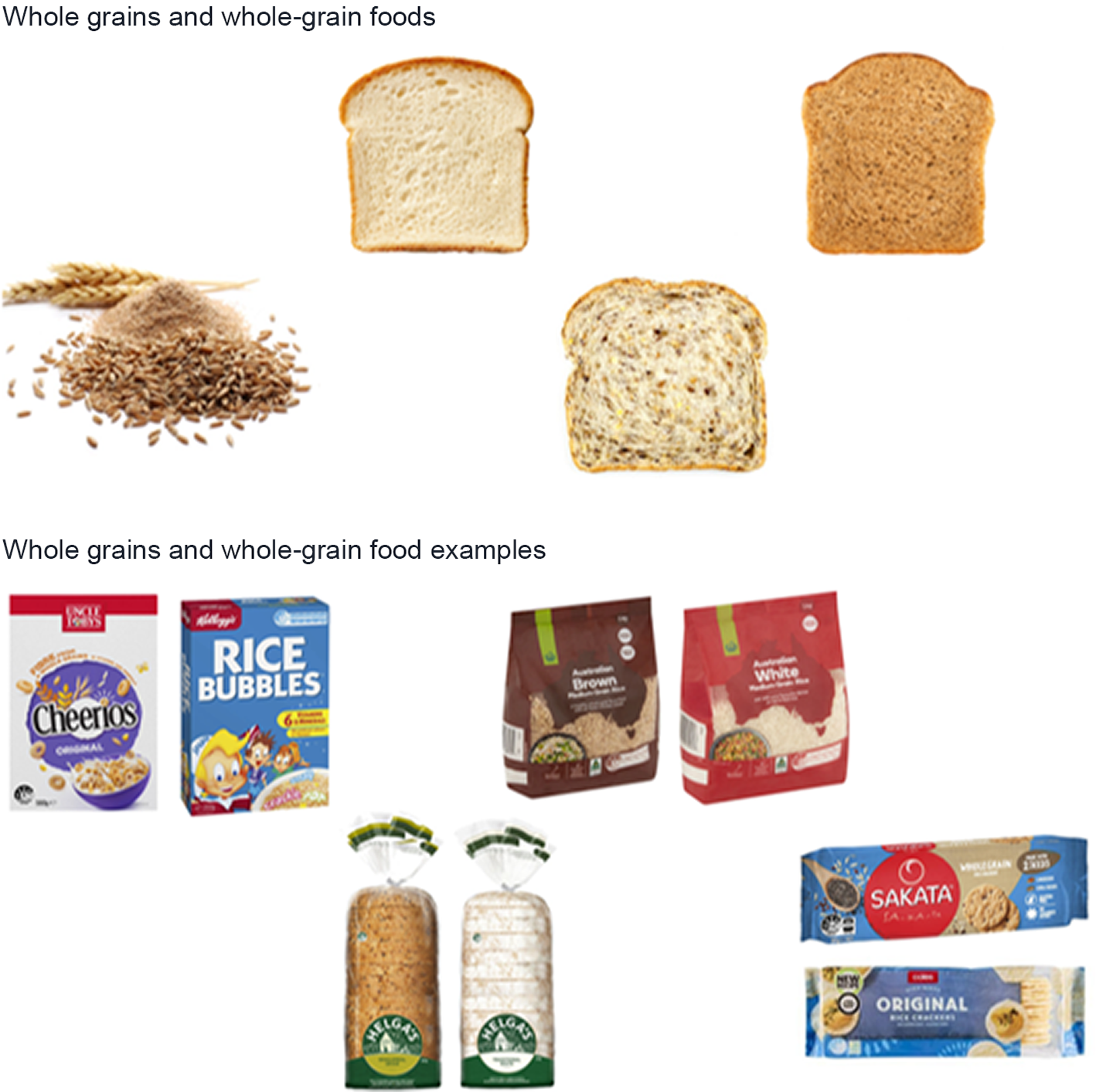
For topic 1, participants were provided with visual aids to assist their understanding of varying amounts of whole-grain content in foods that can either be considered whole-grain foods or not (Figure 1). Images displayed a spectrum of whole-grain content from ingredient to food product using the example of bread, starting with the wheat grain, followed by refined bread where whole-grain content is usually 0 %, then followed by a multigrain bread (whole-grain content approx. 15–25 %) and wholemeal bread (whole-grain content ≥50 %). This was followed by other product examples such as brown v. white rice.
Visual aids to assist consumer understanding of whole grain quantities infoods including food examples.

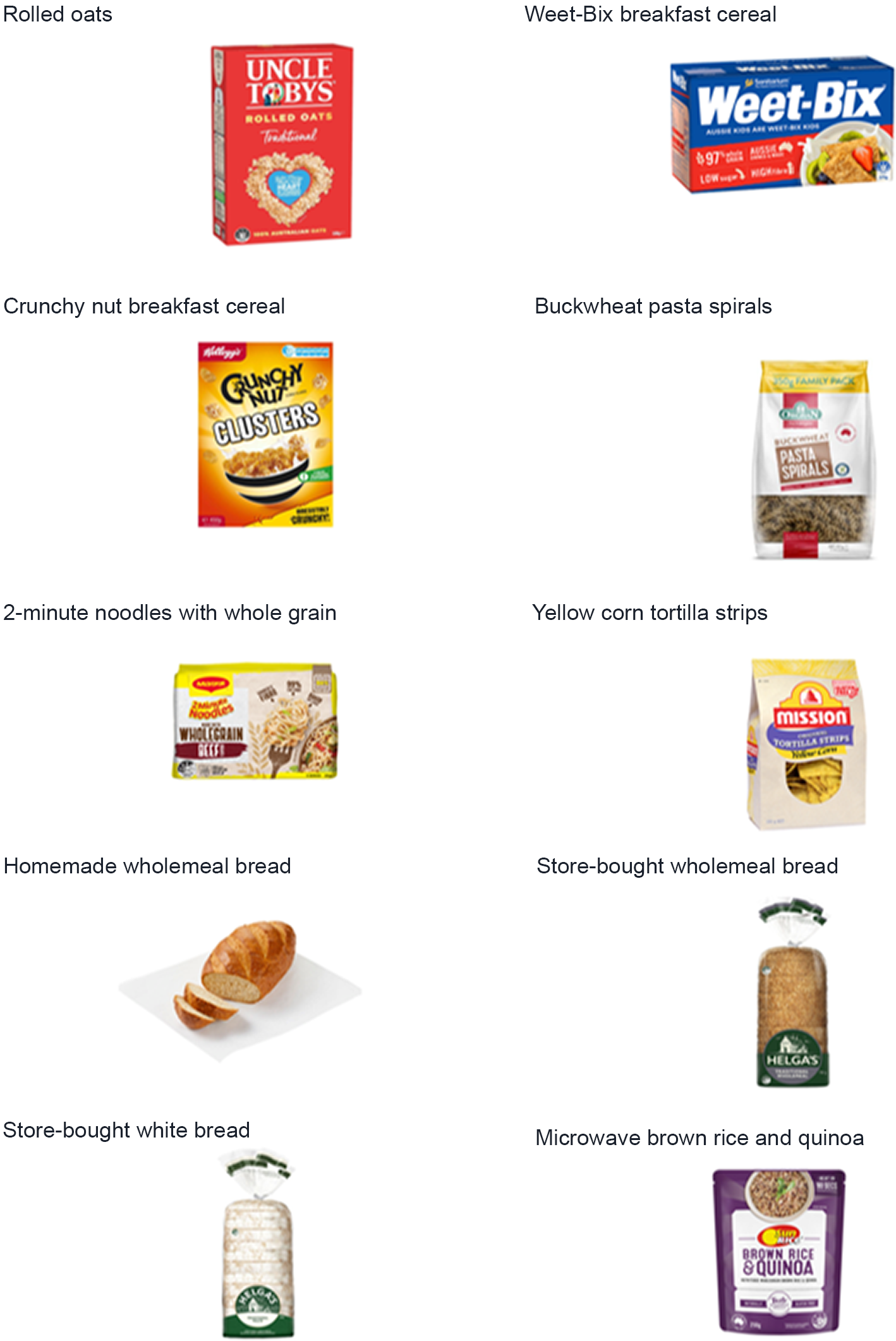
For topic 2, participants were provided with individual image examples of common whole-grain foods of varying levels of processing and were asked to discuss whether they perceived them as ultra-processed or not based on previous questions and discussion. Examples of food items included are shown in Figure 2.
Whole-grain food examples with varied processing levels used to discussperceptions as ultra-processed or not.

Food industry interviews
Voluntary sampling techniques were used to recruit food industry personnel. This included study advertisement by the Grains & Legumes Nutrition Council in Australia and the Global Whole Grain Initiative on behalf of the research team, to their existing membership databases. Secondary purposive sampling was also used to ensure a wide scope of professional roles and adequate representation of international food supplies. Food industry personnel of interest included dietitians, nutritionists, food scientists, research and development personnel, and those in regulatory roles, all over 18 years of age. Participants were required to be currently or recently employed in the food industry setting either within an Australian or international company that have grain-based products included in their portfolios. Prior to data collection, participants were advised to represent their own views as individuals with expertise in the grain industry, as opposed to representing the company they are affiliated with or employed by. Recruitment continued until data saturation occurred, and contemporaneous analysis revealed no new themes.
Semi-structured interviews were conducted initially by lead researcher (EJP) and supporting researcher (EJB, an experienced dietitian researcher) with industry personnel but later conducted one-on-one by EJP. Interviews were conducted between November 2024 and February 2025, and each took 30–45 min to complete. Interview questions were open-ended and structured to gain insight into (1) current understanding and perceptions of classifying foods including whole-grain foods by their level of processing and (2) usefulness of classifying foods by their level of processing in guidance for industry and consumers (Table 2). When participants were not familiar with Nova, they were provided with a general overview of the system’s food categories, namely an explanation of key processes underpinning each category and food examples. Probing questions and prompts were also utilised to gain further insights.
Food industry personnel semi-structured interview question guide

Table 2. Long description
A table with two sections, each containing multiple questions. Section 1 focuses on current understanding and perceptions of classifying foods by their level of processing, including whole-grain foods. It has five questions (Q1 to Q5) exploring familiarity with the concept, importance of processing, reasons for non-ultra-processed classifications, evidence regarding health associations, and specific considerations related to whole-grain foods. Section 2 addresses the usefulness of classifying foods by their level of processing in guidance for industry and consumers. It includes six questions (Q1 to Q6) about the ease of categorization, engagement in discussions, essential processing elements, practical guidance, dietary recommendations, and addressing food processing concerns. Each question is detailed with sub-questions or prompts to guide the interview.
Data analysis
Inductive thematic analysis was used to analyse data for both industry interviews and consumer focus groups separately, following the six-phase framework developed by Braun & Clarke (2006)(Reference Braun and Clarke19). Briefly, researchers familiarised themselves with the data by reading and re-reading transcripts including during manual review of transcriptions. Initial codes for interviews and focus groups were generated separately, although in duplicate (EJP and EJB). Identical or related codes were collated to develop broader themes. This was completed using the qualitative data analysis software NVivo (Version 12, QSR International Pty Ltd). All researchers were involved in broader discussions and theme development, particularly if codes or themes were anomalous between the two initial reviewers, to ensure that results reflected the entire data set including all opinions. Final analyses were undertaken to refine themes and establish existing relationships between themes. Specifically, crossover of themes and concepts between food industry personnel and consumers were integrated. Quotes reflecting themes were extracted by EJP during thematic analysis and included as evidence following agreement of all researchers. All quotes were unidentifiable and labelled according to order of participation for both industry and consumers (e.g. Industry 1, Industry 2, etc., and Consumer 1, Consumer 2, etc.).
Results
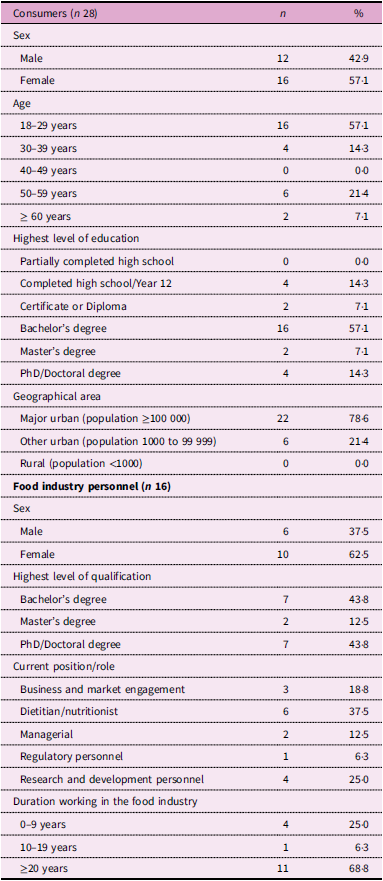
A total of twenty-eight consumers (twelve male, sixteen female) and sixteen industry personnel (six male, ten female) participated across nine focus groups and sixteen interviews, respectively. Most consumers had a Bachelor’s degree education level (n 16) and lived in major urban areas (n 22). Industry personnel were predominantly from Australia (n 10), and the highest proportion held roles as the company’s dietitian/nutritionist (n 6) (Table 3).
Demographic characteristics of the Australian consumers participating in focus groups (n 28) and food industry personnel interviewees (n 16)

Table 3. Long description
The table compares demographic characteristics of Australian consumers and food industry personnel. It has two main sections: Consumers and Food industry personnel. The Consumers section includes 28 participants with details on sex, age, highest level of education, and geographical area. The Food industry personnel section includes 16 participants with details on sex, highest level of qualification, current position/role, and duration working in the food industry. Row 1: Sex, Male, 12, 42.9, Female, 16, 57.1. Row 2: Age, 18-29 years, 16, 57.1, 30-39 years, 4, 14.3, 40-49 years, 0, 0.0, 50-59 years, 6, 21.4, ≥ 60 years, 2, 7.1. Row 3: Highest level of education, Partially completed high school, 0, 0.0, Completed high school/Year 12, 4, 14.3, Certificate or Diploma, 2, 7.1, Bachelor’s degree, 16, 57.1, Master’s degree, 2, 7.1, PhD/Doctoral degree, 4, 14.3. Row 4: Geographical area, Major urban (population ≥100 000), 22, 78.6, Other urban (population 1000 to 99 999), 6, 21.4, Rural (population <1000), 0, 0.0. Row 5: Sex, Male, 6, 37.5, Female, 10, 62.5. Row 6: Highest level of qualification, Bachelor’s degree, 7, 43.8, Master’s degree, 2, 12.5, PhD/Doctoral degree, 7, 43.8. Row 7: Current position/role, Business and market engagement, 3, 18.8, Dietitian/nutritionist, 6, 37.5, Managerial, 2, 12.5, Regulatory personnel, 1, 6.3, Research and development personnel, 4, 25.0. Row 8: Duration working in the food industry, 0-9 years, 4, 25.0, 10-19 years, 1, 6.3, ≥20 years, 11, 68.8.
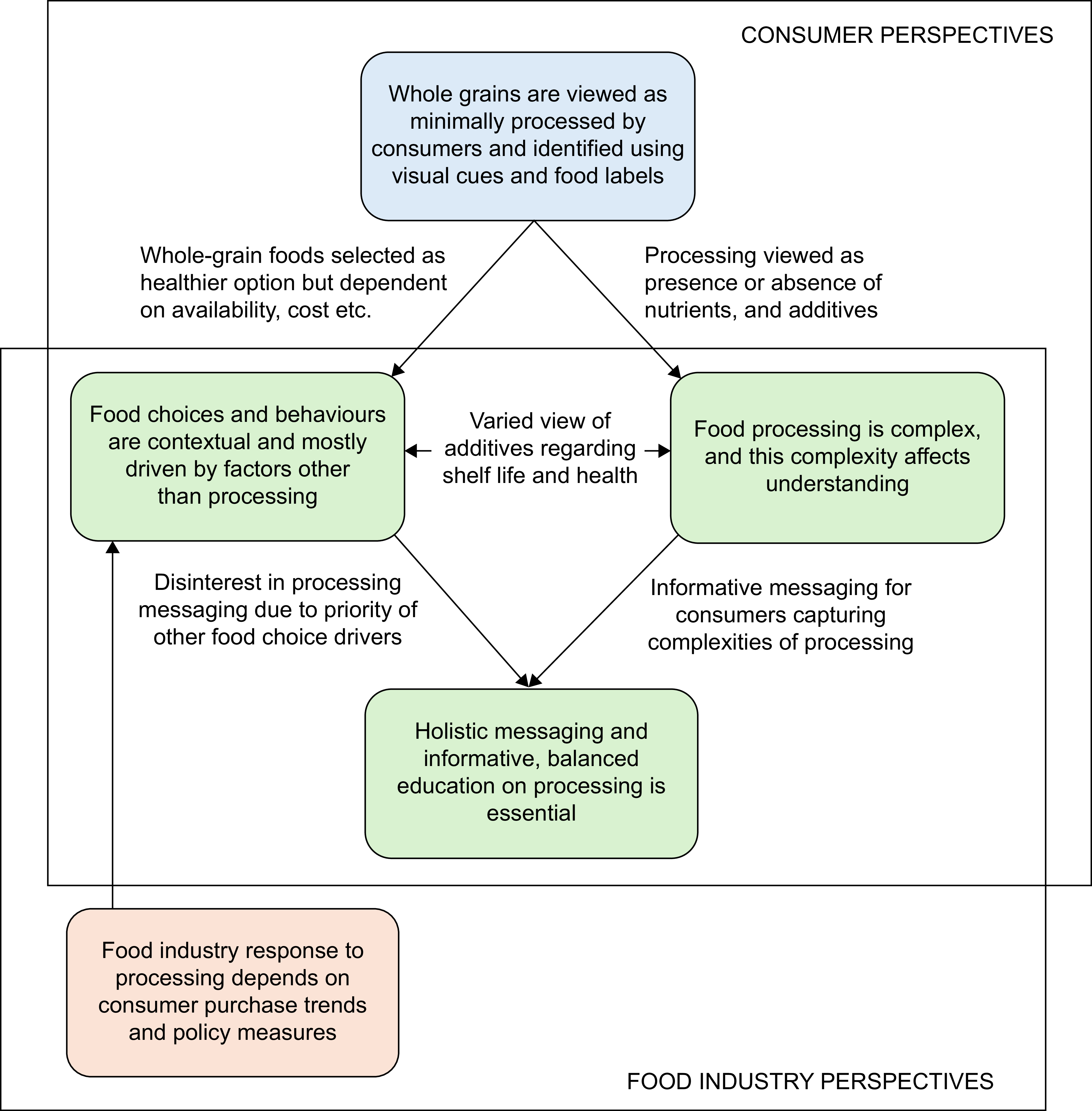
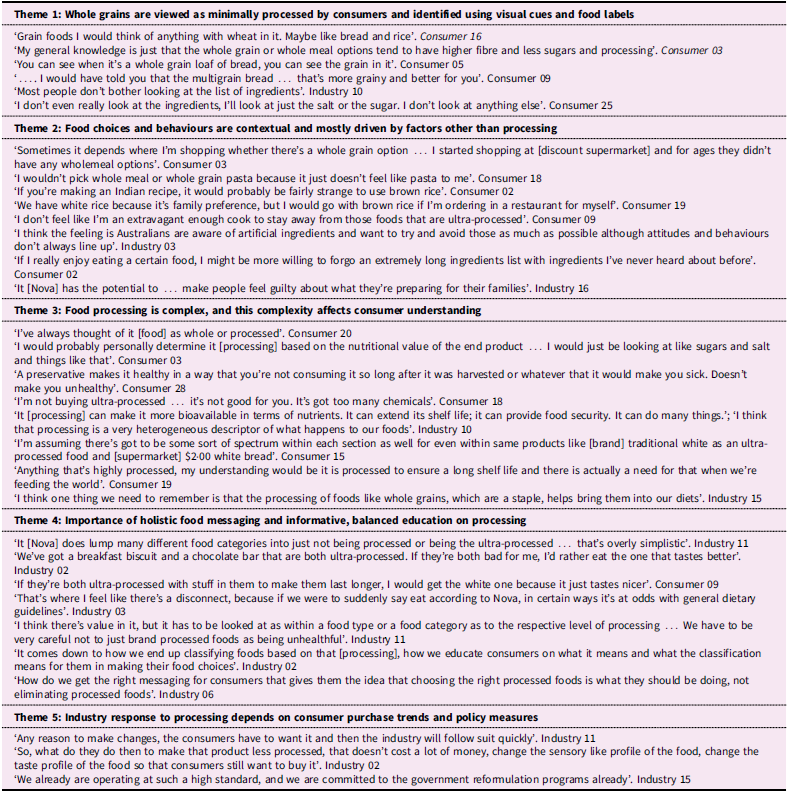
There was significant crossover between consumers and food industry personnel in their views on the role of processing in grain foods. Although food industry representatives seemed to have a more nuanced understanding of processing itself, consumers did report some consideration of factors related to processing (e.g. presence of additives) in making food choices. Given the crossover, the themes and their interrelation are represented together (Figure 3). However, a key difference was that food industry personnel reflected on the drivers between purchasing habits and product development, and this was not described by consumers. Across the interviews and focus groups, five major themes included the following: 1. Whole grains are viewed as minimally processed by consumers and identified using visual cues and food labels, 2. Food choices and behaviours are contextual and mostly driven by factors other than level of processing, 3. Food processing is complex, and this complexity affects consumer understanding, 4. Holistic messaging and informative, balanced education on processing is essential, and 5. Food industry response to processing depends on consumer purchase trends and policy measures. Quotes supporting themes are presented in Table 4.
Interrelation of themes of consumer and food industry perspectivesregarding whole-grain foods and their processing.

Quotes of consumers and food industry personnel to support themes

Table 4. Long description
A table with five themes and supporting quotes from consumers and food industry personnel. The table has five rows and three columns. The columns are labeled ‘Theme’, ‘Quotes from Consumers’, and ‘Quotes from Industry’. Theme 1: Whole grains are viewed as minimally processed by consumers and identified using visual cues and food labels. Theme 2: Food choices and behaviours are contextual and mostly driven by factors other than processing. Theme 3: Food processing is complex, and this complexity affects consumer understanding. Theme 4: Importance of holistic food messaging and informative, balanced education on processing. Theme 5: Industry response to processing depends on consumer purchase trends and policy measures. Each theme is supported by quotes from consumers and industry personnel.
Theme 1: Whole grains are viewed as minimally processed by consumers and identified using visual cues and food labels
Consumers are familiar with grain foods and commonly identified them as wheat-based products or items such as bread, wraps, rice, pasta and cereals such as oats. Comparatively, their understanding of whole grains was more limited, although they consistently defined them as ‘less processed’ or ‘raw’, and as the healthier option compared to their refined grain counterparts. Consumers had varied abilities in identifying whole-grain products. They often identified them as darker in colour or by the presence of visible grains. For example, they suggested multigrain breads as higher whole-grain choices compared to wholemeal, despite usually not being high in whole grain, because they could see ‘a grain’ (although these often include seeds). Food industry personnel thought that most consumers do not engage with aspects of packaging labels, such as ingredient lists, to identify foods or judge the healthfulness of a food to guide food choices. However, consumers did mention front-of-pack labelling in identification of whole-grain foods but reported infrequent use of other packaging elements such as ingredient lists.
Theme 2: Food choices and behaviours are contextual and mostly driven by factors other than processing
Cost and accessibility were major drivers for consumers when considering whole-grain choices. Some perceived whole-grain varieties to be more expensive compared to refined grains, but others suggested cost was relatively similar. Consumers also stated they desired whole-grain varieties, but their availability depended on where they shopped. Sensory properties including taste and texture of whole grains were preferred by some consumers, but most preferred refined or ‘white’ grains. Both consumers and food industry personnel suggested taste and sensory preferences also depend on the food product, referring to pasta as an example where refined pasta is superior. Similarly, recipe and meal integrity impacted consumer choices, particularly related to cultural dishes (e.g. the use of white rice in Southeast Asian cuisines).
Familial influences on food choice were highlighted by consumers, primarily children’s preferences for refined grains. Food industry personnel perceived this as a priority focus area (swapping from refined to whole-grain varieties in family meals) that would maximise the reach of health benefits. Of interest, consumers articulated an understanding that processing was used to extend shelf life and reduce food waste. Therefore, there was increased convenience for individuals and families to choose grain products that had undergone some processing. This was not the case for all participants though, as some consumers perceived long shelf life negatively, associating it with the presence of additives. However, there was a variation in the acceptability of additives depending on the type of food product (e.g. they were viewed more positively in whole-grain foods like bread compared to confectionary items). Consumers also suggested they would need better cooking skills to reduce reliance on more highly processed options, and similarly, food industry personnel perceived that many consumers rely on packaged (processed) foods due to limited culinary skills.
Consumers indicated prioritisation of these listed drivers of choice (e.g. familial preferences) as opposed to prioritising food choices based on the level of processing. Food industry personnel thought that even for consumers more aware of processing, food behaviours would not always depend on or align with the awareness. In general, health was infrequently referred to as any kind of factor in choosing whole grains, but when identified, consumers typically referred to the high fibre content of whole grains and its health benefit. Consumers suggested they tended to compromise on health in favour of taste and enjoyment when making some food choices. Food industry personnel were concerned that in a situation where there may be advice against certain grain-based foods, including whole-grain foods due to the level of processing, this may incur feelings of guilt for those choosing such foods for their family.
Theme 3: Food processing is complex, and this complexity affects consumer understanding
Consumers perceived the choices between whole-grain and processed (commonly referred to as ‘packaged’ by consumers) foods as binary. That is, the concept of a ‘whole’ food would be the opposite of a processed food.
Consumers typically referred to foods as ‘processed’ when referencing UPF and did not differentiate between the two. When considering processed foods, consumers generally perceived them as harmful for health and tended to refer to nutrient contents as the rationale. They described nutrients added or reduced from a food (sugar, salt, fibre, protein, etc.) as the key determinants of a ‘good’ or ‘bad’ food, rather than specific food processes. Although it was not a strong consideration for health, consumers inadvertently applied principles of Nova as they tended to also reference additives when determining a food’s level of processing, particularly if there were unrecognisable ingredients or artificial colours and flavours. Additives were generally viewed as negative, but again, this was not always a critical attribute for some. As described, some consumers also identified positive uses of additives, such as improving shelf life and food safety.
Food industry personnel suggested that processing includes many techniques and is undertaken for many reasons including food safety, shelf stability, nutrient bioavailability and sensory improvement, and for this reason, suggested processing is a continuum. There was specific concern that if processing was to be perceived in a strictly binary way (such as ultra-processed or not), this could oversimplify the issue and may carry over into unhelpful health promotion messaging. Specifically, they felt that a message implying all higher levels of processing are bad would not be informative for consumers. Some consumers conceptualised foods along a spectrum or scale within each Nova category, but their primary concern, as described, was related to nutrient content.
Particularly for food industry personnel, but also for one consumer, the complexity of processing was related to an understanding that some degree of processing is often a contributor to food security and is fundamental to building food supplies to feed entire populations. One food industry person suggested that processing of grains is particularly complex and nuanced, as it is the processing of food that enables its inclusion in our diet. For example, processing is required to remove inedible parts of the grain and improve digestibility.
Theme 4: Importance of holistic food messaging and informative, balanced education on processing
Most consumers were educated in the blunt message of processing where they understand or try to avoid foods with unfamiliar or artificial ingredients. Food industry personnel suggested parts of the Nova system could be adopted as useful ways to consider packaged foods (e.g. additives) but overall, they had concerns that messaging of processing in isolation may be reductionist. It was indicated by both food industry personnel and consumers that the heterogeneous nature of UPF, whereby foods considered healthy in some ways are considered UPF, may lead to less healthy food choices. For example, a situation where a breakfast biscuit is considered an equal choice to a chocolate bar or refined and whole-grain breads are classified the same.
One consumer queried how Nova aligns with dietary guidelines and surmised it would not be that different, but food industry personnel suggested there are inconsistencies. Food industry personnel suggested messaging should be in the context of traditional food groups (e.g. comparing the processing of refined and whole-grain foods within the broader grain foods group) to aid consumer understanding of different processes and to address subtleties. Food industry personnel considered the inclusion of processing in the health star rating (HSR) (a voluntary front-of-pack labelling system that rates foods based on the overall nutritional profile of packaged foods) to move towards holistic messaging of foods but identified greater work is needed to determine weight of nutrients v. processing on impacting health. Consumers often referenced HSR in their rationale for determining food’s level of processing despite processing not being considered in the current algorithm.
Overall, consumers were not initially familiar or interested in messaging related to processing. Prior to the focus group, consumers were only familiar with UPF through negative representation in media or online social media. Some expressed interest in greater understanding but others said it would not change current behaviours as it encompasses almost all foods. Food industry personnel suggested a useful and meaningful description of processing, and UPF is needed for consumers who are interested but should be delivered with education that encourages consumption of ‘healthier’ processed foods v. complete avoidance. Again, they highlighted nutritional differences between a highly processed refined grain food with added fats and sugars and a fortified whole-grain product, that may both be considered UPF.
Theme 5: Food industry response to processing depends on consumer purchase trends and policy measures
Food industry personnel suggested that food processing and production is driven by consumer purchase trends that are only likely to change as consumers are educated. They also discussed intricacies of changing processing practises whilst maintaining current product sensory profiles and limiting impacts on processing costs.
Food industry personnel acknowledged food regulation in Australia is of a high standard. It was suggested industry focus is currently directed towards government food reformulation initiatives that encourage the food industry to voluntarily reduce sugar, sodium and saturated fat in manufactured food and drinks.
Discussion
Findings from this study provide insight into current understanding of both food industry personnel and consumers regarding whole grains, including perceptions of their processing and the processing of foods more broadly, to inform messaging and regulatory measures. Previous research suggests that most consumers have poor knowledge of whole grains (Reference Kissock, Neale and Beck20), and many are confused regarding the concept of food processing (Reference Barrett, Sträuli and Coyle21). Both of these combined likely impact understanding of and behaviours related to healthy dietary choices. Interestingly, consumers in the current study had a general understanding of whole grains, viewing them as less processed compared to refined grains and beneficial for health. Similarly to previous research, they recognised their higher dietary fibre content (Reference Foster, Beck and Hughes22). Consumers varied more in their precise abilities to identify whole grains, often choosing multigrain bread as the better choice if it visually contained some whole grain (often actually seeds) and was labelled as whole grain. This may be in part due to reported use of front-of-pack labelling and not using ingredient lists. Research has shown consumers often choose products displaying a whole-grain label despite containing lower whole-grain content than one that may contain more whole grain but does not display a label (Reference Wilde, Pomeranz and Lizewski23). Accuracy in identifying whole-grain foods needs to be addressed, in order to provide clear guidance to translate to intake of healthier or higher whole-grain content foods.
Even though consumers did not report using ingredients lists to identify whole-grain foods, many discussed that they avoid additives or unfamiliar ingredients related to food processing. Where a whole-grain food was considered ultra-processed, few consumers stated they would outright avoid the product, but others suggested they would continue to choose the whole-grain option as it was still considered a more healthful alternative to refined grain options. This juxtaposition highlights that consumers are nuanced in their use of different food labels but also that for some consumers, choosing whole-grain varieties is viewed as the best option across contexts of grain varieties and processing.
Views of food industry personnel on the concept of food processing and UPF have previously been explored as part of a group of broader professionals (Reference Sadler, Grassby and Hart24). Findings in the current study were consistent with this previous exploration including that processing is viewed as not inherently negative but rather may have beneficial elements to support positive food choices (Reference Sadler, Grassby and Hart24). They were also similar in highlighting the importance of processing to form food systems (Reference Sadler, Grassby and Hart24). Understanding and perceptions of food processing and UPF more broadly by consumers in the current study also aligns with investigations of consumers globally and in Australia (Reference Barrett, Sträuli and Coyle21). Specifically, that Australian consumers have limited awareness of the term UPF (Reference Barrett, Sträuli and Coyle21), but this is different elsewhere likely due to existing efforts to address the concept (e.g. inclusion in national dietary guidelines in countries such as Brazil, Ecuador, Peru and Uruguay) (Reference Koios, Machado and Lacy-Nichols25).
Consumers often used ‘UPF’ terminology interchangeably with ‘processed’ and ‘packaged’ foods suggesting they are conceived to be similar or the same thing. UPF or processed foods were also identified or described based on a food’s nutrient composition. That is, depending on whether nutrients were added or removed during processing would modify perceptions of a food. The inclusion of additives was also considered as contributing to this definition. It would be important that dietary guidance and messaging clearly differentiate processing that provides foods that are edible and safe, compared to those that may have processing that contributes to deleterious health outcomes. This should be complemented with informative and accessible education for consumers as to how processing differs from, but can be used in conjunction with, nutrient composition information. Food industry personnel also tended to use terminology of ‘processed’ foods and UPF interchangeably. This may be due to less support of the commonly used Nova UPF definition or in highlighting that there is no universally agreed formal definition of UPF.
The results contain some contrast where cost and accessibility take precedence over the concept of food processing in consumer food choices. Many consumers opted for cheaper whole-grain food options irrespective of processing if these were available, as availability typically depended on the grocery store the consumer frequented. The British Nutrition Foundation also highlights that certain UPF such as packaged breads play an essential role in diets for some due to cost and accessibility, for example, those with poor access to cooking equipment or grocery stores and those unable to afford energy and food (26). Limited culinary and cooking skills was similarly identified by consumers in the current study as circumstances where processed foods, including UPF, may play an important role (26), particularly if consumers are educated on more nutrient dense options such as whole-grain foods (Reference Price, Du and McKeown2,Reference Price, Kissock and Barrett3) .
Food industry personnel in the current study emphasised that any form of regulatory measure on processing (e.g. incorporation into guidelines or labelling) needs to be in conjunction with education campaigns that inform consumers on all the ways and reasons we process foods (e.g. food safety, shelf stability, nutrient bioavailability, and sensory improvement, etc.). Consumers reported some awareness of this but were otherwise limited to the largely negative portrayal of food processing in the media, namely their frequent association with negative health outcomes (Reference Russell, Sievert and Dickie27). Education may be more informative with concepts of processing portrayed as a continuum to capture the multitude of reasons for processing and evidence nuances for some food groups including whole-grain varieties (Reference Chen, Khandpur and Desjardins13,Reference Cordova, Viallon and Fontvieille14) . Discernment of this continuum may be by scaling foods by levels of processing within traditional food groups as suggested by food industry personnel or by scaling within each category of the Nova food classification system by considering nutrient compositions as conceptualised by consumers. The latter has been proposed in the Siga classification, an extension of the Nova classification with additional subgroups that take into account added salt, sugar and fat contents of food in conjunction with processing indicators (Reference Davidou, Christodoulou and Frank28).
Consumers in previous research have indicated that front-of-pack labelling may be useful in identifying UPF (Reference Barrett, Sträuli and Coyle21). Basing food decisions on processing, if included in front-of-pack labelling, did not seem feasible to consumers in the current study as they perceived a majority of foods as UPF in a grocery store, thus limiting effectiveness of labelling efforts. This is consistent with previous research that found identifying UPF did not significantly influence purchase intentions, product healthfulness perceptions or perceived label effectiveness compared to nutrient warning labels alone (Reference D’Angelo Campos, Ng and Duran29). Other research found more influence and better understanding from consumers when presented in conjunction with nutrient warning labels (Reference D’Angelo Campos, Ng and McNeel30,Reference Srour, Hercberg and Galan31) , particularly when compared to a no-label situation (Reference Srour, Hercberg and Galan31). Food industry personnel considered inclusion of ultra-processing in the HSR to ensure it is scored alongside nutrients but queried whether nutrients and processing should be considered of equal weighting. Previous research has explored approaches to ultra-processing implementation that aligns the HSR more with Nova and without changing alignment to national dietary guidelines (Reference Barrett, Pettigrew and Neal32) but showed lower or broader ranged scoring for bread and bakery products and cereal and grain products in some approaches (Reference Barrett, Pettigrew and Neal32). Additionally, the HSR has existing limitations, particularly the exclusion of whole grains from its algorithm based on the rationale that fibre is scored, despite evidence of independent benefit from whole grains (Reference Barrett, Amoutzopoulos and Batterham33,Reference Barrett, Batterham and Beck34) . Manufacturers are therefore not incentivised to include whole grains in foods as reflected in a recent audit of cereal products (personal correspondence, Grains & Legumes Nutrition Council August 2025) that indicated increased addition of extracted fibres to products, and fewer whole grain claims on products. Of interest, the USA Food Compass 2·0 includes both nutrient scores and processing as equal weighting (Reference Barrett, Shi and Blumberg35) as well as equal weighting for certain ingredients, including favourable points for whole grain, unlike the HSR. Allocating scores for whole grains in addition to scoring for processing in the HSR may better reflect the evidence showing beneficial or neutral health impacts of whole grains even if more highly processed (Reference Price, Du and McKeown2,Reference Price, Kissock and Barrett3) as processing is considered in conjunction with nutrients compositions.
To understand the relevance of messaging and consumer education about food processing, greater evidence on the direct health impacts (mechanisms of action) of different processing forms is needed. This may firstly include how these methods impact nutrient composition. The Task Force on Food Processing for Nutrition, Diet and Health established by the International Union of Food Science and Technology have recently developed an approach to determine the impact of food processing on the nutritional value of processed food to improve definitions and distinguishment between formulation and processing (Reference Ahrné, Chen and Henry36). This approach is comprehensive in also considering other food elements such as safety, affordability, convenience, etc., and is encouraged by the task force to be further investigated by stakeholders (Reference Ahrné, Chen and Henry36). Such an approach may assist in more specified education for consumers in understanding processing concerns and translating this to improved food choices and dietary intake.
Limitations in the current study are largely related to recruitment. Food industry personnel in Australia were successfully recruited via voluntary sampling techniques. The recruitment of global food industry personnel may have been limited as purposive sampling techniques including use of existing contacts of the researchers were utilised and failed to reach all food supplies. However, varied perspectives of food industry personnel were obtained, and theme saturation was reached. Food industry personnel were also recruited via whole-grain advocacy organisations, and therefore, the sample has a professional interest in grain products. Many consumer participants in focus groups were aged 18–29 years, with a Bachelor’s degree level of education, and live in major urban areas likely from recruitment locations including university campus and social media. Despite purposive sampling to increase varied demographics, certain groups were still underrepresented including those aged 40–49 years, limiting transferability of the findings. This may be due to work and family commitments, although flexible time schedules were offered to address this. Individuals living rurally were also underrepresented. Focus group participants may also potentially be more interested in their health or invested in improving their health than typical Australian consumers given the voluntary nature of recruitment. It is common that social desirability bias impacts truthfulness of consumer responses and may have been more likely in the current study as focus groups were completed in fewer numbers, frequently three participants (Reference Bispo Júnior37). A further limitation limiting interpretation may be that transcripts were not returned to participants for consultation and participants did not receive feedback on the findings.
Conclusion
Overall, findings of this study emphasised that policy measures addressing food processing should reflect its complexities including different types of processing and the relevance or rationale for their use. These concepts are not currently clearly communicated to consumers in existing food processing classification systems. Further, to achieve holistic food messaging and education, both consumers and food industry personnel suggested classification based on food processing may be better contextualised along a continuum that is discerned by considering processing relative to traditional food groupings or by nutrient compositions. Further research is needed to consider direct impacts of consumer perceptions of food processing on their food purchasing and intake behaviours.
Supplementary material
To view supplementary material for this article, please visit https://doi.org/10.1017/S1368980026103310
Acknowledgements
Not applicable.
Authorship
The authors’ contributions were as follows – EJP, EMB, MJB and EJB designed research; EJP, EMB and EJB conducted research, EJP and EJB analysed the data, and EJP wrote the initial draft of manuscript; EJP, EMB, MJB and EJB reviewed and edited the manuscript; EJB had primary responsibility for final content, and all authors read and approved the final manuscript.
Financial support
Not applicable.
Competing interests
Eleanor J. Beck (EJB) reports a relationship with Cereals and Grains International and International Association for Cereal Science and Technology of travel reimbursement for presentation of scientific research. EJB is the unpaid Chair of the Whole Grain Initiative’s Intake Recommendation Working Group.
Ethics of human subject participation
This study was conducted according to the guidelines laid down in the Declaration of Helsinki, and all procedures involving research study participants were approved by the University of New South Wales Human Research Ethics Committee (approval number 8604). Written informed consent was obtained from all subjects/patients.




 Open access

