Implications
Ruminants have a low efficiency of N utilization compared with non-ruminants. This low efficiency has implications not only for production performance and economic efficiency but also for the emission of contaminants to the environment. The efficiency of N utilization can be improved through the understanding and modification of factors regulating the efficiency of N utilization in key processes, including N capture in the rumen, protein degradation, digestion and absorption in the gastrointestinal tract and amino acids utilization in peripheral tissues.
Introduction
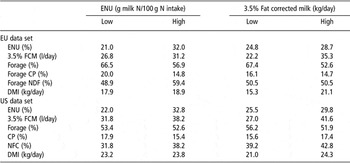
Ruminants have an overall average efficiency of N utilization (g N in product/g N intake; ENU) of around 25% (Kohn et al., Reference Kohn, Dinneen and Russek-Cohen2005; Huhtanen and Hristov, Reference Huhtanen and Hristov2009), with a wide range of variation between experiments (15% to 40%). The average is much lower than that observed for other production animals (i.e. swine or poultry; Kohn et al., Reference Kohn, Dinneen and Russek-Cohen2005) and because the measurement of the efficiency of N utilization is rather robust (dry matter (DM) intake, crude protein (CP) content of the diet and yield and CP content of the final product), the variation reflects differences in feeding practices or experimental conditions, suggesting that improvements are possible. Using data from peer-reviewed papers, the ENU utilization of typical EU diets (based on grass/grass silage-based diets; n = 287) and US diets (based on corn silage-based diets; n = 167) was calculated. Table 1 represents the productive and dietary characteristics of the lowest and the highest quartile for ENU. Within the EU diets, treatments with higher ENU resulted from cows with higher DM intake and milk yield. Diets contained a lower proportion of forage and forage CP, while forage NDF content was higher. Therefore, it appears that better efficiency was obtained when lower quality forages were used (lower CP, higher NDF). While this may be negative for overall production, it does provide clues for focussing future research on improving N utilization from forages. In contrast, in the US-type diets, high ENU resulted from cows that produced more milk, and diets had lower CP and higher non-fibre carbohydrates (NFC) compared with the lower ENU diets. One may argue that farmers will continue to feed animals to maximize milk yield. Therefore, using the same data set, we characterized the higher and the lower quartile for milk production (Table 1). The highest milk-producing cows were also more efficient from the N perspective. Therefore, it seems that, when diets are properly formulated, higher ENU is compatible with higher milk production from the cow prospective. However, it is noteworthy to observe that, in this data set and others (Huhtanen and Hristov, Reference Huhtanen and Hristov2009) there is a large variation in efficiency between different dietary treatments. Identifying sources of variation and minimizing them is also important in the improvement of N utilization and the reduction of N contamination in dairy cattle.
Characteristics of the upper and lower quartile based on efficiency of N utilization (ENU) and milk yield

FCM = fat corrected milk; DMI = dry matter intake; NFC = non-fibre carbohydrates.
Rumen metabolism has been identified as the single most important factor contributing to the inefficient use of N in ruminants (Tamminga, Reference Tamminga1992). This, together with the fact that manipulation of rumen microbial fermentations is more feasible than modifying other metabolic processes, has resulted in a wealth of research on optimizing rumen microbial fermentation and flow of N to the small intestine. The results have been recommendations for balancing proportions of RDP and RUP, controlling protein degradation and supply of fermentable energy, or modifying the amino acids (AA) profile delivered to the small intestine, among others (AFRC, 1993; NRC, 2001; INRA, 2007). This research has improved greatly our understanding of rumen microbial fermentation and dairy cattle N utilization, but has only resulted in a minor improvement in ENU at the animal level. For example, Stone et al. (Reference Stone, Trimberger, Henderson, Reid, Turk and Loosli1960) reported an average ENU in US dairy cattle at 23.7%, and 48 years later, the average ENU in US dairy cattle was 24.0% (Hristov and Huhtanen, Reference Hristov and Huhtanen2008). Surprisingly, the recommended N fractions incorporated in feeding systems (RDP and RUP, intestinal digestion, etc.) do not appear to improve our ability to optimize N utilization, and only CP content of the diet appears to be strongly correlated to the ENU (Huhtanen and Hristov, Reference Huhtanen and Hristov2009). This lack of improvement after many years and efforts in research and improved knowledge is puzzling.
A detailed review of N and AA metabolism in ruminants is out of the scope of this paper. The reader is referred to recent extensive reviews describing the N and AA metabolism in the rumen (Ipharraguerre et al., Reference Ipharraguerre, Clark and Freeman2005; Bach et al., Reference Bach, Calsamiglia and Stern2005b), nitrogen recycling (Reynolds and Kristensen, Reference Reynolds and Kristensen2008), AA utilization in portal-vein drained viscera (PDV) and liver (Reynolds, Reference Reynolds2006a) and AA metabolism in the mammary gland (Lapierre et al., Reference Lapierre, Berthiaume, Raggio, Thivierge, Doepel, Pacheco, Dubreuil and Lobley2005). Alternatively, the objective of this review is to critically reevaluate our current understanding of N metabolism in cattle in order to identify which factors affect the ENU and the potential for its manipulation.
Factor affecting the efficiency of N utilization in the rumen
If the rumen has been identified as a major player in the lower ENU, but the extensive research in the area during the last four decades has not been able to improve its efficiency, we need to critically reevaluate some fundamental aspects related to our understanding of optimization of microbial protein synthesis and protein degradation from the point of view of N efficiency.
Microbial protein synthesis
In the last few decades, studies of rumen metabolism have focussed on increasing the total flow of microbial N (Stern et al., Reference Stern, Varga, Clark, Firkins, Huber and Palmquist1994; Bach et al., Reference Bach, Calsamiglia and Stern2005b). Increasing microbial protein synthesis increases the supply of protein with a well-balanced AA profile to the small intestine and decreases ammonia-N concentration in the rumen. Total microbial N flow depends mainly on the availability of energy in the rumen (measured as fermentable energy) and the efficiency of microbial protein synthesis (EMPS, measured as g bacterial N/kg of fermentable energy), provided that N is not limiting. These criteria have been used to establish recommendations for feeding cattle. However, we need to challenge (i) the use of EMPS as a sole index of efficiency of rumen microbial fermentation, (ii) the use of ammonia-N concentration in the rumen as an index of N available for rumen microbes and (iii) the use of microbial N flow to the small intestine as an index to measure available microbial protein to the animal.
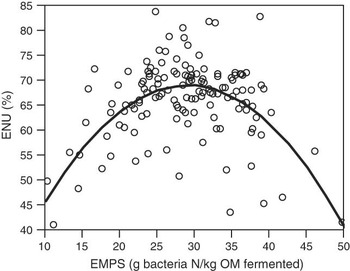
The EMPS increases linearly as RDP increases up to a level of 20% (DM basis) in continuous culture, and also increases linearly up to 14% in vivo (Hoover and Stokes, Reference Hoover and Stokes1991), reflecting the importance of supplying RDP for maximizing EMPS. These and other similar observations have driven recommendations for high RDP diets. However, while EMPS (gram of microbial N per unit of rumen available energy) is a good indicator of the efficiency with which rumen available energy is used for microbial protein synthesis and growth, it does not provide an indication of the efficiency of N utilization in the rumen. Bach et al. (Reference Bach, Calsamiglia and Stern2005b) proposed to use the efficiency of N utilization in the rumen (ENU-R) measured as the ratio between grams of bacterial N synthesized per gram of rumen available N. Available N represents rumen degradable protein and endogenous available protein (including recycled N). Using ENU-R is a fundamental concept that will contribute to reducing N excretion in ruminants. The calculation of this index in vivo is difficult because of the difficulties in measuring endogenous N. Using data from in vitro continuous culture studies to calculate this index results in different recommendations for feeding cattle and the rumen. In contrast to EMPS, ENU-R is negatively correlated to RDP and ammonia-N concentration in the rumen, suggesting that low RDP diets (%DM) should be fed to ruminants (Bach et al., Reference Bach, Calsamiglia and Stern2005b). Because the recommendations appear contradictory depending on the index used, and considering that both measurements are important for optimal rumen function, an optimal point for EMPS and ENU should be determined. Bach et al. (Reference Bach, Calsamiglia and Stern2005b) used data from in vitro dual flow continuous cultures (where no estimates of endogenous N are required) to report a quadratic relationship between EMPS (g bacterial N/kg fermentable energy) and ENU-R (grams bacterial N/100 g available N) with an optimum efficiency of growth obtained with an EMPS of 29 g of microbial N/kg of OM fermented and an ENU of 69 g of microbial N/100 g of rumen available N (Figure 1).
Relationship between efficiency of microbial protein synthesis (EMPS, g bacterial N/kg organic matter truly digested) and efficiency of N utilization (ENU; g bacterial N/100 g rumen available N) in continuous culture fermenters. Y = 15.31 + 3.72EMPS − 0.0643EMPS2; R 2 = 0.33; RMSE = 6.54; P < 0.001. (Adapted from Bach et al., Reference Bach, Calsamiglia and Stern2005b).

The use of ammonia-N as the sole criterion for determining minimum levels of N for optimal microbial growth should also be challenged. Figure 1 shows that for a given EMPS, there is considerable variation in ENU-R. Much research has concentrated on the effect of ammonia-N concentration on microbial protein synthesis and rumen fermentation efficiency. Schwab et al. (Reference Schwab, Huhtanen, Hunt and Hvelplund2005) suggested that bacteria would require 5 to 11 mmol/l of ammonia-N for optimal microbial growth depending on fermentation conditions, although some N losses will occur when the concentration increases above 5 mmol/l. Schwab et al. (Reference Schwab, Huhtanen, Hunt and Hvelplund2005) also suggested that the minimum level could be determined based on optimal OM degradation in the rumen, resulting in higher recommendations. However, supplying higher ammonia-N concentration for optimal OM degradation will result in an unavoidable increase in losses of N from the rumen through absorption. While there seems to be a conflict between optimal ENU-R (with lower ammonia-N diets) and optimal diet digestibility (with higher ammonia-N), the approach overlooks the importance of small peptides and AA in these two functions. The benefits of supplying AA and small peptides on amylolytic and cellulolytic bacteria have been clearly demonstrated (Cotta and Russell, Reference Cotta and Russell1982; Argyle and Baldwin, Reference Argyle and Baldwin1989; Atasoglu et al., Reference Atasoglu, Valdes, Newbold and Wallace1999; Atasoglu et al., Reference Atasoglu, Newbold and Wallace2001). Griswold et al. (Reference Griswold, Hoover, Miller and Thayne1996) reported the effect of feeding diets on continuous culture fermenters where all supplemental N was provided by either soluble protein (soy isolate), peptides, AA or ammonia-N. Based on the effects on fibre digestion, the authors concluded that peptides and AA are required for proper rumen function, including higher fibre degradation, but had no effect on EMPS (32.9 to 35.4 g bacterial N/kg organic matter truly fermented). However, ENU-R was highest for the true protein (92%), intermediate in the peptide diet (83%) and lowest in the AA and urea supplemented diet (71%). It is interesting to observe that the peptide diet supplied the largest amount of non-ammonia-N compared with other treatments. This provides clear evidence that using ammonia-N concentration alone to define optimal supply of available N to rumen bacteria is insufficient, and measurements of concentration of peptides and AA (or an overall estimate of available N) are also required. The concentration of the different N fractions to maximize microbial synthesis needs to be defined, and requires the set-up of more precise methodologies and studies on the dynamics of these N fraction concentrations over time. The potential for manipulating the proportions of these different fractions will be discussed in the next section.
The impact of other dietary and (or) environmental factors affecting ENU-R also requires further research. For example, Hoover and Stokes (Reference Hoover and Stokes1991) reported that in pH-controlled continuous culture fermenters, maximum microbial growth was attained with a 2 : 1 NFC : RDP ratio. For optimal EMPS that would require a supply of around 20% to 22% RDP, (%DM) would not be feasible under practical conditions. However, using data from Stokes et al. (Reference Stokes, Hoover, Miller and Manski1991) to determine the optimal NFC : RDP based on ENU, the ratio became closer to 4 : 1. This would result in RDP levels of about 10%, much closer to current recommendations (NRC, 2001).
The role of pH on ENU-R also needs reevaluation. While pH appears to have a small effect on EMPS (Hoover and Stokes, Reference Hoover and Stokes1991; Calsamiglia et al., Reference Calsamiglia, Cardozo, Ferret and Bach2008), Calsamiglia et al. (Reference Calsamiglia, Cardozo, Ferret and Bach2008) reported that the effect of pH on ENU-R was small on feedlot beef-type diets, but the relationship was quadratic in dairy-type diets (ENU-R = −151.03 + 69.34pH − 5.66pH2; r 2 = 0.50), with maximal ENU-R at pH 6.1 (ENU = 61.2%).
The contribution of protozoal N flow to the total microbial flow to the duodenum may be quantitatively important and may affect our current estimates of ENU, but there are limited data available to fully evaluate its impact on overall efficiency of N utilization (Karnati et al., Reference Karnati, Sylvester, Noftsger, Yu, St-Pierre and Firkins2007). There has also been a long discussion on the potential role of protozoa on rumen metabolism (Jouany, Reference Jouany1996; Williams and Coleman, Reference Williams and Coleman1997). Internal ruminal recycling of bacterial N by protozoa predation has an important energetic cost (Firkins et al., Reference Firkins, Weiss and Piwonka1992), but the impact of such recycling on the ENU-R is uncertain. Most nucleotides will be either reused by rumen microbes or returned to the ammonia-N pool. However, some evidence suggests that a proportion of purines are degraded to xanthines and other purine derivatives that will not be reused and will represent an irreversible loss on N (McAllan, Reference McAllan1982). The quantitative importance of this process in current feeding practices needs to be evaluated. Defaunation usually results in an increase in the EMPS due to lower internal recycling of N. Karnati et al. (Reference Karnati, Sylvester, Ribeiro, Gilligan and Firkins2009) reported in a dual flow continuous culture study designed to specifically retain protozoa in the vessel that defaunation resulted in an increased efficiency of N utilization by bacteria (95.6% v. 75.4%), but when ENU-R was calculated considering the microbial (bacteria and protozoa) protein synthesis, the differences were much smaller (90.8% v. 95.7%). The impact of protozoa on the ENU-R requires further research.
Finally, the use of microbial N flow as an index of efficiency of protein utilization in the rumen should also be challenged. Microbial N is mostly composed of AA-N and nucleic acid-N, and most feeding systems use a constant value of 80% AA-N and 20% nucleic acids (NRC, 2001; INRA, 2007). However, this ratio is affected by the type of diet and rate of growth of bacteria, among other factors. Arambel et al. (Reference Arambel, Bartley, Dufva, Nagaraja and Dayton1982) reported an increase in the nucleic acid to total bacterial N ratio from 20.9 to 27.2 by changing the forage to concentrate ratio of the diet. Higher bacterial growth rates also result in an enrichment of nucleic acids in bacterial cells (Bates et al., Reference Bates, Gillett, Barao and Bergen1985). Therefore, factors that will increase the growth rate of bacteria (such as higher dilution rates due to higher intake, or the supply of high NFC diets) will tend to overestimate the supply of metabolizable protein from the microbial pool. This is relevant because purine bases and most pyrimidine bases are lost in the urine and represent an irreversible loss of N. Therefore, it will be necessary to report EMPS and ENU-R on an AA-N basis rather than on the basis of simple bacterial-N.
Controlling protein degradation in the rumen to provide required nutrients for optimal utilization of N by bacteria
After the previous discussion, it appears obvious that excessive and rapidly produced ammonia-N may be partially responsible for the lower ENU-R, mostly due to the rapid absorption of ammonia-N. Traditionally, the problem of excess ammonia-N has been addressed by using less degradable protein sources, and while it has been successful in reducing rumen ammonia-N concentration, it has also reduced microbial protein synthesis, most likely due to lower available N for microbial growth (Ipharraguerre and Clark, Reference Ipharraguerre and Clark2005). A potential alternative to reducing ammonia-N without reducing available N for microbial growth is the control of protein degradation at different steps of the process. The objective would be to reduce peptide degradation and AA deamination, thereby reducing ammonia production without limiting the supply of peptides and AA to rumen bacteria. This will not only maintain the rate of microbial protein synthesis, but may in fact increase its efficiency (Cotta and Russell, Reference Cotta and Russell1982; Argyle and Baldwin, Reference Argyle and Baldwin1989; Griswold et al., Reference Griswold, Hoover, Miller and Thayne1996). Broderick et al. (Reference Broderick, Wallace and Ørskov1991) demonstrated that rapidly degraded proteins may result in the accumulation of peptides and AA within the first 2 h after feeding, suggesting that rates of peptidolysis and deamination play an important role in the control of protein degradation. Cardozo et al. (Reference Cardozo, Calsamiglia, Ferret and Kamel2004) also found in continuous culture fermenters receiving a typical dairy ration that the concentration of peptides, AA and ammonia were within the same range (50 to 10 mg N/l) for up to 8 h after feeding. Modifying the proportions of the different N fractions can be achieved by modifying oligopeptide lysis, di- tri- peptide lysis and deamination. Reducing oligopeptide lysis has the advantage that there are few bacteria involved in this process (i.e. Streptococcus bovis, Ruminoccocus amylophylus and Prevotella spp), making it more suitable for control (Walker et al., Reference Walker, Newbold and Wallece2005). Wallace et al. (Reference Wallace, Newbold, Bequette, MacRae and Lobley2001 and Reference Wallace, McKain, McEwan, Miyagawa, Chaudhary, King, Walker, Apajalahti and Newbold2003) provided some evidence that the modification of the Prevotella ssp. population or the direct inhibition of the enzyme dipeptidyl peptidase involved in oligopeptide degradation may help in reducing the degradation rate of oligopeptides. Busquet et al. (Reference Busquet, Calsamiglia, Ferret and Kamel2005a) also reported a reduction in small peptides and AA concentration with a concomitant accumulation of larger peptides in rumen fluid after adding small amounts of clove bud extract (containing eugenol), suggesting a reduction in oligopeptide degradation. However, it remains to be determined if a reduction in the degradation and accumulation of oligopeptides in the rumen fluid will have a positive or negative effect on microbial growth and ENU-R. The inhibition of tri- and di-peptide degradation as well as the inhibition of deamination may be more beneficial because the precursors of these reactions (small peptides and AA) are used efficiently by bacteria (Cotta and Russell, Reference Cotta and Russell1982; Argyle and Baldwin, Reference Argyle and Baldwin1989). Unfortunately, several bacterial groups and protozoa are involved in this process, which makes it more difficult to control (Walker et al., Reference Walker, Newbold and Wallece2005). Deamination occurs in two distinct pathways: either through a large number of bacteria with low deamination activity (i.e. Prevotella spp), or through a small number of bacteria with a very high deamination activity (so-called hyper ammonia producing (HAP)). Research in recent years has focussed on HAP bacteria, which are Gram-positive and sensitive to monensin (Chen and Russell, Reference Chen and Russell1989). Ferme et al. (Reference Ferme, Banjac, Calsamiglia, Busquet, Kamel and Avgustin2004) also reported that the inhibition of major ammonia-producing bacteria (such as Prevotella ruminantium and P. bryantii) resulted in a reduction in ammonia-N concentration in continuous culture fermenters of ruminal microbes, and a concomitant accumulation of AA and small peptides (Busquet et al., Reference Busquet, Calsamiglia, Ferret and Kamel2005b). Other essential oils have shown similar effects that suggest the inhibition of deamination both in vitro (Busquet et al., Reference Busquet, Calsamiglia, Ferret and Kamel2005a, Reference Busquet, Calsamiglia, Ferret and Kamel2005b and Reference Busquet, Calsamiglia, Ferret, Carro and Kamel2005c) and in vivo (Bach et al., Reference Bach, Calsamiglia, Greathead and Kamel2005a; Cardozo et al., 2006). The use of polyclonal antibodies against some of these bacteria has also been suggested as an alternative for the specific control of different steps of protein degradation (Calsamiglia et al., Reference Calsamiglia, Castillejos and Busquet2005; Walker et al., Reference Walker, Newbold and Wallece2005). However, the extent of modification of the concentration of the different N fractions and its effects on microbial growth and ENU-R remains to be determined.
Impact of N recycling on the efficiency of N utilization in ruminants
From the previous discussion it is obvious that the extensive degradation of protein in the forestomachs of ruminants poses a risk of losing dietary AA, but at the same time, the ability of rumen microorganisms to synthesize protein from non-protein nitrogen sources, including recycled urea, could, in theory, compensate for the potential loss. In order to take advantage of this potential, endogenous N sources will have to be transferred to the forestomachs and microbial protein synthesized, digested and absorbed. The transfer of N from the blood to the gut (via saliva and across epithelia and glandular secretions in the PDV) is defined as recycling. The discussion will focus on urea-N recycling via epithelia of the PDV.
The documentation for the existence of fluxes of ammonia and urea-N between the blood and the gastrointestinal tract has been available for decades (Houpt, Reference Houpt1959 and Reference Houpt1970), and it has also been convincingly demonstrated that dietary N to fermentable carbohydrate ratio affects the gut clearance of blood urea-N (Kennedy et al., Reference Kennedy, Clarke and Milligan1981; Marini and Van Amburgh, Reference Marini and Van Amburgh2003; Wickersham et al., Reference Wickersham, Titgemeyer, Cochran, Wickersham and Gnad2008). The gut clearance of blood urea-N is defined as blood to gut flux of urea-N (mmol/h)/blood concentration of urea-N (mmol/l) and therefore has the dimension l/h. When urea-N recycling is evaluated as gut clearance of blood urea-N, these previous cited papers all demonstrate an upregulation of urea-N recycling with a reduced dietary N to carbohydrate ratio; however, the absolute flux or transfer of urea-N from blood to gut did not increase.
A minimum level of ammonia-N in the rumen is required for adequate bacterial growth (Satter and Slyter, Reference Satter and Slyter1974; Schwab et al., Reference Schwab, Huhtanen, Hunt and Hvelplund2005). Both ammonia and ammonium are transported across the rumen epithelium (Bödeker and Kemkowski, Reference Bödeker and Kemkowski1996) and the net portal uptake of ammonia is important and makes a substantial contribution to the total N input for hepatic urea synthesis (Parker et al., Reference Parker, Lomax, Seal and Wilton1995). Given the relatively high absorbability of ammonia, maintaining the minimum ruminal ammonia concentration turns out to be expensive to the ruminant in terms of energy input to resynthesize urea, but it also poses a challenge to N efficiency.
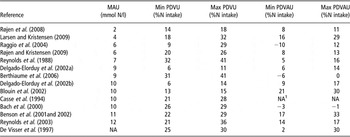
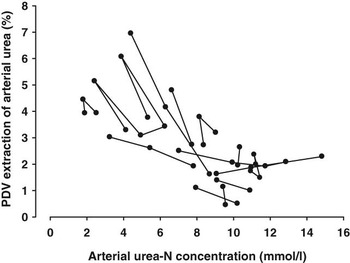
In order to take full advantage of N recycling, we need to reduce N intake at the same time that the flux of urea-N to the rumen is increased at least in the same proportion. If everything else remains unchanged, then metabolizable N flow and production performance will be maintained while total N intake and urinary urea excretion will be reduced and ENU increased. However, decreasing dietary N intake has not resulted in an increase in recycled urea. Table 2 lists 14 studies with observations on PDV net uptake of urea-N. The data span a large range of values on urea-N uptake across the PDV (6% to 41% of dietary N intake) and it is apparent that portal urea-N uptake is not adapted as proposed in the recycling theorem, that is, low arterial urea-N concentration is not followed by increased portal urea-N uptake. Only one of the listed papers reported that portal uptake of urea-N increased when dietary N intake decreased (Raggio et al., Reference Raggio, Pacheco, Berthiaume, Lobley, Pellerin, Allard, Dubreuil and Lapierre2004). Therefore, it appears that the urea-N salvaging mechanism, despite its obvious theoretical benefit to ruminant N efficiency, is poorly utilized under commonly applied dietary conditions of dairy cattle. In most of the listed studies, ammonia release from the gut was higher than the urea-N uptake from the blood, leading to an overall negative N supply to the gut from urea–ammonia exchange with blood passing the gastrointestinal tract. A regression analysis based on the within-study effects of N intake, DM intake, dietary N concentration and days in milk did not contribute to predict higher recycling of urea-N. By contrast, there was a positive within-study correlation between N intake and urea-N transfer to the gut, which is opposite to the hypothesis that dairy cows will increase the urea-N transfer to the gut to compensate for decreased dietary N intake. Thus, it can be questioned whether the apparent inability of the dairy cow to meet decreasing dietary intake of N by increasing recycling of blood urea-N caused by lack of response to changing N status in these animals compared with that of other cattle. By evaluating this problem from the ability of the PDV tissues to extract urea-N from the arterial blood on a single passage (extraction ratio of arterial urea-N), it appears that cows are extracting a higher proportion of arterial urea-N on passage of the PDV tissues with decreasing N status evaluated from the arterial urea-N concentration (Figure 2). A regression analysis using the studies presented in Table 2 indicated that the arterial urea-N concentration was related to the PDV extraction of arterial urea-N. DM intake, N intake, dietary N concentration, days in milk or milk yield did not affect this variable. Despite an overall correlation between N intake (kg CP/day) and arterial urea-N concentration (mmol urea-N/l) in the data set of 0.85, the regression analysis only indicated a relatively poor response in PDV extraction of arterial urea-N (% of arterial urea-N extracted at passage of the PDV) to changes in N intake within the study. This lack of effect could, to some extent, be caused by the large number of measured variables used to compute fluxes in combination with a relatively low number of studies on dairy cattle. However, it might also point to other factors, as renal regulation of urea-N excretion, having a major impact on the overall urea-N recycling to the gut.
Mean arterial urea-N concentrations (MAUN), minimum and maximum treatment means for net portal-drained viscera (PDV) uptake of arterial urea-N relative to N intake (%, PDVU), and minimum and maximum sum of ammonia and urea-N fluxes across the PDV relative to N intake (%, PDVAU). Data sorted according to arterial urea-N concentration. Data from lactating dairy cows

1Data not available.
Portal-drained visceral (PDV) extraction of arterial urea-N (%) in lactating dairy cows. The figure shows that the arterial concentration of urea-N affects the epithelial permeability to urea-N in the PDV. Data from studies listed in Table 1.

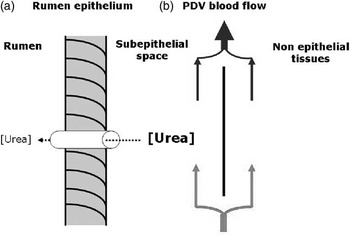
However, the easiest way to explain the observed extraction ratio of arterial urea-N is to assume that the urea-N flux to the gut is tightly regulated so that daily flux remains relatively constant. If the flux remains unchanged with a decreasing arterial urea-N supply, the extraction has to increase, which could lead to the speculation that urea-N transfer across the epithelium was not driven by mass action. However, studies on sheep (Houpt, Reference Houpt1970) and with i.v. infusion of urea-N in lactating dairy cows (Kristensen et al., unpublished) have demonstrated that urea-N transport appears to be regulated by mass action. There are two ways to explain how urea-N transport across the epithelium could be upregulated: (i) if the blood flow is shifted towards a higher proportion of total portal blood flow passing the epithelium, the epithelium will receive a larger amount of urea-N and the epithelial concentration of urea-N will be higher and (ii) if the urea-N permeability of the epithelium is increased, then the amount of urea-N extracted by the epithelium will increase (Figure 3).
Illustration of two factors that are hypothesized to affect blood to gut flux of urea-N. (a) If the gut epithelia receives a larger proportion of total portal blood flow, the epithelial urea-N concentration will increase everything else equal enabling a larger flux of urea-N across the epithelium. At the moment, this hypothesis has not been sustained by experimental data (see text). (b) The other factor of potential importance to urea-N transfer to the gut is the epithelial permeability, which is illustrated by the pore. A number of transport protein candidates have been identified, but at present the active component in the observed changes in epithelial permeability has not be identified (see text).

Data on rumen epithelial blood flow in dairy cows are sparse (Dobson et al., Reference Dobson, Sellers and Thorlacius1971). However, recent observations of rumen clearance of D2O in lactating dairy cows fed either a diet deficient in N or a diet containing high N levels did not indicate fundamental changes in epithelial blood flow when tested under washed rumen conditions (Kristensen et al., unpublished). Therefore, it appears that the urea-N permeability of the epithelia lining the gut, including the rumen epithelium, is regulated, and gut epithelial permeability for urea is most likely increased when cattle are fed low N diets. The identification of urea-N transport proteins (Sands, Reference Sands2003) has provided support to the hypothesis that it is the urea-N permeability of the epithelial membranes that is regulated by the cow and the existence of transporters has also provided a framework for thinking of urea-N fluxes as something regulated by concentration or activity of integral membrane proteins. However, despite convincing evidence of urea transporter B (UT-B) expression in stratum basale, spinosum and granulosum of the rumen epithelium (Graham and Simmons, Reference Graham and Simmons2004; Stewart et al., Reference Stewart, Graham, Cattell, Smith, Simmons and Smith2005), it has not been possible to demonstrate a correlation between reduced dietary N intake and upregulation of UT-B expression in sheep or cattle (Marini and Van Amburgh, Reference Marini and Van Amburgh2003; Marini et al., Reference Marini, Klein, Sands and Van Amburgh2004). However, urea-N permeability may not be restricted to expression of UT-B, as aquaporins may also contribute to epithelial urea-N permeability (Litman et al., Reference Litman, Søgaard and Zeuthen2009), although it remains to be investigated to what extent aquaporins are expressed in the rumen epithelium. Therefore, it is reasonable to hypothesize that transport proteins are the main determinants of the urea-N transport in the epithelia of the gut, but it still remains to be shown what proteins are involved and how their expression and activity are regulated.
The fundamental problem we are facing when attempting to increase N efficiency of dairy cattle through recycling of urea-N is that cows appear unable to upregulate the urea-N transport enough to compensate for the N removed from the diet. This is not contradictory to the fact that cattle on extremely low N diets utilize urea-N recycling to sustain rumen microbial fermentation and retain urea-N within the body with great efficiency (Reynolds and Kristensen, Reference Reynolds and Kristensen2008). It is also obviously beneficial to the cow to downregulate passage of urea-N from the blood to the gut lumen under conditions of high N supply in order to minimize a costly futile cycle of hepatic urea-N synthesis (Meijer et al., Reference Meijer, Lamers and Chamuleau1990) and gut hydrolysis when ammonia is already in large surplus in the rumen. The problem is that dairy cows apparently downregulate epithelial transfer of urea-N at a lower N status than seems optimal from the point of view of maximizing rumen fermentation. The existence of epithelial transport proteins facilitating the transfer of urea-N from the blood to the gut provides some hope that we will be able to manipulate the urea-N transfer from the blood to the gut by dietary management or genetic means in the near future.
Factors affecting the efficiency of N utilization in the PDV
Based on relationships between the supply of protein absorbed in the small intestine and milk protein yield across a number of experiments used to develop the French PDI system, the efficiency of utilization of absorbed protein for milk protein synthesis was estimated to be 64% when the lowest PDI allowance giving the greatest protein yield was regressed (Cant, Reference Cant2005). However, when the data were adjusted for trial effects, the response of milk protein yield to absorbed protein supply within studies was much lower, and averaged only 24%, most likely reflecting differences in energy supply between studies (Cant, Reference Cant2005). Similar differences between overall response across and within studies have also been noted previously in data used for the development of the AFRC standards (AFRC, 1993), with much lower efficiencies observed within studies unless the basal supply of absorbable protein was low enough to create a deficiency. Subsequent analysis of production trials used in the development of the current UK protein feeding standards (Thomas, Reference Thomas2004) found that the incremental efficiency of absorbable protein conversion to milk protein was 70% for basal diets that were protein deficient, but only 30% for diets with basal protein levels typical of those fed in practice. It is noteworthy that this low efficiency for the incremental utilization of absorbed protein for milk protein production within studies (Cant, Reference Cant2005) is similar to the overall efficiency of consumed N utilization for milk N secretion discussed previously.
Measurements of the efficiency of AA utilization in the dairy cow can be made at critical points in the conversion of AA that flow from the rumen to the mammary gland. Critical steps include the flow of AA to the small intestine, the digestion and absorption in the small intestine, transfer into mesenteric blood, passage through the liver and delivery to the peripheral circulation, but there are numerous methodological and biological considerations in the interpretation of results. Measurements of postruminal flow of protein often include estimates of total protein or non-ammonia-N present as microbial or non-microbial N. These measurements include endogenous AA and proteins derived from saliva and sloughed cells, and secretions from the reticulorumen, omasum and abomasum, as well as microbial protein derived from these endogenous proteins (Lapierre et al., Reference Lapierre, Pacheco, Berthiaume, Ouellet, Schwab, Dubreuil, Holtrop and Lobley2006). Microbial protein also includes non-protein N recycled from the blood as urea, but these are not ‘endogenous’ proteins per se. Measurement of the flow of these endogenous proteins is technically challenging, but available data suggest that they can represent from 8% to 16% of total protein flow to the small intestine (Reynolds, Reference Reynolds2005; Lapierre et al., Reference Lapierre, Pacheco, Berthiaume, Ouellet, Schwab, Dubreuil, Holtrop and Lobley2006). Therefore, measurements of total flow overestimate the true supply provided by the diet and fermentation. The digestibility of proteins in the small intestine is the next process that can impact on the efficiency of AA utilization. Digestibility of proteins can vary depending on a number of factors, including source (composition and structure), processing (e.g. heat damage) or antinutritional factors (e.g. trypsin inhibitors; Stern et al., Reference Stern, Bach and Calsamiglia1997). Digestion of AA in the small intestine can be measured as the disappearance between the small intestine and ileum using cannulas. The interpretation of these measurements must also consider the contributions of endogenous secretions, as well as the digestibility of endogenous proteins entering the small intestine, in order to estimate the true supply of AA from the diet (for a detailed discussion, see Lapierre et al., Reference Lapierre, Pacheco, Berthiaume, Ouellet, Schwab, Dubreuil, Holtrop and Lobley2006). On a net basis, the disappearance of total AA from the small intestine of lactating dairy cows averaged 70% (s.d. 5.6%), with a range from 57% to 78% (Sutton and Reynolds, Reference Sutton and Reynolds2003). However, although digestion can impact on the efficiency of AA utilization, there is likely to be little opportunity to improve the digestibility of microbial and many rumen undegraded protein sources. The digestibility of endogenous proteins in secretions such as those contained in mucins may be more variable, but there may also be little opportunity to limit their impact on overall efficiency of N utilization.
There have been numerous recent reviews of the metabolism of AA by splanchnic tissues and their role in determining AA supply to the mammary gland for milk protein synthesis (Reynolds, Reference Reynolds2006a; Lapierre et al., Reference Lapierre, Pacheco, Berthiaume, Ouellet, Schwab, Dubreuil, Holtrop and Lobley2006). The AA absorbed are potentially available for synthesis of constitutive or secreted proteins, transamination or oxidation before reaching the mesenteric blood. The use of essential amino acids (EAA) for endogenous protein synthesis represents a potential loss of absorbed EAA (Lapierre et al., Reference Lapierre, Pacheco, Berthiaume, Ouellet, Schwab, Dubreuil, Holtrop and Lobley2006). In sheep, Yu et al. (Reference Yu, Bruce, Calder, Milne, Coop, Jackson, Horgan and MacRae2000) reported that only a small proportion (1.4%) of the leucine ‘sequestered’ during absorption from the lumen of the small intestine was oxidized, suggesting that if leucine is representative of the metabolism of other EAA, there is very little oxidation of EAA during their ‘first pass’ absorption across the enterocytes. In contrast, many non-EAA are oxidized by small intestinal enterocytes, especially Glu, Gln and Asp (Windmueller and Spaeth, Reference Windmueller and Spaeth1980). Studies in pigs have shown that the PDV preferentially uses luminally derived glutamate and arterially derived glutamine, as well as arterially derived glucose as sources of oxidizable substrate to provide ATP (Stoll et al., Reference Stoll, Burrin, Henry, Yu, Jahoor and Reeds1999). The observation that gut enterocytes use glucose, the acidic AA (Glu, Asp) and Gln as energy substrates has fuelled speculation that providing more glucose for absorption in the small intestine would spare AA, increasing their absorption into blood, and thus their availability for milk protein synthesis. However, there is no evidence of which we are aware that increased intestinal starch or glucose supply increases net PDV appearance of AA in lactating dairy cows (Reynolds, Reference Reynolds2006b; Larsen and Kristensen, Reference Larsen and Kristensen2009), and it is unlikely that any effects would extend beyond the utilization of non-EAA.
Measurements of AA appearance in the portal vein can be obtained using venous-arterial concentration differences and blood flow (Reynolds, Reference Reynolds2006a; Lapierre et al., Reference Lapierre, Pacheco, Berthiaume, Ouellet, Schwab, Dubreuil, Holtrop and Lobley2006). These measurements represent the net supply of AA after metabolism by the PDV during absorption and from arterial blood. As the PDV is a heterogonous collection of tissues, including the small intestine, reticulorumen, hindgut, pancreas, muscle and other tissues that do not have access to the AA during their absorption, measurement of net mesenteric-drained viscera (MDV; the tissues drained by the cranial mesenteric vein) release of AA provides a closer approximation of the true supply of AA from the small intestine, especially for sheep (MacRae et al., Reference MacRae, Bruce, Brown, Farningham and Franklin1997b; Rémond et al., Reference Rémond, Bernard, Chauveau, Nozie're and Poncet2003). In sheep, the net PDV release of EAA represented about 65% of the net release across the MDV, reflecting the uptake of EAA from arterial blood by the reticulorumen and other tissues not drained by the cranial mesenteric vein. As discussed by Lapierre et al. (Reference Lapierre, Pacheco, Berthiaume, Ouellet, Schwab, Dubreuil, Holtrop and Lobley2006), this uptake of EAA from arterial blood by the reticulorumen in part reflects the use of EAA for synthesis of endogenous proteins, which contribute to the EAA absorbed from the small intestine. The utilization of AA from the arterial blood supply can be measured by using labelled AA, while the ‘first pass’ or absorptive use of AA can be measured by differentially labelling the supply of AA from the lumen of the small intestine. Using this double labelling approach, MacRae et al. (Reference MacRae, Bruce, Brown and Calder1997a) found that 75% to 87% of the total PDV ‘sequestration’ of EAA (Leu, Ile, Val, Lys, Thr, His) was accounted for by removal from arterial blood, while only 46% of Phe ‘sequestration’ was accounted for by uptake from arterial blood. For Leu, only 12% of the total ‘sequestration’ from arterial blood was attributable to the MDV, and only 16% was oxidized (Yu et al., Reference Yu, Bruce, Calder, Milne, Coop, Jackson, Horgan and MacRae2000), suggesting that the majority of Leu metabolized by the PDV was used for protein synthesis in the stomach, hindgut and pancreatic tissues. Based on these observations, it appears that the ‘first-pass’ absorptive use of EAA has a relatively small impact on their transfer from the lumen of the small intestine to the portal vein compared with the use of those EAA from the arterial blood by PDV tissues. Understanding the fate of AA in this initial pass through absorption and the liver is fundamental in designing strategies to improve AA utilization in ruminants. Thus, the PDV competes with other body tissues for the supply of EAA from the arterial pool, rather than metering supply through absorptive use, and therefore the mammary gland has the opportunity to use AA before they are actually catabolized in the PDV and liver. Further research is needed to determine the metabolic fate of EAA extracted by the gut tissues from the arterial pool, the regulation of this metabolism and the extent to which it is obligatory or subject to manipulation, and its impact on the efficiency of postabsorptive EAA use for milk protein and other anabolic functions (MacRae et al., Reference MacRae, Bruce, Brown and Calder1997a).
The liver is the major site of N metabolism and integration in the body. All nitrogenous compounds absorbed into the portal vein pass through the liver during their initial assimilation into the body, and then as much as 40% of the cardiac output, or 40% of the arterial blood EAA pool, pass through the liver with each heartbeat. Like the PDV, the liver has a high rate of oxidative metabolism and protein turnover, and an associated requirement for EAA for constitutive and export protein synthesis. The liver removes essentially all the ammonia absorbed into the portal vein, and synthesizes the majority of the urea that enters the blood pool. In addition, with the exception of the branched chain AA and Lys, the liver is a major site of catabolism of those AA absorbed in excess of requirements. Finally, the liver is the major site of glucose synthesis and the carbon skeletons of most AA can be used for gluconeogenesis in the liver. On a net basis, AA removed by the liver are a major source of carbon for glucose synthesis, and there has been much speculation that increasing glucose or propionate absorption may increase milk protein secretion through a reduction in AA use for glucose synthesis that spares AA use for milk protein synthesis. However, to our knowledge, there is no evidence of an effect of increased glucose or propionate absorption on liver removal of AA (Reynolds, Reference Reynolds2006b; Larsen and Kristensen, Reference Larsen and Kristensen2009), or an effect of increased AA supply on liver glucose synthesis (Reynolds, Reference Reynolds2006b). However, the primary gluconeogenic AA in the liver are non-EAA, and therefore any sparing of these AA from glucose synthesis would be unlikely to increase the supply of EAA to the mammary gland. Therefore, the effects of increased energy supply through propionate and glucose are through metabolic and hormonal signals that impact on milk protein synthesis and the overall efficiency of N utilization (Reynolds et al., Reference Reynolds, Cammell, Humphries, Beever, Sutton and Newbold2001).
There is no doubt that, in typical feeding conditions, the metabolism of the liver must have an impact on the efficiency of absorbed EAA utilization. Indeed, for many EAA their net liver removal from blood may represent a substantial portion of net release by the PDV (Reynolds, Reference Reynolds2002 and Reference Reynolds2006a; Lapierre et al., Reference Lapierre, Berthiaume, Raggio, Thivierge, Doepel, Pacheco, Dubreuil and Lobley2005; Hanigan, Reference Hanigan2005). However, apart from the liver’s obligate EAA requirements, the catabolism of many EAA is determined by their supply (i.e. small intestinal absorption) relative to demand (i.e. milk protein synthesis), in part through changes in arterial concentration. For example, the removal of EAA by the liver relative to their net release by the PDV increases in dry compared with lactating cows (Reynolds, Reference Reynolds2005 and Reference Reynolds2006a), most likely due to lack of protein synthesis in the mammary gland. Reynolds (Reference Reynolds2002) also reported that when casein is infused into the abomasum and not accompanied by equivalent increases in milk protein secretion, net removal of EAA by the liver also increases. Similarly, liver removal of most EAA increased as the supply of metabolizable protein increased the above requirement (Raggio et al., Reference Raggio, Pacheco, Berthiaume, Lobley, Pellerin, Allard, Dubreuil and Lapierre2004). These changes in net liver metabolism of AA, and the accompanying increases in liver urea production resulted from substantial increases in arterial AA concentrations, most likely due to their surplus after passing through the mammary gland. However, the regulation of liver AA metabolism and ureagenesis must be controlled by more than AA concentrations alone (Waterlow, Reference Waterlow1999), but after decades of research, the precise mechanisms remain elusive.
In summary, it seems that the efficiency of utilization of the EAA will be determined by their utilization by the mammary gland and their use for other purposes within the body, including obligate and other losses that may occur during the transfer of absorbed EAA from the gut lumen to the secretory cells of the mammary gland. The role of the mammary gland is paramount, as the incremental efficiency of absorbed AA utilization for milk protein secretion will be determined primarily by the response of milk protein synthesis and secretion to the increased supply of individual EAA. Those EAA absorbed in excess of amounts required for milk protein secretion and other anabolic processes must be catabolized, which occurs in the liver as well as other body tissues, including the PDV.
Factors affecting the efficiency of N utilization in the mammary gland
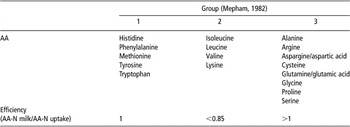
The utilization of absorbed AA by the mammary gland is relatively high (>60%), but variable, which implies that improvements can be made. Mepham (Reference Mepham1982) divided AA into three groups based on the efficiency by which AA are taken up by the mammary gland and excreted in milk. This division was slightly modified by Raggio et al. (Reference Raggio, Lemosquet, Lobley, Rulquin and Lapierre2006; Table 3). The effect of increasing the supply of AA or energy to the mammary gland is also different for these three groups of AA. Increasing the supply of AA or energy linearly increased the output of Group 1 AA (Raggio et al., Reference Raggio, Lemosquet, Lobley, Rulquin and Lapierre2006), resulting in no changes in the ENU of the mammary gland for these AA. Increasing the supply of AA to the mammary gland reduced the ENU of Group 2 AA and increased the ENU of Group 3 AA, suggesting that AA from group 2 were converted to AA from Group 3. By contrast, increasing the energy (propionate) supply had no effect on ENU of Groups 2 and 3 AA by the mammary gland.
Division of amino acids (AA) according to stoichiometric N transfer over mammary gland

Utilization of AA by the mammary gland can be regulated at various levels (Bequette et al., Reference Bequette, Backwell and Crompton1998), including the regulation of availability of AA to the mammary gland, the uptake of AA by the epithelial cell and the synthesis of casein and whey proteins in the epithelial cell. In the last few decades, research has mainly been focused on understanding the mechanisms by which the mammary gland regulates these processes. The supply of free AA to the mammary gland can be regulated by changing plasma concentrations of free AA or by changing plasma flux to the mammary gland. Many studies have shown that increasing the supply of absorbable AA to the small intestines results in an increased concentration of free AA in blood plasma (Han et al., Reference Han, Xue, Hu and Du2001). Increasing blood flow will also increase the supply of AA to the mammary gland. The mammary gland appears to regulate the availability of AA by controlling blood flow through local feedback mechanisms. Bequette et al. (Reference Bequette, Backwell and Crompton1998) observed a negative relationship between the supply of histidine and mammary blood flow, suggesting that a low concentration of one or more EAA is directly compensated by a higher blood flow to the mammary gland. Similarly, Raggio et al. (Reference Raggio, Lemosquet, Lobley, Rulquin and Lapierre2006) observed a reduced mammary plasma flow when casein was infused in the duodenum, most likely resulting from the regulation due to excess supply of AA.
Nitric oxide (NO) increases the mammary blood flow in goats (Lacasse et al., Reference Lacasse, Farr, Davis and Prosser1996). l-Arginine is an important substrate for NO, and increasing the supply of Arg to the mammary gland could have a positive effect on total AA supply. Indeed, Mateo et al. (Reference Mateo, Wu, Moon, Carroll and Kim2008) observed a higher total protein concentration in milk of lactating sows supplied with extra Arg compared to sows on a control diet. However, this effect was only apparent in the first week of lactation. Infusing a nitric oxide donor in the external pudic artery increased mammary blood flow in lactating goats, but not milk yield (Lacasse and Prosser, Reference Lacasse and Prosser2003). Thus, mammary blood flow is apparently also subjected to other systemic control mechanisms and is affected by milk yield (Lescoat et al., Reference Lescoat, Sauvant and Danfaer1996) and long-term administration of recombinant bovine somatropin, which increases mammary blood flow by 20% to 30% (Chaiyabutr et al., Reference Chaiyabutr, Thammacharoen, Komolvanich and Chanpongsang2005). Mackle et al. (Reference Mackle, Dwyer, Ingvartsen, Chouinard, Ross and Bauman2000) and Bequette et al. (Reference Bequette, Kyle, Crompton, Buchan and Hanigan2001) observed a 40% and 50% increase in mammary blood flow during a 4-day hyperinsulinemic-euglycemic clamp in dairy cows and goats, respectively. The effect of these hormones on blood supply of AA is most likely an orchestrated mechanism consistent with the high protein production in early lactation.
To improve NUE, an increase in AA supply to the mammary gland should coincide with an increased uptake of AA by the mammary epithelial cells. Most AA are uptaken as free AA, although some peptides may also be used. Various membrane AA transport proteins have been identified in mammary epithelial cells of which the gene expression in rats increased during lactation (Alemán et al., Reference Alemán, López, Ordaz, Torres and Tovar2009). Transport proteins can be divided in large neutral AA transporters with preference for neutral branched (Val, Leu, Ile), aromatic (Try, Tyr) AA and cationic AA transporters. Gene expression of these membrane transporters are negatively correlated with blood AA concentrations (Hatzoglou et al., Reference Hatzoglou, Fernandez, Yaman and Closs2004). The increased activity of membrane transporters can thus compensate for a decrease in AA supply. However, the increased activity of membrane transporters may not be cell specific, and thus competition between organs may be detrimental for the intracellular AA supply of mammary epithelial cells. By improving the extraction rate, Schei et al. (Reference Schei, Danfær, Boman and Volden2007a) also observed a higher extraction rate of essential AA during intravenous infusion of a mixture of AA, but the effects were larger after glucose infusion. These effects were observed in early lactation, but were inconsistent in late lactation (Schei et al., Reference Schei, Danfær, Mydland and Volden2007b). The exact mechanisms involved in this regulation remain to be identified.
A third level of regulation may also occur intracellularly, at the protein synthesis level (casein, lactalbumin and lactoglobulin; Bequette et al., Reference Bequette, Backwell and Crompton1998). Generally, protein synthesis can be divided into three main stages: initiation, elongation and termination. Initiation and elongation are controlled by a number of proteins in which the mammalian target of rapamycin (mTOR) plays a key role (Wang and Proud, Reference Wang and Proud2006). Knowledge to regulate gene expression and enzyme activity by nutritional management is still scarce, although some interesting results have been observed recently. Menzies et al. (Reference Menzies, Lefèvre, Macmillan and Nicholas2009) studied the effect of insulin on gene expression in mammary explants prepared from pregnant non-lactating dairy cows. In combination with hydrocortisone and prolactin, including insulin in the medium resulted in the upregulation of genes involved in the synthesis of milk proteins and lactoferrin. Feuermann et al. (Reference Feuermann, Shamay and Mabjeesh2008) also demonstrated that a combination of leptin and prolactin upregulated mTOR expression in mammary explants prepared from lactating dairy cows. Although growth hormone does not appear to upregulate expression of genes involved in protein synthesis, it does increase phosphorylation of ribosomal protein S6 kinase 1 (S6K1) in mammary gland samples of killed dairy cows (Hayashi et al., Reference Hayashi, Nones, Roy, McNabb, Mackenzie, Pacheco and McCoard2009). Phosphorylation of S6K1 correlates with increased protein synthesis. Prizant and Barash (Reference Prizant and Barash2008) recently demonstrated that adding Lys, His and Thr decreased phosphorylation of S6K1 in cultures of L-1 cells of bovine mammary gland.
Overall, it seems that the availability of AA to the mammary gland and milk protein synthesis is tightly regulated locally and systemically, which may make it difficult to identify potential key regulatory steps susceptible to modification to increase milk protein yield. The efficiency by which AA supplied to the mammary gland are incorporated into milk protein is influenced not only by the supply of AA but also by the supply of energy and the hormonal status of the cow. In the last decade, genomic technologies have been introduced in the study of the mammary gland metabolism, thereby steadily revealing the pathways and key enzymes in milk protein synthesis. In future, these new insights may be helpful to apply new strategies to increase the efficiency by which the mammary gland utilizes supplied AA.
Conclusion
Cattle most likely evolved to be very efficient in using dietary N when consuming low protein diets. However, when fed diets for high levels of production, efficiency of N utilization is compromised. A better understanding of key processes involved in the utilization of N and AA may offer the opportunity to optimize the efficiency of N utilization. Key factors in the rumen include the understanding of factors affecting the efficiency of N capture in the rumen (amount of N captured by bacteria as a percentage of rumen degradable N) and the modification of rate and extent peptide degradation and amino acid deamination through the control of specific microbes. The potential for modifying urea transport from the blood to the gut may allow the development of strategies to take advantage of the recycling capabilities of ruminants. The limited utilization of absorbed EAA by the PDV and liver emphasizes the key role of protein synthesis and AA requirements of the mammary gland in the overall fate of AA in the body. The high rate of EAA utilization by the PDV and liver results in their high rate of protein turnover and their role in oxidizing EAA absorbed in excess of that required by the mammary gland and other body tissues. Protein synthesis in the mammary gland appears to be tightly regulated by local and systemic signals. The understanding of factors regulating AA supply to the mammary gland, their absorption and the synthesis of milk protein should lead to strategies that increase total AA utilization for milk protein synthesis and thus reduce AA utilization by the PDV and liver. A better understanding of these key processes should allow the development of strategies to improve the efficiency of N utilization in ruminants.