




No CrossRef data available.
Neurocognitive studies of language impairments: The bottom-up approach
Published online by Cambridge University Press: 01 January 2005
Abstract
Neurocognitive studies can approach gene-based developmental language impairments from two angles, which are complementary and ideally combined in a research program. One approach aims at an optimal phenotypic description of a disorder and from there proceeds to a biological and developmental understanding. Complementary to such a top-down approach, a bottom-up perspective will primarily focus on potential etiological pathways and attempt to explain complex outcome phenotypes in terms of elementary developmental disturbances. My paper is dedicated to this latter approach. I argue that in behaviorally defined disorders (such as specific language impairment or autism) shared genetic risk and common etiology can at best be expected for specific aspects of language deficit and that such shared etiology will only apply to subtypes of these disorders. One reason for this skepticism is that the emerging language system in children can be affected in many different ways via more elementary sensory, perceptual, cognitive, and motor impairments. Neurocognitive research on developmental language disorders relies on an understanding of such potential elementary disturbances before it can confidently proceed to the study of complex linguistic impairments.
Information
- Type
- Articles
- Information
- Copyright
- © 2005 Cambridge University Press
The term “neurocognitive” comprises a large array of fields of study and a diversity of experimental techniques. It will therefore not be possible to cover all relevant aspects of the neurocognitive study of language impairments in this paper. Instead I will focus on some aspects that affect neurocognitive research on gene–brain–behavior relationships most importantly in language impairments.
If we define as neurocognitive all those techniques and experimental approaches that bring together measures of behavior and cognition with measures of neural function, it becomes clear that we have to make some basic physicalist assumptions, stepping outside the Cartesian dualism of mind and body that has shaped much of the conceptual language of psychology.1
Of course, this does not imply a major role for explicit dualism in contemporary psychology. It solely refers to the fact that most psychological constructs originate from observation of behavior and not from the study of the brain.
In the following sections, I will first examine two approaches to the neurocognitive study of developmental language impairments (DLIs), one that focuses on identifying a common core in multiple disorders (“conjunction approach”) and an alternative that concentrates on disorders with well-described genetic causes. I will then discuss the importance and limitations of studying early-occurring and elementary phenomena in DLIs.
CAN WE STUDY LANGUAGE IMPAIRMENTS USING A CONJUNCTION APPROACH?
Conjunction analyses have been used in neuroimaging studies for a number of years (Price & Friston, 1997). The logic of such studies goes beyond those of traditional single-paradigm activation studies, in which an experimental condition containing a cognitive component of interest is compared to a control condition that does not include this component of interest, but ideally all other sensorimotor and cognitive components that are not of interest. The subtraction logic is schematically shown in Figure 1 (dotted rectangle at the top). It is the basis of the conjunction approach. In the latter, the cognitive component of interest is studied in multiple different task–control comparisons. Although the components of no interest are different in each of these comparisons, the cognitive component of interest is always identical. For example, if lexical retrieval is the cognitive function of interest, we may study it using paradigms such as overt verb generation following auditory presentation of a noun, covert verb generation following visual presentation of a noun, picture naming, naming based on definition, word-stem completion, semantic fluency, judgments of semantic association between words, and so forth. All of these experimental tasks involve additional sensorimotor and cognitive components besides lexical retrieval, which ideally would be fully controlled in a baseline condition (Figure 1). In a conjunction imaging study, one would expect that activation analyses for all of the many task–control comparisons included are convergent only for those brain areas that are truly necessary for the cognitive function of interest (lexical retrieval). Other activation sites seen in some task–control comparisons, but not in others, can be attributed to extrinsic factors based on the particular task designed for tapping into the function of interest.

(A) The conjunction approach in neuroimaging paradigms and (B) its potential application to developmental disorders. P, presence or Ø, absence of a cognitive component in an experimental condition; X, impairment or √, integrity of a functional system. (A) In neuroimaging, the results from each task-control comparison can be combined in a conjunction approach to identify brain regions crucial for cognitive component A (e.g., lexical retrieval). (B) When this conjunction logic is applied to developmental disorders that all share language impairment, the question arises whether one may expect that all disorders share a defect in a core language system A (e.g., morphosyntax).
Conjunction analyses are assumed to allow the imaging researcher to more cleanly pinpoint neural substrates associated with a cognitive component than would be possible in any single comparison. In the study of the genetic bases of language impairments in diverse developmental disorders, we are faced with a comparable problem. Although such disorders are obviously not controlled experiments but “accidents of nature,” they all appear to share a common feature, which is language impairment. We therefore could consider them analogous to the many experiments reviewed below that all contain a component of interest, but each of them in association with various additional components. In developmental disorders, those would be other “nonlinguistic” deficits that are also part of the symptomatology of a particular disorder.
Although the scenario thus appears analogous, the question is whether we can apply the conjunction inference to the issue of language impairments in developmental disorders. In other words, if we observe overlap in language deficits, can we conclude that these are associated with overlapping neural sites of abnormality, with overlapping neurodevelopmental etiology, and ultimately with shared genetic abnormalities? In principle, the approach is appealing because it promises to isolate the intrinsically linguistic components of a disorder from extrinsic (nonlinguistic) features that simply accompany language deficits. However, as I will argue, any attempt to characterize language impairments from a conjunction perspective risks oversimplification; or to phrase it more positively, it will be informative of the much greater than expected complexity of gene–language links.
The problems start with the concept of a “language impairment.” There is no consensus in linguistics, psychology, or cognitive science on the precise set of behavioral events or cognitive functions to be subsumed under the term “language.” The issue goes beyond pure terminology. For example, there will be little argument about morphosyntactic deficits that are often found in specific language impairment (SLI; Clahsen, 1989; Weckerly, Wulfeck, & Reilly, 2004) being linguistic in nature. However, the question is much more open when it comes to language anomalies found in autism or Williams syndrome (see below). Evidence on whether morphosyntax is affected in high-functioning autism remains inconclusive whereas pragmatic aspects of language use are quite consistently affected (Lord & Paul, 1997). Does an autistic patient whose language deficits are exclusively pragmatic have a language impairment? The answer will depend on one's concept of language, being a likely “no” from generative linguists (Newmeyer, 1998; cf. Carston, 2000) but a likely “yes” from most clinicians and those psycholinguists who view language acquisition as embedded in communicative and cognitive development (Tomasello, 2000).
A first obstacle in applying the conjunction approach to DLIs thus appears to be the lack of consensus on how we define and delineate language impairment (the component of interest). Language is a polymodal system and thus differs from, say, the motor system or the visual system that can be more clearly delineated both in terms of their functional–behavioral components and their neural substrates. However, even with regard to perceptual and motor systems this latter characterization is not truly accurate. For example, the ventral stream of visual processing is known for its importance in visual object perception (Kanwisher, Downing, Epstein, & Kortzi, 2001). However, the further we go anteriorly along this stream into the inferior temporal cortex toward the temporal pole, the more complex neuronal response preferences become and the more it becomes appropriate to characterize them as semantic and categorical (e.g., cells that respond to any visual stimulus depicting a hand or a face; Desimone, Albright, Gross, & Bruce, 1984). The ventral stream is thus as much part of the visual system as it is part of the language system. With regard to the motor domain, recent evidence suggests that it is impossible to draw clear lines between visual and motor functions for cells in the premotor and inferior frontal cortex. On a cellular basis, this has been demonstrated for so-called “mirror neurons” in monkey area F5 (assumed to be homologous to human area 44), which show increased spiking during motor acts and during observation of similar motor acts performed by another monkey or a human experimenter (Rizzolatti, Fogassi, & Gallese, 2002). Premotor and inferior frontal cortices are thus part of both the motor and the visual systems. Indeed, by virtue of these neuronal response characteristics, the ventrolateral prefrontal cortex is probably indispensable for imitation and joint attention, which are in turn prerequisite functions for early language acquisition (especially lexical learning; Müller & Basho, 2004). A closer look at cognitive–functional organization and brain systems therefore shows that it is impossible to draw hard lines between three domains that linguistics and psychology usually assume to be distinct.
It becomes clear that a conjunction approach cannot be effective for DLIs as long as those are defined in a broad sense. However, are there possibly core components of language for which a more modular status could be claimed? This would certainly not be true for the lexicosemantic system, given its intimate relation with parts of the visual system, as mentioned above. In contrast, morphosyntax has been considered as the best candidate for a modular core linguistic system because it seems to involve principles possibly not shared with other cognitive domains. Even within the morphosyntactic component, greater specificity may be required. For one example (and regardless of its empirical validity), affected members in family KE have been described as specifically impaired with regard to inflectional morphology and grammatical function words (such as pronouns; Gopnik, 1990). This indicates a methodological juncture where bottom-up approaches advocated here interface with top-down approaches that prioritize the precise description of outcome in DLIs (see Phillips, 2005).
A focus on morphosyntax may limit the utility of a conjunction approach because not all developmental disorders that are associated with language impairment show consistent deficits of morphosyntax (Rice, 2004). It is understood that some types of SLI involve specific impairment of morphosyntax. William's syndrome, on the other hand, was initially thought to present an inverse profile (impaired visuospatial cognition, intact morphosyntax; Bellugi, Bihrle, Neville, Doherty, & Jernigan, 1992; Pinker, 1999). This has been recently challenged with evidence of syntactic delays in this disorder (Grant, Valian, & Karmiloff–Smith, 2002), even though the precise extent of these deficits is still under debate (Zukowski, 2004). With regard to autism, the majority view has been that language impairments are mostly pragmatic in nature (Lord & Paul, 1997), possibly semantic (Dunn, Gomes, & Sebastian, 1996), but not specifically morphosyntactic (Tager–Flusberg, 1981). Again, more recent evidence suggests that some children with autism may be severely impaired in their morphosyntactic abilities. Some autistic children resemble children with “developmental dysphasia” of the phonologic–syntactic type (Rapin & Dunn, 2003). Recent studies suggest some overlap between autism and SLI with regard to morphosyntactic deficits (Tager–Flusberg, 2004).
It could therefore be stipulated that several developmental disorders share some core linguistic impairments, most likely within the morphosyntactic component. Taking this stipulation for granted, the question may be raised whether such linguistic core impairments could be attributed to common genetic causes, etiological pathways, and developmental neurocognitive patterns. Using the neuroimaging metaphor introduced above, the question would be: Will a conjunction approach to developmental disorders come up positive for core morphosyntactic impairments? The simplest reasonable scenario would be the following: there are some single-gene disorders that affect morphosyntax. Genes that have been identified in these disorders are also risk factors (susceptibility loci) in multigenic disorders such as autism and SLI and account for varying degrees of morphosyntactic deficit in these disorders.
SINGLE-GENE DISORDERS: A STARTING POINT FOR STUDYING LANGUAGE IMPAIRMENTS?
Even though the majority of developmental disorders is defined by behavior and phenotypic outcome, there are a few exceptions. Williams syndrome, initially defined by clinical and behavioral outcome (Bellugi, Bihrle, Jernigan, Trauner, & Doherty, 1990), has been linked to deletion of the elastin gene and neighboring genes on the long arm of chromosome 7 (7q11.23; Donnai & Karmiloff–Smith, 2000; Morris, 2004). A disorder that was initially considered as SLI has been described in family KE (Gopnik, 1990) and a single locus of mutation has been identified for affected family members in a different region of the long arm of chromosome 7 (7q31; Fisher, Vargha–Khadem, Watkins, Monaco, & Pembrey, 1998). The specifics of genotype–phenotype links in this disorder are described in detail elsewhere (Fisher, 2005; Marcus & Fisher, 2003) and are not reiterated here. It remains possible that some additional developmental disorders that today are solely defined by a behavioral phenotype may eventually be linked to one or a few genes. More likely, it may be found that behaviorally defined disorders such as SLI and autism incorporate some etiological variants that are relatively simple with regard to underlying genetic aberrations. Besides “SLI” in family KE (and one additional case outside this family; Lai, Fisher, Hurst, Vargha–Khadem, & Monaco, 2001), this is the case in subjects with fragile X or Rett syndrome who fulfill diagnostic criteria for autistic disorder (Bailey, Hatton, Skinner, & Mesibov, 2001; Hammer, Dorrani, Dragich, Kudo, & Schanen, 2002). Nonetheless, it seems unlikely that simple genetic accounts will be adequate for the large majority of cases with SLI and autism. What does all the above imply for links we can expect between genetic risk and neurocognitive profiles?
First, because single-gene based language disorders are pleiotropic (i.e., affect multiple neurocognitive and other bodily systems; cf. Scriver & Waters, 1999; Figure 2A), language deficits emerge in different etiological and biological contexts. For example, affected members in family KE have orofacial dyspraxia (Watkins, Dronkers, & Vargha–Khadem, 2002). There are conceivable links between dyspraxia and morphosyntactic impairments. However, these links clearly do not apply to language impairment in other disorders that are not associated with orofacial apraxia (e.g., the common form of SLI or cases of fraxile X meeting criteria for autism; Bailey et al., 2001). More likely then, different single-gene based disorders hit the emerging language system at different sites of vulnerability. One of them may be orofacial praxis; and others may be visuomotor coordination, imitation, and joint attention. Thus, even when single-gene disorders may seem to overlap with regard to linguistic outcome disorder, this does not imply shared developmental pathways and etiology.

The divergence and convergence from gene defects to behavioral impairments. (- - -) The gene–brain–behavior links underlying language impairments. Single-gene disorders are characterized by divergent (pleiotropic) effects, only some of which affect language. (A) Conceptually, it is possible that a single-gene defect affects only one brain system, which in turn affects multiple behavioral systems. (B) More realistically, a single-gene disorder will affect multiple brain systems, each of which will in turn affect a linguistic or nonlinguistic behavioral system. (C) Given the known complexity of brain–behavior relationships, it is in fact even more realistic that each affected brain system will affect several behavioral systems. (D) Multigenic disorders, in principle, may be fully characterized by convergence, that is, several genes (D) affecting only one brain system that in turn affects language or (E) affecting several brain systems that solely affect language. (F) However, in view of the evidence on gene–brain–behavior relationships discussed in this article, it is most realistic to expect both convergent and divergent principles to be at work in multigenic disorders; that is, each gene affects several brain systems, each of which in turn affects several behavioral systems (some of which are linguistic).
Second, in multigenic disorders, which are those resulting from multiple genetic plus epigenetic risk factors (as in most common forms of SLI and autism), we have to expect that the impact of each affected gene is equally pleiotropic. The impression of simple gene–trait convergence (Figure 2D) is driven by a restricted focus on a single domain of behavioral impairment (here, language). Although in multigenic disorders several abnormal genes are assumed to “conspire” in the emergence of a symptomatology that may include language impairment, the effect of each individual genetic anomaly is unlikely to be more linear than in single-gene disorders. In other words, the complexity of genotype–phenotype relationships seen in single-gene disorders is probably at least cumulative in multigenic disorders (Figure 2F).
A further crucial issue that will inform the neurocognitive investigation of DLIs relates to the level of organization at which we expect divergence and convergence of gene–behavior relationships. As discussed earlier (Müller, 2004), single-gene disorders of language show divergence (or pleiotropy), whereas multigenic disorders also show some degree of convergence (multiple genetic risk factors converging in the emergence of a language disorder). The question is, precisely where do divergence and convergence take place? For example, does a single-gene disorder affect only a single anatomical or functional system in the brain (e.g., a specific region or nucleus; or a specific functional network or transmitter system; Figure 2A) or do we see divergence in the links between genes and brain systems (Figure 2B)? If the latter is the case, is there further divergence between brain systems and cognitive–behavioral impairments (Figure 2C)? The available evidence on single-gene disorders (e.g., phenylketonuria, Williams syndrome) suggests there is divergence both between genes and neural systems and between neural systems and behavioral traits. Such divergence between genetic and neurofunctional defects is also expected for multigenic disorders (Figure 2F). This means that neurocognitive studies have to target a multitude of brain areas, and established neurofunctional abnormalities have to be examined in terms of multiple cognitive behavioral domains of impairment. It is also clear that brain systems interact, both ontogenetically and “microgenetically” (i.e., during a neurocognitive process; Brown, 1988; Mesulam, 1998). Multilevel divergence and systems interaction probably reduce the specificity that can be expected for links between genes and language impairments, even if the latter are narrowly defined as morphosyntactic deficits.
STARTING SMALL AND SIMPLE
The above discussion suggests that language impairments in different developmental disorders may be phenotypically similar, but they could be associated with different etiological pathways and different genetic risk factors. This would imply that neurocognitive studies should ideally start small and simple. Starting small implies that, all other things being equal, the study of subjects with DLI at the youngest possible age is preferable (see next section). Unfortunately, other things are not equal. Many available techniques, in particular functional neuroimaging techniques, can be used in infants only to a very limited extent (see next section). Furthermore, even heavily gene-based disorders such as autism are usually not diagnosed before age 3 years, limiting the possibility of studying infants at the time of earliest emergence of the disorder. Retrospective studies can, however, circumvent this problem in part (for example, Courchesne et al., 2001; Nelson et al., 2001; Osterling, Dawson, & Munson, 2002).
Starting simple refers to giving priority to a full understanding of basic sensorimotor and early developing cognitive functions. This goes against the common preference of studying complex domains of known deficit in a disorder. For example, Baron–Cohen and colleagues (1999) tested “social intelligence” by having 6 subjects with autism and 12 control subjects attribute mental states to visual stimuli showing only pairs of eyes. In a control condition, subjects judged the gender of the identical stimuli. Main effects of task in the control group were seen in over 50 clusters in cerebral and cerebellar cortices and in the subcortex. The smaller autism group showed much more limited activity (most likely due to weaker power); reduced activity in the left amygdala was noted by the investigators. However, in view of the highly distributed and diffuse main effects of task in the control group, the functional specificity of the task paradigm is doubtful. The specificity of hemodynamic differences in the autism group (e.g., in terms of neurofunctional defects in “theory of mind”) therefore remains equally uncertain.
For an example of a bottom-up approach, language impairments in autism may reflect early deficits in joint attention (Charman, 2003). Joint attention, in turn, relies heavily on imitation and visuomotor coordination (Rogers, Hepburn, Stackhouse, & Wehner, 2003). It is not established whether early developing systems for visuomotor integration are intact in autism (cf. Müller, Kleinhans, Kemmotsu, Pierce, & Courchesne, 2003; Williams, Whiten, Suddendorf, & Perrett, 2001). In general, as long as the integrity of early developing sensorimotor systems has not been ascertained in a developmental disorder, it may be futile to look for specific causes of a language impairment. Elementary impairments may cause language deficits, or they may also play a role in language development remaining tacit. Although evidence is currently mostly anecdotal, there have been reports of apparently nonverbal autistic children manifesting surprising language abilities once suitable channels of communication have been developed (Carpenter, Sinclair, Ronan, & Lissner, 1992; Grandin, 1992; http://www.cureautismnow.org/tito/index.html). This question touches, not only on the adequacy of measurement, but also on neurocognitive approaches. It implies that in order to tap into the linguistic system in different disorders, it may be necessary to use very different types of paradigms. For example, verb generation prompted by auditorily presented nouns (a commonly used language paradigm) may be ineffective in some patients because nonlinguistic processes that normally make a stimulus available for the language system do not function normally. Problems might be due to limited auditory attention (in particular, in a noisy functional magnetic resonance imaging [fMRI] scanning environment), deficits in set shifting required for generation of a different response in each trial, and the like.
In conclusion, the neurocognitive study of LI in developmental disorders requires careful consideration of potentially more elementary explanations. Not every impairment that manifests itself in language behavior is necessarily linguistic in nature. Some basic sensory impairments have been investigated in SLI research, mostly in the visual and auditory systems (Eden et al., 1996; Tallal, Galaburda, & Llinás, 1993). Our knowledge of the integrity of sensorimotor systems in autism is incomplete. The burden of proof for any study on language impairments in autism should therefore be to demonstrate that these cannot be explained as secondary manifestations of more elementary sensorimotor impairments.
WHAT COMES FIRST?
The issue of “secondary manifestations” has deeper implications for many types of neurocognitive studies of DLIs. As mentioned before, most cognitive neuroscience techniques are hard or impossible to implement in young subjects with developmental disorders. It is thus virtually impossible to study the brains of children with language impairment before the effects of experience have started to shape the brain. Functional MRI in SLI and autism has thus far mostly focused on the study of older subjects because the challenges of studying young children with these disorders are daunting. This means that detected differences from normal will always reflect an interaction of the effects of the disorder itself and of experience. For example, it is conceivable that some of the susceptibility genes for autism may affect the language system (Tager–Flusberg, 2004; Tager–Flusberg & Joseph, 2003). In contrast, it is almost certain that sociocommunicative impairments in autism will affect the neurofunctional organization for language, for at least two reasons: First, children with autism do not participate in language learning settings in ways typically developing children do (e.g., joint attention). Second, language acquisition is delayed and therefore occurs at stages of brain maturation different from those involved in typical language development.
The latter point highlights that gene-based effects and those of experience will interact. For example, there is evidence for diffuse brain growth abnormalities in autism (Courchesne et al., 2001) that are likely to affect emerging language areas (as well as many other functional systems). Thus, regional brain maturation is most likely abnormal in autism, but this abnormality is compounded by experientially based abnormality. Such developmental complexity makes it hard to interpret findings in older children and adults. For instance, a substantial number of studies indicates morphological anomalies in brains of subjects with SLI (Clark & Plante, 1998; Gauger, Lombardino, & Leonard, 1997; Jackson & Plante, 1996; Plante, Swisher, Vance, & Rapcsak, 1991). Seemingly comparable evidence for reversed anatomical asymmetries in the anterior perisylvian cortex in autism has recently come to light (Herbert et al., 2002). The question remains whether such findings reflect neurofunctional abnormalities that could explain language delays and impairments or whether they solely reflect atypical language experience in the context of sociocommunicative impairment. Studies in healthy subjects have demonstrated robust experiential effects on brain morphology (Amunts et al., 1997; Schlaug, Jänicke, Huang, & Steinmetz, 1995). Most likely, the findings on SLI and autism reflect a combination of both pathogenic and experiential effects. Unfortunately, this complicates their interpretation because ideally one would want to tease apart secondary and experiential effects from those that are intrinsic to a gene-based language impairment.
CONCLUSIONS
Language impairments are a feature of many of the developmental disorders. A tempting approach to identifying the developmental and genetic causes of such language impairments is to look for etiological intersections, which are shared pathological pathways that explain language impairments in multiple disorders that otherwise differ in additional etiological components. For this to be successful it is first necessary to identify clearly delineated linguistic subcomponents, such as morphosyntax. However, even when this prerequisite is met caution is required because subcomponents such as morphosyntax are impaired in different ways and to different degrees of consistency in different disorders (e.g., SLI, autism, Williams syndrome). In particular, they emerge in the context of different cognitive and sensorimotor impairments. Even in the most optimistic view, the search for such etiological intersections in what was discussed as a conjunction approach above is only expected to account for linguistic commonalities in some subtypes of disorders such as SLI or autism.
In view of the relatively late emergence of linguistic functions in typical development, questions of causality remain. A comprehensive understanding of potential early-emerging sensorimotor impairments that may at least partly explain atypical language development is therefore mandatory. Especially in autism research, such an understanding is yet largely missing. Interpreting neurocognitive evidence from older children or adults with a developmental disorder also requires acknowledgment of the known impact of experiential factors on the brain morphology and functional organization. As its highest goal, neurocognitive studies will attempt to identify effects related to the causes of a disorder, rather than those solely based on altered experience, although these two components may often not be neatly distinguishable. The use of patient history data as covariates or for subgrouping can be helpful in overcoming these limits. More important will be the effort to push the limits of available neuroscience techniques towards the study of youngest possible subjects, either through advances in available techniques (e.g., fMRI with improved motion correction algorithms) or application of recent techniques that are more suitable for the study of infants (such as near-infrared spectroscopy, Hoshi, 2003).
ACKNOWLEDGMENTS
Supported by the National Institutes of Health (R01-NS43999 and R01-DC06155).
References
Amunts K.,
Schlaug G.,
Jäncke L.,
Steinmetz H.,
Schleicher A.,
Dabringhaus A., &
Zilles K.
1997.
Motor cortex and hand motor skills: Structural compliance in the human brain.
Human Brain Mapping,
5,
206–
215.Google Scholar
Bailey D. B. Jr.,
Hatton D. D.,
Skinner M., &
Mesibov G.
2001.
Autistic behavior, FMR1 protein, and developmental trajectories in young males with fragile X syndrome.
Journal of Autism and Developmental Disorders,
31,
165–
174.Google Scholar
Baron–Cohen S.,
Ring H. A.,
Wheelwright S.,
Bullmore E. T.,
Brammer M. J.,
Simmons A., &
Williams S. C.
1999.
Social intelligence in the normal and autistic brain: An fMRI study.
European Journal of Neuroscience,
11,
1891–
1898.Google Scholar
Bellugi U.,
Bihrle A.,
Jernigan T.,
Trauner D., &
Doherty S.
1990.
Neuropsychological, neurological, and neuroanatomical profile of Williams syndrome.
American Journal of Medical Genetics,
6
(Suppl),
115–
125.Google Scholar
Bellugi U.,
Bihrle A.,
Neville H.,
Doherty S., &
Jernigan T.
1992.
Language, cognition, and brain organization in a neurodevelopmental disorder.
In C. A. N. Megan
R. Gunnar (Ed.),
The Minnesota Symposia on Child Psychology: Vol. 24. Developmental behavioral neuroscience.
(pp. xiii, 249):
Hillsdale, NJ:
Erlbaum.
Brown J. W.
1988.
Introduction: Microgenetic theory.
In J. W. Brown (Ed.),
The life of the mind
(pp. 1–
26).
Hillsdale, NJ:
Erlbaum.
Carpenter A.,
Sinclair J.,
Ronan M. T., &
Lissner K.
1992.
Personal essays.
In E. Schopler &
G. Mesibov (Eds.),
High-functioning individuals with autism
(pp. 289–
306).
New York:
Plenum Press.
Carston R.
2000.
The relationship between generative grammar and (relevance–theoretic) pragmatics.
Language and Communication,
20,
87–
103.Google Scholar
Charman T.
2003.
Why is joint attention a pivotal skill in autism?
Philosophical Transactions of the Royal Society of London B Biological Sciences,
358
(1430),
315–
324.Google Scholar
Churchland P. S.
1986.
Neurophilosophy.
Cambridge, MA:
MIT Press.
Clahsen H.
1989.
The grammatical characterization of developmental dysphasia.
Linguistics,
27,
897–
920.Google Scholar
Clark M. M., &
Plante E.
1998.
Morphology of the inferior frontal gyrus in developmentally language-disordered adults.
Brain and Language,
61,
288–
303.Google Scholar
Courchesne E.,
Karns C. M.,
Davis H. R.,
Ziccardi R.,
Carper R. A.,
Tigue Z. D.,
Chisum H. J.,
Moses P.,
Pierce K.,
Lord C.,
Lincoln A. J.,
Pizzo S.,
Schreibman L.,
Haas R. H.,
Akshoomoff N. A., &
Courchesne R. Y.
2001.
Unusual brain growth patterns in early life in patients with autistic disorder: An MRI study.
Neurology,
57,
245–
254.CrossRefGoogle Scholar
Desimone R.,
Albright T. D.,
Gross C. G., &
Bruce C.
1984.
Stimulus-selective properties of inferior temporal neurons in the macaque.
Journal of Neuroscience,
4,
2051–
2062.Google Scholar
Donnai D., &
Karmiloff–Smith A.
2000.
Williams syndrome: from genotype through to the cognitive phenotype.
American Journal of Medical Genetics,
97,
164–
171.Google Scholar
Dunn M.,
Gomes H., &
Sebastian M. J.
1996.
Prototypicality of responses of autistic, language disordered, and normal children in a word fluency task.
Child Neuropsychology,
2,
99–
108.Google Scholar
Eden G. F.,
VanMeter J. W.,
Rumsey J. M.,
Maisog J. M.,
Woods R. P., &
Zeffiro T. A.
1996.
Abnormal processing of visual motion in dyslexia revealed by functional brain imaging.
Nature,
382
(6586),
66–
69.Google Scholar
Fisher S. E.
2005.
Dissection of molecular mechanisms underlying speech and language disorders.
Applied Psycholinguistics,
26,
111–
128.Google Scholar
Fisher S. E.,
Vargha–Khadem F.,
Watkins K. E.,
Monaco A. P., &
Pembrey M. E.
1998.
Localisation of a gene implicated in a severe speech and language disorder.
Nature Genetics,
18,
168–
170.Google Scholar
Gauger L. M.,
Lombardino L. J., &
Leonard C. M.
1997.
Brain morphology in children with specific language impairment.
Journal of Speech, Language, and Hearing Research,
40,
1272–
1284.Google Scholar
Gopnik M.
1990.
Feature blindness: A case study.
Language Acquisition: A Journal of Developmental Linguistics,
1,
139–
164.Google Scholar
Gottlieb G., &
Halpern C. T.
2002.
A relational view of causality in normal and abnormal development.
Development and Psychopathology,
14,
421–
435.Google Scholar
Grandin T.
1992.
An inside view of autism.
In E. Schopler &
G. Mesibov (Eds.),
High-functioning individuals with autism
(pp. 105–
126).
New York:
Plenum Press.
Grant J.,
Valian V., &
Karmiloff-Smith A.
2002.
A study of relative clauses in Williams syndrome.
Journal of Child Language,
29,
403–
416.Google Scholar
Hammer S.,
Dorrani N.,
Dragich J.,
Kudo S., &
Schanen C.
2002.
The phenotypic consequences of MECP2 mutations extend beyond Rett syndrome.
Mental Retardation and Developmental Disabilities Research Review,
8,
94–
98.Google Scholar
Herbert M. R.,
Harris G. J.,
Adrien K. T.,
Ziegler D. A.,
Makris N.,
Kennedy D. N.,
Lange N. T.,
Chabris C. F.,
Bakardjiev A.,
Hodgson J.,
Takeoka M.,
Tager-Flusberg H., &
Caviness V. S. Jr.
2002.
Abnormal asymmetry in language association cortex in autism.
Annals of Neurology,
52,
588–
596.Google Scholar
Hoshi Y.
2003.
Functional near-infrared optical imaging: Utility and limitations in human brain mapping.
Psychophysiology,
40,
511–
520.CrossRefGoogle Scholar
Jackson T., &
Plante E.
1996.
Gyral morphology in the posterior Sylvian region in families affected by developmental language disorder.
Neuropsychology Review,
6,
81–
94.Google Scholar
Kanwisher N.,
Downing P.,
Epstein R., &
Kortzi Z.
2001.
Functional neuroimaging of visual recognition.
In R. Cabeza &
K. A. (Eds.),
Handbook of functional neuroimaging
(pp. 109–
151).
Cambridge, MA:
MIT Press.
Lai C. S.,
Fisher S. E.,
Hurst J. A.,
Vargha–Khadem F., &
Monaco A. P.
2001.
A forkhead-domain gene is mutated in a severe speech and language disorder.
Nature,
413
(6855),
519–
523.Google Scholar
Lord C., &
Paul R.
1997.
Language and communication in autism.
In D. J. Cohen &
F. R. Volkmar (Eds.),
Handbook of autism and pervasive developmental disorders
(pp. 195–
225).
New York:
Wiley.
Marcus G. F., &
Fisher S. E.
2003.
FOXP2 in focus: What can genes tell us about speech and language?
Trends in Cognitive Science,
7,
257–
262.Google Scholar
Morris C. A.
2004.
Genotype–phenotype correlations: Lessons from Williams syndrome research.
In M. Rice &
S. Warren (Eds.),
Developmental language disorders: From phenotypes to etiolo- gies
(pp. 355–
369).
Mahwah, NJ:
Erlbaum.
Müller R.-A.
2004.
Genes, language disorders, and developmental archaeology: What role can neuroimaging play?
In M. Rice &
S. Warren (Eds.),
Developmental language disorders: From phenotypes to etiologies
(pp. 291–
328).
Mahwah, NJ:
Erlbaum.
Müller R.-A., &
Basho S.
2004.
Are nonlinguistic functions in “Broca's area” prerequisites for language acquisition? fMRI findings from an ontogenetic viewpoint.
Brain and Language,
89,
329–
336.Google Scholar
Müller R.-A.,
Kleinhans N.,
Kemmotsu N.,
Pierce K., &
Courchesne E.
2003.
Abnormal variability and distribution of functional maps in autism: An fMRI study of visuomotor learning.
American Journal of Psychiatry,
160,
1847–
1862.Google Scholar
Nelson K. B.,
Grether J. K.,
Croen L. A.,
Dambrosia J. M.,
Dickens B. F.,
Jelliffe L. L.,
Hansen R. L., &
Phillips T. M.
2001.
Neuropeptides and neurotrophins in neonatal blood of children with autism or mental retardation.
Annals of Neurology,
49,
597–
606.Google Scholar
Newmeyer F. J.
1998.
Language form and language function.
Cambridge, MA:
MIT Press.
Osterling J. A.,
Dawson G., &
Munson J. A.
2002.
Early recognition of 1-year-old infants with autism spectrum disorder versus mental retardation.
Development and Psychopathology,
14,
239–
251.Google Scholar
Phillips C.
2005.
Electrophysiology in the study of developmental language impairments: Prospects and challenges for a top-down approach.
Applied Psycholinguistics,
26,
79–
96.Google Scholar
Pinker S.
1999
Words and rules.
New York:
Basic Books.
Plante E.,
Swisher L.,
Vance R., &
Rapcsak S.
1991.
MRI findings in boys with specific language impairment.
Brain and Language,
41,
52–
66.Google Scholar
Price C. J., &
Friston K. J.
1997.
Cognitive conjunction: A new approach to brain activation experiments.
Neuroimage,
5,
261–
270.Google Scholar
Rapin I., &
Dunn M.
2003.
Update on the language disorders of individuals on the autistic spectrum.
Brain and Development,
25,
166–
172.Google Scholar
Rice M. L.
2004.
Growth models of developmental language disorders.
In M. Rice &
S. Warren (Eds.),
Developmental language disorders: From phenotypes to etiologies
(pp. 207–
240).
Mahwah, NJ:
Erlbaum.
Rizzolatti G.,
Fogassi L., &
Gallese V.
2002.
Motor and cognitive functions of the ventral premotor cortex.
Current Opinion in Neurobiology,
12,
149–
154.Google Scholar
Rogers S. J.,
Hepburn S. L.,
Stackhouse T., &
Wehner E.
2003.
Imitation performance in toddlers with autism and those with other developmental disorders.
Journal of Child Psychology and Psychiatry,
44,
763–
781.Google Scholar
Schlaug G.,
Jänicke L.,
Huang Y., &
Steinmetz H.
1995.
In vivo evidence of structural brain asymmetry in musicians.
Science,
267,
699–
701.Google Scholar
Scriver C. R.
2002.
Why mutation analysis does not always predict clinical consequences: Explanations in the era of genomics.
Journal of Pediatrics,
140,
502–
506.Google Scholar
Scriver C. R., &
Waters P. J.
1999.
Monogenic traits are not simple: lessons from phenylketonuria.
Trends in Genetics,
15,
267–
272.Google Scholar
Tager–Flusberg H.
1981.
On the nature of linguistic functioning in early infantile autism.
Journal of Autism and Developmental Disorders,
11,
45–
56.Google Scholar
Tager–Flusberg H.
2004.
Do autism and specific language impairment represent overlapping language disorders?
In M. Rice &
S. Warren (Eds.),
Developmental language disorders: From phenotypes to etiologies
(pp. 31–
52).
Mahwah, NJ:
Erlbaum.
Tager–Flusberg H., &
Joseph R. M.
2003
Identifying neurocognitive phenotypes in autism.
Philosophical Transactions of the Royal Society of London B Biological Sciences,
358
(1430),
303–
314.Google Scholar
Tallal P.,
Galaburda A. M., &
Llinás R. R. (Eds.).
1993
Temporal information processing in the nervous system
(Vol. 682).
New York:
New York Academy of Sciences.
Tomasello M.
2000.
Do young children have adult syntactic competence?
Cognition,
74,
209–
253.Google Scholar
Watkins K. E.,
Dronkers N. F., &
Vargha–Khadem F.
2002.
Behavioural analysis of an inherited speech and language disorder. Comparison with acquired aphasia.
Brain,
125,
452–
464.Google Scholar
Weckerly J.,
Wulfeck B., &
Reilly J.
2004.
The development of morphosyntactic ability in atypical populations: The acquisition of tag questions in children with early focal lesions and children with specific language impairment.
Brain and Language,
88,
190–
201.Google Scholar
Williams J. H.,
Whiten A.,
Suddendorf T., &
Perrett D. I.
2001.
Imitation, mirror neurons and autism.
Neuroscience and Biobehavioral Reviews,
25,
287–
295.Google Scholar
Zukowski A.
2004.
Investigating knowledge of complex syntax: Insights from experimental studies of Williams syndrome.
In M. Rice &
S. Warren (Eds.),
Developmental language disorders: From phenotypes to etiologies
(pp. 99–
119).
Mahwah, NJ:
Erlbaum.

(A) The conjunction approach in neuroimaging paradigms and (B) its potential application to developmental disorders. P, presence or Ø, absence of a cognitive component in an experimental condition; X, impairment or √, integrity of a functional system. (A) In neuroimaging, the results from each task-control comparison can be combined in a conjunction approach to identify brain regions crucial for cognitive component A (e.g., lexical retrieval). (B) When this conjunction logic is applied to developmental disorders that all share language impairment, the question arises whether one may expect that all disorders share a defect in a core language system A (e.g., morphosyntax).
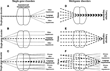
The divergence and convergence from gene defects to behavioral impairments. (- - -) The gene–brain–behavior links underlying language impairments. Single-gene disorders are characterized by divergent (pleiotropic) effects, only some of which affect language. (A) Conceptually, it is possible that a single-gene defect affects only one brain system, which in turn affects multiple behavioral systems. (B) More realistically, a single-gene disorder will affect multiple brain systems, each of which will in turn affect a linguistic or nonlinguistic behavioral system. (C) Given the known complexity of brain–behavior relationships, it is in fact even more realistic that each affected brain system will affect several behavioral systems. (D) Multigenic disorders, in principle, may be fully characterized by convergence, that is, several genes (D) affecting only one brain system that in turn affects language or (E) affecting several brain systems that solely affect language. (F) However, in view of the evidence on gene–brain–behavior relationships discussed in this article, it is most realistic to expect both convergent and divergent principles to be at work in multigenic disorders; that is, each gene affects several brain systems, each of which in turn affects several behavioral systems (some of which are linguistic).
 You have
Access
- 4
- Cited by