INTRODUCTION
Extensive violence continues in relation to elections in sub-Saharan Africa two decades after the ‘third wave of democratisation.’ An emerging literature probing the causes of electoral violence identifies the importance of weak institutions, patronage politics, threatened incumbent parties, and a challenged monopoly of violence as critical factors for election-related violence (Höglund Reference Höglund2009; Daxecker Reference Daxecker2014; Hafner-Burton et al. Reference Hafner-Burton, Hyde and Jablonski2014; Salehyan & Linebarger Reference Salehyan and Linebarger2015). But it is also recognised that there are different dynamics of pre-election and post-election violence and that these different types of violence should accordingly be separated in analyses (Straus & Taylor Reference Straus, Taylor and Bekoe2012). However, the literature on election-related violence shares a focus on national processes and actors, and we still know little of the ways in which national electoral processes interweave with local social and political disputes. Existing studies have primarily considered how national political actors try to gain electoral support from specific localities in the form of intervening in struggles over land resources (Boone Reference Boone2011; Klaus & Mitchell Reference Klaus and Mitchell2015); how politicians incite violence to increase voting coherence (Wilkinson Reference Wilkinson2004); and how violence has contributed to ethnicised party formation in context of recent political liberalisation (Klopp & Zuern Reference Klopp and Zuern2007). This article builds on the contributions of these studies for explaining the links between elections and local violence, but it diverges from previous studies in that the analysis prioritises the ways in which local actors act and respond to national electoral processes in order to analyse how violence unfolds locally.
Nigeria has experienced high levels of electoral violence. Hundreds of lives have been lost in each national election since the inauguration of the Fourth Republic in 1999. The most severe violence was recorded in 2011 when more than 1000 people reportedly died. Extensive post-election violence made the casualties soar which is consistent with the observation that although pre-election violence is more common, post-election violence is generally of greater magnitude (Straus & Taylor Reference Straus, Taylor and Bekoe2012). The announcement of the result of the election triggered widespread protests in areas where the opposition was strong and in some places this led to violence. The northern state of Kaduna was disproportionately affected with more than 800 of the 1000 deaths. However, the election itself was acclaimed by national and international observers to be better managed and less fraudulent than any previous elections in the country. Yet, the level of violence was higher than before. As the concentration of violence was high, this suggests that there is need to examine locally specific factors for explaining, and ultimately preventing, post-election violence. This article accordingly examines the ways in which national electoral processes interweave with local social and political disputes to generate widespread electoral induced violence after voting day.
Apart from frequent election-related violence, other forms of violence are common in Nigeria (Taylor et al. Reference Taylor, Pevehouse and Straus2017). In Nigeria, violence ranges from the Islamist Boko Haram insurgency and militancy in the Niger Delta to violence associated with ethnic based militias and communal clashes. However, there is limited research that concentrates specifically on violence in connection to elections in Nigeria. Existing studies have treated election violence as a form of electoral manipulation that reduces both voter turnout (Bratton Reference Bratton2008) and the legitimacy of democracy (Igwe Reference Igwe2012). Violence has furthermore been recognised as a means for politicians not only to steer the election result in their own favour, but also to eliminate both intra- and inter-party competition (Sisk Reference Sisk and Bekoe2012). There are also experimental studies that conclude that civil society campaigns help to reduce violence and increase perceptions of local security (Fafchamps & Vicente Reference Fafchamps and Vicente2012; Collier & Vicente Reference Collier and Vicente2014). There is however a lack of scholarly attention to post-election violence in Nigeria.
The theoretical framework of this article builds on theories of polarisation and of mass-based violence and riots. It is argued that the presidential election campaigns aggravated national polarisation which overlapped with the dividing lines of a pre-existing conflict in Kaduna State regarding which group should control politics. Recurrent ethno-religious clashes have since the 1980s claimed thousands of lives and continue to shape socio-political relations in Nigeria's third largest state. A history of violent local relations had brought local vigilante networks on the ground, which it is argued contributed to the rapid escalation of the violence from initial protests in other locations. Much of the primary material for the analysis emanates from a field study in Kaduna State in February 2012, ten months after the 2011 presidential election.Footnote 1
This article is structured as follows: Following this introduction is a theoretical elaboration that proposes that increased polarisation in combination with local mobilisation networks explains why violence escalates locally after elections. Then, a section on the Nigerian context follows. This is in turn followed by an account of how the presidential election in 2011 resulted in increased ethno-regional polarisation. I then turn to how the announcement of the election result triggered violent protests and how the violence unfolded in Kaduna State. The next section elaborates on how the violence followed a pattern of previous local clashes and corresponding ethno-religious grievances. Finally, there is a concluding section.
THEORETICAL FRAMEWORK
Election related violence is distinguished from other types of political violence in that it is ‘directly tied to an impending electoral contest or an announced electoral result’ (Straus & Taylor Reference Straus, Taylor and Bekoe2012: 19). There is a distinction to be made between violence that erupts before, during, and after an election (Höglund Reference Höglund2009: 416). It is increasingly recognised that there are different logics of violence before and after an election and that the analysis of the violence should be disaggregated on that basis. The logic of pre-election violence is connected to who is to stand as candidate, who will vote, and for whom. Post-election violence is instead linked to the announced outcome of an election (Straus & Taylor Reference Straus, Taylor and Bekoe2012: 20-1). The dynamics of pre-vote violence have become reasonably established, but key factors leading to post-vote violence are still uncertain. It has been suggested that electoral fraud and lack of confidence in electoral management bodies contribute to violence after elections (Taylor et al. Reference Taylor, Pevehouse and Straus2017: 407), but electoral fraud was less frequent and the confidence in the electoral management body was higher in the Nigerian election in 2011 than previous elections.
Previous literature has emphasised that the risk of electoral violence is associated with the degree of competitiveness between political actors, weak institutions, and a gradual loss of the state's monopoly of legitimate force (Laakso Reference Laakso, Basedau, Erdmann and Mehler2007; Höglund Reference Höglund2009; Höglund et al. Reference Höglund, Jarstad and Söderberg Kovacs2009; Mueller Reference Mueller2011; Hafner-Burton et al. Reference Hafner-Burton, Hyde and Jablonski2014). Whereas these conditions can contribute to promote electoral violence, they do not disclose the dynamics of the violence. To this end, case studies have analysed how elections may provide a window of opportunity (or a risk) to change access to vital resources (e.g. Boone Reference Boone2011; Klaus & Mitchell Reference Klaus and Mitchell2015). This has been identified to be the case especially when citizens depend on patronage access to state resources as elections become a matter of securing livelihoods. This underscores that elections generate uncertainty and that ethno-political relations are up for negotiation. While that may be the case in many places, violence seems to primarily escalate when local conflicts fuse with national electoral incentives. Seemingly local, spontaneous and mass-based manifestations of violence have been triggered by elite incentives to politicise and mobilise larger constituencies during elections (Klopp & Zuern Reference Klopp and Zuern2007; Boone Reference Boone2011). Furthermore, the ability of political actors to control state security institutions has been argued to be crucial for when violence escalates and when it does not (Wilkinson Reference Wilkinson2004: 4-6).
However, it is mainly before elections that elite incentives to mobilise voters are valid, while most serious incidents of widespread electoral violence take place after election results have been announced (Straus & Taylor Reference Straus, Taylor and Bekoe2012). Pre-election violence seems to contribute to violence after elections as severe post-election violence is rare without pre-election violence (ibid.). We can expect that continuous high levels of pre-election violence help to ‘normalise’ violent politics (Staniland Reference Staniland2014: 114). However, since pre-election violence is more common, other factors are pertinent as well.
In this article, it is suggested that election campaigns that increase the polarisation of the constituency is an important factor for post-election violence. Polarisation refers to ‘the extent to which the population is clustered around a small number of distant poles’ (Esteban & Schneider Reference Esteban and Schneider2008: 133) and tensions result from identifying with others in the same group and simultaneously distancing from competing groups. High levels of polarisation are associated with intensified conflict, especially when the population is divided into two equally sized groups (Esteban & Schneider Reference Esteban and Schneider2008). The proposition is that polarisation is more important for post-election violence than is the competitiveness of an election (cf. Wilkinson Reference Wilkinson2004). We can expect the importance of a close election to be primarily connected with pre-election violence as it will increase the incentives for political actors to use violence as a means to try to steer the outcome. While competiveness sometimes can be expected to contribute to increased polarisation, it is neither necessary nor sufficient for expressing dissatisfaction and initiating protests against an announced election result. In contrast, a high degree of polarisation indicates a wide divide between the groups and hence low prospects for concessions to the losing side. Religious polarisation has been observed to be an especially important source of conflict (Reynal-Querol Reference Reynal-Querol2002).
Research on mass-based violence has emphasised the critical role of political and electoral motivations for political actors to incite riots (e.g. Wilkinson Reference Wilkinson2004; Berenschot Reference Berenschot2011). The violence of riots can be more or less widespread. In general, violence tends to be more limited in character when riots are initiated for strategic ends (Horowitz Reference Horowitz2001: 231), which resonates with politically motivated pre-election riots being of more limited character. However, riots are not always connected to political instigation but can erupt with politicians being caught off guard. In a survey study of both partaking and non-partaking actors in riots, Alexandra Scacco (Reference Scacco2017) has found that individual participation is not connected to manipulation by local political elites. Instead, a combination of vulnerability to violence and being embedded in local networks explains why some people participate in riots: ‘it is social networks at the grassroots level that help to transform potential into actual rioters’ (Scacco Reference Scacco2017: 11). Whereas Ward Berenschot (Reference Berenschot2011: 191) claims the relevance of riots for maintaining relations in connection to political actors, Scacco's study demonstrates that this applies to local social relations as well. We can expect that different types of social networks and their platforms are important for when networks are mobilised. In relation to ethno-religious mobilisation, we can expect such networks to be important in contexts where conflict over who is to control and to benefit from state resources in a specific area is connected to notions of how people are defined in ethnic or religious terms with regard to different localities (Geschiere & Jackson Reference Geschiere and Jackson2006; Bøås & Dunn Reference Bøås and Dunn2013). However, not all such localities experience violence. One factor that has been highlighted is the demographic composition of a setting, but without any firm conclusion. Some scholars have argued that areas where groups considered as insiders and outsiders are relatively equal in size are more prone to violence (e.g. Klaus & Mitchell Reference Klaus and Mitchell2015), while others have concluded that small minorities are more exposed to violence (e.g. Horowitz Reference Horowitz1985). The proposition in this article is that polarisation can result in violence in constituencies that are relatively equal, but that does not necessarily mean that the violence takes place in locations within the constituency that has an equal distribution of the contending groups.
The dynamics of a riot may not be directly connected to electoral incentives, but political elites can still be central for defining the issues and divides that trigger spontaneous riots connected to electoral events (Klopp & Zuern Reference Klopp and Zuern2007: 138; Fjelde & Höglund Reference Fjelde and Höglund2016). In divided societies, this entails ethno-regional contentions which put such societies more at risk of a severe form of post-electoral violence. Increased polarisation during elections can also be expected to increase the level of mobilisation of local networks. This is especially the case when grievances in a society are connected to perceived political marginalisation and denial of access to state resources. Treating grievances as loaded with meaning (Simmons Reference Simmons2014), electoral defeat becomes a symbol of marginalisation regardless of how close the election actually was.
In conclusion, the framework for the analysis in this article synthesises the national aspects connected to the process of ethno-religious polarisation and the local aspects of the significance of social networks for mobilising in times of elections. In this regard, national pre-vote processes are identified as critical for the dynamics of post-vote violence.
ELECTIONS AND INSTITUTIONS IN NIGERIA
When elections were reintroduced in Nigeria in 1999, the military had ruled since 1966 with a short intermission from 1979 to 1983 when there was an elected regime in place. In 1993, an election was held but, controversially, annulled by the military in the collation process. Political parties in Nigeria cannot be characterised as programmatic but as ethnic coalitions led by regional strongmen with firm financial backing (International IDEA 2006: 7). The political parties in Nigeria are commonly referred to as ‘machines’ operated by ‘godfathers,’ or ‘big men,’ in order to ensure electoral victories and control political appointments (Ibrahim Reference Ibrahim2007; Obi Reference Obi2011). There are large investments in attaining political power and the stakes are usually high in Nigerian elections. There are likewise considerable risks associated with losing power, as political power tends to be practised as a zero-sum game. This has made political actors undermine democratic rule by manipulating the electoral process, political institutions, and security agencies.
The character of Nigerian politics contributes to making elections contested events. The elite coalitions that constitute the parties contribute to election-related violence through funding and mobilising armed ‘thugs’ (HRW 2007; Obi Reference Obi2011). Pre-election violence is common and includes assassinations of party leaders and gubernatorial candidates in intra-party struggles (Ibrahim Reference Ibrahim2007: 4), but also more low-profile violence is prevalent.
The constitution regulates the formation and activities of the parties in an attempt to mitigate ethnic, religious and regional mobilisation. There are provisions for the political parties to be national in character. For example, the members of the executive committee or other governing body of the parties shall originate from at least two-thirds of the 36 states of the federation (Constitution of the Federal Republic of Nigeria, section 223(2)b). Another such mechanism is that in elections for the presidency, apart for securing a majority of the votes, there is a need to obtain at least 25% of the votes in two-thirds of the 36 states, i.e. in 24 states. Still, the ‘prebendal’ character of Nigerian politics (Joseph Reference Joseph1987) makes political representation a question of having ethnicities and regions reflected in power. But rather than having political parties associated with different ethnic or regional camps, the regulations have specified the parties as an arena for these struggles, which has contributed to violence surrounding party primaries (Sisk Reference Sisk and Bekoe2012).
The power of incumbency is strong in Nigeria. This is partly explained by the fact that the highest positions in the police, military and electoral institutions are all appointed by the president. The president does not only appoint the chair of the Independent National Electoral Commission (INEC), but also the twelve national commissioners and the resident electoral commissioners in the 36 states and Federal Capital Territory (FCT) of Abuja. In short, the independence of the electoral management body is, at best, questionable. In addition, its failure to involve the opposition in any meaningful way has created room for doubts about its capacity for fair electoral management (Opitz et al. Reference Opitz, Fjelde and Höglund2013). The powers of INEC include organising, undertaking and supervising elections, but the organisation also registers parties and it certifies which candidates are eligible to stand national and state elections. In all these activities, INEC has been susceptible to manipulation by the government or exhibited a biased approach (Ibrahim & Garuba Reference Ibrahim and Garuba2010).
Kaduna State
Kaduna State is the third largest of the 36 states in the federation with 6·1 million inhabitants according to the 2006 census. The city of Kaduna was established by the British as an administrative centre for the colonial power and has since remained a political centre for the northern part of the country. For example, many members of the political elite in the north keep a house in Kaduna. The combination of being a large state, a hub for the northern political elite and the historical political importance give the state a significant position in the Nigerian federation.
The state is divided along ethnic and religious lines with a majority of Hausa-Fulani who are predominantly Muslim in the northern part of the state and a majority of Christians of different ethnicities in the southern part of the state. Since the 1980s, the state has had a history of inter-ethnic communal clashes featuring mobilisation of religious and ethnic sentiments in competition over access to state resources. Before the 2011 post-election violence, there were four major episodes of violence in the state along with numerous minor incidents. The first two crises started in southern Kaduna. In 1987, there were confrontations in Kafanchan in the south of the state when an evangelical event was hosted at a college and in 1992, a market relocation triggered clashes in Zangon Kataf. The two started in Kaduna city. First, the proposition to introduce a sharia penal code triggered clashes in 2000. And then in 2002, protests against the Miss World beauty competition that was scheduled to be held in Abuja turned violent. The recurrent ethno-religious clashes in Kaduna State have deepened segregation of the population along that divide. Most notably, it has affected the pattern of residence in urban areas as Muslims and Christians tend to live in separate areas. But it has also affected the structure of social networks as these have become increasingly dependent on religious affiliation.
NATIONAL POLARISATION
Since 1999, elections in Nigeria had become increasingly prone to rigging and violence, but two events conspired to make the 2011 election especially contentious. The first was that the 2007 elections were particularly fraudulent. The second was that an informal principle of the presidency to rotate between the north and the south of the country was challenged by Goodluck Jonathan's candidacy.
The ordeals of the 2007 elections started the year before when the former president, Olusegun Obasanjo, tried unsuccessfully to change the constitution to allow him a third term (Suberu Reference Suberu2007: 96–7). Obasanjo further fuelled tension by labelling the elections as a ‘do-or-die’ affair for his party, the People's Democratic Party (PDP) (Vanguard 11.2.2007). Given the history of electoral conflict, this was taken as a sign of how far Obasanjo would go in order to secure the presidency for his successor, Umaru Yar'Adua, the brother of Obasanjo's second-in-command when he was military head of state in the 1970s.Footnote 2 Some have even argued that Obasanjo's secret wish was to prolong his rule by provoking a crisis that would allow him to declare a state of emergency (Kew Reference Kew2010: 510). Pre-election violence was widespread and followed the same pattern as for previous elections, although it reached new heights with at least 300 people killed (HRW 2007: 19). Militias and gangs had been armed during the 2003 election campaigns and continued to be major players in the political process. The risk of violence was so high that it kept voters away from the polling stations (Onwudiwe & Berwind-Dart Reference Onwudiwe and Berwind-Dart2010).Footnote 3 The 2007 elections were riddled with by fraud and corruption to the extent that EU observers considered the elections among the worst they had witnessed anywhere in the world (Rawlence & Albin-Lackey Reference Rawlence and Albin-Lackey2007; HRW 2011). In their report, the EU Election Observation Mission (2007: 1) stated that ‘there can be no confidence in the results of these elections.’ The illegitimacy of the elections was obvious even to the successful candidate. In his inaugural speech, Yar'Adua conceded that the elections had ‘some shortcomings’ and promised electoral reform (Nigeria First 2007). The opposition protested against the flawed results of the election, and so did the labour movement, religious organisations, and civil society groups. However, there was limited violence after the election despite the general dissatisfaction with the process.
In June 2010, INEC was assigned a new chair. Contrary to the preceding chair, the appointee Attahiru Jega had a reputation for integrity and political independence. In the short time before the election, he embarked on reforming the registration process that had been heavily criticised in previous elections as well as adopting new logistics for the voting process and taking measures for increased transparency (Lewis Reference Lewis2011: 68–9).
A so-called ‘zoning’ agreement was established between the different elite fractions within PDP before the transition to democracy in 1999. The agreement stated that presidential power should rotate between the north and the south of the country.Footnote 4 Obasanjo, who served two terms as president, came from the south-west. Yar'Adua, accordingly, came from the north as did his major contenders in the 2007 election. However, Yar'Adua took ill in 2009. After a period of uncertainty about the status of the president and about the political leadership, Vice-President Jonathan took over as acting president and in early 2010, Yar'Adua passed away.
In the run-up to the 2011 election, the status of the ‘zoning’ agreement was challenged when Jonathan made clear his intention to run for president, despite being a Christian from the southern part of the country in contrast to the predominantly Muslim north. His candidature triggered discontent among some central PDP members from the north, who argued that it was still the ‘northern turn’ (Lewis Reference Lewis2011: 66). Key northern figures declared that ‘anything short of a Northern president is tantamount to stealing our presidency’ and that the failure to adhere to the zoning principle ‘may ignite a series of events, the scope and magnitude of which we can neither proximate nor contain’ (as quoted in Orji & Uzodi Reference Orji and Uzodi2012: 30). However, some of the governors in the northern states sided with Jonathan, who used his ‘accidental’ presidencyFootnote 5 to build a support base of his own.Footnote 6 Additionally, in Jonathan's home region, the Niger Delta, it was argued that they had never had a president, so it was in fact their turn.
Jonathan's main opponent in the 2011 election was Muhammadu Buhari from Katsina State in the north, representing the Congress for Progressive Change (CPC). Buhari had previously been military head of state in 1984–85. He contested the presidential election also in 2003 and 2007 and enjoyed widespread support in the north, building his campaign on a reputation for integrity and simplicity. In the south, however, he was seen as promoting an Islamic agenda citing his support for sharia laws in some northern states in 2000. This helped to depict the candidates as representing not only different regions but also different religious communities. There was for example text messaging campaigns that warned Muslims not to vote for Christian candidates, such as Jonathan (ICG 2011a: 4). However, the candidates’ running mates were of differing religious affiliations. When Jonathan was elevated to president, he picked the Muslim Kaduna State governor, Namadi Sambo, as vice-president. Buhari's running mate was Tunde Bakare, a pastor from Lagos in the south-west.
The pre-election period was marked by extensive violence. The violence started with the primaries and continued throughout the electoral process. Several governorship and local government candidates were killed. In Nasarawa State, security forces opened fire at an anti-government demonstration, killing two children. Clashes between the different parties’ supporters in Kaduna resulted in four people being killed. There were also seven bomb blasts around the country in the run-up to the election and two more on election day. Some of these were connected to the Boko Haram insurgency, one to the Niger Delta uprising, and others directed at INEC and a governorship candidate. Four people were killed in a bomb blast during a PDP rally in Suleja, Niger State (Amnesty International 2011; Bekoe Reference Bekoe2011). During the National Assembly election, a week before the presidential election, 40 people were killed and over 160 arrested (ICG 2011b: 5). In all, close to 150 people were killed and several hundred were injured before the presidential election commenced (Lewis Reference Lewis2011: 70; NDI 2012: 39).
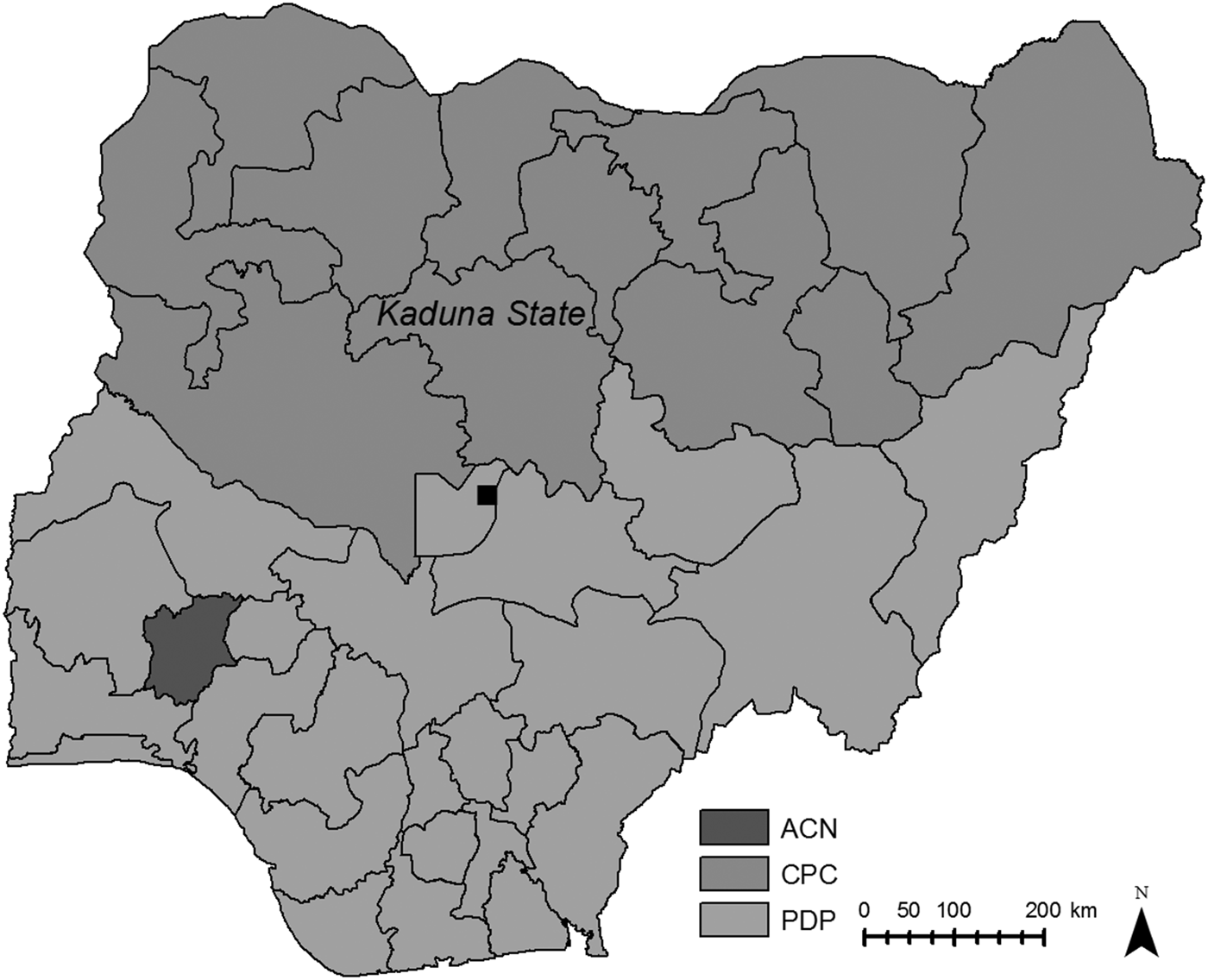
The increased confidence in the electoral commission that came with the new chair was tested when the commission cancelled the parliamentary election a few hours into the exercise due to the late arrival of accreditation and result sheets. For some, this added to the suspicions of INEC not having the capacity to organise the election, reinforcing an impression from a challenging two-week registration process that resulted in 73·5 million voters compared to the 60 million registered in 2007 (Orji & Uzodi Reference Orji and Uzodi2012: 26). For others, however, it was interpreted as a sign of integrity to not proceed with the election under unwholesome circumstances (ICG 2011b: 3). The parliamentary election was postponed one week, meaning that the presidential election scheduled for 9 April was postponed until 16 April. The election was eventually praised by both national and international observers to be the most credible so far in the country, although some concerns were raised regarding inflated results (Bekoe Reference Bekoe2011; Lewis Reference Lewis2011). Jonathan won the election with almost 59% of the votes against Buhari's 32%. The support for the candidates was heavily concentrated geographically although Jonathan gained more votes in the north than Buhari did in the south. Buhari won 12 states in the north but gained very few votes in the south. (See map 1). In seven states in the south, Jonathan received 95% of the votes or more according to the official results. In his home state, Bayelsa, he managed to secure 99·63% of the votes. The CPC alleged vote buying, ballot box-stuffing, and inflation of results in these states where voter turnout reached up to 85·6%, compared to the average 53·7%, although the media reported low turnout in many of the states. Considering the popularity of Buhari in the north, many there had expected him to win the election. When the opposition candidate was not declared winner, it was concluded that the election had been ‘stolen’.
2011 election result by state. PDP: Peoples Democratic Party (58·9%), CPC: Congress for Progressive Change (32·0%), ACN: Action Congress of Nigeria (5·4%).

VIOLENT PROTESTS
The announcement of Jonathan as winner of the election triggered street protests and violence in several cities in the north. The protesters alleged massive rigging and irregularities in the election. Protests spread through the northern states of Sokoto, Niger, Kano, Kaduna, Bauchi, Gombe, and Adamawa. The demonstrations resulted in the destruction of INEC offices as well as of houses and properties of the elites who had sided with the PDP. These included politicians as well as traditional rulers such as the Sultan of Sokoto. In Bauchi State, nine members of the National Youth Service CorpsFootnote 7 serving as INEC ad hoc staff along with 50 others were killed (INEC 2011: 35). In Kaduna, the residence of the vice-president was set ablaze. Additional houses that were attacked belonged to the emir of Zazzau and other traditional leaders that had sided with PDP, that of a local government chairman, and also a PDP secretariat as well as houses with posters of Jonathan (People's Daily, 19.5.2011).
The protests started when Jonathan was declared winner. The chair of INEC, Jega, attributed the post-election violence to ‘dashed hopes of some elements as a result of the credible nature of the elections’ (Daily Sun, 2.6.2011), suggesting disappointment of opposition supporters as a trigger. There were few indications of the protests or violence having been facilitated by political parties (ICG 2011b: 7), although there were speculations about Buhari's role in inciting the violence as he did not immediately condemn the violence and contended that the ruling party had rigged the election (Bekoe Reference Bekoe2011). Given his previous experiences of challenging election results in court during 2003 and 2007, he had in his campaign declared he would not go to court, saying that there was no point. His main message for the voters had been to protect their votes (ibid.).Footnote 8 Although this is the same language used by election advocacy groups, it may carry ambiguous connotations when uttered by politicians, implying fraud when not successful. The slogans of the CPC were adjudged to be confrontational in their insistence on electoral integrity, and this was seen as one reason that ‘might have contributed’ to the violence by a committee that was set up after the violence (Kaduna State Government 2012: 25).
THE SPREAD OF VIOLENCE
The election became particularly fractious as competition was framed in regional and religious terms, aggravating notions of northern and southern Nigeria as distinct political entities represented by the two main candidates respectively. Although both Islam and Christianity are spread throughout the country, different religions were tied to the representations of ‘north’ and ‘south.’ The north/south division intersected sub-nationally in Kaduna State where a longstanding conflict between Hausa-Fulani Muslims and Christians of different ethnicities has resulted in recurrent clashes. The explanations for when and why the violence started differ between actors associated with different sides of the pre-existing conflict in Kaduna, connected to local struggles over land and politics. Religious affiliation became the dividing line and political affiliations of the warring parties were either taken for granted or disregarded. Rumours of the protests and ensuing attacks soon spread with the help of text messages, and were quickly taking an ethno-religious dimension which made the youth swiftly mobilise. The Kaduna State chairman of the Muslim umbrella organisation Jama'atu Nasril Islam blamed unsuccessful politicians and rumours about the initial demonstrations for causing the violence in southern Kaduna:
The crisis of April 2011 started as a result of frustration by some politicians, because after the election they felt that there was a lot of rigging and therefore they were unhappy so they went on rampage – burning houses and vehicles of the opposing party that was in power. That was how it started here in Kaduna. But unfortunately due to the use of handset [i.e. cell phones], soon all over the state they heard what was happening in Kaduna and they gave a wrong impression, particularly in the southern part. They got information from some of their friends that people were being killed. They didn't tell them the actual truth what was happening. People were only burning houses and vehicles and other property. But nobody was killed here in Kaduna. Unfortunately, when they heard that their brothers and sisters were being killed here in Kaduna, so they also attacked the Muslim communities in southern Kaduna – without any provocation … It was the Christians in the southern part that attacked the Muslims, no matter what party they belonged to (Makarfi 2012 int.).
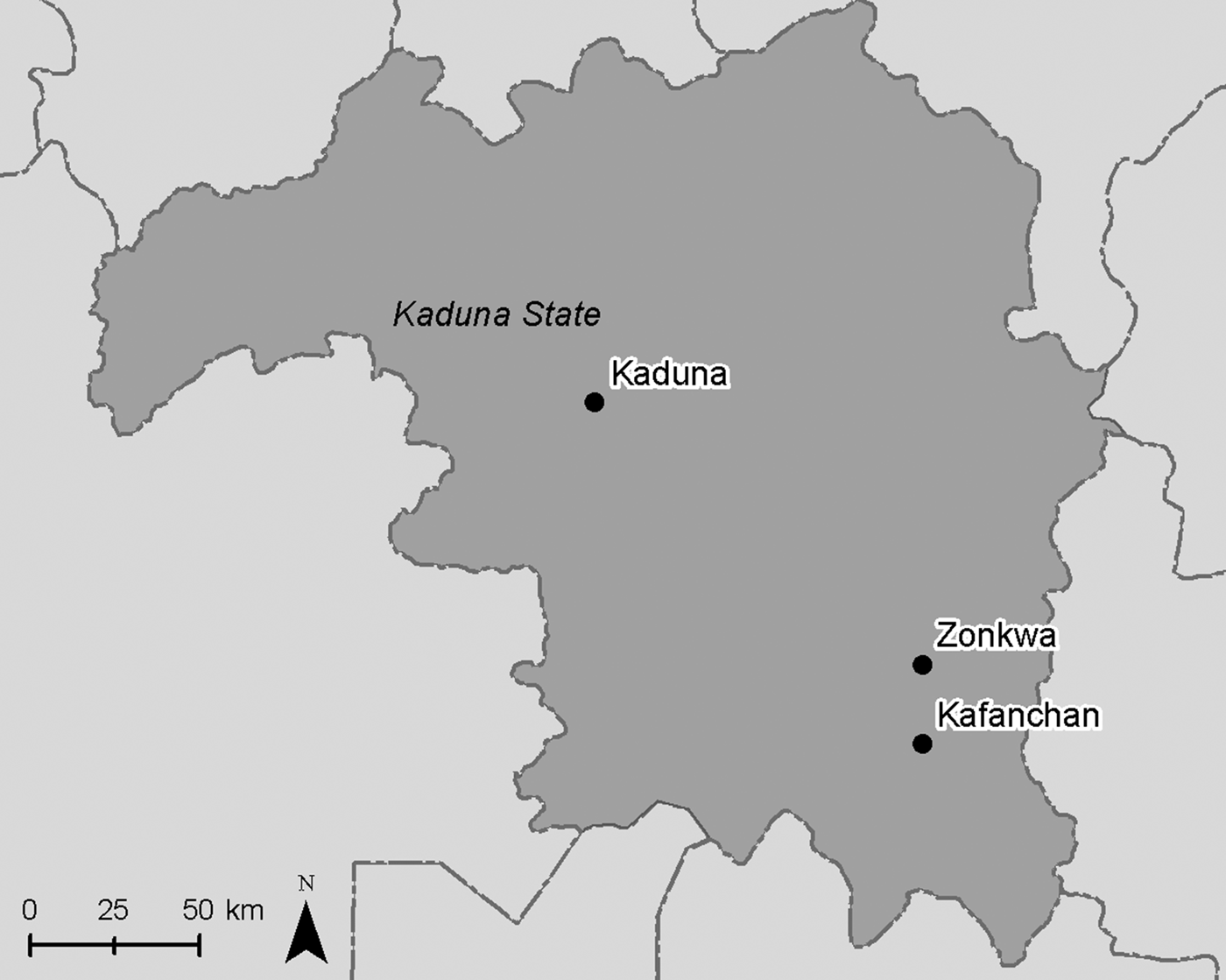
The violence in rural areas in the southern part of Kaduna State erupted when a truck allegedly carrying ammunitions to the Muslim Hausa community in the town Zonkwa (see map 2) declined to stop at a road block that had been set up by youth in the area in reaction to the rumours of unrest (Daily Trust 27.4.2011). It soon spread to neighbouring towns. Christian actors claimed that the violence was premeditated to target Christians and churches (Vanguard 27.7.2011). According to a former chairman of the Kaduna State branch of the Christian Association of Nigeria, Muslim sympathisers of the CPC in nearby Kafanchan launched simultaneous ‘guerrilla war-like attacks on innocent citizens’ after ‘an un-usual call to prayer’ at 10 pm (Office of Justice, Development and Peace Commission (JDPC), Catholic Diocese of Kafanchan n.d. [2011]). That was some hours after the Zonkwa violence had started. The armed attackers were alleged to have carried sophisticated weapons: ‘Christians therefore were forced to abandon their homes and their properties’ (ibid.). The Hausa community was said to have prepared for the violence by distributing weapons. It was also claimed that the Hausa community had general knowledge of the preparations, illustrated by the late arrival of Hausa traders at the central market which was later burned to the ground. The Catholic Diocese of Kafanchan also identified similar threats in nearby locations, such as Zonkwa and Madakiya, but there ‘they were quickly rounded up and overpowered’ (ibid.). Still, Zonkwa recorded the highest number of killings.
Kaduna State.

As indicated above, Muslim organisations in southern Kaduna, by contrast, saw the violence as unprovoked. The Secretary of the Jema'a Emirate stressed that the crises in Kafanchan started in reaction to violence in other places, rather than to the general protest: ‘We started to hear about the Zonkwa crisis around eight thirty, nine in the evening. That some youths were blocking the entrances. It escalated and youth engaged each other in fighting before soldiers were brought here’ (Secretary of the Jema'a Emirate 2012 Int.). Muslim organisations characterised the violence as ‘ethno-religious cleansing’ and asserted that the Kaduna State government did not act upon information about the violence and that it took a biased position against Muslims (Coalition of Muslim Victims of 2011 Ethno-Religious Cleansing in Southern Kaduna 2012). The attacks were seen as directed against Muslims and carried out in coordination in different places without security operatives intervening (Tribune 14.10.2011).
Human Rights Watch described the violence as ‘mass killings’ where Muslim men were singled out and shot (HRW 2013: 97). More than 300 Muslims were killed in Zonkwa. Mosques, shops and properties were burnt down. After less than 24 hours, nearly all of the Hausa-Fulani residents of Zonkwa were either killed or displaced, according to Human Rights Watch (HRW 2011). The federal government deployed about 1000 mobile police to Kaduna (Leadership 20.4.2011). The judicial committee of inquiry that was set up by the Kaduna State government to investigate the violence stated that 815 persons were killed in Zangon Kataf Local Government Area in the southern part of Kaduna State (Kaduna State Government 2012: 58). Throughout the country, close to 1000 persons were arrested in relation to the post-election violence and about 400 of these were arrested in Kaduna (Leadership 22.4.2011).
Police and military are federal institutions in Nigeria and they are strategically used in election campaigns. They tend to stand aside or even participate when gangs molest opposition rallies. However, their role in large scale violence is not as straightforward. Unlike cases where police repression of protests against announced election results are connected to institutional control by the incumbent, the security forces take a more ambiguous position. Lack of capacity makes security forces hesitant to intervene although there are also cases when individual police and military units take sides, escalating the violence (ICG 2010). In general, security agents are reluctant to intervene in local violence, but when they do, the response tends to be heavy-handed.
LOCAL POLARISATION
Land related disputes as well as the citizenship question contributed to localised electoral induced violence in Kenya (2007–08) and Côte d'Ivoire (2010–11), and contested and unsettled claims over land have been an issue in southern Kaduna since the 1990s. For example, in the aftermath of the crisis in Zangon Kataf in 1992, the Atyap (Kataf) took over the land farmed by the Hausa community surrounding their settlement and conflicting views over who has legitimate claims to this land remain (field notes 2008). This is related to the citizenship question. Groups that are certified as ‘indigenes’ of a specific area have certain privileges, including distributing land (Adebanwi Reference Adebanwi2009). A nationally renowned Pentecostal pastor in Kafanchan asserts that:
Every crisis is connected to the land problem. They [Muslims] hope they will gain the land and then they invite their brothers from other places, even outside Nigeria, to fill the space for them … The Muslims here can go back to their original homes, they have other places to go to. The Christians cannot relocate to somewhere else. … The Emirate, originally, was behind the fighting. It gave them recognition with government. It made them to, at the end of the fighting, lay demands that brought them gains. Each time they fight, their influence is expanding … I disagree with some of the Christian leaders, they believe the Christians should arm themselves. I disagree, but I do not denounce them. If they were not fighting back, this place would have been overrun. But I don't see that as a solution, either. But for now, it has kept the place alive (Kure 2012 int.).Footnote 9
The statement that Muslims ‘have other places to go to’ refers to the sentiment that Hausa Muslims should not be regarded as ‘indigenes’ of the area, but ‘belong’ in other places. But there was also a widespread notion of violence being instigated from ‘outsiders’ – connected to the ‘settlers’, i.e. non-indigenes – and that it was planned to advance a religious agenda. The road blocks were aimed at stopping an alleged influx of arms, ammunition, and people into the area as there were suspicions of crisis looming. The fact that mostly Muslims were killed was explained by Christian actors to be a consequence of the religious composition of the area, and of the ‘resistance’ that Christians in southern Kaduna offered. Bonet Shalalu of Southern Kaduna Patriotic Front expressed it thus:
They diluted their strategic act of unleashing mayhem by first selecting PDP stalwarts in their areas. Traditional rulers like the Emir of Zazzau's palace were attacked. The next phase, which was the real mission commenced in earnest. It was a massive, sudden, and decisive assault on Southern Kaduna people and burning their places of worship. … They were however, resisted with the same spirit our people resisted 1804 Jihadists and hence their casualties grew (Shalalu Reference Shalalu2012).
The above quote expresses a view that the election provided a pretext for attacking non-Muslims in southern Kaduna. The reference to the ‘1804 Jihadists’ alludes to the time when the powerful Sokoto Caliphate was established in northern Nigeria, but it did not take control of the people in the southern Kaduna area. Both accounts of the violence express notions of the election providing an opportunity to advance other agendas connected to grievances over land and economic and political power. The question of who is ‘indigenous’ to a locality is linked to privileges in terms of employment, the civil service, access to land, admissions to secondary and higher education, scholarships, etc. The power to issue indigeneity certificates rests with local governments. There is however no clear definition of the concept in the constitution, which has made the practice of issuing indigeneity certificates susceptible to ethno-religious partiality (HRW 2006: 48–9). When voting follows ethnic lines in localities characterised by indigene-settler conflicts, candidates get to represent different versions of the boundaries of political inclusion (cf. Côté & Mitchell Reference Côté and Mitchell2015). Christians constitute the majority in southern Kaduna and Muslims in the area are conceived by many Christians as nurturing ties with wider regional forces that are interpreted in religious terms. When violence followed identifications with the inter-regional and inter-religious divide that had been promoted in the election, this was perceived as a threat to both Muslim and Christian communities in southern Kaduna.
MOBILISATION AND SOCIAL NETWORKS
The rapid escalation of the violence gives the impression that the violence was premeditated, but previous experiences of both large-scale and small-scale violence in the areas might better explain the institutionalised response of the rioters. The recurrent crises had resulted in a state of readiness for riots. When the protests started, it was established channels like mosques, churches and community groups that provided the networks for mobilisation. In Kaduna, these networks have been developed and utilised for security concerns over the past decades in a conflict prone setting. Police capacity is weak and the state offers little in terms of protection, which gives people a sense of vulnerability of being attacked (Scacco Reference Scacco2017). A response to that has been to mobilise informal social networks ahead of anticipated violence. The widespread distrust in the state's security measures has made community leaders argue, for example, that ‘every community must become practically capable of defending its own people’ by setting up Community Defence Committees.Footnote 10 We can expect this to contribute to the swift escalation of violence as a large crowd of people is organised to be mobilised rapidly. Mobilisation alone might have triggered violence as ‘people may be pulled into rioting because they fear they will be attacked if they do not riot’ (Scacco Reference Scacco2017: 10). The political divide that was used in the national electoral campaign overlapped with sub-national socio-political divides in Kaduna state that already had a history of violence which contributed to the character of the violence after the election.
The pattern of violence suggests that the affected areas were populated by small minorities, which became the main victims. Muslims in Zonkwa and Kafanchan as well Christians in Kabala West, who were also attacked, were small minorities from the perspective of the immediate neighbourhoods. This pattern contrasts with accounts that regard relatively equal sizes of insider and outsider groups as a condition for violence in conflicts of this type (Klaus & Mitchell Reference Klaus and Mitchell2015: 627). However, when the grievances are framed in a state perspective, the two groups are more equal in size. In Kaduna State at large, the number of Christians and Muslims is more or less evenly balanced. But while grievances are framed in relation to state boundaries, mobilisation is more localised, which explains the concentration of violence to specific places.
Organised militias and gangs have repeatedly been used by politicians in their campaigns (HRW 2007), but also religious leaders are instrumental in the formation and deployment of localised vigilante groups. For example, the Kaduna State chair of the Christian Association of Nigeria (CAN) declared that ‘we want the government to protect us, but as long as they don't do that … we must defend ourselves’ (Kujiat 2012 int.). At the same time, state officials and religious leaders have become increasingly dependent on each other, partly as a consequence of the recurrent ethno-religious conflicts. The capacity of religious actors to moderate violence has been used by the state government in times of crises. It has also given religious leaders and organisations a semi-governmental status, where religious organisations distribute relief and necessities as well as laying the foundation for state projects such as immunisation programmes. But religious leaders are also frequently accused of inciting violence:
If you want this place to burst into fire today, if the religious leaders call their people – just give them 30 minutes – they tell their people ‘go out and fight’ and they will turn the community upside down. … The governor is calling for the religious leaders to come for security reasons. Then he will brief them on what is going on and the governor will also beg them to help in calming down the situation … Whenever their leaders say ‘go’, they remove all their fear. Even if they are going to die they will still go. If the religious leaders say ‘no, leave it’, you will see things calming down (Lyamgohn 2012 int.).
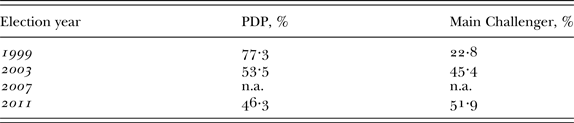
In this way, religious leaders have to some extent come to replace, or to be the ‘intermediaries’ of, politicians for mobilising protesters which also contributed to the violence after the election taking a religious turn. This trend is reinforced by politicians using religious spaces as arenas for canvassing votes. The candidates in the governorship elections the week after the presidential election campaigned on religious sentiments. In multi-religious Plateau State, the campaign slogan of the incumbent governor was ‘Redemption 2011’. The incumbent governor in Kaduna State, Patrick Yakowa, took his campaign to churches where he ‘promised to compensate [the clergy and their members] with appointments and other largesse if elected into office’ (Next 14.4.2011). Facing questions about the appropriateness of campaigning in churches, the governor's assistant explained that ‘The election has now taken a religious dimension and the governor has to approach it that way. The governor has been visiting churches before now, after all, CPC, what are they doing? Are they not campaigning on religious sentiments?’ (as quoted in Next 14.4.2011). Apparently, this was a successful strategy as the votes shifted in favour of PDP and Yakowa in the state election compared to the national election. Kaduna State had since 1999 been a PDP state, both in national elections and in state elections. In 2011 however, Buhari (CPC) gained a majority of the votes (see Table I). CPC had also won two of the three senatorial seats as well as eight of 15 seats in the House of Representatives in the election that was held the week before the presidential election. But then CPC lost the state elections. As in the national election, the voting pattern in the state election displayed a divided state: Yakowa of PDP won most of his votes in the southern local government areas and his opponent, Haruna Sa'eed of CPC, won the majority of the votes in the northern local government areas. The post-election violence seemed to consolidate the constituency (cf. Wilkinson Reference Wilkinson2004).
Presidential election results in Kaduna State, 1999–2011

A report by Human Rights Watch claims that some polling stations in violence-affected places in southern Kaduna failed to record a single vote for the CPC candidate (HRW 2011). Yakowa won 52·3% of the 2,549,466 votes and Sa'eed won 44·4% (African Elections Database 2011). PDP also won 21 of the 34 seats in the State House of Assembly and CPC won 13 (INEC 2011: 87). It is noteworthy that the number of votes was almost exactly the same as in the presidential election, which was well above the national average, despite the violence between the elections (see Table II), at odds with studies that conclude that electoral violence reduces voter turnout (e.g. Bratton Reference Bratton2008). State elections are however typically even more susceptible to fraud than national elections, which is something that can inflate the number of votes. But CPC failed to convince the Supreme Court of any ballot stuffing or thumb printing in the following court proceedings. The power of incumbency is however also great in state elections and Yakowa came into the election as incumbent following his promotion from deputy governor to governor in 2010 when President Jonathan chose the former governor in Kaduna, Namadi Sambo, as vice-president after Yar'Adua's death.
State election results in Kaduna State, 2011

CONCLUSION
Violence induced by elections continues to haunt countries in Sub-Saharan Africa. Whereas post-election violence has been observed to be more severe, there is limited research on the dynamics of such violence. Examining the 2011 post-election violence in Nigeria, this article has focused on the ways in which national electoral processes interweave with local social and political disputes to generate wide-ranging violence. It has been argued that national polarisation intensified by the presidential election contributed to the mobilization of local networks for security. The election came to be framed in religious and regional terms when the informal ‘zoning’ agreement was controversially abandoned within the ruling party ahead of the election. The dividing lines of the polarisation intensified by the election intersected with local grievances in Kaduna State which led to an escalation of violence that had started in connection to street protests after the announcement of the result. The electoral polarisation fed into mobilisation structures in Kaduna State which followed divisions from previous clashes in the state, pitting Hausa-Fulani Muslims against Christian ethnic groups, and reflected the appearance of the national division that the presidential candidates had come to symbolise – a Christian south and a Muslim north. When protests spread, a sense of vulnerability among both Muslim and Christian groups combined with overlapping local and national grievances added fuel to the flames, and the violence escalated quickly as established local channels for mobilisation were utilised. Accordingly, the character of the violence hinged on how the electoral polarisation connected to previous local societal conflict lines.
Typically, the stakes are high in Nigerian elections. However, as successive presidents have tended to rely on and distribute positions to associates from their own regions, polarisation has heightened. While the breach of the ‘zoning’ agreement contributed to the violence after the election by polarising the national electorate, it should also be noted that the agreement itself has contributed to mobilisation along ethnic lines. It has reinforced notions of institutional representation being connected to ‘ownership’ over particular territories (Kendhammer Reference Kendhammer2010), thereby fuelling the type of conflicts as the one in Kaduna State where identity is attached to territoriality (Angerbrandt Reference Angerbrandt2015). It should also be recognised that while local social networks were essential for the rapid escalation of the violence, social networks also have a key role in campaigns against electoral violence (Fafchamps & Vicente Reference Fafchamps and Vicente2012). Therefore, there is a need for an increased focus on different types of social networks and their role in processes and events surrounding elections to complement the prevailing institutional perspective.