INTRODUCTION
Investigations of the Roman pottery of Corinth have focused on how the location of the city at the isthmus between the Corinthian and Saronic gulfs explains the colony’s role in trans-Mediterranean and intra-Aegean trade. Eastern sigillata A and Pergamene sigillata attest that in the late Republic the colonists had strong ties with Syria and the eastern Aegean, reflecting Rome’s constant involvement in the politics of the eastern Mediterranean during the chaotic first three quarters of the first century BC. With the establishment of the pax Romana in the Augustan period, Italian imports became prominent in Corinth. Well into the second century AD, Italy remained a major source of table wares and occasionally of specialised cooking pots, vessels that were acquired as matters of individual taste for display and use, and Italy was also the proximate source for western commodities (transported in amphoras), which came not only from the Adriatic and Tyrrhenian coasts of Italy but also from North Africa and Spain. In the second and third centuries AD, the economies of the eastern provinces throve, intra-Aegean trade grew, and Corinth’s imported pottery reflects this growth while still maintaining western connections. In the fourth to seventh centuries AD, imports to Corinth more closely aligned with those seen in most other eastern coastal sites; ties with the West remain unusually prominent (Slane Reference Slane1987; Reference Slane, Walker and Cameron1990a; Reference Slane2000a; Reference Slane, Poblome, Talloen, Brulet and Waelkens2004; Slane and Sanders Reference Slane and Sanders2005).
Corinth’s location on the isthmus has also a second dimension, as a connector between the Peloponnese and central Greece and potentially as a regional nexus between the twin gulfs. Possibly it also has a third: as the largest city in the north-eastern Peloponnese, Corinth both consumed local products and supplied smaller, peripheral sites. Investigating these dimensions is more difficult, in part because it cannot be done without comparanda from other sites in the region. Only recently has the Roman period become sufficiently well-known outside of Corinth for such studies to be possible. As a result, some previous assumptions need to be reassessed, either to overturn them or to confirm that they are still valid. In particular, new potential sources of pottery for the north-eastern Peloponnese – not only Argos (Abadie-Reynal Reference Abadie-Reynal2007), Aigeira (Gauss et al. Reference Gauss, Smetana, Dorner, Eitzinger, Forstenpointer, Galik, Kurz, Lätzer-Lazar, Leibetseder, Regner, Tanner, Trapichler and Weissengruber2012; Reference Gauss, Smetana, Rutter, Dorner, Eitzinger, Klein, Kurz, Lätzer-Lasar, Leibetseder, Regner, Tanner, Trainor and Trapichler2013) and Butrint (Fantuzzi Reference Fantuzzi and Reynolds2019), but also eastern Locris (Raselli-Nydegger Reference Raselli-Nydegger2003), Epirus in general (Hayes pers. comm. 2003; Morison pers. comm. 2006 with Moore Reference Moore and Isager2001), Patras (Hübner Reference Hübner1997; Theodoropoulou pers. comm. 2019; Petropoulos and Rathossi pers. comm. 2019), Olympia (Slane Reference Slane2008; Schauer Reference Schauer2010), Delphi and Aegina – should be considered.Footnote 1
Publication of Roman pottery in the Peloponnese has focused on the Corinthia and the Argolid. At Corinth itself, there is a schematic understanding of locally made shapes of fine wares, plain wares (coarse wares), cooking pots, and locally made commodity containers,Footnote 2 but it has not been backed up by fabric analyses.Footnote 3 The Roman pottery of Argos, except for the table ware, shows many of the same shapes, which cannot be differentiated by eye.Footnote 4 The same is true of nearby Isthmia, although there some specialised ritual shapes have no parallels at Corinth (Hayes and Slane Reference Hayes and Slane2022). Some of the same shapes also exist at Kenchreai (Morison and Rife Reference Morison, Rife, Korka and Rife2022), Nemea (from the 1970s excavations and from the survey, Slane pers. obs.), Sikyon (Slane pers. obs.; Trainor Reference Trainor2015), and Epidauros (Slane Reference Slane and Kanellopoulos2000b). There has been considerable progress with the scientific analysis of various fabrics, particularly cooking and coarse wares, in the north-eastern Peloponnese (Whitbread, Ponting and Wells Reference Whitbread, Ponting and Wells2007; Whitbread Reference Whitbread, Lindblom and Wells2011), but these were not closely linked to the typological studies (Hjohlman Reference Hjohlman, Hjohlman, Penttinen and Wells2005), and this reduces their utility.
The aim of this article on Roman cooking ware of presumed local origin is to assess current assumptions on their provenance through integrated scientific and typological analyses. Beyond establishing reference groups and discussing the potential for local production, the article also explores their technology.
PREVIOUS STUDIES AND SELECTION OF SAMPLES
The ‘local’ cooking fabric of Roman Corinth was originally identified in part by excluding obvious imports, which were common in the early years of the Roman colony (Slane Reference Slane1986, 305–6, 312). What was left was recognisably a single group with a standard set of shapes and variations that could be attributed to differences in size of inclusions or to differences in firing or use.Footnote 5 ‘Local cooking fabric’ was described thus:
Another, more durable and brittle, fabric was employed by Corinthian potters for vessels which would receive harder use such as the series of cooking pots catalogued above and, in a finer version, for imitations of thin-walled wares and the wheelmade lamps of Broneer type XVI. It is hard, loosely compacted, and red (2.5YR 5/6) with small-to-medium opaque white inclusions oxidised orange on the surface; the surface or occasionally the whole pot may be fired grey. The surfaces of many of the smaller cooking vessels in the floor deposit have a purplish, iridescent sheen, suggesting that they were fired nearly to the point of vitrification.
(Wright Reference Wright1980, 169–70)And in Corinth XVIII.2, after an extended discussion of the shared morphological details of casseroles, stewpots and chytrai, the following:
The fabric is red (near 2.5YR 5/6) with medium to large angular, non-calcareous, white inclusions predominating and visible particularly on the interior surface; the exterior surface is often fired grey and lacks the smooth finish of the Hellenistic ware. The vessels are thick walled but all are wheelmade, and fine scratches are visible on the interior and exterior of the upper walls and rim.
(Slane Reference Slane1990b, 74)Four series of pitchers and a one-handled mug were also made in cooking fabric (‘the most characteristic Corinthian pottery of the first to fourth centuries’) as well as a number of forms derived from Italian thin-walled ware, occasionally as amphoras if the vessels were intended for transporting a commodity, and also including the wheelmade lamps of Broneer type XVI (Broneer Reference Broneer1930, 74, 91, 100–1). Because their functions differ, such vessels were recorded separately from the cooking pots as ‘local n.f.c.’ (not for cooking, which was usually classified as plain ware), a term we owe to Edwards’ identification of Hellenistic vessels not intended for use over the fire (Edwards Reference Edwards1975, 16, also 10–11, 118–19). (Without such a subdivision Corinth would have no plain-ware pitchers or bowls in the Roman period.) Although Slane’s use of the word ‘local’ was intentionally non-specific so as not to suggest that it was limited to an urban core, it was replaced by ‘Corinthian cooking fabric’ (C.c.f., for both cooking and plain wares) in publications of the last 20 years as more sites attempted to identify their cooking pottery (Slane and Sanders Reference Slane and Sanders2005; Graybehl Reference Graybehl2010, 3; Graybehl et al. Reference Graybehl, Cloke, Hammond, Ximeri and Day2013). Use of ‘Corinthian’ was unfortunate, however, because it has always been clear that the ware has a regional distribution, likely originating in rural, nucleated workshops rather than in an urban centre (Slane Reference Slane2014). After a discussion among the participants in a session at the Archaeological Institute of America meetings in 2013, the term North-east Peloponnesian cooking fabric was agreed upon.Footnote 6 In 2016, preliminary results of instrumental neutron activation analysis (INAA) demonstrated for the first time that more than one fabric was present in the larger group of ‘local’ cooking ware at Corinth.
In 2006 Slane and Adan-Bayewitz had sampled 114 pieces for INAA to investigate their silver content (Adan-Bayewitz et al. Reference Adan-Bayewitz, Slane, Asaro and Giauque2010) and their elemental composition. The samples included cooking and buff wares macroscopically recognised as local at Corinth; they were of Archaic, Classical, Hellenistic, or Roman date and had been recovered from published religious, commercial, and domestic contexts at Corinth.Footnote 7 Systematic investigation of the trace-element compositions of the same samples has recently been completed (Adan-Bayewitz, Slane and Asaro Reference Adan-Bayewitz, Slane and Asaro2023). That analysis reported the ratios to iron of several trace elements (Ce, Co, Cr, Cs, Eu, Hf, Ni, Rb, Sc, Ta, Th). The study showed that the red and buff wares are distinct in chemical composition, apart from a few outliers. Furthermore, the results indicated that the same red-firing ceramic pastes were employed for vessels used for cooking and for other domestic purposes. Further analysis provided evidence for changes in the consumption of utilitarian pottery at Corinth over time, especially in the later third or first half of the second century BC and in the second century AD.Footnote 8
Thirty-seven out of 114 samples examined with INAA were included in a subsequent project focused on petrographic analysis of cooking ware and buff plain ware pottery of Roman date from Corinth. This project aims at the identification and characterisation of ‘local’ groups and verifying well-known imports as part of a more comprehensive study of local and imported groups. One-hundred-and-forty-two samples, which range in date from the Augustan period to the sixth century AD,Footnote 9 were selected from the pottery excavated east of the Theatre at Corinth between 1981 and 1990Footnote 10 and from previously published Roman pottery (Wright Reference Wright1980; Slane Reference Slane1986). The sampled vessels represented a variety of functions (cooking pots of several shapes, some utilitarian forms made in both cooking fabric and buff ware, and basins, lekanides, and amphoras among the buff plain wares). At the same time the range of shapes sampled was limited in order to explore the possibility of workshop specialisation or its inverse, that multiple workshops produced the same shapes.Footnote 11
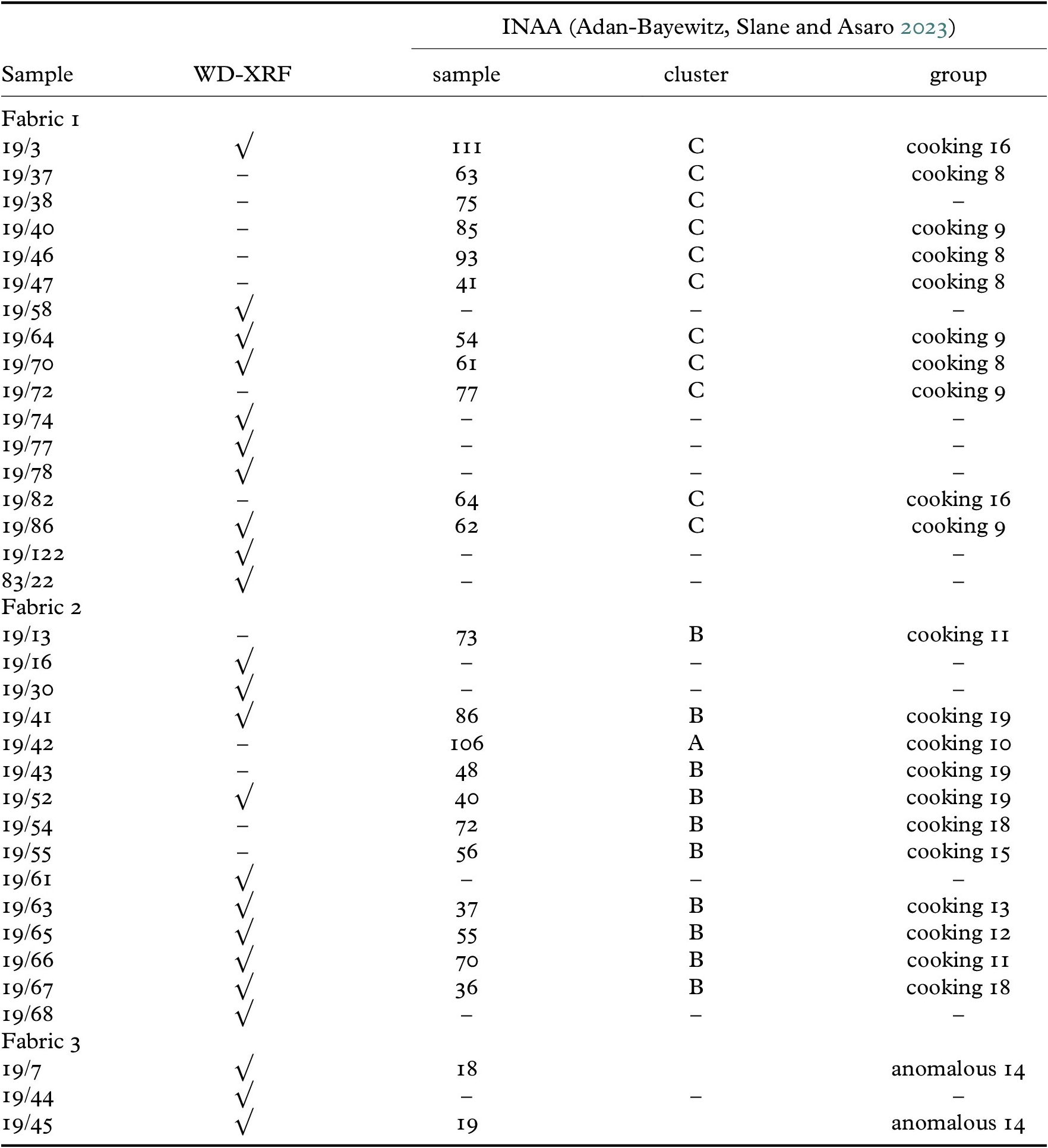
Based on the petrographic analysis, 39 fabrics of local or imported origin were identified (Marzec and Slane Reference Marzec, Slane and Slanein preparation). Of these, 11 fabrics (99 samples) including cooking and buff wares are considered of likely local or regional origin. The current article focuses on the two most frequent fabrics, including a total of 63 samples (Table 1), and one small group of three samples. Among them, there are 24 samples measured with INAA and 23 samples later measured with wavelength dispersive X-ray fluorescence (WD-XRF) (Table 2).
Pottery sampled with references to the publications where the pieces are published or to an illustration of the shape, with laboratory numbers and refiring colours.

Petrographic samples also analysed using wavelength dispersive X-ray fluorescence (WD-XRF) and/or instrumental neutron activation analysis (INAA).

METHODS
All of the samples were subjected to refiring tests and petrographic analysis. Small chips were refired at a maximum temperature of 1000°C in an oxidising atmosphere (one hour soaking time) to ensure they were fully oxidised, removing the effects of originally variable firing conditions (Rice Reference Rice1987, 344–5; Whitbread Reference Whitbread1995, 390–1; Kiriatzi, Georgakopoulou and Pentedeka Reference Kiriatzi, Georgakopoulou, Pentedeka, Gauss and Kiriatzi2011, 70). The colours of the refired, fully oxidised, fresh breaks were recorded using Munsell Soil Color Charts (2013). Standard covered thin sections were prepared from the samples in their original state and examined using a Zeiss Axioskop 40 polarising microscope at magnifications ranging between x25 and x500. They were grouped into fabrics taking into consideration the characteristics of the clay matrix and the types of inclusions as well as the size, relative frequency, shape, and sorting of the inclusions (Whitbread Reference Whitbread1995). Microphotographs of thin sections were taken with a Zeiss Axioscope A1 polarising microscope coupled with a Sony ILCA-77M2 camera at magnification x50.
At a later date, 23 samples (Table 2) representing the three cooking fabrics and a variety of forms were analysed using WD-XRF to determine whether the groups discerned petrographically were also apparent in the chemical composition. The elemental composition of the selected samples was measured with the use of a WD-XRF spectrometer BRUKER S8-TIGER with a Rh excitation source, using a custom calibration based on 43 certified reference materials. The preparation and analysis of ceramic samples follow an established in-house method (Georgakopoulou et al. Reference Georgakopoulou, Hein, Müller and Kiriatzi2017). Twenty-six major and trace elements were determined: Na, Mg, Al, Si, P, K, Ca, Ti, V, Cr, Mn, Fe, Co, Ni, Cu, Zn, Rb, Sr, Y, Zr, Ba, La, Ce, Nd, Pb, and Th.
To explore whether distinctions in the composition of pottery samples correspond with their petrographic and archaeological classifications (ware and vessel form),Footnote 12 the data were subjected to multivariate statistical analysis with the use of the R software. The dataset was examined through cluster analysis (using squared Euclidean distances as a metric and the average linkage method as linkage criterion) and principal component analysis (PCA), using log-transformed element concentrations. Pb and Cu were not included in the statistical considerations (Georgakopoulou et al. Reference Georgakopoulou, Hein, Müller and Kiriatzi2017), nor were P and Na, due to potential contamination during use and deposition (Freestone, Meeks and Middleton Reference Freestone, Meeks and Middleton1985; Buxeda i Garrigós, Mommsen and Tsolakidou Reference Buxeda i Garrigós, Mommsen and Tsolakidou2002).
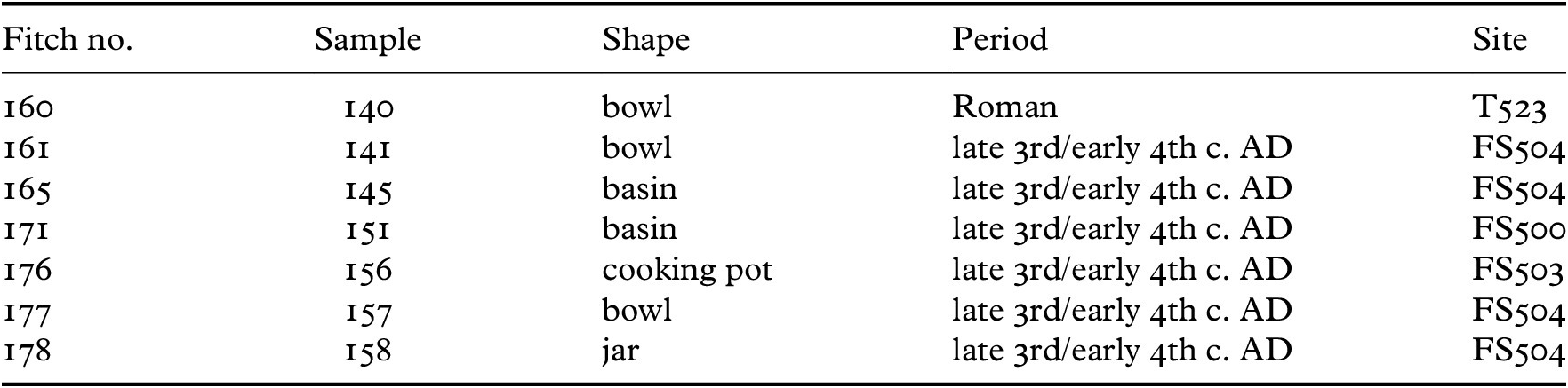
Moreover, in order to investigate the provenance and distribution of the analysed pottery, its mineralogical composition was compared both with geological evidence and with reference material from the Fitch Laboratory Reference Collection. These included thin sections of vessels and clays from the Berbati Valley (Whitbread, Ponting and Wells Reference Whitbread, Ponting and Wells2007; Whitbread Reference Whitbread, Lindblom and Wells2011), from Joyner’s (Reference Joyner2007) study of Byzantine and Frankish cooking pots at Corinth, and from Trainor’s (Reference Trainor2015) study of Sikyonian Silicate Fabric. Additionally, seven samples from the Berbati Valley were analysed with WD-XRF (Table 3). None of Graybehl’s (Reference Graybehl2010; Reference Graybehl2015) thin sections from Corinth and Nemea were available for comparison.
Seven samples of Chert, limestone, garnet class from the Berbati Valley analysed with WD-XRF at the Fitch Laboratory.

REGIONAL GEOLOGY
The north-eastern Peloponnese (Fig. 1) is covered by alluvial deposits as well as Pleistocene and Pliocene sediments including oolitic marly limestones (Hayward Reference Hayward, Williams and Bookidis2003), conglomerates, and both primary and secondary clays, including extensive terra rossa deposits (Whitbread Reference Whitbread, Williams and Bookidis2003). Older sedimentary rocks include limestones and dolomites, the oldest dating to lower–middle Triassic as well as flysch, mostly of Eocene date. In the Corinthia, ophiolites of Jurassic date occur at the east end of Mount Geraneion near Sousaki (Yannetakis et al. Reference Yannetakis, Bornovas, Lalechos, Filippakis, Christodoulou and Taila-Monopolis1972; Whitbread Reference Whitbread1995, fig. 5:2; Giannakopoulou, Tsikouras and Hatzipanagiotou Reference Giannakopoulou, Tsikouras and Hatzipanagiotou2016, 1830) and are found in alluvial sediments all over the isthmus (Hayward Reference Hayward, Williams and Bookidis2003). They also occur in lenses in other places within the region, such as Acrocorinth and Penteskouphi, in the mountains south of Acrocorinth, and in the eastern Argolid (Suesskoch et al. Reference Suesskoch, Bannert, Kalkreuth, Walliner, Strauss, Fytikas, Innocenti, Mazzuoli and Katsikatsos1984; Dostal et al. Reference Dostal, Toscani, Photiades and Capedri1991). Volcanic outcrops of Pliocene and Pleistocene andesites and dacites are located in the peninsula of Methana and the island of Aegina (Dietrich et al. Reference Dietrich, Gaitanakis, Mercolli and Oberhaensli1991). Metamorphic rocks occur in the Argolid, where muscovite schists and phyllites can be found around 15 km west from Argos, as part of the metamorphic basement of the Gavrovo-Tripolis zone (Papastamatiou et al. Reference Papastamatiou, Vetoulis, Tataris, Christodoulou, Bornova, Lalechos and Kounis1970). Moreover, schist, phyllite, and slate outcrops appear in the south-western Corinthia (Papavassiliou Reference Papavassiliou1982), and they might be the source of metamorphic pebbles occasionally found in erosionally derived Pliocene–Pleistocene sediments in the northern parts of Corinthia (Hayward Reference Hayward, Williams and Bookidis2003; Siddall Reference Siddalln.d.).
Simplified geological map of the north-eastern Peloponnese. Redrawn from Tzanis et al. Reference Tzanis, Efstathiou, Chailas and Stamatakis2018, fig. 2 by E. Marzec.

RESULTS AND DISCUSSION
Petrographic and typological analysis
Three fabrics (1–3) were defined using petrographic analysis. They include 66 samples, 61 of which had been macroscopically classified as ‘local’ cooking ware and five as buff ware (Table 1). The fabrics are described below, including properties pertaining to their provenance and production technology and typology of associated pottery.
Fabric 1. Chert, serpentinite and brown spinel
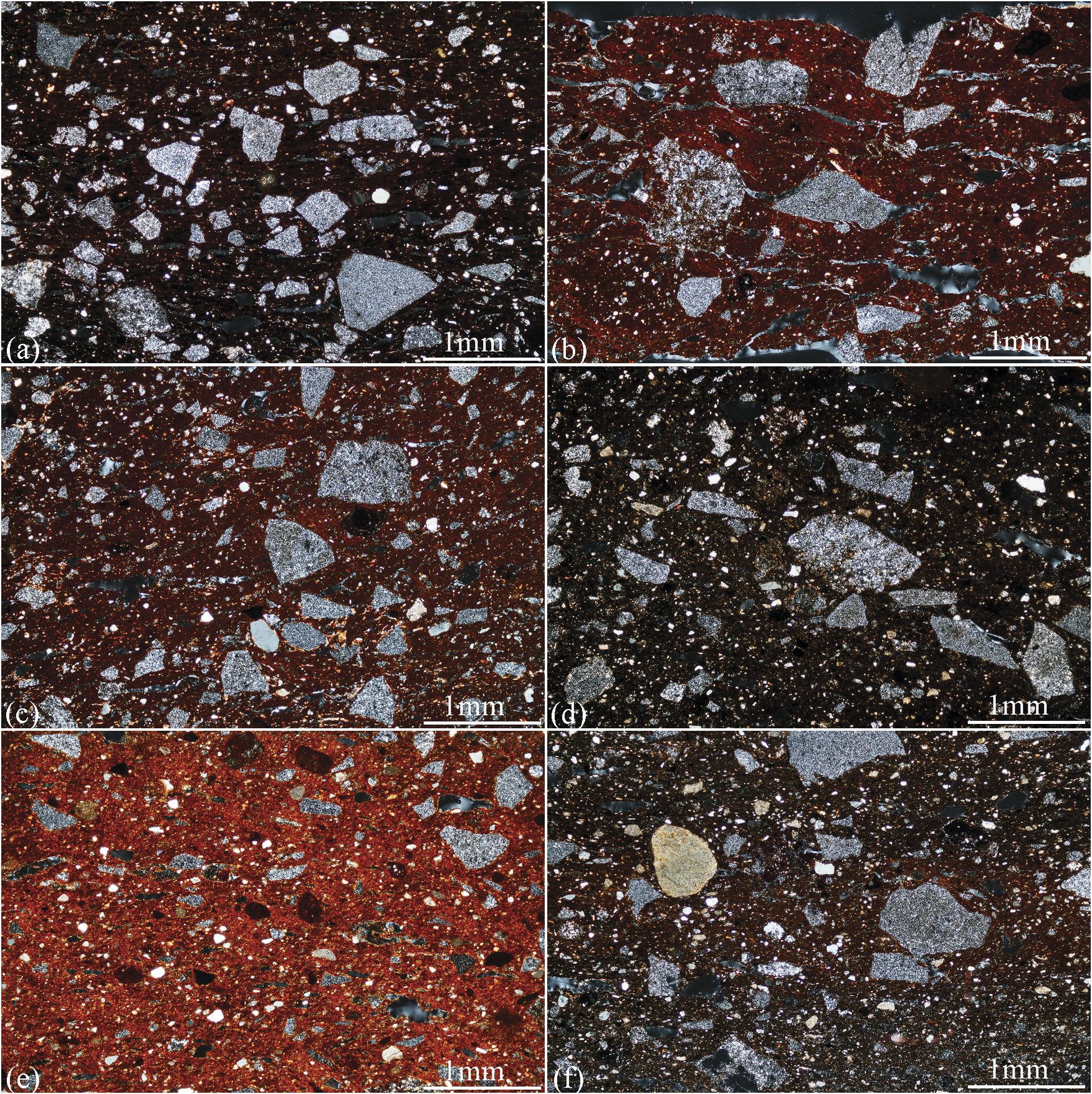
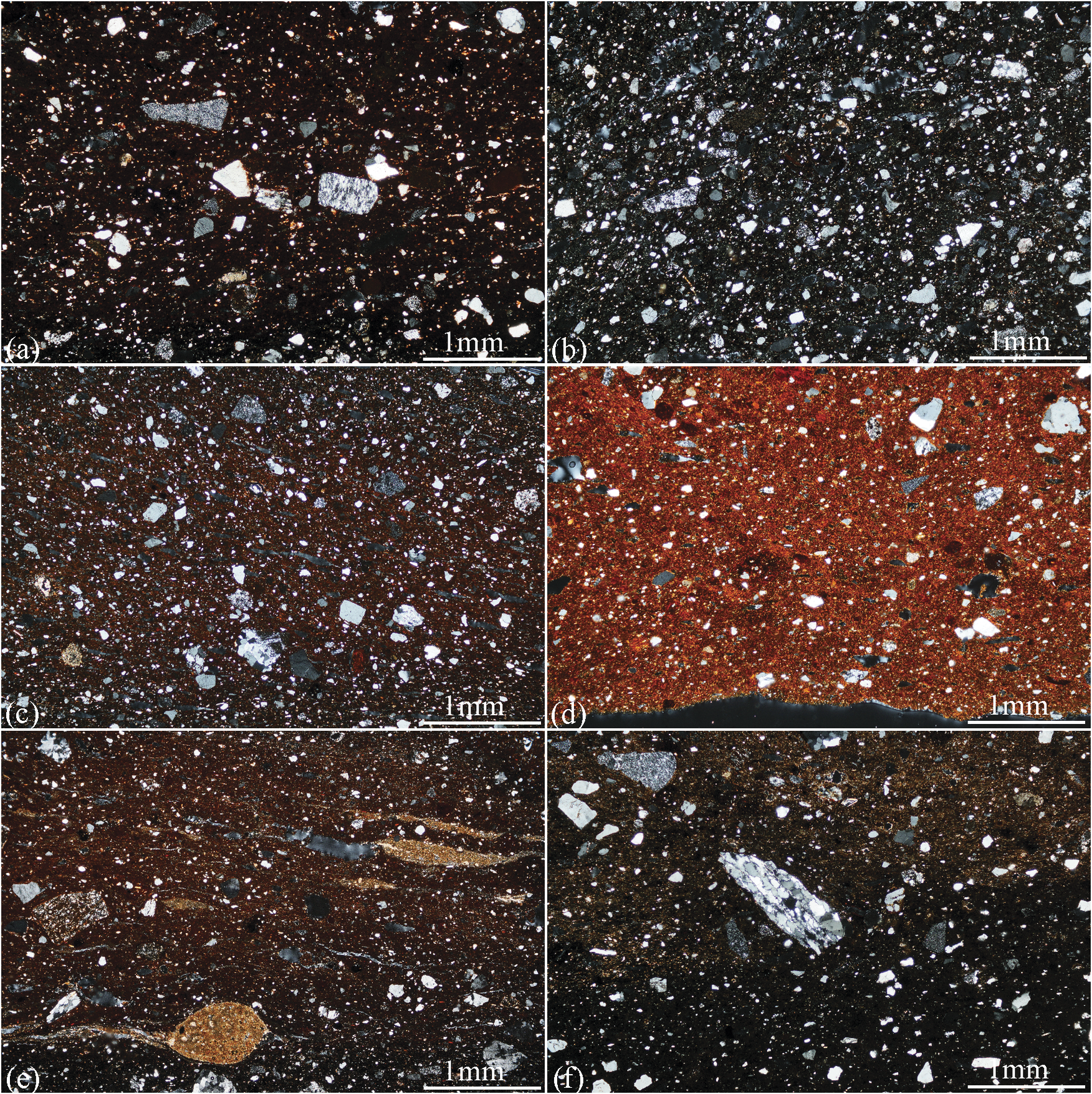
The 32 samples in the largest group are characterised by a low-calcareous matrix and common inclusions, moderately to poorly sorted, of fine to medium sand-size, showing bimodal grain size distribution (Fig. 2). The angular to sub-angular inclusions are dominated by chert (sometimes radiolarian), and also include grains of mono- and polycrystalline quartz, very rare to common micritic pellets (rarely with inclusions of quartz), mica, opaques, serpentinite and brown spinel. There are also a few textural concentration features (TCFs). Sample 19/50 has a more calcareous matrix (variant A). Sample 19/59 has additionally mudstone (variant B). Most of the samples have few to common voids, predominantly planar and oriented parallel to the surfaces, but also vesicles and vughs. There are also a few samples (83/21, 83/22, 83/23 and 19/50) in which planar voids are rare or absent and vesicles and vughs predominate. Secondary calcite was observed in the voids of the following samples: 19/3, 19/58, 19/59, 19/73, 19/80, 19/81, 19/83, 19/84, 19/86, 19/87, 83/21, 83/22 and 83/23. Most of the samples assigned to this fabric exhibit optically active and moderately active matrices, whereas only a few of them have slightly active or inactive matrices.
Photomicrographs of thin sections of Fabric 1, taken under crossed polarised light (XPL): (a) 19/77; (b) 19/122; (c) 19/86; (d) 19/3; (e) 19/48; (f) 19/73 (E. Marzec).

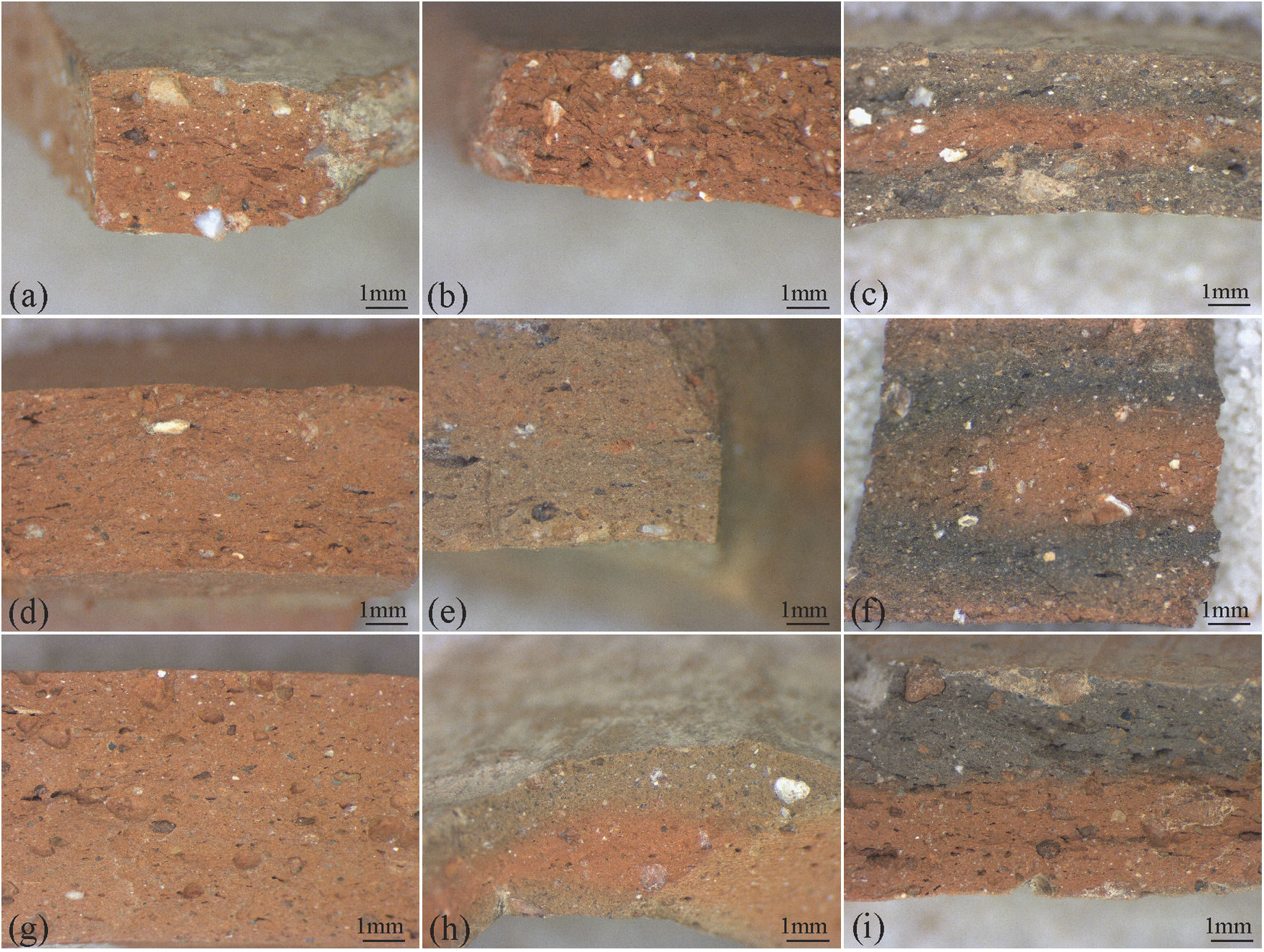
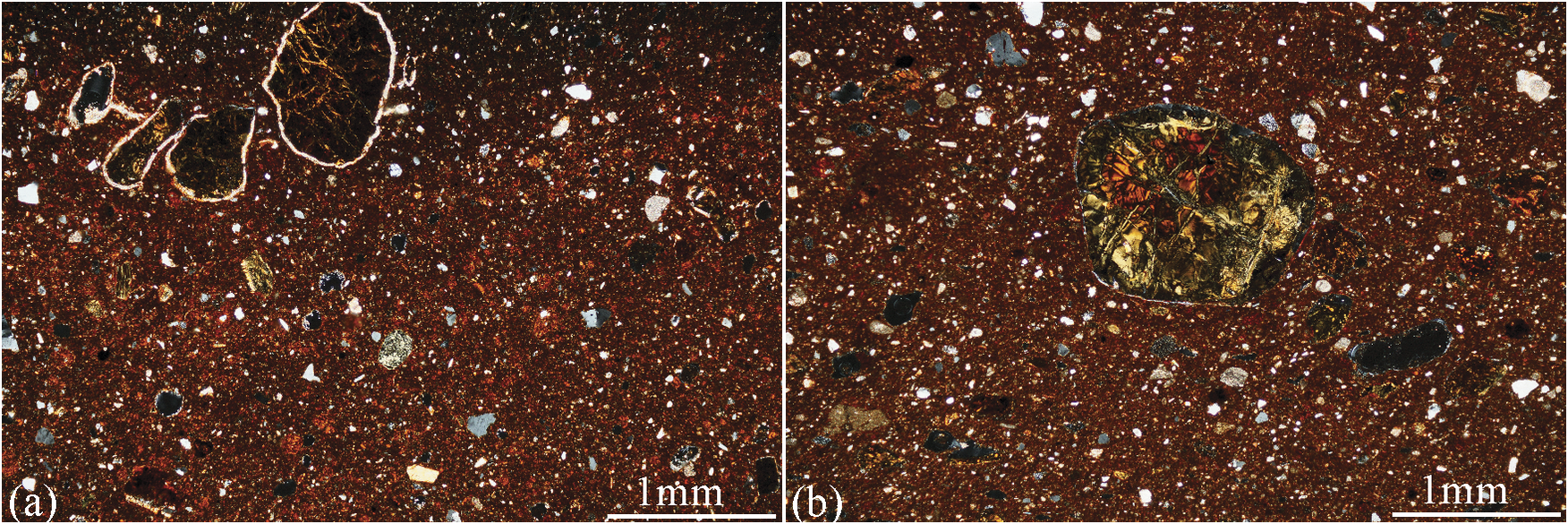
Fabric 1 includes abundant angular and sub-angular coarse chert grains, which could suggest that freshly crushed chert was added as temper. However, a simpler possibility is that the vessels assigned to this fabric were manufactured using naturally occurring clays rich in sub-angular and angular chert. Clayey sediments rich in chert have been noted in the north-eastern Peloponnese (Whitbread, Ponting and Wells Reference Whitbread, Ponting and Wells2007; Whitbread Reference Whitbread, Lindblom and Wells2011). The examination of optical activity of matrices and macroscopic observation of vessel colour reflect the firing conditions (temperature and atmosphere). It is also possible that the cooking pots were systematically exposed to high temperatures during use that affected both the optical activity and the colour in hand specimen. The majority of vessels were fired at equivalent temperatures below 850°C, and only sporadically, up to or exceeding 950°C. Macroscopic examination of the fresh breaks and surfaces showed that most of the sherds are reddish brown (completely oxidized, Fig. 3ab) or they have grey external and internal (or only external) surfaces, and reddish-brown cores (Fig. 3a–c) showing they were reduced only at the end stage of firing. A few vessels have grey cores and either reddish-brown internal and external surfaces or grey internal surfaces and reddish-brown external surfaces, showing that they were oxidised at the end stage of firing. Three vessels (a stewpot, a lid and a table amphora) are grey (reduced) throughout. Some vessels have dark grey patches on the exterior, which might be related to inhomogeneous atmosphere and/or arrangement of the pots in the kiln, but could also be due to use, destruction events such as a fire, or burial. Differences in firing conditions do not appear to be related to vessel form or function.
Photomicrographs of fresh breaks, Fabric 1: (a) 19/49; (b) 19/82; (c) 19/73; Fabric 2: (d) 19/52; (e) 19/117; (f) 19/57; Fabric 3: (g) 19/7; (h) 19/44; (i) 19/45 (E. Marzec).

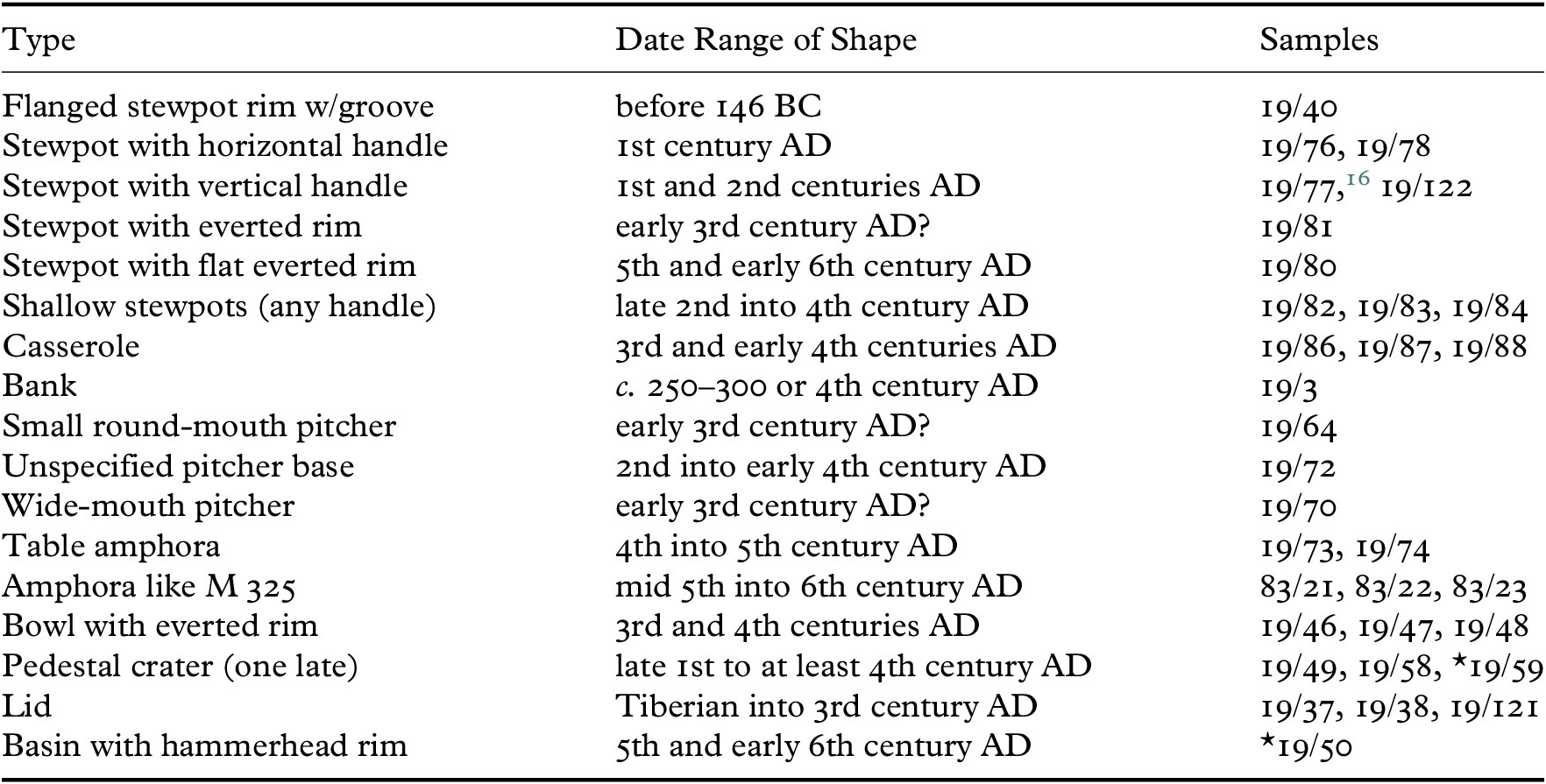
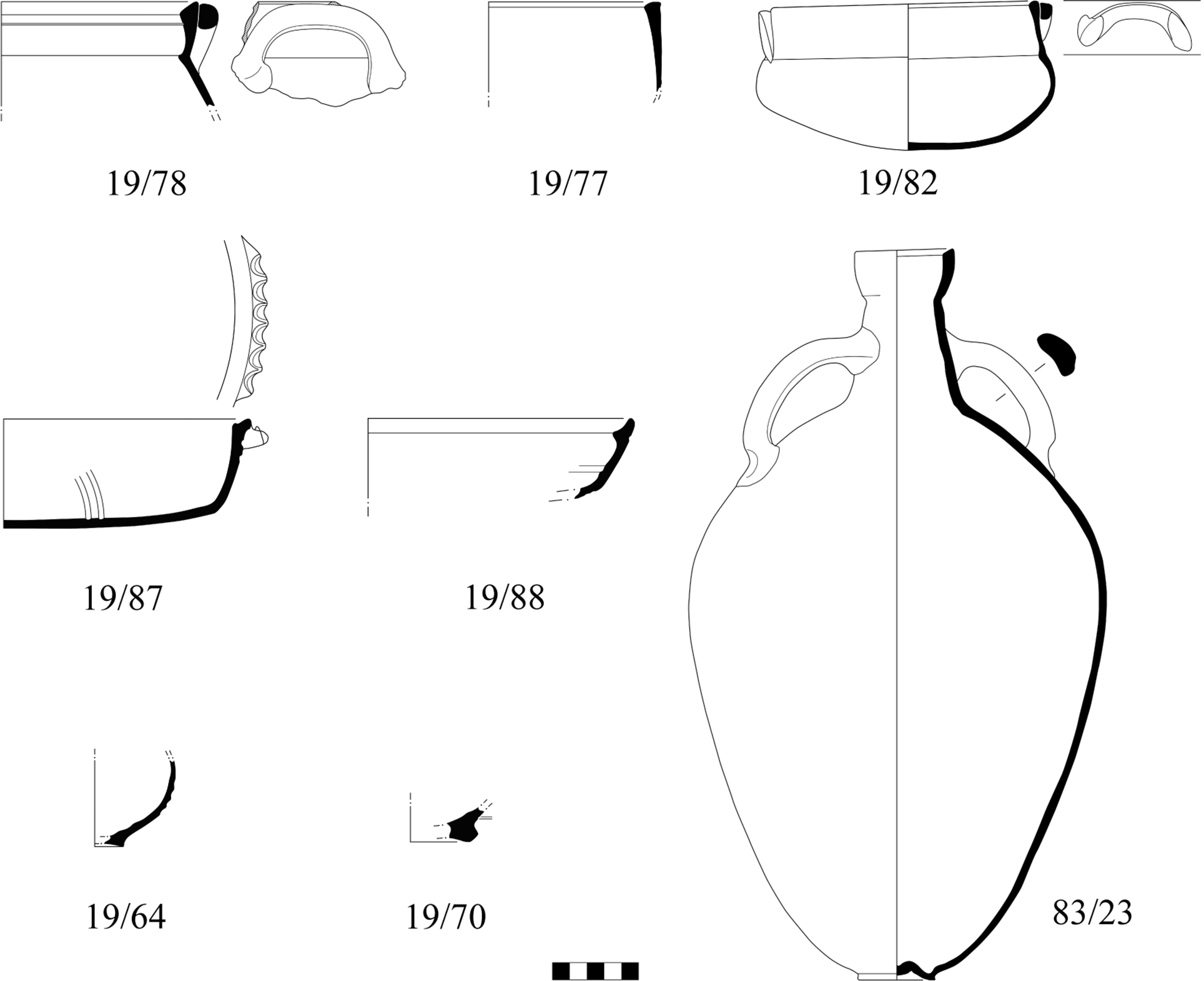
Fabric 1 includes both utilitarian vessels and cooking pots (Table 4; Fig. 4; cf. Slane Reference Slane2014, fig. 2), showing not only that they were made of the same or very similar clay pastes, but also that there is no systematic variation of fineness and firing techniques between the two functional categories. The only difference noted between them is related to the frequency of carbonates. Eight out of 10 stewpots, two out of three casseroles and two of three lids have very rare or rare micritic pellets; only four samples representing a late stewpot, a shallow stewpot, and a casserole (19/80, 19/84, 19/87) and a lid (19/37) show higher frequency of this type of inclusions. In contrast, all thin sections taken from n.f.c. vessels have few to common carbonates.
Vessel types made in Fabric 1. Variants are marked by asterisks.

Profiles of vessels of Fabric 1. Corinth Excavations (C. Kolb).

The cooking pots include all the analysed stewpots except one of the two Hellenistic examples, all the shallow stewpots regardless of the position of their handles, and three third-century casseroles regardless of their handle shape. Many Roman vessels not used for cooking and macroscopically classified as standard local forms were made in Fabric 1: three varieties of pitcher, table amphoras, all three of the much later fifth-century AD cooking ware amphoras like M 325,Footnote 17 and a rare cooking ware bank. Among open shapes are three bowls with everted rim, two basins, two pedestal craters (19/58, 19/59), and three of the four cooking ware lids. A basin with hammerhead rim (19/50) and the latest example of a pedestal crater (19/59) are variants of Fabric 1. This fabric was employed for vessels for cooking and other utilitarian purposes from the first into the fifth century AD at least. It also includes one vessel which might date to the Hellenistic period (Adan-Bayewitz, Slane and Asaro Reference Adan-Bayewitz, Slane and Asaro2023, table 6). The fact that all the different varieties of stewpots, those with several different handles that have slightly different chronological ranges and those with quite different rims, are all made in Fabric 1 is striking. Also notable is the presence of three characteristic shapes of the fifth and sixth centuries, amphoras like M 325, which are the successors of a local buff amphora (Slane Reference Slane, Williams and Bookidis2003), and the basins with hammerhead rim.
Related petrographic fabrics
Comparison to thin sections of Byzantine and Frankish cooking wares from Corinth (Joyner Reference Joyner2007, 193, 206–8, fig. 5) shows that in terms of composition Fabric 1 is related to Early Frankish Chert fabric (AD 1210 to c. AD 1260), which has frequent angular to subangular quartz and has rare spinel. However, there are some compositional differences between these fabrics. In contrast to Fabric 1, Early Frankish Chert fabric includes more types of TCFs (clay pellets) and very rare pyroxenes, which are absent in Fabric 1.
Fabric 1 also appears to be very similar to the Chert, limestone, garnet class of pottery found on the Berbati Valley survey in the northern Argolid (Whitbread, Ponting and Wells Reference Whitbread, Ponting and Wells2007, 186, tables 2, 3, fig. 5; Whitbread Reference Whitbread, Lindblom and Wells2011, 145–6, 162, table 1, fig. 102) which was essentially limited to the Middle and Late Roman periods. Re-examination of the thin sections from the Berbati Valley found that the brown isotropic mineral identified as garnet is most probably brown spinel. Furthermore, serpentinite inclusions were identified in the re-examined thin sections.
There are also other fabrics that have been related to the Chert, limestone, garnet class from the Berbati Valley and thus to Fabric 1 of this study: group 1 Chert from the Panayia Field at Corinth of the late fourth to seventh centuries AD (Graybehl Reference Graybehl2010, 28–30, 50–1; Hammond Reference Hammond2015, 215–18), group 1 from the Nemea Valley dating to the Early and Late Roman periods (Cloke Reference Cloke2016, 346–7)Footnote 18 and fabric 6 Angular chert, limestone and quartz from Nemea (Graybehl Reference Graybehl2015, 114–16) of the second century BC. Graybehl, who has studied all of these fabrics, suggests that they are identical to each other as well as to Whitbread’s Chert, limestone, garnet class. She also noted their connection with the macroscopically defined Corinthian cooking fabric and suggested that they were produced in Corinth.
Whitbread reports three samples of clay in the Berbati Valley compatible with his Chert, limestone, garnet class (Whitbread, Ponting and Wells Reference Whitbread, Ponting and Wells2007, table 2; Whitbread Reference Whitbread, Lindblom and Wells2011, 146). The re-examination of the thin sections of the clays shows that they are also similar to Fabric 1. Whitbread suggests that the chert-rich fabrics could have been produced somewhere in this area, although he did not rule out importation. Apart from the clay samples matching the archaeological material, there is no direct evidence supporting the production of this fabric in the Berbati Valley. From the geological point of view, the fabric also might have been produced in the Corinthia. Acrocorinth is formed of limestones with interbedded cherts and ophiolitic bodies (Yannetakis et al. Reference Yannetakis, Bornovas, Lalechos, Filippakis, Christodoulou and Taila-Monopolis1972). Moreover, geological prospection in this area identified many sources of red clay (Whitbread Reference Whitbread, Williams and Bookidis2003) and a red soil characterised by the presence of chert, serpentinite and brown spinel.Footnote 19 The archaeological evidence, including distribution, frequency and chronological continuity, also supports an argument that the pottery made of Fabric 1 was produced in the Corinth region.
Fabric 2. Quartz, chert and schist
The 31 samples of Fabric 2 have a low to high calcareous fabric with common, poorly sorted, very fine to medium sand-size inclusions, and bimodal grain size distribution (Fig. 5). The angular to sub-rounded inclusions are dominated by monocrystalline quartz grains, but also include grains of chert, polycrystalline quartz, and fragments of schist. Micrite, mudstone, opaques, mica, feldspar and sandstone are also present. The fine fraction also includes red inclusions (in plane polarised light [PPL] and crossed polarised light [XPL]), which might be serpentinite. TCFs are rare to few; there are two different kinds of clay lumps: reddish brown and yellow (in PPL and XPL). Moreover, some samples (19/51 and 19/75) have long yellow (highly calcareous) streaks and lenses in XPL (Fig. 5e). Two samples classified as variants A and B have more micrite than the other thin sections of Fabric 2, while variant B is also finer. Voids are few to common, predominantly planar with a few vesicles and vughs. A few samples have fewer voids, dominated by vughs and vesicles rather than by planar voids. Secondary calcite was observed in the voids and/or on the surfaces of the following samples: 19/14, 19/22, 19/41, 19/53, 19/67, 19/75, 19/85, 19/117, and 19/120. In most of the samples, the matrix is optically active to slightly active and the carbonates seem to be unaffected by temperature. Only two samples (19/22 and 19/65) have inactive matrices and carbonates with evidence of alteration due to high temperature.
Photomicrographs of thin sections of Fabric 2, taken under XPL: (a) 19/41; (b) 19/85; (c) 19/69; (d) 19/63; (e) 19/51; (f) 19/30 (E. Marzec).

It was also noted that some thin sections with more calcareous matrices show the abovementioned streaks and lenses (Fig. 5e). Moreover, samples with more calcareous matrices tend to show a lower frequency of quartz in the fine fraction than those with low calcareous matrices. Interestingly, there might be some correlation between vessel form and clay paste. All three amphoras with triangular rim seem to have highly calcareous matrices, and all of them refire to a colour lighter than the other samples of Fabric 2 (Table 1). It seems that vessels classified as Fabric 2 were made either using various raw material sources characterised by the same non-plastic inclusions or through varied procedures of clay processing. The low calcareous vessels were most likely made with a coarse red-firing clay. The situation is more complicated with vessels made with higher calcareous clay pastes, which could reflect either the use of raw materials from the same sediment sequence characterised by high internal variation or the mixing of at least two different clayey sediments. The optical activity observed in the thin sections suggests that the majority of vessels were fired at temperatures below 950°C. Most vessels have grey external surfaces and reddish-brown cores and internal surfaces indicating reduction at the end of firing. A few vessels are oxidised but with grey zones between the core and the surface, indicating a fluctuating atmosphere within the kiln (Fig. 3d–f).
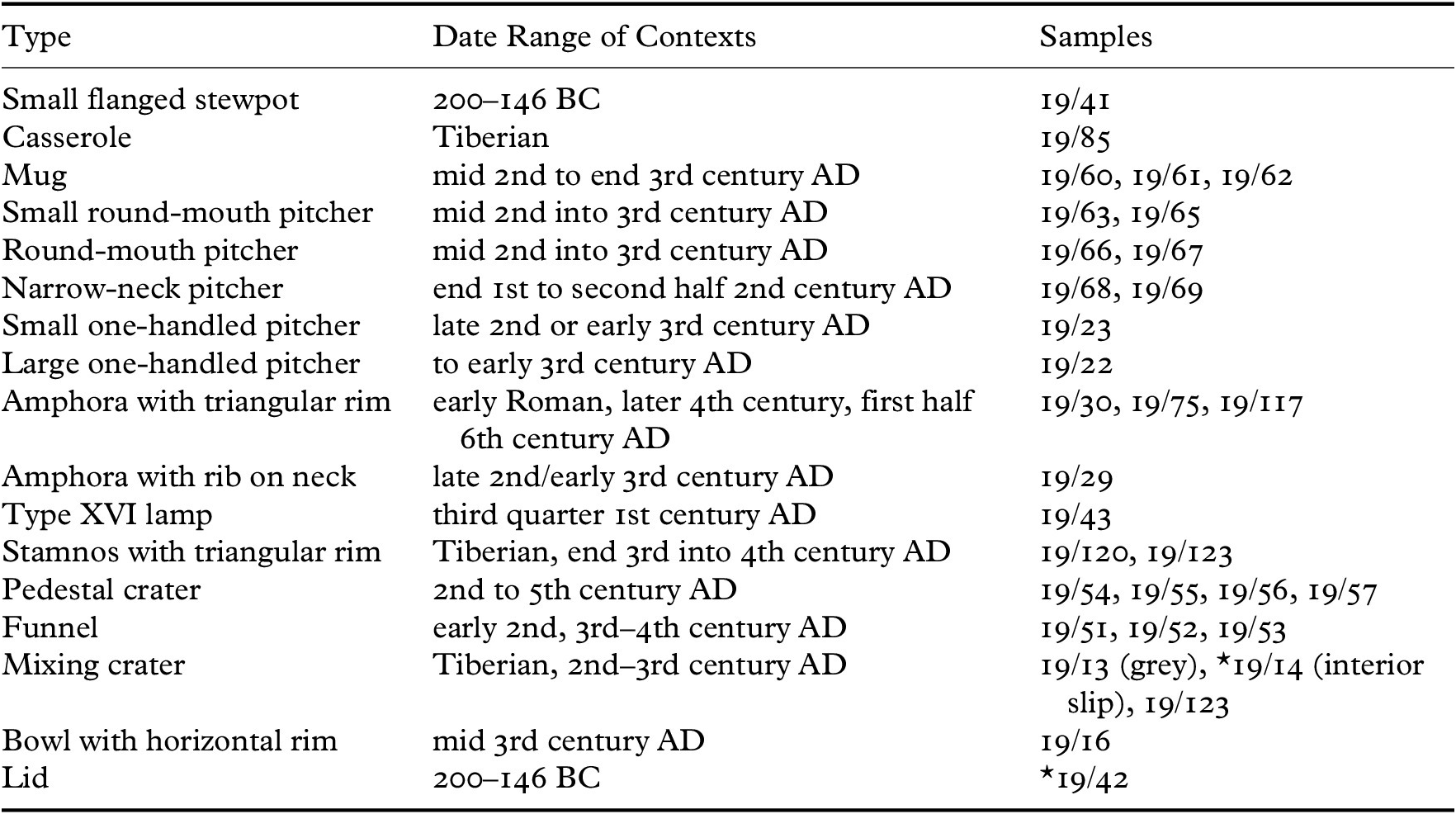
Samples grouped in Fabric 2 include two cooking pots, but they are mostly vessels for utilitarian purposes (Table 5; Fig. 6; cf. Slane Reference Slane2014, fig. 2). The small flanged stewpot is datable to the first half of the second century BC. An Early Roman casserole from the Tiberian floor deposit is the most significant cooking pot in this group, because the form/fabric combination is common in the first half of the first century AD. One bowl with horizontal rim, all of the mugs, and two of the three small round-mouth pitchers belong to this fabric as do both the larger round-mouth pitchers and both the narrow-neck pitchers, three amphoras with various triangular rims including one misfired, an amphora with a rib on the neck and handles that are circular in section, a stamnos with triangular rim, and a mixing crater. Matching versions of a small one-handled pitcher and of a large one-handled pitcher are both of Fabric 2, as are several uncommon mixing craters. The fabric includes also four of seven pedestal craters, all three funnels, and one of the two Broneer Type XVI lamps. The majority of samples assigned to this fabric come from contexts dated between the early first century and the end of the third century AD. The fabric also includes two Hellenistic and three Late Roman samples. The largest vessels (large one-handled pitcher, the varied amphoras, and conceivably the stamnoi) were probably used for local agricultural products. The presence of several, but not all, of what are apparently related series of pitchers will need further investigation.
Vessel types made in Fabric 2. Variants are marked by asterisks.

Profiles of vessels of Fabric 2. Corinth Excavations (C. Kolb).

Related petrographic fabrics
The comparative analysis of thin sections indicated that Fabric 2 is compositionally very similar to a Byzantine (from the twelfth century AD to AD 1210) cooking fabric found in Corinth (Joyner Reference Joyner2007, 194–5, 208–10, fig. 6, group 2, Chert and Quartz), with only some textural variation as the Byzantine fabric is coarser and has a higher frequency of voids than Fabric 2.
Fabric 2 appears to be related, in terms of mineralogical composition and texture, to a Hellenistic cooking fabric identified by Graybehl both at Nemea and Corinth (Graybehl Reference Graybehl2015, fabric 2 Chert and Quartz). Chert and Quartz fabric dominates among cooking pottery at the two above sites in the third and second centuries BC. According to Graybehl, this fabric was likely produced in Corinth due to its high frequency at this site. She also notes that there is a possibility that it was made at Sikyon since it ‘showed many similarities in every way’ to Sikyonian Silicate Fabric. However, she suggests that in contrast to the Chert and Quartz fabric from Nemea and Corinth, Sikyonian Silicate Fabric includes ‘more abundant polycrystalline quartz and orange/red inclusions, which may be related to serpentinite’. At this point it is worth noting that these orange/red inclusions were also observed in Fabric 2.
Fabric 2 appears also to be similar to group 2 from the Nemea Valley dated from the Geometric/Archaic periods to Late Roman times (Cloke Reference Cloke2016, 346–8). Group 2 from the Nemea Valley was divided into four subgroups, of which two were restricted to the Classical and Hellenistic periods (b – low-fired and d – containing quartz, chert, and argillaceous rock fragments), and the other two included pottery dated throughout antiquity (a – well-fired and c – containing fine quartz and chert). It was proposed that pottery classified as group 2 was produced not only in Corinth but also in multiple regional production centres, including the Nemea Valley.
Comparison of thin sections of Roman pottery from Sikyon studied by Trainor (Reference Trainor2015, 35) with samples of Fabric 2 showed that the latter matches Sikyonian Silicate Fabric (subgroup 1a) in terms of mineralogical composition. The pottery analysed by Trainor was collected by the Sikyon Survey Project between 2004 and 2008 (Lolos et al. Reference Lolos, Gourley, Sarris, Hayward, Trainor, Kiriatizi and Papadopoulos2012; Lolos Reference Lolos2021) and includes overfired and deformed vessels and kiln equipment. Due to the presence of the wasters, similarity to analysed raw materials, and high frequency, it was considered Sikyonian (Trainor Reference Trainor2015; Trainor and Kiriatzi Reference Trainor, Kiriatzi and Lolos2021). Several years later, pottery production in Roman Sikyon was confirmed during excavation in the agora, where six kilns for ceramic materials were recovered (Lolos Reference Lolos2016; Reference Lolos2019; Reference Lolos2020; Reference Lolos and Blizos2022), and pottery associated with them is currently being analysed at the Fitch Laboratory, British School at Athens.
Fabric 3. Serpentinite
The thin section analysis showed that all three samples assigned to Fabric 3 have common, fine to medium sand-size, poorly sorted inclusions and bimodal grain size distribution (Fig. 7). They are rich in sub-rounded and rounded grains of serpentinite, showing relicts of original minerals, and brown spinel, with mech, bastitic and hourglass textures, sometimes filled in with secondary calcite (Fig. 7a). In addition, there are also chert, micritic pellets, monocrystalline and polycrystalline quartz, mica, and opaques, as well as rare fragments of sandstone and clinopyroxenes. TCFs, probably clay lumps, are rare to common. Sample 19/7 was classified as variant A because it contains significantly more carbonates than the other two samples. Samples 19/7 and 19/44 have few voids, frequent vughs and vesicles, and rare planar voids. Sample 19/45 has common voids, predominantly planar with few vughs and vesicles.
Photomicrographs of thin sections of Fabric 3, taken under XPL: (a) 19/44; (b) 19/7 (E. Marzec).

Samples 19/7 and 19/44 have optically active matrices, while the matrix of sample 19/45 is optically active to moderately active. The obvious variation in the frequency of the micritic pellets may reflect natural variability of the raw materials or be linked with clay processing.
The three specimens are not a macroscopic group. Two are cooking fabric, a type XVI lamp of the later first or early second century AD (19/44) and a flanged or folded rim bowl (19/45) (Fig. 8a), which could be as late as third century. Variant 3A (19/7) is a basin with grooved rim and red interior slip in a gritty reddish yellow fabric (Fig. 8b); it should be dated no later than the early first century AD. Because no cooking fabric vessels are slipped, and because of its reddish yellow colour, this was classified archaeologically as a buff plain-ware.Footnote 20 The optical activity suggests that the vessels were fired at equivalent temperatures below 850°C. Examination of the fresh breaks shows that the Fabric 3 vessels were all fired in different atmospheres, varying from oxidising to partly reducing. Sample 19/7 is completely oxidised, 19/45 is partially reduced (a grey external surface and reddish-brown internal surface), and 19/44 is the most reduced (brownish-grey external and internal surfaces and a reddish-brown core; Fig. 3g–i).
Profiles representing Fabric 3. Corinth Excavations (C. Kolb).

From the petrographic point of view, the Fabric 3 composition, originating from an environment sharing ophiolitic and sedimentary geology, is compatible with the north-eastern Peloponnese (see above, Regional Geology). Although the three vessels represent shapes typical in the region, no analogous fabric of Roman date has been noted in the reference material from the north-eastern Peloponnese. A similar fabric dominated by sub-rounded and rounded grains of serpentinite, but lacking carbonates, was registered among the Early Helladic material from Korakou and Keramidaki (Trusty Reference Trusty2014; Burke Reference Burke2017, PG11: Rounded Serpentinite Fabric) and identified as local for ancient Corinth. However, it should be taken into consideration that the mineralogy of the fabric could be potentially linked to other sources of ophiolite-rich sediments in the central Aegean and beyond, e.g. Boeotia, northern Euboea, Thessaly or central Crete, (Bornovas and Rondoyanni-Tsiambaou Reference Bornovas and Rondoyanni-Tsiambaou1983; Jones Reference Jones1986, fig. 6:14; Koepke, Seidel and Kreuzer Reference Koepke, Seidel and Kreuzer2002, 184, fig. 1; Kaplanis et al. Reference Kaplanis, Koukouvelas, Xypolias and Kokkalas2013, fig. 1).
Elemental analysis (WD-XRF)
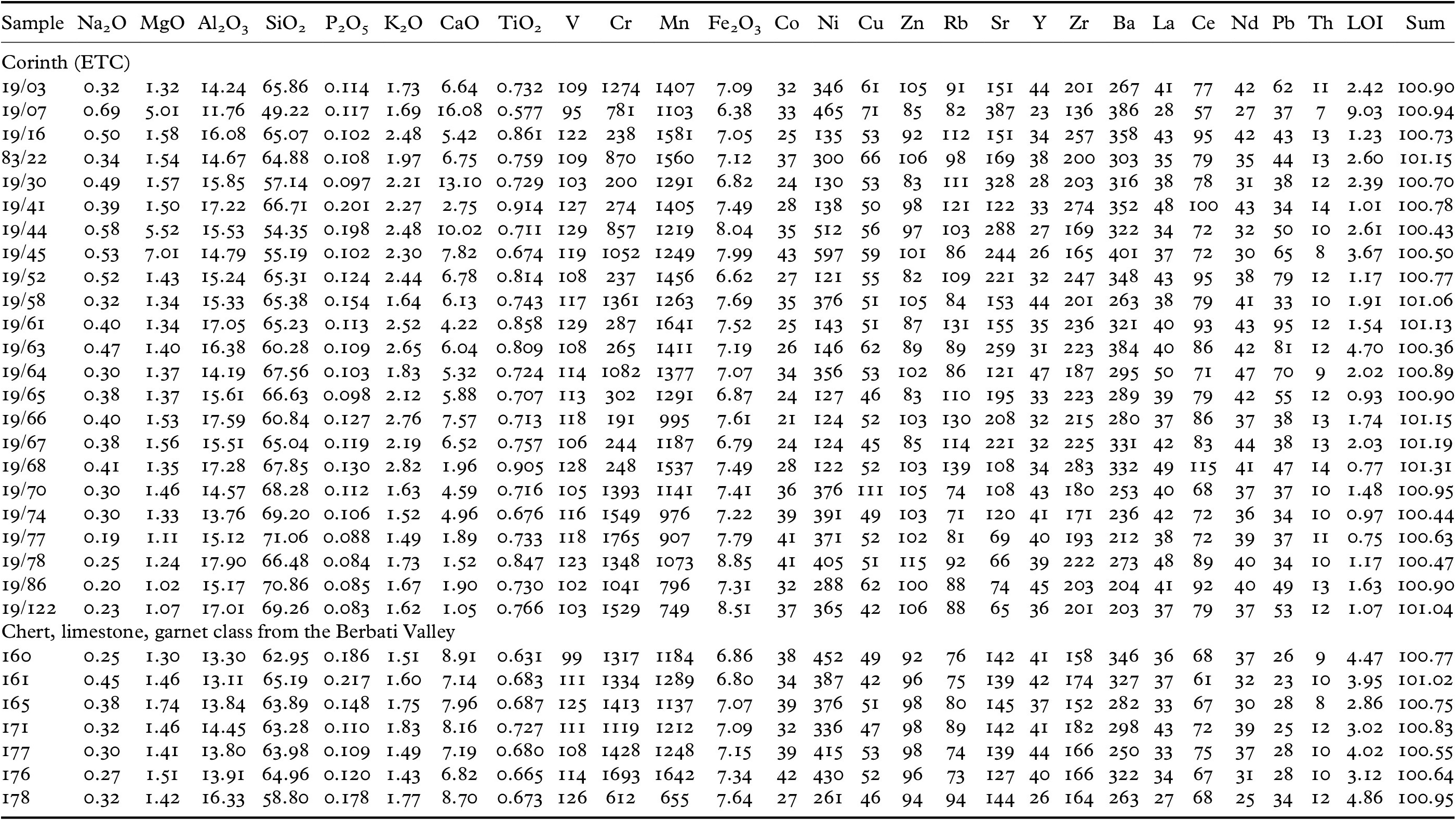
The elemental compositions of a subset of 23 samples assigned to the three petrographic fabrics described above, ten from Fabric 1, ten from Fabric 2, and all three from Fabric 3, were obtained using WD-XRF (Table 6; Fig. 9). This dataset was examined by cluster analysis (CA) and principal component analysis (PCA), using log-transformed element concentrations.
Elemental compositions of the samples analysed by WD-XRF from Corinth and Chert, limestone, garnet class from the Berbati Valley. Oxides, LOI (loss on ignition) and sum are expressed in wt% and elements in ppm.

Principal component analysis plot for 23 samples from Corinth identified by petrographic fabric. Loadings for variables included in the principal component analysis are given to the right (E. Marzec).

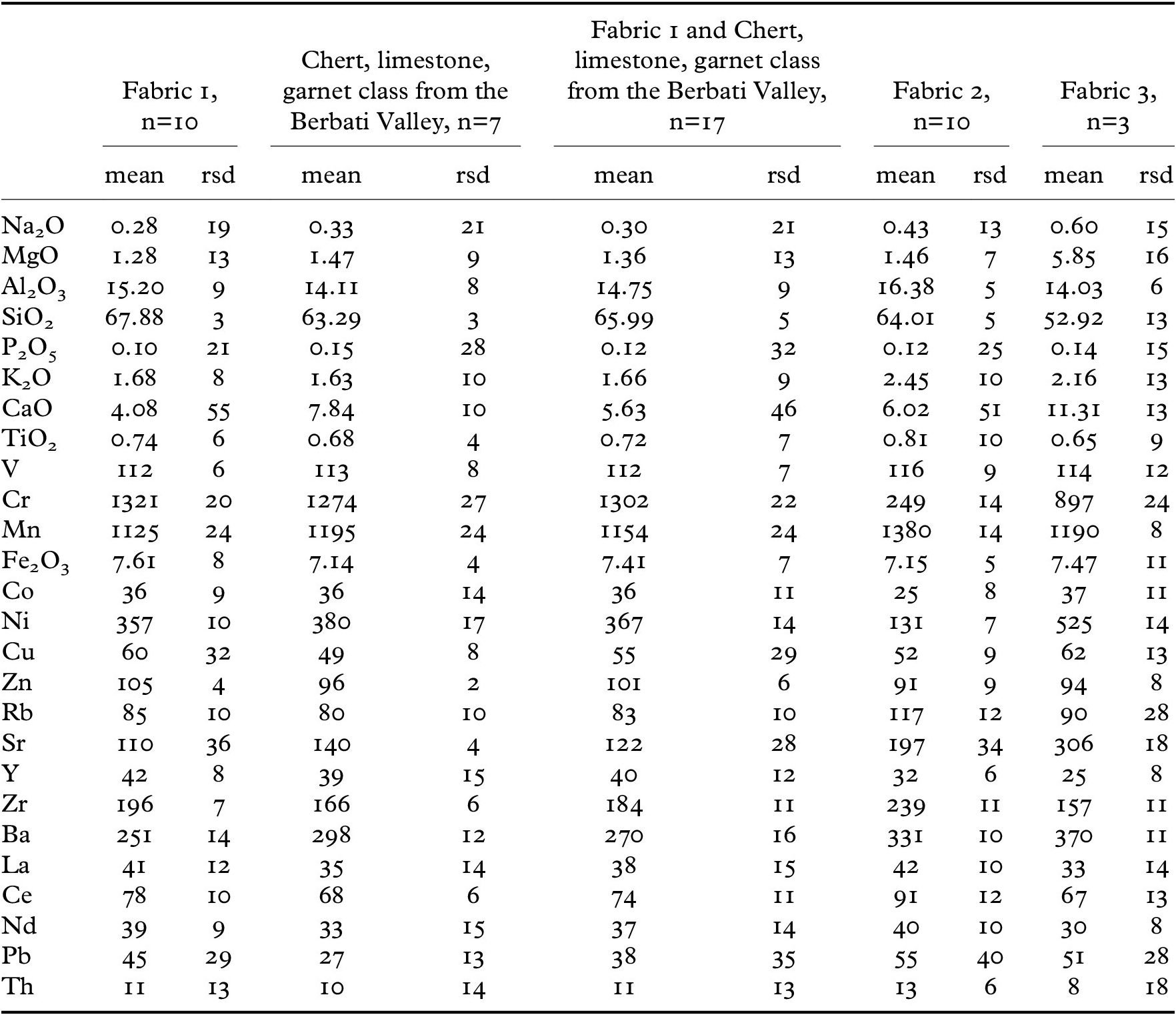
Ten samples analysed by WD-XRF assigned to Fabric 1 are characterised by high Cr content and low MgO concentration. Cr content varies between 870 and 1765 parts per million, which seems to be related to the presence of inhomogeneously distributed Cr-rich brown spinel (Hein and Kilikoglou Reference Hein and Kilikoglou2017). The samples also show a range of CaO (1.05–6.75 per cent). This variability seems to be related to the frequency of micritic pellets observed in thin sections. The presence of secondary calcite also influences the CaO variability; for example, sample 19/58 with higher CaO value (6.13 per cent) has few micritic pellets but common secondary calcite. Among the ten samples analysed with WD-XRF, it appears to be a correlation between CaO content (and frequency of micritic pellets) and intended vessel function. All four samples taken from vessels used for cooking have CaO content below 2 per cent and very rare micritic pellets (Fig. 10). The other six samples are from vessels not used for cooking; they show slightly higher CaO concentrations ranging between 4.59 and 6.75 per cent and have few to common micritic pellets.
Plot of CaO and MgO of 10 samples assigned to Fabric 1 (E. Marzec).

Ten samples assigned to Fabric 2 were analysed using WD-XRF. Their elemental composition is characterised by medium Cr and Ni content (but significantly lower than Fabric 1) and low MgO concentration (Tables 6 and 7). The samples show wide variability in CaO content (1.96–7.57 per cent with sample 19/30 at 13.10 per cent originally classed as buff ware), which cannot be explained simply by the presence of secondary calcite. Unlike Fabric 1 there is no apparent correlation between frequency of carbonate inclusions seen in thin sections and CaO content; it seems that the variability mostly comes from the clay matrix.
Mean chemical composition (oxides are expressed in w% and elements in ppm) and relative standard deviation (rsd) of samples representing Fabrics 1, 2 and 3 as well as Chert, limestone, garnet class from the Berbati Valley.

All three samples of Fabric 3 were analysed by WD-XRF spectroscopy. All have higher CaO and MgO contents than any samples in Fabrics 1 or 2 (Table 7). They also have markedly high Cr and Ni concentrations, like Fabric 1 but not Fabric 2, likely due to the abundance of serpentinite in the samples. Sample 19/44 has higher CaO content than sample 19/45, but this seems to be related to common secondary calcite present in this thin section (Fig. 7a). The sample classified as variant A (19/7) has significantly higher CaO than the other two samples, and thus due to a dilution effect, slightly lower amounts of almost all other elements than the other two samples. Because of that, it does not cluster with them on the biplot (Fig. 9). These compositional differences, together with significantly higher loss on ignition (LOI) of 19/7 than the other two samples, can be related to the presence of higher frequency of carbonates in combination with low temperatures of the original firing.
Seven samples of Chert, limestone, garnet class from the Berbati Valley were selected for additional elemental analysis with the use of WD-XRF because of their close similarity to the mineralogical composition of Fabric 1. The results show that the samples from the Berbati Valley are also chracterised by very similar elemental composition as Fabric 1 (Table 7), providing additional evidence on common origin. Principal component analysis shows that they form a tight group on the edge of Fabric 1, beside the six plain-ware vessels characterised by higher CaO content (Fig. 11). The chemically analysed samples from the Berbati Valley include six plain-ware vessels (vessels not for cooking) and one cooking pot. All of them have common carbonate inclusions as well as secondary calcite that may explain the elevated CaO content.
Plot showing the first two principal components for 23 samples from Corinth and 7 samples from the Berbati Valley. Loadings for variables included in the principal component analysis are given to the right (E. Marzec).

DISTINGUISHING AMONG THE NORTH-EAST PELOPONNESIAN COOKING FABRICS
Previous petrographic and elemental analyses of cooking fabrics from this region have distinguished more than one fabric that was attributed to Corinth. Graybehl distinguished one among Late Roman samples from Corinth, and that as well as a different but related one among Hellenistic cooking pots from Nemea (and Corinth). Ximeri and Cloke also distinguished at least two groups with a wider range of dates. The current study partially resolves the resulting confusion by distinguishing three fabrics in vessel shapes that are standard throughout the Argolid and Corinthia. All three of them are also characterised by the use of red firing clays (near 2.5YR 5/6), as well as the common presence of white inclusions. Especially the macroscopic appearance of Fabric 1 and Fabric 2 (now identified as Sikyonian Silicate Fabric) is similar (Fig. 3).
Trainor (Reference Trainor2015, 79) already made an attempt to define the differences between these fabrics. He suggested that in thin sections, Corinthian products have more monocrystalline quartz and iron-rich clay pellets as well as less polycrystalline quartz and carbonates than Sikyonian Silicate Fabric. The current study shows that the most prominent difference between these fabrics is significantly higher frequency of chert and the presence of brown spinel in Fabric 1. Also, Fabric 1 seems to have slightly less monocrystalline quartz than Fabric 2, which contradicts Trainor’s observations. However, he rightly noted that Corinthian cooking fabric has less polycrystalline quartz and tends to have more iron-rich clay pellets. The issue of carbonates seems to be more complex. As noted above, the Fabric 1 samples show a variability in frequency of carbonates which correlates with intended function of the vessels. Indeed, the pottery samples from Sikyon analysed by Trainor (as well as Fabric 2) have more carbonates than the stewpots and casseroles classified as Fabric 1. But this difference is not valid when the samples from Sikyon (and Fabric 2) are compared to the majority of not-for-cooking forms in Fabric 1. The fabrics can be also easily distinguished with the use of elemental analyses since Fabric 1 has significantly higher Cr and Ni concentration and slightly lower K2O content than Fabric 2 (Tables 6 and 7). It was also noted that the fabrics tend to display slightly different colours after refiring tests (Table 1): Fabric 1 is usually red (2.5YR 4/6) and Fabric 2 is predominantly reddish brown (2.5YR 5/4) and sometimes light reddish brown (2.5YR 6/4).
Concerning macroscopic differentiation, Trainor suggested that Corinthian cooking fabric has more brown-red inclusions than Sikyonian Silicate Fabric, which he identified with more common iron-rich clay pellets. Indeed, some oxidised samples of Fabric 1 show more red-brown inclusions than Fabric 2; they seem to be iron-rich clay pellets and sporadically oxidised chert and serpentinite. Based on the macroscopic re-examination of the analysed pottery, there were noted a few other features helping macroscopic distinction of the fabrics; however, it has to be stressed that they do not occur consistently and sometimes fresh breaks of Fabric 1 and Fabric 2 look identical (Fig. 3, compare c and f). Fabric 1 tends to have more frequent larger white and grey angular inclusions (Fig. 3b) than Fabric 2. This seems to be related to the abundance of chert in Fabric 1. Some n.f.c. Fabric 2 vessels, e.g. amphoras, have lighter colours of fresh breaks (Fig. 3e) and surface (pale red 10R 7/4, light reddish grey 5YR 6/3, or, if reduced, grey 2.5Y 6/1). Such light colours were not observed among Fabric 1 vessels.
Fabric 3 differs from Fabrics 1 and 2 in terms of mineralogical and elemental composition (Tables 6 and 7) as well as appearance of fresh break (Fig. 3). It includes common sub-rounded and rounded grains of serpentinite, which are macroscopically seen as red or brown inclusions, often with pore spaces around them. Due to this space, grains of serpentinite often fell out when the vessel wall broke, leaving rounded pores in fresh breaks (Fig. 3g). The pores can be white when filled with secondary calcite (Fig. 3h).
REGIONAL PRODUCTION AND SUPPLY PATTERNS
Both petrographic and WD-XRF analyses have distinguished three different cooking fabrics from Roman Corinth. This is in accordance with the results of previous INAA (Table 2). Out of the 32 samples assigned to Fabric 1, 11 tested by INAA are in group C, and of the 30 samples assigned to Fabric 2, 10 tested by INAA are in group B. Variant A of Fabric 2 was assigned by INAA to group A (which is Hellenistic). Fabric 3 (and its variant) includes two samples (19/7, 19/45) analysed with INAA forming one anomalous group (Adan-Bayewitz, Slane and Asaro Reference Adan-Bayewitz, Slane and Asaro2023).
The presence of three fabrics suggests that the analysed pottery was made by different workshops employing different raw materials. Fabrics 1 and 2 are equally represented among the Corinthian samples; however, this raises the question as to whether these workshops were located close together at one site or scattered throughout the region. The source of Fabric 2 seems to be Sikyon, based on comparative studies of pottery thin sections, including kiln wasters, from the survey (Trainor Reference Trainor2015). Both Fabric 2 and Sikyonian Silicate Fabric are characterised by the same mineralogical compositions and vessel shapes. The minerology of the other two fabrics (Fabrics 1 and 3) is not compatible with Sikyon (which has no apparent source of ophiolites) and cannot be identified among the reference samples from that site. Their source should probably be sought further east. Roman pottery characterised by the same mineralogical composition as Fabric 1 was identified among the material from the Berbati Valley and Nemea Valley surveys. But the question raised by Whitbread and Hjohlman, whether the clays sampled by Whitbread are unique to the valley or are found in the broader region outside it, still remains and will only be answered by further clay prospection.
Thus, it appears that in the Roman period Corinth had at least two sources of cooking ware pottery, which were not located at the same place. It was not surprising, therefore, to find that there seem to be different ranges of vessel shapes and functions associated with each production site (Tables 4 and 5).Footnote 21 Several cooking pot forms found in Fabric 1 at Corinth were not among the Fabric 2 samples. They include stewpots: (1) with a horizontal handle pressed up against the rim of the first century AD, (2) with a vertical handle, which develop from the earlier stewpot in the early second century AD and continue to be made well into the third century AD, (3) with everted rim that imitate imported Aegean stewpots, and (4) with flat everted rim, a Corinthian form typical of the fifth century AD, as well as shallow vessels with the same rim but several different handles (probably used as casseroles) and dating from the early second into the fourth century, and another late casserole of the third century AD and later. Some of these forms are also found at other sites in the northern Peloponnese (see Abadie-Reynal Reference Abadie-Reynal2007; Slane Reference Slane and Kanellopoulos2000b; Reference Slane2014; Gauss et al. Reference Gauss, Smetana, Rutter, Regner, Rusch, Stümpel, Rabbel, Ruppenstein, Heiden, Leibetseder, Tanner and Hinker2015; Hayes and Slane Reference Hayes and Slane2022). These include stewpots with horizontal handles, shallow stewpots and the late casseroles found at Corinth, Isthmia and Argos, as well as stewpots with vertical handle found at Corinth, Isthmia, Argos, and Epidauros. Utilitarian vessels are more limited in Fabric 1, but they include the small round-mouth pitcher and wide-mouth pitcher found at Corinth, Isthmia, and Argos, and the amphoras like M 325 from Corinth, Isthmia, and Athens. The varied utilitarian vessels (Table 5) so typical of Fabric 2 are also found at other sites besides Corinth (Abadie-Reynal Reference Abadie-Reynal2007; Slane Reference Slane2014; Lolos Reference Lolos2021; Hayes and Slane Reference Hayes and Slane2022). Mugs (late examples wheelridged), round-mouth pitchers and narrow-neck pitchers are known from Argos, Isthmia, Sikyon and Aigeira, small one-handled pitchers from Isthmia and Sikyon, funnels are known from Argos and Isthmia, and mixing craters from Argos and Sikyon. The pedestal crater, which is made in both Fabrics 1 and 2, is found at Corinth, Isthmia, Argos, Sikyon, and Aigeira.
CONCLUSIONS
This study has contributed to resolving confusion that has arisen around the Hellenistic and Roman cooking fabrics of the north-eastern Peloponnese. Although they cannot be differentiated by eye, more than one regional centre that employed cooking ware fabrics supplied Corinth between the founding of the Roman colony and the sixth century AD. The regional workshops were apparently also active before Corinth’s destruction by Mummius in the second century BC. While there was a regional koine of forms, each centre had a tendency to specialise in particular shapes. In terms of technology of production, differences between the two main centres are few. The clay pastes are very similar in coarseness, but differ in the raw materials used for their production. In the case of Fabric 1, the matrix reflects usage of low calcareous clay, while Fabric 2 vessels were made of both low and high calcareous clays. The vessels were fired in a similar range of temperatures, although Fabric 2 was more frequently fired at slightly higher temperatures than Fabric 1. The third fabric group, characterised by abundant serpentinite inclusions, is not an archaeological group, and it is too small for further discussion.
Sikyon (Fabric 2) supplied Corinth with cooking pots and perhaps lamps until sometime in the first century AD and continued to provide utilitarian vessels, including shapes for the storage or transportation of agricultural products, into the third century AD and occasionally later. The location of the other main supplier (Fabric 1) is probably east or south of Corinth, but it has not been located on the ground. It provided Corinth’s cooking pots from the first into the sixth century AD, as well as a few locally popular utilitarian shapes.
ACKNOWLEDGEMENTS
The work was carried out at the Fitch Laboratory of the British School at Athens under two permits: (1) issued to Κathleen Slane, ΥΠΠΟΑ/ΓΔΑΠΚ/ΔΣΑΝΜ/ΤΕΕ/Φ77/107470/74187/1204/88, dated 8 March 2019, for petrographic analyses and (2) issued to Kathleen Slane, ΥΠΠΟΑ/Φ77/468987, dated 9 November 2022, for WD-XRF analyses. Both permits refer to the permit issued to K. Slane and H. Graybehl on 8 September 2017; the 2019 permit refers also to Slane’s permit for INAA at the Lawrence Berkeley National Laboratory in 2006. The funding for the project was provided from Slane’s research fund at the University of Missouri, Columbia, the gift of an anonymous donor, as well as the Fitch Laboratory, British School at Athens. We would like to thank I.K. Whitbread, Z. Zgouleta and N.S. Müller for their support throughout the project.