















1 Introduction
In this paper, we deal with the concept of group of rigidity which, as we explain below, traces back its roots to the work of Bergelson, Kasjan, and Lemańczyk [Reference Bergelson, Kasjan and Lemańczyk10] who dealt with the closely related notions of N-rigidity group and group of global rigidity. The concept of group of rigidity has found multiple (tacit) applications to IP-ergodic theory [Reference Bergelson, Kasjan and Lemańczyk10], the study of generic properties of Lebesgue-preserving automorphisms of
$[0,1)$
 [Reference Zelada34], spectral decomposition of unitary operators [Reference Bergelson, Kasjan and Lemańczyk10], mixing properties of Gaussian systems [Reference Zelada34], and combinatorics [Reference Bergelson and Zelada13]. Our goal in this paper is to obtain various ‘elementary’ characterizations for the concept of group of rigidity and then use these results to obtain applications to ergodic theory and combinatorics.
1.1 Historical motivation and background
Let
$([0,1],\mathcal B,\mu )$
 be the probability space where
$\mathcal B=\text {Borel}([0,1])$
 and
$\mu $
 is the Lebesgue measure. We denote the set of all invertible
$\mu $
 -preserving transformations by
$\mathrm{Aut}([0,1],\mathcal B,\mu )$
 and endow it with the so-called weak topology (see (5.5) for the definition). With this topology,
$\mathrm{Aut}([0,1],\mathcal B,\mu )$
 becomes a completely metrizable topological group.
Two of the most interesting dynamical phenomena for
$\mu $
 -preserving transformations are those of weak mixing and rigidity.
Among the many equivalent definitions of weak mixing (see [Reference Bergelson and Gorodnik8], for example), we have that a
$\mu $
 -preserving transformation
$T$
 is called weakly mixing if there exists an increasing sequence
$(n_k)_{k\in \mathbb {N}}$
 in
$\mathbb {N}$
 with the property that for any
$A,B\in \mathcal B$
 ,

As proved by Halmos [Reference Halmos23], the set
$\mathcal {W}$
 formed by the weakly mixing
$\mu $
 -preserving transformations
$T\in \mathrm{Aut}([0,1],\mathcal B,\mu )$
 is a dense
$G_\delta $
 set.
A
$\mu $
 -preserving transformation
$T$
 is called rigid if there exists an increasing sequence
$(n_k)_{k\in \mathbb {N}}$
 in
$\mathbb {N}$
 with the property that for any
$A,B\in \mathcal B$
 ,

A ‘folklore’ result (see [Reference Bergelson, del Junco, Lemańczyk and Rosenblatt5, Proposition 2.9], for example), whose proof may trace back its main idea to [Reference Rohlin29] (see also the proof of ‘First Category Theorem’ in [Reference Halmos24, p. 77]), states that the set
$\mathcal R$
 of
$\mu $
 -preserving, rigid transformations
$T\in \mathrm{Aut}([0,1],\mathcal B,\mu )$
 is a dense
$G_\delta $
 set.
It follows that
$\mathcal W\cap \mathcal R$
 is a dense
$G_\delta $
 set and, therefore,
$\mathcal W\cap \mathcal R\neq \emptyset $
 . Thus, one can find a
$T\in \mathrm{Aut}([0,1],\mathcal B,\mu )$
 and increasing sequences
$(w_k)_{k\in \mathbb {N}}$
 and
$(r_k)_{k\in \mathbb {N}}$
 in
$\mathbb {N}$
 with the property that for any
$A,B\in \mathcal B$
 ,

and

However, it does not follow from the fact that
$\mathcal W\cap \mathcal R\neq \emptyset $
 (or any of the refinements of this result that could be obtained from [Reference Bergelson, del Junco, Lemańczyk and Rosenblatt5] or [Reference Bergelson, del Junco, Lemańczyk and Rosenblatt6]) that one can take, for example, the sequence
$(r_k)_{k\in \mathbb {N}}$
 to satisfy the equation
$r_k=w_k^2$
 for each
$k\in \mathbb {N}$
 . More generally, one may wonder for which sequences
$\phi _1,\ldots ,\phi _\ell $
 the following question has a positive answer.
Question 1.1. Let
$\ell \in \mathbb {N}$
 be such that
$\ell>1$
 and let
$\phi _1,\ldots ,\phi _\ell :\mathbb {N}\rightarrow \mathbb {Z}$
 be such that
$\lim _{n\rightarrow \infty }|\phi _j(n)|=\infty $
 for each
$j\in \{1,\ldots ,\ell \}$
 . Is there a
$T\in \mathrm{Aut}([0,1],\mathcal B,\mu )$
 and an increasing sequence
$(n_k)_{k\in \mathbb {N}}$
 in
$\mathbb {N}$
 with the property that for every
$A,B\in \mathcal B$
 ,

if
$j$
 is even and

if
$j$
 is odd?
The first results dealing with (the ‘unitary’ variants of) Question 1.1 can be found in [Reference Bergelson, Kasjan and Lemańczyk10], where the authors introduced the concepts of N-rigidity group and group of global rigidity to deal with this type of question. As it is not part of the scope of this introduction to define any of these two notions, we limit ourselves to remark that: (a) our definition of a group of rigidity (see (1.6)) was motivated by both of these concepts; (b) while the concept of a group of rigidity deals with regular convergence and a wide class of families of sequences (see the concept of adequate sequences below), the concepts of
$N$
 -rigidity group and that of group of global rigidity are much more restricted (they only deal with convergence along idempotent ultrafilters and families of polynomial sequences); and (c) the counterparts of the concepts of
$N$
 -rigidity group and group of global rigidity in the context of regular convergence and adequate sequences coincide, and are equivalent to the notion of group of rigidity (in a way, this is the content of our main technical result, Theorem 1.8 below).
The next result, Theorem 1.2, which follows from [Reference Bergelson, Kasjan and Lemańczyk10, Theorem E] and [Reference Bergelson, Kasjan and Lemańczyk10, Lemma 3.15], provides a partial answer to Question 1.1 (and some of its potential ‘polynomial’ variants). We remark that Theorem 1.2 epitomizes well one of the types of results that are intrinsically connected with the concept of group of rigidity. Note the ‘importance’ of the groups generated by any of the sequences

For any
$d\in \mathbb {N}$
 , we let

Theorem 1.2. Let
$\ell \in \mathbb {N}$
 , let
$\phi _1,\ldots ,\phi _\ell \in \mathbb {Z}[x]$
 be non-constant polynomials with zero constant term, and let
$F\subseteq \{1,\ldots ,\ell \}$
 . Set
$d=\max _{1\leq j\leq \ell }\deg (\phi _j)$
 . The following statements are equivalent.
-
(I) There exists a finite index subgroup $H$
 of
$\mathcal P_{\leq d}$
with the property that for each
$j\in F$
,
$\phi _j\in H$
, and for each
$j\in \{1,\ldots ,\ell \}\setminus F$
,
$\phi _j\not \in H$
.
-
(II) There exist a $T\in \mathrm{Aut}([0,1],\mathcal B,\mu )$
and an increasing sequence
$(n_k)_{k\in \mathbb {N}}$
in
$\mathbb {N}$
such that (1.1) $$ \begin{align} \lim_{k\rightarrow\infty}\mu(A\cap T^{-\phi_j(n_k)}B)=\begin{cases} \mu(A\cap B)&\text{ if }j\in F,\\ \mu(A)\mu(B)&\text{ if }j\not\in F, \end{cases} \end{align} $$for every $j\in \{1,\ldots ,\ell \}$
and every
$A,B\in \mathcal B$
.







Remark 1.3. To illustrate the type of results that one can obtain with the help of Theorem 1.2 as well as the complexity involved in answering Question 1.1, we now provide a few examples.
-
(1) (Cf. [Reference Bergelson, Kasjan and Lemańczyk10, Corollary F].) Let $\phi _1,\ldots ,\phi _\ell \in \mathbb {Z}[x]$
be non-constant polynomials with zero constant term. Suppose that
$\phi _1,\ldots ,\phi _\ell $
are linearly independent. By checking condition (I) in Theorem 1.2, one sees that (1.1) holds for any
$F\subseteq \{1,\ldots ,\ell \}$
. -
(2) Let $\phi _1(n)=n$
and
$\phi _2(n)=2n$
for each
$n\in \mathbb {N}$
. It is not hard to see that (1.1) holds when
$F=\{2\}$
, but can never hold with
$F=\{1\}$
. -
(3) (Cf. [Reference Zelada34, Theorem 6.1].) Let $p_1,p_2,p_3\in \mathbb {N}$
be distinct primes and set $$ \begin{align*}\phi_1(n)=p_1p_2n,\quad\phi_2(n)=p_1p_3n,\quad \text{and}\quad \phi_3(n)=p_2p_3n,\,n\in\mathbb{N}.\end{align*} $$
One can check that despite the linear dependence of $\phi _1,\phi _2, \phi _3$
, (1.1) holds for any
$F\subseteq \{1,2,3\}$
.




As we will see below (see §§4 and 5), the concept of group of rigidity not only enables us to generalize Theorem 1.2 to a more general class of sequences, but also provides us with the necessary tools to give a ‘satisfactory’ answer to the following question dealing with refinements of Stëpin’s interpolation result [Reference Stëpin31, Theorem 2]. We remark that the next question arose from our previous work [Reference Zelada34] and provided the original motivation to undertake the present project.
Question 1.4. Let
$\ell \in \mathbb {N}$
 . For which sequences
$\phi _1,\ldots ,\phi _\ell :\mathbb {N}\rightarrow \mathbb {Z}$
 is it true that for each
$\vec {\unicode{x3bb}} =({\unicode{x3bb}} _1,\ldots ,{\unicode{x3bb}} _\ell )\in [0,1]^\ell $
 , one has that the set

is a dense
$G_\delta $
 subset of
$\mathrm{Aut}([0,1],\mathcal B,\mu )$
 ?
The following consequence of our main technical result, Theorem 1.8, provides a full answer to Question 1.4 under a natural assumption on the sequences
$\phi _1,\ldots ,\phi _\ell $
 (see Remark 1.6 for relevant comments). The sequences
$\phi _1,\ldots ,\phi _\ell :\mathbb {N}\rightarrow \mathbb {Z}$
 are called adequate if for every
$j\in \{1,\ldots ,\ell \}$
 ,

and for any
$a_1,\ldots ,a_\ell \in \mathbb {Z}$
 ,

Theorem 1.5. Let
$\ell \in \mathbb {N}$
 and let
$\phi _1,\ldots ,\phi _\ell :\mathbb {N}\rightarrow \mathbb {Z}$
 be such that for any
$a_1,\ldots , a_\ell \in \mathbb {Z}$
 ,

exists as an integer,
$\infty $
 , or
$-\infty $
 . The following statements are equivalent.
-
(1) The sequences $\phi _1,\ldots , \phi _\ell $
are adequate and for any
$(a_1,\ldots ,a_\ell )\in \mathbb {Z}^\ell $
with $$ \begin{align*}\lim_{n\rightarrow\infty}\sum_{j=1}^\ell a_j\phi_j(n)=0,\end{align*} $$we have that for each $j\in \{1,\ldots ,\ell \}$
,
$|a_j|\neq 1$
.
-
(2) For each $\vec {\unicode{x3bb}} =({\unicode{x3bb}} _1,\ldots ,{\unicode{x3bb}} _\ell )\in [0,1]^\ell $
, the set $$ \begin{align*} \mathcal G_{\vec {\unicode{x3bb}}}(\phi_1,\ldots,\phi_\ell)&=\Big\{T\in\mathrm{Aut}([0,1],\mathcal B,\mu)\,|\text{ there exists } (n_t)_{t\in\mathbb{N}}\text{ in }\mathbb{N}\text{ with }\nonumber \\& \qquad \lim_{t\rightarrow\infty}n_t = \infty\,\text{ for all } j\in\{1,\ldots,\ell\},\,\text{ for all } A,B\in\mathcal B,\nonumber \\& \qquad \lim_{t\rightarrow\infty}\mu(A{\kern-1pt}\cap{\kern-1pt} T^{- \phi_j(n_t)}B){\kern-1pt}={\kern-1pt}(1{\kern-1pt}-{\kern-1pt}{\unicode{x3bb}}_j)\mu(A{\kern-1pt}\cap{\kern-1pt} B){\kern-1pt}+{\kern-1pt}{\unicode{x3bb}}_j\mu(A)\mu(B){\kern-1pt}\Big\} \end{align*} $$is a dense $G_\delta $
set.
-
(3) There exists an increasing sequence $(n_k)_{k\in \mathbb {N}}$
in
$\mathbb {N}$
with the property that for each
$\vec {\unicode{x3bb}} =({\unicode{x3bb}} _1,\ldots ,{\unicode{x3bb}} _\ell )\in [0,1]^\ell $
, there exists a weakly mixing
$T_{\vec {\unicode{x3bb}} }\in \mathrm{Aut}([0,1],\mathcal B,\mu )$
such that for any
$j\in \{1,\ldots ,\ell \}$
and any
$A,B\in \mathcal B$
, $$ \begin{align*}\lim_{k\rightarrow\infty}\mu(A\cap T_{\vec {\unicode{x3bb}}}^{- \phi_j(n_{k})}B)=(1-{\unicode{x3bb}}_j)\mu(A\cap B)+{\unicode{x3bb}}_j\mu(A)\mu(B).\end{align*} $$


Remark 1.6. Observe that assumption (1.5) in the statement of Theorem 1.5 can be viewed as an ‘irreducibility’ property of the sequences
$\phi _1,\ldots ,\phi _\ell $
 : for arbitrary sequences
$\psi _1,\ldots ,\psi _\ell $
 , one can always find an increasing sequence
$(n_k)_{k\in \mathbb {N}}$
 in
$\mathbb {N}$
 such that for any
$a_1,\ldots ,a_\ell \in \mathbb {Z}^\ell $
 ,

Remark 1.7. Suppose that
$\phi _1,\ldots ,\phi _\ell :\mathbb {N}\rightarrow \mathbb {Z}$
 satisfy (1.5) and condition (1) in Theorem 1.5. It is worth noting that for any increasing sequence
$(m_k)_{k\in \mathbb {N}}$
 in
$\mathbb {N}$
 , the sequences
$(\phi _j(m_k))_{k\in \mathbb {N}}$
 ,
$j\in \{1,\ldots ,\ell \}$
 , also satisfy (1.5) and condition (1) in Theorem 1.5. Thus, in a certain way, Theorem 1.5 deals not only with the sequence
$(\phi _1(n),\ldots ,\phi _\ell (n))_{n\in \mathbb {N}}$
 , but also with every subsequence of the form
$(\phi _1(m_k),\ldots ,\phi _\ell (m_k))_{k\in \mathbb {N}}$
 . This observation, together with the complete metrizability of
$\mathrm{Aut}([0,1],\mathcal B,\mu )$
 , are the key ingredients for the proof of (2)
$\implies $
 (3) in Theorem 1.5 (see §5).
In a way, the concept of adequate sequences is a far reaching generalization of the concept of families of polynomials with zero constant term. It includes
$\ell $
 -tuples of sequences of ‘shifted’ polynomials like

and somewhat more general families of sequences such as

where
$\alpha _1,\ldots ,\alpha _\ell $
 are non-zero, rationally independent real numbers and for any
$r\in \mathbb {R}$
 ,
$\lfloor r\rfloor $
 denotes the largest integer smaller than or equal to
$r$
 .
1.2 Definition and characterizations of a rigidity group
Before stating our main technical result (Theorem 1.8), we need to introduce the main concepts used in this paper.
Let
$\ell \in \mathbb {N}$
 , let
$\phi _1,\ldots ,\phi _\ell :\mathbb {N}\rightarrow \mathbb {Z}$
 be adequate sequences, and let
$G$
 be a subgroup of
$\mathbb {Z}^\ell $
 .
-
• We call $G$
a group of rigidity for the (adequate) sequences
$\phi _1,\ldots ,\phi _\ell $
(or simply, a
$(\phi _1,\ldots ,\phi _\ell )$
-rigidity group) if there is a strictly increasing sequence
$(n_k)_{k\in \mathbb {N}}$
in
$\mathbb {N}$
and a unitary operator
$U:{\mathcal {H}}\rightarrow {\mathcal {H}}$
for which the set (1.6) $$ \begin{align} H(U,(n_k))&:=\Big\{(a_1,\ldots,a_\ell)\in\mathbb{Z}^\ell\,|\,\text{ for all } f\in{\mathcal{H}},\nonumber \\&\qquad \lim_{k\rightarrow\infty}\|U^{\sum_{j=1}^\ell a_j\phi_j(n_k)}f-f\|_{\mathcal{H}}=0\Big\} \end{align} $$satisfies $G=H(U,(n_k))$
. Note that for every unitary
$U$
and every increasing sequence
$(n_k)_{k\in \mathbb {N}}$
in
$ \mathbb {N}$
,
$H(U,(n_k))$
is a subgroup of
$\mathbb {Z}^\ell $
.
-
• We will let $A_G\subseteq {\mathbb {T}}^\ell $
denote the annihilator of G. In other words, $$ \begin{align*}A_G:=\Big\{(\alpha_1,\ldots,\alpha_\ell)\in{\mathbb{T}}^\ell\,|\,\text{ for all } (a_1,\ldots,a_\ell)\in G,\,e^{2\pi i\sum_{j=1}^\ell a_j\alpha_j}=1\Big\}.\end{align*} $$
We denote the normalized Haar measure of $A_G$
by
${\unicode{x3bb}} _G$
. -
• We will let
$$ \begin{align*}A(\phi_1,\ldots,\phi_\ell):=\bigg\{(a_1,\ldots,a_\ell)\in\mathbb{Z}^\ell\,\bigg|\,\lim_{n\rightarrow\infty}\sum_{j=1}^\ell a_j\phi_j(n)=0\bigg\}.\end{align*} $$
Observe that $A(\phi _1,\ldots ,\phi _\ell )$
is always a subgroup of
$\mathbb {Z}^\ell $
.


Theorem 1.8. (Cf. [Reference Bergelson, Kasjan and Lemańczyk10, Theorem 3.5])
Let
$\ell \in \mathbb {N}$
 and let
$\phi _1,\ldots ,\phi _\ell :\mathbb {N}\rightarrow \mathbb {Z}$
 be adequate sequences. The following statements are equivalent for a subgroup
$G$
 of
$\mathbb {Z}^\ell $
 :
-
(i) $G$
is a group of rigidity for
$\phi _1,\ldots ,\phi _\ell $
; -
(ii) one has that $A(\phi _1,\ldots ,\phi _\ell )\subseteq G$
; -
(iii) there exist a Borel probability measure $\sigma $
on
${\mathbb {T}}=[0,1)$
and an increasing sequence
$(n_k)_{k\in \mathbb {N}}$
in
$\mathbb {N}$
with the property that for any continuous function
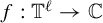
$f:{\mathbb {T}}^\ell \rightarrow \mathbb C$
and any measurable
$E\subseteq {\mathbb {T}}$
, (1.7) $$ \begin{align} \lim_{k\rightarrow\infty}\int_{\mathbb{T}} \unicode{x1D7D9}_E(x)f(\phi_1(n_k)x,\ldots,\phi_\ell(n_k)x)\,{d}\sigma(x)\nonumber \\ =\sigma(E)\int_{{\mathbb{T}}^\ell} f(y_1,\ldots,y_\ell)\,{d}{\unicode{x3bb}}_G(y_1,\ldots,y_\ell); \end{align} $$
-
(iv) (cf. [Reference Bergelson, Kasjan and Lemańczyk10, Lemma 3.8]) there exist a Borel probability measure $\sigma $
on
${\mathbb {T}}=[0,1)$
and an increasing sequence
$(n_k)_{k\in \mathbb {N}}$
in
$\mathbb {N}$
with the property that for any continuous function
$f:{\mathbb {T}}^\ell \rightarrow \mathbb C$
, (1.8) $$ \begin{align} \lim_{k\rightarrow\infty}\int_{\mathbb{T}} f(\phi_1(n_k)x,\ldots,\phi_\ell(n_k)x)\,{d}\sigma(x)=\int_{{\mathbb{T}}^\ell} f(y_1,\ldots,y_\ell)\,{d}{\unicode{x3bb}}_G(y_1,\ldots,y_\ell). \end{align} $$




A priori, one would believe that the concept of
$(\phi _1,\ldots ,\phi _\ell )$
 -rigidity group (see (1.6)) has very little to do with the limits of the form

However, as the following equivalent version of item (iii) in Theorem 1.8 demonstrates, this is not the case:
-
(iii′) there exist an increasing sequence $(n_k)_{k\in \mathbb {N}}$
in
$\mathbb {N}$
and a unitary operator
${U:{\mathcal {H}}\rightarrow {\mathcal {H}}}$
such that for every
$f\in {\mathcal {H}}$
and every
$(a_1,\ldots ,a_\ell )\in \mathbb {Z}^\ell $
, (1.10) $$ \begin{align} \lim_{k\rightarrow\infty}U^{\sum_{j=1}^\ell a_j\phi_j(n_k)}f=\begin{cases} f&\text{ if }(a_1,\ldots,a_\ell)\in G,\\ 0&\text{ if }(a_1,\ldots,a_\ell)\not\in G, \end{cases} \end{align} $$in the weak topology of ${\mathcal {H}}$
.


As a matter of fact, the link between Theorem 1.2 and the concept of group of rigidity can be fully appreciated by noting the resemblance between (1.10) and the following equivalent form of condition (II) in Theorem 1.2. We let

-
(II′) There exist a $T\in \mathrm{Aut}([0,1],\mathcal B,\mu )$
and an increasing sequence
$(n_k)_{k\in \mathbb {N}}$
in
$\mathbb {N}$
such that the unitary operator
$U_T:L_0^2(\mu )\rightarrow L_0^2(\mu )$
defined by
$U_Tf=f\circ T$
satisfies (1.11) $$ \begin{align} \lim_{k\rightarrow\infty}U_T^{\phi_j(n_k)}f=\begin{cases} f&\text{ if }j\in F,\\ 0&\text{ if }j\not\in F, \end{cases} \end{align} $$for every $f\in L_0^2(\mu )$
and every
$j\in \{1,\ldots ,\ell \}$
in the weak topology of
$L_0^2(\mu )$
(the set
$F\subseteq \{1,\ldots ,\ell \}$
and the sequences
$\phi _1,\ldots ,\phi _\ell $
here are as in the statement of Theorem 1.2).





We remark in passing that item (iv) in Theorem 1.8 is equivalent to the following statement.
-
(iv′) (Cf. condition (iii $'$
)) There exist an increasing sequence
$(n_k)_{k\in \mathbb {N}}$
in
$\mathbb {N}$
, a unitary operator
$U:{\mathcal {H}}\rightarrow {\mathcal {H}}$
, and a non-zero vector
$f\in {\mathcal {H}}$
such that for every
$(a_1,\ldots ,a_\ell )\in \mathbb {Z}^\ell $
, (1.12) $$ \begin{align} \lim_{k\rightarrow\infty}\langle U^{\sum_{j=1}^\ell a_j\phi_j(n_k)}f,f\rangle=\begin{cases} \|f\|^2_{{\mathcal{H}}}&\text{ if }(a_1,\ldots,a_\ell)\in G,\\ 0&\text{ if }(a_1,\ldots,a_\ell)\not\in G. \end{cases} \end{align} $$


1.3 Applications of Theorem 1.8
We now turn our attention to various applications of Theorem 1.8. These applications will allow us to demonstrate the usefulness of most of the different items of Theorem 1.8 (including item (iii
$'$
 )).
1.3.1 A consequence of (ii)
$\iff $
(iii
$'$
)


One of the key ingredients in the proof of Theorem 1.5 is to obtain an ‘algebraic’ characterization of the following equivalent form of [Reference Zelada34, condition C, Theorem 1.3] (see also Corollary 5.1):
-
condition C $'$
: there exists an increasing sequence
$(n_k)_{k\in \mathbb {N}}$
in
$\mathbb {N}$
with the property that for any
$\vec \xi =(\xi _1,\ldots ,\xi _\ell )\in \{0,1\}^\ell $
, there is a unitary operator
$U_{\vec \xi }:{\mathcal {H}}\rightarrow {\mathcal {H}}$
such that for any
$f\in {\mathcal {H}}$
and any
$j\in \{1,\ldots ,\ell \}$
, $$ \begin{align*}\lim_{k\rightarrow\infty}U_{\vec \xi}^{\phi_j(n_k)}f=\xi_jf,\end{align*} $$in the weak topology of ${\mathcal {H}}$
.


Employing the equivalence (ii)
$\iff $
 (iii) (or rather, (ii)
$\iff $
 (iii
$'$
 )) in Theorem 1.8, we obtain the following ‘algebraic’ characterization of condition C
$'$
 .
Corollary 1.9. Let
$\ell \in \mathbb {N}$
 and let
$\phi _1,\ldots ,\phi _\ell :\mathbb {N}\rightarrow \mathbb {Z}$
 be adequate sequences. The sequences
$\phi _1,\ldots ,\phi _\ell $
 satisfy condition C
$'$
 if and only if for any
$(a_1,\ldots ,a_\ell )\in A(\phi _1,\ldots ,\phi _\ell )$
 and any
$j\in \{1,\ldots ,\ell \}$
 ,
$|a_j|\neq 1$
 .
The proof of Corollary 1.9 is presented in §5. For a related result, see Lemma 4.2.
1.3.2 An example in ergodic-Ramsey theory derived from (ii)
$\implies $
(iii)

We now provide an example in ergodic-Ramsey theory (see Corollary 1.10) that is somewhat related with the density polynomial Hales–Jewett conjecture [Reference Bergelson4, p. 56] (see also [Reference Gowers22]) and [Reference Bergelson and McCutcheon12, Question 2 on p. 78]. This example will be constructed with the help of (ii)
$\implies $
 (iii) in Theorem 1.8 (see §6.2). Corollary 1.10 deals with the notion of IP
$^*$
 , a notion that plays a prominent role in IP-ergodic theory (see [Reference Bergelson3, Reference Bergelson, Furstenberg and McCutcheon7, Reference Bergelson and McCutcheon12, Reference Furstenberg20, Reference Furstenberg and Katznelson21, Reference McCutcheon and Quas27, Reference Zorin-Kranich36] for example). A set
$E\subseteq \mathbb {Z}$
 is called IP
$^*$
 if for any strictly monotone sequence
$(n_k)_{k\in \mathbb {N}}$
 in
$\mathbb {Z}$
 , one has

We remark that Corollary 1.10 was originally obtained in a joint work with Vitaly Bergelson [Reference Bergelson and Zelada13] by using the results in [Reference Bergelson, Kasjan and Lemańczyk10]. We also remark that Corollary 1.10 can be viewed as a variant of [Reference Zelada35, Theorem A] dealing with multiple recurrence.
Corollary 1.10. Let
$\ell \in \mathbb {N}$
 ,
$\ell \geq 2$
 , and let
$p_1,\ldots ,p_\ell \in \mathbb {Z}[x]$
 be non-constant polynomials with zero constant term. Suppose that
$p_1,\ldots ,p_\ell $
 are linearly independent. Then, there exist an invertible measure preserving system
$(X,\mathcal A,\nu ,T)$
 , a set
$A\in \mathcal A$
 with
$\nu (A)>0$
 , and an
$\epsilon>0$
 for which the set

is not
$\mathrm{IP}^*$
 .
It is worth mentioning that Corollary 1.10 is somewhat unexpected. This is because the results in [Reference Bergelson and Leibman11, Reference Frantzikinakis and Kra19] confirm that, when
$p_1,\ldots ,p_\ell \in \mathbb {Z}[x]$
 are linearly independent and have zero constant term, the sets of the form
$R_\epsilon ^{p_1,\ldots ,p_\ell }(A)$
 are massive. More precisely, by [Reference Frantzikinakis and Kra19, Theorem 1.3], we know that every set of the form
$R_\epsilon ^{p_1,\ldots ,p_\ell }(A)$
 is syndetic (meaning that it has bounded gaps) and by a generalization of [Reference Bergelson and Leibman11, Theorem 4.2] to appear in [Reference Bergelson and Zelada13], that every set of the form
$R_\epsilon ^{p_1,\ldots ,p_\ell }(A)$
 is ‘almost’ IP
$^*$
 , denoted A-IP
$^*$
 . (A set
$E\subseteq \mathbb {Z}$
 is called A-IP
$^*$
 if there exists a set
$F\subseteq \mathbb {Z}$
 with

and such that
$E\cup F$
 is IP
$^*$
 .) Furthermore, the results in [Reference Bergelson, Furstenberg and McCutcheon7] show that every set of the form
$R_\epsilon ^{p_1}(A)$
 is IP
$^*$
 (and so Corollary 1.10 does not hold when
$\ell =1$
 ). It is worth noting that every A-IP
$^*$
 set (and so every IP
$^*$
 set) is syndetic [Reference Bergelson and Leibman11, (2.1)].
Invoking the ‘inverse Furstenberg’s correspondence principle’ (see [Reference Avigad1, Reference Farhangi and Tucker-Drob16, Reference Fish and Skinner17, Reference Rodríguez28] for related results), we obtain the following ‘combinatorial’ interpretation of these observations.
Proposition 1.11. Let
$\ell \in \mathbb {N}$
 ,
$\ell \geq 2$
 , and let
$p_1,\ldots ,p_\ell \in \mathbb {Z}[x]$
 be non-constant polynomials with zero constant term. Suppose that
$p_1,\ldots ,p_\ell $
 are linearly independent. There exists an
$\epsilon>0$
 with the property that for any Følner sequence
$(F_N)_{N\in \mathbb {N}}$
 in
$\mathbb {Z}$
 , there is a set
$E\subseteq \mathbb {Z}$
 and an
$a\in (0,1)$
 with

for which the set

is
$\mathrm{A}{\text{-}}\mathrm{IP}^*$
 but not
$\mathrm{IP}^*$
 .
Question 1.12. Whether or not one can replace
$\overline d_{(F_N)}$
 by
$d^*$
 in Proposition 1.11 is an open question.
1.3.3 Further examples in ergodic-Ramsey theory
The techniques employed to prove Corollary 1.10 can be refined to obtain the following two examples (Corollary 1.14 and Corollary 1.15) each of which can be viewed as an IP-variant of the next result due to V. Bergelson, B. Host, and B. Kra.
Theorem 1.13. [Reference Bergelson, Host and Kra9, Theorem 2.1]
There exists an invertible measure preserving system
$(X,\mathcal A,\nu ,T)$
 with the property that for each
$\ell \in \mathbb {N}$
 , there is an
$A\in \mathcal A$
 with
$\nu (A)>0$
 such that for every
$n\in \mathbb {Z}\setminus \{0\}$
 ,

The proof of our first example, Corollary 1.14, will make use of rigidity groups with infinite index and so one could say that it makes use of the full strength of Theorem 1.8 (see §6.3).
Corollary 1.14. Let
$p,q\in \mathbb {Z}[x]$
 be non-constant polynomials with zero constant term and such that

Then, there exists an invertible measure preserving system
$(X,\mathcal A,\nu ,T)$
 with the property that for each
$\ell \in \mathbb {N}$
 , there is an
$A\in \mathcal A$
 with
$\nu (A)>0$
 for which the set

is not IP
$^*$
 .
Our second example, Corollary 1.15, illustrates that item (iii) in Theorem 1.8 can also be employed to obtain information about families of linearly dependent polynomials. (It may be worth noting that (1.16) resembles [Reference Donoso, Le, Moreira and Sun15, (7)], which deals with an open question arising from the work of Frantzikinakis [Reference Frantzikinakis18, Proposition 5.2].)
Corollary 1.15. There exists an invertible measure preserving system
$(X,\mathcal A ,\nu ,T)$
 with the property that for each
$\ell \in \mathbb {N}$
 , there is an
$A\in \mathcal A$
 with
$\nu (A)>0$
 and such that the set

is not IP
$^*$
 .
Remark 1.16. We remark that by employing a technique similar to that used to prove Corollary 1.15 (see §6.4), one can obtain the following strengthened version of Corollary 1.14, whose proof we will provide in [Reference Bergelson and Zelada13].
-
For any $t>1$
and any linearly independent polynomials
$p_1,\ldots ,p_t\in \mathbb {Z}[x]$
with zero constant term, one can find an invertible measure preserving system
$(X,\mathcal A,\nu ,T)$
with the property that for every
$\ell \in \mathbb {N}$
, there is an
$A\in \mathcal A$
with
$\nu (A)>0$
for which the set $$ \begin{align*}\{n\in\mathbb{Z}\,|\,\nu(A\cap T^{-p_1(n)}A\cap \cdots\cap T^{-p_t(n)}A)>\nu^\ell(A)\}\end{align*} $$is not IP $^*$
.


The structure of this paper is as follows. In §2, we prove a special case of (ii)
$\implies $
 (iii) in Theorem 1.8 that is needed for the proof of Theorem 1.8 in its full generality. In §3, we complete the proof of Theorem 1.8 and provide additional characterizations of the concept of a group of rigidity. In §4, we present a generalized version of Theorem 1.2 dealing with adequate sequences. In §5, we prove Theorem 1.5 and Corollary 1.9. In §6, we prove Corollaries 1.10, 1.14, and 1.15.
2 A special case of (ii)
$\implies $
(iii) in Theorem 1.8

The sequences
$\phi _1,\ldots ,\phi _\ell :\mathbb {N}\rightarrow \mathbb {Z}$
 are called asymptotically linearly independent if for any
$(a_1,\ldots ,a_\ell )\in \mathbb {Z}^\ell \setminus \{\vec 0\}$
 , one has

In this section, we prove a restricted version of (ii)
$\implies $
 (iii) in Theorem 1.8 dealing only with asymptotically linearly independent sequences. We remark that this variant will be used in the next section to prove Theorem 1.8 in its full generality and that, because
$\phi _1,\ldots ,\phi _\ell $
 are asymptotically linearly independent, statement (ii) holds for any subgroup
$G$
 of
$\mathbb {Z}^\ell $
 : one always has that

Lemma 2.1. Let
$\ell \in \mathbb {N}$
 , let
$\phi _1,\ldots ,\phi _\ell :\mathbb {N}\rightarrow \mathbb {Z}$
 be asymptotically linearly independent sequences, and let
$G$
 be a subgroup of
$\mathbb {Z}^\ell $
 . Then, there exist a Borel probability measure
$\sigma $
 on
${\mathbb {T}}=[0,1)$
 and an increasing sequence
$(n_k)_{k\in \mathbb {N}}$
 in
$\mathbb {N}$
 with the property that for any
$a_1,\ldots ,a_\ell \in \mathbb {Z}$
 and any measurable
$E\subseteq {\mathbb {T}}$
 ,

The proof of Lemma 2.1 requires the use of the following technical lemma, which was proved in [Reference Zelada34]. Given any sequences
$\phi _1,\ldots ,\phi _\ell :\mathbb {N}\rightarrow \mathbb {Z}$
 , we say that the sequences
$\phi _1,\ldots ,\phi _\ell $
 are strongly asymptotically independent if for any
${\vec a=(a_1,\ldots ,a_\ell )\in \mathbb {Z}^\ell \setminus \{\vec 0\}}$
 , the sequence

is eventually a strictly monotone sequence. We remark that any strongly asymptotically independent sequences are asymptotically linearly independent.
Lemma 2.2. (Cf. [Reference Weyl33, Theorem 21])
Let
$\phi _1,\ldots ,\phi _\ell :\mathbb {N}\rightarrow \mathbb {Z}$
 be strongly asymptotically independent sequences. For any
$t\in \mathbb {N}$
 , the set

has full Lebesgue measure on
$\mathbb {R}^t$
 . Furthermore, for any
$(\alpha _1,\ldots ,\alpha _t)\in \mathfrak M_t(\phi _1,\ldots ,\phi _\ell )$
 , the set

has full measure on
$\mathbb {R}$
 .
2.1 The proof of Lemma 2.1
For any
$r\in \mathbb {R}$
 , we let
$\|r\|=\inf _{n\in \mathbb {Z}}|r-n|$
 .
The proof of Lemma 2.1 is similar to that of [Reference Zelada34, Theorem 4.2].
Reduction to proper subgroups of
$\mathbb {Z}^\ell $
 . We claim that Lemma 2.1 holds when
$G=\mathbb {Z}^\ell $
 . Indeed, let
$\sigma $
 be the Borel probability measure on
${\mathbb {T}}$
 defined by
$\sigma (\{0\})=1$
 and let
$(n_k)_{k\in \mathbb {N}}$
 in
$\mathbb {N}$
 be an arbitrary increasing sequence. Clearly, we have

for every measurable
$E\subseteq {\mathbb {T}}$
 and every
$a_1,\ldots ,a_\ell \in \mathbb {Z}$
 , as claimed.
Strategy of the proof. Suppose now that
$G$
 is a proper subgroup of
$\mathbb {Z}^\ell $
 . We will construct the probability measure
$\sigma $
 and the increasing sequence
$(n_k)_{k\in \mathbb {N}}$
 in the following way. First, we use Lemma 2.2 to find the increasing sequence
$(n_k)_{k\in \mathbb {N}}$
 in
$\mathbb {N}$
 and sequences of irrational numbers
$(\alpha ^{(j)}_k)_{k\in \mathbb {N}}$
 ,
$j\in \{1,\ldots ,\ell \}$
 , satisfying various ad hoc Diophantine properties. Then, we use the sequences
$(\alpha ^{(j)}_k)_{k\in \mathbb {N}}$
 ,
$j\in \{1,\ldots ,\ell \}$
 , to define a continuous function
$\Psi $
 from the measurable space
$(\Omega ,\mathcal S)$
 , where

and
$\mathcal S=\text {Borel}(\Omega )$
 , to
${\mathbb {T}}$
 . The probability measure
$\sigma $
 will be defined by
$\sigma =\mathbb P\circ \Psi ^{-1}$
 , where
$\mathbb P$
 is an appropriately picked probability measure on
$\Omega $
 depending on
$G$
 . Finally, we will show that the sequence
$(n_k)_{k\in \mathbb {N}}$
 and the probability measure
$\sigma $
 satisfy (2.1).
2.1.1 Step 1. Defining
$(n_k)_{k\in \mathbb {N}}$
and the sequences
$(\alpha ^{(j)}_k)_{k\in \mathbb {N}}$
,
$j\in \{1,\ldots ,\ell \}$


The key properties of
$(n_k)_{k\in \mathbb {N}}$
 and
$(\alpha ^{(j)}_k)_{k\in \mathbb {N}}$
 ,
$j\in \{1,\ldots ,\ell \}$
 . For each
$k\in \mathbb {N}$
 , let

We claim that we can pick the sequence
$(n_k)_{k\in \mathbb {N}}$
 in
$\mathbb {N}$
 and the sequences of irrational numbers
$(\alpha ^{(j)}_k)_{k\in \mathbb {N}}$
 ,
$j\in \{1,\ldots ,\ell \}$
 , to satisfy the following properties:
-
(σ.1) For each $k\in \mathbb {N}$
and each
$j\in \{1,\ldots ,\ell \}$
,
$\alpha ^{(j)}_{k}\in (0,1/(k!2^{k}\Phi (n_{k-1}))]$
, where
${n_0=1}$
. So, in particular, for any
$j,j'\in \{1,\ldots ,\ell \}$
, $$ \begin{align*}\lim_{t\rightarrow\infty}|\phi_j(n_t)|\sum_{s=t+1}^\infty (|\alpha^{(j')}_s|\cdot s!)=0.\end{align*} $$
-
(σ.2) For each $k\in \mathbb {N}$
and each
$j\in \{1,\ldots ,\ell \}$
, $$ \begin{align*}\bigg\|\phi_j(n_k)\alpha^{(j)}_k-\bigg(\frac{1}{k!}+\frac{1}{2(k!)^2}\bigg)\bigg\|<\frac{1}{2 (k!)^2},\end{align*} $$which implies that for each $r\in \{0,\ldots ,k!-1\}$
,
$(r\phi _j(n_k)\alpha ^{(j)}_k\mod 1)\in [r/k!,(r+1)/k!)$
and $$ \begin{align*}\lim_{t\rightarrow\infty}\bigg\|\phi_j(n_t)\alpha^{(j)}_t-\bigg(\frac{1}{ t!}+\frac{1}{2(t!)^2}\bigg)\bigg\|=0.\end{align*} $$
-
(σ.3) For each $k\in \mathbb {N}$
and any distinct
$j,j'\in \{1,\ldots ,\ell \}$
, $$ \begin{align*}\|\phi_j(n_k)\alpha^{(j')}_k\|<\frac{1}{2 (k!)^2},\end{align*} $$which implies that for each $r\in \{0,\ldots ,k!-1\}$
,
$(r\phi _j(n_k)\alpha ^{(j')}_k\mod 1)\in (-1/(2\cdot k!),1/(2\cdot k!))$
and $$ \begin{align*}\lim_{t\rightarrow\infty}\|\phi_j(n_t)\alpha^{(j')}_t\|=0.\end{align*} $$
-
(σ.4) For each $k\in \mathbb {N}$
, each
$j,j'\in \{1,\ldots ,\ell \}$
, and each
$k_0\in \mathbb {N}$
with
$k_0<k$
, $$ \begin{align*}\|\phi_j(n_k)\alpha^{(j')}_{k_0}\|<\frac{1}{k^2\cdot k!}.\end{align*} $$
This means that
$$ \begin{align*}\lim_{k\rightarrow\infty}\|\phi_j(n_k)\alpha^{(j')}_{k_0}\|=0\end{align*} $$fast enough to ensure that
$$ \begin{align*}\lim_{k\rightarrow\infty}\sum_{t=1}^k(\|\phi_j(n_{k+1})\alpha^{(j')}_t\|\cdot k!)=0.\end{align*} $$







Proof of the existence of the sequences
$(n_k)_{k\in \mathbb {N}}$
 and
$(\alpha ^{(j)}_k)_{k\in \mathbb {N}}$
 ,
$j\in \{1,\ldots ,\ell \}$
 . We will pick the sequences
$(n_k)_{k\in \mathbb {N}}$
 and
$(\alpha _k^{(j)})_{k\in \mathbb {N}}$
 ,
$j \in \{1,\ldots ,\ell \}$
 , inductively on
$k\in \mathbb {N}$
 . To do this, first note that there exists an increasing sequence
$(m_k)_{k\in \mathbb {N}}$
 in
$\mathbb {N}$
 for which the sequences

are strongly asymptotically independent. To see this, we first note that because
$\mathbb {Z}^\ell $
 is countable, the result would follow by a diagonalization argument if we can show that for every non-zero
$(a_1,\ldots ,a_\ell )\in \mathbb {Z}^\ell $
 and any increasing sequence
$(r_k)_{k\in \mathbb {N}}$
 in
$\mathbb {N}$
 , one can find a subsequence
$(s_k)_{k\in \mathbb {N}}$
 of
$(r_k)_{k\in \mathbb {N}}$
 with the property that
$(\sum _{j=1}^\ell a_j\phi _j(s_k))_{k\in \mathbb {N}}$
 is a strictly monotone sequence. In turn, one can find such a subsequence by first noting that one can always find a subsequence
$(s_k)_{k\in \mathbb {N}}$
 of
$(r_k)_{k\in \mathbb {N}}$
 with the property that either: (1)
$\sum _{j=1}^\ell a_j\phi _j(s_k)\geq 0$
 for each
$k\in \mathbb {N}$
 or (2)
$\sum _{j=1}^\ell a_j\phi _j(s_k)\leq 0$
 for every
$k\in \mathbb {N}$
 . Since
$\phi _1,\ldots ,\phi _\ell $
 are asymptotically linearly independent and for any sequence
$(\phi (k))_{k\in \mathbb {N}}$
 in
$[0,\infty )$
 (or
$(-\infty ,0])$
 with
$\lim _{k\rightarrow \infty }|\phi (k)|=\infty $
 , one can find an increasing sequence
$(t_k)_{k\in \mathbb {N}}$
 in
$\mathbb {N}$
 for which
$(\phi (t_k))_{k\in \mathbb {N}}$
 is strictly monotone, the result follows.
To construct the desired sequences, we will need to show that the sequences
$(\alpha ^{(j)}_k)_{k\in \mathbb {N}}$
 ,
$j\in \{1,\ldots ,\ell \}$
 satisfy the following additional property.
-
(σ.5) For any $k\in \mathbb {N}$
, the sequence $$ \begin{align*} (\phi_1(m_t)&\alpha^{(1)}_1,\ldots,\phi_\ell(m_t)\alpha^{(1)}_1,\ldots,\phi_1(m_t)\alpha^{(\ell)}_1,\ldots,\phi_\ell(m_t)\alpha^{(\ell)}_1,\\ & \qquad \qquad \qquad \qquad \qquad \qquad \qquad\vdots\\ &\! \phi_1(m_t)\alpha^{(1)}_k,\ldots,\phi_\ell(m_t)\alpha^{(1)}_k,\ldots,\phi_1(m_t)\alpha^{(\ell)}_k,\ldots,\phi_\ell(m_t)\alpha^{(\ell)}_k),\quad t\in\mathbb{N} \end{align*} $$is uniformly distributed $\mathrm{mod}\ 1$
.


For the base case of the induction, note that, by Lemma 2.2, we can pick
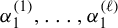
$\alpha _1^{(1)},\ldots ,\alpha _1^{(\ell )}\in (0,1/(2\Phi (1))]$
 such that the sequence

is uniformly distributed
$\mathrm{mod}\ 1$
 (and so
$\alpha ^{(1)}_1,\ldots ,\alpha ^{(\ell )}_1$
 satisfy (
$\sigma $
 .5)). Pick
$t_1\in \mathbb {N}$
 arbitrarily and set
$n_1=m_{t_1}$
 . Noting that all of
$\alpha _1^{(1)},\ldots ,\alpha _1^{(\ell )}$
 must be irrational, we see that
$n_1$
 satisfies conditions (
$\sigma $
 .2) and (
$\sigma $
 .3) when
$k=1$
 . Noting that condition (
$\sigma $
 .4) is vacuous for
$k=1$
 , we see that
$\alpha ^{(1)}_1,\ldots ,\alpha ^{(\ell )}_1$
 and
$n_1$
 satisfy conditions (
$\sigma $
 .1)–(
$\sigma $
 .5).
Fix now
$k\in \mathbb {N}$
 and suppose we have chosen

and
$n_1\kern1.3pt{<}\kern1pt\cdots \kern1pt{<}\kern1.3pt n_k$
 satisfying conditions (
$\sigma $
 .1)–(
$\sigma $
 .5). Note that
$(0,1/((k\kern1.3pt{+}\kern1.3pt1)!\kern-1.2pt 2^{k+1}\Phi (n_{k}))]$
 has positive measure. By repeatedly applying (2.2) in Lemma 2.2, we can find

such that for each
$s\in \{1,\ldots ,\ell \}$
 , the sequence

is uniformly distributed
$\mathrm{mod}\ 1$
 . It follows that
$\alpha _1^{(j)},\ldots ,\alpha _{k+1}^{(j)}$
 ,
$j\in \{1,\ldots ,\ell \}$
 , satisfy condition (
$\sigma $
 .5) and, hence, one can find
$t_{k+1}\in \mathbb {N}$
 for which conditions (
$\sigma $
 .1)–(
$\sigma $
 .4) hold with
$n_{k+1}=m_{t_{k+1}}$
 . Since without loss of generality we can assume that
$n_k<n_{k+1}$
 , we complete the induction.
2.1.2 Step 2. Defining
$\Psi $
and
$\sigma $


Defining the function
$\Psi $
 . Let
$\pi $
 denote the canonical map from
$\mathbb {R}$
 to
${\mathbb {T}}=\mathbb {R}/\mathbb {Z}$
 (so, for each
$r\in \mathbb {R}$
 ,
$\pi (r)=r\mod 1$
 and
$\pi $
 is continuous). We identify each
$\omega \in \Omega $
 with the
$\mathbb {Z}^\ell $
 -valued sequence
$\omega (k)=(\omega _1(k),\ldots ,\omega _\ell (k))$
 ,
$k\in \mathbb {N}$
 , where
$\omega _1(k),\ldots ,\omega _\ell (k)\in \{0,\ldots ,k!-1\}$
 . Define
$g:\Omega \rightarrow \mathbb {R}$
 by

and set
$\Psi =\pi \circ g$
 .
The continuity of
$\Psi $
 . We now prove that
$\Psi $
 is continuous. To do this, we will show that
$g$
 is continuous. Indeed, for each
$s\in \mathbb {N}$
 and each
$r\in \{1,\ldots ,\ell \}$
 , the function
${g_{s,r}:\Omega \rightarrow \mathbb {R}}$
 given by
$g_{s,r}(\omega )=\omega _r(s)\alpha _s^{(r)}$
 is continuous. Also, by condition (
$\sigma $
 .1), for any
$\omega \in \Omega $
 ,
$|\omega _r(s)\alpha _s^{(r)}|\leq 1/2^s$
 . Thus, by Weierstrass M-test, we obtain that for each
$r\in \{1,\ldots ,\ell \}$
 , the function
$g_r:\Omega \rightarrow \mathbb {R}$
 defined by
$g_r(\omega )=\sum _{s=1}^\infty g_{s,r}(\omega )$
 is well defined and continuous. It follows that

is continuous on
$\Omega $
 .
Defining
$\sigma $
 . Following the notation settled in §1, we let

and let
${\unicode{x3bb}} _G$
 denote the normalized Haar measure of
$A_G$
 . Observe that
${\unicode{x3bb}} _{G}$
 can be viewed as a Borel probability measure on
${\mathbb {T}}^\ell $
 . So, in particular,
${\unicode{x3bb}} _{G}$
 is characterized by the quantities

where
$k\in \mathbb {N}$
 and
$r_1,\ldots ,r_\ell \in \{0,\ldots ,k!-1\}$
 .
For each
$k\in \mathbb {N}$
 , let
$\mathbb P_k$
 be the probability measure on
$\{0,\ldots ,k!-1\}^\ell $
 defined by

and set
$\mathbb P=\prod _{k=1}^\infty \mathbb P_k$
 . As we mentioned previously, we define
$\sigma $
 by

2.1.3 Step 3: (2.1) holds
We start by proving that the following Diophantine property holds uniformly on
$\omega \in \Omega $
 for any
$(a_1,\ldots ,a_\ell )\in \mathbb {Z}^\ell $
 :

Equation (2.6) holds. Let
$(a_1,\ldots ,a_\ell )\in \mathbb {Z}^\ell $
 . Note that for each
$k\in \mathbb {N}$
 ,

Furthermore, for each
$j\in \{1,\ldots ,\ell \}$
 ,

Thus, to prove (2.6), all we need to show is that for any
$r,j\in \{1,\ldots ,\ell \}$
 ,

uniformly in
$\omega \in \Omega $
 .
Fix
$j,r\in \{1,\ldots ,\ell \}$
 . By condition (
$\sigma $
 .1) and the fact that each of the sequences
$\psi _1,\ldots ,\psi _\ell $
 defined in (2.3) are eventually monotone, we have that for any
$\omega \in \Omega $
 ,

Thus,

uniformly in
$\omega \in \Omega $
 .
By condition (
$\sigma $
 .4), for any
$\omega \in \Omega $
 ,

Thus,

uniformly in
$\omega \in \Omega $
 .
By conditions (
$\sigma $
 .2) and (
$\sigma $
 .3), for any
$\omega \in \Omega $
 ,

Thus,

uniformly in
$\omega \in \Omega $
 . Combining (2.8), (2.9), and (2.10), we see that (2.7) holds.
Proof of (2.1). Observe that to show that (2.1) holds, all we need to show is that for any
$(a_1,\ldots ,a_\ell )\in \mathbb {Z}^\ell $
 and any
$m\in \mathbb {Z}$
 , one has

(This follows because trigonometric polynomials are dense in
$L^1(\sigma )$
 .)
To prove this, fix
$(a_1,\ldots ,a_\ell )\in \mathbb {Z}^\ell $
 and let
$m\in \mathbb {Z}$
 . By the definitions of
$\sigma $
 and
$\mathbb P$
 , we have

Applying first (2.6) to the last expression in (2.11) and then replacing
$g$
 with one of its approximations, we obtain

Since
$\mathbb P$
 is a product measure, the last expression in (2.12) equals

Finally, by (2.5),

And we are done.
3 The proof of our main technical result
In this section, we prove Theorem 3.1, a refinement of Theorem 1.8 in §1. Observe that item (v) in Theorem 3.1 is not mentioned in Theorem 1.8. As demonstrated below, item (v) serves as an intermediate step in the proof of (ii)
$\implies $
 (iii). We remark that the numerals in Theorem 3.1 and Corollary 3.2 coincide with the numerals used in Theorem 1.8, and (1.10) and (1.12) in §1.
Theorem 3.1. Let
$\ell \in \mathbb {N}$
 and let
$\phi _1,\ldots ,\phi _\ell :\mathbb {N}\rightarrow \mathbb {Z}$
 be adequate sequences. The following statements are equivalent for a subgroup
$G$
 of
$\mathbb {Z}^\ell $
 :
-
(i) $G$
is a group of rigidity for
$\phi _1,\ldots ,\phi _\ell $
; -
(ii) one has that $A(\phi _1,\ldots ,\phi _\ell )\subseteq G$
; -
(iii) there exist a Borel probability measure $\sigma $
on
${\mathbb {T}}=[0,1)$
and an increasing sequence
$(n_k)_{k\in \mathbb {N}}$
in
$\mathbb {N}$
with the property that for any continuous function
$f:{\mathbb {T}}^\ell \rightarrow \mathbb C$
and any measurable
$E\subseteq {\mathbb {T}}$
, (3.1) $$ \begin{align} &\lim_{k\rightarrow\infty}\int_{\mathbb{T}} \unicode{x1D7D9}_E(x)f(\phi_1(n_k)x,\ldots,\phi_\ell(n_k)x)\,{d}\sigma(x)\nonumber\\& \quad =\sigma(E) \int_{{\mathbb{T}}^\ell} f(y_1,\ldots,y_\ell)\,{d}{\unicode{x3bb}}_G(y_1,\ldots,y_\ell); \end{align} $$
-
(iv) there exist a Borel probability measure $\sigma $
on
${\mathbb {T}}=[0,1)$
and an increasing sequence
$(n_k)_{k\in \mathbb {N}}$
in
$\mathbb {N}$
with the property that for any continuous function
$f:{\mathbb {T}}^\ell \rightarrow \mathbb C$
, (3.2) $$ \begin{align} \lim_{k\rightarrow\infty}\int_{\mathbb{T}} f(\phi_1(n_k)x,\ldots,\phi_\ell(n_k)x)\,{d}\sigma(x)=\int_{{\mathbb{T}}^\ell} f(y_1,\ldots,y_\ell)\,{d}{\unicode{x3bb}}_G(y_1,\ldots,y_\ell); \end{align} $$
-
(v) there exist $c\in \{1,\ldots ,\ell \}$
,
$M\in \mathbb {N}$
,
$j_1,\ldots ,j_c\in \{1,\ldots ,\ell \}$
with
$j_1<\cdots <j_c$
, and a subgroup
$\tilde G$
of
$\mathbb {Z}^c$
such that (a) the sequences
$\phi _{j_1},\ldots ,\phi _{j_c}$
are asymptotically linearly independent, (b) there is a homomorphism
$\theta :\mathbb {Z}^\ell \rightarrow \mathbb {Z}^c$
defined by
$(a_1,\ldots ,a_c)=\theta (d_1,\ldots ,d_\ell )$
if and only if (3.3) $$ \begin{align} \lim_{k\rightarrow\infty}\bigg|\sum_{r=1}^ca_r\phi_{j_r}(k)-M\sum_{j=1}^\ell d_j\phi_j(k)\bigg|=0, \end{align} $$and (c) one has that $G=\theta ^{-1}(\tilde G)$
.


Before embarking in the proof of Theorem 3.1, we remark that the probability measure
${\unicode{x3bb}} _G$
 on items (iii) and (iv) is the only Borel probability measure
$\rho $
 on
${\mathbb {T}}^\ell $
 with the property that for any
$(a_1,\ldots ,a_\ell )\in \mathbb {Z}^\ell $
 ,

Indeed, it suffices to show that

satisfies
$G=B_G$
 . To check that
$G=B_G$
 , let
$\pi $
 denote the canonical homomorphism from
$\mathbb {Z}^\ell $
 to
$\mathbb {Z}^\ell /G$
 . Observe that a homomorphism
$\sigma :\mathbb {Z}^\ell \rightarrow \mathbb S^1$
 belongs to
$A_G$
 if and only if there is a homomorphism
$\psi :\mathbb {Z}^\ell /G\rightarrow \mathbb S^1$
 such that
$\sigma =\psi \circ \pi $
 . Thus, noting that for every
$(a_1,\ldots ,a_\ell )\in \mathbb {Z}^\ell \setminus G$
 , there is a homomorphism
$\psi :\mathbb {Z}^\ell /G\rightarrow \mathbb S^1$
 with
$\psi ((a_1,\ldots ,a_\ell )+G)\neq 1$
 , we obtain that
$(\mathbb {Z}^\ell \setminus G)\cap B_G=\emptyset $
 . Since
$G\subseteq B_G$
 follows from the definition of
$A_G$
 , we get
$G=B_G$
 . (That
$G=B_G$
 can also be viewed as an immediate consequence of [Reference Rudin30, Lemma 2.1.3], for example.)
Proof of Theorem 3.1
(i)
$\implies $
 (ii). Suppose that
$G$
 is a
$(\phi _1,\ldots ,\phi _\ell )$
 -rigidity group. Then, there is a unitary operator
$U$
 and an increasing sequence
$(n_k)_{k\in \mathbb {N}}$
 in
$\mathbb {N}$
 for which the group
$H(U,(n_k))$
 (as defined in (1.6)) satisfies
$G=H(U,(n_k))$
 . Since every
$(a_1,\ldots ,a_\ell )\in A(\phi _1,\ldots ,\phi _\ell )$
 satisfies
$(a_1,\ldots ,a_\ell )\in H(U,(n_k))$
 , we see that statement (ii) holds.
(ii)
$\implies $
 (v). We remark that conditions (a) and (b) hold for any adequate sequences
$\phi _1,\ldots ,\phi _\ell $
 . Statement (ii) is only needed for the proof of condition (c).
Proof of condition (a). By (1.3), one has that when
$c=1$
 , one can find
$j_1,\ldots ,j_c\in \{1,\ldots ,\ell \}$
 ,
$j_1<\cdots <j_c$
 , with the property that for any non-zero
$(a_1,\ldots ,a_c)\in \mathbb {Z}^c$
 ,

Taking the largest
$c\in \{1,\ldots ,\ell \}$
 for which this property holds, one obtains that
$\{\phi _{j_1},\ldots ,\phi _{j_c}\}\subseteq \{\phi _1,\ldots ,\phi _\ell \}$
 is a maximal subset of asymptotically linearly independent sequences. Note that by (1.4), the maximality of
$\{\phi _{j_1},\ldots ,\phi _{j_c}\}$
 implies that for any
$j\in \{1,\ldots ,\ell \}\setminus \{j_1,\ldots ,j_c\}$
 , there exist
$(b_{j_1}^{(j)},\ldots ,b_{j_c}^{(j)})\in \mathbb {Z}^c\setminus \{\vec 0\}$
 and a
$b_j\in \mathbb {N}$
 such that
$\lim _{n\rightarrow \infty }|\sum _{r=1}^cb_{j_r}^{(j)}\phi _{j_r}(n)-b_j\phi _j(n)|=0$
 . Thus, for any
$j\in \{1,\ldots ,\ell \}$
 , there exist
$(b_{j_1}^{(j)},\ldots ,b_{j_c}^{(j)})\in \mathbb {Z}^c\setminus \{\vec 0\}$
 and a
$b_j\in \mathbb {N}$
 such that

Preparations for the proofs of conditions (b) and (c). By re-indexing
$\phi _1,\ldots ,\phi _\ell $
 , if needed, we can assume without loss of generality that
$j_r=r$
 for each
$r\in \{1,\ldots ,c\}$
 . In addition to this, we can also assume without loss of generality that for each
$j\in \{1,\ldots ,\ell \}$
 , the integers
$b_1^{(j)},\ldots ,b_c^{(j)},b_j$
 in (3.5) satisfy
$\text {GCD}(b_1^{(j)},\ldots ,b_c^{(j)},b_j)=1$
 .
Let
$M=\prod _{j=1}^\ell b_j$
 and let

Proof of condition (b). Define the map
$\theta :\mathbb {Z}^\ell \rightarrow \mathbb {Z}^c$
 as in statement (v) (with
$j_r=r$
 for each
$r\in \{1,\ldots ,c\})$
 . Note that if
$\theta $
 is a well-defined function, it is routine to check that
$\theta $
 is a homomorphism. In turn, by the asymptotic linear independence of
$\phi _1,\ldots ,\phi _c$
 , to check that
$\theta $
 is a function, all that one needs to check is that for any
$d_1,\ldots ,d_\ell \in \mathbb {Z}$
 , there exists an
$(a_1,\ldots ,a_c)\in \mathbb {Z}^c$
 with

Finally, to check (3.6), define
$a_r:=\sum _{j=1}^\ell (d_j(M/b_j)b_r^{(j)})$
 for each
$r\in \{1,\ldots ,c\}$
 . We have

proving that condition (b) holds.
Proof of condition (c). Note that
$\text {Ker}(\theta )=A(\phi _1,\ldots ,\phi _\ell )$
 and that
$\theta (G)=\tilde G$
 . Thus, by statement (ii),
$\theta ^{-1}(\tilde G)=G$
 .
(v)
$\implies $
 (iii). Consequences of condition (v) and the definitions of
$(n_k)_{k\in \mathbb {N}}$
 and
$\sigma $
 . Let
$c\in \mathbb {N}$
 ,
$M\in \mathbb {N}$
 , and
$\tilde G\subseteq \mathbb {Z}^c$
 be as in statement (v). By re-indexing
$\phi _1,\ldots ,\phi _\ell $
 , if needed, we assume without loss of generality that
$j_r=r$
 for each
$r\in \{1,\ldots ,c\}$
 . By Lemma 2.1 and condition (a) in statement (v), there exists an increasing sequence
$(n_k)_{k\in \mathbb {N}}$
 in
$\mathbb {N}$
 and a Borel probability measure
$\rho $
 on
${\mathbb {T}}$
 with the property that for any
$m\in \mathbb {Z}$
 and any
$a_1,\ldots ,a_c\in \mathbb {Z}$
 ,

Let
$\psi _M:{\mathbb {T}}\rightarrow {\mathbb {T}}$
 be the map defined by
$\psi _M(x)=Mx\mod 1$
 . We set
$\sigma =\rho \circ \psi _M^{-1}$
 .
Consequences of (3.7) for the measure
$\sigma $
 . Let
$d_1,\ldots ,d_\ell \in \mathbb {Z}$
 and let
$m\in \mathbb {Z}$
 . Suppose that
$(d_1,\ldots ,d_\ell )\in G$
 . Then, by conditions (b) and (c) in statement (v), there exists
$(a_1,\ldots ,a_c)\in \tilde G$
 for which (3.3) holds. So, by (3.7),

When
$(d_1,\ldots ,d_\ell )\not \in G$
 , condition (c) in statement (v) implies that there is an
$(a_1,\ldots ,a_c)\in \mathbb {Z}^c\setminus \tilde G$
 for which (3.3) holds. Thus,

Deduction of (3.1). It follows that for any
$(d_1,\ldots ,d_\ell )\in \mathbb {Z}^\ell $
 and any
$m\in \mathbb {Z}$
 ,

So, in light of (3.4), for any
$(d_1,\ldots ,d_\ell )\in \mathbb {Z}^\ell $
 and any
$m\in \mathbb {Z}$
 ,

which, in virtue of the density of the set of trigonometric polynomials on
$L^1(\sigma )$
 , proves (3.1).
(iii)
$\implies $
 (iv). This implication is trivial.
(iv)
$\implies $
 (i). We will prove that
$G=H(U,(n_k))$
 for some unitary operator
$U$
 and the sequence
$(n_k)_{k\in \mathbb {N}}$
 in statement (iv).
Definition and basic properties of U. Let
$\sigma $
 be as in statement (iv) and let
$ {U:L^2(\sigma )\rightarrow L^2(\sigma )}$
 be defined by
$Uf(\cdot )=e^{2\pi i(\cdot )}f(\cdot )$
 . By statement (iv), we have that for any
$(a_1,\ldots ,a_\ell )\in G$
 ,

in
$\sigma $
 -measure.
The inclusion
$G\subseteq H(U,(n_k))$
 . It follows that for any
$f\in L^2(\sigma )$
 and any
$(a_1,\ldots ,a_\ell )\in G$
 ,

in
$L^2$
 -norm, and so
$G\subseteq H(U,(n_k))$
 .
The inclusion
$H(U,(n_k))\subseteq G$
 . To see that
$H(U,(n_k))\subseteq G$
 , we will prove that if
$(a_1,\ldots ,a_\ell )\not \in G$
 , then

Indeed,

And we are done.
We complete this section by recording several additional characterizations of a
$(\phi _1,\ldots ,\phi _\ell )$
 -rigidity group. We remark that these characterizations can be deduced from Theorem 3.1 by invoking Bochner’s theorem (see [Reference Rudin30, §1.4], for example) and the fact that for any unitary operator
$U:{\mathcal {H}}\rightarrow {\mathcal {H}}$
 and any non-zero
$f\in {\mathcal {H}}$
 , the sequence
$(\langle U^nf,f\rangle )_{n\in \mathbb {Z}}$
 is positive definite. We omit the proofs.
Corollary 3.2. Let
$\ell \in \mathbb {N}$
 and let
$\phi _1,\ldots ,\phi _\ell :\mathbb {N}\rightarrow \mathbb {Z}$
 be adequate sequences. The following statements are equivalent for a subgroup
$G$
 of
$\mathbb {Z}^\ell $
 :
-
(i) $G$
is a group of rigidity for
$\phi _1,\ldots ,\phi _\ell $
; -
(iii′) there exist an increasing sequence $(n_k)_{k\in \mathbb {N}}$
in
$\mathbb {N}$
and a unitary operator
${U:{\mathcal {H}}\rightarrow {\mathcal {H}}}$
such that for every
$f\in {\mathcal {H}}$
and every
$(a_1,\ldots ,a_\ell )\in \mathbb {Z}^\ell $
, $$ \begin{align*} \lim_{k\rightarrow\infty}U^{\sum_{j=1}^\ell a_j\phi_j(n_k)}f=\begin{cases} f&\text{ if }(a_1,\ldots,a_\ell)\in G,\\ 0&\text{ if }(a_1,\ldots,a_\ell)\not\in G, \end{cases} \end{align*} $$in the weak topology of ${\mathcal {H}}$
;
-
(iv′) there exist an increasing sequence $(n_k)_{k\in \mathbb {N}}$
in
$\mathbb {N}$
, a unitary operator
$U:{\mathcal {H}}\rightarrow {\mathcal {H}}$
, and a non-zero vector
$f\in {\mathcal {H}}$
such that for every
$(a_1,\ldots ,a_\ell )\in \mathbb {Z}^\ell $
, (3.8) $$ \begin{align} \lim_{k\rightarrow\infty}\langle U^{\sum_{j=1}^\ell a_j\phi_j(n_k)}f,f\rangle=\begin{cases} \|f\|^2_{{\mathcal{H}}}&\text{if }(a_1,\ldots,a_\ell)\in G,\\ 0&\text{ if }(a_1,\ldots,a_\ell)\not\in G. \end{cases} \end{align} $$


4 A generalization of Theorem 1.2
Our goal in this section is to obtain the following generalized version of Theorem 1.2. For any
$\ell \in \mathbb {N}$
 , we denote by
$\vec e_1,\ldots ,\vec e_\ell $
 the standard basis of
$\mathbb {Z}^\ell $
 (so, in particular,
$\vec e_j$
 is the
$j$
 th row/column of the
$\ell \times \ell $
 identity matrix).
Theorem 4.1. Let
$\ell \in \mathbb {N}$
 , let
$\phi _1,\ldots ,\phi _\ell :\mathbb {N}\rightarrow \mathbb {Z}$
 be adequate sequences, and let
${F\subseteq \{1,\ldots ,\ell \}}$
 . The following statements are equivalent.
-
(I) There exists a finite index subgroup $H$
of
$\mathbb {Z}^\ell $
with
$A(\phi _1,\ldots ,\phi _\ell )\subseteq H$
and such that for any
$j\in \{1,\ldots ,\ell \}$
,
$j\in F$
if and only if
$\vec e_j\in H$
. -
(II) There exist a $T\in \mathrm{Aut}([0,1],\mathcal B,\mu )$
and an increasing sequence
$(n_k)_{k\in \mathbb {N}}$
in
$\mathbb {N}$
such that (4.1) $$ \begin{align} \lim_{k\rightarrow\infty}\mu(A\cap T^{-\phi_j(n_k)}B)=\begin{cases} \mu(A\cap B)&\text{ if }j\in F,\\ \mu(A)\mu(B)&\text{ if }j\not\in F, \end{cases} \end{align} $$for every $j\in \{1,\ldots ,\ell \}$
and every
$A,B\in \mathcal B$
.
-
(III) For any $(a_1,\ldots ,a_\ell )\in A(\phi _1,\ldots ,\phi _\ell )$
, either $$ \begin{align*}|\{i\in\{1,\ldots,\ell\}\,|\,a_i\neq 0\}\setminus F|\neq 1\end{align*} $$or the only $j$
in
$\{i\in \{1,\ldots ,\ell \}\,|\,a_i\neq 0\}\setminus F$
satisfies
$|a_j|\neq 1$
.




The proof of Theorem 4.1 relies in the following closely related result of unitary nature (see Lemma 4.2) which will be proved in §4.1 and several basic facts about Gaussian systems (see §4.2). We remark that Lemma 4.2 is also needed for the proof of Corollary 1.9 which we present in the next section.
Lemma 4.2. Let
$\ell \in \mathbb {N}$
 , let
$\phi _1,\ldots ,\phi _\ell :\mathbb {N}\rightarrow \mathbb {Z}$
 be adequate sequences, and let
${F\subseteq \{1,\ldots ,\ell \}}$
 . The following statements are equivalent.
-
(a) There exists a finite index subgroup $H$
of
$\mathbb {Z}^\ell $
with
$A(\phi _1,\ldots ,\phi _\ell )\subseteq H$
and such that for any
$j\in \{1,\ldots ,\ell \}$
,
$j\in F$
if and only if
$\vec e_j\in H$
. -
(b) There exist an increasing sequence $(n_k)_{k\in \mathbb {N}}$
in
$\mathbb {N}$
and a unitary operator
$U:{\mathcal {H}}\rightarrow {\mathcal {H}}$
such that for every
$f\in {\mathcal {H}}$
and every
$j\in \{1,\ldots ,\ell \}$
, $$ \begin{align*} \lim_{k\rightarrow\infty}U^{\phi_j(n_k)}f=\begin{cases} f&\text{if }j\in F,\\ 0&\text{if }j\not\in F, \end{cases} \end{align*} $$in the weak topology of ${\mathcal {H}}$
.
-
(c) For any $(a_1,\ldots ,a_\ell )\in A(\phi _1,\ldots ,\phi _\ell )$
, either $$ \begin{align*}|\{i\in\{1,\ldots,\ell\}\,|\,a_i\neq 0\}\setminus F|\neq 1\end{align*} $$or the only $j$
in
$\{i\in \{1,\ldots ,\ell \}\,|\,a_i\neq 0\}\setminus F$
satisfies
$|a_j|\neq 1$
.


4.1 The proof of Lemma 4.2
The proof of Lemma 4.2 makes use of the following result proved in [Reference Bergelson, Kasjan and Lemańczyk10].
Lemma 4.3. [Reference Bergelson, Kasjan and Lemańczyk10, Lemma 3.15]
Let
$\ell ,t\in \mathbb {N}$
 , let
$G$
 be a subgroup of
$\mathbb {Z}^\ell $
 , and let
$\vec a_1,\ldots ,\vec a_t\in \mathbb {Z}^\ell $
 . Suppose that
$\vec a_1,\ldots ,\vec a_t\not \in G$
 . Then, there exists a finite index subgroup
$H$
 of
$\mathbb {Z}^\ell $
 with
$G\subseteq H$
 and such that
$\vec a_1,\ldots ,\vec a_t\in \mathbb {Z}^\ell \setminus H$
 .
Proof of Lemma 4.2
(c)
$\implies $
 (a). By Lemma 4.3, it suffices to show that there exists a subgroup
$G$
 of
$\mathbb {Z}^\ell $
 such that
$A(\phi _1,\ldots ,\phi _\ell )\subseteq G$
 and for each
$j\in \{1,\ldots ,\ell \}$
 ,
$j\in F$
 if and only if
$\vec e_j\in G$
 .
To do this, set

Clearly,
$A(\phi _1,\ldots ,\phi _\ell )\subseteq G$
 and for each
$j\in F$
 ,
$\vec e_j\in G$
 .
Let
$j\in \{1,\ldots ,\ell \}$
 . All that remains to be shown is that if
$\vec e_j\in G$
 , then
$j\in F$
 . To do this, suppose that
$\vec e_j\in G$
 . It follows that for some
$(a_1,\ldots ,a_\ell )\in A(\phi _1,\ldots ,\phi _\ell )$
 and
$b_i\in \mathbb {Z}$
 ,
${i\in F}$
 ,

In turn, (4.3) implies that for each
$i\in \{1,\ldots ,\ell \}\setminus \{j\}$
 ,
$a_i=-b_i$
 if
$i\in F$
 and
$a_i=0$
 otherwise. Thus, exactly one of
$\{i\in \{1,\ldots ,\ell \}\,|\, a_i\neq 0\}\setminus F=\emptyset $
 or
$\{i\in \{1,\ldots ,\ell \}\,|\,a_i\neq 0\}\setminus F=\{j\}$
 holds. If
$\{i\in \{1,\ldots ,\ell \}\,|\,a_i\neq 0\}\setminus F=\emptyset $
 , then
$j\in F$
 as desired. Hence, the result would follow if we could show that (since statement (c) holds),
$\{i\in \{1,\ldots ,\ell \}\,|\,a_i\neq 0\}\setminus F=~\{j\}$
 is impossible.
Indeed, suppose for contradiction that
$\{i\in \{1,\ldots ,\ell \}\,|\,a_i\neq 0\}\setminus F=\{j\}$
 holds. On the one hand, because
$j\not \in F$
 , we must have
$a_j=1$
 . On the other hand, our assumption (c) implies that
$|a_j|\neq 1$
 . And we are done.
(a)
$\implies $
 (b). The result follows immediately from Theorem 1.8 (and Corollary 3.2).
(b)
$\implies $
 (c). Suppose that statement (b) holds and let
$(a_1,\ldots ,a_\ell )\in A(\phi _1,\ldots ,\phi _\ell )$
 . We will show that under the additional assumption that
$|\{i\in \{1,\ldots ,\ell \}\,|\,a_i\neq 0\}\setminus F|=1$
 , one must have that the only
$j\in \{i\in \{1,\ldots ,\ell \}\,|\,a_i\neq 0\}\setminus F$
 satisfies
${|a_j|\neq 1}$
 . Indeed, let
$j$
 be the only member of
$\{i\in \{1,\ldots ,\ell \}\,|\,a_i\neq 0\}\setminus F$
 and suppose for contradiction that
$|a_j|=1$
 . Note that by replacing
$(a_1,\ldots ,a_\ell )$
 with
$-(a_1,\ldots ,a_\ell )$
 , if needed, we can assume without loss of generality that
$a_j=1$
 . It follows that for some
$b_i\in \mathbb {Z}$
 ,
$i\in F$
 ,
$\vec e_j+\sum _{i\in F}b_i\vec e_i\in A(\phi _1,\ldots ,\phi _\ell )$
 and so

for
$n\in \mathbb {N}$
 large enough. Letting
$U$
 and
$(n_k)_{k\in \mathbb {N}}$
 be as in statement (b), we obtain that for every
$f\in {\mathcal {H}}$
 ,

which implies that
$j\in F$
 , which is a contradiction.
4.2 Background on Gaussian systems
In this subsection, we review the necessary background material on Gaussian systems.
Let
$\mathcal A=\text {Borel}(\mathbb {R}^{\mathbb {Z}})$
 and consider the measurable space
$(\mathbb {R}^{\mathbb {Z}},\mathcal A)$
 . For each
$n\in \mathbb {Z}$
 , we will let

denote the projection onto the
$n$
 th coordinate (that is, for each
$\omega \in \mathbb {R}^{\mathbb {Z}}$
 ,
$X_n(\omega )=\omega (n)$
 ).
It is well known that for any unitary operator
$U:{\mathcal {H}}\rightarrow {\mathcal {H}}$
 and any
$\vec v\in {\mathcal {H}}$
 with
${\|\vec v\|_{{\mathcal {H}}}=1}$
 , there exists a unique probability measure
$\gamma =\gamma _{U,\vec v}:\mathcal A\rightarrow [0,1]$
 such that: (a) for any
${f\in H_1=\overline {\text {span}_{\mathbb {R}}\{X_n\,|\,n\in \mathbb {Z}\}^{L^2(\gamma )}}}$
 ,
$f$
 has a Gaussian distribution with mean zero (we will treat the constant function
$f=0$
 as a normal random variable with variance zero); and (b) for any
$m,n\in \mathbb {Z}$
 ,

We call the probability measure
$\gamma $
 the Gaussian measure associated with U and
$\vec v$
 . As we will see below, many of the properties of the sequence
$(U^n\vec v)_{n\in \mathbb {Z}}$
 (and hence,
$H_1$
 ) are intrinsically connected with those of
$\gamma $
 .
Let
$T:\mathbb {R}^{\mathbb {Z}}\rightarrow \mathbb {R}^{\mathbb {Z}}$
 denote the shift map defined by

for each
$\omega \in \mathbb {R}^{\mathbb {Z}}$
 and each
$n\in \mathbb {Z}$
 . The quadruple
$(\mathbb {R}^{\mathbb {Z}},\mathcal A,\gamma ,T)$
 is an invertible probability measure preserving system called the Gaussian system associated with the pair
$(U,\vec v)$
 . (For the construction of a Gaussian system, see [Reference Cornfeld, Fomin and Sinai14, Ch. 8] or [Reference Kechris26, Appendix C], for example.)
The following result follows from [Reference Zelada34, Theorem 2.3]. We omit the proof.
Theorem 4.4. Let
$U:{\mathcal {H}}\rightarrow {\mathcal {H}}$
 be a unitary operator and let
$\vec v\in {\mathcal {H}}$
 be such that
${\|\vec v\|_{{\mathcal {H}}}=1}$
 . Let
$(\mathbb {R}^{\mathbb {Z}},\mathcal A,\gamma ,T)$
 be the Gaussian system associated with
$(U,\vec v)$
 . Given a sequence
${\phi :\mathbb {N}\rightarrow \mathbb {Z}}$
 , the following statements hold.
-
(G.1) Suppose that
$$ \begin{align*}\lim_{n\rightarrow\infty} U^{\phi(n)}\vec v=0\end{align*} $$in the weak topology of ${\mathcal {H}}$
. Then, for any
$A,B\in \mathcal A$
, $$ \begin{align*}\lim_{n\rightarrow\infty}\gamma(A\cap T^{-\phi(n)}B)=\gamma(A)\gamma(B).\end{align*} $$
-
(G.2) Suppose that
$$ \begin{align*}\lim_{n\rightarrow\infty} U^{\phi(n)}\vec v=\vec v\end{align*} $$in the weak topology of ${\mathcal {H}}$
. Then, for any
$A,B\in \mathcal A$
, $$ \begin{align*}\lim_{n\rightarrow\infty}\gamma(A\cap T^{-\phi(n)}B)=\gamma(A\cap B).\end{align*} $$


4.3 The proof of Theorem 4.1
Proof of Theorem 4.1
Because items (I) and (III) in Theorem 4.1 are identical to items (a) and (c) in Lemma 4.2, respectively, all that we need to show is that item (II) in Theorem 4.1 is equivalent to item (b) in Lemma 4.2.
(II)
$\implies $
 (b). Let
$T$
 and
$(n_k)_{k\in \mathbb {N}}$
 be as in statement (II). Set

and consider the unitary operator
$U_T:L_0^2(\mu )\rightarrow L_0^2(\mu )$
 defined by
$U_Tf=f\circ T$
 . Clearly, item (b) is satisfied by
$U_T$
 and the sequence
$(n_k)_{k\in \mathbb {N}}$
 .
(b)
$\implies $
 (II). Let
$U:{\mathcal {H}}\rightarrow {\mathcal {H}}$
 and
$(n_k)_{k\in \mathbb {N}}$
 be as in statement (b). Pick
$\vec v\in {\mathcal {H}}$
 with
$\|\vec v\|_{{\mathcal {H}}}=1$
 and let
$(\mathbb {R}^{\mathbb {Z}},\mathcal A,\gamma ,T)$
 be the Gaussian system associated with
$(U,\vec v)$
 . Because
$\gamma \circ X_0^{-1}$
 is a non-degenerate Gaussian measure, we have that
$\gamma $
 is non-atomic (that is, for every
$\omega \in \mathbb {R}^{\mathbb {Z}}$
 ,
$\gamma (\{\omega \})=0$
 ). Therefore,
$(\mathbb {R}^{\mathbb {Z}},\mathcal A,\gamma ,T)$
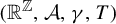 is measure theoretically isomorphic to
$([0,1],\mathcal B,\mu ,S)$
 for some
$S\in \mathrm{Aut}([0,1],\mathcal B,\mu )$
 (see [Reference Walters32, Theorem 2.1], for example). It now follows from statements (G.1) and (G.2) in Theorem 4.4 that statement (II) holds.
5 The proof of Theorem 1.5 and Corollary 1.9
In this section, we prove Theorem 1.5. In §5.1, we will prove a refined version of Corollary 1.9. In §5.2, we combine this refined version of Corollary 1.9 with one of the results in [Reference Zelada34] to prove that (1)
$\implies $
 (2) in Theorem 1.5 holds. In §5.3, we refresh some of the topological properties of
$\mathrm{Aut}([0,1],\mathcal B,\mu )$
 and use them to prove (2)
$\implies $
 (3). Finally, in §5.4, we complete the proof of Theorem 1.5 by showing that (3)
$\implies $
 (1) holds.
5.1 A refined version of Corollary 1.9
We now use Theorem 4.1 and Lemma 4.2 to prove the following result. A transformation
$T\in \mathrm{Aut}([0,1],\mathcal B,\mu )$
 is called aperiodic if the set of
$x\in [0,1]$
 for which there exists an
$n\in \mathbb {N}$
 with
$T^nx=x$
 has measure zero (so, for example, any weakly mixing
$T\in \mathrm{Aut}([0,1],\mathcal B,\mu )$
 is aperiodic).
Corollary 5.1. Let
$\ell \in \mathbb {N}$
 and let
$\phi _1,\ldots ,\phi _\ell $
 be adequate sequences. The following statements are equivalent.
-
(a) For any $(a_1,\ldots ,a_\ell )\in A(\phi _1,\ldots ,\phi _\ell )$
and every
$j\in \{1,\ldots ,\ell \}$
,
$|a_j|\neq 1$
. -
(b) (Condition C $'$
.) There exists an increasing sequence
$(n_k)_{k\in \mathbb {N}}$
in
$\mathbb {N}$
with the property that for any
$\vec \xi =(\xi _1,\ldots ,\xi _\ell )\in \{0,1\}^\ell $
, there is a unitary operator
${U_{\vec \xi }:{\mathcal {H}}\rightarrow {\mathcal {H}}}$
such that for any
$f\in {\mathcal {H}}$
and any
$j\in \{1,\ldots ,\ell \}$
, $$ \begin{align*}\lim_{k\rightarrow\infty}U_{\vec \xi}^{\phi_j(n_k)}f=\xi_j f\end{align*} $$in the weak topology of ${\mathcal {H}}$
.
-
(c) ([Reference Zelada34, Condition C].) There exists an increasing sequence $(n_k)_{k\in \mathbb {N}}$
in
$\mathbb {N}$
with the property that for any
$\vec \xi =(\xi _1,\ldots ,\xi _\ell )\in \{0,1\}^\ell $
, there is an aperiodic
${T_{\vec \xi }\in \mathrm{Aut}([0,1],\mathcal B,\mu )}$
such that for any
$j\in \{1,\ldots ,\ell \}$
and any
$A,B\in \mathcal B$
, (5.1) $$ \begin{align} \lim_{k\rightarrow\infty}\mu(A\cap T_{\vec \xi}^{- \phi_j(n_k)}B)=(1-\xi_j)\mu(A\cap B)+\xi_j\mu(A)\mu(B). \end{align} $$


Proof.
(a)
$\implies $
 (b). Suppose that condition (a) in Corollary 5.1 holds and let
$ F_1,\ldots ,F_{2^\ell }$
 be an enumeration of the subsets of
$\{1,\ldots ,\ell \}$
 . Applying (c)
$\implies $
 (b) in Lemma 4.2 with
${F=F_1}$
 , we can find an increasing sequence
$(n^{(1)}_k)_{k\in \mathbb {N}}$
 in
$\mathbb {N}$
 and a unitary operator
${U_1:{\mathcal {H}}\rightarrow {\mathcal {H}}}$
 , such that for every
$f\in {\mathcal {H}}$
 and every
$j\in \{1,\ldots ,\ell \}$
 ,

in the weak topology of
${\mathcal {H}}$
 . Note now that the sequences
$\phi ^{(1)}_j(k)=\phi _j(n^{(1)}_k)$
 ,
$j\in \{1,\ldots ,\ell \}$
 , form a family of adequate sequences for which condition (a) in Corollary 5.1 holds. Thus, by applying (c)
$\implies $
 (b) in Lemma 4.2 to the sequences
$\phi _1^{(1)}$
 ,…,
$\phi _\ell ^{(1)}$
 and with
$F=F_2$
 , we can find a subsequence
$(n_k^{(2)})_{k\in \mathbb {N}}$
 of
$(n^{(1)}_k)_{k\in \mathbb {N}}$
 and a unitary operator
$U_2:{\mathcal {H}}\rightarrow {\mathcal {H}}$
 such that for every
$f\in {\mathcal {H}}$
 and every
$j\in \{1,\ldots ,\ell \}$
 ,

Continuing in this way, we can find sequences
$(n_k^{(1)})_{k\in \mathbb {N}}$
 ,…,
$(n_k^{(2^\ell )})_{k\in \mathbb {N}}$
 and unitary operators
$U_1,\ldots ,U_{2^\ell }$
 such that for each
$i\in \{1,\ldots ,2^\ell -1\}$
 ,
$(n_k^{(i+1)})_{k\in \mathbb {N}}$
 is a subsequence of
$(n_k^{(i)})_{k\in \mathbb {N}}$
 and for every
$i\in \{1,\ldots ,2^\ell \}$
 , every
$f\in {\mathcal {H}}$
 , and every
$j\in \{1,\ldots ,\ell \}$
 ,

Taking
$(n_k)_{k\in \mathbb {N}}=(n_k^{(2^\ell )})_{k\in \mathbb {N}}$
 , we see that condition (b) in Corollary 5.1 holds.
(b)
$\implies $
 (a). Let
$(a_1,\ldots ,a_\ell )\in A(\phi _1,\ldots ,\phi _\ell )$
 and let
$j\in \{1,\ldots ,\ell \}$
 . Observe that the set

satisfies

Thus, by condition (b) in Corollary 5.1 and (b)
$\implies $
 (c) in Lemma 4.2, we obtain that
$|a_j|\neq 1$
 .
(c)
$\implies $
 (a). The proof is similar to that of (b)
$\implies $
 (a) except that one uses (II)
$\implies $
 (III) in Theorem 4.1 in place of (b)
$\implies $
 (c) in Lemma 4.2.
(b)
$\implies $
 (c). Suppose that condition (b) in Corollary 5.1 holds and note that, as shown previously, we must have that condition (a) in Corollary 5.1 also holds. Let
$\phi _{\ell +1}:\mathbb {N}\rightarrow \mathbb {Z}$
 be a sequence with the property that for any
$a_1,\ldots ,a_\ell \in \mathbb {Z}$
 and any
$a_{\ell +1}\in \mathbb {N}$
 ,
$\lim _{n\rightarrow \infty }|\sum _{j=1}^{\ell +1}a_j\phi _j(n)|=\infty $
 . It follows that
$\phi _1,\ldots ,\phi _{\ell +1}$
 are adequate sequences and that
$A(\phi _1,\ldots ,\phi _{\ell +1})=A(\phi _1,\ldots ,\phi _\ell )\times \{0\}$
 . So, in particular,
$\phi _1,\ldots ,\phi _{\ell +1}$
 satisfy condition (a) in Corollary 5.1. By condition (b) in Corollary 5.1, we can find an increasing sequence
$(n_k)_{k\in \mathbb {N}}$
 in
$\mathbb {N}$
 such that for every
$\vec \eta =(\eta _1,\ldots ,\eta _{\ell +1})\in \{0,1\}^{\ell +1}$
 , there is a unitary operator
$U_{\vec \eta }:{\mathcal {H}}\rightarrow {\mathcal {H}}$
 such that for every
$f\in {\mathcal {H}}$
 and every
$j\in \{1,\ldots ,\ell +1\}$
 ,

Let
$\vec \eta =(\eta _1,\ldots ,\eta _{\ell +1})\in \{0,1\}^{\ell +1}$
 be such that
$\eta _{\ell +1}=1$
 . Picking
${\vec v\in {\mathcal {H}}}$
 with
${\|\vec v\|_{{\mathcal {H}}}=1}$
 , setting
$\vec \xi =(\eta _1,\ldots ,\eta _\ell )$
 , and letting
$T_{\vec \xi }\in \mathrm{Aut}([0,1],\mathcal B,\mu )$
 be measure-theoretically isomorphic to the Gaussian system associated with
$(U_{\vec \eta },\vec v)$
 , we see that Theorem 4.4 implies that
$T_{\vec \xi }$
 satisfies (5.1) and, because
$\eta _{\ell +1}=1$
 ,
$T_{\vec \xi }$
 is weakly mixing (so, in particular, it is aperiodic).
5.2 The proof of (1)
$\implies $
(2) in Theorem 1.5

We now prove (1)
$\implies $
 (2) in Theorem 1.5 (see Lemma 5.2).
Lemma 5.2. Let
$\phi _1,\ldots \phi _\ell :\mathbb {N}\rightarrow \mathbb {Z}$
 be adequate sequences. Suppose that

Then, for each
$\vec {\unicode{x3bb}} =({\unicode{x3bb}} _1,\ldots ,{\unicode{x3bb}} _\ell )\in [0,1]^\ell $
 , the set

is a dense
$G_\delta $
 set.
We will prove Lemma 5.2 with the help of Corollary 5.1 and [Reference Zelada34, Theorem 1.3], which we now state.
Theorem 5.3. [Reference Zelada34, Theorem 1.3]
Let
$\ell \in \mathbb {N}$
 , let
$\vec {\unicode{x3bb}} =({\unicode{x3bb}} _1,\ldots ,{\unicode{x3bb}} _\ell )\in [0,1]^\ell $
 , and let
$\phi _1,\ldots ,\phi _\ell :\mathbb {N}\rightarrow \mathbb {Z}$
 . Suppose that
$\phi _1,\ldots ,\phi _\ell $
 satisfy item (c) in Corollary 5.1. Then, the set
$\mathcal G_{\vec {\unicode{x3bb}} }(\phi _1,\ldots ,\phi _\ell )$
 is a dense
$G_\delta $
 set.
Proof of Lemma 5.2
Let
$\phi _1,\ldots ,\phi _\ell $
 be as in the statement of Lemma 5.2. By Corollary 5.1, we have that
$\phi _1,\ldots ,\phi _\ell $
 satisfy condition (c) in Corollary 5.1 and so, by Theorem 5.3, we have that for every
$\vec {\unicode{x3bb}} =({\unicode{x3bb}} _1,\ldots ,{\unicode{x3bb}} _\ell )\in [0,1]^\ell $
 , the set
$\mathcal G_{\vec {\unicode{x3bb}} }(\phi _1,\ldots ,\phi _\ell )$
 is a dense
$G_\delta $
 set.
5.3 The proof of (2)
$\implies $
(3) in Theorem 1.5

We will now prove that (2)
$\implies $
 (3) in Theorem 1.5 (see Lemma 5.4).
Lemma 5.4. Let
$\phi _1,\ldots ,\phi _\ell :\mathbb {N}\rightarrow \mathbb {Z}$
 be such that for any
$a_1,\ldots ,a_\ell \in \mathbb {Z}$
 ,

Suppose that for each
$\vec {\unicode{x3bb}} \in [0,1]^\ell $
 , the set
$\mathcal G_{\vec {\unicode{x3bb}} }(\phi _1,\ldots ,\phi _\ell )$
 as defined in (1.2) is a dense
$G_\delta $
 set. There exists an increasing sequence
$(n_k)_{k\in \mathbb {N}}$
 in
$\mathbb {N}$
 with the property that for each
$\vec {\unicode{x3bb}} =({\unicode{x3bb}} _1,\ldots ,{\unicode{x3bb}} _\ell )\in [0,1]^\ell $
 , there exists a weakly mixing
$T_{\vec {\unicode{x3bb}} }\in \mathrm{Aut}([0,1],\mathcal B,\mu )$
 such that for any
$A,B\in \mathcal B$
 and any
$j\in \{1,\ldots ,\ell \}$
 ,

Before presenting the proof of Lemma 5.4, we need to refresh several facts about
$\mathrm{Aut}([0,1],\mathcal B,\mu )$
 .
For the rest of this section, let
$(A_k)_{k\in \mathbb {N}}$
 be a sequence in
$\mathcal B$
 with the property that for any
$B\in \mathcal B$
 and any
$\epsilon>0$
 , there is a
$k\in \mathbb {N}$
 with
$\mu (A_k\triangle B)<\epsilon $
 , where
$A_k\triangle B$
 denotes the symmetric difference between
$A_k$
 and
$B$
 . We define the complete metric
$\partial $
 on
$\mathrm{Aut}([0,1],\mathcal B,\mu )$
 by

The topology induced by
$\partial $
 on
$\mathrm{Aut}([0,1],\mathcal B,\mu )$
 is the so-called weak topology, alluded to in §1. As we mentioned in §1, when endowed with the weak topology,
$\mathrm{Aut}([0,1],\mathcal B,\mu )$
 becomes a topological group (see [Reference Kechris26], for example). The following result due to Halmos [Reference Halmos24, p. 77] will be instrumental in the proof of Lemma 5.4.
Lemma 5.5. (Conjugacy lemma)
Let
$T\in \mathrm {Aut}([0,1],\mathcal B,\mu )$
 be aperiodic. The set
$\{S^{-1}TS\,|\,S \in \mathrm {Aut}([0,1],\mathcal B,\mu )\}$
 is dense in
$\mathrm {Aut}([0,1],\mathcal B,\mu )$
 .
Proof of Lemma 5.4
We divide the proof of Lemma 5.4 into the following steps. First, we will use the dense
$G_\delta $
 property of the sets
$\mathcal G_{\vec {\unicode{x3bb}} }(\phi _1,\ldots ,\phi _\ell )$
 ,
$\vec {\unicode{x3bb}} \in [0,1]^\ell $
 , to find an increasing sequence
$(m_k)_{k\in \mathbb {N}}$
 in
$\mathbb {N}$
 and a collection of weakly mixing transformations
$S_{\vec \xi }$
 ,
$\vec \xi :=(\xi _1,\ldots ,\xi _\ell )\in [0,1]^\ell \cap \mathbb {Q}^\ell $
 , with the property that for any
$A,B\in \mathcal B$
 and every
$j\in \{1,\ldots ,\ell \}$
 ,

Then, we will use the conjugacy lemma and the completeness of
$\mathrm{Aut}([0,1],\mathcal B,\mu )$
 to approximate convenient weakly mixing transformations
$T_{\vec {\unicode{x3bb}} }$
 ,
$\vec {\unicode{x3bb}} \in [0,1]^\ell $
 that will turn out to satisfy (5.4) for some subsequence
$(n_k)_{k\in \mathbb {N}}$
 of
$(m_k)_{k\in \mathbb {N}}$
 .
5.3.1 Finding the sequence
$(m_{k})_{k\in \mathbb {N}}$
and the transformations
$S_{\vec {\xi }}$
,
$\vec {\xi }\in {[0,1]}^\ell \cap {\mathbb {Q}}^{\ell }$


To find the sequence
$(m_k)_{k\in \mathbb {N}}$
 and the transformations
$S_{\vec \xi }$
 ,
$\vec \xi \in [0,1]^\ell \cap \mathbb {Q}^\ell $
 described above, we will use Lemma 5.2 applied to various subsequences of
$(\phi _1(n),\ldots ,\phi _\ell (n))_{n\in \mathbb {N}}$
 . In turn, doing this will require us to check that for any increasing sequence
$(p_k)_{k\in \mathbb {N}}$
 in
$\mathbb {N}$
 , the sequences

are adequate.
For any increasing
$(p_k)_{k\in \mathbb {N}}$
 in
$\mathbb {N}$
 , the sequences
$\phi _1(p_k),\ldots ,\phi _\ell (p_k)$
 ,
$k\in \mathbb {N}$
 , are adequate. Because (5.3) holds, to check that (5.6) holds, it is enough to check that
$\phi _1,\ldots ,\phi _\ell $
 are adequate. To see that
$\phi _1,\ldots ,\phi _\ell $
 satisfy (1.3), pick
$j\in \{1,\ldots ,\ell \}$
 , and let
$\vec {\unicode{x3bb}} =({\unicode{x3bb}} _1,\ldots ,{\unicode{x3bb}} _\ell )\in [0,1]^\ell $
 be such that
${\unicode{x3bb}} _j=1$
 . Then, we can find a weakly mixing
${T\in \mathcal G_{\vec {\unicode{x3bb}} }(\phi _1,\ldots ,\phi _\ell )}$
 and an increasing sequence
$(p_k)_{k\in \mathbb {N}}$
 in
$\mathbb {N}$
 such that for any measurable sets
$A,B\in \mathcal B$
 ,

Thus, we must have
$\lim _{k\rightarrow \infty }|\phi _j(p_k)|=\infty $
 which, by (5.3), implies that (1.3) holds.
To check that (1.4) holds, suppose for contradiction that there exists
$a_1,\ldots ,a_\ell , b\in \mathbb {Z}$
 ,
$b\neq 0$
 , such that
$\lim _{n\rightarrow \infty }\sum _{j=1}^\ell a_j\phi _j(n)=b$
 . Let
$\vec {\unicode{x3bb}} =(0,\ldots ,0)$
 and pick a weakly mixing
$T\in \mathcal G_{\vec {\unicode{x3bb}} }(\phi _1,\ldots ,\phi _\ell )$
 . Since
$T$
 is aperiodic, Rohlin’s lemma [Reference Halmos24, p. 71] guarantees the existence of a set
$A\in \mathcal B$
 such that
$T^{-b}A\cap A=\emptyset $
 and
$\mu (A)>0$
 . Then, for some increasing sequence
$(p_k)_{k\in \mathbb {N}}$
 in
$\mathbb {N}$
 , we have

which is a contradiction. Thus, (1.4) also holds and the sequences
$\phi _1,\ldots ,\phi _\ell $
 must be adequate.
Applying Lemma 5.2. Arguing as in the proof of (c)
$\implies $
 (a) in Corollary 5.1, we see that the fact that every set of the form
$\mathcal G_{\vec {\unicode{x3bb}} }(\phi _1,\ldots ,\phi _\ell )$
 is a dense
$G_\delta $
 set implies that the sequences
$\phi _1,\ldots \phi _\ell $
 satisfy (5.2). Furthermore, since (5.3) holds, we have that for any increasing sequence
$(p_k)_{k\in \mathbb {N}}$
 in
$\mathbb {N}$
 , the sequences
$\psi _j(k)=\phi _j(p_k)$
 ,
$k\in \mathbb {N}$
 , and
${j\in \{1,\ldots ,\ell \}}$
 , satisfy
$A(\phi _1,\ldots ,\phi _\ell )=A(\psi _1,\ldots ,\psi _\ell )$
 and so they also satisfy (5.2).
We now employ a diagonalization argument and repeated applications of Lemma 5.2 to increasingly finer subsequences of
$(\phi _1(n),\ldots ,\phi _\ell (n))_{n\in \mathbb {N}}$
 to obtain an increasing sequence
$(m_k)_{k\in \mathbb {N}}$
 in
$\mathbb {N}$
 with the property that for any
$\vec \xi =(\xi _1,\ldots ,\xi _\ell )\in [0,1]^\ell \cap \mathbb {Q}^\ell $
 , there is a weakly mixing
$S_{\vec \xi }\in \mathrm{Aut}([0,1],\mathcal B,\mu )$
 such that for any
$A,B\in \mathcal B$
 and any
$j\in \{1,\ldots \ell \}$
 ,

5.3.2 Finding
$(n_k)_{k\in \mathbb {N}}$
and defining the transformations
$T_{\vec {\unicode{x3bb}} }$
,
$\vec {\unicode{x3bb}} \in [0,1]^{\ell }$


For each
$t\in \mathbb {N}$
 , let
$\mathcal Q_t=\{s/2^t\,|\,s\in \{0,\ldots ,2^t\}\}$
 . To prove that (5.4) holds for each
$\vec {\unicode{x3bb}} \in [0,1]^\ell $
 , we will pick an appropriate conjugate for each term of the sequence
$S_{\vec \xi }$
 ,
$\vec \xi \in \bigcup _{t\in \mathbb {N}} \mathcal Q_t^\ell $
 , (each of which we will still denote by
$S_{\vec \xi }$
 ) in such a way that for any given
$\vec {\unicode{x3bb}} \in [0,1]^\ell $
 , there is a sequence
$(\vec \xi _t)_{t\in \mathbb {N}}$
 in
$\bigcup _{t\in \mathbb {N}} \mathcal Q_t^\ell $
 converging to
$\vec {\unicode{x3bb}} $
 with the property that the associated sequence
$(S_{\vec \xi _t})_{t\in \mathbb {N}}$
 is a Cauchy sequence with respect to
$\partial $
 , and so, by the completeness of
$\mathrm{Aut}([0,1],\mathcal B,\mu )$
 , converges to some
$T\in \mathrm{Aut}([0,1],\mathcal B,\mu )$
 . As we will see, the convergence of
$(S_{\vec \xi _t})_{t\in \mathbb {N}}$
 to
$T$
 will be fast enough to ensure that
$T$
 can be taken to be
$T_{\vec {\unicode{x3bb}} }$
 in (5.4) for some subsequence
$(n_k)_{k\in \mathbb {N}}$
 of
$(m_k)_{k\in \mathbb {N}}$
 (not depending on
$\vec {\unicode{x3bb}} $
 ) that we will define below.
Defining the sequence of conjugates of
$S_{\vec \xi }$
 ,
$\vec \xi \in \bigcup _{t\in \mathbb {N}} \mathcal Q_t^\ell $
 . Starting with
$t=1$
 and then proceeding in an increasing order, we can replace each of the terms in the finite sequences
$S_{\vec \xi }$
 ,
$\vec \xi \in \mathcal Q_t^\ell \setminus \mathcal Q_{t-1}^\ell $
 (where
$\mathcal Q_0=\emptyset $
 ), by one of its conjugates to ensure that the resulting
$\bigcup _{t\in \mathbb {N}} \mathcal Q_t^\ell $
 -indexed sequence of conjugates (which we will still denote by
$S_{\vec \xi }$
 ,
$\vec \xi \in \bigcup _{t\in \mathbb {N}} \mathcal Q_t^\ell $
 ) satisfies the following conditions for each
$t\in \mathbb {N}$
 .
-
(S.1) Let $k_0=0$
and
$\epsilon _0=1$
. There exist an
$\epsilon _t\in (0,\min \{1/t,\epsilon _{t-1}\})$
and a
$k_t\in \mathbb {N}$
with
$k_t>k_{t-1}$
such that for any
$T\in \mathrm{Aut}([0,1],\mathcal B,\mu )$
for which there is a
${\vec \xi =(\xi _1,\ldots ,\xi _\ell )\in \mathcal Q_t^\ell }$
with
$\partial (T,S_{\vec \xi })<\epsilon _t$
, one has that for any
$h,i\in \{1,\ldots ,t\}$
and any
$j\in \{1,\ldots ,\ell \}$
, $$ \begin{align*}|\mu(A_h\cap T^{-\phi_j(m_{k_t})}A_i)-(1-\xi_j)\mu(A_h\cap A_i)-\xi_j\mu(A_h)\mu(A_i)|<\frac{1}{t}.\end{align*} $$
Here, the sequence $(A_k)_{k\in \mathbb {N}}$
in
$\mathcal B$
is the sequence used to define
$\partial $
in (5.5). So, in particular,
$(A_k)_{k\in \mathbb {N}}$
is dense in
$\mathcal B$
. -
(S.2) For each $\vec \xi \in \mathcal Q_{t+1}^\ell \setminus \mathcal Q_{t}^{\ell }$
and each
$\vec \eta \in \mathcal Q_{t}^\ell $
, if
$\vec \xi \in (\vec \eta +[0,1/2^{t})^\ell )$
, then $$ \begin{align*}\partial (S_{\vec \xi},S_{\vec \eta})<\frac{\epsilon_{t}}{2^{t+1}}.\end{align*} $$


We remark that condition (S.1) follows from (5.7) and the fact that
$\mathrm{Aut}([0,1],\mathcal B,\mu )$
 is a topological group. Statement (S.2) is a consequence of Lemma 5.5 applied to
$S_{\vec \xi }$
 (as opposed to
$S_{\vec \eta }$
 ). It is also worth noting that, roughly speaking, if (5.4) holds for some
$\vec {\unicode{x3bb}} \in [0,1]^\ell $
 , some increasing sequence
$(p_k)_{k\in \mathbb {N}}$
 in
$\mathbb {N}$
 , and some
$T\in \mathrm{Aut}([0,1],\mathcal B,\mu )$
 , (5.4) will also hold for the same
$\vec {\unicode{x3bb}} $
 , the same
$(p_k)_{k\in \mathbb {N}}$
 , and any conjugate of
$T$
 .
Defining the sequence
$(n_k)_{k\in \mathbb {N}}$
 . Note that the sequence
$(k_t)_{t\in \mathbb {N}}$
 defined on condition (S.1) is a strictly increasing sequence and so
$(m_{k_t})_{t\in \mathbb {N}}$
 is a subsequence of
$(m_k)_{k\in \mathbb {N}}$
 . We will let
$(n_k)_{k\in \mathbb {N}}$
 be the sequence defined by
$n_t=m_{k_t}$
 for each
$t\in \mathbb {N}$
 .
Equation (5.4) holds for each
$\vec {\unicode{x3bb}} \in \bigcup _{t\in \mathbb {N}}\mathcal Q_t^\ell $
 . Let
$t\in \mathbb {N}$
 and let
$\vec {\unicode{x3bb}} =({\unicode{x3bb}} _1,\ldots ,{\unicode{x3bb}} _\ell )\in \mathcal Q_t^\ell $
 . Observe that in the inductive procedure used to pick an appropriate conjugate of the original transformation
$S_{\vec {\unicode{x3bb}} }$
 satisfying conditions (S.1) and (S.2) described above,
$S_{\vec {\unicode{x3bb}} }$
 will not be modified after the
$t$
 th step. Thus, taking
$T_{\vec {\unicode{x3bb}} }=S_{\vec {\unicode{x3bb}} }$
 , we see that
$T_{\vec {\unicode{x3bb}} }$
 is weakly mixing and that (5.4) holds.
Equation (5.4) holds for each
$\vec {\unicode{x3bb}} \in [0,1]^\ell \setminus \bigcup _{t\in \mathbb {N}}\mathcal Q_t^\ell $
 . Let
$\vec {\unicode{x3bb}} =({\unicode{x3bb}} _1,\ldots ,{\unicode{x3bb}} _\ell ) \in [0,1]^\ell \setminus \bigcup _{t\in \mathbb {N}}\mathcal Q_t^\ell $
 . For each
$k\in \mathbb {N}$
 , let
$\vec \xi _k$
 be the unique element of
$\mathcal Q_k^\ell $
 with the property that
$\vec {\unicode{x3bb}} \in (\vec \xi _k+[0,1/2^k)^\ell )$
 . Note that
$\lim _{k\rightarrow \infty }\vec \xi _k=\vec {\unicode{x3bb}} $
 and that for any
$k<k'$
 ,
$\vec \xi _{k'}\in (\vec \xi _k+[0,1/2^k)^\ell )$
 . Thus, by condition (S.2) and since
$(\epsilon _t)_{t\in \mathbb {N}}$
 decreases to zero, for any
$t\in \mathbb {N}$
 and any
$k>t$
 ,

It follows that the sequence
$(S_{\vec \xi _k})_{k\in \mathbb {N}}$
 is a Cauchy sequence in
$\mathrm{Aut}([0,1],\mathcal B,\mu )$
 . We set

in the weak topology of
$\mathrm{Aut}([0,1],\mathcal B,\mu )$
 . By (5.8), for each
$t\in \mathbb {N}$
 ,

To prove that we can take
$T_{\vec {\unicode{x3bb}} }=T$
 in (5.4), let
$A,B\in \mathcal B$
 , let
$\epsilon>0$
 , and let
$h,i\in \mathbb {N}$
 be such that
$\mu (A\triangle A_h)<\epsilon /4$
 and
$\mu (B\triangle A_i)<\epsilon /4$
 . Letting
$\vec \xi _k=(\xi _{k,1},\ldots ,\xi _{k,\ell })$
 for each
$k\in \mathbb {N}$
 , we see that for every
$j\in \{1,\ldots ,\ell \}$
 , condition (S.1) implies that

Finally, since
$\vec 0 \in \bigcup _{t\in \mathbb {N}}\mathcal Q_t^\ell $
 and, by assumption,
$\vec {\unicode{x3bb}} =({\unicode{x3bb}} _1,\ldots ,{\unicode{x3bb}} _\ell ) \in [0,1]^\ell \setminus \bigcup _{t\in \mathbb {N}}\mathcal Q_t^\ell $
 ,
${\unicode{x3bb}} _j\neq 0$
 for at least one
$j\in \{1,\ldots ,\ell \}$
 . By (5.4), it follows that for every
$A,B\in \mathcal B$
 ,

which yields that
$T_{\vec {\unicode{x3bb}} }$
 has no non-trivial eigenfunctions and so is weak mixing. And we are done.


6 Applications to the theory of IP
${}^*$
-recurrence

As we mentioned in §§1.3.2 and 1.3.3, Theorem 1.8(iii) can be employed to obtain interesting examples in ergodic theory. In this section, we provide three of these examples (Corollaries 1.10, 1.14, and 1.15 in §1). The proofs of these results will require the use of a variant of (ii)
$\implies $
 (iii) in Theorem 1.8 which we will state and prove in the next subsection and which deals with the concept of IP-convergence.
6.1 IP-convergence for unitary operators and a variant of (ii)
$\implies $
(iii) in Theorem 1.8

Denote the set of all finite, non-empty subsets of
$\mathbb {N}$
 by
$\mathcal F$
 and let
$(X,d)$
 be a compact metric space. For any
$\mathcal F$
 -indexed sequence
$(x_\alpha )_{\alpha \in \mathcal F}$
 , we write

if there exists an
$x\in X$
 with the property that for every
$\epsilon>0$
 , there exists
$k_\epsilon \in \mathbb {N}$
 such that if
$\min \alpha>k_\epsilon $
 , then
$d(x_\alpha ,x)<\epsilon $
 . We remark in passing that, by Hindman’s theorem [Reference Hindman25], for any
$\mathcal F$
 -indexed sequence
$(x_\alpha )_{\alpha \in \mathcal F}$
 in
$X$
 , there is a sequence of disjoint, non-empty, and finite subsets of
$\mathbb {N}$
 ,
$(\beta _k)_{k\in \mathbb {N}}$
 , for which the
$\mathcal F$
 -indexed sequence
$y_\alpha :=x_{\bigcup _{k\in \alpha }\beta _k}$
 ,
$\alpha \in \mathcal F$
 , satisfies

for some
$x\in X$
 .
The following is a consequence of (the proof of) [Reference Bergelson, Kasjan and Lemańczyk10, Proposition 1.7], [Reference Bergelson, Kasjan and Lemańczyk10, Lemma 2.5], and the equivalence between IP-limits and convergence along idempotent ultrafilters (see [Reference Bergelson4, p. 36] or [Reference Bergelson, Kasjan and Lemańczyk10, Lemma 1.1], for example). We omit the proof. For any sequence
$(n_k)_{k\in \mathbb {Z}}$
 in
$\mathbb {Z}$
 and any
$\alpha \in \mathcal F$
 , we will let
$n_\alpha =\sum _{k\in \alpha }n_k$
 .
Lemma 6.1. Let
$D,N\in \mathbb {N}$
 be such that
$D\leq N$
 and let
$U:{\mathcal {H}}\rightarrow {\mathcal {H}}$
 be a unitary operator. Let
$(n_k)_{k\in \mathbb {N}}$
 be an increasing sequence in
$\mathbb {N}$
 with the properties that for each
$k\in \mathbb {N}$
 ,
$k!|n_k$
 , for every
$a_1,\ldots ,a_N\in \mathbb {Z}$
 ,

in the weak operator topology, and
$\lim _{k\rightarrow \infty }U^{\sum _{j=1}^Na_jn_k^j}=0$
 whenever
${\deg (\sum _{j=1}^Na_jx^j)\geq D}$
 . Furthermore, assume that for each
$j\in \{1,\ldots ,D\}\setminus \{D\}$
 , there is an
$r_j\in \mathbb {N}$
 for which

Then, there exists an increasing sequence
$(m_k)_{k\in \mathbb {N}}$
 in
$\mathbb {N}$
 with the property that for any
$a_1,\ldots ,a_N\in \mathbb {Z}$
 ,

in the weak operator topology.
We are now in a position to state the variant of (ii)
$\implies $
 (iii) in Theorem 1.8 dealing with IP-convergence.
Theorem 6.2. Let
$d,N\in \mathbb {N}$
 be such that
$d <N$
 and let
$G$
 be a finite index subgroup of
$\mathbb {Z}^d$
 . Then, there exist a Borel probability measure
$\sigma $
 on
${\mathbb {T}}$
 and an increasing sequence
$(n_k)_{k\in \mathbb {N}}$
 in
$\mathbb {N}$
 with the property that for any continuous
$f:{\mathbb {T}}^N\rightarrow \mathbb C$
 and any measurable
$E\subseteq {\mathbb {T}}$
 ,

where
$\vec 0\in \mathbb {Z}^{N-d}$
 .
Proof. Consider the adequate sequences
$\phi _1,\ldots ,\phi _N:\mathbb {N}\rightarrow \mathbb {Z}$
 defined by
$\phi _j(n)=(n!)^j$
 ,
$j\in \{1,\ldots ,N\}$
 , and note that
$A(\phi _1,\ldots ,\phi _N)=\{\vec 0\}$
 . By item (iii) in Theorem 1.8 (or rather, by (1.10)), we can find a subsequence
$(p_k)_{k\in \mathbb {N}}$
 of
$(k!)_{k\in \mathbb {N}}$
 and a unitary operator
${U:{\mathcal {H}}\rightarrow {\mathcal {H}}}$
 with the property that for any
$a_1,\ldots ,a_N\in \mathbb {Z}$
 ,

By Lemma 6.1 applied with
$D=d+1$
 , it follows that there exists an increasing sequence
$(n_k)_{k\in \mathbb {N}}$
 in
$\mathbb {N}$
 with the property that

for every
$a_1,\ldots ,a_N\in \mathbb {Z}$
 .
Let
$f\in {\mathcal {H}}$
 be such that
$\|f\|_{{\mathcal {H}}}=1$
 . By Bochner’s theorem, there is a Borel probability measure
$\sigma $
 on
${\mathbb {T}}$
 with the property that for each
$n\in \mathbb {Z}$
 ,

So, in particular, (6.2) implies that for any measurable
$E\subseteq {\mathbb {T}}$
 and any
$a_1,\ldots ,a_N\in \mathbb {Z}$
 ,

which is equivalent to (6.1). And we are done.
6.2 The proof of Corollary 1.10
Proof of Corollary 1.10
The proof of Corollary 1.10 consists of two major steps. First, we will use Theorem 6.2 to find an increasing sequence
$(n_k)_{k\in \mathbb {N}}$
 in
$\mathbb {N}$
 and a Borel probability measure
$\sigma $
 on
${\mathbb {T}}$
 with ad hoc properties. Then, we will use the probability measure
$\sigma $
 to define the invertible probability preserving system
$(X,\mathcal A,\nu ,T)$
 for which Corollary 1.10 holds.
Finding
$\sigma $
 and
$(n_k)_{k\in \mathbb {N}}$
 . Let
$p_1,\ldots ,p_\ell \in \mathbb {Z}[x]$
 be linearly independent polynomials with zero constant term and let
$D=\max _{1\leq j\leq \ell }\deg (p_j)$
 . For each
$j\in \{1,\ldots ,\ell \}$
 , let
${\vec c_j=(c_{j,1},\ldots ,c_{j,D})\in \mathbb {Z}^D\setminus \{\vec 0\}}$
 be such that

Let

If
$G'$
 has finite index in
$\mathbb {Z}^D$
 , we set
$G=G'$
 . If not, let
$\vec d_1,\ldots ,\vec d_{D-\ell }$
 be linearly independent vectors in
$\mathbb {Z}^D$
 with the additional property that for any
$j\in \{1,\ldots ,\ell \}$
 and any
${s\in \{1,\ldots ,D-\ell \}}$
 ,
$\langle \vec c_j,\vec d_s \rangle =0$
 (such vectors can be obtained by taking a rational basis of the orthogonal complement of
$\text {span}_{\mathbb {Q}}\{\vec c_1,\ldots ,\vec c_\ell \}$
 and then multiplying each member of this basis by an appropriate integer). We set

Notice that, in either case, we obtain that: (G.1)
$M\mathbb {Z}^D\subseteq G$
 for some
$M\in \mathbb {N}$
 and so that
$G$
 has finite index in
$\mathbb {Z}^D$
 ; and (G.2)
$\sum _{j=1}^\ell a_j\vec c_j\in G'$
 if and only if
$\sum _{j=1}^\ell a_j\vec c_j\in G$
 .
Applying Theorem 6.2 in the case where
$d=D$
 and
$N>D$
 is arbitrary, we see that there exist an increasing sequence
$(n_k)_{k\in \mathbb {N}}$
 in
$\mathbb {N}$
 and a Borel probability measure
$\sigma $
 on
${\mathbb {T}}$
 such that for every
$a_1,\ldots ,a_\ell \in \mathbb {Z}$
 ,

Invoking condition (G.2) and setting

it follows that

for any continuous function
$f:{\mathbb {T}}^\ell \rightarrow \mathbb C$
 . Observe that, when we identify
${\mathbb {T}}^\ell $
 with
$[0,1)^\ell $
 ,
${\unicode{x3bb}} _H$
 corresponds to the normalized Haar measure on

Defining
$(X,\mathcal A,\nu ,T)$
 . Set
$X=[0,1)^2$
 ,
$\mathcal A=\text {Borel}([0,1)^2)$
 , and let
$\nu :=\sigma \times \mu $
 . Define
$T:X\rightarrow X$
 by
$T(x,y)=(x,y+x)\mod 1$
 . Clearly,
$T$
 is an invertible,
$\nu $
 -preserving transformation. Consider the set
$A={\mathbb {T}}\times [0,2/3)$
 and let
$\epsilon =1/3^{\ell +1}$
 .
Equation (1.13) holds with
$A={\mathbb {T}}\times [0,2/3)$
 and
$\epsilon =1/ 3^{\ell +1}$
 . Observe that, by (6.3) and the (proof of the) continuous mapping theorem (see [Reference Walters32, Remarks on p. 149], for example), for
$\mu $
 -almost every
$y\in [0,1)$
 ,

It then follows from the definition of
$\nu $
 ,
$T$
 , and
$A$
 that

Thus, by (6.4),

Since

the definition of IP-limit allows us to find a
$k_0\in \mathbb {N}$
 such that

which proves that (1.13) holds. And we are done.
6.3 The proof of Corollary 1.14
To prove Corollary 1.14, we will make use of the following version of [Reference Bergelson, Host and Kra9, Theorem 2.1], which in turn is proved with the help of the results in [Reference Behrend2].
Theorem 6.3. For each
$\ell \in \mathbb {N}$
 , there exists a measurable subset
$B$
 of
$[0,1)$
 which is the union of disjoint subintervals of
$[0,1)$
 and satisfies

(Observe that
$\mu (B)>0$
 .)
Proof of Corollary 1.14
Let
$N=\deg (p)=\deg (q)$
 and let
$d=\deg (p)-1$
 . By Theorem 6.2, we can find an increasing sequence
$(n_k)_{k\in \mathbb {N}}$
 in
$\mathbb {N}$
 and a Borel probability measure
$\sigma $
 on
${\mathbb {T}}$
 with the property that for any continuous function
$f:{\mathbb {T}}^N\rightarrow \mathbb C$
 ,

Since
$\deg (2p-q)<N$
 , (6.7) implies that for any continuous
$f:{\mathbb {T}}^2\rightarrow \mathbb C$
 ,

Let
$X=[0,1)^2$
 , let
$\mathcal A=\text {Borel}([0,1)^2)$
 , let
$\nu =\sigma \times \mu $
 , and let
$T:[0,1)^2\rightarrow [0,1)^2$
 be defined by
$T(x,y)=(x,y+x)$
 . Fix
$\ell \in \mathbb {N}$
 and let
$B\subseteq [0,1)$
 be the set guaranteed to exist by Theorem 6.3. Setting
$A={\mathbb {T}}\times B$
 , we obtain by the continuous mapping theorem that

Since
$\mu (B)=\nu (A)$
 , the result follows.
6.4 The proof of Corollary 1.15
Proof of Corollary 1.15
Let
$(p_t)_{t\in \mathbb {N}}$
 be an increasing sequence of prime numbers. By Theorem 6.2, we have that for each
$t\in \mathbb {N}$
 , there is a Borel probability measure
$\sigma _t$
 on
${\mathbb {T}}$
 and an increasing sequence
$(n_k^{(t)})_{k\in \mathbb {N}}$
 in
$\mathbb {N}$
 such that for any continuous function
$f:{\mathbb {T}}^3\rightarrow \mathbb C$
 ,

Fix
$\ell \in \mathbb {N}$
 . Let
$S:[0,1)^2\rightarrow [0,1)^2$
 be given by
$S(x,y)=(x,y+x)\mod 1$
 and for each
$t\in \mathbb {N}$
 , let
$\nu _t=\sigma _t\times \mu $
 . Arguing as in the proof of Corollary 1.14, we obtain that for some Borel measurable
$B\subseteq [0,1)$
 , the set
$A={\mathbb {T}}\times B$
 satisfies
$\nu _t(A)=\mu (B)>0$
 and

Let
$X=\prod _{t\in \mathbb {N}} [0,1)^2$
 , let
$\mathcal A=\text {Borel}(X)$
 , let
$\nu =\prod _{t\in \mathbb {N}}\nu _t$
 , and let
$T:X\rightarrow X$
 be given by
$[T(\omega )](t)=S(\omega (t))$
 . For each
$t\in \mathbb {N}$
 , let
$\pi _t:X\rightarrow [0,1)^2$
 be given by
$\pi _t(\omega )=\omega (t)$
 . By (6.8), we have that for every
$\ell \in \mathbb {N}$
 , there is a
$t\in \mathbb {N}$
 and a Borel measurable
$A\subseteq [0,1)^2$
 with
$\nu (\pi _t^{-1}A)>0$
 for which the set

is not an IP
$^*$
 set. We remark that the equality in (6.9) follows from the fact that
${\pi _t\circ T=S\circ \pi _t}$
 for each
$t\in \mathbb {N}$
 . And we are done.
Acknowledgements
The author would like to thank Vitaly Bergelson and Joel Moreira for many helpful discussions. Rigoberto Zelada is supported by EPSRC through Joel Moreira’s Frontier Research Guarantee grant, ref. EP/Y014030/1.


 Open access

