





1. Introduction
Achieving urban sustainability and resilience requires daring and caring urban strategies to address the compound crisis of climate change and biodiversity loss (Hermoso et al., Reference Hermoso, Morán-ordóñez, Lanzas and Brotons2020; Teixeira et al., Reference Teixeira, Fernandes and Ahern2022). How places are managed and transformed in cities has long been a subject of research (Buijs et al., Reference Buijs, Hansen, Van der Jagt, Ambrose-oji, Elands, Lorance Rall, Mattijssen, Pauleit, Runhaar, Stahl Olafsson and Steen Møller2019; Friedmann, Reference Friedmann2010; Mehmood et al., Reference Mehmood, Marsden, Taherzadeh, Axinte and Rebelo2020). Place-based approaches have proven effective in localizing climate agendas and innovations necessary for fostering urban resilience (Frantzeskaki, Reference Frantzeskaki2019; Raymond et al., Reference Raymond, Stedman and Frantzeskaki2023). Place making is the practice of turning a physical space into a socially meaningful place through collaborative engagement, fostering place attachment, belonging, and shared meanings among communities (Friedmann, Reference Friedmann2010). It extends beyond physical design interventions and shapes how people relate to their social and ecological environments (Amirzadeh & Sharifi, Reference Amirzadeh and Sharifi2024; Feola et al., Reference Feola, Goodman, Suzunaga and Soler2023). Given this understanding, place making has become increasingly intertwined with key urban development challenges, including climate adaptation (Amorim-Maia et al., Reference Amorim-Maia, Anguelovski, Chu and Connolly2022), reconnecting to nature (Toomey et al., Reference Toomey, Strehlau-howay, Manzolillo and Thomas2020), and building urban resilience further (Shafiei Dastjerdi et al., Reference Shafiei Dastjerdi, Lak, Ghaffari and Sharifi2021). As a result, place making is seen as a key process for improving or achieving urban sustainability as it connects citizens/communities with place while considering climate and sustainability attunement of urban spaces as interconnected (Svobodova et al., Reference Svobodova, Plieninger and Sklenicka2023; Tan & Tan, Reference Tan and Tan2023). Critical elements for achieving positive urban outcomes include a focus on place, civic agency, and people–place relations (Murphy et al., Reference Murphy, Enqvist and Tengö2019; Sen & Nagendra, Reference Sen and Nagendra2020). This relational understanding of place making emphasizes shared meanings and values derived from communities (Amirzadeh & Sharifi, Reference Amirzadeh and Sharifi2024), manifesting as adaptive place making for resilient urban futures (Feola et al., Reference Feola, Goodman, Suzunaga and Soler2023; Toomey et al., Reference Toomey, Strehlau-howay, Manzolillo and Thomas2020). As an urban strategy, place making must therefore engage with both altered meanings for people–nature connections and transformations (intended or unintended) of these people–nature–place nexus relations.
However, different stakeholders often have competing understandings of a place, and the ongoing contestations that accompany these understandings make place making an inherently networked process (Pierce et al., Reference Pierce, Martin and Murphy2010). Such contestations require ongoing negotiation among diverse values, interests, and visions of place. These dynamics reflect broader sustainability challenges rooted in social–ecological dynamics that have shifted attention toward transformative change, defined as fundamental changes of values, governance arrangements, and human–nature relationships (Frantzeskaki et al., Reference Frantzeskaki, Wijsman, Kabisch and McPhearson2025; Hölscher et al., Reference Hölscher, Wittmayer and Loorbach2018; McPhearson et al., Reference McPhearson, Frantzeskaki, Ossola, Diep, Anderson, Blatch, Collier, Cook, Culwick Fatti, Grabowski, Grimm, Haase, Herreros-Cantis, Kavonic, Lin, Lopez Meneses, Matsler, Moglia, Morató and Zhou2025; Pascual et al., Reference Pascual, Balvanera and Christie2023). Among the approaches proposed to enable such transformations, nature-based solutions (NbS), actions that protect, restore, and sustainably manage ecosystems to simultaneously address societal challenges while providing benefits for both human well-being and biodiversity (United Nations Environment Programme, 2022), have emerged as a key approach for addressing intertwined social and ecological challenges in cities. NbS achieve this by linking ecological restoration with social learning, public participation, and institutional change (Frantzeskaki, Reference Frantzeskaki2019; Li et al., Reference Li, Remme, van Bodegom and van Oudenhoven2025). As such, NbS provide a ground to re-center fragmented social relationships and renegotiate values for transformation (Raymond et al., Reference Raymond, Stedman and Frantzeskaki2023). Building on this, we define transformative place making with NbS as a process that utilizes NbS for negotiating diverse interests, mediating competing understandings of place, and reorganizing fragmented people–nature relationships, and that, in turn, transforms urban spaces toward resilient and cherished living places. For example, this encompasses processes ranging from community-led greening of neglected sites and the restoration of local place identity through renaturing (Pietta & Tononi, Reference Pietta and Tononi2021) to the creation of new institutional arrangements and collaborative spaces (e.g., co-design of urban green or blue spaces) that facilitate such place-based transformations (Coenen et al., Reference Coenen, Davidson, Frantzeskaki, Grenfell, Håkansson and Hartigan2020).
To unpack these transformative place dynamics, the concept of green place making (Gulsrud et al., Reference Gulsrud, Hertzog and Shears2018) is a critical lens. It is highly relevant for examining how NbS contribute to urban sustainability and resilience (Davies & Lafortezza, Reference Davies and Lafortezza2019). Specifically, it involves the introduction of natural elements through green-blue infrastructure (Amirzadeh & Sharifi, Reference Amirzadeh and Sharifi2024) and other NbS, such as urban gardens or lake stewardship (Langemeyer et al., Reference Langemeyer, Camps-calvet, Calvet-mir, Barthel and Gómez-Baggethun2018; Sen & Nagendra, Reference Sen and Nagendra2020), to facilitate new human–nature interactions and social practices (Che, Reference Che2021; Gulsrud et al., Reference Gulsrud, Hertzog and Shears2018).
Recent research on place making highlights that NbS have the potential to improve senses of place and social–ecological functions of urban places, thereby becoming planning instruments to promote positive urban transformations (Davies & Lafortezza, Reference Davies and Lafortezza2019; Ng, Reference Ng2019; Tozer et al., Reference Tozer, Bulkeley, van der Jagt, Toxopeus, Xie and Runhaar2022). NbS can provide multiple benefits across social, ecological, and economic domains (Raymond et al., Reference Raymond, Frantzeskaki, Kabisch, Berry, Breil, Nita, Geneletti and Calfapietra2017). They have the potential to improve connections between people and places (Frantzeskaki, Reference Frantzeskaki2019; Kabisch et al., Reference Kabisch, Frantzeskaki, Pauleit, Naumann, Davis, Artmann, Haase, Knapp, Korn, Stadler, Zaunberger and Bonn2016; Mahmoud, Reference Mahmoud2022), with a contribution to the institutional adaptations required for climate resilience (Frantzeskaki et al., Reference Frantzeskaki, Vandergert, Connop, Schipper, Zwierzchowska, Collier and Lodder2020; Wamsler & Raggers, Reference Wamsler and Raggers2018). In practice, NbS promote place making in diverse ways, such as creating knowledge co-production opportunities (Rizzo et al., Reference Rizzo, Habibipour and Ståhlbröst2021; Woroniecki et al., Reference Woroniecki, Wendo, Brink, Islar, Krause, Vargas and Mahmoud2020), facilitating local institutional adaptations (Frantzeskaki et al., Reference Frantzeskaki, Vandergert, Connop, Schipper, Zwierzchowska, Collier and Lodder2020; Wamsler & Raggers, Reference Wamsler and Raggers2018), and recognizing diverse human–nature connections (de Kleyn et al., Reference de Kleyn, Mumaw and Corney2019; Welden et al., Reference Welden, Chausson and Melanidis2021).
While NbS are actively employed for place making to connect sociocultural contexts (Pietta & Tononi, Reference Pietta and Tononi2021; Wallin, Reference Wallin2023) and contribute to local transformative visions (Pietta & Tononi, Reference Pietta and Tononi2021), their employment can also yield some unintended consequences. For example, transformative NbS projects such as green resilient infrastructure may cause community resistance due to fears of green gentrification and conflicts with an established sense of belonging (Anguelovski et al., Reference Anguelovski, Connolly, Pearsall, Shokry, Checker, Maantay, Gould, Lewis, Maroko and Roberts2019; Shokry et al., Reference Shokry, Anguelovski and Connolly2025). There are also cases where regeneration with NbS resulted in a loss of established sense of place (Manzo et al., Reference Manzo, Williams, Di Masso, Raymond and Gulsrud2023). To mitigate these risks, the planning and implementation of place making with NbS need to sufficiently recognize the local ‘idea of place’, to fit the community’s identity (Herdt & Sanz, Reference Herdt and Sanz2023), and to consider people’s lived experiences and understandings of urban nature (Loder, Reference Loder2014). Consequently, current research points to different approaches to adopting NbS for place making, emphasizing an NbS-driven process through which urban people–nature dynamics can be better understood by focusing on relational connections that people value (Phillips et al., Reference Phillips, Straughan and Atchison2024), the perceived impacts and outcomes experienced by residents (Truong et al., Reference Truong, Gray and Ward2022), and the local contexts that facilitate green shifts (Cruickshank, Reference Cruickshank2018).
This research explores the complex connections between the dynamics of place making with NbS and urban planning described above, addressing the question: What are the key mechanisms through which NbS are (effectively) leveraged for transformative place making? While the knowledge of NbS in cities is proliferating with numerous review papers reporting on benefits and operations (Dorst et al., Reference Dorst, van der Jagt, Raven and Runhaar2019; Pineda-Pinto, Frantzeskaki, Nygaard, et al., Reference Pineda-Pinto, Frantzeskaki and Nygaard2022; Wickenberg et al., Reference Wickenberg, McCormick and Olsson2021), a systematic synthesis is needed to elucidate the mechanisms and outcomes of NbS through the lens of place making. To this end, we employed a systematic scoping literature review with the aim to (1) synthesize the recognized and reported outputs of place making with NbS through a comprehensive analysis of international case studies; (2) identify levers for transformative place making with NbS; and (3) propose an NbS place making guiding framework, derived from this synthesis, for urban planning research and practice.
In summary, the conceptual architecture of this paper is defined as follows: Urban sustainability and resilience are the goals for which urban transformation pathways need to be planned and facilitated. Place making with NbS is one of these urban transformation pathways and is realized through (the mechanisms of) the rethinking, reconnecting, and reimagining processes. To put it simply, levers capture the actions and practices that are required for transformative place making with NbS (and are part of the analytical framework of the research). The archetypical combinations of levers as found from the literature review and synthesis are identified as mechanisms (that comprise the conceptual framework developed in this research). It is through these mechanisms that planning of place making with NbS can be realized.
The paper is structured as follows: Section 1 summarizes the complex connections in which NbS are employed in cities for place making. It highlights the potential of NbS for understanding the social–ecological dynamics of places and emphasizes the need to unfold a sufficient understanding of this process for place making with NbS. Section 2 details the systematic scoping literature review methodology employed and the analytical framework, justifying their use and outlining the synthesis process. In Section 3, we present the identified levers for transformative place making with NbS. By applying the leverage point framework as an iterative analytical lens and systematically mapping 128 empirical cases, this study reveals how empirical evidence is unevenly distributed across the levers for transformative place making with NbS. Based on this analysis, we present a conceptual framework for urban planning about transformative place making with NbS. Section 4 provides a critical discussion of the findings, focusing on how to think about transformative place making in diverse sociocultural contexts. Section 5 summarizes the paper’s main findings, theoretical contributions, and outlines avenues for future research.
2. Methodology
2.1. Review process
We conducted a scoping review to explore the relationships between NbS and place making practices in cities. Our analysis included 128 peer-reviewed articles. The literature search included records until June 1, 2025. These articles were selected from Scopus and the Web of Science Core Collection, which are representative databases indexing research of a relatively high standard (Fors et al., Reference Fors, Molin, Murphy and Konijnendijk van den Bosch2015). We followed the five-stage scoping review methodology outlined by Arksey and O’Malley (Reference Arksey and O'Malley2005) (Figure 1). Guided by the research question, the subsequent stages (Stages 2 and 3) involved the selection of papers. This selection process comprised four steps: (1) defining initial inclusion criteria (e.g., literature type and language); (2) removing duplicates; (3) screening titles and abstracts for relevance; and (4) full-text screening based on defined inclusion and exclusion criteria. The final two stages (Stages 4 and 5) involved charting, collating, and reporting the results. The analysis was centered on the research question, and the findings are presented according to the analytical framework (see Section 2.2).
Protocol for conducting the systematic scoping review.

1 Long description
The flowchart outlines a systematic scoping review process with four stages. Stage 1: Identify the research question. - Confirm the research question: ′Uncover the relationship between place making and nature-based solutions.′ - Key terms and search query: Conduct a TITLE-ABS-KEY search in the Scopus database and a TOPIC search in the Web of Science Core Collection database using specific terms related to nature-based solutions and place making. - Search results: 643. Stage 2: Identify relevant studies. - Overall selection: Exclude non-English language records, duplicates and irrelevant studies. - Move duplicates between databases. - Exclude 20 duplicates. - Search results after Stage 2: 351. Stage 3: Study selection. - Title and abstract screening: Exclude records not addressing the relationship between place making and nature-based solutions. - Full-text screening: Exclude records that do not focus on the research question. - Search results for scoping review: 128. Stage 4: Charting the data. - Focus on geographical location, specific manifestations of nature-based solutions and key findings. Stage 5: Collating, summarizing and reporting the results. - Base: Numerical analysis. - Thematically organize literature. - Wide literature review.
2.2. Analytical framework
The leverage point framework, initially introduced within the context of systems thinking (Meadows, Reference Meadows1999), has evolved into a tool for guiding research on complex dynamic systems transformation (Abson et al., Reference Abson, Fischer, Leventon, Newig, Schomerus, Vilsmaier, von Wehrden, Abernethy, Ives, Jager and Lang2017; Angheloiu & Tennant, Reference Angheloiu and Tennant2020; Dorninger et al., Reference Dorninger, Abson, Apetrei, Derwort, Ives, Klaniecki, Lam, Langsenlehner, Riechers, Spittler and von Wehrden2020). We adopted Meadows’ (Reference Meadows1999) leverage points framework as our departure point and operationalized the original leverage points into the levers for place making with NbS. The operationalized levers were used to categorize the empirical findings from the included papers and to identify the operational approaches of NbS uptake for place making.
The framework has been applied and proven helpful in understanding the complex dynamics of sustainable transformations, including human–nature connectedness (Ives et al., Reference Ives, Schäpke, Woiwode and Wamsler2023; Richardson et al., Reference Richardson, Dobson, Abson, Lumber, Hunt, Young and Moorhouse2020), biodiversity conservation (Davila et al., Reference Davila, Plant and Jacobs2021), water resilience (Baird et al., Reference Baird, Dale and Pickering2023), and food and energy systems (Dorninger et al., Reference Dorninger, Abson, Apetrei, Derwort, Ives, Klaniecki, Lam, Langsenlehner, Riechers, Spittler and von Wehrden2020). However, its application in cases of transformative place making is currently limited. The original leverage points framework comprises twelve leverage points, ranging from shallow to deep, categorized into four system characteristics (Figure 2): parameters, feedbacks, design, and intention.
The leverage framework with 12 leverages categorized into 4 system characteristics.

We operationalized these system characteristics and leverage points to analyze the ways through which urban places and urban planning transform through place making with NbS. First, we operationalized the four system characteristics by examining their definitions (Abson et al., Reference Abson, Fischer, Leventon, Newig, Schomerus, Vilsmaier, von Wehrden, Abernethy, Ives, Jager and Lang2017; Angheloiu & Tennant, Reference Angheloiu and Tennant2020): (1) parameters are mechanistic and modifiable constants such as material stocks in systems; (2) feedbacks are interactions within systems that drive dynamics, especially information related to system effectiveness; (3) design characteristics are the structure of system, including information flows, rules of the system, and self-organization; and (4) intents are the goals of system, the mindsets arising from systems and the power to transcend paradigms. However, given our focus on urban transformations attained through place making with NbS, we refined the framework by excluding the parameters that are mechanistic adjustments and the ‘delays’ leverage point that represents inherent system properties (Figure 2). Specifically, we excluded the parameter characteristic to keep focus on social–ecological interactions rather than material dimensions (Davila et al., Reference Davila, Plant and Jacobs2021). This does not mean that NbS do not have materiality but rather that the research scope of understanding planning dynamics of place making with NbS orients material dimensions and flows as not primarily relevant. At the same time, although incentives and standards are classified as parameters by Abson et al. (Reference Abson, Fischer, Leventon, Newig, Schomerus, Vilsmaier, von Wehrden, Abernethy, Ives, Jager and Lang2017), we view these primarily as mechanistic adjustments to numerical values (e.g., subsidy rates) that may dilute our analysis by focusing on incremental efficiency gains. Instead, we analyze the structural establishment of such incentives under Lever 4 (‘Policy Support’). Additionally, Meadows (Reference Meadows1999) emphasizes that physical delays, such as the growth rate of a forest, are often unchangeable system properties. In the context of NbS, ecological time lags (e.g., tree maturation) are biological constraints rather than manipulable levers. Therefore, we integrated the strategies for managing these temporal dynamics (e.g., ensuring institutional stability and flexibility to support long-term stewardship) inspired by ‘delays’ into the structural lever of ‘policy support’ (see Lever 4 in Section 3.2.4).
Second, to ensure the transparency and credibility of our qualitative analysis, we established a rigorous audit trail. We operationalized the remaining eight leverage points through an iterative cycle of inquiry and generalization. The inquiry questions were designed to minimize interpretive bias by focusing on explicit functional attributes of the NbS projects rather than the authors’ subjective interpretations. This approach ensured that the resulting eight leverage points (Table 1) accurately capture the social–ecological dynamics identified in the literature, enhancing the reproducibility of our conceptual mapping. Taking the ‘goals of the system’ leverage point as an example, we inquired ‘What transformative goals do the NbS projects bring about to address urban challenges?’ to elicit the operational approaches as levers for transformative place making with NbS (see Table S4, Supplementary Material 1 for the full list of inquiry questions). The analytical inquiries served as a bridge between theory and data, allowing us to inductively refine the leverage points through constant comparison with the reviewed cases. As a result, we refined the ‘goals of the system’ from an abstract leverage point into an operational lever: ‘Introduce transformative urban goals with NbS implementation’. Through this process, we adapted the analytical framework to place-based social–ecological dynamics (see Table 1).
The analytical framework operationalized from Meadows (Reference Meadows1999)

For each of the 128 reviewed papers, we systematically synthesized the specific evidence from the original papers that directly answered the inquiry questions (Supplementary Material 2). Each paper was mapped as reflecting a specific lever only if its content directly answered the corresponding inquiry questions. Our protocol enabled multi-label coding given the complexity of NbS case studies and projects. When a paper provided substantial evidence answering multiple inquiry questions, it was mapped to multiple levers. We defined ‘substantial evidence’ as findings that were central to the study’s objectives, presented in Sections 3 or 4, and supported by empirical analysis. The primary author conducted initial coding and identified relevant evidence. Co-authors then cross-checked the analysis to reach a consensus regarding any ambiguities through iterative discussions.
3. Results
3.1. Overview
The 128 selected literature records present significant geographical differences (Figure 3), mainly concentrated in Europe (48.21%) and North America (26.19%). Oceania (11.31%) and Asia (8.33%) followed, while South America (3.57%) and Africa (2.38%) were the most sparsely represented regions. This disparity suggests that research on place-based NbS in the Global South is limited and that more case studies are needed to complement the knowledge contributed by these geographic regions.
Geographical distribution of NbS cases for place making in cities identified in the literature review.

To further examine the composition of urban NbS in selected literature records, we categorized the identified cases into distinct types: urban green spaces, Blue-Green Infrastructure (BGI), urban trees and forests, urban and community gardens, urban parks, climate resilient infrastructure, urban agriculture, broad NbS categories, biophilic urbanism, and residents’ conceptualizations (specifically regarding nativeness, aesthetics, and ecosystem services). The top three most frequently reported categories were urban trees and forests (n = 27), urban green spaces (n = 24), and BGI (n = 21). Urban and community gardens (n = 16), urban parks (n = 14), and climate-resilient infrastructure (n = 9) also demonstrated a notable presence in literature. The least represented categories were broad NbS categories (n = 6), biophilic urbanism (n = 5), urban agriculture (n = 3), and residents’ conceptualizations (n = 3). When mapped against the levers, the empirical evidence is predominantly concentrated in experienced co-benefits of NbS in place (n = 46) and new ways of co-producing and sharing knowledge on NbS (n = 33), followed by community-based experiments through NbS, the paradigmatic dimension of a transformative mindset toward people–nature–place relationship(s), and policy support for NbS for place making (n = 22, 15, and 13, respectively), with the fewest cases observed in social learning from NbS implementation (n = 11) and introducing transformative urban goals with NbS implementation (n = 9). However, not all eight levers initially operationalized in the analytical framework were evinced within the selected literature dataset. Specifically, one leverage point (‘Stay flexible to paradigms of knowing urban nature in places’) lacked sufficient empirical manifestation, which was therefore excluded from the analysis.
3.2. Levers for place making with NbS
In this section, we analyze the seven levers for transformative place making with NbS from the synthesis of the literature. Our analysis further reveals that these levers operate at different systemic depths, comprising six operational levers and one paradigmatic dimension. The following paragraphs detail how they are represented in the reviewed literature (Table 2).
The levers (leverage points) for transformative place making with NbS identified from the systematic literature review

Table 2 Long description
Meadows system leverage points are mapped to six levers for transformative place making with nature-based solutions, with supporting evidence from a systematic literature review. Negative feedback loop strength corresponds to Lever 1, social learning from NbS implementation. Positive feedback loop gain corresponds to Lever 2, experienced co-benefits of NbS in place, supported by the longest list of reviewed records. Information flow structure corresponds to Lever 3, new ways of co-producing and sharing knowledge on NbS. System rules correspond to Lever 4, policy support for NbS for place making, and self-organization corresponds to Lever 5, community-based experiments through NbS. System goals correspond to Lever 6, introducing transformative urban goals with NbS implementation. Paradigm or mindset, is framed as a transformative mindset toward people–nature–place relationships. Citations in the third column indicate which studies support each lever.
3.2.1 Lever 1: social learning from NbS implementation
Achieving more inclusive place making outcomes requires grounding NbS implementation in social learning, where societal actors (such as individuals, organizations, and regimes) interact and develop alternative perspectives on societal issues (Bos et al., Reference Bos, Brown and Farrelly2013), to identify, avoid, and address potential problems. However, our review identified only 11 literature records that highlight the possible adverse impacts of NbS implementation, including non-inclusive planning that reiterates racial inequality in governance processes, passive participants, untimely involvement of transdisciplinary and indigenous experts, social distrust and apathy (Alexandre, Reference Alexandre2025; Benjumea Mejia et al., Reference Benjumea Mejia, Chilton and Rutherford2024; Bradley & Mahmoud, Reference Bradley and Mahmoud2024; Johnson Gaither, Reference Johnson Gaither2019; Lewartowska et al., Reference Lewartowska, Anguelovski, Oscilowicz, Triguero-mas, Cole, Shokry, Pérez‐del‐pulgar and Connolly2024; McNabb et al., Reference McNabb, Charters, Dionisio and Challies2024; Mguni et al., Reference Mguni, Herslund, Abrams, Carden, Tanyanyiwa, McLachlan, Schneuwly and Armitage2025; Pineda-Pinto, Frantzeskaki, Chandrabose, et al., Reference Pineda-Pinto, Frantzeskaki, Chandrabose, Herreros-Cantis, McPhearson, Nygaard and Raymond2022; Raymond et al., Reference Raymond, Stedman and Frantzeskaki2023; Scott & Tenneti, Reference Scott and Tenneti2024; Shokry et al., Reference Shokry, Anguelovski and Connolly2025). Overcoming these barriers through social learning is essential for achieving inclusive place making outcomes. One example of social learning is the process of recognizing, negotiating, and incorporating diverse experiences of belonging into urban greening and climate adaptation policies, fostering more inclusive and equitable place making outcomes (Shokry et al., Reference Shokry, Anguelovski and Connolly2025). For example, to avoid alienated belonging generated in places, local governments are required to rethink the introduction of flood insurance as a new economic burden, and to empower citizens and organizations in planning processes in response to climate change (Shokry et al., Reference Shokry, Anguelovski and Connolly2025). Learning from failure and resistance during the co-production process of NbS implementation can also generate valuable insights (Mguni et al., Reference Mguni, Herslund, Abrams, Carden, Tanyanyiwa, McLachlan, Schneuwly and Armitage2025). Notably, these social learning processes remain sparse in current research. Their advancement requires the active engagement of local actors in planning to drive changes in local policies and practices.
3.2.2. Lever 2: experienced co-benefits of NbS in place
The experienced co-benefits of NbS reflect how NbS projects contribute to improved social benefits, institutional innovation, the delivery of ecosystem services, and economic vitality.
Social benefits are recognized and reinforced by developing bonds with places and communities through NbS. These benefits include well-being and sense of place (Aliyas & Masoudi Nezhad, Reference Aliyas and Masoudi Nezhad2019; Arnberger & Eder, Reference Arnberger and Eder2012; Dasgupta et al., Reference Dasgupta, Basu, Hashimoto, Estoque, Kumar, Johnson, Mitra and Mitra2022; Hagen et al., Reference Hagen, Pijawka, Prakash and Sharma2017; Hull et al., Reference Hull, Lam and Vigo1994; Hung & Chang, Reference Hung and Chang2022; Korpela et al., Reference Korpela, Ylén, Tyrväinen and Silvennoinen2009; Ligtermoet et al., Reference Ligtermoet, Ramalho, Foellmer and Pauli2022; McClymont, Reference McClymont2016; McCumber, Reference McCumber2017; Ostoić et al., Reference Ostoić, Marin, Kičić and Vuletić2020; Rosenbluth et al., Reference Rosenbluth, Ropert, Rivera, Villalobos-morgado, Molina and Fernández2024; Santo-tomás Muro et al., Reference Santo-tomás Muro, Granados and Rodríguez Romero2020; Vernon & Tiwari, Reference Vernon and Tiwari2009), social cohesion and community belonging (Audate et al., Reference Audate, Cloutier and Lebel2022; Heid et al., Reference Heid, Sousa-silva, Sachs and Fünfgeld2024; McNabb et al., Reference McNabb, Charters, Dionisio and Challies2024; Menconi et al., Reference Menconi, Heland and Grohmann2020; Peters et al., Reference Peters, Elands and Buijs2010; Truong et al., Reference Truong, Gray and Ward2022), as well as social resilience and environmental stewardship (Dadfar & Heydari, Reference Dadfar and Heydari2018; Kennedy & Zube, Reference Kennedy and Zube1991; Lo & Jim, Reference Lo and Jim2015; McMillen et al., Reference McMillen, Campbell, Svendsen and Reynolds2016; Morgan & Woods, Reference Morgan and Woods2013; Murphy et al., Reference Murphy, Enqvist and Tengö2019; Ryan, Reference Ryan2005; Xu et al., Reference Xu, Matarrita-cascante, Lee and Luloff2019).
The quality and attractiveness of public green space are key to public engagement in NbS projects (Pazder, Reference Pazder2020). Engagement in urban green space also leads to enhanced social capital, community resilience, pro-environmental behavior (Budruk et al., Reference Budruk, Thomas and Tyrrell2009; Colinas et al., Reference Colinas, Bush and Manaugh2019), and public interest in stewardship (Colinas et al., Reference Colinas, Bush and Manaugh2019; Lamond & Everett, Reference Lamond and Everett2023; Raymond et al., Reference Raymond, Diduck, Buijs, Boerchers and Moquin2019). For example, Raymond et al. (Reference Raymond, Diduck, Buijs, Boerchers and Moquin2019) found that long-term home gardening not only improved identification with place but also gardeners’ stewardship competencies. Langemeyer et al. (Reference Langemeyer, Camps-calvet, Calvet-mir, Barthel and Gómez-Baggethun2018) further suggest that broader property rights and decision-making capacities are more helpful for stewardship actions. As part of the NbS management process, impact assessments of green infrastructure can also facilitate more shared value in places and support place making (Donaldson & João, Reference Donaldson and João2020). Furthermore, NbS play a role in addressing social issues and shaping community responses to environmental changes. This includes the application of NbS in addressing natural risks, such as hurricane recovery (Larter et al., Reference Larter, Grek-martin and Silver2019; Lavy & Zavar, Reference Lavy and Zavar2023), and land-change decision-making processes (Dor et al., Reference Dor, Shoemaker, Thill, Dorning and Meentemeyer2014).
Institutionally, the development of NbS projects contributes to place-based monitoring and assessment capabilities (Daudin et al., Reference Daudin, Weber, Fouché and Maton2022), which are essential for evidencing project value to diverse actors. The development of NbS projects also facilitates the establishment of new forms of policy and governance innovations that reinforce place-based leadership (Coenen et al., Reference Coenen, Davidson, Frantzeskaki, Grenfell, Håkansson and Hartigan2020).
Ecologically, NbS contribute to place making through a foundation of biodiversity improvement (Herzog, Reference Herzog2016; Morgan & Woods, Reference Morgan and Woods2013), as well as material, regulating, and relational ecosystem services. Materially, nature-based wetlands for treating wastewater can recharge the groundwater aquifer as a critical ecosystem service (Hagen et al., Reference Hagen, Pijawka, Prakash and Sharma2017). According to the same study, these systems also provide regulating services, such as pollution abatement and heat island mitigation, and utilize natural filtering processes involving vegetation and microbial assemblages to enhance environmental quality. Relationally, ecological disturbance near home contributes to residents’ awareness of environmental stewardship (Hunter, Reference Hunter2011).
For economic co-benefits, NbS projects enhance the local economy by attracting global investment through the construction of images of greening cities (Fan et al., Reference Fan, Ouyang, Basnou, Pino, Park and Chen2017). Furthermore, launching nature-related projects that create local value chains also drives the internal economic cycle (Kampelmann, Reference Kampelmann2020). Urban planning policies often highlight global investment, while local value chains remain underexplored.
The above-experienced co-benefits of NbS can be achieved by integrating local organizational innovations that drive transformations responsive to local development needs. Such innovations, including place-based co-design workshops (Collins et al., Reference Collins, Shaw and Wills2022) and civic urban greening (Laage-Thomsen & Blok, Reference Laage-Thomsen and Blok2020), foster public engagement in NbS to address challenges such as climate change and biodiversity degradation.
3.2.3. Lever 3: new ways of co-producing and sharing knowledge on NbS
New ways of co-producing and sharing knowledge about NbS include creating new platforms for knowledge exchange, integrating pluralistic sources of local knowledge, focusing on explicit and implicit insights from residents’ daily and individual experiences, and employing participatory approaches to capture previously neglected place-based knowledge.
Specifically, digital platforms are emerging as tools for managing NbS, providing new ways to share knowledge, facilitate co-production and communication on NbS co-benefits, and strengthen the links between residents and their surrounding environment. Such platforms facilitate the incorporation of citizen inputs and community perspectives, as well as understanding the implementation impacts of NbS projects (Heckert & Rosan, Reference Heckert and Rosan2018; S. J. Jones et al., Reference Jones, Crosby and Vanni2025; L. Jones et al., Reference Jones, Holland, Ball, Sykes, Taylor, Ingwall-king, Snaddon and Peh2020; Meyer et al., Reference Meyer, Hendricks, Newman, Masterson, Cooper, Sansom, Gharaibeh, Horney, Berke, van Zandt and Cousins2018). They also capture deeper personal insights and individual perceptions that complement local values and knowledge, which deserve more attention to enhance the shared benefit of nature and local communities (L. Jones et al., Reference Jones, Holland, Ball, Sykes, Taylor, Ingwall-king, Snaddon and Peh2020). In addition, digital technologies can enhance urban green infrastructure governance by facilitating the sharing of civic knowledge, thereby strengthening links to ‘place’ (Møller et al., Reference Møller, Olafsson, Vierikko, Sehested, Elands, Buijs and van den Bosch2019).
NbS can also act as a realm for the exchange of pluralistic sources of place-based knowledge by integrating non-mainstream local insights. The integration includes collecting indigenous knowledge (Porter et al., Reference Porter, Hurst and Grandinetti2020), traditional ecological knowledge (Kiddle et al., Reference Kiddle, Bakineti, Latai-niusulu, Missack, Pedersen Zari, Kiddle, Chanse, Blaschke and Loubser2021), insights from children’s co-creation (Pedrosa et al., Reference Pedrosa, Okyere, Frimpong, Diko, Commodore and Kita2021), and the needs of vulnerable groups such as children, teenagers, and elderly groups (Gradinaru et al., Reference Gradinaru, Onose, Oliveira, Slave, Popa and Gravrilidis2023).
Furthermore, capturing residents’ comprehensive place-based knowledge requires in-depth attention to their daily and individual experiences, which encompass a range of explicit and implicit insights. These include their needs, preferences, attitudes, life-stage and lifestyle factors, place-based values and expectations, intercultural place meanings derived from immigrant experiences, sociocultural factors influencing the use of public space, and perceptions of cultural ecosystem services (Arnberger et al., Reference Arnberger, Budruk, Schneider and Wilhelm Stanis2022; Barron et al., Reference Barron, Sheppard, Kozak, Dunster, Dave, Sun and Rayner2021; Bazrafshan et al., Reference Bazrafshan, Tabrizi, Bauer and Kienast2021; Colléony et al., Reference Colléony, Prévot, Saint Jalme and Clayton2017; Derek et al., Reference Derek, Kulczyk, Grzyb and Woźniak2025; Everett et al., Reference Everett, Matsler, Chan, Naclerio, Morzillo and Lamond2023; Herdt & Sanz, Reference Herdt and Sanz2023; Hersh et al., Reference Hersh, Martin, Geron and Rogan2020; Jorgensen et al., Reference Jorgensen, Hitchmough and Dunnett2007; Kaplan et al., Reference Kaplan, Prahalad and Kendal2023; Keleg et al., Reference Keleg, Watson and Salheen2022; Klein et al., Reference Klein, Dove and Felson2021; Main, Reference Main2013; Meenar et al., Reference Meenar, Heckert and Adlakha2022; Nordström et al., Reference Nordström, Eriksson and Öhman2010, Reference Nordström, Eriksson and Öhman2011; Pereira et al., Reference Pereira, Kudo and da Silva2018; Schirmer & Dyer, Reference Schirmer and Dyer2018; Sultana & Selim, Reference Sultana and Selim2021; Trovato, Reference Trovato2021). For instance, the social construction of nature among residents provides different perspectives on nature management that contribute to practical nature-based disaster prevention and mitigation actions for a better place (Goemans & Ballamingie, Reference Goemans and Ballamingie2013). Public narratives on social media have the potential to further access public perceptions (Kim & Son, Reference Kim and Son2021; Zhu et al., Reference Zhu, Cheng, Zhang and Mihalko2023).
Effectively capturing neglected place-based values requires the development of participatory approaches (Nordström et al., Reference Nordström, Eriksson and Öhman2011). Participatory approaches for developing NbS usually consider the one-way input of residents’ perspectives (Heckert & Rosan, Reference Heckert and Rosan2018; L. Jones et al., Reference Jones, Holland, Ball, Sykes, Taylor, Ingwall-king, Snaddon and Peh2020). Only one study (Meyer et al., Reference Meyer, Hendricks, Newman, Masterson, Cooper, Sansom, Gharaibeh, Horney, Berke, van Zandt and Cousins2018) was identified that used participatory action research to include residents as both subjects and co-researchers to establish a feedback loop of knowledge transfer between researchers and these local participants. Such compelling feedback is critical for governments or managers to inform the public about the effectiveness of NbS projects and to gain recognition from them, which empowers citizens to ensure their needs are prioritized in the process of place making.
3.2.4. Lever 4: policy support for NbS for place making
NbS-related policy support is crucial in introducing innovative concepts for place making, formalizing NbS to empower public recognition, and fostering new institutional spaces to drive adaptive governance transformations. First, policy support drives NbS by embedding ecological concepts into mandatory planning codes that reshape place making. For example, this includes adopting the ecosystem services concepts in municipal planning policy to support urban place making, ensuring the legal role of protected areas in land use planning for territorial justice, and using the notion of iconic species in urban planning to support the regeneration of bioregional habitats (Degele, Reference Degele2023; Thompson et al., Reference Thompson, Sherren and Duinker2019; Thomson et al., Reference Thomson, Newman, Hes, Bennett, Taylor and Johnstone2022). Second, this policy is further exemplified by formalizing NbS to empower public recognition. Formalization enables residents’ recognition of the place-based transformative potential of NbS (Frantzeskaki, Reference Frantzeskaki2019), steers the decision-making and management capacity of the residents (Langemeyer et al., Reference Langemeyer, Camps-calvet, Calvet-mir, Barthel and Gómez-Baggethun2018), and formalizes the status of NbS projects (e.g., community gardens) to secure positive resident perception (Škamlová et al., Reference Škamlová, Wilkaniec, Szczepańska, Bačík and Hencelová2020). However, in some cases, the failure to formalize NbS necessitates policy intervention to better protect the vulnerable land use of temporary green spaces and promote more stable place making (Scott et al., Reference Scott, Dean, Barry and Kotter2018).
Third, creating new institutional spaces for NbS development helps drive changes in local governance structures and provides room for more adaptive and reflexive transformations, which involve approaches that form new institutional space for learning or activate place-based institutional legacies. These approaches have already been implemented in urban governance. For example, Melbourne’s urban forest strategy creates a metropolitan governance platform based on place-based leadership, which functions as a form of institutional space that introduces new forms of policy and governance innovations and can potentially facilitate knowledge, networks, and partnerships (Coenen et al., Reference Coenen, Davidson, Frantzeskaki, Grenfell, Håkansson and Hartigan2020). For the same city, its urban forest strategy functions as a governance process that fosters green place making by refocusing climate adaptation to situated social–ecological principles (Gulsrud et al., Reference Gulsrud, Hertzog and Shears2018). Similarly, developing new governance capacities essential for co-production also contributes to delivering and stewarding NbS projects, making meaningful connections with diverse actors in place (Hölscher et al., Reference Hölscher, Frantzeskaki, Kindlon, Collier, Dick, Dziubała, Lodder, Osipiuk, Quartier, Schepers, De Sijpe and der Have2024). Building on this, the mosaic governance framework promotes active citizenship, which provides a structure that enables citizens to significantly contribute to urban green infrastructure planning and implementation (Buijs et al., Reference Buijs, Hansen, Van der Jagt, Ambrose-oji, Elands, Lorance Rall, Mattijssen, Pauleit, Runhaar, Stahl Olafsson and Steen Møller2019). Identifying potential institutional space (gaps) in local institutional legacies also progressively changes the management of places in facilitating NbS for local development. A successful example is the activation of place-based institutional legacies and their context-specific resources, such as governance networks, to create an institutional space for historical urban forest governance in eastern US cities (Morzillo et al., Reference Morzillo, Campbell, King, Lautar, Scott, Johnson, Clarke, Rhodes, Pincetl, Sonti, Locke, Schmit, Fahey, Baker, Darling and Johnson2022). The establishment of effective new institutional spaces contributes to stability through the formalization of rules in green space (Mattijssen et al., Reference Mattijssen, van der Jagt, Buijs, Elands, Erlwein and Lafortezza2017). It further functions as a strategy for enabling governance flexibility through the codification of NbS stewardship (Wamsler et al., Reference Wamsler, Luederitz and Brink2014). While the practical impacts of these new institutional spaces may manifest gradually over an extended period, they lay the groundwork for developing NbS localization.
3.2.5. Lever 5: community-based experiments through NbS
Community-based experiments through NbS create or strengthen self-organizing structures for sustainable development and management. These experiments are facilitated by various local actors. At the grassroots level, community-based efforts and initiatives provide opportunities for embedding NbS projects to address emerging local development issues. Consider the case of Bangalore, India, where declines due to inefficient management of an urban lake have led to collaborative citizen stewardship, further contributing to the transformation of social–ecological systems (Murphy et al., Reference Murphy, Enqvist and Tengö2019). Other efforts emanating from local communities, such as the removal of invasive species (Dolan et al., Reference Dolan, Harris and Adler2015), initiating urban green collective revitalization (Benjumea Mejia et al., Reference Benjumea Mejia, Chilton and Rutherford2024; Dionisio et al., Reference Dionisio, Schindler, Challies, McNabb and Yates2025), defending an ancient native forest (Poma & Gravante, Reference Poma and Gravante2017), or the struggle for ecological and cultural recognition of post-industrial areas (Pietta & Tononi, Reference Pietta and Tononi2021), demonstrate how communities actively mobilize to either protect or restore their local ecosystems against disruptive developments and preexisting problems. In turn, NbS projects are being integrated into local planning in ways that are valued by local communities and resonate with them for support and wider promotion (Bolleter & Hooper, Reference Bolleter and Hooper2021; Wolsink, Reference Wolsink2016).
Such community initiatives further foster governance transformation by shifting focus from broad urban visions, such as city-wide greening cosmopolitan urbanism (Blok, Reference Blok2012), to actionable NbS projects. For example, pilot NbS projects (e.g., Urban Living Labs) for transforming governance structures act as catalysts for innovation in current local governance structures and achieve transformational change (Bradley et al., Reference Bradley, Mahmoud and Arlati2022).
To advance these experimental processes toward long-term self-organizing capacities that support collaboration and sustainable governance, community-based partnerships need to be further considered (Heid et al., Reference Heid, Sousa-silva, Sachs and Fünfgeld2024; Hunter, Reference Hunter2011; Pezzoli & Leiter, Reference Pezzoli and Leiter2016; Scheiber & Mifsud, Reference Scheiber and Mifsud2024). Within these collaborative networks, various local actors serve as key partners; for instance, universities and their surrounding neighborhoods often act as important experimental hubs. In particular, NbS projects launched by or taking place in universities and the broader neighborhood for urban sustainability in terms of resilience or decarbonization have inspired operational roadmaps and strategic implementation tools that bring together different actors (Alexander & Pushnik, Reference Alexander and Pushnik2017; de Freitas, Reference de Freitas2023; Maccanti et al., Reference Maccanti, D'ascanio, Di Pietrantonio, Marchi, Vargas Molina, Pulselli, Poldrugovac, Schembri Cassar, Barbieri, López galdeano, Niccolucci, Gioia, Mondelli, Xuereb, Palazzo and Bastianoni2023; Walshe & Law, Reference Walshe and Law2022). Such experimental activities not only serve as a starting point for harnessing community expertise and equipping citizens with sustainability skills, but also engage a broader range of citizens in co-learning and improve their access to the planning process (Coenen et al., Reference Coenen, Davidson, Frantzeskaki, Grenfell, Håkansson and Hartigan2020; de Freitas, Reference de Freitas2023; Lud et al., Reference Lud, Holsteg and Gallas2025; Meyer et al., Reference Meyer, Hendricks, Newman, Masterson, Cooper, Sansom, Gharaibeh, Horney, Berke, van Zandt and Cousins2018). To sustain these partnerships, Mattijssen et al. (Reference Mattijssen, van der Jagt, Buijs, Elands, Erlwein and Lafortezza2017) identified important factors for long-term self-organizing management: a certain degree of formalization and established rules and procedures within citizen groups, and their ability to adapt to changing contexts.
3.2.6. Lever 6: introduce transformative urban goals with NbS implementation
Urban transformative goals are increasingly articulated and advanced through NbS at a strategic level, spanning climate resilience, urban revitalization, and sociocultural regeneration. Specifically, the implementation of NbS projects acts as a core strategy in response to rapid climate change, urban decline, or sustainable development challenges (Artmann et al., Reference Artmann, Sartison and Vávra2020; Rostami et al., Reference Rostami, Lamit, Khoshnava, Rostami and Rosley2015; Shokry et al., Reference Shokry, Anguelovski and Connolly2025; Wu et al., Reference Wu, Yang and Hu2021). These strategies mobilize positive transformation through various concepts such as edible cities, biophilic cities, climate resilience, and urban agriculture (Artmann et al., Reference Artmann, Sartison and Vávra2020; Audate et al., Reference Audate, Cloutier and Lebel2022; O’Sullivan et al., Reference O'Sullivan, Shirani, Hale, Pidgeon and Henwood2023; Shokry et al., Reference Shokry, Anguelovski and Connolly2025). However, for these strategic concepts to take root locally, they must be supported by sociocultural engagement. Therefore, these transformations are often facilitated through novel approaches, in which storytelling plays a crucial role (Cilliers et al., Reference Cilliers, Timmermans, Van den Goorbergh and Slijkhuis2015). Similarly, integrating ancestral environmental knowledge, which is shaped by long-term sociocultural influences, also helps mitigate urban environmental problems and achieve the overarching transformative goals (Campbell et al., Reference Campbell, Bouman, Crawford and Derby Lewis2023).
3.2.7. The paradigmatic dimension: transformative mindset toward people–nature–place relationship(s)
From the literature review, we found that a transformative mindset toward renewed people–nature–place relationships underlies the levers (actions and practices) for transformative place making with NbS. The transformative mindset is present in renaturing or rewilding worldviews and visions, and in the recognition of relational values of urban nature (Locatelli et al., Reference Locatelli, Lavorel, Colloff, Crouzat, Bruley, Fedele, Grêt-Regamey, Plieninger, Andersson, Abbott, Butler, Devisscher, Djoudi, Dubo, González-García, Karim, Múnera-roldán, Neyret, Quétier and Walters2025).
Transformative renaturing or rewilding urban visions or worldviews bring forward the agency and capacity of non-humans to be recognized in the urban planning and design processes (Boros & Mahmoud, Reference Boros and Mahmoud2021; Konijnendijk van den Bosch, Reference Konijnendijk van den Bosch2016). Concepts such as biotic community and bioregionalism have emerged to include non-human species to collectively move toward sustainable and resilient development (Marshman, Reference Marshman2019; Pezzoli & Leiter, Reference Pezzoli and Leiter2016). Guided by this worldview, new nature-centered urban approaches, including biophilic design and edible cities (Andreucci et al., Reference Andreucci, Loder, Brown and Brajković2021; Artmann et al., Reference Artmann, Sartison and Vávra2020; O’Sullivan et al., Reference O'Sullivan, Shirani, Hale, Pidgeon and Henwood2023), are promoted. For example, by actively reinventing vernacular wood-based traditions, Kyoto’s imagined ‘culture of wood’ became a form of green cosmopolitization for raising place-based eco-identity (Blok, Reference Blok2012), illustrating how local cultural shifts can trigger broader change across the social–ecological system.
New relational values regarding people–nature–place relationships for urban transformation are emerging from long-standing local practices and lived experiences. These are found in the selected literature as aesthetic norms, value articulations of nature, and the recognition of non-human values. For example, historical shifts in dominant aesthetic sensibilities have emerged from citizen-driven urban greening practices, contributing to people’s acceptance and appreciation of wild nature in cities (Laage-Thomsen & Blok, Reference Laage-Thomsen and Blok2021). Another example is that the pressing need for accessible wilderness among urban dwellers reflects the new demands in social–ecological dynamics, especially the unconventional NbS types (Jorgensen et al., Reference Jorgensen, Hitchmough and Dunnett2007). However, it is critical to distinguish between a general affinity for nature and a connection to specific local environments; research suggests that a high sense of connection to nature could lead to an appreciation of nature that is detached from any particular natural place (Colléony et al., Reference Colléony, Prévot, Saint Jalme and Clayton2017). Recognizing this potential detachment, Ernstson and Sörlin (Reference Ernstson and Sörlin2013) also call for expanding the construction and expression of urban nature values to avoid studies that are divorced from local context, historical dimensions, eco-holism, and traditional ecological knowledge. Other voices reflect the trade-off between anthropocentric and biocentric worldviews, calling for the consideration of non-human needs and capacities for multi- and interspecies relational futures (Pineda-Pinto, Frantzeskaki, Chandrabose, et al., Reference Pineda-Pinto, Frantzeskaki, Chandrabose, Herreros-Cantis, McPhearson, Nygaard and Raymond2022). The emergence of these relational values of urban nature offers opportunities to rethink urban spaces.
Furthermore, a progressive-relational approach is adopted to understand the emotional transitions of senses of place. This is exemplified by broadening the geographical conceptualization of ‘place’ beyond urban boundaries to deepen intertwined social–ecological relationships (Ardoin et al., Reference Ardoin, Gould, Lukacs, Sponarski and Schuh2019). Such a relational approach accommodates multiple, often contrasting senses of place, ensuring that all residents feel heard and promoting positive change (Raymond et al., Reference Raymond, Stedman and Frantzeskaki2023). Therefore, maintaining a sensitive focus on local development following the implementation of urban NbS, especially on the everyday dynamics, contributes to adaptive understanding and management of the broader urban social–ecological system.
These two aspects of the transformative mindset, social–ecological worldviews/visions and relational values of urban nature, underlie the levers (actions and practices) for transformative place making with NbS. Unlike the previous six levers that represent interventions, the transformative mindset operates as the cognitive and cultural foundation that is required for supporting these diverse levers. This review found that social–ecological worldviews and relational values appeared less as targeted outcomes but instead as conditions influencing project reception (Artmann et al., Reference Artmann, Sartison and Vávra2020; Blok, Reference Blok2012), evolving norms emerging from cultural shifts (Laage-Thomsen & Blok, Reference Laage-Thomsen and Blok2021), or aspirational concepts guiding urban sustainability (Andreucci et al., Reference Andreucci, Loder, Brown and Brajković2021; O’Sullivan et al., Reference O'Sullivan, Shirani, Hale, Pidgeon and Henwood2023).
3.3. A transformative place making framework
As a result of the literature review synthesis, we propose a transformative place making with NbS framework (conceptual framework) that relates to three mechanisms: rethinking, reconnecting, and reimagining. Place making with NbS is realized through context-shaped and driven combinations/interrelations of these mechanisms. Mechanisms represent our conceptualization of recurring transformation processes reflected in archetypical combinations of levers identified in the literature review and synthesis. Levers capture the actions and practices that are required for transformative place making with NbS and are supported by the transformative worldviews and relational values of urban nature (Figure 4).
Transformative place making with NbS framework.

Figure 4 Long description
Transformative place making with NbS, featuring three interconnected mechanisms: Rethinking routine practices, Reconnecting with local nature and Reimagining the future of place. Each mechanism is linked to transformative place making with NbS at the center. Rethinking routine practices includes levers such as community-based experiments through NbS and social learning from NbS implementation. Reconnecting with local nature involves co-producing and sharing knowledge on NbS and co-benefits of NbS in place. Reimagining the future of place includes introducing transformative goals and policy support for NbS implementation. The diagram is framed by a vertical label on the left, ′Paradigmatic dimension: Transformative mindset′.
To develop an integrated framework from the six identified levers, we employed a theory-informed synthesis through a multi-step process. First, we used Meadows’ (Reference Meadows1999) framework of leverage points as an analytical tool to systematically review our selected literature dataset. Second, this initial review identified a set of key levers for transformative place making with NbS, along with their corresponding place making approaches. Finally, we observed that the identified levers consistently related to three broader dimensions of transformation from a comparison of their primary transformative functions: Levers 1 and 5 focus on experiential actions and learning for changes in current practices; Levers 2 and 3 center on people-nature experience and knowledge for cultivating relationships; Levers 4 and 6 reflect a common concern in future-oriented governance. To interpret these recurring dimensions, we drew on three complementary streams of urban transformation scholarship that provide lenses for understanding the dimensions identified in the review: practice theory, sustainable transformation and place making, and urban visioning. Through this theory-informed synthesis, we developed three interconnected leveraging processes that we conceptualize as (leveraging) mechanisms of transformative place making with NbS (Table 3): (A) Rethinking routine practices that focus on experimental innovations, and deepening the knowledge and experiential learning derived from them; (B) Reconnecting with local nature, valuing the direct experience, inherent values, and emotional resonance it provides; and (C) Reimagining the future of place, which fosters forward-looking governance (Figure 4). Together, these leveraging mechanisms operationalize transformative place making with NbS by structuring how levers are combined and enacted in context. These mechanisms are outputs of the synthesis and analytical findings of this literature review. While alternative clustering approaches are possible as some levers may contribute to multiple mechanisms, we assigned levers according to their predominant transformative functions across the reviewed studies.
A conceptual framework for transformative place making with NbS presenting operationalization for strategic, operational, and tactical planning

Table 3 Long description
This table presents a three-column conceptual framework mapping strategic planning directions to operational levers and tactical planning approaches across three main areas. For the first strategic direction, ‘Rethinking routine practices’, the framework maps to two operational levers: ‘Social learning from NbS implementation’, which is tactically approached by learning to identify and address problems, and ‘Community-based experiments through NbS’, which involves tactics to create self-organizing structures and advance experimental processes. The second strategic direction, ‘Reconnecting with local nature’, corresponds to ‘Experienced co-benefits of NbS in place’—supported by tactical approaches focusing on people–place relations, institutional innovation, ecosystem services, and economic vitality—as well as ‘New ways of co-producing and sharing knowledge on NbS’, which utilizes tactics like digital platforms, integrating non-mainstream knowledge, collecting residents’ experiences, and establishing participatory feedback loops. Finally, the third strategic direction, ‘Reimagining the future of place’, connects to ‘Policy support for NbS for place making’, implemented through tactics that introduce innovative concepts, formalize NbS, and create new institutional spaces, alongside ‘Introduce transformative urban goals with NbS implementation’, which relies on the tactical approach of aligning NbS plans with broader urban goals such as climate resilience and sociocultural regeneration.
Notes: This table details six operational levers identified for strategic, operational, and tactical planning. The paradigmatic dimension, ‘Transformative mindset toward people–nature–place relationship(s)’, is analyzed separately in Sections 3.2.7 and 3.3.
Crucially, these three (leveraging) mechanisms, rethinking, reconnecting, and reimagining, function as synergistic, nonlinear processes. These three mechanisms can happen in parallel and not necessarily as a chronological sequence of steps. Rethinking challenges entrenched paradigms of practice, reconnecting addresses the need to restore and strengthen current people–nature relations, and reimagining seeks alternative futures of place. In practice, these temporally distinct dimensions frequently converge and intersect. This framework underpins transformative place making, illustrating how NbS interventions, when engaged across all three mechanisms, have the potential to catalyze changes that shift the system from vulnerability to urban social–ecological resilience. The synergies between these three mechanisms are intentionally left open-ended: For example, community-based experiments (rethinking) in a specific local context may simultaneously deepen the relations between people and their environments (reconnecting) or catalyze new governance arrangements (reimagining). This non-prescriptive design reflects the inherently context-dependent nature of place-based transformation, where the entry point and interactions between mechanisms will vary across cases.
3.3.1. Rethinking routine practices
In the face of growing social–ecological pressures, entrenched routines (e.g., engineering resilience paradigms that focus solely on physical robustness) become a critical vulnerability as they are unsustainable and limit place transformation (Amorim-Maia et al., Reference Amorim-Maia, Anguelovski, Chu and Connolly2022; Shafiei Dastjerdi et al., Reference Shafiei Dastjerdi, Lak, Ghaffari and Sharifi2021). Thus, rethinking these routines is essential for adaptation. This challenge is the central concern of practice theory and experimental city literatures, which highlight how everyday habits and social structures shape actions (Rauschmayer et al., Reference Rauschmayer, Bauler and Schäpke2015) and emphasize the role of real-world interventions in generating learning (Evans et al., Reference Evans, Karvonen, Raven, Evans, Karvonen and Raven2016). Achieving adaptation requires actively disrupting these unsustainable path dependencies through rethinking (Rauschmayer et al., Reference Rauschmayer, Bauler and Schäpke2015).
Rethinking routine practices entails the examination and alteration of established practices (e.g., frequent lawn mowing) to drive experimental innovation, and the knowledge and experiential learning acquired through this process. This mechanism is driven by key levers identified in our scoping review: community-based experiments, social learning, and their dynamic interplay. Community-based experiments (Lever 5) are purposive experimental interventions or innovative community actions designed for open-ended urban learning (Alexander & Pushnik, Reference Alexander and Pushnik2017; Wendler, Reference Wendler, Evans, Karvonen and Raven2016). These experiments often catalyze social learning (Lever 1), a process where actors interact and develop alternative perspectives on societal issues at the individual or group level (Bos et al., Reference Bos, Brown and Farrelly2013; O’Donnell et al., Reference O'Donnell, Lamond and Thorne2018). As experiments introduce tangible, innovative practices for observation and reflection, communities learn from these experiences, reflecting together to guide individual actions. Their synergy allows new insights to be translated into reconsidered practices (Evans et al., Reference Evans, Karvonen, Raven, Evans, Karvonen and Raven2016), thereby providing the mechanisms for transformation to materialize on the ground.
3.3.2. Reconnecting with local nature
The deficiency in recognizing diverse values of nature and people–place relationships presents a sustainability challenge that undermines effective environmental policies and civic stewardship (de Kleyn et al., Reference de Kleyn, Mumaw and Corney2019; Toomey et al., Reference Toomey, Strehlau-howay, Manzolillo and Thomas2020). Sustainable transformation and place making literatures directly address this gap, calling for a focus on the inner dimension of transformation and diverse senses of place to avoid the exacerbation of environmental exclusions when reconnecting with local nature (Ives et al., Reference Ives, Schäpke, Woiwode and Wamsler2023; Raymond et al., Reference Raymond, Stedman and Frantzeskaki2023). Addressing this urgent challenge requires the mechanism of reconnecting that cultivates deeper relationships between people and their local environments, fostering stewardship and building ecological awareness (Audate et al., Reference Audate, Cloutier and Lebel2022; Colinas et al., Reference Colinas, Bush and Manaugh2019).
Reconnecting with local nature entails cultivating or strengthening the diverse relations between people and their environments, fostering a more profound and inclusive sense of place that promotes sustainable actions. This mechanism is generated through key levers identified in our scoping review: experienced co-benefits of NbS in place (Lever 2) and new ways of co-producing and sharing knowledge on NbS (Lever 3). Specifically, experienced co-benefits directly strengthen these relations; new ways of co-producing and sharing knowledge provide the foundation for understanding and communicating these relations. Experienced co-benefits of NbS refer to the social, institutional, ecological, and economic effects that NbS implementation might have on other objectives (Coenen et al., Reference Coenen, Davidson, Frantzeskaki, Grenfell, Håkansson and Hartigan2020; Fan et al., Reference Fan, Ouyang, Basnou, Pino, Park and Chen2017; Herzog, Reference Herzog2016; IPCC, Reference Pachauri and Meyer2014; Raymond et al., Reference Raymond, Diduck, Buijs, Boerchers and Moquin2019). These co-benefits directly strengthen emotional relations and positive local significance by demonstrating the tangible value of local environments. This positive experience, in turn, often motivates engagement in new ways of co-producing knowledge on NbS. These interactive and collaborative processes bring together diverse expertise and actors to produce context-specific NbS knowledge (Norström et al., Reference Norström, Cvitanovic, Löf, West, Wyborn, Balvanera, Bednarek, Bennett, Biggs, de Bremond, Campbell, Canadell, Carpenter, Folke, Fulton, Gaffney, Gelcich, Jouffray, Leach and Österblom2020). Importantly, they enable people to collectively acknowledge, cultivate, and articulate shared understandings and values related to the local environment (L. Jones et al., Reference Jones, Holland, Ball, Sykes, Taylor, Ingwall-king, Snaddon and Peh2020; Møller et al., Reference Møller, Olafsson, Vierikko, Sehested, Elands, Buijs and van den Bosch2019).
3.3.3. Reimagining the future of place
In addressing urgent urban sustainability challenges, transformative research often overlooks the critical role of collective place meanings and memories (Feola et al., Reference Feola, Goodman, Suzunaga and Soler2023). The urban visioning and future imaginaries literature explicitly addresses this gap, emphasizing the need to reimagine ideal futures beyond predictive planning approaches designed to maintain the status quo (Moglia et al., Reference Moglia, Frantzeskaki, Newton, Pinto, Prasad, Frantzeskaki, Moglia, Newton, Prasad and Pinto2024; Pelling et al., Reference Pelling, Comelli, Cordova, Kalaycioğlu, Menoscal, Upadhyaya and Garschagen2024). Therefore, the mechanism of reimagining is essential, enabling stakeholders to jointly establish the shared vision necessary to guide transformative community actions (Angheloiu & Tennant, Reference Angheloiu and Tennant2020). The endeavor is critical for shifting focus from traditional forecasting efforts toward creating more livable and sustainable urban futures by encouraging collective imagination to guide systemic planning interventions (Moglia et al., Reference Moglia, Frantzeskaki, Newton, Pinto, Prasad, Frantzeskaki, Moglia, Newton, Prasad and Pinto2024).
Reimagining the future of place entails the collective creation and articulation of alternative, desirable place futures. This mechanism is underpinned by key levers identified in our scoping review: securing policy support (Lever 4) and introducing transformative goals (Lever 6) through NbS implementation. Policy support for transformative place making with NbS includes tools that encourage the articulation of desirable futures by integrating ecological imperatives into formal planning (Thompson et al., Reference Thompson, Sherren and Duinker2019) and formalizing NbS to empower public recognition (Škamlová et al., Reference Škamlová, Wilkaniec, Szczepańska, Bačík and Hencelová2020). It also encompasses the creation of new institutional spaces that facilitate this collective imagination and promote more adaptive local structures for transformations with NbS (Coenen et al., Reference Coenen, Davidson, Frantzeskaki, Grenfell, Håkansson and Hartigan2020; Morzillo et al., Reference Morzillo, Campbell, King, Lautar, Scott, Johnson, Clarke, Rhodes, Pincetl, Sonti, Locke, Schmit, Fahey, Baker, Darling and Johnson2022). These efforts are guided by transformative goals that aim for fundamental and sustained changes in urban systems to support sustainable development (Grainger-Brown et al., Reference Grainger-Brown, Malekpour, Raven and Taylor2022).
The three mechanisms can guide urban planning programs for transformative place making with NbS to operationally facilitate new practices, including on-the-ground experiments and learning-by-doing (rethinking); socially embed place-based interventions by shaping values, shared meanings, and emotional experiences that empower the public and enhance the social legitimacy of NbS projects (reconnecting); and guide governance innovations with a long-term vision that moves transformative attempts from isolated niches to the new mainstream (reimagining).
4. Discussion
While contemporary NbS literature increasingly acknowledges the social–ecological complexity of urban environments, theoretical frameworks that explicitly synthesize everyday practices, place-based identities, and governance dynamics remain fragmented. Taking a systems perspective to conceptualize the mechanisms of transformative place making with NbS shows that place making cannot operate in isolation; rather, it requires integrated planning and management to facilitate synergies for policy, experimentation and social learning, and civic stewardship. Urban transformation emerges from the interconnectedness of the rethinking, reconnecting, and reimagining mechanisms, which often occur simultaneously and may generate iterative learning across governance and community scales. Transformative place making with NbS that is guided by systems thinking allows for the nonlinear nature of sustainability problems to be investigated and considered while fostering the generation of transformation knowledge (Horcea-Milcu et al., Reference Horcea-Milcu, Dorresteijn, Leventon, Stojanovic, Lam, Lang, Moriggi, Raymond, Stålhammar, Weiser and Zimmermann2024). To enable transformative place making with NbS, relationships between residents and local governments need to shift from rigid, fixed settings (official frameworks) (Artmann et al., Reference Artmann, Sartison and Vávra2020; Fan et al., Reference Fan, Ouyang, Basnou, Pino, Park and Chen2017) to more flexible and dynamic ones that allow rethinking, reconnecting, and reimagining the relations between people, place, and nature.
Building on systems thinking, a further challenge is ensuring the rethinking–reconnecting–reimagining mechanisms become enduring institutional and cultural practices, rather than just short-term interventions. Since the impacts of NbS projects are often observed within specific time frames, short-term interventions remain prevalent due to constraints from project funding and policy cycles (Martin et al., Reference Martin, Scolobig, Linnerooth-bayer, Irshaid, Aguilera Rodriguez, Fresolone-caparros and Oen2025). An important response is integrating NbS outcomes and gains into long-term institutional arrangements that further shape cultural memory and governance routines. Establishing feedback mechanisms for NbS policies (such as evaluation and reflexive monitoring) helps sustain them over time, while connecting NbS practices to residents’ place-based identities amplifies the perceived uniqueness of the place and fosters social recognition for the interventions (Loeber & Kok, Reference Loeber and Kok2024). Together, these dynamics foster resilient and enduring transformative place making. Achieving this requires continuous efforts to reconnect people with nature and place, where planning plays a key role in facilitating these connections with tactical instruments (e.g., festivals, exhibitions, and support to local co-production groups).
To enable effective systems-based, long-term transformation, transformative NbS place making must be contextually sensitive (Audate et al., Reference Audate, Cloutier and Lebel2022; Degele, Reference Degele2023). Our review identifies two enabling conditions for this. The first requires mobilizing diverse actors to catalyze changes in social relations across community members, pluralistic communication, and mindsets responding to place transformations. When residents, officials, and organizations are empowered to contribute in their own way, NbS can trigger profound urban social–ecological transformations. The city of Andernach, for example, promoted the ‘edible city’ concept by utilizing public spaces for urban food production to generate diverse co-benefits (Artmann et al., Reference Artmann, Sartison and Vávra2020). The second condition requires that NbS be part of a broader place making agenda and be deeply embedded in the local sociocultural fabric. This condition entails tailoring NbS projects to resonate with local developmental needs and residents’ understandings of place. One illustrative case is Campbell et al. (Reference Campbell, Bouman, Crawford and Derby Lewis2023), who illustrate how embedding African American cultural memory into green restoration can elevate place attachment and build residents’ long-term commitment to local green spaces. Based on existing studies that separately focused on nature-driven innovation (Coenen et al., Reference Coenen, Davidson, Frantzeskaki, Grenfell, Håkansson and Hartigan2020; Laage-Thomsen & Blok, Reference Laage-Thomsen and Blok2021) and sociocultural embeddedness (Ernstson & Sörlin, Reference Ernstson and Sörlin2013; McClymont, Reference McClymont2016), enduring place-based transformations may emerge at the intersection of these two conditions when NbS interventions engage diverse actors and are grounded in local cultural narratives.
5. Conclusion
NbS projects and place making effectively respond to urgent urban sustainability challenges. Understanding their interrelationships for place transformation is essential for creating an adaptive urban future. This study applies the leverage points framework to map and identify the transformative levers activated by NbS projects for place making. We then propose a conceptual framework to reveal the mechanisms involved in place making with NbS and inform their application in broader sociocultural contexts.
The key findings from this review of 128 research papers are as follows: First, we proposed a conceptual framework for transformative place making with NbS, consisting of three interconnected leveraging mechanisms: rethinking, reconnecting, and reimagining, as well as six operational levers and one paradigmatic dimension. These mechanisms can happen in parallel, challenging entrenched paradigms of practice, restoring current people–nature relations, and seeking alternative futures of place to structure the nonlinear pathways of urban transformation. The transformative mindset, manifesting as social–ecological worldviews and relational values of urban nature, underlies the levers for transformative place making with NbS. This framework provides a systems perspective on mobilizing NbS for societal challenges. Second, we identified the operational approaches of these levers, which can guide researchers and practitioners in examining and mobilizing NbS to enhance place-based sustainability outcomes and avoid adverse impacts. Finally, this paper discusses critical aspects for applying NbS in broader sociocultural contexts: fostering systems thinking, strengthening the long-term dynamics for transformative place making, and enhancing contextual sensitivity. Overall, this review clarifies the meaning of place making with NbS and its leveraging mechanisms. These explorations confirm that transformative place making with NbS is a dynamic and complex process that involves rethinking routine practices, reconnecting with local nature, and reimagining the future of place. This review suggests that leveraging mechanisms emphasize contextual adaptation and dynamism, underscoring the need for more empirical evidence to elucidate their intricate relationships.
Supplementary material
The supplementary material for this article can be found at https://doi.org/10.1017/sus.2026.10080.
Acknowledgements
We would like to thank the anonymous reviewers for their constructive comments, which greatly helped us improve the quality of this paper.
Author contributions
H.H.: Writing – review & editing, writing – original draft, visualization, methodology, formal analysis, conceptualization. N.F.: Writing – review & editing, writing – original draft, methodology, conceptualization, supervision. H.L.: Writing – review & editing, conceptualization. Y.L.: Writing – review & editing, conceptualization, supervision.
Data availability statement
No new datasets were generated for this scoping review.
Funding statement
This work is supported by the China Scholarship Council PhD scholarship.
Competing interests
None.
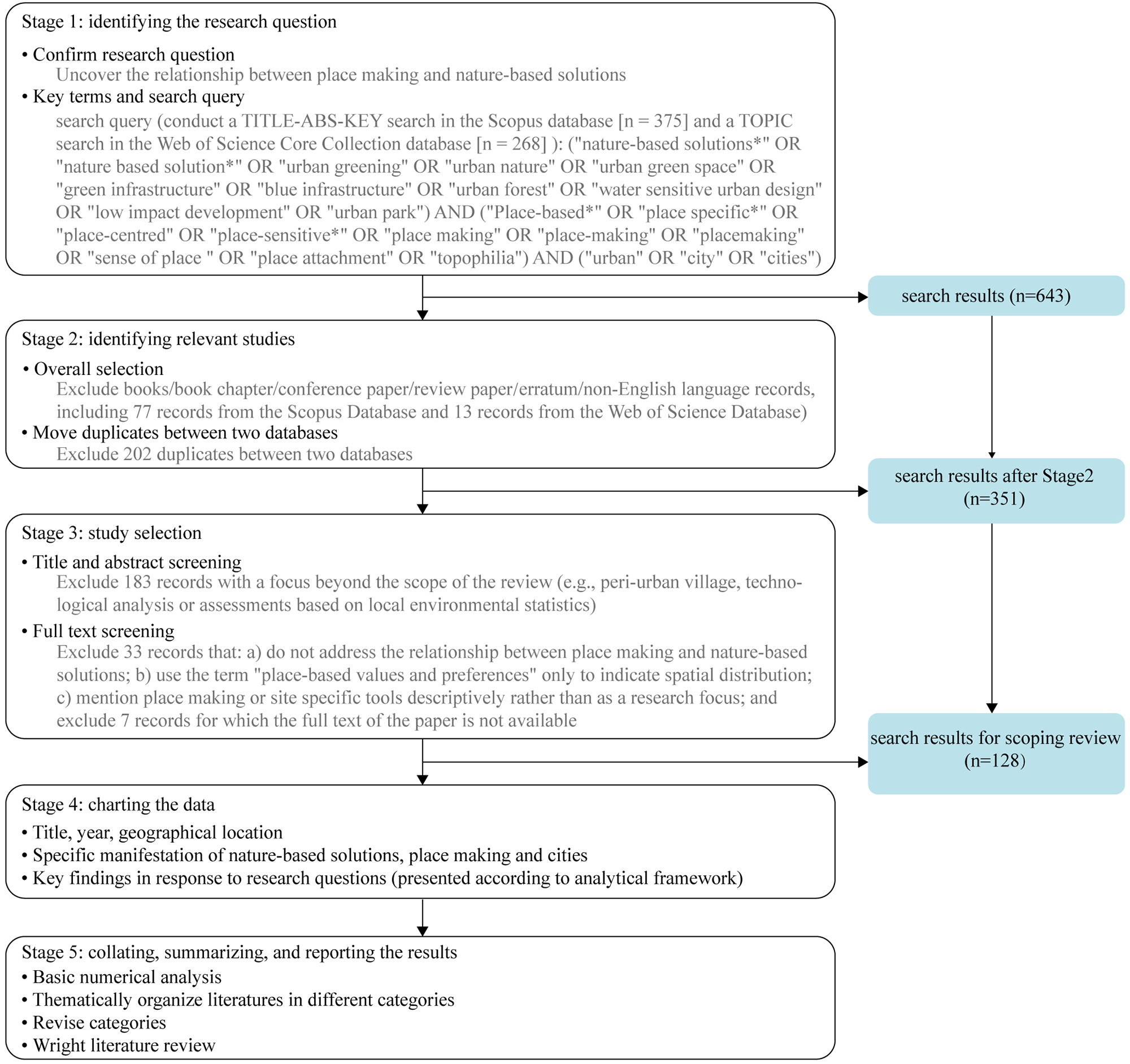
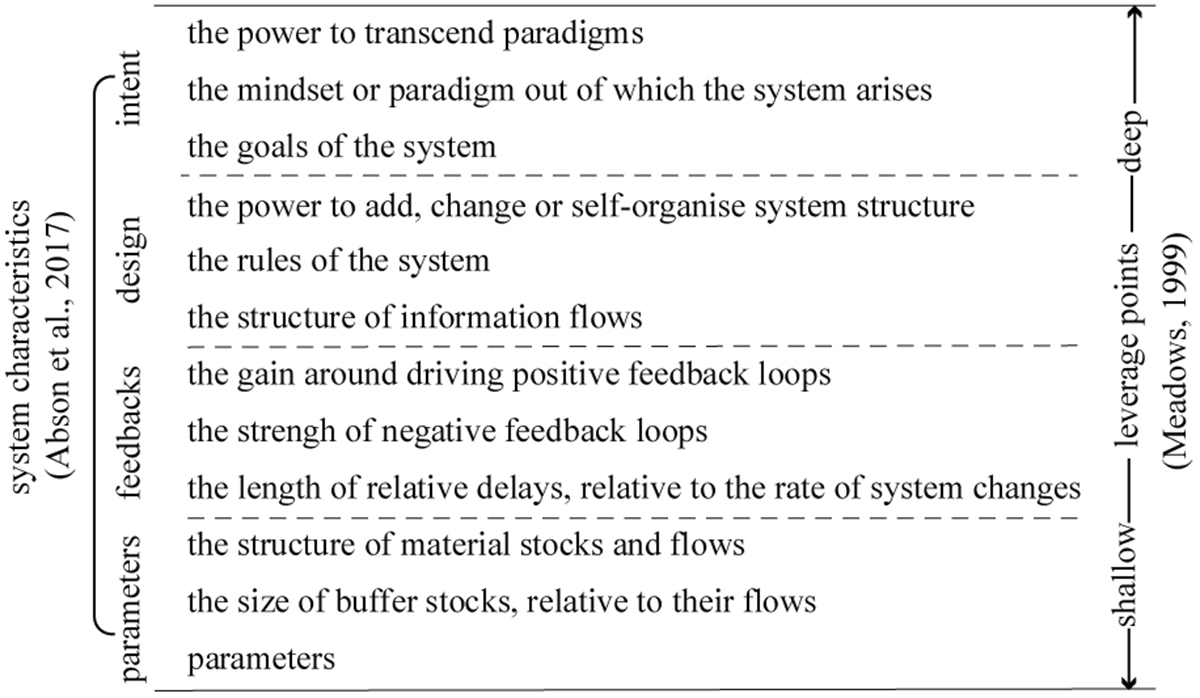
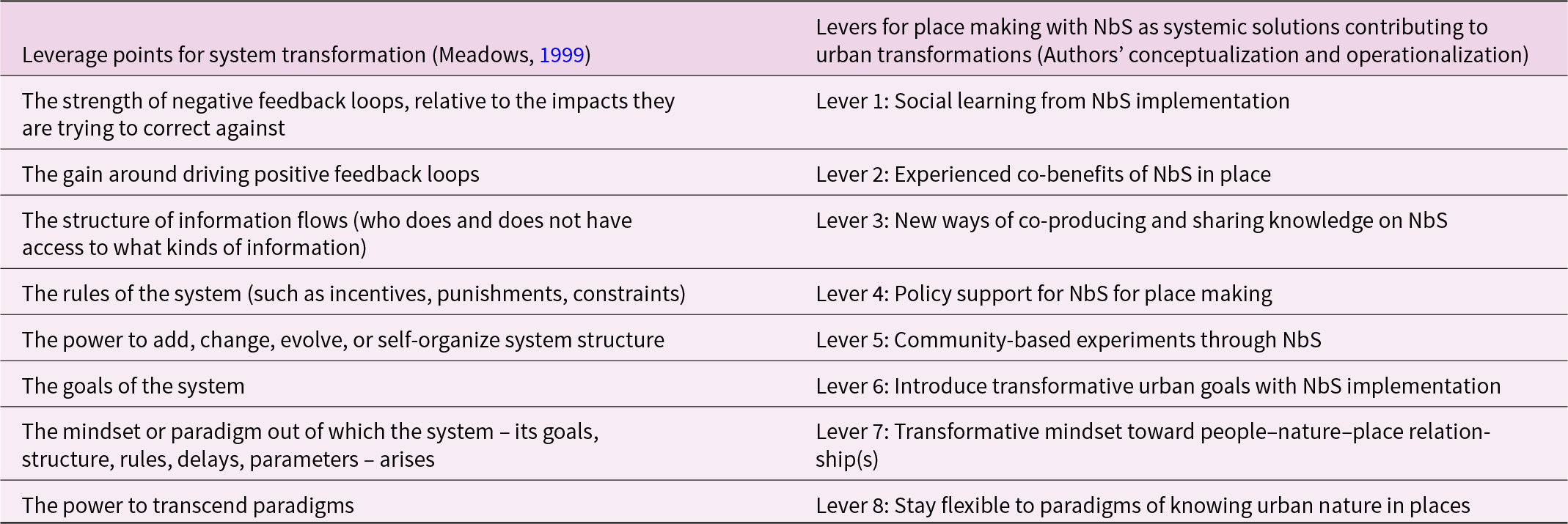
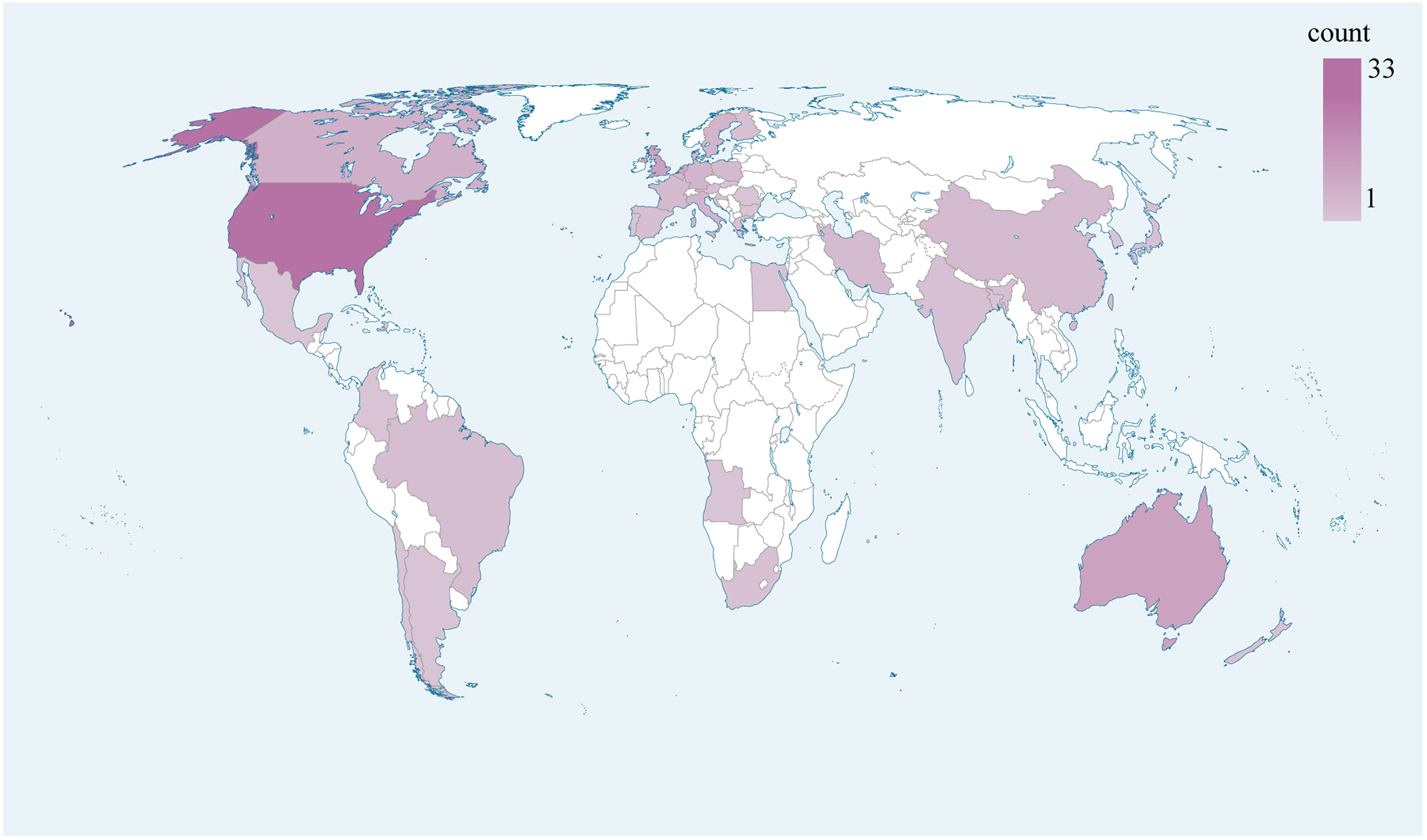
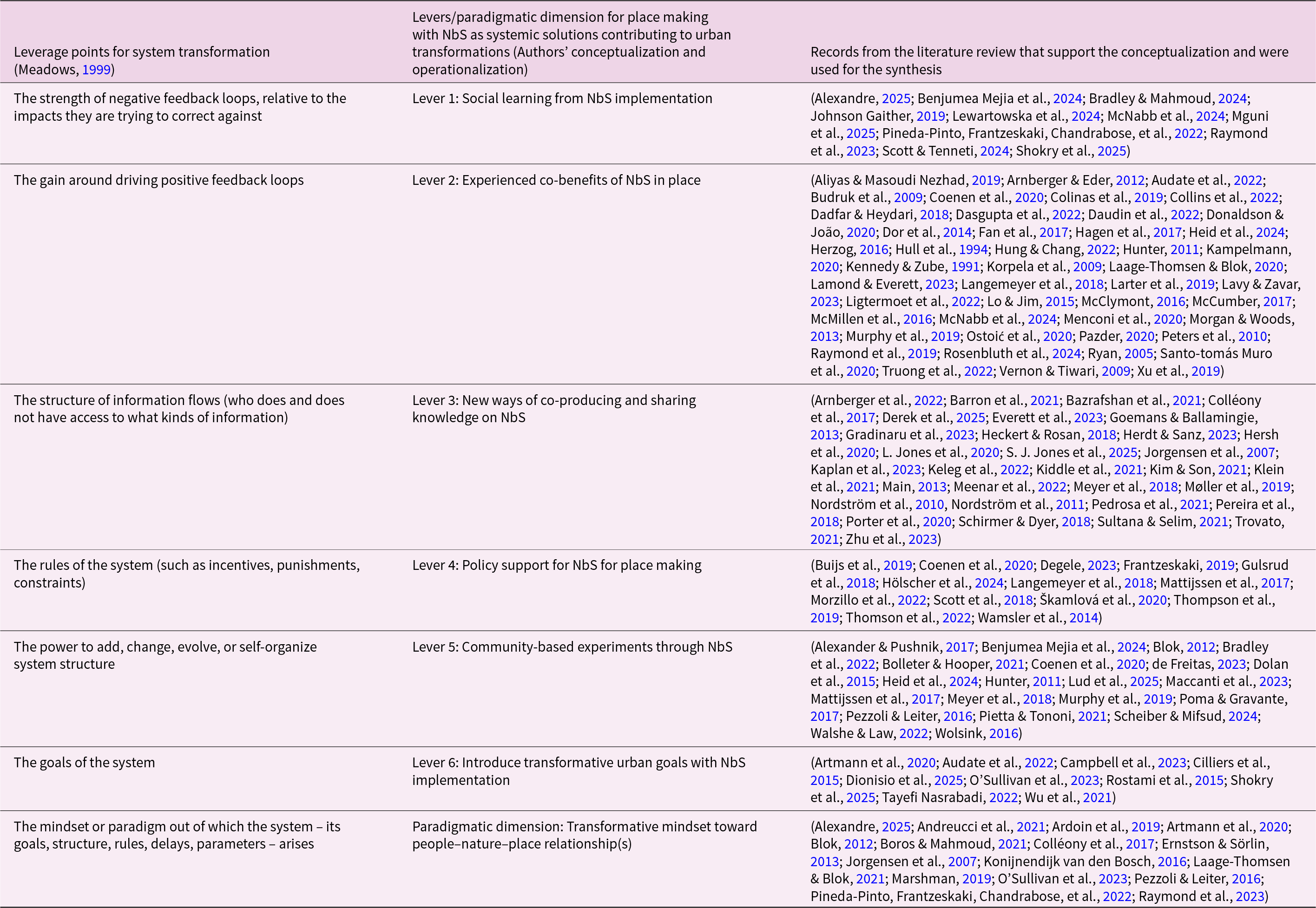
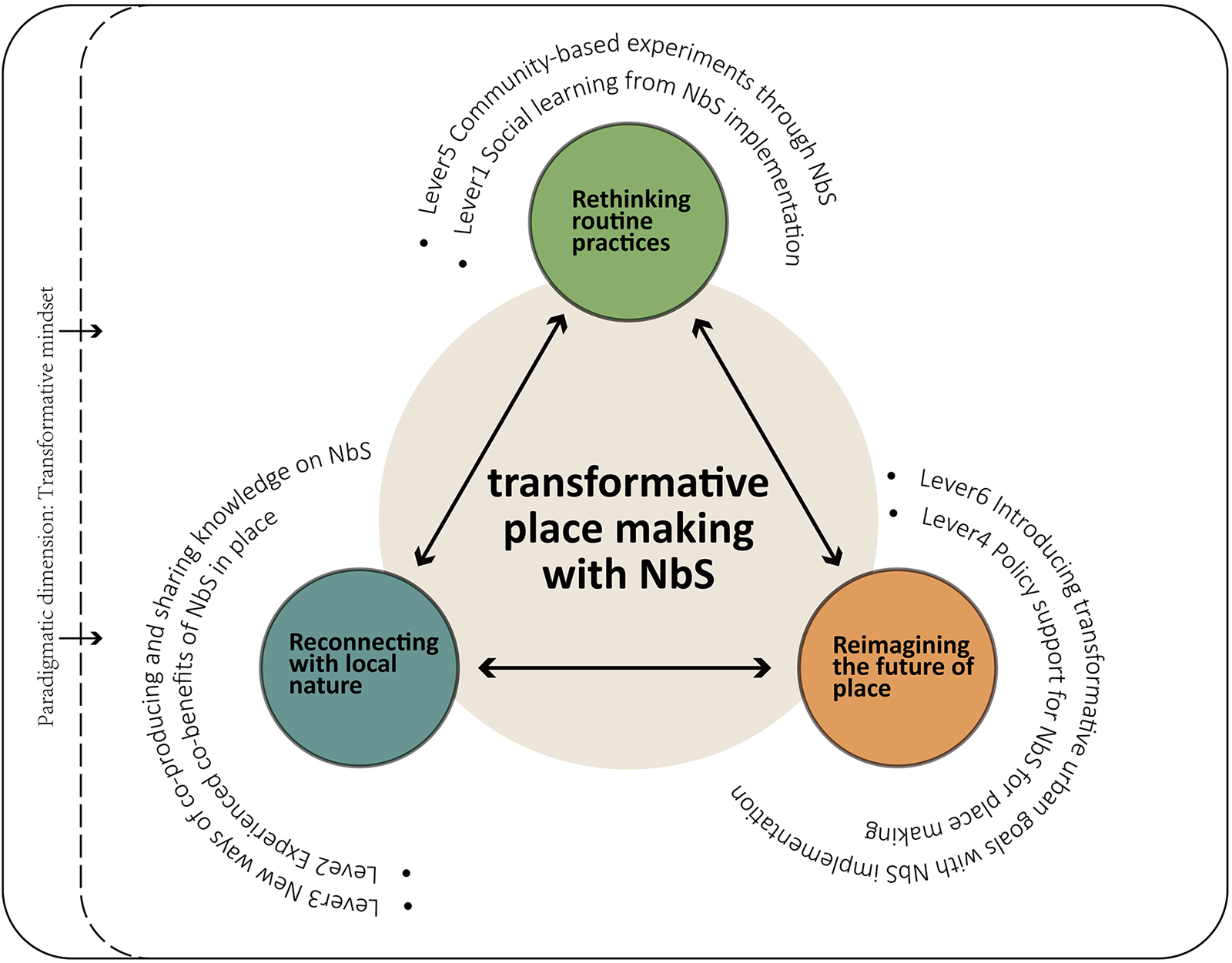
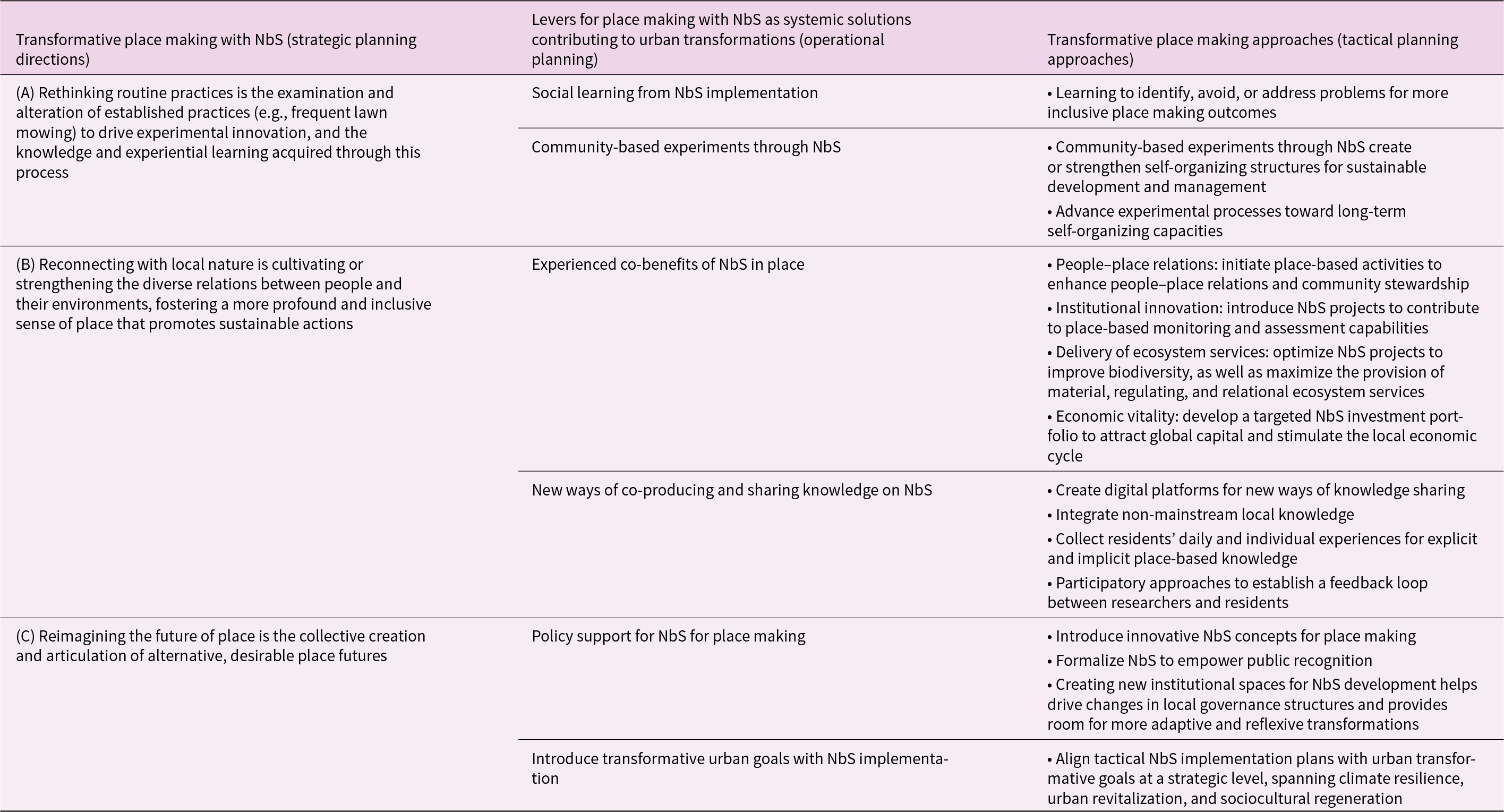


 Open access

