INTRODUCTION
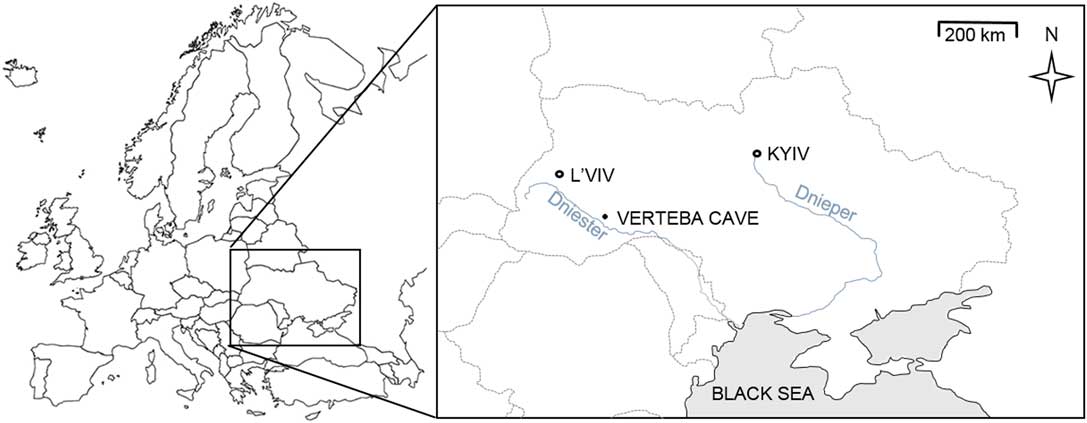
Verteba Cave (Figure 1) is an atypical Eneolithic Tripolye (ca. 5100–2900 cal BC) archaeological site due to its location within a cave, and the considerable number of human and animal skeletal remains excavated from the site. Caves and rock shelters are quite common in Ukraine, however, evidence for utilization of caves after the Paleolithic is limited. In the Borshchiv Region of Ukraine where Verteba Cave is located, there is no other evidence of Eneolithic human occupation in any large karst caves (Kadrow and Pokutta Reference Kadrow and Pokutta2016). Non-settlement Tripolye sites are also rare, except for a few cemeteries from the Late Tripolye period (e.g., Vykhvitintsi, Chapaivka; Kruts Reference Kruts1977; Zbenovich Reference Zbenovich1996). Therefore, the archaeological remains found in Verteba Cave are currently an anomaly that warrants further investigation to garner a fuller understanding of the Eneolithic Tripolye.
Location of Verteba Cave in western Ukraine.

Excavations and previous 14C dating at Verteba Cave have revealed that it was most intensively used during the Late Eneolithic (ca. 3951–2620 cal BC; Kadrow et al. Reference Kadrow, Sokhatsky, Tkachuk and Trela2003; Nikitin et al. Reference Nikitin, Sokhatsky, Kovaliukh and Videiko2010). Interpretations of use of the cave during this period vary. The site was originally described as a refuge or temporary shelter, although the idea that the cave serves some ritual, or mortuary function are increasingly used (Nikitin et al. Reference Nikitin, Sokhatsky, Kovaliukh and Videiko2010; Karsten et al. Reference Karsten, Heins, Madden and Sokohatskyi2014; Kadrow and Pokutta Reference Kadrow and Pokutta2016; Madden et al. Reference Madden, Karsten, Ledogar, Schmidt and Sokhatsky2018). High frequency of blunt force trauma observed on the excavated crania (n=25) also indicates that at least 44% of the interred individuals were victims of interpersonal violence (Karsten et al. Reference Karsten, Sokhatskyi, Heins and Madden2015b; Madden et al. Reference Madden, Karsten, Ledogar, Schmidt and Sokhatsky2018). Understanding the chronology of Verteba Cave is integral to further interpretations of material evidence excavated from the site, including elucidating the relationship between the Tripolye and neighboring cultural groups to the north and west, as well as on the steppe. The goals of this paper are (1) to add to previous chronological investigations of Verteba Cave (Kadrow et al. Reference Kadrow, Sokhatsky, Tkachuk and Trela2003; Nikitin et al. Reference Nikitin, Sokhatsky, Kovaliukh and Videiko2010; Nikitin Reference Nikitin2011) by presenting new accelerator mass spectrometry (AMS) 14C dates for archaeological sites within the cave excavated since 2008, (2) to evaluate human diet to estimate the influence of freshwater reservoir effects on the calculated dates, and (3) to test whether cave activity occurred continuously over extended periods, or is represented by discrete periodic events.
Human use of caves and rock shelters for multiple purposes extends far back in prehistory and across the globe (Bergsvik and Skeates Reference Bergsvik and Skeates2012). Caves have been used for permanent domestic occupation, temporary shelter for pastoralists or refugees, quarantining the sick, storage, ritual behavior, and/or disposal of the dead (Agelarakis et al. Reference Agelarakis, Paley, Porath and Winick1998; Segal et al. Reference Segal, Carmi, Gal, Smithline and Shalem1998; van den Brink Reference van den Brink1998; Miracle and Forenbaher Reference Miracle and Forenbaher2005; Karkanas Reference Karkanas2006; Šefčáková and Thurzo Reference Šefčáková and Thurzo2006; Angelucci et al. Reference Angelucci, Boschian, Fontanals, Pedrotti and Verges2009; Tomkins Reference Tomkins2009; Bréhard et al. Reference Bréhard, Beeching and Vigne2010; Baird et al. Reference Baird, Carruthers, Fairbairn and Pearson2011; Orschiedt Reference Orschiedt2012; Weiss-Krejci Reference Weiss-Krejci2012; Wilkinson et al. Reference Wilkinson, Gasparian, Pinhasi, Avetisyan, Hovsepyan, Zardaryan, Areshian, Bar-Oz and Smith2012). One common use of caves is the disposal of human remains, although burials in caves are not as easily interpreted as traditional cemeteries. First, caves are more subject to human, animal, and geological disturbances which disrupt crucial, spatial contexts, such as associations between grave goods and skeletal remains, body position, and even relationships between various burials. Secondly, body disposal in caves is not always associated with traditional burial practices, as studies have shown some cave burials to be of special individuals such as ritual sacrifices, or victims of violence (e.g., Pastron and Clewlow Reference Pastron and Clewlow1974; Lucero and Gibbs Reference Lucero and Gibbs2007; Prufer and Dunham Reference Prufer and Dunham2009; Orschiedt Reference Orschiedt2012; Weiss-Krejci Reference Weiss-Krejci2012). Caves are natural structures that are often tied to ritual, or symbolic concepts, and as space with socially constructed meaning. Understanding how and why burials are interred informs not only on funerary practices, but broader worldviews, and social relationships within the society in question.
Human burials in caves are not common in central or eastern Europe during the Neolithic or Eneolithic (Orschiedt Reference Orschiedt2012). Some burials have been found in Germany associated with the Neolithic Linerabandkeramik (LBK) culture (5500–4900 BC; Whittle Reference Whittle1996). Secondary burial sites have been found in caves Jungfernhöhle and Hanseles Hohl in Bavaria and are dated to the early Neolithic (Orschiedt Reference Orschiedt2012). Late Neolithic burials have been found at the Hohlenstein-Stadel, Vogelherd, and Blätterhöhle cave sites in Germany (Conrad et al. Reference Conrad, Grootes and Smith2004; Orschiedt Reference Orschiedt2012). In these cases, the disposed bodies appear to have decomposed prior to their internment in the caves and/or were disturbed by natural processes in the cave such as badgers in the case of Blätterhöhle. The nature of these internments is not clear, but their placement in caves is atypical for LBK burial practices which are most commonly found in cemeteries (Bickle et al. Reference Bickle, Hofmann, Bentley, Hedges, Hamilton, Laiginhas, Nowell, Pearson, Grupe and Whittle2011). An Eneolithic grave of an infant was uncovered in Dzeravá skala Cave in Slovakia (Šefčáková and Thurzo Reference Šefčáková and Thurzo2006). The burial is a mostly complete individual interred flexed on its left side in association with artifacts from the Lengyel culture. There are no cave burial sites associated with the Tripolye culture other than Verteba Cave. As cave burials are not common, often have mixed stratigraphy, commingled skeletons, and may represent unusual circumstances, explanations of burial rites and cave use are variable and highly dependent on case specifics.
ARCHAEOLOGICAL BACKGROUND
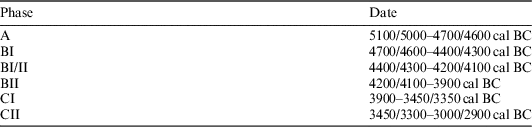
The Eneolithic, or Copper Age in southeastern Europe, lasts from the 6th millennium to the early 3rd millennium BC. Settlements in the forest-steppe region develop in social and technological complexity with growth in population, the introduction of copper metallurgy and trade, and the increasing reliance on domesticated crops and animals (Anthony Reference Anthony2007:162). The Tripolye culture, also known as the Cucuteni or Cucuteni-Tripolye, inhabited the region between the Danubian cultures to the west and the Pontic-Caspian steppe groups to the east. The 2000-year occupation of the Tripolye can be divided into multiple phases primarily based on ceramic manufacture and design, (1) Early or Tripolye A, (2) Middle or Tripolye B, and (3) Late or Tripolye C. More specific chronologies have been developed to further divide these basic categories into A, BI, BII, BI/II, CI, and CII (Table 1; Vinogradova Reference Vinogradova1983; Rassamakin and Menotti Reference Rassamakin and Menotti2011; Ryzhov Reference Ryzhov2012). These refined divisions have become standard in publications on Tripolye sites, and will therefore be used in this work.
Chronology of the Tripolye culture in Ukraine, after Rassamakin and Menotti (Reference Rassamakin and Menotti2011).

It is difficult to determine the customary Tripolye mortuary behaviors, as burials and cemeteries are rare in and around Tripolye sites. A few isolated and poorly preserved burials have been found under house floors from the early Tripolye periods (Phase A and B) (Movsha Reference Movsha1960; Chernykh Reference Chernykh1982). Most commonly, individual burials are found in association with houses such as at Bil’shivtsi in phase B and Tîrpeşti in phase C (Marinescu-Bîlcu Reference Marinescu-Bîlcu1981; Tkachuk Reference Tkachuk2001). This practice is a characteristic of Early and Middle Neolithic mortuary behavior observed across southeastern Europe (Lichter Reference Lichter2001; Kadrow Reference Kadrow2008). Although the Tripolye house burials are the most commonly observed in the early periods, they are still rarely found leaving many questions about the nature of burial practices during this period in Ukraine. Several researchers have offered potential explanations for the general absence of Tripolye burials, including traditions of cremation, or leaving bodies exposed above ground to the elements and animals (Kruts Reference Kruts1989; Anthony Reference Anthony2007). Alternatively, the Tripolye may have buried their dead in locations far from their settlement sites (Zbenovich Reference Zbenovich1996).
The use of cemeteries, or large accumulations of buried skeletons, another typical practice of Mesolithic and Neolithic Ukraine, has only been found in the C phase at Eneolithic Tripolye sites. Chapaivka (3700–3400 BC), the earliest Tripolye cemetery, is located directly next to a settlement and is located just south of Kiev (Anthony Reference Anthony2007). It is situated close to the steppe frontier, and kitchenware at Chapaivka is very similar to the neighboring Sredni Stog ceramics indicating a close relationship between this steppe culture and the eastern Tripolye (Zbenovich Reference Zbenovich1996). The Chapaivka cemetery contains 31 extended burials of men, women, and one child oriented to the west and associated grave goods including ceramics, lithic tools, and one female figurine (Kruts Reference Kruts1977; Zbenovich Reference Zbenovich1996). A much larger cemetery, Vykhvitnitsi, has yielded more than 70 burials (Dergachev Reference Dergachev1978). Individuals were buried in flexed positions in burial pits encased with stones (Zbenovich Reference Zbenovich1996). The majority of the individuals from the cemetery were children whose graves commonly contained anthropomorphic figurines (Dergachev Reference Dergachev1978). Adult males were buried with farming tools such as sickles and hoes (Dergachev Reference Dergachev1978). Like Chapaivka, Vykhvitnitsi was also located near the steppe frontier, and it is possible that in both cases Tripolye populations were integrating the steppe custom of cemetery burial into their own mortuary practices.
Verteba Cave is the only known large accumulation of human skeletal remains from a cave or rock shelter from any phase of Tripolye occupation. The cave is located on a terrace approximately 100 m from the Seret River and 1.5 km from the village of Bilche Zołote in a geographic region known as the Podilian Plateau. It is one of many caves in western Ukraine and is part of an expansive Miocene gypsum karst that spreads over 20,000 km2 in the region (Klimchouk Reference Klimchouk1996). The Verteba Cave karst system entails an extensive network of corridors and caverns totaling around 8 km in length (Sokohatskyi Reference Sokohatskyi2001). There are no known freshwater sources in the cave. The modern entrance to the subterranean cave is a depression in the ground allowing people and animals to enter the cave easily on foot.
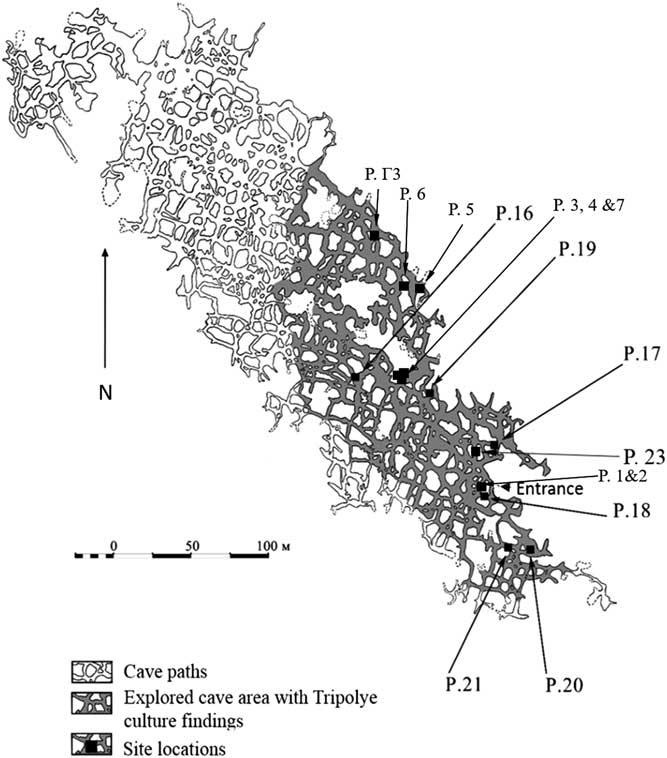
Verteba Cave was uncovered as an archaeological site in the 1820s (Kadrow and Pokutta Reference Kadrow and Pokutta2016). Surveys of the cave have identified multiple areas of human activity based on findings of ceramics, lithic tools, bones, and charcoal. Initial excavations were carried out in the 1870s, 1890s, and early 1900s (Kirkor Reference Kirkor1879; Ossowski 1891, 1892, Reference Ossowski1895; Kadrow and Pokutta Reference Kadrow and Pokutta2016). These excavations focused on sites 1 and 2 near the modern cave entrance (Figure 2), and the material recovered is currently housed at the Archaeological Museum of Kraków.
Layout of cave paths with site locations marked for those referenced in this study.
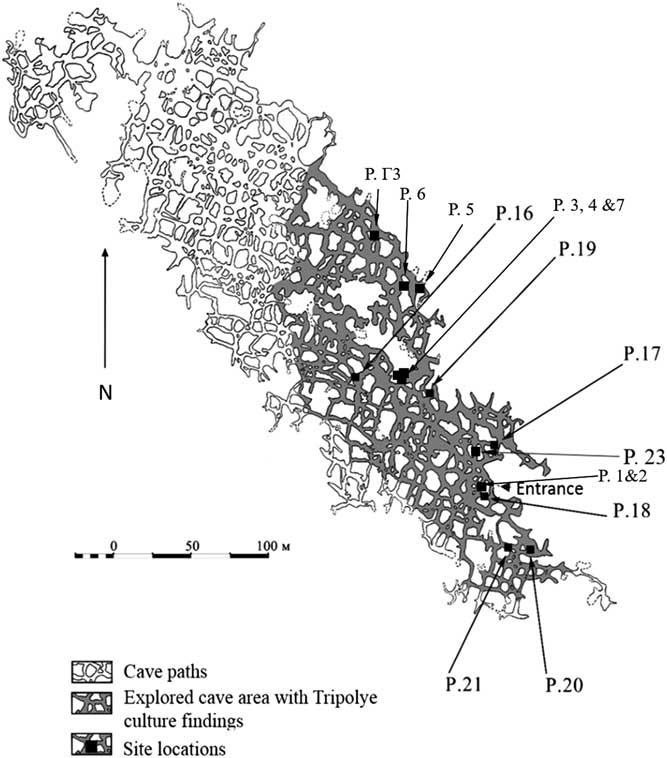
Modern excavations at Verteba Cave started in 1996 and continue to present day under the direction of co-author M. Sokohatskyi (Borshchiv Regional Museum of the Ukrainian Ministry of Culture and Arts). Excavations and subsequent analysis through 2012 have focused on sites 1 through 7 (Figure 2). This work has demonstrated that surface strata have been disturbed by previous excavations, and other intrusions in the cave throughout history, but deposits against the cave walls and in sites that are difficult to access, as well as lower strata, have remained mostly untouched by human activity. For example, some articulated human remains have been identified in lower strata from site 7. Bioturbation appears to have affected most sites to a small degree. Water dripping in from the surface, and animals dwelling in the cave (e.g., rodents, bats, and badgers) have all had minor effects on the spatial organization of artifacts and bones in the cave. Modern surveys and excavations have focused on two main goals: (1) identifying and uncovering Tripolye sites that are well preserved, and (2) determining the chronology of the identified Eneolithic sites.
Excursions into the cave by archaeologists and speleologists through the 2016 field season have uncovered over 20 archaeological sites associated with Tripolye culture. These sites have been identified through surveys, and confirmed through test pits. All sites have Tripolye ceramics, indicating their connection with the Tripolye occupation of Verteba Cave. Most ceramic evidence is consistent with utilization of the cave during the CI and CII phases of the Eneolithic, although there are two human bones that have been previously dated to the Bronze Age (Nikitin Reference Nikitin2011).
Ceramic typologies from the cave come from three local types associated with the Bilche Zołote region (Tkachuk Reference Tkachuk2013). The earliest and most frequent ceramic type is from the late CI phase called the Shipentsy local group (Kadrow and Pokutta Reference Kadrow and Pokutta2016). Shipentsy-type pottery from site 6 have been dated to 4720±90 BP (Ki-14683) and 4910±400 BP (Ki-14683a) by Nikitin et al. (Reference Nikitin, Sokhatsky, Kovaliukh and Videiko2010) using the organic carbon content of the ceramics. The assemblage is made up of painted vessels, bowls, bulging urns, and cooking vessels (Nikitin et al. Reference Nikitin, Sokhatsky, Kovaliukh and Videiko2010; Tkachuk Reference Tkachuk2013; Kadrow and Pokutta Reference Kadrow and Pokutta2016). Koshilivtsy-type ceramics from the early CII phase have also been identified (Tkachuk Reference Tkachuk2013). Pottery fragments of the Koshilivtsy-type from sites 2 and 5 were dated to 4730±90 BP (Ki-13069), 4810±100 BP (Ki-13068), and 4720±110 BP (Ki-13066) by Nikitin et al. (Reference Nikitin, Sokhatsky, Kovaliukh and Videiko2010). This assemblage is mostly colorfully painted, serving vessels and bowls often with anthropomorphic or zoomorphic iconography (Nikitin et al. Reference Nikitin, Sokhatsky, Kovaliukh and Videiko2010; Tkachuk Reference Tkachuk2013; Kadrow and Pokutta Reference Kadrow and Pokutta2016). Kasperivtsy-type pottery (late CII phase) is the least common (Tkachuk Reference Tkachuk2013). Very few of these vessels are painted, and most are incised or decorated with cord impressions (Tkachuk Reference Tkachuk2013; Kadrow and Pokutta Reference Kadrow and Pokutta2016). No ceramics from the Kasperivtsy group have been dated using 14C techniques. Kasperivtsy ceramics are most commonly associated with Tripolye burials from other sites, as these burials are mainly from the CII period (Nikitin et al. Reference Nikitin, Sokhatsky, Kovaliukh and Videiko2010).
Based on these ceramic chronologies and dating of pottery from sites 1 through 7, previous researchers concluded that Verteba Cave was regularly used over a span of one thousand years (3745–2747 BC) with periodic lulls in activity (Nikitin et al. Reference Nikitin, Sokhatsky, Kovaliukh and Videiko2010). One break corresponds to the shift in populations between the Shipentsy and the Koshilivtsy groups around 3500 BC (Kadrow et al. Reference Kadrow, Sokhatsky, Tkachuk and Trela2003; Nikitin et al. Reference Nikitin, Sokhatsky, Kovaliukh and Videiko2010). While these dates are consistent with the Tripolye chronology, they are possibly slightly older than the period of actual cave use due to the method of 14C dating. 14C dating of organic residues in ceramics can produce older-than-expected dates due to the sedimentary clays used in the pottery making (de Atley Reference de Atley1980; Johnson et al. Reference Johnson, Clark, Miller-Antonio, Robins, Schiffer and Skibo1988).
ASSESSING FRESHWATER RESERVOIR EFFECTS
Reservoir effects can influence the accuracy of 14C dating when dated bones come from animals or humans who consumed aquatic foods because these resources incorporate marine-derived carbon in addition to terrestrial-derived carbon (Ascough et al. Reference Ascough, Cook and Dugmore2005). These effects typically produce older dates, but can be variable depending on the carbon source (Philippsen Reference Philippsen2013). To estimate if there are reservoir effects on the measured dates, stable isotope analysis can be used to assess the relative contributions of freshwater or marine resources to diet. Analysis of stable isotope values collected from human and animal tissues, such as bone collagen, reflects the diet of the individual when alive (van der Merwe Reference van der Merwe1982). Bone collagen in particular, reflects the protein component of the diet. Ratios of isotopes vary naturally between different food sources, and as a result the relative contribution of different food sources can be estimated based on the measured collagen composition in bone. Values in the consumer’s tissues differs from their food by a trophic enrichment factors which is about 1‰ in δ13C and around 3–5‰ in δ15N (Fry and Sherr Reference Fry and Sherr1984; Hedges and Reynard Reference Hedges and Reynard2007). Carbon reservoirs from terrestrial and marine ecosystems have different isotope values, and therefore influence the isotopic signature of the consumers in predictably different ways. These differences are mainly because aquatic food webs are longer than terrestrial ones, and therefore include many more trophic levels resulting in enriched δ13C and δ15N levels. Marine resources produce more positive carbon values and high nitrogen values. Freshwater isotopic signatures sometimes overlap with terrestrial ones, although some bodies of water have distinct ranges (Fry Reference Fry1991). By comparing human isotope values to values for local terrestrial animals who do not consume aquatic foods and isotope values of known aquatic resources, we can estimate the potential influences of these different types of food resources. The consideration of terrestrial and freshwater sources allows us to estimate whether or not freshwater resources are being consumed and have an influence on the 14C dates. Because Verteba Cave is located around 200m from the Seret River and is far from the Black Sea, the closest marine source, it follows that freshwater effects are expected in the human diet, whereas marine reservoir effects are not. Previous analysis of the fauna from sites 7 and 20 of Verteba Cave support this assumption since only freshwater fish (carp) were found (Ledogar Reference Ledogar2017).
MATERIALS
Human and animal bones dated in this analysis come from eight archaeological areas—sites 7, 16, 17, 18, 19, 20, 23, and Γ3 (Figure 2). Sites were excavated independently between 2012 and 2015 once they were identified from surface finds and test pits. Cultural deposits at each of the sites are generally at least half a meter deep and are separated by sterile layers of sandy soil. Surface finds were collected and overburden was removed with shovels. Sites were then demarcated into one-meter square units and troweled until changes in soil were detected. Features, such as hearths, pits, and articulated human or animal bone groups, were excavated separately. Human remains were identified as secondary burials intermixed with faunal remains, stone and bone tools, and ceramics (Karsten Reference Karsten2014; Karsten et al. Reference Karsten, Sokhatskyi, Heins and Madden2015b; Madden et al. Reference Madden, Karsten, Ledogar, Schmidt and Sokhatsky2018).
Eighteen bone specimens from the eight activity sites within Verteba Cave were chosen for 14C dating. Both human and faunal bones were chosen to date the burials first based on their location within the site (depth of strata), and secondly by their expected diet. Terrestrial herbivores were chosen when possible because they produce the most accurate 14C dates, but omnivores were also chosen when herbivore specimens were not available. From site 7, two human bones were chosen, along with two terrestrial herbivores—one aurochs and one brown hare bone. The upper strata of this site have been previously dated by Nikitin et al. (Reference Nikitin, Sokhatsky, Kovaliukh and Videiko2010). Excavations since 2008 have brought this site down an additional two meters (Karsten Reference Karsten2014:107). Specimens chosen for this analysis are from the deepest levels of excavation (Lvs. 4-6) and a deep feature (F. 7A) to assess the depth of the site occupation. Six human and animal bones were selected from the top and lowest strata of site 20, the other most extensively excavated site in the cave to characterize the duration of occupation in this area. There were few identifiable fauna bone fragments from the top and bottom layers of site 20, so two caprine bones (terrestrial herbivores) were chosen along with two omnivorous pigs, one chicken, and one human. Five animal bone specimens were also chosen from test units from the sites 16, 17, 18, 19, and 23 to assess when these sites were occupied. When herbivores were available, these species were chosen (e.g., site 18—horse). At most sites, few bones were excavated, so available taxa were chosen. Three bone samples (2 human, 1 dog) were chosen from site Γ3. Gamma (Γ) sites are from a set of survey expeditions started in 2015 focused on sampling Tripolye activity areas for human genetic samples. Site Γ3 produced several human and faunal bones in association with only one Tripolye pottery sherd. This site is covered with a layer of calcium carbonate making it difficult to access through traditional excavation techniques. As a result, many of the bone specimens were also covered in calcium carbonate and were unable to be identified or sampled without destroying the bone.
Three chicken (Gallus gallus) bones was sampled for 14C dating because domestic chickens are occasionally found in caves in western Ukraine prior to the Roman period (Kovalchuk and Gorobets Reference Kovalchuk and Gorobets2015). Some scholars also suggest that domestic chickens appear in prehistoric Ukraine with the Usatovo culture (ca. 3500–3000 cal BC), a group of pastoralists inhabiting the steppe region around the Dniester River which is sometimes considered a variant of the Tripolye (Petrov Reference Petrov1972; Anthony Reference Anthony2007). Chicken bones have been found at Gorods’k, a Tripolye CII period site that is thought to be a site with both Tripolye and Usatovo influences (Rassamakin Reference Rassamakin2012; Petrov Reference Petrov1972). We sampled chicken bones from Verteba Cave to establish whether the Tripolye in western Ukraine were using domestic chickens at this period.
METHODOLOGY
Eighteen samples were sent to two different laboratories for 14C analysis and stable isotope analysis. Sixteen samples of approximately 1.5–3.0 g of bone were sent directly to Keck Carbon Cycle Accelerator Mass Spectrometry (CCAMS) Laboratory at University of California, Irvine (labeled CC-# in Table 2) for analysis. For the other two samples, bone collagen was extracted and purified at the Geochemistry Laboratory of the New York State Museum (Albany, NY, USA) following the modified Longin (Reference Longin1971) method (Brown et al. Reference Brown, Nelson, Vogel and Southon1988) and in line with the preparation protocols for the CCAMS facility (Beaumont et al. Reference Beaumont, Beverly, Southon and Taylor2010). These two prepared specimens were then sent to National Ocean Sciences Accelerator Mass Spectrometry (NOSAMS) Facility at Woods Hole Oceanographic Institution (Woods Hole, MA, USA) for graphitization and analysis (labeled OS-# in Table 2).
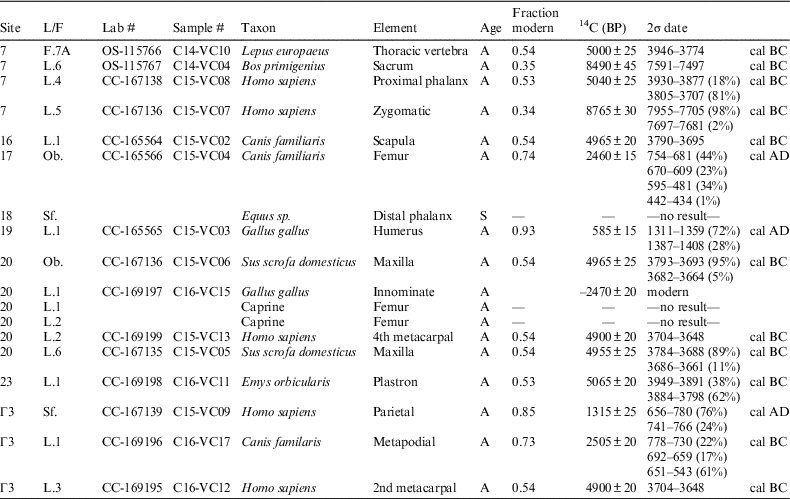
Results of 14C dating of bone samples from Verteba Cave measured at NOSAMS (Lab #-OS) and CCAMS (Lab #-CC). Abbreviations: level (L.), feature (F.), overburden (Ob.), surface (Sf.), adult (A), and subadult (S).

For preparation, the specimens were treated with a standard acid-base-acid treatment. Samples were placed in 0.5 M ethylenediaminetetraacetic acid (EDTA) overnight to demineralize the samples along with any acid-soluble contaminants present. Samples were then carefully rinsed with ultra-pure water and treated with 0.1 M NaOH in a sonic bath for one hour. The samples were rinsed once again with ultra-filtered water, treated with 0.01 M HCl, and placed in a dry bath overnight at 58ºC to gelatinize them. Following this treatment, samples were filtered through a Whatmann-type glass filter and then a 30kD ultrafilter. The remaining sample was freeze dried, and stored in a desiccator until sent to NOSAMS for analysis.
Collagen preservation was determined using carbon and nitrogen percentage yields and atomic ratios. Samples that had ranges lower the accepted limits of 13% for carbon and 4.8% for nitrogen were removed from further analysis (Ambrose Reference Ambrose1990). C:N atomic ratios outside of the 2.8-3.6 range were also not considered further (Ambrose Reference Ambrose1990; Schoeninger et al. Reference Schoeninger, Moore, Murray and Kingston1989).
All dates were then calibrated with CALIB v. 7.1 using the 2013 Northern Hemisphere calibration curve (Ward and Wilson Reference Ward and Wilson1978; Stuiver and Reimer Reference Stuiver and Reimer1993). To test whether the deposits at sites 7 and 20 represent single events or multiple events, calculated 14C ages from each site were compared to each other using χ2-tests, with the null hypothesis being that all dated samples are coeval.
RESULTS AND DISCUSSION
Carbon and Nitrogen Stable Isotope Results
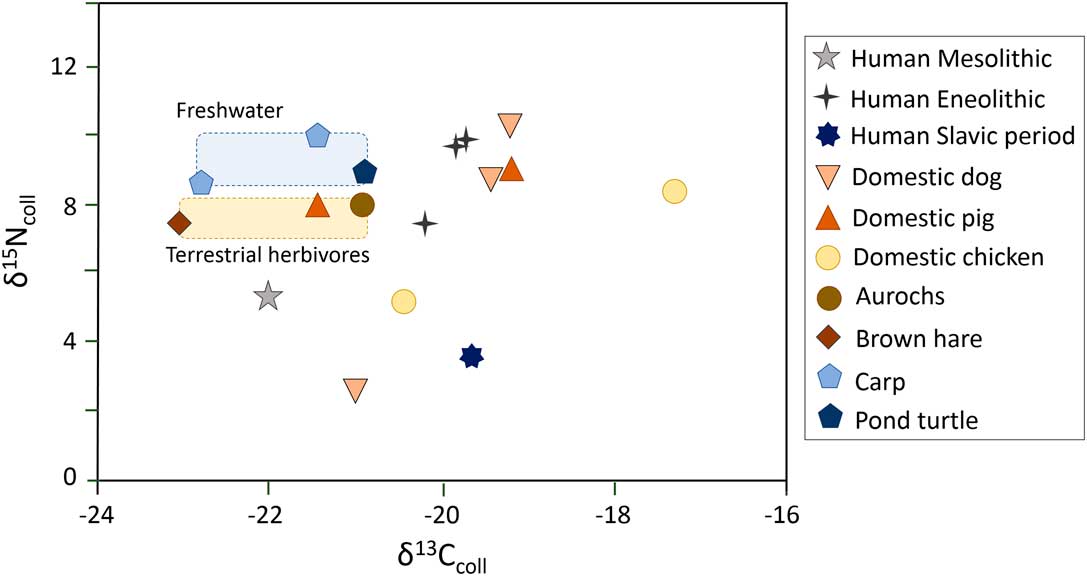
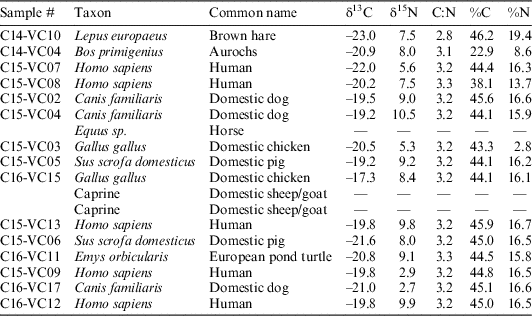
All fifteen of the samples (10 faunal, 5 human) that yielded results had C:N values within the range of 2.8–3.6 and collagen % yields at appropriate levels (Table 3). Three samples from terrestrial herbivores (2 caprines, 1 horse) did not yield any results (Tables 2 and 3). Figure 3 illustrates the distribution of these data along with the carbon and nitrogen values for two carp specimen sampled from sites 7 and 20 of Verteba Cave by Ledogar (Reference Ledogar2017). The two boxes in the image outline the boundaries of the two sources of carbon in this area from the terrestrial and freshwater ecosystems. Carbon values of consumers of freshwater resources, the pond turtle and carp, overlap with terrestrial herbivores (brown hare and aurochs). Terrestrial omnivores (humans, dogs, pigs, and chicken) trend slightly more positive (~1–2‰) than the herbivores and freshwater resources indicating a trophic step due to the consumption of either of these resources. Nitrogen values from the freshwater ecosystem (8.6–10.0‰) are elevated compared to the terrestrial herbivores (7.5–8.0‰). Nitrogen values for two of the humans, two dogs, and one pig are at the same trophic level (9.0–10.5‰) as the freshwater species, while the other humans, pig, dog, and chicken (2.7–8.4‰) fall below the trophic level of the freshwater species. Based on both the δ13C and the δ15N values, it appears that the diet of the humans and other omnivores is most strongly influenced by elements in the terrestrial ecosystem through the consumption of terrestrial herbivores and terrestrial plants. Freshwater resources such as carp and turtle may have contributed a small amount to diet, but are not major influences on diet. Limited freshwater resources in the diet of the omnivores shows that freshwater reservoir effects are minimal in the 14C dates obtained from these specimens. Prior work by Lillie et al. (Reference Lillie, Budd, Potekhina and Hedges2009) also found minimal reservoir effect on dates from human bone in Ukraine during the Eneolithic relative to other periods.
Plotted stable isotope data for specimens sampled for 14C dating along with stable isotope data for two carp samples from Ledogar (Reference Ledogar2017).

Stable isotope data of bone samples used in 14C dating for Verteba Cave.

Eneolithic Dates for Verteba Cave Sites
14C analysis of human and animal bone from multiple sites within Verteba Cave suggest it was utilized at multiple points throughout prehistory (Table 2). Dates from five sites—7, 16, 20, 23, and Γ3—are all consistent with Eneolithic cave deposits. Dates from site 7 measured at the two labs (NOSAMS and CCAMS) are comparable. The human and hare bones from site 7 date to between 3946 and 3707 cal BC which is consistent with very late BII or early CI phase for Tripolye occupation. These dates slightly predate the oldest dates reported by Nikitin et al. (Reference Nikitin, Sokhatsky, Kovaliukh and Videiko2010) for this site (ca. 3745 BC), indicating that this area may have been used further back in time. The difference between the dates for the hare and the human is only 40 years suggesting that the date from the human bone is not offset by a reservoir effect (Table 2). Sites 16, 20, 23, and Γ3 also have 14C dates consistent with the CI period of Tripolye occupation. All dates from site 20 come from two domestic pigs, and a human, and fall within approximately 60 years of each other (Table 2).
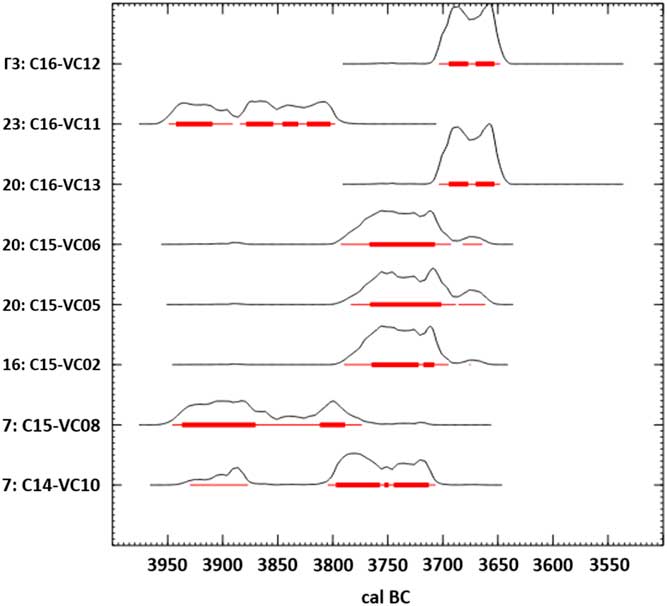
Probability distributions for the 14C dates suggest that there may have been either two periods of occupation, or two discrete events resulting in deposits during the Eneolithic (Figure 4). Two sites, 7 and 23, have earlier dates between 5000 and 5065 BP, and the other three, 16, 20, and Γ3, are slightly later between 4900 and 4965 BP. The earliest Eneolithic date is from site 23 which was taken from a pond turtle plastron (ca. 3949–3798 cal BC; Table 2). Modern European pond turtles (Emys orbicularis) have a primarily aquatic habitat and omnivorous diet (Ficetola and De Bernardi Reference Ficetola and De Bernardi2006). Therefore, this date is likely offset by reservoir effects. Freshwater influence can range dramatically anywhere up to 6000 14C years (Clark and Fritz Reference Clark and Fritz1997; Philippsen Reference Philippsen2013), so further testing of terrestrial herbivores from this site are required to confirm its Eneolithic date. The presence of predominately CI ceramics at the site indicates that the reservoir effect is not likely very high and may be as minimal as around 200 years. 14C dates measured here are consistent with the BII and CI period ceramics at sites 7 and 20, previous 14C dating of ceramics and bone from the site (Nikitin et al. Reference Nikitin, Sokhatsky, Kovaliukh and Videiko2010), and a previous chronology study done on Tripolye sites (Rassamakin Reference Rassamakin2012).
Probability distributions for the calibrated dates for the eight samples from Verteba Cave that are associated with the Eneolithic.

Previously, Nikitin et al. (Reference Nikitin, Sokhatsky, Kovaliukh and Videiko2010) suggested that remains and soil were deposited in Verteba Cave slowly over a period of one thousand years at about 0.11 cm/year. At site 20, the bone dated from the overburden is not younger than the bone from the lowest excavated level (6; Table 2). The lack of difference over this large depth in excavated soil at approximately 20cm per level suggests that deposits at this site was not slow, but instead rather fast. To test whether these deposits may represent the gradual accumulation of material over time, or discrete events with large-scale deposits, multiple dates from the same site were statistically compared to determine if they were coeval. The 14C ages for bone samples from site 20, 4955±25 BP (CC-167135), 4965±25 BP (CC-167136), and 4900±20 BP (CC-169195), were compared and are not statistically different (T=0.78, χ2=5.99 at α=0.05; df=2) suggesting that the strata from these deposits are contemporaneous. It follows, that the artifacts from this site were deposited during the same event or in close succession. Similarly, dates from the two Eneolithic bone samples from site 7 were compared using 14C ages 5040±25 BP (CC-167138) and 5000±25 BP (OS-115766). Like site 20, the two dates from site 7 are not statistically different (T=0.69, χ2=3.84 at α=0.05; df=1). Site 7 dates obtained in this analysis were also statistically compared to the eight dates collected by Nikitin and colleagues (2010:14) from human bones from the site. These dates are also not significantly different (T=1.45E-20, χ2=15.5 at α=0.05; df=8).
These results introduce the possibility that the deposits in Verteba Cave are large-scale deposits of human remains with grave goods and/or funerary feasting remains, rather than the accumulation of individual burials over time. These types of deposits are both possible, with different processes occurring at separate locations within the cave, as burial practices can vary due to many factors. Based on the lack of statistical difference of the dates obtained from sites 7 and 20, we propose that Verteba Cave was utilized in a more periodic manner with groups of individuals and artifacts being deposited in episodic events.
Several researchers have now proposed that the individuals found in Verteba Cave are evidence of the second component of a burial practice involving an initial exposure or burial, and an intentional re-burial (Madden et al. Reference Madden, Weed and Karsten2009; Kadrow and Pokutta Reference Kadrow and Pokutta2016; Ledogar Reference Ledogar2017). Evidence we present here of periodic utilization of the cave is consistent with this hypothesis, and the deposits in the cave could represent a mortuary practice involving one larger event during which multiple individuals that had died and were placed elsewhere were collected and reinterred within the cave. Similar burial practices appear in the Chalcolithic in southeastern Europe and in the Levant (Le Mort and Rabinovich Reference Le Mort and Rabinovich2002; Nativ and Gopher Reference Nativ and Gopher2011; Winter-Livneh et al. Reference Winter-Livneh, Svoray and Gilead2012).
Utilization of Verteba Cave in Prehistory
The results presented here also indicate that Verteba Cave was utilized during other periods in prehistory. The earliest dates from the cave are from a human (CC-167136) and an aurochs (OS-115767) bone from the deepest excavated strata (Lvs. 5-6) of site 7 and show that Verteba Cave was utilized around 7591–7487 cal BC and 7955–7705 cal BC. These dates differ by about 275 years, and are associated with the late Ukrainian Mesolithic (ca. 9th-6th millennium BC; Lillie Reference Lillie1998; Potekhina and Telegin Reference Potekhina and Telegin1995). Stable isotopic data from the two specimens demonstrates that both of these individuals relied heavily on a terrestrial C3-based diet (Table 3). Site 7 has been excavated the most extensively, whereas most other excavations at the cave have been less than a meter. Mesolithic dates from the lowest levels of site 7 suggest that further excavations at other sites within the cave may also reveal evidence of Mesolithic occupations. Dates from later periods (e.g., Iron Age, Medieval, modern) also suggest that people were using the cave after the Eneolithic. Bones dated from site Γ3 show that this site was utilized over multiple periods. One domestic dog bone (CC-169196) dates to the Iron Age when Ukraine was occupied by the Scythians (ca. 700–300 BC; Cernenko Reference Cernenko1983). A human bone (CC-167139) from the site is dated to the 8th century AD when Slavic states occupied Ukraine just prior to the construction of the Kievan Rus Empire.
None of the chicken bones that were dated are from the Eneolithic. One chicken bone (CC-165565) from site 19 dates to between 1311 and 1359 cal AD during the Medieval period just after the fall of the Kievan Rus empire. The second chicken bone (CC-169-197) tested was from site 20 and dated to post-1950 and therefore represents a modern intrusion in the cave. These data demonstrate that some of the domestic chicken bones from caves in western Ukraine are not from pre-Roman periods.
These results also demonstrate that there were periodic intrusions into the cave at later periods that provided minimal disturbances to the Eneolithic deposits. Evidence for modern occupations have been observed in many regions of the caves which have not been the focus of excavation. For example, artifacts associated with Nazi military units and a Jewish family that hid in the cave during WWII have been collected. All dates more recent than the Eneolithic are restricted to finds from the overburden, surface, or level 1 strata demonstrating that these intrusions were minor and that depositions below the surface level are mostly intact. These results support those presented by Nikitin (Reference Nikitin2011) who found Bronze Age human remains in the cave. The results do not, however, illustrate the extent to which the Tripolye sites were disturbed by bioturbation. Therefore, spatial analysis of the burials and associated artifacts may still be suspect.
Human Diet
Results of the stable isotope analysis provide some insight on human diet during three periods in western Ukraine—the Mesolithic, the Eneolithic, and the Slavic state period. Carbon and nitrogen isotopic data varies a lot between these three periods indicating that diet was very different in these times.
The δ13C and δ15N values for the Mesolithic individual (–22.0‰, 5.6‰) indicates that this person consumed a terrestrial C3-based diet. The nitrogen isotope value from this individual is very different than previous studies which have found a heavy influence of freshwater resources in human diet in the Dnieper Rapids region of Ukraine during this period (Lillie and Richards Reference Lillie and Richards2000; Lillie and Jacobs Reference Lillie and Jacobs2006). Populations in Mesolithic Ukraine have been considered hunter-fisher-gatherers who relied heavily on animal protein; however, the isotopic data from this individual from Verteba Cave suggests that he or she consumed much more plant protein. While the data from this study is only the diet of one individual, it does introduce the possibility that diet was quite variable across the region at this period.
The human diet from Eneolithic sites in Verteba Cave appears to be highly influenced by consumption of plant proteins and terrestrial herbivores. The human δ13C values range between –19.8‰ and –20.2‰, and the δ15N values vary between 7.5‰ and 9.9‰ (Table 3). In Europe, C4 are rare until the introduction of domesticated millet around the 5th millennium BC (Zohary and Hopf Reference Zohary and Hopf2000). There are some native C4 grasses and sedges which are primarily restricted to wetlands, and in modern times make up less than 1.5% of the total flora for much of Europe (Collins and Jones Reference Collins and Jones1986; Pyankov et al. Reference Pyankov, Ziegler, Akhani, Deigele and Luttge2010). The human isotope values are heavily driven by a C3-based diet, with possibly slight influences of C4-based resources. Regular consumption of millet does not appear to be a component of the Eneolithic Ukrainian diet.
Human nitrogen values from Verteba Cave are lower than other samples taken from Eneolithic Ukrainian populations. Privat et al. (Reference Privat, O’Connell and Hedges2007) found that a human from Bil’shvitsi, a phase B Tripolye site, had a δ15N value of 10.9‰, and Lillie and colleagues (2011) acquired δ15N values of 11.5‰ through 12.9‰ from the site of Molukhov Bugor. The lower nitrogen values from the Verteba Cave samples suggest that they are not relying as much on freshwater resources as these other populations, and are likely eating more terrestrial herbivores such as domestic livestock, secondary animal products, and plant proteins. If manuring is being practiced thereby slightly elevating crop nitrogen levels between 2.5 and 6‰ (Bogaard et al. Reference Bogaard, Heaton, Poulton and Merbach2007; Fraser et al. Reference Fraser, Bogaard, Heaton, Charles, Jones, Christensen, Halstead, Merbach, Poulton and Sparkes2011), plant proteins may comprise even more of the diet with only very limited contributions of meat or milk. Bioarchaeological studies support hypotheses that some Neolithic and Eneolithic Eurasian populations consumed a diet high in plants and relied heavily on agriculture (Jacobs Reference Jacobs1993; Anthony and Jacobs Reference Anthony and Jacobs1994; Karsten et al. Reference Karsten, Heins, Madden and Sokohatskyi2015a). Analyses of tooth caries, biological indictors of carbohydrate consumption, reveal a much greater number of caries in Tripolye human skeletons compared to hunter-gatherer Mesolithic/Early Neolithic populations from the region (Karsten et al. Reference Karsten, Heins, Madden and Sokohatskyi2015a). Therefore, the results of both the isotope and bioarchaeological analyses from Verteba Cave support the idea that these people were dependent on carbohydrate-rich crops. Riverine resources were likely very minimal in the protein component of the diet in the Eneolithic based on the few fish remains found at Verteba Cave (Ledogar Reference Ledogar2017) and bioarchaeological analysis indicating high consumption of cariogenic foods, such as wheat or barley (Karsten et al. Reference Karsten, Heins, Madden and Sokohatskyi2015a).
The stable isotope values for human from the latest period are more similar in carbon to the Eneolithic human (–19.8‰), but has a very low nitrogen isotope value (2.9‰). Stable isotope values for this individual are consistent with an exclusively herbivorous terrestrial C3-based diet. The absence of a C4-signature is surprising based on the late date of this individual compared to the introduction of millet and its prevalence in the diet of other contemporary populations (e.g., Murphy et al. Reference Murphy, Schulting, Beer, Chistov, Kasparov and Pshenitsyna2013). δ15N values for the human are very similar to the Iron Age domestic dog bone (2.7‰) from the same site (Γ3). Both are very low indicating a strongly herbivorous diet. These results are very different from contemporary steppe populations who had a diet heavily dominated by both domesticated millet and freshwater fish (Murphy et al. Reference Murphy, Schulting, Beer, Chistov, Kasparov and Pshenitsyna2013).
CONCLUSIONS
Results from this most recent dating of bone samples from Verteba Cave demonstrate that (1) the cave has been utilized at multiple points throughout prehistory and modern times, (2) the most intensive occupation of the cave is during the Eneolithic, and (3) human diet was variable in this region over time. In addition, we dated two domestic chicken bones and established that these bones were from periods after the Roman period (Medieval and modern).
In addition to previous research which identified humans in Verteba Cave from the Eneolithic and the Bronze Age, we identified bone from five new periods of use. Currently, the oldest date for the cave is from the Mesolithic (8490±45 BP; 8765±30 BP). Later periods of use include the Iron Age (2505±20 BP), the Slavic state era (1315±25 BP), the Medieval period (585±15 BP), and modern day (post-1950).
Stable isotopic evidence allowed us to examine human diet at three periods on the forest-steppe. Data from the late Mesolithic and Iron Age suggests a high dependence on plant proteins in this region, while isotopic data from the Eneolithic demonstrates the consumption of terrestrial herbivores and plants, which are most likely domestic animals (and their secondary products) and cultivated crops.
Recent excavations (2012 through 2016) have established heavy use of Verteba Cave during the Eneolithic Tripolye CII and CI period. These dates are consistent with chronologies estimated by ceramics identified in association with the human burials. The lack of statistical differences between the multiple dates from sites 7 and 20 suggest that archaeological material found at these sites was left in large-scale events rather than small, regular deposits over time. This finding supports bioarchaeological evidence suggesting that the human burials are the final internment in a multi-component burial practice.
ACKNOWLEDGMENTS
We would like to thank Dr. John Southon, Alexander Dudar, and Volodymyr Dudar for their assistance during the data collection for this project. We would also like to thank Dr. Marilyn Masson, Dr. Stuart Swiny, Dr. John Hart, four anonymous reviewers, and our editor for their helpful comments on the manuscript drafts. We wish to acknowledge the hard work of the students who participated in the field excavations during the 2008 through 2016 field seasons. Funding to support this work was provided by the NY State Museum, a UAlbany Dissertation Fellowship Award, and a NY State Museum Dissertation Research Fellowship.