Ageing is an irreversible biological process characterised by the progressive degeneration of the physiological function of various organs. Ageing is the strongest risk factor for most age-related diseases, including chronic diseases, neurodegenerative diseases and death(Reference Li, Tian and Luo1,Reference Hou, Dan and Babbar2) . It is projected that one in six people worldwide will be aged 60 or older by 2030(3). The rise in the ageing population poses significant challenges to healthcare systems worldwide. Although ageing is unavoidable, its progression can be slowed. Therefore, there is an urgent need to uncover the underlying mechanisms of ageing in order to delay its advancement. Diet is one of the most significant modifiable factors. A healthy diet can protect against age-related diseases and extend lifespan. In a large prospective cohort, a plant-based dietary pattern was shown to significantly slow the trajectory of biological ageing(Reference Wang, Li and Li4). As part of this dietary pattern, intake of soya foods and isoflavones, which are rich in phytoestrogens, was found to be associated with slowing cognitive impairment(Reference Nakamoto, Otsuka and Nishita5) and reducing all-cause mortality(Reference Nakamoto, Otsuka and Tange6). Given the heterogeneity of ageing, chronological age poorly reflects the underlying biological processes. As a result, the scientific community has redirected the focus towards identifying biological markers of ageing(Reference Chen, Wang and Zhang7). Recently, a study compiled the twelve hallmarks of ageing(Reference López-Otín, Blasco and Partridge8), highlighting the complexity of the ageing process. Among these hallmarks, telomere length (TL) has been widely used as a marker of cellular ageing. Previous studies have indicated that consuming edible plants rich in antioxidants and anti-inflammatory properties, such as vegetables, fruits and nuts, may help mitigate telomere shortening(Reference Paul9). Some observational studies have also presented the concept of a plant-based diet as an appealing tool for delaying telomere shortening(Reference Crous-Bou, Molinuevo and Sala-Vila10,Reference Canudas, Becerra-Tomás and Hernández-Alonso11) . These findings indicate that phytoestrogens may slow the ageing process. However, it remains unclear which specific metabolite is responsible for this effect.
Phytoestrogens, a diverse group of plant-derived polyphenolic compounds that possess a similar structure to oestrogen 17 β-oestradiol, can bind to oestrogen receptors(Reference Rietjens, Louisse and Beekmann12,Reference Ceccarelli, Bioletti and Peparini13) . Phytoestrogens, present in plants as glycosidic conjugates, are partly absorbed in the intestine. The majority are not absorbed and arrive at the colon, where they are metabolised by the gut microbiota into metabolites with stronger bioactivity than their precursors(Reference Seyed Hameed, Rawat and Meng14). Isoflavones and lignans are the most studied types of phytoestrogens. Isoflavones are usually found in nature as glycosides, such as daidzin and genistin(Reference Peirotén, Bravo and Landete15). Daidzin and genistin are metabolised by gut microbiota into their corresponding aglycones, daidzein and genistein, respectively. Daidzein is further converted into equol and O-demethylangolensin (O-DMA), depending on the composition of the gut microbiota in each individual. Likewise, Lignans are converted into enterodiol, further oxidised by gut microbiota into enterolactone(Reference Seyed Hameed, Rawat and Meng14,Reference Peirotén, Bravo and Landete15) . Current research indicates that phytoestrogens exhibit anti-oxidation, anti-inflammatory and anti-cancer properties(Reference Sirotkin and Harrath16). Drawing from existing evidence, we hypothesise that phytoestrogens are involved in protecting against the shortening of TL.
To date, few studies have assessed the association between phytoestrogens and TL. Accordingly, this study evaluated the association of phytoestrogen metabolites with leukocyte TL using the US National Health and Nutrition Examination Survey (NHANES). Understanding the potential relationship between phytoestrogens and TL could provide a basis for developing dietary strategies to delay ageing.
Methods and materials
Study participant
Both leukocyte TL and phytoestrogen metabolites were measured only during the 1999–2000 and 2001–2002 cycles of NHANES. Participants from these cycles were utilised to evaluate the association between phytoestrogen metabolites and leukocyte TL. Demographic information was collected using questionnaires, and biological specimens, including blood and urine, were obtained from the participants. This survey was approved by the National Center for Health Statistics Research Ethics Review Board (Protocol #98–12).
Measuring urinary phytoestrogen concentrations
Urine specimens were collected and processed and then shipped to the Centers for Disease Control and Prevention for further laboratory testing. After enzymatic hydrolysis of urinary phytoestrogens, the analytes were resolved using solid-phase extraction and reverse-phase HPLC. Four metabolites of soya isoflavones (daidzein, equol, genistein, O-DMA) and two metabolites of lignans (enterodiol and enterolactone) were detected by using MS. Urinary creatinine was determined by Jaffe’s reaction. The phytoestrogen concentrations were corrected by normalising the metabolite levels (ng/ml) to creatinine level (mg/ml), and the results were expressed as ng per mg of creatinine (ng/mg). Equol, a metabolite derived from the biotransformation of daidzein by intestinal bacteria, is produced at varying levels among individuals. Previous studies indicate that only approximately 30 % of Western populations are capable of producing equol(Reference Setchell and Cole17). Given this substantial interindividual variability, urinary equol concentration may primarily reflect recent exposure. Therefore, we estimated equol-producing capacity using a log-transformed urinary equol:daidzein ratio and used this measure as a complementary indicator in addition to urinary equol levels when examining associations with TL.
Measuring leukocyte telomere length
A small portion of the blood specimens was used for DNA extraction, and then leukocyte TL was measured using the quantitative PCR method at the University of California. The single-copy gene was used as a reference to normalise TL. TL was presented as the T/S ratio. Each sample was measured three times on three different days, using two wells each time. The average and sd of the T/S ratio were calculated. The CV between assays was 6·5 %. More details were described elsewhere(Reference Needham, Adler and Gregorich18).
Assessment of covariates
Demographic information and lifestyle habits were collected as covariates. The data included sex, age, race (non-Hispanic White, non-Hispanic Black and other), education level (less than high school, high school diploma and more than high school), smoking status (never smoker, former smoker and current smoker), physical activity (low level, moderate level, high level) and poverty income ratio (< 1·30, 1·30–3·49 and ≥ 3·50), which were gathered through household interviews. Information on alcohol intake (never, low to moderate, heavy) and anthropometric parameters was obtained at the Mobile Examination Center. BMI was calculated as weight (kg) divided by the square of the height (m).
Statistical analyses
Medians of the continuous variables and frequencies of categorical variables were presented. Phytoestrogen metabolites and leukocyte TL were ln-transformed to correct for positive skewness. After logarithmic transformation, Pearson correlation analyses were conducted to assess their relationships. Multivariable linear regression was conducted to examine the association between urinary phytoestrogen metabolites and leukocyte TL. β coefficients were back-transformed to calculate the percentage change using the formula: (e β –1) × 100 %. The ln-transformed phytoestrogens were normalised (Z score) to estimate the percentage change in leukocyte TL per 1-sd increase and to test the corresponding linear trend. We also modelled phytoestrogens as quintiles to allow for potential non-linear associations. Additionally, restricted cubic spline models with three knots were used to investigate the non-linear association of phytoestrogens with leukocyte TL.
To examine whether sex modified the effects of urinary phytoestrogen on leukocyte TL, sex-stratified analyses were conducted. A product term of urinary phytoestrogen and sex was added to the model to evaluate the statistical significance of their interaction effect. Due to the association between chronological age and ageing, only age was adjusted for in model 1. Model 2 was further adjusted for sex, race, education level, BMI, smoking status, drinking status, physical activity and poverty income ratio. All analyses were conducted using R version 4·2, with statistical significance determined by a two-tailed P-value of ≤ 0·05.
Results
Characteristics of participants
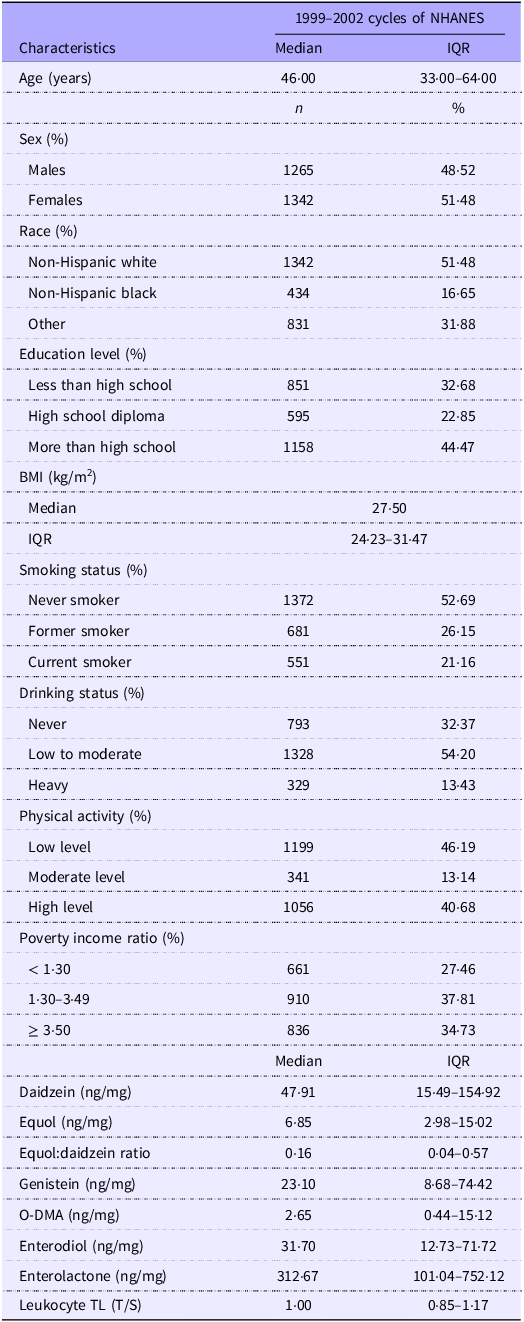
A total of 2607 participants were included. The average age of participants was 46·00 years, while the mean BMI was 27·50 kg/m2. Men made up 48·52 % of the participants. A large proportion of participants were non-Hispanic white, accounting for 51·48 %. Approximately half of the participants had education beyond high school (44·47 %). The majority reported never having smoked (52·69 %) and consuming alcohol at low to moderate levels (54·20 %). Additionally, a significant portion of participants engaged in low levels of physical activity (46·19 %) and had a middling poverty income ratio (37·81 %).
The median concentrations of urinary daidzein, equol, genistein, O-DMA, enterodiol and enterolactone were 47·91 ng/mg, 6·85 ng/mg, 23·10 ng/mg, 2·65 ng/mg, 31·70 ng/mg and 312·67 ng/mg, respectively. The median ratio of equol:daidzein and leukocyte TL was 0·16 and 1·00, respectively (Table 1). The positive correlations were observed among phytoestrogen metabolites, with the exception of the relationship between genistein and enterolactone. Leukocyte TL was positively correlated with equol (r = 0·04, P = 0·028) and the ratio of equol:daidzein (r = 0·06, P = 0·002, online Supplementary Fig. S1). Leukocyte TL was inversely associated with age in both sexes, with a stronger age-related decline observed in males compared with females (online Supplementary Fig. S2).
The characteristics of participants in the 1999–2002 cycles of NHANES *
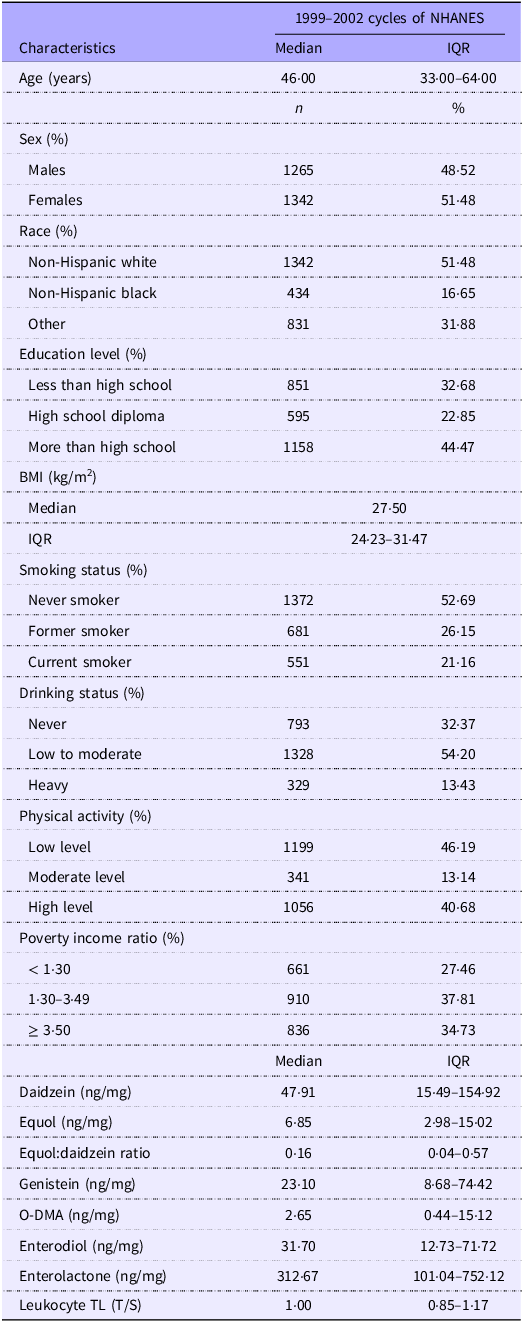
Table 1 Long description
A table summarizing characteristics of participants in the 1999-2002 cycles of NHANES. The table has 18 rows and 5 columns. Column headers are Characteristics, Median, IQR, n, and %. Row 1: Age (years), 46.00, 33.00-64.00, , . Row 2: Sex (%), , , , . Row 3: Males, , , 1265, 48-52. Row 4: Females, , , 1342, 51-48. Row 5: Race (%), , , , . Row 6: Non-Hispanic white, , , 1342, 51-48. Row 7: Non-Hispanic black, , , 434, 16-65. Row 8: Other, , , 831, 31-88. Row 9: Education level (%), , , , . Row 10: Less than high school, , , 851, 32-68. Row 11: High school diploma, , , 595, 22-85. Row 12: More than high school, , , 1158, 44-47. Row 13: BMI (kg/m^2), , , , . Row 14: Median, 27.50, 24.23-31.47, , . Row 15: Smoking status (%), , , , . Row 16: Never smoker, , , 1372, 52-69. Row 17: Former smoker, , , 681, 26-15. Row 18: Current smoker, , , 551, 21-16. Row 19: Drinking status (%), , , , . Row 20: Never, , , 793, 32-37. Row 21: Low to moderate, , , 1328, 54-20. Row 22: Heavy, , , 329, 13-43. Row 23: Physical activity (%), , , , . Row 24: Low level, , , 1199, 46-19. Row 25: Moderate level, , , 341, 13-14. Row 26: High level, , , 1056, 40-68. Row 27: Poverty income ratio (%), , , , . Row 28: < 1.30, , , 661, 27-46. Row 29: 1.30-3.49, , , 910, 37-81. Row 30: >= 3.50, , , 836, 34-73. Row 31: Daidzein (ng/mg), 47.91, 15.49-154.92, , . Row 32: Equol (ng/mg), 6.85, 2.98-15.02, , . Row 33: Equol:daidzein ratio, 0.16, 0.04-0.57, , . Row 34: Genistein (ng/mg), 23.10, 8.68-74.42, , . Row 35: O-DMA (ng/mg), 2.65, 0.44-15.12, , . Row 36: Enterodiol (ng/mg), 31.70, 12.73-71.72, , . Row 37: Enterolactone (ng/mg), 312.67, 101.04-752.12, , . Row 38: Leukocyte TL (T/S), 1.00, 0.85-1.17, , .
NHANES, National Health and Nutrition Examination Survey; O-DMA, O-demethylangolensin; TL, telomere length.
* Data are presented as medians for continuous and frequencies for categorical variables.
Evaluating the association between urinary phytoestrogen and leukocyte telomere length
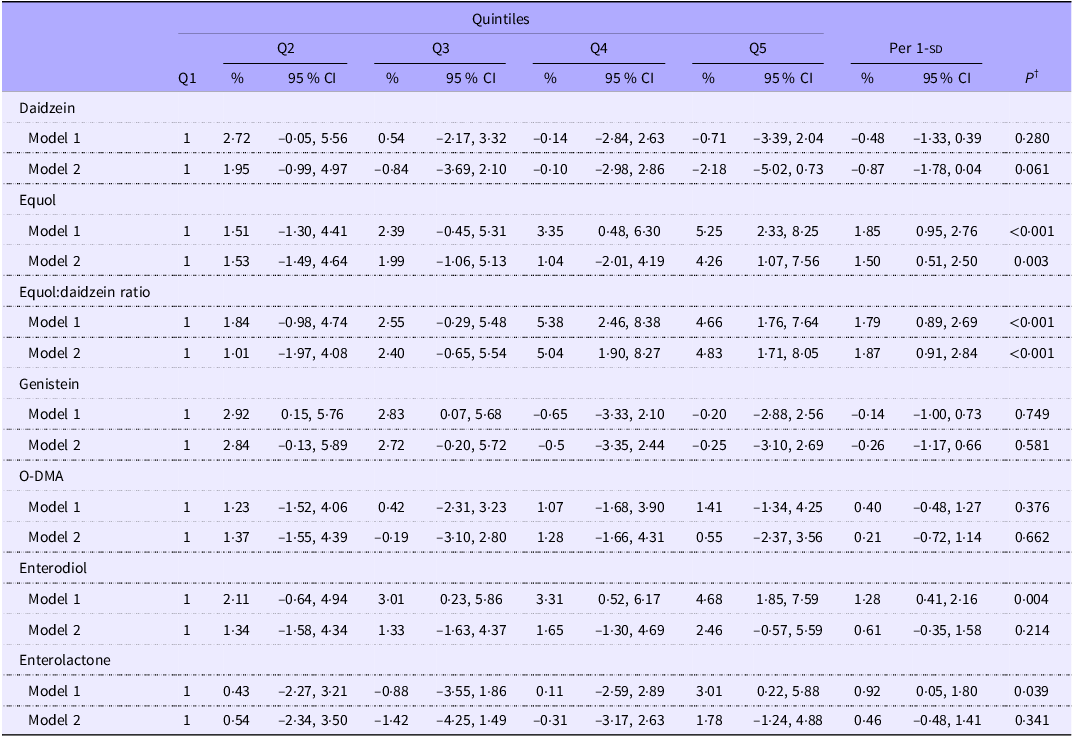
In the age-adjusted model, a 1-sd increase in urinary equol was associated with 1·85 % (95 % CI 0·95, 2·76, P < 0·001) longer leukocyte TL. After adjusting for other covariates, this association slightly decreased to 1·50 % (95 % CI 0·51, 2·50, P = 0·003). When examining urinary equol concentrations by quintiles, the association comparing the highest quintile to the lowest decreased from 5·25 % (95 % CI 2·33, 8·25) to 4·26 % (95 % CI 1·07, 7·56). Furthermore, the capacity of equol production, measured by the equol:daidzein ratio, was also positively correlated with leukocyte TL. A 1-sd increase in ratio of equol:daidzein was associated with longer leukocyte TL in both the age-adjusted model (percent change = 1·79; 95 % CI 0·89, 2·69; P < 0·001) and the fully adjusted model (percent change = 1·87; 95 % CI 0·91, 2·84; P < 0·001). Similar results were observed when examining the ratio by quintiles, with the association comparing the highest quintile with the lowest increasing from 4·66 % (95 % CI 1·76, 7·64) to 4·83 % (95 % CI 1·71, 8·05).
In age-adjusted models, a 1-sd increase in urinary enterodiol and enterolactone was positively associated with 1·28 % (95 % CI 0·41, 2·16, P = 0·004) and 0·92 % (95 % CI 0·05, 1·80, P = 0·039) leukocyte TL, respectively. However, this association diminished to null in the fully adjusted model. Similar results were observed when urinary enterodiol and enterolactone were modelled by quintiles. Urinary concentrations of daidzein, genistein and O-DMA showed no significant association with leukocyte TL (Table 2).
Percentage change (%) and 95 % confidence intervals for the associations of phytoestrogen metabolites with leukocyte TL *
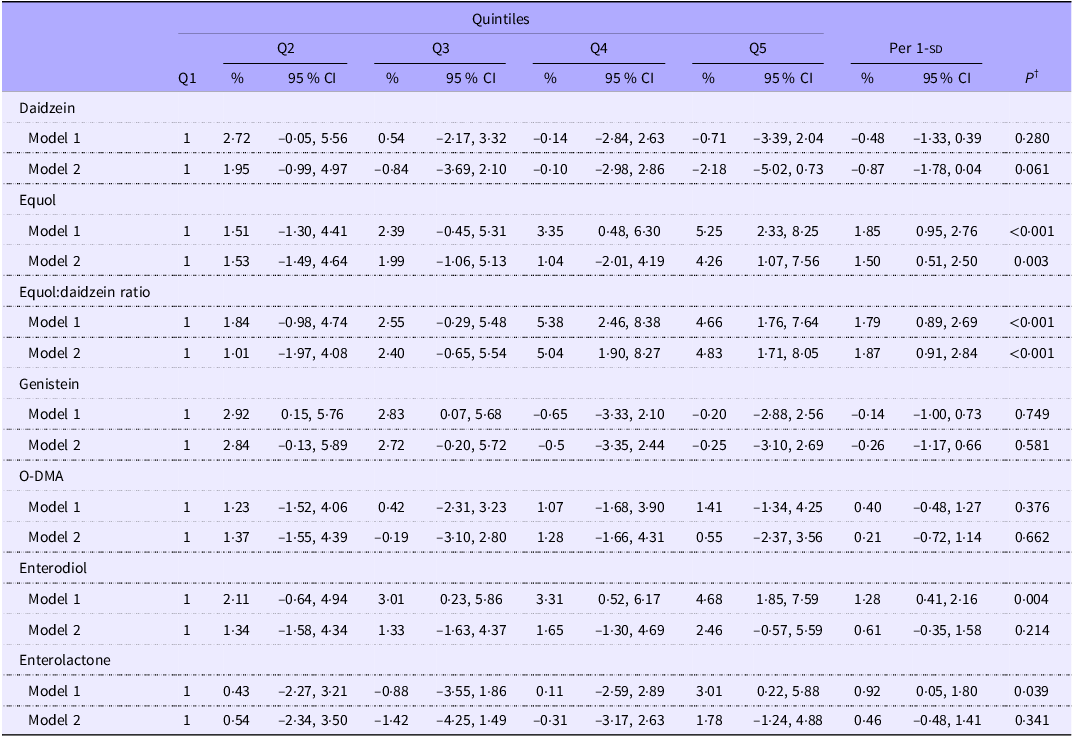
Table 2 Long description
This table presents statistical models comparing quintiles (Q1-Q5) and 1-SD increases across various compounds, detailing percentage changes (%), 95% Confidence Intervals (CI), and p-values. Equol and the Equol:daidzein ratio display strong, statistically significant positive associations across higher quintiles and per 1-SD increase in both Model 1 and Model 2 (P >= 0.003). Enterodiol and Enterolactone show significant positive trends in Model 1 (P = 0.004 and P = 0.039, respectively), but these effects attenuate and lose statistical significance in Model 2 (P = 0.214 and P = 0.341). Conversely, Daidzein, Genistein, and O-DMA demonstrate no statistically significant associations across either model.
TL, telomere length; O-DMA, O-demethylangolensin.
* Percentage change was calculated as (e β –1) × 100 %, based on β coefficients from the multivariable linear regression. Model 1 adjusted for age only. Model 2 was further adjusted for sex, race, education level, BMI, smoking status, drinking status, physical activity and poverty income ratio.
† The test was performed by using z-score in the models to calculate the percentage change per 1-sd increase.
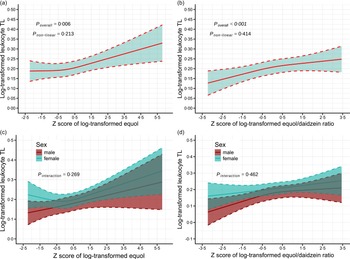
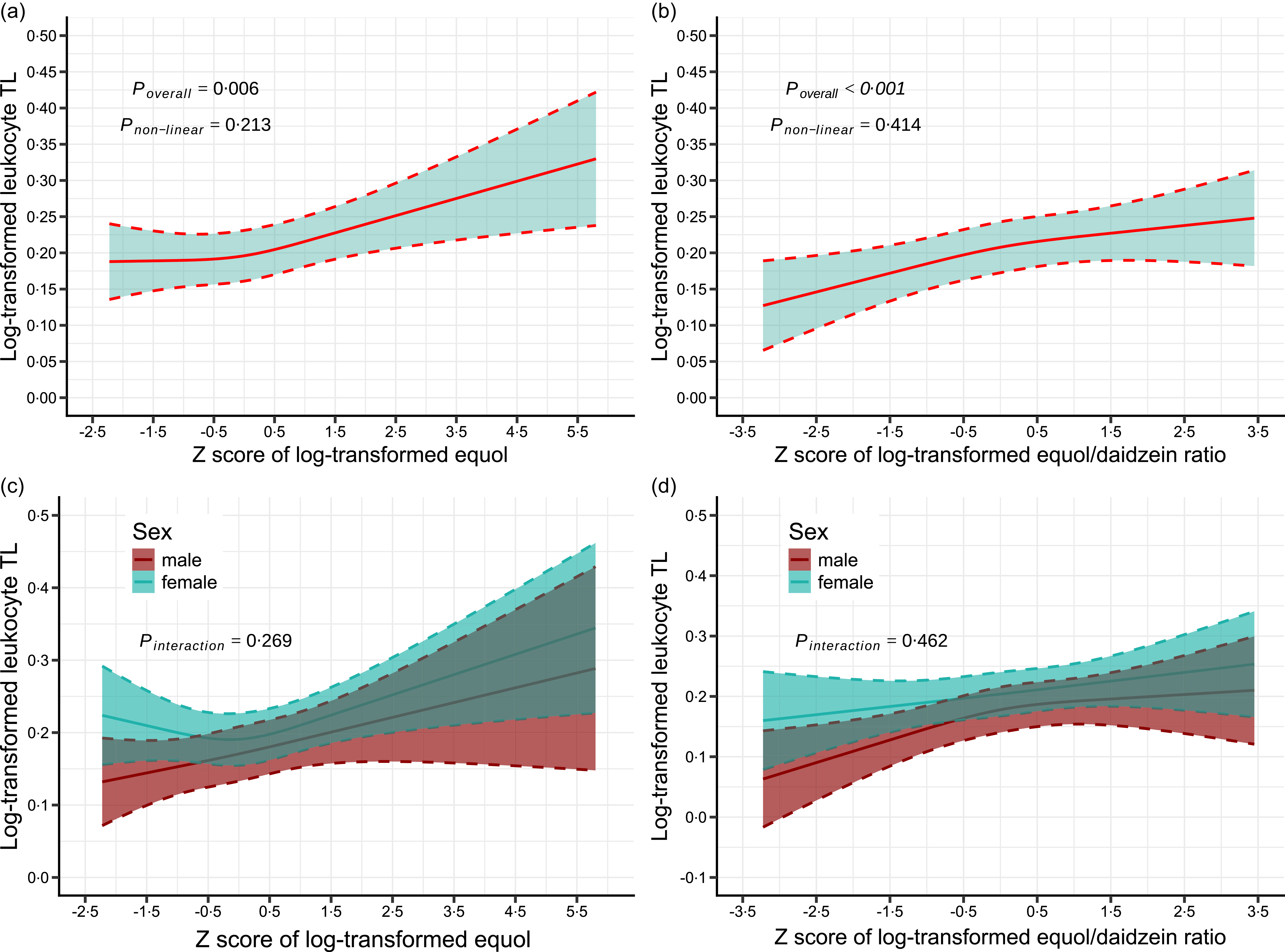
The restricted cubic spline model corroborated a positive linear association of urinary equol (P overall = 0·006, P non-linear = 0·213, Figure 1(a)) and equol:daidzein ratio (P overall < 0·001, P non-linear = 0·414, Figure 1(b)) with leukocyte TL. Urinary daidzein, genistein, O-DMA, enterodiol and enterolactone did not exhibit an association with TL (all P overall > 0·05, online Supplementary Fig. S3A–E).
The associations of urinary equol and equol:daidzein ratio with leukocyte telomere length (TL). (a) The association between equol and leukocyte TL. (b) The association between equol:daidzein ratio and leukocyte TL. (c) Sex-specific association between equol and leukocyte TL. (d) Sex-specific association between equol:daidzein ratio and leukocyte TL.
Stratified analyses according to sex
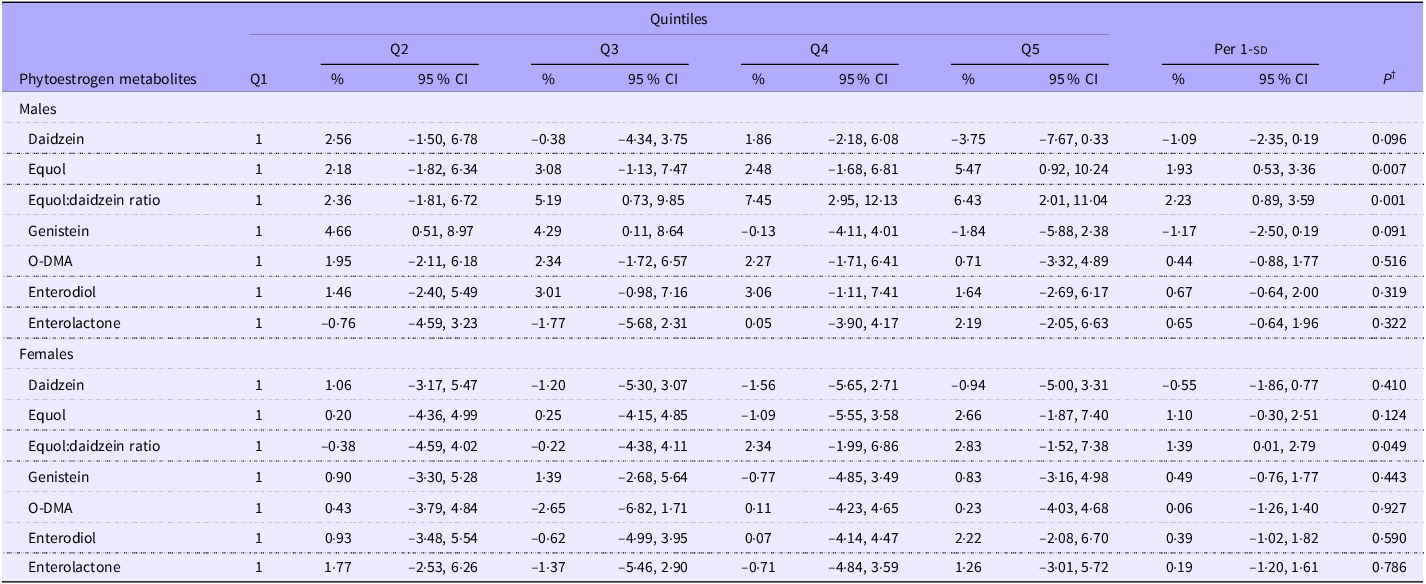
Given the oestrogen-like effects of phytoestrogens, we investigated the sex differences in their effects. In males, a 1-sd increase in equol showed a positive association with leukocyte TL (percent change = 1·93 %; 95 % CI 0·53, 3·36; P = 0·007), while this association was not significant in females (percent change = 1·10 %; 95 % CI –0·30, 2·51; P = 0·124). A 1-sd increase in equol:daidzein ratio was positively associated with leukocyte TL in males (percent change = 2·23 %; 95 % CI 0·89, 3·59; P = 0·001) and in females (percent change = 1·39 %; 95 % CI 0·01, 2·79; P = 0·049, Table 3). Although this finding suggests a stronger association in males than in females, the moderating effect of sex was not statistically significant (P interaction = 0·399 for equol, P interaction = 0·345 for equol:daidzein ratio). In addition, no association was observed between the other five metabolites and leukocyte TL in either males or females (Table 3).
Gender-stratified analysis of the associations of phytoestrogen metabolites with leukocyte TL *
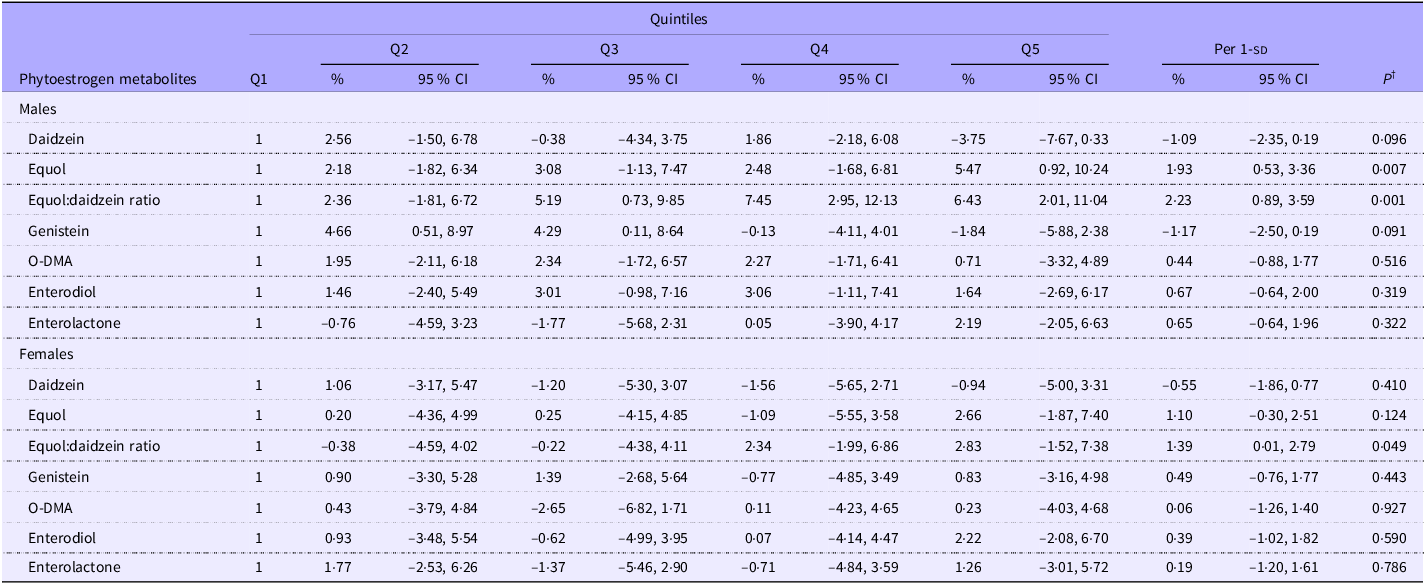
Table 3 Long description
A table titled 'Gender-stratified analysis of the associations of phytoestrogen metabolites with leukocyte TL' presents data on the associations of various phytoestrogen metabolites with leukocyte telomere length (TL) in males and females. The table is divided into quintiles (Q1 to Q5) and includes a column for the effect per 1-sd increase. The phytoestrogen metabolites analyzed include Daidzein, Equol, Equol:daidzein ratio, Genistein, O-DMA, Enterodiol, and Enterolactone. Each row represents a different metabolite, and the columns show the percent change and 95% confidence intervals (CI) for each quintile and per 1-sd increase. The table also includes p-values for the associations. For males, notable associations include a positive association of Equol and Equol:daidzein ratio with leukocyte TL. For females, similar trends are observed but with varying significance. The table highlights the differences in the associations of these metabolites with leukocyte TL between males and females.
TL, telomere length; O-DMA, O-demethylangolensin.
* Percentage change was calculated as (e β –1) × 100 %, based on β coefficients from the multivariable linear regression. Model 1 adjusted for age only. Model 2 was further adjusted for sex, race, education level, BMI, smoking status, drinking status, physical activity and poverty income ratio.
† The test was performed by using z-score in the models to calculate the percentage change per 1-sd increase.
Furthermore, the restricted cubic spline model indicated a linear association between equol and leukocyte TL in males (P overall = 0·026, P non-linear = 0·993), while in females, the association was non-linear (P overall = 0·034, P non-linear = 0·036) with no significant interaction effect (P interaction = 0·269, Figure 1(c)). For the equol:daidzein ratio, the restricted cubic spline model showed a linear association between the ratio and leukocyte TL in males (P overall = 0·002, P non-linear = 0·221). Conversely, in females, the association between the ratio and leukocyte TL disappeared (P overall = 0·143, P non-linear = 0·888) with no significant interaction effect (P interaction = 0·462, Figure 1(d)).
Discussion
Ageing is an inevitable biological process influenced by a multitude of factors, among which diet stands as a key modifiable determinant. Although studies have reported that higher phytoestrogen intake is associated with reduced risk of age-related diseases, the effects of phytoestrogens on the ageing process remain unclear(Reference Wang, Cao and Gao19). This study investigated the potential association between urinary phytoestrogen metabolites and leukocyte TL, a widely utilised biomarker of cellular ageing. The result showed that urinary equol level, including the ratio of equol:daidzein, was positively associated with leukocyte TL, and this relationship persisted after adjustment for demographic and lifestyle confounders.
With the adoption of plant-based diets, consumption of soya and legume-derived foods rich in phytoestrogens has increased significantly. Soya isoflavones and lignans represent the primary dietary phytoestrogens. Equol, a metabolite of soya isoflavones, exhibits higher oestrogenic activity than its precursor daidzein(Reference Xiao, Zhang and Tong20). Previous studies have reported that equol was recognised as the most potent antioxidant among known soya isoflavone metabolites(Reference Chen, Zuo and Hai21). Thus, equol possesses strong oestrogenic activity and antioxidant capacity. Telomeres, the protective caps at chromosome ends(Reference Miner and Graves22), progressively shorten with each cell division. Shorter telomeres are linked to a reduced lifespan and a higher risk of age-related chronic diseases. A study observed that lower oestrogen levels are associated with telomere attrition(Reference Shin and Lee23).
From a mechanistic perspective, equol exerts its antioxidant effects through ERβ-dependent activation of ERK1/2 and modulation of NF-κB signalling, thereby regulating transcriptional activity, cytokine homeostasis and cell survival(Reference Yang, Zhao and Yao24). Equol enhances antioxidant gene expression and enzyme activity, thereby facilitating free radical scavenging and protecting cells from oxidative damage(Reference Gong, Lv and Pang25). Stewart and Lephart reported that equol stimulates the transcription of oestrogen-related receptor γ and enhances the beneficial effects of oestrogen-like compounds(Reference Stewart and Lephart26). Furthermore, in vitro studies indicate that equol suppresses cell proliferation by modulating key signalling pathways, including p53, PI3K/AKT and c-MYC(Reference Zhang, Ren and Yu27).
We further examined sex differences in the associations of equol and its ratio to daidzein with leukocyte TL. Sex-stratified analyses revealed a more pronounced positive association in males, potentially attributable to variations in hormonal profiles and oestrogen receptor expression(Reference Sumien, Chaudhari and Sidhu28), although the interaction term did not reach statistical significance. Schroder et al. indicated that approximately 40–60 % of individuals harbour gut microbiota capable of converting daidzein to equol(Reference Schröder, Matthies and Engst29). This suggests that the beneficial effects of equol not only depend on dietary intake but may also be associated with an individual’s gut microbiota composition.
In humans, the absence of enzymes required to convert daidzein into equol means that equol production relies on the gut microbiota. Current research shows that most equol-producing bacteria belong to the strictly anaerobic bacteria, including genera such as Adlercreutzia, Eggerthella, Asaccharobacter and Enterorhabdus (Reference Zhang, Wang and Wang30). Additionally, some studies have found that species belonging to the genera Lactobacillus, Bifidobacterium and Enterococcus also have the potential to participate in equol production(Reference Heng, Kim and Yang31–Reference Shimada, Yasuda and Takahashi33). These genera are commonly found in the human gut and are involved in the conversion of daidzein to equol. Given the potential benefits of equol and interindividual differences in its biosynthetic capacity, exogenous equol supplementation may represent an attractive option for individuals unable to produce endogenous equol. Equol has been explored as a dietary supplement and has exhibited promising efficacy in managing oestrogen deficiency in women through hormone replacement therapy, as well as in the treatment of prostate diseases in men(Reference Stewart and Lephart26). A double-blind trial showed that acute soya intake reduced cardiovascular risk in equol producers, whereas a single dose of commercially produced equol provided little cardiometabolic benefit for non-producers(Reference Hazim, Curtis and Schär34). The Arterial Stiffness, Cognition, and Equol (ACE) trial has evaluated equol as a selective oestrogen receptor-β agonist for its potential roles in improving arterial stiffness, modulating vascular and cognitive function(Reference Sekikawa, Wharton and Murray-Krezan35).
Owing to its potent biological activity among soya isoflavones and their metabolites, equol has attracted increasing attention for its potential health benefits in human intervention studies. In a crossover randomised controlled trial, Usui et al. reported that S-equol supplementation significantly improved arterial stiffness and may contribute to glycaemic control and the prevention of CVD(Reference Usui, Tochiya and Sasaki36). A subgroup analysis of a randomised controlled trial investigating soya isoflavone intake and cognitive outcomes indicated that S-equol may possess the potential to slow cognitive decline(Reference Henderson, St John and Hodis37). A study conducted in middle-aged Japanese women reported that one year of S-equol supplementation was associated with improvements in specific skeletal and cardiovascular outcomes among participants(Reference Yoshikata, Myint and Ohta38). In addition, S-equol supplementation has been applied to improve oestrogen levels in women and to support prostate health in men(Reference Stewart and Lephart26).
Traditionally, diets were primarily based on minimally processed or natural foods, with phytochemicals such as soya isoflavones mainly derived from sources like soyabeans, tofu and fermented soya products. The rise of food processing has increased the prevalence of highly processed foods, often leading to nutrient loss and potential health risks from additives(Reference Rizzo and Baroni39). Therefore, the potential effects of these dietary changes on soya isoflavone intake and metabolism warrant consideration.
This study has several limitations. First, the cross-sectional design prevented the establishment of causal relationships. Second, the concentration of phytoestrogen metabolites in urine reflected short-term exposure levels, which might not accurately represent long-term intake or metabolic capacity. Third, equol-producing capacity was assessed under usual dietary conditions rather than under conditions of sufficient soya intake. Finally, although we adjusted for multiple potential confounders, residual confounding due to unmeasured variables may still exist.
In conclusion, equol and the equol:daidzein ratio were positively associated with leukocyte TL in this cross-sectional study. However, whether equol plays a causal role in telomere maintenance remains to be determined.
Supplementary material
For supplementary material/s referred to in this article, please visit https://doi.org/10.1017/S0007114526106977
Acknowledgements
None.
This work was supported by the Natural Science Fund of the Education Department of Anhui Province (2024AH051939, 2024AH051941) and the Doctoral Starting up Foundation of Wannan Medical College (WYRCQD2023020).
F. Z.: Software, Formal analysis, Writing – original draft. Y. L.: Conceptualisation, Methodology. L. D.: Validation. W. C.: Data curation, Funding acquisition. F. L.: Writing – review & editing. Y. Z.: Funding acquisition, Project administration, Supervision, Writing – review & editing.
No potential conflicts of interest relevant to this article were reported.
Data are freely available at the NHANES homepage (https://www.cdc.gov/nchs/nhanes/).
The National Center for Health Statistics approved the NHANES study protocol, and all participants provided written informed consent. The Institutional Review Board at our institute determined that this analysis used a public dataset, so human subjects’ approval was waived.
There was no material reproduced from other sources.