Introduction
In most cases, the recommended treatment for T4a larynx and hypopharynx cancer is surgery in the form of total laryngectomy when considered resectable.1,Reference Forastiere, Ismaila and Lewin2 However, in select patients, non-surgical treatment may be an option.1 Recent updates to the American Society of Clinical Oncology guidelines have supported the use of organ preservation for these select (low volume) T4 larynx and hypopharynx cancers, especially in patients with a functional larynx.Reference Forastiere, Ismaila and Lewin2
The Veterans Affairs trial and European Organisation for Research and Treatment of Cancer-24891 trials were the two randomised trials that initially paved the way for non-surgical larynx preservation in advanced laryngeal and hypopharyngeal cancer.Reference Wolf, Fisher, Hong, Hillman and Spaulding3,Reference Lefebvre, Chevalier and Luboinski4 The Radiation Therapy Oncology Group 91-11 established concurrent chemoradiotherapy as the standard of care for advanced laryngeal cancer,Reference Forastiere, Goepfert and Maor5 and the same treatment was extrapolated to be the standard of care for carcinoma of the hypopharynx. However, the number of patients enrolled with T4 cancer in all of these trials was fewer than patients with T1 to T3 cancer. In the Veterans Affairs trial, about 26 per cent of the patients had T4 cancer, whereas only 5 per cent of patients with T4 cancer were included in the European Organisation for Research and Treatment of Cancer trial.Reference Wolf, Fisher, Hong, Hillman and Spaulding3,Reference Lefebvre, Chevalier and Luboinski4 The number of patients with T4 cancers in the Radiation Therapy Oncology Group 91-11 was only 10 per cent.Reference Forastiere, Goepfert and Maor5 Salvage laryngectomy was required in 56 per cent of the cases with T4a disease who received chemotherapy in the Veterans Affairs trial, whereas in the Radiation Therapy Oncology Group 91-11 47.6 per cent of the cases with T4 lesions underwent a salvage laryngectomy.Reference Silverman, Puram, Rocco, Old and Kang6
Although numerous randomised, controlled trials (RCTs) have shown notable organ preservation for T3 cancer without compromising overall survival, the number of patients with actual T4a cancer was fewer in these landmark trials. Some centres, including ours, offer an organ preservation protocol to patients with T4a cancer that is attributable to extralaryngeal spread through the thyrohyoid membrane without cartilage erosion and with functional larynx as per the American Society of Clinical Oncology recommendations.Reference Forastiere, Ismaila and Lewin2 Therefore, we undertook this study to analyse the pattern of care for patients with T4a larynx cancer at our institute and their outcomes.
Materials and methods
This retrospective study was conducted after obtaining approval from the Institutional Ethics Committee. Treatment naïve patients with T4a (as per American Joint Committee on Cancer 7th edition)Reference Edge, Byrd, Compton, Fritz, Greene and Trotti7 larynx and hypopharynx cancer with squamous cell carcinoma histology, who were considered to be cases suitable for upfront resection and who received curative-intent treatment between January 2012 and December 2016, were included in the study. Patients receiving neoadjuvant chemotherapy and those receiving treatment for second primary or recurrent diseases were excluded from the study. Patients satisfying the eligibility criteria were included in the final analysis.
Patients with laryngeal and hypopharyngeal carcinoma who fulfilled the eligibility criteria were included. As part of the institutional protocol, all patients with carcinoma of the larynx or hypopharynx underwent an endoscopic evaluation and biopsy along with imaging (contrast enhanced computed tomography) for proper staging of their cancer. The decisions regarding the treatment of the patients were taken at the tumour multidisciplinary team (MDT) meetings. The clinical details were retrieved from the hospital's electronic medical records. The details regarding the imaging were also retrieved from our hospital Picture Archiving and Communication System in addition to those available in the electronic medical records.
All patients who were treated with surgery underwent total laryngectomy with primary tracheoesophageal prosthesis and bilateral neck dissection addressing levels II–IV in N0 neck and levels II–V in node positive neck. This was followed by adjuvant radiotherapy with or without the addition of chemotherapy (30 mg/m2 weekly cisplatin) in the presence of positive margins and extranodal extension. Patients who received organ preservation treatment received concurrent chemoradiotherapy of 70 Gy in 35 fractions (2 Gy per fraction over 7 weeks) with 30 mg/m2 weekly cisplatin.
The radiotherapy fields included primary and bilateral draining lymph nodes. Gross disease with involved lymph nodes received a dose equivalent of 70 Gy in 35 fractions over 7 weeks, whereas elective areas of irradiation (nodes at risk of harbouring microscopic disease) received a dose equivalent of 50 Gy in 25 fractions over 5 weeks. The decision for organ preservation treatment was considered predominantly in patients with extralaryngeal spread via the thyrohyoid membrane without cartilage erosion in the presence of a functional larynx (without feeding tube or tracheostomy tube dependence) and because of patient wishes. The larynx was considered dysfunctional in the presence of a tracheostomy tube, feeding tube or overt aspiration. All patients undergoing organ preservation treatment were evaluated 2–3 months after completion of treatment. Salvage laryngectomy was considered in the presence of recurrence (when considered resectable)
Outcome measures and statistical analysis
The following details of patients included in the study were collected for analysis: demographic and clinical details including gender, age, site (larynx vs hypopharynx), T-stage, N-stage, functional status of the larynx, presence and type of extralaryngeal spread, type of cartilage involved (in the presence of erosion), presence of subglottic extension, joint clinic treatment plan (surgery vs organ preservation protocol), adjuvant treatment (if patients underwent upfront surgery), recurrence of cancer following treatment, the time to recurrence, site of recurrence, salvage surgery (laryngectomy or neck dissection), and status at last follow up.
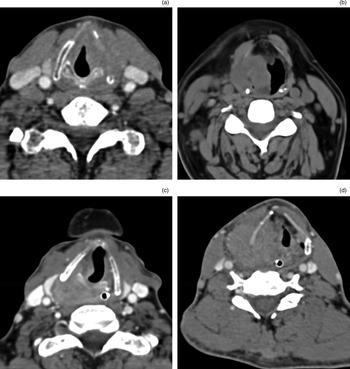
We analysed and compared the overall survival of patients receiving surgical and non-surgical treatment (organ preservation protocol) in T4a laryngeal and hypopharyngeal tumours. Patients with T4a carcinoma of the larynx and hypopharynx were further subdivided into three groups: group A (Figures 1a, 2b and 2c), with presence of only extralaryngeal spread (through the membrane, most commonly thyrohyoid membrane) without cartilage erosion; group B (Figures 1b and 2a), with presence of only cartilage erosion; and group C (Figures 1c and 2d), with presence of both extralaryngeal spread via the thyrohyoid or cricothyroid membrane along with cartilage erosion. We performed a subgroup analysis for overall survival for patients in groups A, B and C receiving surgery or non-surgical treatment (organ preservation treatment).
Diagram depicting: (a) group A (extralaryngeal spread only without cartilage erosion), (b) group B (cartilage erosion only) and (c) group C (both extralaryngeal spread and cartilage erosion).

The axial sections of the contrast-enhanced computed tomography scan images depicting: (a) thyroid cartilage erosion and extralaryngeal spread (group B), (b and c) extralaryngeal spread via the thyrohyoid membrane without cartilage erosion (group A), and (d) extralaryngeal spread via both thyroid cartilage erosion and via thyrohyoid ligament (group C).

Statistical analysis was performed using SPSS® (version 21.0) statistical analysis software. Pearson chi-square test was used for comparison of patient and tumour characteristics distribution among the three groups. Survival analysis was performed using the log-rank test (univariate) and Cox proportional hazard model (multivariate) method. A p-value less than or equal to 0.05 (with hazard ratio and 95 per cent confidence interval (CI)) was considered to be statistically significant.
Results
Clinical and demographic details
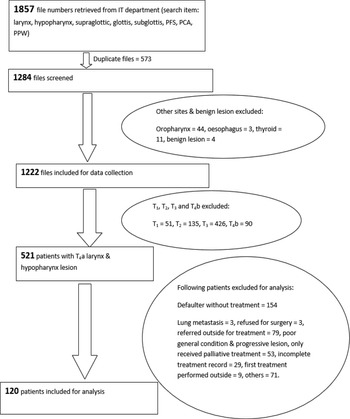
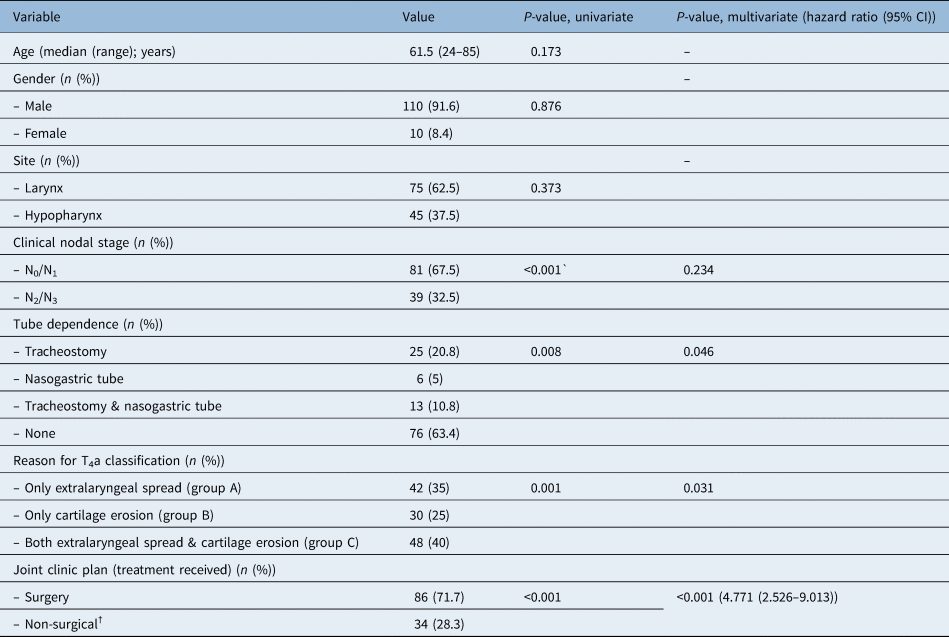
Out of 1857 cases registered in the specified period, 120 patients satisfied the eligibility criteria (Figure 3). The median age was 61.5 years, with the majority being male patients (n = 110, 91.6 per cent). The larynx was the most common site (n = 75, 62.5 per cent), with the supraglottis (n = 44) being the commonest subsite. Subglottic extension (on imaging) was noticed in 30 patients (25 per cent). Most patients had node positive disease (n = 62, 51.6 per cent). Forty-four patients (36.6 per cent) had tracheostomy tubes or feeding tubes or both. Eighty-six patients (n = 86, 71.7 per cent) underwent total laryngectomy followed by adjuvant radiotherapy, and the remaining patients received non-surgical treatment (n = 34, 28.3 per cent).
Flow chart showing how the 120 patients were included in the study. IT = information technology; PFS = pyriform sinus; PCA = post-cricoid area; PPW = posterior pharyngeal wall

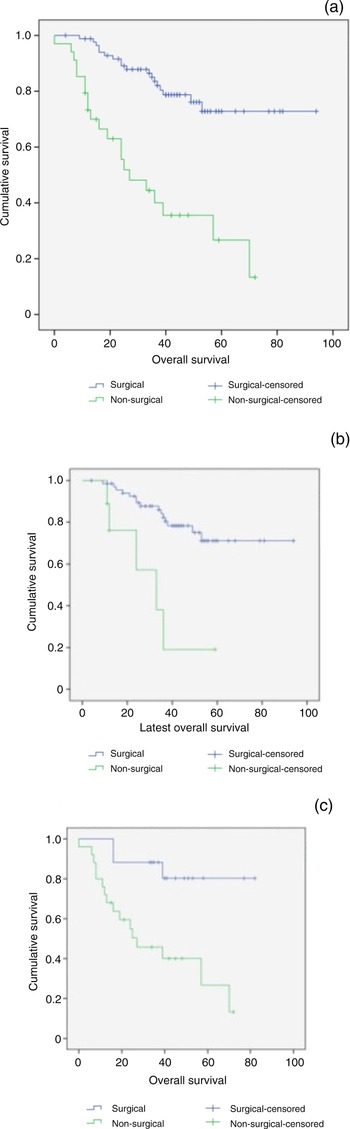
The overall survival curves for (a) the entire cohort, (b) those with extralaryngeal spread and cartilage erosion (groups B and C) and (c) for those with only extralaryngeal spread via the laryngeal membrane (thyrohyoid) without cartilage erosion (group A).

Treatment details
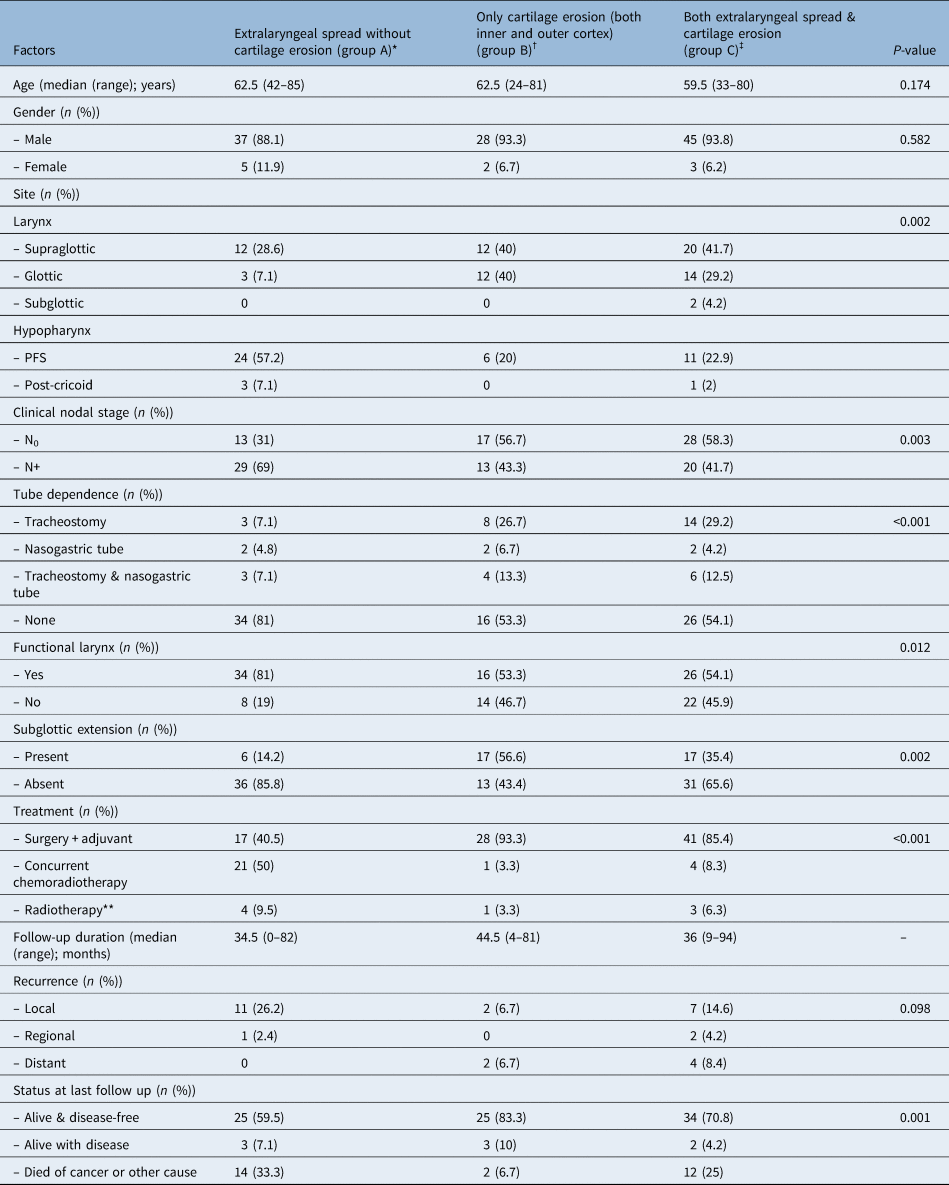
Out of 42 patients in group A, the majority had hypopharyngeal primary cancer (n = 27, 64.3 per cent), a few patients had subglottic extension (n = 6; 14.2 per cent) and most had a functional larynx (n = 34, 81 per cent). Most patients in this group received non-surgical treatment (organ preservation treatment; n = 25, 59.5 per cent), and the remaining patients (n = 17, 40.5 per cent) underwent total laryngectomy followed by adjuvant treatment (Table 1).
Demographic and clinical details of patients with T4a larynx and hypopharynx carcinoma

*n = 42; †n = 30; ‡n = 48; **The reason for providing only radiotherapy was advanced age or abnormal renal function; PFS = pyriform sinus
The majority of the patients in group B and group C underwent surgery followed by adjuvant treatment. Those patients who received organ preservation treatment (concurrent chemoradiotherapy and radiotherapy) in group B and C were those who refused surgery. Most patients had laryngeal primary cancer (mostly supraglottic primary cancer, n = 44), with a significant number of these patients having a subglottic extension and dysfunctional larynx. Further details are given in Table 1. Among the 36 patients who underwent organ preservation treatment, 8 patients received only RT (66–70 Gy) as they were considered unfit for concurrent chemotherapy. Among the remaining 26 who received concurrent chemoradiotherapy, all patients except two received at least 66–70 Gy radiotherapy. Twenty-three patients received at least 5 cycles of concurrent cisplatin, and 1 patient received 7 cycles of carboplatin. The patients completed their treatment in a median duration of 51 days.
Treatment outcomes
Non-surgical treatment groups showed significantly high recurrence (n = 21 of 34, 61.77 per cent) in comparison with surgical treatment (n = 16 of 86, 18.6 per cent; p < 0.001). In particular, 36 per cent (n = 12 of 25) of patients belonging to group A who received organ preservation treatment had recurrences which were predominantly at the local site (Table 1); however, the pattern of recurrences was not statistically significant, though showed a trend, between the 3 groups. Salvage laryngectomy was possible in only three patients with recurrence overall. One patient required only a salvage neck dissection for nodal recurrence.
The median overall survival for patients who underwent non-surgical treatment was 36 months (95 per cent CI = 26.9–45.4), whereas for surgically treated patients it was 77 months (95 per cent CI = 70.1–83.9; p < 0.001). On subset analysis, overall survival was 69.9 months, 75 months, and 69.7 months with surgical treatment and 36.3 months, 11.5 months, and 38 months with organ preservation treatment for groups A, B and C, respectively. The single most important factor determining the overall survival on multivariate analysis was the decision for treatment (surgery vs organ preservation treatment) (p < 0.001; hazard ratio, 4.771; 95 per cent CI = 2.526–9.013); Table 2).
Univariate and multivariate analysis for factors influencing the overall survival*

*n = 120; †concurrent chemoradiotherapy and only radiotherapy in a few patients. CI = confidence interval
Discussion
Patients with T4a laryngeal or hypopharyngeal cancer treated by surgery followed by adjuvant therapy had better overall survival in comparison with those treated with organ preservation treatment in the present analysis. This was evident even among patients with extralaryngeal spread through the thyrohyoid membrane without cartilage erosion and with a functional larynx where organ preservation treatment was preferred. The decision to offer surgery versus non-surgical treatment options (organ preservation treatment) was the single most important factor influencing survival.
Non-surgical treatment modalities for laryngeal and hypopharyngeal cancers have been recommended by various guidelines and have also been implemented in many countries since the publication of the results of the landmark trials on organ preservation.Reference Forastiere, Ismaila and Lewin2,Reference Wolf, Fisher, Hong, Hillman and Spaulding3,Reference Lefebvre, Chevalier and Luboinski4,Reference Forastiere, Goepfert and Maor5 However, there is only one RCT comparing upfront surgery versus organ preservation treatment (concurrent chemoradiotherapy) for laryngeal and hypopharyngeal carcinoma.Reference Iyer, Tan, Tan, Wang, Hwang and Tan8 Though Iyer et al. concluded that there was no difference in survival between the upfront surgery and concurrent chemoradiotherapy arms in this study, there was a major limitation as the number of patients with larynx (n = 38) and hypopharynx (n = 14) carcinoma were very few.Reference Iyer, Tan, Tan, Wang, Hwang and Tan8 At our institute, an RCT was initiated comparing concurrent chemoradiotherapy versus surgery (total laryngectomy) followed by adjuvant treatment in advanced laryngopharyngeal primary cancers (NCT00128817).9 However, the trial had to be terminated prematurely because of poor accrual. Therefore, the availability of level I evidence for T4a laryngeal and hypopharyngeal tumours in particular is limited.
At our tumour MDT meetings, patients with T4a cancer because of cartilage erosion are offered surgery, and non-surgical treatment is offered only to those patients refusing surgery. But in a few T4a patients, where cartilage is not eroded and the larynx is functional, the treatment decision becomes difficult for the MDT clinic. This is reflected in the findings of our study. Some members of the MDT prefer non-surgical treatment because of a functional larynx with no cartilage erosion whereas others prefer surgical treatment because of the better survival with total laryngectomy for T4a cancer. This question can be answered only in a randomised trial, which seems unlikely given that our previous effort had to be terminated prematurely.9 However, it is important to remember that initial treatment selection in T4a laryngeal and hypopharyngeal carcinoma is crucial because surgical salvage may not always be possible and may adversely affect survival.Reference Edge, Byrd, Compton, Fritz, Greene and Trotti7
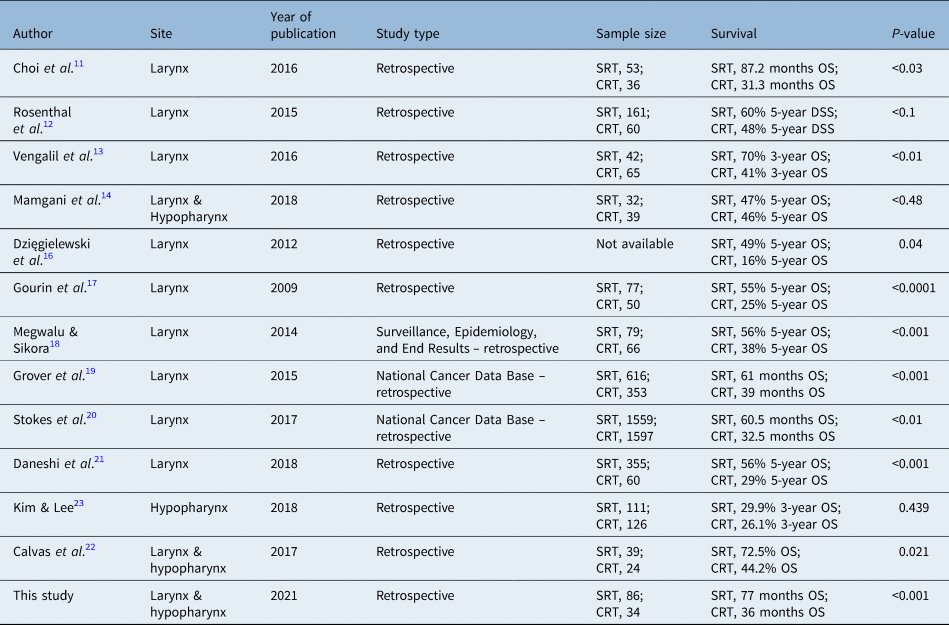
The main concern of non-surgical treatment is compromised overall survival in comparison to total laryngectomy. Various studies have supported this concern (Table 3). Hoffman et al. showed that there was decreased survival recorded for patients with laryngeal cancer in the mid-1990s, which coincided with the period wherein non-surgical treatment protocols were offered more often in these patients. However, the article mainly dealt with T3 larynx cancer.Reference Hoffman, Porter, Karnell, Cooper, Weber and Langer10
Studies similar to this study and their salient findings

*SRT = surgery followed by adjuvant radiotherapy; CRT = chemoradiotherapy; DSS = disease-specific survival; OS = overall survival
Choi et al. did a multicentric retrospective study to find out the survival outcome in T4a larynx cancer with cartilage erosion.Reference Choi, Park, Song, Cho, Park and Park11 Eighty-nine patients were included in the study, with 53 patients who underwent total laryngectomy and 36 patients who were treated with organ preservation treatment. The median overall survival of the surgical group and non-surgical group were 87.2 months and 31.3 months, respectively.Reference Choi, Park, Song, Cho, Park and Park11 Similarly, our study also showed better survival in patients who received surgical treatment. The mean survival time of the surgical group and non-surgical groups was 76.2 months and 31.6 months, respectively, in our study.
Rosenthal et al., in a retrospective study evaluating long-term outcomes in T4 larynx cancer at MD Anderson Cancer Center showed that patients receiving surgery followed by adjuvant therapy had better locoregional recurrence-free survival and better functional outcomes in comparison with those receiving non-surgical treatment.Reference Rosenthal, Mohamed, Weber, Garden, Sevak and Kies12 They cautioned that there was functional impairment following non-surgical treatment in T4 larynx cancer despite survival equivalence; therefore they concluded that caution needs to be exercised while considering non-surgical treatment options in patients with T4 laryngeal cancer. The other retrospective studies by Vengalil et al., Mamgani et al., Dyckhoff et al. and others have also found better locoregional control and overall survival in the patients undergoing upfront surgery (total laryngectomy) (Table 3).Reference Vengalil, Giuliani, Huang, McNiven, Song and Xu13–Reference Kim and Lee23
Bradford et al., did a subgroup analysis of the Veterans Affairs trial data to look for chemotherapy response in laryngeal cancer patients. Results showed that patients with T4a lesions had 5.6 times inferior responses than those at other stages. This data also showed there was a 7.1 times lower larynx preservation rate in T4a lesions.Reference Bradford24 Parson et al. showed only a 25 per cent salvage rate in T4a laryngeal cancer compared with other stages which had more than 50 per cent salvage rates.Reference Parsons, Mendenhall, Stringer, Cassisi and Million25 In our study, we also observed a lower salvage rate of 9 per cent, thus demonstrating a low rate of salvage surgery in T4a lesions.
In the Radiation Therapy Oncology Group 91-11, several patients died for unexplained reasons but possibly because of silent aspiration and pneumonia attributable to late toxicity of concurrent chemoradiotherapy.Reference Forastiere, Zhang, Weber, Maor, Goepfart and Pajak26 The other reason may include interruption of treatment either because of treatment-related toxicity or patient-related compliance issues. In our study, out of the 36 patients who received non-surgical treatment, 8 patients received only radiotherapy as they were considered not fit for chemotherapy (surgery was not performed as the patients were unwilling). Out of the remaining 26 patients, 24 patients received at least 5 cycles of concurrent chemotherapy along with radiotherapy. Sharma et al. showed that only 19 per cent of patients receiving organ preservation treatment completed the treatment in the prescribed duration, and 14 per cent did not complete the treatment because of poor compliance.Reference Sharma, Jagadesan, Chaudhari, Das, Bhaskar and Thakar27 Another study by Muzumder et al. showed that 19.6 per cent of patients were not able to complete radiotherapy, 31 per cent of patients had unscheduled radiotherapy breaks of more than 2 days and 66.7 per cent of patients did not receive planned chemotherapy because of treatment-related toxicity.Reference Muzumder, Srikantia, Udayashankar, Kainthaje and John Sebastian28 Thus, factors such as lower response to chemotherapy, a low rate of salvage, cumulative treatment-related toxicity, poor patient compliance and treatment interruptions could contribute to poor outcomes in patients with T4a laryngeal primary cancer receiving non-surgical treatment.
One of the arguments to prefer non-surgical treatment options over surgical options, even for T4a laryngeal and hypopharyngeal cancer, is that total laryngectomy leads to poor quality of life. However, after total laryngectomy, patients with good speech rehabilitation can have a good quality of voice and better communication skills. Studies by Hanna et al.Reference Hanna, Sherman, Cash, Adams, Vural and Fan29 and Trivedi, et al.Reference Trivedi, Swaminathan, Thankappan, Chatni, Kuriakose and Iyer30 showed a similar quality of life in patients treated with either total laryngectomy or organ preservation treatment. Speech quality was almost similar to that of the non-surgical treatment cases as a result of speech rehabilitation by tracheoesophageal prosthesis and extensive speech training.Reference Hanna, Sherman, Cash, Adams, Vural and Fan29 Therefore, surgical treatment seems to offer comparable quality of life to non-surgical modalities with the added advantage of survival benefits. Therefore, total laryngectomy should be the preferred option for T4a stage larynx and hypopharyngeal cancer.
Our study looks at the outcomes of surgical and non-surgical treatment options in an exclusive cohort of patients with T4a laryngeal and hypopharyngeal cancer treated over five years with a reasonable follow up. A prospective randomised study in this setting is quite unlikely, and evidence such as this could add to the available body of evidence for deciding treatment for T4a laryngeal and hypopharyngeal carcinoma. However, it has the inherent limitations of all retrospective studies.
• Surgery is the preferred treatment for T4a laryngeal and hypopharyngeal carcinoma
• Some patients may receive non-surgical treatment, especially those with extralaryngeal spread without cartilage erosion along with intact laryngeal function
• Overall survival is better among patients receiving surgery in comparison with those receiving non-surgical treatment
Conclusion
Management of T4a laryngeal and hypopharyngeal cancer requires an MDT approach. The treatment options and their outcomes need to be openly discussed with the patients. Patient selection for non-surgical treatment options needs to be undertaken only in a select few after a frank discussion with the patient. In our study, patients with T4a laryngeal and hypopharyngeal cancer, even those with only extralaryngeal spread without cartilage erosion, had better overall survival with surgery followed by adjuvant treatment. Non-surgical options should be considered only in those patients who are medically unfit or are unwilling for surgery, after fully understanding the outcomes.
Competing interests
None declared