Teeth are particularly resistant to deterioration and postdepositional degradation; hence they are better preserved than bones and, in many cases, are the only source of information remaining intact that we have about past human populations (Huss-Ashmore et al. Reference Huss-Ashmore, Goodman, Armelagos and Schiffer1982). Studying the diet of a human group through their dentition allows us to infer the type of food that is usually consumed, techniques of preparation, and paramasticatory activities (Scott and Turner Reference Scott and Turner1988).
In recent years, a number of studies have been conducted on the diet and oral health of ancient populations of southern South America (e.g., Barrientos Reference Barrientos1999; Bernal et al. Reference Bernal, Novellino, González and Pérez2007; Bonomo et al. Reference Bonomo, Scabuzzo, Politis and Zucol2017; Flensborg et al. Reference Flensborg, Martínez and Tessone2018; Gil et al. Reference Gil, Menéndez, Atencio, Peralta, Neme and Ugan2017; L'Heureax Reference L'Heureax2000; Novellino Reference Novellino, Gil and Neme2002; Novellino and Gil Reference Novellino and Gil2007; Novellino et al. Reference Novellino, Gil, Neme and Durán2004; Ottalagano and Loponte Reference Ottalagano and Loponte2016; Tessone et al. Reference Tessone, Zangrando, Barrientos, Goñi, Panarello and Cagnoni2009). Despite this focused attention, the lifestyle of the populations of central Argentina has not been systematically addressed. Some limited exploration of dental wear or dental hypoplasia can be found in research articles or archaeological reports (Fabra Reference Fabra1999), but it was not until recently that this analysis has been conducted at a regional scale (Fabra and González Reference Fabra and González2015; Fabra et al. Reference Fabra, González and Salega2012, Reference Fabra, Nores, Salega, González, Luna, Aranda and Suby2014; González Reference González2016; González and Fabra Reference González and Fabra2018; Laguens et al. Reference Laguens, Fabra, dos Santos and Demarchi2009).
The last few decades of archaeological research in the central region of Argentina—more precisely, the area occupied by the central hills and pampas to the east within the province of Córdoba—have indicated that the region was occupied 10,000 years ago. Its inhabitants developed diverse and successful adaptations to the environment (Laguens Reference Laguens1999; Laguens and Bonnin Reference Laguens and Bonnin2009). Throughout the Holocene, they developed effective technologies and modes of exploitation of resources, maintaining hunting and gathering subsistence strategies for several millennia. At around 2000–1500 BP, new technologies and processes, including ceramic production, a sedentary lifestyle, and the incorporation of horticultural practices, complemented previous hunting and gathering strategies. These processes represented a new way of life that was distinct from those developing in other regions of Argentina. These new lifestyles, however, were not uniform across the province of Córdoba. The various adaptations to the highland and lowland environments suggest the existence of multiple ethnic groups, contradicting claims of cultural unity made by the Spanish chroniclers (Laguens Reference Laguens1999; Laguens and Bonnin Reference Laguens and Bonnin2009; Pastor et al. Reference Pastor, Medina and Berberian2013). The archaeological record also suggests that between 1000 and 500 BP there was a deterioration in the quality of life of people coinciding with population growth and an intensive exploitation of space, which put pressure on available resources in different environments (Laguens and Bonnin Reference Laguens and Bonnin2009).
Bioarchaeological studies on health and physical activity levels show an increase in the frequency of certain diseases and biological markers of stress toward the end of the Late Holocene, in the years leading to 500 BP (Fabra and González Reference Fabra and González2015; Fabra et al. Reference Fabra, González and Salega2012). These likely indicate increasing environmental and social stress, resulting in the emergence of potential social conflicts over new territories for settlement and exploitation of resources (Fabra et al. Reference Fabra, González and Robin2015; Laguens and Bonnin Reference Laguens and Bonnin2009; Pastor et al. Reference Pastor, Recalde, Tissera, Ocampo, Truyol and Chiavassa-Arias2015).
Against the background of this larger context of research, this article offers a contribution to the study of the diet and oral health of the human populations inhabiting the central region of Argentina, particularly those who lived on the central highlands and eastern lowlands of Córdoba Province during the Late Holocene (4000–300 BP). Our analysis of stable isotopes (δ13Ccol, δ15N), physiological stress indicators (tooth wear), and infectious dental diseases (caries) found clear regional and temporal differentiation and a slight deterioration in oral health in the Late Holocene.
Materials and Methods
Study Area
The individuals analyzed in this study originate from central Argentina, between 30° and 35° south latitude and 62° and 66° west longitude, an area corresponding to the central highlands and eastern lowlands of Córdoba Province. The eastern pampas plains are bordered by hills to the west. Two phytogeographic regions are present: the Espinal Forest and Chaqueño Subtropical Forest, each exhibiting a predominance of Prosopis sp. (algarrobos), Schinopsis sp. (quebracho colorado), Celtis ehrenbergiana (tala), Aspidosperma quebracho-blanco (white quebracho), Ziziphus mistol (mistol), Prosopis nigra (black algarrobo), Prosopis caldenia (caldén), Schinus fasciculatus (black molle or moradillo), and several shrub species of the Acacia genus (Cabido et al. Reference Cabido, Zeballos, Zak, Carranza, Giorgis, Cantero and Acosta2018). In the northern part of the region there are two major wetlands: Laguna Mar Chiquita in the northeast and Salinas Grandes in the northwest. Paleoclimatic reconstructions show an alternation between cold and dry phases, the maximum peak of which occurred at around 4700 BP (Piovano et al. Reference Piovano, Ariztegui, Córdoba, Cioccale, Sylvestre, Vimeux, Sylvestre and Khodri2009), and warm and humid periods, particularly in the Medieval Warm Period between 1100 and 1400 BP. This latter period coincided with greater population growth of the region's indigenous societies (Laguens and Bonnin Reference Laguens and Bonnin2009). The present-day climate can be defined as subtropical semiarid monsoon, with temperatures ranging from mild to warm and with generally scarce rainfall during the summer months (Osterrieth and Zucol Reference Osterrieth and Zucol2000).
The Sample
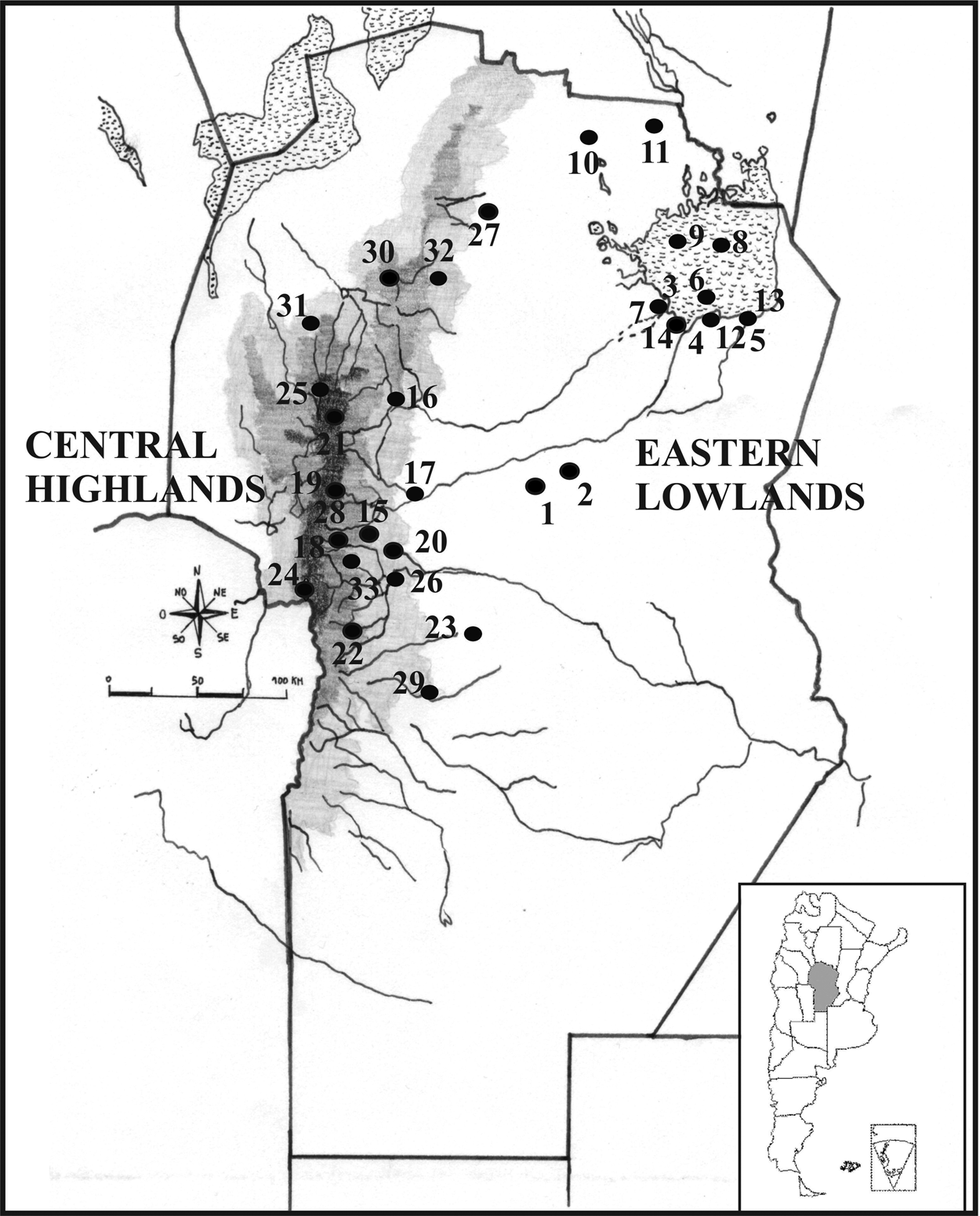
In this work we analyzed the permanent dentition of 33 adult males and 16 adult females (1,026 teeth and 1,265 tooth sockets) from 33 archaeological sites located in the central highlands (n = 19) and in the eastern lowlands region (n = 14), in Córdoba Province (Figure 1).
Geographic location of archaeological sites analyzed in this study. Eastern lowlands: (1) Costasacate, (2) Rincon, (3) Ea. La Elisa, (4) El Diquecito, (5) Colonia Muller, (6) Laguna del Plata, (7) Marull, (8) Isla Tigre, (9) El Mistolar, (10) Laguna de la Sal, (11) Rio Dulce, (12) Orihuela, (13) Isla Orihuela, (14) La Para. Central Highlands: (15) Copina, (16) El Vado, (17) La Granaja, (18) Cuesta Blanca, (19) Potrerillo de Larreta, (20) Los Molinos, (21) San Esteban, (22) Loma Bola, (23) Quillinzo, (24) Guasmara, (25) Rosca Yaco, (26) Banda Meridional del Lago, (27) Cerro Colorado, (28) Constantinopla, (29) Santa Rosa, (30) Ischilin, (31) Charquina, (32) Nunsacat, (33) Copina.

The bioanthropological analyses were performed following the procedures established by Buikstra and Ubelaker (Reference Buikstra and Ubelaker1994). For adult sex determination we considered morphological characteristics of the pelvis (the subpubic region, sciatic notch, and preauricular sulcus) and features of cranial morphology (the nuchal crest, size of the mastoid process, prominence of the glabella, and projection of chin eminence).
We dated the 49 individuals through AMS on collagen, finding a range of 4058 ± 89 and 370 ± 15 14C BP. We recovered related δ13Ccol (n = 35) and δ15N (n = 26) information during the dating process. This work is based on isotopic data already published, although we present nine new samples from the region (see Supplemental Table 1 for information regarding the archaeological sites from which the individuals come, the regions to which they were assigned, the chronological and isotopic data, type of material analyzed, and earlier bibliographical references).
Methodology
We consider dental caries to be a multifactorial disease stemming from the demineralization of dental tissue caused by organic acids, which are produced by oral bacteria (Lukacs Reference John, Iscan and Kennedy1989; Simón-Soro and Mira Reference Simón-Soro and Mira2015). We recorded dental caries as present or absent and lesion location (crown, root), size, severity, and chronicity, following Buikstra and Ubelaker (Reference Buikstra and Ubelaker1994), Hillson (Reference Hillson2001), and Lanfranco and Eggers (Reference Lanfranco and Eggers2010). Lanfranco and Eggers (Reference Lanfranco and Eggers2010) suggest that, to account for the chronicity of carious lesions, one must record their locations (occlusal, extra-occlusal) and depths in addition to their frequencies; they claim that changes in location and depth are associated with the adoption of agriculture. Rates of dental caries were calculated by dividing the number of carious teeth by the total number of observable teeth.
There are several methods for recording and evaluating the degree of dental wear (Molnar Reference Molnar1971; Scott Reference Scott1979). We used Smith's (Reference Smith1984) method, which consists of an ordinal scale with eight degrees of wear and inspection at the macroscopic level. This method allows recording of the entire dental arch and comparison with other studies because it is widely used in dental anthropology.
We analyzed the stable isotope ratios of carbon (δ13Ccol) and nitrogen (δ15Ncol) and the 14C ages, both obtained from the organic fraction of bone. The analyses were done with bone collagen and tooth dentine in the samples taken from the 49 individuals. These samples were analyzed at three facilities. First, stable isotope analysis of bone samples with MTC laboratory codes was conducted at the Graduate School of Frontier Sciences, University of Tokyo, and 14C-dating of the samples was done at the university with a micro analysis laboratory tandem accelerator (MALT). Collagen extraction was based on the adjusted Longin method (Longin Reference Longin1971; Yoneda et al. Reference Yoneda, Tanaka, Shibata, Morita, Uzawa, Hirota and Uchida2002). At the second analytical facility, the KCCAMS/UCI, University of Irvine–California, we analyzed bone and dentine samples with UCI laboratory codes. Collagen extraction and graphitization were conducted following established protocols (Brown et al. Reference Thomas A., Erle Nelson, Vogel and Southon1988; Santos et al. Reference Guaciara, Southon, Druffel-Rodriguez, Griffin and Mazon2004), as described in Laguens and colleagues (Reference Laguens and Bonnin2009). The measurement error estimated from running standards was 0.1‰ for δ 13Ccol. The third facility was the Arizona AMS facility (AA laboratory code) where radiocarbon dates and reported values of δ13Ccol were determined. The preservation of collagen was estimated using C:N ratios. We eliminated collagen samples with C:N ratios outside the 2.9–3.6 range, because these samples were likely to have been exposed to diagenetic alteration (Ambrose Reference Ambrose1990). Samples were subjected to graphitization to measure their 14C dates. Unfortunately, C:N ratios were not measured for some samples analyzed at the Arizona AMS facility.
Given that one of the objectives of this study was to investigate the diversity of health patterns present among humans who lived in this region during the Late Holocene, it was important to consider the temporal assignation and geographical origin of the sample population. We acknowledge that the total sample size was small and that many archaeological sites are represented by only one individual; unfortunately these are the characteristics of the majority of sites in the region. We analyzed isotopic values in relation to the entire sample and made temporal and regional comparisons by sex, analyzing their correlation with the prevalence of caries and dental wear as indirect indicators of diet and health. We then compared the results with those of the isotopic ecologies of neighboring regions, particularly those of the Argentine Central West region (Gil et al. Reference Gil, Neme, Tykoy, Novellino, Cortegoso and Duran2009). For the association of stable isotope ratios with different photosynthetic pathways, we followed Coltrain and Leavitt (Reference Coltrain and Leavitt2002) and Giardina and colleagues (Reference Giardina, Corbat, Otaola, Salgán, Ugan, Neme and Gil2014). Individuals who consume primarily C3 resources will have δ 13Ccol values of −21.5‰ on average, with a range between −17‰ and −23‰. Individuals with diets based primarily on C4 resources will have δ 13Ccol values around −7.5‰, with a range between −14‰ and −7‰. Values between −17‰ and −14‰ are considered indicative of mixed diets (Giardina et al. Reference Giardina, Corbat, Otaola, Salgán, Ugan, Neme and Gil2014). Finally, we applied a Mann-Whitney U test to evaluate the statistical significance of the differences observed in the isotopic data, and used a chi square for dental indicators of health and diet.
Results
Carious Lesions
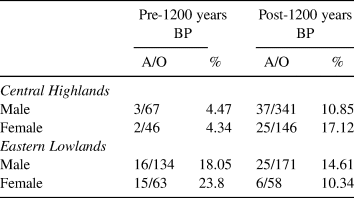
This pathology was registered in 41 individuals who had at least one cavity, representing 83.63% of the total surveyed; 129 caries were recorded in 1,026 teeth (12.57%). In terms of the prevalence in the entire sample, this condition occurred more frequently in female individuals, with similar values in both time periods considered in this study. In males, we observed an increase in frequency of caries over time, being in the later Late Holocene.
The prevalence of caries lesion varied by region: it was higher in the eastern lowland region than in the central highland region in both chronological periods. This condition as a whole was more frequent in the later periods of the Late Holocene. When we considered the relationship of the sex variable to temporal and spatial location, we found that in the early Late Holocene the presence of caries in the eastern lowlands was much higher than in the central highlands, with the highest frequency exhibited in females (23.8%). It is important to note the low prevalence of caries in the central highlands in the pre-1200 BP male and female populations and its notable increase in the later period for female individuals (Table 1).
Prevalence of Caries Differentiated by Chronological Period, Region, and Sex.

Note: A: teeth affected, O: observed teeth, %: prevalence.
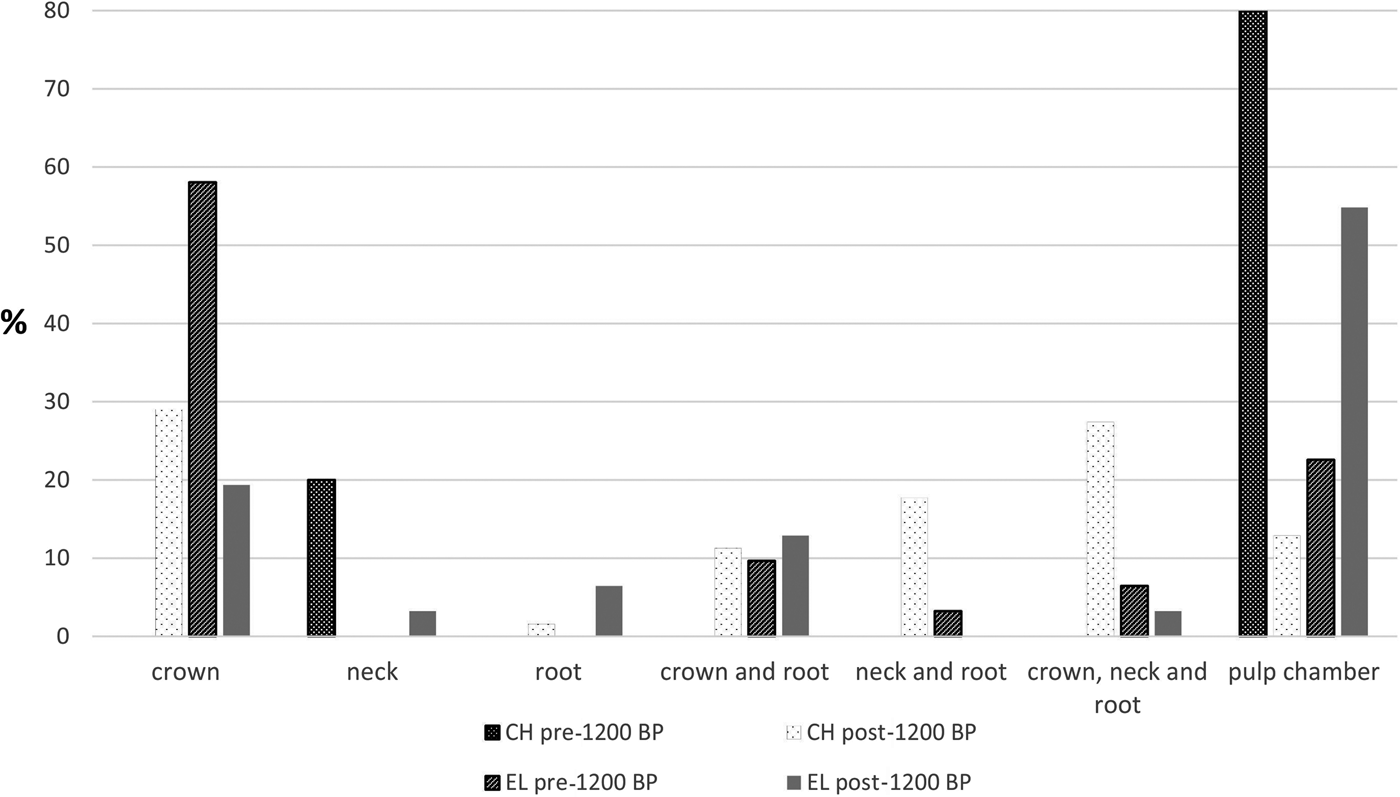
Given these differences between geographical regions and periods, we were interested in determining the location and size of cavities in the dental structure, which would provide information regarding chronicity of the carious lesions. Before 1200 BP, caries affecting the crown (58.06%) and large caries where the pulp cavity was exposed (22.58%) predominated, particularly in the eastern lowlands, whereas in the central highlands, those present in the pulp cavity (80%) and, to a lesser extent, in the neck (20%), were more frequent. In contrast, at the end of the final Late Holocene, an increased presence of caries was found outside the crown, although the crown and the pulp cavity remained the most affected surfaces in both regions. Thus, mainly in the central highlands, we observed a slight increase in caries in the crown and neck, neck and neck root, and crown and root, indicating the presence of large cavities of considerable depth. In summary, caries affecting the crown, neck, and root were more frequent in the central highlands and less frequent during the later Late Holocene in the eastern lowlands. Nevertheless, in the latter region, the presence of caries affecting the pulp cavity was directly related to the high degree of tooth wear recorded in later times (Figure 2).
Frequency of caries according to the location in the tooth.

Dental Wear
Occlusal dental tooth wear was registered in 1,021 teeth (40 individuals). Degree 6 of dental wear, following the ordinal scale proposed by Smith (Reference Smith1984), was the most represented (21.84%) for all teeth, whereas degree 5 was the second most represented (19.78%). We suggest that more than half (761/1021; 74.53%) of the samples have moderate to severe dentin exposure (grades 5–8). The remaining 260 samples (25.46% of the total sample) exhibit low to moderate dentin exposure (grades 1–4).
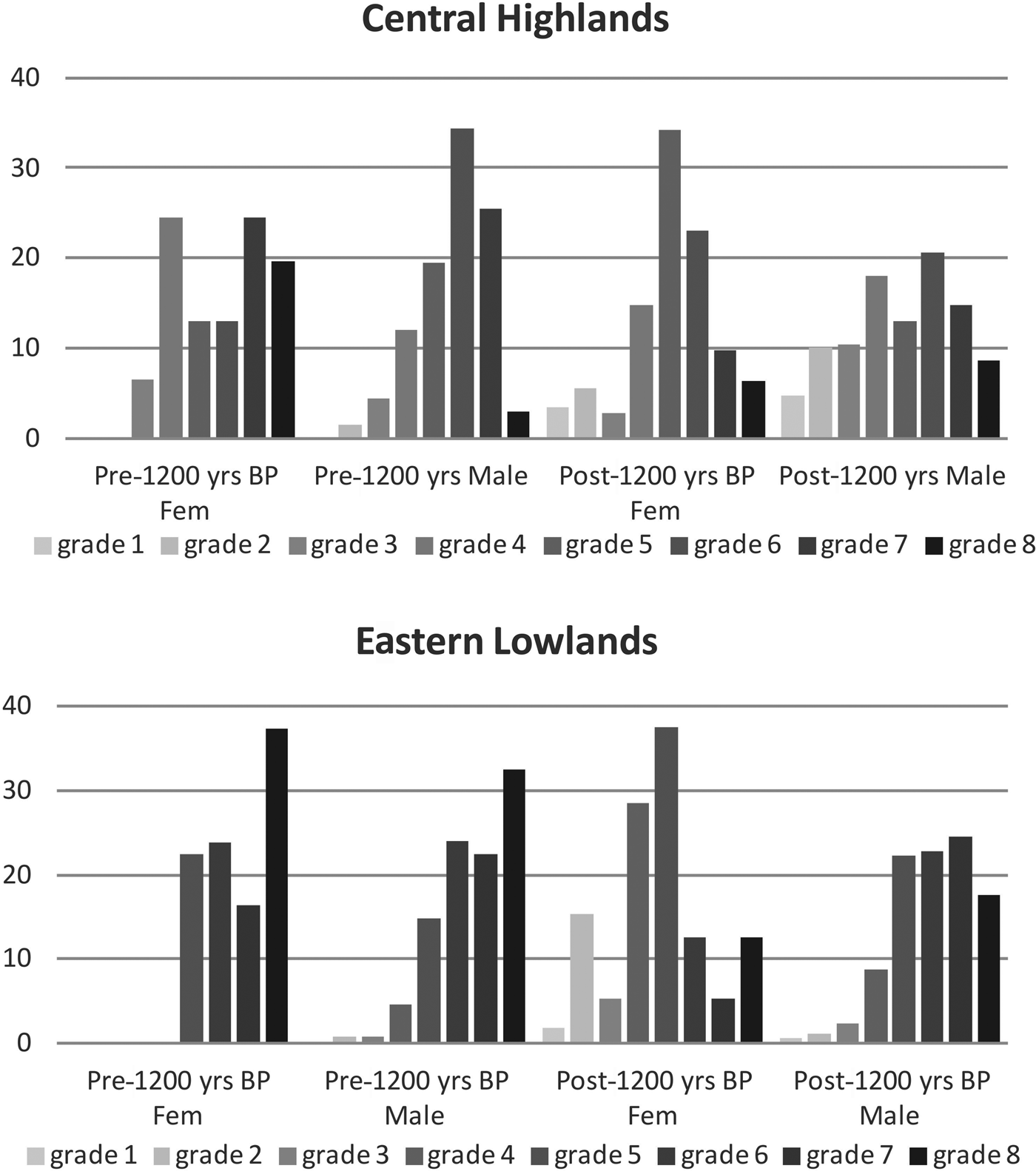
If we look at the distribution of the degrees of tooth wear while considering the sex of individuals, we observe that females present more advanced dental wear than males. In terms of geography, the eastern lowland region presents higher degrees of dental wear. Regarding the chronological periods, there is a higher incidence of dental wear before 1200 BP (González and Fabra Reference González and Fabra2018). Finally, when we consider what happens with individuals according to sex, regional provenance, and chronology, we note that in both regions the highest degrees of wear are present at early times, in both males and females (Figure 3). In the central highlands, in the earlier period, both males and females have similarly high rates of severe wear (grades 6 and 7), with moderate grades being mostly present in females. It should be noted that females in this period exhibit greater frequencies of grade 8 wear, the most severe level of wear. In later times, we observed the presence of all grades of wear, especially grades 4–6. Moreover, in the eastern lowlands in early times, there is a high prevalence of severe wear (grades 6–8) in both males and females. In later times, the degrees of wear are extended, with all grades being present and a higher prevalence of severe grades in males.
Degree of tooth wear in central highlands and eastern lowlands; grades 1–8 correspond to the degree of dental wear according to Smith (Reference Smith1984).

Stable Carbon Isotopes
Table 1 shows δ13Ccol and δ15N isotope ratios for each of the samples (also see Supplemental Table 1 and Supplemental Text 1). All samples show adequate C/N ratios. The range of variation of carbon isotope ratios is between −18.0 and −10.4‰, with an average of −14.4 ± 2.2‰ for δ13Ccol. The range of variation of nitrogen isotopes is between 2.7% and 3.3%, with an average of 3.0 ± 0.3‰ for δ15N. In the early Late Holocene (before 1200 BP), similar isotopic ratios are shown in both areas. Individuals from the central highlands have carbon isotope ratios between −18.0‰ and −10.4‰, with average values and standard deviation of −16.9 ± 1.0‰ for δ13Ccol (n = 3) and 7.9 ± 0.6‰ for δ15N (n = 2). Individuals of the eastern lowlands have carbon isotope ratios between 13.7‰ and −17.3‰, with an average of −15.5 ± 1.8‰ (n = 10). The only nitrogen sample has a value of δ15N of 9.4‰. There is no statistical difference in carbon isotope ratios between regions in early Late Holocene times (p = 0.400 for δ13Ccol; the δ15N sample is too small to subject to statistical tests).
The two regions begin to exhibit dietary variation after 1200 BP. Carbon isotopic ratios of the central highlands range between −10.4‰ and −17.7‰, with an average of −13.2 ± 2.3‰ (n = 19). This is statistically higher than the values from the eastern lowlands, which exhibit a range from −11.8‰ to −17‰ and an average of −15.0 ± 1.5‰ (n = 17; p = 0.032). There are also statistical differences (p = 0.049) in nitrogen isotopic ratios. The central highlands range from 8.3‰ to 11.5‰, with an average of 9.1 ± 1.3‰ (n = 13). The eastern lowlands range from 7.9‰ to 12.9‰, with an average of 10.4 ± 1.7‰ (n = 10; Table 2).
Average δ13Ccol ‰ and δ15N ‰ Isotopic Values of Bone Samples According to Chronological and Regional Distribution, Disaggregated by Sex.

Note: N °: number of individuals; Min: minimum; Max: maximum.
These isotopic variations also suggest changes in diet through time. Carbon isotope ratios are elevated only in the central highlands (p = 0.023 in the central highlands and p = 0.800 in the eastern lowlands). These results mean that C4 resources were more frequently consumed in the central highlands after 1200 BP, in contrast to the eastern lowlands, which exhibit more C4 resource consumption before 1200 BP.
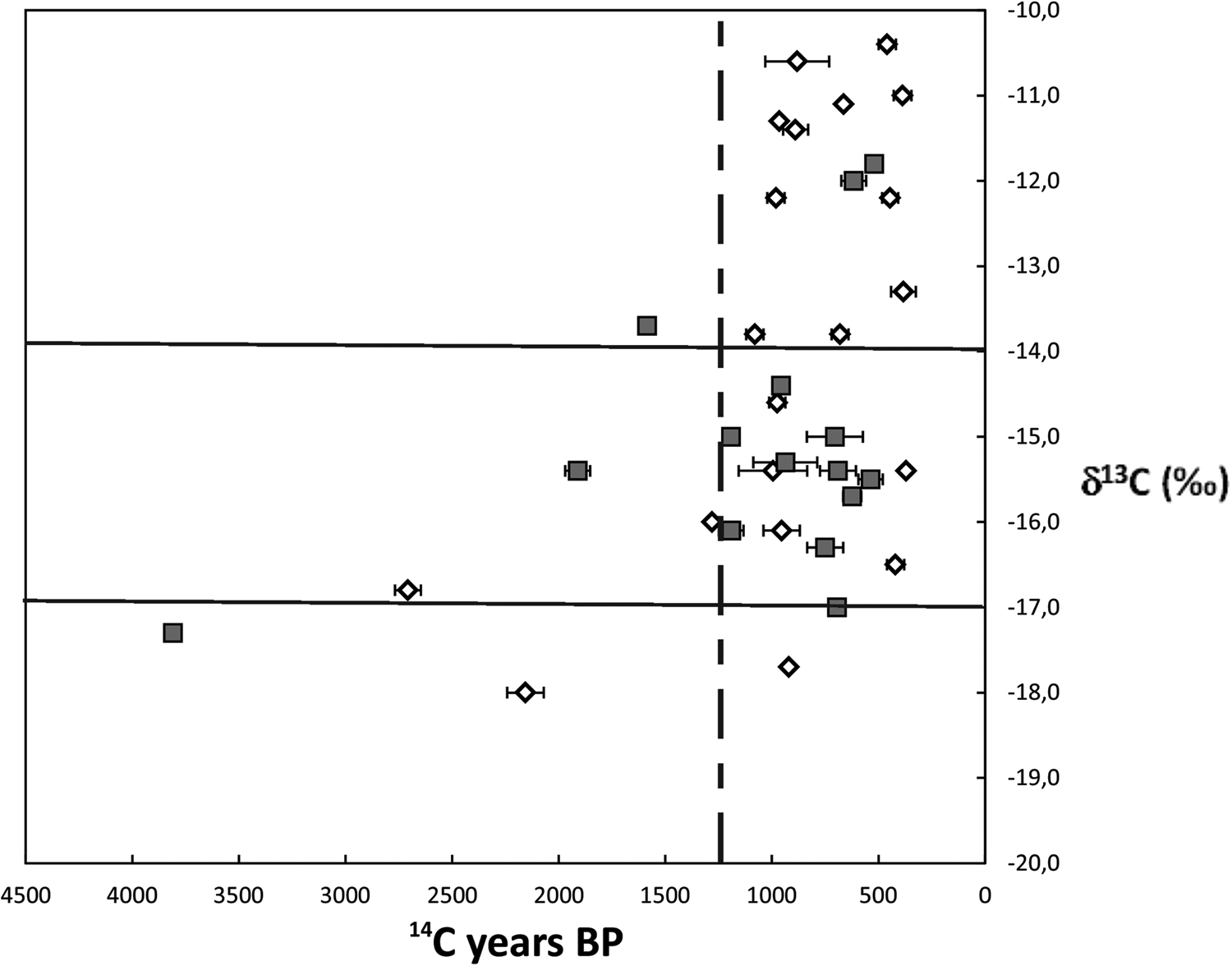
Figure 4 shows ratios of δ13Ccol, considering the temporal distribution of each sample in the central highlands and in the eastern lowlands. In the eastern lowlands, ranges of isotopic data before 1200 BP are higher than those in later times. Although there are no statistically significant changes in diet through time in the eastern lowlands, the oldest sample shows reliance on C3 resources. In this region, C4 resources exploitation appears after 2000 BP. The exact timing of the increase in the exploitation of C4 resources is still uncertain and would provide fruitful grounds for a future study of the early Late Holocene.
Average δ13Ccol isotopic values of bone samples considering region and chronology. Legend: square: eastern lowlands; rhombuses: central highlands; dotted line: temporary dividing line separating pre- and post-1200 years BP; solid lines: division between isotopic types of diets according to Giardina and colleagues (Reference Giardina, Corbat, Otaola, Salgán, Ugan, Neme and Gil2014) and Coltrain and Leavitt (Reference Coltrain and Leavitt2002).

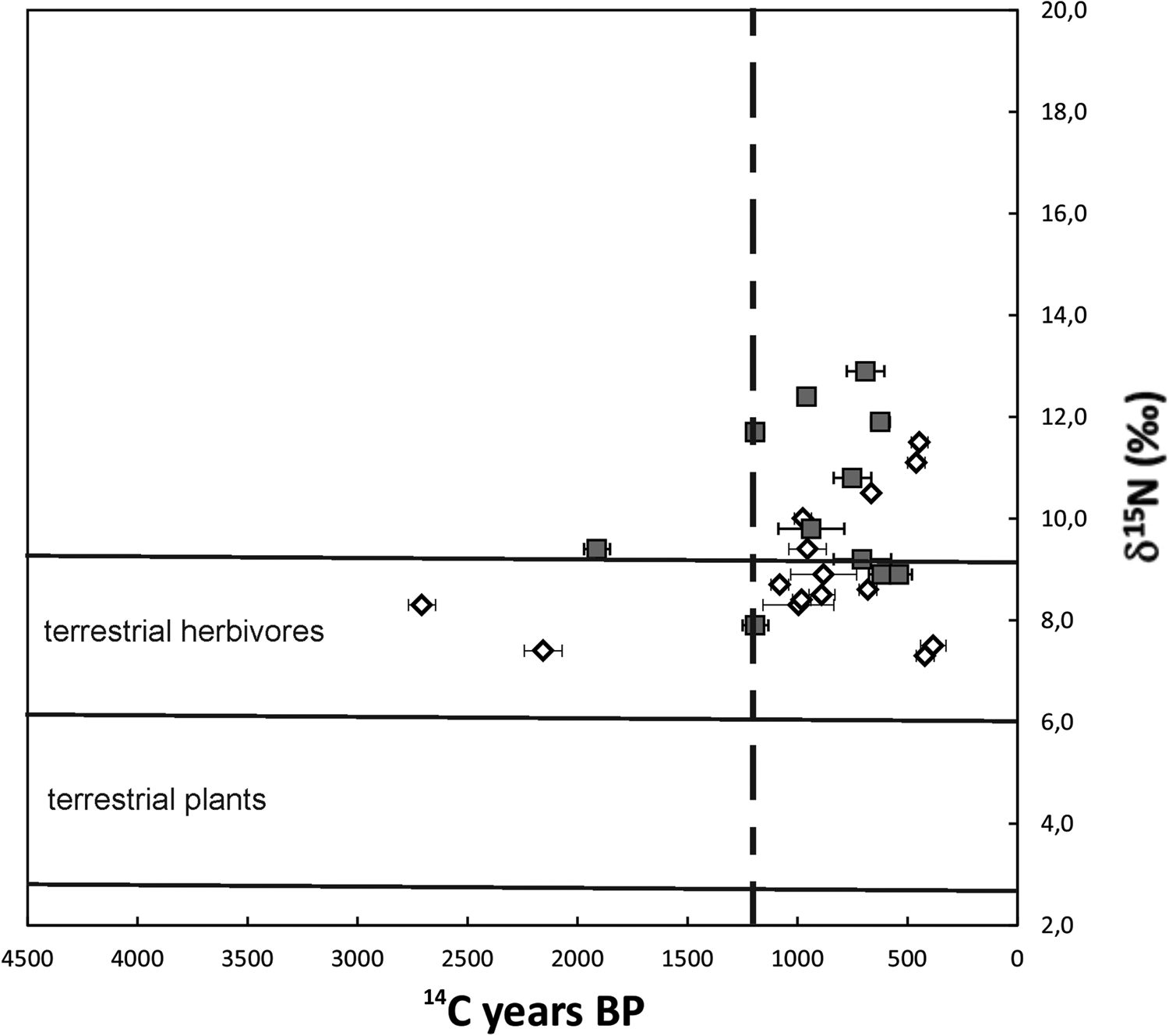
Comparison by sex indicates no statistical differences. For the central highlands after 1200 BP, the δ13Ccol sample, composed of 4 females and 12 males, has a p-value of 0.446. The δ15N sample, consisting of 3 females and 10 males, has a p-value of 0.112. For the eastern lowlands after 1200 BP, the δ13Ccol sample, consisting of 4 females and 9 males, has a p-value of 0.710. The δ15N sample, consisting of 4 females and 8 males, has a p-value of 0.178. The sample size is too small to analyze statistically meaningful differences of δ13Ccol and δ15N values in the central highlands and eastern lowlands before 1200 BP. The highest nitrogen isotope ratios are found in the eastern lowlands, but most samples generally show low values, and we observed no meaningful regional or temporal variation (Figure 5).
Average δ15N isotopic values of bone samples considering region and chronology. Legend: square: eastern lowlands; rhombuses: central highlands; dotted line: temporary dividing line separating pre- and post-1200 years BP; solid lines: division between isotopic types of diets according Giardina and colleagues (Reference Giardina, Corbat, Otaola, Salgán, Ugan, Neme and Gil2014) and Coltrain and Leavitt (Reference Coltrain and Leavitt2002). It should be noted that both the nitrogen values of herbivores and terrestrial plants are enriched in arid and saline soils (Pate Reference Pate1994).

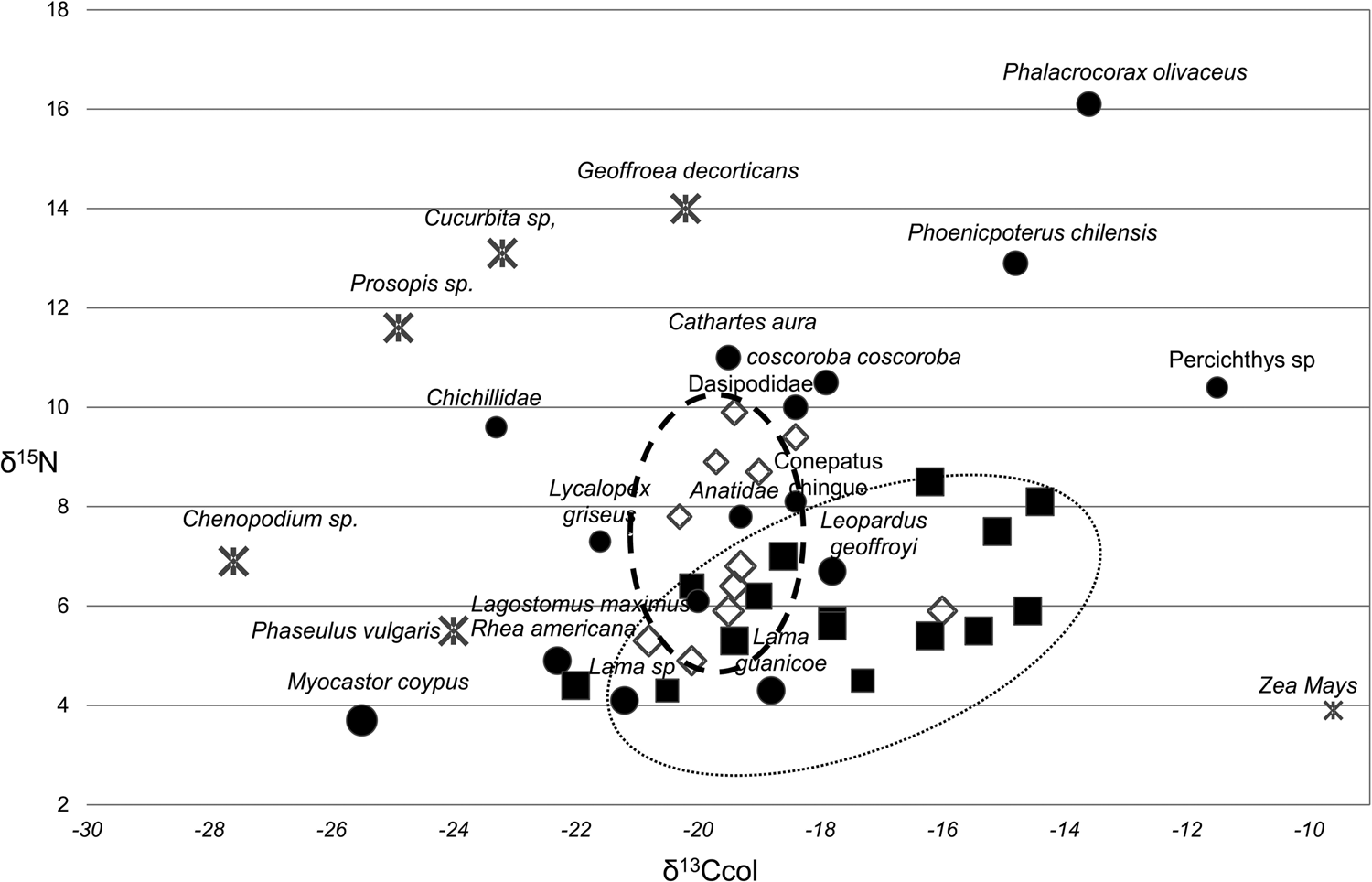
Unfortunately, no information is available about the isotopic ecology of both regions, making it difficult to interpret the values obtained, both those pertaining to each individual and those for the whole sample. Despite this lack of information, we elected to compare the isotopic values of carbon and nitrogen from the data presented here with data obtained from the isotopic ecology of the midwestern region of Argentina, which has climatic and environmental conditions similar to those in Córdoba (Ehleringer et al. Reference Ehleringer, Cerling and Helliker1997; Giardina et al. Reference Giardina, Corbat, Otaola, Salgán, Ugan, Neme and Gil2014; Gil et al. Reference Gil, Tykot, Gustavo, Shelnut, Staller, Tykot and Benz2006; Martínez et al. Reference Martínez, Zangrando and Prates2009; Supplemental Table 2, Figure 6).
Isotope ratios of δ13Ccol and δ15N of bone samples divided by region and potentially consumable vegetal and faunal resources (according to Giardina et al. [Reference Giardina, Corbat, Otaola, Salgán, Ugan, Neme and Gil2014] and Gil et al. [Reference Gil, Tykot, Gustavo, Shelnut, Staller, Tykot and Benz2006]). Legend: black squares: central highlands; white rhombuses: eastern lowlands; stars: vegetable resources; circles: faunal resources; oval thick dot: highest concentration of eastern lowlands individuals; fine dotted oval: highest concentration of central highlands individuals. Faunal isotopes were corrected −2.3‰ for δ13Ccol and −0.8‰ for δ15N following Tieszen and Fagre (Reference Tieszen, Fagre, Lambert and Grupe1993) and Ambrose (Reference Ambrose, Ambrose and Katzenberg2000). Human remains were corrected −4‰ for δ13Ccol and −3‰ for δ15N following Ambrose (Reference Ambrose and Sanford1993), Ambrose and Norr (Reference Ambrose, Norr, Lambert and Grupe1993), DeNiro and Epstein (Reference DeNiro and Epstein1981), and Schoeninger and DeNiro (Reference Schoeninger and DeNiro1984).

We observed that the values of all δ13Ccol human bone samples are grouped between −10.6 and −18‰, and the values of δ15N are grouped between 7.4 and 12.9‰. This suggests that there is variability in the consumption of resources, with a relative incorporation of both C4 food resources and of animal resources for both regions. This variability is best represented if we compare isotopic ratios for each region: samples of the central highlands have values similar to those found in C4-type resources, with δ13Ccol averaging to −13.8‰ and δ15N ratios averaging to 9.0‰. In the eastern lowlands, ratios of δ13Ccol are higher (average −15.1‰), and δ15N is more enriched (average 10.3‰). When the isotopic ratios obtained from each individual are compared to those of animal and plant data in the existing literature, individuals from the eastern lowlands have values closer to those in C3- type resources and enriched nitrogen values, which could be associated with the consumption of faunal resources of lacustrine origin, such as fish, waterfowl, and possibly rodents.
By comparing the entire sample with animal and plant resources, when we consider average values for δ15N, we note that the overall average has values even higher than herbivores potentially consumed by these populations (4.3‰ and 5.7‰, average 4.9‰); they are closer to the values provided by other mammals, including species of rodents or Chinchillidae, and other mammals such as Dasypodidae (4.5‰ and 10.8‰, average 8.15‰) and omnivorous mammals/carnivores like Conepatus chinga, Lycalopex griseus, and Leopardus geoffroyi that have similar δ15N ratios, between 6.2 and 8.1‰ (Figure 6). The most enriched values in our sample, higher than 10.5‰, correspond to individuals who inhabited the eastern lowlands, particularly in the coastal sites of the lagoon of Mar Chiquita, in the period after 1200 BP. We suggest that these populations consumed, among other foodstuffs, poultry and fish (Cathartes aura, Cocoroba coscoroba, and Anatidae) that present average values of nitrogen of 12.3‰ (Giardina et al. Reference Giardina, Corbat, Otaola, Salgán, Ugan, Neme and Gil2014) and other resources such as Lycalopex griseus, Chinchillidae, and Rhea americana. Individuals of the eastern lowlands present more enriched values of δ13Ccol, but in a more limited range than the individuals of the central highlands, which brings them closer to the consumption of C4 resources, such as maize, herbivores such as Lama sp., or carnivores such as Leopardus geoffroyi.
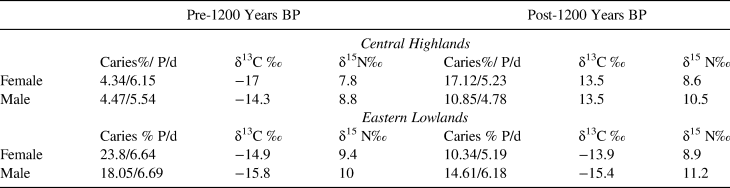
Finally, we were interested in comparing the isotopic ratios, discussed in the preceding paragraphs, with those resulting from dental indicators related to diet, such as dental caries and tooth wear (Table 3). Both the overall average carbon isotope δ13Ccol
Comparison between Average Isotope Values of δ13Ccol and δ15N and Prevalence of Caries and Average Dental Wear according to Chronological Period, Region, and Sex of the Samples.

Note: % prevalence; P/d: average wear.
(−14.4‰) and the prevalence of caries for the whole sample (12.75%) are consistent with those expected for populations that have incorporated resources like corn; in such populations, the consumption of resources derived from hunting and gathering prevails (Coltrain and Leavitt Reference Coltrain and Leavitt2002; Pate Reference Pate1994; Turner Reference Turner1979). When assessing the presence of this pathology by region, we observed, in the central highlands, a low prevalence of caries before 1200 BP in both females and males, in contrast to what was observed during the same period in the eastern lowlands. For both regions and sexes, the values of δ13Ccol are slightly more impoverished before 1200 BP.
We considered the presence of tooth wear as a factor that affects the number of caries, especially in the central highlands. Even though average tooth wear is shown to be high at the very beginning of the Late Holocene, it is in the eastern lowlands where the greatest presence of advanced tooth wear is observed, accompanied by a high prevalence of caries. This suggests that such an indicator does not significantly affect the presence of this pathology. The major changes—the increased prevalence of caries and the most positive isotopic values for both sexes—are noted in the central highlands during the later Late Holocene, which could indicate the addition of novel food to the dietary habits. Figure 4 shows that individuals in this region have more δ13Ccol values below −14‰, suggesting that more individuals in the central highlands consumed cultivated resources compared to those in the eastern lowlands.
Significant results were observed in the case of dental wear. This continuous variable is inherently difficult to quantify. We therefore transformed it into a binary variable, assigning groups one of two values for subsequent statistical treatment. Samples with values lower than degree 4 were placed in one group, and samples with values higher than 5 in another, following Smith's (Reference Smith1984) scale. We observed significant differences by region: in the eastern lowlands the prevalence of advanced wear is higher (p = 0.02).
Discussion and Conclusion
The moderate prevalence of caries in the sample in the two periods of the Holocene is consistent with the expected values for hunter-gatherer populations or for those with a mixed economy (Lukacs Reference John, Iscan and Kennedy1989). During this time, human groups made changes to their subsistence strategies, but differences were not statistically significant between the two periods. This pathology was present in both sexes from the early Late Holocene, although it was more frequent in females in the centuries preceding the Spanish conquest (González Reference González2016).
Regarding the size and location of the caries, it is interesting to note that in females in the central highlands, we observed an increased presence of large cavities affecting the crown, neck, and root, a pattern associated with foods that are rich in sucrose and starches that increase the growth of plaque and bacteria in the mouth (Lanfranco and Eggers Reference Lanfranco and Eggers2010). In the eastern lowlands, there were more frequent cavities affecting the pulp cavity, caused largely by advanced tooth wear recorded in this region; males were most affected by this type of condition. These results would suggest, first, the consumption of cariogenic food at the beginning of the Late Holocene and an increase in that consumption in the later years of the Late Holocene, particularly in the central highlands; this increase is possibly associated with horticulturalist practices. The isotopic data support this trend. In general, the existence of carious pathology is associated with the consumption of food rich in sugars and carbohydrates, such as maize (Cuccina and Tiesler Reference Cuccina and Tiesler2003). We should note that eating other types of food such as green beans carob (Prosopis sp.), mistols fruit (Ziziphus mistol), and chañar (Geoffroea decorticans), which may have been collected in the region, can result in the same pathology because of their high percentage of sugars and carbohydrates (Lanfranco and Eggers Reference Lanfranco and Eggers2010; L'Heureaux Reference L'Heureax2000; Novellino et al. Reference Novellino, Gil, Neme and Durán2004), as reported in bioarchaeological investigations in other regions (Bernal et al. Reference Bernal, Novellino, González and Pérez2007; Gil Reference Gil2003; Novellino et al. Reference Novellino, Gil, Neme and Durán2004).
In central Argentina, the most direct evidence of horticultural practices has been provided by archaeobotany. Pastor (Reference Pastor2007), Lopez (Reference Lopez and Salazar2015), and Medina and colleagues (Reference Medina, López and Berberian2009) have recovered evidence from several cultigens in the central highlands, such as maize (Zea mays), pumpkin (Cucurbita sp.), beans (Phaseolus vulgaris), and quinoa and amaranth (Chenopodium spp. spp./Amaranthus). More recently, Tavarone and colleagues (Reference Tavarone, de los Milagros Colobig and Fabra2019) have detected micro-remains of Phaseolus sp., Zea mays, and Cucurbita maxima in dental calculus, dated between 1192–937 14C BP. The presence and possible management of species, such as Chenopodium spp. and Amaranthus spp., collected in grinding materials have dated to the beginnings of the Late Holocene (Lopez et al. Reference López, Medina and Rivero2015). Moreover, ethnohistorical documents have reported the presence of cornfields and farms near houses or scattered in different parts of the central highlands, away from settlement sites. There are several sources dating from the sixteenth and seventeenth centuries that refer to crops such as corn, squash, bean, and even quinoa (Huamiltocto, in Piana de Cuesta Reference Piana de Cuestas1992; Sotelo de Narváez Reference Sotelo de Narváez1583).
Interestingly, we observed temporal differences in the frequency of carious lesions, particularly in the central highlands, by the end of the Late Holocene. We interpret these differences as a change in the type of resources consumed in those later times, related to the introduction of new types of food such as maize. The archaeobotanical record contributes substantially to the discussion of the presence of cultigens such as pumpkins, beans, quinoa, and corn from 3000 BP (Pastor et al. Reference Pastor, López and Rivero2012) and their intensification toward 1200–1100 BP. To identify what food might have caused carious diseases and to evaluate the importance of their consumption, we must make use of isotopic evidence. In our study area there are several edible wild C3 plants, including the fruits of the carob tree (Prosopis sp.) and chañar (Geoffroea decoticans). Among cultivated vegetables, we can include pumpkin (Cucurbita sp.) and beans (Phaseolus sp.). Maize is one of the few plants with C4-type photosynthesis, along with amaranth (Amaranthus caudatus). Relatively high frequencies of amaranth have been found in later Late Holocene archaeological sites (Medina et al. Reference Medina, Grill and López2008), suggesting that they come from farms and not from wild species (Lopez et al. Reference López, Medina and Rivero2015). The results of the isotopes of δ13Ccol and δ15N indicate that, throughout the Holocene, these populations, particularly those in the central highlands, based their livelihood strategies on a broad range of resources that they collected—essentially those with a photosynthetic pattern typical of C3 food, C4 plants, and, to a lesser extent, herbivores and consumers of C4 plants. In Córdoba there is no evidence of domestication of camelids. Additionally, no wild camelids strongly dependent on C4 plants have been reported (Barberena et al. Reference Barberena, Zangrando, Gil, Martínez, Politis, Borrero and Neme2009).
If we consider the time scale, the picture is more complex: before 1200 BP, the higher values for δ13Ccol, between −17.3 and −15.4‰, would indicate an economy mainly based on C3-type food. Given that consumable resources with a C3 photosynthetic pattern were likely found in this region, we can include the fruits of the carob, chañar, and piquillín; herbivores like guanaco and rhea; and eggs, which based on earlier reports, would have been part of the dietary corpus of these populations (Rivero and Medina Reference Rivero, Medina, Muscio and Cardillo2016; Rivero et al. Reference Rivero, Medina, Pastor, Recalde, Gutiérrez, Nigris, Fernández, Giardina, Gil, Izeta, Neme and Yacobaccio2010). We must also consider the consumption of cultivated vegetables such as Phaseolus vulgaris, which uses the C3 photosynthetic path (Tavarone et al. Reference Tavarone, de los Milagros Colobig and Fabra2019). Yet, after 1200 BP, isotopic values for δ13Ccol are substantially modified, indicating more positive values in the range of −14.7‰ and −14.1‰ for both regions. These values would indicate a change in the dietary pattern of these populations, which is in agreement with the archaeological record that shows the partial incorporation of maize, particularly in the central highlands (Laguens et al. Reference Laguens, Fabra, dos Santos and Demarchi2009; Medina et al. Reference Medina, Pastor and Berberian2014).
In nearby regions, the incorporation of cultivated vegetables, particularly maize, was similar to the process observed in Córdoba. In the center-west of Argentina, at the southern limit of prehispanic Andean agriculture, human diets were very varied. Some sites show continuity in isotopic signals and craniofacial morphology throughout the Holocene, whereas others suggest growing maize consumption, although it remains less than 30% of the diet (Gil et al. Reference Gil, Menéndez, Atencio, Peralta, Neme and Ugan2017). Toward the east, in the delta of the Paraná River, populations developed strategies based on hunting, gathering, and horticulture, including the consumption of C3 vegetables (Bonomo et al. Reference Bonomo, Scabuzzo, Politis and Zucol2017). The introduction of maize to the diet would have occurred around 1000 BP, as evidenced by the archaeobotanical record of the Los Tres Gansos site 1 (Colobig et al. Reference Colobig, Sánchez and Zucol2015). Subsequently, the archaeobotanical record of maize in Guarani sites shows that the population began consuming it around 700 BP (Loponte and Acosta Reference Loponte, Acosta, Bayón, Pupio, González, Flegenheimer and Frère2007).
Regional differences in dental wear among male individuals were detected, with more severe tooth wear in the eastern lowlands. In the central highlands females had the higher prevalence of serious wear. We believe that the difference between regions can be attributed to several factors operating simultaneously. First, a more abrasive diet could account for these differences, and different forms of cooking/food preparation may have influenced the advanced tooth wear recorded in the plains.
We are well aware of the positive relation between the advances of age, dental wear, cavities, and other types of diseases such as periapical lesions and periodontal disease. However, because of the scarce quantity of samples predating 1200 BP, we decided not to present those data because they did not yield results reliable enough to make comparisons (for a fuller discussion on this topic, see González and Fabra Reference González and Fabra2018).
In the eastern lowlands there have been found large underground pit storage areas for fruit and other resources, commonly referred to as “small ovens” or “botijas”; they were probably also used for food preparation (Cornero et al. Reference Cornero, del Rio and Cerutti2013; Fabra et al. Reference Fabra, Salega, González, Smeding and Pautassi2008; Laguens and Bonnin Reference Laguens and Bonnin2009). The deposits found in the eastern lowlands indicate that their walls were altered with heat, which could indicate uses involving high temperatures (Fabra et al. Reference Fabra, Salega, González, Smeding and Pautassi2008). Metráux (Reference Métraux1996) reports, for the Chaco region, the use of similar structures, where fish and other types of food were stored in underground wells that had dried up. Such structures were also found in places close to the Mar Chiquita lagoon, southeast of Santiago del Estero, which suggests a possible shared practice among these people. Hence, the intake of fibrous foods, in addition to cooking techniques such as drying or salting, and the possible incorporation of external abrasive particles, may have contributed to increased rates of occlusal wear in this region (González and Fabra Reference González and Fabra2018).
In contrast, the presence of moderate degrees of tooth wear in the central highlands after 1200 BP could be related to the consumption of softer food or be caused by cooking techniques that facilitate intake. On the basis of the different characteristics of ceramic types found in the central highlands, Lopez and coworkers (Reference Lopez and Salazar2015) suggest ways of cooking—including boiling and preparation of stews, in addition to roasting—as usual practices after 1200 BP, which would have facilitated the digestibility of food and therefore would reduce biting pressure.
After an analysis of all these indicators, we argue that caries in the eastern lowlands caries have a moderate presence in the early Late Holocene, with a higher frequency by the end of this period. The degree of tooth wear in this region also exhibits higher variability than in the central highlands. If we consider these data, along with the archaeobotanical evidence from the region (Tavarone et al. Reference Tavarone, de los Milagros Colobig and Fabra2019), this pattern reveals the consumption of cariogenic food, particularly gathered fruit, and the consumption of some cultivated products, such as Cucurbita maxima, which has a C3 photosynthetic path. Ethnohistorical and archaeological data, especially δ13Ccol and nitrogen δ15N values, suggest that the populations settled in the eastern plains ate more C3-type resources and had a higher intake of animal protein, especially in the early Late Holocene, than neighboring populations (Laguens and Bonnin Reference Laguens and Bonnin2009; Laguens et al. Reference Laguens, Fabra, dos Santos and Demarchi2009). At around 1500 BP, the population incorporated a new technology, characterized by the production of ceramic artifacts on basketry. This innovation is found in many coastal sites near the Mar Chiquita lagoon and was probably linked to new ways of producing food (Bonofiglio Reference Bonofiglio2010), although data are still scant on wildlife resources exploited by these populations. If we consider δ15N, males would have consumed higher animal protein content than females and possibly enriched these values by their lacustrine way of life (Giardina et al. Reference Giardina, Corbat, Otaola, Salgán, Ugan, Neme and Gil2014).
The subsistence strategy that prevailed in the central mountains was based on hunting and gathering, with a low consumption of cariogenic vegetables. In contrast, in the plains of northeast Córdoba Province, the prevalence of caries indicates a greater reliance on vegetables with high sugar and carbohydrate content and perhaps an earlier incorporation of products grown on a small scale. In the central highlands, the archaeobotanical record indicates the presence of plant resources grown and harvested from the early Late Holocene onward (Lopez et al. Reference López, Medina and Rivero2015). At the end of the first millennium, archaeological evidence is conclusive regarding the increased presence of cultivated plants, such as pumpkins, quinoa and beans, and maize (Laguens and Bonnin Reference Laguens and Bonnin2009). Cavities of populations in the central highlands are bigger and deeper than those from individuals in the eastern lowlands (Fabra and González Reference Fabra and González2015; González and Fabra Reference González and Fabra2011); this pattern is especially evident in female individuals after 1200 BP. Thus, we suggest that populations that inhabited the mountainous region were consuming more food rich in sugar and carbohydrates, probably C4 resources and specifically maize, to supplement their dietary resources. We believe that horticultural practices were incorporated more fully in the central highlands than in the eastern lowlands, as a complement to the practice of hunting and gathering.
The differences between both regions may be related to the adaptation to the lacustrine environment by the populations that occupied the southern coast of the Mar Chiquita lagoon. A similar pattern was observed in a saline lagoon in the midwestern region of Argentina (Giardina et al. Reference Giardina, Corbat, Otaola, Salgán, Ugan, Neme and Gil2014), where scholars proposed that guanaco was of low importance to the overall diet and aquatic resources and small terrestrial animals were of medium importance. This is the same pattern observed in the eastern lowlands. We wonder whether the late effective introduction of food production in this region could be related to the increased availability of wild and lacustrine resources. This region was a transitional space between the phytogeographic provinces of Espinal and Chaco (Luti et al. Reference Luti, Bertrán de Solis, Galera, Muller de Ferreira, Berzal, Nores, Herrera, Barrera, Vázquez, Miatello and Roqué1979). Alternatively, the late adoption of horticulture could be linked to other cultural factors, such as a preference for certain resources or a similarity with the lifestyle of neighboring regions such as Chaco (Laguens and Bonnin Reference Laguens and Bonnin2009). As mentioned by Bonomo and colleagues (Reference Bonomo, Scabuzzo, Politis and Zucol2017), the consumption of maize by the Goya-Malabrigo may have been related to symbolic spheres, because beverages made from fermented corn were consumed during certain festivities.
Given the bioarchaeological indicators and isotopic and archaeological evidence presented in this article (Laguens Reference Laguens1999; Lopez et al. Reference López, Medina and Rivero2015), we propose that food production should be considered as a complementary economic activity in a society where wild resources have greater preponderance than that generally attributed. We believe that collecting wild fruits, mainly carob and chañar, is a practice with continuity through time; this method of subsistence is of particular importance from at least 3000 years BP (Fabra and González Reference Fabra and González2015; Laguens Reference Laguens1999; Laguens and Bonnin Reference Laguens and Bonnin2009; Laguens et al. Reference Laguens, Fabra, dos Santos and Demarchi2009). This practice would have been a highly effective subsistence strategy at a time where the population may have been suffering from episodes of stress caused by population growth, resource scarcity, environmental pressure, or even the arrival of the Spaniards. Each of these circumstances would have disrupted the way of life of these groups (Fabra and González Reference Fabra and González2015; Laguens and Bonnin Reference Laguens and Bonnin2009). Ethnohistorical research (Castro Olañeta Reference Castro Olañeta, Farberman and Montero2002, Reference Castro Olañeta2006) has suggested that the practice of collecting carob and other wild fruits continued several centuries after the arrival of the Spaniards, serving as an element of cohesion and integration of these populations against the Spanish system.
Acknowledgments
We would like to thank all the museums responsible not only for the collections they host but also for the value they place on them and for their commitment to care for the regional bioarchaeological heritage. We especially thank Dr. Minoru Yoneda, Dr. Hiroyuki Matsuzaki, and Dr. Mai Takigami for preparing the radiocarbon dates at the Graduate School of Frontier Sciences, University of Tokyo. We are grateful to Mai Takigami for her support in statistical analysis and contributions to the analysis of isotopic data. This work was supported by these grants: FONCyT PICT 2013-2028, PICT 2015-3155, and SECyT-UNC 2014-2015. This article is based on the PhD dissertation of C. González. We would like to thank Carolina Mosconi and the Latin American Antiquity editors for their careful revision of the English version of this article. We especially thank the anonymous reviewers and the editors Geoffrey Braswell and Maria Gutierrez, whose comments and suggestions improved the original version. The ideas expressed in this work are the responsibility of the authors.
Data Availability Statement
Bioanthropological collections analyzed in the present study are curated in the Museo de Antropología—FFyH, UNC (Córdoba, Córdoba), Museo Arqueológico Provincial “Anibal Montes” (Río Segundo, Córdoba), and the Museo de la Región de Ansenuza “Anibal Montes” (Miramar, Córdoba).
Supplemental Material
For supplementary material accompanying this article, visit https://doi.org/10.1017/laq.2019.69.
Supplemental Table 1. Bioarchaeological and Isotopic Data.
Supplemental Table 2. Isotopic Data of Animals and Plants Potentially Consumed by the Populations of the Eastern Lowlands and Central Mountains Regions.
Supplemental Text 1. Protocol for the Stable Isotope Analysis of Collagen and Radiocarbon Dating.