INTRODUCTION
Mangrove forests are a key marine biome (Valiela et al. Reference Valiela, Bowen and York2001; Bouillon et al. Reference Bouillon, Rivera-Monroy, Twilley, Kairo, Laffoley and Grimsditch2009; Spalding et al. Reference Spalding, Kainuma and Collins2010) supplying ecosystem goods and services (Daily & Matson Reference Daily and Matson2008) that include water quality control, fisheries production, nursery habitats and storm protection (Ewel et al. Reference Ewel, Twilley and Ong1998; Naylor et al. Reference Naylor, Bonine, Ewel and Waguk2002; Mumby et al. Reference Mumby, Edwards, Arias-González, Lindemann, Blackwell, Gall, Gorczynska, Harborne, Pescod, Renken, Wabnitz and Llewellyn2004; Faunce & Serafy Reference Faunce and Serafy2006; Alongi Reference Alongi2008; Nagelkerken et al. Reference Nagelkerken, Blaber, Bouillon, Green, Haywood, Kirton, Meynecke, Pawlik, Penrose, Sasekumar and Somerfield2008; Walters et al. Reference Walters, Rönnbäck, Kovacs, Crona, Hussain, Badola, Primavera, Barbier and Dahdouh-Guebas2008). Like other forests, mangroves are efficient carbon dioxide sinks and their conservation and restoration can play a significant role in climate change mitigation strategies (Chmura et al. Reference Chmura, Anisfel, Cahoon and Lynch2003; Koyama et al. Reference Koyama, Ong and Poungparn2008; Kristensen et al. Reference Kristensen, Bouillon, Dittmar and Marchand2008; Laffoley & Grimsditch Reference Laffoley and Grimsditch2009).
Globally, mangrove forests are being lost at an alarming rate from pollution, land clearance, coastal development, natural disasters and climate change (FAO [Food and Agriculture Organization of the United Nations] 2007; Spalding et al. Reference Spalding, Kainuma and Collins2010). In the Pacific, which has the world's highest mangrove biodiversity (Ellison Reference Ellison2009), climate change is expected to have pronounced effects upon marine ecosystems and exacerbate existing pressures (Duke et al. Reference Duke, Meynecke, Dittmann, Ellison, Anger, Berger, Cannicci, Diele, Ewel, Field, Koedam, Lee, Marchand, Nordhaus and Dahdouh-Guebas2007).
One possible solution to conserving mangrove forests is the use of payments for ecosystem services (PES). Wunder et al. (Reference Wunder, Engel and Pagiola2008) defined PES as ‘a voluntary transaction where a well-defined environmental service. . . is bought by a service buyer. . . from a service provider’. In the terrestrial sector, the ability of forests to sequester carbon has led to the quantification, purchase and trade of this ecosystem service through carbon ‘credits’ (Katila & Puustjarvi Reference Katila and Puustjarvi2004; Pagiola & Platais Reference Pagiola and Platais2007). Under such programmes, forest landowners are compensated for carbon sequestration by credit purchases from external buyers (to ‘offset’ the external buyer's emissions). In return, forest landowners protect existing forest and/or enhance CO2 uptake through planting.
PES programmes hold promise for combining conservation efforts with carbon sequestration goals. However, few studies have examined their potential for marine ecosystems, particularly mangrove forests (Laffoley & Grimsditch Reference Laffoley and Grimsditch2009). Unlike their terrestrial counterparts, little is known about the impacts of PES initiatives on mangrove-dependent communities (Corbera et al. Reference Corbera, Brown and Adger2007; Alcorn Reference Alcorn2010), partly because mangrove ecosystem services remain largely undervalued and ignored in the global arena (Rönnbäck Reference Rönnbäck1999; Laffoley & Grimsditch Reference Laffoley and Grimsditch2009).
To bridge existing knowledge gaps and anticipate how mangrove forest PES may unfold in developing island communities, an understanding of the perceptions, use and benefits of ecosystems goods and services across societal segments is crucial. Also important for anticipating PES impacts are the documentation and assessment of the institutional structures and rights systems surrounding mangroves, particularly as they pertain to legal and equity concerns (Corbera et al. Reference Corbera, Brown and Adger2007).
In Solomon Islands, both terrestrial and mangrove forests are key sources of rural goods and income and harbour high biodiversity, but are under considerable threat from commercial and subsistence activities. PES and carbon credit projects may prove a viable option for mitigating both rural poverty and climate change, yet the specific effects on local subsistence populations from altering the use of these ecosystems remain unknown. To identify these potential effects, the current study had three overarching aims: (1) to describe how ecosystem goods and services are perceived and valued by different segments of subsistence mangrove-dependent communities, (2) to identify the governance structures and tenure rights associated with mangroves, and (3) to examine how these systems are likely to interact with PES and carbon credit initiatives. We collected empirical data in three villages across Solomon Islands and we discuss our findings in the context of the increasing interest in PES as a way to combine conservation with carbon sequestration goals. To our knowledge, this study is the first to examine the potential interactions between PES and carbon credit programmes in relation to traditional marine tenure systems in the Pacific.
METHODS
Study area
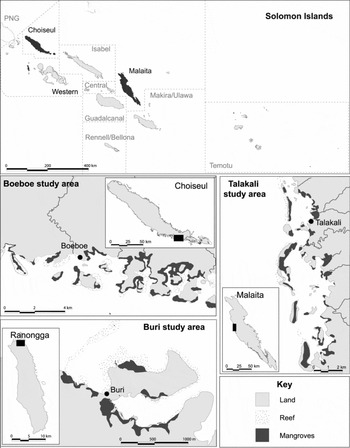
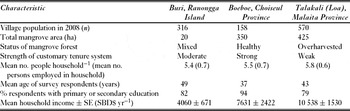
Solomon Islands possess nearly 65 000 ha of mangrove forests containing c. 25 mangrove species (UNEP [United Nations Environment Programme] 2006). The coastal villages (Fig. 1) of Buri, Boeboe and Talakali were chosen to represent different archetypes with respect to key variables (related to carbon credits): mangrove forest area and age, regional and cultural differences in customary ownership and property rights, and intensity of forest harvesting (Table 1). Buri is located in Ranongga (Western Province), a volcanic island that experienced a major earthquake and tsunami in 2007. The earthquake caused 3–4 m land and reef uplift, thereby destroying most of Buri's mangrove forests and fringing coral reefs. Boeboe lies on the south-east edge of Choiseul Island, and also felt the effects of the 2007 tsunami, but received only minor damage to mangroves and reefs. Talakali is situated in the Langalanga Lagoon (Malaita Island), where high population pressure has engendered mangrove (and fisheries) overharvesting for decades (Goto Reference Goto1996). Talakali is the closest study site to Honiara, the national capital, and thus has easier access to markets for mangrove goods.
Map of Solomon Islands with the three study sites.

Background village characteristics. All data in Solomon dollars (SBD$ 1.00 = US$ 0.14). SE = standard error.

All residents in the three villages relied strongly on local resources through subsistence (gardening, fishing) activities, which are important facets of Solomon Islands’ traditional customary tenureship (Appendix 1, see supplementary material at Journals.cambridge.org/enc). Nationally, up to 90% of land and marine areas are owned and used by local family groups or clans/tribes through either patrilineal and/or matrilineal descent (Aswani Reference Aswani1997; Aswani et al. Reference Aswani, Albert, Sabetian and Furusawa2007). Local control of the rights, use, access and development of land and marine assets operates alongside, but often takes precedence over, national and provincial level government institutions (Lane Reference Lane2006). Religious denomination, a fundamental influence in Solomon Islands, also varies across villages, but within the study sites there was a dominant affiliation to the Seventh Day Adventist Church (SDA, Buri and Talakali) or United Church (Boeboe).
Research questions
The current study focused on the following research questions, with results from the first three questions forming the basis for analysis of the fourth: (1) How are mangrove ecosystem goods and services used and valued in Solomon Islands, and what are the patterns of use (for example by gender, occupation, subsistence versus sale)?; (2) What, if any, variability exists among villages in local ecological knowledge of mangroves and their function?; (3) What ownership/access and management systems are in place for mangroves, and how do villagers view their effectiveness, particularly in light of current threats?; and (4) What insights do mangrove ecosystem services surveys reveal for the potential for PES and carbon credit programmes?
In examining these questions, we sought not only to understand how villages might be impacted by PES and carbon credit systems, but also how these systems could be impacted by the villages themselves (for example their current use of and legal rights to mangrove goods). A priori awareness of these impacts constitutes a vital component of the design of specific PES or carbon programmes for Solomon Islands and could mark a first step in obtaining village-level input into the feasibility and implementation of such programmes (for example as for marine protected areas, see Aswani et al. Reference Aswani, Albert, Sabetian and Furusawa2007).
Household interviews and ecosystem goods and services surveys
Interviews and surveys were conducted by Kimberley Warren-Rhodes and a trained four-person local team during April–June 2008. To address the research questions above, survey interview formats were adapted from Rönnbäck et al. (Reference Rönnbäck, Crona and Ingwall2007) and encompassed six qualitative themes: (1) use of mangrove goods and services; (2) ecological knowledge of mangrove forests and threats; (3) mangrove ownership and management systems, including (4) traditional tenure rules and customs; (5) loss of goods and services from overharvesting or natural disaster; and (6) fishing. Quantitative survey questions were contained in three worksheets: (1) ecosystem goods and services, (2) mangrove activity, and (3) fishing activity.
Following Rönnbäck et al. (Reference Rönnbäck, Crona and Ingwall2007), the goods and services worksheet initially classified 22 goods and eight service categories. However, pre-test interviews found 30 goods and nine services more accurately reflected the local context. Respondents were asked (1) if they were aware of the good/service, (2) the relative importance of that good/service to them, and (3) whether the good/service was used for subsistence or commercial purposes. To assess ecological knowledge, an acknowledgement of ecosystem services was followed with inquiries regarding the supportive function(s) of mangroves supplying these services. All economic values in the study were derived from (1) quantitative survey data collected to estimate subsistence and/or cash value placed by users on specific mangrove goods, and (2) mangrove users’ estimates of the time/effort and income associated with collecting for each use and/or sale of mangrove-related goods.
Previous studies (Rönnbäck et al. Reference Rönnbäck, Crona and Ingwall2007) identified gender and occupation as important variables influencing mangrove ecosystem use and awareness; thus, a stratified random sampling design was developed using these attributes. Based on Rönnbäck et al. (Reference Rönnbäck, Crona and Ingwall2007), mangrove use was defined as ‘any activity closely related to the mangrove habitat’, including fishing or collecting food. From church and electoral records, and with the aid of chief(s) and village representatives, residents (≥15 years of age) were sorted by gender and by four dominant occupations: fishing, building (construction, carving), gardening (namely small-scale farming) and business/professional (for example doctors, teachers and shop owners). All residents were assumed (based on the chief(s)’ and representatives’ assessments) to be mangrove users.
At least four men and four women were selected randomly from each occupation, for a minimum of 32 respondents per village (5–30% of total population). Individuals were selected from separate households in all but one instance per village, and, in two cases, individuals declined an interview, so another person from the same gender/occupation category was randomly chosen. Interviews typically lasted 30 minutes and were carried out in English or the local language, Solomon pidgin, or both.
Ninety-nine individuals completed the surveys. An additional 20 targeted qualitative interviews were conducted with village elders, community members (such as pastors), and local and national non-governmental organizations working in terrestrial and marine management, to provide a broader context for the discussion of the institutional and governance issues potentially affecting mangrove PES and carbon credit systems.
Data analysis
We estimated the total number of mangrove ecosystem goods and services, and the percentage of villagers acknowledging their use and awareness. The relative importance of goods and services was calculated based on users’ rankings. For each mangrove activity, household effort (hr week−1), prices (local market price, or price that would be paid for the subsistence good by the user in SBD$ where US$1 = SBD$ 7.14, April 2008), quantities collected, percentage of total annual income and other data were calculated. As an example, to calculate subsistence values, the quantity of firewood collected yearly for each household was multiplied by a range of stated local market prices. We report percentage total income as total monetary income, not including the value of subsistence goods. Qualitative results were categorized into themes for analysis. Themes were coded and analysed to assess aspects such as ecological knowledge and perspectives on mangrove species, threats, rules and regulations. A co-occurrence matrix was compiled to assess the association of multiple responses (open-ended) to qualitative questions. Regression models (α = 0.05) were used to examine the influence of several possible explanatory variables including village affiliation, religious denomination, occupation, gender, education and income.
Both coded qualitative and quantitative answers were evaluated using principal components analyses (PCA). PCA examined an individual's rating of importance for 30 different goods and (separately) nine services (R, Version 2.10.2). An initial examination identified goods used and services highly valued by all villagers or none. These goods and services were eliminated from further PCA. The first two components for the goods and services accounted for 57.0% and 57.5% of the variances, respectively. These components were then examined based on village affiliation, religious denomination, occupation, gender, age and income.
RESULTS
Knowledge and definition of mangroves
Users’ knowledge of mangrove species varied among villages, with ≥80% of Talakali and 30–40% of Buri and Boeboe respondents recognizing ≥ 4 mangrove species (from a total of 19, 14 and 21 species, respectively; WorldFish Center, unpublished data 2010). Villagers universally associated mangroves with the provision of helpful goods (Z = -0.288, p < 0.05). In Talakali, this definition predominated, compared to other villages (Z = 3.48, p < 0.001), where 45–66% of local users also described mangroves more holistically as forests and fish habitat. Users specifically associated mangroves with food, firewood and building materials, and most stressed the critical support mangroves furnish during times of celebration and hardship. All respondents thought mangroves were beautiful, while 15% mentioned detractions, such as mosquitoes or disagreeable smells.
Mangrove ecosystem goods
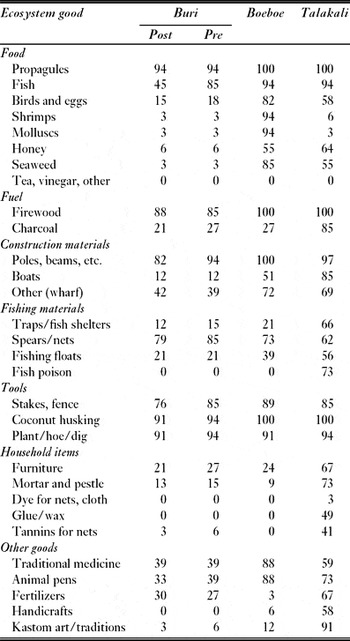
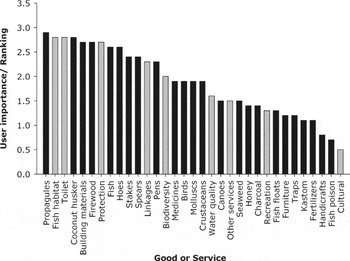
Among the 30 types of mangrove goods identified (Table 2), nearly 75% were classified as important or very important (≥ 20% of users), including B. gymnorhiza propagules (‘fruit’) for food, mangrove sticks for husking coconuts, building materials, firewood and fish (Figs 2 and 3a). Virtually all goods listed were important for subsistence needs, while 20–60% of respondents sold goods for cash, particularly fish, propagules, bird eggs and firewood.
Ecosystem goods acknowledged by local resource users (% of respondents) in Buri (Ranongga Island), Boeboe (Choiseul Island) and Talakali (Malaita Island) villages (total number of respondents = 99) in Solomon Islands. Buri responses include Post = post-earthquake uplift (April 2009) and Pre = pre-tsunami (before April 2007).

User (n = 99) rankings (where not important = 0, somewhat important = 1, important = 2, very important = 3) of the relative importance of mangrove goods (black) or services (grey).

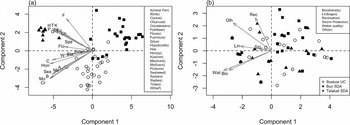
Principal component analysis (PCA) of respondents with respect to their rankings of the importance of mangrove (a) goods and (b) services. Not shown are goods and services highly valued by all villagers (building materials, coconut huskers, firewood, fish, propagules and fish habitat/nursery function) or none (dyes, oils, tannins, teas and cultural/religious values).

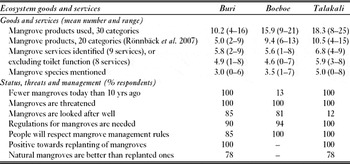
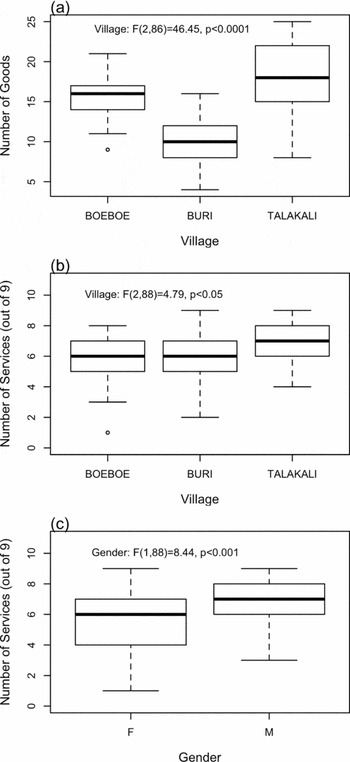
Overall, the mean number of mangrove products used by respondents (Table 3, Fig. 4a) differed most significantly based on the combined effects of village affiliation and religious denomination (F2,86 = 46.45, p < 0.0001). Statistically, the significance of these two variables could not be separated, however they were uniquely identified to shed insights into mangrove use and valuation that may not have been otherwise observed.
Mean number (and range) of ecosystem goods and services acknowledged by users. Perceptions of mangrove status, threats and management (% of respondents agreeing with survey question).

Mean number of (a) mangrove goods used by village, and awareness of mangrove ecosystem services by (b) village and (c) gender.

Occupation also affected use (F3,86 = 3.77, p < 0.05), with builders using more goods than professionals. No other significant use patterns were observed for income (F1,86 = 0.63, p > 0.05), gender (F1,86 = 1.70, p > 0.05) or education (F2,86 = 0.60, p > 0.05). PCA analysis likewise confirmed that village (i.e. cultural) and religious affiliation were the dominating influences in ranking the importance of various mangrove goods (Fig. 3a).
Among the main goods, building materials included roof rafters and timbers (Lumnitzera sp.) for joists and floors. Firewood was a primary use for Rhizophora sp., Ceriops sp. and Lumnitzera sp. and its collection was often cited as a cause of mangrove overharvesting. Charcoal (Lumnitzera sp. and Rhizophora sp.) was used for cooking and traditional medicine (Fig. 3a). Mangrove wood for tools (hoes or coconut huskers) was identified as a fourth major goods category (Table 2). Modern equipment has supplanted past uses of mangrove woods, such as fishing spears, nets, traps and floats (Sonneratia sp.).
In all villages, mangrove leaves, fruit, bark and roots (mostly Bruguiera sp., Excoecaria sp.) were exploited as medicinal remedies. Boat materials (for example masts), jetties, honey, (cultured) seaweed, furniture and household items were other widely acknowledged goods. Less frequent uses included fruit for children's candies (Ceriops sp.), toys (for example Sonneratia sp. fruit were used as spinning tops) and walking sticks (for example Xylocarpus sp.).
Some mangrove-associated goods were unique to individual villages. For example, in Talakali, mangrove bivalves (Polymesoda sp.) were fashioned into shell money and mangrove woods into ‘kastom’ (traditional) art (Appendix 1, see supplementary material at Journals.cambridge.org/enc). Similarly, in Buri and Talakali, residents eschewed consumption of crustaceans and bivalves as part of the SDA faith, which explained their separation from Boeboe (Fig. 3a). Overall, both the variety of goods and/or the proportion of respondents using goods were greater in Talakali (Fig. 4a), reflecting traditional uses such as tree bark for mosquito control and fish poison (Aegiceras sp.), leaves and woods for fishing net dyes and bows and arrows, and the use of propagule scraps as fertilizer (Fig. 3a). In contrast, strong cultural emphasis on plant-based remedies in Boeboe resulted in more prominent use of mangroves for traditional medicine (Fig. 3a).
Mangrove ecosystem services
Fish nursery/habitat, storm protection and toilets ranked as the three most important ecosystem services (Table 4, Fig. 2). The mean number of services recognized (Table 3) varied significantly by village affiliation and religious denomination (F2,88 = 4.79, p < 0.01) and gender (F1,88 = 8.44, p < 0.01), but not by occupation, income or education (p > 0.05). Talakali villagers recognized the greatest number of services (Fig. 4b). Overall, males were aware of more services than females (Fig. 4c). Greater heterogeneity was observed in user importance rankings for services than goods, although no group patterns emerged (Fig. 3b).
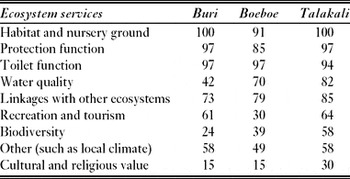
Ecosystem services acknowledged by local resource users (given as % of all respondents acknowledging service) in Buri, Boeboe and Talakali villages, Solomon Islands.

All villagers understood mangroves’ vital service as habitat and nursery areas for fish, invertebrates, birds and reptiles. Individuals displayed an intimate knowledge of mangrove fisheries and their complexity. Mangroves’ protective function against storms and erosion was the second-most recognized and valued (85–97% of users) service. A high number of respondents, particularly in Talakali (Fig. 3b), were aware of mangroves’ water quality improvements and linkages to terrestrial forests and coral reefs (Table 4).
To a lesser extent, villagers were aware of mangroves’ function as a storehouse for biodiversity (Table 4). While a few respondents (teachers) used the term biodiversity, c. 25–50% recognized mangroves’ biodiversity services, referring specifically to the variety of fish, birds and invertebrates inhabiting mangroves.
While respondents mentioned mangroves as a source of materials for kastom art (for example carvings and spears for welcome dances) and education (Table 4), most viewed mangroves with respect to the bounty they provide. Across the communities, 30–60% of respondents viewed mangroves as recreational or tourist spots (Table 4). Asked to name any additional services, most respondents spoke of mangroves’ influence on local climate, including shade, light breezes and a cooling effect in the hot climate. Some respondents also mentioned the production of oxygen and fresh air.
Local mangrove users’ economic valuation of ecosystem goods
Firewood
In all villages, Rhizophora sp., Bruguiera sp. and Lumnitzera sp. were the main mangrove woods collected for firewood, while Ceriops sp. was collected in both Buri and Boeboe and Xylocarpus sp. in Talakali. On average, Buri and Boeboe (n = 45 respondents) villagers spent 2–3 hours per week collecting firewood, and collected 81 and 107 kg, respectively, largely (60% of respondents) for subsistence needs. This practice saved SBD$ 2000–5000 household−1 yr−1, equivalent to 38–76% of the average annual monetary incomes in Buri and Boeboe (Appendix 2, see supplementary material at Journals.cambridge.org/enc).
In Talakali, overharvesting has depleted mangrove firewood sources, resulting in users spending relatively more time (7 hr week−1) collecting firewood and gathering larger quantities (average 120–245 kg week−1). Since firewood prices in Talakali were higher, mangroves supplied nearly three times the value of free firewood elsewhere and represented 88–146% of average Talakali annual monetary incomes (Appendix 2, see supplementary material at Journals.cambridge.org/enc).
Building materials
Mangrove timber collection for house posts, rafters and other building materials was common, while marketing of building materials was limited. Lumnitzera sp. was preferred overall, although in Buri and Boeboe, Bruguiera sp. and Rhizophora sp. were also used. Harvesting building materials for personal use occurred infrequently. In all three villages, small house rafters (SBD$ 1–4 per rafter) were collected 2–3 times every year for a subsistence household value of roughly SBD$ 100–150 yr−1 (Appendix 2, see supplementary material at Journals.cambridge.org/enc).
Mangrove propagules for food and cash
In all three villages, B. gymnorhiza propagules were an important food source and were typically gathered by women and children. Each household in Boeboe collected a 10-kg bag (SBD$ 10 bag−1, local market price, June 2008) approximately once a week, equating to SBD$ 520 household−1 yr−1; the figure was similar in Buri. In Talakali, propagules were also processed and sold for cash to local and Honiara markets. Due to overharvesting and mangrove habitat destruction, propagules were no longer collected in Talakali, but instead purchased or collected from other villages (a 20 kg bag containing c. 1000 propagules sold at c. SBD$ 30 bag−1, June 2008). Propagule processing was a thriving industry, with scraped propagules considered a ‘convenience food’. ‘Packets’ were sold for SBD$ 5–10 in markets, with sales generating SBD$ 100–200 household−1 week−1.
Mangrove and coral reef fisheries
Fishers were present in 80–100% of households, with women making up c. 40% of the total (Appendix 3, see supplementary material at Journals.cambridge.org/enc). Based on fishers’ own figures, an average of 19–40 (mangroves) and 40–81 (coral reef) fish were caught per week per fisher. Conservative estimates suggest fish from mangroves provided SBD$ 4000 household−1 yr−1 and coral reefs SBD$ 12 000 household−1 yr−1 for consumption and sale (Appendix 2, see supplementary material at Journals.cambridge.org/enc).
Loss of mangrove goods and services from overharvesting or natural disaster
Residents in all three villages noticed detrimental changes to mangrove forests over the past decade or longer. In Talakali, significant declines of fish, fruit and nesting birds from overharvesting and habitat destruction were reported. Talakali villagers also noted the loss of protection and water quality services. In Boeboe, 65% of users mentioned the loss of trees, shells and fish, and encroaching seas following the 2007 tsunami.
Likewise, in Buri, the 2007 earthquake served as a testament to subsistence coastal communities’ reliance upon mangroves and the detrimental effects of their loss. Residents used fewer mangrove goods than prior to the earthquake (Table 2), with major effects cited as a loss of trees (100% of respondents), fewer fish (60%), less propagules and birds (20%), more soil erosion (20%) and damaged aesthetics (20%). Based on Buri interviews, mangrove fishing ceased after the tsunami, while previous fishing effort continued on coral reefs. This change equated to an average household loss of SBD$ 101 per week and created significant hardship. A switch in diet accompanied this change, with most respondents (74%) consuming less fish, but more vegetables and fruits from their gardens.
Customary mangrove tenure and perceptions of threats and management
Traditional ownership, access and management of mangroves
Although grounded in customary land and sea tenure, varying degrees of traditional (mangrove) ownership characterized the study villages. Boeboe exhibited the ‘strongest’ tenure, with a single tribal leader (chief) responsible for mangrove ownership, access, management (‘caretaker’ or ‘custodian’) and enforcement. Buri displayed a moderate to weak form of customary ownership, with family heads (of multiple tribes) holding individual responsibility for mangroves they ‘owned’ or occupied, subject to oversight by chiefs from several tribes. These two villages were relatively distant to other villages and thus land ownership was seemingly clearer. In contrast, in Talakali, high population pressure and proximity to other villages complicated mangrove access and user rights. This led to ostensible governance by a weak tenure system, managed by multiple tribal chiefs, that in reality functioned as open access.
The most universal ‘rule’ or ‘traditional’ mangrove management practice was the requirement to ask for prior permission from ‘landowners’ for access and use of mangrove resources. The landowner granting permission may vary (for example a chief or individual family or tribal landowner), although many respondents noted such permission was rarely sought nowadays. Most landowners indicated they granted permission for collection, especially for subsistence needs, although more stringent rules were in force in Boeboe, where a formal management plan was in place. All respondents indicated mangrove trees on lands considered unoccupied or with no clear ownership were used freely. An exception was in Talakali and Buri, where mangroves had been replanted either as a consequence of natural disaster (Buri) or overharvesting (Talakali). In these cases, individuals who had planted mangroves, either on their own land, or on family or unused land, gained ownership over the trees. In each case, the land was still under the custody of the tribes, as represented by the chief(s) and/or heads of families.
Perceptions of effectiveness of customary mangrove management
Although multiple threats to mangroves, particularly from firewood overharvesting, were mentioned in Buri and Boeboe (Appendix 4, see supplementary material at Journals.cambridge.org/enc), most villagers believed mangroves were being well cared for (Table 3). In Boeboe, virtually all respondents voiced satisfaction with village leaders for successful management, including establishment of a terrestrial and mangrove forest conservation area. In Buri, the positive outlook towards management largely arose from satisfaction with their own/family's and/or individual landowner's care for mangrove trees on their property, rather than by the village as a whole. In contrast, Talakali users overwhelmingly stated that mangroves were poorly managed (Table 3).
DISCUSSION
Use, perceptions, knowledge, and value of mangrove goods and services
Although marked differences among villages were found, in general users identified firewood, food (propagules) and building materials as the most important direct benefits from mangroves. Initial economic data suggested a minimum annual subsistence value from these goods of SBD$ 2500–10 718 household−1 yr−1, which represented 38–160% of annual cash incomes. Mangrove-derived fish and invertebrates added SBD$ 5500–12 100 household−1 yr−1 in household subsistence and cash income.
Although a similarly high importance was assigned to both goods and service benefits among communities in terms of their relative value, respondents more readily recognized mangroves’ provisioning benefits than services. Similar conclusions were reached by general (Brown et al. Reference Brown, Daw, Rosendo, Bunce and Cherritt2008) and country-specific (Rönnbäck et al. Reference Rönnbäck, Crona and Ingwall2007) studies of ecosystem services and poverty.
Our data indicated that patterns of use and ranking of mangrove goods differed most significantly by village affiliation and religious denomination, thus highlighting the role these factors play in Solomon Islanders’ behaviour. For example, Malaitan village culture places a high value on kastom art (such as wedding ceremony carvings from mangrove wood). These longstanding traditions were still strongly held, and partly explained Talakali's higher use of mangroves. Similarly, in SDA villages (Buri and Talakali) where shellfish and bivalves consumption was restricted, the use of mangroves for food was reduced. These combinations of culture and faith explained many of the observed differences and valuations.
These results contrasted sharply with the strong impact of occupation and gender observed for Kenya (Rönnbäck et al. Reference Rönnbäck, Crona and Ingwall2007). Although occupation played a role in our study, its contribution was minor in comparison due to the multi-faceted nature of subsistence activities in Solomon Islands. For example, male fishers often gardened in some capacity, and women gardeners also fished and collected propagules. Thus, the occupation category in this context may be artificial, or at least less rigid than for Kenya (Rönnbäck et al. Reference Rönnbäck, Crona and Ingwall2007).
Similar to Kenya, significant differences in the number of mangrove ecosystem services recognized was found by village and gender. Overall, males in our study recognized more services than females, and villagers in Talakali recognized more services than occupants of other villages. In terms of the value placed on these services, villagers shared similar views on fish/nursery habitat, toilets and storm protection functions, but differed on the importance of others, for reasons not explained by gender, occupation, village affiliation, religious denomination or income.
Local users perceived the key threats to mangrove forests as overharvesting for firewood and timber, and damage from natural disasters. Regardless, in areas where customary management was weak and/or mangrove forest has declined, residents pointed to a parallel loss of fisheries, food, birds and village aesthetics. Villagers’ satisfaction with traditional mangrove management differed strongly among villages and generally reflected the state of the forest, the level of pressures upon it and the level of efforts to protect it. These, in turn, were linked to land tenureship, community resources and strong conservation leadership.
Our study results also confirmed that local ecological knowledge (Aswani & Hamilton Reference Aswani and Hamilton2004; Crona Reference Crona2006) of mangroves and their function exists in Solomon Islands. Over 90% of users were aware of fish habitat/nursery and protection services, while 80% recognized the complex linkages between mangrove fisheries and coral reefs (Larsson et al. Reference Larsson, Folke and Kautsky1994; Ogden Reference Ogden and Birkeland1997). About 60% of villagers understood mangroves’ central role in water quality and biodiversity, and over 50% mentioned other services relating to air quality and local climate. Recreational, cultural and religious values associated with mangroves scored lowest in terms of importance. Low tourism levels partly explained these results. Likewise, given mangroves dominant role in rural subsistence, we interpreted the cultural results to mean villagers did not perceive a separate cultural importance per se because mangroves intrinsically encompassed an integral part of their daily living environment and culture.
The regression models showed that the mean number of mangrove ecosystem services recognized by users varied significantly by village and gender. However, PCA revealed no differences in how gender or village may differ in the value placed on these services. Together, these results suggested residents of all three villages have ‘certain widely shared understandings’ (Crona Reference Crona2006) of the importance of mangroves and certain ecosystem functions, but that key socioeconomic variables, namely village and religion, influenced the specifics of that knowledge.
Insights for PES and carbon revenue programmes
PES and carbon credit systems may offer ‘convergent opportunities’ as adaptive management tools to achieve the dual goals of poverty reduction and protection of global marine carbon sinks. Management of carbon sinks can be included in developing Pacific island nations’ national greenhouse gas inventories and sequestration, thereby contributing to climate mitigation commitments (Laffoley & Grimsditch Reference Laffoley and Grimsditch2009). Additionally, mangrove protection via carbon credit schemes can be achieved through, or in concert with, well-established marine management approaches, such as marine protected areas and fisheries planning (Laffoley & Grimsditch Reference Laffoley and Grimsditch2009).
In this policy context, our study highlighted important lessons for the design and implementation of PES and mangrove carbon credits in rural coastal communities in Solomon Islands.
High reliance on mangrove goods requires subsistence options be integrated into PES/carbon projects
Our survey confirmed the central role mangroves play in subsistence Pacific island communities (Naylor et al. Reference Naylor, Bonine, Ewel and Waguk2002; Walters et al. Reference Walters, Rönnbäck, Kovacs, Crona, Hussain, Badola, Primavera, Barbier and Dahdouh-Guebas2008; Ellison Reference Ellison2009). Mangroves provided ‘free’ goods and services, as well as stability (for example food and shelter during storms; see Weiant & Aswani Reference Weiant and Aswani2006) for subsistence, with households on average obtaining at least one-quarter of their weekly cash and food, respectively, from mangroves. Data on mangrove goods economic value to households likewise highlighted the hardships created from their loss. As an example, fishers in Buri were deprived of SBD$ 5200 person−1 yr−1 following loss of their mangroves after the 2007 earthquake. While the survey results demonstrated the difficulties, they also highlighted the potential flexibility of rural coastal communities to adapt to shifts in available mangrove goods that may come with carbon credit programmes.
Sustainable harvesting, effective traditional management and protection were measures recommended by villagers as necessary to ensure the availability of mangrove goods and services for future generations. With firewood and timber overharvesting identified as key threats to mangrove forests, our study highlighted the critical need for affordable and practical alternative energy sources, such as small-scale solar or plant oil cookers, to replace mangrove wood as a fuel. The development and financing of such alternatives could be part of a future carbon credit scheme. Likewise, solutions to accommodate villagers’ need for firewood could also be integrated into carbon credit projects, such as the inclusion of set-aside woodlot areas for fast-growing species (such as Casuarina) to replace mangrove wood, a common project component in terrestrial carbon schemes (see for example Plan Vivo in Mozambique, URL http://www.planvivo.org).
Replanting of mangroves in degraded areas was also widely supported by local users. Small-scale mangrove replanting activities were already underway in Solomon Islands. For example, in Malaita, forward-thinking residents have begun replanting and farming B. gymnorhiza propagules for consumption and sale. In conjunction with carbon credit programmes, such ‘fruit farming’ might be one practical policy option for conserving mangrove forest elsewhere to reduce poverty.
Ecosystem services surveys are a valuable community awareness and input tool
Our study results demonstrated the utility of conducting mangrove ecosystem surveys prior to the design of PES and carbon systems and as a first step in formal communication and consultation processes with communities. Many villagers commented on the value that survey participation afforded them towards raising awareness. According to participants, by linking surveys to users’ daily lives the connection between an individual and community's activities, and sustainable use and management of mangroves was reinforced. The survey process also underscored the need for future approaches that elucidate programme goals and clarify complexities in a carefully planned and culturally appropriate manner, with sufficient time for community engagement (namely high initial transaction costs; see Wunder et al. Reference Wunder, Engel and Pagiola2008).
Most notably, our study found that carbon sequestration was not a widely recognized benefit of mangrove forests. In fact, there was limited knowledge about climate change or carbon credit schemes in general, which is not surprising for these remote rural communities. Filling this knowledge gap will be a critical need prior to initiating carbon credit programmes. Our findings also suggested that because in Solomon Islands ‘stakeholders involved share the same, or at least similar conceptual models of how the system works’ (Crona Reference Crona2006), adaptive co-management of mangrove forests, an approach predicated on local users’ understanding of ecosystem function and involvement in management (Ostrom Reference Ostrom2005), may have a promising chance of success. By promoting inclusion and shared knowledge of ecosystem services and carbon credit payment systems, some of the common pitfalls of previous terrestrial carbon forestry projects, for example legitimacy, community mistrust and conflicts (Corbera et al. Reference Corbera, Brown and Adger2007), might be mitigated.
Land/sea tenure systems in Pacific island communities are variable and complex
Our study highlighted the complexity of social, economic and land tenure dynamics in many Pacific communities. In Solomon Islands, customary land and marine tenure accords the rights of access, use and development of resources to local clan groups led by chiefs (Aswani Reference Aswani1997). Our study supported Lane's (Reference Lane2006) assertion that although legally and constitutionally ‘natural resources are vested in the people of the Solomon Islands and their government. . . this degree of legal ambiguity does not appear to be widely appreciated—the resource sovereignty of customary landowners is the dominant refrain’. The duality and uncertainty in the role of national and regional governments versus local mangroves owners in forest management may be an issue for carbon credit programmes and should be analysed. Indeed, the respondents we interviewed did not make any reference to regional or national governmental rights to mangrove forest ownership in their locality.
The widely shared perception by respondents that (mangrove) land resources fall solely under customary ownership creates important complexities for terrestrial or marine forest management in the Pacific. Because property rights delineate mangrove resource access, management and responsibilities, the existence of robust and clear land and marine tenure systems could be a basic criterion for the identification, prioritization and establishment of PES and carbon credit projects in Solomon Islands. Smaller-scale pilot studies or complete avoidance of carbon credit projects may be advisable until tenure issues are resolved.
Nonetheless, these very same complexities may offer a promising foundation for successful PES and carbon credit programmes. Essentially, we observed village subsistence populations highly dependent upon, and holding clear authority and legal title for, mangroves for survival. Concomitantly, these same communities were seeking ways to sustainably use and generate cash from these resources. The desire by Solomon Islands villages to conserve and/or replant mangrove forests could be realized in exchange for long-term carbon revenue.
In light of this desire, our results clearly indicate that the socioeconomic importance of one single ecosystem service (carbon dioxide sink/climate regulation) can be used on its own to justify the financial investments needed to conserve and restore mangrove systems in Solomon Islands and elsewhere in the Pacific. The significant added value of such management schemes is the securing of a multitude of other mangrove ecosystem services (such as food provisioning, fuel and construction material, protection against natural disturbances and water quality maintenance), all of which contribute to local and regional economies.
An equitable transparent system is necessary for an arrangement by which all parties benefit
A legitimate and equitable PES system (Engel et al. Reference Engel, Pagiola and Wunder2008) that safeguards and champions villagers’ rights will be fundamental to avoiding the high transaction costs and power asymmetries that have characterized some carbon projects in the terrestrial forest sector, ‘the poor sell cheap’ phenomenon, whereby carbon revenues disproportionately go to outside middlemen (Alcorn Reference Alcorn2010; Kosoy & Corbera Reference Kosoy and Corbera2010). Historical experiences in logging and mining in Solomon Islands predict that a lack of access to information in managing natural resources will make rural communities vulnerable to exploitation by resource extractive and, for the case of a carbon commodity, non-extractive industries alike. If steps are not explicitly taken, a lack of expertise (technical or financial) may lead outsiders (in this case global carbon traders and speculators) to realize a disproportionate economic gain from local mangrove resources at the expense of communities. Such a scenario falls squarely within the rubric of equity, poverty and PES (Grieg-Gran et al. Reference Grieg-Gran, Porrasi and Wunder2005; Engel et al. Reference Engel, Pagiola and Wunder2008; Corbera et al. Reference Corbera, Soberanis and Brown2009) and it will require skilful navigation by stakeholders to chart future stormy waters and succeed where so many predecessors have, even with positive intentions, foundered.
ACKNOWLEDGEMENTS
We gratefully acknowledge the support of the chiefs and villagers of Boeboe, Talakali and Buri, who spent their valuable time participating in the surveys. We thank Rence Sore, Reverend Leslie Boseto, Willie Atu, Hugo Tafea and Kevin Rhodes, and two anonymous reviewers for their suggestions to improve the study. Financial support was provided by AusAid Australian Development Research Award #49892.