



Introduction
Bonneville Estates Rockshelter is in North America's eastern Great Basin (Figure 1), an arid location where climate change during the last 20 000 years has led to major alterations in the local biotic environment (Rhode & Madsen Reference Rhode and Madsen1995; Madsen et al. Reference Madsen2001; Louderback & Rhode Reference Louderback and Rhode2009; Goebel et al. Reference Goebel, Hockett, Rhode and Graf2021). Excavated between 2000 and 2009, the site contains many distinct strata that may be divided into eight cultural components based primarily on bifacial-point form (Goebel et al. Reference Goebel, Hockett, Rhode and Graf2021). These components range in age from c. 13 000 to 500 cal BP, while underlying geological and palaeontological deposits include late Pleistocene Lake Bonneville sands and gravels that accumulated prior to 17 500 cal BP and terrestrial silts that formed between 17 500 cal BP and the beginning of human occupation 13 000 cal BP (Goebel et al. Reference Goebel, Graf, Hockett, Rhode, Kornfeld, Vasil'ev and Miotti2007, Reference Goebel, Hockett, Rhode and Graf2021; Graf Reference Graf, Graf and Schmitt2007; Hockett Reference Hockett2015). Materials recovered from hearths, middens and surrounding sediments provide a detailed record of the resources available in the local environment and those consumed by inhabitants of the rockshelter (Hockett Reference Hockett2005, Reference Hockett2015; Graf Reference Graf, Graf and Schmitt2007; Louderback & Rhode Reference Louderback and Rhode2009; Schmitt & Lupo Reference Schmitt and Lupo2012). Changes in resource distribution across the region would have influenced the dietary choices of the traditional inhabitants of Bonneville Estates. The environment around the rockshelter is currently composed of five major vegetation communities delineated by increasing elevation: the playa, valley floor, lower foothills, lower mountain slope and subalpine forest (Table S1). Today, Bonneville Estates straddles two zones: the sagebrush-dominated lower foothills and the shadscale-dominated valley floor (Goebel et al. Reference Goebel, Hockett, Rhode and Graf2021).
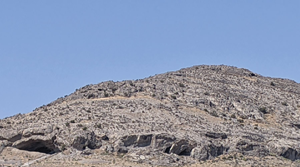
a) View of Bonneville Estates Rockshelter in 2021 and its location in the Great Basin; b) plan of the area within the rockshelter excavated between 2000 and 2009 (after Goebel et al. Reference Goebel, Hockett, Rhode and Graf2021; photograph of Bonneville Estates Rockshelter and excavation map provided by T. Goebel).

The dry climate of the Great Basin and lack of moisture inside the rockshelter creates an ideal environment for the preservation of organic material, including faecal remains (Albush Reference Albush2010; Goebel et al. Reference Goebel, Hockett, Rhode and Graf2021). While coprolites have been recovered from all cultural components, only one coprolite study has been conducted. Albush (Reference Albush2010) examined macroremains from 18 Bonneville Estates coprolites dating to the Middle and Late Holocene, demonstrating a reliance on small, lowland seeds and on seasonal occupation and foraging behaviours that align with the central place model. The results from Bonneville Estates correspond with coprolite analyses from the nearby Hogup and Danger Caves (Fry Reference Fry1976), but molecular analyses have yet to be applied to eastern Great Basin coprolites. Through macroscopic and molecular analysis of coprolites from Bonneville Estates, we seek to refine what is known about resource use and landscape exploitation of Middle and Late Holocene inhabitants. We apply DNA metabarcoding and macroremains analysis to coprolites from components V, III and II to interpret early human diet at Bonneville Estates by first identifying floral and faunal taxa in coprolites, then discussing the potential uses of identified taxa based on ethnographic data and comparing the results gained from both analyses.
Methods
Coprolites in this study
This study focuses on 10 previously unanalysed coprolites (BiG0004–BiG0013) collected from Bonneville Estates (Figure S1). Half are associated with stratum 14 and component V, three with stratum 3b and component III, and two with stratum 3a and component II. These 10 coprolites were selected for analysis based on the availability of supplementary dietary data for these time frames as well as the variable environmental and/or cultural contexts they represent.
Environmental and cultural background
Component V (8297–4809 cal BP at 95% confidence; Goebel et al. Reference Goebel, Hockett, Rhode and Graf2021) is associated with the Early Archaic period and the Middle Holocene. This period is culturally defined by large side-notched bifacial points and ground-stone technology. Stratum 14 represents peak usage of the rockshelter, containing numerous hearth features and substantial faunal and macrobotanical assemblages. Across the eastern Great Basin, this time is broadly characterised by increased temperatures, decreased effective precipitation, a change from mesic- to xeric-adapted fauna and shifts in floral distributions to more modern conditions (Hockett Reference Hockett, Graf and Schmitt2007, Reference Hockett2015; Louderback et al. Reference Louderback, Grayson and Llobera2010; Schmitt & Lupo Reference Schmitt, Lupo, Oviatt and Shroder2016).
Component III (4024–1458 cal BP at 95% confidence; Goebel et al. Reference Goebel, Hockett, Rhode and Graf2021) is associated with the Middle Archaic and the Late Holocene, and its major diagnostic artefact is the Elko corner-notched series point. Stratum 3b from this component yielded an extensive assemblage of cultural remains. Component II (1394–842 cal BP at 95% confidence; Goebel et al. Reference Goebel, Hockett, Rhode and Graf2021) is associated with Stratum 3a, which represents a relatively short phase of intense human occupation during the Late Archaic and Late Holocene. It contains hearth and pit features and is differentiated from Component III by the appearance of bow and arrow technology. Stratum 3a temporally overlaps with the Fremont culture regionally, and several Fremont-style artefacts were recovered during excavation (T. Goebel 2022, pers. comm.). Additional site information is available in the online supplementary material (OSM).
Metadata collection and genetic analysis
We selected coprolites from the 2000–2009 excavations led by Goebel, Hockett, Rhode and Graf. The coprolites are currently in the process of being permanently curated at the Nevada State Museum, along with the rest of the Bonneville Estates collection (Bureau of Land Management site number CRNV-11-4893). We recorded coprolite descriptions following Jouy-Avantin and colleagues (Reference Jouy-Avantin, Debenath, Moigne and Moné2003), after which we collected duplicate samples for ancient DNA analysis. DNA was extracted in the Bioarchaeology and Genomics (BiG) Laboratory at Texas A&M University using Qiagens's DNeasy PowerSoil Kit with the standard protocol (Wood & Wilmshurst Reference Wood and Wilmshurst2016) and then transported to the TRACE (Trace Research Advanced Clean Environment) Laboratory at Curtin University, Western Australia, for subsequent processing. Both facilities are designated ancient DNA labs. We amplified the DNA using uniquely tagged trnl-gh and 12sv5 fusion primers (Table S2) and, to account for reagent and lab contamination, we ran polymerase chain reaction (PCR) and extraction negative controls alongside the samples; none of the controls yielded DNA. All samples and controls were combined into a single library and sequenced to one million reads on single-end mode to 300 base pairs on the Illumina MiSeq platform. We used the USEARCH pipeline as described by Murray and colleagues (Reference Murray2013) to filter reads and group them by genetic similarity into operational taxonomic units (OTUs), after which we identified OTUs to at least the family level. Detailed wet lab and read processing methods are in the OSM.
We determined taxonomic abundances in individual coprolites by per cent composition according to read number, while presence across coprolites and the overall assemblage was ascertained by counting how many coprolites contained a certain taxon. To visualise the composition of individual coprolites, we loaded read counts for each OTU at the family level into R (v4.1.3). We converted counts into percentages and plotted coprolites belonging to the same component together. Taxa representing less than one per cent of total reads are not visible on the plots but are demarcated in the figure keys. Detailed molecular methods and raw data are in the OSM.
Macroremains analysis
We rehydrated and disaggregated half of each coprolite in 0.5% trisodium phosphate for at least 48 hours (Fry Reference Fry, Gilbert and Mielke1985), after which we recorded the liquid's colour, translucence and smell. Following disaggregation, we sorted the coprolites into coarse (>250 micron) and light (<250 micron) fractions. We viewed the coarse fractions through a dissecting scope under 10–15× magnification and fully sorted the macroremains into groups based on shared morphological features (Figure 2) while retaining the light fraction for future microremains analysis. We consulted illustrated databases of seeds from the region, the comparative collection housed in the Paleoethnobotany Laboratory at Texas A&M University and seeds acquired from the USDA-GRIN (United States Department of Agriculture Germplasm Resources Information Network) to identify materials. We recorded counts for identified remains. For coprolites containing large amounts of small seeds, we used counts from three equally sized subsamples to estimate seed frequencies in the total coarse fraction. We quantified the abundance of each taxon on a five-part ordinal scale (Albush Reference Albush2010) where items were classified as rare (<1/0.5g), present (1–10/0.5g), common (11–100/0.5g), abundant (101–1000/0.5g) and dominant (>1000/0.5g). We reported bulk materials as present (1–10/0.5g) or abundant (>10/0.5g). To visualise the overall abundance of materials in each component, we added the abundances from individual coprolites in a component and plotted the results in R. Spearman and Pearson correlations were calculated in R to determine if sample richness was correlated to sample weight; no correlation was found, meaning the number of taxa found in individual coprolites is not a factor of the size of the coprolite in this data set. Detailed methodological considerations and raw data are in the OSM.
Identified macroremains: A & B) bone; C) Acrididae; D & E) Opuntia; F) Asparagaceae; G) Poaceae; H) Achnatherum; I) eggshell; J) plant fragment; K) Sporobolus; L & M) Atriplex; N) Allenrolfea; O) Amaranthus; P) Chenopodium; Q) Artemisia; R) Lappula; S) Lithospermum (figure by authors).

Results
The genetic assemblage from the 10 coprolites represents 15 families with some taxa identified to genus or species. Faunal DNA includes Hominidae (human), Canidae (domestic dog, Canis familiaris), Antilocapridae (pronghorn, Antilocapra americana) and Leporidae (jackrabbit, Lepus californicus). Floral DNA includes Chenopodiaceae (saltbush, Atriplex sp., and bugseed, Corispermum sp.), Pinaceae (fir, Abies sp., and pine, Pinus sp.), Asteraceae, Apiaceae, Poaceae, Cupressaceae, Ephedraceae (Ephedra sp.), Boraginaceae (stickseed, Lappula sp.), Rosaceae, Solanaceae (tobacco, Nicotiana attenuata) and Brassicaceae (Figures 3, 4 & 5). We genetically identified two additional floral families, Proteaceae and Euphoribaceae, but we interpret them to represent contamination (possibly from the primers), as no DNA amplified in the negative controls, Proteaceae and Euphoribaceae were found in one sample each, and each sample was amplified using uniquely tagged primer sets. Proteaceae includes tropical plants endemic to Western Australia, where library preparation and sequencing were conducted, and Euphoribaceae reads were further identified as Hevea brasiliensis (the Pará rubber tree), a non-native plant.
Macroremains abundance and genetic composition of component V coprolites (figure by authors).

Macroremains abundance and genetic composition of component III coprolites (figure by authors).

Macroremains abundance and genetic composition of component II coprolites (figure by authors).

The macroremains assemblage (Figure 2) represents 10 families including Leporidae (rabbit/cottontail, Sylvilagus sp., or jackrabbit/hare) fur and Acrididae (grasshopper) wing and thorax fragments. Cheno-ams (those plants belonging to Chenopodiaceae and Amaranthaceae) include Atriplex fruit and seeds and pickleweed (Allenrolfea occidentalis), goosefoot (Chenopodium cf. nevadense) and pigweed (Amaranthus sp.) seeds. Cactaceae (likely Opuntia sp.) is present as spines, glochids (barbed bristles) and tissue, while Poaceae is represented by undifferentiated fragments, ricegrass (Achnatherum hymenoides) seeds and chaff, and dropseed sandgrass (Sporobolus sp.) seeds. Seed fragments from Boraginaceae include stickseed (Lappula occidentalis) and puccoon (cf. Lithospermum sp.). Asteraceae consists of sagebrush (Artemisia sp.) fragments. Additional macroremains include Asparagaceae fragments and Linaceae (flax, Linum sp.) fibres.
The most common faunal remains were bone. While too small and fragmented to be identified to genus, we divided the bones broadly into small (rodent sized), medium (cottontail-jackrabbit sized) and large (coyote-artiodactyl sized) via extrapolation of whole bone sizes from the fragments. Bones were more specifically labelled according to the possible size of their source organism: mouse-sized, mouse- to squirrel-sized, squirrel- to rabbit-sized, rabbit- to coyote-sized and coyote- to artiodactyl-sized. Bird consumption is represented by eggshell fragments and feathers, and additional materials include fibres, charcoal, stone, unidentifiable fragments and cordage.
Defecator identification
We identified defecators using traditional and molecular methods, described in detail in the OSM. In brief, we considered the colour, smell and translucence of the rehydrating liquid, the size of bone fragments, the presence of dietary macroremains and the presence of likely defecator and dietary DNA. We merged results to assign final defecator attributions (Table 1; Figure S2). Overall, we identified coprolites 4 and 6–13 as human and coprolite 5 as canine.
Attributes used to identify coprolite sources.

LM: Light Musty; MM: Medium Musty; LF: Light Fecal; MF: Medium Fecal; H: Human; C: Canine; U: Unknown; A: Absent
Discussion
Component characterisations
While we identified faunal DNA to species, our interpretation of floral DNA is inherently speculative as some taxa were only identified to family or to a grouping between family and genus. We inferred possible genera and their uses by cross-referencing results with lists of native Great Basin plants and relevant ethnographic literature, especially of the Western Shoshone and neighbouring Indigenous groups of the region. Unless otherwise specified, the ethnographic uses and seasonality of flora and fauna described in the discussion of components V, III and II are from the following sources: Chamberlin (Reference Chamberlin1911), Steward (Reference Steward1938), Train and colleagues (Reference Train, Henrichs and Archer1941), Sutton (Reference Sutton1988), Rhode (Reference Rhode2002) and the Native Plant Information Network (2013). Macrobotanically, we often identified florae to family with additional identifications to genus and species; we referred to the same ethnographic accounts when interpreting the presence of macroremains.
Component V
Genetically, component V coprolites demonstrate the consumption of hare and of plants with culinary and medicinal uses (Figure 3). Hares are ubiquitous in the region, and ethnographic accounts state that they were communally hunted by being driven from brush into awaiting nets and traps. Only three plants were genetically identified to genus: Ephedra, Pinus and Atriplex. Ephedra tea was used to treat ailments including venereal disease, bladder disorders, colds, ulcers and rheumatism. Atriplex seeds are edible, and pine, especially pinyon (Pinus monophylla), was one of the most important food resources available to the Gosiute and Western Shoshone and would have been gathered annually. The cones were often partially charred and the nuts eaten either whole or ground. Pine gum was also ingested to treat parasite infections or was made into a tea to treat respiratory ailments.
Additional genetically identified taxa include Apiaceae, Asteraceae, Brassicaceae and Cupressaceae. The Gosiute and Western Shoshone used Apiaceae leaves, shoots, roots and seeds as food, and made root teas from certain of its taxa as remedies for chest ailments and coughs. All parts of Asteraceae plants were important as medicine (to treat respiratory and digestive issues) or food. Among the Shoshone, one of the most utilised Asteraceae taxa was sagebrush. Its leaves and tops were steeped to make medicine and its seeds were eaten. Brassicaceae DNA likely represents dietary use of leaves, stems and seeds. The most likely ingested Cupressaceae is juniper (Juniperus sp.); the Gosiute ate its berries or boiled them along with twigs to make cold medicine.
The macroremains assemblage is dominated by small seeds (Figure 2). Cheno-ams are most abundant, represented by large amounts of pickleweed and smaller amounts of pigweed and goosefoot. Seeds are whole and fragmented, which could be the result of grinding, chewing, or taphonomic processes. Dropseed sandgrass seeds are next-most abundant, followed by Opuntia. The Shoshone ate Opuntia fruits fresh or dried, and charred its pads to remove skin and spines before eating. We also identified Poaceae tissue and Asparagaceae, for example yucca (Yucca sp.); plants that could be roasted, dried and made into flour. Evidence of animal consumption includes bone fragments belonging to animals ranging from mouse to artiodactyl in size, eggshell and feathers. Additional materials include unidentified fibres, stone, charcoal and a fragment of cordage composed of flax fibres with adhering Leporidae fur (McDonough et al. Reference McDonough, Johnson, Goebel, Reinhard and Coe2023).
The genetic and macroremains data reflect (1) a reliance on small-seeds; (2) the exploitation of multiple vegetation zones, and (3) use of Bonneville Estates across different seasons during the Middle Holocene. Lowland resources in the assemblage include sandgrass and pickleweed from the playa, and Atriplex and other cheno-ams from the valley floor. Upland resources include Asparagaceae from the lower foothills and pine and Cupressaceae from the lower mountain slopes. Flax comes predominantly from the subalpine forests. Many of these resources could be collected at different times of year and either used immediately or dried and stored. For example, Brassicaceae leaves and stems are available as greens during spring, while its seeds are available during summer. Pickleweed, sandgrass and pine nuts are harvested in the late summer and early autumn, while Atriplex seeds are available during the autumn and winter.
Component III
Genetic data from component III show pronghorn consumption along with use of dietary and medicinal plant taxa (Figure 4). The Gosiute and Western Shoshone often hunted pronghorn communally, although overall pronghorn was less important for subsistence than plants and smaller game. Plants identified to genus which also occur in component V include Atriplex, Pinus and Ephedra, whereas plants not seen in component V include bugseed, fir and tobacco. While bugseed does not appear in the ethnographic literature consulted, it is native to Nevada and has edible seeds that could be processed and consumed like other cheno-am seeds. Bugseed has been identified in cave fill and coprolites from other archaeological sites in North America, including Bechan and Cowboy Caves in Utah (Betancourt et al. Reference Betancourt, Long, Donahue, Jull and Zabel1984). The discovery of fir is surprising, given that today this tree only grows at high elevations in the Goshute Range. This geographic distance and the ability of fir pollen to travel hundreds of kilometres from its source (Szczepanek et al. Reference Szczepanek, Myszkowska, Worobiec, Piotrowicz, Ziemianin and Bielec-Bąkowska2017) suggests the DNA may represent background pollen rather than intentional ingestion. Tobacco was primarily smoked or chewed. Additional floral taxa are Asteraceae, Poaceae, Cupressaceae and Rosaceae. Identifications of Asteraceae likely represent sagebrush, as it is in the Asteroideae subfamily, Anthemideae tribe and Artemisiinae subtribe, all of which we also genetically identified. Grasses in Poaceae were largely utilised for their seeds, but some may have been harvested for salt or sugar while others were used medicinally as laxatives, pneumonia treatments or stimulants. DNA ascribed to Rosaceae was more specifically identified as Dryadoideae, which includes only four genera including Purshia sp. (bitterbrush). This may represent unintentional ingestion of pollen or plant fragments during processing for firewood, as bitterbrush is prevalent in the charcoal assemblage at Bonneville Estates and is not commonly cited as a food item (Goebel et al. Reference Goebel, Hockett, Rhode and Graf2021).
The macroremains mostly represent dietary components and the assemblage is dominated by small seeds (Figure 4). Edible small-seed remains include cheno-ams (pickleweed and Atriplex), ricegrass and stickseed. As with component V, seeds are whole or fragmented. Component III coprolites additionally contained Opuntia and Asparagaceae tissue. The presence of sagebrush in the genetic and macroremains could indicate medicinal use, yet the predominance of sagebrush as a fuel at Bonneville Estates would suggest that it was ingested unintentionally, potentially as pollen or plant fragments, during gathering or processing or as charcoal adhered to cooked food. Faunal remains include bone fragments from squirrel-to-coyote-sized animals and eggshell. Insect exoskeleton and leg fragments could represent grinding (e.g. Sutton Reference Sutton1988) for consumption or the contamination of food stores and accidental ingestion. Additional remains include fibre, charcoal, stone and unidentifiable materials.
As with component V, component III coprolites show (1) small-seed utilisation of cheno-ams and grasses, (2) seasonality and (3) a large foraging range. Identified taxa range between all vegetation zones. Lowland resources not found in component V include stickseed from the valley floor, while upland resources include grasses from the lower foothills and fir from the subalpine forest. Taxa displaying seasonal use, excluding those previously described, include stickseed, which was available in the late summer and early autumn, and ricegrass and other grasses, which were available in the late spring and early summer. Identified taxa largely have either dietary or medicinal uses, with few taxa used for both purposes, and the large amounts of stone and charcoal could indicate accidental consumption due to processing and cooking methods.
Component II
The canine coprolite from component II potentially yields information about human diets, as canines may have eaten food waste or human faeces, or had access to the same food resources as humans (Guiry Reference Guiry2012; Shillito et al. Reference Shillito, Blong, Green and van Asperen2020). Additionally, the canine coprolite discussed here displays an omnivorous diet that aligns with what is known of human diets in the region. No dietary faunal DNA was identified in either the dog or human coprolite from component II, but floral DNA included Apiaceae, stickseed and Atriplex (Figure 5). While all three have dietary uses, Apiaceae has additional medicinal uses, as described above.
The most abundant floral macroremains are pickleweed, with smaller amounts of grass and puccoon (Figure 5). While the puccoon is present as seed fragments in coprolite 4, the matrix is a homogeneous, digested root material. This suggests that roots, not seeds, were the primary component of the represented meal, which may have included roots from other borages such as the genetically identified stickseed. Faunal remains include bone fragments from mouse- to rabbit-sized animals, feathers, eggshells and insect remains including mandibles, cuticle and grasshopper thorax and wing fragments. While not identifiable to genus, grasshoppers have been identified archaeologically and ethnographically in the Great Basin (Madsen & Kirkman Reference Madsen and Kirkman1988; Sutton Reference Sutton1988). Gosiute and Western Shoshone peoples would communally gather grasshoppers by hand or drive them into pits with fire, after which the grasshoppers could be cooked and eaten fresh or stored for the winter (Sutton Reference Sutton1988). The only additional macroremain was charcoal. Overall, component II displays small-seed use from lowland contexts, but less evidence for the use of resources from more upland contexts.
Comparison
Both the metabarcoding and the macroremains datasets demonstrate a reliance on small seed resources throughout the Middle and Late Holocene, especially pickleweed and other cheno-ams. Though pickleweed is present in coprolites from all three components it is much less abundant in the Late Holocene coprolites, suggesting decreased importance in the diet. Both upland and lowland vegetation zones were exploited for forage during seasonal site use, in both the Middle and Late Holocene. There is, however, little taxonomic overlap between the datasets (Table 2, Figure 6). The floral DNA reliably yielded species designations for dietary and medicinal plant use, and was able to identify the utilisation of softer, more digestible plant parts that do not often appear in the macroremains. Some macroscopic flora—largely composed of the harder, less digestible fragments—could be identified morphologically, but faunal remains could not. The macroremains additionally contained materials related to food processing, cooking or environmental contamination that are not detectable in genetic data (e.g. presence of charcoal, different plant parts, stone, etc.).
Taxa identified in individual coprolites.

Taxa shared between or unique to cultural components. Genetically identified taxa in black, macroscopically identified taxa in red, taxa identified using both methods in white (figure by authors).

The presence of floral DNA is assumed to represent intentional plant use but caveats to this interpretation may be responsible for some disconnect between the methods. First, without knowing what plant part the DNA came from, we cannot say with certainty why or how a plant was ingested. Second, floral DNA may represent environmental pollen that was unintentionally ingested. DNA metabarcoding can taxonomically identify pollen from a single grain (Kelley et al. Reference Kelley, Rose, McCullough, Martinez and Baudelet2020), but extraction of pollen DNA is difficult, requiring isolation of pollen grains and disruption of the pollen wall (Prudnikow et al. Reference Prudnikow, Pannicke and Wünschiers2023). Pollen preservation in coprolites is highly variable; coprolites may contain pristine, easily identifiable pollen and/or ‘ghost grains’—grains that are so degraded they are unidentifiable (Sobolik Reference Sobolik1988; J. Blong & K. McDonough Reference McDonough, Johnson, Goebel, Reinhard and Coe2023, pers. comm.). It is possible that pollen grains that were degraded by plant processing or gut taphonomic processes may have ‘released’ DNA into the overall coprolite matrix permitting identification without specialised extraction. Even if palynological analyses are conducted it may not be possible to confirm pollen as the DNA source, adding to the speculative nature of the genetic data. As an additional caveat when considering foraging ranges, some of the identified plant families (Cupressaceae, Pinaceae and Poaceae, for example) are wind pollinated (Mozingo Reference Mozingo1987: 56), meaning pollen could have been ingested without interaction with the source plant. The inclusion of genetic data does not, however, alter our interpretation of foraging ranges, as the use of both upland and lowland resources is supported by the macroscopic data.
It was only possible to explicitly identify three taxa in both the genetic and macroscopic data: Poaceae, Atriplex and Lappula (Figure 6). Of these, only Atriplex was detected using both methods in an individual coprolite (BiG0007, Table 2). Two additional macroscopically identified genera may be present in the genetic data; these are Artemisia (DNA belonging to Asteroideae, Anthemideae and Artemisiinae) and Achnatherum (DNA belonging to Stipeae). These results are unsurprising, as complete genomes are not available for certain ethnographically important or highly abundant plants, such as Allenrolfea.
Conclusion
The genetic data show the potential use of a variety of dietary and medicinal flora, many of which were traditionally harvested for their leaves, stems, shoots and roots. These are materials that are more digestible, losing distinct morphology or entirely breaking down as they move through the digestive tract. These ‘invisible’ taxa may not be detectable in a visual assessment of remains, meaning the metabarcoding results could provide otherwise inaccessible information about the health and diets of the traditional inhabitants of Bonneville Estates. For example, many of the genetically identified plants are used to treat respiratory ailments in addition to being an occasional food source. The faunal DNA demonstrates communal hunting activities and aligns with previous studies of the site. The macroremains were largely dietary and contained clearly identifiable, hard floral elements (predominantly seeds and tissue) along with faunal remains and inorganic material that provides evidence of cooking and processing methods.
Overall, the lack of overlap and different levels of data gained from DNA metabarcoding and macroremains analysis show the complementary nature of these analytical methods. Our results further show the necessity of future microremains analysis to determine whether pollen is a potential DNA source, and the need to build more comparative DNA libraries for plants from regions such as the Great Basin where dietary studies are an important part of archaeological research. Despite the promising future for ancient DNA analysis, it should not be seen as a replacement of traditional methods of dietary analysis. Studies on DNA from coprolites and other environmental settings need to include traditional analytical methods and must incorporate such results for fuller interpretations of past environments and diets. Conversely, traditional methods of dietary reconstruction are enriched through the addition of genetic analyses.
Acknowledgements
We respectfully acknowledge that Bonneville Estates Rockshelter is located on lands traditionally occupied by people of the Confederated Tribes of the Goshute Reservation. Consultations with the Goshute and Western Shoshone tribes were completed prior to the Bureau of Land Management's (BLM) approval of the excavations at Bonneville Estates Rockshelter through an Environmental Assessment in compliance with the National Environmental Policy Act. Additional consultations with the BLM ensued prior to the submission of this paper to ensure compliance with all current US laws and regulations.
Thanks to Michael Bunce for providing facilities and materials for the genetic work in the (TrEnD) Lab and to Frederik Seersholm and Matthew Power for providing instruction in DNA metabarcoding. Thanks to Vaughn Bryant and Heather Thakar for instruction in coprolite and macrobotanical analysis, Chloe Fackler for plant tissue identification and John Oswald for insect identification. Thanks also to Ted Goebel for his helpful comments, input and editing on earlier drafts.
Funding statement
This work was funded by the Department of Anthropology at Texas A&M University through both the Pilot Research Award and Professional Development Award. Additional funding was provided by The Australian Academy of Sciences through the Australia-Americas PhD Research Internship Program 2018 and by the TrEnD Lab at Curtin University under the direction of Michael Bunce.
Online supplementary material (OSM)
To view supplementary material for this article, please visit https://doi.org/10.15184/aqy.2024.139 and select the supplementary materials tab.



