Introduction: Looking behind Symbolic Representation
In recent years, I have been confronted with a recurring question whenever I present visual material from 19th- and early 20th-century Central and Eastern Europe featuring crafts. Whether these images show adorned wooden furniture, needlework and embroidery, or traditional dress, someone from the audience raises the seemingly straightforward question: Is this not just nationalism? At first glance, all the elements appear to be in place to prompt this question: the period, the region, and the design of material culture. The late 19th century has entered historiography as a period of intensifying national movements across Europe. In particular, rural regions in the Austro-Hungarian Empire have been the focus of analyses of nation-building processes through the imagination and production of a peasantry collective by elites (Himka Reference Himka1988; Zayarnyuk Reference Zayarnyuk2013) as well as within villages (Stauter-Halsted Reference Stauter-Halsted2001). In this context, material culture from rural regions has gone through a history of political use by national movements to the extent that it appears to be difficult to view objects or visual reproductions of them without the immediate association with nationalism. The questions I receive usually operate with a broad notion of nationalism focusing on the symbolic representation of the nation through objects. By viewing material culture as a national symbol, they run the risk of subsuming other identities (such as profession or gender) and thus overriding the cultural, social, and economic processes of industrialization that shaped material culture in the late 19th century through changing working patterns and the introduction of new consumer goods.
Departing from my personal experience during research discussions, the aim of this article is twofold: First, it seeks to disentangle the meaning of nationalism ascribed to material culture from rural regions and addresses the questions of how, when, and why a nationalized interpretation of these objects has taken center stage. Second, it looks more closely at the use of folk costumes in the late 19th and early 20th centuries, thereby seeking to investigate how the process of nationalizing material culture may inform the economic and social histories of the region more broadly. The argument of this article focuses on the history of Central and Eastern Europe, as an ethnonational interpretation of culture appears to be particularly salient for this region (Curticapean Reference Curticapean2007) and has long framed the dominant scholarly approach to the nationalization of individuals (King Reference King, Bucur and Wingfield2001, 125).Footnote 1 Nonetheless, as the discussion will highlight, the processes of nationalizing rural culture in this region were connected to those unfolding in other places in Europe, against the backdrop of industrialization. This discussion will be illustrated by iterative references to source material from the 1890s that frames the overall argument of this article. A network centered in Prague that promoted traditional dress from Bohemia, Moravia, Hungary, and Galicia will serve as a lens to focus on the social and economic history of folk costumes that unfolded behind their symbolic representation. Thereby, this article does not intend to present a comprehensive historical account of these processes in the diverse political, social, and cultural landscape of Austria-Hungary and other states in Central and Eastern Europe; rather, the examples are used to investigate the nation as a category of historical practice, in line with recent scholarship in the field of nationalism studies. This intends to avoid projecting the nation as a category of analysis onto the historical source material (see Brubaker Reference Brubaker1996, 7; Reference Brubaker2006, 10). Since rural material culture has been closely linked to issues of identity and representation, treating the nation as a category of analysis runs the danger of reifying the nation.
The discussion is structured in three parts that seek to look behind the imagination, construction, and representation of the nation by enquiring into how images of rural material culture have become readily associated with nationalism. The first section introduces the connection between nationalism and material culture in historical and recent scholarship. Based on source material from the late 19th century, it highlights the crucial role of mediation by means of publications, visual reproduction, and exhibitions in perceiving the rural world in association with the category of the nation. The second section, then, rejects the dominant interpretation of rural material culture as representation of tradition and instead presents folk costumes as commodities of the industrial age. Finally, the third section disentangles the threads of the symbolic meaning associated with folk costumes by engaging with the central role of capitalism and industrialism in nationalism theory. The discussion sheds light on social and economic processes in industrial society, such as promotion of economy, technological innovation, and women’s industrial education, that shaped the modern history of folk costumes. By the early 20th century, Bohemia was the most industrialized crown land in Austria (Steidl, Fischer, and Oberly Reference Steidl, Fischer-Nebmaier and Oberly2017, 59), and it is against this background that traditional dress was met with great public interest in the capital Prague. Thus, this article proposes a conscious unlearning of the way we read images of rural material culture in order to scrutinize the history of nationalism in Central and Eastern Europe.
Scrutinizing Nationalism in the Study of Rural Material Culture
The interpretation of rural material culture has been the subject of debate for a long time, including during the era of rising nationalism in the late 19th century. Museums were one of the major sites where divergent meanings of folk costumes were expressed and negotiated, as the following incident illustrates. In a letter to Josefa Náprstková, the acting manager of the Bohemian Industrial Museum of the Náprstek familyFootnote 2 in Prague, her friend Renáta Tyršová, a newly appointed member of the board of trustees, shared her reservations about the organization of the museum collections in 1895. The Bohemian Industrial Museum boasted of a wide range of exhibits including the most recent technological innovations of industry, ethnographic objects from overseas expeditions, and rural material culture from the Habsburg crown lands between Galicia and Bosnia that had been acquired since the 1860s. While these exhibits had shared the same space for decades—an arrangement not uncommon for museums in Austria-Hungary at the time—the museum’s board of trustees was reviewing plans to reorganize the collections into two distinct thematic sections of industry and ethnography in 1895. Renáta Tyršová, an art historian and promoter of women’s industrial education, expressed fears that this proposal would neglect the industry section in favor of ethnography. In particular, she rejected the proposal to classify embroidery as an ethnographic object and argued for its integration into the industrial section of the museum. She endorsed a broad definition of industry, one that included factories and small trade artisans as well as home industries. Accordingly, handmade textiles were to be considered “commodities of industry in the broader sense of the word,”Footnote 3 as she explained in the letter to her friend Josefa Náprstková, the head of the museum’s board of trustees. By focusing on production rather than representation, Tyršová perceived folk costumes as belonging to the same group of industrial exhibits as machine-made products.
Renáta Tyršová (1854–1937) and Josefa Náprstková (1838–1907) shared with their contemporaries a strong fascination for traditional textiles. They formed part of a Czech-speaking intellectual milieu in Prague that promoted the nationalist interpretation of rural material culture (Štěpánová Reference Štěpánová2005; Filipová Reference Filipová2020, 31), as evidenced by the long-drawn correspondence between the two women. The fragment of their correspondence cited above is significant, as it hints at a broader social and economic history of folk costumes. In order to explore this history further, the following discussion first needs to enquire in greater detail into how rural dress was connected to processes of commodification in the late 19th and early 20th centuries. Therefore, folk costumes must be viewed in the broader context of framing rural material culture from the domestic sphere as nationalized objects through mediation in print publications, exhibitions, and illustrations. It will become evident that it was the association with nationalism that was instrumental in transforming dress and other rural material culture into commodities that would then appeal to consumers in cities.
The connection between material culture and nationalism, both in theory and historiography, is well established. Clothing, furniture, and other material culture from the domestic sphere lend themselves well to nationalism research, due to their ubiquitous presence in everyday life and their use in what Michael Billig (Reference Billig1995) has termed banal nationalism. Material culture has been central to research investigating the everyday reproduction of the nation in relation to performative practices as well as through visual representation (Zubrzycki Reference Zubrzycki2017). Among many other material forms, clothing has been referred to as the one “most closely associated with national identity” (Edensor Reference Edensor2002, 108). There is a vast array of scholarship exploring nationalized textiles (Ward Reference Ward2014; Suyarkulova Reference Suyarkulova2016; Mentges and Shamukhitdinova Reference Mentges and Shamukhitdinova2017) and “sartorial nationalism,” the study of nationalism through clothing practices (Maxwell Reference Maxwell2014, Reference Maxwell2021). Historical research on the nationalization of culture has been particularly interested in cultural expressions from the countryside that were rich sources for ethnographers, artists, and other public intellectuals who portrayed the rural population to embody and represent the nation (Hofer Reference Hofer and Sugar1980; Löfgren Reference Löfgren1989). Books, postcards, and portfolios played a crucial role in this process, as media featuring descriptions and images of peasant art, design, and dress from Central and Eastern Europe grew vastly in popularity across Europe and the Americas. However, research has not enquired in detail into what produced this evident link between rural dress and nationalism: Why did clothing lend itself so well to the promotion of nationalist interpretation?
This article seeks to provide answers to this question by looking at both discourses and historical uses of rural material culture. This includes processes of mediation through print publications and exhibition displays that made the realm of the everyday life of rural residents inseparable from the imaginary realm of readers and visitors. Studies of material culture have noted that the intangible aspects of objects “enter the imaginary realm of fantasy and desire” through the visualization and narration of material culture in media (Woodward Reference Woodward2007, 14–15). In his historical study of wax mannequins, Mark B. Sandberg (Reference Sandberg2003, 161) argues along similar lines that the evocative absence of the rural body in folk museum displays encouraged a rich spectatorial imagination to enliven the vacated scene. Given the sparse knowledge on everyday rural life among the general public in the 19th and early 20th centuries, the imaginary realm became the driving force for the framing in the public discourse of objects owned by people in rural regions. If publications and exhibitions are contrasted with other available historical source material on the material belongings of rural residents, such as inheritance surveys by courts (Kaltenbrunner Reference Kaltenbrunner2017, 73–77), it is clear that these media did not reflect the living standard of people in rural regions. However, those engaging with the imaginary realm were well aware of the inaccuracy in representation. More importantly, this awareness did not compromise the authenticity of the imaginary realm that promoted the understanding of rural material culture as an embodiment of the nation. This idea was explained by Jacob von Falke (1825–1897), who was later appointed chief curator at the Imperial Royal Austrian Museum of Art and Industry in Vienna, in a review of the Vienna World’s Fair of 1873. Writing about Russian wooden houses, he made it clear to his readers that he was aware that no peasant within or outside of Russia lived in such houses. Attesting to the fact that authenticity was a product of mediation in exhibition display, these houses nonetheless bore to him “the authentic, specifically Russian character” (von Falke Reference von Falke and Lützow1875, 73–74).
Nationalized material culture invoked through media an imagined community that interacted with objects of the same style. Modern print media did not only turn dress into a national symbol, but these outlets also made sure to disseminate it among a large group of people beyond the rural localities. Benedict Anderson’s pivotal study, Imagined Communities (Reference Anderson2006 [1983]) stressed the importance of circulation of vernacular print publications for nationalism, albeit neglecting the role of material culture. Material culture such as the rural cottage, furniture, or clothing rendered the rather abstract imagined community concrete through touch, sound, and sight in what Geneviève Zubrzycki referred to as “the national sensorium” (Reference Zubrzycki2011). Objects assumed central importance in the so-called “myth-symbol complex” of national collectives (Smith Reference Smith1986). Dress, in particular, worked as a “symbolic border guard” (Armstrong Reference Armstrong1982) that identified a person’s belonging to a group and, consequently, delineated who was beyond the realm of a specific collective. This also included participation in parades, fairs, religious festivals, and other events that required special attire. For example, the tradition of wearing a Dirndl to the Oktoberfest in Munich was introduced at the turn of the century and has continued to be a popular practice until the present day.
Generalizing overviews on rural material culture gained popularity by the end of the 19th century, as publications on farmhouses, the furnishing of cottages, as well as on clothing and embroidery, were printed and circulated in increasing numbers. Based on their decorative function, dress and architecture were often viewed in the same framework and thus followed ideas on applied arts expressed by German architect Gottfried Semper (Reference Semper1860). Moreover, this rural sphere of domesticity was highly gendered by relying on women’s decorative skills, with both clothing and furniture becoming playing fields to articulate social identities (Charpy Reference Charpy, Gerritsen and Riello2015, 199). Thus, interiors were perceived as an extension of the female self (Gordon Reference Gordon1996, 282), as the following example of a generalized overview of a rural household from the 19th century shows. In an article saturated with nationalist rhetoric, Teréza Nováková (1853–1912), a writer and journalist, described a typified Czech household in Bohemia in the Czech Women’s and Girls’ Calendar of Reference Nováková1889.Footnote 4 Nováková was acquainted with Náprstková and Tyršová mentioned in the beginning, and both were regular readers of the Calendar. Tyršová in fact requested the issue with Nováková’s article from her friend in Prague as a welcome distraction while she was taking care of her sick mother and unable to leave the house.Footnote 5 In her article on the Czech cottage, Nováková emphasized the heavy decoration on the wooden furniture and the walls that were adorned with religious images, a cross, a cuckoo clock, and shelves filled with flowers and daily appliances. Peasant women loved bright colors, Nováková asserted, and she urged young women to embroider the most beautiful needlework (Reference Nováková1889, 36–37). Overall, she opined that women should decorate their houses with objects in national style in order to live with their families “under a Czech roof” (pod českou střechou), which lends the article its name.
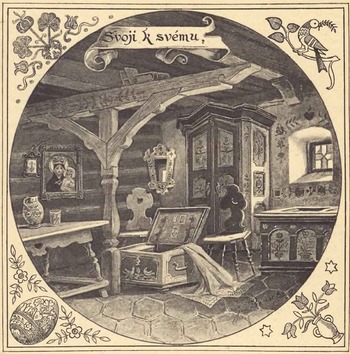
The idea of the national cottage was popular across Europe in the late 19th and early 20th centuries (Stoklund Reference Stoklund1999). Publications were issued on the typical farmhouses for different regions and Hermann Muthesius’s seminal study on the English house (Reference Muthesius1904) inspired similar studies for other nations, thus serving as inspiration for new construction work. Against this background, Nováková’s article highlighted the appropriation of rural material culture through modern consumer practices. The female readers were not only given practical advice on the interior design of different rooms, but they were also provided with a few useful addresses of companies that sold objects in national design styles across Bohemia and Moravia. Under the heading of “Each to one’s own” (Svoji k svému), a contemporary slogan promoting economic nationalism,Footnote 6 one of the illustrations in the article depicted a small room crowded with richly decorated and skillfully crafted wooden furniture (fig. 1). The illustration by Jan Prousek reflects how the domestic space of traditions, relying on the notion of one’s own, was used to construe the symbolic sphere of the nation that was evoked in Nováková’s accompanying text. The room in the drawing was evidently staged, similar to an advertisement or exhibition display, since hardly any rural resident lived with so much furniture of such high quality. Consequently, the author and illustrator did not aim to depict real conditions but rather to promote the production of something new.
Illustration by Jan Prousek. Reproduced from Teréza Nováková, “Pod českou střechou,” Kalendář paní a dívek českých 2 (Reference Nováková1889), 29

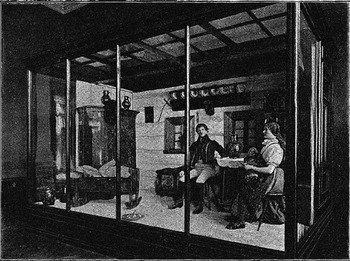
Nováková’s approach to rural material culture reveals the crucial role of collection and compilation in the nationalization of objects. Her interest was not limited to literary work, as she was a passionate collector of dress and furniture from her native region around the town of Litomyšl in Eastern Bohemia. In 1891, she contributed a part of her collection to a display featuring the so-called Česká chalupa (Czech cottage) at the General Land Centennial Exhibition in Prague (Tyršová Reference Tyršová1916, 215), thus supporting the actual creation of what she had described in her article. After the conclusion of the exhibition, the cottage was transferred to the Museum of the Bohemian Kingdom (today’s National Museum) and transformed into an indoor peasant chamber equipped with figurines (fig. 2). To both creators and visitors of the display, the meaning of historical authenticity of the Česká chalupa did not rely on actual cottages found in the countryside. Reflecting aspiration rather than representation, the evidently imaginary nature of the peasant chamber did not challenge the intention to display a true Czech cottage.
Photograph by Jan Koula, “Světnice z Litomyšlska v selské síni Musea království Českého,” ca. 1893. Reproduced from Český lid 2 (1893), 648

In a similar vein to publications promoting national cottages, exhibitions of traditional dress as well as portfolios and postcards depicting rural residents in richly decorated apparel grew in popularity toward the end of the 19th century. These outlets reflected the method of ethnography in Austria-Hungary that highlighted an ethnically diverse empire rather than a homogeneous nation (Rampley Reference Rampley2011, 125–126), thus integrating textiles from different regions in the empire to form one single display. Whereas substate regionalism had long been treated as an opposing force to nationalism, especially in separatist movements, more recent research has emphasized the “overlapping and complementary concentric spheres” of region and nation (Núñez Seixas and Storm Reference Seixas, Xosé and Storm2019, 5). Against this background, while nationalism was a motive guiding the organization of exhibitions across the crown lands (Okurka Reference Okurka2016), the association of traditional dress with nationalist interpretation was particularly evident in central compilations of exhibition displays based on regional collections.
This principle of central compilation can be exemplified by the Czechoslavic Ethnographic Exhibition of 1895, described by scholars as one of the core events promoting national identity through rural material culture (Filipová Reference Filipová2011). The umbrella notion of Czechoslavic comprised the political entities of Bohemia, Moravia, and a loosely defined Slovakia referring to Upper Hungary,Footnote 7 with the center located in Prague. While this notion proclaimed the unity of the Slavic vis-à-vis the German- and Hungarian-speaking populations inhabiting these regions, the organizers did not intend to recreate the political idea of Pan-Slavism that had been popular in Bohemia in the mid-19th century (Filipová Reference Filipová2020, 64). Contrary to historical accounts that limit their focus on the 1895 event in Prague, the national idea associated with the Czechoslavic Ethnographic Exhibition was rooted in active participation of people in rural regions. Boosting financial support from the Bohemian, Moravian, and Silesian diets, official local sections for the exhibition were founded across the crown lands that were responsible for the collection of objects in their vicinity. These objects were displayed at around two hundred local exhibitions that were organized from 1892, three years before the activities culminated in the event in Prague (Kafka Reference Kafka1895, 4). In 1895, the arrangement of the display of textiles in the so-called Ethnographic Palace maintained regional classification, thus firmly basing the event on locality. Accordingly, the official exhibition guide emphasized the distinct regional characteristics of the embroidery, needlework, lace, and the figurines wearing traditional garments that were on display (Kafka Reference Kafka1895, 321). Moreover, the display in Prague was complemented by organized group visits of people wearing folk costumes from the rural regions, further emphasizing the connection of dress to distinct territories.
The brief outline of the organization of the Czechoslavic Ethnographic Exhibition refers to several practices that highlight the conscious staging of textiles in connection to nationalist endeavors. However, contrary to the arguments of contemporaries, the nationalist framing of textiles did not emerge naturally from distinct visual and material characteristics of fabrics and pieces of clothing that could be neatly classified into groups. Rather, the source material attests to the considerable efforts invested in the nationalist framing of these objects. Textiles were nationalized through mediation and new modes of presentation, thus shifting the context of rural dress from the countryside to a realm of fantasy and desire. Against this background, when we look at images from the late 19th and early 20th centuries today, we have acquired the knowledge to interpret these images as symbolic representations of the nation. The nationalist framing of rural material culture can be recognized, even if we cannot discern the specific location that the textiles were supposed to represent based on their visual and material characteristics. Therefore, the nationalized object of handmade textiles was in fact a commodity of industry, rather than ethnography, as per Renáta Tyršová’s distinction outlined earlier.
Dress as Ethno-Commodity on Display
Folk costumes are based on the idea that the design and material of dress is a part of the tradition of a particular place and is thus specific to it. Generally, folk costumes comprise an everyday costume and a second, more elaborate, set of costume that is used for festive occasions. In the English language, the notions of folk and national costume, respectively, can be used interchangeably with that of traditional garment. Some languages in Central and Eastern Europe follow the English notion such as the Russian natsional′nyi kostium or the Polish strój ludowy that are not used to refer to traditional garment without including the reference to nation or people. In the German and Czech languages on the other hand, the notions of Tracht and kroj, respectively, denote a type of dress reflective of social order more broadly (Alm Reference Alm2016), which includes profession defined by guilds besides folk costumes. The difference in languages shows that it is not always necessary to characterize a traditional garment as national or folk. Symbolic association with the nation is only one basis for imagined communities besides those of class, gender, religion, or profession along with others (Baycroft Reference Baycroft, Baycroft and Hopkin2012, 6).
Accordingly, traditional textiles like folk costumes have also differentiated genders, marital status, or class through design and have thus served as an indicator of general social, cultural, and economic belonging in society. This indication of belonging to a particular group of people or place through dress is not always voluntary, as states and institutions have introduced and enforced official clothing regulations, most notably with uniforms. When peasants were affected by such clothing regulations, they were not merely directed at maintaining the social order but also driven by considerations seeking to support the national economy. For example, 18th-century Russia prohibited the sale and wearing of imported clothing by peasants in Siberia and requested them to wear traditional garments (Romaniello Reference Romaniello, Riello and Rublack2019, 391). In the case of Sweden, such regulations fostered the introduction of a national costume in the 18th century (Wagner Reference Wagner2018, 63–68). Given these economic considerations, how garments assume a symbolic association with tradition and thus with the nation needs to be critically investigated.
Constructivist studies of nationalism, and principally the seminal study by Eric Hobsbawm and Terence Ranger, The Invention of Tradition (Reference Eric and Ranger1983) have stressed the deliberate fabrication of traditional dress for peasant populations across Europe. In the first half of the 19th century, particularly around the 1848 revolutions, efforts to compile a national costume from different regional elements were pursued throughout Europe (Křížová Reference Křížová, Křížová, Pavlicová and Valka2015, 26–33). The contributions to the volume of Hobsbawm and Ranger have revealed that promoters of national costumes in Western Europe were often associated with industrial and noble society, and they collected depictions on postcards or sold figurines wearing national costumes (Morgan Reference Morgan, Hobsbawm and Ranger1983, 80–81). The function of traditional dress changed drastically, as soon as it was made readily available to a large group of people. The national costume emerged as a commodity in a market that sold the actual dress, as well as visual and material reproductions of it. Consequently, Petr Bogatyrev (1893–1971), a renowned Russian ethnographer living in interwar Czechoslovakia, later complicated the notion of folk costumes by describing their simultaneous function as both tangible object and symbol in his structuralist studies on the functions of traditional dress from the region of Moravian Slovakia (Bogatyrev Reference Bogatyrev1936, Reference Bogatyrev1937). The discussion here seeks to engage with the symbolic and practical functions of traditional dress by characterizing it as a modern commodity moving across space. By returning to the production and circulation of folk costumes in the late 19th century, the discussion connects to the observation that the market has recently emerged as the primary reference point of national identity (Foster Reference Foster1999). In particular, the symbolic function of national identity can be seen as a form of branding that depends on the cultural perceptions of the value of objects (Sinclair Reference Sinclair2008), while increasing the monetary value as well.
The display of folk costumes in exhibitions and the visual representation in various media, including pattern portfolios and postcards, facilitated the transformation of the actual object into an ethno-commodity. This particular type of commodity is characterized by its ability to reaffirm the value of authenticity, here in relation to tradition and national identity, during mass circulation and upon entry into the market (Comaroff and Comaroff Reference Comaroff and Comaroff2009). The practice of exhibition was instrumental in the emergence of traditional garments as an ethno-commodity, as it allowed these to be marketed to large audiences. During the 19th century, the medium of exhibition grew vastly in popularity, as international, regional, and local exhibitions attracted millions of visitors from across Europe and the world. Continuing the tradition of fairs and markets, exhibitions became one of the primary means to present the latest industrial innovations and new consumer goods. The first industrial exhibition in continental Europe took place in 1791 in Prague, and in 1851, the first world’s fair was held in London under the official title of the Great Exhibition of the Works of Industry of All Nations. As this title reflects, the “nation” assumed a central position in the arrangement of the exhibition compound, with each nation being assigned its own section. The competitive basis of the world’s fair motivated exhibitors from different countries to highlight their national culture “in order to effectively compete with the cultural productions of other nations” (DeGroff Reference DeGroff2012, 236). This concerned not only modern industrial technologies but also traditional modes of production, as reflected in the design reform in the applied arts. Faced by the increasing competition posed by imports from France and Great Britain, design reformers in Austria-Hungary believed that the articulation of modern, distinct styles would support the development of the national economy. The reformers sought to exploit traditional forms of production, as those native to their national economy, and thus drew a lot of inspiration from peasant designs (Crowley Reference Crowley1995; Houze Reference Houze2015).
From the 1870s, traditional production of clothing and household appliances by peasants in so-called home industries was gradually superseded by mechanical production in factories, leading to the widespread disappearance of manual textile production in particular. Against the background of these socioeconomic changes, the preservation of manual production by peasants was deemed an effort in support of the development of the national economy, rather than a matter of public nostalgia. Folk costumes were an integral part of industrial exhibitions, beginning with the 1867 Paris World’s Fair that dedicated a section to folk costumes from diverse regions, including figurines, photographs, shoes, and textiles from the Habsburg crown lands. In his review of the Applied Arts section at the 1873 Vienna World’s Fair, Jacob von Falke equally maintained that the home industry exhibits were a distinct type of work, not merely of ethnographic interest, and could thus put the brakes on the rural exodus at the time (von Falke Reference von Falke and Lützow1875, 138–139). This perspective was reflected in the collections of the Museum of Art and Industry in Vienna, where von Falke worked, and in the associated workshops of the Vienna School of Arts and Crafts. Established as an institution for the encouragement of industry in 1864, the museum’s mission was to use the past for modern inventions, and it collected diverse styles from the Austro-Hungarian Empire and abroad, in an effort to address the developments in the global market for applied arts (Rampley Reference Rampley, Rampley, Prokopovych and Veszprémi2020, 154). However, with the popularization of peasant crafts through exhibition display, the boundaries between the industrial activity of home industry and the ethnonational connotation of folk art became increasingly blurred (Rampley Reference Rampley2013). Especially following Alois Riegl’s seminal study Folk Art, House Labor and Home Industry (Volkskunst, Hausfleiß und Hausindustrie) from 1894, rural dress came to be regarded more and more as an item of folk art. This also spurred the aforesaid discussions to reclassify folk embroidery in the collections of the Bohemian Industrial Museum, which were opposed by Renáta Tyršová in 1895.
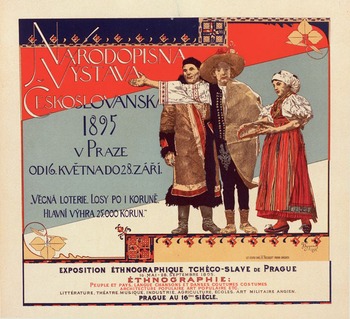
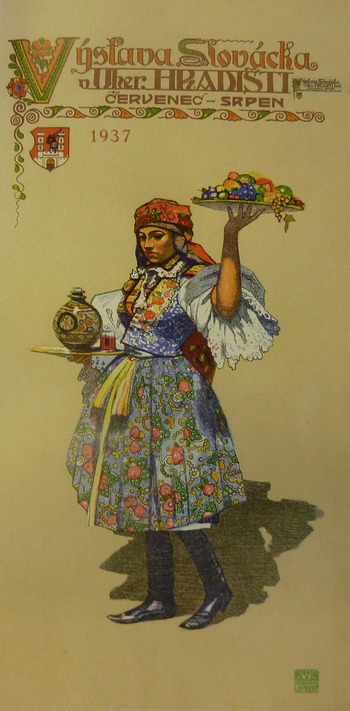
By the end of the 19th century, folk costumes were no longer found exclusively in sections displaying textiles, extending to general areas of trade and entertainment in the organization of exhibitions. Waitresses and sellers could be seen in taverns, bakeries, and shops in specially arranged village compounds that sold nationally branded delicacies, postcards, and other souvenirs that were sometimes even directly produced on site, right before the visitors (Wörner Reference Wörner1999, 148, 166). Service staff dressed in folk costumes became a strong visual marker and represented high production value, which is why they were used on posters and guidebooks to advertise the exhibition itself. Thus, the costume functioned not only as a symbol of the identity of the person wearing it but was also part of the entertainment and indicative of the delicacies served by the waitresses. The official poster of the Czechoslavic Ethnographic Exhibition of 1895 by artist Vojtěch Hynais featured three people dressed in folk costumes with inviting gestures (fig. 3). The three people were an idealized representation of the regions of Bohemia, Moravia, and Slovakia that comprised the Czechoslavic nation, but contemporary accounts published in print media reveal that visitors were not able to locate the textiles without hesitation (Filipová Reference Filipová2011, 27). The poster was inspired by the oil paintings of renowned Moravian artist Joža Uprka (1861–1940), depicting women and men in sumptuous folk costumes on pilgrimage or at the popular Ride of the Kings festival. Uprka himself was the son of a peasant and promoted his rural Moravian identity as part of his professional identity as an artist. Residing in Paris, he made a name for himself with paintings celebrating the idyllic Moravian countryside and regularly dressed in the traditional clothing of his native region. As the general popularity of exhibitions grew, Uprka also turned more and more to the commercialized medium of event advertisement. His iconography had a lasting effect on nationalist visual representation in the First Czechoslovak Republic, when illustrations produced in Austria-Hungary before World War I were reused. Uprka’s lithograph titled Mařat’anka (woman from Mařatice, now a district of Uherské Hradiště) adorned the official poster for the Exhibition of Moravian Slovakia in Uherské Hradiště in 1937 (fig. 4).
Vojtěch Hynais, poster for the Czechoslavic Ethnographic Exhibition in Prague, 1895. Reproduced from Wikimedia Commons

Joža Uprka, poster for the Exhibition of Moravian Slovakia in Uherské Hradiště entitled Mařat’anka, 1914/1937. Památník národního písemnictví. Reproduced from Wikimedia Commons

Official exhibition guides and exhibition reports published in special interest journals provide ample insight into the motivation behind the collection of old clothing and their display at industrial exhibitions celebrating technological innovation and regional economy. While nationalist motives have generally been emphasized in research, in particular in relation to modern design reform (Houze Reference Houze2004–2005; Manouelian Reference Manouelian2000), other factors underlying the interest in rural material culture that were connected to economic, social, and educational issues have been neglected. The exhibition catalogue of the General Land Centennial Exhibition of 1891 in Prague, for example, makes clear that the nationalist rhetoric of the organizers did not necessarily indicate that other contemporaries ascribed it to rural material culture. At first glance, it seems the display of the aforementioned Česká chalupa, dubbed by the cottage’s architect as a “work of honor” (Wiehl Reference Wiehl1891, 8), assumed a central role in Czech nationalist aspirations. This role was emphasized even further after German business owners declared they would boycott the exhibition following almost a decade of strained Czech-German relations within Bohemian commercial associations (Albrecht Reference Albrecht1993). However, another view indicates that this clear nationalist aspiration stood in contrast with how the cottage was perceived among visitors, thus pointing to a larger segment of the population that displayed indifference to it. This complicates a straightforward interpretation of the display as a token of broader nationalist sentiment.
The process of commodification underlying the nationalist aspiration becomes apparent when the perspective of analysis is shifted from organizers to visitors. The exhibition committee for the display of folk art relied on the support from people living in rural regions to locate and transport objects from farmhouses and far-flung cottages. However, the description of the meaning the rural residents attributed to the objects was rather sobering. Therefore, the visitation of the Česká chalupa in Prague by the villagers was also aimed to make them realize the “value of long-lived folk relics that they had hitherto sold off cheaply, lightmindedly destroyed and altered” (Zíbrt Reference Zíbrt1892, 631). Upon their return to the countryside, the committee hoped, the villagers would inform the fellow residents of the high value of these objects that were usually abandoned or chucked off as garbage. By seeing the same objects in the center of Prague in a new light, the appreciation of rural material culture was expected to go beyond the immediate realm of collectors and ethnographers and include other levels of society that had hitherto been suspicious and lukewarm toward this interest. Finally, this newfound appreciation was expected to motivate rural residents to preserve their traditions and thus serve as a source for Czech people to retain “their national individuality” (svoji národní individualitu), notwithstanding eager modernization efforts among the general society (Zíbrt Reference Zíbrt1892, 632).
Hopes like these were directed against the impression of a surge in import of uniform products from a globalizing market. Both political and economic interests provided a frame for the contemporary fascination with traditional clothing that focused in particular on patterns. In a brochure titled Some Thoughts on Wherein and Where to Look for the Antiquity of Czechoslovak Embroidery, Jan Koula, head of the archaeological collection of the Museum of the Bohemian Kingdom, expressed a profound interest in the “origin and age of Czechoslovak embroidery” (Reference Koula1907, 1). According to him, methods of measurement and classification should help determine the place of origin, through comparison of shapes, production techniques, material, and most importantly, the patterns applied to the clothing. This was not a niche interest but instead manifested itself in a large number of publications of portfolios of patterns found on embroidery, the walls of houses, furniture, and Easter eggs, all the way to ancient objects discovered during archaeological excavations. These publications were not disseminated for mere documentary purposes, but they were aimed to serve as pattern templates for contemporary designers and artisans (Verein des patriotischen Museums in Olmütz 1888, 1–2).
In particular, the technological innovation of photography paved the way for the grand circulation of images of textiles in literature, ranging from ethnography and tourist guides to fashion and home décor, and depictions of people wearing folk costumes on postcards and trading cards. Museums with folk costume collections complemented the exhibition of actual fabrics with staged photographs of so-called ethnographic types, farmhouses and furnished living rooms from the region of the folk costume. A memorandum from 1898 on the acquisition of ethnographic collections by the Moravian Provincial Museum reveals the conscious fabrication of the folk costume by combining compatible existing garments or producing them anew in the size of the models they photographed as ethnographic types (Curatorium des mähr. Franzens-Museums 1898, 5). Type photography became a soaring commercial activity in wider society, due to the popularity of these images as collectors’ items in the aristocratic and intellectual milieus (Manikowska Reference Manikowska2019). The private production of illustrated postcards was legalized in 1885, and new and cheaper printing techniques introduced in 1897–1898 turned them into a true mass medium by the 1910s, when more than a million postcards circulated daily in the Austrian half of the empire alone (Bürgschwentner Reference Bürgschwentner2013, 101–102; Almasy and Tropper Reference Almasy, Tropper, Almasy, Pfandl and Tropper2020, 10).Footnote 8 Postcards from one region were even sent to acquaintances living elsewhere, with a request to return the favor by sending a postcard featuring the folk costume from the recipient’s region.
In line with their function as ethno-commodities, the photographic reproduction and mass circulation of people wearing folk costumes did not compromise but rather reaffirmed their authenticity. This process promoted “the status of the embodied ethnic subject as a source and means of identity” (Comaroff and Comaroff Reference Comaroff and Comaroff2009, 20). Photographs were only one form of commodifying traditional dress, besides display at exhibitions and in museums, collection of pattern portfolios, and depiction in drawing, painting, as well as narration in journals and other publications. While “the invention of tradition” has described the genesis of folk costumes, the manifold practices and applications that accompanied the process during and after their invention have been overshadowed. By highlighting the function of commodity, it is evident that folk costumes did not only serve a symbolic representation promoting nationalism. As their context shifted from the village to exhibitions and other outlets in urban centers, they were also used to foster various interests, one of them being the promotion of the national economy during industrialization.
Weaving Folk Costumes into the Industrial Society
In 19th -century Europe, nationalism came to the fore against the backdrop of industrialization, capitalization of agriculture, and urbanization, as well as the emergence of a globalizing market. Both Benedict Anderson and Ernest Gellner’s work on nationalism departed from these historical developments. Anderson’s “imagined community” relied on what he referred to as print capitalism in creating a feeling of belonging to a nation. The relevance of vernacular language in the formation of modern nations has been emphasized by many histories of nationalism. However, Anderson took this argument further by positing that it was capitalism and media that formed the basis of the modern nation (Reference Anderson2006 [1983], 43). Capitalism created print languages by assembling related vernacular languages and disseminating publications through the market. According to Anderson, the awareness that thousands of other people were connected as consumers of the same medium paved the way for the development of national consciousness. Rather than relying on nationalist ideas disseminated through media, Anderson’s theory is based on the process of mediation itself that promoted nationalism, similar to the processes outlined above in this article. Ernst Gellner equally emphasizes the “vastly increased importance of a shared, literary-dependent culture” in the industrial society (Reference Gellner1983, 63). The members of societies in industrialism must be mobile, literate to follow instructions, and able to communicate by means of “context-free, to-whom-it-may-concern type messages” (35). These social conditions make for standardized, homogeneous cultures with which the population can identify. Thus, modern nations involved the invention of a local high culture of its own, by drawing on the symbolism of folk culture (55–58). The constructivist approaches of Anderson and Gellner to nationalism highlight the dual function of folk costumes established above: they served both as a symbol of the nation and as a picture and object circulating under the new conditions of print capitalism and industrialism. The emphasis here is less on the distinct character of material culture and more on its producers, promoters, and consumers, under global market conditions.
The historical context of industrial society serves as a framework to discuss the commodification of traditional clothing as an arena for several groups of people to refashion their social and economic participation. For one, craftsmen and merchants have been described by Miroslav Hroch as “the most important bearers” of nationalism, thus being of central importance to the success of national movements (Reference Hroch1968, 125). Consequently, historical accounts of industrialization in Central and Eastern Europe have highlighted how it was among the groups of producers who started to perceive themselves in national terms (Stokes Reference Stokes1986, 595). On the part of promoters, the conditions of the globalizing market lent new meaning to the vernacular as a marker of distinctiveness of culture connected to a particular place. So-called national types wearing folk costumes were “mobilized in a project of economic imperialism” (Umbach Reference Umbach, Umbach and Hüppauf2005, 114) and collections both in museums and in private estates were shaped by market conditions (Shelton Reference Shelton and Shelton2001, 14). Moreover, cultural ideologies articulated by nationalists did not pose a contradiction to efforts aimed at imperial unity that would improve “the social and economic viability of component cultures,” especially in rural regions (Judson Reference Judson2016, 275). Finally, other forms of commonality and social distinction, such as gender, education, profession, religion, and lifestyle, could be just as important as nationality, if not dominating feelings of belonging (Deák Reference Deák1990).
This becomes especially apparent when the focus is shifted onto women as agents, whose biographies and interests combined the presentation of folk costumes in media and exhibitions with the promotion of industry and industrial education. The writer Teréza Nováková and her acquaintances Josefa Náprstková and Renáta Tyršová, all mentioned earlier, formed a part of the network that collaborated in the Česká chalupa display at the General Land Centennial Exhibition of 1891. They were connected with several institutions and public associations in Prague, including the Bohemian Industrial Museum of the Náprstek family, initiated by Josefa’s husband. The activities surrounding this museum reveal how women from the liberal, intellectual elites appropriated handmade rural textiles in order to negotiate their role in society. By returning to this network in Prague, this article seeks to exemplify a broader social and economic history of folk costumes unfolding behind their nationalist interpretation.
Like other museums of design and industry in the Austro-Hungarian Empire, the inception of the Bohemian Industrial Museum was inspired by the South Kensington Museum, an institution established after the 1851 World’s Fair in London. Members of the Bohemian Industrial Association visited this museum in 1861, and objects acquired during this visit were displayed in the salon of entrepreneur Vojtěch Náprstek (1826–1894) along with other technological goods imported from the USA, where he had spent several years in political exile. This paved the way for the first recurring temporary exhibition that featured, in particular, the most recent international technological innovation in household appliances. The Náprstek Museum was the first to display a sewing machine to the Bohemian public and to demonstrate how to use it. Contemporary press credited the Náprstek Museum with the spread of the use of the sewing machine across Bohemia, which contributed to the emancipation of the modern housewife who “till now had been more a slave to the needle than a true human” (Böhm Reference Böhm1865, 44). Therefore, in addition to the objects on display, Náprstek organized public lectures and courses for women, which led to the foundation of the American Ladies Club (Americký klub dam) in 1865. The Club, whose name expressed modernity through association with America, also played a central role in the open library and industrial museum, both established by Náprstek on the premises of his distillery in the center of Prague.
The industrial context and social activities around the museum were a crucial factor for increasing interest in traditional textiles. In a framing shared with the sewing machine, the collection of folk costumes put the spotlight on textile production rather than on costumes as a symbol of one identity or the other. Alois Studnička, who collected the first folk costumes for the Náprstek Museum, had visited the 1862 World’s Fair in London and subsequently facilitated the import of sewing machines to Bohemia. For the small booklet he published on the new invention, he drew his knowledge from his sisters who tested the technology by sewing shirts as per Náprstek’s order.Footnote 9 Against this background, the interest in traditional dress was primarily directed at embroidery techniques and patterns and the design of parts of folk costumes, in addition to the study of the entire garment. Josefa Náprstková, who was, like Tyršová and Nováková, a member of the American Ladies Club, started collecting traditional textiles in the late 1870s for the industrial museum. The inception of her collection was sparked by a woman’s bonnet donated to the museum in 1877, and the search for old textiles in the Bohemian and Moravian countryside soon became a shared endeavor among enthusiasts from the American Ladies Club (Secká and Šámal Reference Secká and Šámal2014, 38). The Náprstek Museum issued appeals directed to residents in the countryside that asked them to not sell pieces of folk costumes to museums abroad or to rag-and-bone men and to instead leave them to the museum for free or “reasonable, moderate prices” (Zíbrt Reference Zíbrt1896, 322).
The first exhibition of textiles was opened in 1880, with objects obtained through many contacts in the region, especially through the assistance of local teachers. The collection of around one thousand pieces of clothing was christened Works of our mothers (Práce našich matek), and it became a permanent part of the museum display that otherwise included objects acquired at international industrial exhibitions and ethnographic objects from other regions. Náprstková maintained a network of Czech-speaking contacts based in other crown lands, who sent other Slavic folk costumes to the museum, in particular from Galicia and Bosnia. The function of the collection Works of our mothers was both documentary and productive, as it was displayed internationally at exhibitions and used in women’s education in industrial schools for girls. Needlework was one manufacturing activity taught at the industrial schools, with the aim of providing women new means of income through industrial education, following the example of similar initiatives in London, Vienna, and Berlin (Bahenská Reference Bahenská2004, 256). The textile works produced by pupils were displayed alongside objects from the collection Works of our mothers and thus became part of international displays. It was at this point that they were charged with nationalist meaning and promoting a political agenda of the different exhibition organizers. The objects were included in the Bohemian sections at the international exhibition in Glasgow in 1883 and the World’s Fair in Chicago in 1893, thus forming part of a national competition of cultural products.
At the same time, folk embroidery promoted the emancipatory aspirations of both nationalism and the women’s movement. In 1892, a special interest group for the promotion of folk embroidery in Prague organized the Exhibition of Czechoslavic Embroidery for the international exhibition of female decorative arts in Paris. The nationalist ambition driving the design of the embroidery exhibition was reflected in the four cabinets in the middle of the Austro-Hungarian section that were inspired by the furniture displayed in the Česká chalupa in Prague the year before (Štěpánová Reference Štěpánová2003, 364). Embroidery produced by pupils at the Prague industrial schools were combined with Slovak objects from Upper Hungary that the exhibition organizers had collected. This particular exhibition illustrates again that the compilations of textiles from different regions was far more important for nationalist interpretation than their design. The exhibition organizers from Prague were competing with efforts from another political and intellectual center, as the Hungarian display included similar objects from the same region of Upper Hungary collected by members of the Hungarian nobility. Somewhat ironically, the organizers were well aware that these objects probably were indistinguishable to the eyes of French visitors interested in the many forms of women’s art across Europe. In response to this indifference, the organizers from Prague sought to increase their efforts to ensure that the objects from Upper Hungary would be perceived as a natural part of the Czechoslavic display (“Výstava českoslovanských výšivek v Paříži” 1893). However, reflecting the general indifference among visitors toward nationalist framings, the exhibition organizers from Prague noted that most of them were only interested in one question: “Is it possible to buy something?”Footnote 10
Against this background, folk costumes provide insights into women’s social and economic relationships in industrial society. A plethora of publications dedicated to the topic of folk costumes and embroidery in the Czech-speaking press was written by women, and they appeared predominantly in journals for women. Contrary to ethnographic journals that described the object, the content of these publications was geared toward women as their producers, thus reflecting the shift from symbol to commodity. In an article titled “On the cultivation of folk embroidery” (“O pěstování národního vyšívání”), the author Renáta Tyršová offered some insights into the motivation of industrial education efforts. The article gave an overview of the forms of traditional folk embroidery alongside new textiles produced by girls at the Prague industrial schools. Her writing combined nationalist interpretation with the belief that folk embroidery could fulfill the function to establish women as members of society with their own property. She argued that textiles were the epitome of female possession that “Czechoslavic women” could boast the most. This would lead to a form of female society where embroiderers would “give mutual advice, encourage each other and lend as well as exchange patterns” (Tyršová Reference Tyršová1893, 48). It was the social participation of women that she sought to promote in her role as a member of industrial school boards, and later, from 1908, as Professional Inspector of Industrial Education for Girls responsible for all schools in Bohemia (Dokoupil Reference Dokoupil1914, 4). Moreover, Tyršová perceived the General Land Centennial Exhibition of 1891 to have been pivotal in generating an understanding of the importance to revive traditional embroidery techniques among the general population. Her argument highlights that the goal of the Česká chalupa display, to increase the value ascribed to traditional crafts from rural regions, had been achieved. Therefore, by the end of the 19th century, traditional textiles and the folk costume had been transformed into commodities, and now, they truly served modern purposes. Nationalism was only one of them, and it was often coupled with other interests.
Conclusion: In Search of the Folk in Folk Costumes
This article has discussed the apparent connection between nationalism and traditional dress in the late 19th century. Returning to the question raised in the beginning, whether rural material culture represents nationalism, this article revealed that a short approving answer to this question runs the danger of reproducing nationalist rhetoric inscribed in textiles instead of analyzing it. Therefore, by drawing on theories of nationalism and on historical source material, the discussion sheds light on social and economic processes underlying the promotion of folk costumes that are not reflected in a symbolic reading of dress. Folk costumes have instead been described in this article as ethno-commodities that were integrated in an emerging globalizing market and celebrated at events promoting the newest technological innovations. Applying this perspective on folk costumes requires a conscious unlearning of our reading practiced over decades through their display in media and exhibitions. This means that folk costumes in the late 19th century should not be viewed as a relic of folk tradition—they evidently were not—nor as an indication of the rural population’s nationalist feelings. While the latter is generally difficult to determine, in many cases, the source material would even provide evidence pointing toward national indifference (Zahra Reference Zahra2010) or identities in-between that did not conform to a singular national identification (Fellerer, Pyrah, and Turda Reference Fellerer, Pyrah and Turda2020). The examples in this article have shown instead that the connection between nationalism and dress is the result of a process of mediation and commodification, classifying folk costumes as a commodity of industrial society.
An analysis of folk costumes as commodity offers insight into issues of national economy and social participation in the late 19th and early 20th centuries. First of all, the source material has revealed that the imaginary realm of rural material culture in various media outlets was not opposed to the notion of authenticity but rather reaffirmed it. Although folk costumes were primarily promoted by intellectual urban elites, the historical examples also shed light on the ways they relied on or directly addressed residents of rural regions as active participants in all stages of this process: they were producers, collectors, and consumers of rural material culture. For example, the history of the Czechoslavic Ethnographic Exhibition can be written as one of a single exhibition taking place in Prague over the course of a few months in 1895. Conversely, it can also be written as a series of interrelated exhibitions that took place over the course of three years across the crown lands, culminating in the Prague event in 1895. While in the first version, the rural population came to Prague to watch, in the latter version, they were producers who brought their culture to the capital to participate. The new display context of objects that they had hitherto discarded as garbage increased their value for the rural residents, who were encouraged to donate such objects to museums and other institutions. Research has also highlighted how rural material culture served as inspiration in modern design reforms and thus formed an integral part of events celebrating the most recent technological innovations. In this context, nationalism associated with rural material culture could not be separated from issues of national economy that competed with the inflow of products from a globalizing market.
In conclusion, the folk (národní) in folk costume or folk embroidery is a self-referential notion that distinguishes the objects from others in a process of claiming ownership over them. John Law and Annemarie Mol have noted in relation to material culture that “when we look at the social, we are also looking at the production of materiality. And when we look at materials, we are witnessing the production of the social” (Reference Law and Mol1995, 274). This article has highlighted that the nation is the social dimension produced by means of rural material culture that we seem to be able to discern most readily. However, as revealed by the source material, it was only one social dimension, inter alia. The sudden and unprecedented interest in traditional dress astonished contemporaries and can be perceived as a material basis to negotiate the meaning of belonging to a modern society. This included the question of what it meant to be a Czech-speaking industrialist in Bohemia and the Austro-Hungarian Empire, but it also included the question of what it meant to be a modern woman mending the clothes of her husband or contributing to the national economy. Moreover, it revolved around the question of how to bring together the different yet inseparable experiences associated with the worlds of vanishing production methods and new technologies. As the examples in this article revealed, these two worlds were very much interrelated, leading to the interpretation of folk costumes as commodities of industry by contemporaries. It was also against this background that the Austrian state issued a decree in 1911 to ensure the preservation of folk costumes by funding public courses that taught the rural population traditional production techniques rather than preserving historical objects. The question of whether the visual material in my presentations featuring rural material culture is about nationalism points to this vast array of social and economic processes in an extremely dynamic historical period. If historical research disentangles the threads of the folk costume and looks at its constituent pieces, it also contributes to the further refinement of our understanding of the economic and social history of modernity.
Acknowledgments
The author would like to thank everyone who asked the question, “Is it not just nationalism?” during conferences and workshops. She would also like to thank Iveta Coufalová and Ondřej Crhák for their invaluable help in retrieving archival material in the current pandemic. Dietlind Hüchter and the two anonymous reviewers provided immensely helpful comments and suggestions on earlier versions of this article.
Disclosures
None.
Financial Support
This work was supported by the German Federal Ministry of Education and Research (BMBF, grant number 01UG1410).
Archival Sources
Národní muzeum, Archiv Náprstkova muzea (National Museum, Náprstek Museum Archives), Prague.